Brown Husky: Colors, Rarity, and Care Guide
A brown husky is a Siberian Husky whose black pigment is replaced by warm chocolate, red, or copper tones. It is less common than black-and-white but not rare. Here is where the color comes from, the shades and eye colors, and how to care for it.
Petful is reader supported. As an affiliate of platforms like Amazon and Chewy, we may earn a commission when you buy through links on this page. There is no extra cost to you.
The brown husky is one of the most eye-catching coat variations of the Siberian Husky, and it turns heads for a simple reason: most people picture a husky as black and white, so a rich chocolate or copper coat feels unexpected. Brown is a real, recognized husky color, produced by the same genes that create liver-nosed dogs across every breed. It is less common than the classic black-and-white pattern, but it is not a designer gimmick or a separate breed. Underneath that warm coat is the same working sled dog with the same drive, the same double coat, and the same needs as any other Siberian.
This guide covers where the brown color comes from, how rare it really is, the shades you will see (from light red to deep chocolate), and how to care for the dog under the coat. Coat color does not change temperament, health, or grooming, so most of what follows applies to every husky. For the full breed rundown, see our Siberian Husky breed profile.
- 1Brown is a genuine Siberian Husky coat color caused by a recessive gene, so brown huskies are less common than black ones but not truly rare.
- 2Shades range from light red and copper to deep chocolate, and eye color varies independently, from ice blue to amber, hazel, or brown.
- 3Color has no effect on temperament, health, or grooming needs, so a brown husky is cared for exactly like any other Siberian Husky.

Sign up for expert-backed reviews and safety alerts all in one place.
Can a Siberian Husky be brown?
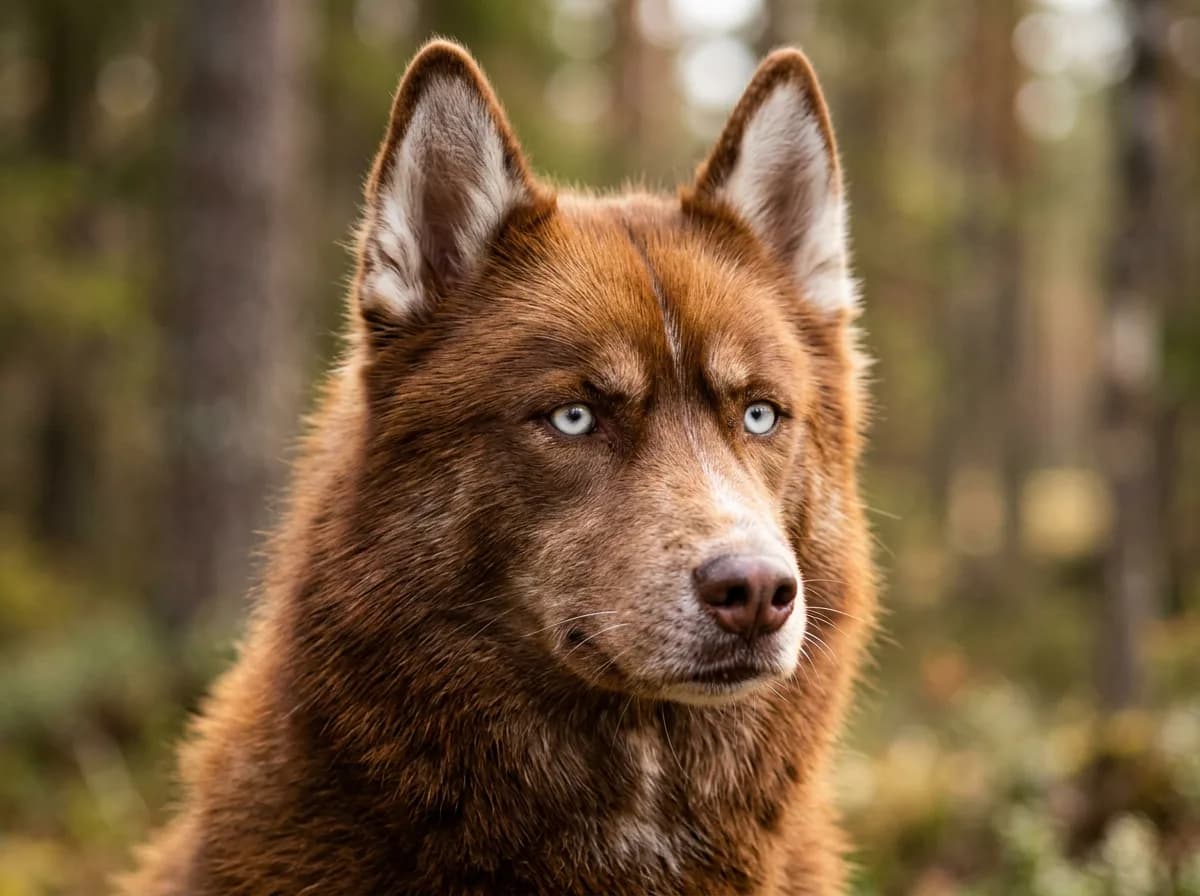
Yes. The Siberian Husky comes in a wide range of coat colors, and brown is one of them. The American Kennel Club breed standard for the Siberian Husky accepts colors from black through pure white, and everything in between, including the red-and-white and copper shades that most people describe as "brown" (source: American Kennel Club, akc.org). What we casually call a brown husky is usually a dog whose black pigment has been replaced by brown, giving warm chocolate, liver, red, or copper tones instead of the standard black.
Petful may earn a commission when you click through to Chewy, at no extra cost to you.
Brown huskies can be solid brown from nose to tail, or the far more common brown-and-white, where a copper or chocolate saddle sits over a white base. The face often carries the same striking mask and "eyebrow" markings you see on a black-and-white husky, just in a warmer color. Because the browning affects pigment and not structure, a brown husky has the same erect ears, plumed tail, and thick double coat as any other Siberian.
Solid brown vs. brown and white
A truly solid brown husky, with no white markings at all, is uncommon. Most "brown" huskies you meet are brown-and-white or red-and-white, with white on the legs, chest, underside, and face. The solid, self-colored coat that gave social-media dogs like the famous chocolate husky their fame requires a specific combination of genes, which is part of why those dogs draw so much attention.
What makes a husky brown? The genetics of coat color
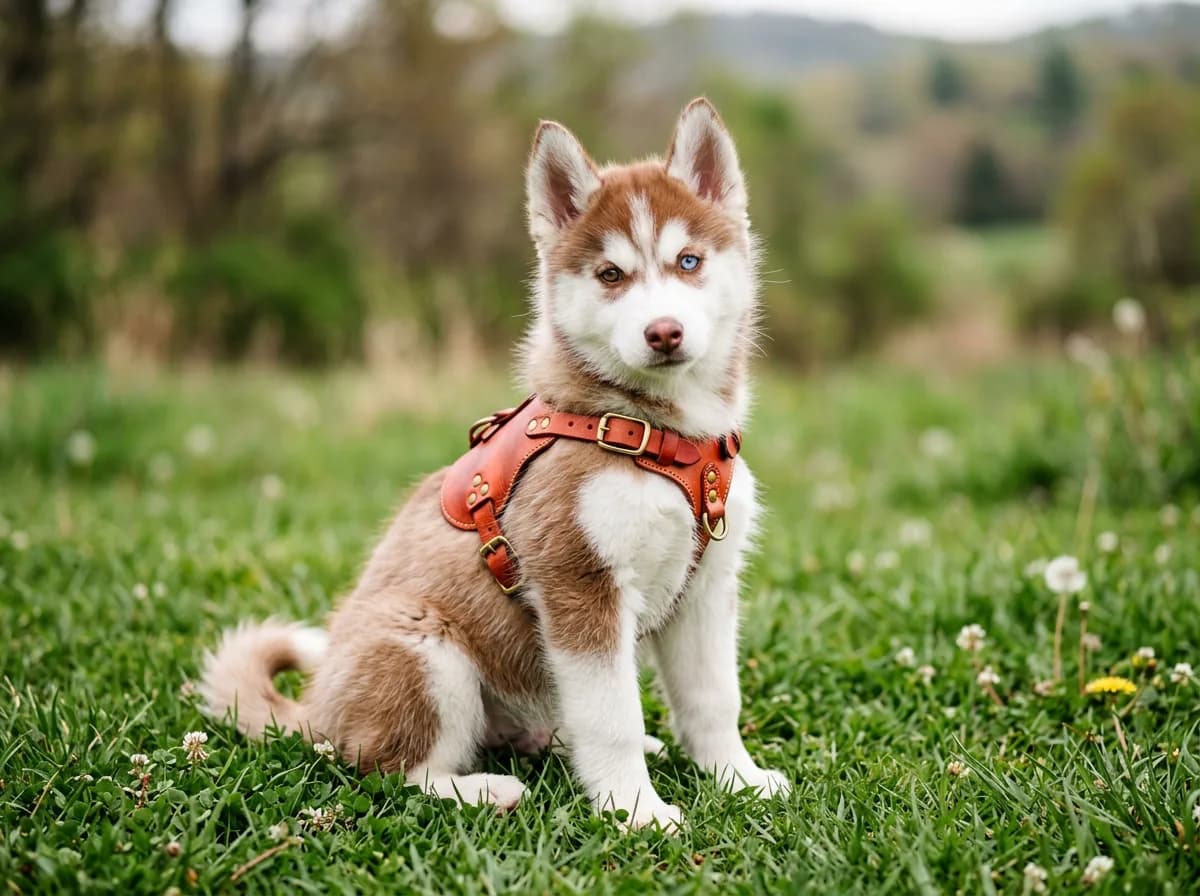
Coat color in dogs comes down to two pigments: eumelanin (which shows as black or brown) and phaeomelanin (which shows as red, tan, or cream). A gene commonly called the B locus controls whether eumelanin appears as black or brown. A dog needs two copies of the recessive brown ("liver") variant to show brown instead of black in its coat and nose (source: Merck Veterinary Manual, merckvetmanual.com, coat color genetics). Because black is dominant, a husky carrying just one copy of the brown gene still looks black but can pass brown to its puppies.

Petful may earn a commission when you click through to Chewy, at no extra cost to you.
- The same gene that turns the coat brown also affects nose and eye-rim pigment. A true brown or "red" husky usually has a liver-colored nose rather than a black one, which is a quick way to tell a genuinely brown-pigmented dog from a black dog with a lighter coat.
This is why breeding two brown huskies together produces a whole litter of brown puppies: neither parent carries the dominant black gene to pass on, so every puppy inherits two brown copies. Breeding a black husky that carries brown to another brown carrier, on the other hand, produces a mix. The red and copper shades layer a second gene on top, which restricts or dilutes pigment further and creates the lighter, foxy tones. Coat-color genetics is the same story across breeds, which is why our Rhodesian Ridgeback color guide describes the same pigment machinery producing different results in a different dog.
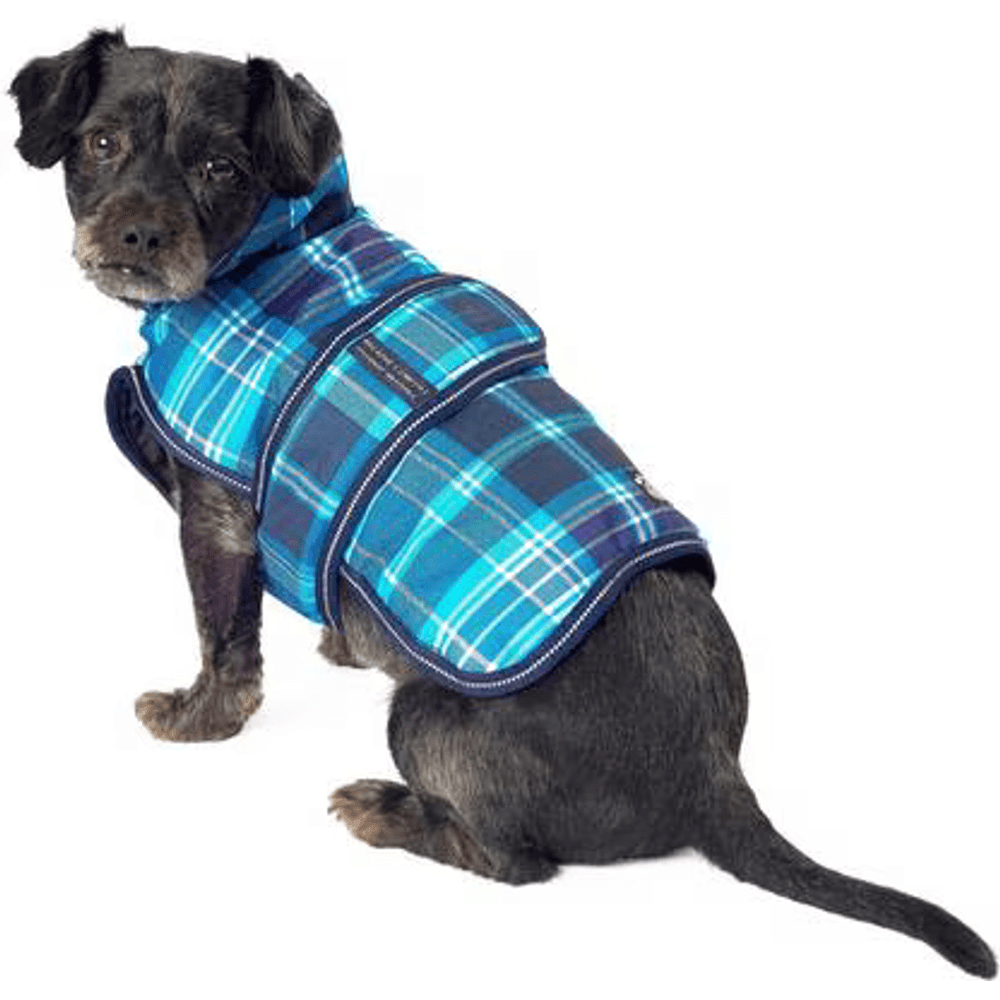
An insulated, quilted dog coat that traps body heat so a cold-sensitive dog stops shivering on winter walks. The high collar and full-back coverage keep small, thin, and senior dogs warm, with an easy step-in design and adjustable fit.
Petful may earn a commission when you click through to Chewy, at no extra cost to you.
The shades of brown you will see
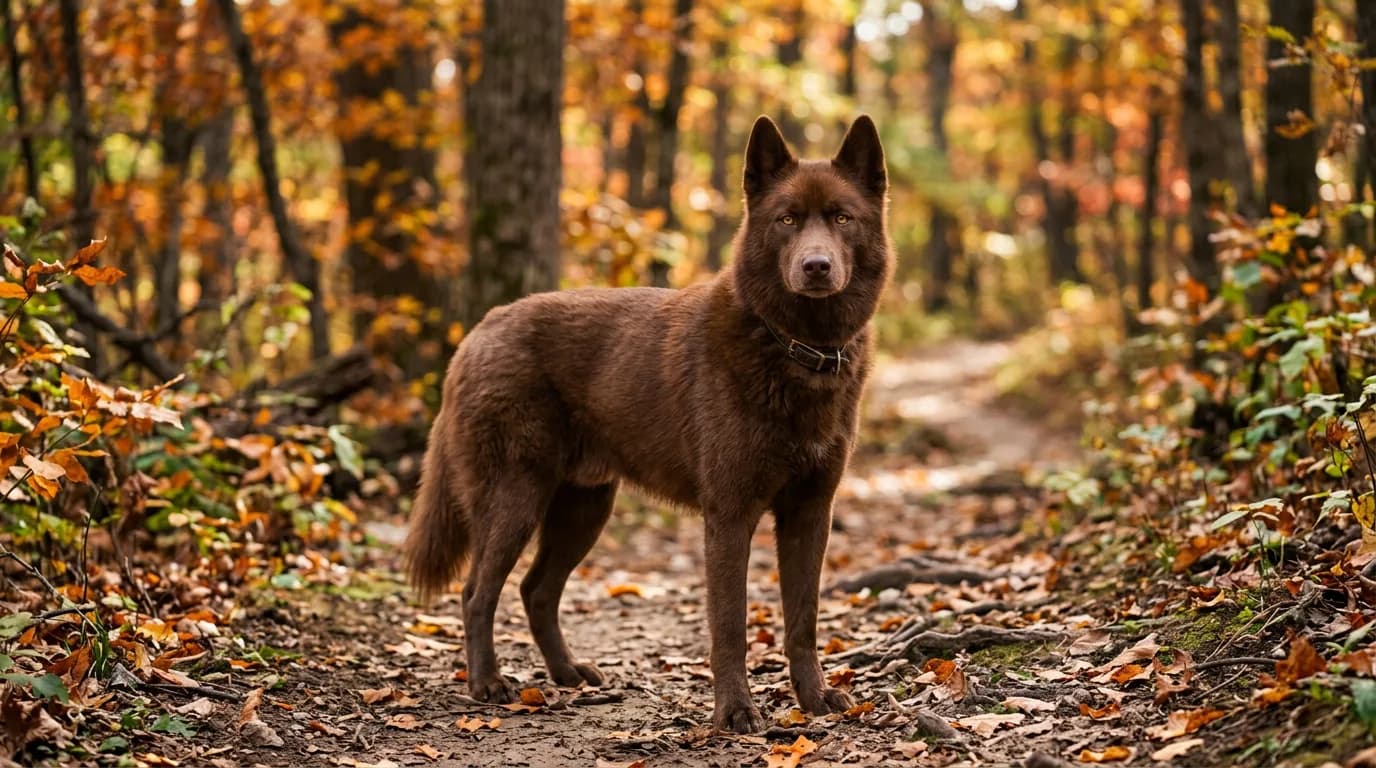
- Chocolate or dark brown: A deep, rich brown that can look almost black in low light but shows warm tones in sunlight. Usually paired with a liver nose.
- Red: A brighter, orange-tinged coat, often called "red husky." Red-and-white is one of the more common non-standard husky looks.
- Copper: A medium reddish-brown with a metallic warmth, sitting between chocolate and red.
- Sable or agouti-influenced brown: Individual hairs banded with color, giving a wild, wolf-like look with brown undertones rather than a flat solid brown.
- Light or "cafe" brown: A washed-out, pale brown created when a dilution gene lightens the pigment.
| Shade | Typical nose color | How common |
|---|---|---|
| Chocolate / dark brown | Liver | Uncommon as a solid coat |
| Red and white | Liver | One of the more common brown looks |
| Copper | Liver or pink-brown | Moderately common |
| Light / cafe brown | Liver or pink | Less common, needs a dilution gene |
How rare is a brown husky?
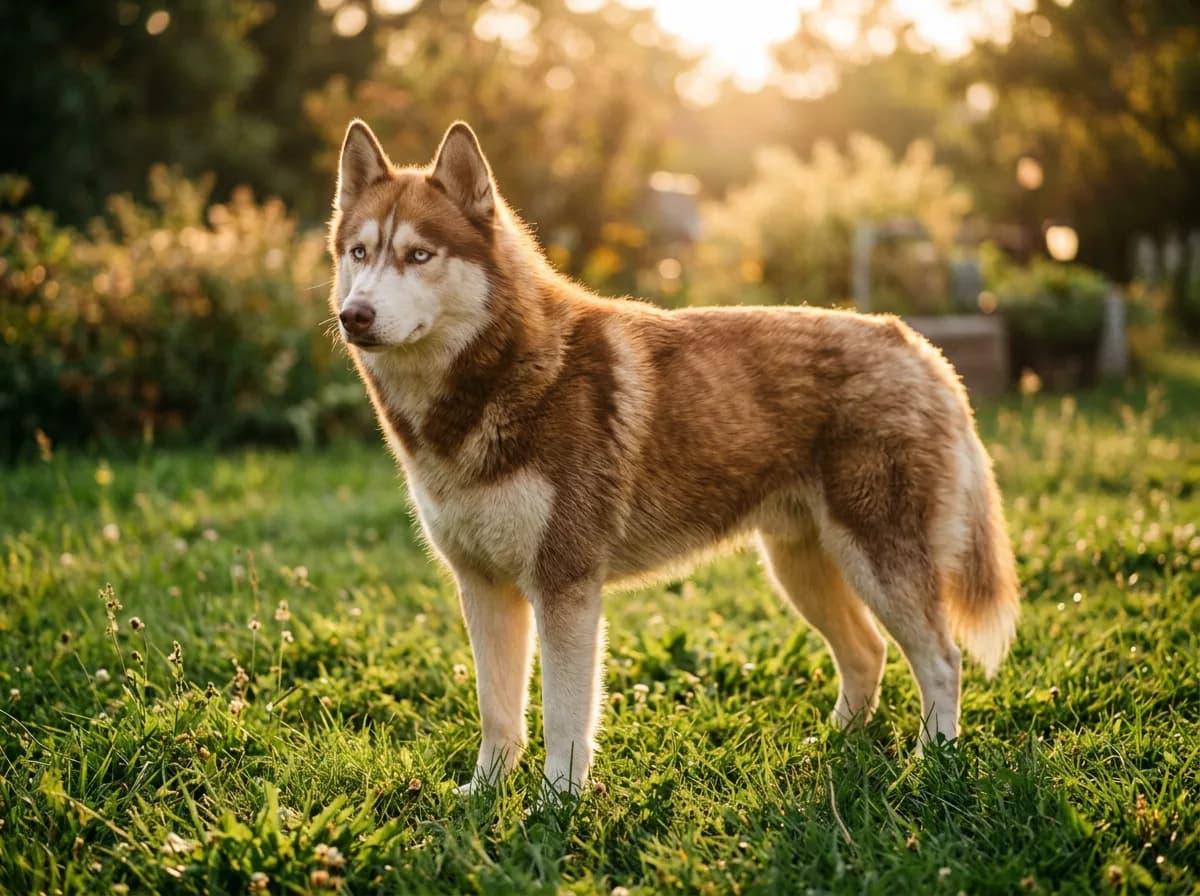
Brown huskies are less common than black-and-white huskies, but they are not genuinely rare. The reason is simple genetics: brown is recessive, so a dog needs two copies of the gene to look brown, while a single copy of the dominant black gene is enough to make a dog black. In any given litter from mixed-color parents, black and black-carrying puppies simply outnumber brown ones. This is not unique to huskies. Across almost every breed, brown or liver dogs are outnumbered by black dogs for the same reason.
That said, "rare" is relative. Because some breeders deliberately pair brown to brown, brown and red huskies are widely available, and you will find them through reputable Siberian Husky breeders and rescues without much trouble. The truly scarce version is the flashy solid chocolate coat with no white, which needs a specific gene combination and is why individual dogs with that look go viral.
- Some sellers charge a premium for "rare" brown, red, or "chocolate" huskies. Color alone does not make a dog healthier or more valuable, and a responsible breeder prices on health testing, temperament, and lineage, not coat color. Prioritize proof of parental health screening over a rare-sounding color.
The rarest husky colors overall are the ones that need multiple uncommon genes to line up: pure solid white, true "isabella" or diluted liver, and the flashiest self-colored chocolate. A plain brown-and-white husky is far more attainable than any of those.
Brown husky eye color
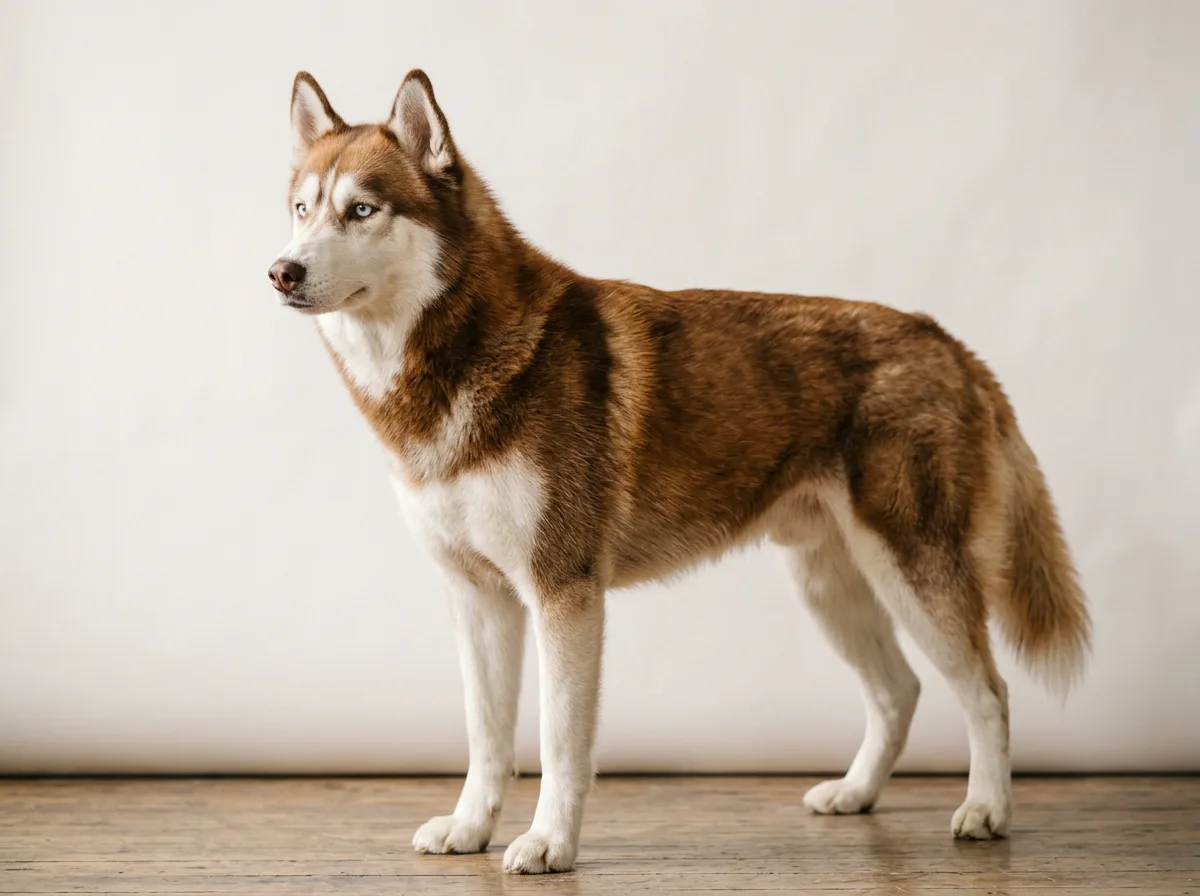
Eye color in huskies is controlled separately from coat color, so a brown coat can pair with almost any eye color. You will see brown huskies with:
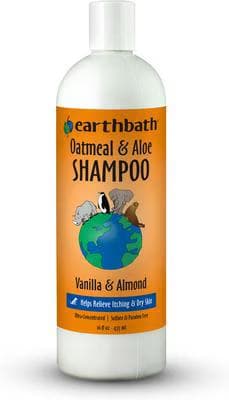
Petful may earn a commission when you click through to Chewy, at no extra cost to you.
- Ice blue eyes, the classic husky look that contrasts dramatically against a warm coat.
- Amber or gold eyes, which often complement a copper or red coat beautifully.
- Brown eyes, the most common eye color in dogs generally.
- Bi-eyed (heterochromia), one blue and one brown eye.
- Parti-eyed, a single eye split between blue and brown.
None of these eye colors is tied to the coat, and none of them causes vision problems on its own. Blue eyes in a husky are not a defect and do not indicate deafness the way blue eyes can in some other breeds.
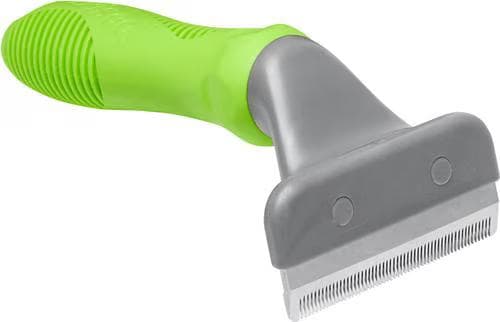
Petful may earn a commission when you click through to Chewy, at no extra cost to you.
Temperament: the same husky under the coat
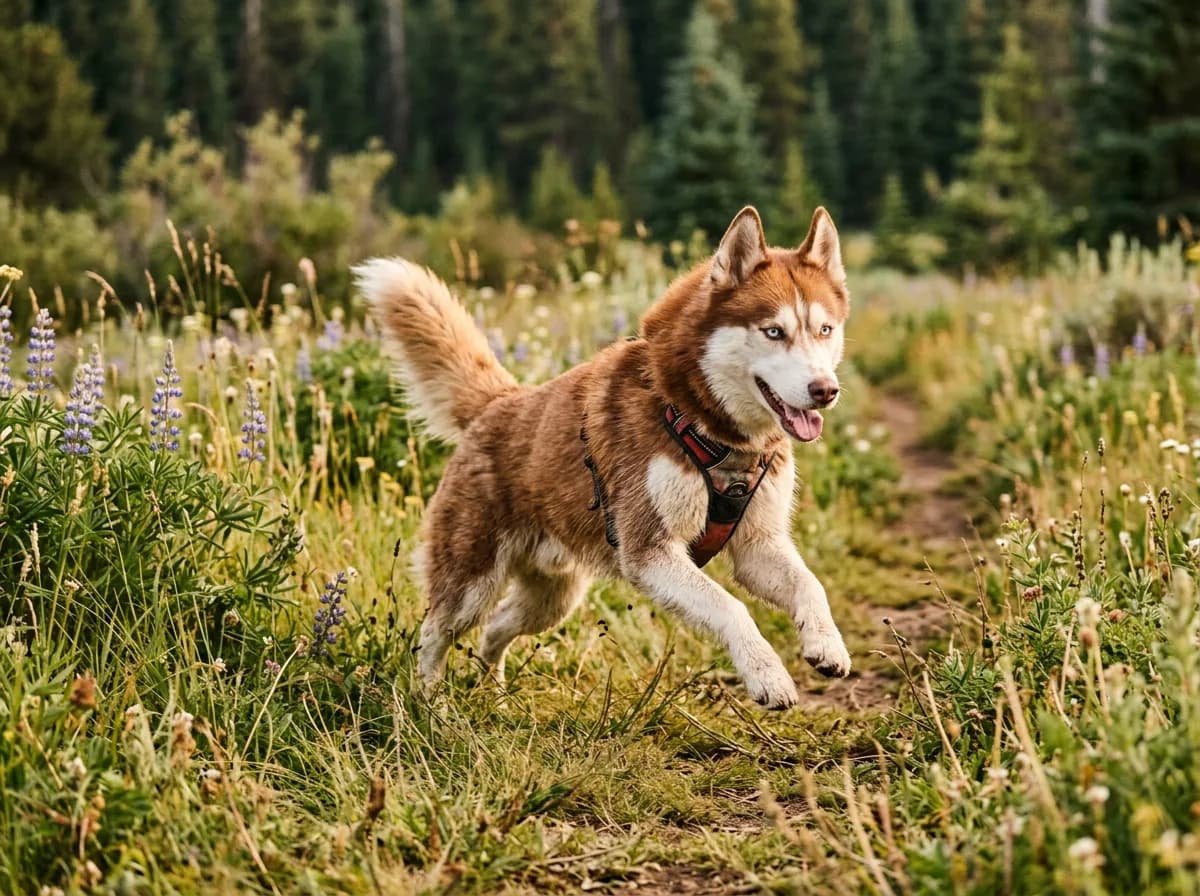
A brown husky behaves exactly like any other Siberian Husky, because color has nothing to do with personality. Huskies are friendly, outgoing, and social, often too friendly to make good guard dogs. They were bred to pull sleds across long distances in a team, which shaped a dog that is energetic, independent, and happiest with a job to do.
That working heritage comes with real demands. Huskies have high energy, a strong prey drive, a talent for escaping fenced yards, and a stubborn, independent streak that makes training a patience game. They are also famously vocal, "talking," howling, and whining rather than barking. A brown husky is not a calmer or easier dog because of its color, so go in expecting a high-drive northern breed.
- A husky of any color needs about two hours of exercise a day, secure fencing, and consistent, reward-based training. If you cannot commit to that, no coat color will make the breed a low-maintenance pet.
Grooming and shedding
Brown huskies have the same thick double coat as every other Siberian, which means the same heavy shedding. The coat has a dense, insulating undercoat beneath a longer topcoat, and it sheds year-round with two major "blowouts" a year when the undercoat releases in clumps. Expect to brush several times a week, and daily during a coat blow, using an undercoat rake and a slicker brush.
Do not shave a husky's double coat. That coat insulates against both cold and heat and protects the skin from sun, and shaving it can interfere with temperature regulation and coat regrowth. Bathe only occasionally, since huskies are naturally clean and relatively odor-free. A brown coat shows dirt a little differently than a white one, but grooming needs are identical.
Health of the brown husky
Coat color does not create health problems in huskies. A brown husky faces the same breed health profile as any Siberian, and reputable breeders screen for the same conditions regardless of color. The most important screenings for the breed are the eyes and hips.
Siberian Huskies are prone to several inherited eye conditions, including juvenile cataracts, progressive retinal atrophy (PRA), and corneal dystrophy. The Orthopedic Foundation for Animals (OFA) and the breed's parent club recommend eye examinations by a veterinary ophthalmologist, and PRA can be screened with DNA testing (source: Orthopedic Foundation for Animals, ofa.org, Siberian Husky breed screening). Hip evaluation for hip dysplasia is also recommended. Ask any breeder for OFA eye and hip results on the parents.
- Unlike bulldogs or pugs, the Siberian Husky has a normal muzzle length and is not brachycephalic, so it does not suffer the breathing problems (BOAS) associated with flat-faced dogs (source: American College of Veterinary Surgeons and general veterinary consensus on brachycephalic breeds). A brown husky's care concerns are eyes, joints, and exercise, not airway obstruction.
One color-linked caution worth naming: the "double merle" problem seen in some breeds does not apply to standard husky colors. The merle gene is not part of the Siberian Husky's normal genetics, so brown, red, and chocolate huskies from purebred lines are not affected by the deafness and eye defects that double-merle breeding causes in merle breeds (source: American Kennel Club guidance on merle and coat-color genetics). Similarly, everyday brown and red coats do not carry the skin issues sometimes linked to strong color dilution; those concerns apply to heavily diluted coats, not standard brown.
With good breeding and routine care, Siberian Huskies commonly live 12 to 15 years. A brown husky's lifespan and vitality track the breed, not the coat.
Is a brown husky right for you?
If you love the look of a warm chocolate or copper coat, a brown husky delivers it without any hidden downside, because it is a normal, healthy Siberian Husky in a less-common color. The decision should rest on whether the husky breed fits your life, not on the color. Can you provide daily hard exercise, secure containment, patient training, and tolerance for shedding and howling? If yes, a brown husky is a wonderful companion. If not, the breed will frustrate you no matter how beautiful the coat.
When you shop, choose a breeder who health-tests and prices on quality rather than "rare color," or adopt from a Siberian Husky rescue, where brown and red dogs turn up regularly. For more on the breed's history, size, and full temperament picture, read our Siberian Husky breed profile, and browse the rest of our dog breed guides to compare.
Frequently asked questions about brown huskies
Related on Petful
- Siberian Husky: Full Breed Profile and Care Guide
- Doberman Colors: Every Coat, Rarity, and Genetics
- Merle Dog Guide: Genetics, Breeds, and Health
- 18 Cold Weather Dog Breeds That Thrive in Snow
- German Shepherd Colors: The Complete Guide
Brown huskies are less common than black-and-white huskies but not genuinely rare. Brown is a recessive coat color, so a dog needs two copies of the gene to show it, while a single dominant black gene makes a dog black. That imbalance means black huskies outnumber brown ones, yet brown and red huskies are widely available from breeders and rescues. The truly scarce version is a solid chocolate coat with no white markings.
The rarest husky colors are the ones that need several uncommon genes to line up, such as pure solid white, a true diluted liver or "isabella" coat, and the flashy self-colored solid chocolate with no white. A standard brown-and-white or red-and-white husky is far more attainable than any of those. Coat color does not affect a dog's health or value, so a "rare" color is not a reason to pay a large premium.
Use reward-based, positive-reinforcement training rather than punishment. Reward the behavior you want with treats, praise, or play, and redirect or calmly withhold reward for behavior you do not want. Huskies are intelligent but independent and stubborn, and harsh corrections tend to backfire by making them shut down or dig in. Consistency, short frequent sessions, and plenty of exercise before training work far better than any form of physical or intimidating discipline.
The most reliable way to calm a husky is meeting its needs first: about two hours of daily physical exercise plus mental enrichment like puzzle feeders, scent games, and training. A tired, mentally stimulated husky is a calm husky. Beyond that, a predictable routine, a quiet crate or den space, chew toys, and calm, low-drama handling all help. Most "hyper" husky behavior is unspent energy, so exercise and enrichment solve it more than anything else.
Dogs, including huskies, respond worst to harsh, fear-based punishment such as yelling, physical corrections, or isolation, all of which damage trust and can worsen behavior. If you must discourage a behavior, the gentlest effective approach is removing the reward: calmly ending playtime or attention, or a brief time-out. Positive reinforcement of good behavior consistently outperforms punishment, so the goal is to teach the dog what to do rather than to punish what it did.
Huskies can rest comfortably in cold and snow because of their dense double coat, which traps a layer of warm air against the skin, and behaviors like curling into a ball and tucking the nose under the tail to conserve heat. They were bred as Arctic sled dogs, so they tolerate cold far better than most breeds. This does not mean they should be left outside in extreme conditions; they still need shelter, water, and supervision, and puppies and seniors are less cold-hardy.
There is no literal husky language, but huskies are famously "talkative" and communicate affection through their signature howls, "woo-woo" vocalizations, and whining, along with body language like leaning on you, gentle eye contact, tail wags, and following you around. When your husky "talks" back to you, that back-and-forth is its way of engaging with you. You can return the affection with calm attention, praise, and play, which is the language your husky actually understands.
Huskies do not have a spoken language, so "I love you in husky" is really about communication and body language rather than words. Huskies show attachment by vocalizing (the classic husky howl and "woo" sounds), leaning into you, soft eye contact, wagging, and staying close. To communicate love back in a way your husky reads clearly, use a calm happy voice, physical closeness, shared activity, and reward-based interaction rather than trying to mimic any specific sound.

Coreen Saito is a pet writer and longtime shelter volunteer with more than a decade in animal rescue. She covers cat behavior, breed care, and the small, ordinary science of sharing a life with companion animals, with a particular focus on honest takes about the products and decisions that actually matter. At home in Arizona, she's outranked by Mac (a dog with the loudest opinion in the house), Rebel (a cat who governs by quiet authority), and Meri (an orange tabby who runs the late shift and the laundry basket). She writes about all three, plus the rescues that keep coming through her life, at LifeWithMinty.com.
Sign up for expert-backed reviews and safety alerts all in one place.