18 Cold Weather Dog Breeds That Thrive in Snow
Cold weather dog breeds are built for winter from the skin out. This guide covers 18 of the hardiest snow dogs, grouped by the jobs they were bred for, plus how cold is too cold and how to keep a thick-coated breed safe all winter.
Petful is reader supported. As an affiliate of platforms like Amazon and Chewy, we may earn a commission when you buy through links on this page. There is no extra cost to you.
Cold weather dog breeds are built for winter from the skin out. These are the dogs that come alive when the temperature drops, the snow piles up, and everyone else is reaching for a blanket. Most descend from sled teams, mountain flocks, and Arctic villages, so a snowbank is not a hardship to them. It is a playground.
What separates a true snow dog from a shivering one comes down to the coat, the build, and the metabolism underneath. In this guide we walk through 18 of the hardiest cold weather dog breeds, grouped by the jobs they were bred to do, then cover how cold is actually too cold, how to keep a thick-coated dog safe, and the questions owners ask most before bringing one home.
- 1A double coat is the single biggest predictor of cold tolerance. The dense, insulating undercoat traps warm air against the skin while the coarse outer coat sheds snow and moisture.
- 2Cold-hardy breeds are almost all working dogs with high exercise needs, so winter stamina comes packaged with real daily activity requirements.
- 3Even the toughest snow breed has limits. Frostbite and hypothermia are still possible below roughly 20 degrees Fahrenheit, and no dog should live outdoors full time in deep cold.

Sign up for expert-backed reviews and safety alerts all in one place.
What Makes a Dog a Cold Weather Breed
Not every fluffy dog is a snow dog. Three traits do most of the work.
The first is a double coat. According to the American Kennel Club, double-coated breeds carry a soft, dense undercoat beneath a longer layer of guard hairs. The undercoat is the insulation. It traps a layer of warm air against the body, the same principle as a down jacket, while the outer coat repels water and blocks wind. Single-coated breeds, no matter how long their hair looks, do not have that insulating layer and chill quickly.
The second is body mass and build. Larger, stockier dogs hold heat better than small, lean ones because they have less surface area relative to their volume. This is why so many cold weather dog breeds are big, solid animals. Compact ears, deep chests, and thick necks all reduce the amount of exposed skin losing heat.
The third is a higher working metabolism. Many of these breeds were bred to run, pull, or patrol for hours in brutal conditions, and their bodies generate and hold heat efficiently. That same engine means they need real daily exercise. A snow dog stuck inside with nothing to do is a bored, often destructive dog.
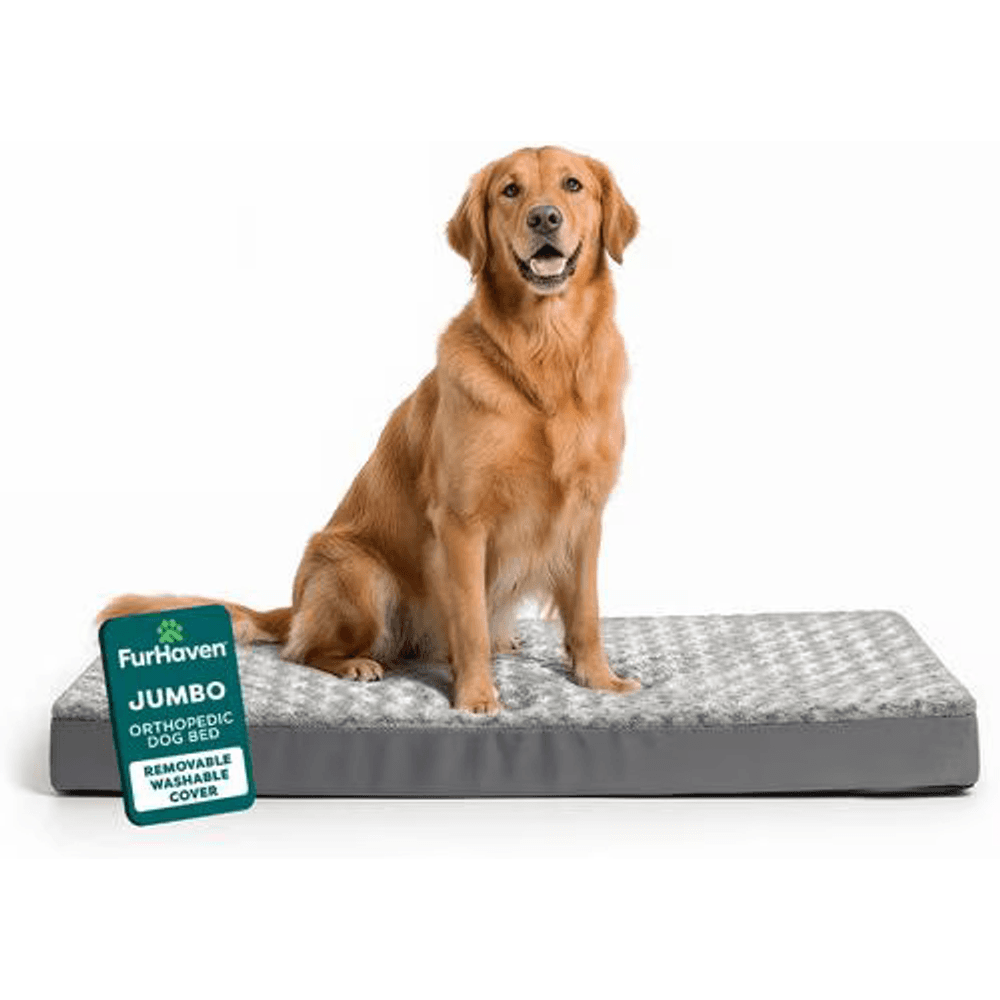
A plush orthopedic foam mattress that cushions aging joints and pressure points, giving a stiff or trembling senior dog warm, supportive rest.
Petful may earn a commission when you click through to Chewy, at no extra cost to you.
- Never shave a double-coated breed to keep it cool in summer. The undercoat also insulates against heat and protects skin from sunburn. Shaving can permanently damage how the coat grows back and removes the dog's natural temperature regulation. Brush it out instead.
Arctic Sled and Working Dogs
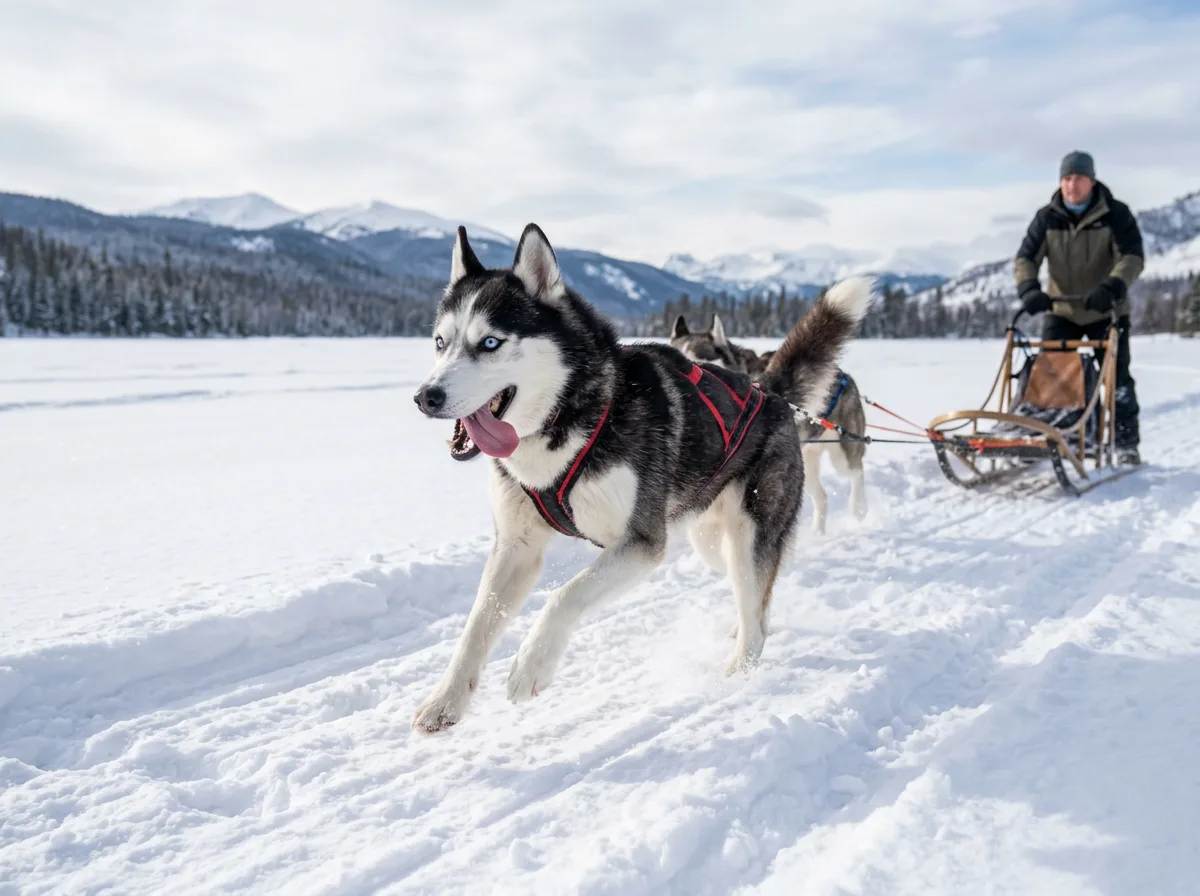
These are the originals: breeds developed by the Chukchi, Inuit, and other far-northern peoples to haul loads and travel across frozen terrain. They have the thickest coats, the highest stamina, and the deepest cold tolerance of any group.
Siberian Husky
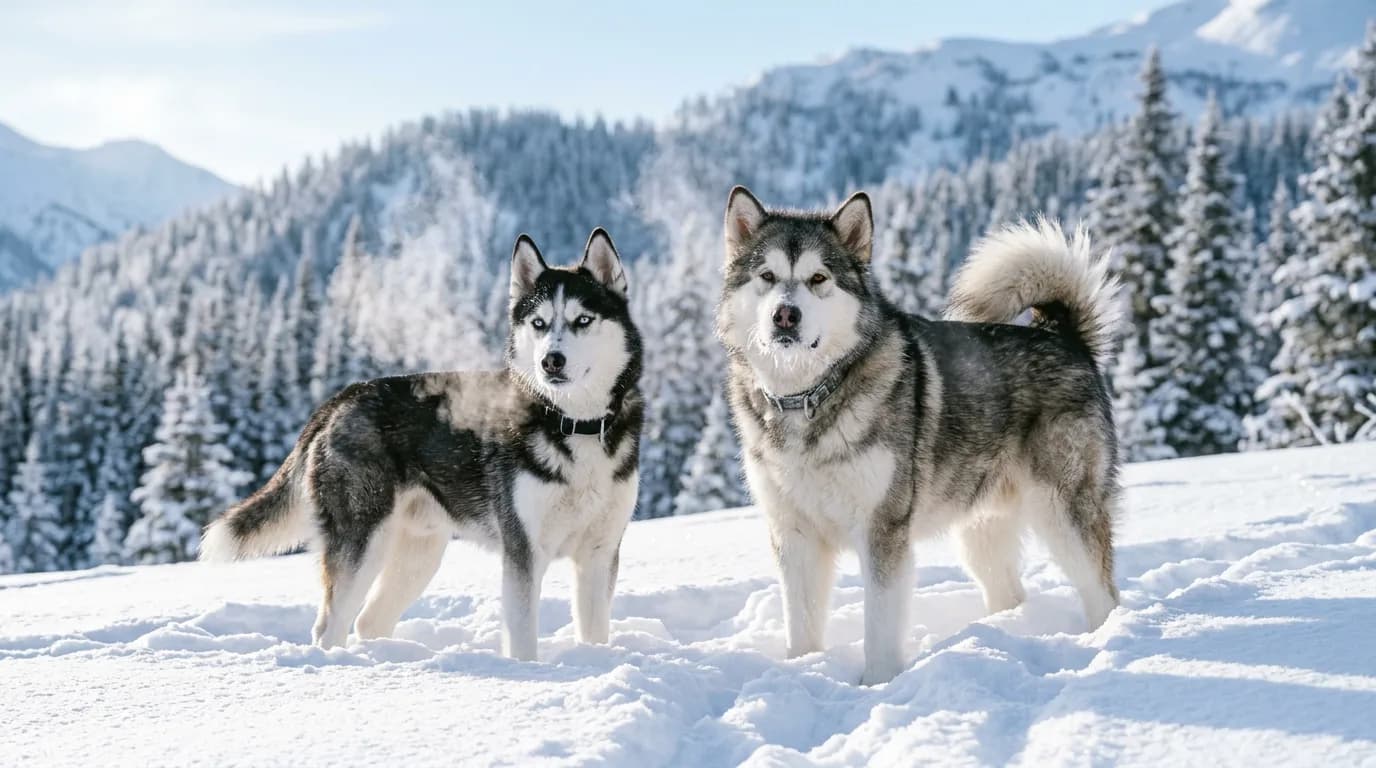
Bred by the Chukchi people of northeastern Siberia to pull light loads over long distances, the Siberian Husky is the archetypal snow dog. A dense double coat, almond eyes set to shed glare off snow, and a compact frame let huskies work in temperatures that would ground most breeds. They are famously energetic, vocal, and escape-prone, so they need a securely fenced yard and hours of daily exercise. Huskies are also notorious runners, so recall training matters.
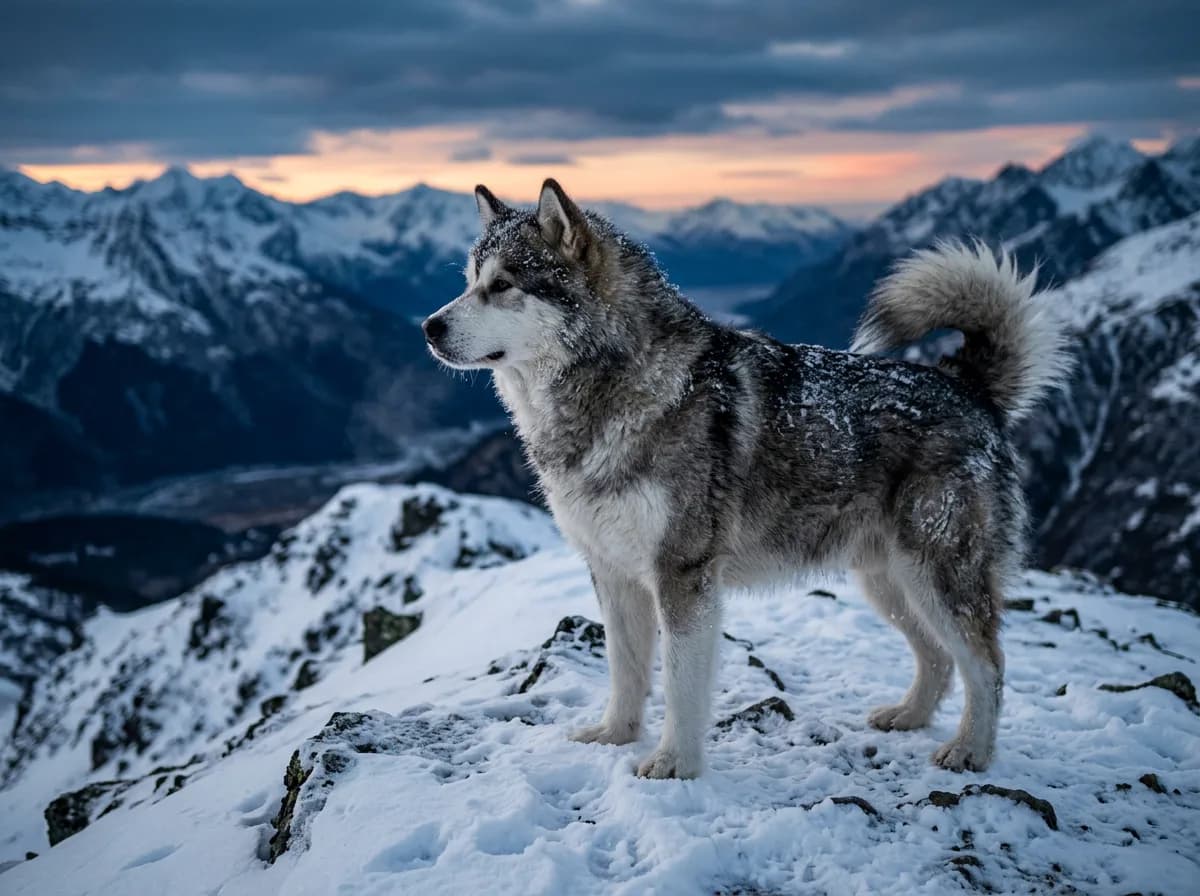
Alaskan Malamute
The Malamute is the oldest and largest of the Arctic sled dogs, built for hauling heavy freight rather than racing. Where the husky is a sprinter, the Malamute is the freight engine: powerful, muscular, and tireless. Their coarse outer coat and woolly undercoat handle extreme cold with ease. They are affectionate and pack-oriented but strong-willed, and their size means winter walks come with serious pulling power.
Samoyed
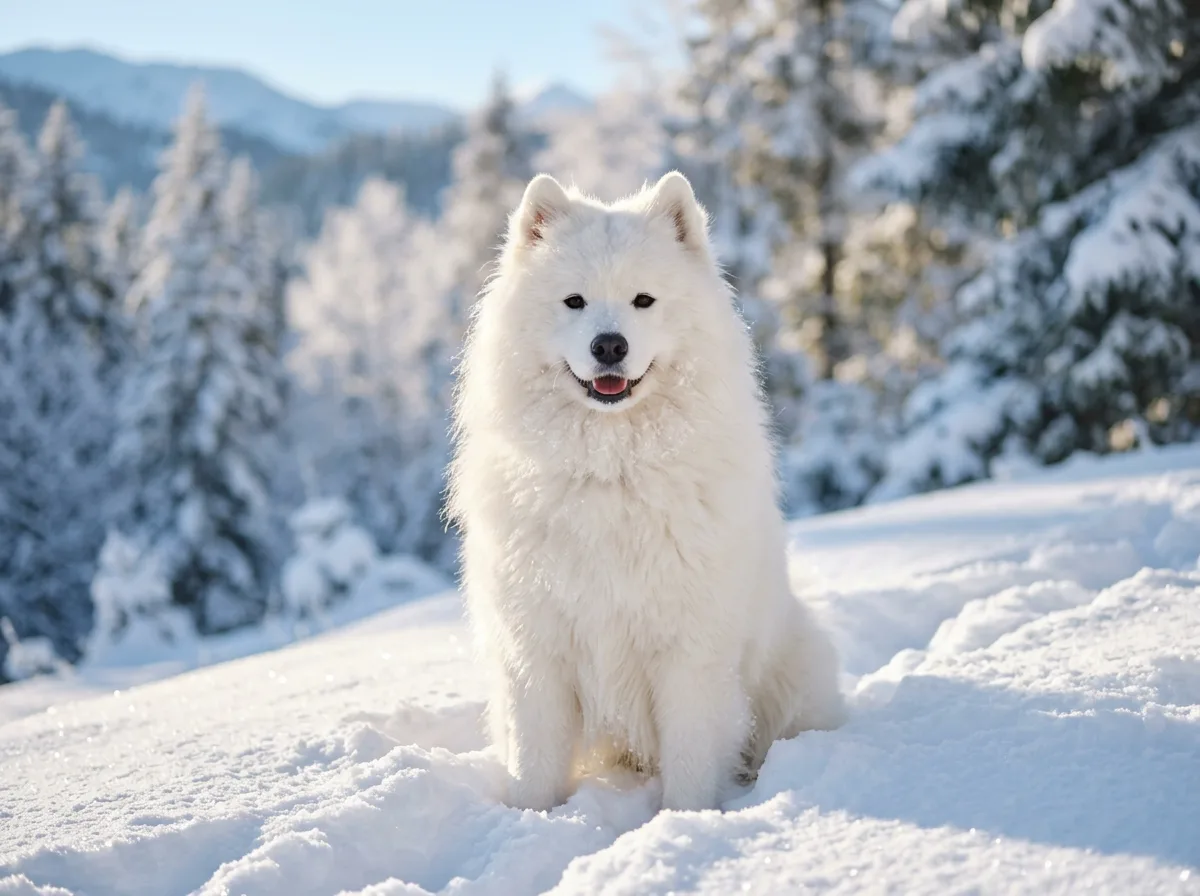
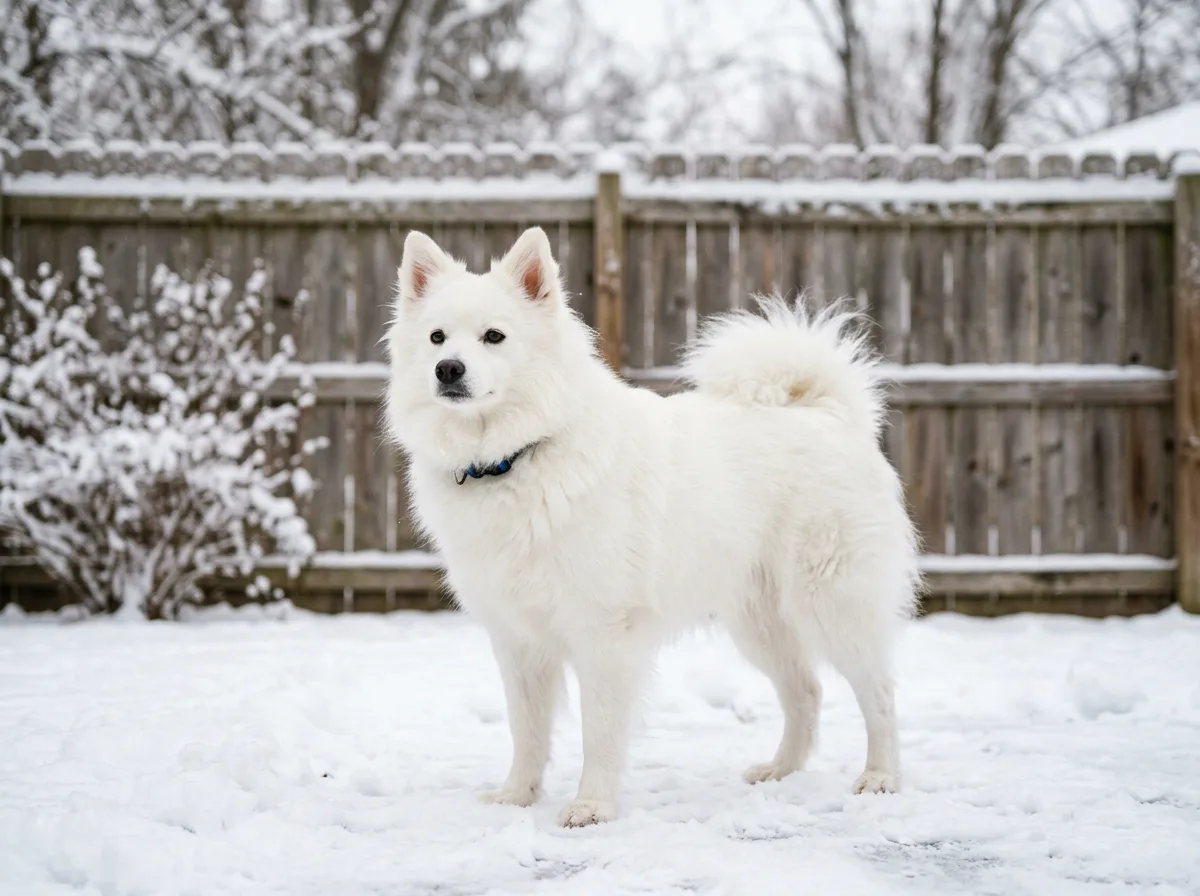
Recognizable by that brilliant white coat and the upturned "Sammy smile," the Samoyed was bred by the Samoyedic peoples of Siberia to herd reindeer, pull sleds, and sleep piled with the family for warmth. That plush double coat handles sub-zero conditions well. Samoyeds are friendly, people-focused, and vocal, and their coat sheds heavily and needs frequent brushing.
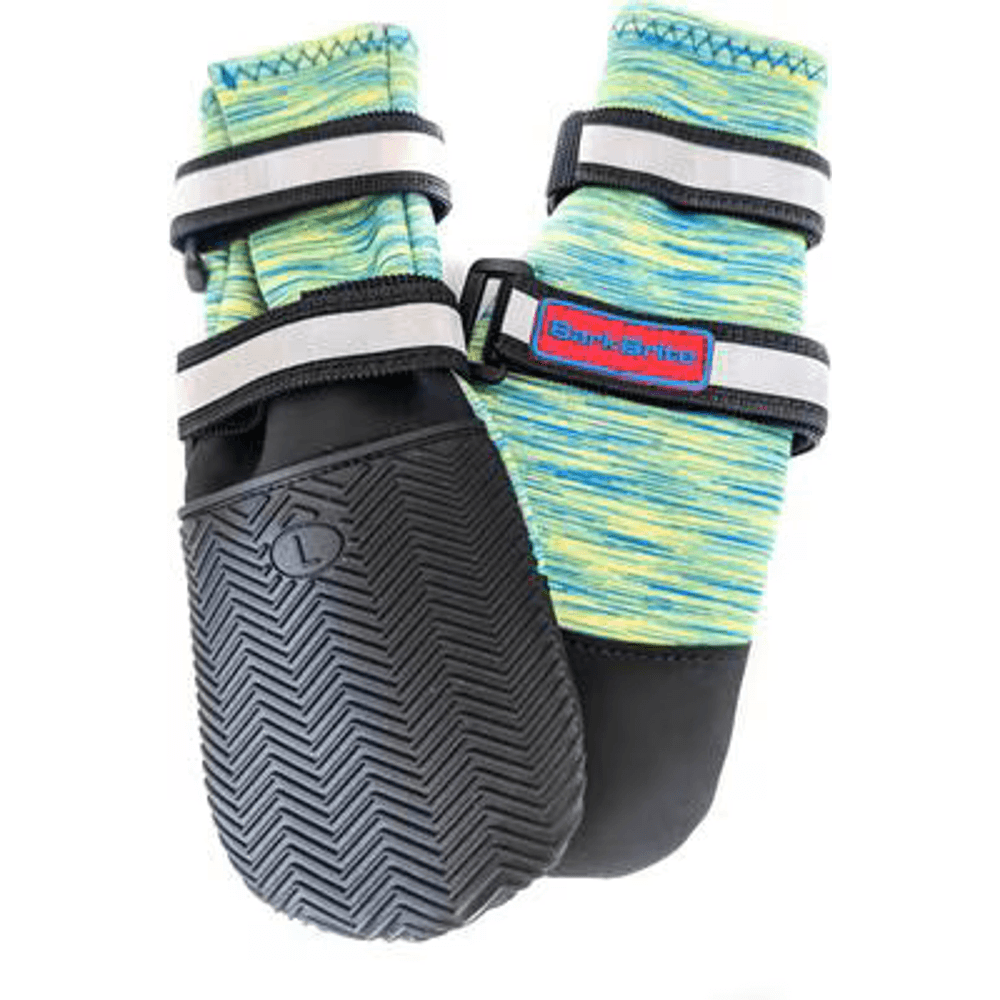
All-weather neoprene dog boots with grippy rubber tread soles that protect paws from cold, ice, and hot pavement and add traction on slick floors. Reflective straps aid visibility, with a secure hook-and-loop fit.
Petful may earn a commission when you click through to Chewy, at no extra cost to you.
Alaskan Husky
Not a formal breed but a working type, the Alaskan Husky is the dog of choice for competitive sled racing. Leaner and more varied than the Siberian, these dogs are bred for drive and endurance in the cold. They thrive with a job and a lot of running room.
American Eskimo Dog
Despite the name, the "Eskie" descends from German Spitz dogs, not Arctic sled lines. It still earns its place here on the strength of a thick, sparkling white double coat and genuine cold hardiness. Eskies come in toy, miniature, and standard sizes, making them one of the few snow-ready breeds that fits a smaller home. They are bright, trainable, and alert.
- 1Sled breeds pair the deepest cold tolerance with the highest exercise demands of any group.
- 2A husky or Malamute needs a securely fenced yard and hours of daily activity, or the boredom turns destructive.
- 3Heavy seasonal shedding, called "blowing coat," is guaranteed with this group and requires committed brushing.
Mountain and Livestock Guardian Breeds
Bred to guard flocks and haul carts in the snowy alpine regions of Europe and Asia, these breeds are massive, weatherproof, and famously gentle with the animals and people they protect.
Bernese Mountain Dog
A brawny, tri-colored Swiss farm dog, the Bernese was bred to drive cattle and pull carts in the Alps. The thick double coat thrives in the cold, and the temperament is the real draw: exceptionally affectionate, steady, and devoted to family. Prospective owners should know the breed has a sadly short average lifespan and a higher cancer rate than most, so choosing a health-tested breeder matters.
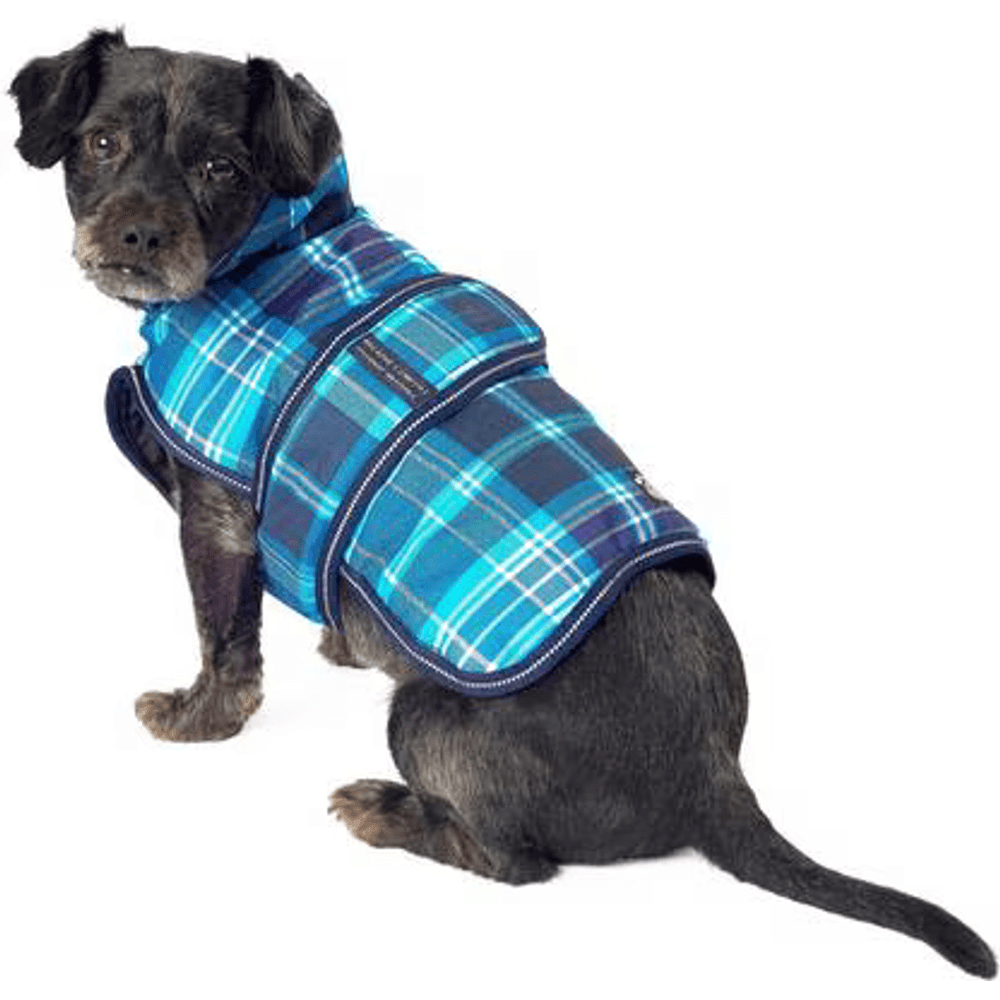
An insulated, quilted dog coat that traps body heat so a cold-sensitive dog stops shivering on winter walks. The high collar and full-back coverage keep small, thin, and senior dogs warm, with an easy step-in design and adjustable fit.
Petful may earn a commission when you click through to Chewy, at no extra cost to you.
Great Pyrenees
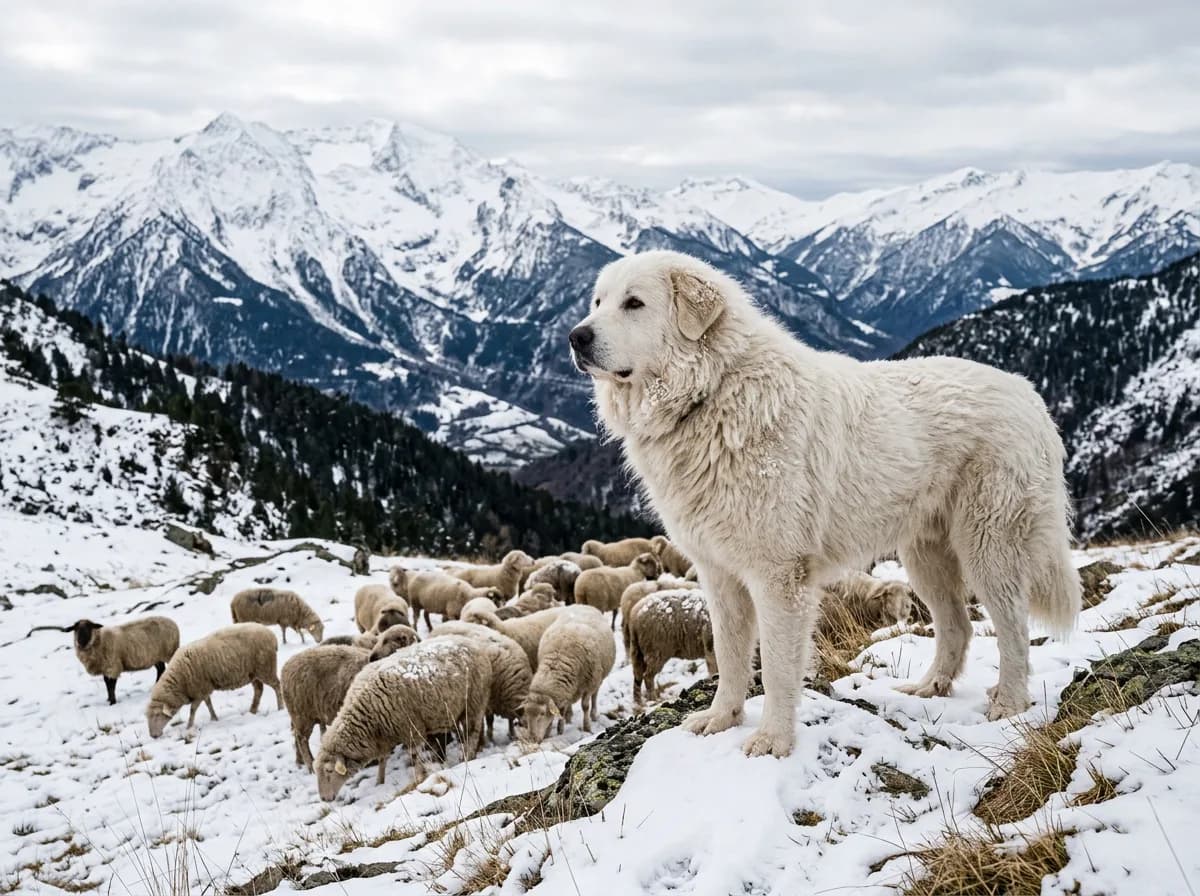
Majestic white livestock guardians bred in the Pyrenees Mountains between France and Spain, these dogs spent centuries outdoors guarding sheep from wolves and bears in deep snow. The weatherproof double coat and calm, independent nature come standard. That independence also means they were bred to make their own decisions, so training takes patience, and they tend to bark at night on guard duty.
Saint Bernard
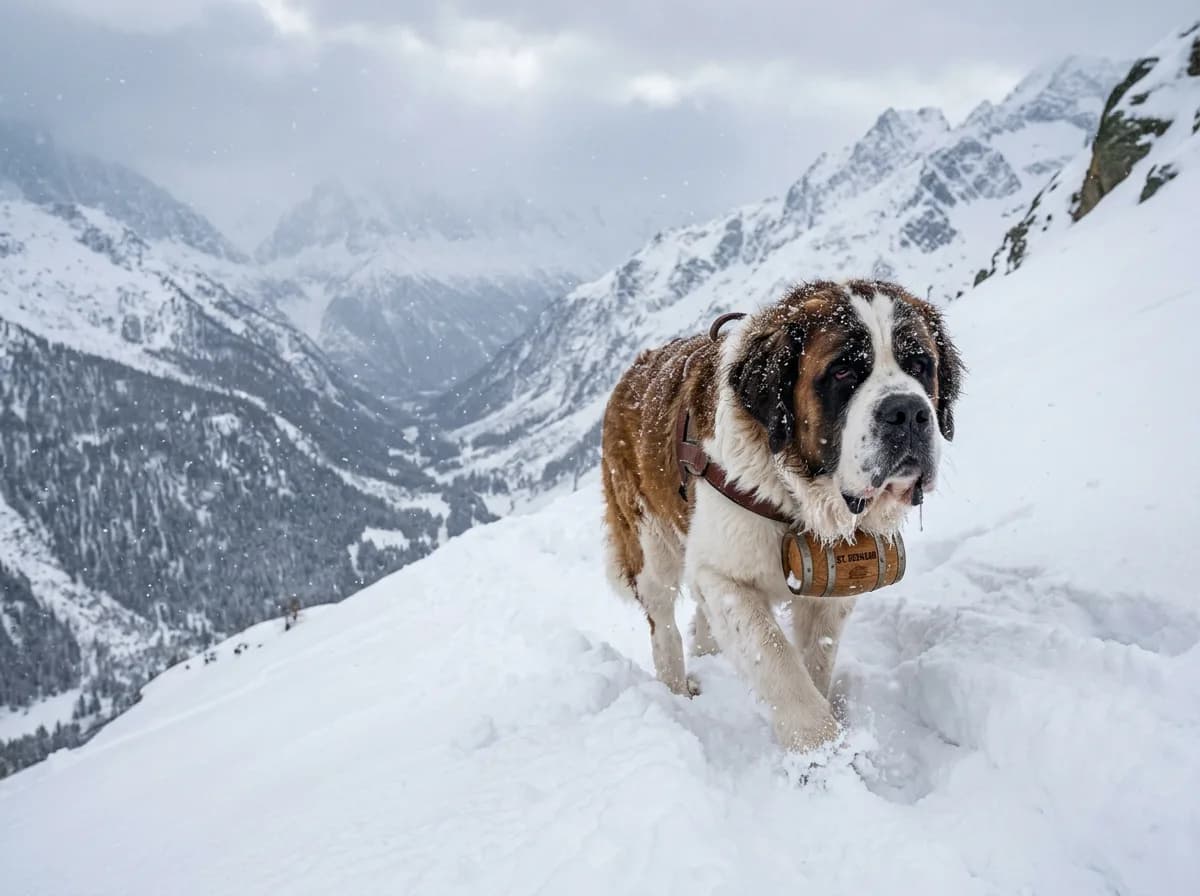
The gentle giant of the Alps, the Saint Bernard was developed at a Swiss hospice to find and rescue travelers buried by avalanches. A dense coat and enormous frame make cold a non-issue. They are calm, patient, and wonderful with children, though the drool and the sheer size are real considerations for indoor living.
Tibetan Mastiff
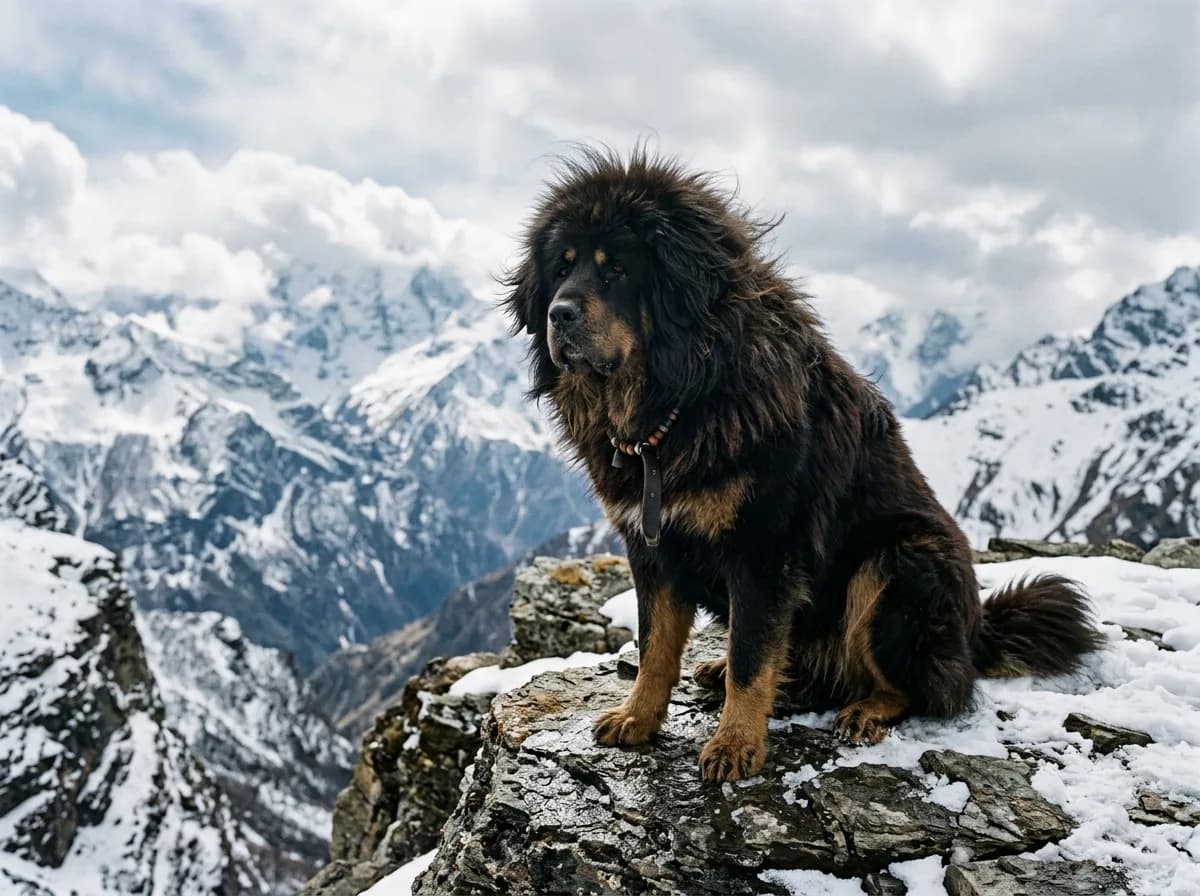
Bred to guard monasteries and livestock on the Himalayan plateau, the Tibetan Mastiff carries one of the most impressive cold-weather coats in the dog world, a thick mane that gives it a lion-like silhouette. These are aloof, territorial, powerful guardians that need experienced handling and secure fencing.
Kuvasz
A large white Hungarian livestock guardian, the Kuvasz worked the cold plains and mountains defending flocks. The dense double coat handles winter easily. Like other guardians, the Kuvasz is loyal, protective, and independent-minded, best suited to owners who understand the guardian temperament.
Leonberger
This giant German breed was bred as an estate and farm dog, and its water-resistant double coat and webbed feet make it comfortable in cold and wet alike. Leonbergers are friendly, family-oriented giants that need space and love a romp in the snow.
Nordic and Spitz Breeds
The spitz family, marked by pricked ears, curled tails, and dense coats, produced a long line of hunters, herders, and companions built for northern winters.
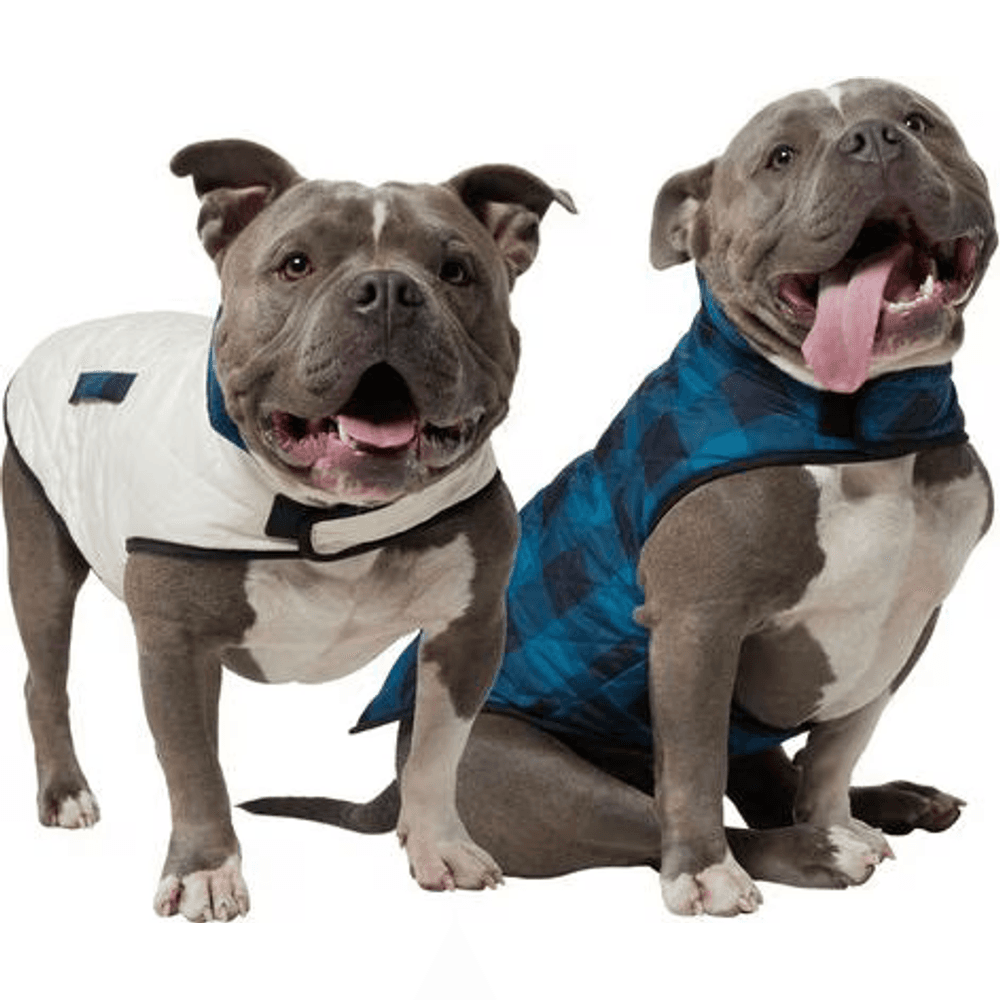
A lightweight, water-resistant insulated jacket that adds a warm layer for a dog that shivers in cold or wet weather. Reversible for two looks, with a leash opening and hook-and-loop closure for a quick, snug fit.
Petful may earn a commission when you click through to Chewy, at no extra cost to you.
Norwegian Elkhound
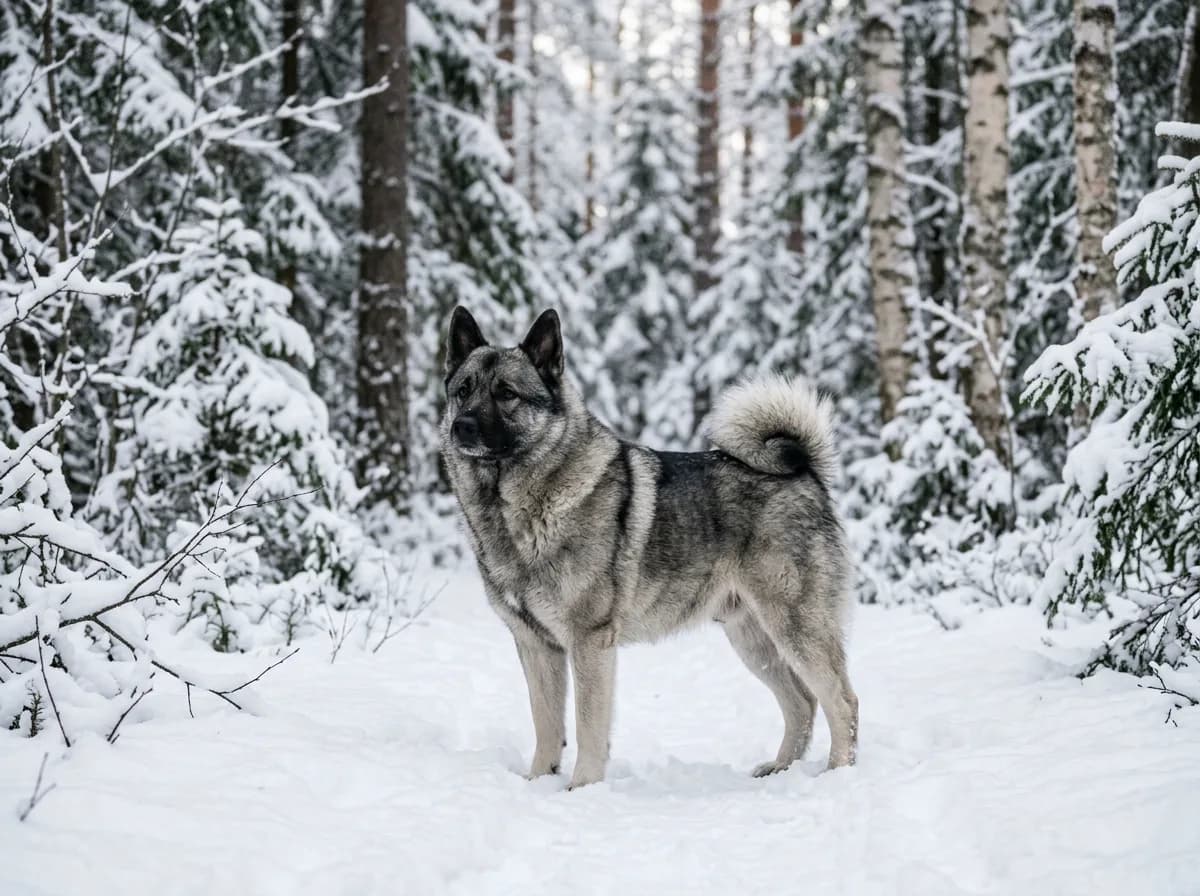
A hardy, courageous hunter from Scandinavia, the Norwegian Elkhound tracked moose and bear through harsh Nordic winters. The dense gray double coat protects against wind and cold, and the breed is energetic, bold, and deeply loyal.
Finnish Lapphund
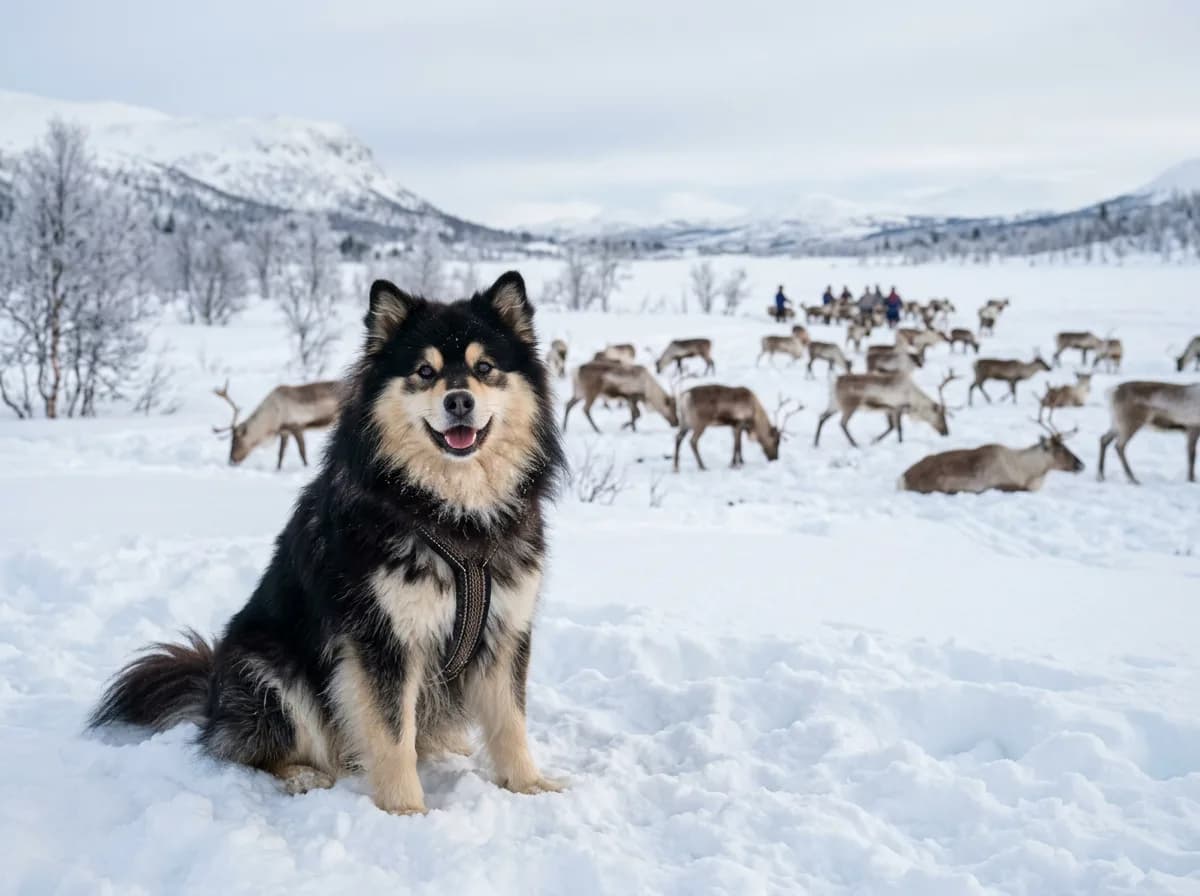
Bred by the Sami people to herd reindeer above the Arctic Circle, the Finnish Lapphund is a friendly, submissive-tempered herder with a thick, weatherproof coat. It is calmer and more biddable than many working breeds, which makes it a strong family option for cold climates.
Icelandic Sheepdog
Iceland's only native breed, this spitz-type herder has worked the island's cold, wet landscape for over a thousand years. A weather-resistant double coat and a cheerful, hardy disposition make it a versatile cold-climate companion.
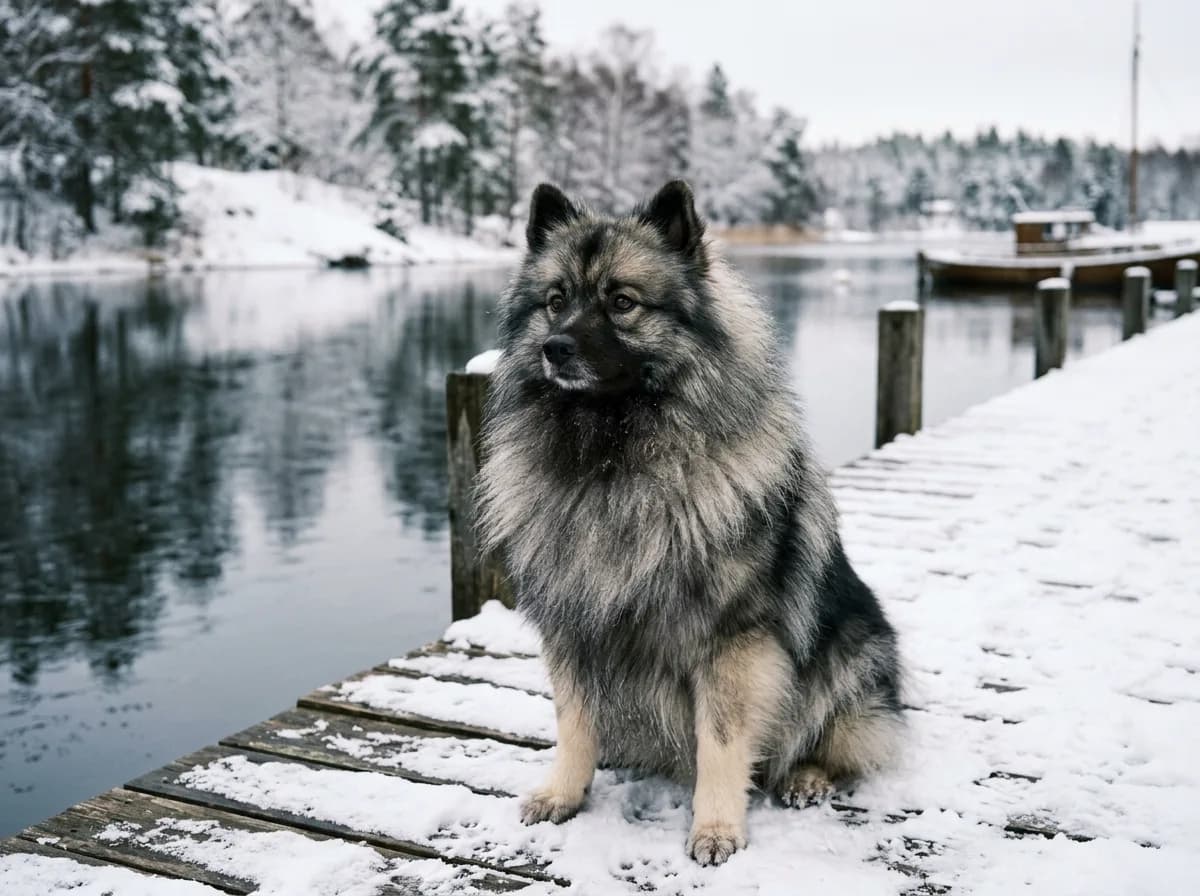
Keeshond
A medium spitz from the Netherlands, the Keeshond wears a plush "lion" ruff and a dense double coat that shrugs off cold. Historically a barge watchdog, it is affectionate, people-oriented, and one of the more apartment-friendly cold weather dog breeds thanks to its moderate size.
Akita
Originating in the mountains of northern Japan, the Akita is a powerful, dignified guardian with a plush double coat built for winter. Loyal and reserved, Akitas bond intensely with their families and need firm, consistent socialization.
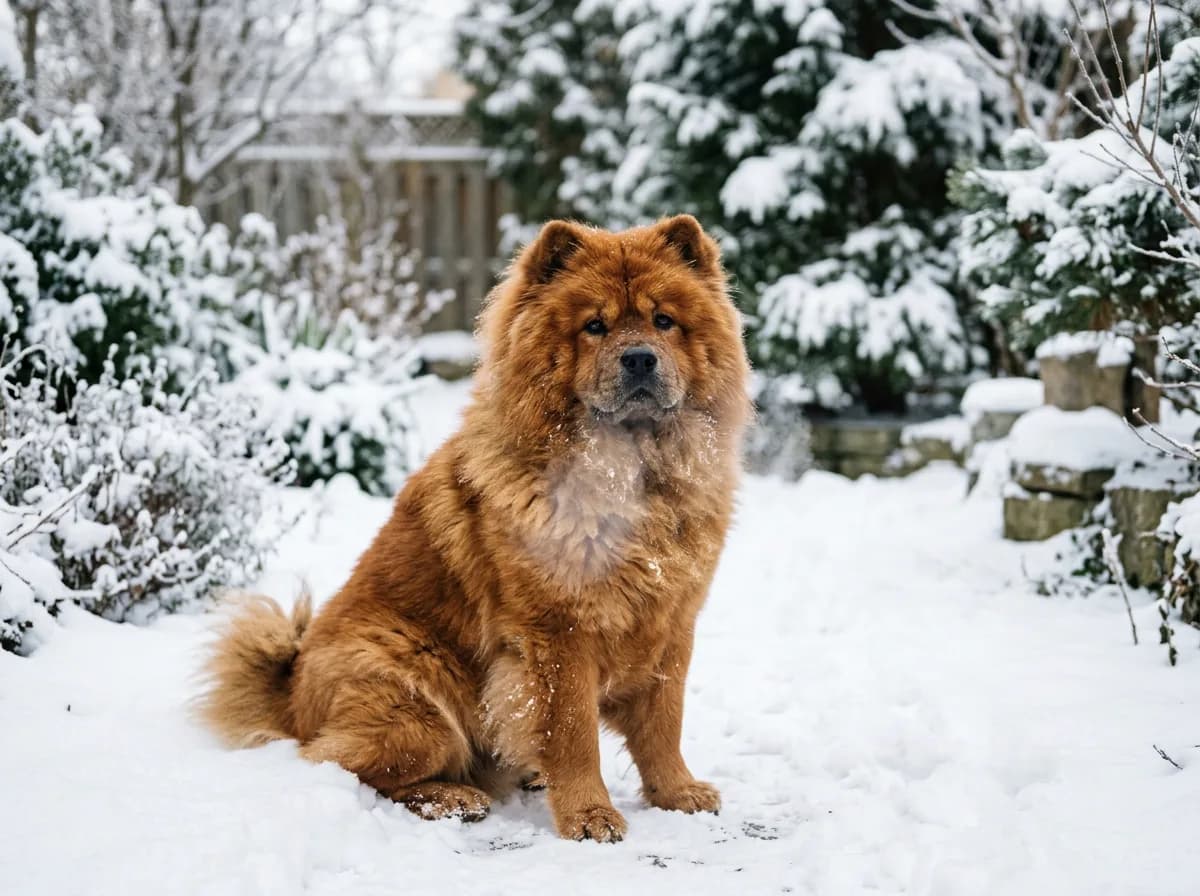
Chow Chow
The Chow's famously dense, standoffish double coat, along with its lion-like mane, made it a fixture in cold northern China as a hunter and guardian. Independent and aloof, the Chow is a cold-hardy breed that suits experienced owners.
Petful may earn a commission when you click through to Chewy, at no extra cost to you.
The Water Dogs: Newfoundland and Chinook
Newfoundland
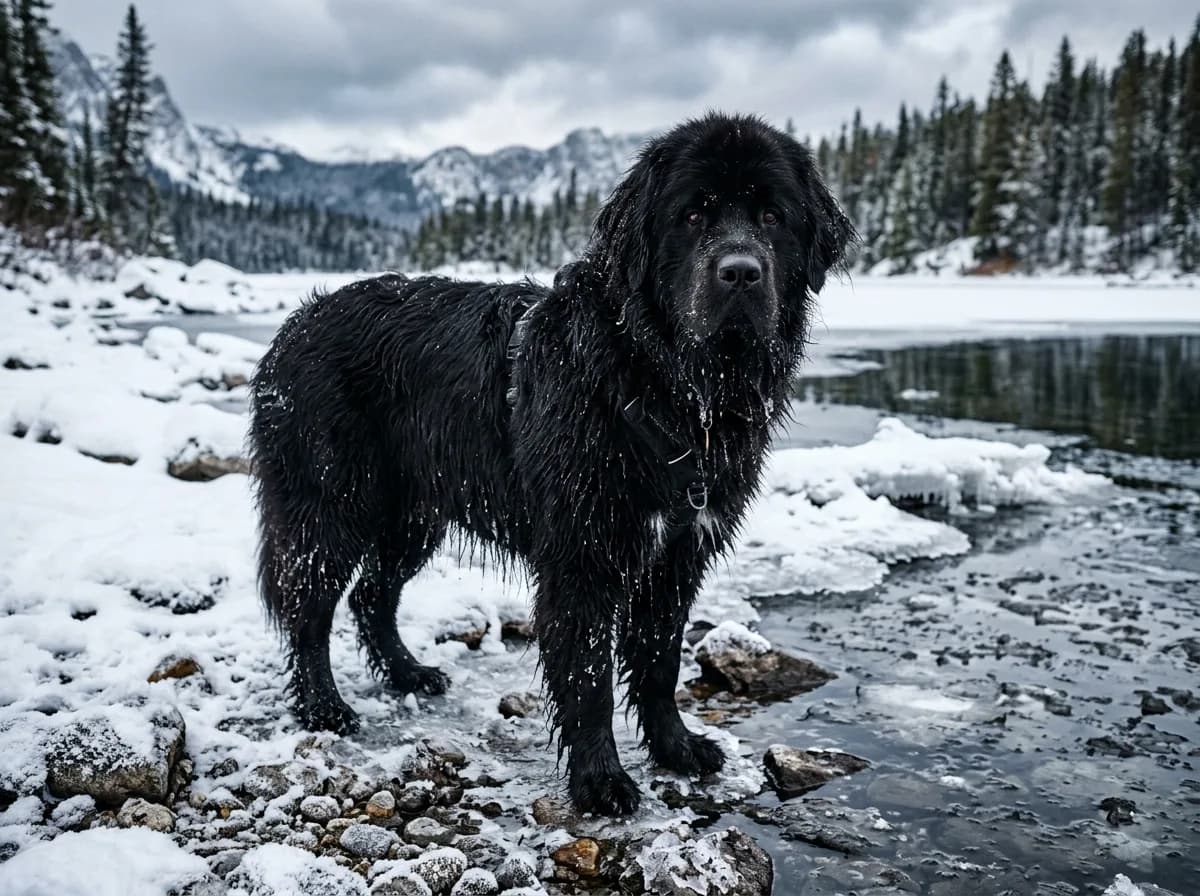
Famous for water rescue, the Newfoundland has a thick, water-repellent double coat and webbed feet that let it work in freezing water and deep snow alike. These are enormous, sweet-natured "nanny dogs," patient with children and calm indoors, though drool and shedding come with the territory.
Chinook
A rare American sled dog developed in New Hampshire in the early 1900s, the Chinook combines sled-dog power with an unusually gentle, family-friendly temperament. The dense coat handles cold well, and the breed's calm nature makes it a hidden gem for cold-climate families who want a working dog that is easy to live with.
| Breed | Size | Cold Tolerance |
|---|---|---|
| Siberian Husky | Medium | Extreme |
| Alaskan Malamute | Large | Extreme |
| Samoyed | Medium | Extreme |
| Bernese Mountain Dog | Large | High |
| Great Pyrenees | Large | High |
| Saint Bernard | Giant | High |
| Newfoundland | Giant | High |
| Norwegian Elkhound | Medium | High |
| Finnish Lapphund | Medium | High |
| Keeshond | Medium | Moderate to High |
| American Eskimo Dog | Small to Medium | Moderate to High |
How Cold Is Too Cold for These Dogs
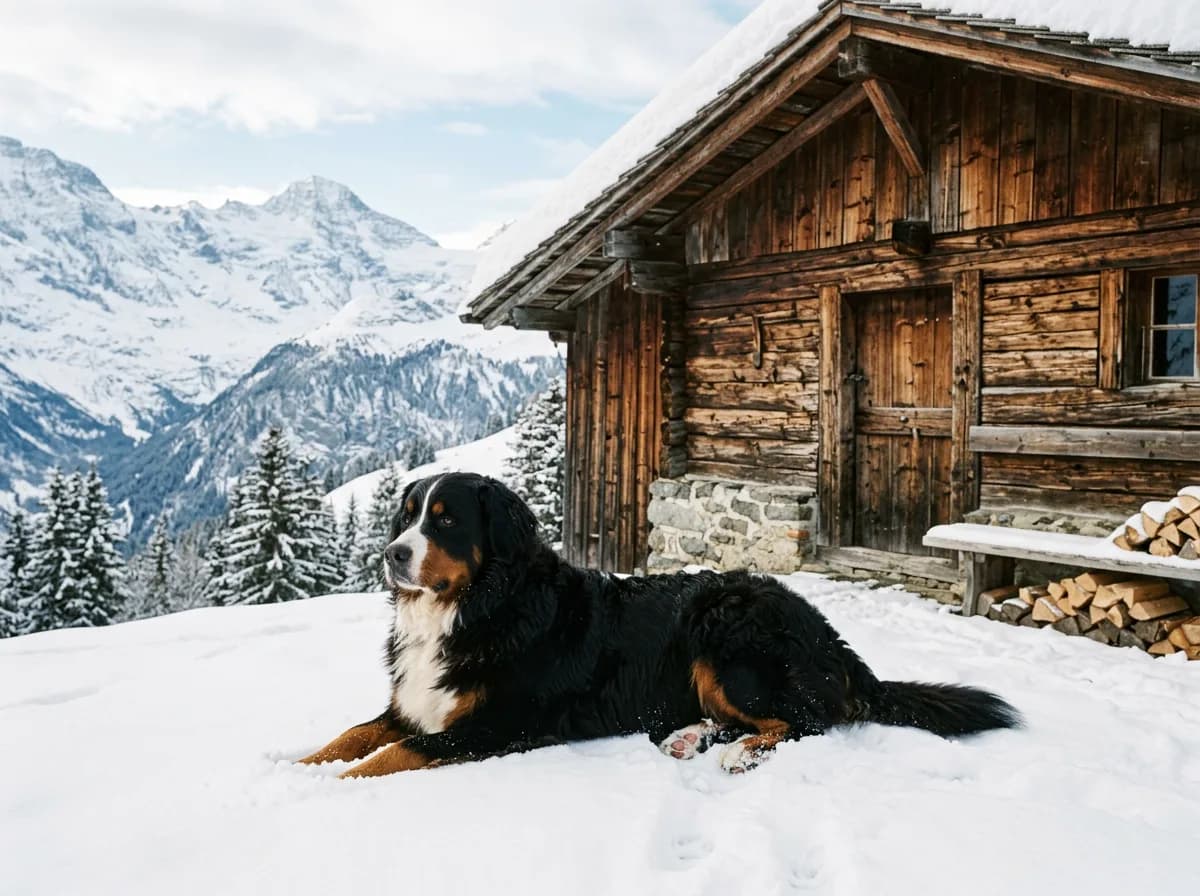
A thick coat buys a lot of tolerance, not immunity. The American Veterinary Medical Association notes that cold tolerance varies with coat, size, age, body fat, and activity, and that no dog should be left outside in extreme cold.
As a working rule of thumb, temperatures around 45 degrees Fahrenheit start to feel cool to cold-averse dogs, but true cold weather breeds remain comfortable well below freezing. Below roughly 20 degrees Fahrenheit, even hardy breeds face a rising risk of frostbite and hypothermia with prolonged exposure, especially in wind or wet conditions. Puppies, senior dogs, and any dog that is wet lose heat far faster.
Frostbite most often strikes the extremities: ear tips, tail, and paw pads. Signs include pale or gray skin, coldness, and pain when the area rewarms. Hypothermia shows up as violent shivering that then stops, lethargy, and stiffness. Both are veterinary emergencies. When in doubt, bring the dog inside, warm it gradually, and call your vet.
- A dry, calm 15 degrees Fahrenheit is very different from a wet, windy 25 degrees. Moisture collapses a double coat's insulating loft, and wind strips away the warm air layer. A soaked snow dog can chill dangerously even at temperatures it would shrug off dry.
Caring for a Cold Weather Dog
Owning one of these breeds is a year-round commitment, and much of the work happens away from the snow.
Grooming comes first. Double coats shed constantly and "blow" heavily twice a year, releasing the entire undercoat in clumps. Plan on frequent brushing, more during shedding season, to prevent painful mats that trap moisture against the skin.
Winter paw care matters too. Ice balls form between the toes on long walks, and road salt and de-icing chemicals irritate and crack pads. Wipe and dry the paws after outings, keep the fur between the pads trimmed, and consider paw balm or booties for long walks on treated pavement.
Then there is the summer problem. The same coat that conquers winter makes these breeds prone to overheating. In warm weather they need shade, constant fresh water, air conditioning on the hottest days, and exercise limited to the cool morning and evening hours. Heatstroke is a genuine risk for a Malamute in July.
Finally, respect the energy. These are working animals. Without a job, long walks, or a sport to burn their drive, cold weather breeds get bored and destructive. If you want to browse more breeds and their care needs, the Petful dog breeds hub is a good place to start, and the Rhodesian Ridgeback is worth a look if you want an athletic dog on the warmer end of the spectrum.
- A husky in a snowy region with an active owner is a joy. The same dog in a hot climate with a busy household is a recipe for a shed-covered house and a frustrated, overheated dog. Be honest about your weather and your schedule before you choose.
Which Breeds Should Avoid the Cold
For contrast, the breeds that struggle most in winter are the thin-coated and small ones. According to the American Kennel Club, single-coated and small breeds like Greyhounds, Whippets, Chihuahuas, and many toy breeds lose heat fast and need coats, sweaters, and limited outdoor time in winter. Brachycephalic (flat-faced) breeds such as Pugs and Bulldogs also handle temperature extremes poorly. Knowing which end of the spectrum a dog falls on is the whole point of choosing by climate.
Frequently Asked Questions
Related on Petful
- Warm Weather Dog Breeds: 20 That Love the Heat
- Siberian Husky: Full Breed Profile and Care Guide
- Saint Bernard Breed Profile: The Gentle Giant
- The 7 Types of Dogs: Breed Groups Explained
Breeds with dense double coats do best in the cold. Top cold weather dog breeds include the Siberian Husky, Alaskan Malamute, Samoyed, Bernese Mountain Dog, Great Pyrenees, Saint Bernard, Newfoundland, Norwegian Elkhound, Finnish Lapphund, and Akita. These dogs carry an insulating undercoat, a weather-resistant outer coat, and a sturdy build that holds body heat, which is why they stay comfortable well below freezing.
Thin-coated and small breeds handle cold poorly. Greyhounds, Whippets, Chihuahuas, Italian Greyhounds, and most toy breeds lack the insulating undercoat that cold weather dogs rely on, so they chill quickly and need sweaters and limited outdoor time. Flat-faced breeds like Pugs and Bulldogs also regulate temperature poorly and struggle in extreme cold.
Every dog bonds differently, but several cold weather breeds are known for intense devotion. The Bernese Mountain Dog, Newfoundland, and Saint Bernard are famously affectionate and family-focused, while working breeds like the Samoyed and Finnish Lapphund are deeply people-oriented. Devotion has more to do with the individual dog, early socialization, and daily time together than with breed alone.
Among cold weather breeds, the Finnish Lapphund, Samoyed, and Chinook stand out as eager-to-please, family-friendly dogs. More broadly, breeds bred to work closely with people, such as herders and retrievers, tend to be the most people-pleasing because cooperation was part of their job. Herding breeds like the Collie are often cited as the ultimate people pleasers.
The most responsive cold weather breeds are the herders and gentler working dogs, including the Finnish Lapphund, Chinook, and Bernese Mountain Dog, which tend to be biddable and trainable. Independent guardian and sled breeds such as the Great Pyrenees, Akita, and Siberian Husky were bred to make their own decisions, so they are more strong-willed and need patient, consistent training.
Many cold weather breeds are restricted by apartments and rental insurance policies, usually for size or breed reputation rather than temperament. Large sled and guardian breeds like Alaskan Malamutes, Akitas, Great Pyrenees, and Saint Bernards are common on restricted lists because of their size, exercise needs, or barking. Always check a building's specific breed and weight policy before adopting.
The Bernese Mountain Dog is often called the "heartbreak breed" because of its sadly short average lifespan, typically only around 7 to 10 years, and its higher-than-average rate of cancer. Owners adore the breed's gentle, devoted nature, which makes the short time together especially hard. Choosing a health-tested breeder can help improve the odds.
Dogs do not feel guilt the way people do, but they read our mood and respond with appeasement behaviors that look like an apology: lowered head and ears, a tucked tail, avoiding eye contact, a slow tail wag, or nudging and leaning into you. These are calming signals meant to smooth things over and restore a friendly connection, not true remorse.

Kristine Lacoste has been researching dog and cat breeds for nearly a decade and has observed the animals up close at dog shows in both the United States and the United Kingdom. She is the author of the book One Unforgettable Journey, which was named as a finalist for a Maxwell Award from the Dog Writers Association of America, and was host of a weekly pet news segment on the National K-9 Academy Radio Show. In addition, she was the New Orleans coordinator for Dogs on Deployment, a nonprofit that helps military members and their pets, for 3 years. Kristine has researched and written about pet behaviors and care for many years. She holds a bachelor’s degree in psychology, another bachelor’s degree in English and a Master of Business Administration degree.
Sign up for expert-backed reviews and safety alerts all in one place.