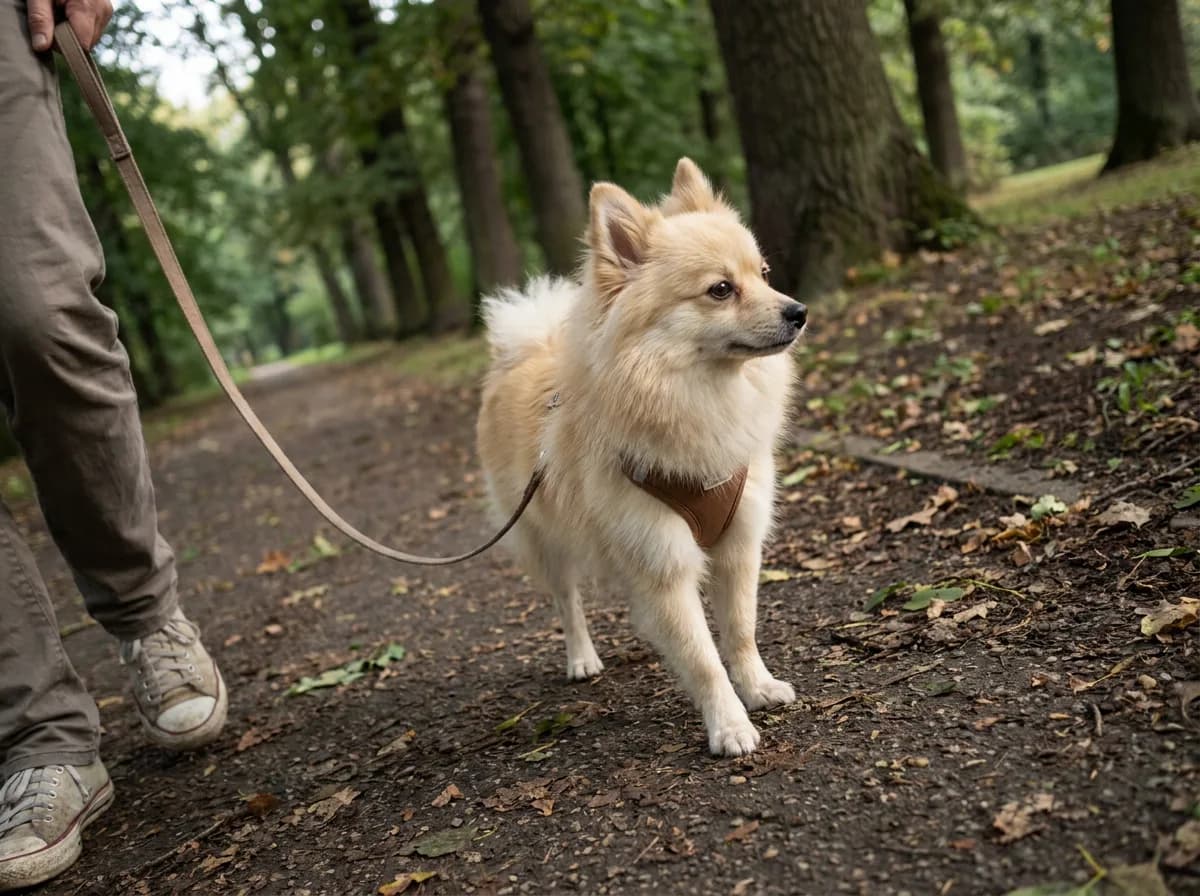
Saint Bernard Breed Profile: The Gentle Giant
The Saint Bernard is a giant, gentle, family-loving dog from the Swiss Alps. This complete breed profile covers size, temperament, grooming, drooling, health problems, lifespan, cost, and exactly who this affectionate rescue breed is right for.

Petful is reader supported. As an affiliate of platforms like Amazon and Chewy, we may earn a commission when you buy through links on this page. There is no extra cost to you.
The Saint Bernard is one of the most recognizable dogs on earth: a giant, red-and-white working breed from the Swiss Alps famous for a calm temperament, deep loyalty, and a long history of mountain rescue. If you have ever pictured a towering rescue dog trudging through snow, you were picturing a Saint Bernard. This breed profile walks through everything a prospective owner needs, from size and temperament to grooming, health, cost, and whether one of these gentle giants belongs in your home.
Weighing anywhere from 120 to 180 pounds and standing over two feet at the shoulder, the Saint Bernard is not a casual choice. But for families with the space, the patience, and the budget, few breeds return affection so completely.
- 1Saint Bernards are giant, gentle, family-oriented dogs bred for alpine rescue in Switzerland
- 2Expect 120 to 180 pounds, heavy drool, seasonal shedding, and a shorter 8 to 10 year lifespan typical of giant breeds
- 3They are excellent with children and calm indoors, but need space, cool environments, early training, and a serious health-and-food budget

Sign up for expert-backed reviews and safety alerts all in one place.
Saint Bernard at a Glance
Before the deep dive, here is the quick snapshot most buyers want first. These figures reflect breed-standard ranges reported by the American Kennel Club and confirmed against multiple breed references.
| Trait | Male | Female |
|---|---|---|
| Height | 28 to 35 in (70 to 90 cm) | 26 to 31 in (65 to 80 cm) |
| Weight | 140 to 180 lbs (64 to 82 kg) | 120 to 140 lbs (54 to 64 kg) |
| Life expectancy | 8 to 10 years | 8 to 10 years |
| Coat | Short-haired or long-haired double coat | Short-haired or long-haired double coat |
| Temperament | Calm, patient, affectionate | Calm, patient, affectionate |
A few things stand out immediately. First, this is a genuinely huge dog: a mature male can outweigh an adult human. Second, the lifespan is short, which is the hard trade-off of giant breeds. Third, the temperament line is the reason the breed endures: Saints are famously easygoing and tolerant, which is exactly what you want in a dog this powerful.

Petful may earn a commission when you click through to Chewy, at no extra cost to you.
Where the Saint Bernard Came From

The breed traces to the Great St. Bernard Hospice, a monastery and traveler's refuge founded in the 11th century on a treacherous 8,000-foot pass between Switzerland and Italy. By the late 1600s the monks kept large dogs as watchdogs and companions, and those dogs proved unexpectedly gifted at something else: finding travelers lost in the snow.
Over roughly two centuries, hospice dogs are credited with locating and rescuing many stranded travelers on the pass. They worked in teams, could detect a buried person and dig them out, and would lie across a chilled traveler to provide warmth. The most legendary of them, a dog named Barry, is said to have saved dozens of people in the early 1800s and remains a national symbol in Switzerland.
The famous image of a Saint Bernard with a small wooden brandy barrel strapped under its chin is a romantic invention, not history. That detail comes from a 19th-century painting by Edwin Landseer, not from the hospice's actual rescue practice. The monks did not send dogs out carrying alcohol, and giving alcohol to a hypothermic person is dangerous, but the picture stuck so thoroughly that the barrel is now inseparable from the breed's public image.
The breed was refined in the 1800s, including outcrosses to Newfoundlands that produced the long-haired variety, and was recognized by the American Kennel Club in 1885. The name "Saint Bernard" itself did not become standard until the mid-1800s; earlier the dogs were simply called Hospice dogs or Alpine mastiffs.
- The little brandy cask under a Saint Bernard's chin comes from a Victorian painting, not from real rescue work at the hospice. Alcohol actually accelerates heat loss, so it would have harmed the very people the dogs were sent to save.
That rescue heritage still shapes the dog you bring home today. Centuries of selection for a stable, people-focused temperament, for the willingness to work alongside humans in miserable conditions, and for tolerance of strangers in distress are exactly why the modern Saint Bernard is so steady and so gentle with children. When you meet a calm, unflappable Saint, you are meeting the product of that long alpine job description.
Appearance and Size
Everything about the Saint Bernard is built on a large frame. The head is massive and broad with a short muzzle, expressive dark eyes, and a gentle, slightly wrinkled brow that gives the breed its trademark soulful expression. The body is muscular and deep-chested, the tail long and heavy, and the overall impression is one of powerful, unhurried strength.
There are two coat types. The short-haired (smooth) variety has a dense, close coat that lies flat. The long-haired (rough) variety carries a longer, slightly wavy coat with feathering on the legs and tail. Both are double coats built for cold, and both shed. Neither is more "purebred" than the other; they are simply two accepted varieties of the same breed.
Standard colors are combinations of white with red or brindle. Recognized patterns include red and white, reddish-brown brindle, reddish-brown splash, and reddish-brown mantle, usually with white on the chest, feet, tail tip, and a blaze on the face. A dark "mask" over the eyes and ears is common and desirable in the show ring.

Petful may earn a commission when you click through to Chewy, at no extra cost to you.
How big do they actually get?
Puppies grow fast and stay puppies for a long time. A Saint Bernard often is not fully mature until 2 to 3 years old, and that slow, heavy growth is exactly why nutrition and joint care during puppyhood matter so much. Overfeeding a giant-breed puppy or letting it grow too fast stresses developing joints and raises the risk of orthopedic problems later. A large-breed puppy formula, fed to a lean body condition rather than free-fed, is the safer path.
Saint Bernard Temperament and Personality

The single most important thing to understand about the Saint Bernard is its temperament. This is a calm, patient, deeply affectionate dog that was bred to work closely with people and to be trustworthy around vulnerable travelers, including children. That heritage shows: well-bred, well-socialized Saints are famously tolerant, steady, and gentle.
They are not high-energy or frantic. Indoors, an adult Saint Bernard is usually content to be a large, warm presence at your feet. They bond hard to their families and often dislike being isolated. This is a companion breed first and foremost, not a kennel dog or a backyard dog.
That said, "gentle" does not mean "no training needed." A dog that will weigh 150 pounds must learn basic manners as a small puppy, because a behavior that is cute in a 20-pound baby (jumping up, leaning, pulling on leash) is genuinely hazardous in a full-grown adult. Early, positive, consistent socialization and obedience are non-negotiable for this breed.
Are Saint Bernards good with children?
Yes, and this is one of the breed's defining traits. Saint Bernards are widely regarded as excellent family dogs and are typically patient and careful with kids. Their size still means supervision is essential with very young children, not because the dog is aggressive but because a friendly 150-pound dog can knock over a toddler without meaning to.
Do they make good guard dogs?
They make excellent alert dogs and deterrents, but they are not aggressive guard dogs. A Saint Bernard's deep bark and sheer size will make almost anyone think twice, and the breed is naturally watchful of home and family. But the temperament is fundamentally friendly, not suspicious, so do not expect or train aggression. Their protective value is presence, not attack.
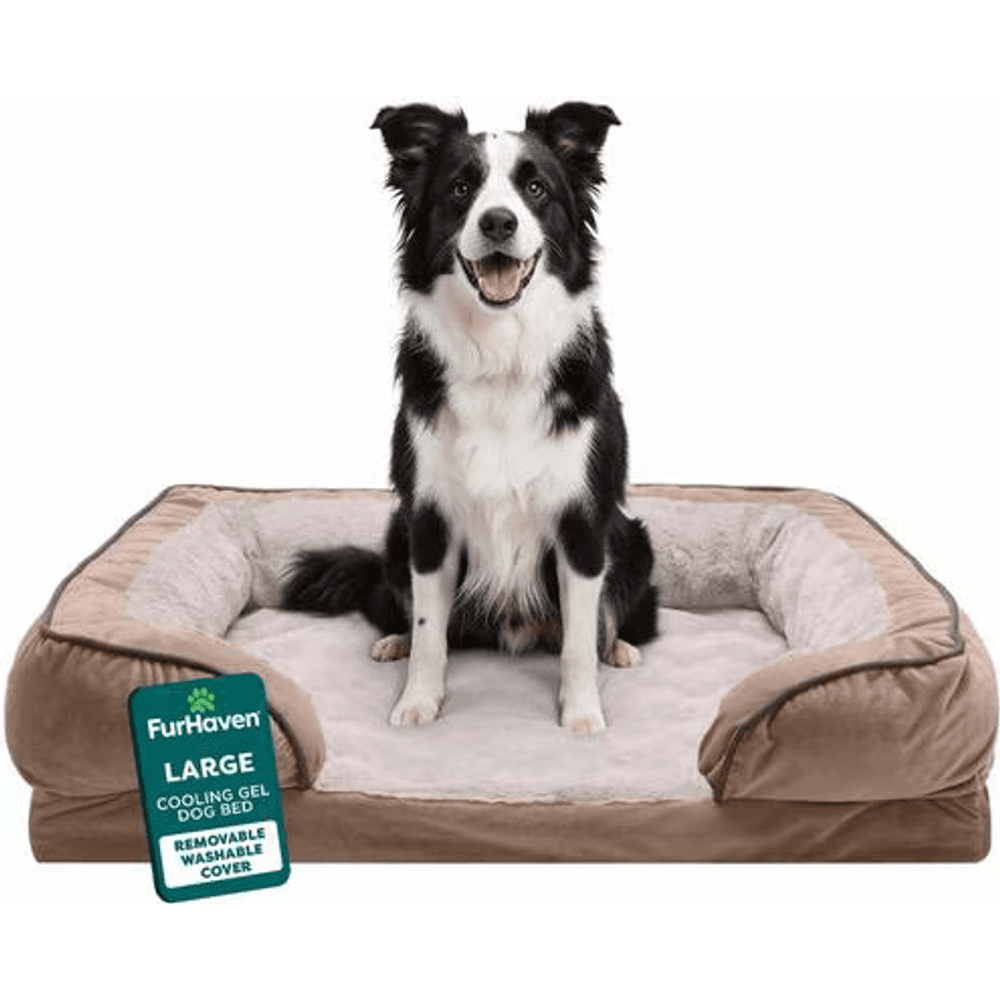
An orthopedic sofa bed with three bolstered sides for dogs who like to rest their head and joints against a cushion. The supportive foam base cradles hips and elbows, a comforting spot for an older or shaky dog to settle.
Petful may earn a commission when you click through to Chewy, at no extra cost to you.
- Everything you teach a Saint Bernard puppy gets multiplied by 150 pounds later. Leash manners, "off," and calm greetings are far easier to install at 20 pounds than to fix at full size. Start the week the puppy comes home.
Exercise and Living Needs
Saint Bernards are moderate-energy dogs, not athletes. Daily walks and some room to move keep them healthy and prevent weight gain, but they do not need or want intense endurance exercise, and pushing a giant breed too hard, especially a young one, can harm growing joints. A couple of moderate walks a day plus access to a yard is a good baseline for an adult.
The bigger constraint is heat and space. This is a thick-coated, large, cold-adapted breed, and Saints overheat easily. In warm climates they need air conditioning, shade, fresh water, and walks scheduled for the cool parts of the day. They are indoor dogs that happen to enjoy cold weather, not outdoor dogs.
On space: while a calm adult Saint can adapt to a smaller home, the practical reality of a 150-pound dog (the turning radius, the water bowls, the sheer floor space it occupies) means a house with room and easy outdoor access suits the breed far better than a tight apartment.
Grooming a Saint Bernard
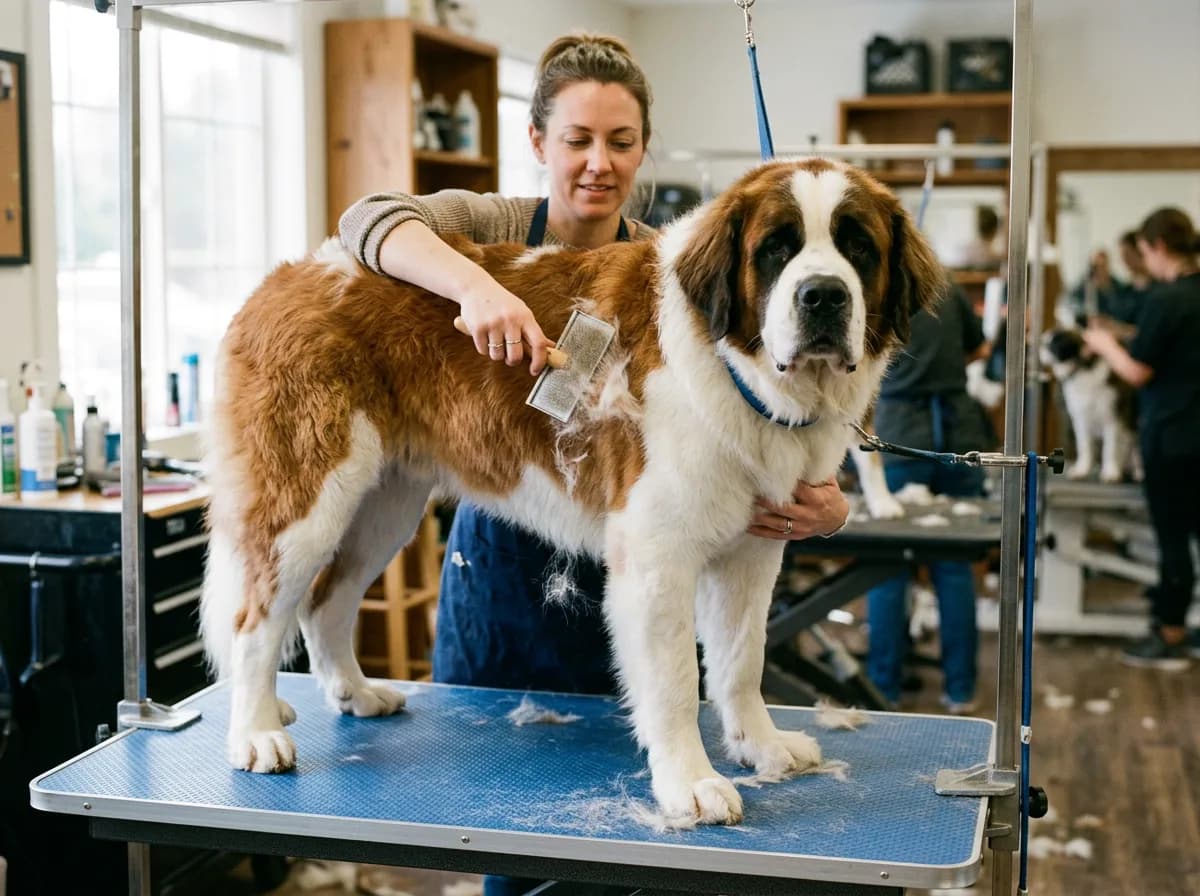
Grooming a Saint Bernard is straightforward but not effort-free, and it scales with the size of the dog. The core routine is regular brushing, drool management, and attention to the folds, ears, nails, and teeth.

The number-one veterinarian-recommended joint supplement brand. Glucosamine, chondroitin, and MSM support cartilage and cushion the joints, easing the stiffness and hind-end weakness that can leave an older or arthritic dog trembling.
Petful may earn a commission when you click through to Chewy, at no extra cost to you.
- Brush the coat two to three times a week, and daily during the heavy seasonal sheds in spring and fall. Both the short-haired and long-haired varieties shed; the long coat simply shows it more.
- Wipe the mouth and facial folds regularly. Saints drool, and trapped moisture in the loose lips and any facial wrinkles can cause skin irritation if left dirty.
- Bathe every couple of months or when dirty. Over-bathing strips the double coat's natural oils.
- Trim nails every few weeks. Overgrown nails on a heavy dog change the gait and stress the toes and joints.
- Clean the ears and check them for redness or odor, and brush the teeth several times a week to support dental health.
Do Saint Bernards drool a lot?
Yes. This is one of the breed's signature (and messiest) traits. The loose, heavy flews (upper lips) that give the Saint its jowly look also trap and sling saliva, especially after drinking, eating, or exercise. If a pristine, drool-free home is a hard requirement for you, this is not your breed. Owners typically keep a "drool towel" handy and simply accept it as part of the package.
Saint Bernard Health
Giant breeds live shorter lives and carry a heavier orthopedic and cardiac burden than small dogs, and the Saint Bernard is no exception. The typical lifespan is 8 to 10 years. Buying from a health-testing breeder and managing weight, joints, and heat carefully are the biggest levers an owner controls.
The most commonly cited health concerns in the breed include the following, drawn from breed-club health guidance and veterinary references:

Petful may earn a commission when you click through to Chewy, at no extra cost to you.
- Hip and elbow dysplasia. Malformed joints are common in giant breeds and can lead to pain and arthritis. Responsible breeders screen breeding dogs, and keeping a Saint lean protects the joints.
- Gastric dilatation-volvulus (bloat). This is a sudden, life-threatening emergency in which the stomach fills with gas and twists. It is more common in large, deep-chested breeds and requires immediate veterinary care. Learn the signs and ask your vet whether a preventive gastropexy is appropriate.
- Dilated cardiomyopathy and other heart conditions. Giant breeds are prone to heart disease, so periodic cardiac checks matter as the dog ages.
- Eye conditions such as entropion and ectropion, where the eyelid rolls inward or droops outward, and cataracts. Some cases need surgical correction.
- Bone cancer (osteosarcoma). Large and giant breeds carry an elevated risk.
- Epilepsy, and heat sensitivity from the heavy double coat.
None of this means a Saint Bernard is destined to be sick. It means an owner should budget for giant-breed veterinary care, insure early, feed for a lean body condition, and work with a breeder who screens for hips, elbows, heart, and eyes.
- A distended or hard belly, unproductive retching, drooling, restlessness, and a hunched posture can signal gastric dilatation-volvulus, a fast-moving emergency in deep-chested dogs. If you see these signs, go to an emergency vet immediately. Minutes matter.
A note on brachycephalic features and breeding
The Saint Bernard is not a classic short-faced (brachycephalic) breed like a Bulldog, but the modern show type has trended toward a heavier head, shorter muzzle, and more facial skin than the original hospice dogs. Extreme versions of that look can contribute to breathing difficulty in heat and to eye and skin problems. Choosing a breeder who favors a functional, moderate head and open nostrils, and who screens for the eye conditions above, is a meaningful welfare decision, not just an aesthetic one.
Feeding a Saint Bernard
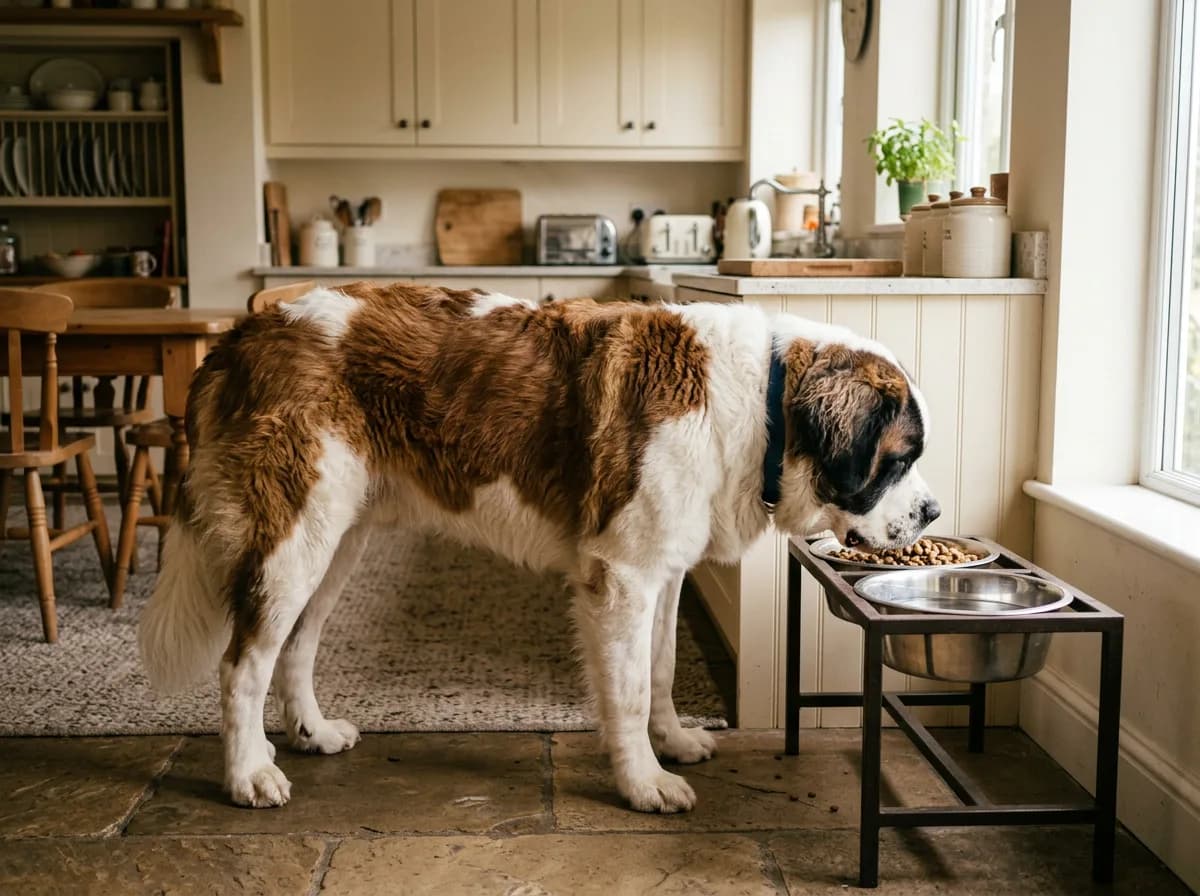
A giant dog eats like one, and the right feeding plan changes across the dog's life. Puppies should be on a large or giant-breed puppy formula that controls growth rate and supports developing joints; growing too fast is a risk, not a goal. Adults do well on a quality large-breed formula fed to maintain a lean, visible waist.
Because bloat is a real risk in this breed, feeding mechanics matter. Many owners split the daily ration into two or more meals rather than one large one, avoid heavy exercise right around mealtimes, and ask their veterinarian about slow-feeder bowls and other risk-reduction steps. Fresh water should always be available, especially given how much these dogs drink and drool.
Portion control is genuinely a health issue for this breed, not a vanity one. Extra weight on a 150-pound frame multiplies the load on hips, elbows, and heart, all systems already under strain in a giant dog. The simplest daily habit an owner can build is a body-condition check: you should be able to feel the ribs easily under a thin layer of fat and see a waist from above. If the ribs disappear, the meals are too big.
What a Saint Bernard actually costs to own
Prospective owners often underestimate the lifetime bill. Beyond the purchase or adoption fee, plan for large volumes of quality food, oversized beds, crates, and gear, and higher-than-average veterinary costs driven by the breed's orthopedic, cardiac, and emergency risks. A single bloat surgery or a hip procedure can run into the thousands. Buying pet insurance while the dog is young and healthy, before any condition becomes a pre-existing exclusion, is one of the smartest financial moves a Saint Bernard owner can make, and it turns a catastrophic bill into a predictable monthly cost.
Is a Saint Bernard the Right Dog for You?
A Saint Bernard is a wonderful dog for the right home and a difficult one for the wrong home. The honest checklist looks like this.
A Saint Bernard may be right for you if you have interior space and easy outdoor access, live somewhere with cool weather or reliable air conditioning, can commit to early training while the dog is small, are unbothered by drool and shedding, and have the budget for giant-breed food, gear, and veterinary care. Families with children who want a calm, affectionate, patient dog are often a great match.
A Saint Bernard is probably not right for you if you want a low-shedding or tidy dog, live in a hot climate without climate control, are away from home for long stretches (the breed hates isolation), want a jogging or endurance partner, or need a long-lived dog, since the 8 to 10 year lifespan is a real emotional and practical consideration.
How to adopt or buy a Saint Bernard
There are two responsible routes. Breed-specific rescues place many Saint Bernards every year, including adults whose size and needs overwhelmed a previous owner; adopting an adult also lets you skip the intense puppy phase and know the dog's temperament. If you buy a puppy, choose a breeder who health-tests for hips, elbows, heart, and eyes, raises pups underfoot with early socialization, and will take a dog back at any point in its life. Avoid pet-store puppies and volume sellers, which are common outlets for poorly bred giant dogs.
- 1Best fit is a cool-climate home with space, an owner who trains early and is home often, and a real giant-breed budget
- 2Worst fit is a hot apartment, long hours away, a need for a tidy or long-lived dog, or a want for a high-energy running partner
- 3Adopt through breed rescue or buy only from a breeder who health-tests hips, elbows, heart, and eyes
Related Dog Breed Profiles You May Like
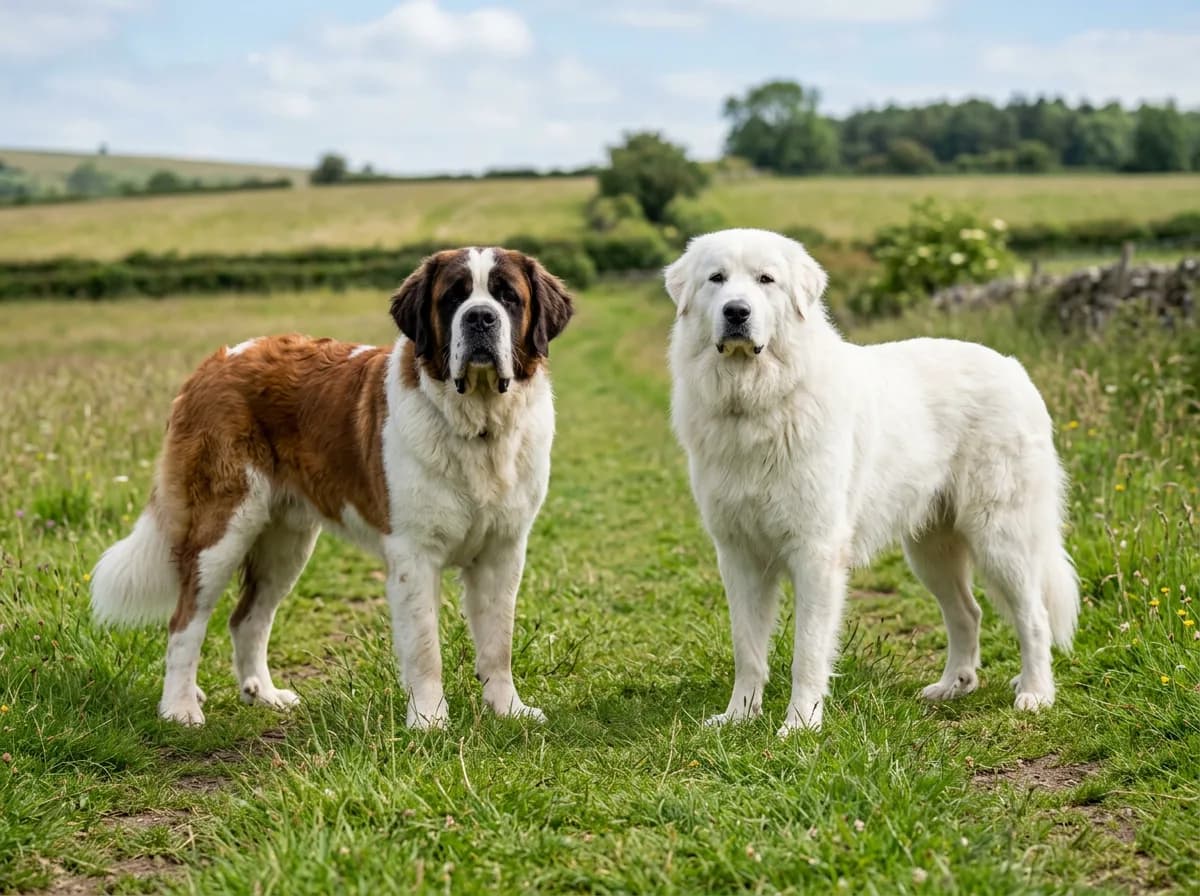
If the Saint Bernard has your attention, you may also want to compare it against other giants and working breeds before you decide. The Bernese Mountain Dog is another affectionate Swiss breed with a similar family temperament in a slightly smaller package, and the Great Pyrenees and Leonberger are close comparisons on size and coat. You can browse the full library of Petful dog breed profiles to keep researching.
Frequently Asked Questions
How to Train and Socialize a Saint Bernard
Because a Saint Bernard will soon be too big to physically manage, training is about installing habits before size makes force impossible. Prioritize the skills that protect a giant dog and the people around it: loose-leash walking, a solid "wait" at doors and curbs, "off" for jumping and counter-surfing, and calm acceptance of handling. Teach your puppy to stand quietly for nail trims, ear checks, and vet exams from the first week home, because a frightened 150-pound adult cannot simply be held still.
Socialization runs on a clock. The window for easy, low-stress exposure closes around 16 weeks, so use those early weeks to introduce new people, dogs, floor surfaces, car rides, and household sounds while your Saint is still light enough to guide. Enroll in a reward-based puppy class, keep sessions short and upbeat, and end each one on a win. Adolescence, roughly 8 to 18 months, often brings a testing phase, so stay consistent rather than harsh. Heavy-handed corrections tend to make this sensitive breed shut down instead of learn.
Everyday Life With a Gentle Giant
Living with a Saint Bernard changes small logistics around the house. Because giant-breed joints are vulnerable, discourage puppies from repeatedly climbing stairs or leaping in and out of vehicles, and use a sturdy ramp that saves both the dog's elbows and your back. Runners and rugs over slick floors give an aging dog secure footing and prevent the splayed-leg slips that stress hips.
Plan for the practical side of scale, too. Keep drool towels stationed near doors and food bowls, budget for oversized crates and orthopedic beds, and think through how you would move a dog you cannot lift to the vet in an emergency. Owners who sort these details out early tend to find day-to-day life with a Saint remarkably easy.
Related on Petful
- The 10 Biggest Dog Breeds in the World
- Dogue de Bordeaux: Complete Breed Profile
- Cane Corso Breed Profile: Complete Owner's Guide
- 18 Cold Weather Dog Breeds That Thrive in Snow
Yes. The Saint Bernard is widely considered one of the best giant family breeds. It is calm, patient, affectionate, and famously careful with children, a trait rooted in its history of working closely with people at the hospice. Its size means young children should always be supervised around it, but that is about accidental bumps, not aggression.
Yes, in two ways. A well-bred, health-tested puppy typically runs well into four figures, and adoption through a rescue is far cheaper. The bigger cost is lifetime care: a giant dog eats a lot of food, needs oversized gear, and is prone to expensive orthopedic and cardiac issues, so budget for high vet bills and consider pet insurance early.
The Saint Bernard is heavier. A male Saint typically weighs 140 to 180 pounds, while a male Great Pyrenees usually runs about 100 to 160 pounds. They can be similar in height, but the Saint is a bulkier, more massive dog overall. See our Great Pyrenees profile for a direct comparison.
Yes. Heavy drooling is one of the breed's signature traits, caused by the loose, jowly upper lips that trap and sling saliva, especially after eating, drinking, or exercise. Owners typically keep a towel handy and simply accept drool as part of life with the breed.
Not for long. Saint Bernards bond intensely with their families and are prone to loneliness and separation anxiety when isolated. A few hours is manageable for a well-adjusted adult, but this is a companion breed that does poorly with long daily absences and is happiest when it is with its people.
No, not excessively. Saint Bernards are generally quiet dogs that bark to alert rather than to chatter. When they do bark, the sound is deep and carrying, which makes them effective alert dogs even though they are not naturally noisy.
The breed is prone to hip and elbow dysplasia, gastric dilatation-volvulus (bloat), dilated cardiomyopathy and other heart disease, eye conditions such as entropion and ectropion, bone cancer, epilepsy, and heat sensitivity. Buying from a breeder who screens hips, elbows, heart, and eyes, keeping the dog lean, and knowing the signs of bloat are the biggest protections.
Moderate but consistent. Brush two to three times a week (daily during seasonal sheds), wipe the mouth and facial folds to manage drool and prevent skin irritation, bathe every couple of months, trim nails every few weeks, and keep the ears and teeth clean. Both the short-haired and long-haired varieties shed.
The Bottom Line
The Saint Bernard is a rare combination of imposing size and genuinely soft temperament, a dog bred to save lives and to sit patiently beside a child. For an owner with the space, the cool climate, the training commitment, and the budget, it is one of the most rewarding companions in the dog world. Go in clear-eyed about the drool, the shedding, the shorter lifespan, and the giant-breed vet bills, choose a responsible source, and you will have a devoted, gentle giant for every one of its years.

Kristine Lacoste has been researching dog and cat breeds for nearly a decade and has observed the animals up close at dog shows in both the United States and the United Kingdom. She is the author of the book One Unforgettable Journey, which was named as a finalist for a Maxwell Award from the Dog Writers Association of America, and was host of a weekly pet news segment on the National K-9 Academy Radio Show. In addition, she was the New Orleans coordinator for Dogs on Deployment, a nonprofit that helps military members and their pets, for 3 years. Kristine has researched and written about pet behaviors and care for many years. She holds a bachelor’s degree in psychology, another bachelor’s degree in English and a Master of Business Administration degree.
Sign up for expert-backed reviews and safety alerts all in one place.