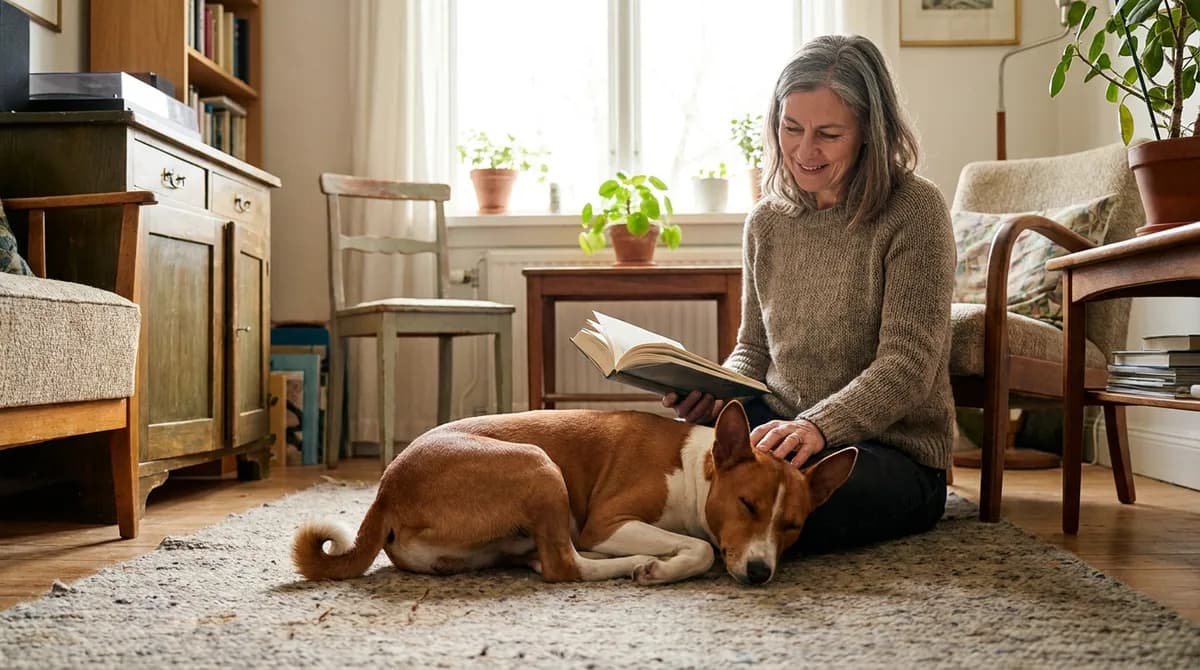
Basenji Price: Puppy, Adoption and Ongoing Costs
Compare dated Basenji breeder quotations and individual rescue fees, then build a personal budget for setup, training and recurring care without mistaking a few examples for a national average.
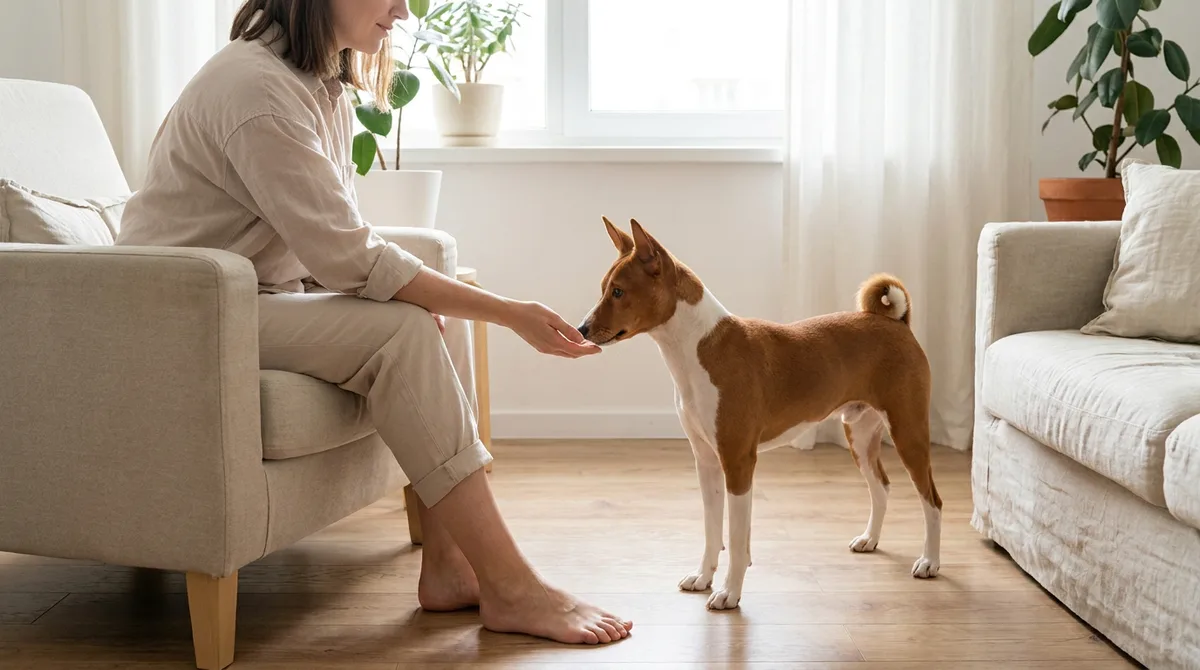
Meet the individual dog and discuss its needs before agreeing to a placement.
Petful is reader supported. As an affiliate of platforms like Amazon and Chewy, we may earn a commission when you buy through links on this page. There is no extra cost to you.
A Basenji price quote covers only part of the commitment. Breeder pages observed on October 13, 2026 included a $2,500 puppy price from Malachite Basenjis and $3,000 from Signet Kennels. Rescue listings showed individual fees of $325 for Ricca and $375 for Bleu. These are named examples, not a national price range.
The useful comparison is what each payment includes, when it is due, and what your household must provide afterward. A lower acquisition fee can leave more room in the budget, but it does not remove the need for veterinary care, suitable equipment, training and daily attention.

Sign up for expert-backed reviews and safety alerts all in one place.
How much does a Basenji cost?
For a purebred Basenji puppy, the documented examples below provide concrete starting points. Malachite lists $2,500, Signet lists $3,000, and Mariah lists companion puppies beginning at $3,000. Mariah separately lists show or breeding prospects beginning at $3,500. Those categories and their contractual obligations should remain distinct.
The price of a Basenji dog near you may differ. These US seller examples do not establish a measured national average or a complete Basenji puppy price range. Obtain a dated price quotation for the actual placement, including any travel, transfer or payment charges.
Temperament is another part of value that a price tag cannot establish. A dog whose known needs fit your home may be a better choice than a less expensive dog requiring arrangements you cannot sustain. Consider the acquisition cost alongside the routine you can realistically provide.
Build your first-year Basenji budget
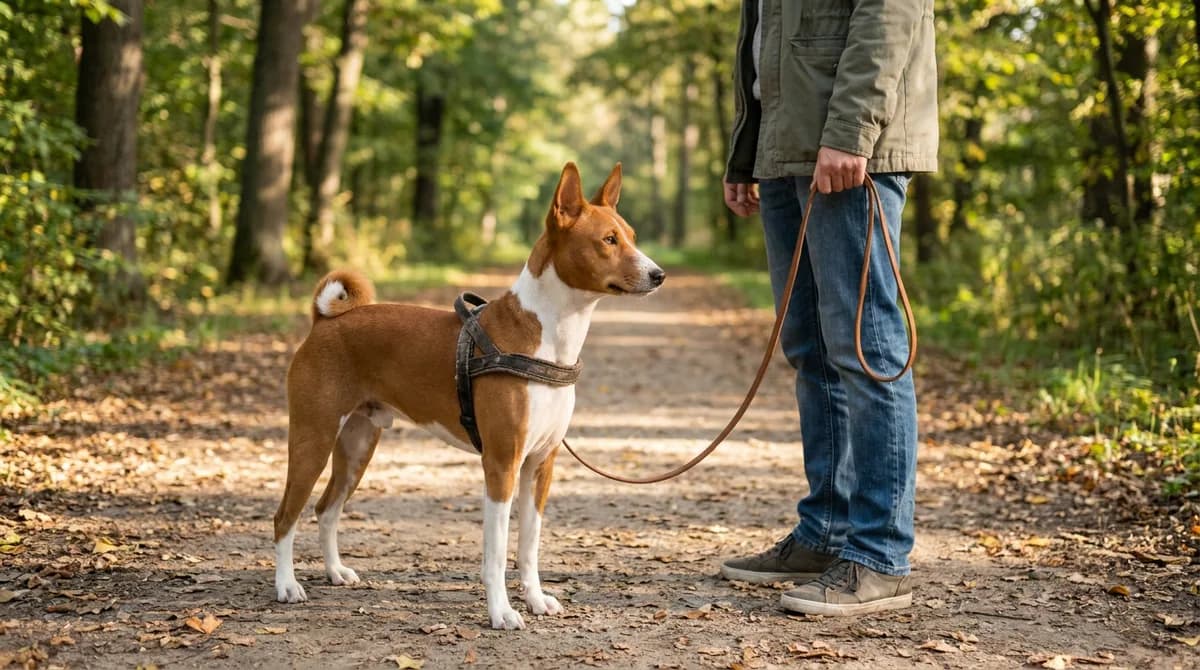
Begin with what the dog needs to arrive safely: suitable walking equipment, identification, transport arrangements, food and a resting area. Confirm what comes with the dog before buying duplicates. Size equipment for the individual rather than relying only on a breed label.
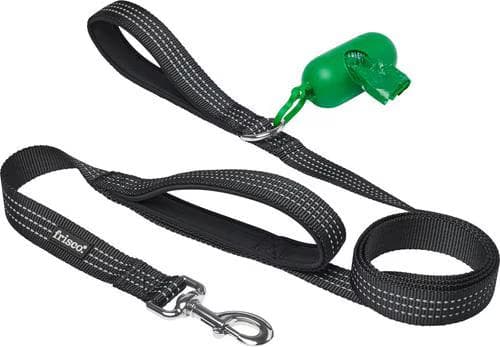
Include suitable walking equipment in your setup budget. Check the Frisco leash's clip size and handling comfort for your Basenji.
Petful may earn a commission when you click through to Chewy, at no extra cost to you.
The Frisco Traffic Leash with dual padded handles is one fixed-length walking option. Check the clip's size and weight for your Basenji and pair it with properly fitted equipment. A second handle can be useful for handling, but it does not replace training or a secure attachment.
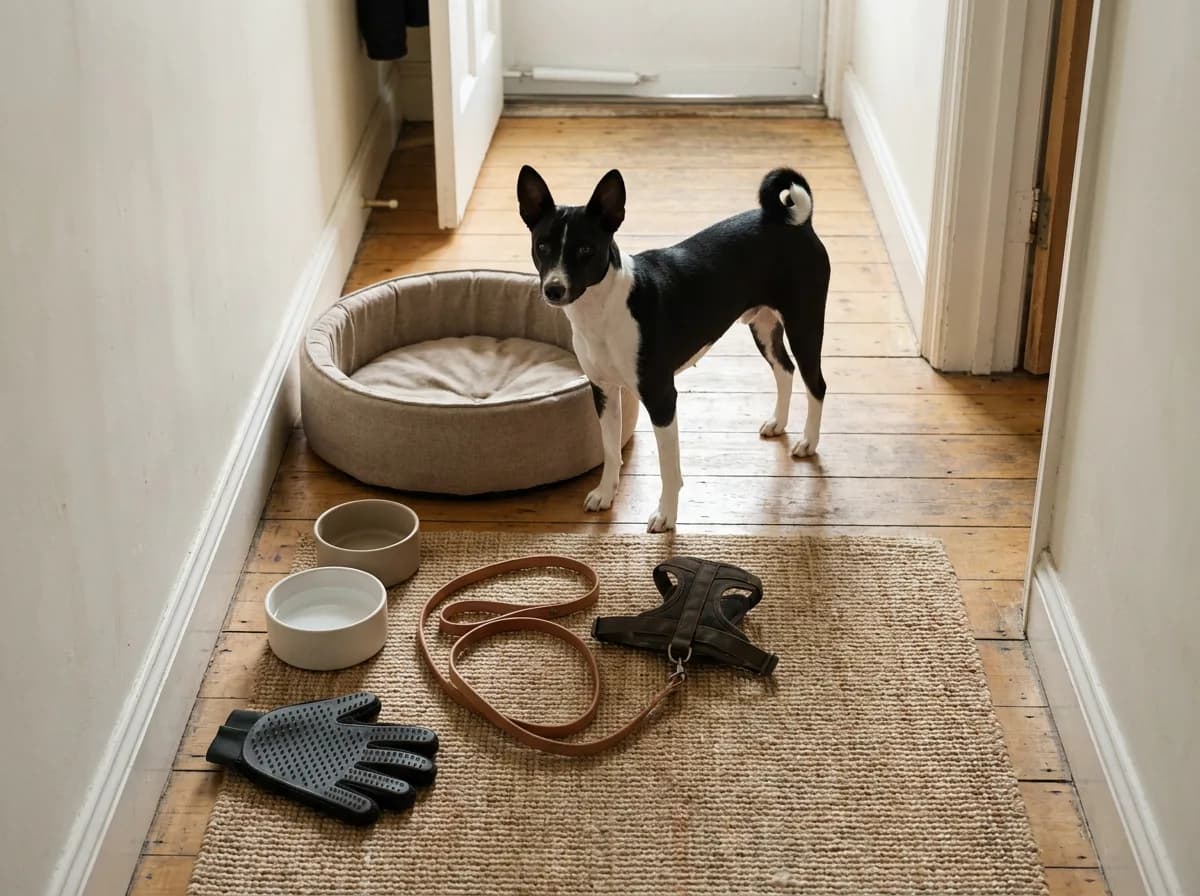
Separate the first-year cost into four categories. Acquisition is the purchase or adoption payment. One-time setup covers items needed at arrival. Monthly care covers regular replenishment and services. Annual or occasional expenses cover scheduled costs that do not belong in every month's spending.
| Category | What to include | Amount to enter |
|---|---|---|
| Acquisition, A | Full agreed purchase or adoption price, with a credited deposit counted once | Written placement quote |
| One-time costs, S | Travel, fitted equipment, resting area, identification and needed home setup | Actual item prices and local quote for services |
| Monthly expenses, M | Food, routine supplies and regularly used walking or care services | Your expected monthly total |
| Annual expenses, Y | Scheduled veterinary care, training packages, licenses and other periodic costs not already counted | Local quote for each item |
| First 12 months | A plus S plus 12 times M plus Y | Calculate from your own entries |
| Unexpected-care provision | Savings contribution or insurance premiums and retained out-of-pocket costs | Your chosen separate plan |
Do not add a deposit again when it is already credited toward the acquisition total. Similarly, an included microchip or completed veterinary service should not automatically appear as a second planned purchase. Future care still needs its own line when another service or visit will be due.

Consider the Four Paws glove and curry brush for short-coat care. Start with a simple grooming kit and introduce handling gently.
Petful may earn a commission when you click through to Chewy, at no extra cost to you.
A short coat keeps the grooming kit fairly simple. The Four Paws Magic Coat glove and curry brush is an option for gentle loose-hair removal. Begin with useful basics rather than buying a large assortment before learning what your dog tolerates.
To turn the worksheet into a usable household budget:
- Record each quote's date and what the amount includes.
- Mark each expense as one-time, monthly or periodic.
- Count each payment only once, including credited deposits.
- Add transport and care arrangements required by your location.
- Keep an unexpected-care plan separate from predictable spending.
Some costs arrive before the dog does. A reservation payment, equipment order or planned pickup trip may need funding weeks apart. List due dates next to the amounts so an affordable overall total does not hide an immediate cash shortfall.
Compare breeder quotations and inclusions
A Basenji puppy sale should come with enough detail to compare like with like. The following breeder statements were observed on October 13, 2026. They document what those named sellers published, not an endorsement, a national market survey or a promise that a puppy is currently available.
Malachite Basenjis states: “The current price for puppies is $2,500.” Its $500 deposit is applied to the total. The page says the deposit is nonrefundable if the buyer backs out; if the breeder cannot fulfill it, the buyer may receive a refund or choose priority for a subsequent litter.
Signet Kennels states: “Puppies are $3000 with a $1000 deposit required.” Its listed litters were marked placed in the observed page. The page also discussed a future reservation list, which should not be treated as confirmation of a puppy available now.

Mariah's pricing page states: “Pricing for our puppies begin at $3,000 for pet/companion quality.” Show or breeding prospects begin at $3,500 and are described as available on co-ownership terms. The page lists a $500 nonrefundable deposit. These are different placement categories, not interchangeable prices for the same agreement.
| Named breeder | Observed date and quoted price | Deposit terms | Written inclusions or conditions |
|---|---|---|---|
| Malachite Basenjis | October 13, 2026: $2,500 | $500 credited to the total; nonrefundable if buyer withdraws; refund or buyer-selected future-litter priority if breeder cannot fulfill | Microchip, initial distemper/parvo vaccination, AKC registration and preliminary veterinary examination; departure at 10–12 weeks |
| Signet Kennels | October 13, 2026: $3,000 | $1,000 required; confirm credit and refund terms in the agreement | Release at 10 weeks, two vaccination sets, microchip and deworming; listed litters were placed |
| Mariah | October 13, 2026: companion puppies from $3,000; show/breeding prospects from $3,500 | $500 nonrefundable; confirm how applied | Companion placement has stated spay/neuter conditions; show/breeding placement uses co-ownership; transport and applicable payment charges are separate |
Compare obligations as well as inclusions. Registration, a health report, a veterinary examination and a contractual guarantee are different things. A phrase such as “health guaranteed” should lead you to the actual agreement and reports, including the remedy offered and the conditions attached, rather than a conclusion that illness is impossible.
When evaluating reputable Basenji breeders, ask who raised the puppy, how it has been handled, what support continues after placement and what happens if you can no longer keep the dog. Review any showing, breeding, co-ownership or spay/neuter obligation before paying. A companion buyer should understand whether an agreement requires more than providing a pet home.
Travel can change the comparison between a nearby placement and a distant one. Mariah's observed page separately estimated at least $600 for US airline shipping, paid by the purchaser. That is the seller's dated statement, not a current fare for your route. Ask about the actual transport arrangement, required equipment, pickup location and responsibility for changes. Include your own travel and accommodation when those are necessary, even if no shipping charge appears on the puppy invoice.
Recurring care, training and veterinary costs
Recurring care includes both money and time. Food, routine supplies and prevention recommended by your veterinarian continue after the puppy purchase or adoption fee. Training also involves repeated practice at home, not only paying for a class.

Budget for useful enrichment, not a pile of unused toys. The Pet Parents Forager offers a supervised food-search option using the daily allowance.
Petful may earn a commission when you click through to Chewy, at no extra cost to you.
A Pet Parents Forager snuffle mat is one option for supervised food-search activity. Use a portion of the dog's normal allowance, place it on stable footing and remove it if the dog chews the material. It is an activity choice rather than a required purchase or a substitute for training.
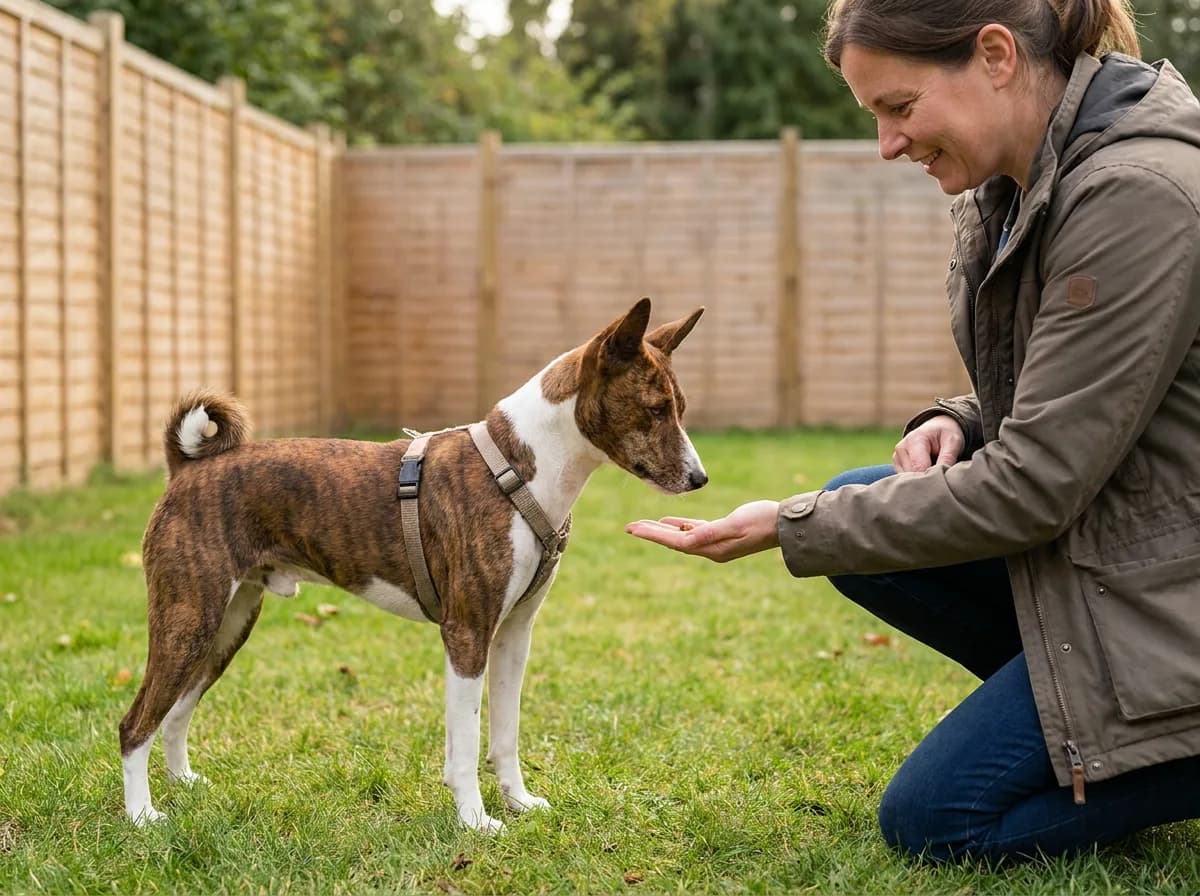
Ask a trainer what the quoted service includes: group or individual sessions, session length, support between appointments and any separate equipment charge. Choose reward-based instruction suited to the dog's needs. WebVet's dog training schedule helps translate a class into a practical routine.
Food spending is easiest to estimate from the food actually used and the amount your dog needs. Divide the package price by its usable quantity, then calculate consumption for a month. Add treats and other regularly purchased items. Avoid multiplying an assumed cup amount by a guessed food price.
For recurring purchases, make the calculation reproducible:
- Use the package size and price you can actually buy.
- Base consumption on your dog's feeding plan, including allowed treats.
- Include delivery or service charges where applicable.
- Recalculate when food, activity or prescribed care changes.
Veterinary estimates need similar detail. An examination fee may not include tests, vaccines, medication or follow-up. Ask which items are recommended now, which will recur and whether the estimate includes all planned services. WebVet's guide to veterinary visit costs explains categories worth discussing with the clinic.
For a laboratory test, distinguish the advertised test price from the full cost of obtaining and interpreting it. A sample collection or examination may be separate. Do not add every available genetic test to the budget automatically if reliable existing records already answer the relevant question.
Include the services your routine will genuinely require:
- A walker or sitter when your working hours make one necessary.
- Boarding or home care for planned travel.
- Replacement equipment as fit or condition changes.
- Follow-up training for specific challenges.
- Veterinary monitoring or prescriptions for an individual diagnosis.
An annual bill and a monthly savings contribution are two views of the same cost. If you set money aside monthly for a yearly appointment or license, do not also count the full annual bill as additional spending in your ownership total. Keeping a separate savings line can help with timing while the expense remains counted once.

Compare coverage choices for your pet, then request a quote directly on Lemonade.
- Check a price for your pet
- Review available coverage choices
- See the terms before you decide
Eligibility, waiting periods, limits and exclusions apply.
Petful may earn a commission when you click through to Lemonade, at no extra cost to you.
For optional services, distinguish the amount per booking from how often you expect to use them. One boarding stay does not establish a monthly charge. A weekly walker, by contrast, needs enough bookings in the calculation to reflect the actual schedule rather than a single attractive advertised rate.
Insurance can be part of that planning, but compare policy terms rather than only the monthly premium. Check the deductible, reimbursement, limits, waiting periods and treatment of pre-existing conditions. Budget for expenses you would still pay yourself. A personalized quote is specific to the application and coverage selected.
Adopting through a Basenji rescue
Basenji Rescue and Transport, or BRAT, provides a route to adopting a Basenji through individual listings and an application process. Rescue groups place dogs according to their needs and the prospective household, rather than offering a uniform alternative purchase price.
Two BRAT listings observed on October 13, 2026 illustrate the distinction. Ricca's page listed a $325 adoption fee. Bleu's page listed $375 and marked the placement pending. Neither example establishes today's availability or a standard fee for every Basenji rescue adoption.
| Listing observed October 13, 2026 | Individual fee | What to confirm |
|---|---|---|
| Ricca adoption fee | $325 | Confirm records, current medical needs, placement restrictions and availability with the coordinator |
| Bleu adoption fee | $375 | Listing was pending; confirm availability, actual care records and household fit |
| Adoption inclusions | Depend on the dog and placement record | Review completed care, ongoing treatment, transport arrangements and support |
BRAT describes veterinary care and post-adoption support among its adoption inclusions. Read the actual dog's records as well as general program information. Ricca's page contained differences between its general medical-care description and individual fields, so it would be inaccurate to declare a particular test completed from the general wording alone.
Ricca's listing described ongoing airway-related care and placement restrictions; Bleu's included detailed foster observations about handling and household fit. Those individual descriptions help explain why a fee alone is a poor comparison. Ask the coordinator what information is current and what support your particular home would need. Ask about medications, follow-up appointments and transport before agreeing to a placement. For a dog with ongoing needs, obtain the current care plan and a local estimate for continuing it. The adoption fee may be the smaller part of that decision.
People seeking Basenji puppies for adoption may find that age and availability vary. Remain open to a suitable adult if that fits your household, but do not treat an adult as automatically trained or less demanding. Foster observations can help you understand the dog's routine and identify practical costs before bringing it home.
Check health records and household fit
Before deciding to buy or adopt, connect each health report to the correct dog. Review the registered identity or other identification, the test, date and result. For a puppy, parental screening and the puppy's own veterinary care provide different information; one does not replace the other.
The Basenji Club of America's health guidance is a useful starting point for discussing Fanconi, eye health and other screening. Ask your veterinarian to explain unclear results and which records matter for the individual. A higher sale price does not convert a vague claim into documented testing.
Basenji Breed Guide: Personality, Sounds and Care
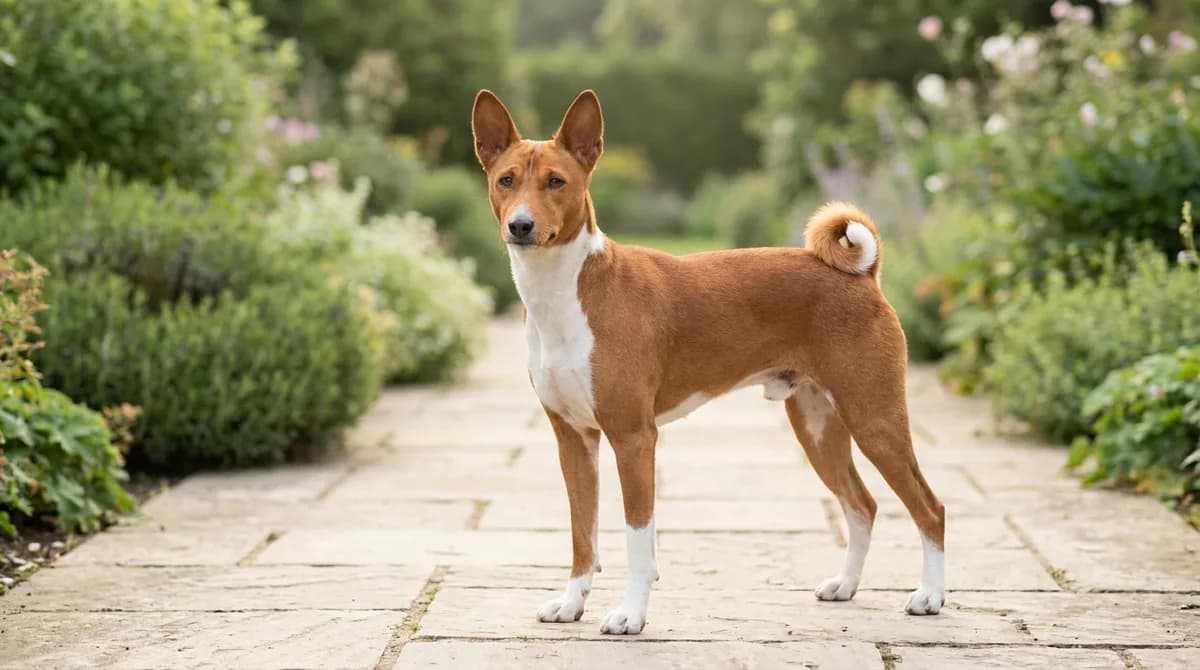
The Basenji dog has a short coat and does shed, although grooming is usually less involved than for many long-coated dogs. Exercise, containment and training still require daily effort. Our Basenji breed guide explains the full workload. Include that time in your decision rather than treating low grooming effort as evidence that the breed will be inexpensive or easy to keep.
Basenji Temperament: Training, Alone Time and Family Fit
Some Basenjis cuddle readily; others prefer contact on their own terms. Intelligence does not guarantee easy obedience, comfortable time alone or compatibility with other dogs. Our Basenji temperament guide addresses these questions and the practical downside of an unsuitable match. Ask about temperament with other dogs and the individual’s observed routine before assuming that a puppy price includes predictable adult behavior.
Basenji Yodel: Hear the Sound and Understand the Context
A seller's “barkless” description should not be read as a promise of silence. Basenjis generally do not bark in the ordinary repetitive manner, but can produce other sounds. Our Basenji yodel guide includes examples and explains observable context. Discuss noise and time-alone behavior with the person who knows the dog, particularly if your housing makes either a material concern.
Basenji Lifespan: What Research and Health Tests Show
A Basenji lifespan estimate is a planning reference, not a guarantee bundled into a purchase price. Population research and a breeder's experience describe different things, and neither predicts one puppy's future. Our Basenji lifespan guide explains those distinctions and health records. Plan for care across the dog's life rather than calculating an ownership total from an assumed exact number of years.
Basenji price questions
A rarity label does not establish value or justify a premium. Start with standard color verification and health records before color premium discussions. The recognized standard colors are a better reference than sales language, while the dog's documented care, contract and fit deserve priority over appearance.
Request the relevant parents' reports, including the Fanconi result and appropriate eye-health screening, alongside the puppy's own veterinary records. Test identity and documentation matter: match results to the correct dogs. Ask your veterinarian about missing or unclear information rather than accepting a general health guarantee as equivalent evidence.
The written terms should say. Malachite explicitly applies its deposit toward the total, but do not assume every seller uses identical accounting. Request the remaining balance, due dates, and refundable and nonrefundable amounts, including what happens if either side cannot complete the placement.
No. Individual needs determine the help and practice a dog may require after placement. Keep a training and management budget even when a rescue describes established skills. Ask which situations were observed in foster care and what support is available during the transition.
Basenji Colors: Four Standard Coats and White Markings
Basenji colors include chestnut red, black, tricolor and brindle with specified white markings. A casual tan Basenji description can mean different things, so examine the terminology before comparing advertisements. Our Basenji colors guide explains the standard and markings. Use it to understand descriptions, while keeping the actual placement agreement, health evidence and household match at the center of the purchase decision.

Coreen Saito is a pet writer and longtime shelter volunteer with more than a decade in animal rescue. She covers cat behavior, breed care, and the small, ordinary science of sharing a life with companion animals, with a particular focus on honest takes about the products and decisions that actually matter. At home in Arizona, she's outranked by Mac (a dog with the loudest opinion in the house), Rebel (a cat who governs by quiet authority), and Meri (an orange tabby who runs the late shift and the laundry basket). She writes about all three, plus the rescues that keep coming through her life, at LifeWithMinty.com.
Sign up for expert-backed reviews and safety alerts all in one place.