Basenji Yodel: Hear the Sound and Understand the Context
Listen to real Basenji sound examples, distinguish everyday vocal labels from anatomical claims, and learn what to observe around a yodel, a departure or an unexpected change in your dog's voice.

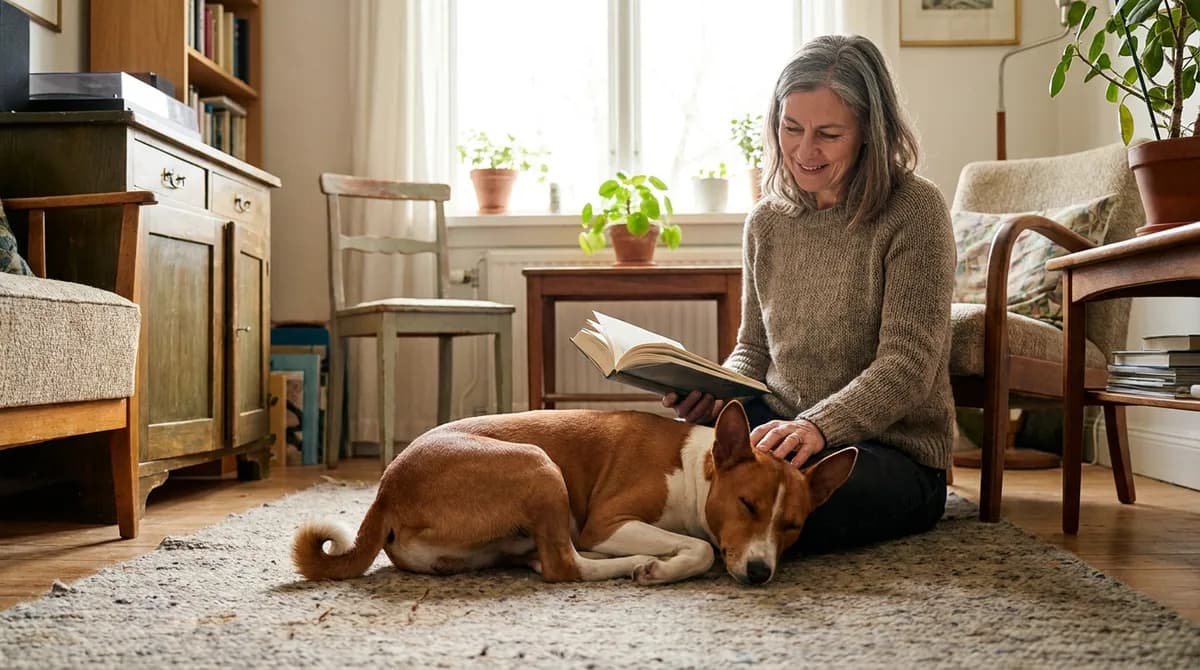
A still photograph illustrates the dog rather than documenting a sound.
Petful is reader supported. As an affiliate of platforms like Amazon and Chewy, we may earn a commission when you buy through links on this page. There is no extra cost to you.
A Basenji yodel is often called a “baroo,” a customary name for the breed's distinctive wavering vocalization. But a sound's nickname does not explain everything about the dog making it. Start with the real examples below, then consider the situation, body language and any change from that dog's usual behavior.

Sign up for expert-backed reviews and safety alerts all in one place.
Listen to a Basenji yodel
The African dog popularly known as the yodeling breed is the Basenji. Basenji yodelling is the British spelling of the same sound description. Barkless means a tendency away from ordinary repetitive barking, not silence. The two-dog anatomical report discussed below does not establish a universal inability to bark. This Basenji Adventures video, “What Does a Basenji Sound Like?”, provides a real example; its publisher describes this version as having no background music.
“Yodel” and “baroo” are everyday descriptions of a wavering vocalization. A howl generally describes a more sustained sound, while barking usually refers to shorter bursts. These labels are practical ways to discuss what you hear, not a validated acoustic system for diagnosing a Basenji's behavior.
As you watch, separate what is visible from what you infer:
- Notice what people and dogs are doing around the vocalization.
- Look for movement toward or away from the situation.
- Consider what the recording leaves out before and after the clip.
That approach is more useful than deciding that every Basenji yodeling in a video must share the same mood.

Offer a supervised food search with the Pet Parents Forager. Use part of the daily food allowance and remove the mat if your dog chews it.
Petful may earn a commission when you click through to Chewy, at no extra cost to you.
Living with a vocal Basenji
Daily routines give you opportunities to offer activity, rest and predictable interactions without asking your dog to perform a sound. A supervised food search can be one part of that routine. The Pet Parents Forager snuffle mat provides places to search for portions of the dog's normal food.
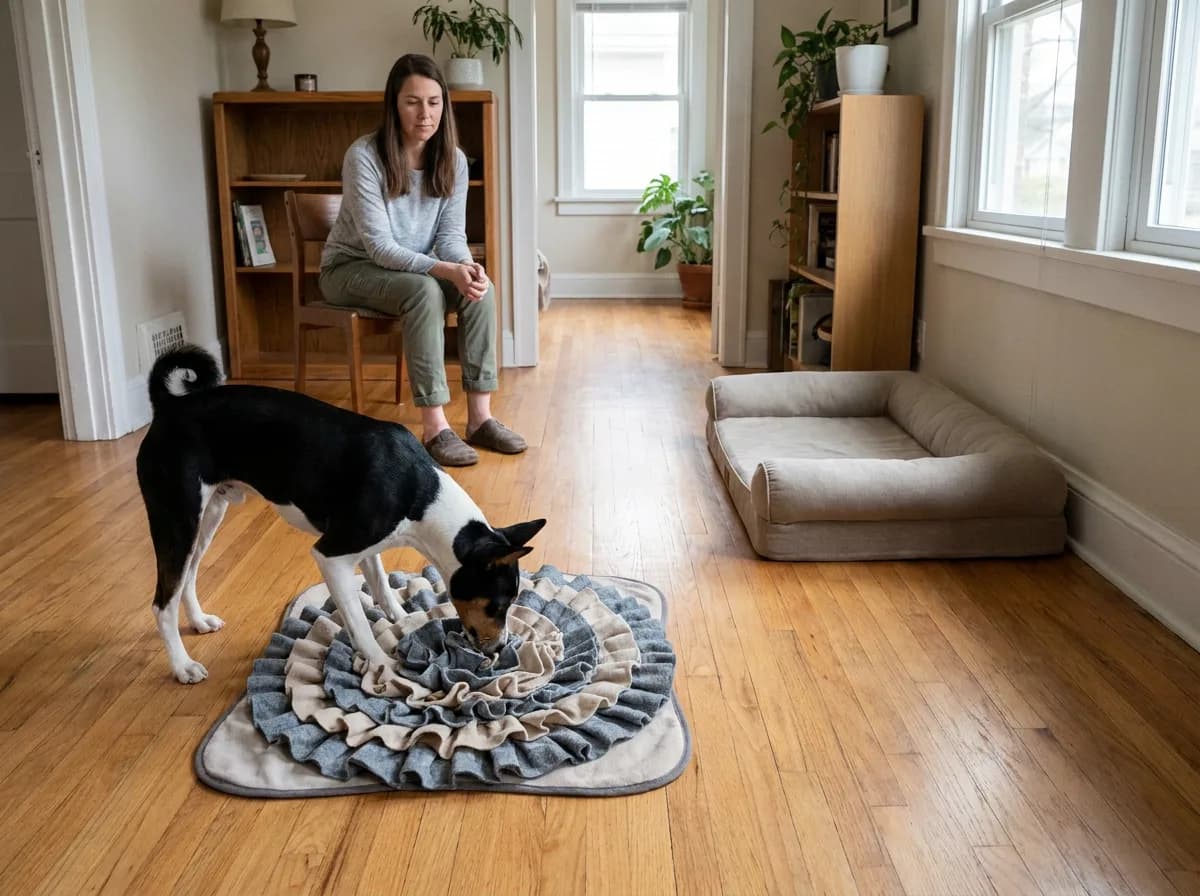
Stay nearby, use stable footing and put the mat away afterward. Enrichment is not a treatment for distress, and a dog that stops searching or seems uncomfortable needs a different response. The aim is a suitable activity, not a promise that the dog will become quiet.
Give the dog a comfortable resting place away from busy doorways. Measure the usable sleeping area before choosing a bed, allowing room for the dog's preferred position. The FurHaven Velvet Waves Perfect Comfort bed is one option with a removable cover. A bed provides somewhere to rest; it does not establish that a dog is comfortable being alone.

Check the FurHaven Velvet Waves bed's usable dimensions against your dog's resting position. Its removable cover helps with routine cleaning.
Petful may earn a commission when you click through to Chewy, at no extra cost to you.
Keep a shared record of when vocalization occurs around walks, meals, visitors and rest. Note what happened before the sound and whether the dog settled afterward. Comparing ordinary days is more useful than repeatedly asking the dog to yodel.
A predictable routine can help you notice what changes from day to day. WebVet's dog training schedule offers a starting point for organizing short practice sessions. Adjust it to the individual dog rather than filling every quiet moment with another task.
If you are looking for quiet dog breeds that do not bark much, the Basenji is one to investigate, with an important qualification: less ordinary barking does not guarantee a quiet home. Ask a breeder or foster caregiver about actual vocal habits, including greetings, departures and unfamiliar noises. An adult dog's observed routine can be more informative than the breed's nickname.
Basenji Temperament: Training, Alone Time and Family Fit
Some Basenjis enjoy cuddling, while others choose brief contact or more personal space. Compatibility with other dogs also needs individual assessment. Intelligence does not make every Basenji easy to train, particularly around distractions. Our Basenji temperament guide covers training, temperament with other dogs and gradual preparation for time alone. When recordings show persistent distress during absence, WebVet's separation anxiety guide provides further context; sound alone does not diagnose the cause.
Read the situation as well as the sound
Observable context is the part you can describe without guessing. Perhaps someone has entered the house, picked up a leash or left the room. Write down the event, what the dog did and what happened next. “Vocalized when I lifted the leash and walked toward the door” is more useful than “was being dramatic.”
For walk-related excitement, organize the practical steps before opening the door. Fit equipment securely, keep the exit controlled and give the dog a manageable task. A fixed leash such as the Frisco Traffic Leash can support handling, but equipment does not explain or cure the vocalization.
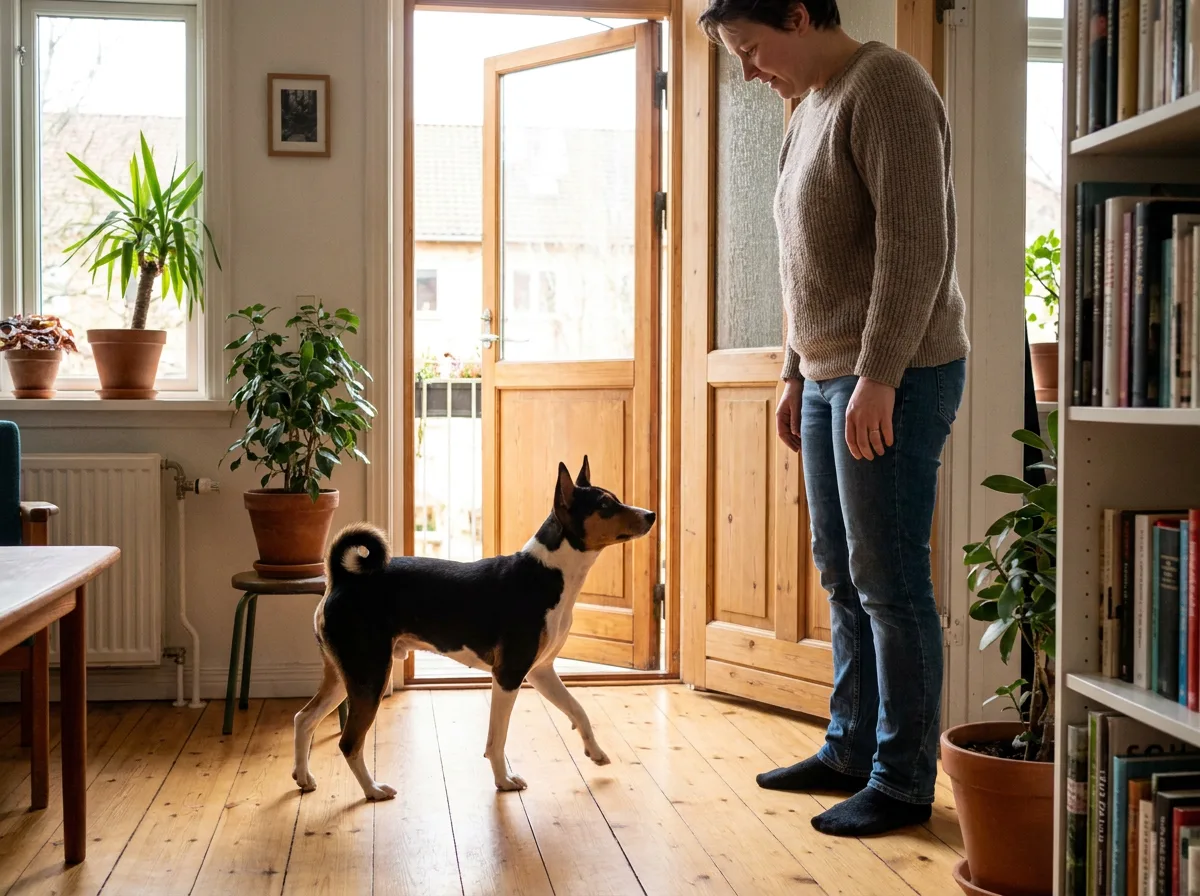
If you make a short note, use the same categories each time: event, behavior, duration as observed, and what happened afterward. You do not need a special sound label. Plain wording such as “whined while standing at the closed door” is easier for another person to understand than trying to classify every noise as a baroo.
Include the setting in your account. A visitor arriving, another dog moving nearby, or a household member preparing food can all be relevant observations. Record them without deciding in advance which one caused the sound. If several things happened together, say so rather than building a confident explanation from one clip.

Use suitable fixed-length walking equipment for a controlled departure. Check the Frisco leash's clip size and your dog's harness or collar fit.
Petful may earn a commission when you click through to Chewy, at no extra cost to you.
Watch the whole dog, including posture, movement and ability to disengage. One sign in isolation can be misleading. A recording that includes the surrounding situation may help a trainer or veterinarian understand a concern better than a tightly cropped clip of the dog's mouth.
| Situation | Observable context to record | Useful next action |
|---|---|---|
| Greeting | Who approached, body language, movement and whether the dog can move away | Keep contact voluntary and observe how the dog settles |
| Walk anticipation | What happened when equipment appeared and whether the dog can pause | Prepare secure equipment and practice the doorway routine calmly |
| Being alone | When vocalization starts, what the dog does and whether it settles | Review the recording with a qualified professional if distress persists |
| Newly changed sound | Onset, activity, other signs and difference from the usual voice | Contact your veterinarian for guidance |
| Any situation | Sound alone cannot tell you the complete cause or emotional state | Combine the sound with the dog's history and surroundings |
Record a normal routine without deliberately escalating it. Do not repeatedly leave and return, wave a leash or crowd the dog simply to obtain a more entertaining response. If the dog becomes distressed, stop the setup and address its needs.
When a new sound needs veterinary attention
Trouble breathing or collapse requires urgent veterinary attention. Do not delay care to record a better example or experiment with a home remedy. Contact an emergency clinic and follow its instructions.
When a changed voice needs veterinary attention
A new or persistently changed voice deserves a call to your veterinarian, particularly when accompanied by coughing, swallowing difficulty, discomfort or a change in ordinary activity. Explain when it started and whether it happens at rest or during a familiar event. Ask how soon the dog should be seen and what changes would make the situation more urgent while you wait. Follow the clinic's advice rather than comparing the sound with entertainment clips.
For a non-emergency appointment, useful details include:
- When the change first appeared and how often it occurs.
- Whether eating, drinking, activity or rest also changed.
- A brief naturally occurring recording, if safe to obtain.
- Current medications and relevant health history.
Planning routine care costs

Compare coverage choices for your pet, then request a quote directly on Lemonade.
- Check a price for your pet
- Review available coverage choices
- See the terms before you decide
Eligibility, waiting periods, limits and exclusions apply.
Petful may earn a commission when you click through to Lemonade, at no extra cost to you.
Include veterinary care in your household budget before a problem develops. If considering insurance, compare eligibility, waiting periods, deductibles and exclusions against your circumstances. A policy's terms determine coverage; purchasing one does not establish coverage for symptoms or conditions already present.
Basenji Lifespan: What Research and Health Tests Show
A new sound cannot tell you how long a dog will live. Basenji lifespan estimates describe groups or general expectations, while a current symptom requires individual assessment. Our Basenji lifespan guide explains research and health-screening records. Past screening results are useful background for your veterinarian, but they do not replace examination of a new problem or guarantee that future illness will not occur.
Yodel, bark, howl and other Basenji sounds
Listen to the yodel at a comfortable playback level. A recording gives you an example from particular dogs, through a particular microphone; it does not establish how loudly or frequently another Basenji will vocalize. Avoid treating the volume setting on your device as a measurement of the dog's voice.
This second Basenji Adventures video is titled “Best Basenji Yodel Ever Part 3.” The owner identifies the dog as Ginger Snap. It gives you another individual example to consider alongside the first, without assuming that the two recordings establish universal sound categories.
The Basenji Club of America describes a vocal repertoire that also includes growls, whimpers and whines. A Basenji barking sound or an unfamiliar vocalization should not be judged from a label alone. Notice whether it is usual for that dog and whether anything else has changed.
Why Basenjis sound different
People asking why Basenji dogs do not bark often encounter a confident explanation about a uniquely shaped voice box. The anatomical evidence needs more care than that summary suggests. A 1979 laryngeal study abstract reproduced by BCOA concerned only two aged female dogs and did not establish direct causation.
The report described anatomical findings, but those findings do not prove a universal physical inability to bark. A small anatomical observation and the full range of a breed's vocal behavior are different questions.
The report examined two aged dogs, with causation not established. It does not prove that anatomy makes barking impossible or explains every aspect of Basenji vocal behavior.
“Barkless” remains a useful nickname when understood as a tendency away from ordinary repetitive barking. Barkless does not mean mute. Avoid turning the nickname into a guarantee about one puppy, or treating a bark-like sound as proof that a dog cannot be a Basenji.
Basenji Breed Guide: Personality, Sounds and Care
The Basenji dog is an active, independent hound whose care involves much more than its unusual voice. Secure exercise, reward-based training, grooming and household fit all matter. Our Basenji breed guide puts those needs together. Hearing an appealing sound example is a good introduction to the breed, but spend time learning about its daily workload before deciding to bring one home.
Basenji sound questions
Listen to the yodel alongside observable context: sound alone cannot tell you the complete cause, and barkless does not mean mute.
Individual vocal behavior varies, so do not expect every Basenji to perform the same repertoire or vocalize on cue. Allow for individual variation and do not force a sound. An owner video shows what particular dogs did in that setting, not what every dog should do.
No. Body language and situation matter, and sound alone is insufficient to establish happiness or another emotion. Consider the dog's whole response and what happens afterward. If a pattern concerns you, describe it to a qualified trainer or veterinarian rather than assigning a fixed meaning to the sound.
A response is unnecessary. Keep volume comfortable, allow the dog to leave and stop if the dog shows distress. A comfortable volume for a person does not mean the dog wants repeated playback. Do not force a response or continue a clip to capture a reaction.
Yes. Vocal frequency varies among individuals and across situations. Sound is not ancestry proof, so neither silence nor yodeling can establish a dog's breed identity. Use appropriate ancestry records for that question and assess a change from your own dog's usual behavior separately.

Coreen Saito is a pet writer and longtime shelter volunteer with more than a decade in animal rescue. She covers cat behavior, breed care, and the small, ordinary science of sharing a life with companion animals, with a particular focus on honest takes about the products and decisions that actually matter. At home in Arizona, she's outranked by Mac (a dog with the loudest opinion in the house), Rebel (a cat who governs by quiet authority), and Meri (an orange tabby who runs the late shift and the laundry basket). She writes about all three, plus the rescues that keep coming through her life, at LifeWithMinty.com.
Sign up for expert-backed reviews and safety alerts all in one place.