Basenji Colors: Four Standard Coats and White Markings
Learn to recognize red, black, tricolor and brindle Basenjis, including brindle-pointed markings. Compare required white areas, optional patterns and claims about rare coats.
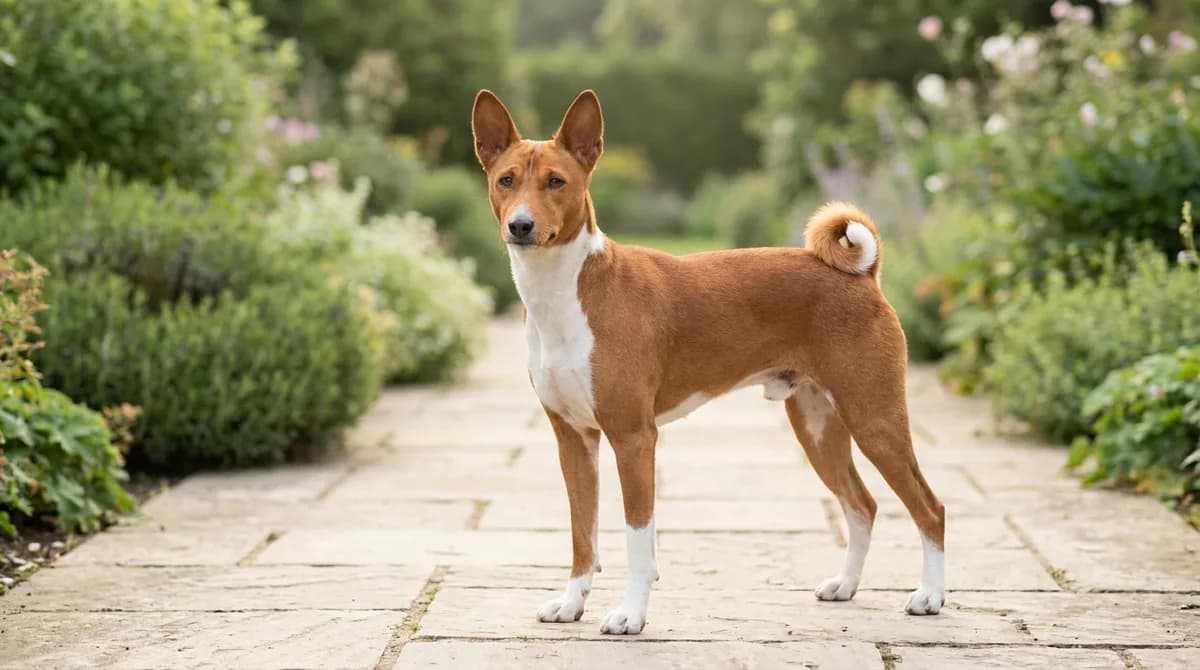
The red coat contrasts with white chest, feet and tail markings.
Petful is reader supported. As an affiliate of platforms like Amazon and Chewy, we may earn a commission when you buy through links on this page. There is no extra cost to you.
Basenji colors fall into four standard groups: chestnut red, black, tricolor and brindle, each with white markings. The useful distinction is not which looks most unusual in an advertisement. It is how the colored areas are arranged, where white appears, and whether the description matches the breed standard.
This guide follows the Basenji Club of America's illustrated standard, including its treatment of brindle-pointed tricolors. Use the examples to understand visible patterns, then consider a dog's health, behavior and fit separately.

Sign up for expert-backed reviews and safety alerts all in one place.
The four standard Basenji colors
The BCOA illustrated standard describes a short, fine coat with clear color boundaries. The four standard colors are chestnut red, pure black, tricolor combining black and chestnut red, and brindle with black stripes over a chestnut-red background. White belongs in all four groups.
The main distinction is the distribution of color. A red dog has a colored area that is primarily red. A black-and-white dog has black areas alongside white. A tricolor adds red or tan points to black and white, while a brindle dog has striping through the red background.
| Group | Main visible feature | Shared white markings |
|---|---|---|
| Chestnut red and white | Chestnut red areas with a clear boundary against white | White feet, chest and tail tip |
| Black and white | Pure black areas contrasting with white | White feet, chest and tail tip |
| Tricolor | Black coat with chestnut-red tricolor markings and white | White feet, chest and tail tip |
| Brindle and white | Black brindle stripes over chestnut red | White feet, chest and tail tip |
Read color names as descriptions of patterns, not as a complete assessment of a dog. A breed standard also addresses structure, proportions, movement and temperament. Recognizing a coat group does not establish that a dog meets every part of that standard or confirm its ancestry.
For a quick first look, identify the broad colored area, check whether red appears throughout it or mainly as points, then look for striping. After that, examine white separately. This sequence is easier than trying to classify a dog from one ear, a patch of chest or a tightly cropped face photograph.
Basenji Breed Guide: Personality, Sounds and Care
A Basenji dog remains an active, independent hound whatever its coat group. Our Basenji breed guide covers size, sounds, exercise and ordinary care. Use this color reference alongside that broader picture. A preferred appearance can help you describe what catches your eye, but it should not become a substitute for understanding the dog's daily needs or meeting an individual before committing.
Chestnut red and white
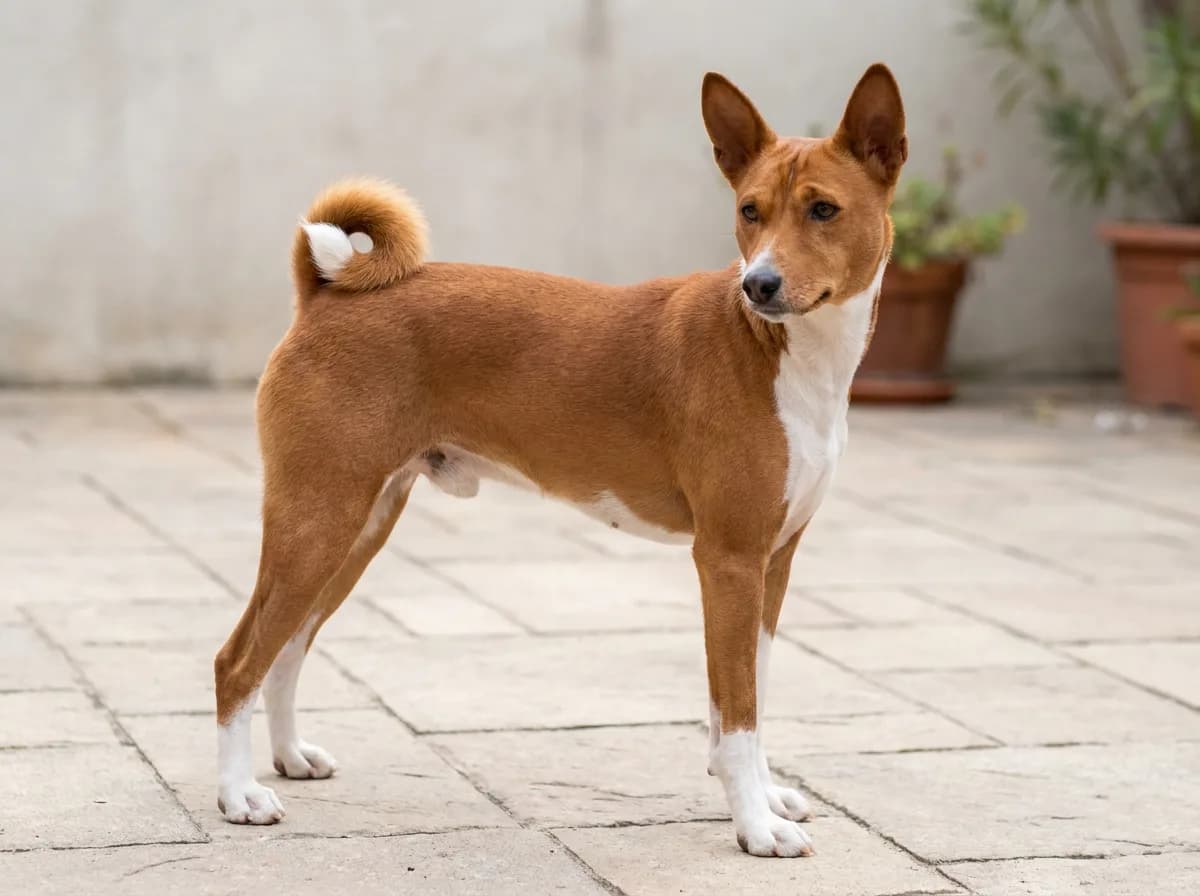
Chestnut red is the standard's name for the red coat group. The illustrated commentary describes a rich color that may look more orange in some dogs and deeper chestnut in others. White feet, chest and tail tip contrast with the colored portions.

Consider the Four Paws glove and curry brush for gentle short-coat care. Introduce contact gradually and avoid irritated skin.
Petful may earn a commission when you click through to Chewy, at no extra cost to you.
A casually described tan Basenji may be a red-and-white dog, but “tan” alone is not a precise explanation. The same word may also refer to the points on a tricolor. Ask to see the whole dog and look at the distribution: broad red areas and localized tan points describe different patterns.
The standard calls for the same short, fine coat regardless of color. For routine loose-hair care, a Four Paws Magic Coat glove and curry brush is one option. Introduce it gently, avoid irritated skin and choose a comfortable session length rather than scrubbing to change the coat's appearance.
When looking at red-and-white photographs, compare the same areas in similar light. Direct sun can make a red coat look brighter, while shade may make it look deeper. A warm indoor lamp can also affect the white areas, which is a useful clue that the image's overall color has shifted.
Check these details together:
- The main colored portions of the body.
- The boundary between red and white.
- White at the feet, chest and tail tip.
- Whether the face shows broad red coloring or separate tan points against black.
- Whether an apparent dark patch is consistent across more than one view.
A few darker hairs do not necessarily turn a red dog into a different color group. The BCOA commentary specifically discusses occasional black hairs on the backs of the ears or within the tail curl of red dogs. Look at the complete pattern instead of letting one close-up determine the description.
Do not confuse the color of skin visible through fine hair with a new coat category. The standard is describing the hair pattern. If an area looks different because of thinning hair, redness or another physical change, that is a separate observation to discuss with a veterinarian when appropriate.
Black and white
A black-and-white Basenji has black colored areas with the standard white markings. The illustrated standard emphasizes a clear separation between black and white rather than a mixed, grizzled appearance. Its description of pure black does not mean the entire dog should be black from nose to tail.
The main comparison is with tricolor. Both have black areas and white markings, but a tricolor also has chestnut-red or tan points. A photograph that hides the face or legs may conceal those points, so inspect more than one angle before choosing a label.
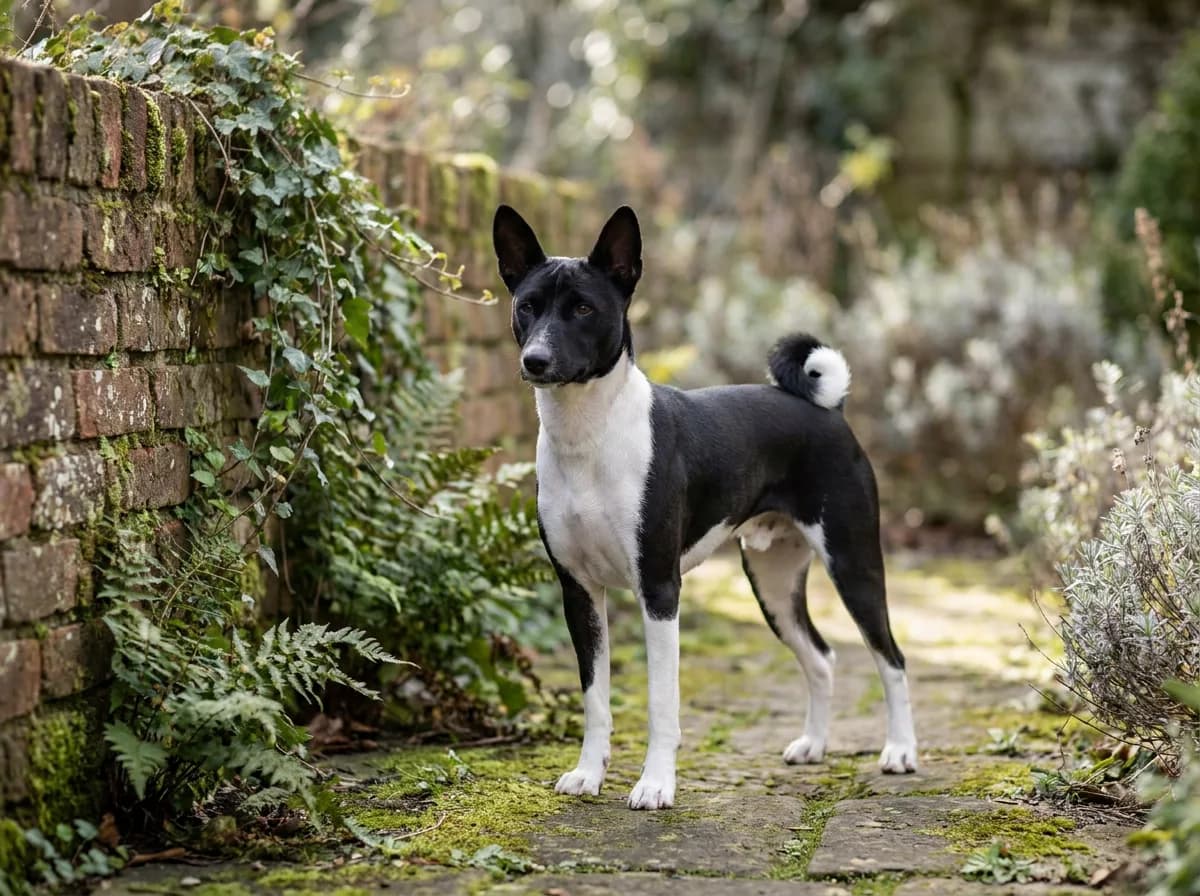
Dark coats can be difficult to read when a photograph loses detail in shadow. A black face may appear to lack wrinkles or show fewer visible features simply because the lighting does not separate them. The standard's commentary notes that forehead wrinkles are less apparent in the darker color groups; that is different from saying the anatomy has disappeared.
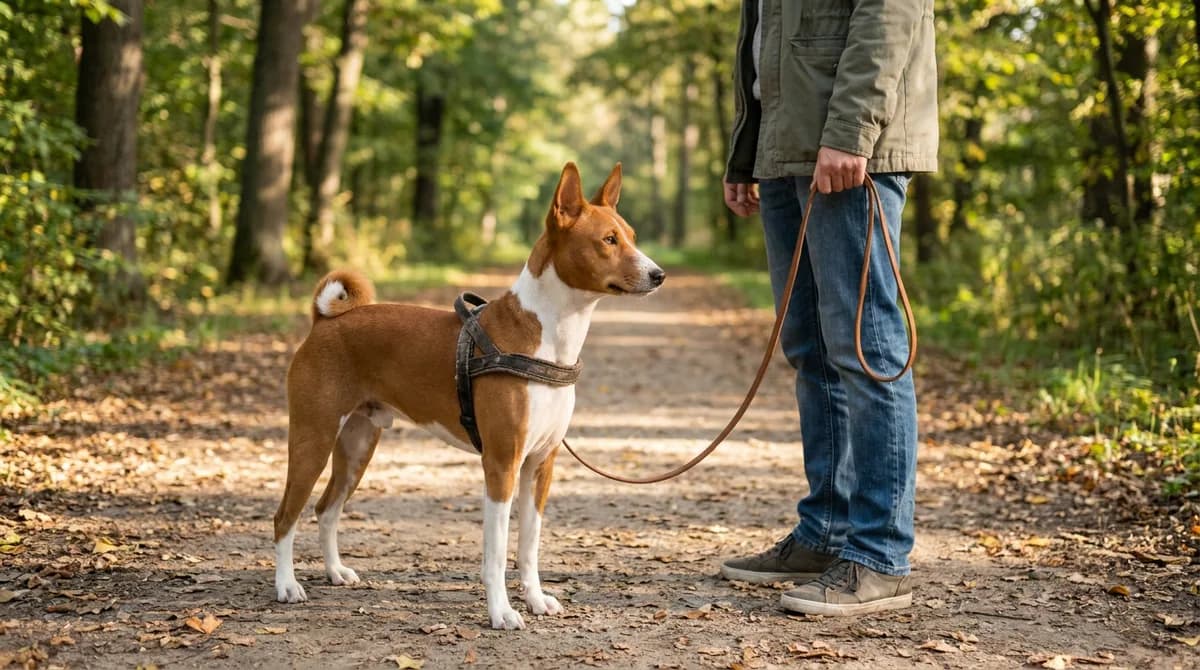
An outdoor meeting can help you see the coat while also observing the dog. Keep the setting manageable and the dog securely attached. The Frisco Traffic Leash is one fixed-length handling option; choose the clip and accompanying collar or harness for the dog's actual size and fit.
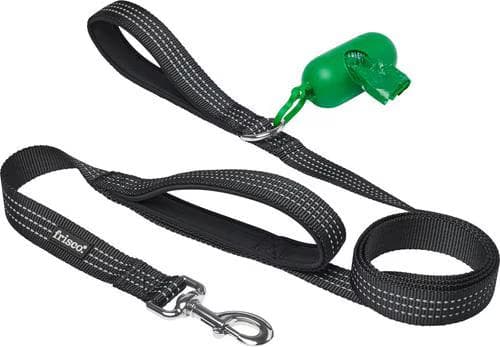
Use suitable fixed-length equipment for a calm meeting or walk. Check the Frisco leash's clip size and your dog's collar or harness fit.
Petful may earn a commission when you click through to Chewy, at no extra cost to you.
For a useful black-and-white reference, look for:
- Enough light to see the edge of the black coat.
- A view of the face and legs where tan points could appear.
- White areas that retain detail rather than appearing as a blank bright patch.
- A side or three-quarter view that includes the body and tail.
- More than a single heavily filtered close-up.
For example, imagine a dog whose photograph shows a black torso and white forelegs. That information supports describing the visible black and white, but it leaves the tricolor question open if the face and rear legs are hidden. An additional picture showing tan above the eyes would change the color description without changing anything about the dog.
Keep a simple distinction in mind:
- Visible black and white: the colors shown in the available view.
- Black-and-white color group: a description based on the complete pattern.
- Tricolor: black and white accompanied by the characteristic tan points.
This is particularly helpful with puppy listings that use a headshot as their main image.
A glossy coat photograph is not a health report. It can show the visible hair and markings, but it cannot establish screening results or explain a dog's medical history. Keep those records separate from the visual comparison, even when the photograph is especially striking.
Tricolor and brindle-pointed markings
A tricolor Basenji combines black, chestnut-red or tan points, and white. The illustrated standard describes tan in characteristic locations, including above the eyes, on the muzzle and cheeks, and on parts of the legs and rear. Those points distinguish a tricolor from a black-and-white dog.
The small tan areas above the eyes are sometimes called pips. The illustrated standard also describes tan on the muzzle, cheeks, inside the ears, legs and parts of the rear and tail. You do not need to memorize every location to recognize the group, but knowing where to look prevents a black back from becoming the entire description.
Consider these three observations as a set:
- Back: establishes the broad black area.
- Face and legs: show the contrast between black and chestnut-red points.
- Chest and feet: show the shared white markings.
A white muzzle area can sit close to tan on the face, so look at the boundary between them rather than assuming the whole muzzle has one color. Likewise, white on a leg does not erase tan higher up that leg. Color names summarize the arrangement across the animal, not an expectation that each individual body part displays all three colors.
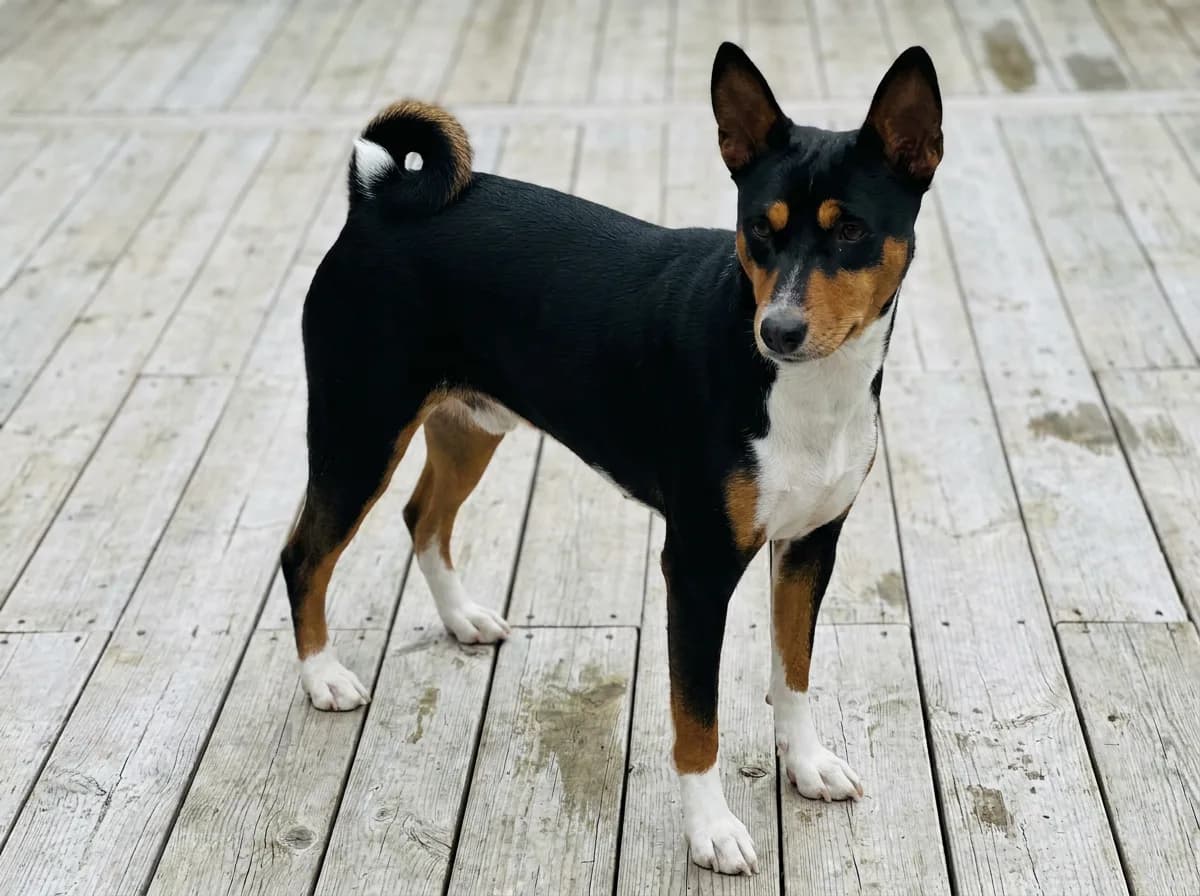
The term brindle-pointed tricolor describes a tricolor with black striping in the red or tan point areas. It does not mean that the whole coat must look like the broad red-and-black striping of a brindle dog. The BCOA illustrated commentary specifically says this striping in tricolor points should not be penalized.
You may see the informal name “trindle” applied to this appearance. Treat it as a label that needs its pattern explained, not as evidence of a fifth standard color group. In particular, do not automatically classify every dog called trindle as nonstandard; compare what is visible with the illustrated guidance.
A practical inspection sequence helps:
- Identify the broader black areas of the coat.
- Find the red or tan points rather than searching only the back.
- Look within those point areas for consistent black striping.
- Check the white markings separately.
- Use another view if the relevant areas are shadowed or hidden.
The distinction between pattern and lighting matters here. Shadows from nearby objects, a dark crease or the edge of a white marking can look like a stripe in a small photograph. A second view in even light should let you examine the hair pattern more clearly.

Pay attention to which part of the dog the description names. “Brindle points” refers to the patterned tan areas, whereas “brindle coat” commonly describes striping across a red background more broadly. Giving the location makes an explanation clearer than arguing over an abbreviated label without a full view.
Small markings can be difficult to see at ordinary viewing size. That does not make them more valuable, genetically unique or inherently concerning. If a breeder or owner uses a specialized term, ask them to show the feature and explain how it relates to the standard.
For a potential owner, the important next questions remain practical. How does the dog respond to routine handling? What care is documented? What is it like to live with? A color description can be accurate while telling you very little about those answers.
Brindle and white
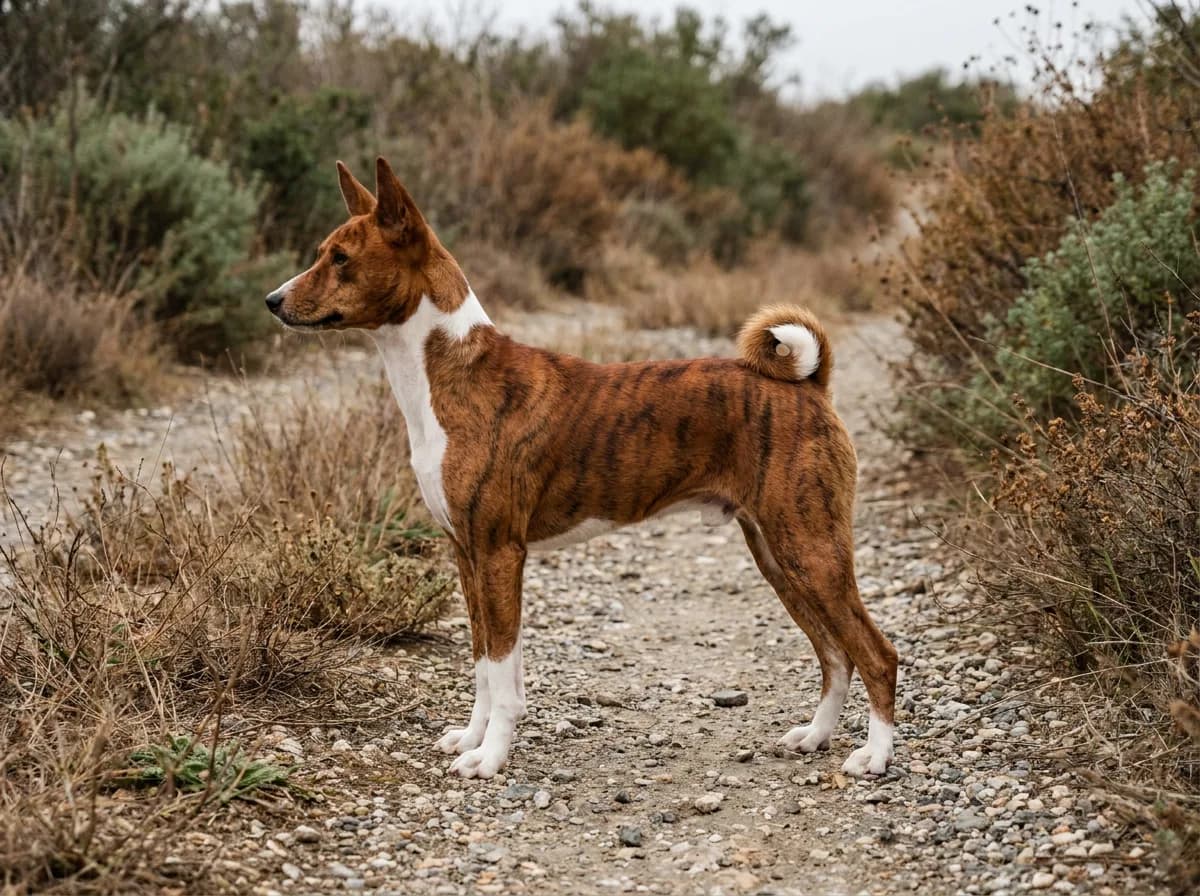
A brindle Basenji has black stripes over a chestnut-red background, together with the white areas described by the standard. Think of the stripes as part of the colored coat rather than as markings painted over white. Their contrast with the red background creates the characteristic brindle appearance. The illustrated standard favors a clear pattern in which the red background and black striping remain distinguishable. From a distance, a heavily patterned area may look darker overall. Move from the whole-body view to the relevant patch before deciding that it is simply black.
A brindle coat also contains three visible colors when you include white. That does not make the standard category tricolor. In this context, tricolor names the particular arrangement of black with tan points and white; brindle names black striping over chestnut red with white.
That distinction is useful when explaining a dog to someone unfamiliar with the terminology:
- Say brindle and white when describing the red background with black stripes.
- Say brindle-pointed tricolor when describing striping within a tricolor's tan areas.
- Describe the actual location if an informal label leaves the pattern unclear.
Counting colors alone misses what the standard is distinguishing.
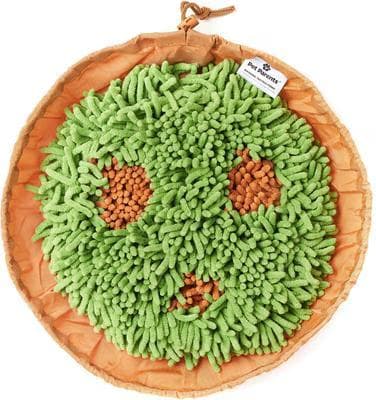
The Pet Parents Forager offers a supervised food-search activity. Use part of the daily allowance and remove it if your dog chews the material.
Petful may earn a commission when you click through to Chewy, at no extra cost to you.
An owner can have a preference for one pattern without attaching a personality to it. A brindle dog still needs an appropriate routine, comfortable handling and engagement. A supervised food search is one possible shared activity; product suitability depends on the dog, not on its stripes.
Two different comparisons can help you understand the striped group. First compare brindle with red and white: both have a chestnut-red component, but the brindle coat adds the black stripe pattern across that background. Then compare brindle with black and white: a dark-looking brindle may still reveal red between its stripes when the photograph preserves enough detail.
Compare the pattern across ordinary views
Use these examples to separate the questions:
- Red body with repeated dark stripes: look at the brindle description and compare the black striping with the red background.
- Mostly black body with striped tan cheek areas: look at the brindle-pointed tricolor commentary.
- Dark body with no clear detail: obtain a clearer view before choosing between the groups.
- White chest filling most of a portrait: use a wider view to see the main colored area.
These examples describe how to read a pattern, not how to identify a particular dog from appearance alone. When keeping your own pet's records, a clear description of the visible colors and markings can accompany dated photographs. It does not need a claim that the arrangement is unique.
If a puppy's listing includes photographs of several littermates, make sure each photograph is identified before comparing patterns. Different white markings or stripe arrangements may mean you are viewing different puppies. Ask which images show the individual being offered instead of piecing together one imagined coat from an entire litter gallery.
For a clearer view of brindle, compare:
- A broad side view showing the pattern across the body.
- A closer look at the red background between stripes.
- The face and legs as well as the torso.
- The boundary where the colored coat meets white.
- Another unfiltered view if the first is strongly backlit.
The goal is to describe what is there, not to find an ideal stripe count. The standard's wording does not give an owner a required number of stripes to tally. Avoid turning a visual reference into a numerical grading system that the source does not supply.
Similarly, a photograph cannot establish how common a particular arrangement of stripes is. Two brindle dogs may differ visibly without either becoming a separate breed or an independently verified rare variety. If a listing makes that leap, ask for the evidence supporting the additional claim.
White feet, chest, tail tip and optional markings
All four groups share the standard's white locations: feet, chest and tail tip. White legs, a facial blaze and a collar are optional. The overall amount of white should not predominate over the primary color.
It helps to distinguish the body location from the amount visible in a photograph. “White feet” does not mean every dog's white must end at an identical point on the leg. The standard separately allows white legs. Likewise, the visible width of a chest marking changes with posture and camera angle.

Compare coverage choices for your pet, then request a quote directly on Lemonade.
- Check a price for your pet
- Review available coverage choices
- See the terms before you decide
Eligibility, waiting periods, limits and exclusions apply.
Petful may earn a commission when you click through to Lemonade, at no extra cost to you.
| Location | Standard treatment | What to look for |
|---|---|---|
| White feet | Part of all four color groups | White on the feet; white may also extend onto the legs |
| White chest | Part of all four color groups | A clear view of the front of the body |
| Tail tip | White tip specified | A view that does not hide the tip within the curl |
| Legs | Additional white is optional | Distinguish white feet from more extensive white legs |
| Facial blaze | Optional | White on the face; absence of a blaze is not the same as missing a required marking |
| Optional collar | White collar is optional | White around the neck, considered with the overall amount of white |
| Overall coat | White should not predominate | Review the whole dog, not a close crop of one white area |
A color premium should not crowd out a practical care budget. If considering insurance, compare eligibility, deductibles, reimbursement, waiting periods and exclusions. The four coat groups do not provide a basis here for predicting coverage or a premium; use the actual policy quotation.
A blaze is a facial marking; a collar is around the neck. These words describe locations, so explain which you mean when discussing a photograph. “Lots of white” is less useful than naming the visible chest, face, legs or neck.
The white should be evaluated alongside the colored areas across the whole dog. A close portrait may show a broad white chest and collar while leaving most of the colored body out of frame. It cannot, by itself, establish which color predominates overall.
Describe white by location
A dog with a white chest and white feet but no facial blaze can still display the required locations. A second dog may have the same chest and feet plus a blaze and collar. The extra areas are optional markings, so the difference should be described without treating the first dog's face as incomplete.
A third photograph might show a broad white leg rather than white confined to the foot. That illustrates why the standard distinguishes white feet from optional white legs. There is no need to invent a fixed height where white must stop, or to use everyday terms such as socks as if they were separate standard color categories.
For your own notes, use a location-based description:
- Face: blaze visible, no blaze visible, or face not clearly shown.
- Neck: collar visible, no collar visible, or neck obscured.
- Chest: white area visible in a front or three-quarter view.
- Feet and legs: identify what can actually be seen on each side.
- Tail: record the white tip only when the tip itself is visible.
Keeping “not shown” separate from “absent” is especially useful when comparing photographs taken at different times. It avoids turning the position of a paw or the curl of a tail into a supposed change in the dog's markings. The standard gives locations and an overall balance; these notes simply help you describe them accurately.
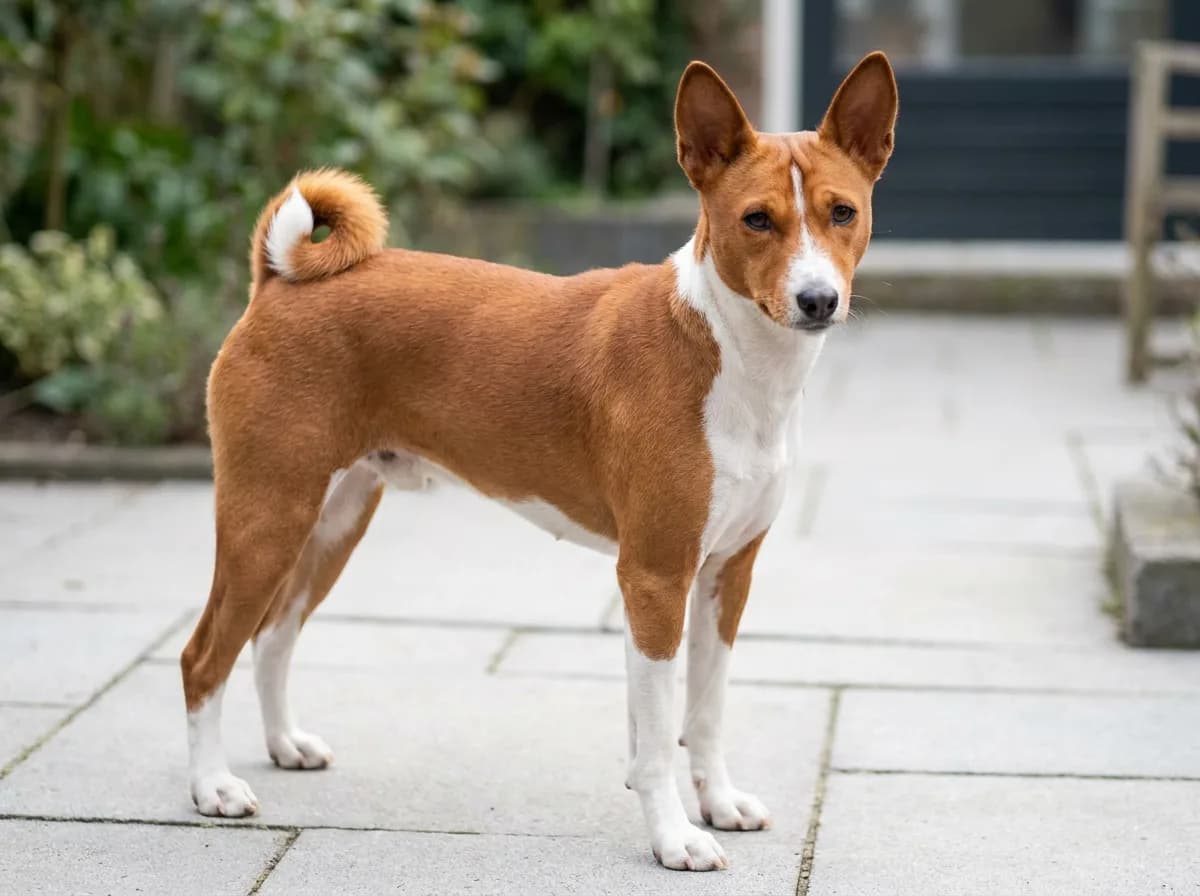
When looking at the tail, follow the curl visually rather than assuming its far edge is the tip. A white section may be tucked partly behind the body or another part of the tail. Use a different angle when needed; do not force the tail into an unnatural position to make a photograph easier.
The same approach helps with feet. Grass, a low camera angle or overlapping legs can hide a paw. A standing view on a level surface can make the relevant areas visible, but a missing view is not evidence of a missing marking.
For an organized comparison, work from front to back:
- View the face and note any optional blaze.
- Look at the neck separately from the chest.
- Check each visible foot and the extent of white on the legs.
- Find the actual tail tip within the curl.
- Step back to consider the overall balance of colored coat and white.
This is a way to read the standard and describe an image, not a substitute for a formal evaluation of a real dog. A well-framed photograph can answer a visual question while leaving identity, registration and health entirely unresolved.
Rare, blue and nonstandard color claims
What are some rare Basenji colors? The standard identifies four color groups; it does not provide a population frequency ranking for them. Rarity is not established by a seller's adjective, an unusual photograph or a list that offers no underlying population data.
A color can be unfamiliar to a viewer without being statistically rare. To support a frequency claim, you would need to know which population was counted, when it was counted, and how the colors were defined. A handful of listings or social-media images does not provide that denominator.
“Blue Basenji” is a term you may encounter in advertisements, but blue is not one of the four groups listed in this standard. A listing for blue Basenji puppies for sale therefore raises a description question: what exactly does the seller mean, and what evidence accompanies that label?
| Claim | Relevant evidence | What the label alone does not prove |
|---|---|---|
| One of the four standard groups | Compare the pattern with the standard wording | Complete conformation, health or identity |
| Brindle-pointed tricolor | Compare striping in the tan areas with the illustrated commentary | An automatically nonstandard coat |
| Blue or another sales description | Ask for clear views and an explanation of the term | Documented ancestry or a place among the four listed groups |
| Rare or exclusive | Defined population data would be needed | Rarity not established by advertising alone |
| Purebred | Documented ancestry and appropriate identity records | A coat photograph cannot supply the records |
Keep the questions separate. Standard wording tells you what the standard lists. Ancestry records address parentage. A veterinary examination addresses the dog's condition. A nonstandard description is not enough by itself to prove mixed ancestry, just as a familiar standard-looking coat cannot prove purebred ancestry.
Is the Basenji a rare dog? Local availability may be limited, and finding a suitable dog can take time. That does not establish the rarity of an advertised color. Ask about actual breeding or rescue availability in your area rather than treating breed availability and coat frequency as the same claim.
When discussing an unfamiliar description, request information that answers a specific question:
- Full-body and closer views in ordinary light.
- The seller's explanation of the color term.
- Identity and ancestry documentation where claimed.
- Relevant health records tied to the dog or parents.
- Written price and placement terms.
Basenji Mix: Ancestry, Cross Labels and Adoption Advice
A Basenji mix can share visible traits with a purebred, while a dog's appearance can also prompt an inaccurate breed guess. Our Basenji mix guide explains documented parentage, DNA estimates and visual labels. Use it when the question is ancestry rather than coat terminology. Basenji mixes should be assessed for their own size, behavior and care needs, not assigned a predictable personality from a color or cross label.
Color, grooming and choosing a dog
Do Basenjis shed a lot? They do shed, although their short coats are comparatively straightforward to maintain. The useful plan is routine loose-hair care and attention to the individual coat, rather than expecting a particular color to make grooming disappear.
Introduce brushing with brief, comfortable contact. Allow the dog to stand naturally, reward cooperation and stop if the skin seems irritated or the dog becomes uncomfortable. A tool that feels acceptable on the back may need a different approach near sensitive areas. Ask your veterinary team about new skin changes rather than trying to scrub them away.
A manageable grooming session can follow a simple sequence:
- Let the dog investigate the tool before contact.
- Begin with a comfortable area and a brief, gentle pass.
- Reward willing participation and pause before the dog becomes restless.
- Check the skin while handling, without continuing over a sore area.
The Four Paws grooming glove and curry brush fits the short-coat care discussion, but a product does not verify health or improve a dog's status under the standard. Use it for its practical purpose: gentle coat maintenance where the dog tolerates it.
For grooming and selection, assess the whole dog rather than letting coat appearance dominate a meeting. Spend time on the ordinary activities you will share. Ask how the dog responds when a leash is attached, when a person approaches its resting area, and when handling stops. Leave room for voluntary interaction rather than trying to arrange the perfect portrait.
For a puppy, learn which positive experiences have already been introduced and what needs to continue at home. WebVet's puppy socialization checklist helps organize that work. A carefully selected color does not prepare a puppy for visitors, grooming, travel or household routines. Prioritize the following alongside appearance:
- Records that match the dog and any identified parents.
- A realistic description of behavior in everyday settings.
- Clear feeding, handling and veterinary-care information.
- Written placement terms and ongoing support.
- Time and resources for training and secure activity.
Basenji Price: Puppy, Adoption and Ongoing Costs
How much does a Basenji puppy typically cost? US seller pages checked on October 13, 2026, listed $2,500 at Malachite and $3,000 at Signet. These are individual quotations, not a national average or proof that color sets the price. Our Basenji price guide compares dated US seller and rescue examples and provides a personal budget worksheet. Compare the actual inclusions and contract, then account for continuing care instead of treating the purchase price as the complete expense.
Basenji Lifespan: What Research and Health Tests Show
A Basenji's life expectancy cannot be read from its coat. The breed club gives a general estimate of 13–14 years, while a 2024 UK study estimated a 12.1-year median in a small Basenji subgroup. Those different figures should not be averaged together. The Basenji lifespan guide distinguishes a general breed estimate from measured research and explains health-screening records. Use that evidence when planning long-term care. None of the four standard colors supplies a reliable forecast for one dog's lifespan, and a visually appealing puppy still needs appropriately documented care and veterinary follow-up.
Basenji color questions
Yes. The standard makes a white collar optional, along with a facial blaze and white legs. These are optional markings, while white feet, chest and tail tip belong to all four groups. White should not predominate over the primary color, so consider the overall dog rather than one close photograph.
No. The BCOA illustrated commentary addresses black stripes in red areas of a tricolor and says they should not be penalized. Compare the actual pattern with that description. The informal name trindle does not, by itself, place the dog outside the standard.
No. It is a marketing label unless supported by a clearly defined claim and relevant evidence. Documented ancestry is a separate matter from coat appearance. Ask what records support the dog's identity rather than treating an unusual color description as a pedigree.
Color is not temperament evidence. Evaluate individual behavior, history and responses in situations relevant to your household. A red, black, tricolor or brindle coat does not establish whether the dog enjoys cuddling, gets along with another pet or settles comfortably during an absence.
Basenji Temperament: Training, Alone Time and Family Fit
Basenjis can be good house companions when their activity, training and management needs fit the household. Affection varies, and liking to cuddle does not show that a dog can comfortably be left alone. Build comfortable absences gradually around the individual dog's response. Secure activity, patient training and management around chase opportunities are practical demands to consider. Our Basenji temperament guide covers those questions, temperament with other dogs and the downside of an unsuitable match. Choose on those practical considerations alongside appearance, rather than assigning behavior to a coat group.

Coreen Saito is a pet writer and longtime shelter volunteer with more than a decade in animal rescue. She covers cat behavior, breed care, and the small, ordinary science of sharing a life with companion animals, with a particular focus on honest takes about the products and decisions that actually matter. At home in Arizona, she's outranked by Mac (a dog with the loudest opinion in the house), Rebel (a cat who governs by quiet authority), and Meri (an orange tabby who runs the late shift and the laundry basket). She writes about all three, plus the rescues that keep coming through her life, at LifeWithMinty.com.
Sign up for expert-backed reviews and safety alerts all in one place.