Singapura Cat: The World's Smallest Cat Breed, From Coat to Care
Meet the Singapura cat, the world's smallest domestic breed. This profile covers its tiny size, single sepia-agouti ticked coat, the disputed Singapore origin, temperament, health (PK deficiency), typical cost, and how to find one.
Petful is reader supported. As an affiliate of platforms like Amazon and Chewy, we may earn a commission when you buy through links on this page. There is no extra cost to you.
The singapura cat is recognized by both the Cat Fanciers' Association (CFA) and The International Cat Association (TICA) as the smallest breed of domestic cat, with adult females often weighing just 4 to 6 pounds and males rarely topping 8. Despite that pocket size, this is a sturdy, muscular cat with enormous eyes, big cupped ears, and a single warm sepia-agouti ticked coat that looks like it stepped out of an old photograph. The breed also carries a famous origin story rooted in the street cats of Singapore, a story that is genuinely disputed, and we will walk through both sides honestly below. If you want a tiny cat with an enormous personality, the Singapura earns a close look.
- 1The Singapura is the smallest recognized domestic cat breed, with females around 4 to 6 lb and males around 6 to 8 lb
- 2Its only accepted color is sepia agouti, a ticked coat of dark-brown banding on a warm old-ivory ground
- 3The Singapore origin story is real but disputed: a CFA inquiry questioned whether the foundation cats were truly imported
- 4The main breed-specific health concern is pyruvate kinase deficiency (PK deficiency), which a DNA test can screen for

Sign up for expert-backed reviews and safety alerts all in one place.
What Is a Singapura Cat?
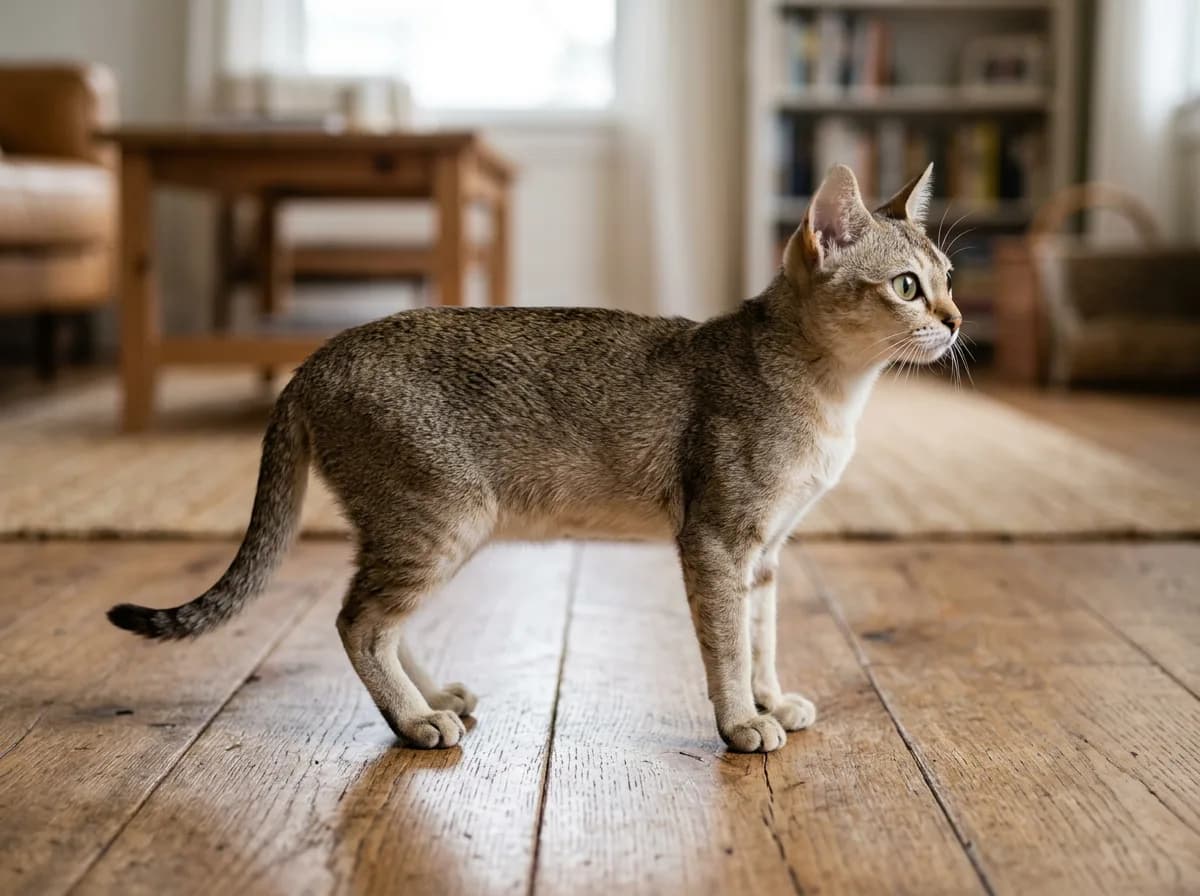
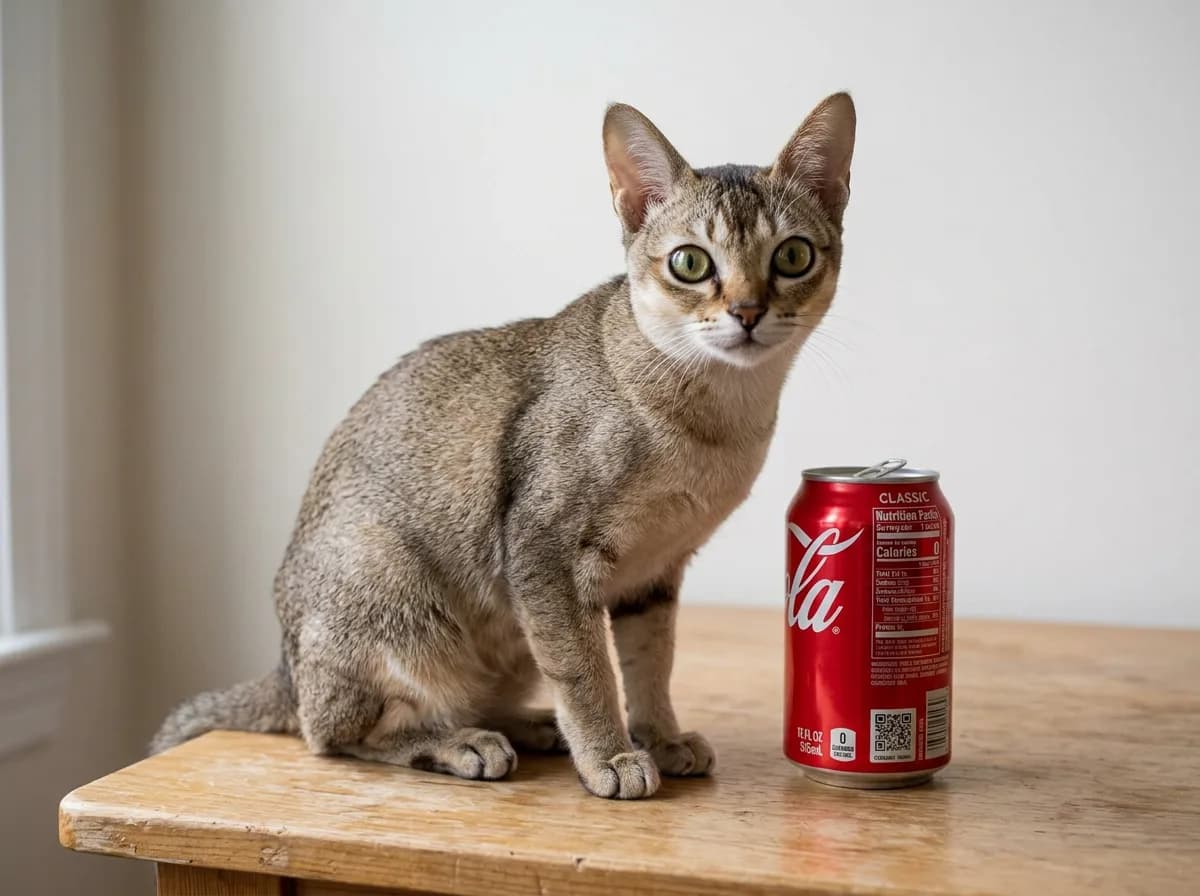
A Singapura is a small, short-haired cat distinguished by three things at once: its diminutive size, its singular ticked coat, and its large, expressive features. CFA describes it as one of the smallest of all pedigreed cats, and TICA lists the same petite range. Where a typical house cat lands around 9 to 12 pounds, a Singapura often stays in the 4 to 8 pound band for life, which means the breed reads as kitten-sized well into adulthood. People who meet one for the first time almost always reach for the same word: tiny. Then they pick the cat up and discover it is far more solid than it looks.
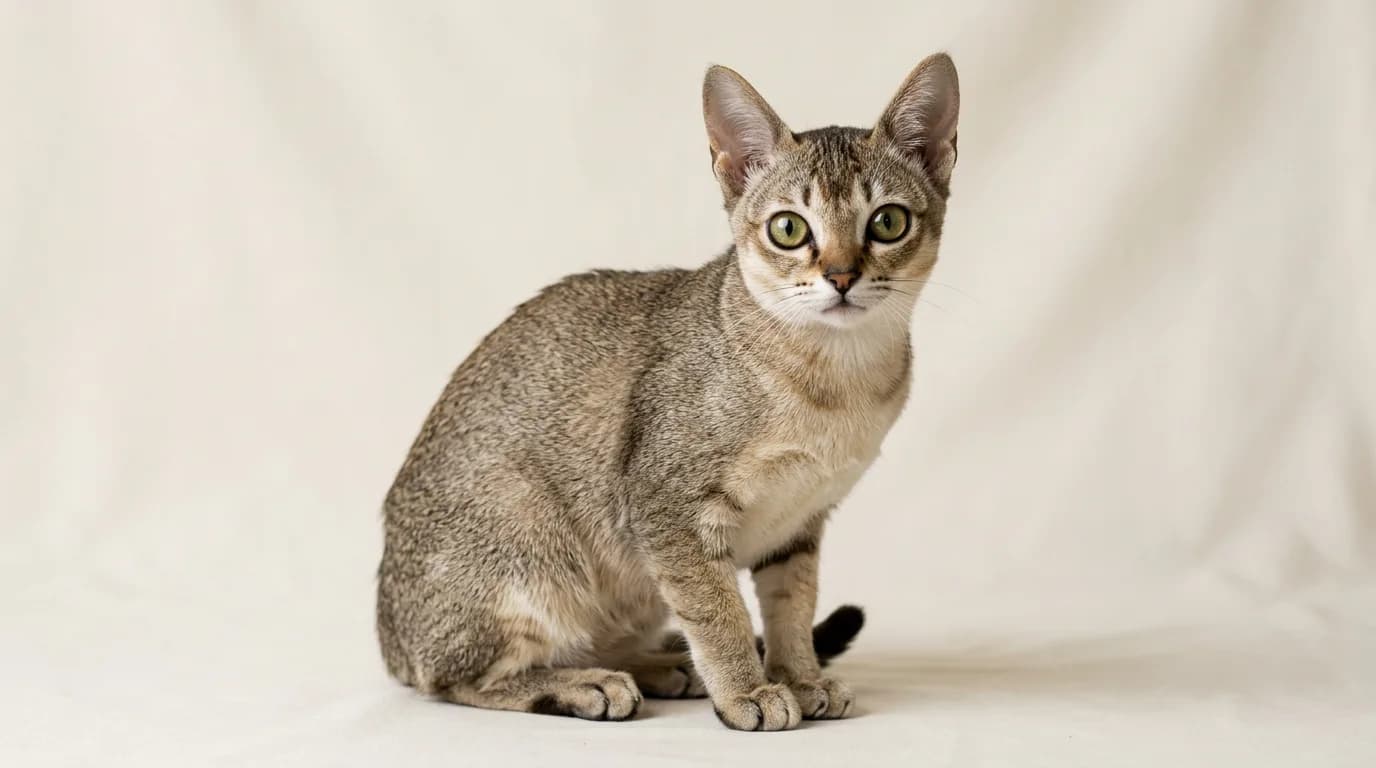
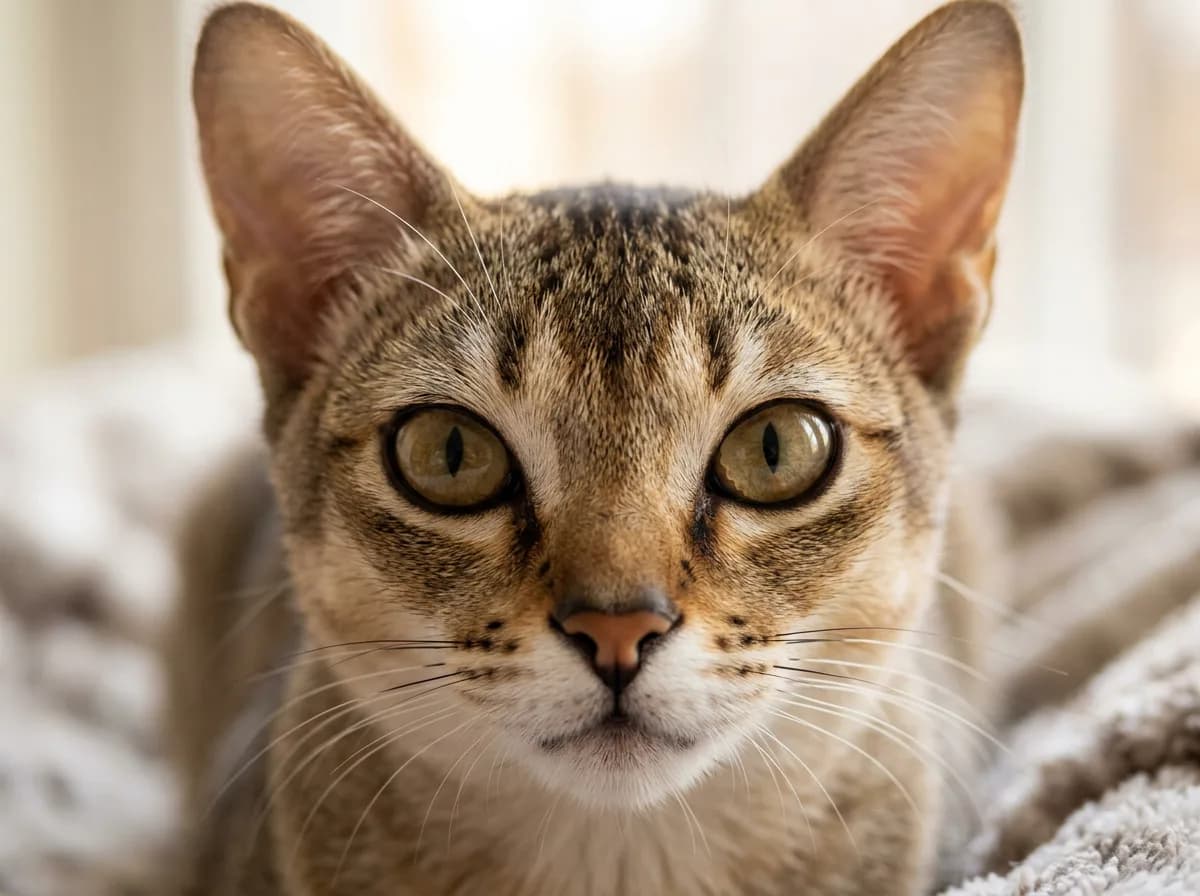
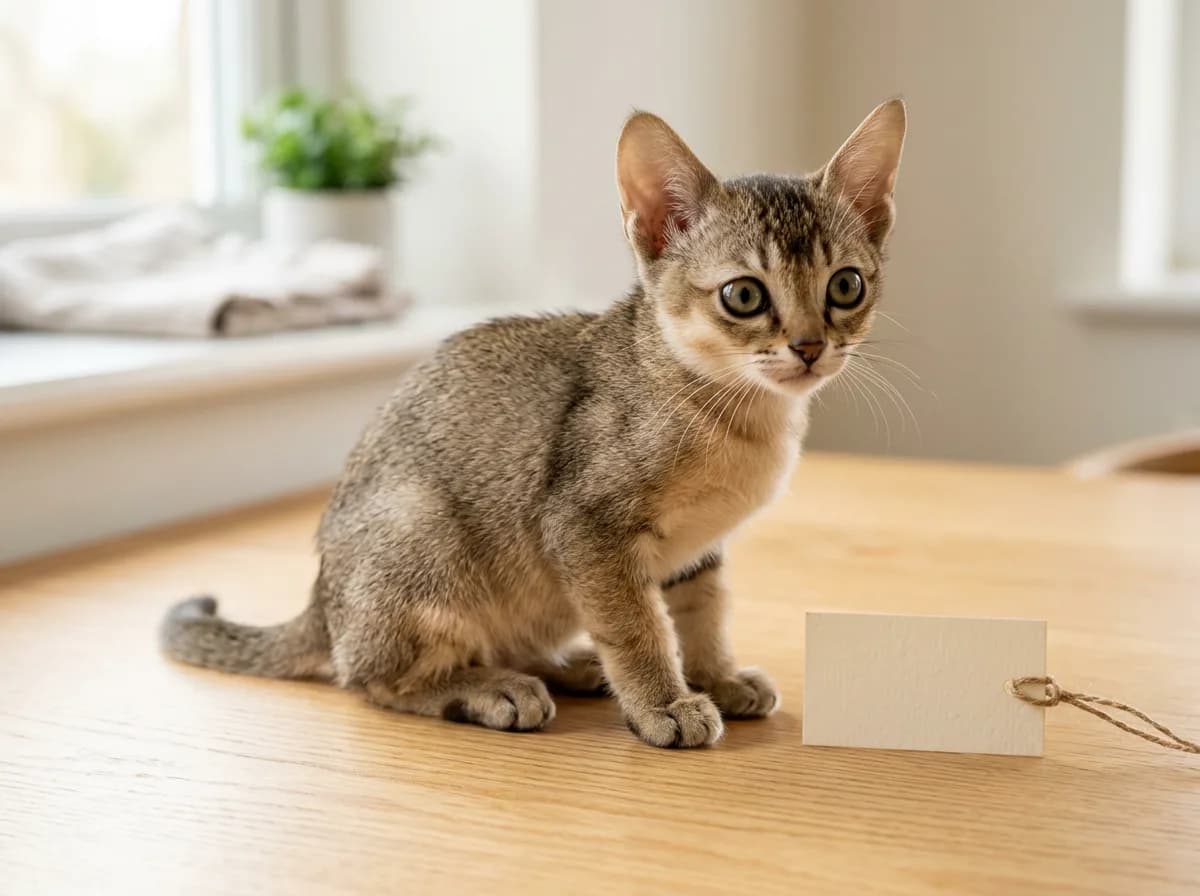
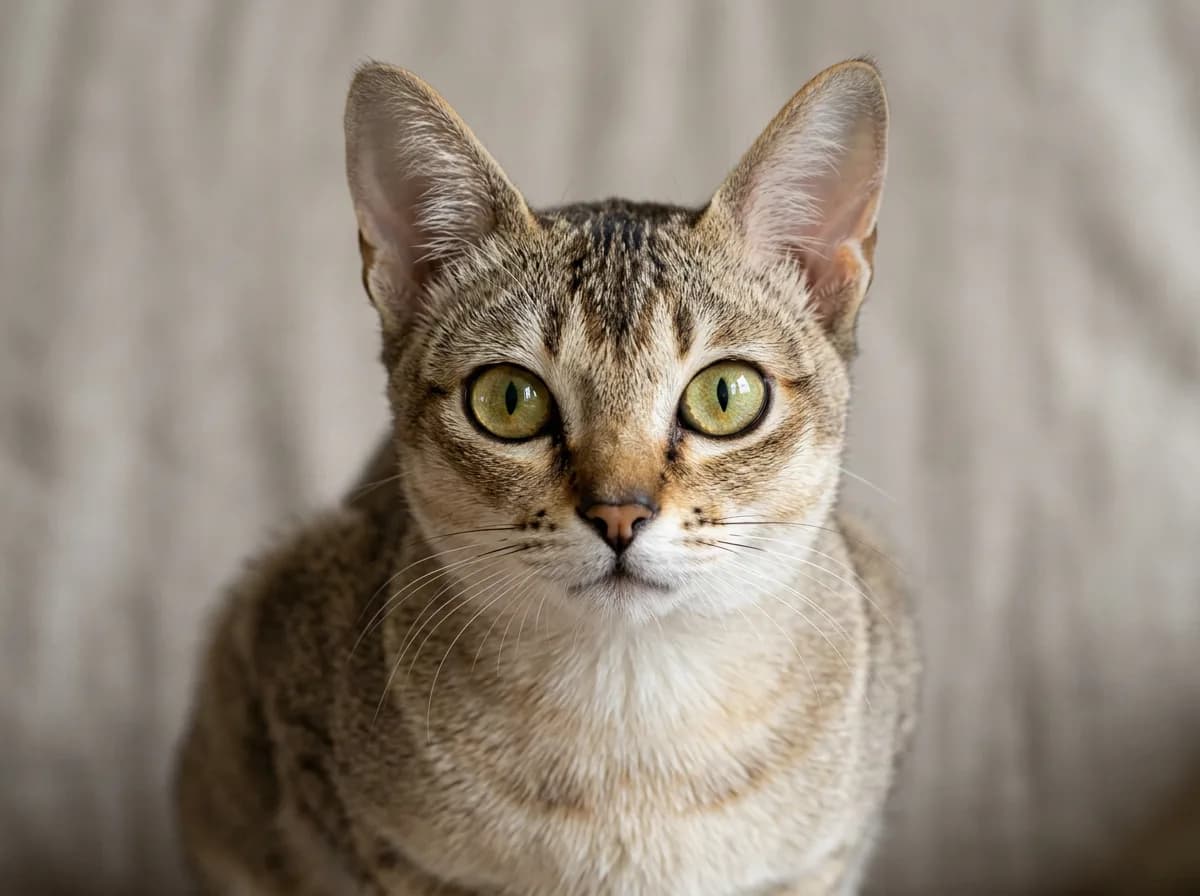
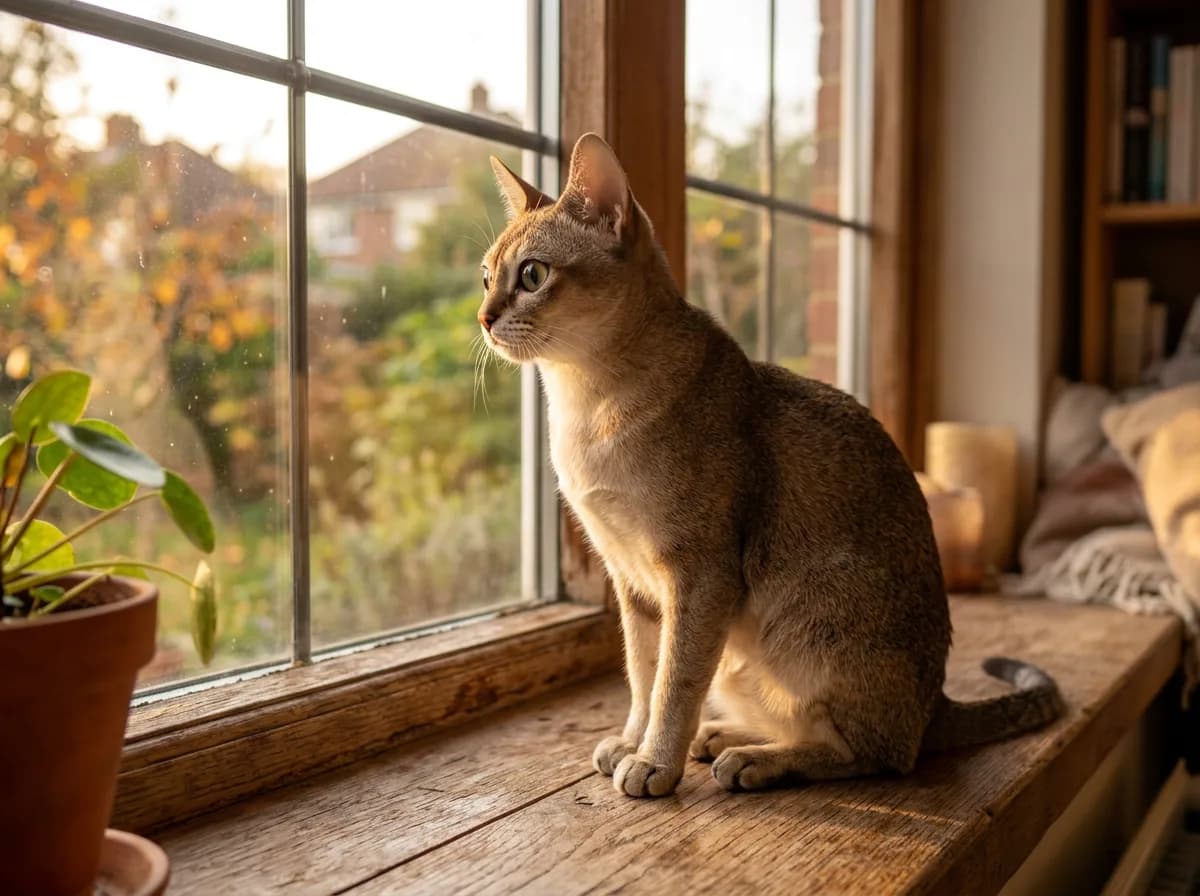
The look is unmistakable once you know it. Picture a compact, stocky little cat with a rounded head, a blunt-tipped tail, large almond-shaped eyes in hazel, green, or yellow, and ears so big they look almost out of scale on that small face. The coat lies close to the body and shimmers slightly, an effect created by the banding on each individual hair. None of this is accidental: the breed standard prizes exactly these traits, and reputable breeders select for them generation after generation.
It also helps to know what a Singapura is not. It is not simply a small brown tabby, and it is not a miniature Abyssinian, even though the two share the ticked-coat mechanism. The Singapura is its own recognized breed with its own standard, its own color, and its own temperament. Confusing it with a lookalike is the most common mistake new buyers make, which is one more reason to learn the real markers before you shop.
This article is the hub for our Singapura coverage. For the deep dives, see our dedicated guides to the Singapura cat's size and weight, the typical Singapura cat price, and the Singapura cat's lifespan.
- In Singapore the breed is affectionately called Kucinta, a blend of the Malay words for "cat" and "love." The Singapore Tourism Board later adopted a Singapura as a national mascot.
Singapura Size: Just How Small Is the Smallest Cat?
Size is the headline trait, so it deserves real numbers. Across CFA, TICA, and the breed clubs, adult Singapura weights cluster like this:
| Measure | Female | Male |
|---|---|---|
| Typical adult weight | 4 to 6 lb | 6 to 8 lb |
| Build | Small, muscular, stocky | Small, muscular, stocky |
| Full maturity | Around 2 years | Around 2 years |
A few points matter more than the raw figures. First, the Singapura is small but not delicate: under that short coat is a surprisingly heavy, muscular little body, which breeders describe as "stocky." A healthy adult should feel solid in the hand, not frail or bony. Second, Singapuras are slow to mature, often not reaching full size and weight until close to two years of age, so a small yearling is completely normal and not a sign of a problem. Third, because the breed is genuinely tiny, weight management is easy to get wrong in both directions, and a vet check is the right way to confirm your cat sits at a healthy weight rather than eyeballing it against a normal-sized cat.
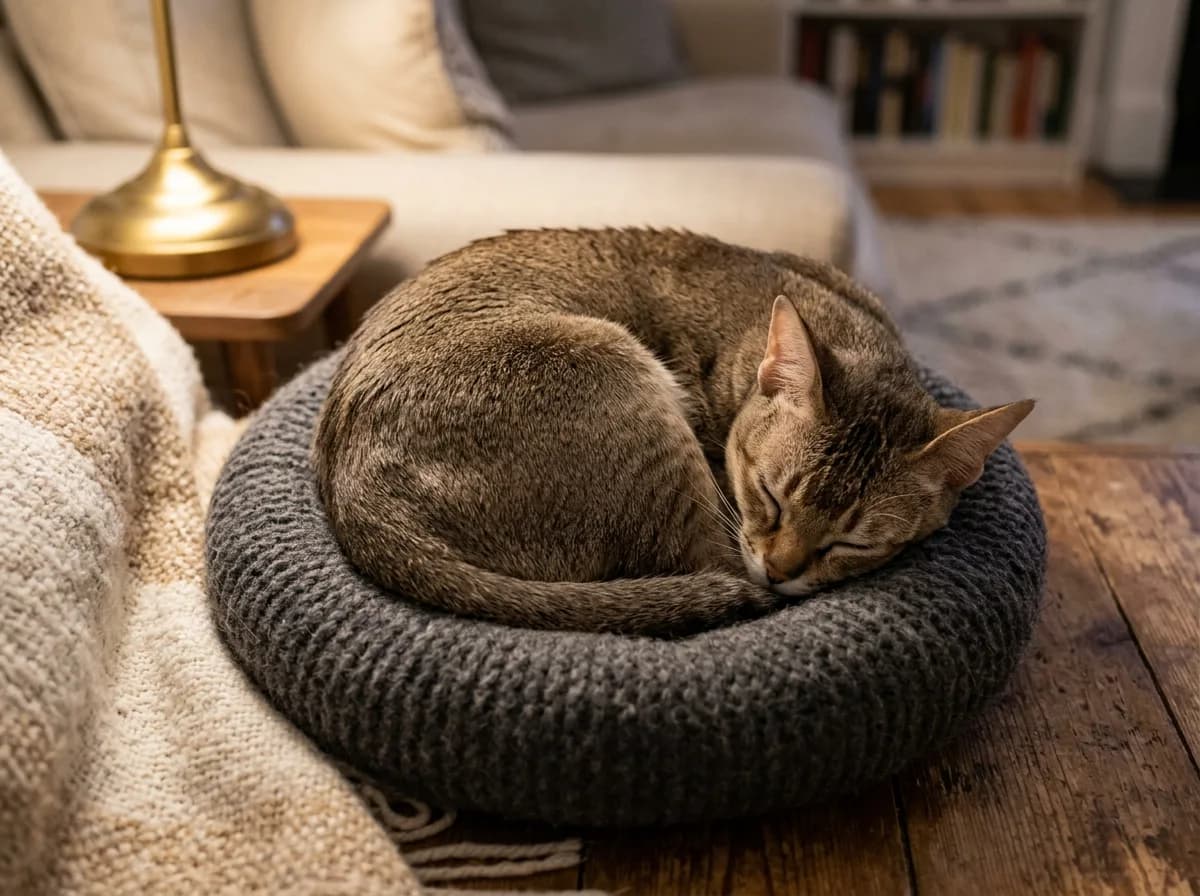
That small frame has practical consequences in the home. A 5-pound cat can slip into spaces a larger cat cannot, can be underfoot more easily, and feels the cold a little more readily, so a warm bed and a sunny perch are genuinely appreciated. The flip side is that a Singapura is easy to lift, easy to transport to the vet, and a manageable size for apartments and smaller homes. Few cats pack as much presence into so little body.
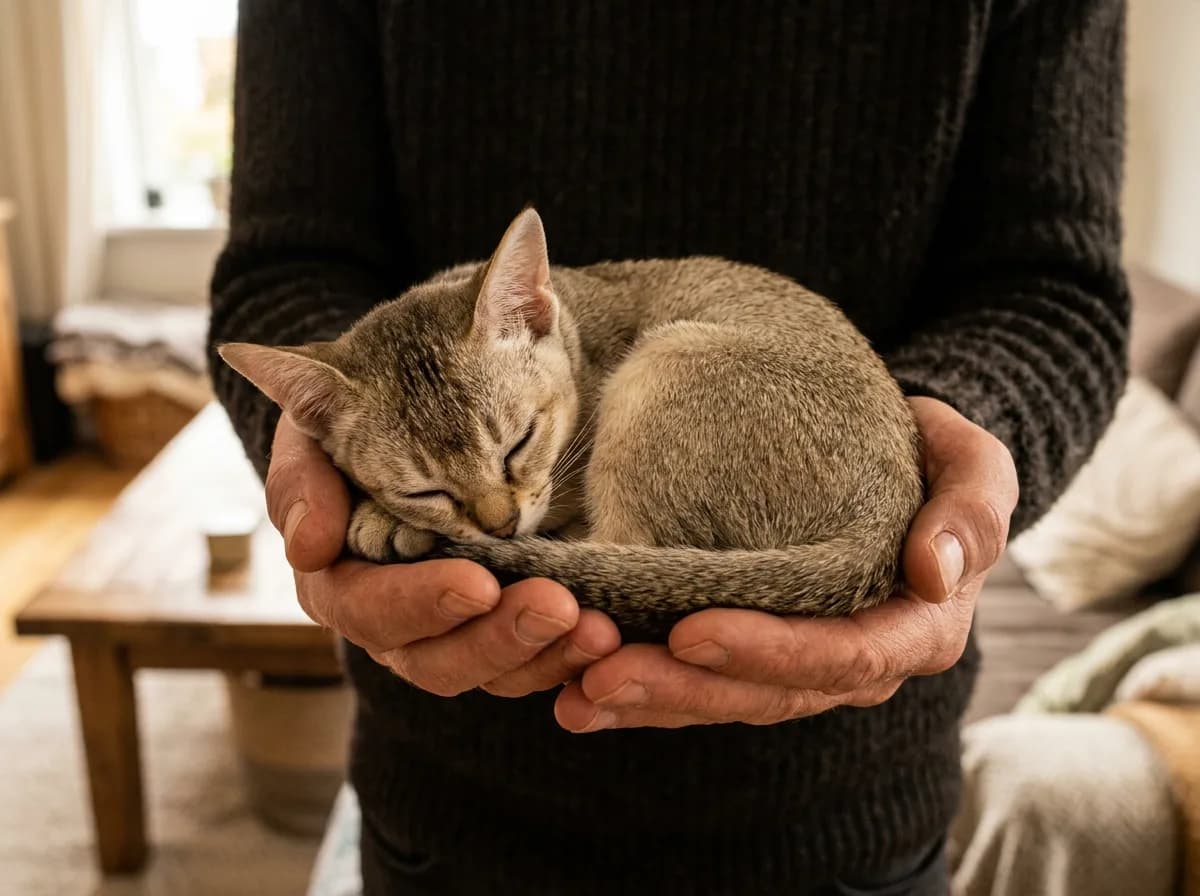
If you want the full breakdown, including growth-stage weights and how the Singapura compares to other small breeds, our dedicated Singapura size guide goes deeper than we can here.
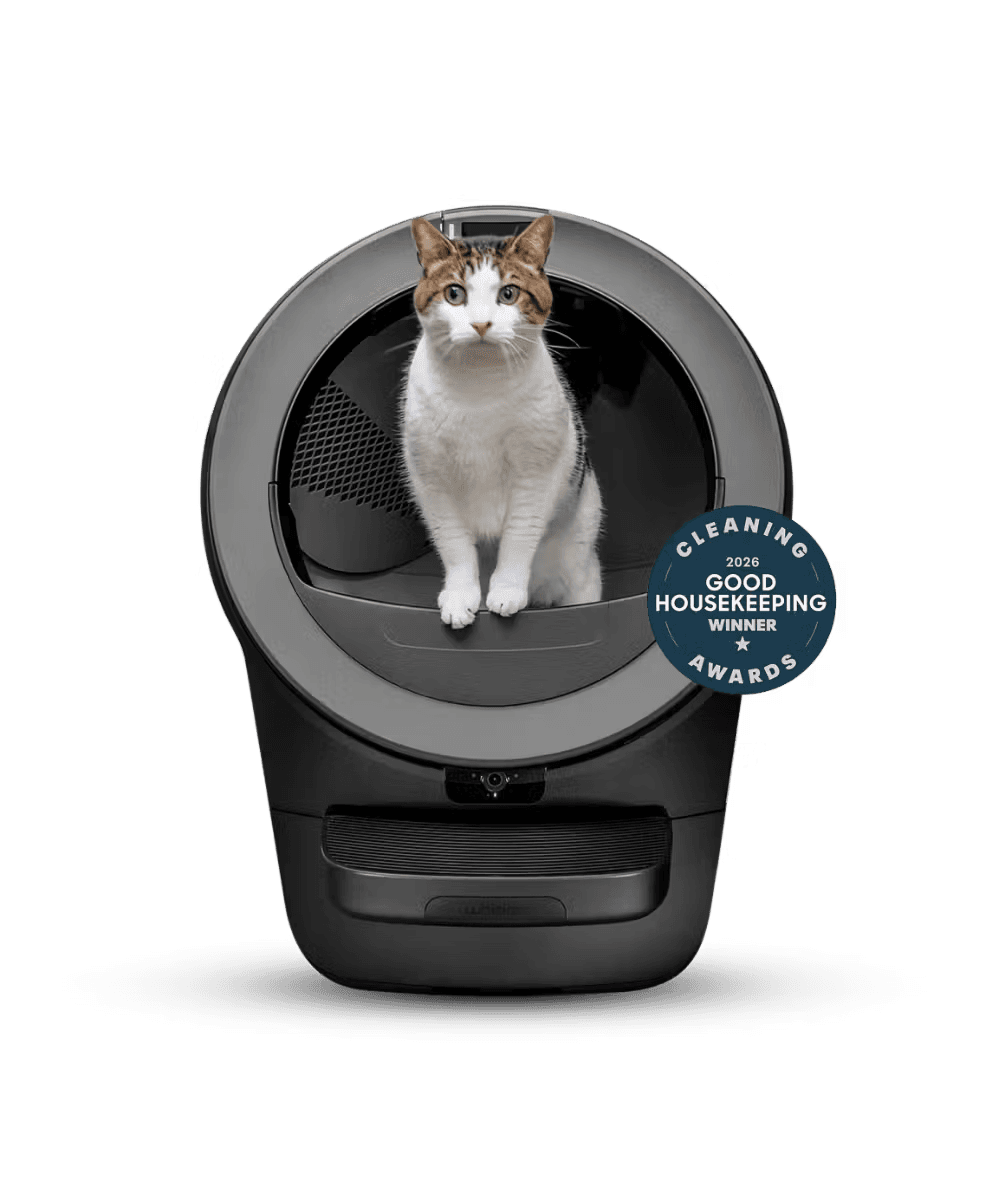
Never Scoop Again® with the Whisker Litter-Robot, the smart self-cleaning automatic litter box. Monitor visits and track weights for better overall care in the Whisker® app. Multi-cat friendly.
Petful may earn a commission when you click through to Whisker, at no extra cost to you.
The Sepia-Agouti Ticked Coat
The Singapura is a one-color breed. The single recognized color is sepia agouti: a warm old-ivory or cream ground color overlaid with dark-brown ticking. "Ticking" means each hair is banded with alternating light and dark color rather than being one solid shade, the same mechanism you see in an Abyssinian's coat. On a Singapura, that banding produces a soft, shaded, almost sepia-photograph effect, which is exactly where the breed gets its visual signature. Petful’s guide to Abyssinian cat colors has the full breakdown.
How the Ticking Works
Look closely at a single Singapura hair and you will see a light base, then a darker band, repeated along the shaft. CFA's standard calls for at least two bands of dark ticking separated by light bands, with the hair ending in a dark tip. The muzzle, chin, chest, and stomach stay lighter, an unticked warm ivory, while the back and the top of the head carry the most ticking. A dark line often runs down the spine, and the tail typically ends in a dark, blunt tip. The overall impression is of a cat that has been gently dusted with warm brown over cream.
That coloring also shifts with light. In bright sun the ground color glows almost golden; in softer indoor light the brown ticking dominates and the cat looks more sable. Kittens are often born darker and "clear up" into the proper sepia tone as they mature, which is one more reason the breed develops slowly. A young Singapura that looks a little muddy may simply not be finished yet.
Eyes, Ears, and Expression
Two features finish the picture. The eyes are large, almond-shaped, and set wide, in hazel, green, or yellow, and they are outlined with dark "cosmetic" lines that make them look even bigger. The ears are large, deeply cupped, and wide at the base, set to catch every sound in the room. Together they give the Singapura a permanently alert, curious expression that owners find irresistible and photographers love.
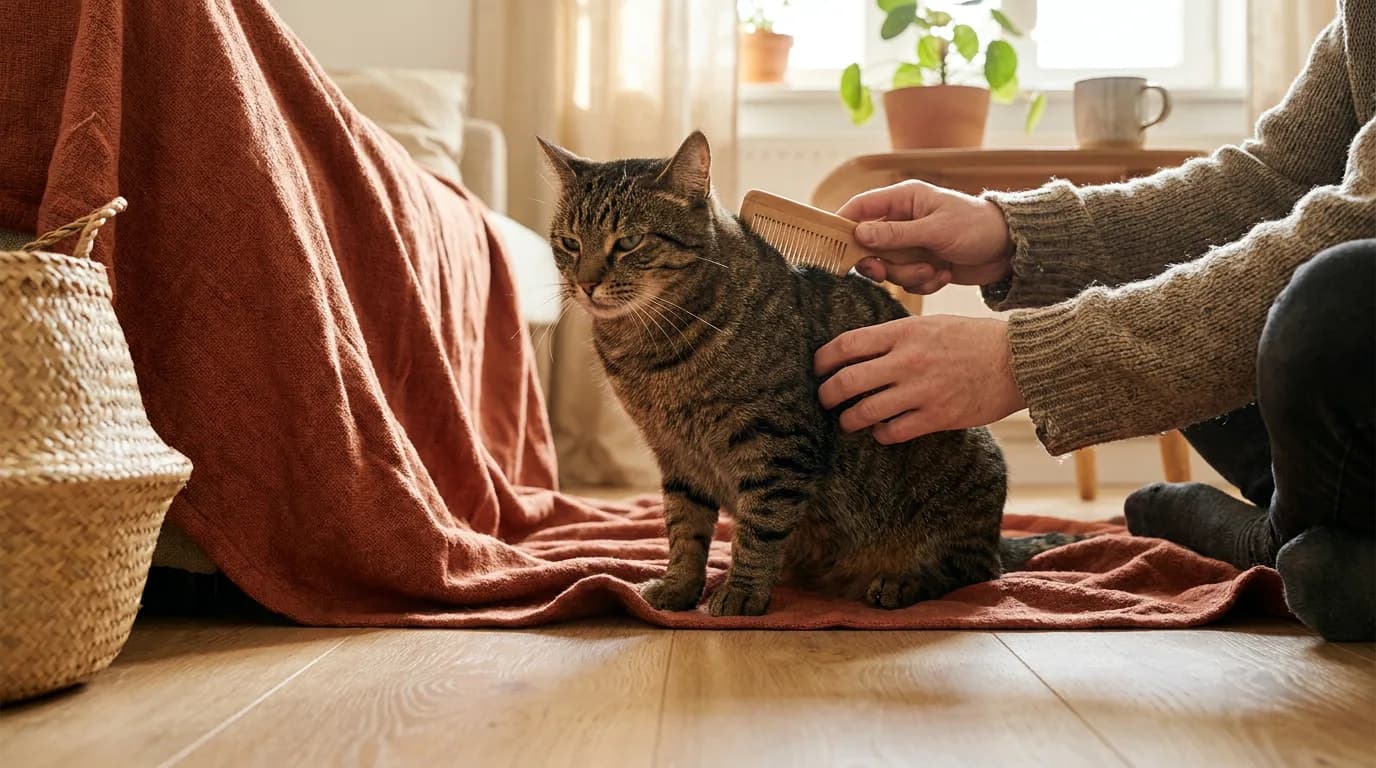
- Because the coat is short and close-lying, a Singapura needs very little grooming. A weekly once-over with a soft brush or a grooming glove keeps the coat shiny and removes the small amount of loose hair this breed sheds.
The Disputed Singapore Origin Story
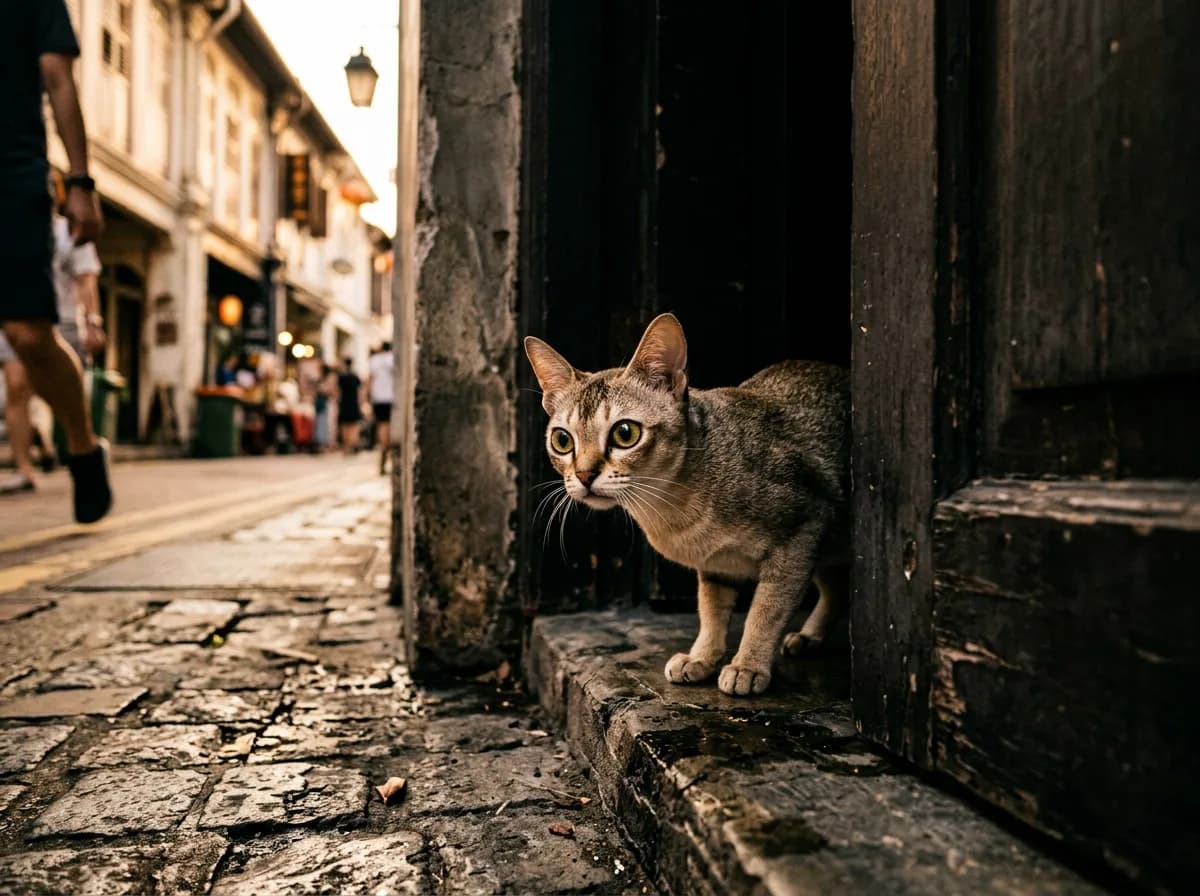
Here is where the Singapura gets interesting, and where honesty matters. The popular story goes like this: in the 1970s, American breeders Hal and Tommy Meadow encountered small brown ticked cats living in and around the storm drains of Singapore, brought a handful of them back to the United States in 1975, and founded the breed from that stock. That tale gave the breed its romance and even its nickname, the "drain cat" of Singapore. It is a wonderful story, and it is the version most people have heard.
The trouble is that the documentary trail did not match the story cleanly. A later CFA inquiry into the breed's foundation raised pointed questions: import records suggested the foundation cats may have actually traveled from the United States to Singapore rather than the other way around, and that the original cats could trace to Burmese and Abyssinian lines, which would neatly explain the ticked, sepia-toned coat. The Meadows had been involved in breeding before their time in Singapore, which is part of what fueled the doubt. The inquiry did not erase the breed; it complicated the founding legend.
So what is true? The most defensible position is the careful one: the Singapura is a real, distinct, recognized breed today, but its exact founding story is unresolved and probably more complicated than the charming "drain cat" version. Reputable sources present the romance and the inquiry side by side rather than picking one. We do the same. Whatever the precise pedigree of those first cats, the Singapura that exists now breeds true, looks consistent, and has its own standard, which is what "breed" really means.
- If a breeder or article tells you the Singapura's Singapore-street-cat origin is settled fact, treat that as a yellow flag. The CFA inquiry is part of the record, and a transparent breeder will acknowledge it.
What is not in dispute is the breed's later embrace by Singapore itself. The country adopted the Singapura as a tourism mascot and living symbol, nicknamed Kucinta, and a sculpture of the cats sits along the Singapore River as part of the city's riverside landmarks. Recognition followed in the cat fancy as well: CFA accepted the breed for registration and granted it championship status in 1988, and TICA recognizes it too. From contested beginnings, the Singapura became both a show cat and a national icon.
Singapura Temperament and Personality
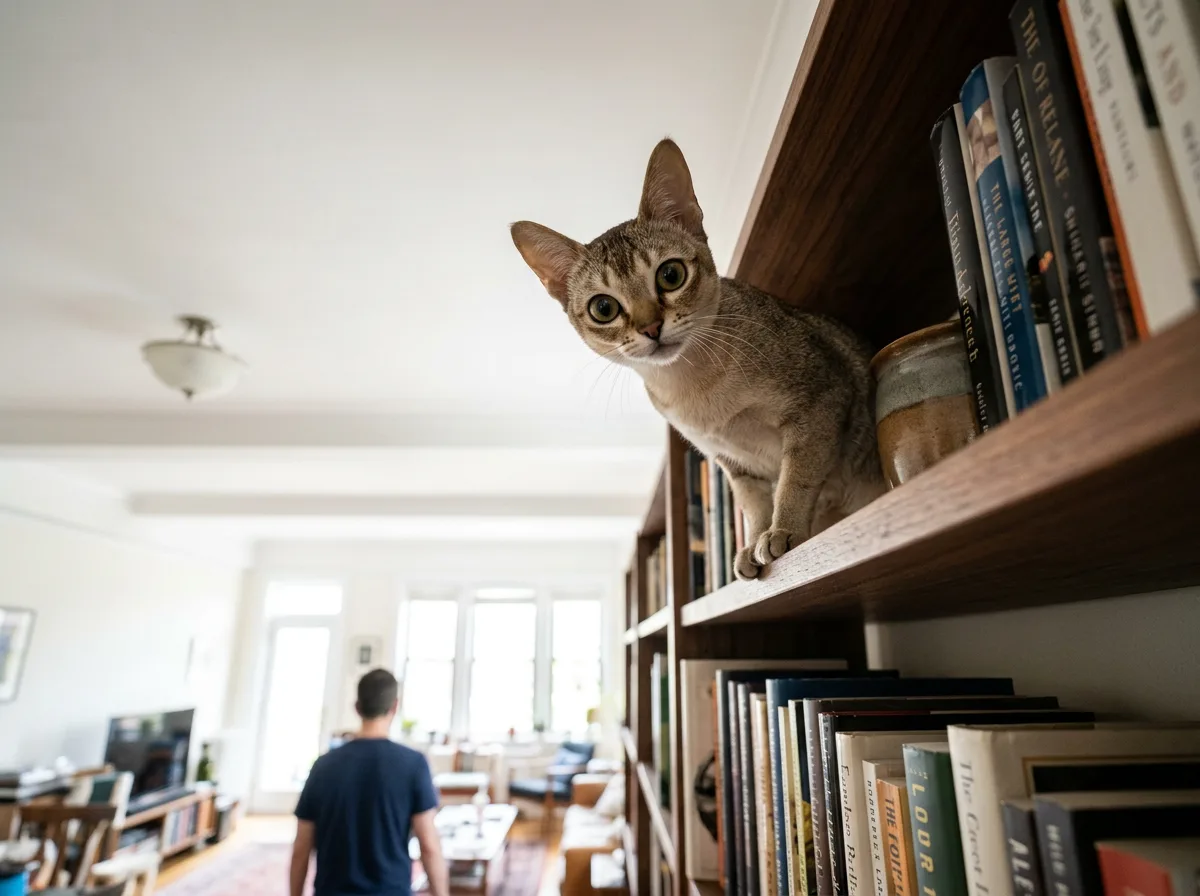
If the size is the headline, the personality is the reason people fall in love. Singapuras are active, curious, people-oriented cats that stay kitten-like in spirit for years. They are climbers and perchers, they like to be in the middle of whatever you are doing, and they will often ride on a shoulder or supervise from the top of a bookshelf. Breed clubs describe them as extroverted and affectionate, and owners tend to use the word "busy." This is not a cat that watches your life from across the room; it is a cat that joins in.
Are They Affectionate?
Very. The Singapura is a lap-seeking, attention-loving breed that bonds closely with its household and does not love being left alone all day. They tend to greet you at the door, follow you room to room, and insert themselves into your activities, from typing to folding laundry. For a single-cat household where someone is around for much of the day, that devotion is the whole appeal. For a home where the cat would be alone for long stretches, a second pet for company is genuinely worth considering, because an under-stimulated Singapura can get into mischief.
Are They Vocal?
Moderately. Singapuras are often described as relatively quiet with soft, gentle voices, but they are not silent. They will tell you when the food bowl is low or when they want your attention, just usually without the volume of a Siamese. The conversation tends to be a series of small, polite remarks rather than a constant commentary.
Good With Kids and Other Pets?
Generally yes. Their playful, social nature makes them a good match for gentle children and for other friendly cats or dogs, especially when introductions are done slowly and on the cat's terms. Because they are small, supervise play with very young kids so the cat is not handled too roughly, and give the Singapura high perches where it can retreat above the action when it wants a break.
Caring for a Singapura
A Singapura is a low-maintenance cat in the grooming department and a high-engagement cat in the play department. Plan for both, and you will have a happy cat.
Coat and Grooming
The short, close coat needs almost nothing: a weekly brush, routine nail trims, regular dental care, and periodic ear checks given those large ears. The Singapura is not a heavy shedder, so it is a tidy cat to live with. It is also not hypoallergenic, a point we will return to, so the light coat does not make it a safe pick for an allergic household no matter how little it sheds.

63-inch multi-level cat tree with scratch posts, hammock, plush perches, and dangling toys. Vertical territory is non-negotiable for high-energy climbing breeds like the Bengal.
Petful may earn a commission when you click through to Chewy, at no extra cost to you.
Diet and Weight
Because the breed is so small, portion control is real and easy to get wrong. A few extra grams of food a day is a much larger share of a 5-pound cat's needs than of a 12-pound cat's, so measure meals rather than free-feeding, and follow your vet's guidance on a complete, balanced cat food appropriate to the cat's life stage. Keep fresh water available at all times, and watch the body condition rather than just the number on the bag.
Exercise and Enrichment
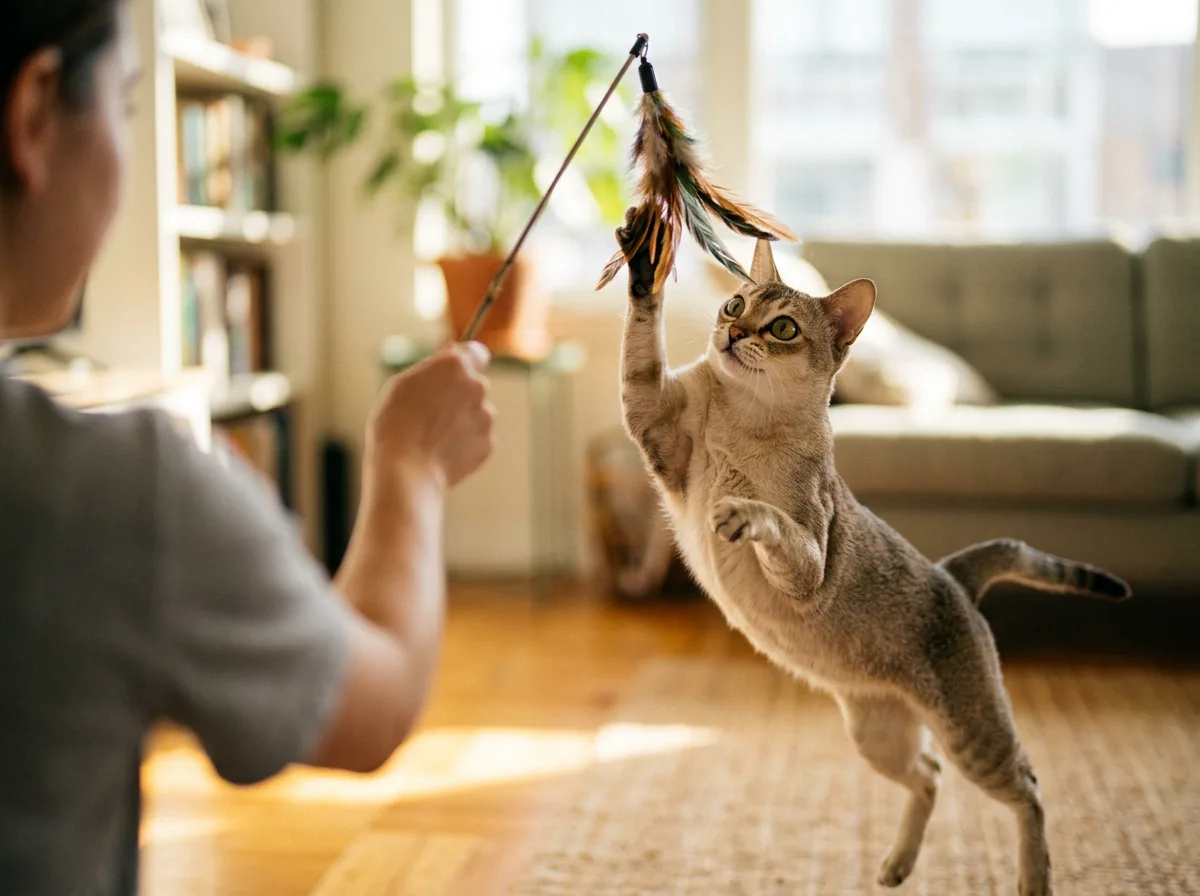
This is where the Singapura earns its keep on your attention. Give it vertical space (cat trees, wall shelves, window perches), interactive toys, and at least one or two dedicated play sessions a day. A bored Singapura is a mischievous Singapura, prone to opening cupboards, knocking things off counters, and inventing its own entertainment. If you are filling a home with a curious small cat, our profile of other busy, athletic breeds like the Savannah cat can help you think through enrichment and space.
Litter and Setup
Standard litter-box rules apply, with one small tweak: a tiny cat appreciates a box with at least one low entry side so a kitten or a small adult can climb in easily. Otherwise the Singapura is undemanding, using a clean box and a quiet feeding spot like any well-adjusted cat.
- Singapuras love height. A tall cat tree or a few wall shelves satisfy the climbing instinct, keep the cat exercised, and cut down on counter-surfing better than any scolding will.
Singapura Health Overview
The Singapura is generally a healthy, vigorous breed, but a small founding population means a few specific concerns deserve attention. None of this should scare you off; it should make you a more careful, better-informed buyer.
Pyruvate Kinase Deficiency (PK Deficiency)
The one health issue most associated with the breed is pyruvate kinase deficiency, often written PK deficiency or PKDef. It is an inherited condition affecting an enzyme that red blood cells need, and it can cause a hemolytic anemia that may show up as lethargy, weakness, poor appetite, or pale gums, sometimes intermittently. The encouraging news is that a DNA test exists, and responsible breeders screen their breeding cats so they never pair two carriers. Always ask a breeder for PK deficiency testing results before you commit to a kitten.
Uterine Inertia
Because Singapuras are so small, queens (breeding females) can struggle with uterine inertia, weak labor contractions that can require a cesarean section to deliver kittens safely. This is mostly a breeder's concern rather than a pet owner's, but it is part of why ethical breeding of this tiny breed takes real veterinary support and why responsible litters are not cheap to produce.
Other Considerations
Some sources also note that the breed's limited genetic diversity warrants ongoing screening, and individual lines may flag conditions such as progressive retinal atrophy, an eye condition that a good breeder will discuss openly through family history. As with most breeds, routine wellness care matters: yearly exams, vaccines appropriate to lifestyle, parasite prevention, and dental attention. Overall, with screened parents and good preventive care, most Singapuras live long, healthy lives in the range of roughly 11 to 15 years.
- The single most important health question for a Singapura buyer is whether the breeder DNA-tests for pyruvate kinase deficiency. If they cannot show you results, keep looking.
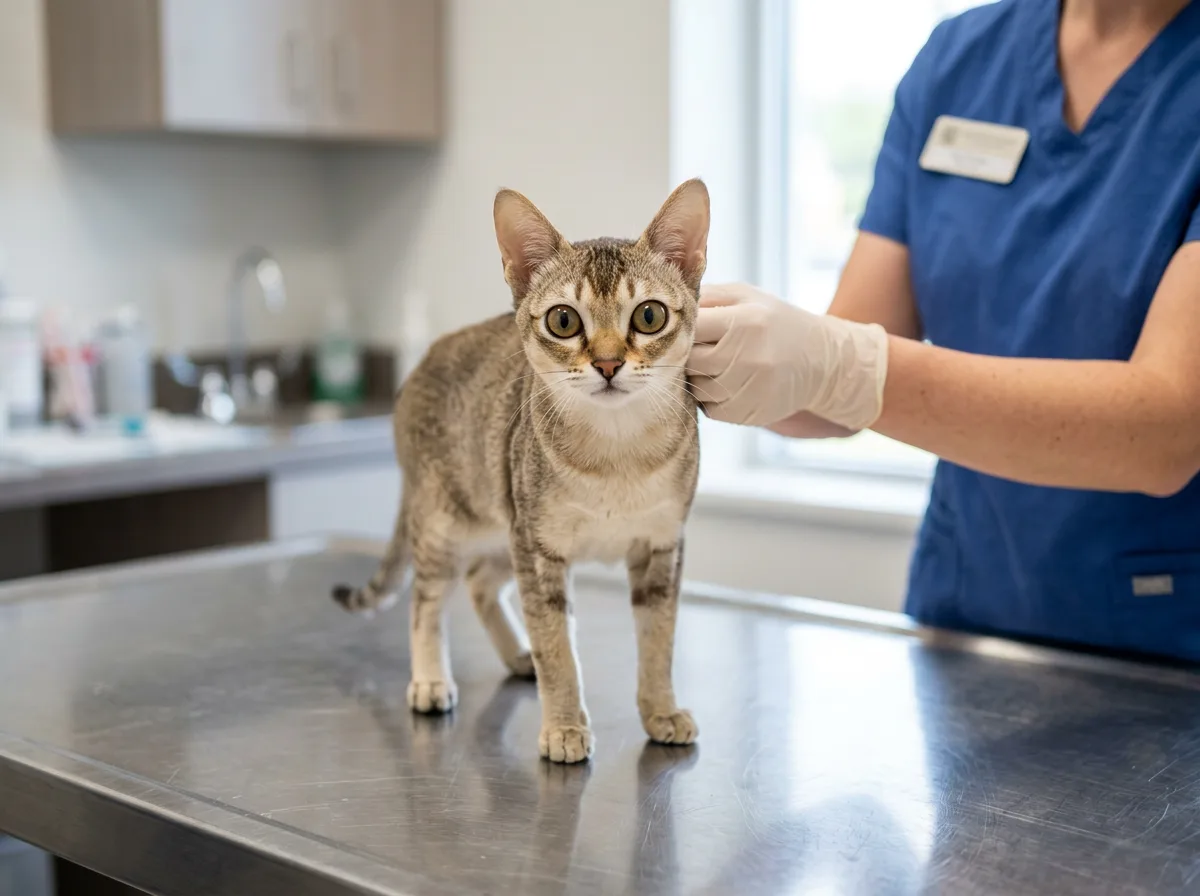
For a full treatment of how long these cats live and what shapes that range, see our dedicated Singapura lifespan guide for the complete picture.
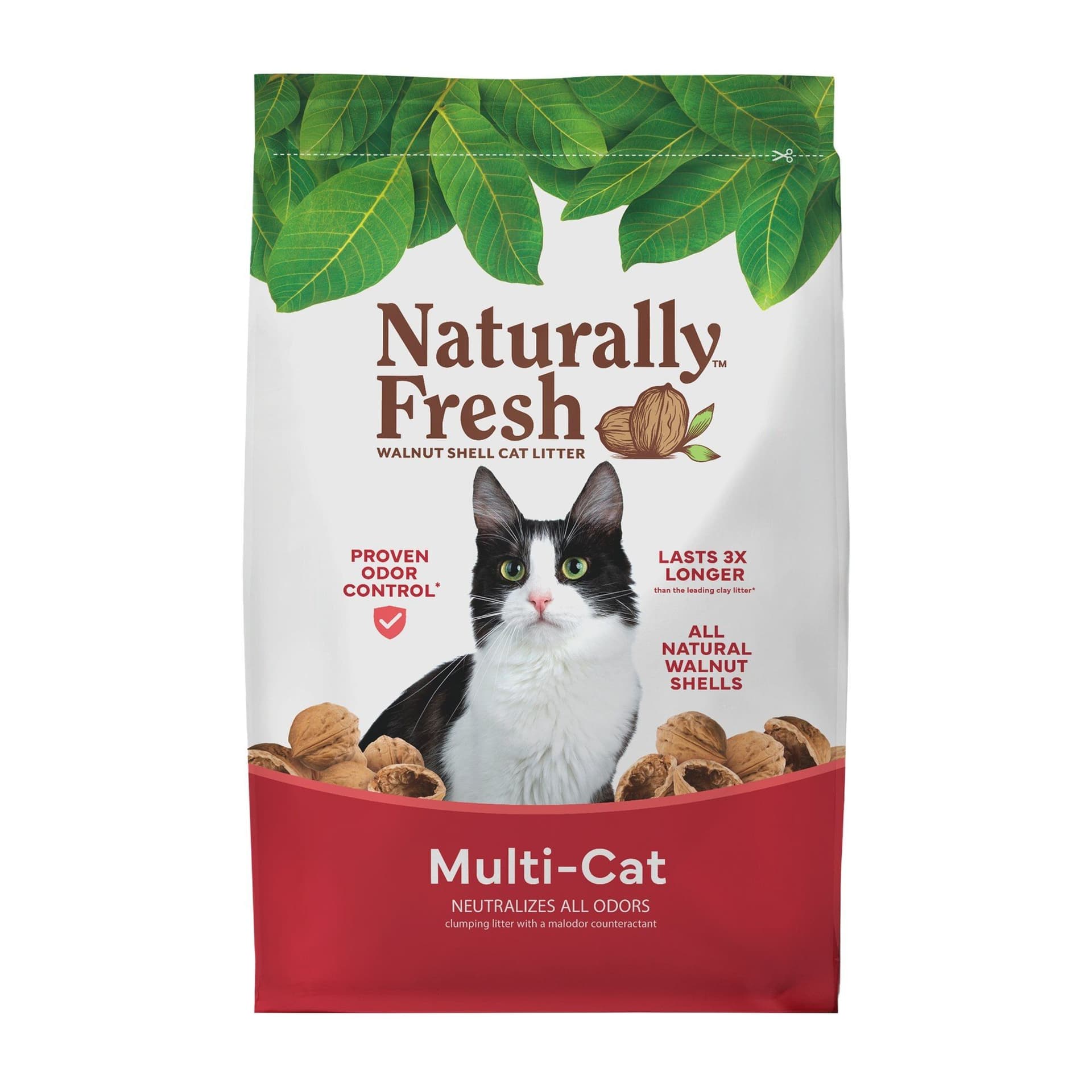
Walnut shell clumping cat litter that excels at odor control, lasts up to 3x longer than clay, and is a top pick for multi-cat households.
Petful may earn a commission when you click through to Chewy, at no extra cost to you.
How Much Does a Singapura Cost?
Singapuras are uncommon, and rarity shows up in the price. From a reputable breeder, expect to pay roughly 1,000 to 2,500 USD for a pet-quality Singapura kitten, with show or breeding prospects costing more. Because the breed is small and the litters can be small, breeders are limited in supply, and waitlists are common. Patience is part of the cost of admission.
| Item | Typical Range | Notes |
|---|---|---|
| Kitten from a breeder | 1,000 to 2,500 USD | Higher for show or breeding quality |
| First-year supplies | 300 to 600 USD | Litter, food, beds, scratchers, toys |
| Routine vet care per year | 200 to 500 USD | Exam, vaccines, parasite prevention |
A lower price is not automatically a deal. With a breed that carries a known genetic condition, paying a fair price to a breeder who DNA-tests is far cheaper in the long run than a bargain kitten with no health screening and an unknown background. Beyond the purchase price, budget for the predictable ongoing costs: food, litter, enrichment, routine veterinary care, and a small emergency fund or pet insurance for the unexpected. Our dedicated Singapura price guide breaks down what drives the number and how to budget for the first year and beyond.
Finding a Singapura
Because the breed is rare, finding one takes patience and a little homework. Start with CFA and TICA breeder directories, contact breeders directly, and ask specific questions: Do you DNA-test for PK deficiency? Can I see the kitten's lineage and the parents? How are the kittens socialized? A good breeder will welcome those questions and answer them in detail. Be wary of anyone selling Singapuras with no health documentation, suspiciously low prices, or a settled, romanticized origin claim presented as undisputed fact.
Rescues and breed-specific networks occasionally have Singapuras or Singapura mixes, so it is worth checking adoption channels too, especially if a purebred kitten from a breeder is outside your budget or timeline. When you do meet a cat, look for the real markers: a small but solid body, the sepia-agouti ticked coat, large eyes and ears, and a confident, curious temperament rather than a fearful one.
If you are still comparing breeds, our profiles on the Abyssinian and the Oriental Shorthair are useful neighbors, since those breeds share either the ticked coat or the people-loving, high-energy personality that draws people to the Singapura in the first place.
Living With a Singapura, Day to Day
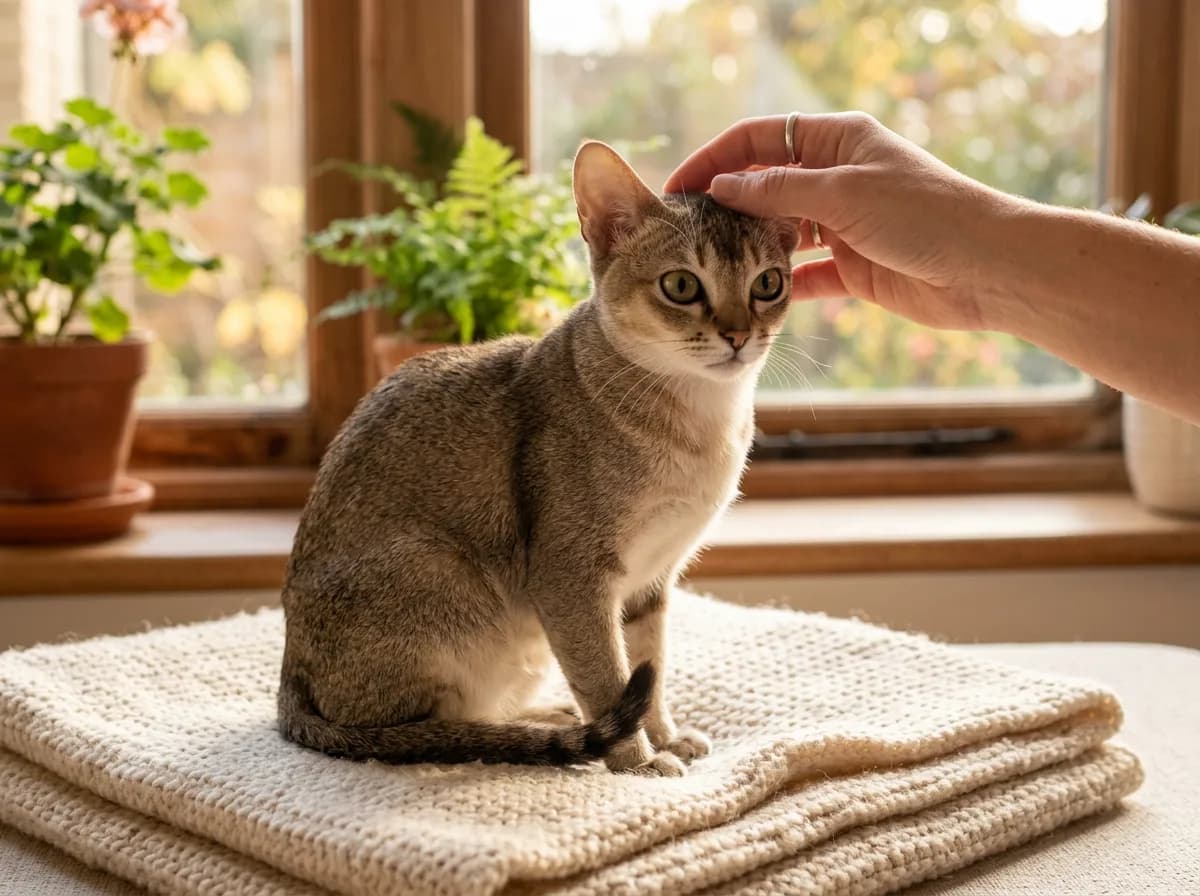
What is it actually like to share a home with the world's smallest cat breed? In a word, lively. A Singapura tends to wake up ready to participate, supervises breakfast, investigates any open drawer, and claims the warmest, highest, sunniest spot it can find. It will likely greet you when you come home and want a play session before settling onto a lap in the evening. The breed's small size makes all of this feel manageable rather than overwhelming, even in a compact apartment.
The trade-off is engagement. This is not a cat you can ignore for days at a time and expect to stay content. Singapuras want interaction, novelty, and a little daily play, and they reward owners who provide it with affection and entertainment in equal measure. If your lifestyle includes time at home, a willingness to rotate a few toys, and tolerance for a curious cat that wants to help with everything, the Singapura fits beautifully. If you want a strictly independent, low-contact cat, this is probably not your breed.

108-oz stainless steel pet fountain with quiet pump and water-level window. Bengals are notoriously water-obsessed; a flowing fountain encourages hydration and pulls them away from sinks and toilets.
Petful may earn a commission when you click through to Chewy, at no extra cost to you.
From Kitten to Senior
The Singapura changes in predictable ways across its life, and knowing the arc helps you set expectations. Kittens are bold, social, and into everything, and because the breed matures slowly they hold that playful streak well past the age when many cats settle down. Through the first two years the coat finishes clearing into its proper sepia tone and the body fills out from leggy kitten to compact, muscular adult, so do not be alarmed by an awkward in-between phase.
In the adult years, a Singapura is at its best: athletic, affectionate, and endlessly curious, while becoming a touch more measured about when it wants to play versus when it wants a lap. This is the long, steady middle of the relationship, typically spanning most of the cat's life. As Singapuras move into their senior years, usually past about age ten, they slow down gradually, may sleep more, and benefit from easier access to favorite perches, warmer resting spots, and more attentive monitoring of weight and appetite. Senior wellness exams, ideally twice a year, catch the small changes that matter most in a tiny cat, where even a few ounces of loss can signal something worth checking.
The throughline across every stage is connection. A Singapura that is engaged, well fed, kept at a healthy weight, and screened for the breed's known issues tends to age gracefully and stay involved in family life right to the end.
Is the Singapura Right for You?
Choose a Singapura if you want a tiny, affectionate, endlessly curious cat and you can give it attention, vertical space, and the assurance of a breeder who tests for PK deficiency. Think twice if you need a hypoallergenic cat, if the cat would be alone all day every day, or if you want a low-energy lap ornament rather than a busy little shadow. For the right home, the world's smallest cat breed delivers one of the biggest personalities in the cat fancy, and few owners ever go back to ordinary cats once they have lived with one.
- Small body, huge personality, a single sepia coat, a disputed but charming history, and one health test that matters most. If that profile fits your home, the Singapura is a delight.
Singapura Cat at a Glance
| Trait | Detail | Quick Note |
|---|---|---|
| Size | 4 to 8 lb | Smallest domestic breed |
| Coat | Sepia agouti, ticked | One recognized color |
| Lifespan | 11 to 15 years | With good care and screening |
| Temperament | Active, curious, affectionate | Stays kitten-like |
| Top health concern | PK deficiency | DNA test available |
| Price | 1,000 to 2,500 USD | Rare, expect waitlists |
| Hypoallergenic | No | Light coat but not allergen-free |
Singapura Quick Facts and Comparisons
The Singapura sits in a small club of petite, ticked, or highly people-oriented breeds, and seeing it next to its neighbors helps it click. Compared with the Abyssinian, the Singapura shares the ticked coat and the active mind but is smaller and comes in a single sepia color rather than the Abyssinian's range. Compared with most house cats, it is roughly half the weight while keeping a stocky, athletic build. And compared with aloof breeds, it is firmly on the affectionate, involved end of the spectrum.
| Feature | Singapura | Typical House Cat |
|---|---|---|
| Adult weight | 4 to 8 lb | 9 to 12 lb |
| Coat colors | One (sepia agouti) | Many |
| Energy level | High, playful | Varies |
| Sociability | Very people-oriented | Varies |
| Rarity | Rare, often waitlisted | Common |
None of these comparisons make one breed "better." They simply help you decide whether the Singapura's particular mix of tiny size, single striking coat, and outgoing personality is the right fit for your home and routine.
Frequently Asked Questions
A Singapura kitten from a reputable breeder typically costs about 1,000 to 2,500 USD, with show or breeding-quality cats priced higher. The breed is rare, so waitlists are common, and a fair price from a breeder who DNA-tests for PK deficiency is worth more than a cheap, unscreened kitten.
Black is the cat color most often passed over for adoption, a pattern sometimes called "black cat syndrome," largely due to superstition and the fact that black cats photograph less distinctively. It has nothing to do with temperament or health. The Singapura, by contrast, comes in only one color, the warm sepia-agouti ticked coat.
Yes. Singapuras are well suited to indoor life and are safest kept indoors given their small size and high value. They do need enrichment to stay happy: vertical space, climbing perches, interactive toys, and daily play satisfy their busy, curious nature.
Several breeds compete for "friendliest," including the Ragdoll, Maine Coon, and Burmese, but the Singapura is firmly in that conversation. It is people-oriented, affectionate, and loves to be involved in everything its family does, which is a big part of the breed's appeal.
A Singapura typically lives about 11 to 15 years, and some individuals reach their late teens with good care. Routine veterinary visits, weight management, and buying from a breeder who screens for pyruvate kinase deficiency all support a long, healthy life.
Among the most expensive cat breeds are the Ashera and Savannah (especially early-generation), the Bengal, and the Persian, with prices that can run into the thousands or far higher. The Singapura is pricier than an average cat at roughly 1,000 to 2,500 USD, but it is not among the very most expensive breeds.
Most cats dislike strong citrus (orange, lemon), as well as the scents of vinegar, menthol, and certain essential oils. Some of these, especially concentrated essential oils, can be toxic to cats, so use scents carefully around any cat, including a Singapura.
Cats respond to calm, positive interaction rather than words. After a stressful moment, give your cat space, then reconnect with slow blinks, gentle talk, a favorite treat, or a play session on the cat's terms. For an attention-loving Singapura, quality time and a calm, predictable routine rebuild trust quickly.

Coreen Saito is a pet writer and longtime shelter volunteer with more than a decade in animal rescue. She covers cat behavior, breed care, and the small, ordinary science of sharing a life with companion animals, with a particular focus on honest takes about the products and decisions that actually matter. At home in Arizona, she's outranked by Mac (a dog with the loudest opinion in the house), Rebel (a cat who governs by quiet authority), and Meri (an orange tabby who runs the late shift and the laundry basket). She writes about all three, plus the rescues that keep coming through her life, at LifeWithMinty.com.
Sign up for expert-backed reviews and safety alerts all in one place.