Siberian Cat Size: How Big Do Siberian Cats Really Get?
A complete guide to Siberian cat size: male vs female weight, height and length, a year-by-year growth timeline, and how the breed compares to the Maine Coon and other big cats.
Petful is reader supported. As an affiliate of platforms like Amazon and Chewy, we may earn a commission when you buy through links on this page. There is no extra cost to you.
The Cat Fanciers' Association (CFA) calls the Siberian one of the slowest-maturing cat breeds, so the true siberian cat size is a moving target: a male commonly settles between 15 and 20 pounds, a female between 8 and 12 pounds, and neither hits full adult size until somewhere around 3 to 5 years old. That late finish, paired with a dense triple coat that adds visual bulk, is exactly why so many owners think their cat is "done" growing at a year, then watch it keep filling out for years afterward. This guide breaks down male versus female weight, height and length, the year-by-year growth timeline, and how a Siberian stacks up against the giant it gets confused with most: the Maine Coon.
- 1Adult males typically weigh 15 to 20 pounds; females 8 to 12 pounds
- 2Siberians stand roughly 9 to 12 inches tall and measure 17 to 25 inches long, not counting the tail
- 3They are slow maturers and may not reach full size until 3 to 5 years of age
- 4They read as "large but not giant," noticeably smaller than a Maine Coon but heavier-set than most house cats
- 5A dense triple coat adds bulk and a barrel-chested look, so weigh your cat rather than eyeballing it

Sign up for expert-backed reviews and safety alerts all in one place.
How big do Siberian cats get?
Siberians are a genuinely large, substantial breed, built more like a powerlifter than a runway model. The overall impression is one of strength and roundness: a barrel chest, a thick neck, powerful hindquarters, big tufted paws, and a heavy, well-muscled body. The CFA breed standard describes them as "large, powerful cats," and most vet-reviewed sources, including Catster's vet-reviewed size comparison, place the breed in the large category rather than medium.
Here is the honest nuance, though. Different registries and sources quote slightly different numbers, which is why you will see ranges from 8 pounds all the way to 20-plus pounds depending on where you look. The CFA show standard cites 12 to 18 pounds for a mature male and 8 to 12 pounds for a female. Vet and insurer sources such as Fetch tend to quote a heftier 15 to 20 pounds for males, reflecting robust, well-grown pet cats rather than the show ring. The practical, real-world takeaway: expect a healthy adult male in the 15 to 20 pound range, a female in the 8 to 12 pound range, and treat anything from a petite 8-pound queen to a strapping 20-pound tom as normal for the breed.
- Show standards (CFA) describe an ideal, while vets and insurers report what real pet cats actually weigh, which skews heavier. Both are "right." Use them as a band, not a single magic number, and let your own vet judge body condition.
If you want the full picture of the breed beyond size, our Siberian cat breed profile covers temperament, grooming, and care, and the Siberian cat personality guide explains why these big cats act more like affectionate, dog-like companions than aloof lap warmers.
Male vs female Siberian cat size
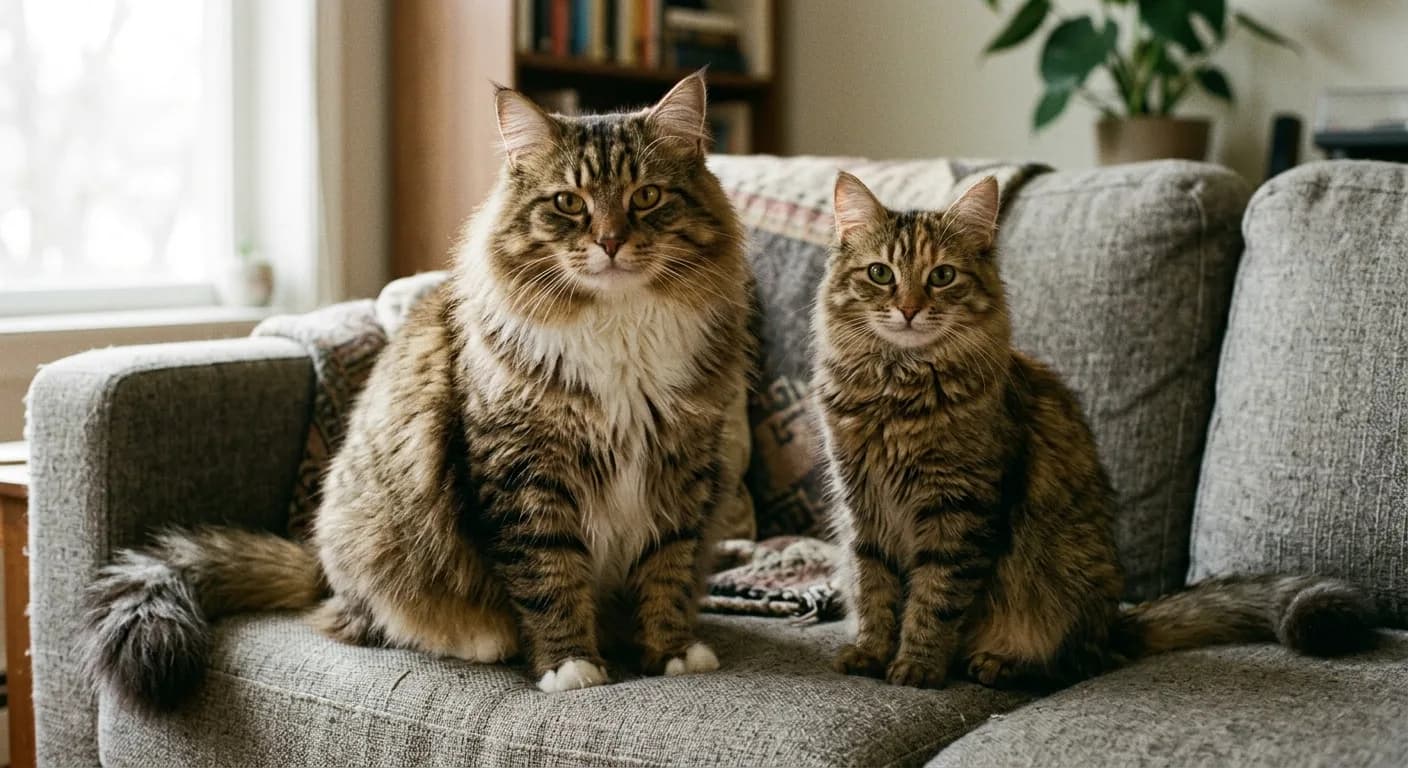
Siberians are sexually dimorphic, which is a technical way of saying males are clearly bigger than females. The gap is real and visible: a full-grown tom can outweigh a queen by 50 percent or more, and males tend to carry a broader head, a fuller ruff, and heavier bone.

Never Scoop Again® with the Whisker Litter-Robot, the smart self-cleaning automatic litter box. Monitor visits and track weights for better overall care in the Whisker® app. Multi-cat friendly.
Petful may earn a commission when you click through to Whisker, at no extra cost to you.
| Measure | Male | Female |
|---|---|---|
| Typical weight | 15 to 20 lb (CFA show standard 12 to 18 lb) | 8 to 12 lb |
| Height at shoulder | 10 to 12 in | 9 to 11 in |
| Body length (nose to tail base) | Up to 25 in | 17 to 23 in |
| Build | Broad head, heavy bone, full ruff | More refined, lighter frame |
A few things worth knowing about the sexes:
- Males finish later and larger. Toms keep packing on muscle and bone deeper into their slow maturation, so the gap between a male and female of the same litter widens as they age.
- Females are not small cats. An 8 to 12 pound female is still a solidly built, medium-to-large cat by any normal house-cat standard, just dainty next to her brothers.
- Neutering and spaying have a modest effect. Altered cats can run slightly heavier if calories are not managed, but the surgery does not dramatically change frame size. Genetics and nutrition drive that.
- Adult size is highly heritable. If your goal is a 18-to-20-pound male, ask the breeder to show you the sire and dam (and ideally a grandparent). Big, well-grown parents are the single best predictor of a big kitten.
Siberian cat height and length
Weight gets all the attention, but height and length tell the rest of the story. Siberians are a compact-but-substantial cat: not leggy and elongated like a Savannah, but deep-bodied and powerfully built close to the ground.
Drawing on the CFA description and the vet-reviewed measurements compiled by Catster and others, here is what to expect:
- Height at the shoulder: roughly 9 to 12 inches. Males sit at the taller end.
- Body length: about 17 to 25 inches from nose to the base of the tail. The litter-robot profile and Fetch both cite the 15-to-25-inch range for the body.
- Tail: the Siberian's bushy, plumed tail is roughly the same length as its body, so the total nose-to-tail-tip measurement can push well past two feet.
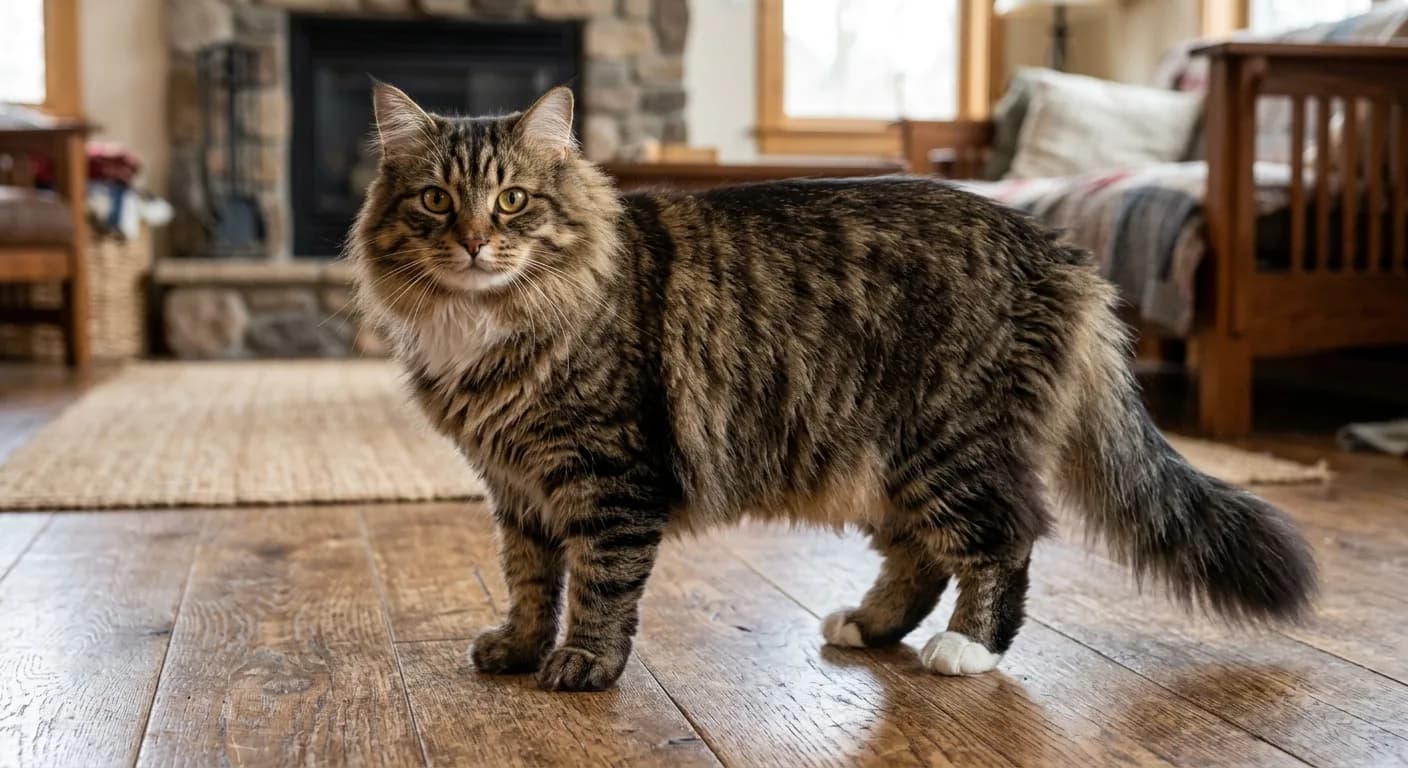
That deep, barrel-chested build is part of why Siberians feel so solid when you pick them up. They are dense. A 16-pound Siberian carries its weight in muscle and bone, not just floof, even though the triple coat genuinely does add a visual pound or two of apparent bulk. The breed's proportions matter as much as the raw numbers: medium-length, sturdy legs set under a thick, rounded body, with the hind legs slightly longer than the front, give the Siberian its characteristic powerful, ready-to-pounce stance. It is a cat built for the cold Russian forests it came from, and every part of the silhouette, from the broad head down to the big snowshoe paws, reads as substance over delicacy.
- A Siberian's dense triple coat (guard hairs, awn hairs, and a thick down layer) makes the body look rounder and heavier than it is. Run your hands down the ribs and spine to feel the real frame underneath before deciding your cat is over or underweight.
Siberian cat growth timeline: a slow-maturing breed
If there is one thing every Siberian owner should internalize, it is patience. This is one of the slowest-maturing cat breeds in the world. While many domestic cats reach adult size by 12 months, the CFA notes Siberians are "extremely slow to mature," with most reaching full size around 3 years and some not finishing until closer to 5. Untamed and other breed sources echo that 4-to-5-year window for full development. That extended timeline is genuinely unusual: an average shorthaired cat is essentially done growing before its first birthday, so the Siberian's habit of bulking out well into its third, fourth, or even fifth year sets it apart from almost every cat its owner has lived with before.
Here is a realistic stage-by-stage picture. Treat these as typical averages, not guarantees, since individual cats vary and exact per-month weights differ by line.
| Age | What's Happening | Typical Weight (Approx.) |
|---|---|---|
| 8 to 12 weeks | Rapid kitten growth, big paws and ears | 2 to 4 lb |
| 6 months | Looks like a small adult, far from finished | 6 to 9 lb |
| 1 year | Often mistaken for "fully grown," still filling out | 8 to 13 lb |
| 2 to 3 years | Bulk, ruff, and muscle keep developing | 10 to 18 lb |
| 3 to 5 years | Full adult size and final coat reached | 8 to 12 lb female / 15 to 20 lb male |
The big mistake owners make is judging final size at the one-year mark. At 12 months a Siberian looks like a complete cat, but it is really a teenager. The chest broadens, the cheeks fill out (especially in males), the ruff thickens, and the muscle layers in over the next two to four years. A cat you thought was a modest 11 pounds at a year can mature into a substantial 16-to-18-pound adult.

63-inch multi-level cat tree with scratch posts, hammock, plush perches, and dangling toys. Vertical territory is non-negotiable for high-energy climbing breeds like the Bengal.
Petful may earn a commission when you click through to Chewy, at no extra cost to you.
- Because Siberians fill out so gradually, a perfectly healthy young Siberian can look lean and "unfinished" well into its second year. Do not free-feed or overfeed to rush size. Steady growth on a complete, high-protein diet beats forcing weight onto a still-developing frame, which only adds fat, not stature.
Siberian vs Maine Coon: large, but not a giant
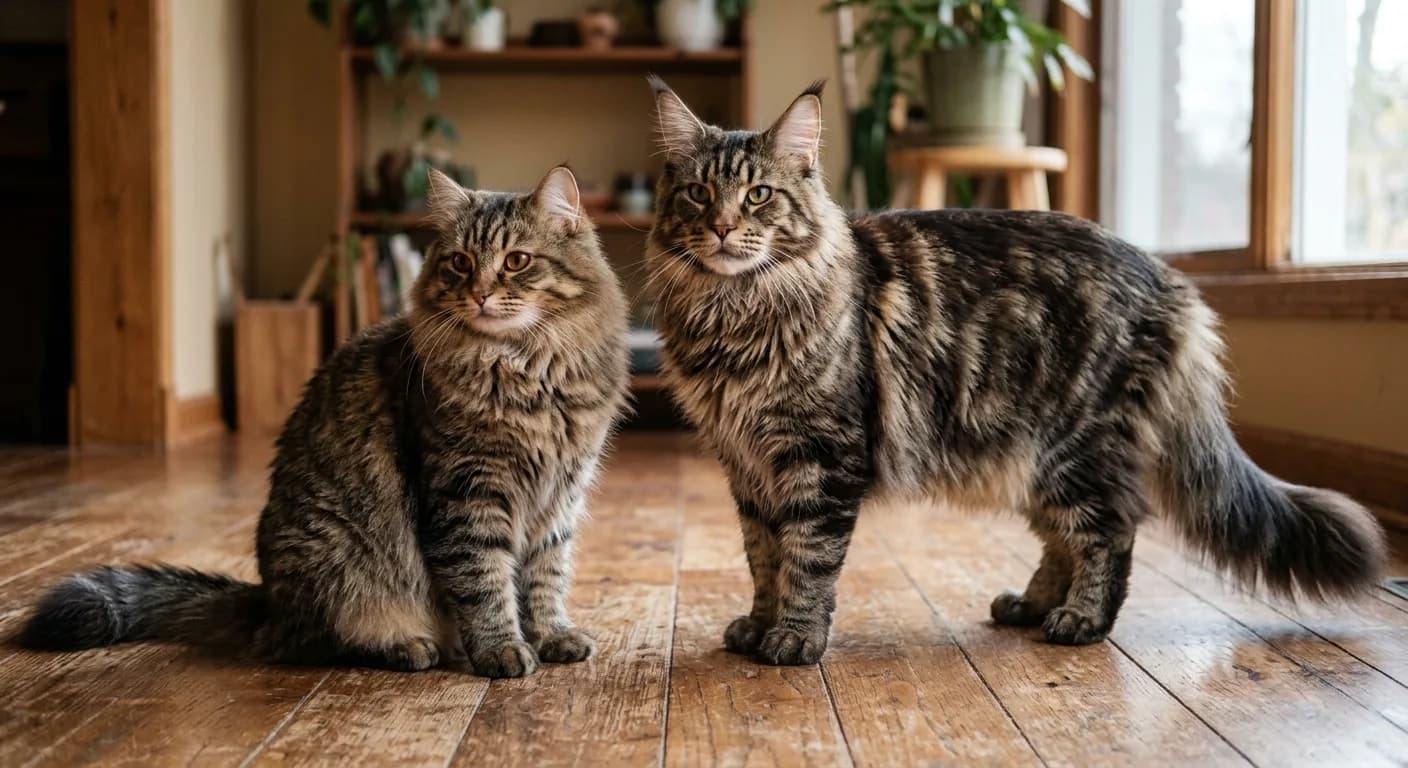
The single most common question about siberian cat size is how they compare to the Maine Coon, and the short answer is clear: the Maine Coon is bigger. The Siberian is a large cat. The Maine Coon is the largest domestic breed, full stop. They look similar at a glance (both semi-longhaired, both ruffed, both with tufted ears and bushy tails), but the Maine Coon is longer, taller, and heavier on average.
A Maine Coon male commonly reaches 15 to 25 pounds and can measure over three feet nose to tail, with a long, rectangular body. The Siberian, by contrast, is rounder, more compact, and shorter in the body, topping out around 20 pounds for a big male. Think of the Siberian as a powerfully built, barrel-chested athlete and the Maine Coon as a long-bodied giant.
| Trait | Siberian | Maine Coon |
|---|---|---|
| Male weight | 15 to 20 lb | 15 to 25 lb |
| Female weight | 8 to 12 lb | 10 to 16 lb |
| Body shape | Round, compact, barrel-chested | Long, rectangular, elongated |
| Face | Sweet rounded modified wedge | Longer, more rectangular muzzle |
| Time to full size | 3 to 5 years | 3 to 5 years |
For a deeper head-to-head on temperament, coat, and care (not just size), see our full Siberian vs Maine Coon comparison, and if the Maine Coon itself is on your shortlist, the Maine Coon size guide and Maine Coon breed profile cover that gentle giant in full.
How the Siberian compares to other big breeds
The Maine Coon is not the only large cat people line the Siberian up against. Here is the quick read on the usual suspects:

108-oz stainless steel pet fountain with quiet pump and water-level window. Bengals are notoriously water-obsessed; a flowing fountain encourages hydration and pulls them away from sinks and toilets.
Petful may earn a commission when you click through to Chewy, at no extra cost to you.
- Norwegian Forest Cat: very close in size to the Siberian, often a touch leggier and longer. The two are easy to confuse, though the Norwegian's profile is straighter and more triangular. Our Norwegian Forest Cat profile breaks down the differences.
- Ragdoll: similar weight to a Siberian (Ragdoll males can hit 20-plus pounds) and about the same height, but Ragdolls are typically longer and more relaxed in build. See the Ragdoll cat breed profile for the full comparison.
- Regular domestic cat: no contest. An average house cat tops out around 10 pounds, so even a female Siberian reads as a notably bigger, denser cat.
- If you want maximum size, the Maine Coon wins. If you want a large, robust cat that is a little more compact, intensely affectionate, and lower-shedding in feel, the Siberian is the sweet spot. Many people also choose Siberians for the breed's reputation around allergens, which we cover in our hypoallergenic guide.
What affects how big a Siberian cat gets?
Two cats from the same breed can finish pounds apart. The main drivers:
- Genetics. By far the biggest factor. Size is highly heritable, so big parents tend to produce big kittens. This is why reputable breeders and the size of the sire and dam matter so much.
- Sex. As covered above, males run substantially larger than females.
- Nutrition. A complete, high-protein diet supports healthy growth across the long maturation window. Underfeeding stunts; overfeeding adds fat, not frame.
- Neuter/spay status and lifestyle. Altered, indoor cats can trend slightly heavier if calories are not managed, but this is about body fat, not skeletal size.
- Health. Parasite load, early-life illness, and chronic conditions can all blunt growth. A healthy kitten on good food hits its genetic potential.
- Because Siberians are supposed to be large and the coat hides the body, it is easy to let a Siberian drift into true obesity. A cat should have a visible (by feel) waist and ribs you can feel under a thin fat layer. If your vet flags excess weight, address it. Extra pounds strain joints and shorten lifespan regardless of how "big-boned" the breed is.
Is a Siberian the right size cat for you?
A Siberian is a commitment to a large, heavy, powerfully built cat that will keep growing for years. That has real implications: bigger litter boxes, sturdier cat trees rated for the weight, more food than a petite breed eats, and a cat that genuinely fills a lap. None of that is a downside if you wanted a substantial cat in the first place, which is exactly why people seek the breed out.
If size is the appeal but you are still weighing the breed against others, it helps to look at the whole package. The Siberian's draw is not only its impressive frame but its affectionate, playful temperament and its reputation for producing fewer allergens than most cats, which we cover in detail in our Siberian hypoallergenic guide. Budget matters too: a well-bred Siberian from health-tested parents is an investment, and our Siberian cat price breakdown lays out what to expect.
- 1Choose a Siberian if you specifically want a large, dense, slow-growing cat that keeps developing for years
- 2Verify size potential by meeting the parents, since genetics is the dominant factor
- 3Plan for a big cat's needs: larger boxes, sturdy furniture, and more food than a small breed
- 4Judge weight by body condition (ribs and waist), not the scale alone, because the coat and big frame hide fat
- 5Size is one factor among temperament, allergen profile, and price when picking your cat
Frequently asked questions about Siberian cat size
Adult male Siberians commonly weigh 15 to 20 pounds (the CFA show standard cites 12 to 18 pounds), and females weigh 8 to 12 pounds. They stand roughly 9 to 12 inches tall and measure 17 to 25 inches long, not counting the tail. Because they are slow maturers, they may not reach full size until 3 to 5 years of age.
Yes. An average domestic house cat weighs around 8 to 10 pounds, while a Siberian male commonly reaches 15 to 20 pounds and even females run 8 to 12 pounds. Siberians are a recognized large breed with a heavy, barrel-chested build, so they read as noticeably bigger and denser than a typical cat.
The Maine Coon is bigger. It is the largest domestic cat breed, with males commonly 15 to 25 pounds and bodies that can exceed three feet nose to tail. A Siberian is large but more compact and rounder, topping out around 20 pounds for a big male. The two look similar, but the Maine Coon is longer and taller on average.
A long time. Siberians are one of the slowest-maturing cat breeds. The CFA notes most reach full size around 3 years, and many are not fully developed until 4 or 5 years old. They look like adults at 1 year but keep adding muscle, bulk, and coat for years afterward.
A healthy adult male Siberian typically weighs 15 to 20 pounds, though the CFA show standard describes a range of 12 to 18 pounds. Either way, expect a substantial, heavy cat. Always judge by body condition (you should be able to feel the ribs under a thin fat layer) rather than the number alone, since the dense coat hides the true frame.
Female Siberians generally weigh 8 to 12 pounds. They are clearly smaller than males but are still solidly built medium-to-large cats by normal house-cat standards. A female on the smaller end can be perfectly healthy; what matters is steady growth and good body condition, not hitting a specific weight.
Yes. The CFA describes Siberians as "large, powerful cats," and most vet-reviewed sources classify the breed as large rather than medium. They have a heavy, muscular, barrel-chested body, big tufted paws, and substantial bone, all of which place them among the bigger domestic cat breeds, just below giants like the Maine Coon.
The triple coat. Siberians carry a dense, three-layer coat (guard, awn, and down hairs) plus a full neck ruff and shaggy britches, which add visual bulk and can make the cat look a pound or two heavier than it is. To assess true size and weight, feel the body under the fur rather than judging by appearance.

Coreen Saito is a pet writer and longtime shelter volunteer with more than a decade in animal rescue. She covers cat behavior, breed care, and the small, ordinary science of sharing a life with companion animals, with a particular focus on honest takes about the products and decisions that actually matter. At home in Arizona, she's outranked by Mac (a dog with the loudest opinion in the house), Rebel (a cat who governs by quiet authority), and Meri (an orange tabby who runs the late shift and the laundry basket). She writes about all three, plus the rescues that keep coming through her life, at LifeWithMinty.com.
Sign up for expert-backed reviews and safety alerts all in one place.