Siberian Cat Price: What a Siberian Kitten Really Costs in 2026
A complete Siberian cat price guide: breeder ranges ($1,200 to $4,000), rescue costs, first-year setup, true lifetime cost, why the breed is pricey, and how to find a reputable breeder who health-tests.
Petful is reader supported. As an affiliate of platforms like Amazon and Chewy, we may earn a commission when you buy through links on this page. There is no extra cost to you.
The typical Siberian cat price from a reputable breeder runs $1,200 to $4,000, according to pricing reported by Adopt a Pet, with most pet-quality kittens landing in the $1,200 to $2,500 band that Treehugger cites as the breed average. That single number, though, only tells the first chapter of the story. A Siberian is a long-lived cat (12 to 15 years is typical, and some reach 18 or more), so the sticker price is dwarfed over time by food, vet care, grooming, and insurance. This guide breaks down every cost: what you pay a breeder versus a rescue, the first-year setup bill, the true lifetime cost, exactly why this rare Russian breed commands a premium, and how to spot a reputable breeder so your money buys a healthy, well-bred cat.
- 1A purebred Siberian kitten from a reputable breeder costs about $1,200 to $4,000, with pet-quality cats near the low end and show or breeding-quality near the top
- 2Adoption from a rescue or shelter runs roughly $75 to $100, but purebred Siberians rarely turn up in shelters
- 3Budget another $500 to $1,000 for first-year setup (supplies, vaccines, spay or neuter, microchip) on top of the purchase price
- 4Over a 12 to 15 year life, total ownership commonly reaches well into five figures once food, vet care, and insurance are counted
- 5The premium is driven by genuine rarity outside Russia, a slow-maturing large breed, and the health testing reputable breeders pay for

Sign up for expert-backed reviews and safety alerts all in one place.
Siberian cat price at a glance
Before the line-by-line breakdown, here is the fast version. The number you pay up front depends almost entirely on where the cat comes from and what it is bred for: a pet on a spay or neuter contract is the cheapest purebred route, a show or breeding-rights cat is the most expensive, and a rescue is cheaper still but very hard to find for this breed.
| Source | Typical Price | What You Get |
|---|---|---|
| Rescue or shelter adoption | $75 to $100 | Adoption fee covers vetting; purebred Siberians are rare in shelters |
| Pet-quality kitten (breeder) | $1,200 to $2,000 | Healthy companion on a spay or neuter contract, no breeding rights |
| Show or top-bloodline kitten | $2,500 to $4,000+ | Show-standard conformation, champion lines, sometimes breeding rights |
| Rare color (silver or golden) | Add $500 to $1,000 | Premium over standard brown tabby for in-demand coats |
| Colorpoint Neva Masquerade | Often top of range | Blue-eyed pointed variety, scarcer breeding lines |
Price figures above reflect ranges reported by Adopt a Pet, Treehugger, and breeder-cost guides such as siberiankitten.us. Actual quotes vary by region, breeder reputation, and demand.
Never Scoop Again® with the Whisker Litter-Robot, the smart self-cleaning automatic litter box. Monitor visits and track weights for better overall care in the Whisker® app. Multi-cat friendly.
Petful may earn a commission when you click through to Whisker, at no extra cost to you.
- The same breed can cost $1,200 or $4,000 because "Siberian" covers everything from a pet kitten on a neuter contract to a show cat from imported champion lines. Decide which you actually need before you judge a breeder's price.
How much does a Siberian cat cost from a breeder?
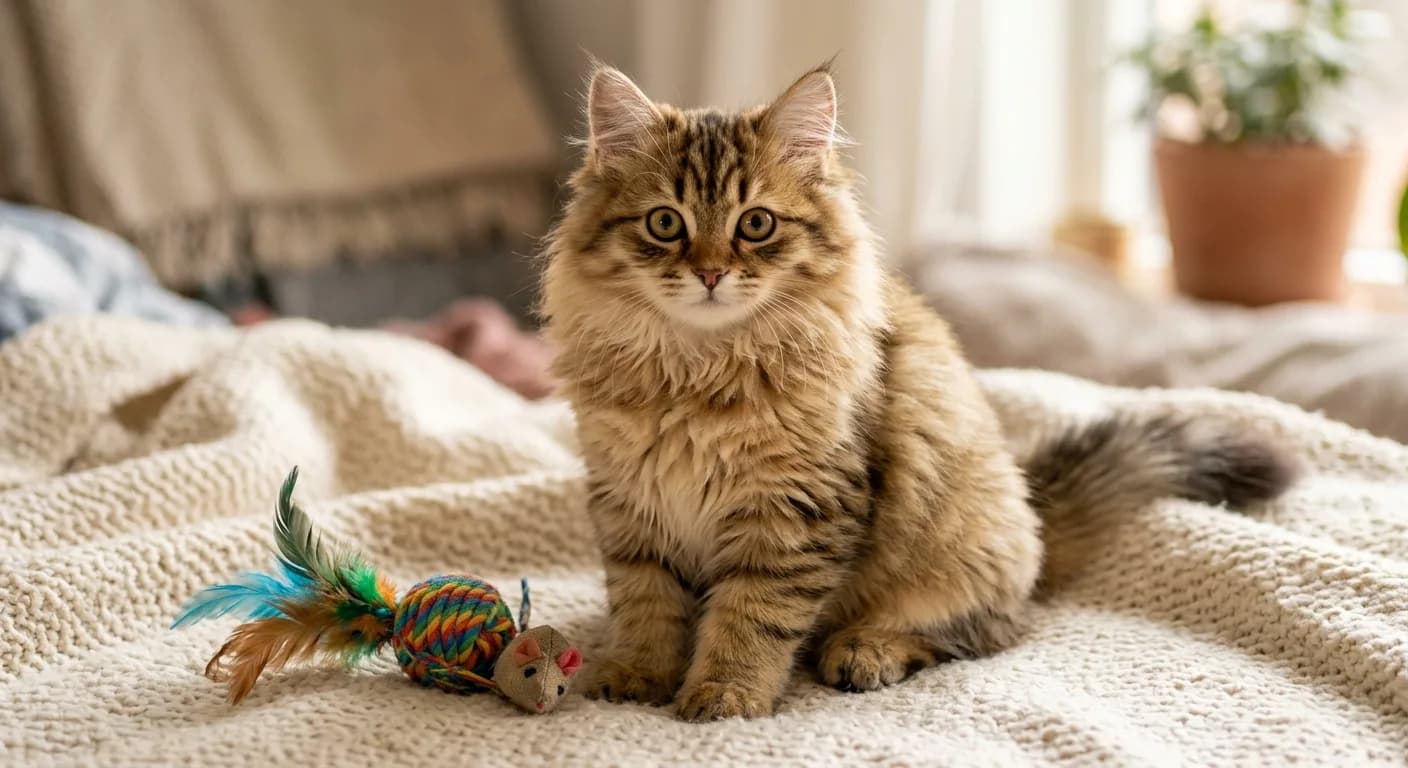
For most buyers, a breeder is the realistic path, because purebred Siberians almost never appear in rescues. Across the editorial price guides and pet-insurance breakdowns, the consistent range is $1,200 to $4,000, and where a specific kitten falls inside that range comes down to a handful of factors.
Pet-quality kittens sit at the bottom. These are healthy, well-socialized cats sold on a spay or neuter contract with no breeding rights, and they typically start around $1,200. siberiankitten.us pegs companion-quality kittens near that $1,200 mark and notes that show-quality cats with top bloodlines run $3,500 and up. Breeder location matters too: that same guide reports regional spreads such as roughly $1,900 to $2,100 in Colorado and $2,200 to $2,500 in Virginia, simply because demand and cost of living differ by state.
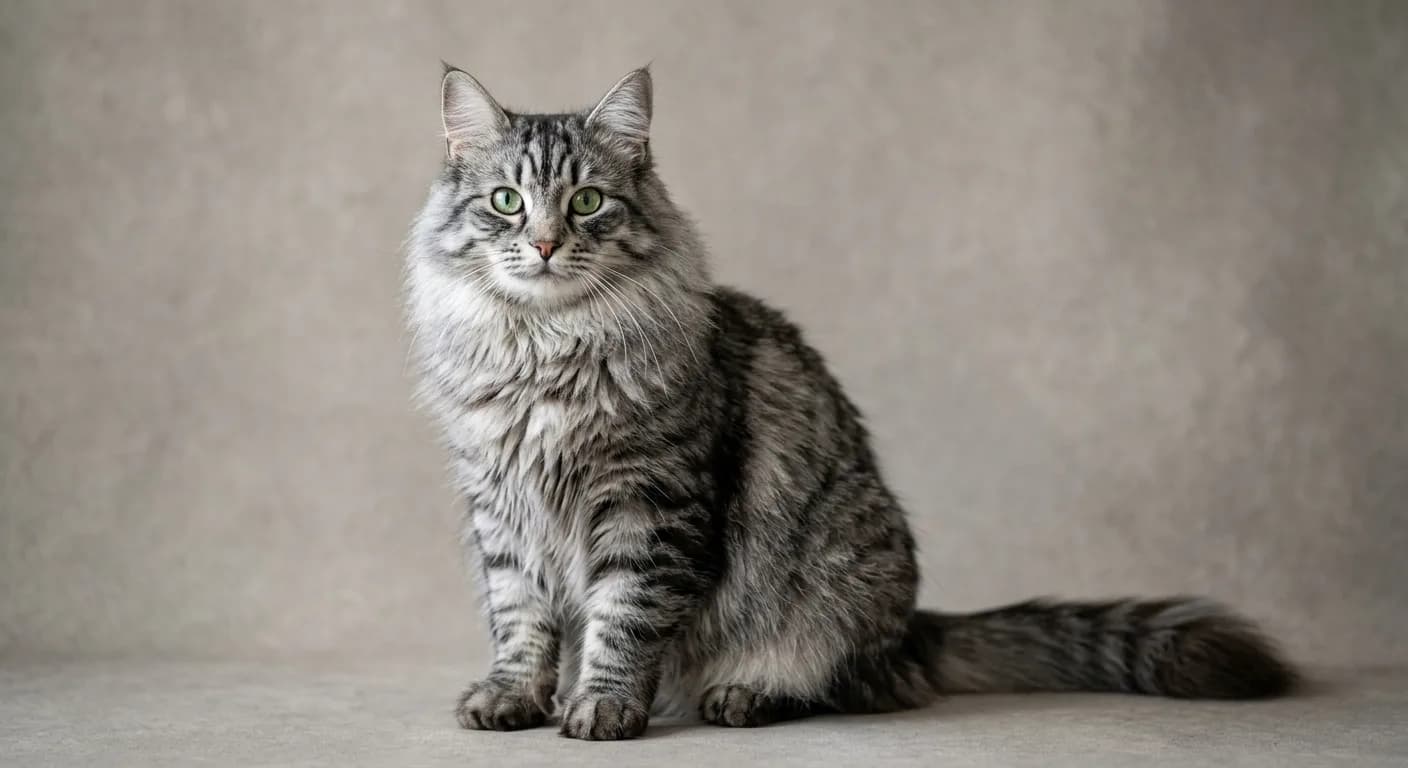
Color and coat add a real premium. Standard brown tabbies are the baseline; the in-demand silver and golden ("sunshine") coats can run $500 to $1,000 more than a standard tabby, per siberiankitten.us. The blue-eyed colorpoint variety, the Neva Masquerade, also tends to sit at the top of the range because the breeding lines are scarcer. If coat color matters to your budget, our guide to Siberian cat colors walks through which coats are common and which command a premium.
- Pet quality is not lower quality. It means the cat has a tiny cosmetic trait (a slightly off coat marking, for example) that keeps it out of the show ring but has zero effect on health, temperament, or how wonderful it is at home. It is the smart-money pick for a family pet.
Adoption and rescue: the budget route
If price is the deciding factor, adoption is by far the cheapest way in. According to Adopt a Pet, a Siberian adopted from a rescue or shelter costs roughly $75 to $100, and that fee usually bundles in spay or neuter, initial vaccinations, and a microchip, so the real-world savings versus a breeder are even larger than the sticker gap suggests.
The catch is supply. Siberians are an uncommon, in-demand breed, so purebreds rarely land in shelters, and when they do they are claimed fast. Breed-specific rescue groups and waitlists are your best bet. You may also find Siberian mixes or retired breeding cats (adults a breeder is rehoming after their breeding years), which can be a lovely, lower-cost way to bring home a Siberian-type cat.
- Many catteries rehome adult cats once they retire from breeding, often for a fraction of kitten prices. You skip the chaotic kitten stage and get an affectionate, already-socialized adult. Ask local breeders whether they ever place retired cats.
First-year cost: setup beyond the sticker price
The purchase price is just the entry fee. The first year carries one-time setup costs that most first-time owners underestimate. Drawing on the supply-and-vet breakdowns from Hepper and siberiankitten.us, here is what to budget on top of the kitten itself.
| Item | Typical Cost | Notes |
|---|---|---|
| Spay or neuter | $150 to $500 | Often already done by breeders and rescues |
| Initial vaccinations | $100 to $200 | Core kitten vaccine series |
| Microchip | $30 to $70 | One-time; frequently included in adoption fees |
| Litter box, carrier, beds | $50 to $300 | One-time gear that lasts years |
| Bowls, toys, scratchers, grooming tools | $50 to $150 | Brush and nail clippers matter for the triple coat |
| First-year setup total | $500 to $1,000 | On top of the purchase price |
Add it up and a realistic all-in first year looks like this: a roughly $1,500 to $2,500 adoption-route year, a $3,000 to $4,500 companion-breeder year, or a $4,500 to $6,500 premium-pedigree year, using the first-year totals siberiankitten.us models. The single biggest swing is simply what you paid for the cat.
- Set aside $1,000 to $2,000 for unexpected vet care before you need it. A dental cleaning, an X-ray, or an ultrasound can each run several hundred dollars, and a true emergency far more. A healthy Siberian is not an immune Siberian.
Lifetime cost of owning a Siberian cat
This is the number that actually matters, and it is the one breeders never quote. Siberians are long-lived, typically 12 to 15 years and sometimes well past that, so the ongoing costs compound far beyond the purchase price.
Month to month, the recurring bills land roughly here, per the Hepper and Spot Pet Insurance breakdowns: food at about $30 to $50, grooming at $30 to $100 (more if you use a professional groomer for that dense triple coat), and routine veterinary care and pet insurance that together can run $75 to $300. Litter, replacement toys, and miscellaneous gear add a little more. Annualized, ongoing care commonly totals somewhere in the low-to-mid four figures per year once vet care and insurance are included.
Stretch that across a 12 to 15 year life and the total cost of ownership reaches firmly into five figures. Pet-insurance breakdowns put lifetime Siberian costs in the five-figure range, and a longer-lived, larger cat sits at the higher end because it simply eats more and lives longer than the average house cat. The takeaway is not to scare you off; it is to plan. The kitten is a one-time number. The cat is a 15-year commitment.

63-inch multi-level cat tree with scratch posts, hammock, plush perches, and dangling toys. Vertical territory is non-negotiable for high-energy climbing breeds like the Bengal.
Petful may earn a commission when you click through to Chewy, at no extra cost to you.
- A Siberian's dense triple coat resists matting better than many longhairs, so weekly brushing at home (with seasonal extra during the spring shed) keeps professional grooming bills optional rather than mandatory. A good slicker brush pays for itself fast.
Why are Siberian cats so expensive?
Three forces drive the Siberian cat price, and understanding them helps you separate a fair premium from an inflated one.
First, genuine rarity. The breed only began leaving Russia in the early 1990s, and outside of Russia, well-bred Siberians remain relatively scarce. Treehugger notes the breed is rare enough that supply struggles to meet demand, and scarcity reliably lifts price. Second, this is a large, slow-maturing breed. Siberians can take up to five years to reach full size and coat, so breeders invest more time, food, and space raising each litter to maturity, and that cost flows into the price.
Third, and most important for your wallet, responsible breeders pay for health testing. According to breeder-health resources such as the International Siberian Breeders Club, the breed's key screens are HCM (hypertrophic cardiomyopathy, the most significant heart concern), PKD (polycystic kidney disease), and PK deficiency, with DNA tests available for each. A breeder who screens parents, registers with TICA or CFA, and offers a health guarantee has real costs baked into the kitten price. A suspiciously cheap "purebred" Siberian is often a sign those steps were skipped.
- A bargain-priced Siberian from an unscreened, unregistered seller can carry untested risk for HCM or PKD, conditions that lead to expensive, heartbreaking vet care. Paying a fair price to a breeder who tests parents is buying peace of mind, not just a kitten.
Does the hypoallergenic reputation raise the price?
Partly, yes. Siberians are famous as one of the lower-allergen cat breeds, and that reputation fuels demand, which supports higher prices. The science behind it: Siberians tend to produce less of the Fel d 1 protein, the main cat allergen, than the average cat. They are not guaranteed allergen-free, and individual cats vary widely.
Here is the critical buyer warning: paying more does NOT buy a lower-allergen cat. There is no reliable, published price tier that correlates a higher Siberian cat price with measurably lower Fel d 1. Some breeders advertise "hypoallergenic tested" lines at a premium, but allergen levels vary cat to cat, so the only dependable test is spending real time with the specific kitten (and its parents) before you commit. For the full picture, read our deep dive on whether Siberian cats are truly hypoallergenic before you pay any "allergy-friendly" markup.

108-oz stainless steel pet fountain with quiet pump and water-level window. Bengals are notoriously water-obsessed; a flowing fountain encourages hydration and pulls them away from sinks and toilets.
Petful may earn a commission when you click through to Chewy, at no extra cost to you.
- No price point guarantees an allergy-friendly cat. If allergies are why you want a Siberian, arrange an in-person visit and spend an hour with the actual kitten before paying anything, not after.
How to find a reputable Siberian breeder
The single best way to protect a four-figure investment is to vet the breeder harder than you vet the kitten. A reputable Siberian breeder belongs to an association such as TICA or CFA, breeds only a few litters a year, raises kittens underfoot in the home, and hands over written health records and a health guarantee. Use this checklist, drawn from breeder-club guidance, before you send a deposit.
| What to Ask | Good Answer | Red Flag |
|---|---|---|
| Are both parents TICA or CFA registered? | Yes, with names and registration numbers | Vague, "papers later," or no registry |
| What health testing was done on the parents? | HCM and PKD screening, records available | "They look healthy," no DNA tests |
| Is there a written health guarantee and contract? | Yes, with clear terms | None offered, cash-only, no paperwork |
| Where are the kittens raised? | Underfoot in the home, well socialized | Caged, off-site, or won't say |
| Can I visit or video-call to see kittens and parents? | Yes, visits welcome | Refuses any visit or live video |
A trustworthy breeder will happily answer all of this and will ask you plenty of questions in return, because they care where their kittens land. Pressure to pay fast, refusal to show the parents, and prices far below the market range are the classic warning signs of a kitten mill or scam.
- Seeing the mother and, ideally, the father tells you more than any sales page. You learn the adult size, coat, and temperament your kitten is likely to grow into, and you confirm the cats are real, healthy, and living in good conditions.
How the Siberian compares on price to similar breeds
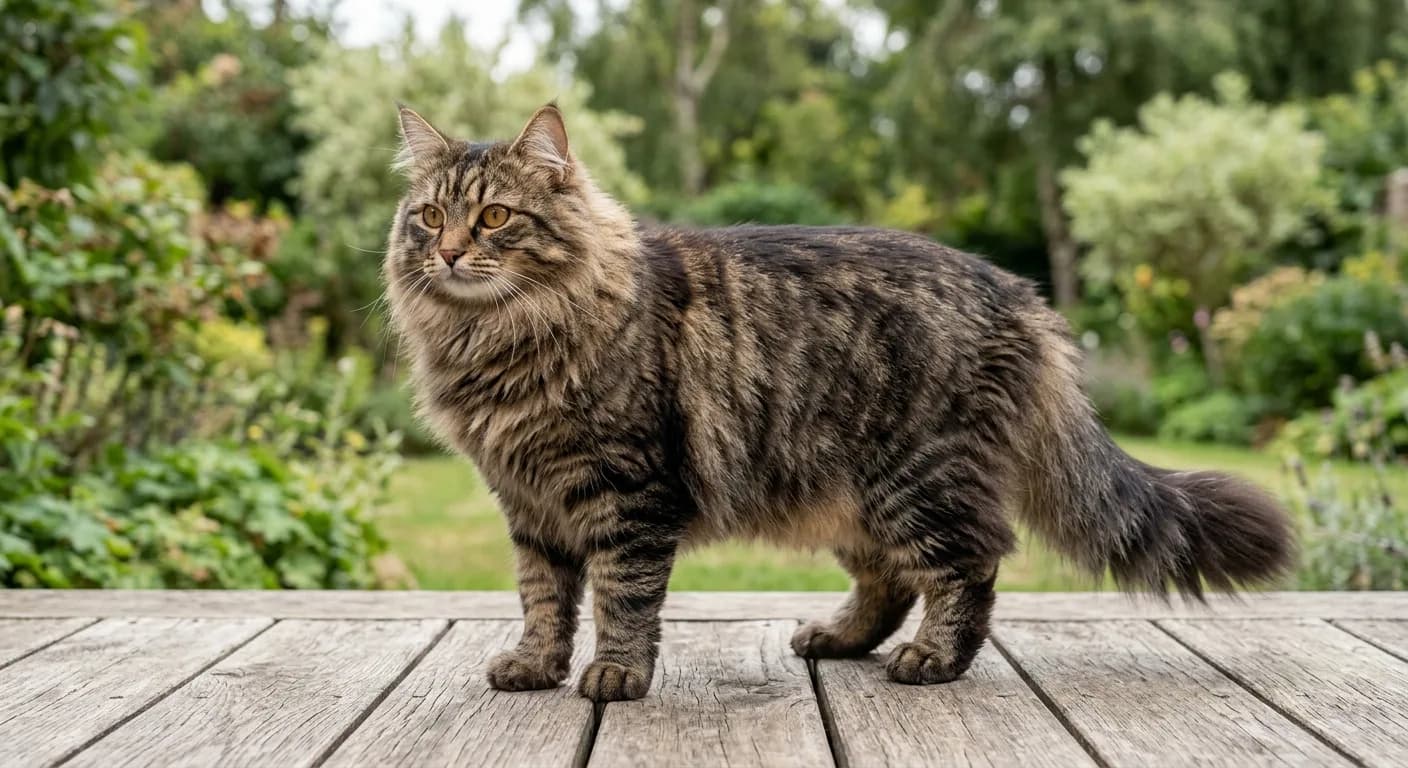
If you are weighing the Siberian against other big, plush, semi-longhaired cats, the price ballpark is similar, and the decision usually comes down to temperament and look rather than cost. The Siberian's closest rivals are the Maine Coon and the Norwegian Forest Cat, two other rugged natural breeds with comparable breeder pricing.
A Siberian's hardy build and round face often draw comparison to a slightly smaller, rounder Maine Coon, and our Siberian cat vs Maine Coon comparison breaks down where they diverge on size, coat, and cost. To see how the third member of that trio stacks up, our Norwegian Forest Cat breed profile is a useful side-by-side. And if a similarly affectionate but lower-allergen alternative is what you are after, the comparison guides on whether Ragdolls are hypoallergenic and whether Siamese cats are hypoallergenic are worth a look before you settle.
- All three natural breeds (Siberian, Maine Coon, Norwegian Forest) cluster in a similar price range. Choose on temperament, size, and which face you love, then budget for that cat. Do not let a few hundred dollars decide a 15-year relationship.
Is a Siberian cat worth the price?
For the right home, yes. You are paying for a striking, dog-like, deeply affectionate cat that bonds hard with its people, tolerates kids and other pets well, and may be gentler on allergies than the average cat. The premium reflects real rarity and the health testing that gives you a strong shot at a sound, long-lived companion. Just go in with the full number in mind: the kitten is the down payment, and the next 12 to 15 years are the mortgage. Budget for both and a Siberian is one of the most rewarding cats you can bring home. For the complete breed overview, start with our Siberian cat breed profile.
- 1Expect to pay $1,200 to $4,000 to a reputable breeder, or about $75 to $100 to adopt if you can find one
- 2Plan another $500 to $1,000 for first-year setup and an ongoing four-figure annual cost for food, vet care, and insurance
- 3The price premium buys genuine rarity plus HCM and PKD health testing, not a guaranteed allergy-free cat
- 4Vet the breeder (TICA or CFA registration, parent health testing, written guarantee, home visit) harder than you vet the kitten
- 5A bargain "purebred" Siberian usually means skipped health screening and higher costs down the road
Frequently asked questions about Siberian cat price
A purebred Siberian from a reputable breeder typically costs $1,200 to $4,000, with pet-quality kittens near the low end and show or top-bloodline cats near the top. Adopting from a rescue is far cheaper, roughly $75 to $100, but purebred Siberians are rarely available in shelters. Rare silver or golden coats can add $500 to $1,000 over a standard brown tabby.
Three reasons. They are genuinely rare outside Russia, where the breed only became available in the early 1990s, so demand outstrips supply. They are a large, slow-maturing breed that takes years to reach full size, so breeders invest more in raising each litter. And responsible breeders pay for HCM and PKD health testing, TICA or CFA registration, and health guarantees, all of which are built into the price.
The kitten is the small part. Over a 12 to 15 year life, food, grooming, routine vet care, and pet insurance add up to a four-figure cost most years, pushing total ownership well into five figures. Pet-insurance breakdowns put lifetime Siberian costs in the five-figure range, with larger, longer-lived cats at the higher end. Budget for the decades, not just the down payment.
Most Siberians live 12 to 15 years, and many reach 18 or more with good nutrition, regular vet checkups, and a stress-free home. They are a hardy, long-lived natural breed, which is one reason their lifetime ownership cost is significant: you are committing to well over a decade of care.
The typical Siberian lifespan is 12 to 15 years, with some individuals reaching 18 years or beyond. Longevity is strongly tied to responsible breeding (parents screened for HCM and PKD), a healthy weight, quality nutrition, and routine veterinary care, all of which a reputable breeder helps set up from the start.
The main drawbacks are cost and coat. They carry a high purchase price and a significant lifetime cost, and their dense triple coat needs regular brushing, with heavier seasonal shedding in spring and fall. They are also active, people-oriented cats that crave attention and can be vocal, so they are not ideal for a home that is empty all day or wants a low-interaction pet.
The priciest pedigreed cats are generally the Ashera and Savannah (exotic hybrids that can run into the tens of thousands of dollars), the Bengal, and rare breeds like the Khao Manee and Sphynx. The Siberian is a premium breed but sits well below those extremes; at $1,200 to $4,000 it is comparable to other natural longhairs like the Maine Coon and Norwegian Forest Cat.
Adoption is dramatically cheaper, roughly $75 to $100 versus $1,200 to $4,000 from a breeder, and the fee usually covers spay or neuter, vaccinations, and a microchip. The trade-off is availability: purebred Siberians rarely appear in shelters. Breed-specific rescues, waitlists, and breeders rehoming retired adults are your best routes to a lower-cost Siberian.

Coreen Saito is a pet writer and longtime shelter volunteer with more than a decade in animal rescue. She covers cat behavior, breed care, and the small, ordinary science of sharing a life with companion animals, with a particular focus on honest takes about the products and decisions that actually matter. At home in Arizona, she's outranked by Mac (a dog with the loudest opinion in the house), Rebel (a cat who governs by quiet authority), and Meri (an orange tabby who runs the late shift and the laundry basket). She writes about all three, plus the rescues that keep coming through her life, at LifeWithMinty.com.
Sign up for expert-backed reviews and safety alerts all in one place.