Siberian Cat Colors: A Visual Guide to Every Coat Color and Pattern
A visual guide to every Siberian cat color and pattern: black and smoke, brown and silver and golden tabby, blue, red, cream, white, calico, and the blue-eyed Neva Masquerade colorpoint, plus a color chart and rarity ranking.
Petful is reader supported. As an affiliate of platforms like Amazon and Chewy, we may earn a commission when you buy through links on this page. There is no extra cost to you.
The Cat Fanciers' Association (CFA) accepts Siberian cat colors in "all colors and combinations with or without white," which is why a breed once shown almost entirely in brown tabby now appears in well over 100 distinct color-and-pattern looks. That single open standard is the key to the whole palette: unlike a Ragdoll or a Siamese, the Siberian is not locked to a handful of point colors, so you will find everything from a dense solid black to a shimmering golden tabby, a smoke, a silver, a calico, and the blue-eyed colorpoint variety called the Neva Masquerade. This guide walks through every major Siberian color, starting with black (the most-searched of them all), then the tabby, silver, golden, smoke, white, and colorpoint families, with a gallery photo for each, a quick-reference color chart, and a clear rarity ranking so you can match the coat in front of you to its real name.
- 1The CFA accepts every Siberian color and pattern, with or without white, so the palette is far wider than most pointed breeds
- 2The five base colors are black, blue, red, cream, and white, layered with the silver and golden series, smoke, and tabby patterns
- 3The most common look is the brown (black) mackerel tabby; solid "self" colors are among the rarest
- 4Most Siberians have green or gold eyes; blue eyes appear only on white cats and the colorpoint Neva Masquerade
- 5Color sits on a dense, water-resistant triple coat, and coat color does not change the famously sweet Siberian temperament

Sign up for expert-backed reviews and safety alerts all in one place.
How Siberian coat color works (the triple coat and the genetics)
Before the colors, one thing makes the Siberian unique: the coat itself. The CFA breed standard describes a "moderately long to longhaired cat with a triple coat," meaning three hair types layered together, longer guard hairs over softer awn hairs over a dense down undercoat. That undercoat thickens in cold weather, which is what gives the Siberian its plush, weatherproof look and a full neck ruff, shaggy britches, and a bushy plumed tail. Because the coat is so dense, the same color can read differently in summer and winter, and many colors show a frosted or layered effect that a flat single coat never would.
Genetically, Siberian color comes down to a few switches. A base of black or red pigment, a dilute gene that softens black into blue and red into cream, the agouti gene that turns a solid coat into a striped tabby, and an inhibitor (silver) gene that strips pigment from the hair shaft to create silvers and smokes. Layer those on top of each other and the breed's "well over 100 colors" math makes sense. White is separate again: it is a masking spotting gene that can add anything from a few white toes to a fully white cat.
- The triple coat thickens and lengthens in cold months, so a brown tabby can look richer and darker in winter and lighter and sleeker in summer. Judge a cat's true color in good daylight at adult maturity, not from a fluffy kitten photo or a single seasonal coat.
One trait stays mostly steady: eye color. The CFA standard calls for "shades of green, gold, green-gold or copper," and adds that only white cats, cats with white, and the colorpoint variety may have blue or odd (two-colored) eyes. So a vivid-blue-eyed Siberian is either white, high-white, or a Neva Masquerade. For the full breed picture, see our Siberian cat breed profile.
Black Siberian cats (solid black and black smoke)
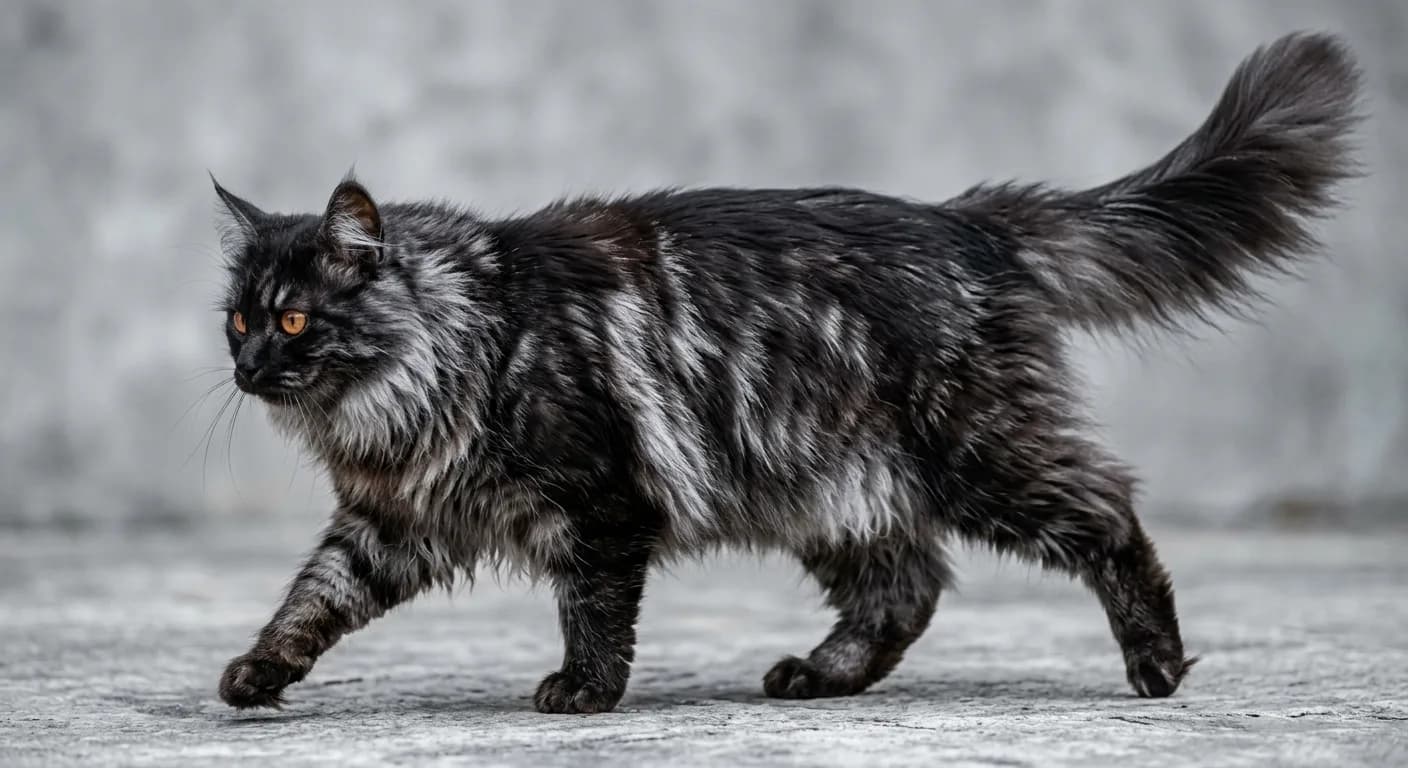
Black is the single most-searched Siberian color, and it is genuinely striking on this breed. A true solid black Siberian, called a "self" or "solid," carries the agouti pattern underneath but has it masked into a uniform dense black from nose to tail. On a triple coat that depth of black looks almost like a panther in miniature, especially with the gold or copper eyes most blacks carry. Solid colors are among the rarer Siberian looks, because most cats in the breed show some tabby patterning, so a clean solid black takes deliberate breeding.

Never Scoop Again® with the Whisker Litter-Robot, the smart self-cleaning automatic litter box. Monitor visits and track weights for better overall care in the Whisker® app. Multi-cat friendly.
Petful may earn a commission when you click through to Whisker, at no extra cost to you.
The close cousin is the black smoke. A smoke is a solid color sitting on a white undercoat (the silver inhibitor gene at work), so at rest the cat looks solid black, but when it moves or you part the fur, a silvery-white roots flash through. Black smokes are a favorite on the breed precisely because the dense coat exaggerates that "shifting" smoke effect. If your Siberian looks black until it walks and then shimmers, you are almost certainly looking at a smoke rather than a true self black.
- Blow gently into the coat or watch the cat move. A self black stays black to the roots. A black smoke shows a white or silver undercoat at the base of the hairs, with a paler ruff and ear tufts. Same color family, two different genetic looks.
Brown and black tabby (the classic Siberian)
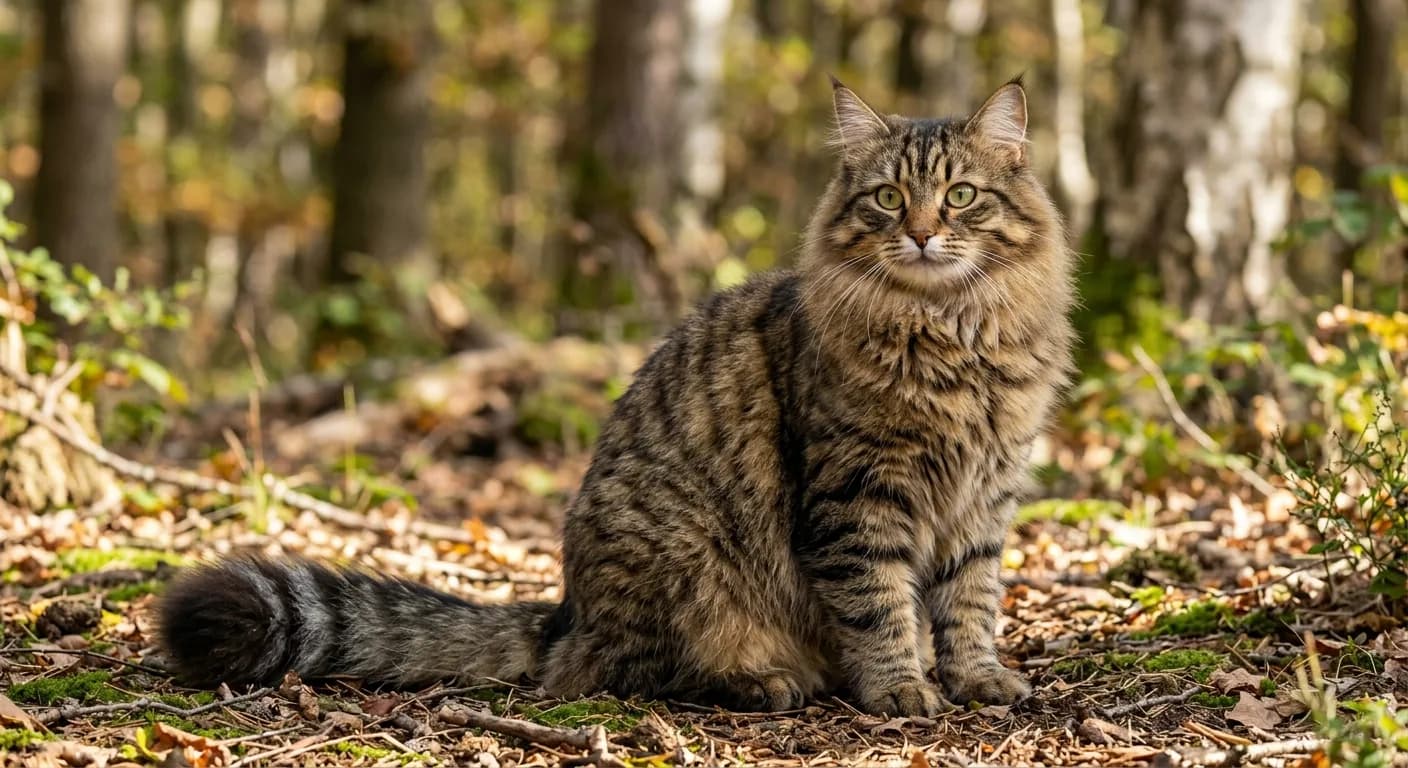
If there is one quintessential Siberian color, it is the brown tabby, often written black tabby because the markings are genetically black over a warm brown agouti ground. Wikipedia notes that the most common single color in the breed is the black (brown) mackerel tabby, and the CFA confirms the breed was "once most popular in brown tabby." This is the "wild forest cat" look: rich brown and gold ground with dark stripes, the classic tabby "M" on the forehead, ringed legs, necklace markings on the chest, and barred or spotted flanks. It is the coat that makes a Siberian look like it stepped out of a Russian fairy tale.
Tabby itself comes in four pattern layouts that apply across every tabby color: mackerel (narrow vertical "tiger" stripes), classic (bold swirls and a bullseye on the flank, a recessive pattern), spotted (the stripes broken into spots), and ticked (color banded along each hair with minimal body striping). A brown mackerel tabby and a brown classic tabby are the same color in two different pattern layouts.
Blue, red, and cream Siberians
Three more base colors round out the "Western" palette that Wikipedia lists as white, black, blue, red, and cream.
Blue is the dilute of black: a soft, even blue-grey (the standard often compares it to a koala's coat) that can appear as a solid blue self, a blue tabby, or a blue smoke. On the dense Siberian coat, blue reads as a cool, smoky slate and is a perennial favorite for buyers who want the black look in a softer key.
Red (sometimes called orange) brings warm ginger into the breed. Most reds are tabbies, because the red gene tends to express visible striping even on a "solid" red, so you will usually see a red mackerel or classic tabby with deeper orange rings over a lighter ground. Red is sex-linked, which is why it interacts with the tortie and calico patterns described below.
Cream is the dilute of red: a soft, pale buff or peachy tone, the most delicate of the warm colors. A cream tabby shows gentle apricot striping over an off-white ground, and from a distance can look almost solid.
- Black and blue are a pair (dense and its grey dilute). Red and cream are a pair (ginger and its peachy dilute). Almost every Siberian color is one of those four base shades, then dressed up by tabby pattern, silver, smoke, or white.
Silver Siberians (silver tabby, chinchilla, and shaded silver)
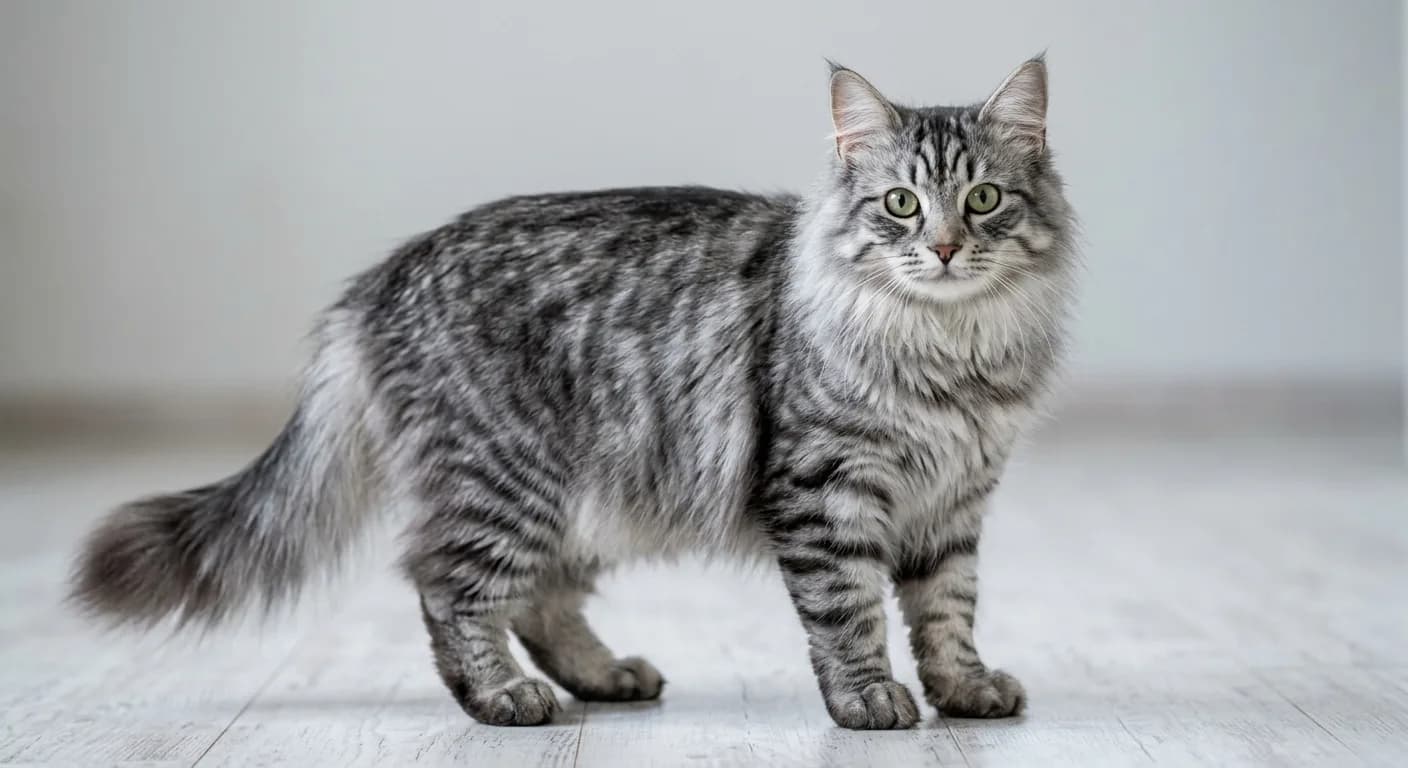
Silver is one of the breed's most eye-catching effects, and it is not a pigment at all. It is the inhibitor gene stripping color from the lower part of each hair, leaving a sparkling white undercoat with color only on the tips. Applied to a tabby you get a silver tabby: crisp black (or blue, red, or cream) markings over a clear, icy white ground. Silver tabbies in the breed include black-silver, blue-silver, red-silver, and cream-silver, and the featured-snippet source notes they often carry a touch of "gold tarnishing" in the coat.
Push the inhibitor effect further and you reach the shaded and chinchilla looks. A shaded silver carries color on roughly the top third of each hair for a darker mantle over a white base, while a chinchilla silver has color only on the very tips, giving an almost white cat dusted with a glittering veil of color. Chinchilla is widely described as one of the rarer, more spectacular Siberian coats.

63-inch multi-level cat tree with scratch posts, hammock, plush perches, and dangling toys. Vertical territory is non-negotiable for high-energy climbing breeds like the Bengal.
Petful may earn a commission when you click through to Chewy, at no extra cost to you.
Golden Siberians and the new "sunshine" and bimetallic colors
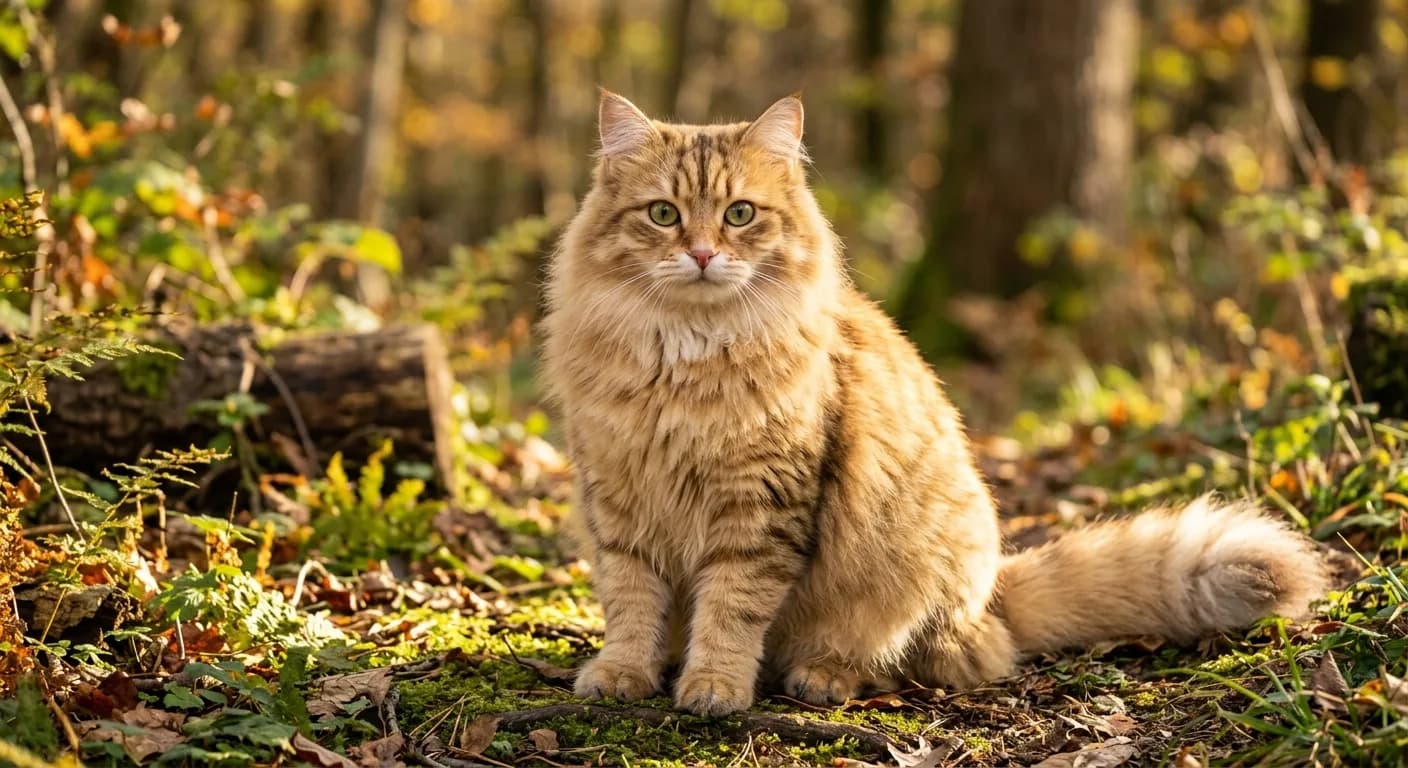
If silver is the cool side of the inhibitor effect, gold is the warm side. Golden Siberians "really do shimmer like gold," with a warm apricot-to-honey ground and a paler, almost ivory undercoat, typically with a pink nose leather. Golden tabbies and golden shaded cats are prized for that luminous, sunlit glow.
Two newer colors are worth knowing because they show up in modern catteries and on the CFA's own breed page. "Sunshine" (sometimes called the golden series in a stricter genetic sense) is a recessive color that warms the undercoat to a vivid gold, discovered relatively recently in the breed and still uncommon. And the CFA now recognizes a color it calls "bimetallic," which it describes as "a unique expression of the agouti gene that gives the appearance of a silver and gold combination" with shaded or tabby markings, essentially a cat that carries both the silver and golden effects at once. These are some of the rarest and most sought-after Siberian coats.
- Chinchilla, golden, sunshine, and bimetallic Siberians command premium prices because the genetics are hard to line up, not because the cats are healthier. A reputable breeder screens for hypertrophic cardiomyopathy (HCM) regardless of color. Never let a trendy coat substitute for documented health testing.
White, tuxedo, bicolor, and calico Siberians
White and white-marked Siberians are a family of their own, governed by a separate spotting gene rather than by pigment color.
A solid white Siberian is a clean, dense white all over and is one of the few Siberians that can carry blue or odd (one blue, one gold) eyes. A small amount of white on a colored cat creates the "with white" looks: white toes, white socks, a white bib or chest locket. More white produces a tuxedo (a black-and-white cat with a white chest and paws) or a true bicolor, defined by an inverted white "V" on the face plus a white chest, belly, and legs over a colored back and tail. The most extreme white pattern, the van, restricts color to just the head and tail on an almost entirely white cat.
When the white pattern overlaps a tortoiseshell, you get a calico: bold patches of black (or blue), red (or cream), and white. A tortoiseshell without white is simply a tortie, a marbled mix of black and red (or their dilutes, blue and cream) with no separate white areas. Because the red gene is X-linked, torties and calicos are almost always female, and a male calico is a genuine rarity.

108-oz stainless steel pet fountain with quiet pump and water-level window. Bengals are notoriously water-obsessed; a flowing fountain encourages hydration and pulls them away from sinks and toilets.
Petful may earn a commission when you click through to Chewy, at no extra cost to you.
- A tortie is black-and-red marbled with no white. Add white patches and it becomes a calico. A tuxedo is a solid color (usually black) with a white chest and paws only. All three are patterns of white-plus-color, not separate Siberian "colors."
Tabby, lynx, and flame point: the Neva Masquerade colorpoint
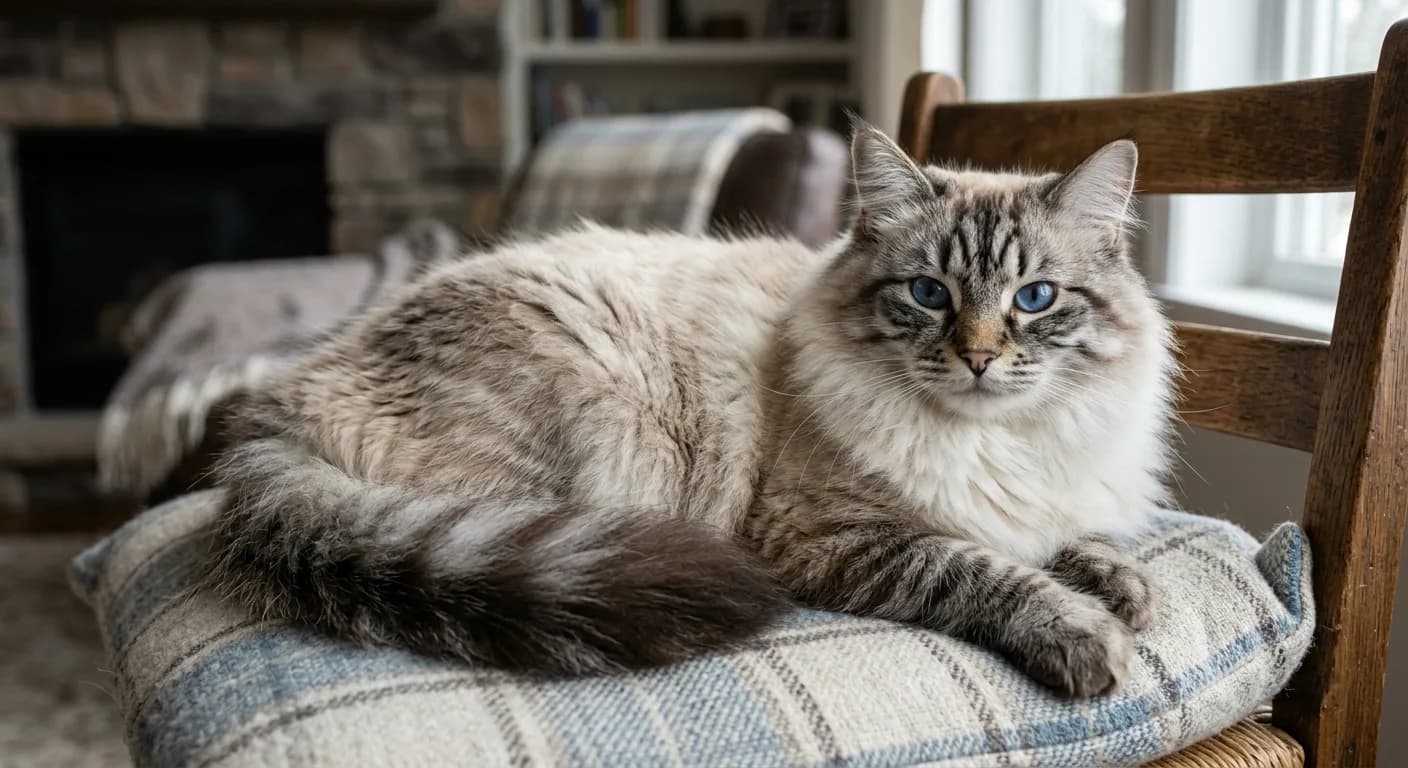
The most visually distinct Siberian is the colorpoint, known as the Neva Masquerade after the Neva River in Russia. These cats carry the same temperature-sensitive colorpoint gene as the Siamese, so the body stays pale while color concentrates on the cooler points: the ears, face mask, legs, and tail. Crucially, the CFA requires blue eyes on this variety, so a pale-bodied, blue-eyed Siberian with dark points is a Neva Masquerade.
Because the underlying Siberian can be any color, the points come in the full range. A seal point has dark brown points; a blue point has slate-grey points; a flame point (red point) has warm ginger points over a creamy body; and a cream point is the palest, with soft peachy points. Add the breed's tabby genetics and you get the lynx point, where the points themselves are tabby-striped with a barred "M" on the forehead, ringed legs, and pale eye rings, which is the most common Neva Masquerade look. Stack a tortie pattern onto a lynx point and you reach the intricate torbie (tortie-tabby) point.
- Pale body, dark ears and mask, and blue eyes equal a Neva Masquerade colorpoint. Any other Siberian color (tabby, smoke, silver, solid) has green, gold, or copper eyes unless it is white. Blue eyes on a fully colored, non-pointed coat are your signal something does not add up.
Siberian color rarity, from most common to rarest
Rarity tracks genetics: the patterns that show up naturally are common, and the colors that need several recessive switches to line up at once are rare. Breeders widely report the general order below. Treat it as a practical guide rather than a fixed census, since frequencies vary by line and country.
| Color or Pattern | Relative Rarity | What Drives It |
|---|---|---|
| Brown (black) tabby | Most common | The breed's default agouti pattern |
| Blue and red tabby | Common | Simple dilute and base-color variations |
| Black smoke and silver tabby | Fairly common | Popular inhibitor-gene looks, widely bred |
| Solid "self" colors (black, blue, white) | Less common | Requires masking the underlying tabby pattern |
| Neva Masquerade colorpoint | Less common | Needs the recessive colorpoint gene |
| Calico and tortie | Uncommon | Sex-linked, almost always female |
| Golden and chinchilla | Rare | Multiple recessive and inhibitor genes combined |
| Sunshine and bimetallic | Rarest | Newest colors, very limited breeding lines |
Siberian cat color chart: the at-a-glance reference
Use this chart to translate a coat into its proper name. Identify the base color or effect in the first column, then confirm the typical pattern and the eye color, since eye color is your fastest tell for the colorpoint and white families.
| Color Family | What You See | Typical Pattern | Eye Color |
|---|---|---|---|
| Black | Dense solid black or smoke with silver roots | Solid or smoke | Gold to copper |
| Brown (black) tabby | Warm brown and gold with dark stripes and M | Mackerel, classic, spotted | Green to gold |
| Blue | Soft blue-grey | Solid, tabby, or smoke | Gold to green |
| Red and cream | Ginger or peachy, usually striped | Tabby | Gold to copper |
| Silver | Icy white ground, color on the tips | Tabby, shaded, chinchilla | Green |
| Golden | Warm honey shimmer, ivory undercoat | Tabby or shaded | Green to gold |
| White and bicolor | Pure white, or color plus white markings | Solid, tuxedo, bicolor, van | Gold, green, blue, or odd |
| Calico and tortie | Black or blue plus red or cream patches | Patched, with or without white | Gold to copper |
| Neva Masquerade | Pale body, dark points on ears, face, legs, tail | Point or lynx point | Blue only |
Do color and pattern change a Siberian's personality, price, or coat care?
Color does not change temperament. The trademark Siberian personality (affectionate, playful, dog-like, and famously fond of water) comes from the breed, not the coat, so a brown tabby and a chinchilla silver should be equally sweet. What color can affect is price: the most common shades like brown tabby are usually the most affordable, while rare golden, sunshine, bimetallic, and chinchilla coats command a premium driven by scarcity, not quality. For real numbers, see our Siberian cat price guide. There is more on this in Petful’s guide to Havana Brown cat price.
Coat care is the same across every color. That dense triple coat needs regular brushing (more during the seasonal shed) no matter the color, and one of the breed's best-known traits sits in the coat too: many people report fewer allergy symptoms around Siberians, which is why the breed turns up so often in searches for a lower-allergen cat. We dig into the evidence in our guide to whether the Siberian cat is hypoallergenic. If you are weighing the Siberian against another giant longhair, our Siberian versus Maine Coon comparison breaks down how the two coats and color palettes differ, and the closely related Norwegian Forest Cat profile shows how a third northern breed handles the same rugged, weatherproof coat.
- 1Start with the base color (black, blue, red, cream, white), then add the layer: tabby pattern, silver or golden, smoke, or white markings
- 2Brown tabby is the most common and most affordable; golden, sunshine, bimetallic, and chinchilla are the rarest and priciest
- 3Blue eyes mean a white cat or a Neva Masquerade colorpoint; every other color has green, gold, or copper eyes
- 4Color sits on a triple coat that thickens in winter, so the same cat can look different by season
- 5Coat color never changes the sweet, playful Siberian temperament or its grooming needs
Frequently asked questions about Siberian cat colors
The most common Siberian colors are the tabbies, especially the brown (black) mackerel tabby, the breed's signature "wild forest cat" look. From there the common palette runs through blue, red, and cream tabbies, black smoke, and silver tabby. The CFA accepts every color and combination with or without white, so solids, golds, calicos, and the blue-eyed Neva Masquerade colorpoint all appear too.
The rarest Siberians are the colors that need several recessive or inhibitor genes lined up at once. Golden, chinchilla silver, and the newer "sunshine" and CFA-recognized "bimetallic" (a combined silver-and-gold effect) colors are the rarest and most expensive. Solid self colors and male calicos are also uncommon, while brown tabby is the most common look of all.
A very wide range. The five base colors are black, blue, red, cream, and white, which combine with tabby patterns (mackerel, classic, spotted, ticked), the silver and golden series, smoke, shaded and chinchilla effects, tortie and calico patterning, and white markings from a few toes up to a full bicolor or van. The colorpoint Neva Masquerade adds seal, blue, flame, cream, and lynx points. All told the breed shows in well over 100 color-and-pattern combinations.
The CFA standard calls for green, gold, green-gold, or copper eyes for most Siberians. The exceptions are white and high-white cats, which may have blue or odd (one blue, one gold) eyes, and the Neva Masquerade colorpoint variety, which is required to have blue eyes. So a vivid-blue-eyed, fully colored Siberian is either white or a Neva Masquerade.
The Neva Masquerade is the colorpoint version of the Siberian, named after the Neva River in Russia. It carries the same temperature-sensitive gene as the Siamese, so the body stays pale while color develops on the cooler points (ears, face, legs, and tail), and it always has blue eyes. Points come in seal, blue, flame (red), and cream, and the tabby-striped lynx point is the most common.
Look for a large, powerfully built semi-longhaired cat with a dense triple coat, a full neck ruff, shaggy "britches" on the hind legs, tufted paws, and a bushy plumed tail. The head is a sweet, rounded modified wedge with medium, slightly tilted, often lynx-tipped ears and large nearly round eyes in green or gold. They are slower to mature than most cats and are known for being affectionate, agile, and unusually fond of water.
A pet-quality Siberian kitten from a reputable breeder generally runs about $1,200 to $2,000, with rarer colors (golden, chinchilla, bimetallic) and show or breeding rights pushing higher. Price reflects the breeder's health testing, the cat's color and pedigree, and demand, not a difference in temperament. See our Siberian price guide for a full breakdown.
Yes, somewhat. Kittens are born with their eyes blue and their coat lighter, and the adult color and full triple coat develop over the first couple of years as the cat matures slowly. Tabby and golden tones often deepen with age, and because the dense coat thickens in winter, the same adult cat can look richer and darker in cold months and lighter in summer.
Famously, yes. Unlike most domestic cats, Siberians are well known for being curious about and even fond of water, and many will dip a paw in a running tap, play in a sink, or join their owners near a bath or shower. It is thought to tie back to the breed's rugged Russian working-cat origins and its water-resistant triple coat.
Very. Siberians are intelligent, problem-solving cats that often learn to open doors, play fetch, and turn ordinary household objects into toys. They are agile, athletic, and people-oriented, which makes them quick to engage with puzzle feeders and interactive play and means they generally do best with plenty of mental stimulation and company.

Coreen Saito is a pet writer and longtime shelter volunteer with more than a decade in animal rescue. She covers cat behavior, breed care, and the small, ordinary science of sharing a life with companion animals, with a particular focus on honest takes about the products and decisions that actually matter. At home in Arizona, she's outranked by Mac (a dog with the loudest opinion in the house), Rebel (a cat who governs by quiet authority), and Meri (an orange tabby who runs the late shift and the laundry basket). She writes about all three, plus the rescues that keep coming through her life, at LifeWithMinty.com.
Sign up for expert-backed reviews and safety alerts all in one place.