Siberian Cat vs Maine Coon: 9 Key Differences (With Pictures)
A side-by-side Siberian cat vs Maine Coon comparison: size, triple vs double coat, Fel d 1 allergen levels, personality, price, health, and the fastest way to tell the two forest cats apart, plus a Norwegian Forest Cat section.
Petful is reader supported. As an affiliate of platforms like Amazon and Chewy, we may earn a commission when you buy through links on this page. There is no extra cost to you.
When you compare a siberian cat vs maine coon, the Cat Fanciers' Association (CFA) draws the single cleanest line for telling them apart: a Maine Coon is built on boxes and rectangles (a squared muzzle and a long, rectangular head), while a Siberian is built on curves (a rounded, modified-wedge face and a barrel-shaped torso). Both are big, plush, sweet-natured "forest cats" that share a semi-longhaired look, so they get mixed up constantly. But they differ in size, coat structure, allergen levels, personality, price, and health in ways that genuinely matter when you are choosing one. This guide breaks down all 9 differences side by side, then adds a shorter Siberian vs Norwegian Forest Cat section, because those three forest cats are the trio people confuse most.
- 1Maine Coons are larger overall (the largest pedigreed cat); Siberians are mid-sized but dense and muscular
- 2The fastest visual tell is the face: Maine Coon is square and rectangular, Siberian is rounded with a modified wedge
- 3Siberians produce lower levels of the Fel d 1 allergen, so they are the better pick for many (not all) allergy sufferers
- 4Both are affectionate, but Maine Coons are chattier and more dog-like, while Siberians are quieter and more agile
- 5Expect to pay $1,000 to $2,000 for a Siberian and $1,000 to $2,500-plus for a Maine Coon from a reputable breeder

Sign up for expert-backed reviews and safety alerts all in one place.
Siberian cat vs Maine Coon at a glance
Before the deep dive, here is the side-by-side comparison. The numbers below reflect the CFA and TICA breed standards plus widely cited vet-reviewed sources; individual cats vary, so treat the ranges as typical rather than absolute.
| Trait | Siberian | Maine Coon |
|---|---|---|
| Male weight | 12 to 20 lbs | 15 to 25 lbs (sometimes more) |
| Female weight | 8 to 15 lbs | 10 to 18 lbs |
| Head shape | Rounded modified wedge | Squared, rectangular |
| Eyes | Large, almost round | Large, oval, wide-set |
| Coat | Triple coat (water-repellent) | Shaggy double coat |
| Allergen (Fel d 1) | Lower than average | Typical for a cat |
| Personality | Quiet, agile, loyal | Chatty, dog-like, playful |
| Lifespan | 12 to 15 years | 12 to 15 years |
| Typical price | $1,000 to $2,000 | $1,000 to $2,500+ |
- The Siberian, the Maine Coon, and the Norwegian Forest Cat are all natural, cold-climate longhaired breeds nicknamed forest cats. That shared origin is why they look alike and why this exact comparison confuses so many new owners.
1. Size: the Maine Coon is bigger
If raw size is your deciding factor, the Maine Coon wins. The CFA describes the Maine Coon as the largest and longest of all pedigreed cats, heavily boned, with broad shoulders and well-developed muscles. Mature males commonly reach 15 to 25 pounds, with some exceptional cats going higher, and their bodies are noticeably long and rectangular.
The Siberian is no small cat, but it sits a tier below. Siberian males typically run 12 to 20 pounds and females 8 to 15 pounds, on a medium-length, barrel-chested frame with a subtle arch to the back. Siberians are famously dense and muscular, so they often "feel heavy for their size" when you lift them, even though the Maine Coon is the longer and heavier breed on paper. For everything about the Russian breed, including a full size breakdown, start with our complete Siberian cat guide.
Never Scoop Again® with the Whisker Litter-Robot, the smart self-cleaning automatic litter box. Monitor visits and track weights for better overall care in the Whisker® app. Multi-cat friendly.
Petful may earn a commission when you click through to Whisker, at no extra cost to you.
- Neither breed is fully grown at a year. Maine Coons keep filling out until 3 to 5 years of age, and Siberians can take up to 5 years to reach full size and coat. A "small" young cat of either breed may still have a lot of growing to do.
2. Face and head shape: the fastest way to tell them apart
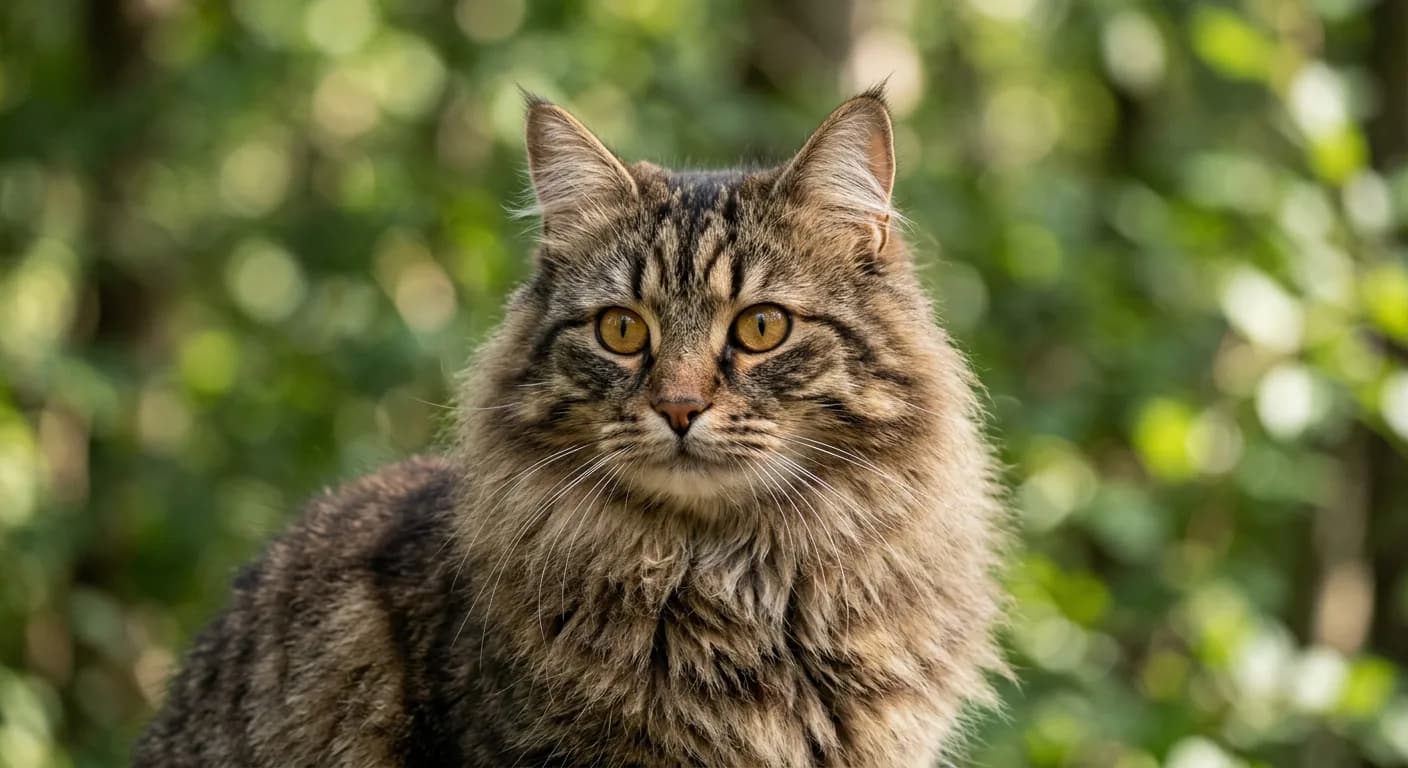
This is the difference that settles most arguments. The CFA puts it in geometric terms: think boxes for the Maine Coon and curves for the Siberian. The Maine Coon has a distinctly squared-off muzzle on a head that reads as a rectangle, with prominent high cheekbones and large, wide-set oval eyes. The overall impression is angular and a little wild.
The Siberian, by contrast, is all rounded contours. The CFA standard calls for a broad, modified wedge with a muzzle that is rounded rather than squared off, finished with large, soulful eyes that are almost round in shape. That combination gives the Siberian its softer, sweeter, sometimes "teddy-bear" expression. Both breeds can carry lynx-tipped ears, so the ear tufts alone will not separate them: look at the muzzle and the eyes.
3. Coat: triple coat vs shaggy double coat
Both breeds wear a heavy, weather-ready coat, but the construction differs. The Siberian has a true triple coat: long outer guard hairs, a layer of awn hairs beneath, and a dense, downy undercoat close to the skin. That triple layer is water-repellent and is part of why the breed survived Russian winters. It also means heavy seasonal shedding, especially in spring.
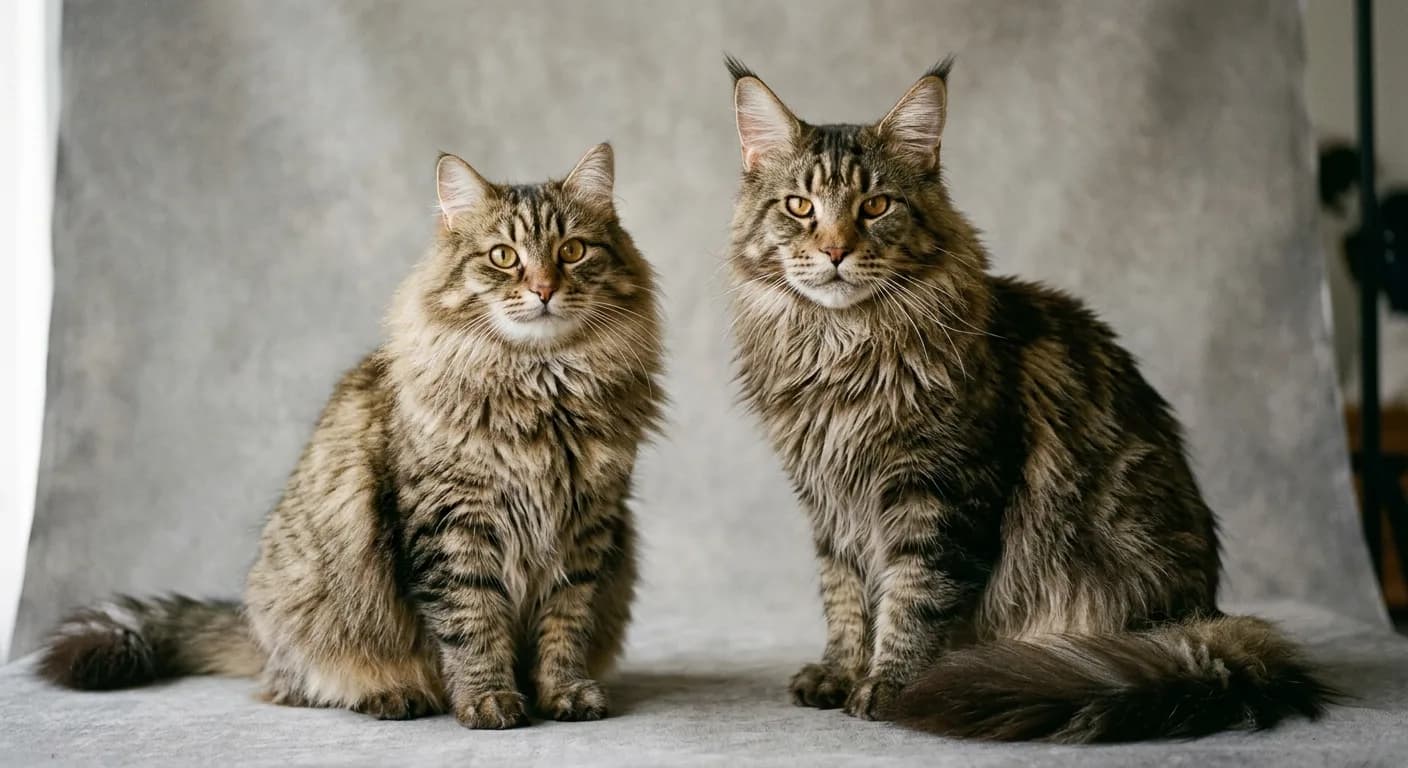
The Maine Coon wears a shaggy, uneven double coat that is shorter on the shoulders and longer on the stomach and britches, paired with a flowing, plumed tail. Maine Coon fur is often described as silkier and more prone to matting around the ruff and hindquarters, so it benefits from regular combing. The Siberian's coat tends to resist tangling with less effort but still needs help during a seasonal blowout. Both breeds carry the full ruff, bushy tail, and tufted paws that define the forest-cat look.
- Comb a Maine Coon a few times a week to stay ahead of mats around the ruff and back legs. A Siberian usually needs less day-to-day grooming but a thorough comb-out during the heavy spring and fall sheds. Neither coat should ever be shaved.
4. Allergens: the Siberian is the lower-allergen choice
For many buyers this is the real reason to compare the two breeds, and it is the one clear functional difference. Siberians are widely reported to produce lower levels of Fel d 1, the salivary and skin protein responsible for most cat allergies. Because cats spread Fel d 1 onto their fur when they groom, a cat that makes less of the protein can leave a lighter allergen load on its coat and in the home.
The Maine Coon makes Fel d 1 at typical cat levels and is not considered a low-allergen breed. Important caveat: no cat is truly hypoallergenic, Fel d 1 output varies widely from one individual cat to the next, and reactions differ from person to person. Many allergy sufferers do better with a Siberian, but it is not a guarantee. The responsible move is to spend time with the specific cat (or its parents) before committing. We cover the science and the realistic expectations in our guide to the hypoallergenic Siberian cat.
- Lower Fel d 1 is not zero Fel d 1. Allergen output varies by individual cat, sex, and even season, and a sensitive person can still react to a Siberian. If allergies are the deciding factor, arrange a trial visit with the actual cat before you buy, and never rely on a breed label alone.
5. Personality: chatty extrovert vs quiet acrobat
Both breeds are affectionate, people-oriented, and good with children and other pets, which is part of why the choice is hard. The differences are in volume and style. Maine Coons are famously "dog-like": curious, interactive, endlessly playful, and very chatty, communicating in loud chirps, trills, and yowls. They tend to follow their people room to room and stay playful well into adulthood, though some are reserved with strangers.
Siberians are typically quieter and more reserved vocally, expressing themselves with soft chirps and the breed's signature purr-trill rather than constant commentary. They are intensely loyal, highly intelligent, and remarkably athletic and agile, the kind of cat that ends up on top of the refrigerator. Siberians often favor short bursts of energetic play followed by cuddling, while Maine Coons sustain longer, steadier play sessions. If you want a talkative, attention-seeking companion, lean Maine Coon; if you want a devoted but lower-key acrobat, lean Siberian. You can go deeper in our Siberian cat personality profile and the full Maine Coon breed profile.
- Forest-cat heritage shows up in a shared quirk: both breeds are unusually fascinated by water and may dip a paw in your glass, bat at a running faucet, or join you in the bathroom. It is normal, and many owners find it endearing rather than annoying.
6. Price: both are premium, Maine Coons often pricier
Neither breed is cheap. A well-bred Siberian from a reputable breeder typically costs $1,000 to $2,000, with the colorpoint Neva Masquerade and show-quality kittens reaching the top of that range. Maine Coons span a wider band, commonly $1,000 to $2,500 and up, with sought-after lines, colors, and show prospects climbing well beyond that. Premium pricing on either breed reflects health testing, pedigree, and early socialization, all of which are worth paying for.
Whichever you choose, factor in lifetime costs: quality food for a large cat, routine veterinary care, and the heart and gene screening a responsible breeder builds into the price. Our Siberian cat price guide breaks down what drives the number and how to spot a fair deal versus an overpriced "rare" label.

63-inch multi-level cat tree with scratch posts, hammock, plush perches, and dangling toys. Vertical territory is non-negotiable for high-energy climbing breeds like the Bengal.
Petful may earn a commission when you click through to Chewy, at no extra cost to you.
- Be skeptical of breeders charging huge premiums for "giant," "rare-color," or "polydactyl" Maine Coons and Siberians without health testing to back it up. A real pedigree and documented HCM and genetic screening matter far more than a flashy size or color claim. Ask for the paperwork before you pay.
7. Health and lifespan: similar span, breed-specific risks
The two breeds have comparable lifespans, generally 12 to 15 years with good care, and both are robust, natural breeds. Their health risks overlap but are not identical, and the most important shared concern is the heart.
Hypertrophic cardiomyopathy (HCM), a thickening of the heart muscle, is the headline genetic risk in both breeds. The Maine Coon was one of the first breeds in which a specific HCM gene mutation (MyBPC3) was identified, and responsible breeders screen for it; Siberians also carry an elevated HCM risk. Maine Coons additionally face higher rates of hip dysplasia and spinal muscular atrophy (SMA), both of which have genetic tests. Siberians can be prone to feline lower urinary tract disease. The practical takeaway is the same for both: buy from a breeder who does cardiac ultrasound screening and DNA testing on their breeding cats, and keep up with annual vet checks.
- Hypertrophic cardiomyopathy is the top inherited health risk in both the Siberian and the Maine Coon. A reputable breeder screens breeding cats by cardiac ultrasound (echocardiogram) and, for Maine Coons, runs the MyBPC3 DNA test. No color, size, or "rare" status substitutes for documented heart screening.
8. Coat colors and the colorpoint question
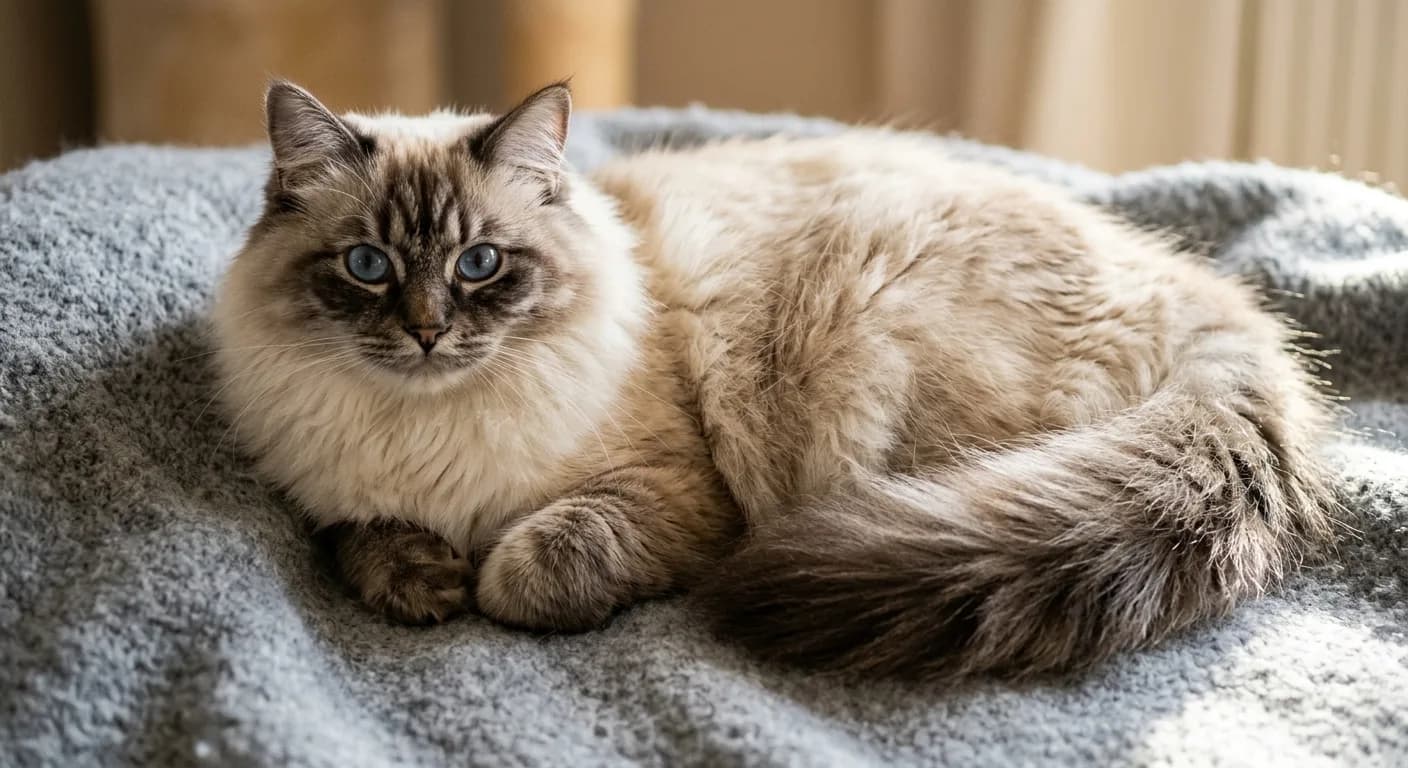
Both breeds come in a huge range of colors and patterns, from brown tabby to solid, smoke, silver, and bicolor, so color alone will never identify the breed. There is one notable color distinction worth knowing. The Siberian has a colorpoint variety, with a paler body and darker points on the ears, face, legs, and tail, plus blue eyes, recognized by some registries under the separate name Neva Masquerade. Blue eyes on a forest-type cat point to a colorpoint Siberian, because the Maine Coon does not come in a true blue-eyed colorpoint pattern.
Outside of the colorpoint case, a non-pointed Maine Coon and a non-pointed Siberian can share nearly identical coloring, which is exactly why the body, face, and coat-structure cues in this guide matter more than color.
9. How to tell a Siberian from a Maine Coon
Put the cues together and identification gets easy. Use this quick checklist when a cat could be either breed.

108-oz stainless steel pet fountain with quiet pump and water-level window. Bengals are notoriously water-obsessed; a flowing fountain encourages hydration and pulls them away from sinks and toilets.
Petful may earn a commission when you click through to Chewy, at no extra cost to you.
- Face shape: Square, angular, rectangular head equals Maine Coon. Rounded, modified-wedge, sweet face equals Siberian.
- Eyes: Large oval and wide-set leans Maine Coon. Large and almost round leans Siberian.
- Body: Long and rectangular leans Maine Coon. Medium, barrel-chested, and densely muscular leans Siberian.
- Coat: Shaggy, silky, uneven double coat with a long plumed tail leans Maine Coon. Dense, water-repellent triple coat leans Siberian.
- Size: A truly enormous, long cat is more likely a Maine Coon, the largest pedigreed breed.
- Eye color: Blue eyes on a colorpoint pattern means a Siberian (Neva Masquerade), not a Maine Coon.
Remember the CFA shortcut above all else: Maine Coon = boxes, Siberian = curves. Get the face shape right and you have your answer most of the time.
- Maine Coon and Siberian mixes are common, and a mixed cat can blend traits in ways that defy a clean call. A registered pedigree from the breeder is the only way to be certain of breed; everything else is an educated guess from appearance.
Siberian cat vs Norwegian Forest Cat
Round out the forest-cat trio with the breed people most often confuse with the Siberian: the Norwegian Forest Cat (affectionately, the "Wegie"). They share a cold-climate origin, a dense water-resistant coat, and a similar size, but the CFA again offers a clean geometric tell. The Norwegian Forest Cat is built on triangles: a distinctly triangular head with a straight profile (a flat, straight nose line from brow to tip) and large, almond-shaped eyes. The ears continue the lines of that triangle.
The Siberian stays rounded: the modified-wedge head, the gentle curves, the almost-round eyes, and a slight concave curve to the profile rather than the Wegie's dead-straight nose. In personality, the Norwegian Forest Cat tends to be a calm, independent climber, while the Siberian is typically a bit more affectionate and people-focused. Coat-wise, both shed heavily and carry a ruff and bushy tail, so once more it is the head shape and profile that separate them. Our Norwegian Forest Cat breed profile covers the Wegie in full.
- The CFA sums up the whole forest-cat trio in three shapes: Maine Coon is boxes and rectangles, Norwegian Forest Cat is triangles and wedges with a straight profile, and Siberian is curves all the way through. Learn those three silhouettes and you can sort almost any fluffy "is it a Maine Coon?" cat at a glance.
Which breed should you choose?
There is no wrong answer between two such loving breeds, so match the cat to your priorities. Choose the Siberian if allergies are a concern, if you want a quieter and more agile cat, or if you love the rounded teddy-bear face and the option of a striking blue-eyed colorpoint. Choose the Maine Coon if you want the biggest possible lap cat, a chatty and intensely interactive "dog-like" companion, and that unmistakable wild, square-faced look. Both are family-friendly, both get along with other pets, and both will be devoted to you for well over a decade.
If you are still weighing other plush breeds, our Ragdoll vs Maine Coon comparison tackles the other classic gentle-giant matchup and is worth a look if a docile lap cat is your real goal.
- 1Pick the Siberian for lower allergens, a quieter temperament, and athletic agility
- 2Pick the Maine Coon for maximum size, a talkative dog-like personality, and the wild square-faced look
- 3Confirm the breed by face shape first: boxes for Maine Coon, curves for Siberian
- 4Both need a breeder who screens for HCM and genetic disease, regardless of color or size claims
- 5Budget $1,000 to $2,000 for a Siberian and $1,000 to $2,500-plus for a Maine Coon, plus lifetime care for a large cat
Frequently asked questions
Choose a Siberian if you or someone in your home has cat allergies, or if you prefer a quieter, more agile, rounded-faced cat. Choose a Maine Coon if you want the largest possible cat and a chatty, dog-like, highly interactive companion. Both are affectionate, family-friendly, and good with other pets, so the decision usually comes down to allergens, size, and how vocal a cat you want.
Not quite. Maine Coons are the largest pedigreed cat breed, with males commonly reaching 15 to 25 pounds and a long, rectangular body. Siberian males typically run 12 to 20 pounds on a shorter, barrel-chested frame. Siberians are dense and muscular and often feel heavier than they look, but the Maine Coon is the larger and longer breed overall.
A Siberian from a reputable breeder typically costs $1,000 to $2,000, with the colorpoint Neva Masquerade and show-quality kittens at the top of that range. The price reflects health testing, pedigree, and early socialization. Be cautious of much higher prices justified only by "rare" color or "giant" size claims without health screening to back them up.
Both are gentle, but in different ways. The Maine Coon is mellow yet very chatty and interactive, while the Siberian is generally quieter and more reserved vocally, with bursts of athletic play followed by cuddling. If "calm" means low noise, the Siberian often edges it; if it means easygoing and people-loving, both breeds qualify.
Look at the face and body. A Maine Coon has a squared, rectangular head with a boxy muzzle and large oval, wide-set eyes, on a long rectangular body. A Siberian has a rounded, modified-wedge head with a sweeter expression and large almost-round eyes, on a medium, barrel-chested body. The CFA shortcut is boxes for the Maine Coon and curves for the Siberian. Blue eyes on a colorpoint coat indicate a Siberian (Neva Masquerade).
The Siberian. It produces lower levels of the Fel d 1 allergen than a typical cat, including the Maine Coon, so many allergy sufferers tolerate Siberians better. However, no cat is truly hypoallergenic, allergen levels vary by individual cat, and some sensitive people still react. Always spend time with the specific cat before committing if allergies are a concern.
Both shed heavily, especially seasonally. The Siberian's dense triple coat blows out dramatically in spring and fall but tends to resist matting in between. The Maine Coon's silkier double coat is more prone to mats around the ruff and back legs and benefits from regular combing year-round. Neither coat should ever be shaved.
Their lifespans are similar, generally 12 to 15 years with good care. Both are prone to hypertrophic cardiomyopathy (HCM), so longevity depends heavily on buying from a breeder who screens for heart disease and on keeping up with routine veterinary care, rather than on the breed itself.
Yes, the two breeds can be crossed, and Maine Coon and Siberian mixes are fairly common. A mix can blend traits unpredictably, for example a rounded Siberian-style face on a larger Maine Coon-sized body, which makes visual identification unreliable. Only a registered pedigree from the breeder confirms a purebred of either breed.
Beauty is subjective, and the Siberian, the Maine Coon, and the Norwegian Forest Cat are all routinely listed among the most striking breeds. The Maine Coon is admired for its wild, lynx-like grandeur, the Siberian for its sweet rounded face and luxurious triple coat, and the Wegie for its elegant triangular profile. Choose based on temperament and care needs as much as looks.

Coreen Saito is a pet writer and longtime shelter volunteer with more than a decade in animal rescue. She covers cat behavior, breed care, and the small, ordinary science of sharing a life with companion animals, with a particular focus on honest takes about the products and decisions that actually matter. At home in Arizona, she's outranked by Mac (a dog with the loudest opinion in the house), Rebel (a cat who governs by quiet authority), and Meri (an orange tabby who runs the late shift and the laundry basket). She writes about all three, plus the rescues that keep coming through her life, at LifeWithMinty.com.
Sign up for expert-backed reviews and safety alerts all in one place.