Siberian Cat Hypoallergenic Guide: What Allergy Sufferers Need to Know
Are Siberian cats hypoallergenic? This vet-reviewed guide covers the real Fel d 1 evidence, why sex, color, and neutering change allergen levels, how to test before adopting, and the bathing, HEPA, and diet steps that keep allergies down.
Petful is reader supported. As an affiliate of platforms like Amazon and Chewy, we may earn a commission when you buy through links on this page. There is no extra cost to you.
Veterinary allergists agree on one hard fact before anything else: no cat is 100 percent hypoallergenic, so a "siberian cat hypoallergenic" label is shorthand for low-allergen, not allergy-proof. That said, the Siberian earns the reputation honestly. In a study of roughly 300 Siberians by Siberian Research Inc, run with allergen-lab Indoor Biotechnologies, about half the cats tested produced meaningfully less Fel d 1 (the main cat allergen) than typical house cats. The catch is the variation: levels swing widely by individual, sex, neuter status, and even coat color, which is exactly why allergy sufferers should test their own reaction to a specific cat before committing. This vet-reviewed guide breaks down what the science actually shows, which Siberians run higher or lower, and how to test and manage your allergies the right way.
- 1No cat is truly hypoallergenic, but Siberians produce lower average levels of the Fel d 1 protein than most breeds
- 2In Siberian Research testing of about 300 cats, roughly half had reduced Fel d 1 and a much smaller share were low enough for severe-allergy homes
- 3Intact males produce the most Fel d 1 and spayed or neutered cats the least; silver, smoke, and bi-metallic lines tend to run higher
- 4Individual variation is large, so always spend time with the exact cat (or test a fur and saliva sample) before adopting
- 5Allergies are triggered by the Fel d 1 protein in saliva and dander, not by fur itself, so bathing, HEPA filtration, and grooming all help

Sign up for expert-backed reviews and safety alerts all in one place.
Are Siberian cats hypoallergenic? The honest answer
Strictly speaking, the word "hypoallergenic" means "below average in causing an allergic reaction," not "allergy-free." By that definition, Siberians genuinely qualify as a low-allergen breed, and they are one of the cats most often recommended for allergy sufferers. But the American Academy of Allergy, Asthma and Immunology is clear that every cat produces allergens, and that there is no truly non-allergenic cat or dog. So the accurate framing is comparative: a Siberian is more likely to be tolerable for an allergic person than, say, a long-coated breed that produces and spreads heavy allergen loads, but it is never a guarantee.
The reason this matters is that "hypoallergenic Siberian" is a heavily marketed phrase. Some catteries advertise their lines as fully hypoallergenic and price kittens at a premium on that basis. The responsible version of the claim, the one supported by the available data, is that a meaningful share of Siberians carry naturally lower Fel d 1, and that you can improve your odds by choosing a tested cat of the lower-allergen sex and color, then verifying your own response in person.
- The prefix "hypo" means "less than," not "none." A hypoallergenic cat is one that, on average, triggers fewer or milder allergic reactions. No breed, including the Siberian, is genuinely allergen-free, so treat any "100 percent hypoallergenic" claim as a marketing red flag, not science.
What actually causes cat allergies (it is not the fur)
Most people assume cat allergies come from hair, but the real trigger is a protein. The primary cat allergen is Fel d 1, a small glycoprotein produced mainly in a cat's saliva, skin (sebaceous) glands, and to a lesser degree its urine. When a cat grooms, it coats its fur in saliva; that dries, flakes off as microscopic dander, and becomes airborne, where it lands on surfaces, clothing, and your airways. Roughly nine in ten people with cat allergies react to Fel d 1, which is why it is the protein every "hypoallergenic" conversation centers on. A secondary allergen, Fel d 4 (found in saliva and produced by the salivary glands), affects a smaller group.
This is the key to understanding why a Siberian can help. Allergy sufferers are not reacting to the coat itself, so the Siberian's famously thick fur is not the problem. What matters is how much Fel d 1 the cat makes and sheds into the environment. A cat that produces less of the protein puts less of it on its fur and into the air, regardless of how plush that fur is. It also explains why every management tactic later in this guide, from bathing to air filtration, is really about removing protein-laden dander rather than removing hair.
Never Scoop Again® with the Whisker Litter-Robot, the smart self-cleaning automatic litter box. Monitor visits and track weights for better overall care in the Whisker® app. Multi-cat friendly.
Petful may earn a commission when you click through to Whisker, at no extra cost to you.
- If you are researching any low-allergen breed, the single number that matters is Fel d 1 output, not how much the cat sheds. Two cats can shed identically while producing very different amounts of allergen. Fur volume and allergen load are separate things.
The Fel d 1 evidence on Siberians
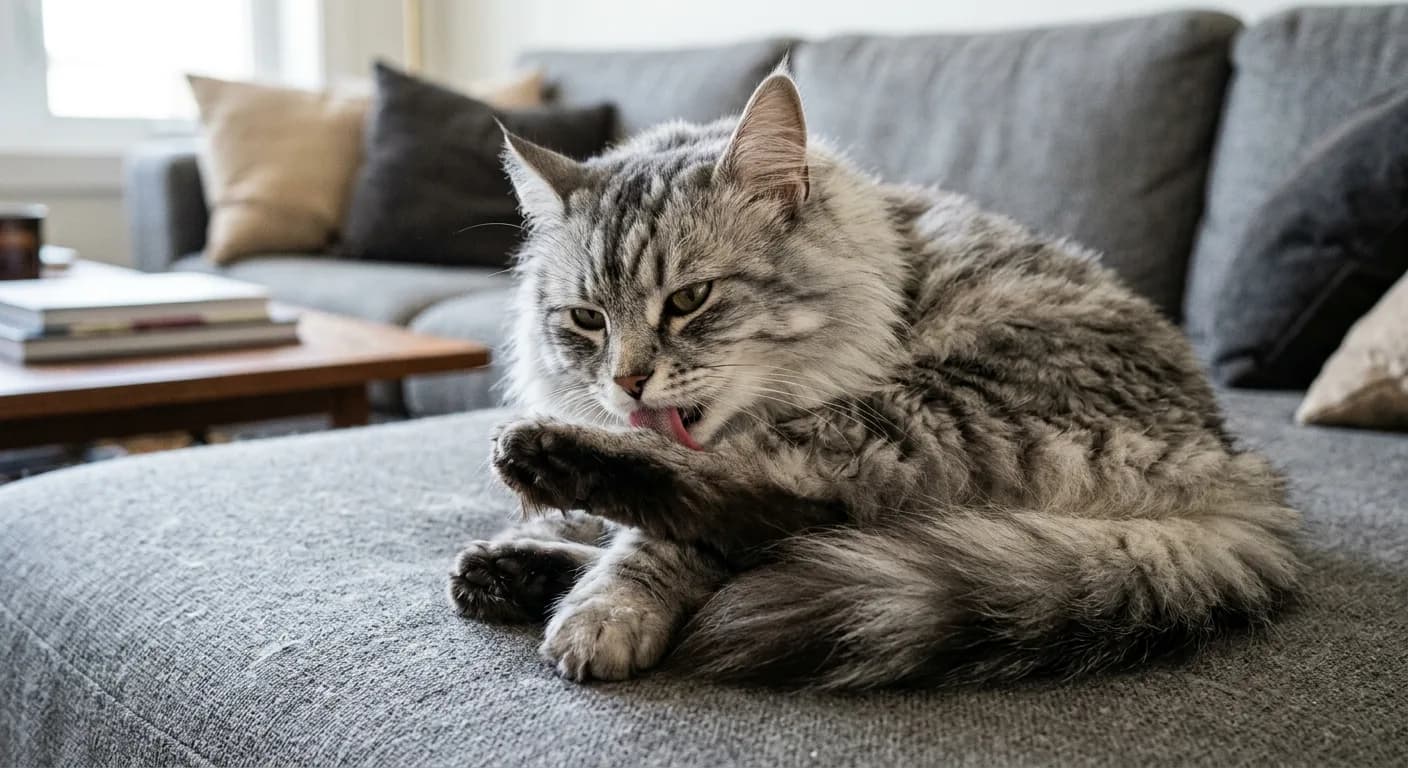
Here is what the available testing actually shows, and where it stops. The most-cited dataset comes from Siberian Research Inc, a breeder-led research effort that worked with Indoor Biotechnologies (a respected allergen-testing laboratory) to measure Fel d 1 in fur samples from hundreds of Siberians. In that work, a large share of Siberians, commonly summarized as roughly half, produced Fel d 1 at levels below those of typical domestic cats, and a smaller subset produced very low levels suitable for more sensitive households. Independent catteries that test through allergen labs report a similar pattern: about half of their Siberians test lower than other breeds, while only a minority test low enough to be recommended for people with moderate to severe allergies.
Two honest caveats belong with those numbers. First, much of the Siberian-specific data originates from breeders and catteries rather than large independent peer-reviewed trials, so it should be read as indicative rather than definitive, and some veterinary sources note there is still limited rigorous evidence that Siberians consistently produce less Fel d 1. Second, the spread is enormous. A Siberian is not automatically low-allergen, individual cats within the same breed (even the same litter) can differ several-fold in output, which is why testing the specific animal beats trusting the breed label.
- Much of the low Fel d 1 evidence for Siberians comes from cattery and breeder testing programs, not large independent clinical trials. The signal is real and consistent, but treat exact percentages as estimates. The reliable move is to test your reaction to the actual cat, not to rely on the breed average.
Why some Siberians are more hypoallergenic than others
If half of Siberians run lower and half do not, the practical question is how to land on a lower-allergen cat. Several variables shift the odds, and they are consistent across breeder testing programs and allergen-lab observations.
Sex and neuter status
Sex is the single biggest lever. Fel d 1 production is hormonally influenced, so intact (un-neutered) males produce the highest levels of any group, sometimes dramatically so. Females produce less, and spaying or neutering lowers output further. After neutering, the gap between males and females largely closes, and altered cats of either sex tend to sit at the lower end. For an allergy sufferer, a spayed female or a neutered male is the safer starting point than an intact tom.
Coat color and line
Color tracks with allergen load in a way many buyers do not expect. Breeder testing consistently finds that silver, smoke, and bi-metallic Siberians tend to produce higher Fel d 1, and kittens in those color lines often test high. The traditional (non-silver) colors are more likely to fall in the lower range. This is a tendency, not a guarantee, but if allergies are your priority, it is a reason to ask a breeder about color lines and their test history. For the full spectrum of what these cats look like, our guide to Siberian cat colors and patterns walks through each one.
Age and individual genetics
Kittens are not born with full allergen output. Fel d 1 rises over the first months of life and is generally measurable by around 11 to 13 weeks, which is why reputable testing catteries sample kittens at that age rather than earlier. Beyond sex and color, plain individual genetics drive a lot of the variation, so two cats matched on every other factor can still differ. This is the core reason that testing the specific cat, covered next, is non-negotiable.
- If you are optimizing for allergies, the better odds skew toward a spayed female or neutered male, in a traditional (non-silver) color line, from a breeder who tests kittens for Fel d 1 at 11 to 13 weeks. None of this replaces testing your own reaction, but it stacks the deck in your favor.
| Factor | Tends to LOWER Fel d 1 | Tends to RAISE Fel d 1 |
|---|---|---|
| Sex and hormones | Spayed female, neutered male | Intact (un-neutered) male |
| Coat color and line | Traditional non-silver colors | Silver, smoke, bi-metallic lines |
| Neuter status | Spayed or neutered | Intact |
| Documentation | Breeder Fel d 1 testing at 11-13 weeks | No testing, breed label only |
| Individual variation | Tested low on a fur and saliva sample | Untested, assumed low |
How to test your reaction before adopting a Siberian
Because the breed average tells you nothing about the cat in front of you, testing your own response is the most important step in this entire guide. Do it before any money changes hands, and give it enough time, since allergic reactions can build over hours and days rather than minutes.
1. Spend real time with the actual cat or its parents. A quick handshake-length visit is not enough. Ask a reputable breeder to let you sit with the specific kitten and ideally its mother and father for an extended period, in the room where the cats live, and notice symptoms over the next 24 to 48 hours, not just on the spot.

63-inch multi-level cat tree with scratch posts, hammock, plush perches, and dangling toys. Vertical territory is non-negotiable for high-energy climbing breeds like the Bengal.
Petful may earn a commission when you click through to Chewy, at no extra cost to you.
2. Request a fur and saliva sample. Many Siberian breeders who cater to allergy sufferers will mail a swatch of fur or a blanket the cats have slept on. Keep it near your face and pillow for several days and watch for any itching, congestion, sneezing, or eye irritation.
3. Ask for the cat's Fel d 1 test results. Catteries that test through an allergen lab can show you the individual kitten's numbers. A documented low result is far more meaningful than a general "our line is hypoallergenic" claim.
4. Consult an allergist first if your symptoms are significant. If you have asthma or severe reactions, see a board-certified allergist before adopting. They can confirm what you are reacting to and advise whether a low-allergen cat is realistic for you. A cat is a 15-plus-year commitment, so a rehoming driven by allergies is the outcome to avoid.
- If you have asthma or a history of strong allergic reactions, talk to a board-certified allergist before bringing home any cat, including a Siberian. A low-allergen breed can reduce symptoms but cannot eliminate the risk, and severe reactions are a medical issue, not a problem a breed choice alone can solve.
Living with a Siberian: allergy-management that works
Choosing a lower-allergen cat is half the job. The other half is keeping environmental Fel d 1 down day to day. These steps are standard veterinary and allergy-clinic advice, and they compound, so combining several beats relying on any one.
Bathing and grooming
Washing a cat reduces the Fel d 1 sitting on its coat, with the effect fading over the following days, so periodic baths can help if your cat tolerates them. Most cats do not love it, so introduce it gently and never force a stressed cat. Regular brushing matters too: it removes loose, dander-laden hair before it becomes airborne. Brush a Siberian's triple coat at least weekly, more during the spring and fall seasonal sheds, ideally outdoors or in a non-bedroom space, and have a non-allergic household member do the grooming when possible. Washing your hands and avoiding face-touching after handling the cat is a small habit that pays off.
Air filtration and a clean home
A HEPA air purifier in the rooms where you spend the most time captures airborne dander and is one of the highest-value tools for an allergic owner. Pair it with frequent cleaning: vacuum with a HEPA-filter vacuum, wash soft furnishings and the cat's bedding often, and reduce dust-trapping textiles where you can. Keeping at least one space, especially your bedroom, as a cat-free zone gives your airways a nightly break and is one of the most effective single measures allergists recommend.

108-oz stainless steel pet fountain with quiet pump and water-level window. Bengals are notoriously water-obsessed; a flowing fountain encourages hydration and pulls them away from sinks and toilets.
Petful may earn a commission when you click through to Chewy, at no extra cost to you.
Diet and allergen-reducing food
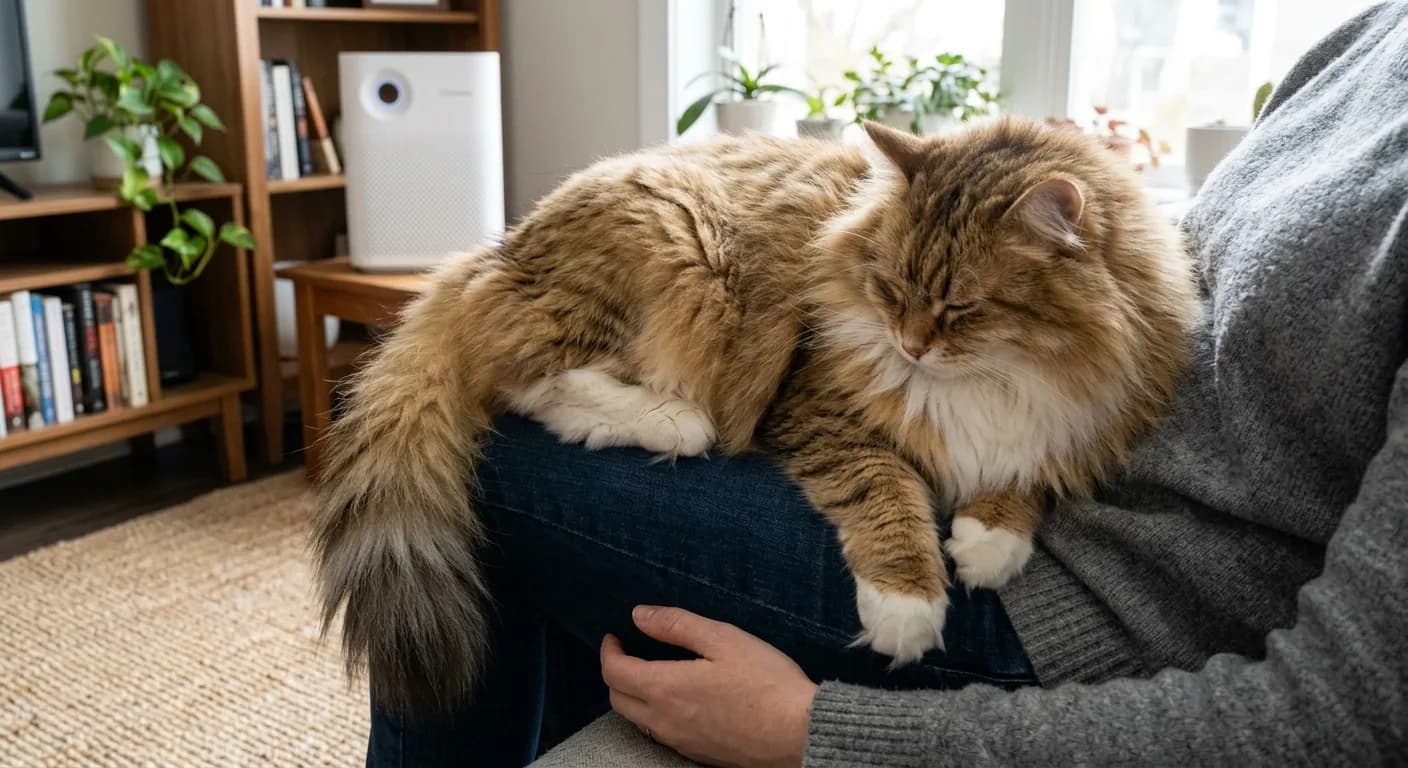
A newer tool is allergen-neutralizing cat food. Diets such as Purina Pro Plan LiveClear contain an egg-derived antibody (anti-Fel d 1) that binds the allergen in the cat's mouth, and studies behind the product report a meaningful average reduction in active Fel d 1 on the fur of cats fed it daily, though it reduces rather than eliminates the allergen and results vary by cat. A balanced, high-protein diet also supports healthy skin and coat, which can mean less flaky dander overall. It is a supplement to the other measures, not a replacement.
- No single step removes Fel d 1 on its own. Bathing plus weekly grooming plus a HEPA purifier plus a cat-free bedroom plus an allergen-reducing diet, used together, drives down the allergen load far more than any one of them alone. Allergy management is cumulative.
Do Siberians shed? The triple-coat question
Allergy seekers often hope a hypoallergenic cat barely sheds, but the Siberian does not fit that picture, and that is okay. Siberians carry a dense, water-resistant triple coat (guard hairs, awn hairs, and a thick down undercoat) built for brutal Russian winters. They shed year-round and go through two heavier seasonal molts: a big spring shed as the winter coat blows out, and a lighter fall shed. So in raw fur volume, a Siberian is a moderate-to-heavy shedder, not a low-shed breed like a Cornish Rex or Sphynx.
The important point is that shedding and allergen load are different things. Because allergies are driven by the Fel d 1 protein rather than the hair itself, a heavy-coated Siberian that happens to produce low Fel d 1 can still be more tolerable than a light-shedding cat that produces a lot of the protein. Diligent grooming during the seasonal sheds keeps dander-laden hair under control. If genuinely minimal shedding is your hard requirement, a near-hairless breed will serve you better, and our companion guide on the Cornish Rex and allergies covers that route.
- Do not adopt a Siberian expecting minimal shedding. The triple coat sheds year-round with two heavy seasonal molts. Its allergy advantage comes from lower Fel d 1 output, not from shedding less. If low shedding is non-negotiable, look at the near-hairless breeds instead.
Siberian vs other low-allergen breeds
The Siberian is one of several breeds marketed to allergy sufferers, and they win for different reasons. The Siberian and Balinese are heavy-coated breeds that earn the label through lower Fel d 1 output, while the Cornish Rex, Devon Rex, and Sphynx earn it through minimal coats that hold and spread less dander. None is allergen-free. If you are cross-shopping, our guides on the Siamese and Balinese allergy profile and the Ragdoll and allergies put the Siberian in context, and if you are drawn to large fluffy cats specifically, the closely related Norwegian Forest Cat and the Maine Coon are worth comparing on allergen reputation as well.
| Breed | Why It Is Considered Low-Allergen | Shedding Level |
|---|---|---|
| Siberian | Many produce lower Fel d 1 than average | Moderate to heavy (triple coat) |
| Balinese | Often lower Fel d 1; long single coat | Low to moderate |
| Cornish Rex | Short curly coat holds and spreads less dander | Low |
| Devon Rex | Sparse coat, less dander spread | Low |
| Sphynx | Near-hairless, but skin still carries Fel d 1 | Very low (needs bathing) |
Is a Siberian right for you if you have allergies?
For many mildly to moderately allergic cat lovers, a carefully chosen, tested Siberian (lower-allergen sex and color, documented low Fel d 1, verified by your own in-person and sample testing) genuinely can be a workable companion, especially paired with consistent home management. The breed's affectionate, dog-like personality is a big part of why people go to the trouble; you can read more about that in our Siberian cat personality guide, and the broader Siberian cat breed overview covers care, size, and history.
For people with severe allergies or asthma, the honest answer is more cautious. A low-allergen cat lowers the odds of a reaction but does not remove them, and a serious flare is a health risk. In that situation, test extensively, involve an allergist, and be willing to walk away if your body says no. The worst outcome is bonding with a cat you then cannot keep. Choosing well up front, and being realistic about what "hypoallergenic" can and cannot deliver, is how you give both yourself and the cat the best shot.
- 1A tested, lower-allergen Siberian plus diligent home management is realistic for many mild-to-moderate allergy sufferers
- 2Optimize for a spayed female or neutered male in a traditional non-silver color from a breeder who Fel d 1 tests at 11-13 weeks
- 3Always confirm your own tolerance with extended in-person time and a fur and saliva sample before adopting
- 4For severe allergies or asthma, consult a board-certified allergist first and be prepared to walk away
- 5Manage daily exposure with bathing, weekly grooming, a HEPA purifier, a cat-free bedroom, and an allergen-reducing diet
Frequently asked questions about Siberian cats and allergies
For many people with mild to moderate cat allergies, a carefully chosen Siberian is one of the better options because the breed produces lower average levels of the Fel d 1 protein than most cats. However, no cat is completely safe for allergies, individual cats vary widely, and anyone with asthma or severe reactions should consult a board-certified allergist and test their own response to the specific cat before adopting.
The Siberian generally has the stronger low-allergen reputation. Breeder and allergen-lab testing suggests many Siberians produce reduced Fel d 1, whereas there is little evidence Ragdolls produce less allergen than an average cat, so a Ragdoll is not considered a hypoallergenic breed. That said, both shed and both produce allergens, so neither is allergy-proof and individual testing still matters.
Among coated breeds, the Siberian and the Balinese are the most frequently recommended because they tend to produce lower Fel d 1 despite having full coats. The Cornish Rex, Devon Rex, and Russian Blue are also popular low-allergen choices. The near-hairless Sphynx is often listed too, but its skin still produces Fel d 1, so it requires regular bathing rather than being naturally allergen-free.
This is a common myth. Siberians do shed. They carry a dense triple coat and shed year-round with two heavier seasonal molts, a big one in spring and a lighter one in fall, so they are moderate-to-heavy shedders, not a low-shed breed. Their allergy advantage comes from producing less Fel d 1 protein, not from shedding less hair.
The main practical downsides are heavy shedding from the triple coat (with seasonal molts that need extra grooming), their large size and high activity needs, and the fact that they are not reliably hypoallergenic, since roughly half of Siberians do not produce notably low Fel d 1. They are also typically expensive from reputable breeders, and like many purebreds can carry a risk of hypertrophic cardiomyopathy, so health screening matters.
Breeds that combine heavy coats, heavy shedding, and high dander production tend to be hardest on allergy sufferers, with examples often cited including the Persian, Himalayan, and to a lesser extent some heavily coated cats. Intact male cats of any breed also produce the most Fel d 1. Importantly, it is the allergen output and grooming habits, not the breed name alone, that determine how badly a given cat affects you.
Siberian kittens are not born at full allergen output, Fel d 1 levels rise over the first months and become reliably measurable around 11 to 13 weeks, which is when responsible catteries test. A kitten from a tested low-allergen line carries better odds, but it is not a guarantee, and a kitten that seems fine early can produce more allergen as it matures, so test the specific kitten and ideally its parents.
Yes, it helps. Fel d 1 production is hormonally influenced, so intact males produce the most allergen, and spaying or neutering lowers output, after which males and females sit at a similar, lower level. For an allergy sufferer, a spayed female or neutered male is a better starting point than an intact tom, though it still does not make any cat allergen-free.
Breeder testing consistently finds that silver, smoke, and bi-metallic color lines tend to produce higher Fel d 1, and kittens in those lines often test high, while traditional non-silver colors are more likely to fall in the lower range. If allergies are your priority, ask the breeder about color lines and their Fel d 1 test history before choosing.
It can help as part of a broader plan. Diets such as Purina Pro Plan LiveClear use an egg-derived antibody that binds Fel d 1 in the cat's mouth, and studies report a meaningful average reduction in active allergen on the fur of cats fed it daily. It reduces rather than eliminates the allergen and results vary by cat, so use it alongside bathing, grooming, HEPA filtration, and a cat-free bedroom rather than on its own.

Coreen Saito is a pet writer and longtime shelter volunteer with more than a decade in animal rescue. She covers cat behavior, breed care, and the small, ordinary science of sharing a life with companion animals, with a particular focus on honest takes about the products and decisions that actually matter. At home in Arizona, she's outranked by Mac (a dog with the loudest opinion in the house), Rebel (a cat who governs by quiet authority), and Meri (an orange tabby who runs the late shift and the laundry basket). She writes about all three, plus the rescues that keep coming through her life, at LifeWithMinty.com.
Sign up for expert-backed reviews and safety alerts all in one place.