Siberian Cat Personality: A Complete Temperament Guide
A complete guide to the Siberian cat personality: why these dog-like Russian forest cats are so loyal, playful, intelligent, and affectionate, plus their vocal chirps, love of water, behavior with kids and pets, and the honest downsides.
Petful is reader supported. As an affiliate of platforms like Amazon and Chewy, we may earn a commission when you buy through links on this page. There is no extra cost to you.
The Cat Fanciers' Association (CFA) sums up the Siberian cat personality in one memorable line: roughly "90% placid and 10% mischief," a dog-like, deeply loyal companion that stays playful for the 5 years it takes to fully mature and often well beyond. These are large, powerful forest cats with a sweet, people-first nature: they greet you at the door, follow you room to room, fetch a thrown toy, splash in the water bowl, and settle into your lap with a soft chirp instead of a loud meow. This guide breaks down every trait that defines the breed, explains why a thousand years as a Siberian forest survivor shaped that temperament, and answers the real questions owners ask before bringing one home.
- 1Siberians are famously dog-like: loyal, people-oriented, and bonded to the whole family rather than one person
- 2They are highly intelligent problem solvers who open cabinets, learn tricks, fetch, and need daily mental and physical stimulation
- 3Despite their power and athleticism, they are gentle, easygoing, and excellent with children, dogs, and other cats
- 4They are quiet communicators who chirp, trill, and purr far more than they meow, and many are fascinated by water
- 5They stay kitten-like and playful because they take about 5 years to fully mature, one of the slowest timelines of any cat breed

Sign up for expert-backed reviews and safety alerts all in one place.
The Siberian cat personality in a nutshell
If you ask longtime owners and breeders to describe the breed in a few words, the same adjectives surface every time: affectionate, loyal, playful, intelligent, calm, curious, and adventurous. The Discerning Cat's owner-written personality profile and the breeder site Krypto Siberians both land on nearly the identical shortlist, and the CFA breed page reinforces it, calling Sibs "sociable, curious, and easygoing cats who want to be near their owners."
What makes the Siberian stand out from other big, plush breeds is the combination, as our full Siberian cat breed profile lays out. Plenty of cats are affectionate, and plenty are athletic, but the Siberian pairs a powerful, acrobatic body with an unusually gentle, even-tempered disposition. Wisdom Panel describes that temperament as "easygoing" and "unflappable," well-suited to busy households. The result is a cat that is confident enough to greet your dinner guests, agile enough to land on top of the refrigerator, and soft enough to melt into your lap an hour later.

Compare coverage choices for your pet, then request a quote directly on Lemonade.
- Check a price for your pet
- Review available coverage choices
- See the terms before you decide
Eligibility, waiting periods, limits and exclusions apply.
Petful may earn a commission when you click through to Lemonade, at no extra cost to you.
- Breed temperament describes tendencies, not guarantees. Within a litter you will find bolder and shyer kittens, and males are often described as slightly more laid-back and people-seeking than the sometimes more reserved females. Spend time with a kitten and its parents before deciding.
Why Siberians act the way they do: the forest-survivor heritage
You cannot understand the Siberian cat personality without understanding where the breed comes from. Siberians are Russia's native forest cats, a landrace that developed naturally rather than being designed by breeders. References to a similar cat appear in Slavic folktales and rural lore going back roughly a thousand years, and the CFA notes the breed earned its keep on farms and in monasteries as a "Minister of Rodent Control."
That history is written into the temperament. A cat that had to survive the taiga and earn its place around people developed three traits at once: it had to be a sharp, resourceful hunter (which is why modern Siberians are such relentless problem solvers), it had to be hardy and adaptable (which is why they are so unflappable in chaotic homes), and it had to bond with the humans who sheltered and fed it (which is why they are so loyal and people-oriented today). Even the famous fascination with water is often traced to a working forest cat that fished and was not afraid to get its water-repellent guard coat wet.
The physical breed reflects the same survivor story. The Siberian carries a dense triple coat (guard, awn, and down hair) with a full neck ruff, shaggy "britches" on the hind legs, a bushy plumed tail, and tufted paws that worked like snowshoes. They are slow to mature because, in the wild, a large cat that grows over several years ends up sturdier and more weather-hardy. If you want the full physical picture, our Siberian cat size guide covers exactly how big these cats get and how long they keep growing.
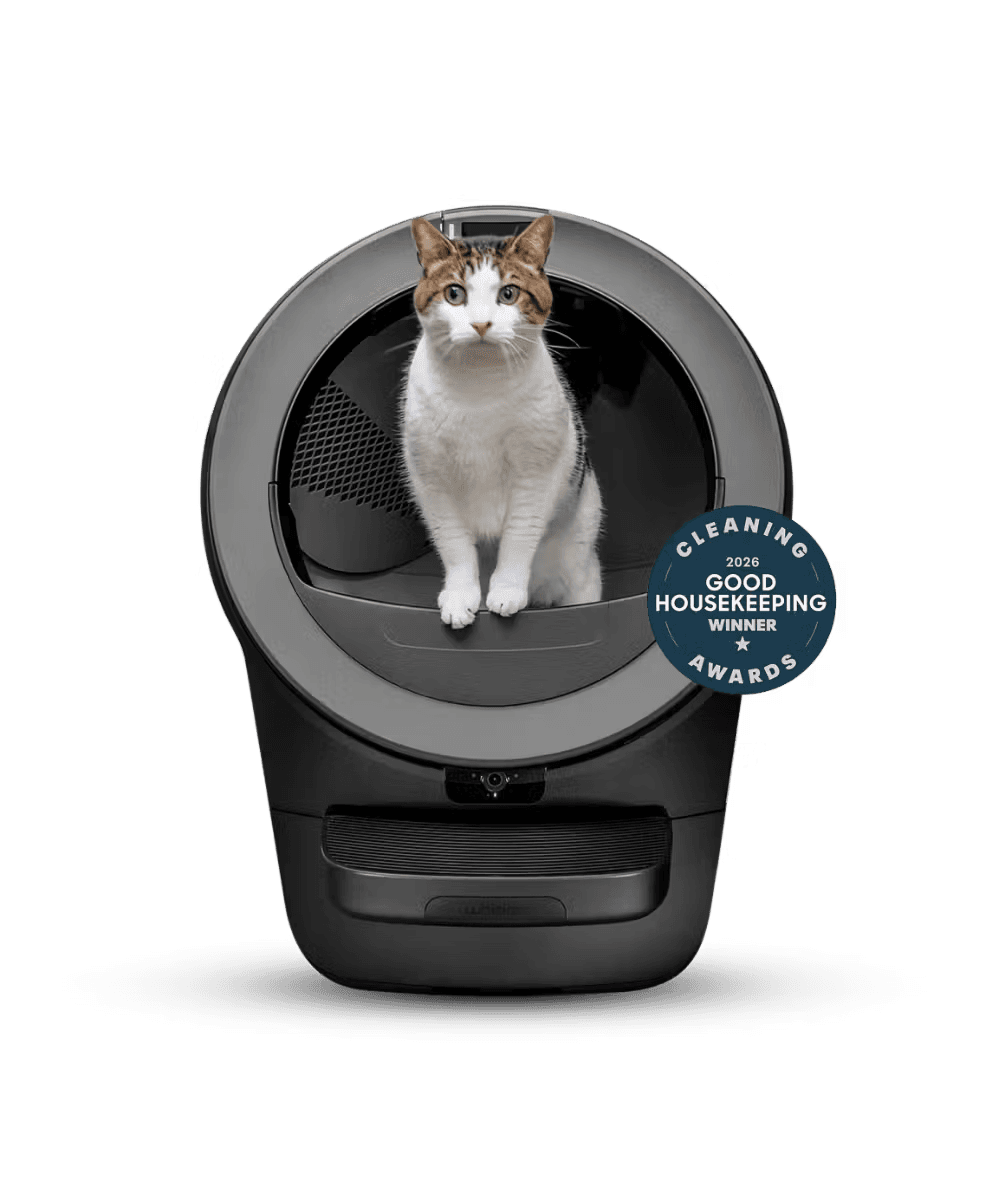
Never Scoop Again® with the Whisker Litter-Robot, the smart self-cleaning automatic litter box. Monitor visits and track weights for better overall care in the Whisker® app. Multi-cat friendly.
Petful may earn a commission when you click through to Whisker, at no extra cost to you.
Dog-like and loyal: the trait everyone mentions first
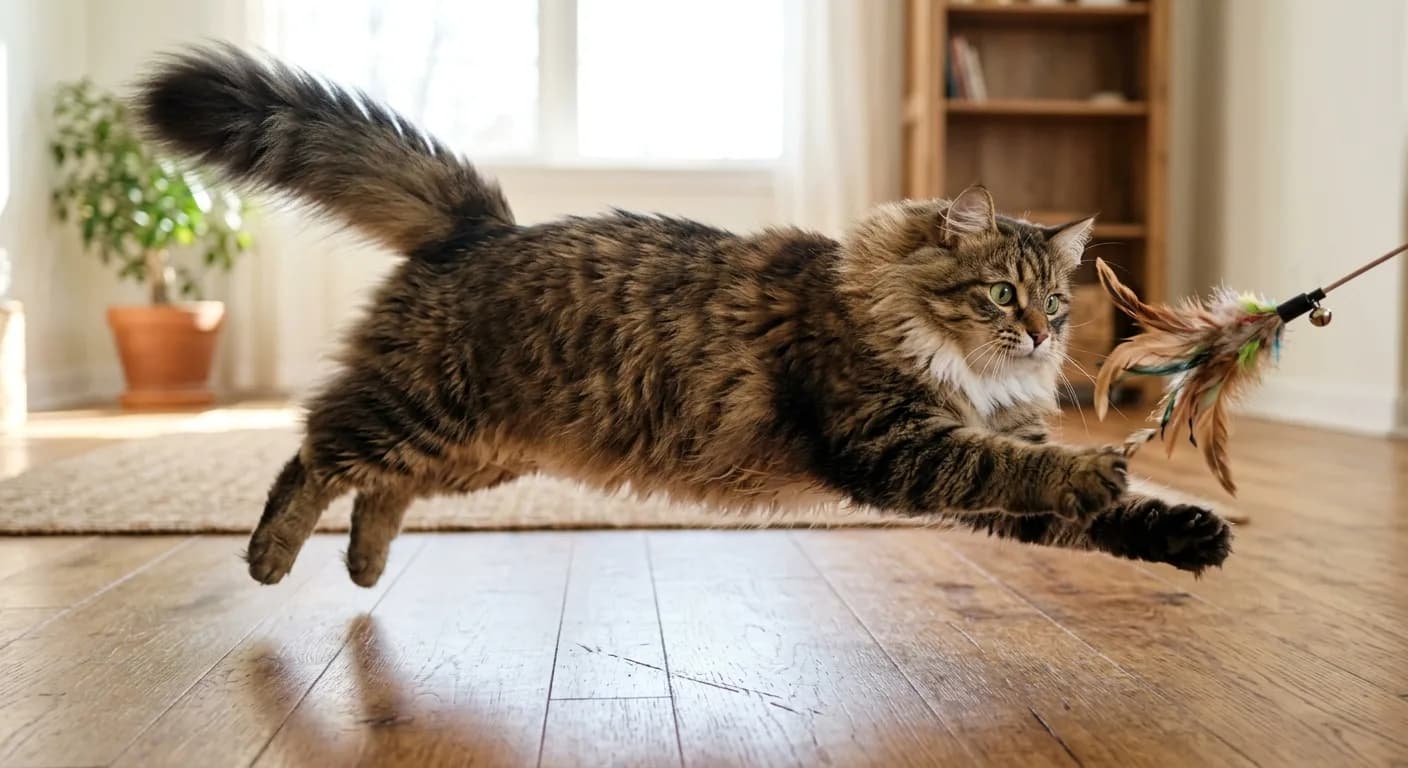
The single most common description of the Siberian cat personality is "dog-like," and it is well earned. Siberians bond hard to their people and show it in overtly canine ways. They will trot to the door to greet you when you come home, shadow you from the kitchen to the bathroom, and want to be in whatever room the action is. Litter-Robot describes them as "deeply people-oriented" cats that "greet owners at doors," and many owners report a cat that simply wants to participate in the household rather than observe from a distance.
Crucially, Siberians tend to bond with the entire family rather than fixating on one person. That makes them a strong fit for households with kids, couples, and multi-person homes where a one-person cat would struggle. They are also emotionally intuitive: the CFA notes they are "very attuned to their owners' moods" and are "often sought after as potential emotional support animals." A Siberian frequently seems to know when you have had a hard day and will plant itself nearby.
- Because Siberians are so trainable and engaged, they thrive on the kind of interaction dog owners take for granted. Teach a recall, play fetch, clicker-train a few tricks, and rotate puzzle feeders. A Siberian that gets to "work" with you is a calmer, happier Siberian.
Intelligent and endlessly curious problem solvers
Siberians are smart, and their intelligence is the kind that gets them into cabinets. The CFA calls the breed "extremely intelligent, as befits a natural hunter," noting it "loves to investigate cabinets, cupboards, and suitcases." Wisdom Panel goes further: this "skilled problem solver can learn how to open doors or cabinets." If something in your home has a latch, a curious Siberian will eventually study it.
That cleverness has a flip side worth planning for. An intelligent, active cat that does not get enough stimulation will invent its own entertainment, and a bored Siberian can get into mischief. The practical answer is enrichment: puzzle feeders, food-dispensing toys, a tall cat tree or wall shelves to climb, and daily interactive play. Siberians also famously "turn any available object into a toy," so giving them appropriate outlets keeps the clever brain busy and your cabinets shut.
The good news is that the same intelligence makes them genuinely trainable. Siberians readily learn their names, come when called, play fetch, and pick up tricks, and they "quickly learn the meaning of the word 'no,'" per the CFA. Few cat breeds engage with training as willingly.
- These cats need a job. Without daily play and mental challenges, a clever, athletic Siberian may open cupboards, unspool toilet paper, or knock things off shelves out of sheer under-stimulation. Schedule two short play sessions a day and keep puzzle toys in rotation.
Playful into old age (because they grow up slowly)
One of the most beloved parts of the Siberian cat personality is that the kitten never fully leaves. Siberians are one of the slowest-maturing cat breeds: most sources, including Litter-Robot and Wisdom Panel, put full maturity at around 5 years, and the CFA notes most reach full size by about 3 years with temperament settling even later. Because they develop so slowly, they keep their energetic, goofy, playful streak long into adulthood. As the Krypto Siberians breeder writes, "I'd be lying if I said they stopped playing as they got older. These cats are quite spunky."
In practice, that means a Siberian household stays lively. Expect a cat that wants to chase, pounce, wrestle a toy, and invent games well past the age when many cats have settled into napping full-time. It is one of the breed's great charms, but it is also a commitment: you are signing up for years of an active, engaged companion that needs play, not a low-key lap ornament.
Athletic, agile, and built to climb
Do not let the cuddly reputation fool you. Siberians are powerfully built and remarkably athletic. Wisdom Panel calls them "acrobatic by nature," noting they "regularly wow their families with their impressive leaps," and their muscular hind legs (slightly longer than the front) make them phenomenal jumpers. A Siberian will claim the highest perch in the room, whether that is a cat tree, a bookshelf, or the top of a door.
Give that athleticism somewhere to go. Tall cat trees, sturdy wall shelves, and window perches let a Siberian climb and survey its territory the way it instinctively wants to. Litter-Robot aptly describes them as "watchers and surveyors of their space," and a high vantage point keeps a confident, curious cat content. Vertical space is not a luxury for this breed; it is part of meeting its needs.
- A Siberian wants to climb and perch. Invest in a tall, stable cat tree and consider wall-mounted shelves near a window. Letting them survey the room from up high satisfies the hunter instinct and keeps them off the surfaces you would rather they avoid.
Surprisingly fond of water
Plenty of cats hate water. Many Siberians actively seek it out. The breed is widely reported to be fascinated by water, and owners describe cats that swat at running faucets, jump into the shower, drop toys into the water bowl, and "fish" in the bathtub. Litter-Robot lists this fascination directly: Siberians "may swat faucets, jump in showers, drop toys in sinks." The trait is usually traced back to the breed's forest-survivor past, where a working cat near water learned that a wet paw was nothing to fear (their guard coat is even water-repellent).
It is a quirky, endearing trait, but plan for it: a Siberian may treat your water glass as a toy or invite itself into your shower. A pet water fountain often delights this breed and can double as enrichment.

63-inch multi-level cat tree with scratch posts, hammock, plush perches, and dangling toys. Vertical territory is non-negotiable for high-energy climbing breeds like the Bengal.
Petful may earn a commission when you click through to Chewy, at no extra cost to you.
Quiet but chatty: the chirps and trills
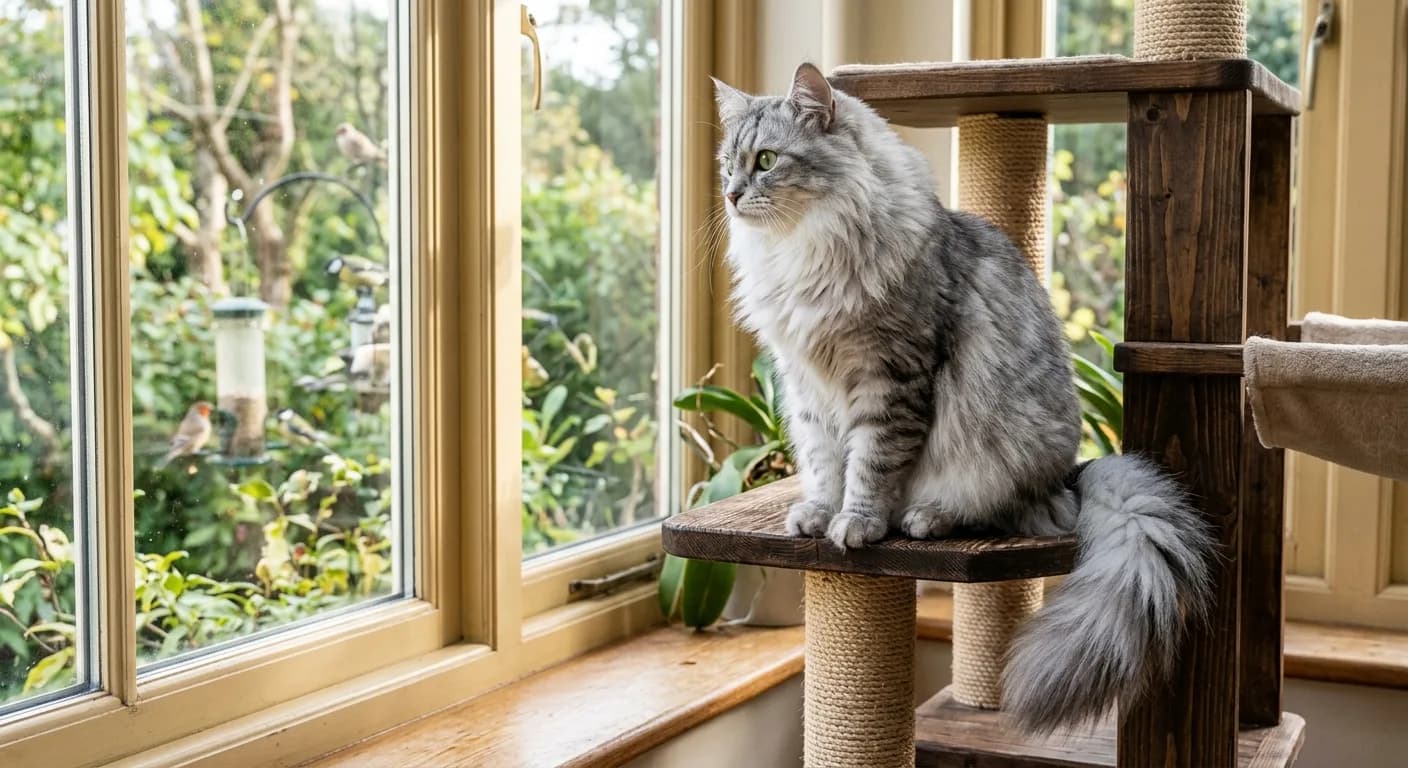
Here is a fun contradiction in the Siberian cat personality. They are highly communicative, yet they are not loud. Rather than the demanding yowl of a Siamese, Siberians "talk" through soft chirps, trills, squeaks, and melodic mews, and the CFA notes they "tend to prefer loud purrs to other forms of feline communication." The Discerning Cat similarly highlights that they meow less and purr more.
For owners, that combination is close to ideal. You get a cat with personality and a voice, one that will chirp a greeting and trill for attention, without the constant loud vocalizing that makes some breeds challenging in an apartment. If you want a cat that communicates but will not keep you up at night, the Siberian's gentle vocabulary is a real selling point. (For contrast, the famously vocal and people-demanding Siamese sits at the opposite end of the talkativeness spectrum.)
Affectionate lap cats (on their own terms)
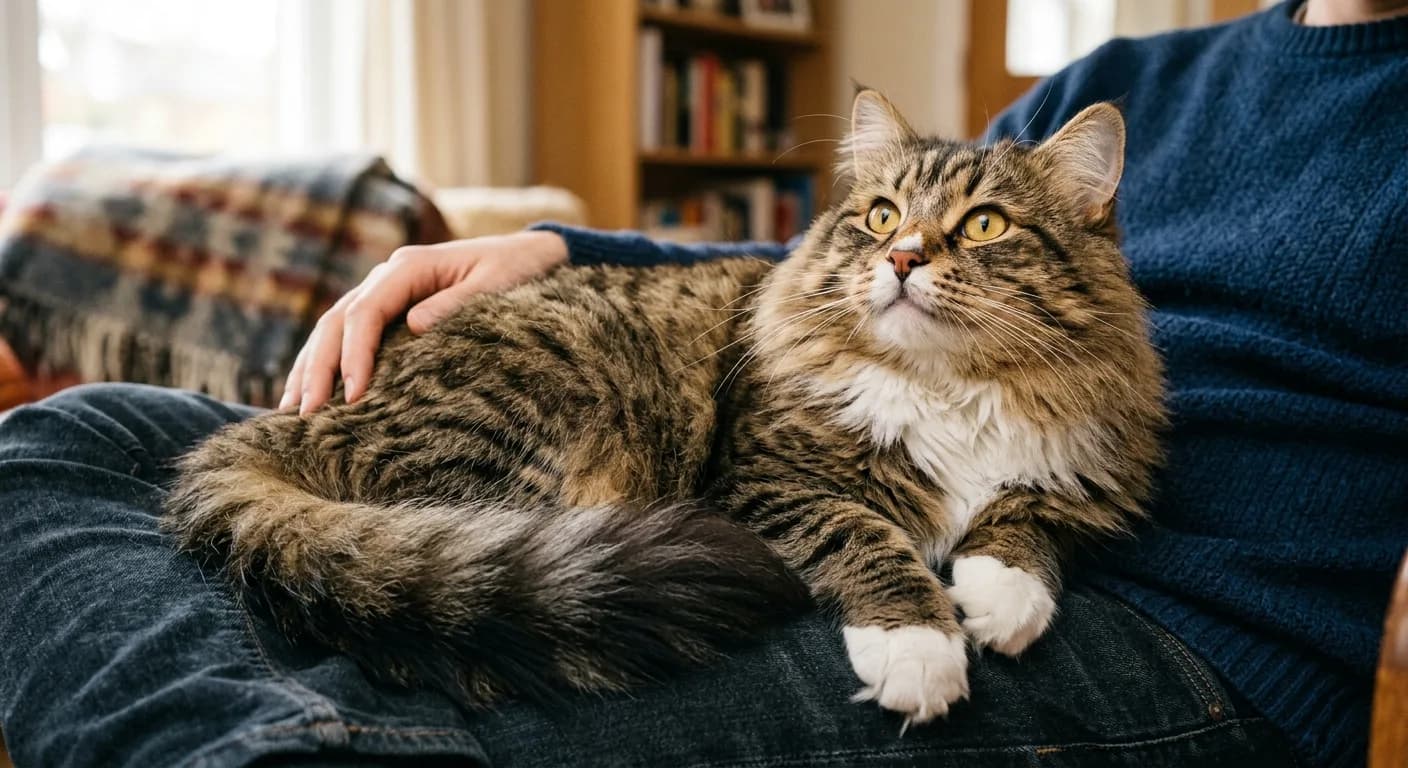
Yes, the Siberian is a true lap cat. Most individuals love to curl up on a warm lap, snuggle, and be held, and Wisdom Panel calls them "excellent couch buddies and snuggle partners." They are openly cuddly in a way that not every breed is, and they genuinely seek out physical closeness with their people.
There is one nuance worth knowing. Like most cats, many Siberians prefer to be near you rather than restrained in your arms for a long time. They are generally happy to be picked up and cuddled, especially if their paws are free so they can hop down when they choose, but the deepest affection often looks like a cat that plants itself against your leg, sleeps on the bed, and follows you around all day. Respect the off-switch and you will get a wonderfully affectionate companion.
- Siberians are affectionate but independent enough to dislike being held against their will. Let the cat choose the contact. Pick them up gently with their feet supported and let them leave when they want, and they will reward you with far more voluntary lap time.
Great with kids, dogs, and other pets
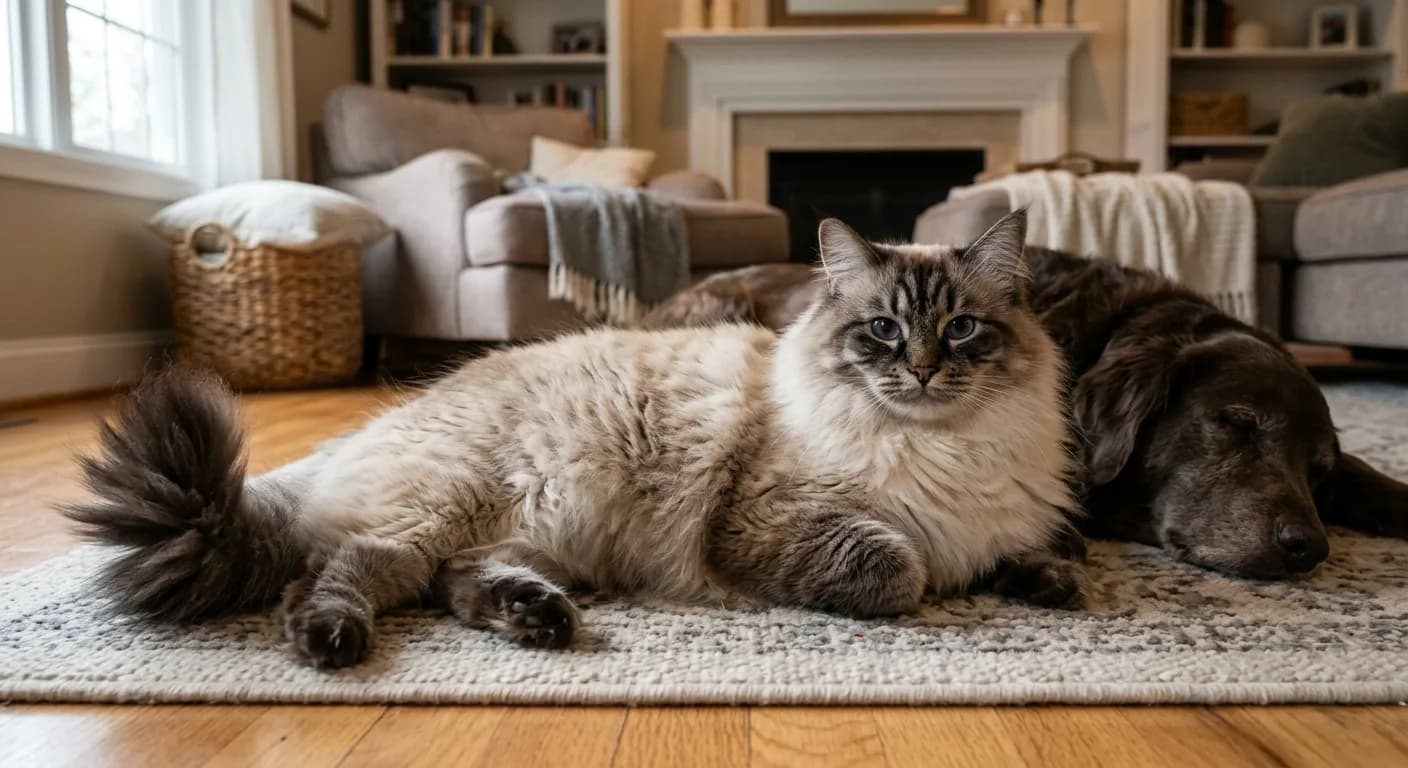
The Siberian's easygoing confidence makes it one of the better breeds for a full, busy household. The CFA states plainly that Siberians "get along well with dogs and other animals" and are "wonderful companions for children," and Purina notes they are "not shy around strangers."
That sociability extends to other animals. Siberians generally integrate well with cat-friendly dogs and with other cats, and because they are so people- and play-oriented, many actually do better with a companion than alone. If your household already has pets, a properly introduced Siberian usually slots in smoothly.

108-oz stainless steel pet fountain with quiet pump and water-level window. Bengals are notoriously water-obsessed; a flowing fountain encourages hydration and pulls them away from sinks and toilets.
Petful may earn a commission when you click through to Chewy, at no extra cost to you.
- Even the most patient Siberian deserves gentle handling. Teach children to respect the cat's space, never to pull the coat or tail, and to let the cat approach them. Supervise young kids and provide the cat an easy escape route to a high perch.
The honest downsides of the Siberian personality
No breed is perfect, and a fair temperament guide names the trade-offs. The Siberian's strengths come with a few predictable challenges.
- They can be needy or prone to separation issues. Because they bond so closely, some Siberians do not love being left alone for long stretches, and a very attached cat may get clingy or restless when isolated. The breed is generally well-balanced (not as demanding as a Siamese), but a Siberian left alone all day every day is happier with a companion or extra enrichment.
- They need real stimulation. That clever, athletic brain is a commitment. Skip the daily play and puzzles and you may get mischief, counter-surfing, or cabinet raids.
- They keep growing and playing for years. The slow-maturing, forever-kitten quality is a joy, but it also means you are signing up for an active cat for the long haul, not a sedate one.
- Coat care and shedding. This is a temperament guide, but it is worth flagging that the glorious triple coat sheds heavily during the spring and fall "coat blows" and needs brushing two or three times a week. That is the price of the look.
- Siberians are people cats. If your home is empty 10-plus hours a day with no other pets, a Siberian may struggle with loneliness. Consider a second cat, midday enrichment, or a different, more independent breed if long solo stretches are unavoidable.
Are Siberians hypoallergenic, and does it affect their appeal?
A huge part of the breed's modern popularity has nothing to do with temperament and everything to do with allergies. Siberians are widely described as one of the more allergy-friendly breeds because many individuals produce lower levels of the Fel d 1 protein (the main cat allergen, spread through saliva onto the coat during grooming). Research on Siberians from the breed's native region found that a meaningful share produced less Fel d 1 than typical cats, though levels vary widely from cat to cat and no cat is truly 100% hypoallergenic.
The personality connection is simple: a sweet, dog-like, family-friendly cat that some allergy sufferers can tolerate is a powerful combination, and it is a big reason demand (and price) runs high. We cover the science in depth in our guide to whether the Siberian cat is hypoallergenic, and what to budget in our Siberian cat price breakdown.
Siberian personality vs other big, plush breeds
Shoppers cross-comparing the Siberian almost always weigh it against the other gentle giants. Here is how the temperaments stack up at a glance.
| Breed | Temperament in a Word | Energy and Play | Vocal Style | Best Fit |
|---|---|---|---|---|
| Siberian | Dog-like and loyal | High, playful for years | Quiet chirps and trills | Active families wanting an engaged companion |
| Maine Coon | Gentle and clownish | Moderate to high | Chirps and trills | Families wanting a mellow giant |
| Ragdoll | Docile and floppy | Low to moderate | Soft and quiet | Calm homes wanting a relaxed lap cat |
| Norwegian Forest Cat | Independent and sweet | Moderate | Quiet | Owners who want affection plus self-sufficiency |
The Siberian and the Maine Coon are the closest match: both are big, plush, dog-like, and chirpy, and the Siberian often reads as the more athletic and water-loving of the two. The Ragdoll skews calmer and floppier, while the Norwegian Forest Cat is the most independent of the group. If you are torn between the two top contenders, our head-to-head on the Siberian vs Maine Coon breaks down the differences in detail.
- 1Choose a Siberian if you want a loyal, interactive, dog-like cat and you can commit to daily play and enrichment
- 2They suit busy, multi-person, kid- and pet-friendly households and dislike being left alone all day
- 3Expect a clever problem solver, an athletic climber, a quiet chirper, and a likely water lover
- 4Their lower Fel d 1 makes them a favorite of some allergy sufferers, which drives demand and price
- 5The trade-offs are heavy seasonal shedding, real stimulation needs, and a forever-kitten energy level
Frequently asked questions about Siberian cat personality
Most Siberians enjoy affection and are happy to be picked up and cuddled, and the majority qualify as genuine lap cats. The nuance is that, like most cats, many prefer to be near you rather than restrained for long periods. Hold them gently with their paws supported and let them leave when they choose, and you will earn far more voluntary lap time.
Breeds most often called clingy or "velcro" cats include the Siamese, Sphynx, Ragdoll, Burmese, and Tonkinese, along with the Siberian. Siberians are very people-oriented and bond closely with the whole family, so they can be quite attached, though they are generally better balanced and less demanding than the famously needy Siamese.
Siberians have an easygoing, gentle, and unflappable temperament. Purina describes them as an active and playful breed that enjoys fetch and learning tricks, loves to climb and perch, often plays with water, and gets along well with other pets and children. The CFA characterizes them as roughly 90% placid and 10% mischief.
Pros include a loyal, dog-like, affectionate personality, high intelligence and trainability, excellent compatibility with kids and other pets, a quiet chirpy voice, and lower Fel d 1 that helps some allergy sufferers. Cons include heavy seasonal shedding that needs regular brushing, a strong need for daily play and mental stimulation, a tendency to dislike being left alone all day, and a premium price.
The main downsides are practical. They shed heavily during the spring and fall coat changes and need brushing two or three times a week, they require real mental and physical stimulation or they may get into mischief, they bond so closely that some struggle when left alone for long periods, and reputable kittens are expensive and can be hard to find.
The Siamese is the breed most often named as the clingiest and most demanding of constant attention, followed by other people-focused breeds such as the Sphynx, Ragdoll, Burmese, and Siberian. Siberians are very attached to their families but tend to be more independent and quieter than a Siamese, making them a more balanced choice for many homes.
To greet a cat, slow-blink at it (a relaxed, slow closing and opening of your eyes) and offer a finger or hand at its nose level so it can sniff and decide to approach. Siberians often answer in kind with a soft chirp or trill and a head bump, since they communicate more through gentle sounds and body language than loud meows.
Cats are most bothered by being held against their will, loud noises and chaos, dirty litter boxes, strong scents, and a lack of routine or stimulation. For a clever, active breed like the Siberian, boredom is a top frustration, so daily play, puzzle toys, and climbing space go a long way toward keeping one content and well-behaved.

Coreen Saito is a pet writer and longtime shelter volunteer with more than a decade in animal rescue. She covers cat behavior, breed care, and the small, ordinary science of sharing a life with companion animals, with a particular focus on honest takes about the products and decisions that actually matter. At home in Arizona, she's outranked by Mac (a dog with the loudest opinion in the house), Rebel (a cat who governs by quiet authority), and Meri (an orange tabby who runs the late shift and the laundry basket). She writes about all three, plus the rescues that keep coming through her life, at LifeWithMinty.com.
Sign up for expert-backed reviews and safety alerts all in one place.