Egyptian Mau: Complete Guide to the Only Spotted Cat Breed
A complete guide to the Egyptian Mau, the only naturally spotted domestic cat and the fastest, reaching 30 mph. Covers its spots, scarab M mark, the three colors, green eyes, temperament, health, lifespan, and Bengal differences.
Petful is reader supported. As an affiliate of platforms like Amazon and Chewy, we may earn a commission when you buy through links on this page. There is no extra cost to you.
The Egyptian Mau is the only naturally spotted domestic cat breed recognized by the Cat Fanciers' Association (CFA), and it is also the fastest, clocked at speeds of up to 30 miles per hour thanks to a loose flap of belly skin that lets its hind legs stretch farther on every stride. No human breeder painted those random dark spots on; the Mau inherited them from cats that prowled the Nile thousands of years ago and were carved into Egyptian art as far back as 1550 B.C. This guide covers everything that makes the Mau singular: the random spotting and the scarab "M" on its forehead, the dark mascara lines that trace from each eye, the three championship colors (silver, bronze, and smoke), the signature gooseberry-green eyes, its loyal and chatty temperament, an honest look at health and lifespan, grooming, and exactly how a Mau differs from the lookalike Bengal.
- 1The Egyptian Mau is the only naturally spotted domestic cat breed, not a human-made hybrid like the Bengal
- 2It is the fastest domestic cat, hitting roughly 30 mph aided by a loose belly skin flap that extends its stride
- 3The CFA shows it in three colors (silver, bronze, and smoke), all carrying random spots, banded legs, an M and scarab forehead mark, and dark mascara lines
- 4Mature eyes are a striking gooseberry green, usually settling fully by about 18 months
- 5Most Egyptian Maus live 12 to 15 years and are loyal, active, and famously talkative with a soft chortle

Sign up for expert-backed reviews and safety alerts all in one place.
What is an Egyptian Mau?
The Egyptian Mau (the word "mau" is an ancient Egyptian word for cat) is a small to medium, short-haired breed defined by one feature no other domestic cat can claim honestly: spots that occur in nature rather than by design. According to both the CFA and The International Cat Association (TICA), the Mau is the only natural domestic breed of spotted cat. Every other spotted housecat you can name, from the Bengal to the Ocicat, traces its pattern to deliberate crossbreeding by people. The Mau's spots came with the package.
That single fact shapes the whole breed. A Mau looks like a miniature spotted wildcat: muscular and athletic, balanced on hind legs that are slightly longer than the front, often standing as if on tiptoe. The coat is dense and resilient on silver and bronze cats, finer and silkier on smokes. The face carries dark "mascara" lines and a barred M on the forehead, and the eyes are an unmistakable light green the breed standard nicknames "gooseberry green." Put it together and you have a cat that reads as ancient and a little exotic, yet behaves like a devoted, dog-like companion at home.
- "Mau" is an ancient Egyptian word for cat, so "Egyptian Mau" translates roughly to "Egyptian cat." Spotted cats matching the breed appear in Egyptian papyri and tomb frescoes dating back to around 1550 B.C., which is why the Mau is so often called a living link to antiquity.
A breed carved into history
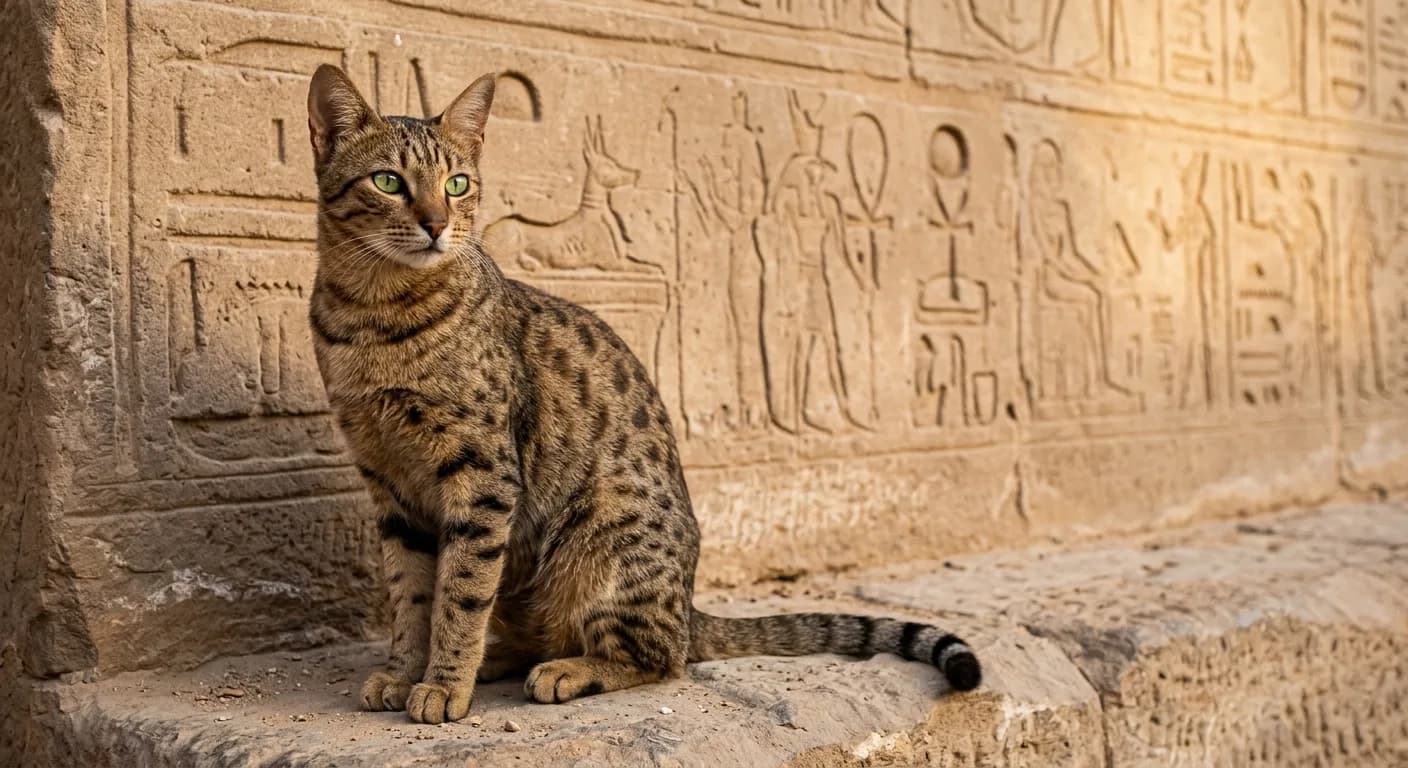
Few cats wear their history as visibly as the Mau. Spotted cats resembling the modern breed appear throughout ancient Egyptian art: the CFA notes that papyri and frescoes dating as far back as 1550 B.C. depict spotted cats, and cats in general were sacred in ancient Egypt, linked to the goddess Bastet and protected by law. Whether today's Mau is a direct descendant of those temple cats cannot be proven, but the resemblance is uncanny and the breed's spots are genuinely natural rather than engineered.
The modern breed's documented story begins in the 1950s with Nathalie Troubetskoy (sometimes spelled Trubetskaya), an exiled Russian princess living in Italy who was reportedly given a Mau imported from the Middle East. When she emigrated to New York City in 1956, she brought three Egyptian Maus with her and founded the Fatima cattery, which produced many of the ancestors of today's American Maus. The CFA accepted the Egyptian Mau for registration in 1970 and granted it championship status in 1977. Because the founding gene pool was small, the breed has historically wrestled with limited genetic diversity, which is one reason it remains relatively rare and why responsible breeders have worked to widen the bloodlines over the decades.
Never Scoop Again® with the Whisker Litter-Robot, the smart self-cleaning automatic litter box. Monitor visits and track weights for better overall care in the Whisker® app. Multi-cat friendly.
Petful may earn a commission when you click through to Whisker, at no extra cost to you.
- Very few Egyptian Maus are registered each year compared with mainstream breeds, and the original founding stock was tiny. That scarcity, plus the careful breeding required to protect the natural spotting, is why a Mau kitten can be both expensive and worth a wait. Adoption is possible too, since Maus and Mau mixes do turn up in rescues.
What an Egyptian Mau looks like
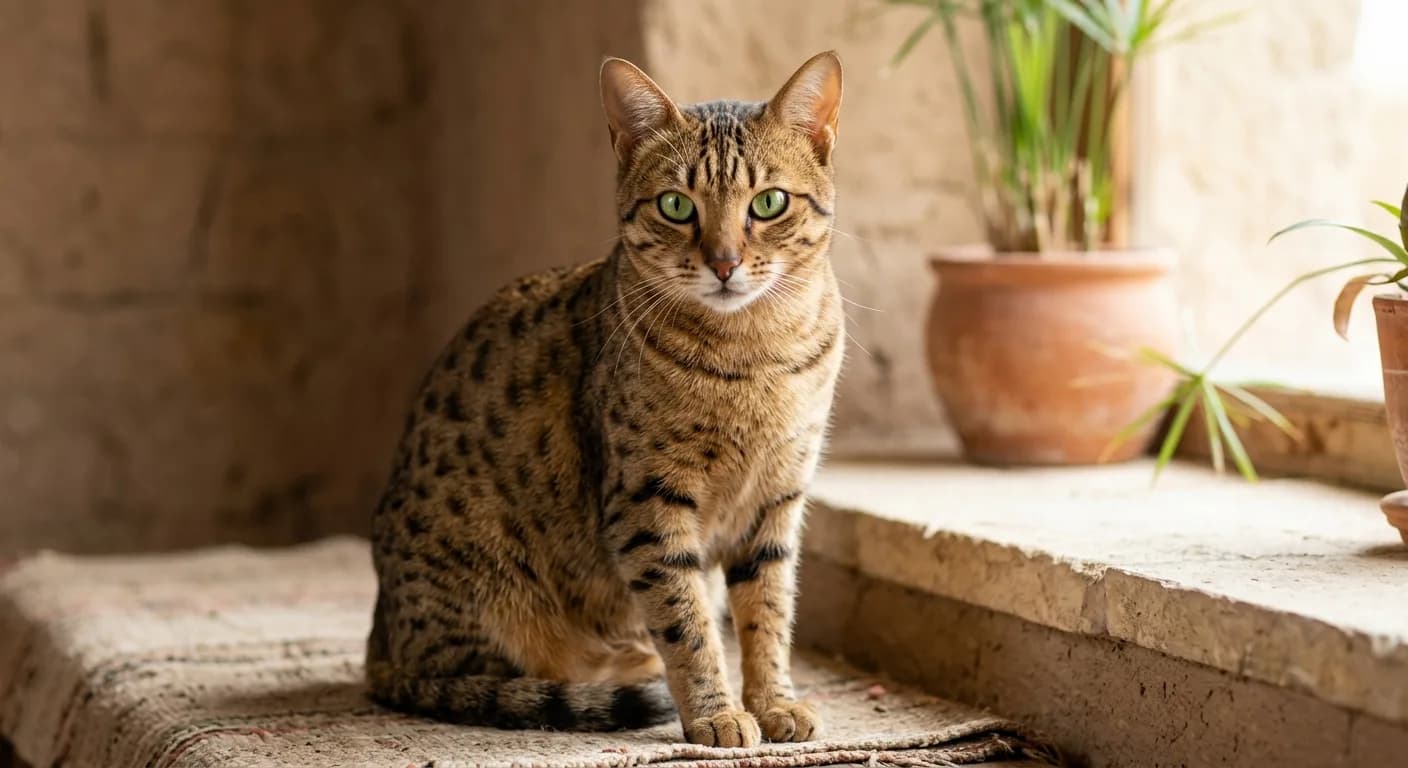
The Mau's appearance is a checklist of distinctive markings, and learning them is the surest way to tell a true Mau (or a Mau mix) from an ordinary spotted tabby. The look is sometimes summed up as "a leopard in miniature," but the details are what make it unmistakable.
Random spots, not stripes or rosettes
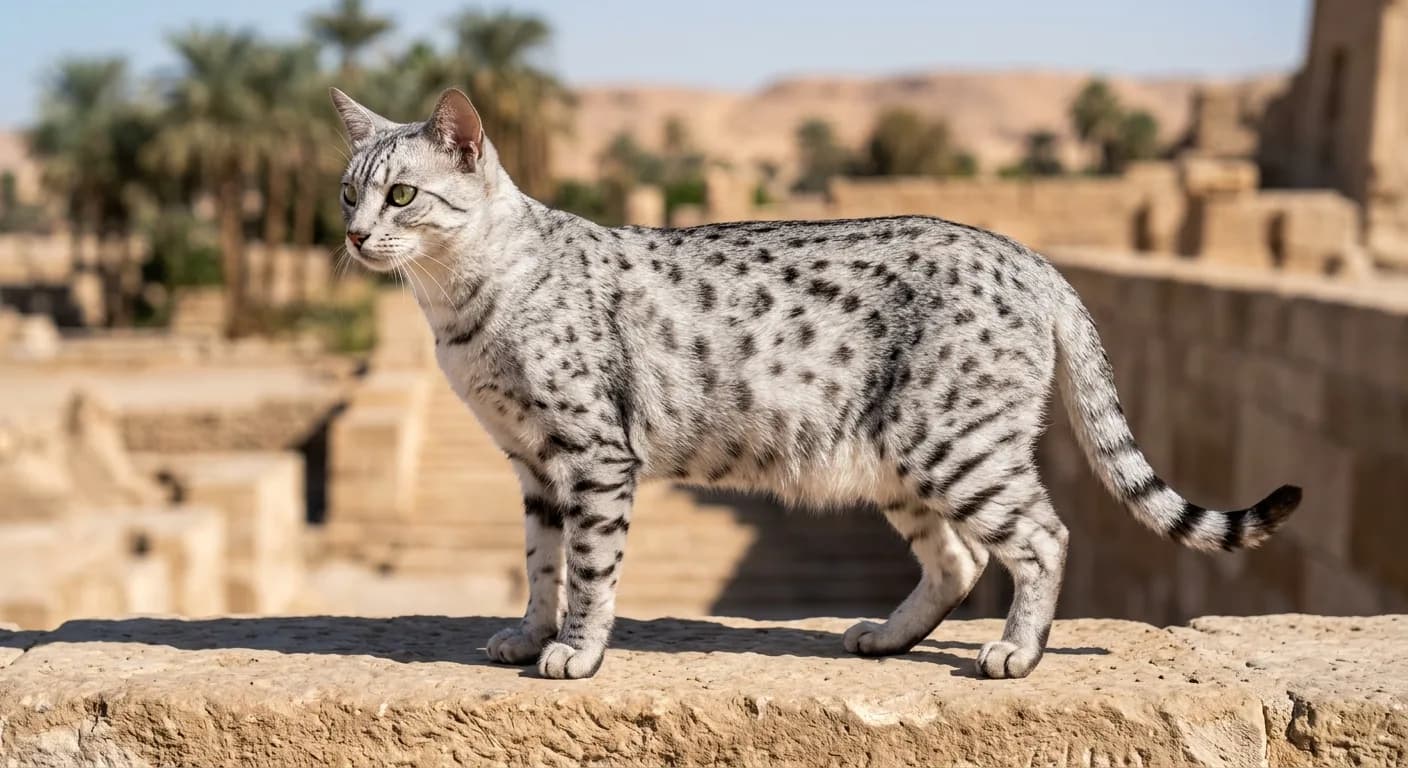
The defining mark is spotting that is, by the breed standard, randomly distributed and varied in size and shape. Spots can be small or large, round or oblong, scattered across the torso so that no two Maus are patterned exactly alike. The spots sit on both the fur and (visibly) the skin beneath. This randomness is a key tell: a Bengal's spots are often arranged as rosettes or marbling, and an Ocicat's are neat thumbprint shapes laid out in a pattern, while the Mau's are nature's own scatter.
The scarab "M" and frown marks
On the forehead, the tabby markings form a distinct "M," which fanciers poetically link to the sacred scarab beetle of ancient Egypt, along with "frown" lines between the ears. It is one of the breed's most charming signatures and contributes to that watchful, regal expression.
Mascara lines and a dorsal stripe
Dark "mascara" lines trace the face: the CFA standard describes a line that starts at the outer corner of each eye and continues along the contour of the cheek, with a second line running across the cheek. The effect looks like carefully applied eyeliner. A single dorsal stripe runs down the spine from shoulders to tail, and the legs and tail are banded (barred) with dark rings, with the tail typically ending in a dark tip.
Gooseberry-green eyes
Adult Maus have large, alert, almond-shaped eyes in a light green shade the standard calls "gooseberry green." Kittens are born with amber or gold eyes that change slowly; the CFA allows for some discernible green by about eight months, with full gooseberry-green color usually settling by around one and a half years. The eyes, set with a slightly worried or "watchful" expression, are a big part of the Mau's expressive charm.
The loose belly flap
Running along the lower flank is a loose flap of skin that extends from the flank to the knee of the hind leg. Far from a flaw, this "belly flap" is functional: it lets the hind legs reach back farther mid-stride, lengthening each bound. Combined with the longer hind legs, it is the anatomical secret behind the Mau's record-setting speed.
- A show-quality Egyptian Mau should show random body spots, a forehead M and frown marks, two mascara lines on each cheek, banded legs and tail, a dorsal stripe, a loose belly flap, and gooseberry-green eyes at maturity. If a "Mau" has striped sides instead of spots, or copper eyes as an adult, it may be a tabby or a mix rather than a pedigreed Mau.
The fastest cat in the house
The Egyptian Mau holds the title of fastest domestic cat breed, with individuals clocked at more than 30 miles per hour (about 48 km/h). Two physical traits make that possible. First, the hind legs are proportionately longer than the front legs, giving the Mau a built-in launch advantage and that characteristic on-tiptoe stance. Second, the loose belly flap described above acts almost like extra slack in a spring, letting the rear legs extend farther on each stride so the cat covers more ground per bound.
In practice this means a Mau is an explosive, agile athlete that loves to climb, leap, and sprint. Owners often describe sudden "zoomies" at impressive velocity and a cat that will scale the tallest cat tree in the room. None of this makes the Mau hyperactive in a stressful way, but it does mean the breed needs real outlets: tall perches, climbing furniture, and active play. A bored Mau with energy to burn can get into mischief, so plan for daily interactive play.
- Give your Mau vertical space (a tall cat tree or shelves), a window perch to watch the world, and at least two short bursts of interactive play a day with a wand toy or a toy it can chase. Puzzle feeders and fetch games suit this intelligent, athletic breed and keep that 30-mph engine satisfied.
Egyptian Mau colors: silver, bronze, and smoke
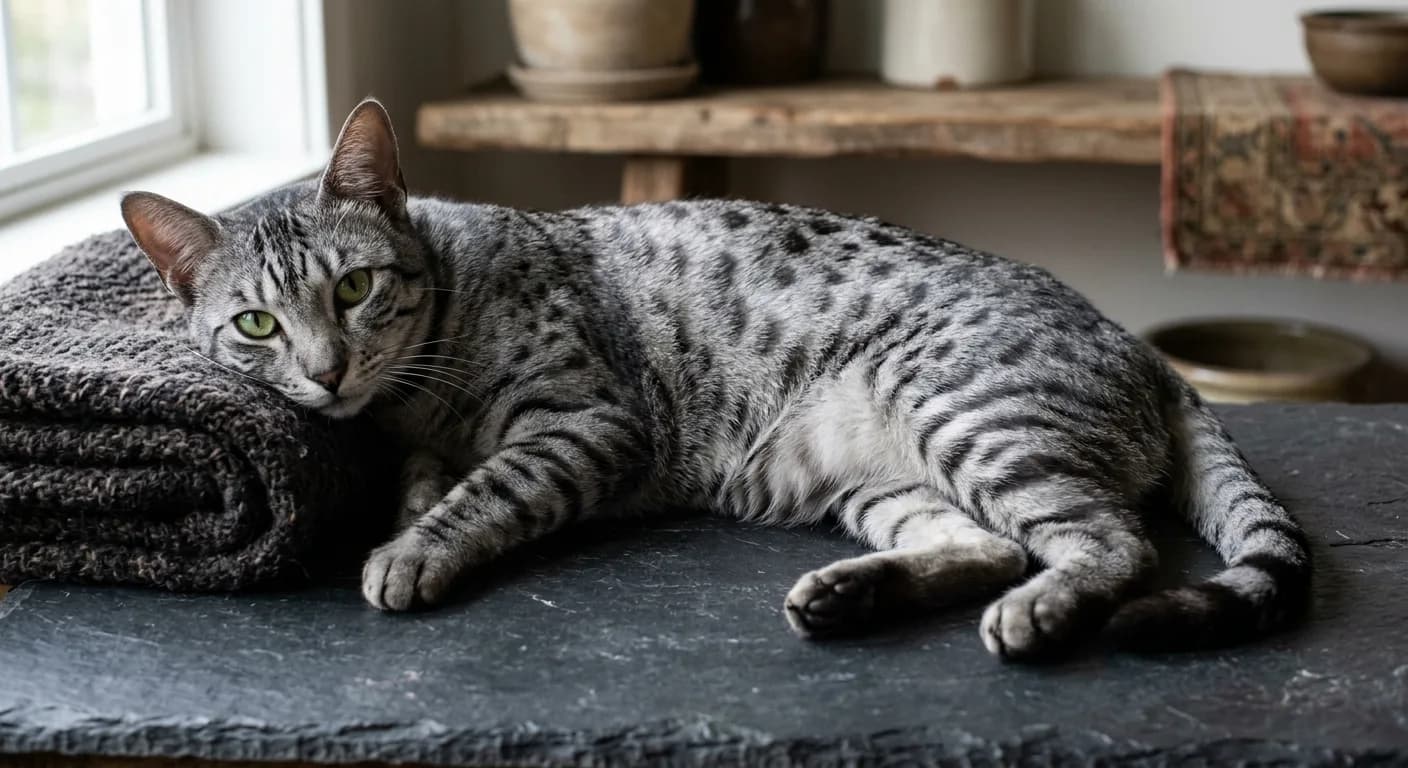
The CFA recognizes three championship colors for the Egyptian Mau, and all of them carry the breed's signature spotting. Knowing the three helps you read a breeder's listing and set expectations for what you are looking at.

63-inch multi-level cat tree with scratch posts, hammock, plush perches, and dangling toys. Vertical territory is non-negotiable for high-energy climbing breeds like the Bengal.
Petful may earn a commission when you click through to Chewy, at no extra cost to you.
- Silver: A pale, clear silver ground color with charcoal-to-black spots, banding, and markings. The silver Mau is the most familiar and arguably the most dramatic, with high contrast between the cool silver coat and the dark spots. The coat is dense and resilient.
- Bronze: A warm, tawny brown ground shading to a creamy ivory underside, with dark brown to black spots and markings. Bronze Maus glow in warm light and read as the most "wild" or leopard-like of the three.
- Smoke: A pale silver undercoat tipped in black, so the cat looks charcoal-grey at rest with jet-black spots that show through. The smoke's coat texture is finer and silkier than the silver or bronze. Smoke is the rarest of the three show colors.
Beyond the show ring, the Mau also occurs in other colors, including solid black and dilute shades such as blue. The CFA notes these colors can occur and are eligible for registration but are not eligible for championship showing. So a "black Egyptian Mau" can be a genuine, registrable Mau (the spots are still there, just hard to see against a dark coat); it simply cannot compete in the show colors. For a deeper look at every shade, including the non-show colors and how the patterns express, see our full guide to Egyptian Mau colors.
| Color | Ground Coat | Spots and Markings | Coat Texture |
|---|---|---|---|
| Silver | Pale clear silver | Charcoal to black | Dense and resilient |
| Bronze | Warm tawny brown, ivory belly | Dark brown to black | Dense and resilient |
| Smoke | Charcoal grey (silver tipped black) | Jet black | Finer and silky |
- Solid black, blue, and other non-show colors are real and registrable, but they cannot be shown and should not command a higher price simply for being unusual. If a seller markets a non-standard color as a premium "rare Mau," ask for registration papers and verify the cattery before paying extra. Rarity of color does not equal higher quality or better health.
Egyptian Mau temperament and personality
If the markings are what draw people in, the personality is what makes them stay. Maus are intensely loyal, often bonding hardest with one or two favorite people and following them from room to room. The breed is frequently described as dog-like: many Maus will learn to fetch, come when called, walk on a harness, and greet you at the door. The CFA affectionately calls them "shoulder riders, refrigerator vultures, and furry alarm clocks," which captures how thoroughly a Mau wants to be involved in your day.
They are also notably intelligent and active. A Mau will solve puzzles, open cabinets, and invent its own games, and it thrives on interaction and mental stimulation. With strangers, however, the breed can be reserved or shy: a Mau that is gregarious with its family may vanish under the bed when guests arrive, and that wariness is normal for the breed rather than a sign of a poorly socialized cat. Early, gentle socialization helps a Mau feel more secure with new people and situations.
The famous Mau "chortle"
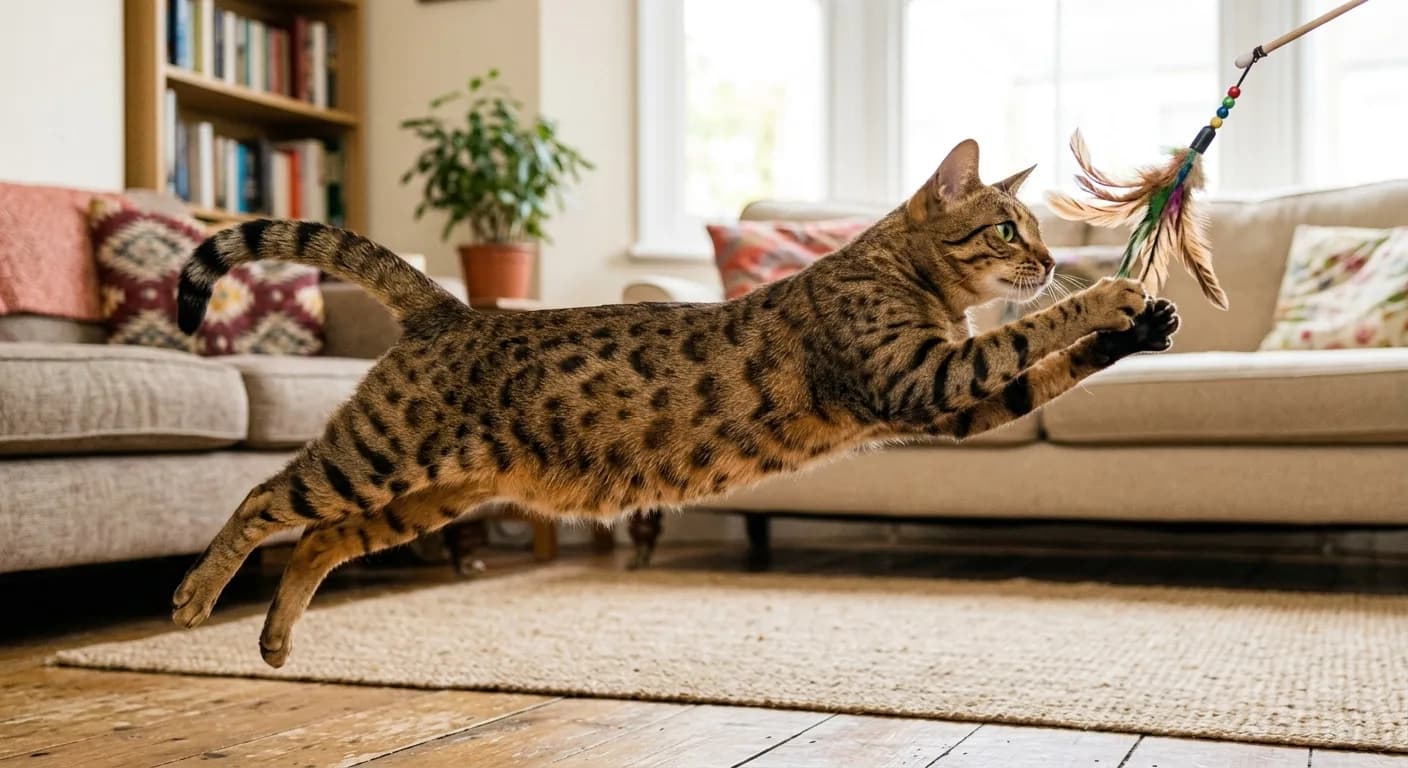
Maus are talkative, but in a distinctive way. Rather than a loud, demanding meow, the breed is known for a soft, musical chortle, chirp, and chatter, often accompanied by a happy "wiggle-tail" dance and kneading when content. Owners describe long "conversations" with their Mau and a vocabulary of melodic sounds. It is one of the most endearing breed traits and very different from the insistent yowl of some other vocal breeds.
- Egyptian Maus do best with families who are home often, enjoy interactive play, and can offer climbing space and routine. They generally get along with respectful children and cat-savvy dogs, but their shyness with strangers means a calm, predictable household suits them better than a constant revolving door of visitors.
Health and lifespan of the Egyptian Mau
The Egyptian Mau is generally a healthy, natural breed, and with good care most Maus live about 12 to 15 years. Because the breed descends from a small founding population, a few inherited conditions appear more often than in the general cat population, and a reputable breeder will screen for them.

108-oz stainless steel pet fountain with quiet pump and water-level window. Bengals are notoriously water-obsessed; a flowing fountain encourages hydration and pulls them away from sinks and toilets.
Petful may earn a commission when you click through to Chewy, at no extra cost to you.
- Pyruvate kinase deficiency (PKD): An inherited enzyme deficiency that can cause intermittent anemia. A simple DNA test identifies carriers, and ethical breeders test their breeding cats to avoid producing affected kittens.
- Urolithiasis (urinary stones): The Mau is among the breeds prone to stony deposits forming in the kidneys and urinary tract. Plenty of fresh water, wet food, and prompt veterinary attention for any straining or blood in the urine help manage the risk.
- Hypertrophic cardiomyopathy (HCM): The most common feline heart disease, in which the heart muscle thickens. It is seen across many breeds, including the Mau, and periodic veterinary cardiac screening is wise.
- Leukodystrophy: A rare neurological condition reported in the breed, affecting some kittens early in life. It is uncommon but worth asking a breeder about.
Routine wellness care matters as much as breed-specific screening. Keep vaccinations and parasite prevention current, brush the teeth or provide dental care to prevent periodontal disease, and feed a high-quality diet portioned to keep the Mau lean and muscular. Annual vet visits (twice yearly for seniors) catch problems early, when they are easiest to treat.
- The Mau's small gene pool makes health screening essential, not optional. Insist on documented testing for pyruvate kinase deficiency, ask about HCM screening and any leukodystrophy history in the line, and walk away from any seller who cannot or will not show health and registration paperwork. A coat color or a "rare" label is never a substitute for proof of testing.
Grooming and care
Grooming a Mau is refreshingly simple. The short coat sheds only minimally, and a weekly comb is enough to remove loose hair, distribute skin oils, and keep the coat glossy while reducing hairballs. Bathing is rarely needed. Trim the nails every couple of weeks, check and gently clean the ears, and keep up with dental care. Beyond that, the Mau's biggest "care" requirement is not grooming at all but enrichment: this athletic, clever cat needs climbing space, toys, and your time far more than it needs a brush.
Egyptian Mau vs Bengal: how to tell them apart
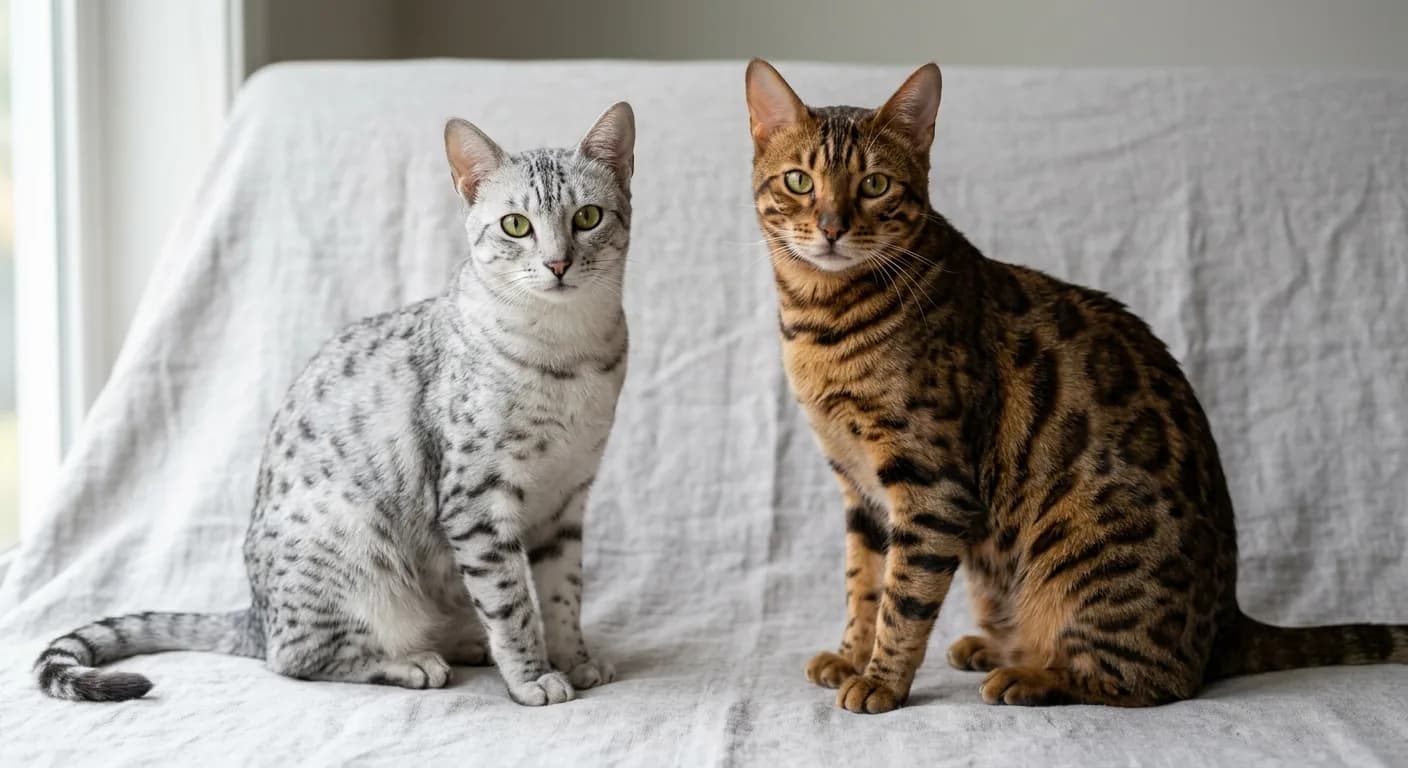
Because both are spotted, the Mau and the Bengal are constantly confused, but they are fundamentally different cats with different origins. The single biggest distinction is natural versus made: the Egyptian Mau is a naturally spotted breed whose pattern occurs in nature, while the Bengal is a hybrid created by people crossing the wild Asian leopard cat with domestic cats (Egyptian Maus and Ocicats were actually used in early Bengal development). One is ancient and natural; the other is a modern designer breed.
Color-changing crystal litter that flags pH shifts in your cat's urine, an early warning sign of UTIs, kidney issues, and more.
Petful may earn a commission when you click through to Chewy, at no extra cost to you.
The patterns differ too. The Mau wears random, scattered spots with mascara lines, an M, banded legs, and a dorsal stripe. The Bengal typically shows larger, higher-contrast markings that can include rosettes (two-toned spots like a jaguar's) or marbling, and many Bengals have a glittered coat. Size and energy separate them as well: Bengals tend to run a bit larger and have famously extreme energy, while the Mau is athletic but somewhat more moderate and more reserved with strangers. If you want the deep comparison, our Egyptian Mau vs Bengal breakdown covers care, cost, and temperament side by side.
| Trait | Egyptian Mau | Bengal |
|---|---|---|
| Origin | Naturally spotted ancient breed | Human-made hybrid (Asian leopard cat cross) |
| Pattern | Random spots, M mark, mascara lines | Rosettes or marbling, often glittered |
| Typical weight | About 6 to 14 lb | About 8 to 15 lb |
| Energy level | Active and athletic, more reserved | Extremely high energy, very bold |
| Voice | Soft chortle and chirp | Loud and demanding |
If the Bengal interests you as a comparison, our Bengal cat breed profile and the guide to Bengal coat colors and patterns round out the picture, and the Ocicat breed profile covers the third famous spotted breed (a fully domestic, intentionally spotted cat) so you can see how all three compare.
Is the Egyptian Mau right for you?
The Mau suits an owner who wants an interactive, intelligent, athletic companion and is happy to provide climbing space, daily play, and a stable routine. It rewards that investment with deep loyalty, dog-like devotion, and a constant chatty commentary on your day. It is less ideal for someone who wants a serene lap cat that ignores them, or for a household with a constant stream of strangers, given the breed's natural shyness. Maus generally do well with respectful children and other pets when introduced properly, and their minimal grooming needs make them low-maintenance in the coat department even as they ask for plenty of attention.
Cost and availability are real considerations. Because the breed is rare and carefully bred, kittens from reputable, health-testing catteries are not cheap and often involve a waitlist. For a realistic budget and a breakdown of what drives the numbers, see our Egyptian Mau price guide. And if you suspect your spotted shelter cat might carry Mau blood, our look at the Egyptian Mau tabby mix explains how to tell a true Mau from a Mau-type spotted tabby.
- 1Choose a Mau if you want an active, loyal, talkative companion and can provide vertical space and daily play
- 2Expect natural shyness with strangers and a soft chortle rather than a loud meow
- 3Budget for a pricier, often waitlisted kitten and insist on documented health testing (PKD, HCM)
- 4Grooming is easy: a weekly comb is plenty for the short, minimally shedding coat
- 5The Mau's spots are natural, which sets it apart from the human-made, rosette-patterned Bengal
Frequently asked questions about the Egyptian Mau
A purebred Egyptian Mau kitten from a reputable, health-testing breeder typically costs more than a common breed because the Mau is rare and carefully bred, and waitlists are common. Pet-quality kittens generally run in the four figures, with show or breeding-quality cats costing more; adoption through a rescue is a lower-cost alternative when a Mau or Mau mix is available. See our Egyptian Mau price guide for a full budget breakdown.
The Egyptian Mau is the only naturally spotted domestic cat breed, meaning its spots occur in nature rather than from human crossbreeding, and it is the fastest domestic cat, reaching about 30 mph with the help of a loose belly skin flap that lengthens its stride. It also carries an ancient pedigree, with spotted cats resembling it depicted in Egyptian art dating back to around 1550 B.C., plus signature gooseberry-green eyes, mascara face lines, and a scarab M on the forehead.
Very few Egyptian Maus are registered each year compared with mainstream breeds, and the modern breed was rebuilt from a tiny founding population brought to the United States in 1956. That small gene pool, the careful breeding needed to preserve the natural spotting and avoid inherited disease, and limited numbers of catteries all keep the Mau among the rarer pedigreed cats.
Look for the breed's specific markings: random (not striped) spots on the body, a barred M and frown lines on the forehead, two dark mascara lines on each cheek, banded legs and tail, a single dorsal stripe down the spine, a loose belly flap, and gooseberry-green eyes at maturity. A truly random spotting pattern plus green eyes and mascara lines suggests Mau ancestry, though only a pedigree or DNA breed test can confirm it; many spotted shelter cats are Mau-type tabbies rather than registered Maus.
The famous six-figure cat is the Ashera, a designer hybrid that was once marketed for around $100,000, not the Egyptian Mau. The Ashera was later exposed as essentially a rebranded Savannah cat. The Egyptian Mau is far more affordable than that, though as a rare natural breed it still costs more than a typical housecat.
Yes, with their chosen people. Egyptian Maus are intensely loyal and affectionate with their family, often following a favorite person around, riding on shoulders, kneading, and snuggling on their own terms. They tend to be more reserved or shy with strangers, so the cuddly side usually comes out once the cat feels safe and bonded rather than instantly with everyone.
There is no official feline IQ ranking, but the Egyptian Mau is consistently described as highly intelligent alongside breeds like the Bengal, Abyssinian, and Siamese. Maus learn tricks, solve puzzles, open cabinets, and can be trained to fetch and walk on a harness, which is why they are often grouped among the smartest, most trainable cats.
With good care, most Egyptian Maus live about 12 to 15 years. Supporting that lifespan means buying from a breeder who screens for inherited conditions such as pyruvate kinase deficiency and hypertrophic cardiomyopathy, feeding a quality diet to keep the cat lean, providing plenty of exercise, and keeping up with routine veterinary care.
Yes, but pleasantly so. Maus are talkative cats known for a soft, musical chortle, chirp, and chatter rather than a loud demanding meow, often paired with a happy wiggle-tail dance when content. Many owners enjoy long melodic conversations with their Mau, and the breed's voice is generally considered sweet rather than noisy.
The CFA shows the Egyptian Mau in three championship colors: silver (pale silver with charcoal spots), bronze (warm tawny brown with dark spots), and smoke (charcoal grey tipped in black with jet-black spots). Other colors, including solid black and dilutes such as blue, can occur and are eligible for registration but not for championship showing.

Coreen Saito is a pet writer and longtime shelter volunteer with more than a decade in animal rescue. She covers cat behavior, breed care, and the small, ordinary science of sharing a life with companion animals, with a particular focus on honest takes about the products and decisions that actually matter. At home in Arizona, she's outranked by Mac (a dog with the loudest opinion in the house), Rebel (a cat who governs by quiet authority), and Meri (an orange tabby who runs the late shift and the laundry basket). She writes about all three, plus the rescues that keep coming through her life, at LifeWithMinty.com.
Sign up for expert-backed reviews and safety alerts all in one place.