Egyptian Mau Price: What a Spotted Egyptian Cat Really Costs
The full Egyptian Mau price guide: kitten cost by color and quality (silver, bronze, smoke), pet vs show and breeding pricing, adoption vs breeder, the rare-breed premium, and the ongoing yearly costs most guides skip.
Petful is reader supported. As an affiliate of platforms like Amazon and Chewy, we may earn a commission when you buy through links on this page. There is no extra cost to you.
The Cat Fanciers' Association (CFA) calls the Egyptian Mau the only naturally spotted breed of domestic cat, and that rarity is exactly why the egyptian mau price runs higher than most household cats: a pet-quality kitten from a reputable breeder typically costs between $800 and $2,500, while show or breeding stock can climb to $3,000 and beyond. Adoption is far cheaper, usually $100 to $500 through a rescue, but with only a few hundred Maus registered each year in the United States, finding one to adopt is the hard part. This guide breaks down the real numbers: kitten prices by color and quality, breeder versus adoption, and the ongoing yearly costs most cost guides skip, so you can budget for the whole cat and not just the sticker price.
- 1A pet-quality Egyptian Mau kitten from a breeder usually costs $800 to $2,500; show or breeding-rights cats run $2,800 to $3,000-plus
- 2Adoption through a rescue is far cheaper at roughly $100 to $500, but Maus rarely turn up in shelters
- 3Color and quality drive price: top-show silver spotted cats cost the most, smoke and pet-grade cats the least
- 4First-year ownership (kitten plus setup plus vetting) commonly lands near $1,500 to $3,500 all in
- 5Ongoing care averages about $55 to $175 per month, or roughly $700 to $2,000 a year

Sign up for expert-backed reviews and safety alerts all in one place.
Egyptian Mau price at a glance
The fastest way to understand the egyptian mau price is to separate the two big buckets: what you pay to get the cat (a one-time cost) and what you pay to keep it (an ongoing cost). The acquisition number swings the most, because it depends entirely on where the cat comes from and what you plan to do with it.
A rescue or shelter charges a modest adoption fee. A hobby breeder selling a pet (a cat you agree to spay or neuter) sits in the middle. A breeder selling a show prospect or a cat with breeding rights sits at the top. The same litter can produce kittens at three very different prices for exactly these reasons.
Never Scoop Again® with the Whisker Litter-Robot, the smart self-cleaning automatic litter box. Monitor visits and track weights for better overall care in the Whisker® app. Multi-cat friendly.
Petful may earn a commission when you click through to Whisker, at no extra cost to you.
| Source / Quality | Typical Price | What You Get |
|---|---|---|
| Rescue or shelter adoption | $100 to $500 | An adult or older kitten, vetted and altered, rarely purebred-papered |
| Pet-quality kitten (breeder) | $800 to $1,500 | A registered, altered companion, minor cosmetic faults |
| Top pet / silver spotted | $1,500 to $2,500 | Excellent type and markings, pet contract (no breeding) |
| Show or breeding rights | $2,800 to $3,500-plus | Show-standard cat or full breeding rights, premium silver lines |
- The same breeder can list a smoke pet kitten at $600 and a top silver show prospect at $3,000. Coat color, spot quality, conformation to the CFA standard, and whether you get breeding rights all move the number. Always ask what tier a quoted price represents.
Kitten price by color and quality
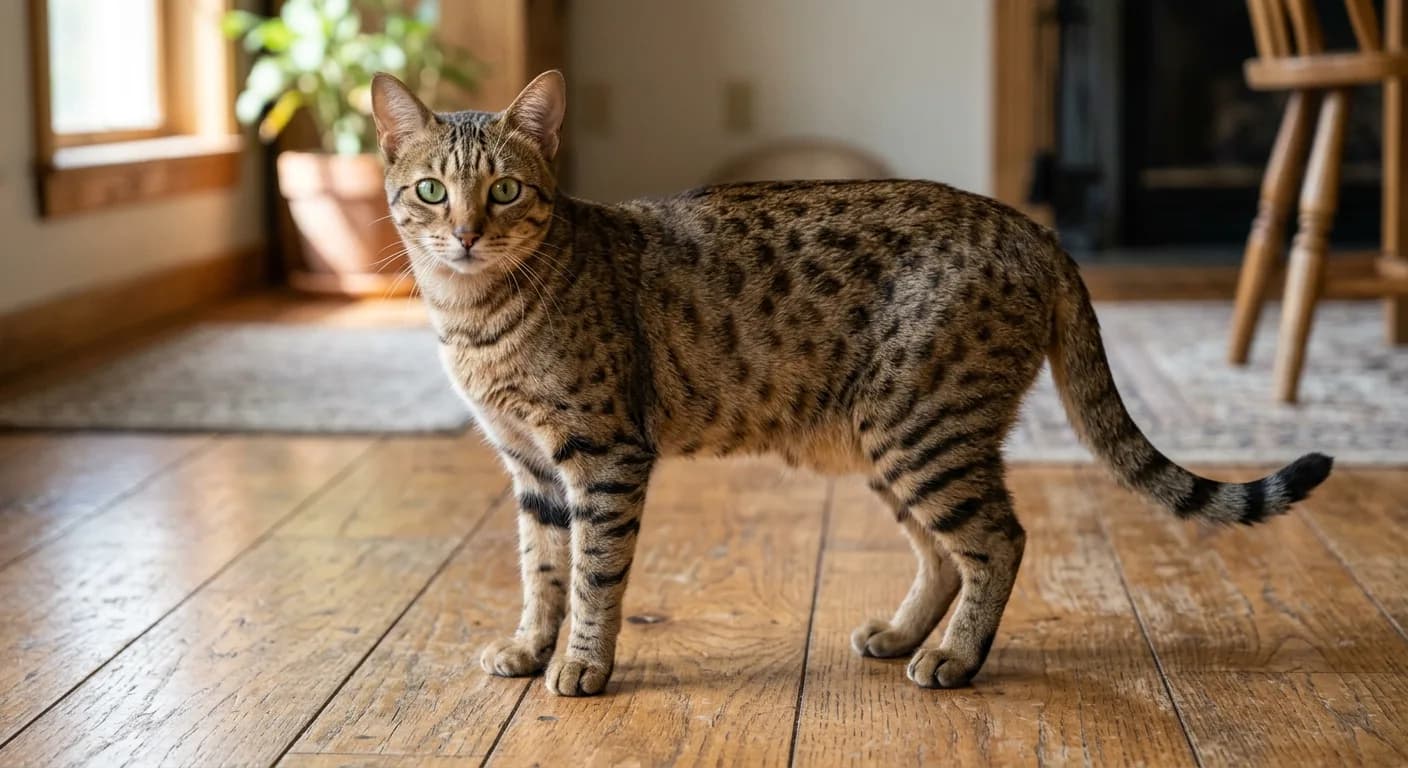
The Egyptian Mau comes in three CFA-recognized colors: silver, bronze, and smoke. (Breeders also produce solid black and blue or dilute kittens, but those are not eligible to be shown.) Color is one of the biggest single drivers of the egyptian mau price, because the most striking, contest-ready coats are the rarest to produce.
Silver spotted (usually the most expensive)
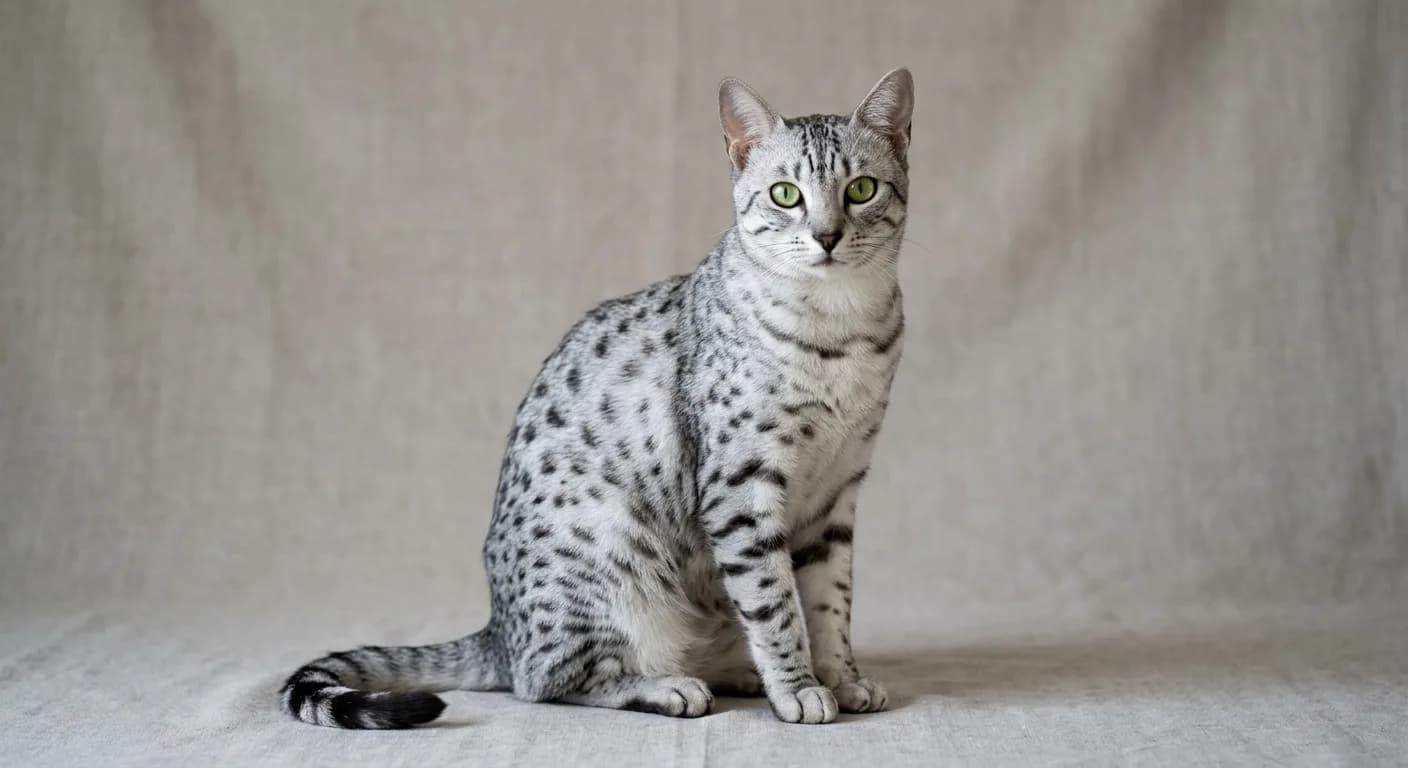
Silver is the signature Egyptian Mau look: jet-charcoal spots scattered over a pale, glittering silver ground, the coat most people picture when they think of the breed. Silver cats with crisp, well-distributed spots and strong contrast are the most in demand, so a top silver pet kitten commonly lands at the higher end of the pet range, and silver show prospects command the steepest prices in the litter. One Egyptian Mau cattery (Belle Hollow Farms) lists silver and bronze spotted cats from roughly $1,400 to $2,800 depending on quality and breeding rights.
Bronze spotted
Bronze is the warm cousin of silver: dark brown spots on a bronzed, tawny background that shades to ivory underneath. Bronze kittens are typically priced very close to silver, and many catteries list them in the same band (for example, $800 to $1,000 for a pet at a value-focused breeder, rising with quality). A beautifully marked bronze can cost just as much as a silver of similar type.
Smoke (often the most affordable)
Smoke Maus have black spots that are visible but set against a charcoal-silver ground tipped in black, so the contrast is more subtle than on a silver cat. Because the spotting reads less dramatically, smoke kittens are frequently the lowest-priced of the three show colors. One cattery (KezKatz) lists smoke pet kittens at $600 to $1,000, versus $800 to $1,000 for its silver and bronze.
| Color | Typical Pet Price | Notes |
|---|---|---|
| Silver spotted | $1,000 to $2,500 | Most popular, highest demand, top show color |
| Bronze spotted | $900 to $2,000 | Warm brown on tawny, priced near silver |
| Smoke | $600 to $1,200 | Subtler contrast, often the lowest-priced show color |
| Black or blue (non-show) | $500 to $1,200 | Produced in some litters, not eligible for the show ring |
- A higher egyptian mau price should buy you proof: TICA or CFA registration, a written health guarantee, and parents you can meet or see on video. If a breeder quotes a bargain price but cannot show registration or genetic testing, the savings can disappear fast in vet bills.
Pet quality vs show and breeding pricing
Inside one breeder's price list, the single biggest jump is between a pet contract and a show or breeding cat. Understanding the tiers keeps you from overpaying for status you do not need, or underpaying and ending up with a cat you cannot show.
- Pet quality means a healthy, typey kitten with a small cosmetic fault (a slightly off spot pattern, a tail kink, a less-than-perfect profile) that a pet home will never notice. These cats are sold on a spay or neuter contract and are the most affordable way into the breed from a breeder.
- Show quality means the kitten closely matches the CFA or TICA written standard and could realistically compete. Breeders charge a premium because show prospects are rarer in any litter and represent the cattery in the ring.
- Breeding rights are the most expensive tier. Buying a Mau you are allowed to breed often adds several hundred to a couple thousand dollars on top of the pet price (one cattery adds a flat $500 to its pet price for breeding rights, while premium silver lines can list breeding cats well above $2,800).
- Responsible Egyptian Mau breeding means genetic testing, registration, show campaigning, and the real risk of expensive feline pregnancies. Buying breeding rights to recoup the egyptian mau price by selling kittens almost never pencils out, and it crowds an already tiny, fragile gene pool. Buy a pet on a pet contract unless you are committing to ethical, registered breeding.
If you are weighing the Mau against another athletic spotted cat, our guide on how the Egyptian Mau compares with the Bengal covers how their prices, coats, and energy levels differ, and the broader Bengal cat profile is a useful price benchmark since Bengals occupy a similar exotic-spotted niche.
Adoption vs breeder: the real cost difference
On paper, adoption looks like an easy win: $100 to $500 from a rescue versus $800 to $2,500 from a breeder, with the cat already vaccinated, microchipped, and spayed or neutered (services that would otherwise cost you $300 to $600 on a breeder kitten). According to Adopt a Pet, adopting an Egyptian Mau from a shelter or rescue runs roughly $100 to $500, while a pet-quality kitten from a breeder lands between about $1,000 and $2,500.

63-inch multi-level cat tree with scratch posts, hammock, plush perches, and dangling toys. Vertical territory is non-negotiable for high-energy climbing breeds like the Bengal.
Petful may earn a commission when you click through to Chewy, at no extra cost to you.
The catch is supply. The Egyptian Mau is genuinely rare, so purebred Maus almost never appear in general shelters. When one does surface, it is usually through a breed-specific rescue with a waitlist, or it is a Mau mix rather than a papered purebred. If your heart is set on a registered, show-standard silver Mau, a breeder is realistically your only path, and the higher price reflects that scarcity.
| Factor | Rescue / Adoption | Reputable Breeder |
|---|---|---|
| Upfront price | $100 to $500 | $800 to $3,500-plus |
| Already vaccinated and altered | Usually yes | Sometimes (often an add-on) |
| Purebred papers (CFA / TICA) | Rare | Yes |
| Choice of color and quality | Very limited | Full (silver, bronze, smoke) |
| Availability | Scarce, waitlists likely | Waitlists common, but reliable |
- Two underused middle paths sit between a shelter and a kitten breeder: breed-specific Egyptian Mau rescue groups, and breeders rehoming a retired adult (a former show or breeding cat). A retired adult can cost a few hundred dollars, comes fully vetted, and skips the chaos of the kitten stage.
For a complete picture of the breed before you commit, our main Egyptian Mau breed profile covers temperament, health, and care, and our Egyptian Mau colors guide shows exactly what silver, bronze, and smoke look like so you know what you are paying for.
Why Egyptian Maus are so expensive (the rare-breed factor)
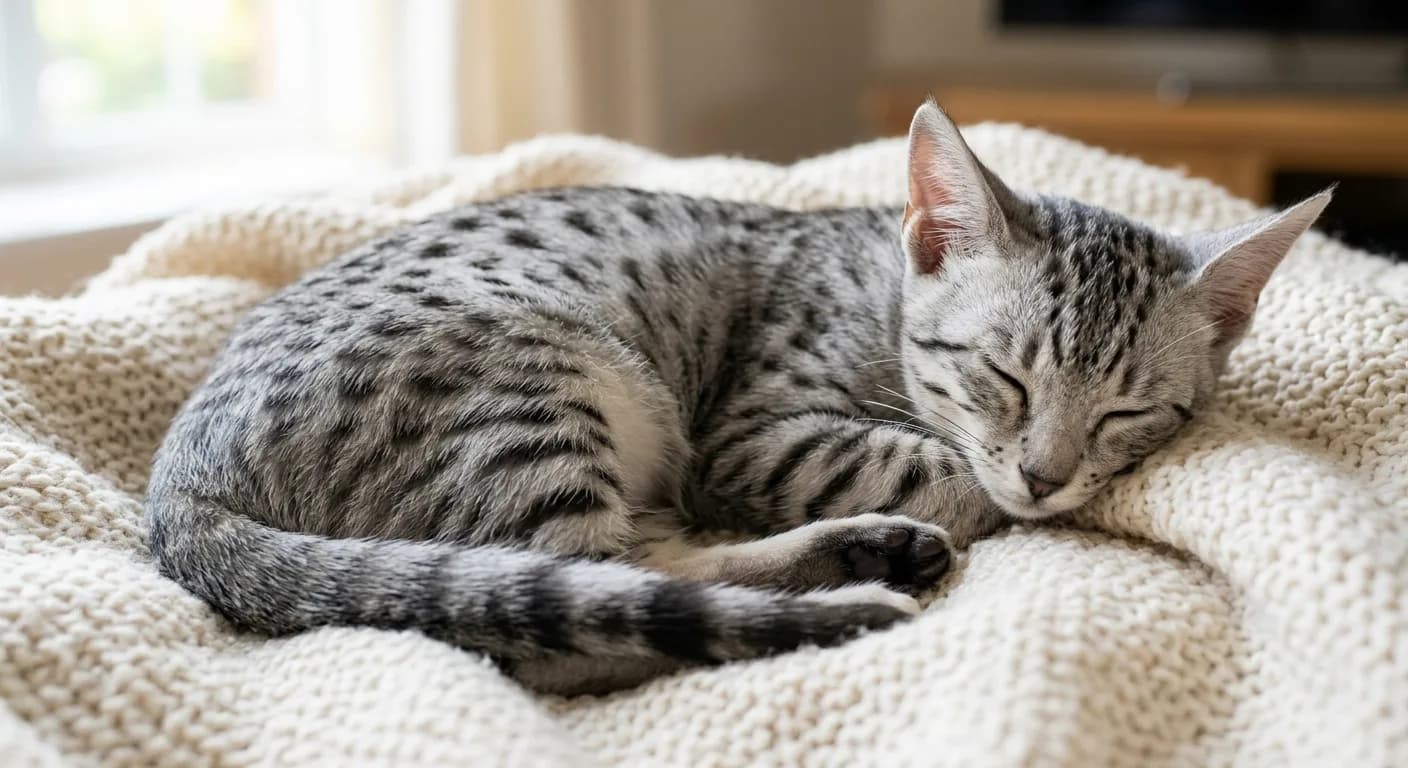
The egyptian mau price reflects scarcity that is baked into the breed's history. The modern Egyptian Mau in North America traces back to a tiny founding population: exiled Russian princess Nathalie Troubetskoy brought just a handful of Maus from Cairo (by way of Italy) to the United States in the 1950s, and the breed was built up from there. The Mau was recognized by the major registries (the CFA and, in 1979, TICA), but it never became common.
Even today the Egyptian Mau is one of the rarer pedigreed cats, with only a few hundred kittens registered in the United States each year by some breeder accounts. A small number of breeders, small litters, and a limited gene pool all push prices up and create the waitlists buyers run into. You are not just paying for a cat; you are paying for the years of careful, registered breeding it takes to keep a rare line healthy.
- The Egyptian Mau is expensive for a domestic breed, but it is nowhere near the top of the market. Exotic hybrids like the Ashera and high-generation Savannah can run $20,000 to over $100,000. By comparison, even a top show Mau at $3,000 is a relatively attainable rare breed.
If you like the spotted, wild-cat look, two related breeds are worth a price comparison. The Ocicat breed profile covers a spotted cat created from domestic crosses (often a bit easier to find), and the Abyssinian cat guide details a ticked, athletic breed that shares the Mau's ancient look without the spots.

108-oz stainless steel pet fountain with quiet pump and water-level window. Bengals are notoriously water-obsessed; a flowing fountain encourages hydration and pulls them away from sinks and toilets.
Petful may earn a commission when you click through to Chewy, at no extra cost to you.
Ongoing costs: what a Mau costs every year
Most cost guides stop at the kitten price, but the egyptian mau price you pay on day one is only the down payment. The Egyptian Mau is a healthy, long-lived breed (many live 12 to 15 years, and some reach their late teens), so you are signing up for well over a decade of food, litter, and vet care. Budgeting for the lifetime cost is the responsible move.
Based on widely cited cost-guide figures, ongoing care for an Egyptian Mau averages roughly $55 to $175 per month, which is about $700 to $2,000 a year. Here is where that money goes.
| Expense | Monthly | Yearly |
|---|---|---|
| Quality food and treats | $20 to $45 | $240 to $540 |
| Litter and litter supplies | $15 to $25 | $180 to $300 |
| Routine and preventive vet care | $10 to $40 | $120 to $480 |
| Pet insurance (optional) | $15 to $40 | $180 to $480 |
| Toys, scratchers, and enrichment | $5 to $25 | $60 to $300 |
| Typical total | $55 to $175 | $700 to $2,000 |
First-year costs are the highest
Year one stacks the kitten price on top of one-time setup and a heavier vet schedule. A starter kit (carrier, litter box, scratching post, bed, bowls, brush, toys, plus initial vaccinations, microchip, and spay or neuter if not already done) commonly runs $400 to $700. Add the kitten and the first round of vetting, and a realistic all-in first-year egyptian mau price often lands between $1,500 and $3,500.
- A single emergency (a swallowed string, a urinary blockage, a bad fall) can cost $1,000 to $5,000 at an emergency vet. The Egyptian Mau is generally healthy, but no breed is immune. Either carry pet insurance or keep an emergency fund so a sudden bill never forces a heartbreaking choice. This is the line item that turns a "cheap" cat expensive.
Where you can save
You can trim the ongoing egyptian mau price without cutting corners on health. Buy food and litter in bulk, build or DIY enrichment (a cardboard box beats a $50 cat tree for many cats), schedule preventive vet visits to catch problems early, and keep up with at-home grooming and dental care. The Mau's short, single coat is low-maintenance, so grooming costs stay minimal.
Is an Egyptian Mau worth the price?
For the right home, yes. You are paying a premium for a rare, naturally spotted, highly athletic cat with an affectionate, dog-like personality and a striking look no domestic shorthair can match. If a registered, show-standard silver Mau is the goal, the breeder price is simply the cost of entry into a small, carefully maintained breed.
If your budget is tighter, you have honest options: choose a smoke or pet-quality kitten instead of a top silver, adopt an adult through breed rescue, or consider a similar spotted breed. What you should not do is chase a suspiciously cheap kitten from an unregistered seller. The few hundred dollars you save up front can be erased by a single health problem, and it props up exactly the kind of careless breeding a rare breed cannot afford.
- 1Expect $800 to $2,500 for a pet kitten, $2,800-plus for show or breeding stock, and $100 to $500 for a rescue adoption
- 2Silver spotted is usually the priciest color, smoke usually the most affordable
- 3First-year all-in cost (cat plus setup plus vetting) commonly runs $1,500 to $3,500
- 4Lifetime ongoing care averages $55 to $175 a month, so budget for the whole cat, not just the kitten
- 5Never trade registration, health testing, and a real guarantee for a bargain price on a rare breed
Frequently asked questions about Egyptian Mau price
A pet-quality Egyptian Mau kitten from a reputable breeder typically costs $800 to $2,500, depending on color and quality. Show-standard cats and kittens sold with breeding rights run higher, often $2,800 to $3,500 or more. Adopting an Egyptian Mau from a rescue is much cheaper at roughly $100 to $500, though purebred Maus are rare in shelters.
The Egyptian Mau is a genuinely rare breed with a small founding population, few breeders, and small litters. Only a few hundred kittens are registered in the United States each year by some breeder accounts, so limited supply, careful registered breeding, and waitlists all push the price up. You are paying for the scarcity and the years of work it takes to keep a rare line healthy.
Yes. The CFA describes the Egyptian Mau as the only natural domestic breed of spotted cat, and it remains uncommon worldwide. The modern North American line was built from just a handful of cats brought to the US in the 1950s, and the breed was recognized by the major registries including the CFA and TICA (TICA in 1979) but never became common. Rarity is a big part of why it costs more than an everyday cat.
Adoption is the cheapest route, with rescue fees around $100 to $500 for a cat that is usually already vaccinated, microchipped, and altered. Because purebred Maus rarely appear in general shelters, your best odds are a breed-specific Egyptian Mau rescue or a breeder rehoming a retired adult. If you want a kitten from a breeder, a smoke or pet-quality cat is typically the most affordable option.
Ongoing care for an Egyptian Mau averages about $55 to $175 per month, covering food, litter, routine vet care, and optional pet insurance and enrichment. That works out to roughly $700 to $2,000 a year. The first year costs more once you add one-time setup, the kitten price, and the initial round of vaccinations and spay or neuter.
Yes. Silver spotted is the signature color and usually the most expensive because demand is highest and top-marked silvers are the rarest to produce. Bronze is typically priced close to silver. Smoke often costs the least of the three show colors because its spotting shows less contrast. Non-show colors like solid black or blue are sometimes available at lower pet prices.
The cats that fetch $20,000 and up are exotic hybrids, not Egyptian Maus. The Ashera and high-generation (F1) Savannah cats are the priciest, ranging from about $20,000 to over $100,000 because they are bred from wild cats like the African serval and are extremely rare. By comparison, even a top show Egyptian Mau is far more attainable at a few thousand dollars.
For a buyer who wants a rare, naturally spotted, athletic and affectionate cat, the price is justified, especially if you want a registered, show-standard silver from a breeder. If your budget is tighter, you can choose a smoke or pet-quality kitten, adopt an adult through breed rescue, or look at a similar spotted breed like the Ocicat. The one option to avoid is a suspiciously cheap kitten from an unregistered seller, where savings often vanish in vet bills.

Coreen Saito is a pet writer and longtime shelter volunteer with more than a decade in animal rescue. She covers cat behavior, breed care, and the small, ordinary science of sharing a life with companion animals, with a particular focus on honest takes about the products and decisions that actually matter. At home in Arizona, she's outranked by Mac (a dog with the loudest opinion in the house), Rebel (a cat who governs by quiet authority), and Meri (an orange tabby who runs the late shift and the laundry basket). She writes about all three, plus the rescues that keep coming through her life, at LifeWithMinty.com.
Sign up for expert-backed reviews and safety alerts all in one place.