Egyptian Mau Colors: Every Coat Color and Spot Pattern
A visual guide to every Egyptian Mau color: the 3 championship colors (silver, bronze, smoke) plus the registerable black, blue, pewter, and caramel coats, the scarab mark, mascara lines, and gooseberry green eyes, plus a color chart.
Petful is reader supported. As an affiliate of platforms like Amazon and Chewy, we may earn a commission when you buy through links on this page. There is no extra cost to you.
The Cat Fanciers' Association (CFA) recognizes exactly 3 championship Egyptian Mau colors, silver, bronze, and smoke, and every one of them carries the same set of natural spots that make this the only naturally spotted breed of domestic cat. Those random spots, paired with the signature gooseberry green eyes and the "M" of the scarab on the forehead, are the constants that define every color. This guide walks through all 3 show colors plus the registerable-but-not-shown coats (solid black, blue or pewter, and caramel), then decodes the markings every Mau shares, the mascara lines, the banded tail, the dorsal stripe, and the loose belly flap, with a photo for each major color and a clear rarity ranking so you can match the cat in front of you to its real name.
- 1The 3 championship Egyptian Mau colors are silver (black spots on silver), bronze (dark brown spots on a coppery ground), and smoke (jet-black spots on charcoal over a silver undercoat)
- 2Solid black, blue or pewter, and caramel occur naturally and can be registered but cannot be shown
- 3Every Mau, whatever its color, has random spots, an M-shaped scarab mark, dark mascara lines, a banded tail, and gooseberry green eyes
- 4The spotted pattern is genetic and unique: the Mau is the only naturally spotted breed of domestic cat
- 5Eye color settles to full gooseberry green by about 18 months of age

Sign up for expert-backed reviews and safety alerts all in one place.
What makes the Egyptian Mau coat unique
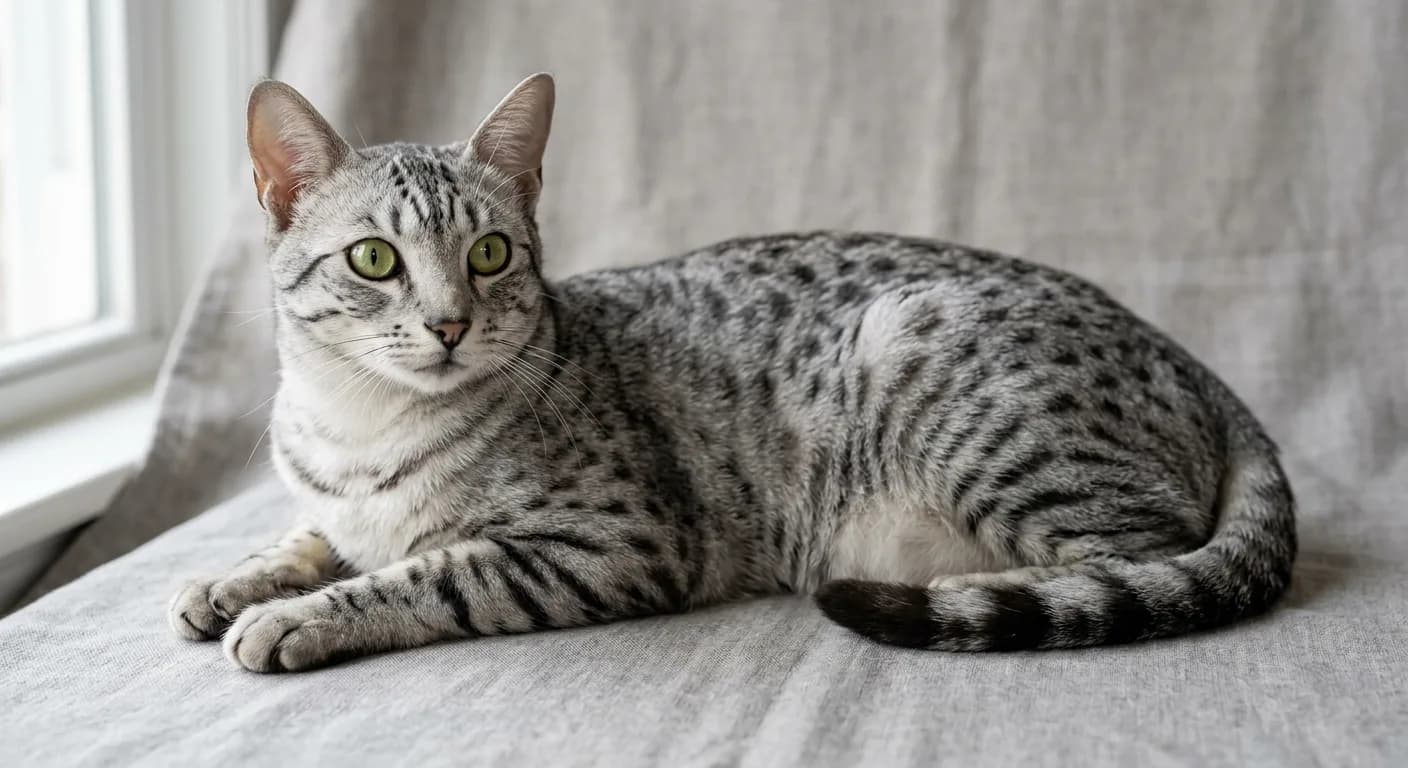
Before the individual colors, understand what every Egyptian Mau coat shares, because the markings matter as much as the ground color. According to TICA, the Mau is "the only natural spotted breed of domestic cat," meaning the spots arise from the breed's own genetics rather than from crossing in a wild cat. The spots are random: the CFA standard describes them as "randomly spotted with variance in size and shape," scattered with no set pattern across the body, which is exactly why no two Maus are marked alike.
Color in the Mau is really two layers. The ground color is the base shade of the coat (silver, bronze, or the charcoal of a smoke), and the markings are the darker spots, bars, and lines laid over it. Good contrast between the two is prized in the show ring. The CFA standard calls for "good contrast between the pale ground color and deep, rich pattern color." That contrast is what gives the Mau its small-wildcat look.

Compare coverage choices for your pet, then request a quote directly on Lemonade.
- Check a price for your pet
- Review available coverage choices
- See the terms before you decide
Eligibility, waiting periods, limits and exclusions apply.
Petful may earn a commission when you click through to Lemonade, at no extra cost to you.
- Think of every Mau coat as two parts: a pale ground color (the base) and the darker pattern (spots, bars, and lines) on top. When breeders and registries describe a color, they are usually describing the ground first, then the markings. High contrast between the two is the goal.
If you are deciding between the Mau and another spotted breed, it helps to know the Mau's spots are natural rather than engineered. Our Egyptian Mau breed profile covers the breed's full history and temperament, and if you are weighing it against the larger, hybrid-derived spotted cat, the Egyptian Mau versus Bengal comparison breaks down how their coats and origins differ.
The 3 championship Egyptian Mau colors
These 3 are the only colors that can compete in CFA, TICA, and GCCF show rings. All three carry identical spotting and markings; what changes is the ground color and the color of the spots themselves.

Never Scoop Again® with the Whisker Litter-Robot, the smart self-cleaning automatic litter box. Monitor visits and track weights for better overall care in the Whisker® app. Multi-cat friendly.
Petful may earn a commission when you click through to Whisker, at no extra cost to you.
Silver (the most common, and the breed's signature look)
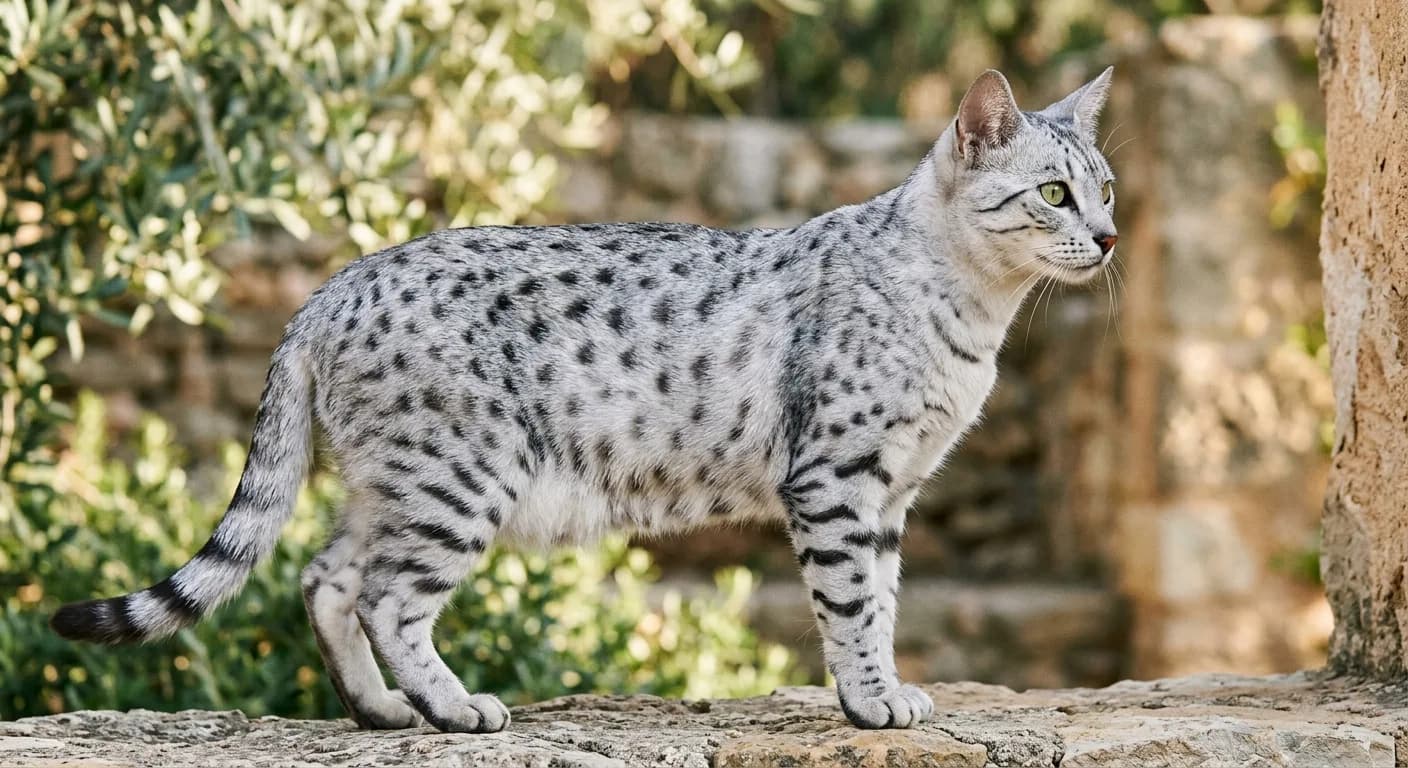
Silver is the most common Egyptian Mau color and the one most people picture. The CFA describes a "pale silver ground color across the head, shoulders, outer legs, back, and tail," with the underside fading to "a brilliant pale silver." The markings are charcoal to black over a white-to-pale-silver undercoat, giving the highest contrast of any Mau color. The nose leather is a striking brick red, the eyes, nose, and lips are rimmed in black like eyeliner, and the paw pads are black. It is the clean, frosty, high-contrast coat that defines the breed in most people's minds.
Bronze (warm, coppery, the second most common)
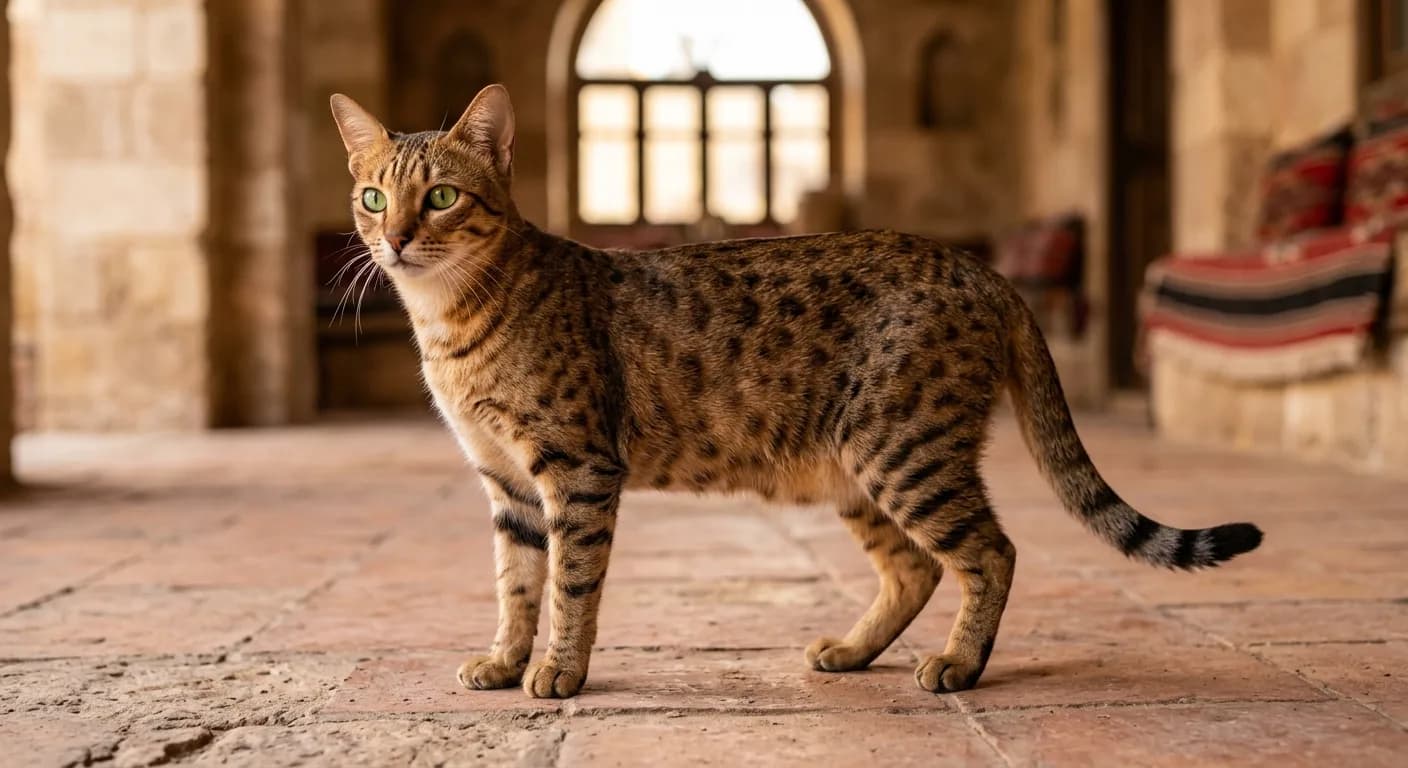
Bronze trades silver's cool frost for warmth. The CFA standard specifies a "warm bronze ground color," darkest along the saddle (the back) and "lightening to a tawny-buff on the sides," with the underside fading to "a creamy ivory." The markings are dark brown to black over a warm brown undercoat, the ears are tawny pink with dark tips, and facial outlining is dark brown rather than black. The nose leather is brick red and the paw pads run black to dark brown. A good bronze Mau looks like polished metal with rich chocolate spotting, and it is the second most common color after silver.
Smoke (the most dramatic, rarest of the three)
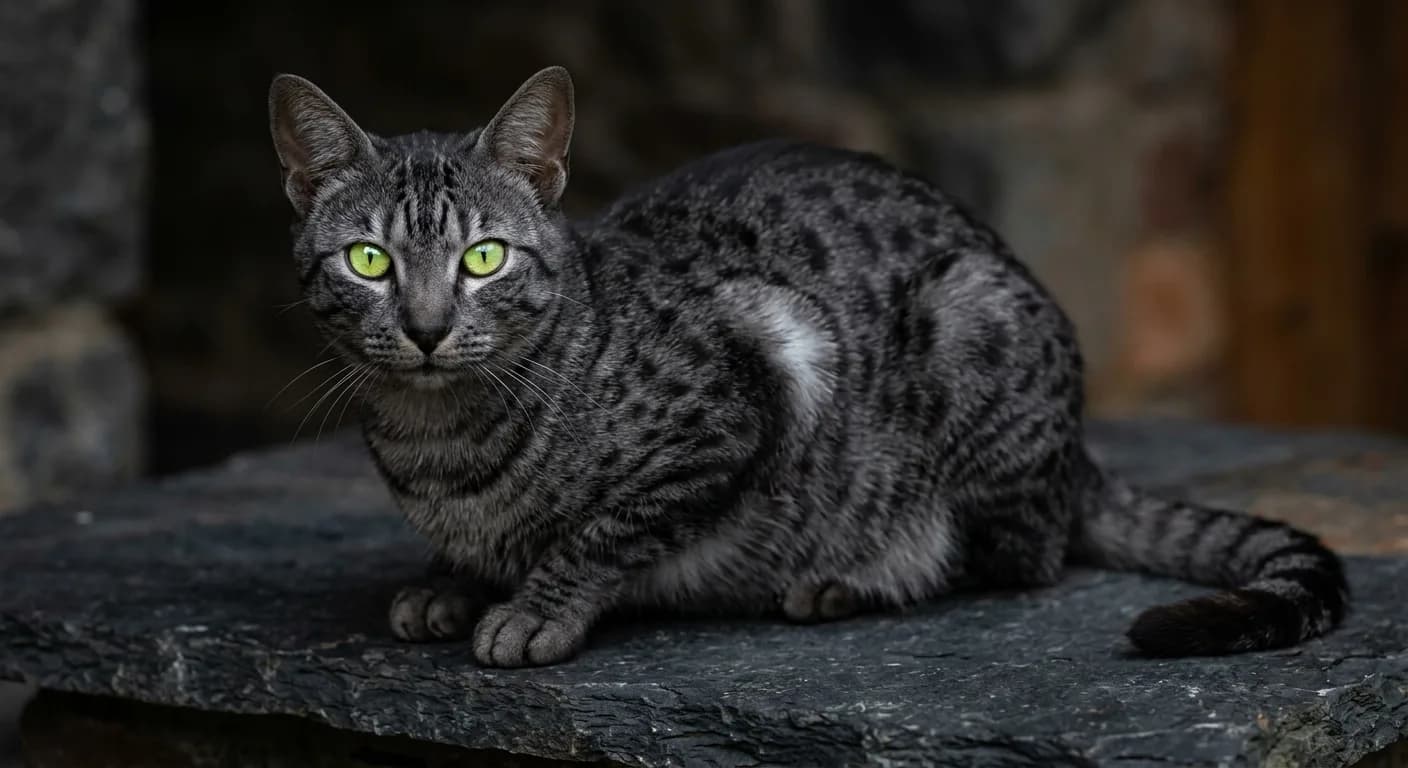
Smoke is the most dramatic and the rarest of the three show colors. Unlike silver and bronze, a smoke Mau is a non-agouti cat: the CFA describes a "pale silver ground color" with "all hairs to be tipped in black," so the spots and markings read as jet black against a smoky charcoal coat. The pattern is still there, even though the contrast is lower than on a silver, and the random spotting remains visible through the dark tipping. The nose leather, paw pads, and even the whiskers are black. When a smoke Mau moves, the pale silver undercoat flashes through the black tipping, which is where the "smoke" name comes from.
- On a silver Mau the charcoal spots pop against a pale ground. On a smoke, the spots are jet black over a dark charcoal coat, so the contrast is lower and the pattern is subtler. Look for it in good light, where the silver undercoat showing through the black tipping reveals the spotting.
Colors you can register but cannot show
Beyond the 3 championship colors, several other coats occur naturally in the breed. They carry the same spotted gene and can be registered, but the major registries do not allow them in the show ring. The CFA states plainly that "solid black and dilute colors may also occur and are eligible for registration but not showing." Pet owners encounter these regularly, and some sources list the Mau as coming in five or six colors precisely because they count these.
Solid black
A solid black Mau is genetically a Mau (it carries the spotting gene and can pass it on) but the dense black coat masks the spots so they are very hard or impossible to see. Black Maus are valuable to breeders because they carry the spotted pattern even though they do not display it. They cannot be shown, since the show standard is built entirely around visible, high-contrast spotting.
Blue and pewter
Blue is the dilute of black: instead of black spots and tipping, a blue Mau shows soft blue-grey markings, and the variation often sold as "pewter" is a blue equivalent of the silver coat, a pale grey ground with deeper blue-grey spots. Purina notes the breed "can come in several other colors, including solid black, blue silver, blue spotted, blue smoke and solid blue," none of which are shown. If you have searched for a grey Egyptian Mau, blue or pewter is almost always what you are looking at.
Caramel
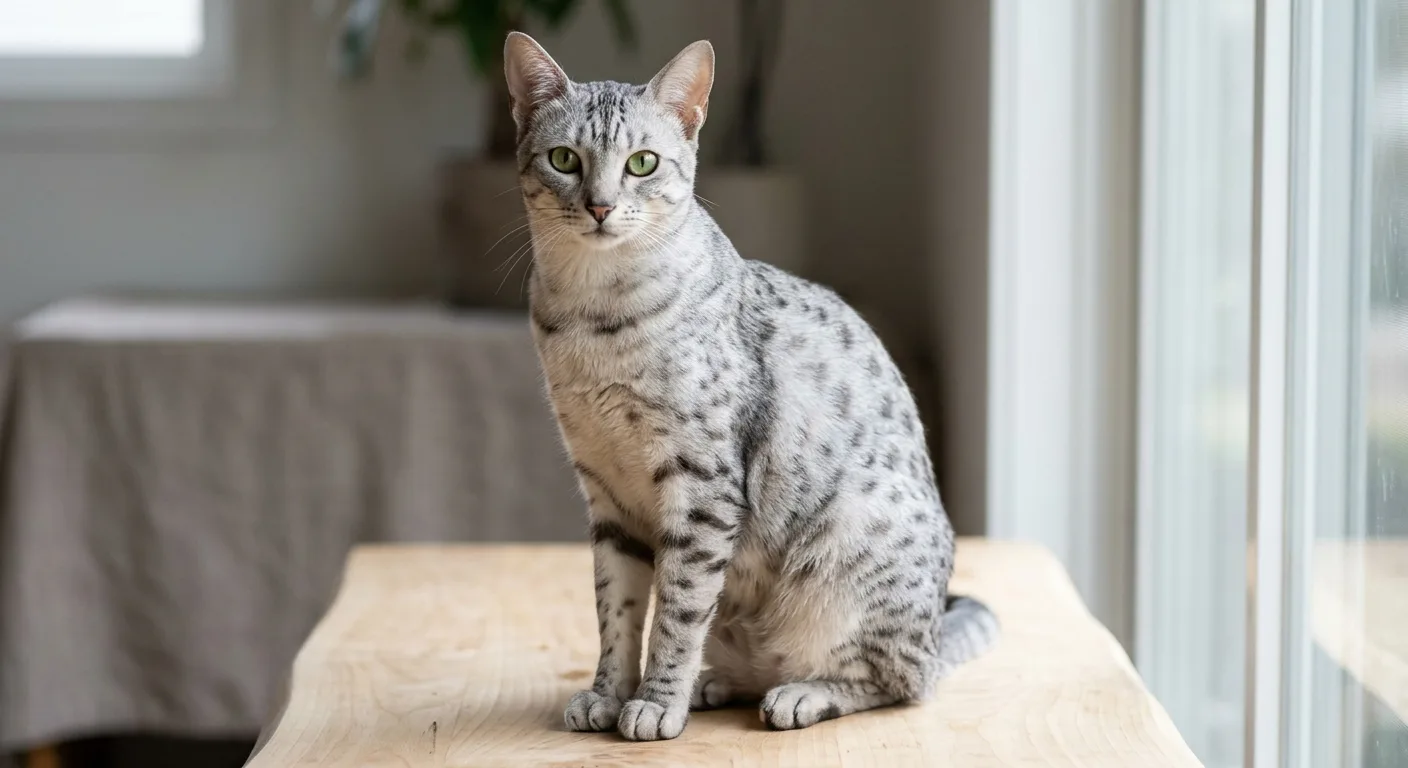
Caramel is the rarest coat associated with the breed, a warm, muted brownish tone that some registries and insurers list among the Mau's colors (ASPCA Pet Health Insurance names "silver, bronze, smoke, black, caramel, and blue"). Like black and blue, caramel is not a championship color. Because it is uncommon and not standardized across every registry, treat any "caramel Mau" listing with the same scrutiny you would give any rare-color claim: ask for the pedigree and registration.
- Solid black, blue, pewter, and caramel Maus are real, but none can be shown, and a "rare color" label can be used to justify a premium price. Before paying extra, confirm the cat is registered with CFA or TICA, ask to see the pedigree, and remember that color is a preference, not a guarantee of quality or health.
The markings every Egyptian Mau shares
Whatever the ground color, every Egyptian Mau carries the same signature set of markings. These are what separate a true Mau from a random spotted tabby, and they are worth learning if you are trying to identify one.

63-inch multi-level cat tree with scratch posts, hammock, plush perches, and dangling toys. Vertical territory is non-negotiable for high-energy climbing breeds like the Bengal.
Petful may earn a commission when you click through to Chewy, at no extra cost to you.
The "M" and the mark of the scarab
The forehead carries a distinct "M" shape, which TICA calls "the mark of the scarab." Frown lines run from it, forming lines between the ears that continue down the back of the neck before, ideally, breaking into elongated spots along the spine. It is one of the most reliable Mau tells, present in silver, bronze, and smoke alike.
Mascara lines
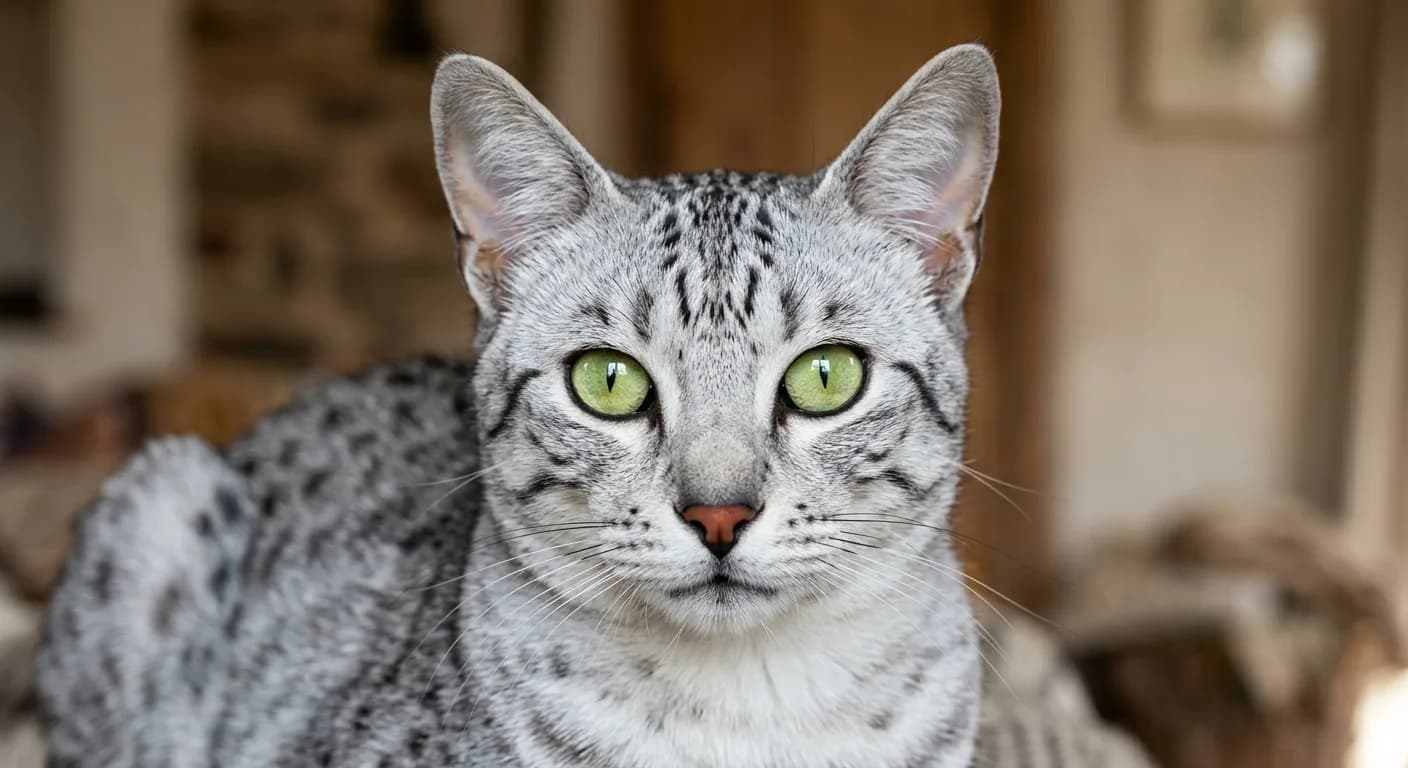
The Mau's face is outlined like it is wearing makeup. The CFA describes two "mascara" lines on each cheek: one that starts at the outer corner of the eye and follows the contour of the cheek, and a second that runs from the center of the cheek and curves up toward the base of the ear. Combined with the dark rims around the eyes, nose, and lips, these give the Mau its alert, kohl-lined expression.
Gooseberry green eyes
Eye color is a hallmark of the breed and does not depend on coat color. The CFA and TICA both require a light "gooseberry green," a pale, slightly yellowish green. Kittens are born with a different eye color that changes as they mature: the CFA standard allows for the change and expects full gooseberry green to settle in by about 18 months of age. If a cat sold as a Mau has gold, copper, or deep amber eyes at maturity, that is a flag it may not be a show-standard Mau.
Banded legs, a dorsal stripe, and a ringed tail
The legs and tail carry the spotting too. The CFA describes upper front legs that are "heavily barred," haunches that transition between stripes and spots and break into bars on the lower leg, and a dorsal stripe formed where the neck and spine markings meld together, running along the top of a "heavily banded" tail that ends in a "dark tip." The chest shows "one or more broken necklaces," and the belly carries dark "vest button" spots. None of these change with the ground color; they appear on every Mau.
The loose belly skin flap
One physical feature is not a color marking at all but is closely tied to how the breed moves and looks. The CFA notes a "loose skin flap extending from flank to hind leg," a cheetah-like fold that lets the hind legs stride out further. It contributes to the Mau's reputation as one of the fastest domestic cats, capable of short bursts around 30 miles per hour. It is present regardless of color.

108-oz stainless steel pet fountain with quiet pump and water-level window. Bengals are notoriously water-obsessed; a flowing fountain encourages hydration and pulls them away from sinks and toilets.
Petful may earn a commission when you click through to Chewy, at no extra cost to you.
- Look for the full marking package together: random (not striped) spots, the scarab "M" on the forehead, two mascara lines on each cheek, a dorsal stripe into a banded tail, broken necklaces on the chest, and gooseberry green eyes at maturity. A spotted domestic shorthair may have one or two of these by chance, but rarely the whole set.
How kitten color develops
Egyptian Mau kittens do not look exactly like adults at birth. The spots are present from very early, since the pattern is on the skin as well as the coat, but the contrast and the final ground tone deepen as the kitten matures. Eye color is the clearest example of change: a kitten's eyes start off a different shade and shift toward the breed's gooseberry green over the first year to year and a half, reaching full color by roughly 18 months per the CFA standard. A silver kitten's ground can also look softer and less crisp than the high-contrast coat it will grow into. As with any breed, judge final color closer to maturity than from a young kitten photo.
- A young Mau's contrast and eye color are still developing. The spots are there early, but the crisp silver ground and the full gooseberry green eyes settle over the first 18 months. If color matters to you, look at the parents and at older kittens, not just a newborn.
Egyptian Mau color rarity ranking
Rarity in the Mau comes down to two things: how common the genetics are, and whether the color can be shown (show colors are bred far more often). Silver is the most common and the breed's calling card, bronze is a close second, and smoke is the rarest of the show colors. The non-championship coats are uncommon as pets because most breeding programs focus on show colors. Treat the order below as a practical guide rather than a fixed census, since frequencies vary by breeder and country.
| Color | Show Status | Relative Rarity | What Drives It |
|---|---|---|---|
| Silver | Championship | Most common | Signature color, bred most often, highest contrast |
| Bronze | Championship | Common | Popular warm color, second most bred |
| Smoke | Championship | Less common | Non-agouti black tipping, rarest of the show colors |
| Solid black | Registerable only | Uncommon | Masks the spots; kept mainly for breeding the pattern |
| Blue or pewter | Registerable only | Uncommon | Dilute of black; not shown, fewer breeding lines |
| Caramel | Registerable only | Rarest | Unusual muted tone, not standardized across registries |
- No Egyptian Mau color is immune to the breed's known concerns. Choose a breeder who screens for health and provides registration paperwork, and never let a rare or trendy coat substitute for documented health testing and a sound pedigree.
Egyptian Mau color chart: the at-a-glance reference
Use this chart to translate the coat in front of you into its proper name. Match the ground color first, then check the spot color and nose leather, and confirm the eyes are heading toward gooseberry green.
| Color | Ground Color | Spot / Marking Color | Nose Leather | Show? |
|---|---|---|---|---|
| Silver | Pale silver | Charcoal to black | Brick red | Yes |
| Bronze | Warm coppery bronze | Dark brown to black | Brick red | Yes |
| Smoke | Charcoal over pale silver undercoat | Jet black | Black | Yes |
| Solid black | Dense black | Hidden (masked by black) | Black | No |
| Blue or pewter | Pale grey | Soft blue-grey | Grey to blue | No |
| Caramel | Warm muted brown | Darker brown | Brown | No |
How the Mau compares to other spotted cats
The Egyptian Mau is often confused with other spotted breeds, but its spots are naturally occurring, which sets it apart from hybrid-derived cats. The Bengal, for example, gets its rosettes and spots from an Asian leopard cat ancestor and comes in a much wider range of patterns and colors. Our guide to Bengal cat colors and patterns shows just how different that palette is, and the full Bengal cat breed profile explains the hybrid origin. The Ocicat is another spotted lookalike that, unlike the Mau, was created through selective breeding rather than occurring in nature; see the Ocicat breed profile for the contrast. If you want a cat whose spots are entirely the work of nature, the Mau stands almost alone.
Do color and pattern affect price or personality?
Coat color does not change a Mau's temperament. The breed's intelligence, athleticism, and devotion to its people come from the breed itself, not the coat, so a silver and a bronze should be equally lively and affectionate. Color can affect price, though. Common, show-quality silvers and bronzes from a registered breeder typically fall within the breed's usual range, while rare or novelty coats are sometimes marketed at a premium that reflects scarcity and demand more than quality. For a full breakdown of what to budget, including how color factors in, see our Egyptian Mau price guide. And if the cat you are looking at is a spotted cat of uncertain pedigree, our look at the Egyptian Mau tabby mix explains how to tell a purebred Mau from a Mau-type domestic shorthair.
- 1Pick from the 3 show colors (silver, bronze, smoke) if you want a cat that can compete, or accept a registerable-only black, blue, pewter, or caramel for a pet
- 2Silver is the most common and highest-contrast; smoke is the rarest of the show colors
- 3Every Mau shares the same markings: random spots, the scarab M, mascara lines, a banded tail, and gooseberry green eyes
- 4Color does not change temperament, but rare coats can carry a premium price
- 5Always verify registration and pedigree before paying extra for any rare color
Frequently asked questions about Egyptian Mau colors
The CFA, TICA, and GCCF recognize 3 championship Egyptian Mau colors: silver (charcoal-to-black spots on a pale silver ground), bronze (dark brown spots on a warm coppery ground), and smoke (jet-black spots over a charcoal coat with a silver undercoat). Solid black, blue or pewter, and caramel also occur naturally and can be registered, but they cannot be shown.
Among the show colors, smoke is the rarest. Beyond the ring, the non-championship coats are rarer as pets: solid black (which hides the spots), blue and pewter (the dilute coats), and caramel, which is the most unusual and is not standardized across every registry. Purina notes the breed can also appear as blue silver, blue spotted, and blue smoke, none of which are shown.
Silver is the most common and the breed's signature look, a pale silvery ground with high-contrast charcoal-to-black spots, a brick-red nose, and black-rimmed eyes. Bronze, the warm coppery color, is a close second. Both are bred far more often than smoke or any non-show color.
Yes. Blue is the dilute of black, showing soft blue-grey markings, and "pewter" usually refers to a blue version of the silver coat (a pale grey ground with deeper blue-grey spots). Blue, blue silver, blue spotted, and blue smoke all occur and can be registered, but none can be shown. A grey Mau is almost always a blue or pewter.
Yes, solid black Maus occur and can be registered, but the dense black coat masks the breed's signature spots, so they cannot be shown. Black Maus carry the spotted gene and are valuable to breeders for passing the pattern on, even though they do not display it themselves.
Gooseberry green, a pale, slightly yellowish green, is the breed hallmark and applies to every color. Kittens are born with a different eye color that shifts toward gooseberry green as they mature, reaching full color by about 18 months of age per the CFA standard. Gold or copper eyes at maturity suggest a cat is not a show-standard Mau.
Look for the full marking package together: random (not striped) spots on the coat and skin, an M-shaped scarab mark on the forehead, two dark mascara lines on each cheek, a dorsal stripe running into a heavily banded tail with a dark tip, one or more broken necklaces on the chest, a loose skin flap from flank to hind leg, and gooseberry green eyes at maturity. The Mau is the only naturally spotted domestic breed, so a documented pedigree is the only way to confirm a purebred.
Egyptian Mau kittens from a registered breeder generally cost between roughly $500 and $3,500, with show-quality silvers and bronzes and rarer coats commanding the higher end. Price reflects pedigree, breeder reputation, and color, so always confirm registration before paying a premium for a rare color. See our Egyptian Mau price guide for a full budget breakdown.
In shelters generally, plain solid black cats are statistically the least adopted, a pattern sometimes called "black cat syndrome." The Egyptian Mau flips that within the breed: a solid black Mau is uncommon and valued by breeders for carrying the spotted gene, while the high-contrast silver is the most sought-after and most bred color.
The spots themselves are permanent and sit on both the coat and the skin, so they do not disappear, though a kitten's ground color and contrast sharpen as it matures and the eye color settles to gooseberry green by about 18 months. A smoke Mau's spots can look subtle against the dark coat but are always present; view them in good light to see the pattern.

Coreen Saito is a pet writer and longtime shelter volunteer with more than a decade in animal rescue. She covers cat behavior, breed care, and the small, ordinary science of sharing a life with companion animals, with a particular focus on honest takes about the products and decisions that actually matter. At home in Arizona, she's outranked by Mac (a dog with the loudest opinion in the house), Rebel (a cat who governs by quiet authority), and Meri (an orange tabby who runs the late shift and the laundry basket). She writes about all three, plus the rescues that keep coming through her life, at LifeWithMinty.com.
Sign up for expert-backed reviews and safety alerts all in one place.