British Shorthair Colors: All 30+ Coat Colors and Patterns Explained
The CFA and GCCF recognize more than 30 British Shorthair colors, from the iconic blue-grey to rare cinnamon, fawn, and glowing golden. This complete guide covers every color, pattern, eye color, and the genetics behind them.
Petful is reader supported. As an affiliate of platforms like Amazon and Chewy, we may earn a commission when you buy through links on this page. There is no extra cost to you.
The Cat Fanciers' Association (CFA) and the Governing Council of the Cat Fancy (GCCF) recognize more than 30 british shorthair colors and pattern combinations, making this stoic British breed one of the most color-diverse pedigree cats in the world. From the iconic solid blue-grey that gave the breed its first nickname to exotic golden shades, pointed masks, rare cinnamon warmth, and frosty silver tips, the British Shorthair offers a coat palette that rivals any breed on earth. This guide covers every recognized color, explains the genetics behind them, and tells you which are common, which are coveted, and which are genuinely rare.
- 1The CFA and GCCF recognize 30+ British Shorthair colors and patterns
- 2The classic "British Blue" solid blue-grey with copper eyes is the most common and iconic
- 3Green eyes are required for silver and golden coats; copper is standard for most others
- 4Cinnamon, fawn, and chocolate are the rarest colors in the breed
- 5Coat color does not influence personality, only appearance and (sometimes) price

Sign up for expert-backed reviews and safety alerts all in one place.
British Shorthair Colors: The Complete Guide (All 30+ Recognized Coats)
The British Shorthair is built like a plush toy and comes in a color palette to match. Its dense, crisp double coat shows color and pattern with exceptional clarity, a function of its short, resilient texture that stands away from the body rather than lying flat.
The major color groups accepted by the CFA, TICA, and GCCF are:
- Solid colors: blue, black, white, cream, red, chocolate, lilac, cinnamon, fawn
- Tabby patterns: classic (blotched), mackerel, spotted, ticked; in multiple base colors
- Silver and golden: shaded silver, chinchilla silver, shaded golden, chinchilla golden, smoke
- Tortoiseshell and calico (torbie): blue-cream, black tortoiseshell, chocolate tortoiseshell, and patched tabby variants
- Bicolor and van patterns: any solid or tabby color paired with white
- Colorpoint: seal point, blue point, chocolate point, lilac point, red point, cream point, and tortie-point variants
- Smoke: any solid color with a white undercoat
No single source agrees on an exact number because registries count each base color crossed with each pattern as a separate entry. The GCCF Standard of Points, for example, lists over 100 separate color class entries when you multiply base colors by patterns by point status. For practical purposes, most breeders and guides quote "30+" as the round figure for distinct recognizable coat types, and that is the number the CFA's British Shorthair color standard supports in grouped form.
- Every British Shorthair color sits on the same cobby, round-headed, plush-coated frame. The breed standard describes the cat first and the color second. If you are comparing a blue British Shorthair to a lilac one and the body shape looks identical, you are looking at two cats from the same breed done right.
British Shorthair Solid Colors
Solid (self) British Shorthairs carry a single, uniform coat color from root to tip with no tipping, smoke, or tabby shadow. The GCCF calls these "Self" colors. There are nine recognized self colors.
British Blue
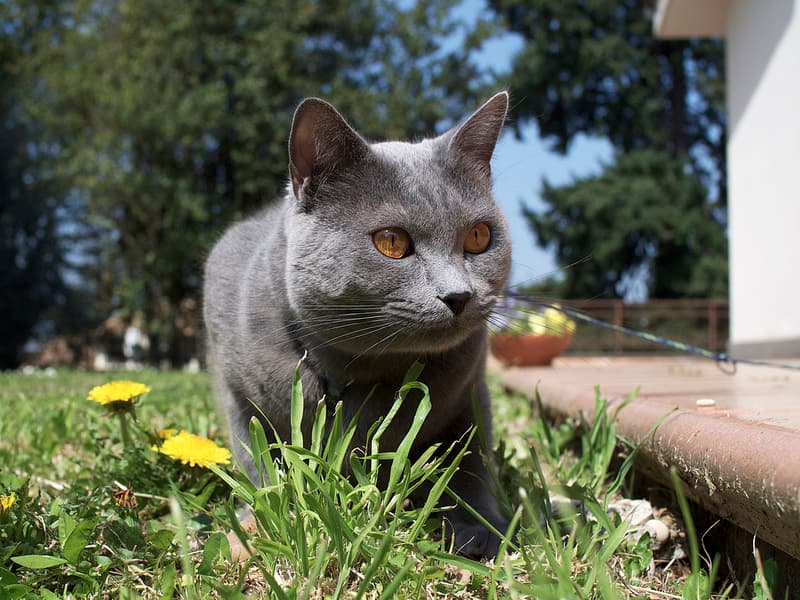
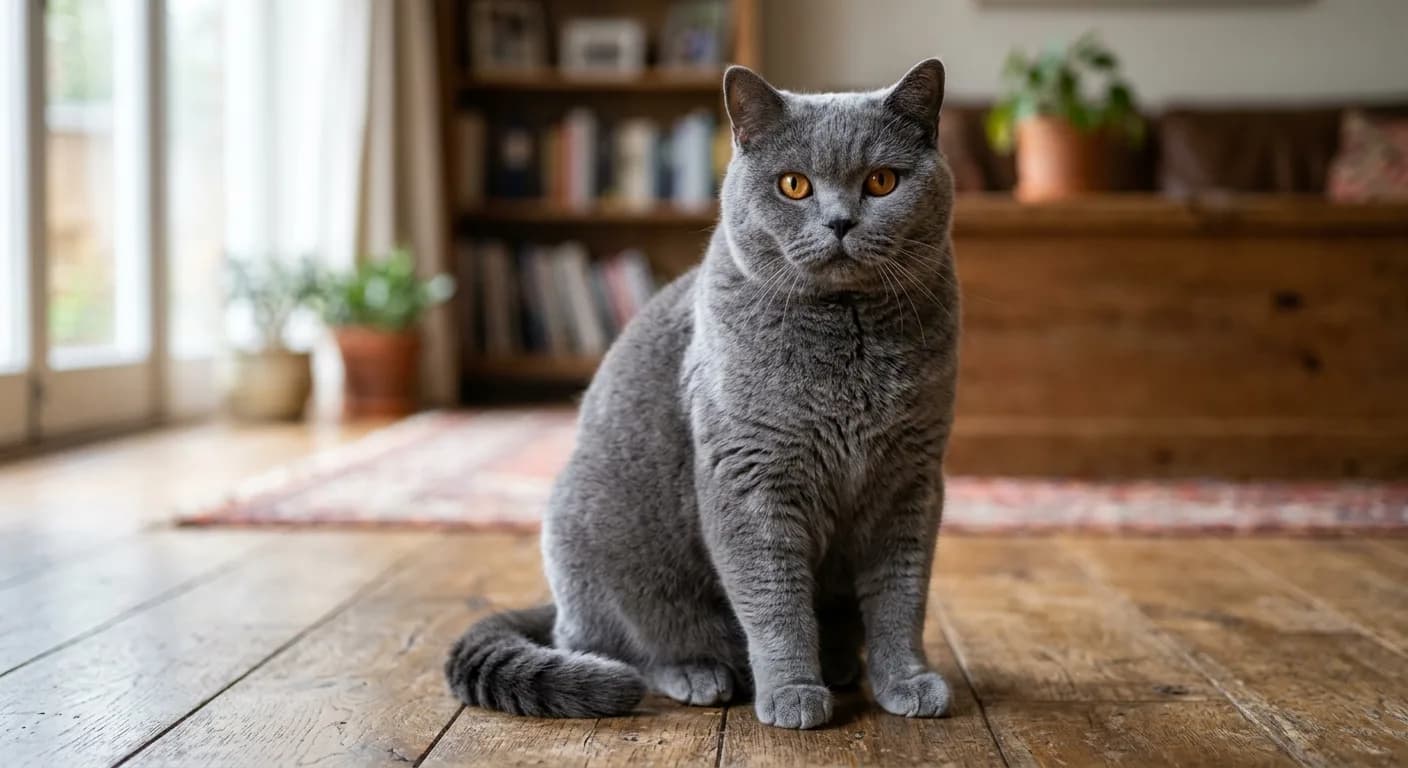
The British Blue is the original and still the most common. Its coat is a dense, even blue-grey, a dilute form of black, and traditionally pairs with deep copper or orange eyes. This is the cat that most people picture when they hear "British Shorthair." Harrison Weir, founder of the first formal cat show at Crystal Palace in 1871, showed a blue British Shorthair, and the color has been synonymous with the breed ever since.
The blue coat ranges from a pale, almost lavender-grey to a deep steel blue depending on breeding. A medium, even tone is preferred in the show ring.
Black British Shorthair
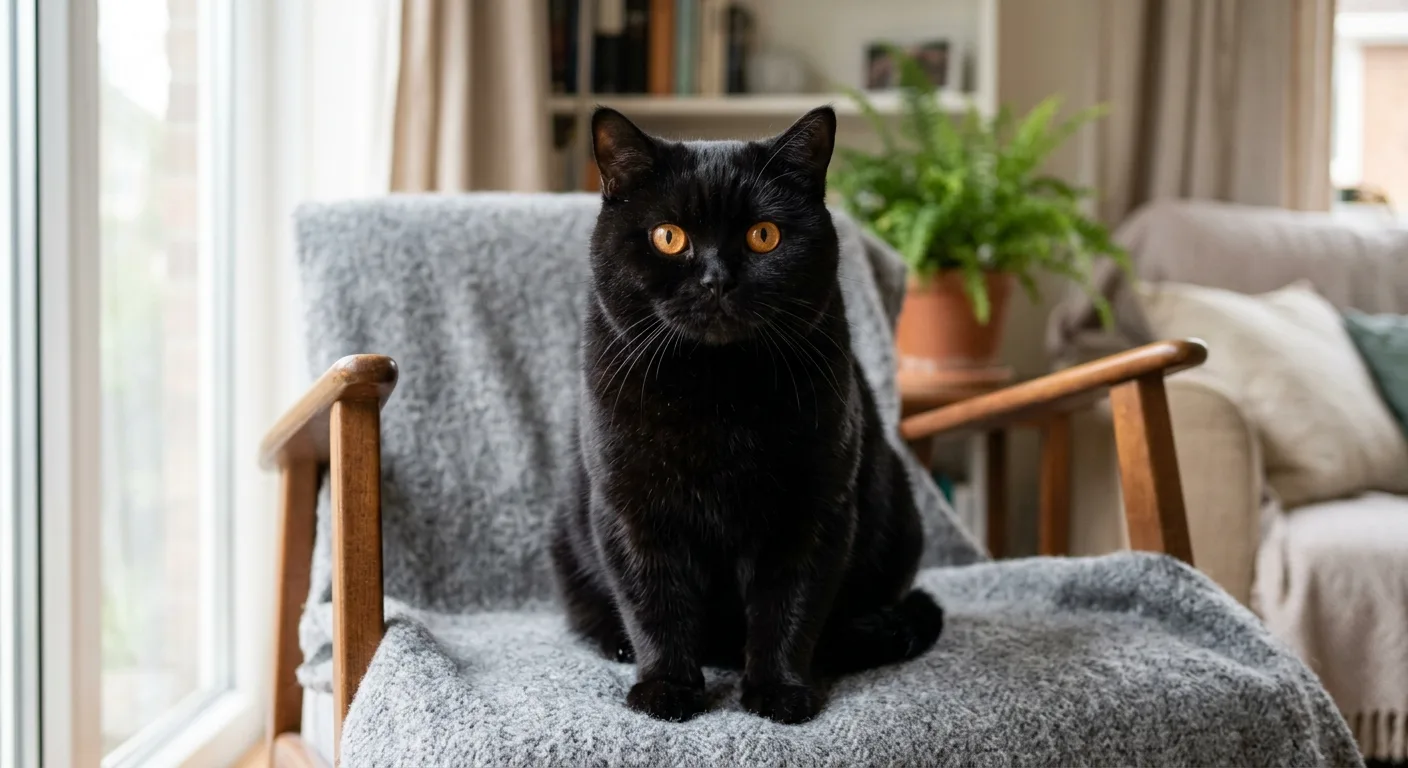
Solid black British Shorthairs carry two copies of the dominant black gene (B/B or B/b) with no dilution gene active. The coat should be jet-black from root to tip, with no rusting, white hairs, or ghost tabby pattern (faint tabby markings visible in certain lights). Copper or orange eyes are standard. Kittens sometimes show faint ghost markings that fade as the coat matures.

Never Scoop Again® with the Whisker Litter-Robot, the smart self-cleaning automatic litter box. Monitor visits and track weights for better overall care in the Whisker® app. Multi-cat friendly.
Petful may earn a commission when you click through to Whisker, at no extra cost to you.
White British Shorthair
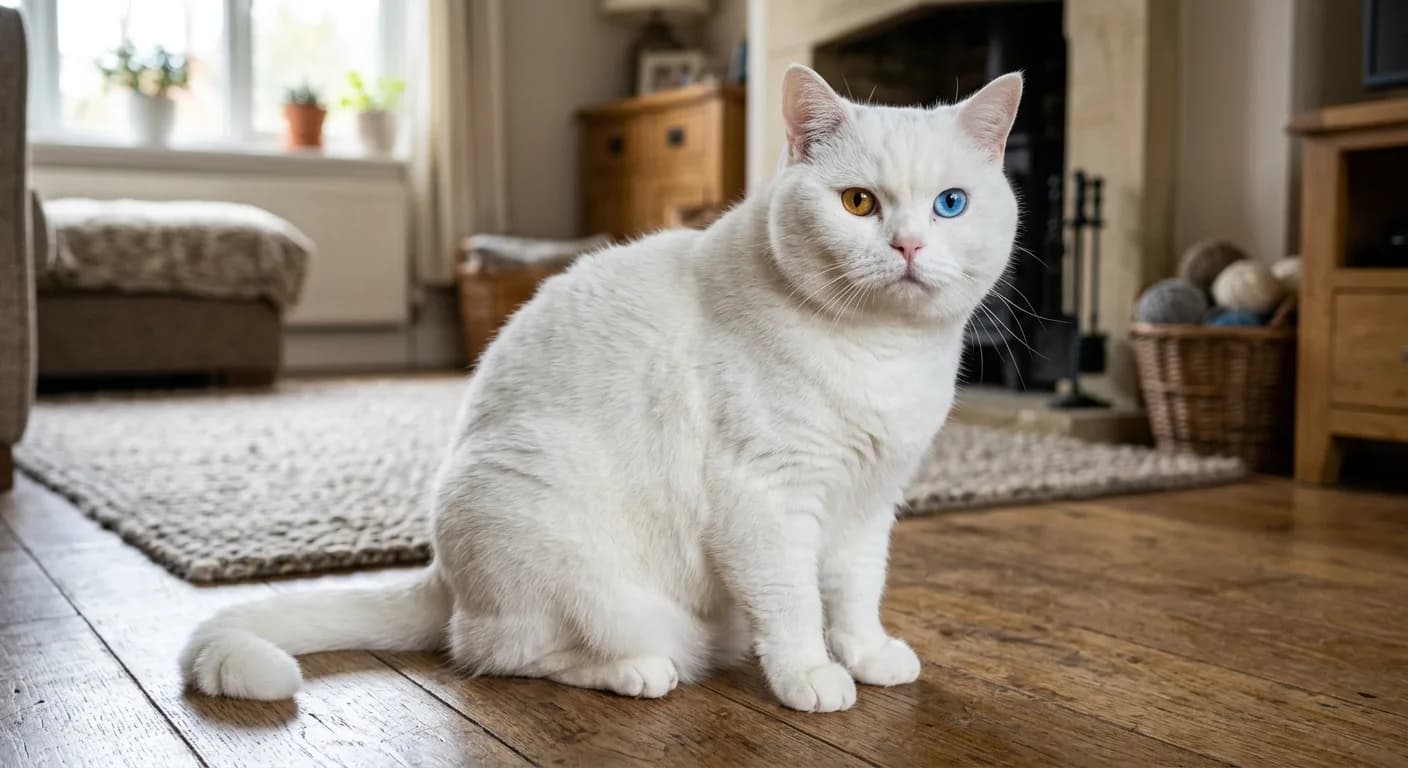
White is genetically distinct from other solid colors. It is produced by the dominant White (W) gene, which suppresses pigment expression entirely rather than altering it. White British Shorthairs can carry any underlying coat color, hidden by W.
Eye color in white British Shorthairs is variable: deep orange/copper, blue, or odd-eyed (one of each). Blue-eyed and odd-eyed whites have an elevated risk of congenital deafness linked to the W gene, a well-documented genetic association the GCCF and responsible breeders screen for using a BAER (brainstem auditory evoked response) hearing test.
Cream British Shorthair
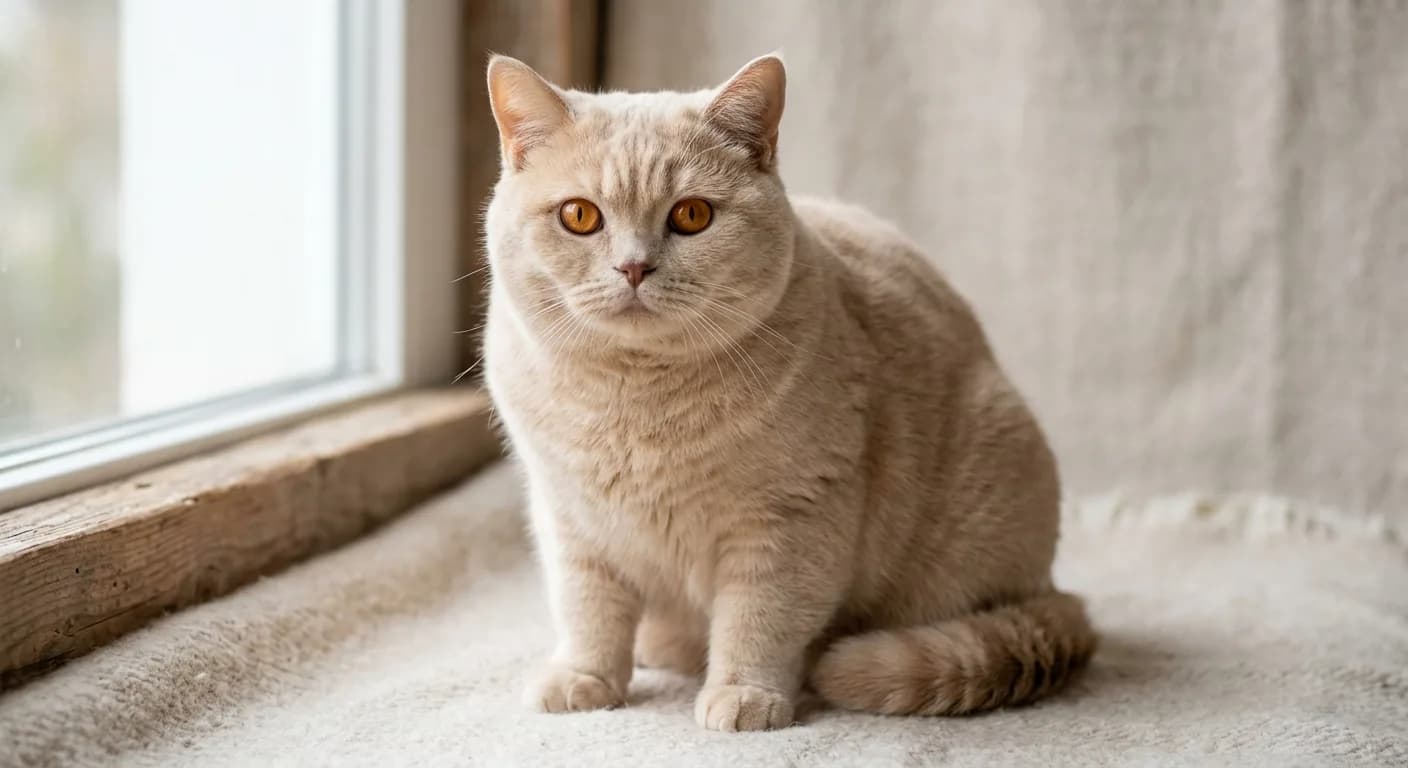
Cream is the dilute form of red. It is a soft, warm buff-ivory that should be as pale as possible with no tabby striping, according to the GCCF standard. Copper eyes are correct. Like red cats, cream cats are almost always male (because the orange/red gene is X-linked), and true solid cream females are rare.
Red British Shorthair
Red (often called ginger or orange) is a warm brick-red or deep marmalade. A truly solid red with no tabby banding is extremely difficult to breed because the orange gene (O) is heavily linked to tabby patterning. Most "solid" reds retain faint ghost tabby markings, especially on the face and legs. The GCCF standard allows a slight ghost pattern in reds and creams, given this genetic reality.
Chocolate British Shorthair
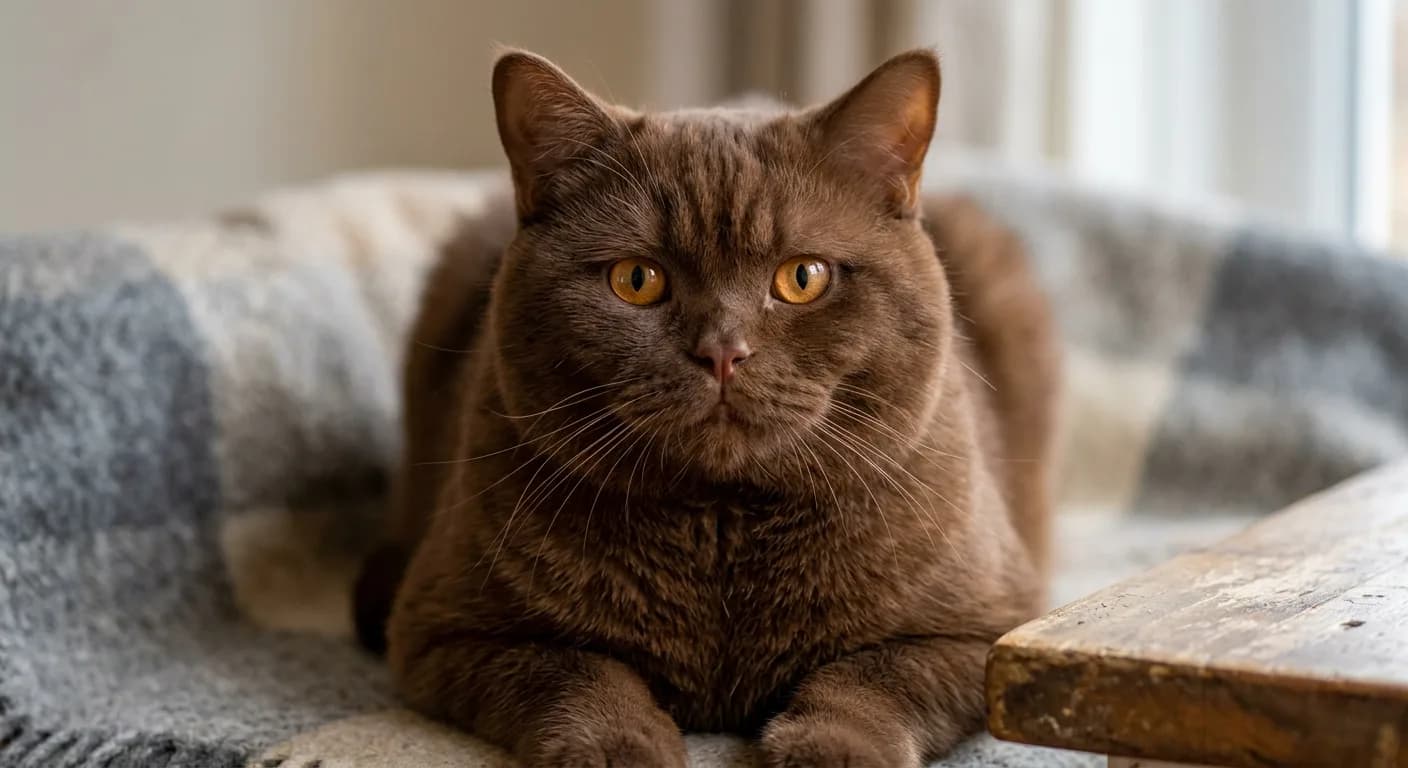
Chocolate is a modified black produced by the b allele (two copies: b/b). The color is a warm, medium-to-deep brown, sometimes described as milk-chocolate. It should be even from root to tip. Chocolate British Shorthairs are less common than blues and blacks because the b gene must be present in two copies, making it a recessive color. Copper or gold eyes are standard.
Lilac British Shorthair
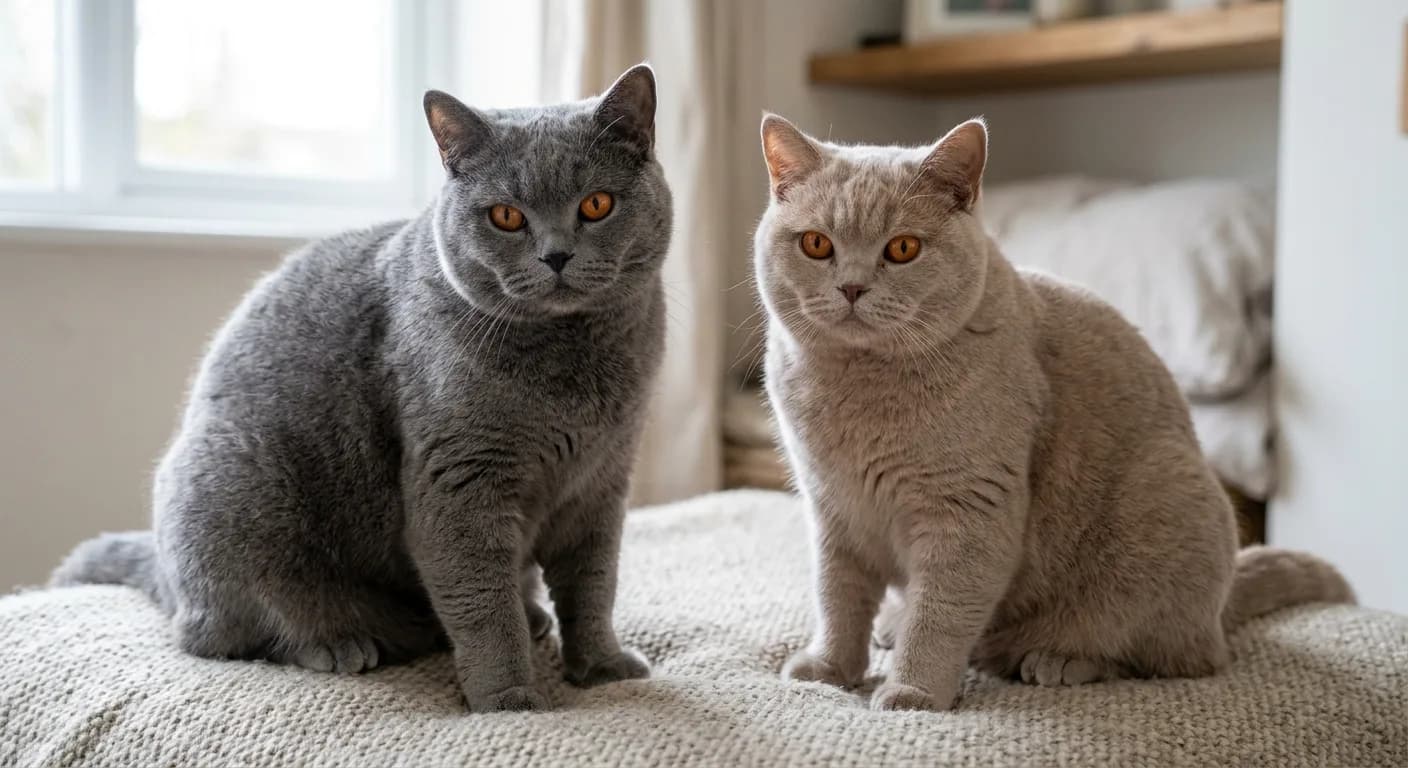
Lilac (also called lavender or frost) is the double-dilute form of chocolate: it requires b/b (chocolate) AND dd (dilute). The result is a pale, warm pinkish-dove grey that is distinctly warmer and pinker than blue. The difference between blue and lilac is subtle in low light but clear in full light: blue reads as cool grey, lilac reads as warm taupe-pink. Eye color is copper to gold.
A sterile lubricating gel that soothes and moisturizes dry, irritated eyes and helps support the tear film in dogs and cats prone to dryness. A gentle, vet-shelf staple for everyday eye comfort.
Petful may earn a commission when you click through to Chewy, at no extra cost to you.
Cinnamon British Shorthair
Cinnamon is a lighter, warmer brown than chocolate, produced by the bl allele (bl/bl). It reads as a warm caramel or light terracotta. Cinnamon is rare in British Shorthairs because the bl allele is the rarest of the brown-series alleles, and breeding true cinnamon British Shorthairs requires careful line management. Eyes are copper to amber.
Fawn British Shorthair
Fawn is the dilute form of cinnamon (bl/bl + dd). The color is a very pale, rosy-buff, almost like a warm cream with a dusty pink overtone. It is one of the rarest British Shorthair colors in practice. Eyes are copper to light amber.
British Shorthair Tabby Patterns
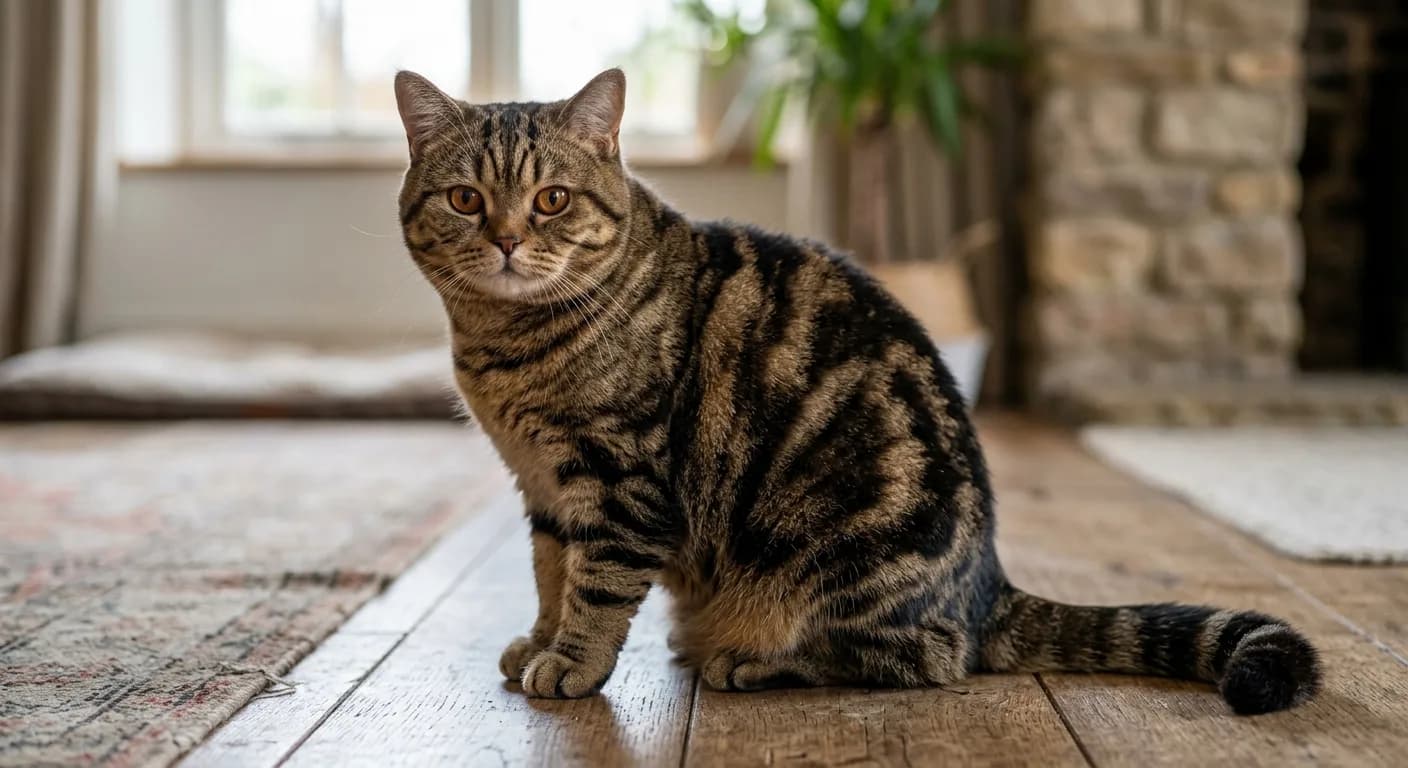
Tabby is a pattern, not a color: any of the base colors above can appear in a tabby pattern. The British Shorthair's dense, short coat shows tabby markings with particular clarity, especially the bold classic blotch.
The four tabby patterns recognized in British Shorthairs:
Classic (Blotched) Tabby: Bold swirled patterns on the flanks, a bullseye or oyster mark on each side, a butterfly on the shoulders, and a necklace of broken rings on the chest. This is the most visually striking tabby pattern on a British Shorthair, and the most common.
Mackerel Tabby: Narrow, parallel stripes running down the sides from a dark spine stripe, resembling fish ribs. Less common than classic in this breed.
Spotted Tabby: The mackerel's stripes are broken into distinct oval or round spots. Popular in shows and a striking pattern on the British Shorthair's wide, round flanks.
Ticked Tabby: Agouti (banded) hairs across the body with minimal stripe markings, ghost barring on legs and face. Accepted by some registries in British Shorthairs, though less common in breeding programs.
Any of the recognized solid base colors can appear in tabby form. The most common tabby colors are blue tabby, brown tabby, red tabby, cream tabby, silver tabby, and golden tabby. The tabby pattern always appears with the base color's standard eye color, with the notable exception that silver and golden tabbies require green eyes.
- If you want bold markings, choose a classic tabby. If you want a more athletic-looking pattern, choose a spotted or mackerel tabby. All four pattern types share the same calm, easygoing British Shorthair temperament, so the decision is purely visual.
British Shorthair Silver and Golden Colors
Silver and golden are among the most visually dramatic British Shorthair coat groups, and both require green eyes rather than the copper standard, making them immediately identifiable.
The silver and golden group is produced by two genes working together: the Inhibitor gene (I), which suppresses yellow/red pigment from the hair shaft base, creating a white or near-white undercoat; and the Wide-band gene (Wb), which controls how far up the hair the color extends.
Silver Shaded and Chinchilla Silver
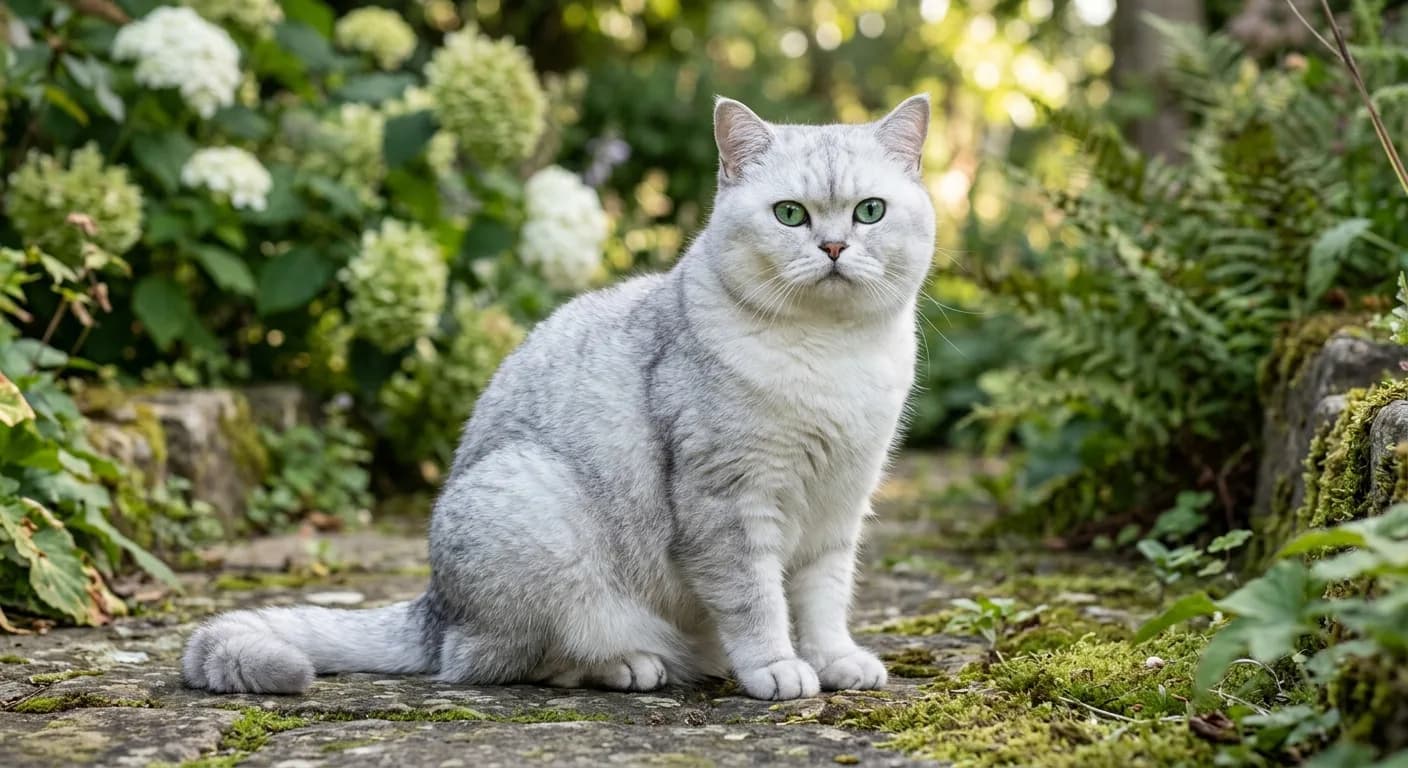
In a silver shaded British Shorthair, color covers the outer third to half of each hair, leaving the base silvery-white. The overall impression is a cat with a sparkling silver mantle over a white undercoat. In chinchilla silver (also called shell silver or tipped silver), only the very tip of each hair carries color, creating an extremely pale, almost white cat with a delicate shimmer. Chinchilla silver British Shorthairs have the palest coat in the silver group.
Eye color: green (emerald to blue-green). The green eye requirement for silver and golden is a breed-standard rule, not a coincidence. The Wide-band gene that drives these colors also influences eye pigmentation, and copper eyes are considered a fault in the show ring for these varieties.
Golden Shaded and Chinchilla Golden
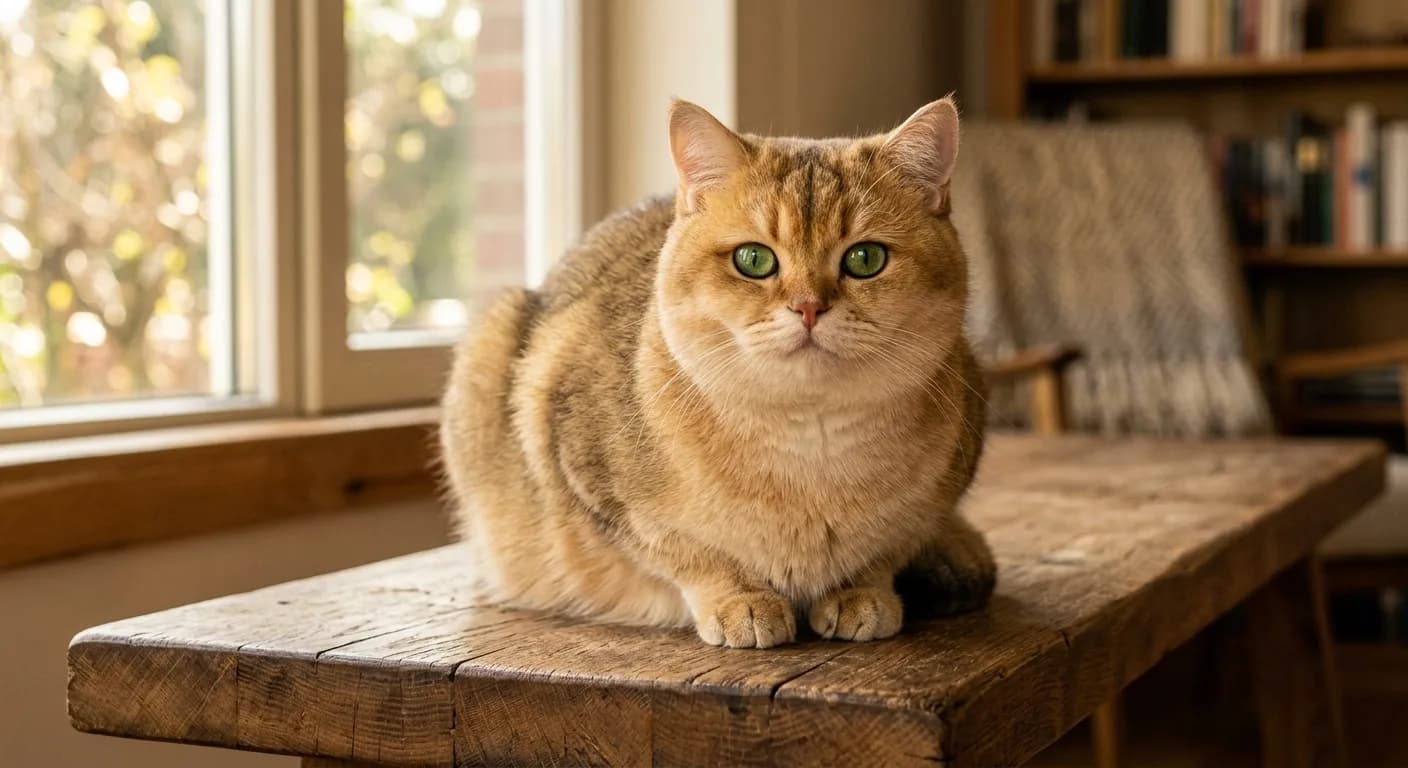
The golden group is the warm-toned counterpart to silver. Instead of a white undercoat, golden British Shorthairs have a warm apricot-to-cream undercoat, with the tips of each hair carrying a seal-brown or black tipping. In a golden shaded cat, this tipping is heavier, producing a rich golden-bronze mantle. In a chinchilla golden (also called shell golden or tipped golden), the tipping is minimal and the overall effect is a warm, glowing pale gold.
The golden British Shorthair has become one of the most sought-after colors in the breed, partly because it photographs beautifully and partly because the genetics are complex enough to make quality goldens scarce. A well-produced golden shaded or chinchilla golden British Shorthair sits at the top of the breed's price range: roughly $1,800-5,500 from a reputable breeder, depending on quality and lines (see canon pricing above). If you are comparing British Shorthair golden pricing to another breed, the Persian cat also produces chinchilla golden coats through similar Inhibitor gene mechanics, though the two breeds are distinct in conformation.
Smoke British Shorthair
Smoke is a single-color version of the silver group: the Inhibitor gene is active but the Wide-band gene is not, so the color extends far down the hair shaft and only the root zone is silvery-white. A smoke British Shorthair looks like a solid-colored cat when at rest, but when the coat moves or parts, the white undercoat flashes through. This ghost effect is the defining feature of smoke. Common smoke colors: black smoke (the most common), blue smoke, chocolate smoke, lilac smoke, cinnamon smoke, and fawn smoke.

63-inch multi-level cat tree with scratch posts, hammock, plush perches, and dangling toys. Vertical territory is non-negotiable for high-energy climbing breeds like the Bengal.
Petful may earn a commission when you click through to Chewy, at no extra cost to you.
Tortoiseshell, Bicolor, and Calico British Shorthairs
Tortoiseshell
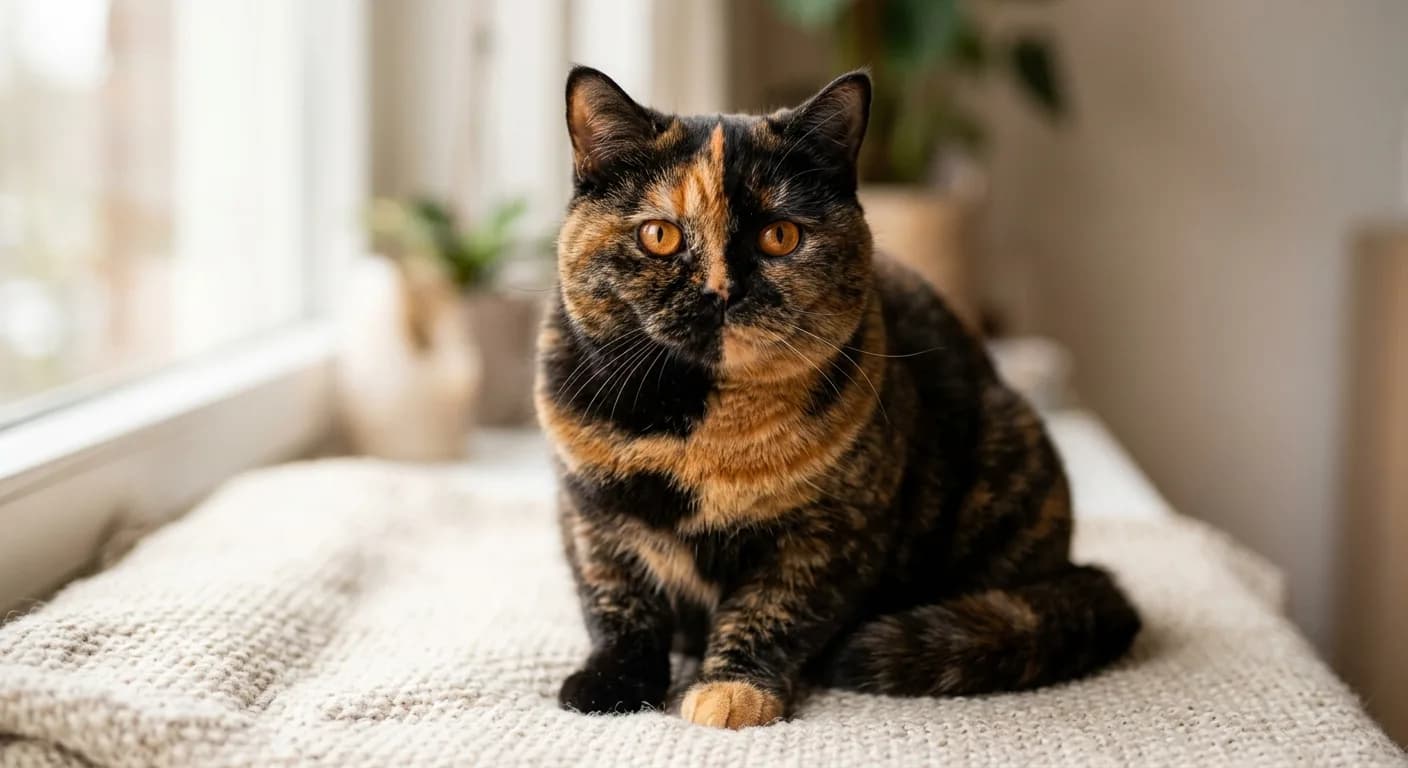
Tortoiseshell British Shorthairs carry both black (or a brown-series variant) and red (or cream) in a patched or intermingled pattern. Because the orange/red gene is carried on the X chromosome, almost all tortoiseshells are female. The standard tortoiseshell ("torbie" when combined with tabby) shows black and warm red. Blue-cream is the dilute tortoiseshell: blue and cream.
Tortoiseshell patterns are random and unique to each individual cat. No two tortoiseshell British Shorthairs are patterned identically. The color distribution ranges from large, bold patches (preferred in show) to a finely marbled intermingling.
Bicolor and Van
Bicolor British Shorthairs combine any recognized solid or tabby color with white. The white is produced by the piebald spotting gene (S), which acts independently of the coat color itself. In an ideal bicolor show cat, the white covers roughly one-third to one-half of the body in a balanced distribution. The "van" pattern is an extreme bicolor: color only on the head and tail, with the rest of the body white.
Bicolor and van patterns occur in every base color: blue-and-white (very popular), black-and-white, chocolate-and-white, red-and-white, and so on. Bicolor tortoiseshells are called "calico" in informal usage (tortoiseshell-and-white).
Tabby-and-White (Patched Tabby)
Any tabby pattern can combine with white to produce a tabby-and-white bicolor, showing all the complexity of the tabby pattern plus white spotting. These cats are sometimes called "patched tabbies."
- Nearly all tortoiseshell and calico British Shorthairs are female. A male tortoiseshell requires an XXY chromosomal configuration (Klinefelter syndrome), which is uncommon and almost always results in sterility. If a breeder advertises a male tortoiseshell, ask for a chromosome test confirmation.
Pointed and Colorpoint British Shorthairs
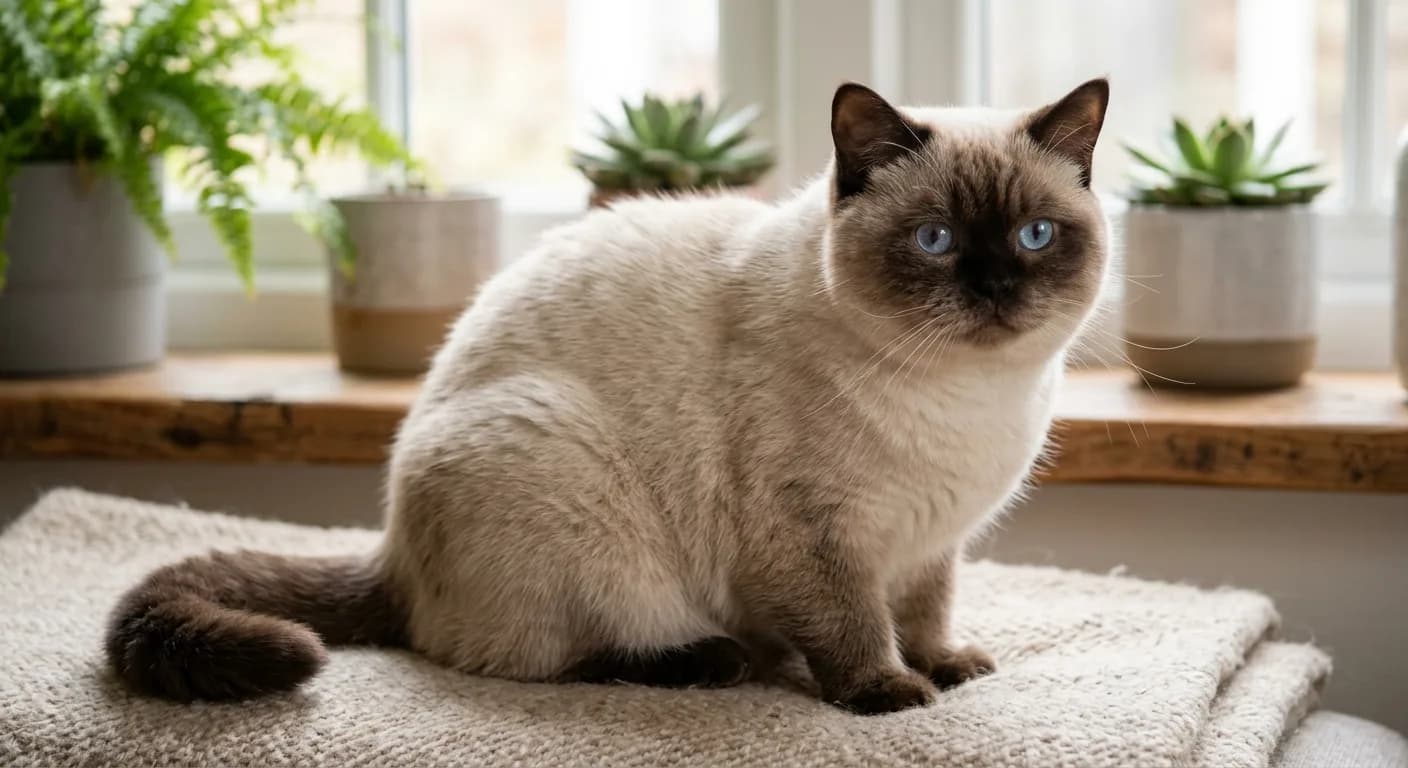
Colorpoint (sometimes called "pointed") British Shorthairs carry the cs allele of the tyrosinase gene (the same gene responsible for pointing in Siamese cats). The cs allele causes the enzyme that makes pigment to be temperature-sensitive: it is inactive in warm body areas (trunk), so the core body remains pale, while extremities (face mask, ears, paws, tail) are cooler and therefore dark. For a comparison of how pointing plays out across breeds, see our Siamese cat colors guide.
Eye color in colorpoint British Shorthairs is blue, as in all truly pointed cats, because the Himalayan gene (cs/cs) also affects eye pigmentation.
Recognized point colors in British Shorthairs include:
- Seal point (cream body, deep brown points)
- Blue point (white to blue-white body, blue-grey points)
- Chocolate point (ivory body, milk-chocolate points)
- Lilac point (white to magnolia body, pinkish-lilac points)
- Red point (white to cream body, deep orange-red points)
- Cream point (white body, pale cream points)
- Tortie point (any solid point color with red/cream patching)
- Tabby point (striped points, also called "lynx point")
Not all registries accept all point colors. The CFA accepts colorpoint British Shorthairs under a dedicated color division. The GCCF publishes individual standards for each point color.

108-oz stainless steel pet fountain with quiet pump and water-level window. Bengals are notoriously water-obsessed; a flowing fountain encourages hydration and pulls them away from sinks and toilets.
Petful may earn a commission when you click through to Chewy, at no extra cost to you.
- The colorpoint gene is not associated with any specific health concern in British Shorthairs. However, because introducing the pointing gene required outcrossing to pointed breeds historically (commonly Persians or Himalayans), some colorpoint lines may carry hidden longhair alleles. Ask your breeder about coat gene testing if coat type matters to you.
The Rarest British Shorthair Colors: Cinnamon, Fawn, and More
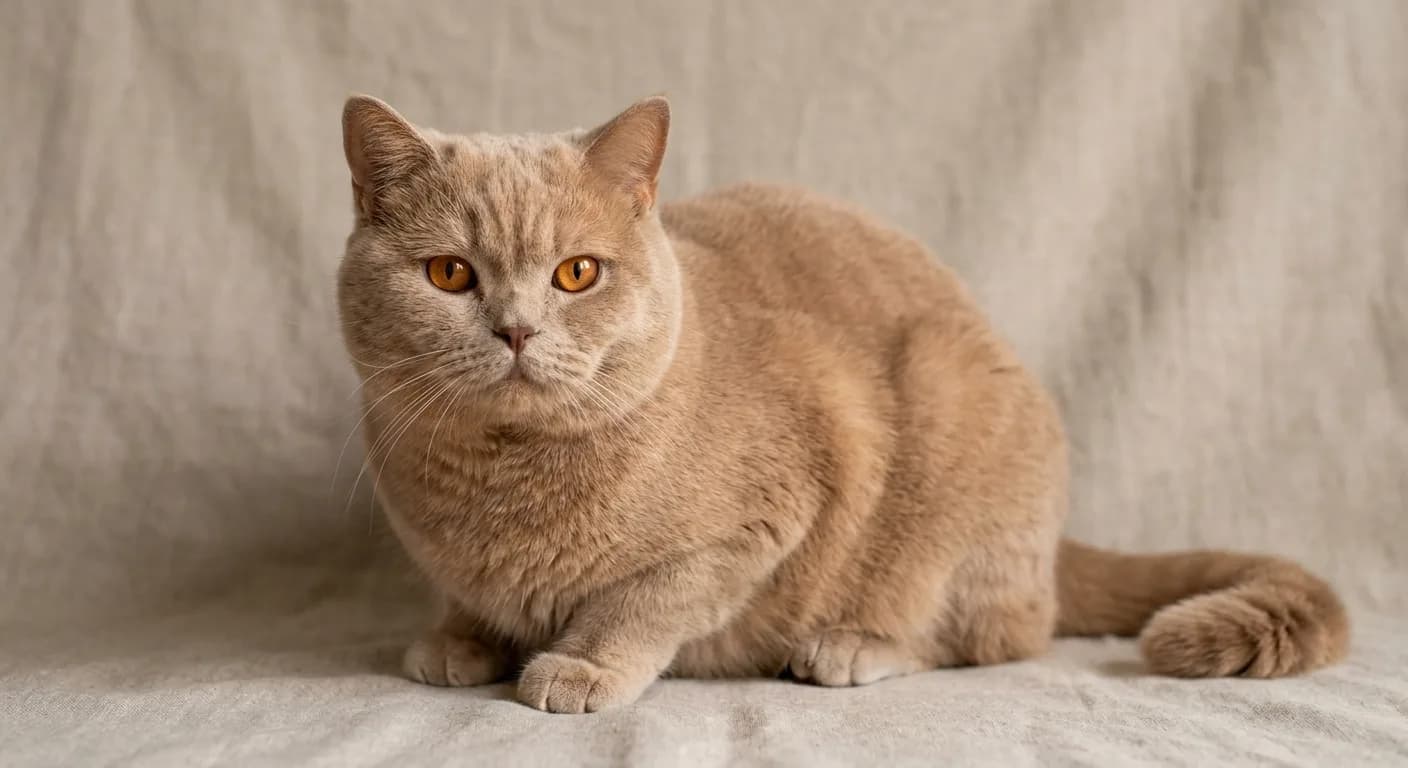
The rarest British Shorthair colors in practice are:
1. Cinnamon (bl/bl): The rarest solid color. Requires the bl allele in two copies. Few breeders work with cinnamon lines because demand historically was low and the genetics are complex.
2. Fawn (bl/bl + dd): The dilute of cinnamon, and rarer still. This warm pale rosy-buff is among the least common colors you will encounter.
3. Chocolate (b/b): Rarer than blue or black in the UK breeding pool, though it has grown in popularity.
4. Golden (especially chinchilla golden): Not rare by genetics alone, but rare in quality. A true chinchilla golden with rich, even color and correct green eyes from health-tested parents is difficult to produce consistently.
5. Male tortoiseshell or calico: Not a color per se, but a combination that is genetically rare (see the callout above).
The GCCF and CFA both accept cinnamon and fawn in British Shorthairs, though finding a reputable breeder specializing in them requires research. The Chartreux, often confused with the blue British Shorthair, comes only in blue-grey: it has no equivalent cinnamon, fawn, or chocolate variety, which illustrates how much broader the British Shorthair color range truly is.
Eye Colors in British Shorthairs
Eye color in British Shorthairs is determined by coat genetics, making it predictable:
- Copper/orange: The standard eye color for most self (solid) colors and tabby patterns. Deep, vivid copper is preferred in the show ring.
- Green (emerald to blue-green): Required for all silver and golden coats (shaded, chinchilla, tipped, silver/golden tabby). A copper-eyed silver or golden British Shorthair is a fault at shows.
- Blue: Standard for colorpoint British Shorthairs and accepted (sometimes preferred) in white British Shorthairs. Deep, vivid blue is the goal in pointed cats.
- Odd-eyed (heterochromia): One copper eye and one blue eye. Occurs in white British Shorthairs (where the W gene allows variable pigment expression) and is accepted as a color class in shows. Odd-eyed whites carry an elevated deafness risk on the blue-eyed side. This characteristic also appears in the Russian Blue breed on rare occasions, though the Russian Blue standard calls specifically for vivid green in both eyes.
- Gold/amber: Accepted in some self colors, often seen in lilac and chocolate British Shorthairs as an alternative to copper.
- British Shorthair kittens are born with blue eyes that shift to their adult color by 12-16 weeks. A kitten photographed at 8 weeks will have different eyes than the adult cat. Ask breeders for photos of the parents if final eye color matters to you.
The Genetics Behind British Shorthair Colors
Understanding a few key gene loci explains the entire British Shorthair color palette.
The B locus (brown series): Controls whether black pigment is deposited as pure black (B, dominant), chocolate (b, recessive), or cinnamon (bl, most recessive). A cat must inherit two copies of a recessive allele to express that color.
The D locus (dilution): The dilute gene (d) reduces pigment granule size, producing dilute versions of every dense color. Black becomes blue. Chocolate becomes lilac. Cinnamon becomes fawn. Red becomes cream. Two copies (d/d) are required for dilution.
The O locus (orange): Located on the X chromosome. The O allele converts black-based pigment to orange-based pigment. Males (XY) are either O (orange) or o (non-orange). Females (XX) can be OO (solid orange), Oo (tortoiseshell), or oo (non-orange). This is why solid reds and creams are usually male, and true tortoiseshells are almost always female.
The I locus (Inhibitor): The I allele suppresses phaeomelanin (yellow pigment) in the hair shaft, creating a white or near-white base. Active in silver and smoke coats. Combined with the Wide-band gene (Wb), it produces the silver and golden series.
The cs allele (colorpoint): Temperature-sensitive tyrosinase. Two copies produce the Himalayan/Siamese-style pointed pattern with blue eyes.
The W gene (dominant White): Masks all other color genes. The white cat may carry any underlying color, invisible under W.
The S gene (piebald spotting): Adds white patches in bicolor and van patterns, independent of coat color.
Reputable British Shorthair breeders routinely DNA-test for color alleles so they can plan litters and predict kitten colors. Health tests (HCM cardiac echo, PKD DNA, Hemophilia B DNA) are run alongside color tests.
British Shorthair Color Chart at a Glance
| Color / Pattern | Description | Standard Eye Color | Relative Rarity |
|---|---|---|---|
| Blue (solid) | Even blue-grey; dilute black | Deep copper/orange | Very common |
| Black (solid) | Jet-black root to tip | Copper/orange | Common |
| White (solid) | Pure white; masks any underlying color | Copper, blue, or odd-eyed | Common |
| Cream (solid) | Pale warm buff; dilute red | Copper/orange | Common |
| Red (solid) | Warm brick-red to marmalade; ghost tabby normal | Copper/orange | Common |
| Chocolate (solid) | Warm medium-to-deep brown | Copper/gold | Uncommon |
| Lilac (solid) | Pale pinkish-dove grey; dilute chocolate | Copper/gold | Uncommon |
| Cinnamon (solid) | Warm light caramel-terracotta | Copper/amber | Rare |
| Fawn (solid) | Pale rosy-buff; dilute cinnamon | Copper/amber | Very rare |
| Classic tabby | Bold swirled flanks; any base color | Copper (green for silver) | Very common |
| Mackerel tabby | Narrow parallel stripes; any base color | Copper (green for silver) | Common |
| Spotted tabby | Oval/round spots; any base color | Copper (green for silver) | Common |
| Silver shaded | White undercoat, color on outer half of hair | Green | Common |
| Chinchilla silver | White undercoat, color on tips only; nearly white | Green | Common |
| Golden shaded | Warm apricot undercoat, brown/black tipping | Green | Uncommon |
| Chinchilla golden | Warm pale gold; minimal tipping | Green | Uncommon-rare |
| Smoke | Any solid color with white root zone | Copper (standard color) | Uncommon |
| Tortoiseshell | Black/brown + red/cream patches | Copper/gold | Common |
| Blue-cream | Blue + cream patches; dilute tortie | Copper/gold | Common |
| Bicolor | Any color + white | Copper (or blue for white) | Common |
| Van | Mostly white; color on head and tail only | Copper/blue | Uncommon |
| Colorpoint (any) | Pale body, dark points (seal, blue, chocolate, etc.) | Blue | Uncommon |
Frequently Asked Questions
Cinnamon and fawn are the rarest British Shorthair colors. Both require the uncommon bl allele in two copies (fawn also needs the dilution gene), making them difficult to breed reliably. Chocolate and high-quality chinchilla golden are the next rarest in practice.
The solid blue (blue-grey with copper eyes) is by far the most common British Shorthair color. It has been associated with the breed since its earliest formal shows in the 1870s and remains the predominant color in most breeding programs worldwide.
The golden shaded British Shorthair has surged in popularity in recent years and is widely considered the most coveted color at present, though the classic blue remains the most produced. Golden cats photograph dramatically and the genetics make quality individuals scarce.
The CFA and GCCF recognize more than 30 distinct British Shorthair color and pattern combinations when counting the main groups. When individual base colors are multiplied across all accepted patterns (tabby variants, smoke, bicolor, etc.), the GCCF lists over 100 separate color classes in its Standards.
A British Blue is a British Shorthair in solid blue-grey, the breed's most iconic and historically dominant color. The term "British Blue" was used as an informal name for the entire breed before the British Shorthair name became standard. Today it refers specifically to the blue-grey color variety with copper eyes.
Most British Shorthairs have deep copper or orange eyes. Silver and golden coats require green eyes. Colorpoint British Shorthairs have blue eyes. White British Shorthairs can have copper, blue, or odd eyes (one of each).
Blue is a cool, medium blue-grey produced by the dilution of black. Lilac is a warm, pinkish-dove grey produced by diluting chocolate. In bright light, lilac reads distinctly pinker and warmer than blue. In dim light the difference can be subtle. Both carry copper eyes and the same cobby body.
A golden British Shorthair has a warm apricot-to-cream undercoat with brown or black tipping on the hair tips, producing a glowing golden-bronze effect. The eyes must be green, and the overall impression is of a sun-warmed, softly shimmering cat. Chinchilla goldens are paler; shaded goldens are richer and darker.
A silver shaded British Shorthair has a bright white undercoat with color covering the outer half to third of each hair, creating a sparkling silver mantle. The cat looks silver-white with a shaded overlay. Green eyes are required. In a chinchilla silver, only the hair tips carry color and the cat appears nearly white.
Yes. Cinnamon and fawn are the rarest British Shorthair colors because they require the bl (cinnamon) allele, the least common allele at the B locus. Fawn additionally requires the dilution gene. Very few breeders maintain cinnamon and fawn lines, and kittens in these colors are uncommon even from specialists.
No. Coat color does not affect temperament in British Shorthairs. Every color shares the same breed hallmarks: calm, easygoing, affectionate on their own terms, quiet, and tolerant. Color choices should be made on aesthetics and availability, not behavioral expectations.
Golden and chinchilla golden British Shorthairs are typically the most expensive, often priced at $1,800-5,500 from reputable breeders. Cinnamon, fawn, and chocolate also command premiums due to rarity. Show-quality cats of any color from top lines can reach similar or higher prices. Standard blue pet-quality kittens typically start at $1,200-2,500.
Yes. Colorpoint (pointed) British Shorthairs are an accepted color division in both the CFA and GCCF. They have pale bodies, darker colored points on the face, ears, paws, and tail, and blue eyes. Point colors include seal, blue, chocolate, lilac, red, cream, tortie, and tabby-point variants.
A tortoiseshell British Shorthair has two coat colors: black (or a brown-series variant) and red (or cream), distributed in patches or marbling across the coat. Tortoiseshells are almost always female because the gene for orange/red is X-linked. Blue-cream is the dilute tortoiseshell equivalent. The blue-cream is especially common in the breed.
A smoke British Shorthair appears to be a solid-colored cat when still, but when the coat parts or the cat moves, a bright white undercoat flashes through. This is caused by the Inhibitor gene suppressing pigment at the hair root but not the tip. Black smoke, blue smoke, and chocolate smoke are the most common varieties.
Some change is normal. Kittens of many colors, including black and blue, often show faint ghost tabby markings that fade into the adult coat by 12-18 months. White kittens and some pointed kittens may have slightly different eye colors before full adult pigmentation develops around 12-16 weeks. Golden and silver coats can deepen slightly in the first year.
The CFA recognizes British Shorthairs in a comprehensive range including all self (solid) colors, tabby (classic, mackerel, spotted), silver/golden (shaded, chinchilla), smoke, bicolor, van, and colorpoint divisions. Not every registry accepts every color, and the GCCF and TICA have their own, sometimes broader, color standards.
Odd-eyed British Shorthairs (one copper eye, one blue eye) do occur and are accepted in the white color class. They are not extremely rare but are less common than single-color-eyed whites. The condition is linked to the dominant White gene and is more a feature of white cats than of other colors. Blue-eyed-side deafness screening (BAER test) is recommended for odd-eyed whites.
British Shorthairs and Their Look-Alikes
When shopping for a blue British Shorthair, two other breeds are frequently confused with it: the Russian Blue and the Chartreux. All three are blue-grey cats, but the differences are clear once you know them.
The Russian Blue has vivid green eyes (not copper), a distinctly leaner and more angular build (nothing like the British Shorthair's cobby roundness), a fine double coat with a distinctive blue sheen, and comes ONLY in blue. The Chartreux also comes only in blue-grey and has yellow-to-copper eyes, but it is slightly less extreme in its cobbyness and has a more tapered muzzle. Both breeds lack the enormous color range of the British Shorthair. The British Shorthair, by contrast, comes in over 30 colors and patterns, can be pointed, golden, cinnamon, or almost any color you can name in the domestic cat world.
A look at Persian cat colors shows a breed with a similarly expansive palette, and the two breeds share the chinchilla and golden color genetics through the Inhibitor gene, though their body types and coat textures are completely different. The Persian is long-coated and flat-faced; the British Shorthair is round-headed but not brachycephalic-extreme, and its coat is short, dense, and crisp.
Summary: Choosing a British Shorthair by Color
Whether you are drawn to the historic dignity of the British Blue, the warmth of a golden chinchilla, the frost of a silver shaded, the drama of a colorpoint, or the fire of a red tabby, the British Shorthair delivers more coat variety than almost any other pedigree breed. Every color and pattern sits on the same calm, round-faced, plush-coated foundation: a breed the GCCF describes as the quintessential British cat, sturdy, dignified, and deeply companionable.
Before choosing by color alone, consult our full British Shorthair breed profile for health, care, and temperament guidance. Color is the dessert; the breed itself is the meal.
Whatever color yours is, a British Shorthair is a real investment, so a free MyPetID profile is worth setting up early to keep your cat's microchip number, vaccination records, and proof of ownership in one place, with a QR tag to help a lost cat get home fast.
Set up a free MyPetID profileRelated British Shorthair guides: the golden British Shorthair, British Shorthair price, and the British Longhair.

Coreen Saito is a pet writer and longtime shelter volunteer with more than a decade in animal rescue. She covers cat behavior, breed care, and the small, ordinary science of sharing a life with companion animals, with a particular focus on honest takes about the products and decisions that actually matter. At home in Arizona, she's outranked by Mac (a dog with the loudest opinion in the house), Rebel (a cat who governs by quiet authority), and Meri (an orange tabby who runs the late shift and the laundry basket). She writes about all three, plus the rescues that keep coming through her life, at LifeWithMinty.com.
Sign up for expert-backed reviews and safety alerts all in one place.