Golden British Shorthair: Appearance, Rarity, Personality, and Price
The golden British Shorthair is a rare, green-eyed color variety of the British Shorthair, not a separate breed. Prices run $1,800 to $5,500. Learn coat genetics, types (shaded, tipped, blue golden), and how to find a reputable breeder.
Petful is reader supported. As an affiliate of platforms like Amazon and Chewy, we may earn a commission when you buy through links on this page. There is no extra cost to you.
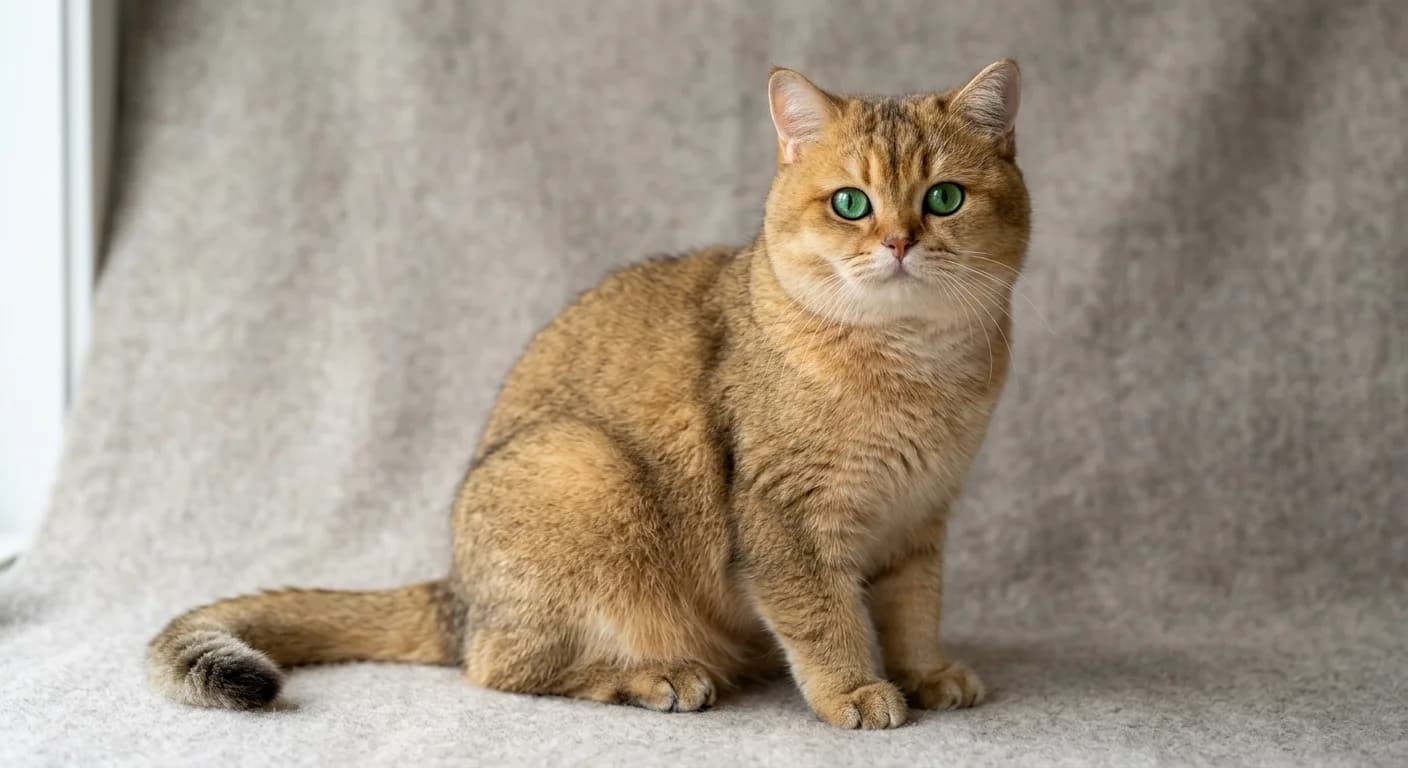
The golden british shorthair is not a separate breed. According to the Cat Fanciers' Association (CFA) and TICA, it is a color variety of the British Shorthair, defined by a warm apricot-to-golden undercoat with darker tipping and the breed's signature green or blue-green eyes. It ranks among the rarest and most expensive British Shorthair colors, with prices from reputable breeders typically running $1,800 to $5,500 depending on tipping type, lines, and show quality.
- 1The golden British Shorthair is a color, not a separate breed, and shares the standard BSH temperament and health profile
- 2Green (or blue-green) eyes are required by the breed standard, not copper, setting golden apart from most other BSH colors
- 3The warm apricot undercoat comes from the wide-band + inhibitor gene combination acting on a tabby base
- 4Expect to pay $1,800-5,500 from a health-tested breeder; lower prices often signal unscreened cats
- 5Golden is one of the rarest and most sought-after BSH colors, which is why waitlists are common

Sign up for expert-backed reviews and safety alerts all in one place.
What Is a Golden British Shorthair?
The British Shorthair is one of the oldest recognized pedigree cat breeds in the world. The CFA and TICA both recognize it as a single breed in dozens of colors and patterns, and "golden" refers to a specific subset of that color palette: the golden shaded and golden tipped (also called golden chinchilla) classes.
A golden British Shorthair is genetically a shaded or tipped tabby whose undercoat color is suppressed to a warm golden or apricot shade instead of a cool white. The distinguishing feature is that apricot-to-golden ground color rather than the white or silver ground color seen in the silver shaded family.
The name can be confusing because some breeders also use "golden" loosely to describe any warm-toned British Shorthair. For show purposes, the color class is defined precisely: golden shaded has heavier tipping (around one-third of the hair shaft colored), while golden tipped or golden chinchilla has very light tipping (roughly one-eighth), producing a sparkling, almost luminous effect. Both are green-eyed by standard.
- The golden British Shorthair is the same breed as any other British Shorthair. Breeders who advertise it as a "rare breed" are using marketing language. The cat has the standard BSH cobby body, plush coat, and calm temperament regardless of color.
Appearance: Coat, Eye Color, and Build
Coat and Color
The golden British Shorthair coat is dense, plush, and stand-out (the official standard describes it as "crisp"), like every British Shorthair coat. What sets it apart is the banding on each individual hair: the base (closest to the skin) is a warm apricot or golden yellow, and the tips are a darker brown, black, or dark golden-brown depending on the variant.
Run your fingers backward through the coat and you reveal that glowing apricot undercoat. Look at the cat from a distance and you see a rich, warm golden sheen with a slight darkening at the back, face, and tail. In direct light the coat can look almost amber; in softer light it reads as classic "golden."
Kittens may look more tabby-striped at birth because the wide-band genetics that suppress the tabby pattern take time to express fully. By six to twelve months most of the ghosting fades and the clean golden shaded pattern emerges. Full color expression often is not visible until the cat matures at three to five years, the typical timetable for the British Shorthair breed.
Eye Color
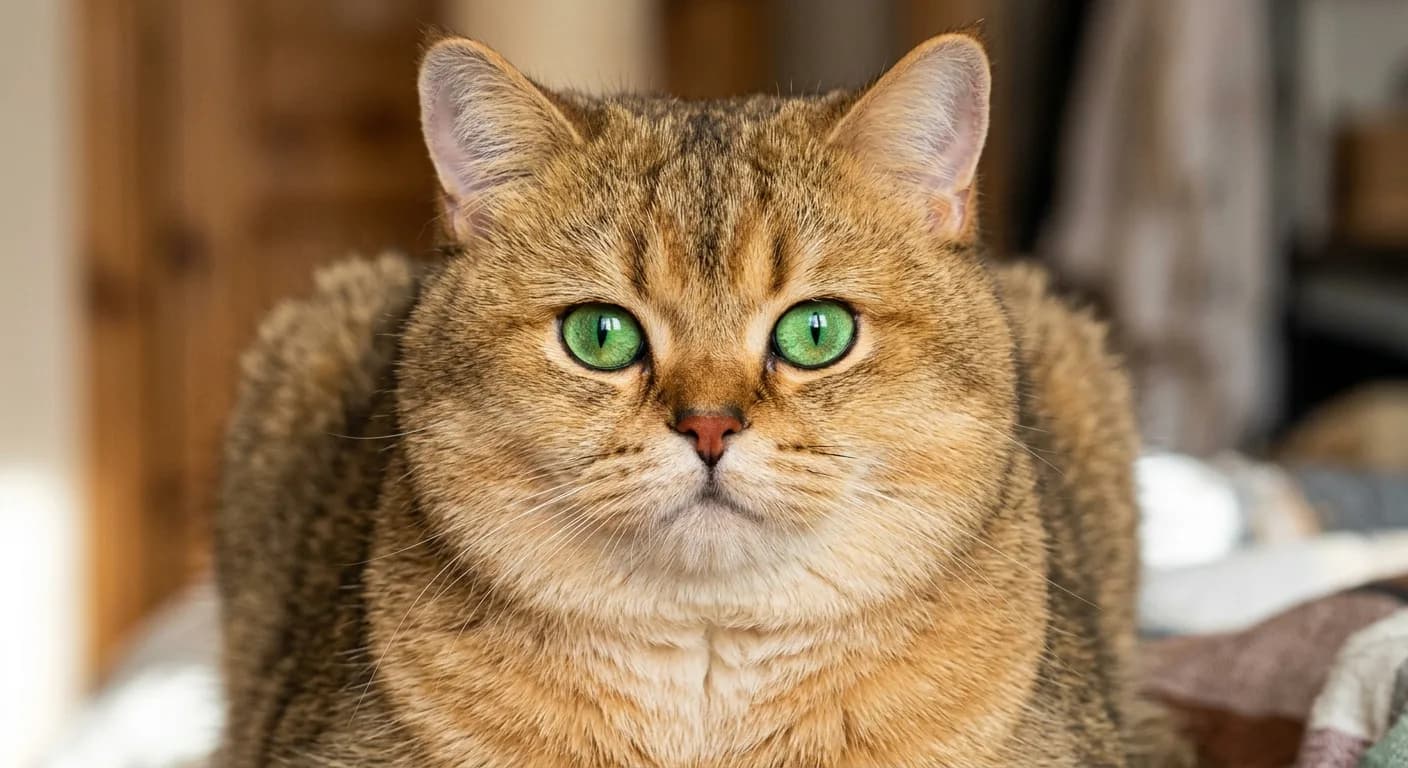
The breed standard for golden British Shorthairs requires green or blue-green eyes. This is a meaningful difference from most other British Shorthair colors, which carry copper or orange eyes. The green eye requirement comes from the same genetic package that produces the golden coat: the inhibitor gene affects both the eumelanin in the coat and the eye pigmentation, directing it toward green rather than the full copper expression.

Never Scoop Again® with the Whisker Litter-Robot, the smart self-cleaning automatic litter box. Monitor visits and track weights for better overall care in the Whisker® app. Multi-cat friendly.
Petful may earn a commission when you click through to Whisker, at no extra cost to you.
Kittens are born with blue eyes that typically transition to green by four to six months. If a "golden" British Shorthair kitten develops copper or gold eyes, that is a sign it may not be a true golden or may have been bred from a line not tightly selecting for the standard.
Build and Body Type
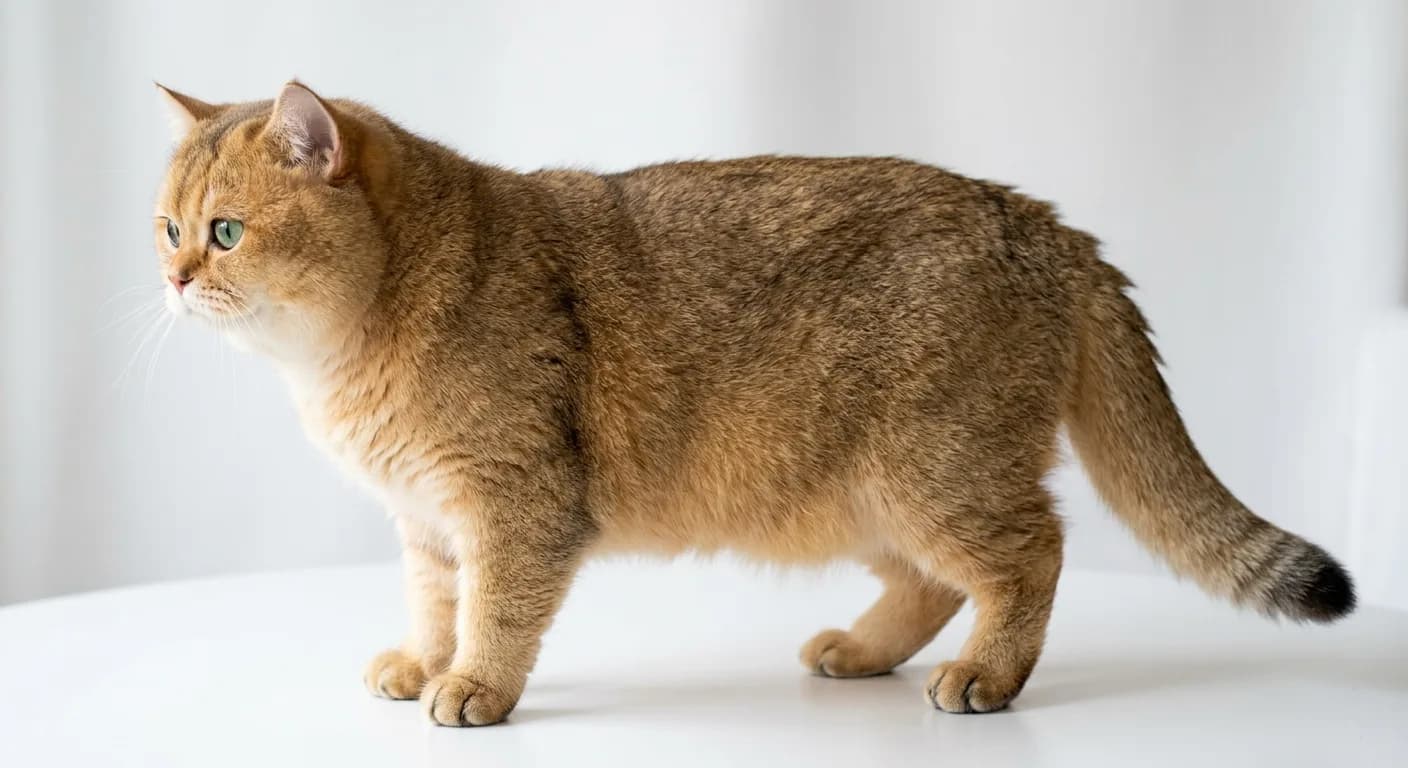
The build is entirely standard British Shorthair: broad, round head; full chubby cheeks; short broad nose; small ears set wide apart and rounded at the tips; a short, thick neck; a stocky cobby body with a broad chest; short thick legs; and a thick rounded tail. This is the "teddy bear cat" silhouette. Males weigh 9 to 17 pounds; females 7 to 12 pounds.
The golden coloring does not affect the body. A golden British Shorthair is not larger, smaller, or differently proportioned than a blue British Shorthair. The only things that differ are coat color, tipping pattern, and eye color.
Types of Golden British Shorthairs (Shaded, Tipped, Chinchilla)
Three color-type names appear frequently when researching goldens, and they describe the same genetic base with different levels of tipping:
| Type | Tipping Level | Appearance | CFA/TICA Class |
|---|---|---|---|
| Golden Shaded | Heavy (~1/3 of hair shaft tipped) | Darker, richer golden with visible shading on back and head | Golden Shaded |
| Golden Tipped (Chinchilla) | Light (~1/8 of hair shaft tipped) | Sparkling, luminous pale golden with a delicate dusted effect | Golden Tipped |
| Blue Golden Shaded | Same heavy shading as golden shaded, but the tips are blue-grey instead of black/brown | Soft muted warm gold with blue shading; very rare | Blue Golden Shaded |
| Blue Golden Tipped | Light blue-grey tipping over an apricot base | The rarest and most ethereal golden variant; commands the highest prices | Blue Golden Tipped |
Golden Shaded British Shorthair
The most common golden type. The darker tipping covers roughly a third of each hair shaft, so the cat has a clearly dark spine, head, and tail with a warm golden ground. From a few feet away it reads as a rich golden-brown.
Golden Tipped (Chinchilla) British Shorthair
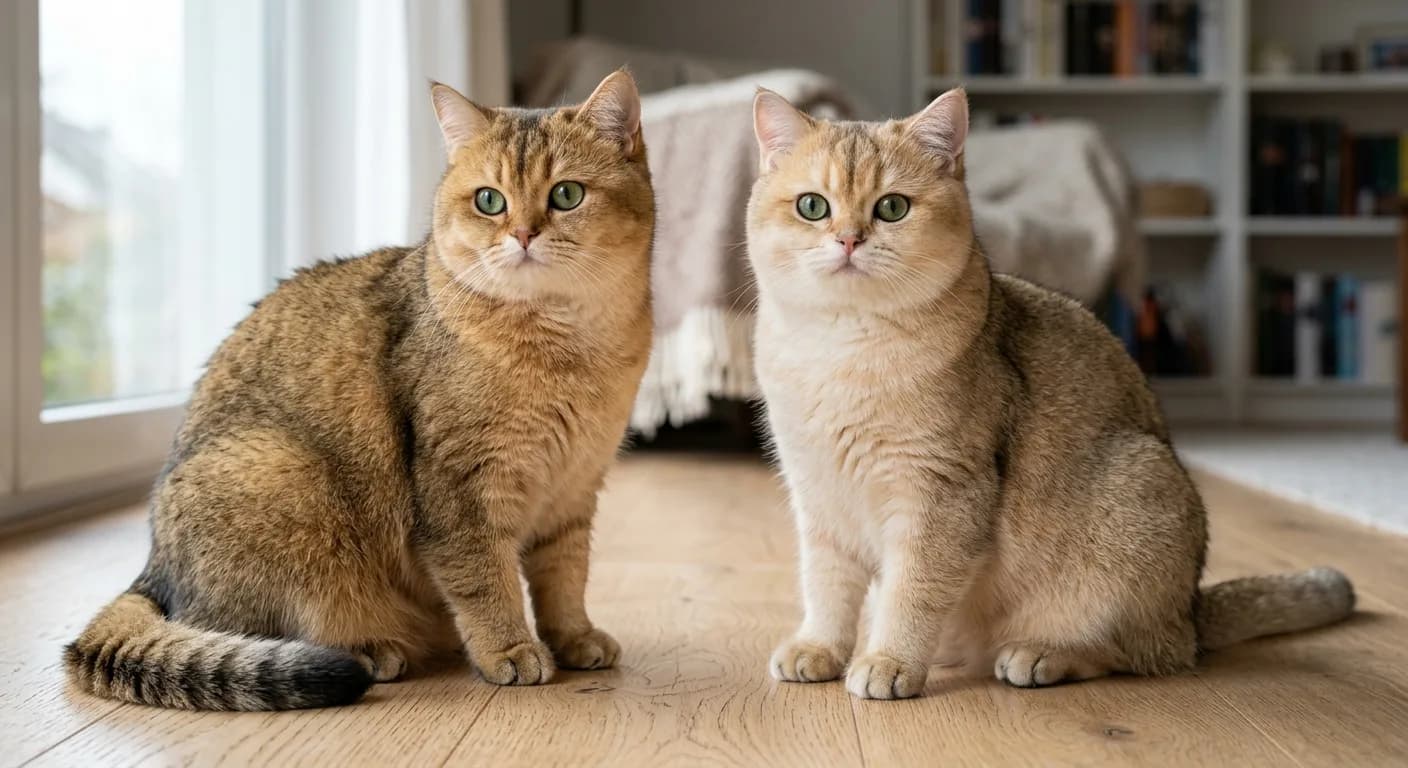
The chinchilla level has very light tipping, only about one-eighth of the hair shaft. This gives the coat an almost silvery-gold sparkle, particularly in natural light. The white undercoat of a silver chinchilla is replaced by a warm apricot or golden undercoat in the golden chinchilla, and the sparkling tips are brown or black rather than the black ticking of the silver.
Blue Golden British Shorthair
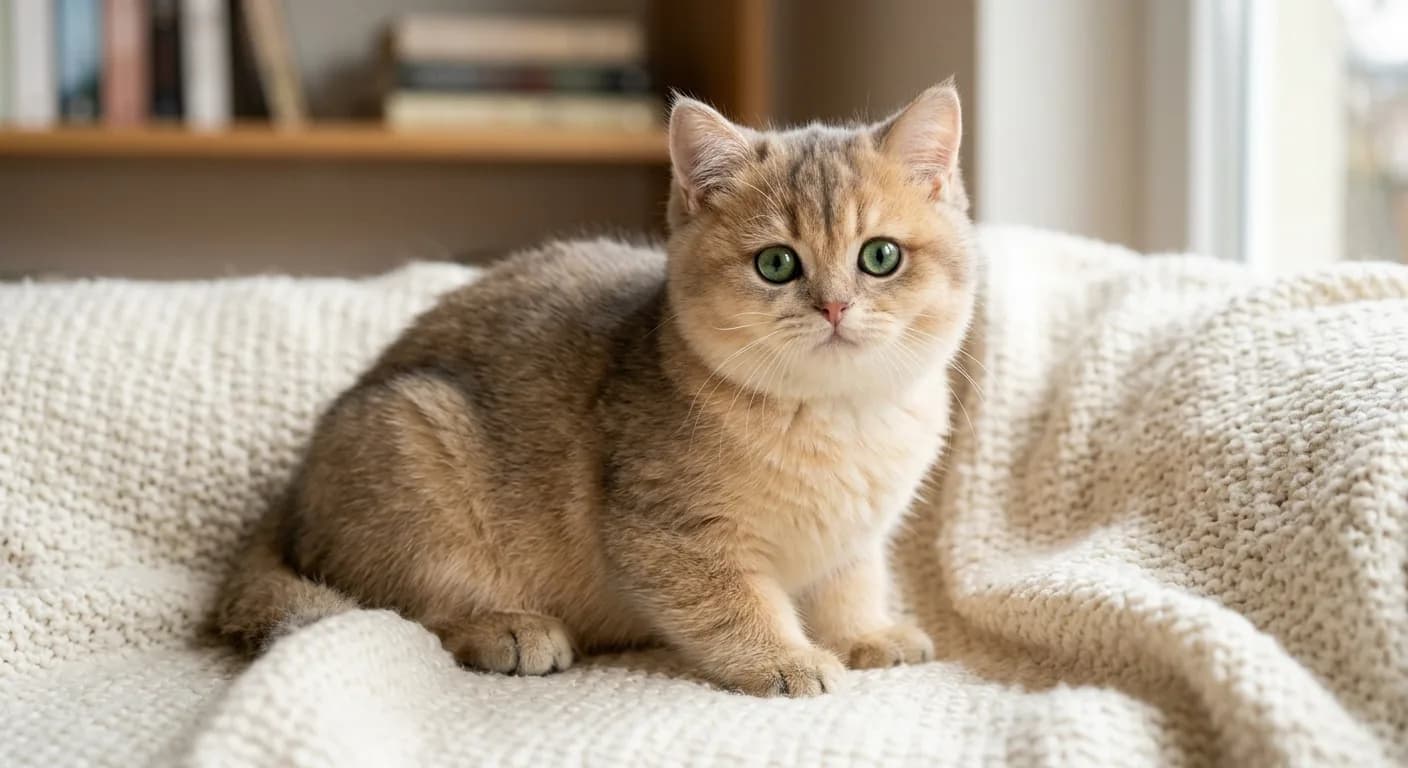
The blue golden variant carries a blue (diluted black) tip over the apricot base. It is sometimes described as having a "smoky gold" or "pewter gold" effect. Blue golden cats require both the wide-band gene and the blue dilution gene, making them rarer than standard golden shaded or golden tipped cats. Expect to pay at the top of the price range, sometimes higher.
- When evaluating a golden British Shorthair kitten, ask the breeder for the full color designation (e.g., "golden shaded," "golden tipped," "blue golden shaded") and verify the pedigree shows both parents carry the wide-band gene. Ambiguous color labeling is common in unregistered litters.
Golden vs. Silver British Shorthair: What Is the Difference?
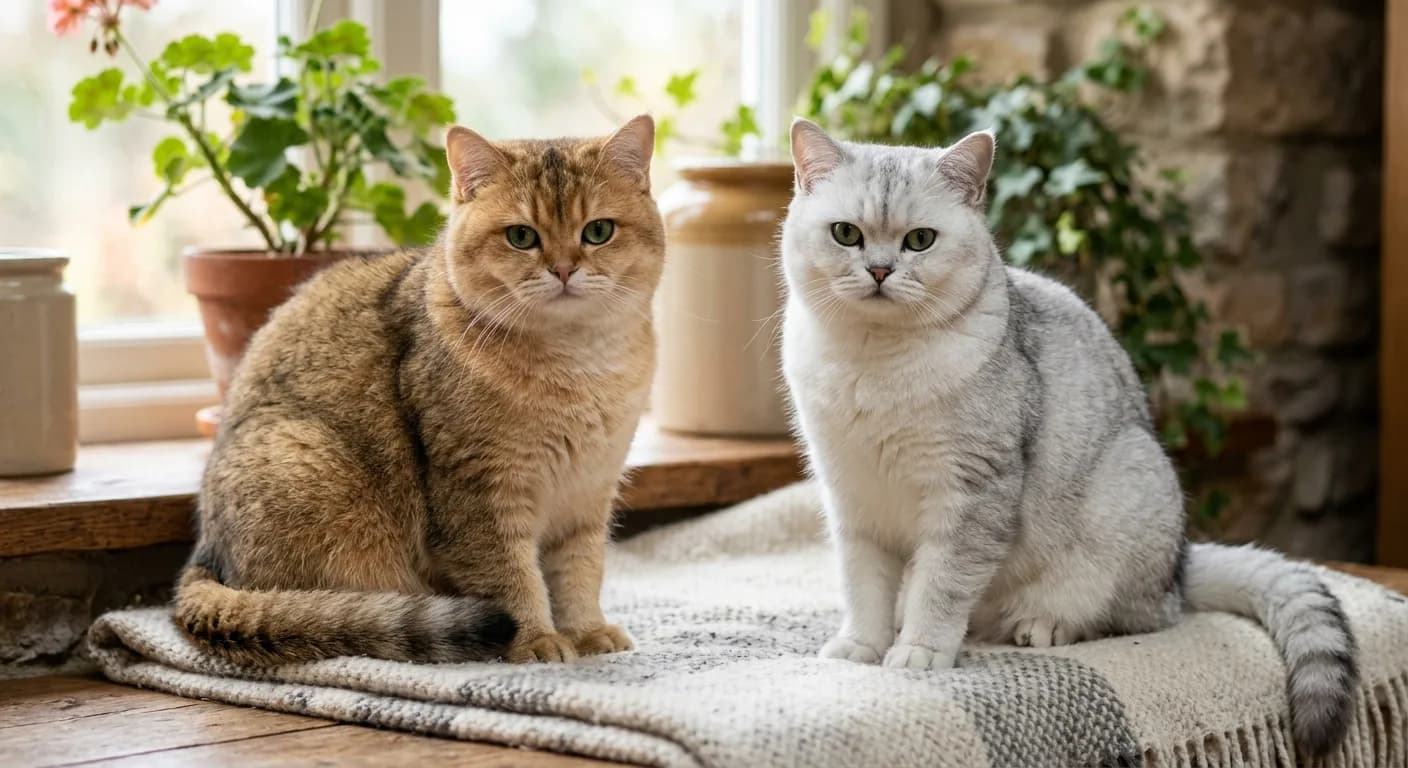
This is the most common confusion in the British Shorthair color world. The difference is the undercoat color:
- Silver: the undercoat is white or near-white. The inhibitor gene fully suppresses the yellow pigment (pheomelanin), leaving a cold, bright white base. Tipping is black or dark, so the overall effect is crisp, high-contrast, and cool-toned.
- Golden: the inhibitor gene only partially suppresses the pheomelanin, leaving the warm yellow-apricot pigment in the undercoat. The tipping looks brown or golden-brown rather than stark black against white.
Both silver and golden British Shorthairs require green eyes, which is how both classes differ from the copper-eyed solid colors. A silver and a golden kitten in the same litter are not uncommon when one parent carries the wide-band gene and one does not (or when both carry it in different intensities).
The Persian cat colors page covers a similar silver-versus-golden distinction in Persians, which share the same genetics because the golden Persians historically contributed to the golden British Shorthair breeding program.
- Both silver and golden British Shorthairs must have green eyes. If someone is selling a "golden" British Shorthair with copper or orange eyes, it may be a warm-toned tabby or a misidentified color, not a true golden.
Golden British Shorthair Temperament and Personality
The golden coat changes nothing about temperament. The British Shorthair is consistently described by the CFA and breeders as calm, easygoing, and even-tempered, and a golden British Shorthair behaves exactly the same way.
Key personality traits:

63-inch multi-level cat tree with scratch posts, hammock, plush perches, and dangling toys. Vertical territory is non-negotiable for high-energy climbing breeds like the Bengal.
Petful may earn a commission when you click through to Chewy, at no extra cost to you.
- Independent but affectionate: British Shorthairs enjoy being in the same room as their people but are not typically lap cats. They prefer sitting near you to being held, and they show affection on their own terms.
- Low-key and quiet: not known for excessive vocalization. They may chirp or trill softly but are unlikely to demand attention loudly.
- Patient with children and other pets: their calm temperament makes them tolerant of respectful handling and fairly adaptable to multi-pet households.
- Playful in moderation: they enjoy interactive sessions as kittens and young adults but mellow with age. Puzzle feeders and wand toys keep them mentally engaged without requiring an energetic playmate.
- Adaptable to apartment living: their activity needs are moderate, and they do not need outdoor access or a large space to stay content.
- British Shorthairs are calm and food-motivated, which makes them prone to weight gain. Feed measured portions, use a puzzle feeder, and schedule a body-condition check at each annual vet visit. This is especially true for golden cats after neutering.
British Shorthairs sold as "golden" do not have a special personality linked to their color. Claims that golden cats are more affectionate or rare in temperament are marketing.
How Much Does a Golden British Shorthair Cost?
Golden British Shorthairs sit at the top of the British Shorthair price spectrum. Based on current US breeder listings and registry guidance:
- Pet-quality golden from a health-tested breeder: $1,800 to $3,000
- Show-quality or breeding-quality golden: $3,000 to $5,500
- Blue golden or golden chinchilla from exceptional lines: sometimes higher, up to $6,000+
- Rescue or rehoming fee: rare, but occasionally $100 to $400 if a golden is surrendered
For context, standard British Shorthair colors (blue, black, white) typically run $1,200 to $2,500 for pet quality. The golden premium reflects the difficulty of reliably producing genetically clean goldens with proper eye color, tipping, and body type simultaneously.
Compare this to similarly rare colors in other plush breeds. The Persian cat price and cost breakdown shows a similar premium for golden Persians, whose genetics overlap.
- Avoid any breeder advertising golden British Shorthairs for under $800 without health certifications. Golden kittens at that price point often come from farms or unregistered breeders who have not tested for HCM, PKD, or hemophilia B. The health cost of an untested kitten can dwarf the savings at purchase.
Ongoing costs align with the standard British Shorthair: food, litter, and routine care typically run $50 to $150 per month. The first year will be higher (vaccinations, spay/neuter, setup, initial vet workup), averaging $500 to $1,000 above the recurring monthly baseline.

108-oz stainless steel pet fountain with quiet pump and water-level window. Bengals are notoriously water-obsessed; a flowing fountain encourages hydration and pulls them away from sinks and toilets.
Petful may earn a commission when you click through to Chewy, at no extra cost to you.
Is the Golden British Shorthair Rare?
Yes, within the British Shorthair breed, golden is considered a rare and sought-after color. The reasons are genetic and practical:
1. Genetics: producing a true golden requires two copies (or one copy in some breeding programs) of the wide-band gene along with the inhibitor gene, on a tabby base, while maintaining proper type. Not every BSH breeding pair carries the right gene combination.
2. Eye color check: a true golden must develop green eyes. Breeders routinely monitor eye color development and may remove kittens from the "golden" class if they develop copper eyes, reducing the number of kittens sold as goldens.
3. Slow maturation: British Shorthairs take three to five years to show full color expression. Buyers often cannot fully assess the final look of a golden kitten until the cat is well past one year.
4. Limited breeding stock in the US: many of the established golden BSH lines come from European breeders (particularly UK and Eastern European catteries). US-based golden British Shorthair breeders are fewer in number than those producing the classic blue or bicolor cats.
For comparison, the cobby look-alikes with dense plush coats, the Chartreux and the Exotic Shorthair, do not come in golden. That unique combination of the cobby BSH type with warm gold coloring and green eyes has no equivalent in another breed, which further drives demand.
- Reputable golden British Shorthair breeders in the US typically have waitlists of six months to two years. If a breeder has golden kittens immediately available year-round with no waitlist, ask detailed questions about their genetic testing protocols and registration with CFA or TICA before committing a deposit.
Finding a Reputable Golden British Shorthair Breeder
Where to Start
- CFA Breeder Referral: the CFA website (cfa.org) has a breeder referral directory searchable by breed and sometimes by color. Start here for registered catteries.
- TICA Breeder Registry: TICA (tica.org) maintains a similar registry. Both registries require members to agree to a code of ethics but do not audit every litter.
- GCCF-affiliated imports: some US breeders import cats or embryos from GCCF-registered UK catteries, which have their own health testing requirements. An import background is not a red flag, but ask for documentation.
What to Ask Any Breeder
- Are both parents tested for HCM (hypertrophic cardiomyopathy) by cardiac echo within the past 12 months?
- Are both parents DNA-tested for PKD (polycystic kidney disease) and hemophilia B?
- Are the parents registered with CFA, TICA, or another recognized registry?
- Can you see health records and registration papers before the deposit?
- What is the socialization protocol (time with people, exposure to household sounds, etc.)?
- What age do kittens go home? (Twelve to fourteen weeks is standard; earlier is a concern.)
The Russian Blue and Chartreux communities have similar expectations for breeder transparency on cardiac testing, because both breeds share some HCM susceptibility with the British Shorthair, and the due-diligence questions are comparable.
- A CFA or TICA-registered kitten comes with a pedigree that can be verified. Unregistered "golden BSH" kittens from social-media sellers or Craigslist have no verified lineage. Without verified lineage you cannot confirm the wide-band genetics or health testing, and you may not get a true golden at all.
Avoiding Scams
Golden British Shorthairs attract a disproportionate number of scam listings because of their high price. Warning signs: no video call, seller is overseas and wants a wire transfer, no contract, no health guarantee, price seems too low, kitten photos are stock images or watermarked. Reverse-image-search any kitten photo before sending money.
Frequently Asked Questions
From a health-tested US breeder, expect $1,800 to $3,000 for pet quality and $3,000 to $5,500 for show or breeding quality. Blue golden and golden chinchilla cats from top lines can exceed $5,500.
Yes. Producing a true golden requires the wide-band and inhibitor genes on a tabby base, plus the characteristic green eyes, which limits the number of kittens that qualify. Reputable breeders typically have waitlists of six months to two years.
The combination of the wide-band gene and the inhibitor gene acting on a tabby base partially suppresses the yellow pigment (pheomelanin) rather than eliminating it entirely, leaving the undercoat a warm apricot or golden shade instead of white.
The main types are golden shaded (heavy tipping, one-third of the hair shaft), golden tipped or golden chinchilla (light tipping, one-eighth of the shaft), blue golden shaded, and blue golden tipped. Tipping level affects how light or dark the overall coat appears.
Green or blue-green eyes are required by the CFA and TICA breed standards for golden British Shorthairs. This is one of the clearest distinguishing features; most other BSH colors have copper or orange eyes.
The undercoat color is the key difference. Silver British Shorthairs have a white or near-white undercoat because the inhibitor gene fully suppresses yellow pigment; golden British Shorthairs have a warm apricot undercoat because the inhibitor only partially suppresses it. Both require green eyes.
A blue golden British Shorthair carries blue (diluted black) tipping over an apricot undercoat, creating a soft smoky-gold appearance. It requires both the wide-band gene and the dilution gene, making it rarer and typically more expensive than standard golden shaded or golden tipped cats.
Yes. Coat color does not affect temperament. Golden British Shorthairs are calm, independent, affectionate on their own terms, and quiet, exactly as described in the British Shorthair breed standard by CFA and TICA.
Yes. Both TICA and the CFA recognize the golden shaded and golden tipped color classes within the British Shorthair breed. They are not a separate breed registration; they are color classes within the existing BSH standard.
British Shorthairs, including the golden color variety, typically live 12 to 16 years, with many cats reaching the late teens when well cared for, according to CFA breed information. Regular cardiac screening and weight management are the biggest longevity levers.
Start with the CFA breeder referral list at cfa.org and the TICA breeder registry at tica.org. Both list registered catteries. Ask every breeder for cardiac echo results (HCM), PKD DNA test results, and hemophilia B test results before placing a deposit, and expect a waitlist.
A golden British Shorthair is a real investment, so a free MyPetID profile is worth setting up early to keep your cat's microchip number, vaccination records, and proof of ownership in one place, with a QR tag to help a lost cat get home fast.
Set up a free MyPetID profileRelated British Shorthair guides: the full British Shorthair colors guide and British Shorthair price.

Coreen Saito is a pet writer and longtime shelter volunteer with more than a decade in animal rescue. She covers cat behavior, breed care, and the small, ordinary science of sharing a life with companion animals, with a particular focus on honest takes about the products and decisions that actually matter. At home in Arizona, she's outranked by Mac (a dog with the loudest opinion in the house), Rebel (a cat who governs by quiet authority), and Meri (an orange tabby who runs the late shift and the laundry basket). She writes about all three, plus the rescues that keep coming through her life, at LifeWithMinty.com.
Sign up for expert-backed reviews and safety alerts all in one place.