British Longhair Cat: Breed Guide, Personality, Cost, and Care
The British Longhair has the same cobby build and calm temperament as the British Shorthair, but with a semi-long plush double coat and plumed tail. This guide covers personality, grooming, health, colors, and kitten costs.
Petful is reader supported. As an affiliate of platforms like Amazon and Chewy, we may earn a commission when you buy through links on this page. There is no extra cost to you.
The british longhair is officially recognized by TICA (since 2009), GCCF, and FIFe as one of the most distinct longhaired breeds in the world, combining the iconic cobby build of the British Shorthair with a plush semi-long double coat that sets it apart the moment you see it. Despite sharing nearly identical temperament and body structure with its shorthaired sibling, this breed has carved its own identity among cat fanciers and families across the United States and Europe.
- 1The British Longhair is a recognized breed with TICA, GCCF, and FIFe; the CFA treats it as a longhaired British Shorthair variant.
- 2Same cobby, heavy-boned body and calm temperament as the British Shorthair, but with a semi-long plush double coat, fuller ruff, breeches, and plumed tail.
- 3Lifespan of 12-16 years with proper care; males reach 12-18 lb.
- 4Weekly combing (at minimum) prevents matting in the dense double coat.
- 5Price from reputable US breeders runs roughly $1,000-2,600 for pet-quality kittens.

Sign up for expert-backed reviews and safety alerts all in one place.
What Is a British Longhair Cat?
The British Longhair is not simply a British Shorthair with longer hair. It is a distinct breed result that emerged from crosses between British Shorthairs and longhaired breeds (primarily Persians) made during the rebuilding of the British Shorthair gene pool after World War II. Those crosses reintroduced the longhair gene, which lay recessive for decades until dedicated breeders in Europe began selectively breeding for it in the late 20th century.
The breed shares the same foundation stock, body type, and temperament profile as the British Shorthair, but the semi-long coat changes care requirements significantly. TICA granted the British Longhair full Championship status in 2009, and the breed is now fully registered and shown under that name by TICA, the GCCF (UK), and FIFe (Europe). The CFA, which follows different breed division standards, registers it as a longhaired variant within the British Shorthair breed class rather than as a fully independent breed.
- TICA and GCCF recognize the British Longhair as its own breed (TICA since 2009). FIFe lists it as "British Longhair." The CFA registers it as a longhaired variant of the British Shorthair. Check the registry you plan to show under before purchasing a kitten from a breeder.
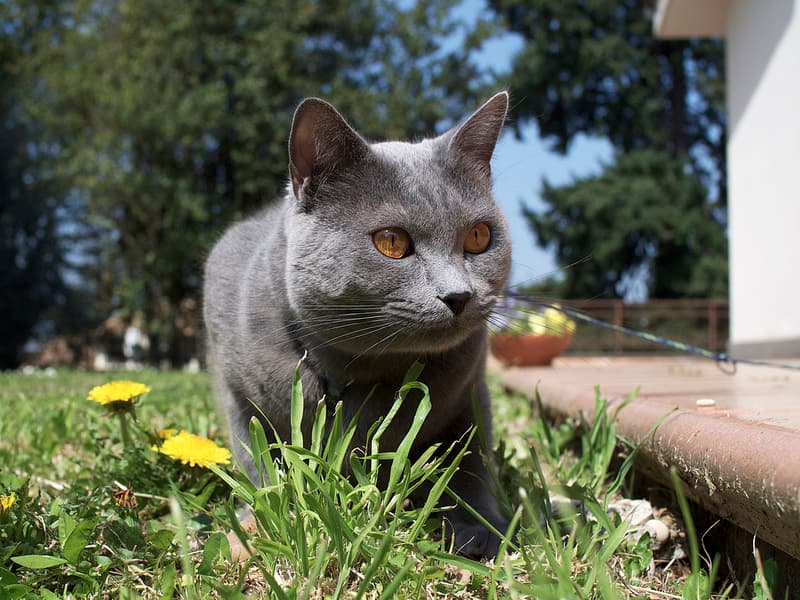
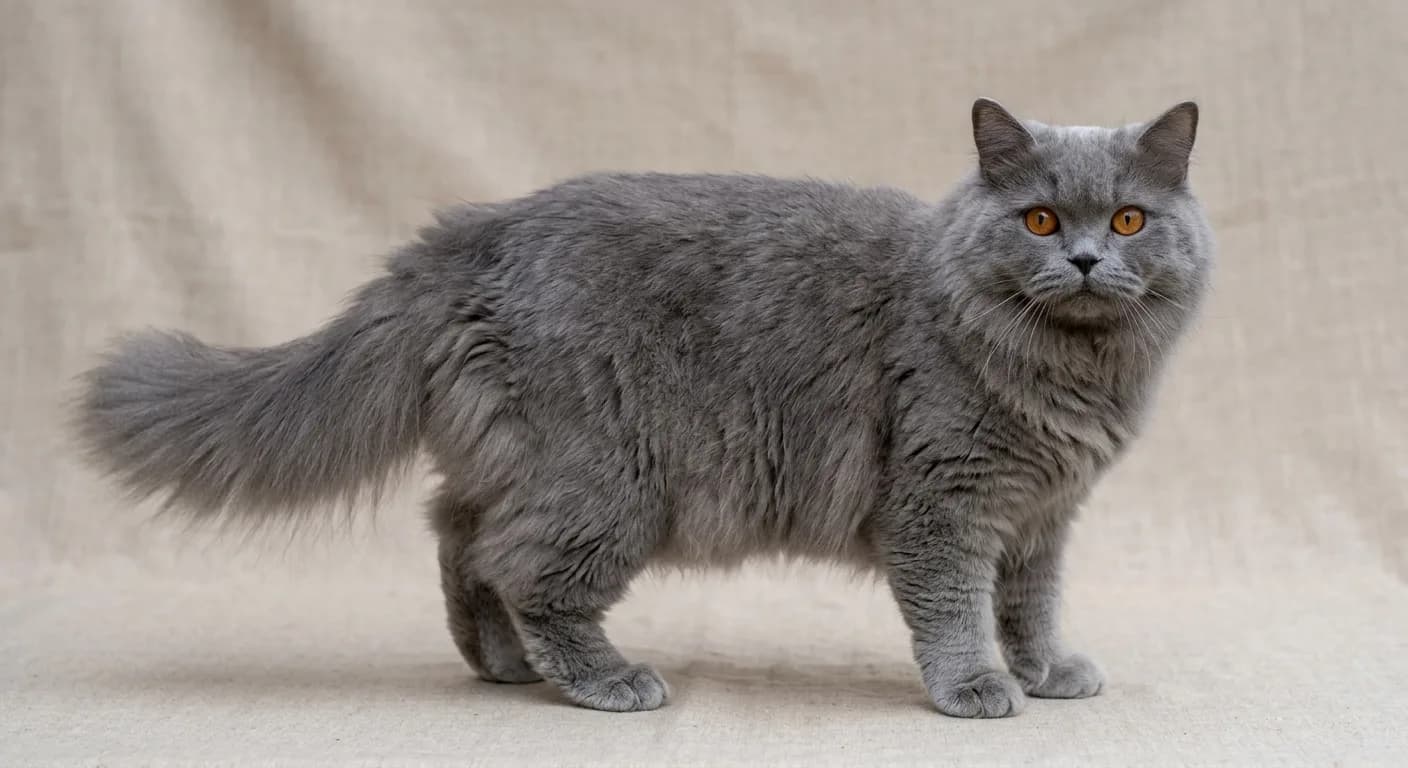
The breed's physical hallmarks are easy to recognize: a broad, round head with full cheeks, a short broad nose, small rounded ears, and large round eyes. The coat adds a ruff around the neck, furnishings on the ears, a full feathering on the breeches and belly, and a tail that fans out like a plume. Everything about the silhouette signals the same "teddy bear" quality that made the British Shorthair a household name, with an added softness from the semi-long coat.
Color-changing crystal litter that flags pH shifts in your cat's urine, an early warning sign of UTIs, kidney issues, and more.
Petful may earn a commission when you click through to Chewy, at no extra cost to you.
British Longhair Appearance and Coat Colors
The Coat
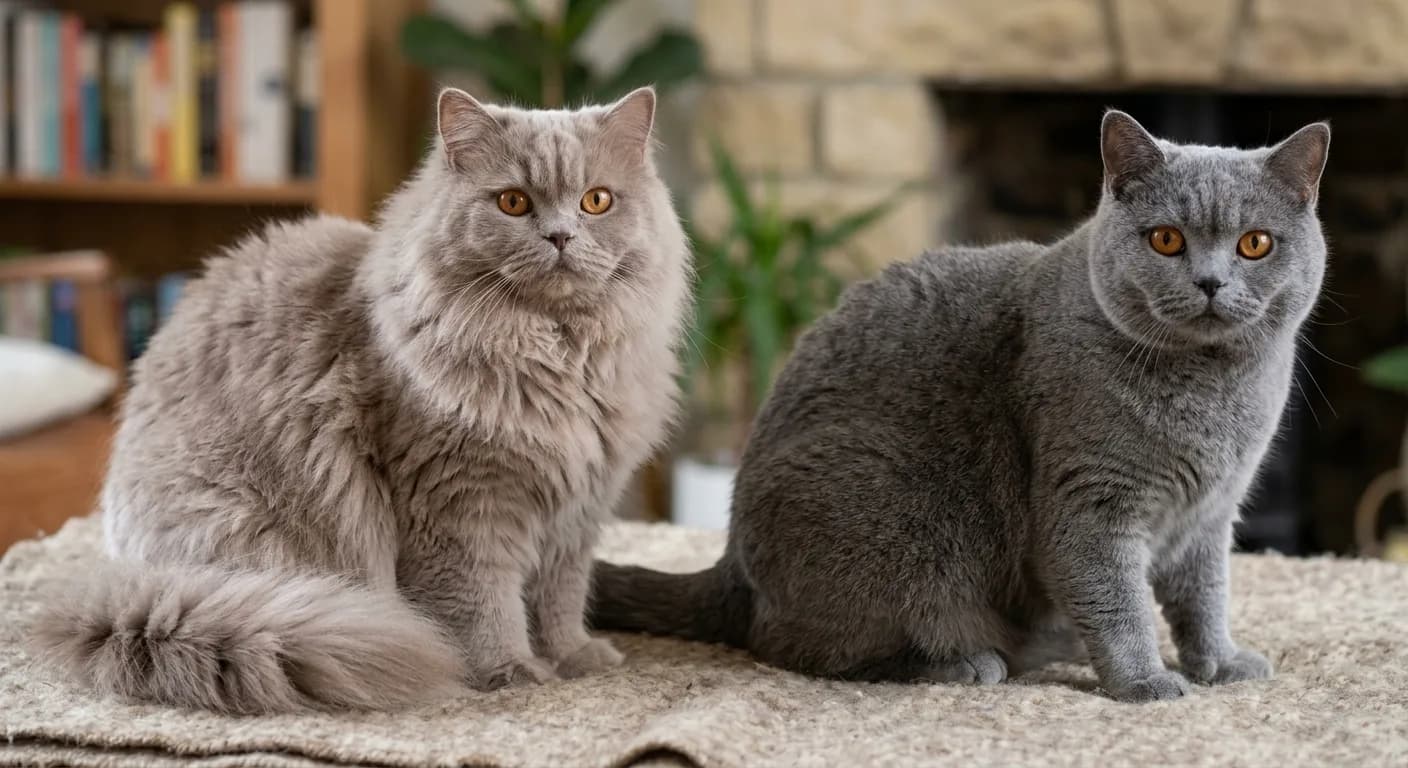
The coat is the defining feature. It is described as semi-long (not as extreme as a Persian) with a dense, soft double structure: a thick undercoat overlaid by a slightly longer guard-hair layer. The result feels plusher and heavier than the Shorthair's famously dense coat, but it lacks the extreme length and silkiness of a Persian or Ragdoll. The ruff at the neck and chest is particularly notable, and the tail hair fans out in a full plume rather than tapering to a point.
Unlike the single-layer coats on some longhaired breeds, the double coat means heavier shedding seasons in spring and autumn. It also means the coat stands off the body slightly rather than lying flat, giving the cat an even rounder, more plush appearance.
Colors and Patterns
The British Longhair comes in the same extensive palette as the British Shorthair: 30+ recognized colors and patterns across all major categories. According to GCCF and TICA breed standards, accepted colors include:
| Color Group | Common Examples | Eye Color |
|---|---|---|
| Solid | Blue (most popular), Black, White, Cream, Red, Chocolate, Lilac, Cinnamon, Fawn | Copper/Orange (White cats may be blue or odd-eyed) |
| Tabby | Classic/blotched, Mackerel, Spotted, Ticked in all base colors | Copper/Orange |
| Silver and Golden | Silver Shaded, Silver Tipped (Chinchilla), Golden Shaded, Golden Tipped | Green or Blue-Green required for all silver/golden |
| Tortoiseshell | Blue-Cream, Black Tortie, Chocolate Tortie, Lilac Tortie | Copper/Orange |
| Bicolor and Van | Any solid/tabby color + White patches | Copper/Orange |
| Colorpoint | Seal, Blue, Chocolate, Lilac Points and more | Blue |
| Smoke | Any solid color with white undercoat roots | Copper/Orange |
The blue (blue-grey) solid with copper eyes is the most recognized and historically popular color, but goldens, silvers, and chocolate point variants have seen rising demand in recent years. The Scottish Fold shares some of this same color breadth and similarly cobby body proportions, which often surprises buyers comparing breeds. For more, see Petful’s guide to Scottish Fold colors.
Rare colors (chocolate, lilac, cinnamon, fawn, golden shaded) typically command higher prices from breeders, as they require more deliberate color-breeding programs to produce reliably.
Never Scoop Again® with the Whisker Litter-Robot, the smart self-cleaning automatic litter box. Monitor visits and track weights for better overall care in the Whisker® app. Multi-cat friendly.
Petful may earn a commission when you click through to Whisker, at no extra cost to you.
British Longhair Temperament and Personality
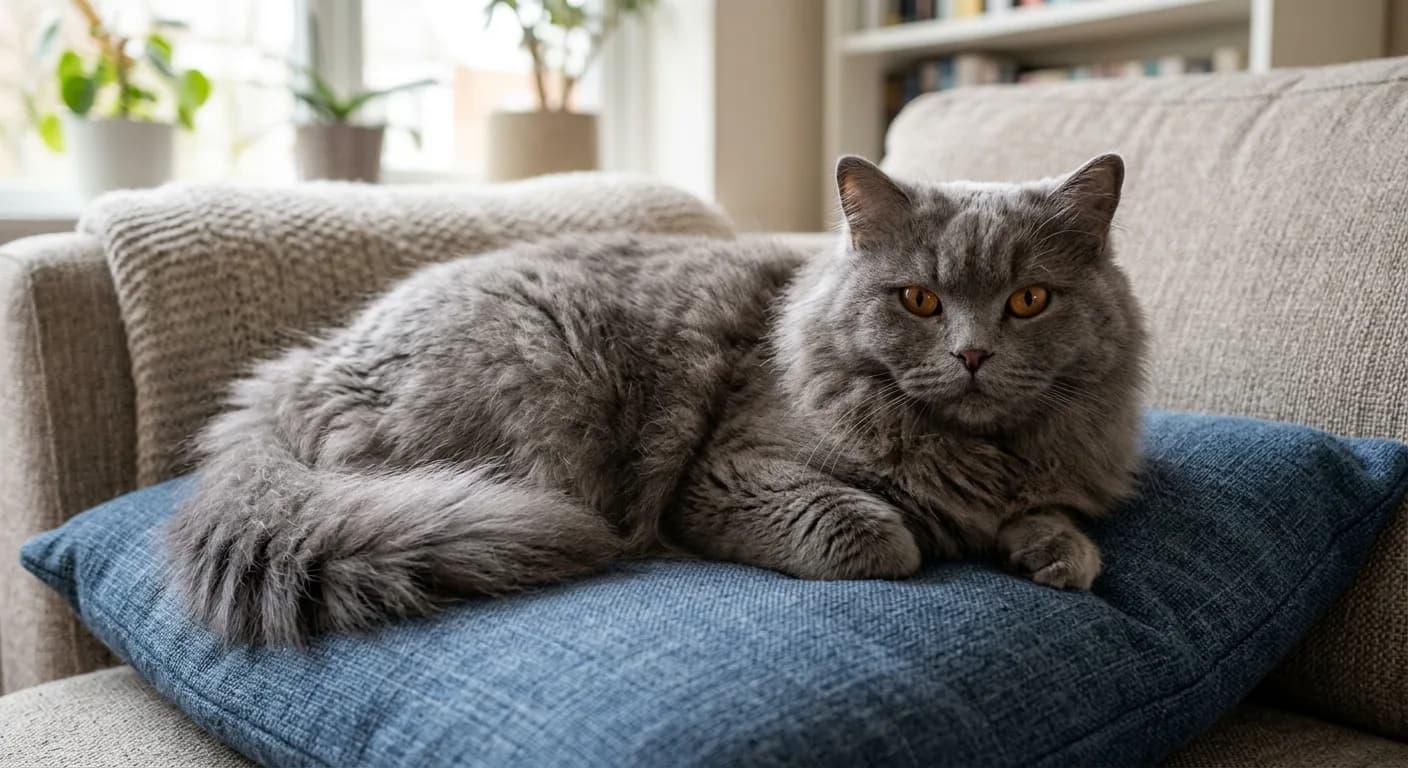
The British Longhair's personality is one of its strongest selling points, and it maps almost exactly onto the British Shorthair profile that generations of owners have prized.
Calm and even-tempered. This is not a high-energy, zoomie-prone breed. British Longhairs are famously composed, observant, and unhurried. They will watch household activity from a perch without needing to be the center of attention.
Affectionate but independent. The British Longhair is affectionate on its own terms. It will seek proximity, often settling near you rather than on you, and it accepts petting and handling with good grace. It is not a demanding, vocal, or overtly clingy breed. Owners who work long hours appreciate this quality; owners who want a constant lap cat may find it too self-sufficient.
Quiet. This is not a chatty breed. The British Longhair uses its voice selectively. Loud vocalization is atypical, which makes it a good fit for apartments or households with noise sensitivity.
Good with respectful children and other pets. The even temperament and physical robustness mean British Longhairs generally tolerate respectful children well. They are patient rather than reactive. With other cats and calm dogs, they tend to coexist peacefully once properly introduced. Sudden or rough handling from toddlers can cause a British Longhair to simply withdraw rather than scratch, but children should still be taught appropriate interaction.
Playful in moderation. Especially as kittens and young adults, British Longhairs engage willingly with wand toys, puzzle feeders, and interactive play. As they mature, play sessions tend to become shorter and more sedate. A daily enrichment routine helps maintain healthy weight given the breed's tendency toward calm, sedentary behavior. There is more on this in Petful’s guide to cat puzzle toys.
- British Longhairs are not highly active, which makes obesity a real risk. Scheduled interactive play (two sessions of 10-15 minutes daily), puzzle feeders, and vertical space (cat trees, shelves) help keep them mentally engaged and physically healthy without requiring an intensely active lifestyle.
British Longhair vs. British Shorthair: Key Differences
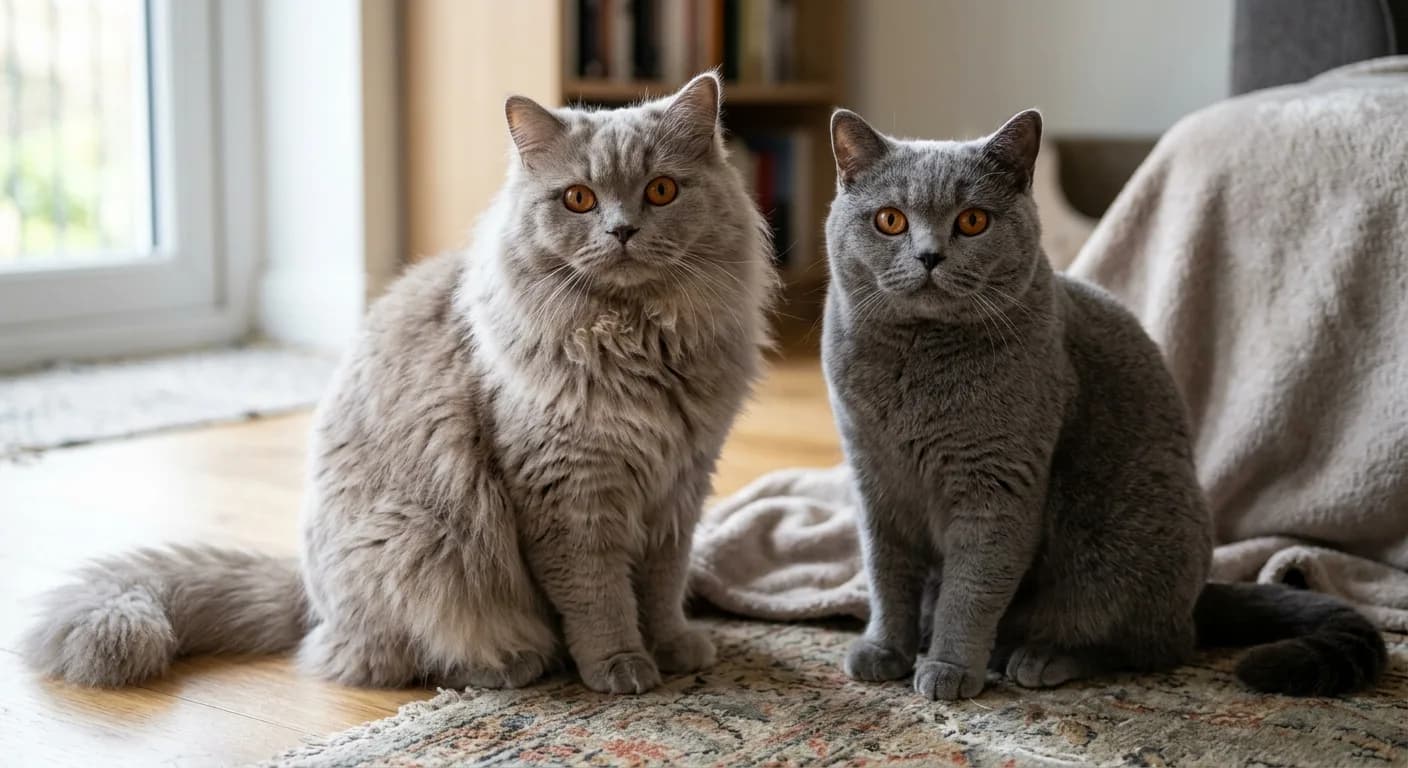
This is the most common question buyers ask, and the answer is simpler than expected: the differences are almost entirely coat-related.
| Feature | British Longhair | British Shorthair |
|---|---|---|
| Coat Length | Semi-long, dense double coat | Short, dense, plush coat |
| Ruff and Tail | Pronounced neck ruff, fully plumed tail, feathered breeches | No ruff; tail tapers to a rounded tip |
| Grooming | Weekly (minimum) combing; more intensive during shedding seasons | Monthly brushing usually sufficient |
| Registry Status | Full breed: TICA, GCCF, FIFe. Variant: CFA | Full breed: all major registries |
| Shedding | Heavier; seasonal blowouts | Moderate shedding |
| Body and Temperament | Identical: cobby, heavy-boned, calm, independent | Identical: cobby, heavy-boned, calm, independent |
| Price Range | ~$1,000-2,600 pet-quality | ~$1,200-2,500 pet-quality |
| Availability | Less common in the US | More widely available in the US |
Both breeds share the round head, chubby cheeks, broad nose, short thick legs, and the same calm, easygoing personality. The coat is essentially the entire difference for a family choosing between them. Buyers who love grooming routines often prefer the Longhair; buyers who prefer low-maintenance coats typically choose the Shorthair.
The Longhair is also somewhat less common in North America than the Shorthair, meaning waitlists with reputable breeders can run longer.
British Longhair Size, Weight, and Lifespan
British Longhairs are a medium to large breed with the same cobby proportions as the British Shorthair. According to TICA and GCCF breed standards:
- Males: typically 12-18 lb at full maturity
- Females: typically 8-14 lb at full maturity
- Maturity: slow-maturing, like the British Shorthair. Most British Longhairs do not reach full size and fill-out until 3-5 years of age. Buyers sometimes worry their cat is underweight in year one; patience is warranted.
- Lifespan: 12-16 years is the accepted range, with many cats living into the late teens with proper preventive care, a high-quality diet, and indoor-only housing.
The cobby build means short, thick legs, a broad chest, and a round, solid appearance. Despite the sturdy frame, British Longhairs can become obese if overfed and under-exercised. Weighing food portions and scheduling play is more important for this breed than for more active types.
- British Longhairs (and Shorthairs) do not finish filling out until 3-5 years old. An 18-month-old British Longhair may look leggy or narrow compared to adult photos. Do not overfeed to "fill them out" faster; this leads to obesity and metabolic strain. Follow your vet's body condition score, not the cat's appearance relative to an adult.
Grooming a British Longhair
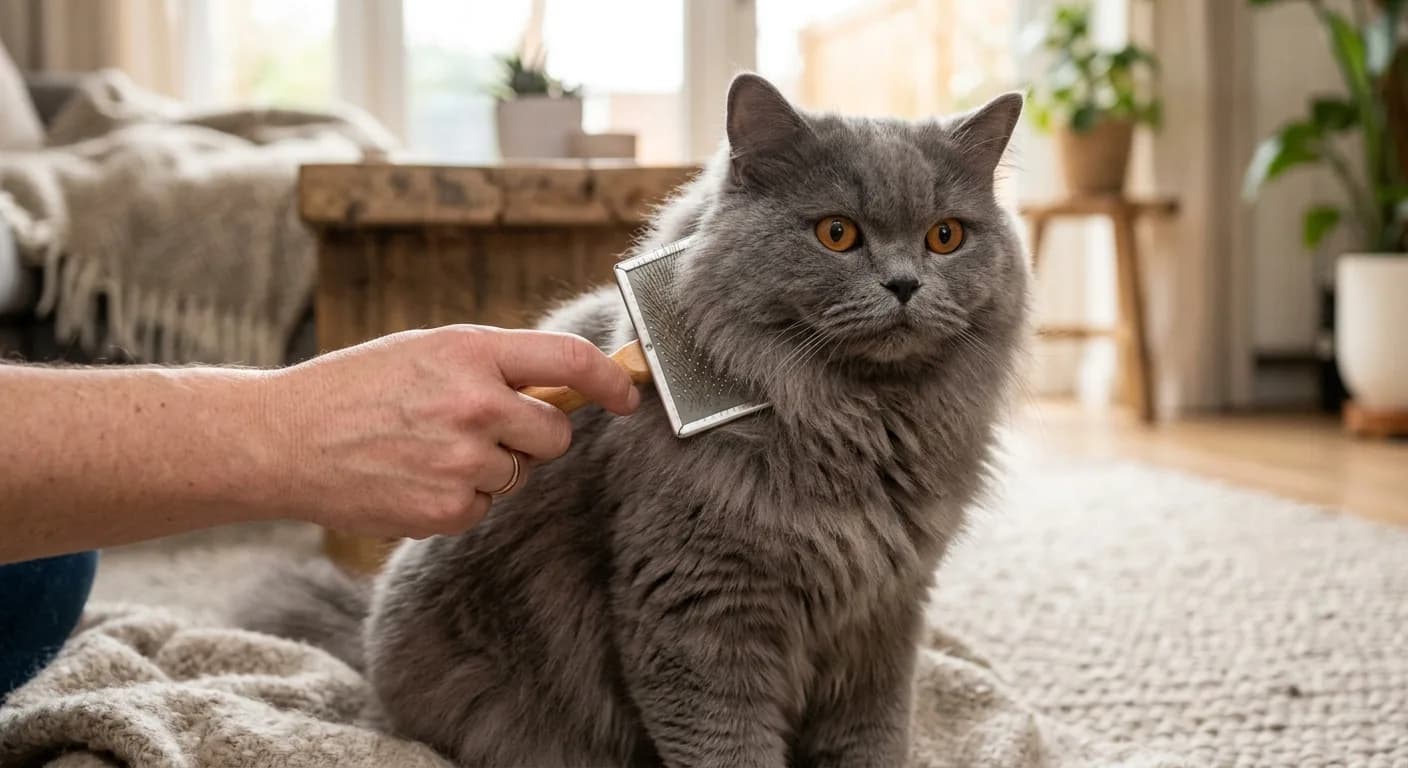
Grooming is the biggest lifestyle difference between the British Longhair and the British Shorthair, and buyers should understand this before committing.
Combing Frequency
The dense double coat requires combing at least once per week under normal conditions, and ideally two to three times per week during spring and autumn shedding seasons. A wide-tooth metal comb or slicker brush works through the double coat better than a simple bristle brush, which tends to glide over the surface without reaching the undercoat.
Pay particular attention to:

63-inch multi-level cat tree with scratch posts, hammock, plush perches, and dangling toys. Vertical territory is non-negotiable for high-energy climbing breeds like the Bengal.
Petful may earn a commission when you click through to Chewy, at no extra cost to you.
- The neck ruff (mats form most quickly here)
- The breeches (inner thigh area)
- The belly furnishings
- The tail base
Bathing
Monthly or every-six-weeks bathing with a quality cat shampoo and thorough drying helps control dander and undercoat buildup. The dense double coat takes longer to dry than single-layer coats, so a low-heat dryer (or dedicated pet dryer) is recommended over air drying, which can leave the undercoat damp and potentially promote skin issues.
Nails, Ears, and Teeth
Nail trimming every 2-3 weeks, ear cleaning as needed (weekly checks), and daily tooth brushing (or VOHC-approved dental chews as a minimum) complete the routine. British Longhairs are patient enough during grooming that establishing these habits early in kittenhood is highly effective.
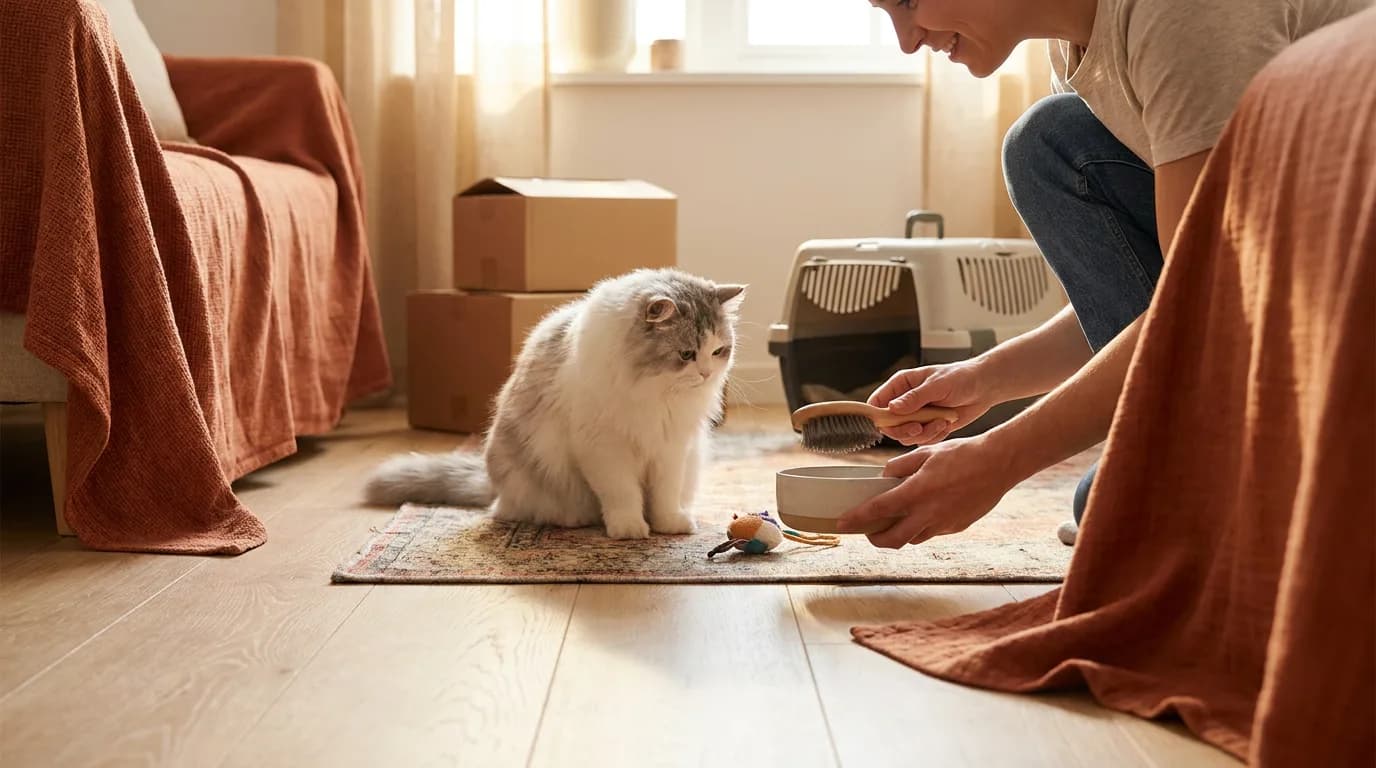
- British Longhair kittens introduced to brushing, nail trims, and ear checks before 12 weeks old nearly always become adults that accept grooming willingly. A few minutes of positive reinforcement grooming practice starting at 8 weeks pays dividends for 15 years.
Health and Common Issues in British Longhair Cats
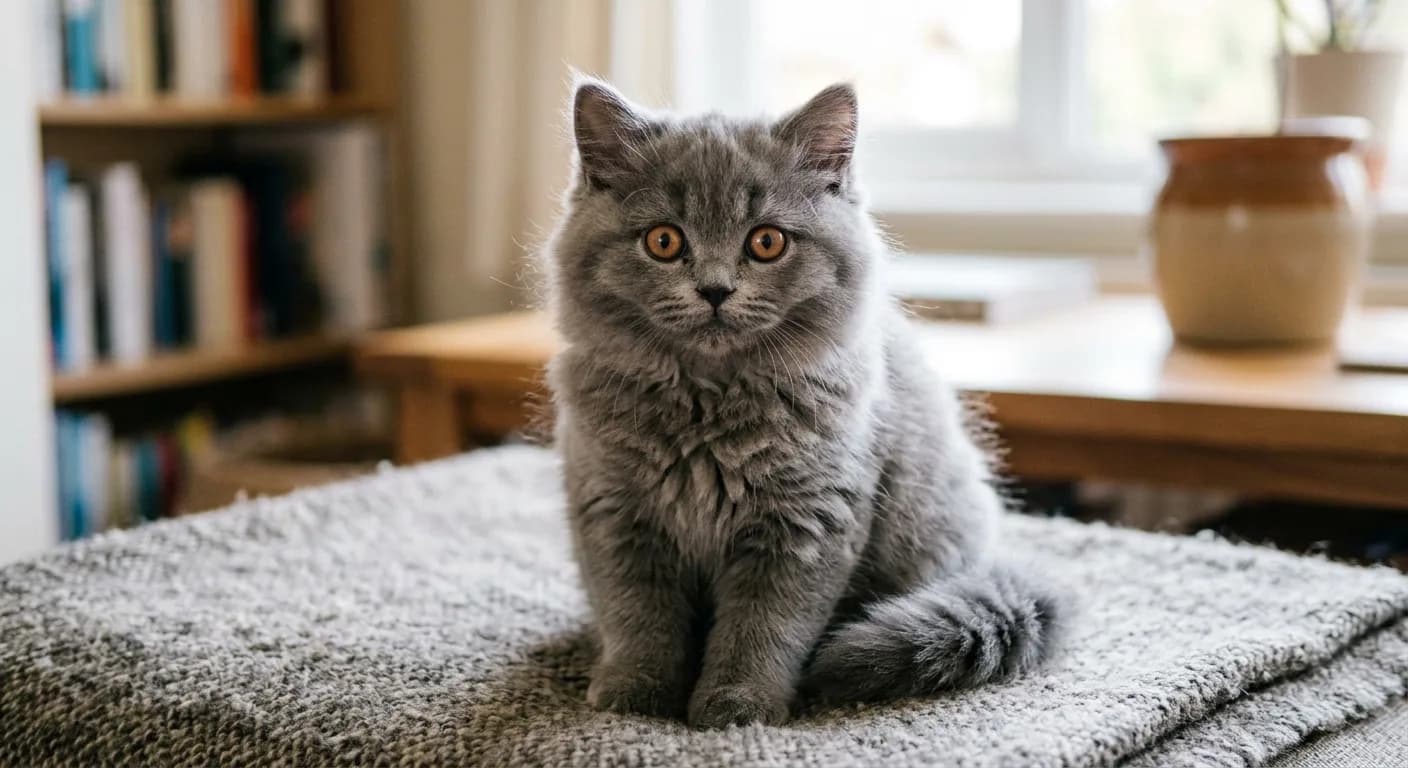
The British Longhair inherits the same health profile as the British Shorthair. The primary concerns identified by TICA, GCCF, and veterinary sources include:
Hypertrophic Cardiomyopathy (HCM)
HCM is the most common cardiac disease in cats and the top health concern in the British Shorthair and British Longhair. It involves thickening of the heart muscle and can progress to heart failure or sudden cardiac death. Responsible breeders conduct annual echocardiograms on breeding cats and screen for the MyBPC3 mutation via DNA testing. Ask any breeder for HCM echo results and DNA test documentation before purchasing.
Polycystic Kidney Disease (PKD)
PKD causes cysts to form in the kidneys, gradually impairing kidney function. It is inherited via an autosomal dominant gene, meaning one copy from one parent is enough to pass it on. A DNA test identifies carriers. Reputable breeders test all breeding stock and will provide PKD-clear documentation.
Hemophilia B
Hemophilia B (Factor IX deficiency) is documented in the British Shorthair line and can affect British Longhairs. It causes abnormal bleeding and is also DNA-testable. Less commonly screened for than HCM or PKD, but worth asking breeders about.
Obesity
The British Longhair's calm, sedentary temperament and food motivation make it prone to obesity. Overweight cats face elevated risk for diabetes, joint problems, and shortened lifespan. Measure food portions (do not free-feed), use puzzle feeders, and schedule daily play.

108-oz stainless steel pet fountain with quiet pump and water-level window. Bengals are notoriously water-obsessed; a flowing fountain encourages hydration and pulls them away from sinks and toilets.
Petful may earn a commission when you click through to Chewy, at no extra cost to you.
- Before placing a deposit on a British Longhair kitten, ask the breeder for HCM echo results (within the past 12 months for breeding cats), PKD DNA test results, and hemophilia B test results. Any reputable breeder will have these on hand. If a breeder cannot or will not provide them, walk away.
British Longhair Cat Price and Ongoing Costs
Purchase Price
British Longhair kittens from reputable, health-screened US breeders typically fall in the range of $1,000-2,600 for pet-quality (spay/neuter contract) kittens. Show or breeding-quality kittens from top lines can exceed this. Rare colors (golden shaded, chocolate, lilac, colorpoint) command premiums at the higher end of the range.
Adoption through rescue is uncommon but not impossible; rehomed adults occasionally appear through breed-specific rescue networks at $75-200.
The Persian cat sits at a comparable or higher price tier for longhaired breeds, while the Chartreux and Russian Blue offer similar blue-coat aesthetics at generally lower price points and with shorter coats.
Ongoing Costs
| Expense Category | Estimated Monthly | Notes |
|---|---|---|
| Premium dry/wet food | $40-80 | Quality protein-first food reduces obesity risk |
| Litter and supplies | $20-40 | Unscented clumping litter recommended |
| Routine vet care | $30-60 (averaged) | Annual wellness exam, vaccinations, parasite prevention |
| Pet insurance | $25-50 | HCM/PKD risk makes insurance strongly recommended |
| Grooming supplies | $5-15 | Metal comb, slicker brush, occasional professional groom |
| Total estimated | $120-245/month | First year higher with setup costs (~$500-1,000 one-time) |
The first year will run higher due to spay/neuter surgery (if not included in purchase price), initial vaccinations, microchipping, and setup costs (carrier, litter box, cat tree, scratching posts).
- Given HCM risk in the British Shorthair and British Longhair lines, pet insurance that covers hereditary conditions is worth purchasing before the first vet visit. Once a diagnosis is on record, most insurers exclude that condition as pre-existing. Lock in coverage while the cat is young and healthy.
British Longhair Kittens: What to Know Before You Buy
Finding a Reputable Breeder
Because the British Longhair is less common in North America than the British Shorthair, expect to find fewer breeders and longer waitlists (often 6-18 months for a sought-after color or sex). Look for breeders who:
- Are registered with TICA or another recognized registry
- Screen all breeding cats for HCM (annual echo), PKD (DNA), and hemophilia B (DNA)
- Raise kittens underfoot (in the home, socialized to household sounds and handling)
- Provide a written health guarantee and spay/neuter contract for pet-quality kittens
- Welcome questions and offer references from previous buyers
Avoid breeders who have multiple litters always available, offer multiple breeds, or cannot produce health test results. The "British Longhair" search online will surface kitten mills alongside reputable breeders; vetting carefully protects both your investment and the kitten's welfare.
What to Expect in the First Weeks
Kittens typically go home at 12-16 weeks (not 8 weeks, as some states require for pedigree cats). By that point they should be litter trained, eating solid food independently, and socialized to handling. The first veterinary visit in your care should happen within 3-5 days of bringing the kitten home.
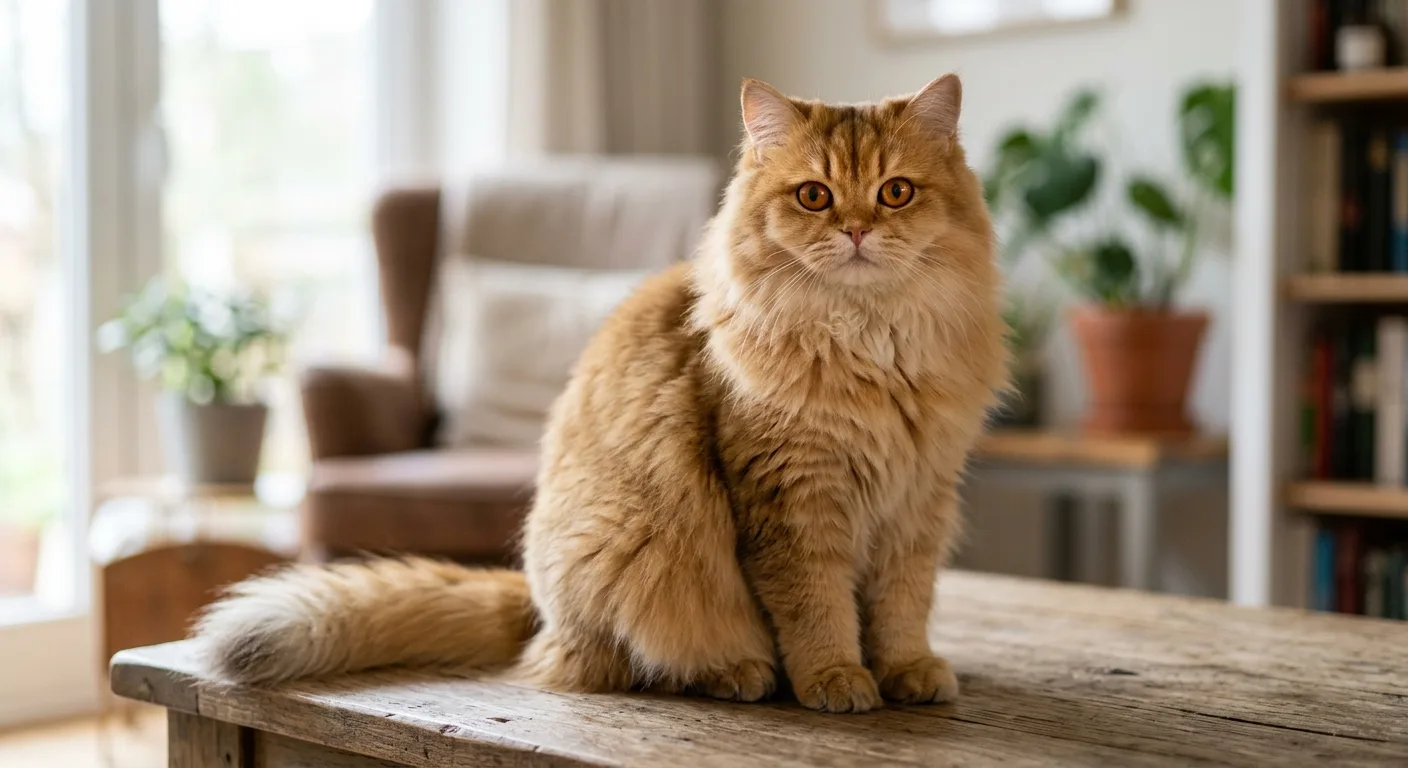
The semi-long coat will not reach its full adult plushness until 12-18 months. Young kittens may look less impressive than adult photos suggest; this is normal for the breed.
What to Look for at Pick-Up
- Clear eyes, no discharge
- Clean ears with no dark debris or odor
- No nasal discharge
- Firm, round belly (not distended, which can signal parasites)
- Lively, curious behavior (not lethargic or hiding)
- Documentation: TICA registration papers or application, health certificate, vaccination records, spay/neuter contract, health test results for both parents
Frequently Asked Questions
Pet-quality British Longhair kittens from health-screened US breeders typically run $1,000-2,600. Rare colors (golden, chocolate, lilac) and show-quality kittens sit at the higher end or above. Adoption through rescue is rare but averages $75-200 when available.
The accepted lifespan is 12-16 years, and many cats with good preventive care, a quality diet, and indoor-only housing live into the late teens.
Yes, the dense double coat sheds moderately year-round with heavier seasonal blowouts in spring and autumn. Weekly combing (and more frequent brushing during shed season) significantly reduces loose hair around the home.
The primary difference is the coat: the British Longhair has a semi-long plush double coat with a neck ruff, feathered breeches, and a plumed tail, while the British Shorthair has a short, dense, crisp coat. Body type, temperament, size, and health profile are nearly identical. The British Longhair also has different registry status (full breed under TICA/GCCF/FIFe vs. a longhaired variant under CFA).
Yes. The calm, patient temperament makes them tolerant of respectful children and compatible with other cats and quiet dogs. They tend to withdraw rather than react when overwhelmed, so teaching children appropriate handling is still important.
At a minimum, weekly combing with a metal comb or slicker brush. During spring and autumn shedding seasons, combing two to three times per week prevents matting. Monthly bathing helps manage the dense double coat.
British Longhairs are best kept as indoor-only cats. Their calm, trusting temperament makes them vulnerable outdoors, and outdoor access exposes them to cars, predators, disease, and parasites. Indoor living also supports the 12-16 year lifespan expectation.
The primary concerns are hypertrophic cardiomyopathy (HCM), polycystic kidney disease (PKD), and hemophilia B, all of which responsible breeders screen for via DNA testing and echocardiograms. Obesity is also a real risk given the breed's low activity level.
TICA has recognized the British Longhair as its own breed since 2009. The CFA registers it as a longhaired variant of the British Shorthair rather than as a fully separate breed. GCCF (UK) and FIFe (Europe) also recognize it as a distinct breed.
Males typically reach 12-18 lb and females 8-14 lb at full maturity. Full size and body fill-out is not reached until 3-5 years of age, which is typical for the cobby British build.
No. British Longhairs are not hypoallergenic. The dense double coat and regular shedding mean they produce significant amounts of Fel d 1 allergen (found in dander and saliva). Allergy sufferers should spend time with the breed before committing to ownership.
British Longhairs come in 30+ colors and patterns including solid (blue, black, white, cream, red, chocolate, lilac, cinnamon, fawn), tabby (classic, mackerel, spotted, ticked), tortoiseshell, bicolor, colorpoint, smoke, and the highly sought-after silver and golden shaded/tipped varieties.
A British Longhair is a real investment, so a free MyPetID profile is worth setting up early to keep your cat's microchip number, vaccination records, and proof of ownership in one place, with a QR tag to help a lost cat get home fast.
Set up a free MyPetID profileRelated British Shorthair guides: British Shorthair colors, British Shorthair temperament, and British Shorthair price.

Coreen Saito is a pet writer and longtime shelter volunteer with more than a decade in animal rescue. She covers cat behavior, breed care, and the small, ordinary science of sharing a life with companion animals, with a particular focus on honest takes about the products and decisions that actually matter. At home in Arizona, she's outranked by Mac (a dog with the loudest opinion in the house), Rebel (a cat who governs by quiet authority), and Meri (an orange tabby who runs the late shift and the laundry basket). She writes about all three, plus the rescues that keep coming through her life, at LifeWithMinty.com.
Sign up for expert-backed reviews and safety alerts all in one place.