Asthma in Cats: How We Diagnose and Treat It
Asthma in cats causes coughing, wheezing and sudden attacks that owners often mistake for hairballs. A practicing vet explains the warning signs, diagnosis, inhaler and steroid treatment costs, and home changes that prevent flare-ups.

BVMS, MRCVS
Petful is reader supported. As an affiliate of platforms like Amazon and Chewy, we may earn a commission when you buy through links on this page. There is no extra cost to you.
Asthma in cats is a chronic inflammatory disease of the lower airways that makes breathing out difficult, triggering coughing fits, wheezing and sometimes frightening full-blown attacks. As a veterinarian, I meet many owners who mistook those early coughing episodes for hairballs, so this guide walks you through the symptoms I look for, how we confirm the diagnosis in the clinic, the inhaler and steroid treatments that actually control the disease, what they cost, and the home care that keeps flare-ups rare.
- 1Feline asthma is chronic airway inflammation that affects roughly 1 to 5 percent of cats, according to the Cornell Feline Health Center.
- 2The hallmark signs are repeated coughing and wheezing, often mistaken for hairballs.
- 3Asthma is treatable, not curable: most cats do well on an inhaled steroid such as fluticasone delivered through a spacer like the AeroKat.
- 4Open-mouth breathing or blue-tinged gums means an emergency vet visit right now.

Sign up for expert-backed reviews and safety alerts all in one place.
What Is Asthma in Cats?
Feline asthma is chronic airway inflammation of the small breathing tubes (bronchi and bronchioles) in a cat's lungs. When an affected cat inhales a trigger, the airway walls swell, produce extra mucus and constrict, which traps air and forces the cat to cough and wheeze. The condition affects roughly 1 to 5 percent of cats, based on figures published by the Cornell Feline Health Center.
Asthma behaves much like the human version of the disease. It is treatable, not curable, so the goal of everything in this article is control: fewer coughing days, no emergency attacks and a normal, playful life.
If you are wondering how to help a cat with asthma right now, the short answer has three parts:
- Get a proper diagnosis, because several other diseases mimic asthma.
- Commit to the anti-inflammatory treatment your veterinarian prescribes, usually an inhaled or oral steroid.
- Strip the obvious airway irritants out of your home, starting with dusty litter and smoke.
Most cats are first diagnosed as young adults or in middle age, typically between 2 and 8 years old, and some studies suggest Siamese cats may be predisposed, per Cornell.
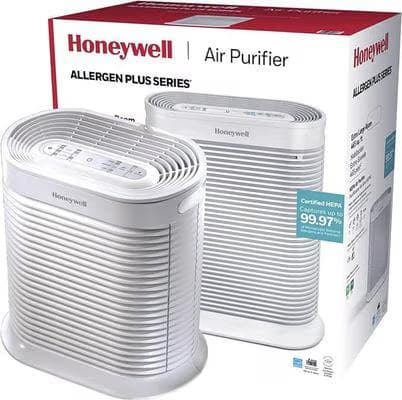
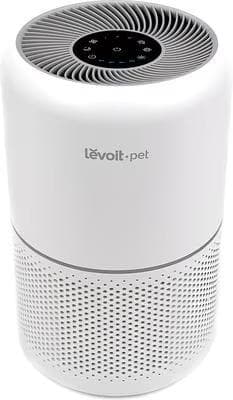
Certified True HEPA air purifier that captures 99.97% of airborne dust, dander, pollen, and smoke, reducing the airborne triggers behind feline asthma and respiratory irritation.
Petful may earn a commission when you click through to Chewy, at no extra cost to you.
Symptoms of Asthma in Cats
How can you tell if your cat has asthma? The most reliable early sign is a persistent cough: your cat crouches low, extends the neck and gives a dry, hacking cough that produces nothing. Many cats also wheeze after activity, breathe faster than normal at rest or tire quickly during play. If those episodes repeat over days or weeks without a hairball ever appearing, asthma moves to the top of my list and the cat needs a veterinary exam.
Watch for this cluster of cat asthma symptoms:
- Repeated dry, hacking coughing fits, often in a crouched posture with the neck extended
- Audible wheezing, especially when breathing out
- What does cat asthma sound like? A high-pitched whistling wheeze on exhale, sometimes with a faint rattle
- Rapid or shallow breathing at rest (more than about 40 breaths per minute while sleeping is worth reporting)
- Reduced stamina: the cat quits play sessions early or avoids running
- Occasional vomiting or gagging right after a coughing fit
- In severe moments, open-mouth breathing or panting, which is never normal in a cat
Symptoms wax and wane. A cat can look completely healthy between episodes, which is exactly why so many owners film an episode on their phone. That video is genuinely useful: it lets your veterinarian see the posture and hear the sound instead of relying on your description.
 Sponsored
Have a health question about your cat?
Talk to a licensed vet at Dutch over video or message, including nights and weekends.
Use code Pets30
Plans start at $11/month · covers up to 5 pets
- Licensed vets in most states
- Rx for 150+ conditions
- 4.7 on Trustpilot
Cat Asthma Attack: What It Looks Like and What to Do
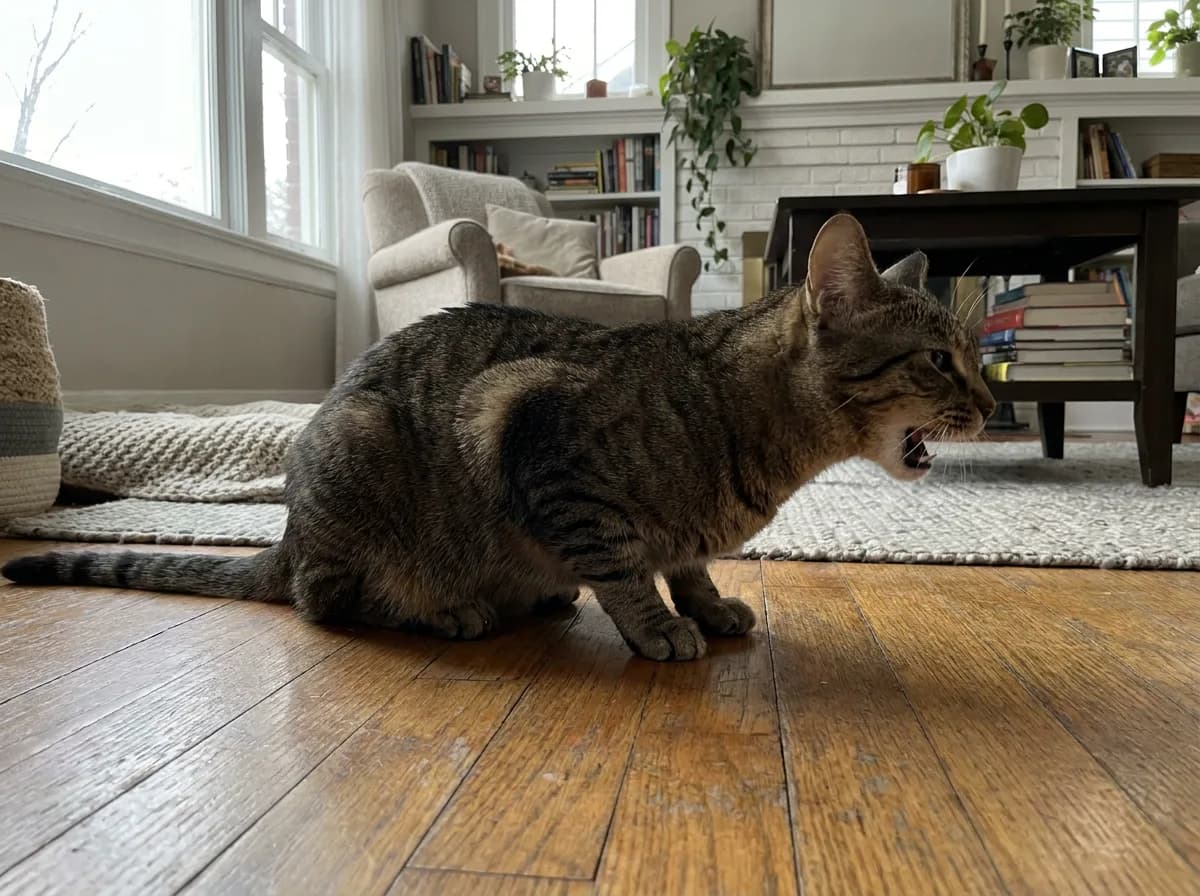
A cat asthma attack is the acute, severe version of the disease: the airways clamp down hard, and the cat suddenly cannot move enough air. During an attack the cat typically crouches low to the ground with the neck extended forward, coughs or wheezes repeatedly, and may drool or breathe with obvious effort through the belly. Attacks often strike after exertion, stress or a lungful of an irritant, and some cats have a cat asthma attack at night while the house is still.
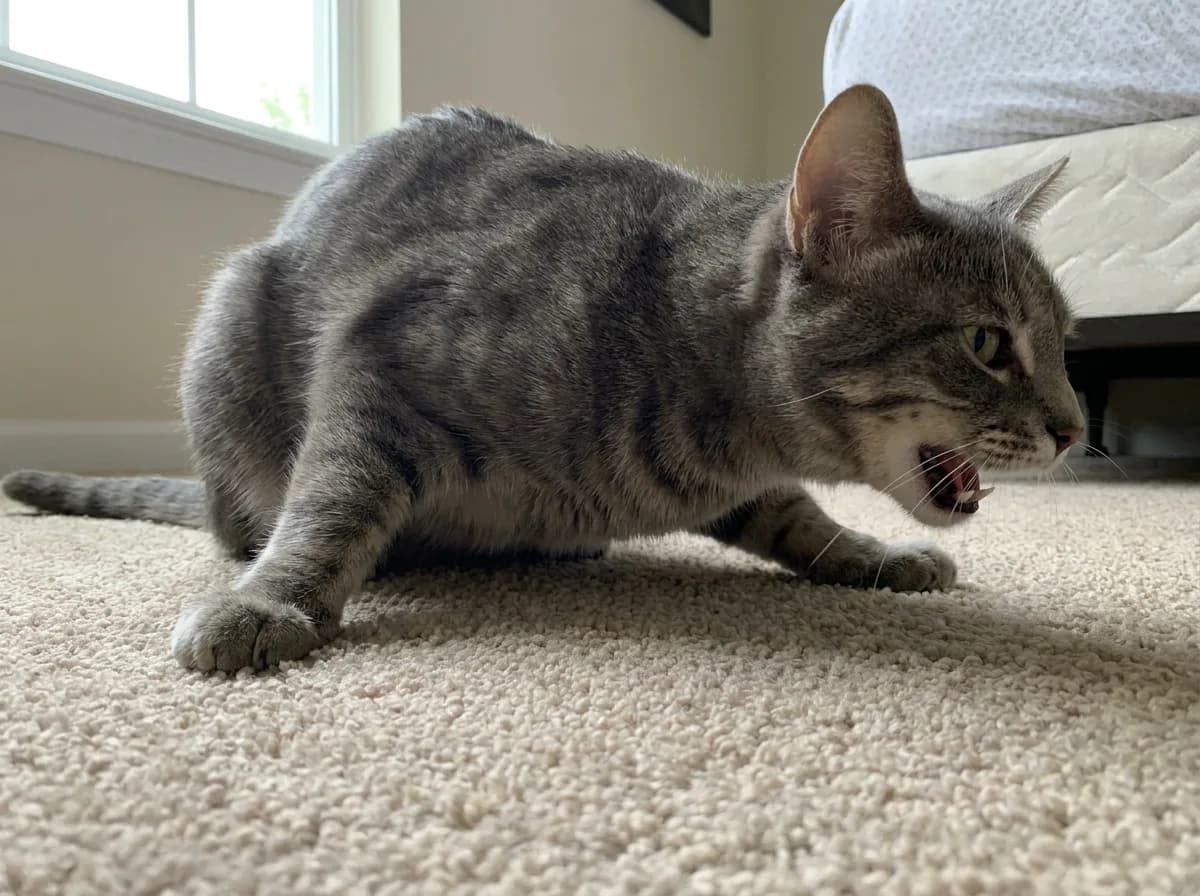
- Open-mouth breathing is an emergency in a cat. Go straight to the nearest veterinary clinic if you see open-mouth breathing or panting, blue or gray gums or tongue, extreme belly effort with each breath, collapse, or an attack that does not ease within a few minutes. Do not wait to see whether it passes, and do not give any human inhaler or medication on the way.
Here is what to do during an attack that has not yet reached emergency territory:
- Stay calm and quiet. Your panic raises the cat's stress, and stress worsens bronchoconstriction.
- Do not restrain, chase or carry the cat around more than necessary. Let it sit in the position it chooses.
- Move it gently away from any obvious trigger: smoke, aerosol spray, fresh litter dust, strong cleaning fumes.
- Give the rescue medication if your vet has prescribed one. Albuterol through a spacer is the standard at-home rescue bronchodilator.
- Time the episode. Most mild attacks ease within a few minutes; anything longer, or any emergency sign above, means an immediate vet trip.
How long do cat asthma attacks last? Mild episodes usually pass in under 5 minutes once the trigger is gone. An attack that continues beyond that, recurs the same day or leaves the cat weak needs same-day veterinary attention even if it eventually stopped, because untreated inflammation makes the next attack more likely and more severe.
Petful may earn a commission when you click through to Chewy, at no extra cost to you.
There are no proven home remedies for a cat asthma attack. Steam, honey, essential oils and antihistamine tricks circulate online, and none of them opens a constricted feline airway. Essential oil diffusers can actually trigger attacks.
What Causes Asthma in Cats?
So what causes asthma in cats in the first place? The underlying problem is an allergic-type immune response: the cat inhales an airborne particle, the immune system overreacts, and the airway lining becomes chronically inflamed. Any cat can develop it, which answers the common question of whether a cat can even have asthma: yes, at any age, though most start showing signs as young adults.
Common triggers I ask owners to audit at home include:
- Dust from clay cat litter, stirred up every time the cat digs
- Cigarette, cigar, vape and fireplace smoke
- Aerosol sprays: air fresheners, cleaning products, hairspray, flea sprays
- Pollen, mold spores and household dust mites
- Scented candles, incense and essential oil diffusers
- Cold, dry air and sudden temperature swings
- Stress and overexertion, which do not cause the disease but readily set off episodes
In most cats no single trigger explains everything. The practical approach is to reduce the whole irritant load rather than hunting for one culprit, which is exactly what the home care section below covers.
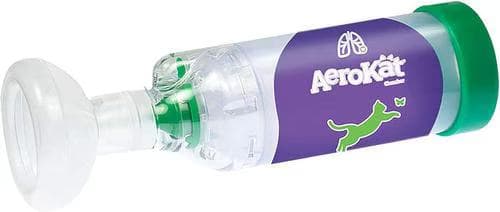
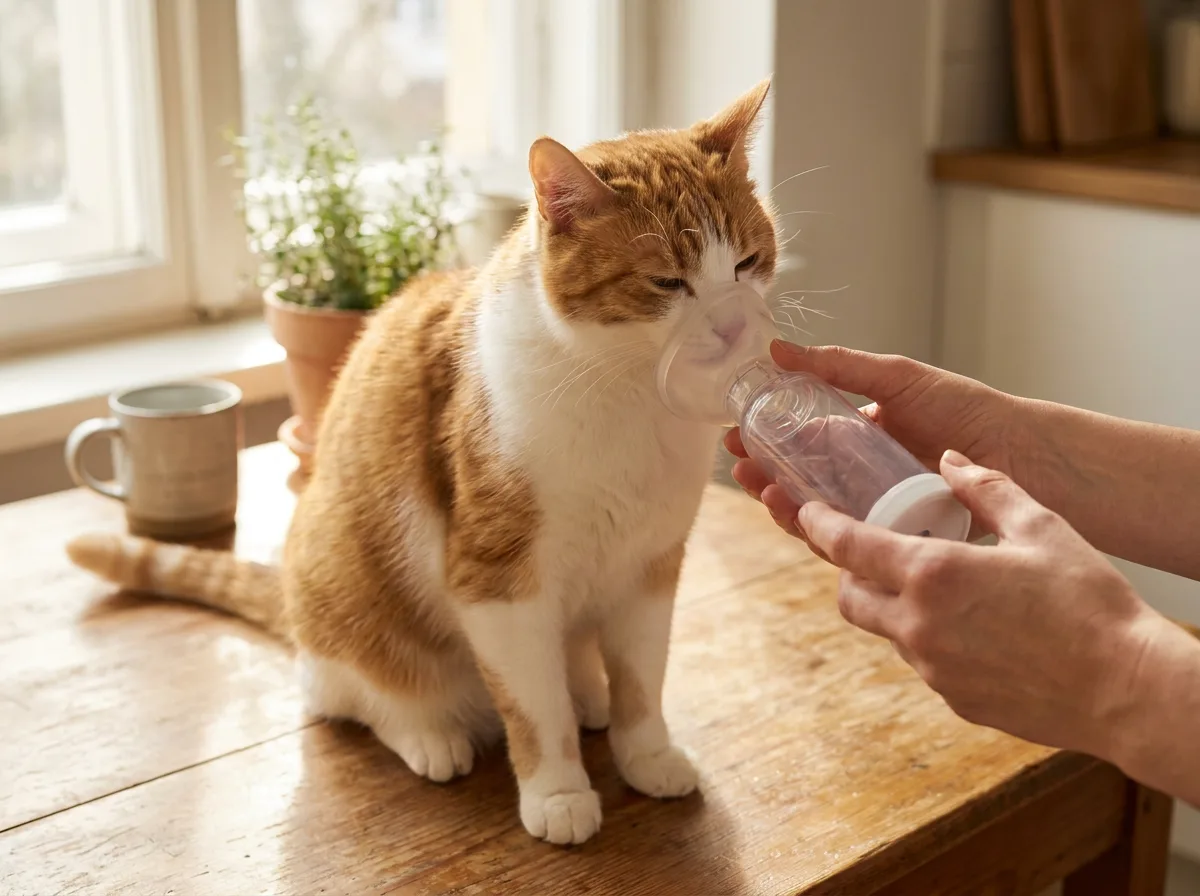
The vet-standard aerosol chamber (spacer) for giving asthma inhaler medication to cats, making daily inhaled treatment far easier and more effective.
Petful may earn a commission when you click through to Chewy, at no extra cost to you.
How Vets Diagnose Asthma in Cats
There is no single test that proves feline asthma, so we diagnose it by building a picture and ruling out the lookalikes. What can mimic asthma in cats? Heartworm disease, lungworm infection, pneumonia, chronic bronchitis, heart failure and inhaled foreign bodies can all cause coughing or labored breathing, so a vet must exclude those before settling on asthma, as VCA Animal Hospitals notes in its feline asthma resources.
A typical workup includes:
- Physical exam and history, including any videos you captured at home
- Thoracic radiographs (chest x-rays), which often show the classic thickened bronchial pattern and overinflated lungs of asthma
- Blood work, sometimes showing elevated eosinophils, plus heartworm and lungworm testing
- Fecal testing for lungworm larvae in cats that go outdoors
- In select cases, airway sampling (bronchoalveolar lavage) or a treatment trial with steroids
Before you ever reach the clinic, though, most owners face a simpler question at home: was that a hairball or an asthma attack? The two look surprisingly similar for a few seconds, and this is the comparison I give my own clients.
Hairball gag vs asthma attack, side by side:
- Posture: both cats crouch, but the hairball cat lurches and heaves through the belly, while the asthmatic cat holds still, crouched with the neck extended and head low.
- Sound: a hairball episode is a wet retch or gag; asthma is a dry, hacking cough with a wheeze on the exhale.
- Ending: a hairball gag ends with a swallow or with hair and fluid on the floor; an asthma episode ends with nothing produced, just a tired cat.
- Frequency: hairballs are occasional; asthma coughs recur, often several times a week, without any hairball ever appearing.
- Breathing afterward: after a hairball the cat breathes normally; after an asthma episode you may still hear faster or slightly wheezy breathing.
If your cat repeatedly "tries to bring up a hairball" and never does, book the vet visit. That single pattern is the most common way asthma hides in plain sight.

Walnut shell clumping cat litter that excels at odor control, lasts up to 3x longer than clay, and is a top pick for multi-cat households.
Petful may earn a commission when you click through to Chewy, at no extra cost to you.
How Vets Treat Asthma in Cats
Cat asthma treatment rests on two drug pillars: corticosteroids to shut down the airway inflammation, and bronchodilators to open constricted airways during flare-ups. The modern gold standard is inhaled fluticasone, a corticosteroid delivered through a feline spacer chamber such as the AeroKat, because it treats the lungs directly with minimal drug reaching the rest of the body, per VCA Animal Hospitals. Albuterol is the standard rescue bronchodilator, and oral prednisolone remains the reliable, inexpensive fallback where inhalers are not workable.
Here is how the pieces fit together:
- Inhaled corticosteroid (fluticasone): the daily controller. Given through a cat inhaler setup, a metered-dose inhaler puffed into a spacer with a soft face mask. Most cats accept the mask within a week or two of treat-based training.
- Rescue bronchodilator (albuterol): opens the airways within minutes during an attack. Used as needed, not daily, because it relieves symptoms without treating the underlying inflammation.
- Oral corticosteroid (prednisolone): controls inflammation body-wide. Vets reach for it to get severe cases under control quickly, or long term for cats that will not tolerate a mask.
- Injectable options: emergency clinics use injectable steroids and bronchodilators during a crisis; long-acting steroid injections exist for cats that cannot be medicated any other way, with more side-effect risk.
Owners are often surprised that the inhaler is the same product a human asthmatic uses; the spacer chamber is what makes it work for a cat, holding the puff so the cat inhales it over several normal breaths through the mask.
What does treatment actually cost? These are typical U.S. ranges I quote clients, and no ranking veterinary page publishes them:
| Treatment item | Typical cost | How often |
|---|---|---|
| Diagnosis workup (exam, chest x-rays, blood work) | $300-$700 | Once, at diagnosis |
| AeroKat spacer chamber | $50-$80 | One-time purchase, lasts years |
| Fluticasone inhaler | $50-$250 per inhaler (roughly 1-3 months of doses) | Monthly inhaler cost varies with dose and brand |
| Albuterol rescue inhaler | $30-$80 | Replaced every few months to a year |
| Prednisolone tablets | $10-$30 per month | Daily to every-other-day if used |
| Recheck visits | $60-$120 | Every 6-12 months once stable |
Generic fluticasone and pharmacy discount programs sit at the low end of that inhaler range; brand-name products at the high end. If the monthly inhaler cost is genuinely out of reach, tell your vet rather than quietly stopping treatment, because oral prednisolone control is far better than no control.
SponsoredVet care that's always there
Unlimited video calls and messaging with licensed vets for less than a typical vet visit. One membership covers up to five pets.
Use code Pets30
Plans start at $11/month · covers up to 5 pets
- Licensed vets in most states
- Rx for 150+ conditions
- 4.7 on Trustpilot
Home Care and Prevention for Cats With Asthma
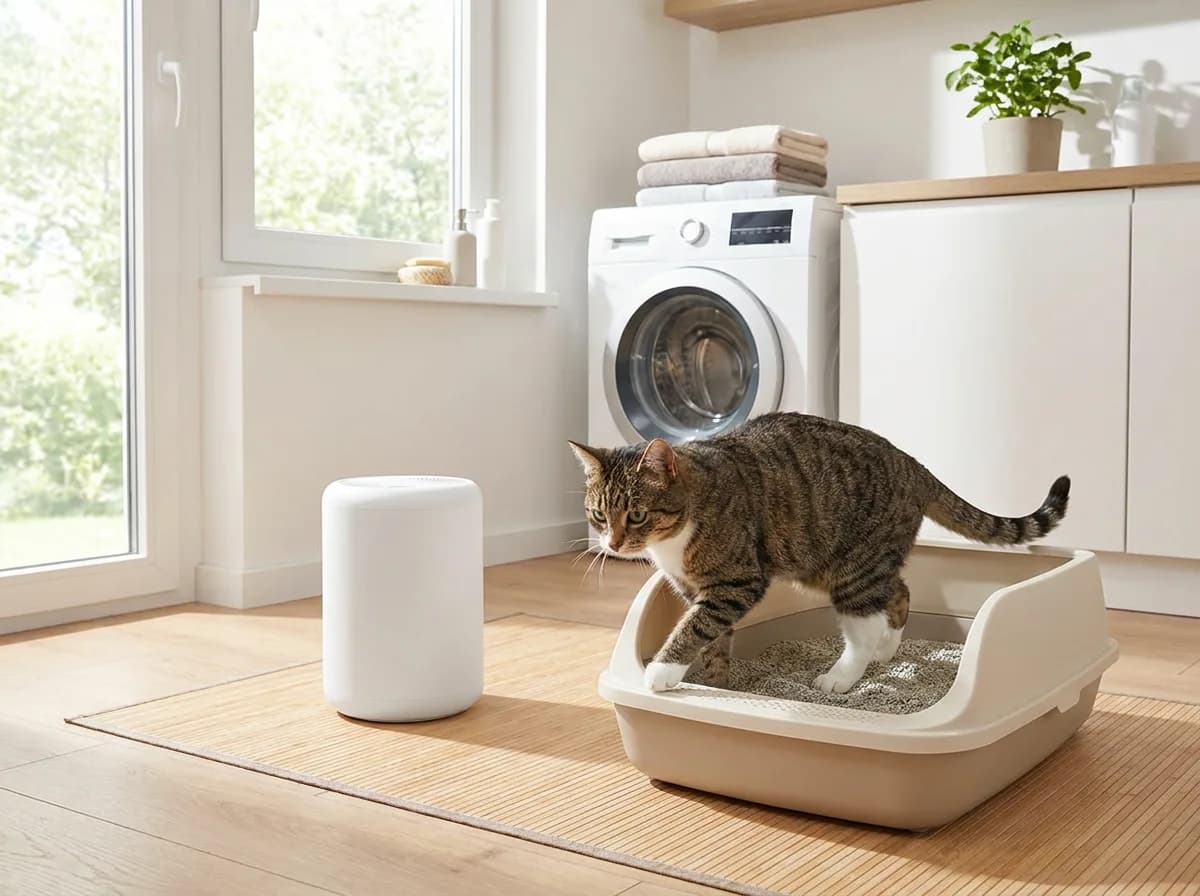
How can I treat my cat's asthma at home? Home care never replaces prescribed medication, but it decides how often your cat needs that medication. The highest-impact moves are switching to a low-dust litter, banning smoke and aerosols from the cat's air space, and running a HEPA air purifier in the rooms where the cat sleeps. Do those three things and many cats drop from weekly coughing fits to occasional ones.
My full trigger-reduction checklist:
- Switch to a dust-free or low-dust litter. Clay litters throw fine dust directly into your cat's face at every dig. Unscented, low-dust options matter more here than any other product choice, and walnut-based litters such as Naturally Fresh are among the lowest-dust materials available; our guide to the best cat litter for odor control flags the low-dust picks, and paper, tofu and other alternative litters are naturally gentler on airways.
- Make the home smoke-free. No cigarettes, vaping or incense indoors, and keep the cat out of rooms with wood fires.
- Retire aerosols and heavy fragrance. Pump sprays, unscented cleaners and fragrance-free laundry products all reduce the irritant load. Skip essential oil diffusers entirely.
- Run a HEPA air purifier where the cat sleeps and change furnace filters on schedule. A true-HEPA unit sized for the room, such as the Honeywell HPA300 for larger spaces or the LEVOIT Core P350 for a bedroom, captures the dander, dust and pollen that keep airways irritated.
- Keep humidity moderate. Very dry air irritates airways; a humidifier helps in winter, but keep it clean so it does not aerosolize mold.
- Keep your cat lean. Extra weight measurably worsens breathing effort in asthmatic cats.
- Lower stress. Predictable routines, quiet retreat spots and play at the cat's own pace all reduce flare-ups.
One warning about "natural" shortcuts: there is no effective cat inhaler over the counter, and no supplement, herb or homeopathic product has been shown to control feline airway inflammation. Natural remedies for cat asthma are at best neutral and at worst a delay that lets inflammation scar the airways. Use home care to reduce triggers, and leave the inflammation to real medication.
Life Expectancy for Cats With Asthma
How long can a cat live with feline asthma? With consistent treatment, most asthmatic cats live a normal or near-normal lifespan, and many well-controlled patients reach their mid to late teens just like their non-asthmatic housemates. The disease itself does not shorten life when the inflammation is managed; what shortens life is uncontrolled disease, because severe untreated attacks can be fatal and chronic inflammation permanently remodels the airways.
The realistic picture I give owners:
- Well-controlled cats: normal daily life, normal play, occasional mild flare-ups, routine rechecks once or twice a year.
- Partially controlled cats: recurring coughing weeks and occasional urgent visits; these cats usually need a medication adjustment, not a grimmer prognosis.
- Untreated cats: progressive airway scarring, worsening attacks and genuine risk of a fatal crisis.
Is cat asthma dangerous? Yes, in the specific sense that a severe attack is life-threatening in the moment. But danger and prognosis are different questions. A cat diagnosed early, medicated consistently and living in a low-trigger home has an excellent outlook, and age at diagnosis matters less than control: older cats with asthma who respond to treatment do very well too.
Do Cats Cause Asthma in People?
Cats can trigger asthma in people, which is the mirror image of everything above. The allergen is Fel d 1, a protein in cat saliva and skin secretions that spreads on shed hair and dander, and in sensitized people it can provoke both allergy symptoms and true asthma attacks. That is a human medical issue to manage with your own doctor, but the cat side of the equation is choosing wisely: some breeds produce less Fel d 1 or shed less of it. If cat allergies or asthma run in your household, start with our guide to hypoallergenic cat breeds for allergy and asthma sufferers before you adopt.
Cat Asthma FAQs
It can be, but it rarely has to be. A severe untreated attack can be fatal because the constricted airways simply cannot move enough air, which is why open-mouth breathing or blue gums means an emergency vet trip. With diagnosis and consistent treatment, though, well-controlled cats live normal lives, and fatal attacks in properly medicated cats are uncommon.
No. Feline asthma is a lifelong condition, and the inflammation continues even during quiet stretches when your cat seems fine. Flare-ups return without management, and every uncontrolled flare adds a little more permanent airway damage. Some cats eventually need less medication as triggers are removed, but stopping treatment entirely should only ever happen under veterinary supervision.
Plan on $300-$700 for the initial diagnosis, a one-time AeroKat spacer cost of about $50-$80, and an ongoing monthly medication budget of roughly $25-$100 depending on whether your cat uses generic fluticasone, brand-name inhalers or inexpensive prednisolone tablets. Rescue albuterol inhalers add $30-$80 every few months. Pet insurance bought before diagnosis typically covers asthma as a new condition.
BVMS, MRCVS
Dr. Pippa Elliott, BVMS, MRCVS, is a veterinarian with nearly 30 years of experience in companion animal practice. Dr. Elliott earned her Bachelor of Veterinary Medicine and Surgery from the University of Glasgow. She was also designated a Member of the Royal College of Veterinary Surgeons. Married with 2 grown-up kids, Dr. Elliott has a naughty Puggle named Poggle, 3 cats and a bearded dragon.
Sign up for expert-backed reviews and safety alerts all in one place.