Best Flea Treatment for Yard: Vet-Backed Picks
The best flea treatment for yard use depends on your pets and your shade. Compare sprays, granules, and beneficial nematodes, see pet re-entry timing by product type, and learn which zones actually need treating.

BVMS, MRCVS
Petful is reader supported. As an affiliate of platforms like Amazon and Chewy, we may earn a commission when you buy through links on this page. There is no extra cost to you.
The right flea treatment for yard use is not one product. It is a decision between three formats that work in completely different ways: an adulticide spray that kills what is alive today, a granule that carries product down into soil and leaf litter, and beneficial nematodes that hunt flea larvae biologically for weeks. Choosing badly is why so many owners spray the whole lawn, watch the fleas return in ten days, and conclude that outdoor flea control does not work.
It does work. It just has to be aimed at the right ten percent of your property, paired with the right active ingredient for the pets you own, and timed around a reentry interval you can actually verify on the label.
Shopping in a hurry? These are the yard products this guide names, grouped by how they work.
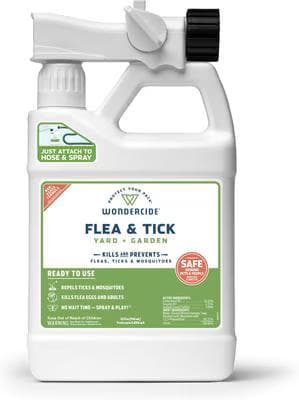
- Best cat-friendly cedar option: Wondercide Flea, Tick and Mosquito Yard Spray, a hose-end bottle with no waiting once the lawn is dry.
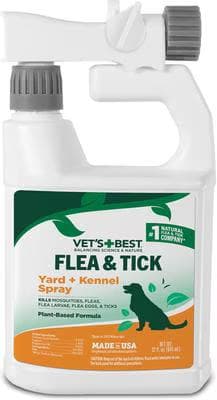
- Best plant-based hose-end spray: Vet's Best Flea and Tick Yard and Kennel Spray, peppermint oil and clove extract, usable around plants.
- Best granular option: EcoSMART Insect Killer Granules, spread dry and watered in across shaded harborage zones. It is a botanical granule rather than a synthetic one, so plan on reapplying more often than the three-to-six-week interval quoted for pyrethroid granules later in this guide.
- Best broad-spectrum yard option: Advantage Yard & Premise Spray, a hose-end concentrate for a whole-yard pass. It is built on esfenvalerate, a synthetic pyrethroid, so treat it the same as any other pyrethroid where cats have access to the ground.
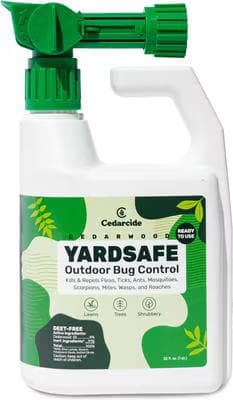
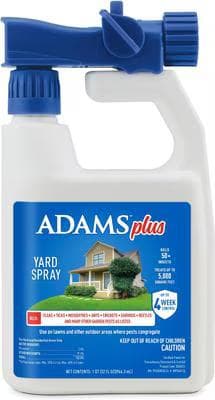
The hose-end sprays are the easiest of these to get hold of: Wondercide Yard and Garden Spray, Vet's Best Yard and Kennel Spray, Adams Plus Yard Spray and Cedarcide YardSafe. One caution on that list: Adams Plus Yard Spray is a permethrin concentrate, so it belongs only in a household with no cat access to the treated ground. The granule and broad-spectrum options above come from the same place, so the whole plan can be ordered in one go.
- 1Fleas survive in shaded, moist harborage zones, so treating your whole lawn wastes most of the product
- 2Sprays deliver fast knockdown, granules deliver soil depth, and beneficial nematodes deliver weeks of larval control
- 3Permethrin-based yard concentrates are a serious risk in cat households and have safer substitutes
- 4Yard treatment supports vet-prescribed on-pet prevention and never replaces it

Sign up for expert-backed reviews and safety alerts all in one place.
Where fleas actually live in your yard
This is the single most useful thing to understand before you spend a dollar. Cat flea larvae are not lawn insects. They avoid light, they dry out and die in direct sun, and they need organic debris to feed on. That means the sunny middle of your lawn is close to sterile ground for them, while a narrow band of shaded moist areas around the edges of your property carries almost the entire outdoor population.
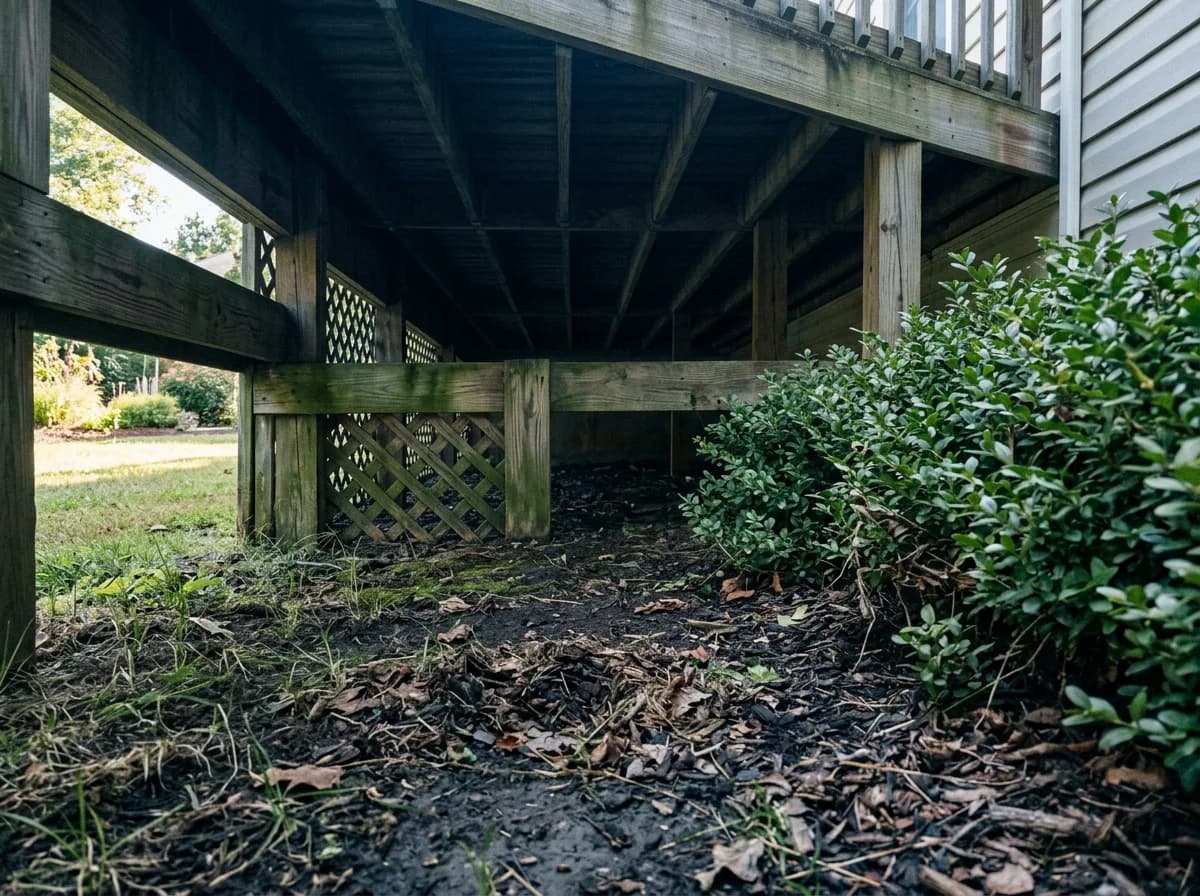
Aim your flea control at these harborage zones, not open lawn:
Petful may earn a commission when you click through to Chewy, at no extra cost to you.
- Under decks, porches, sheds, and raised crawl spaces where pets lie down to cool off
- The shaded drip line beneath shrubs, hedges, and low evergreen branches
- Fence lines, especially the north-facing side that stays damp longest
- Around dog houses, kennel runs, outdoor bedding, and any favorite napping patch
- Leaf litter, pine straw, mulch beds, and the gap where mulch meets lawn
- Shaded gravel or paver areas where wildlife travels through at night
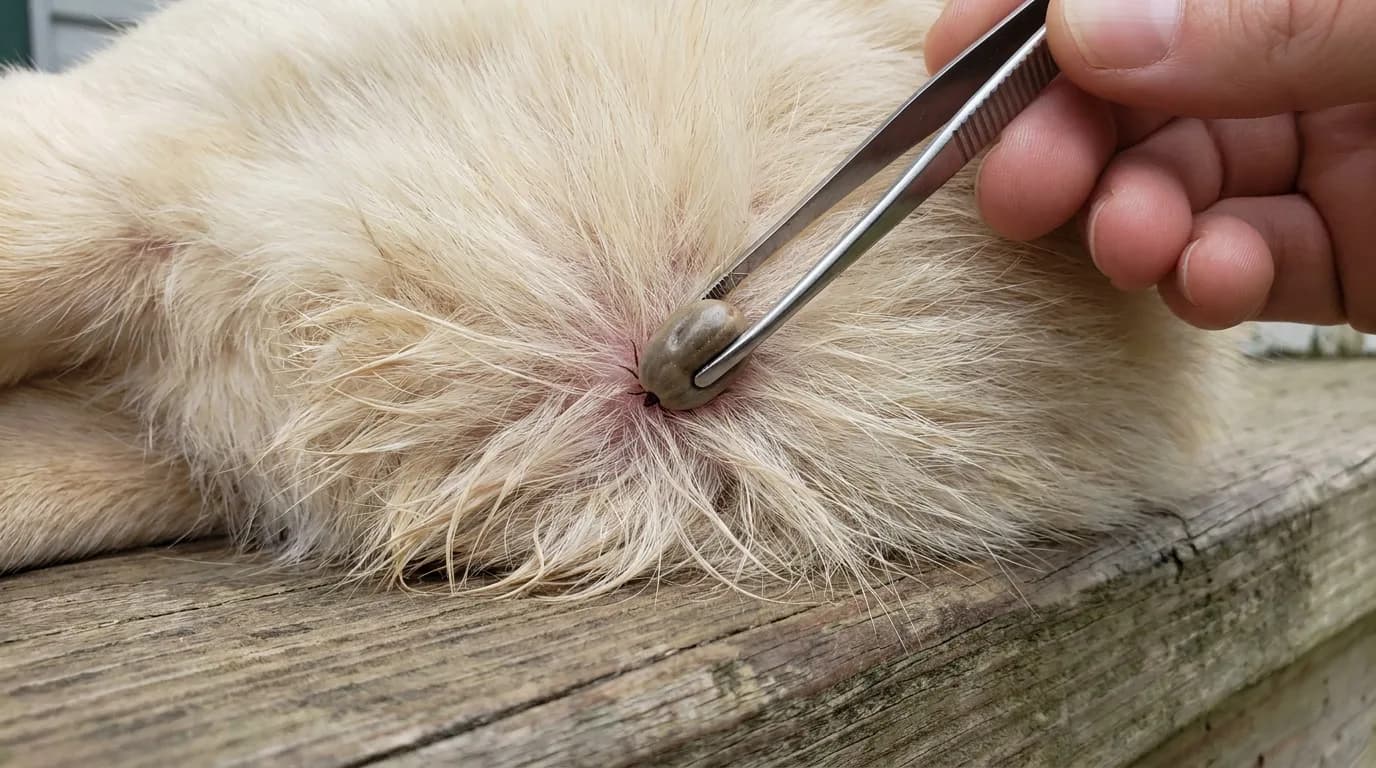
The same shaded fence lines and leaf litter that hold flea larvae are where ticks wait, so keep a tick removal kit by the back door and check pets after they cross these zones; prompt removal within 24 to 36 hours is the part you actually control. After outdoor time in these areas, five minutes with a deshedding brush over the tail base and flanks lifts loose undercoat and flea dirt onto a white towel, which is the cheapest way to tell whether the yard problem has reached your pet. Outdoor bedding is the one harborage on this list you can delete outright: replace loose blankets left under the deck with a single indoor orthopedic bed you can strip and launder weekly.
- Walk the yard and note every spot where your dog or cat actually lies down outdoors. Flea larvae accumulate where flea dirt drops off a resting animal, so your pet's shade map is your treatment map.
If you suddenly have fleas in your yard after years without them, the population almost never arrived overnight. It built quietly in the shaded strips described above and only became obvious once enough adults emerged to reach you or your pet. Three things commonly flip the switch: wildlife starting to use a new route across the property, a change in the yard itself such as a fresh mulch bed or an overgrown hedge that creates damp shade, or a stretch of warm humid weather that hatches an existing egg bank all at once. A neighbor treating their own ground can push wildlife, and the fleas riding it, straight across the fence to you.
- Wildlife is the usual seed: opossums, raccoons, feral cats, rabbits and squirrels crossing fence lines at night.
- Warm, humid weather after rain hatches an existing egg bank together, which is what makes an outbreak feel sudden.
- New shade is new habitat: a fresh mulch bed, an overgrown hedge, or stacked timber against a fence.
- A pet newly allowed into a shaded corner will find a population that was quietly there all along.
- Check under the deck and along the shaded fence first. That is where the count will be highest.
Ask a lawn care company and its competitors to quote you for fleas, and most will price the whole lawn by the square foot. Almost none of them will explain why that shape is wrong. Fleas concentrate in shaded, moist harborage zones, so the sunny majority of your turf does not need spraying at all. Walk the property with that in mind and the ground you actually have to treat usually turns out to be a thin ribbon: the damp side of a fence, the strip under a deck, the dark soil beneath a hedge. Everything else is habitat flea larvae cannot survive in, and covering it buys you nothing except a larger bill and more pesticide on ground your family uses.
- Use the damp test: if a patch is still wet to the touch past midmorning on a dry day, it is harborage and belongs on your map.
- Pace roughly 6 feet out from a shaded fence line and 3 feet out from a deck, shed, or shrub edge to size the treatment band.
- Direct sun and low humidity kill flea larvae on their own, which is why mowed open turf stays close to empty.
- Re-walk the map every season. A new mulch bed or an unpruned hedge creates harborage that did not exist last year.
- Narrow treatment also limits collateral damage, since a non-selective pyrethroid takes out beneficial insects everywhere it lands.

 Sponsored
Need flea, tick, or parasite care for your pet?
A licensed vet at Dutch can recommend the right preventive and prescribe it when it's appropriate. Annual members get 20% off their first flea and tick order.
Use code Pets60
Plans start at $12/month · covers up to 5 pets
- Licensed vets in most states
- Rx for 150+ conditions
- 4.7 on Trustpilot
Why do I suddenly have fleas in my yard?
A yard that was clean last month can be loaded this month because outdoor flea populations are seeded by animals passing through, then amplified by weather. Opossums, raccoons, feral cats, rabbits, and squirrels drop flea eggs and flea dirt as they travel your fence lines. Those eggs hatch when warmth and humidity rise, which is why outbreaks feel sudden after a rainy stretch followed by mild, humid days. A new shaded spot, an untrimmed hedge, or a fresh mulch bed can also convert dry ground into survivable habitat almost overnight.
Best flea treatment for your yard: our top picks
There is no single best flea treatment for yard conditions across every household, because the correct pick changes depending on whether you have cats, how fast you need results, and whether you are willing to reapply. Below is how we rank the formats, and what to look for inside each one.
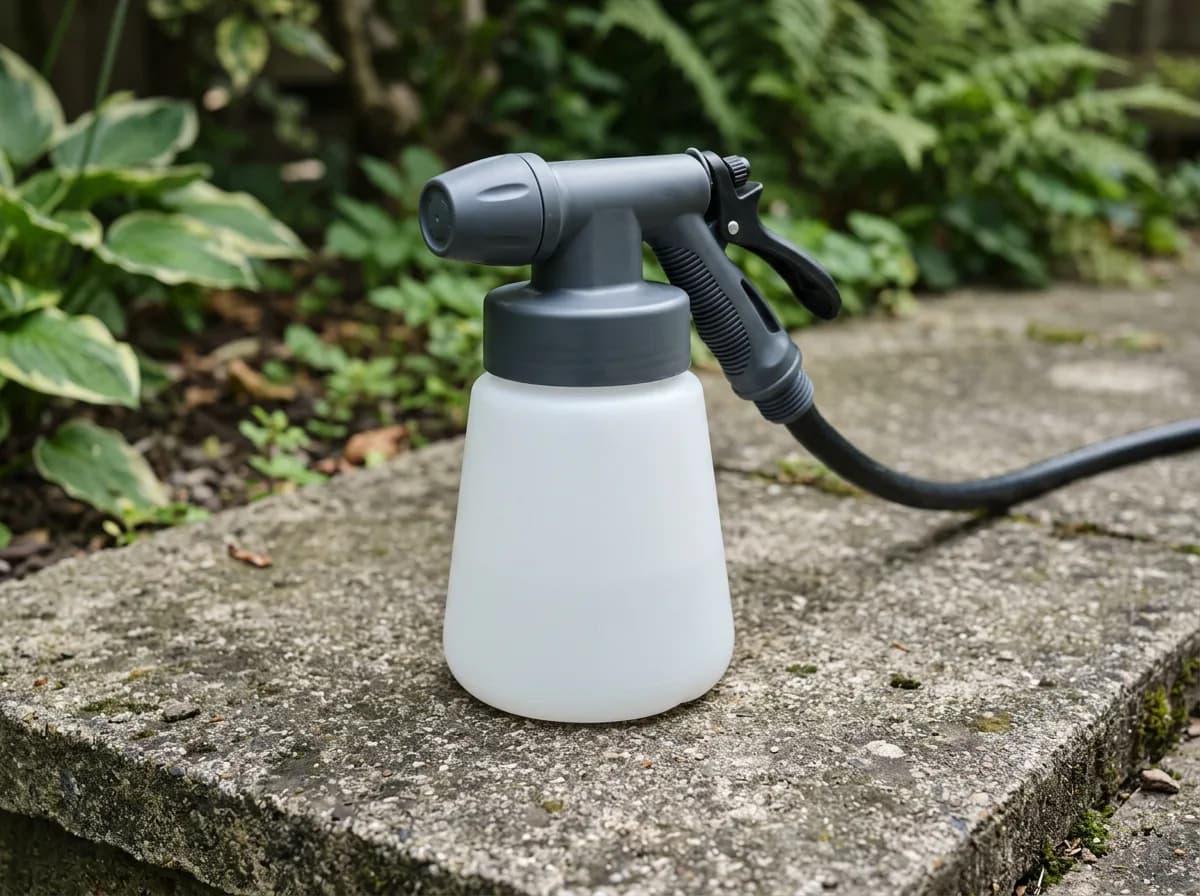
| Pick | Format | Best for | Key active ingredients |
|---|---|---|---|
| Best overall | Hose-end or tank-sprayed concentrate with an IGR | Most yards with an active infestation | Bifenthrin or lambda-cyhalothrin plus pyriproxyfen |
| Best pet-safe pick | Plant-oil hose-end spray | Cat households and owners who want same-day re-entry | Cedarwood oil, sesame oil, sodium lauryl sulfate |
| Best for deep harborage | Granules watered in | Mulch beds, leaf litter, crawl space edges | Bifenthrin or lambda-cyhalothrin |
| Best biological pick | Beneficial nematodes (Steinernema carpocapsae) | Shaded soil, long-term larval control, chemical-free yards | Live nematodes, no pesticide |
| Best budget pick | Permethrin 10% concentrate diluted per label | Dog-only households, large acreage | Permethrin |
The best thing to kill fleas in your yard is aim rather than chemistry. The same concentrate that disappoints across a whole lawn works when it goes only onto shaded, damp harborage, so the honest answer to what kills fleas in a yard is a correctly targeted product, not a stronger one. If you keep cats, the pick changes to a plant-oil spray or beneficial nematodes, because the species risk outweighs any speed advantage. And if you are only ever going to do one thing, do the free one: mow, rake out the leaf litter, and open up the shade over the strips where your pets lie down. Sun and dry ground kill flea larvae with no bottle involved, and every product below performs better on ground that has already been cleared.
- Aim at shade: deck and shed skirts, fence lines, shrub drip lines, kennel runs and favorite napping patches.
- Skip the open, sunny lawn entirely. Direct sun already kills larvae there, and treating it wastes concentrate.
- Cat household: cedarwood-oil or sesame-oil spray, or Steinernema carpocapsae nematodes.
- Mow and rake first so the product reaches soil instead of sitting on debris.
- Most suburban lots hold only 400 to 1,200 square feet of true harborage, not the whole property.
What is the best thing to kill fleas in your yard?
For most households the best product to kill fleas in yard harborage is an EPA-registered concentrate that pairs a pyrethroid adulticide with the insect growth regulator pyriproxyfen, applied only to shaded zones. The adulticide kills adults and larvae on contact within hours, and the pyriproxyfen keeps any surviving eggs and larvae from ever maturing into biting adults. If you own cats, swap the pyrethroid for a plant-oil spray or beneficial nematodes and you keep the result without the species risk.
What we look for in a pick:
- An IGR in the mix. Pyriproxyfen is photostable outdoors, while methoprene breaks down quickly in sunlight, so pyriproxyfen is the outdoor IGR worth paying for.
- A visible EPA registration number on the label, which tells you the efficacy and safety claims went through federal review.
- A hose-end applicator or a real dilution chart, because under-dilution wastes money and over-dilution is a label violation.
- Coverage math that matches your harborage, not your lot size. Most owners need to treat a few hundred square feet, not a quarter acre.
- A clearly stated reentry interval so you know when pets can go back out.
Named products worth shortlisting include Wondercide Flea and Tick Yard Spray (cedarwood oil, cat-friendly), Vet's Best Flea and Tick Yard and Kennel Spray, EcoSMART Insect Killer Granules, Advantage Yard & Premise Spray (esfenvalerate, a pyrethroid to skip if cats roam the yard), and Steinernema carpocapsae nematodes from a live-culture supplier. If you also want a picture of the on-pet side of the plan, WebVet's vet-reviewed guide to the safest flea treatment for dogs is a good companion read.
Two things on the product label decide whether a yard product suits your household. The EPA registration number, a multi-part code printed near the manufacturer name, means the product went through federal review of its efficacy and safety claims, and it is what separates a registered pesticide from an unreviewed one. The second is pet re-entry timing, which lives in the precautionary statements rather than the marketing panel. Read both before you buy, not while standing in the yard holding a mixed tank.
- An EPA registration number confirms federal review. Minimum-risk plant-oil products are EPA-exempt and carry no number, which is not a red flag by itself but does mean no agency reviewed the efficacy claim.
- Pet re-entry timing sits under headings like precautionary statements or directions for use, usually phrased as keeping people and pets off the treated area until it is dry.
- For granules the clock runs longer, because the product must be watered in and then allowed to dry again before pets go back on the ground.
- Where the label and any general advice disagree, the label wins. It is the legally enforceable instruction and it is specific to that formulation.
- Ask your veterinarian before you treat if you have cats, puppies, kittens, a pregnant animal or a pet with existing illness, since those are the animals with the least margin for error.
Yard flea sprays, granules, and nematodes compared
The formats are not interchangeable. A spray is a surface treatment, a granule is a delivery vehicle that needs water to release, and nematodes are living organisms with their own temperature and moisture requirements. Matching the format to the ground you are treating is most of the job.
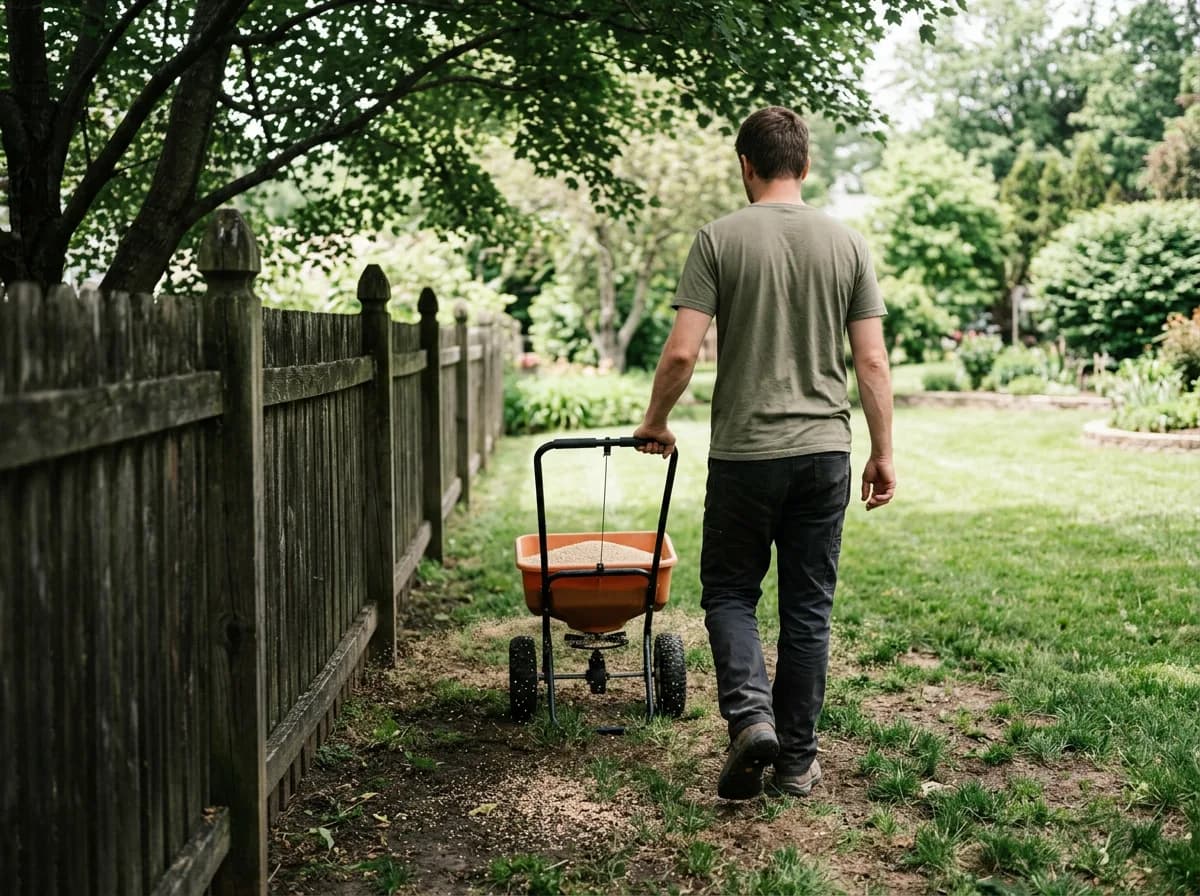
| Format | How it works | Speed | Residual | Watch out for |
|---|---|---|---|---|
| Liquid concentrate spray | Coats grass blades, mulch surface, and foliage with adulticide plus IGR | Hours | 2 to 4 weeks | Washes off in heavy rain; needs even coverage |
| Granules | Pellets fall through the canopy, then release when watered in | 1 to 3 days | 3 to 6 weeks | Must be watered in and dried before pets return |
| Beneficial nematodes | Live nematodes seek and kill flea larvae in soil | 1 to 2 weeks | 4 to 8 weeks in moist soil | Dies in UV, heat, or dry soil; apply at dusk |
| Plant-oil spray | Cedarwood and sesame oils disrupt insect neurotransmission | Hours | 5 to 14 days | Shorter residual, needs more frequent reapplication |
| Diatomaceous earth | Abrades the insect cuticle so it dehydrates | Days | Only while bone dry | Useless once wet; grade matters enormously |
The practical read: use a spray when you need the population down now, add granules where debris is too deep for spray to penetrate, and use beneficial nematodes when you want the larval reservoir shut down for the rest of the season without repeat chemical passes. Plenty of yards justify a spray in week one and nematodes in week two.
Petful may earn a commission when you click through to Chewy, at no extra cost to you.
Every format compared here kills fleas but not grass, because none of them are herbicides. What differs is the collateral. A pyrethroid concentrate is non-selective, so it takes out the beneficial insects in the treated band along with the fleas, which is a real argument for keeping it off open lawn and flower beds and well away from anything in bloom. Nematodes are the opposite: they hunt soil-dwelling larvae and leave earthworms, pets and turf alone. Plant-oil sprays sit in between, harmless to established grass but still worth keeping off new seed. Treating shade only is what keeps all of this narrow, and narrow is what protects both your lawn and the useful things living in it.
- Turf damage in flea season traces to over-concentration, midday sun, or granules left sitting undissolved, not to the insecticide itself.
- Pyrethroids are non-selective. Keep them off flowering plants and away from beehives and ponds.
- Nematodes leave earthworms, pets and turf untouched, which suits a lawn the family actually uses.
- Water granules in fully. Undissolved granules on wet blades are the usual cause of yellow patches.
- Salt is the one popular home remedy that genuinely damages grass, and it barely inconveniences a flea. Skip it.
Plenty of shoppers reach this comparison with a brand already in mind rather than a format. Searches for the best flea and tick spray for yard use that is safe for pets, and specifically for Wondercide flea and tick yard spray, are really searches for the plant-oil column: a cedarwood or sesame-oil concentrate you attach to a hose. That is a legitimate category, and it is where most cat households end up. Just be clear about the tradeoff you are buying. A plant-oil spray gains species safety and gives up residual, a pyrethroid concentrate gains weeks of residual and carries a serious risk to cats, and granules and nematodes are answering a different question altogether, which is what happens to the larvae already sitting in the soil.
- Plant-oil hose-end sprays: contact kill, residual measured in days rather than weeks, and repeat passes planned from the start.
- Pyrethroid concentrates: typically two to four weeks between applications, non-selective, and off the table entirely where a cat has access.
- Granules are a delivery format, not a spray. They have to be watered in and then dried down before pets return.
- Nematodes are live Steinernema carpocapsae, applied at dusk into moist soil roughly between 60 and 90 degrees Fahrenheit.
- Read the label, not the listing: active ingredient panel first, then the EPA registration number and the dilution rate per gallon.
What kills fleas but not grass?
Every product in the table above is safe for established turf when mixed and applied at the label rate, because none of them are herbicides. Pyrethroid concentrates, granules, plant-oil sprays, and nematodes all leave grass unharmed. Lawn damage in flea season almost always traces to one of three things instead: applying a concentrate stronger than the label allows, spraying in full midday sun so the carrier scorches the blade, or leaving granules sitting undissolved on wet grass. Dilute correctly, treat in the early morning or evening, and water granules in.
The best flea spray for yard use, then, is not the harshest one. It is the one you can dilute accurately and apply to shade at the right time of day.
Is yard flea treatment safe for pets?
Yes, when you respect the label. The reason owners get burned is that ranking articles say "let it dry" and stop there, which is not the same instruction for a liquid spray as it is for a granule that has to dissolve first. A genuine flea killer for yard safe for pets claim depends less on the brand on the bottle and more on whether you observed the correct reentry interval for that format.
| Format | Typical label wording | Practical wait before pets go out | Notes |
|---|---|---|---|
| Liquid pyrethroid concentrate | Do not allow people or pets to enter treated areas until sprays have dried | 2 to 4 hours, longer in humidity or shade | Shaded zones dry slowest, and shade is exactly what you treated |
| Granules | Water in after application; keep pets off until granules dissolve and the area dries | 24 hours or longer | Undissolved granules are the main ingestion risk for dogs |
| Plant-oil spray | Allow treated surfaces to dry before pets re-enter | 1 to 2 hours | Shortest wait of the chemical options |
| Beneficial nematodes | No re-entry restriction | None | Non-toxic to pets, people, birds, and earthworms |
| Diatomaceous earth (food grade) | Avoid creating airborne dust around animals | Until dust settles | Never use pool or filter grade |
Two rules carry almost all of the safety here. First, the surface must be dry to the touch across the whole treated zone, not just the sunny part you can see from the back door. Second, granular products need to be watered in and then allowed to dry again, which is why the National Pesticide Information Center advises keeping pets off granule-treated ground for 24 hours or longer. When the label and general guidance disagree, the label wins, because the label is the legally enforceable instruction.
- Cats metabolize pyrethroids poorly because they are deficient in the liver enzyme pathway that clears these compounds, so permethrin accumulates and overstimulates the nervous system. Permethrin toxicity is one of the most common feline poisonings reported to the ASPCA Animal Poison Control Center and can cause drooling, tremors, seizures and death. If any cat has access to your yard, do not use permethrin concentrates outdoors.
For a cat household, the cat safe alternative is straightforward: choose a cedarwood-oil or sesame-oil hose-end product, or go biological with beneficial nematodes, and keep cats indoors during application either way. That combination gives you the best yard flea treatment safe for pets without asking a cat to metabolize something it cannot. If you are shopping specifically for the best flea and tick spray for yard safe for pets, read the active ingredient panel first and reject anything listing permethrin, bifenthrin, esfenvalerate, or lambda-cyhalothrin if cats roam the space. Put plainly, the best flea killer for yard safe for pets in a mixed-species household is the one whose active ingredient your most vulnerable animal can clear, and that is almost always a plant-oil spray or beneficial nematodes rather than a pyrethroid.
The same logic applies when you are choosing the best flea treatment for yard with dogs. Dogs tolerate pyrethroids far better than cats do, but they are also the ones most likely to eat granules straight off the ground, so the 24-hour granule wait matters more in a dog household than the drying time does.
The honest version of pet safety here is two answers rather than one. Re-entry timing changes by product type, so a liquid spray, a watered-in granule and a plant-oil concentrate do not release your animals back onto the ground at the same moment. And the active ingredient matters more than the format if you own cats: permethrin is highly toxic to cats and exposure can be fatal, so a permethrin yard concentrate is not a product to use where a cat walks, however long you wait.
- Liquid pyrethroid spray: pets off the treated zone until every surface is dry to the touch, checking the shaded parts rather than the sunny patch you can see from the door.
- Granules: water them in, then keep pets off until the ground has dried again, which general guidance from the National Pesticide Information Center puts at 24 hours or longer.
- Plant-oil sprays and nematodes: still keep pets off until the surface is dry, and keep cats indoors during application either way.
- The outdoor exposure route for a cat is walking on wet treated ground and then grooming its paws. Signs of permethrin toxicity include muscle tremors and twitching, drooling, unsteadiness, dilated pupils and seizures.
- If a cat is exposed or shows any of those signs, treat it as an emergency and call your veterinarian or an animal poison control service immediately rather than waiting to see whether it settles.
Plan the clock before you mix, because pet entry timing is the part of this job that has to fit around real life. Work out which product type you are using, read the label, then pick a start time so the whole interval falls when the animals are indoors anyway. A liquid pass done at dusk is usually dry by bedtime. A granule pass needs watering in plus a full drying stretch, so start it in the morning and let the yard have the day. If the label gives no number and the directions only say to let treated surfaces dry, treat that as a floor rather than a ceiling, and stop pets going back out until the shaded ground is dry too, not just the sunny strip you can see from the door.
- Liquid spray: pets off the zone until every treated surface, shade included, is dry to the touch.
- Granules: water them in, then keep pets off until the ground has dried again. General guidance puts that at 24 hours or longer.
- Plant-oil sprays and nematodes: still keep pets off until dry, and keep cats indoors during application either way.
- Move water bowls, chew toys and outdoor bedding out of the zone before you start rather than after.
- Where the label and any general advice disagree, the label wins. It is the legally enforceable instruction.
Reading the label in 30 seconds
- Find the EPA registration number to confirm the product is federally reviewed.
- Find the precautionary statement that names people and pets, which is where the reentry interval lives.
- Confirm the dilution rate per gallon and per 1,000 square feet before you mix anything.
- Check the aquatic warning if you have a pond, because pyrethroids are highly toxic to fish and aquatic invertebrates.
- Note the maximum number of applications per season.
One line on that panel deserves its own flag, and it is the active ingredient. Permethrin toxicity in cats is severe and can be fatal, yet plenty of buying advice keeps recommending yard concentrates based on permethrin even while the household in question owns cats. Cats clear the compound poorly, and the outdoor exposure route is simple: a cat walks across treated ground while it is still damp, then grooms its paws. So if a cat has any access to the space, put the bottle down whatever the rest of the label allows. Choose a cedarwood-oil or sesame-oil concentrate or beneficial nematodes instead, and call your veterinarian or an animal poison control service immediately if a cat is exposed.
- Reject any synthetic pyrethroid outright if cats use the space, permethrin, bifenthrin, lambda-cyhalothrin and esfenvalerate included, indoor-only cats included, since ground residue tracks inside on paws.
- A dog-labeled concentrate is not a cat-safe concentrate. Those are different registrations with different safety data.
- Signs of permethrin toxicity in cats include muscle tremors, twitching, drooling, unsteadiness, dilated pupils and seizures.
- Any one of those signs is an emergency. Call rather than wait to see whether it settles on its own.
- Cedarwood-oil sprays and Steinernema carpocapsae nematodes give you outdoor control without the species risk.
What kills fleas in the yard instantly?
Nothing is truly instant, but a pyrethroid adulticide spray applied directly to harborage gives the fastest adulticide knockdown available to a homeowner, killing exposed adults and larvae within a few hours of contact.
That is the honest answer to what kills fleas in the yard instantly. What follows is the realistic speed ranking:
Petful may earn a commission when you click through to Chewy, at no extra cost to you.
- Pyrethroid liquid concentrate: exposed fleas die within hours; the shaded zones you treated do most of the work.
- Plant-oil spray: contact kill within hours, but the residual fades in days rather than weeks.
- Granules watered in: meaningful reduction in one to three days as the active releases into debris.
- Beneficial nematodes: no same-day effect, then steady larval collapse over one to two weeks.
- Sun and a mower: cutting grass short and opening the canopy dries out harborage and kills larvae passively.
Speed on the animal is a separate lever from speed on the ground: a fast-acting oral flea tablet kills adult fleas on the pet within about 30 minutes, with the tradeoff that it leaves no residual at all and does nothing outdoors. A flea and tick shampoo clears the coat in one bath on the same day you spray, which stops a freshly treated yard from being reseeded that evening by the animal walking through it.
The reason a fast knockdown alone disappoints is life cycle math. Adults are a small fraction of the population, and the eggs, larvae, and pupae already in your soil keep emerging after the spray dies off. That is why the insect growth regulator in the tank matters as much as the adulticide does: pyriproxyfen sterilizes the pipeline while the adulticide clears the front line. Treat once with adulticide alone and you buy roughly ten days. Treat with both and you break the cycle.
- A heavy rain within 24 hours of a liquid application washes most of the residual off grass and mulch. Check the forecast before you mix, and plan to reapply if you get more than a light shower on the same day.
Almost every search for what kills fleas in the yard instantly lands in home remedies territory, so it is worth naming the gap between what those remedies promise and what they deliver. Vinegar is the most repeated of them, and it is the clearest disappointment: it has no residual, no effect on eggs, and no reach into the soil where larvae are feeding, so a vinegar drench changes nothing about the population you are trying to break. Garlic, citrus peel water, and dish soap traps sit in the same bracket, cheap and harmless and far slower than a labeled product aimed at shade. The one same-day home step that genuinely helps is mechanical rather than chemical, and it costs nothing at all.
- Mow short and rake out leaf litter first. Opening the canopy dries harborage within a day or two and kills larvae passively.
- Vinegar has no ovicidal effect at any dilution that is safe to put on a lawn, so skip it rather than repeating it weekly.
- Salt is the one popular home remedy that damages turf faster than it touches a flea.
- Strip and hot-wash any outdoor bedding the same day you treat, then keep it indoors afterward.
- Expect hours, not minutes: a pyrethroid pass on harborage clears exposed adults the same afternoon, while granules take one to three days.
How do I get rid of fleas in my yard fast?
Spray an EPA-registered pyrethroid concentrate that includes pyriproxyfen directly onto shaded harborage on the same day you notice the problem, and you will see a large reduction within 24 hours. Speed comes from aim, not from strength: covering 400 square feet of deck edge, fence line, and shrub bed thoroughly beats misting a quarter acre. Mow and rake first so the spray reaches soil rather than sitting on debris, then reapply at the label interval.
Searches for "what kills fleas in the yard instantly home remedies" and "what kills fleas in the yard instantly vinegar" are extremely common, and the vinegar answer is the disappointing one. Vinegar does not kill fleas, flea eggs, or flea larvae at any dilution that is safe to spray on a lawn. It has no residual, no ovicidal effect, and no supporting evidence. Skip it.
 Sponsored
Vet care that's always there
Unlimited video calls and messaging with licensed vets for less than a typical vet visit. One membership covers up to five pets.
Use code Pets60
Plans start at $12/month · covers up to 5 pets
- Licensed vets in most states
- Rx for 150+ conditions
- 4.7 on Trustpilot
Natural yard flea control that actually works
Most of what circulates as a flea treatment for yard home remedy is either useless or actively risky, but one non-chemical option is genuinely excellent. Beneficial nematodes, specifically Steinernema carpocapsae, are microscopic soil organisms that actively seek out flea larvae, enter them, and kill them. They are the most researched biological tool for outdoor flea control and they are non-toxic to pets, people, birds, and earthworms.
If you want to know what you can put outside to get rid of fleas without reaching for a pyrethroid, the honest short list is beneficial nematodes and a cedarwood-oil or sesame-oil spray, applied to shade rather than lawn. Nematodes are the one that keeps working, because they reproduce inside the larvae they kill and keep hunting through moist soil for weeks afterward. The oil sprays kill on contact and then fade, so treat them as a top-up rather than a program. Everything else people put down outside, from garlic to salt to dish soap, either does nothing to a larva sitting in soil or damages the turf faster than it inconveniences a flea.
- Nematodes: apply at dusk or on an overcast day, water before and after, and target soil roughly between 60 and 90 degrees Fahrenheit.
- Buy nematodes live with a date code and refrigerate them until the day you apply.
- Cedarwood-oil and sesame-oil sprays kill on contact but fade in days, so plan repeat passes.
- Habitat work is free and lasting: mow short, rake litter, lift shrub skirts, and let sun into the shade.
- Skip garlic, salt, dish soap traps and vinegar. None of them reach a larva in soil.
What can you put outside to get rid of fleas?
The short list of outdoor options with real support is beneficial nematodes, an EPA-registered adulticide plus pyriproxyfen concentrate, cedarwood-oil sprays, and physical habitat reduction like mowing, raking leaf litter, and opening shade. That is genuinely it. Garlic, salt, essential-oil brews, dish soap traps, and vinegar rinses are the common recommendations that do not survive contact with a real infestation, and salt in particular will damage your turf long before it inconveniences a flea.
Getting nematodes right is mostly application technique:
Petful may earn a commission when you click through to Chewy, at no extra cost to you.
- Buy live product with a date code and refrigerate it until the day you apply.
- Apply at dusk or on an overcast day, because ultraviolet light kills them quickly.
- Water the treatment zone before and after application so there is a film of soil moisture to move through.
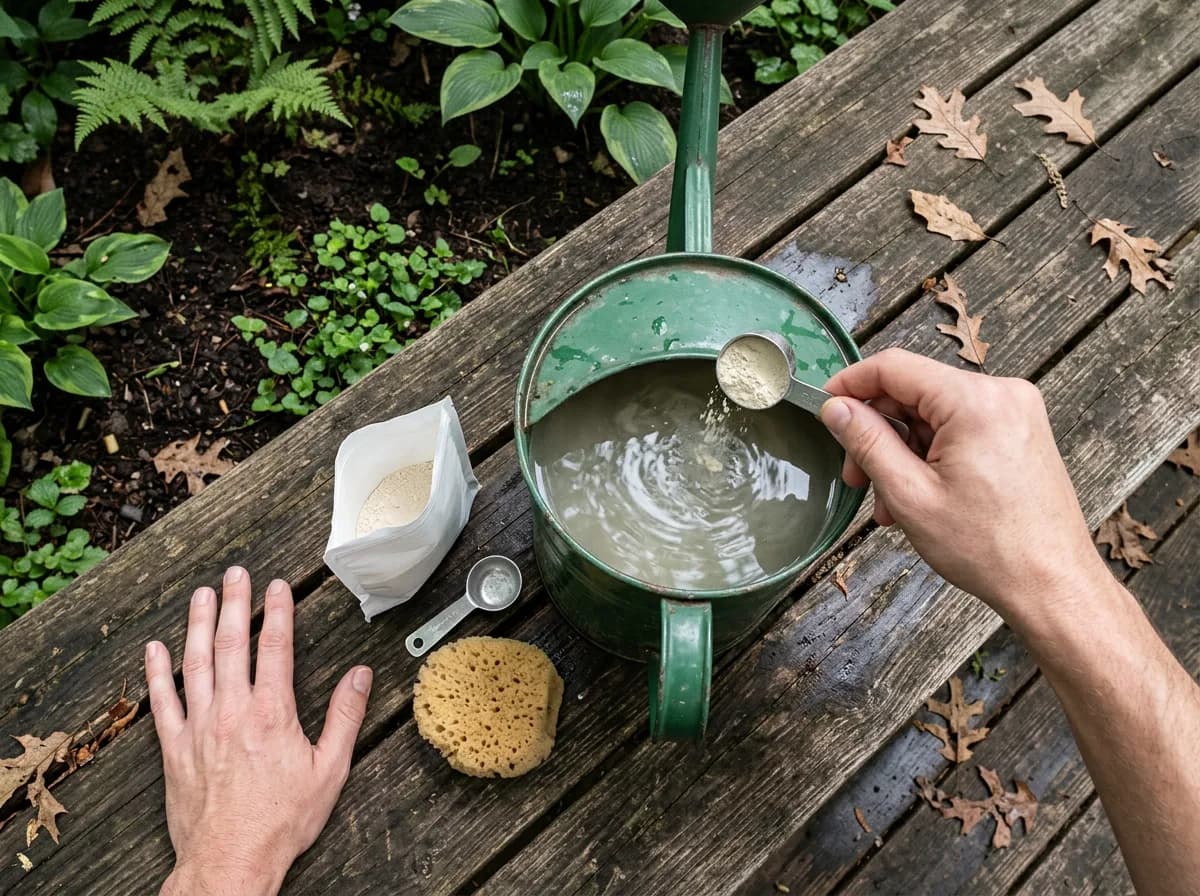
- Use a watering can, a hose-end sprayer, or a backpack sprayer with the screen removed so nematodes are not filtered out.
- Target soil temperatures roughly between 60 and 90 degrees Fahrenheit.
- Do not tank-mix them with insecticide, and do not apply through a sprayer that still has pesticide residue in it.
- If your yard is actively swarming, knock the adult population down first, wait the label interval, then apply nematodes to shut off the larval supply. Leading with nematodes alone in a heavy infestation feels like failure because the visible adults keep biting for another two weeks.
If you want a broader evaluation of what actually holds up, our guide to home remedies for fleas grades the full list. A natural flea killer for yard safe for pets is a reasonable goal, and the get rid of fleas in yard home remedy that most often works is the boring one: cut the grass, rake the debris, let sun into the harborage, and seed the soil with nematodes.
Does diatomaceous earth work in the yard?
Diatomaceous earth kills insects by abrading the waxy cuticle so they dehydrate, which means it only works while it is completely dry. That is a hard limitation in the exact shaded, damp zones where flea larvae live, so a flea treatment for yard diatomaceous earth plan underperforms outdoors compared with indoor use. Grade also matters enormously: only food-grade diatomaceous earth belongs anywhere near animals, because pool and filter grade is calcined and can run 60 to 70 percent crystalline silica, a serious respiratory hazard. Our dedicated guide to diatomaceous earth for fleas covers the food-grade versus filter-grade decision, correct application, and where it genuinely earns a place.
Because the grade decision is what makes this either harmless or hazardous, verify it before the bag comes out of the car. Food-grade diatomaceous earth is uncalcined, its silica stays in the amorphous form, and it is the version cleared as an anti-caking agent in animal feed. Filter grade and pool grade are heat-treated, and that heat converts much of the silica to the crystalline form. Respirable crystalline silica is a recognized lung hazard, so the two grades are not interchangeable at any price.
- The words food grade have to appear on the front of the bag. If they are absent, treat the product as unsuitable for use anywhere your pets go.
- Reject anything described as calcined, flux-calcined, pool grade or filter aid. Those terms all mean heat-treated filtration media.
- Check the safety data sheet for a stated crystalline silica figure. Reputable food-grade suppliers publish one, and it is a low single-digit percentage.
- Wear a fitted dust mask and eye protection while applying any grade, because even food-grade powder is a fine respirable dust once it is airborne.
- Buying from the pool chemical aisle is the single most common way people end up with the wrong grade, even when the bag wording looks similar.
What separates food grade from filter grade is heat, and outdoors that distinction matters more rather than less, because yard use means larger quantities spread around open ground where wind moves the dust and pets lie down in it. Food grade diatomaceous earth is dried rather than calcined, so its silica stays amorphous. Filter grade and pool grade are fired until much of that silica turns crystalline, and respirable crystalline silica is a recognized lung hazard. Plenty of outdoor advice keeps recommending the powder for fleas despite never naming which bag it means, so buy from a feed, garden or farm supplier rather than a pool chemical aisle, wear a mask, and keep pets off the treated ground until the dust has settled.
- The words food grade have to appear on the bag itself, not only in an online listing title.
- Reject anything described as calcined, flux-calcined, pool grade or filter aid.
- Ask for the safety data sheet. Food-grade suppliers publish a crystalline silica figure, usually around 1 percent or less.
- Wear a fitted dust mask and eye protection while applying any grade, and never spread it with a leaf blower or fan.
- Outdoors the powder stops working the moment it gets damp, which describes most of the shaded ground fleas actually use.
How to treat your yard for fleas step by step
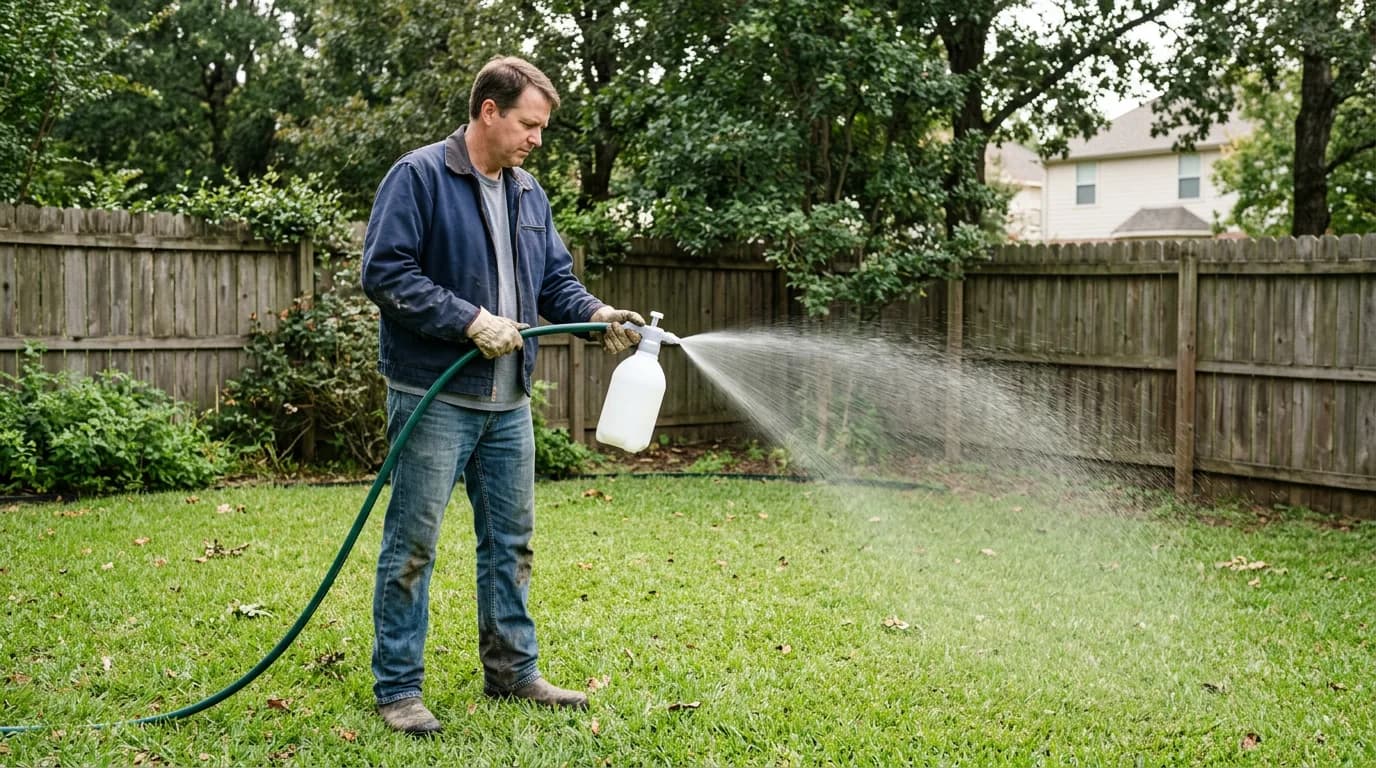
To treat the yard for fleas, apply an EPA-registered adulticide plus pyriproxyfen concentrate to shaded, moist harborage zones only, then observe the label reentry interval before pets return. Treat shaded areas under decks, along fence lines, and beneath shrubs rather than broadcasting the entire lawn, because that is where the larvae actually are.
The sequence that works:
- Map first. Walk the property and flag every shaded, damp spot your pets use. That map is your treatment area.
- Clear the debris. Rake leaf litter, remove grass clippings, and pull mulch back from the foundation and fence line.
- Mow and prune. Shorter grass and lifted shrub skirts let sunlight into harborage, which kills larvae for free.
- Mix to the label rate. Measure the concentrate; do not eyeball it.
- Treat shade, skip sun. Cover harborage thoroughly and leave the open, sunny lawn alone.
- Water granules in if you used them, then let the area dry completely.
- Hold pets off for the full reentry interval for that format.
- Reapply on schedule, typically at two to four weeks for liquids, and add nematodes once the adult population has dropped.
Give the dog something to do indoors on treatment day: a rubber chew toy stuffed and frozen the night before holds most dogs 30 to 45 minutes per session, which covers the stretch between mixing and finishing the pass. Line the on-pet dose up with this weekend rather than a month later. Applying the monthly spot-on treatment your household already uses on the day you treat means the outdoor reservoir and the animals drop together instead of reseeding each other.
One refinement on the sequence above: treat the yard zone by zone rather than as one continuous pass, because each harborage type needs a different technique. Work from the property line inward so you are never walking back across treated ground, and finish at the zones closest to the door. Targeting the zones in this order also keeps you from drifting onto open lawn by accident, which is the most common way a bottle of concentrate runs out before the shaded ground that matters gets covered.
- Fence lines first. Walk the shaded side and treat a band roughly 6 feet wide, wetting the base of the fence and the soil beneath it rather than the pickets.
- Deck, porch and shed skirts next. Get product into the gap and under the boards where pets lie down to cool off, plus about 3 feet out from each edge.
- Shrub and hedge drip lines third. Lift the low branches and treat the ground underneath, because that is the shade the larvae are actually using.
- Kennel runs, dog houses and favorite napping patches last, so the surfaces closest to your pets get the longest drying time before anyone goes back out.
- Leave the open, sunny lawn alone. Direct sun already kills flea larvae there, and treating it wastes the concentrate you need for the shaded zones.
Before the first step, check two things the sequence assumes: the weather and your gear. Treat a yard for fleas on a dry, still evening with no rain forecast for the next 24 hours, because wind carries spray off the zones you meant to target and rain washes a fresh liquid pass off the ground before it binds. Wear long sleeves, closed shoes, gloves and eye protection while you mix, including when you rinse the measuring jug afterward. Then work the sequence in order. Every step exists to put product where fleas actually are, which is why mapping the shaded zones matters more than the spraying does: an accurate map is what turns one bottle of concentrate into full coverage of the ground that counts.
- Treat at dusk or early morning. Midday sun evaporates the carrier before it reaches soil.
- Skip the pass if rain is forecast within 24 hours, and re-treat any liquid application washed off in that window.
- Mix outdoors, downwind, and never in a container you will reuse for anything else.
- Work from the property line inward and finish at the door, so you never walk back across treated ground.
- Rinse the sprayer immediately after use, and store concentrate locked away from pets and children.
Treat the sequence below as a flea control plan rather than a single chore, because a yard pass only holds if the other pieces land in the same week. Outdoor flea control has three moving parts: the ground, the animals, and the inside of the house. Skip any one of them and the other two quietly reseed it. Block out a weekend, put the yard treatment and the on-pet dose on the same day, and run the laundry and vacuuming the day after. Then write the date down. The most common reason a well-executed pass fails is not technique at all: nobody tracked when it happened, the reapplication window slid past, and the next generation emerged onto untreated ground.
- Day 1: mow, rake, and prune. Day 2: mix and treat shaded harborage. Same day: on-pet dose. Day 3: wash bedding hot and vacuum.
- Set a calendar reminder for the label reapplication interval, usually two to four weeks for liquid concentrates.
- Add beneficial nematodes about a week after the first adulticide pass, once the adult population has already dropped.
- Expect the full cycle to take four to eight weeks to break, because pupae in the soil keep emerging after the first pass.
- Log the date, product, dilution, and square footage treated so the next pass is a repeat rather than a guess.
How much product do you actually need?
Because you are treating harborage rather than the whole property, most owners buy far more concentrate than they will ever use. Measure before you shop:
- Pace the shaded band along each fence line and multiply length by roughly 6 feet of width.
- Add the footprint under decks, sheds, and porches, plus a 3-foot skirt around each one.
- Add the drip line of every shrub bed and hedge row, again at roughly 3 feet out.
- Add any kennel run, dog house pad, or regular napping patch.
- Ignore the open, sunny lawn entirely unless a pet sleeps there daily.
A typical suburban lot lands somewhere between 400 and 1,200 square feet of true harborage, not the 8,000-plus square feet a hose-end bottle is rated to cover. One quart of concentrate usually treats several passes on a yard that size, which is why the honest cost of a season of outdoor flea control is often under 60 dollars in product even when a professional quote comes in at several hundred.
When to treat during the season
- Early spring: treat once as soil warms, before the first generation matures. This is the cheapest pass you will ever make.
- Peak summer: reapply every two to four weeks for liquids, and add nematodes during a humid stretch.
- After heavy rain: re-treat liquid applications washed off in the first 24 hours.
- Fall: keep going until nighttime temperatures stay consistently below 50 degrees Fahrenheit, because fleas persist far later in the year than most owners expect.
- Winter in mild climates: in the Gulf South, coastal California, and the desert Southwest, treat year-round, since outdoor populations never fully collapse.
Can I treat my own yard for fleas?
Yes. Yard flea treatment is well within DIY range for most homeowners, and the consumer concentrates sold at hardware and pet retailers use the same active ingredients professionals apply, just at consumer-friendly dilutions. Call a licensed applicator when the property is large, when you have a pond or beehives that need buffer zones, when you have tried two correctly executed passes without improvement, or when a cat household makes you uneasy about handling concentrate at all.
For the full clinical protocol that ties the yard pass to the indoor pass and the on-pet pass, WebVet's vet-reviewed walkthrough of how to get rid of fleas in your house and yard is the deeper step-by-step, and our own pillar on how to get rid of fleas in the house carries the complete indoor protocol.
Treat the house at the same time
A yard-only pass fails predictably, because the majority of a household flea population is indoors in carpet, bedding, and floor cracks rather than outside. If you are searching for a flea treatment for home and yard, treat both surfaces inside the same week or the untreated one simply reseeds the other. Our guide to the best flea spray for home covers indoor product selection, IGR choice, and application order, and it is the right next click if you have not yet chosen a flea spray for house use.
Do flea foggers and bombs work outdoors?
No. Flea bombs and foggers are sealed-room products that rely on an enclosed space for the aerosol to settle onto surfaces, so outdoors they disperse into open air and accomplish essentially nothing. They also cannot reach under decks or into mulch, which is where the outdoor population lives. Our verdict on flea foggers and whether they work covers the indoor case in full, including why even indoor fogger results disappoint compared with a directed spray.
Why fleas keep coming back to your yard
Repeat outbreaks are a life cycle problem, not a product failure. Pupae survive inside protective cocoons that most sprays cannot penetrate, and they emerge over the following weeks, which makes a treated yard look reinfested when it is simply completing its cycle. Wildlife traffic reseeds fence lines continuously. Our environmental pillar on how to get rid of fleas in the house owns the full pupae reinfestation window and the repeat-treatment schedule that closes it out. Monitoring tools have a place too, and our take on whether flea traps work explains what they can and cannot tell you.
Yard treatment never replaces on-pet flea prevention
This is the part that decides whether any of the above holds. Environmental treatment reduces the outdoor reservoir, but the fleas biting your pet are killed by the product on your pet, and a treated yard with an unprotected dog or cat will be reinfested within days.
- Keep every pet in the household on a year-round preventive prescribed or recommended by your veterinarian.
- Treat all pets in the home, not just the one that is scratching.
- Do not substitute environmental products, plant oils, or diatomaceous earth for a veterinary preventive.
- Ask your veterinarian before combining an on-pet product with heavy yard chemical use.
For on-pet product selection, see our guide to the safest flea treatment for dogs and our roundup of the best flea collar for dogs. WebVet's vet-reviewed overview of flea and tick prevention for dogs is a strong second opinion on the prescription tier.
- Do not wait to see whether it passes. Call your veterinarian or an animal poison control line immediately, and bring the product label or a photo of the ingredient panel with you.
Liquid concentrates typically need reapplication every two to four weeks during flea season, granules every three to six weeks, and beneficial nematodes roughly every six to eight weeks in moist soil. Always follow the maximum applications per season stated on the product label.
Cedarwood-oil products like Wondercide Flea and Tick Yard Spray give real contact kill and are a reasonable choice for cat households, but the residual is shorter than a pyrethroid concentrate, so plan on more frequent reapplication during an active infestation.
Adult cat fleas usually survive only a few days off a host, but eggs, larvae, and pupae persist far longer in shaded, humid soil, and pupae can wait weeks inside their cocoons before emerging when they detect vibration, warmth, and carbon dioxide.
No. Flea larvae die in direct sun, so open lawn holds very few of them. Treating shaded harborage under decks, along fence lines, and beneath shrubs covers the population while using a fraction of the product.
Not if it contains permethrin. Permethrin is far more toxic to cats than to dogs, and cat households should use cedarwood-oil sprays or beneficial nematodes instead. Check the active ingredient panel before you buy.
No. Flea bombs need an enclosed room to work and disperse uselessly outdoors, and they cannot reach under decking or into mulch where flea larvae actually develop.
Bring your veterinarian into the plan rather than treating them as a last resort. A veterinarian can tell you which preventive class suits each animal by species, weight, age and health history, whether a seizure history or a pregnancy rules a product out, and whether the yard chemistry you are about to apply sits badly alongside what is already on the pet. They also know when your local flea season genuinely starts and ends, which beats any national calendar for deciding when to treat.
- Ask which preventive fits each pet individually. Weight bands, age minimums and species all matter, and a dog product can be dangerous on a cat.
- Tell your veterinarian what you are applying outdoors, including the active ingredient, so they can flag any interaction with the on-pet product.
- Raise any seizure history, pregnancy, nursing, or liver or kidney disease before starting a new preventive, because those change the shortlist.
- Ask when your local flea season actually runs. In mild climates the honest answer is year-round, and stopping in the fall is what restarts the problem.
- If a pet shows tremors, vomiting, drooling or unsteadiness after any flea product, indoors or out, call your veterinarian the same day rather than waiting.
BVMS, MRCVS
Dr. Pippa Elliott, BVMS, MRCVS, is a veterinarian with nearly 30 years of experience in companion animal practice. Dr. Elliott earned her Bachelor of Veterinary Medicine and Surgery from the University of Glasgow. She was also designated a Member of the Royal College of Veterinary Surgeons. Married with 2 grown-up kids, Dr. Elliott has a naughty Puggle named Poggle, 3 cats and a bearded dragon.
Sign up for expert-backed reviews and safety alerts all in one place.