Do Flea Foggers Work? An Honest Vet Verdict
Flea bombs kill the adults you can see and miss the eggs, larvae, and cocooned pupae buried in your carpet. A veterinarian explains why foggers fail, how to use one safely, and what clears fleas faster.

BVMS, MRCVS
Petful is reader supported. As an affiliate of platforms like Amazon and Chewy, we may earn a commission when you buy through links on this page. There is no extra cost to you.
A flea fogger promises the thing every desperate pet owner wants: push a button, walk away, come back to a flea-free house. As a veterinarian who has spent years treating the itchy, scabbed, miserable animals that come out of heavy infestations, I can tell you that the button rarely delivers. Flea bombs sell extremely well and disappoint extremely often, and the reason is not that the chemistry is weak. The reason is that the chemistry lands in the wrong place.
This guide is a buying decision, not a step-by-step protocol. For the full household eradication routine, our how to get rid of fleas in the house pillar walks through every stage in order. What follows here is the honest verdict on whether a fogger belongs in that routine at all, how to use one safely if you have already bought it, and which targeted products beat it.
- Flea bombs rarely work as a standalone solution because the mist settles on open surfaces and does not reach eggs, larvae, or cocooned pupae buried in carpet.
- The pupal stage is the life stage that survives almost any environmental treatment, which is why fleas reappear one to two weeks after a fogger.
- Many foggers contain permethrin or a related pyrethroid. Permethrin is highly dangerous to cats, and no fogger is safe to discharge with animals in the home.
- The Environmental Protection Agency (EPA) advises staying out for the time printed on the label, usually two to four hours, then ventilating before anyone returns.
- Targeted spot treatment, aggressive vacuuming, hot laundering, and vet-recommended on-pet prevention clear an infestation faster than any total release fogger.
- 1Foggers kill adult fleas on open surfaces, which is roughly 5 percent of the infestation
- 2The aerosol does not reach carpet base, upholstery folds or floor cracks where eggs, larvae and pupae actually sit
- 3Cocooned pupae survive any spray and keep hatching for days to weeks, which is why fleas reappear after a bomb
- 4A targeted growth-regulator spray, hot laundry and daily vacuuming clear an infestation faster and with less household exposure

Sign up for expert-backed reviews and safety alerts all in one place.
Do flea bombs work? The short answer
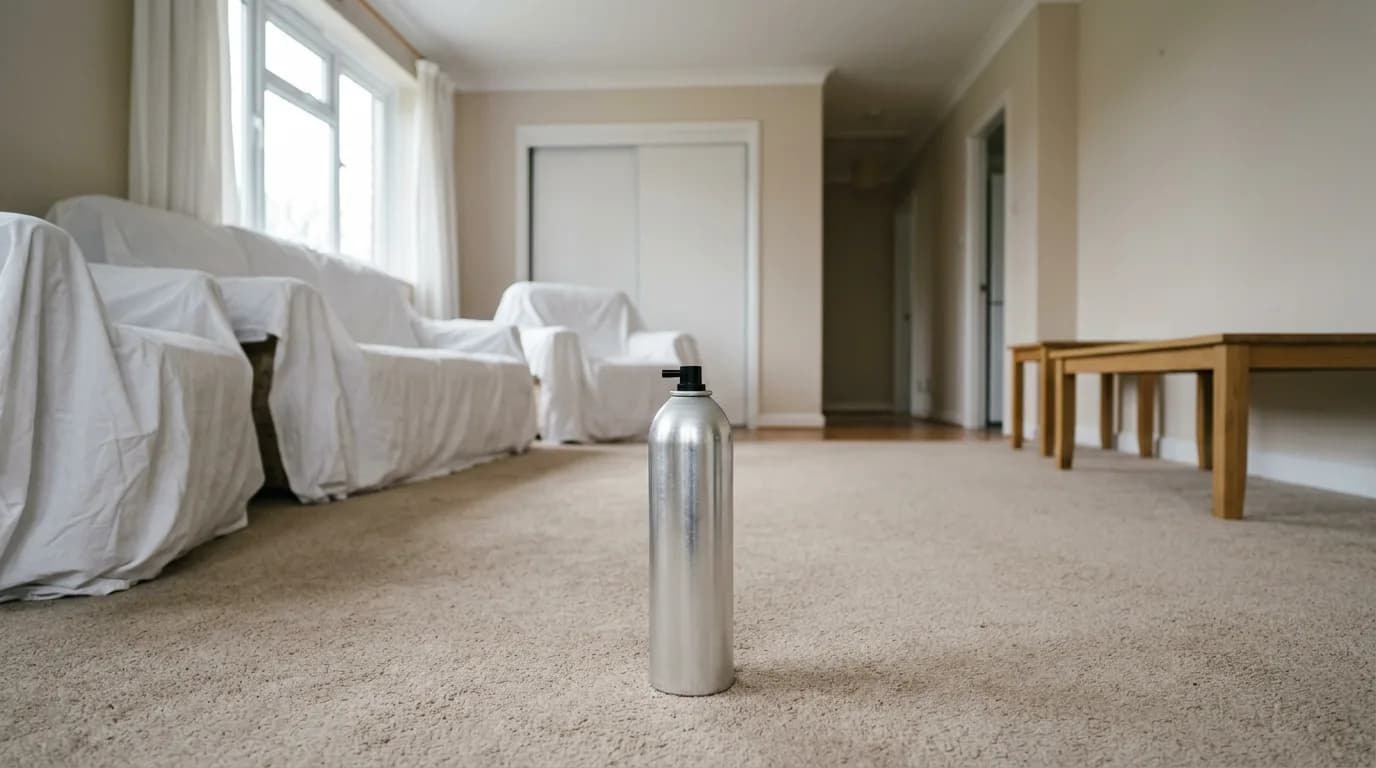
Flea bombs rarely work on their own. A total release fogger discharges its entire contents into the air of a room, and gravity does the rest. The droplets settle on floors, countertops, upholstery tops, and every exposed horizontal surface in the space. That mist kills adult fleas it directly contacts, so you will genuinely see dead fleas afterward. What it does not do is penetrate the places where the other ninety-plus percent of the infestation is living, so the treatment feels like it worked for about a week and then fails.
People type "does flea fogger work" and "do flea bombs work" into Google tens of thousands of times a year, and the honest answer is that they work partially, briefly, and only against the one life stage that was never your real problem. Readers hunting for flea bombs that work are usually a week or two into a losing battle, and searches for "bug bomb fleas" spike every summer for exactly that reason. Foggers knock down the adults you can see. They do not reach eggs, larvae, or pupae, and those stages are what repopulate the room.
A flea fogger is a poor first choice and an unnecessary second choice. It costs more in risk and cleanup than it returns in dead fleas, and every job it does can be done better by a targeted spray, a vacuum, and a washing machine.
What flea bombs and foggers actually contain
The flea fogger aisle looks bigger than it is. Nearly every product on the shelf is built from the same small set of active ingredients, and understanding those ingredients tells you more than any ranking of the best flea fogger ever will.
Petful may earn a commission when you click through to Chewy, at no extra cost to you.
Most flea bombs combine two categories of chemical:
- Adulticides, usually a pyrethroid such as permethrin, cypermethrin, or tetramethrin, sometimes boosted with piperonyl butoxide. These kill adult fleas on contact and break down quickly.
- Insect growth regulator ingredients, most often methoprene or pyriproxyfen. An insect growth regulator does not kill anything. It mimics juvenile hormone so that eggs and larvae exposed to it never develop into biting adults.
- Propellant and solvent carriers, which are the reason foggers are flammable and the reason the EPA insists on distance from pilot lights and other ignition sources.
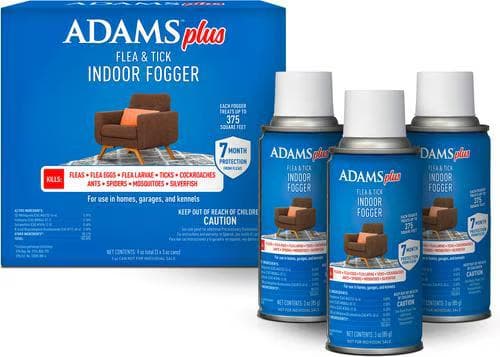
Shoppers comparing the best flea bombs typically land on a handful of familiar names. A Raid flea fogger, a Hot Shot bed bug and flea fogger, and the various store-brand equivalents all use some combination of the ingredients above. The bed bug and flea combination products are worth a specific note: bed bugs are a completely different pest with their own treatment protocol, and buying a combination product does not mean you are treating either problem properly. For more, see Petful’s guide to can cats carry bed bugs.
The genuinely useful ingredient in that list is the insect growth regulator. Methoprene and pyriproxyfen are the reason a good indoor product keeps working for weeks rather than hours. The catch is that you can buy those same growth regulators in a pump spray you aim, which lets you put them exactly where flea larvae live instead of on the top of your coffee table.
Reading the ingredient panel is only useful if it produces a decision, so here is a neutral framework rather than a verdict. A fogger is worth buying when the space is large, empty and unoccupied, when nothing soft or edible is in it, and when nobody needs the room back quickly. It is worth skipping in every furnished, occupied home, because the same growth regulator you are paying for comes in a pump applicator you can aim into the places an aerosol never reaches.
- Buy if the space is unfurnished and unoccupied, there are no animals or food in it, and you can seal it for the label time and then ventilate it properly.
- Skip if the room is carpeted and furnished, which is precisely the geometry where a settling aerosol underperforms a directed spray.
- Skip if anyone in the household has asthma or another airway condition, or there are birds, fish or small caged animals that cannot easily be moved out.
- Skip if there are cats in the home and the product contains permethrin. That is a hard stop rather than a trade-off to weigh.
- Skip if covering the space would take more than one canister, since doubling up is a documented cause of both illness and ignition.

 Sponsored
Need flea, tick, or parasite care for your pet?
A licensed vet at Dutch can recommend the right preventive and prescribe it when it's appropriate. Annual members get 20% off their first flea and tick order.
Use code Pets60
Plans start at $12/month · covers up to 5 pets
- Licensed vets in most states
- Rx for 150+ conditions
- 4.7 on Trustpilot
Why foggers fail: the flea life cycle problem
The failure is mechanical, not chemical, and it comes down to where each flea life stage physically sits when the canister goes off.
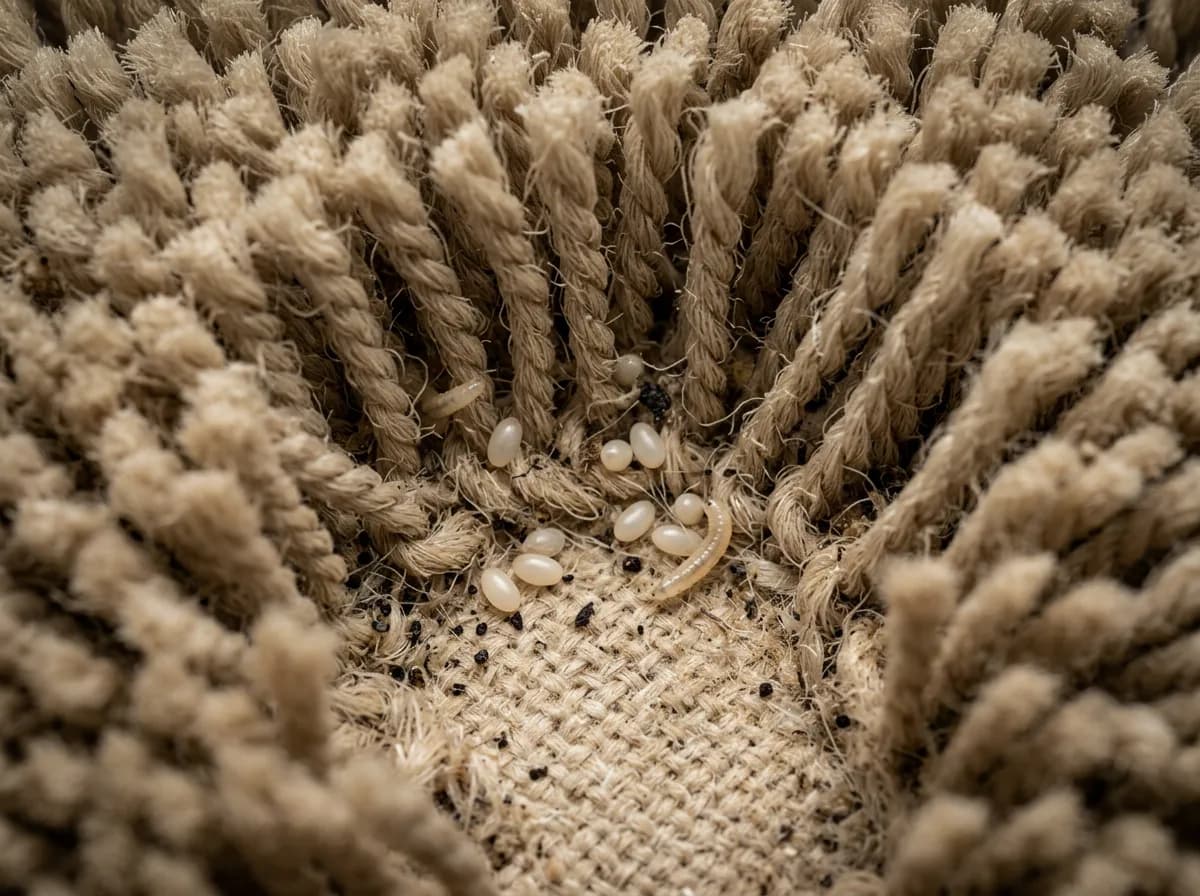
- Adults live on the animal and move briefly across open surfaces. This is the only stage a fogger reliably contacts, and it is the smallest share of the population.
- Eggs are shed off the coat and fall into carpet pile, bedding seams, upholstery folds, and outdoor soil.
- Larvae burrow down toward the base of the carpet pile and under furniture, actively avoiding light.
- Pupae sit sealed inside silk cocoons woven together with carpet fiber and household debris.
A single female cat flea produces up to 40 to 50 eggs per day at peak output and averages around 27 eggs per day over a 50-day life. Those flea eggs are smooth, pearly, and roughly half a millimetre long, and they do not stay on the animal. They roll straight off the coat and drop into carpet, bedding, upholstery seams, and soil. Within one to six days they hatch.
What hatches is the stage that defeats foggers. Flea larvae are tiny, pale, and strongly negatively phototactic, which is the technical way of saying they actively crawl away from light. They feed on organic debris and adult flea feces, and they burrow down toward the base of the pile. Flea larvae on carpet are not sitting on the surface waiting to be misted. They are millimetres down in the fiber, under furniture, and along the seam where carpet meets baseboard. The larval stage lasts about five to eleven days and can stretch to two or three weeks in cool or dry conditions.
Put the failure mechanism and the life stage side by side and a disappointing fogger becomes predictable rather than mysterious. The aerosol settles from above, so its reach stops at whatever is exposed on a horizontal surface at the moment of discharge. Only the adult stage is ever in that position. Every other stage is buried in the pile, wrapped in a cocoon or tucked into a seam, which means the treatment kills the visible minority and leaves the reservoir completely intact.
- Eggs: in the carpet base and upholstery seams within hours of being shed. Settled aerosol does not reach them, and they hatch on their normal one to six day schedule regardless.
- Larvae: millimetres down in the pile and actively crawling away from light, which is the opposite direction from where a fogger deposits its residue.
- Pupae: sealed inside a debris-coated cocoon that no household aerosol penetrates, waiting for vibration, warmth or carbon dioxide before emerging.
- Adults: the only stage exposed on an open surface, and the smallest share of the population. This is the stage a fogger genuinely kills.
- That is why the visible result arrives in the first 48 hours and the disappointment arrives in week two, as the untouched stages finish developing on schedule.
The pupal stage that ruins the plan
When a flea larva is ready to pupate, it spins a sticky silk cocoon and works surrounding debris and carpet fiber into the shell. That pupal stage cocoon is physically protective and chemically stubborn, and it is widely recognized as the flea life stage most resistant to insecticide treatment. Adults inside it wait for a cue before emerging: physical pressure, vibration, warmth, or the carbon dioxide in the breath of a passing animal.
Put those three facts together and the fogger problem is obvious. A total release fogger produces a fine aerosol that drifts down onto exposed surfaces, and the mist does not penetrate carpet deeply enough to contact larvae or coat the cocoons wrapped in fiber and debris. You kill the visible adults. The flea pupae in the pile wait out the treatment, sense you walking back into the room a few days later, and hatch into a house where the residue has already begun to break down.
- Cocooned pupae are sealed against insecticide and hatch on their own schedule, triggered by vibration, warmth and carbon dioxide. A second fogger does not solve this. Continuous growth-regulator coverage and repeated vacuuming over several weeks are what break the cycle.
That is the single most useful thing to understand about this whole category. Fleas coming back one to two weeks after a treatment is not a sign the product was fake. It is the normal, predictable output of a treatment that could not reach the cocoon.
Connect the failure mechanism to the one specific life stage it cannot touch and the whole product category makes sense. A fogger deposits from above, onto whatever happens to be exposed at the moment of discharge. The pupa sits sealed inside a debris-coated cocoon at the base of the carpet. None of the chemistry available to a homeowner penetrates that shell, so the pupa survives the treatment intact and emerges days later on its own cue. That is why buying a stronger canister changes nothing: no consumer flea product beats the cocoon, and the only levers that do are time and vibration. Vacuum repeatedly to force emergence onto a treated floor, then let a growth regulator handle the stage that follows.
- Pupae hold inside the cocoon for weeks, and in cool, humid conditions considerably longer.
- Emergence cues are vibration, warmth and carbon dioxide, which is why walking back into the room triggers it.
- Vacuuming supplies that vibration deliberately, which is why it belongs on a schedule rather than a whim.
- A growth regulator laid down today is what meets the adults emerging two weeks from now.
- Expect the visible result in the first 48 hours and the disappointment in week two if nothing residual was applied.
How to use a flea fogger safely if you still use one
Some readers have already bought the product, or live somewhere a fogger is genuinely the only option available. If that is you, the safety side matters far more than the efficacy side, because this is where flea foggers actually hurt animals and people.
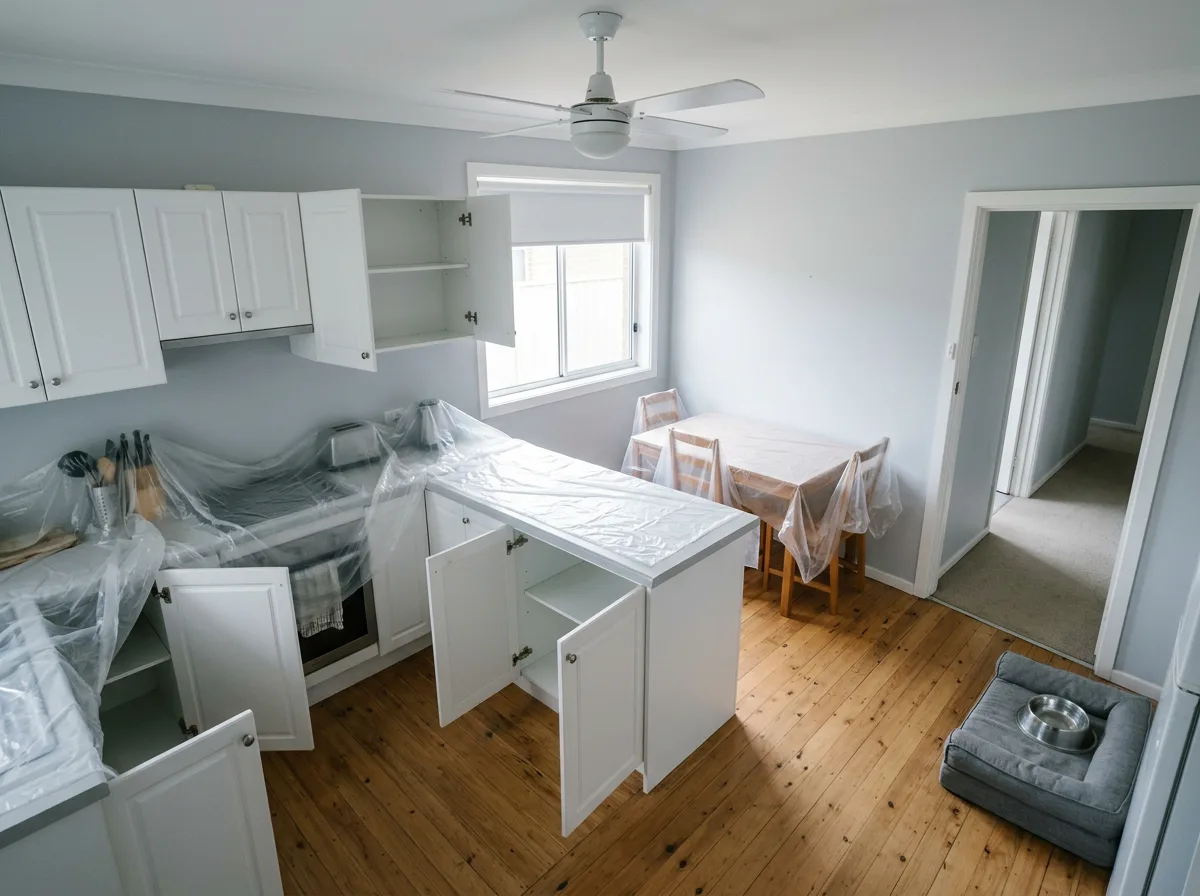
Read the flea fogger instructions on the canister before you do anything else. Label directions are legally enforceable and product specific, and they override any general guidance including mine. The EPA publishes its own precautions for total release foggers, and the core points are consistent across brands:
- Use no more than one fogger per room. A typical six-ounce canister is formulated to treat up to roughly 25 by 25 feet of unobstructed space, and doubling up is a documented cause of both illness and explosions.
- Place the canister at least six feet from every ignition source, including pilot lights, water heaters, gas ranges, and electrical motors.
- Never discharge a fogger inside a closet, cabinet, or other small enclosed space.
- Remove every person, pet, and child's toy from the treated area, and remove or fully cover food, dishes, and food preparation surfaces.
- Remove pet bedding, soft toys, and food and water bowls entirely. Bedding should be laundered, not misted.
- Leave the building for the full time printed on the label, which is usually two to four hours.
- Ventilation after treatment is not optional. Open doors and windows and use fans in the openings to air the space out before anyone, including animals, comes back inside.
Searches for "flea fogger pet safe" and for a pet safe flea fogger reflect a hope I have to disappoint. There is no such thing as a pet safe flea fogger in the sense most owners mean it, because safety here comes entirely from absence. Every animal, including caged birds, rabbits, hamsters, and fish tanks, must be out of the space or, in the case of an aquarium, fully covered with the pump switched off.
Permethrin toxic to cats is not a fringe concern. Cats metabolise pyrethroids poorly, and permethrin exposure in cats causes muscle tremors and whole-body fasciculations, hyperaesthesia, seizures, drooling, incoordination, dilated pupils, and elevated body temperature. In one large poison-service case series, tremors and convulsions were the dominant presentation, episodes lasted well over a day, and around one in ten affected cats died or was euthanised. Concentrated permethrin products are labeled for dogs only for exactly this reason. If you have cats, treat any permethrin-containing fogger as an emergency risk, keep cats out until the space is fully ventilated and residues are cleaned, and contact your veterinarian immediately if a cat develops tremors or twitching.
Pair the two numbers that matter, because a re-entry time on its own is not a cat-safe instruction. The label time, commonly two to four hours, is the minimum you stay out, and ventilation happens after it rather than during it. Cats should be the last animals back in and not the first, because they walk the treated floor and then groom the residue off their paws. In a cat household the safer decision is not a longer wait. It is a product containing no permethrin.
- Stay out for the full time printed on the label, then open windows and run fans in the openings before any person or animal returns.
- Damp-mop hard floors and wipe every surface a cat can reach with hot soapy water before cats come back, because paw contact plus grooming is the feline exposure route.
- Keep cats out for longer than the label minimum where you can, and keep them off any soft furnishing that was left exposed until it has been laundered.
- Permethrin signs in cats include muscle tremors and whole-body twitching, drooling, unsteadiness, dilated pupils and seizures. Any one of them is an emergency.
- If a cat has been in a treated space and shows any of those signs, call your veterinarian or an animal poison control service immediately rather than waiting to see whether it passes.
After the fogger: cleanup, re-entry, and washing
Do you need to wash everything after a flea bomb? Not everything, but more than the label implies. You should wash any surface people or animals touch with skin or mouths, plus anything soft that was left exposed. That means food preparation counters, tables, high chairs, exposed dishes and cookware, pet bowls, and any bedding, blankets, or plush toys you did not remove beforehand. Hard floors should be damp-mopped once the ventilation period is finished. Walls, ceilings, and closed cupboard interiors do not need washing.
The sequence that keeps residue exposure low:
- Stay out for the full label time, then open windows and run fans before anyone re-enters.
- Wear gloves for the first clean and wash your hands afterward.
- Wipe down all food contact surfaces with hot soapy water, then rinse.
- Launder exposed soft furnishings and all pet bedding on the hottest cycle the fabric tolerates, and machine dry on high.
- Damp-mop hard flooring and dispose of the mop head or wash it separately.
- Keep pets out until surfaces are dry and the room no longer smells of the product.
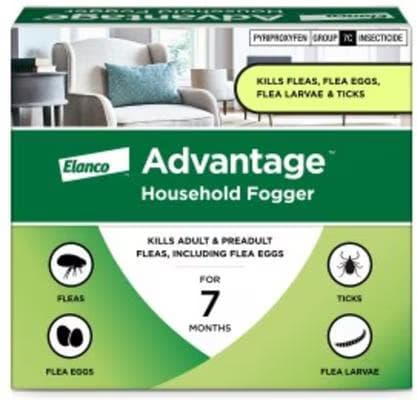
Petful may earn a commission when you click through to Chewy, at no extra cost to you.
One thing not to do is skip vacuuming because you just treated. Vacuuming after the residue has dried is one of the few actions that physically removes cocooned pupae, and it also supplies the vibration cue that triggers surviving adults to emerge into treated surfaces. Empty the canister or bag into an outdoor bin immediately.
Nothing on the canister pairs the two numbers that decide whether this is safe for a cat. The first is the exact re-entry time printed on the label, commonly two to four hours, and it governs entry for people rather than for animals. The second is species specific: if the product contains permethrin, that warning applies to cats far more strictly than to anyone else in the household, because cats clear pyrethroids poorly. So bring everyone back in order. People first, and only to open windows and run fans. Dogs once the floors are dry. Cats last of all, after every hard floor has been damp-mopped and every soft item they use has been laundered.
- Stay out for the full label time, then ventilate. Ventilation happens after the interval, not during it.
- Damp-mop hard floors and wipe every surface a cat can reach with hot soapy water before cats come back.
- Launder anything soft that was left exposed, on the hottest cycle the fabric tolerates.
- In a cat household the safer decision is not a longer wait, it is a product with no permethrin in it.
- Tremors, twitching, drooling, unsteadiness, dilated pupils or seizures in a cat: call your veterinarian immediately.
- Cats metabolise pyrethroids poorly, and permethrin exposure in cats causes muscle tremors and whole-body twitching, drooling, unsteadiness, dilated pupils and seizures. A longer wait does not make a permethrin fogger cat-safe. If a cat has been in a treated space and shows any of those signs, call your veterinarian or an animal poison control service immediately rather than waiting to see whether it passes.
Flea bomb vs flea spray: which actually works?
Is it better to spray or bomb for fleas? Spray, in nearly every household situation. The short version is that a targeted spray beats fogger coverage because you control where the product lands. Whole room fogging distributes insecticide onto every open surface in the space, including surfaces you eat off and your animals sleep on, while leaving untouched the carpet base, the under-furniture gaps, and the baseboard seams where larvae and pupae are actually concentrated. A pump spray lets you aim an insect growth regulator into exactly those crevices, and it lets you treat one problem room instead of pesticiding a whole floor of the house.
| Factor | Total release fogger | Targeted flea spray |
|---|---|---|
| Reaches carpet base and cracks | No, settles on open surfaces | Yes, applied directly into seams |
| Kills adult fleas | Yes, on contact | Yes, on contact |
| Reaches eggs, larvae, pupae | Poorly | Better, where the spray physically reaches |
| Residue on food surfaces | High, unavoidable | Low, you choose placement |
| Household evacuation needed | Yes, 2-4 hours plus airing | Usually just until dry |
| Fire and explosion risk | Yes, propellant driven | Minimal |
| Cost per treated room | Moderate, single use | Lower over repeated treatments |
The one scenario where a fogger has a defensible edge is a large, empty, unfurnished space you are not going to occupy soon, such as a vacant rental or an emptied garage. Once furniture, food, children, and pets are in the room, the calculation flips hard toward targeted application.
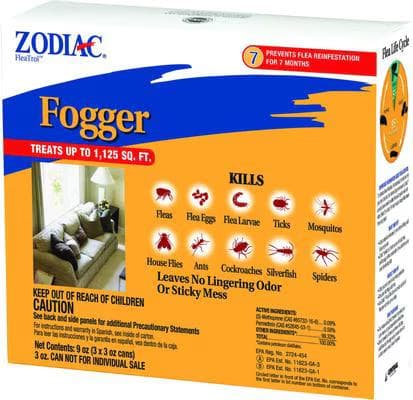
Petful may earn a commission when you click through to Chewy, at no extra cost to you.
Readers asking what kills fleas in the house instantly are usually looking for a specific product rather than a method. Our guide to the best flea spray for the home reviews and ranks those indoor products, including which ones carry a growth regulator for long residual control.
Most advice on foggers comes from either a pest control company that would rather sell you a professional service, or a brand that has to defend the product it makes. None of them give you a neutral read, so here is the buy or skip decision reduced to a framework you can run in a minute. Is the room furnished and carpeted? If yes, skip. Are there cats in the house and permethrin on the canister? If yes, skip, and that one is not a trade-off to weigh. Can you empty the space, seal it for the full label time, then ventilate it properly? If not, skip. Anything that survives all three questions is the rare case where a canister is defensible.
- Furnished, carpeted room: skip. That geometry is exactly where a settling aerosol underperforms a directed spray.
- Cats in the home plus permethrin on the label: hard stop, not a trade-off.
- Asthma in the household, or birds, fish or small caged animals that cannot easily be moved: skip.
- More than one canister needed to cover the space: skip. Doubling up is a documented cause of both illness and ignition.
- Empty, unfurnished, unoccupied space you do not need back quickly: this is the one defensible buy.
 Sponsored
Vet care that's always there
Unlimited video calls and messaging with licensed vets for less than a typical vet visit. One membership covers up to five pets.
Use code Pets60
Plans start at $12/month · covers up to 5 pets
- Licensed vets in most states
- Rx for 150+ conditions
- 4.7 on Trustpilot
Carpets and flooring: where the real infestation lives
A flea infestation in carpet is the core of almost every indoor flea problem, because carpet pile gives larvae the dark, humid, debris-rich habitat they need and gives pupae something to anchor their cocoons to. Any serious flea carpet treatment has to combine mechanical removal with a growth regulator applied into the base of the pile, not misted across the top of it. Vacuum the edges, the seams where carpet meets baseboard, and the strip under furniture where nobody usually bothers, because that is where the density is highest.
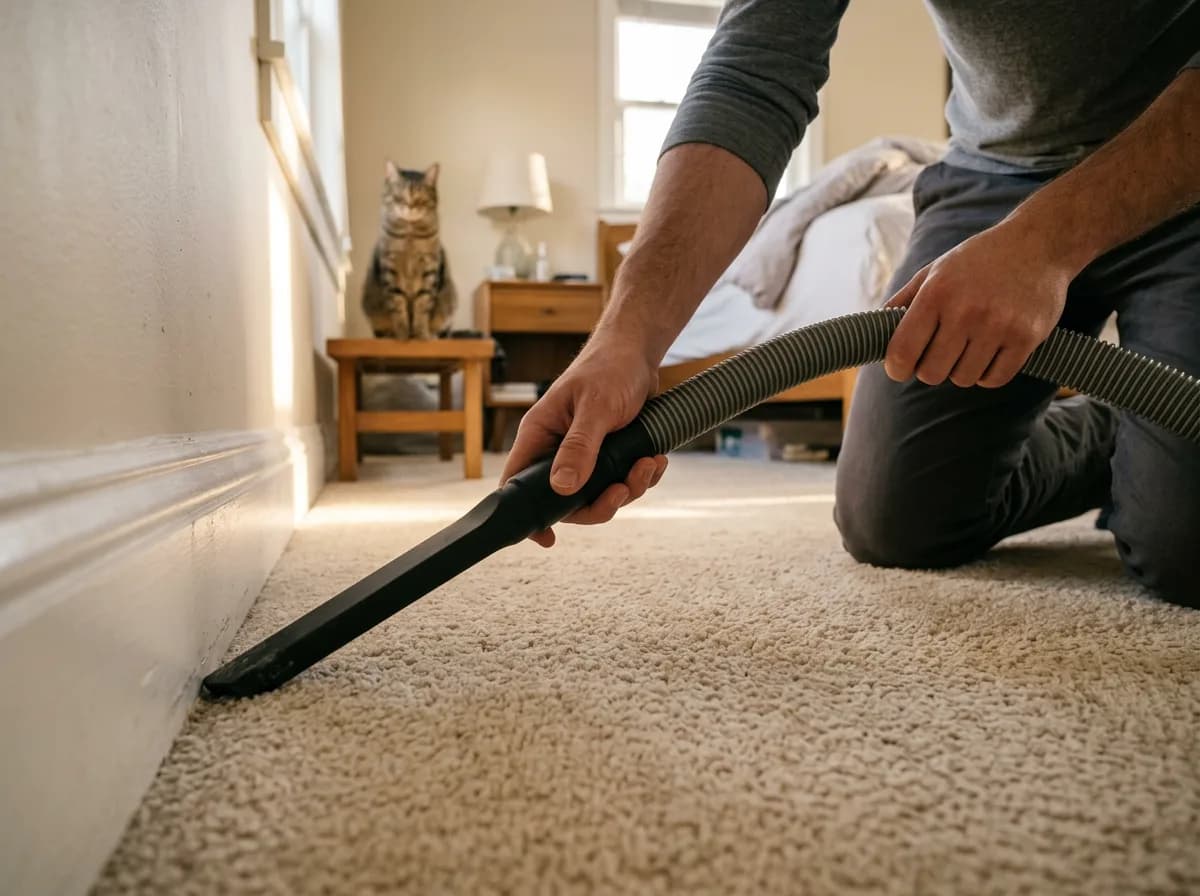
The full carpet and hard-floor protocol, including the vacuum-then-treat sequencing and how often to repeat it, is covered step by step in our how to get rid of fleas in the house pillar, which owns the carpet stage of the treatment. WebVet's veterinary team also maintains a vet-reviewed walkthrough of treating fleas in the house and yard together, which is worth reading if your infestation crosses both.
Targeted home sprays beat total-release foggers
If you buy one environmental product, make it a flea spray rather than a fogger. A quality flea spray for house interiors combines an adulticide with methoprene or pyriproxyfen, and the pump applicator is the whole point: you can drive product into baseboard seams, carpet edges, under beds, along the sofa base, and into the exact spot your pet sleeps. Coverage is worse on paper and dramatically better in practice, because worse coverage of the wrong places beats no coverage of the right ones.
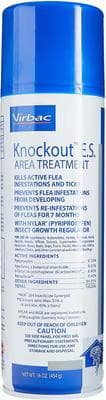
Petful may earn a commission when you click through to Chewy, at no extra cost to you.
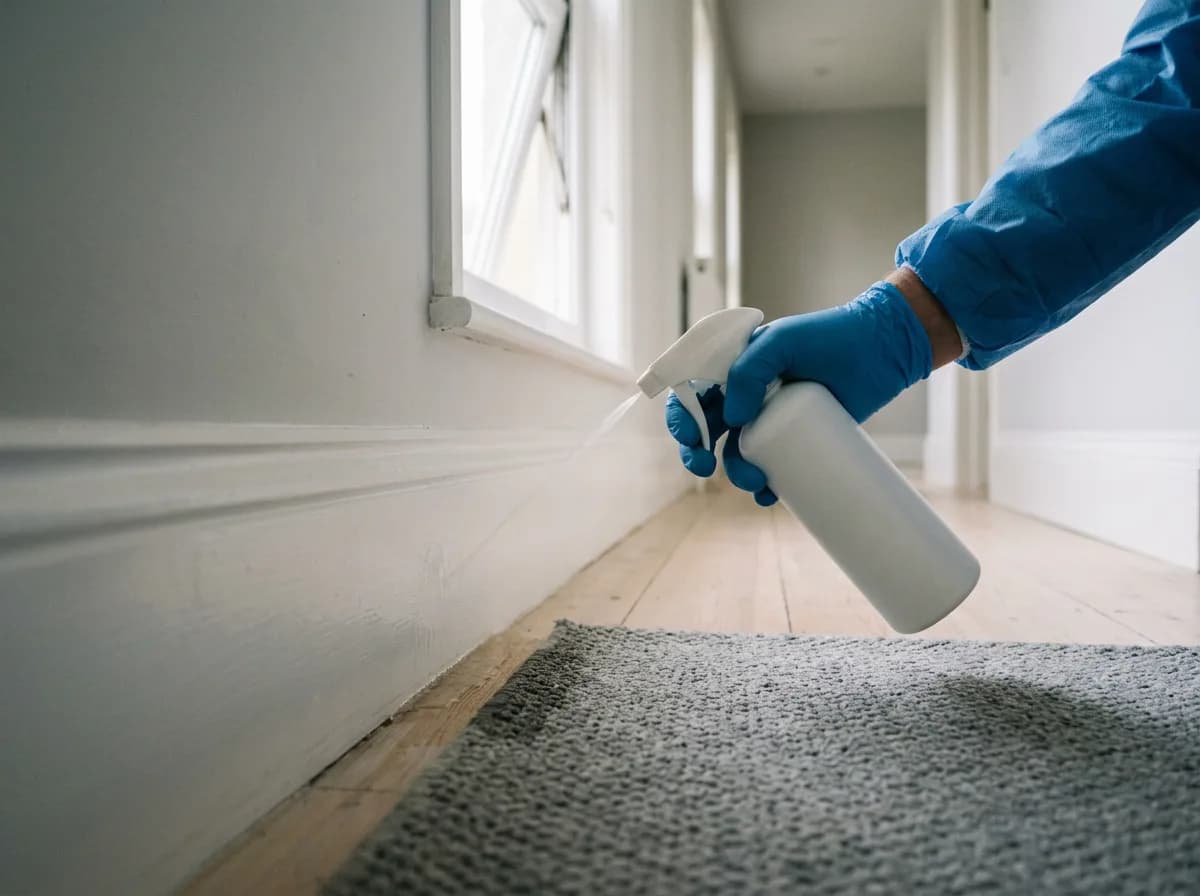
Product selection, room-by-room application rates, safe drying times, and which flea spray for home use carries the longest residual are all handled in our dedicated best flea spray for the home guide. That is the page to read before you buy.
There is more than one targeted alternative, and in practice a fogger loses to a short stack of them rather than to any single product. The comparison that matters is not which product is stronger but which one reaches the carpet base, the upholstery seams and the baseboard gaps. A pump spray, a vacuum and a hot wash cycle all reach those places. A canister discharged into the air of a furnished room does not, whatever is inside it.
- A pump or trigger spray carrying methoprene or pyriproxyfen, driven into carpet edges, under furniture and along baseboards rather than misted over open floor.
- Repeat vacuuming every two to three days, which physically removes eggs and larvae and supplies the vibration cue that pulls adults out of their cocoons onto treated surfaces.
- Hot laundering of all pet bedding and any soft item the animal sleeps on, washed and machine dried on the hottest setting the fabric tolerates.
- An insect growth regulator concentrate diluted into a pump sprayer, for rooms where you would rather not lay down an adulticide at all.
- Uninterrupted on-pet prevention recommended by your veterinarian, which is the only item here that stops the animal reseeding the carpet every day.
Treating the yard so fleas stop coming back
Indoor treatment that ignores the yard is how households end up re-treating every three weeks. Fleas persist in shaded, moist, protected outdoor ground: under decks, along fence lines, in leaf litter, and in the cool patch where the dog lies down. Owners searching for a "flea killer for yard safe for pets" or for the best flea yard killer are asking the right question, because outdoor products vary enormously in how long animals must stay off treated ground.
A flea and tick spray for yard use should be matched to the shaded zones rather than broadcast across an entire lawn, and the re-entry interval on the label is not a suggestion. Full product comparisons, application timing, and pet-safety intervals live in our flea treatment for the yard guide.
Flea traps: useful for monitoring, not eradication
Flea traps get sold as a solution and are genuinely useful as an instrument. A light-and-glue trap tells you whether adults are still emerging in a room and roughly how fast, which is exactly the information you need to decide whether a treatment worked. What flea traps for home use will not do is meaningfully reduce a population, because they only catch a fraction of emerging adults and catch no eggs, larvae, or pupae at all.
A DIY flea trap made from a shallow dish of soapy water under a lamp works about as well as a commercial one for monitoring purposes. Whether traps are worth buying, which designs actually catch fleas, and how to read the results are covered in do flea traps work.
How fast can you actually clear a flea infestation?
How do you get rid of a flea infestation as fast as possible? By hitting the pet and the environment on the same day and repeating for a full life-cycle window, rather than searching for a single overnight fix. Realistically, adult numbers drop within 24 to 48 hours of a good on-pet product, visible activity falls substantially in the first week, and complete resolution of an established infestation typically takes two to three months even when you do everything right, because pupae keep emerging on their own schedule.
The fastest realistic sequence looks like this:
- Day one, treat every animal in the household with a veterinarian-recommended flea product, not just the itchy one.
- Day one, strip and hot-wash all pet bedding and any human bedding the animal uses, then dry on high heat.
- Day one, vacuum every carpeted surface including edges, seams, and under furniture, then empty the canister outdoors.
- Day one or two, apply a targeted indoor spray containing an insect growth regulator to baseboards, carpet edges, and pet resting areas.
- Days three to twenty-eight, vacuum every two to three days to trigger and remove emerging adults.
- Week two to three, treat shaded outdoor areas if pets have yard access.
- Month two and three, keep on-pet prevention going without a gap. This is the step people drop, and it is the step that decides the outcome.
- A fast-acting oral flea tablet kills the adults already on the animal within roughly four to six hours, which is useful on day one when numbers are high, but it leaves no residual by the next morning and does nothing to the carpet, so it buys time rather than progress.
- A day-one bath with a flea and tick shampoo strips adults and flea dirt off the coat in a single wash, though the residual is close to zero once the animal is dry, so treat it as a head start on the preventive your veterinarian recommends rather than a substitute for it.
Run a deshedding brush through the coat over a white towel before each bath: it pulls the loose undercoat that traps debris and shows you exactly how many black specks are still coming off, which is the cheapest week-to-week measure of whether the plan is working. If the pet bed has no removable cover, it cannot go through the hot cycle this whole step depends on, and swapping it for a washable orthopedic bed with a zip-off shell costs less than running the treatment window a second time. Egg density is highest wherever the animal actually settles, so covering that one spot with washable pee pads that go through the same hot wash every two to three days gives you a launderable layer instead of a sofa cushion no machine will take.
Anyone promising a same-day fix is selling the adult-flea kill and quietly ignoring the cocoons. For the reasons an infestation can seem to restart from nothing, the reinfestation window is explained in detail in the how to get rid of fleas in the house pillar.
Speed also depends on where the infestation physically sits, and that is what should settle the buy-or-skip question. If the problem is concentrated in one room and around the pet bed, a spot treatment baseboards routine plus hot laundering and repeat vacuuming clears it faster than a total release fogger, because you are treating the exact square meters producing fleas. If it is spread across every carpeted room, you still aim rather than fog. The rule is location first, product second.
- One room and the pet bed: spot treat baseboards, carpet edges and under-furniture gaps, launder everything soft, and vacuum every two to three days.
- A whole floor of carpeted rooms: the same technique repeated room by room, which takes longer to apply but produces a faster fall in numbers than a canister does.
- Fleas returning after every indoor pass: stop buying indoor products and look at the yard and the on-pet prevention, because the source is outside that room.
- An empty, unfurnished, unoccupied space: this is the one case where a total release fogger is a defensible purchase.
- Whichever applies, expect visible activity to fall inside the first week and full resolution to take two to three months, because pupae emerge on their own schedule.
- 1Day one, treat every animal in the household with a veterinarian-recommended flea product, not only the one that is scratching
- 2Day one, hot-wash all pet bedding and vacuum every carpeted surface including edges, seams and under furniture
- 3Day one or two, apply a targeted indoor spray carrying an insect growth regulator to baseboards, carpet edges and pet resting areas
- 4Days three to twenty-eight, vacuum every two to three days to trigger and remove emerging adults
- 5Expect visible activity to fall inside the first week and full resolution to take two to three months, because pupae emerge on their own schedule
What to do instead of a flea fogger
How do you get rid of fleas one hundred percent? You do not get there with any single product, and certainly not with a canister. You get there by treating every animal in the home continuously with a veterinarian-recommended preventive, physically removing immature stages by vacuuming and hot laundering, applying a growth regulator where larvae actually live, controlling the outdoor source, and holding all of it in place for at least two full months so that every cocoon in the house has emerged into a treated environment. Miss any one of those and the population rebuilds from the stage you skipped.
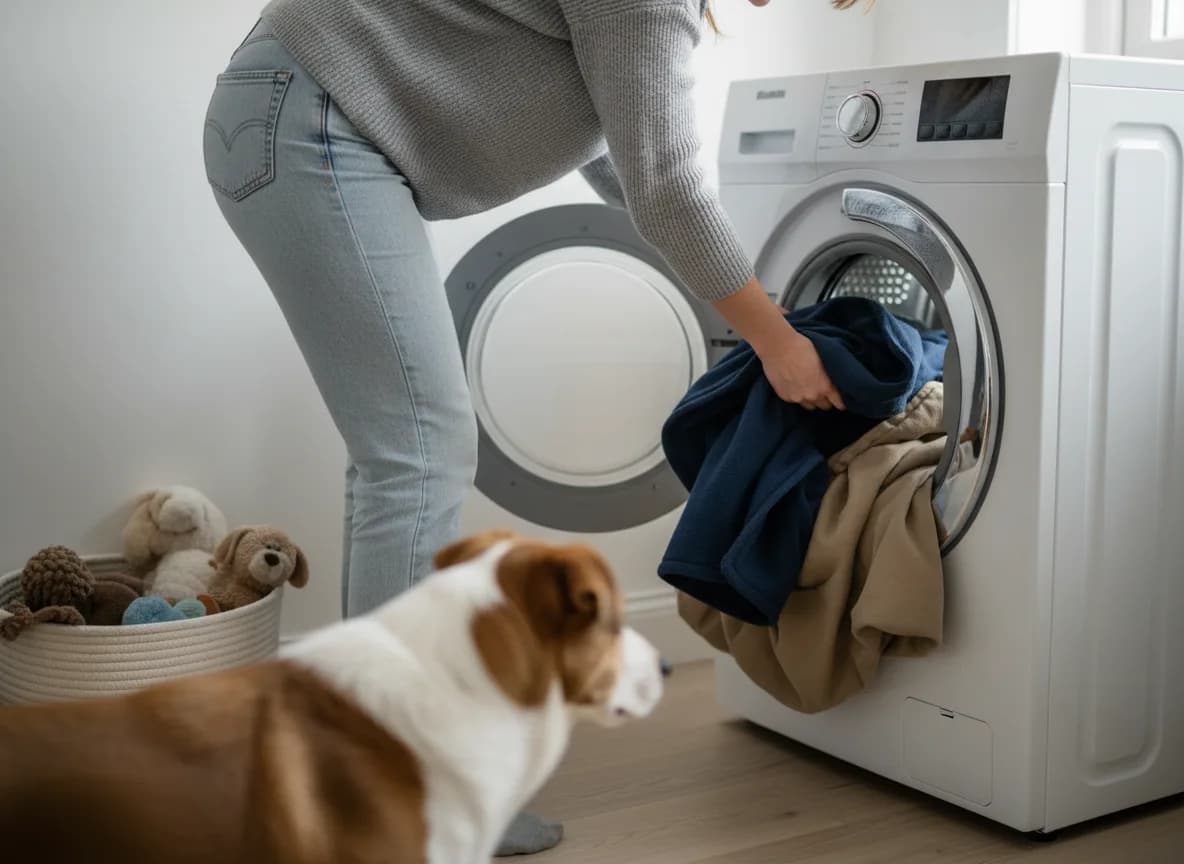
Use the location of the problem to choose the product:
- Fleas concentrated in one room or around the pet bed: skip the fogger entirely. Use a spot treatment baseboards routine plus hot laundering and repeat vacuuming.
- Fleas throughout carpeted living areas: growth-regulator spray applied into carpet edges and seams, with vacuuming every two to three days.
- Fleas returning after every indoor treatment: the source is almost certainly the yard or an untreated animal, not a weak indoor product.
- Large, empty, unfurnished space with no occupants: a total release fogger is defensible here, and only here.
- Any household containing cats: avoid permethrin-based products entirely and ask your veterinarian which environmental products are appropriate.
- Ask your veterinarian which on-pet class suits each animal, then keep it unbroken: a monthly spot-on treatment only holds the line if the next dose lands before the previous one wears off, and a skipped month is usually what restarts the whole cycle.
- If remembering the monthly dose is the step that keeps slipping, a flea and tick collar covers a long stretch on a single fitting rather than needing a fresh application every month; confirm with your veterinarian before pairing it with anything else.
The weekly coat check is what tells you whether any of it is working, so it is worth having the right kit within reach:
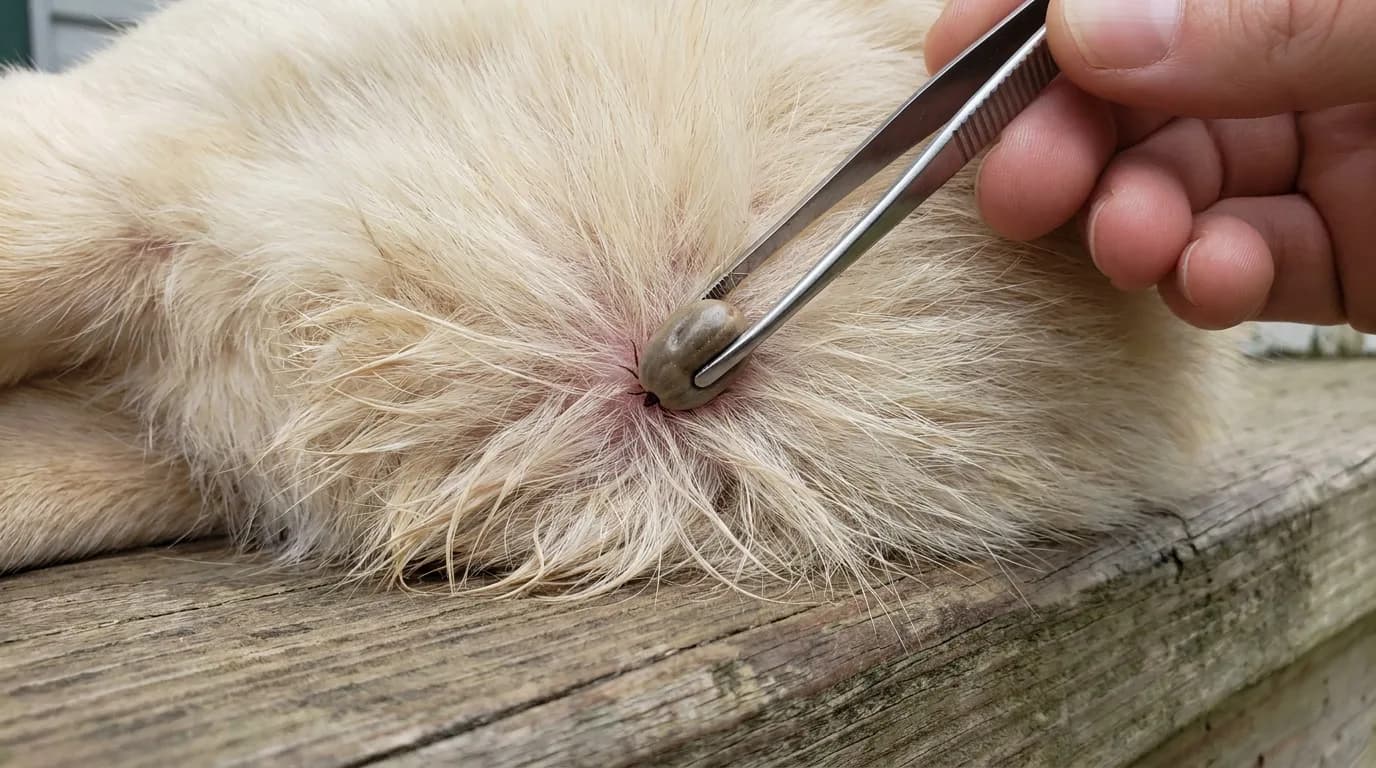
- Households with yard access are already checking coats weekly, so keep a tick removal kit with the grooming supplies: fine-point tools lift an attached tick cleanly where fingers crush it, and that same weekly check is how you catch fleas coming back from outside.
- Cats that refuse a brush will usually tolerate grooming gloves, which matters because a cat you cannot examine is the animal most likely to be quietly reseeding the carpet while everyone treats the dog.
- Once numbers are down, switch routine bathing back to a plain oatmeal and aloe shampoo, since insecticidal washes are formulated for knockdown and are not intended as a regular every-few-weeks shampoo.
No amount of household treatment substitutes for a veterinarian-recommended flea preventive on every pet in the home. Untreated animals keep seeding the environment with eggs faster than any spray, fogger, or vacuum can remove them, and flea-allergic animals need the on-pet protection for their skin regardless of what you do to the carpet. Talk to your veterinarian about which product suits each animal's species, weight, age, and health status.
For the on-pet half of the plan, our guide to the safest flea treatment for dogs covers product classes and safety profiles, and WebVet's vet-reviewed pages on the safest flea treatments for dogs and how to get rid of fleas on dogs go deeper on treating the animal itself. If you are weighing household remedies you already have in the cupboard, including scent-based repellents and dish soap claims, our home remedies for fleas guide evaluates which ones hold up and which are myth, including what fleas genuinely dislike and whether dish soap does anything to eggs. Powder-based options such as diatomaceous earth for fleas have their own separate safety rules worth reading before use.
It is worth being precise about why environmental treatment never replaces on-pet prevention rather than simply asserting it. Every product you apply to the house acts on fleas that have already left the animal. The animal is the source, and an untreated pet reloads a treated carpet every day it goes about its life. A vet-recommended preventive is the only intervention acting at that source, which is why the household half of this plan is support and the on-pet half is the plan itself.
- Treat every animal in the household, not only the one that is scratching. The quiet one is very often the reservoir.
- Flea-allergic animals need on-pet protection for their skin whatever state the carpet is in, because a single bite is enough to set off a reaction.
- Ask your veterinarian which class suits each animal by species, weight, age and health status, and raise any seizure history, pregnancy or nursing before you start.
- Keep the preventive unbroken across the full two to three month clearance window. A skipped dose is usually what restarts the whole cycle.
- Never apply a household premise product to an animal, or a dog product to a cat. Those are separate registrations with separate safety data behind them.
Judge the targeted alternatives on whether they outperform a fogger across four things: reach, residual, risk and repeatability. A pump spray wins on reach, because you decide where the product goes, and on residual, because you can drive a growth regulator into the carpet base where it stays useful for months. A vacuum wins on risk, since it removes eggs and larvae with no chemistry involved at all. Hot laundering wins on the surface that matters most, which is whatever the animal sleeps on. All three win on repeatability, and that is the decisive one: you cannot discharge a canister every three days in an occupied home, and the flea life cycle asks for exactly that kind of repetition.
- Pump spray carrying methoprene or pyriproxyfen, worked into carpet edges, baseboard seams and under-furniture gaps.
- Vacuum every two to three days for a month, emptying the canister or bag into an outdoor bin each time.
- Hot wash and high-heat dry every pet bed, blanket and soft toy the animal uses.
- An IGR concentrate on its own for rooms where you would rather not lay down an adulticide.
- Uninterrupted vet-recommended prevention on every pet, which is the only item on this list acting at the source.
Frequently asked questions
Not reliably. A fogger's aerosol settles on exposed surfaces, and flea eggs sit down in carpet pile, in bedding seams, and under furniture where the mist does not reach in useful concentration. Products containing methoprene or pyriproxyfen can stop exposed eggs and larvae from developing, but only where the product physically lands.
Follow the label first. Most total release fogger labels require you to stay out for two to four hours, then ventilate the space with open windows and fans before re-entry. Bring pets back only after the airing period is complete, surfaces are dry, and food bowls and bedding have been washed and replaced.
Neither solves the underlying problem, because both are total release products with the same delivery limitation. Compare the active ingredients rather than the brand, and give preference to any product containing an insect growth regulator. In a furnished, occupied home, a targeted pump spray outperforms both.
Be extremely cautious. Many foggers contain permethrin or a related pyrethroid, and cats are highly susceptible to pyrethroid poisoning. If you use one, the cat must be completely out of the building, the space must be fully ventilated, and all surfaces the cat contacts must be washed before it returns. Ask your veterinarian before treating a cat household.
Because the cocooned pupae survived. The pupal stage is protected by a silk cocoon woven with carpet fiber and debris, and adults emerge days to weeks later when triggered by vibration, warmth, or carbon dioxide. This is the normal pattern after a fogger, not a defective product.
One. The EPA is explicit that using more than one fogger per room is unnecessary and dangerous, since a standard six-ounce canister already covers up to roughly 25 by 25 feet of unobstructed space. Overloading a room raises both the poisoning risk and the risk of igniting the propellant.
The bottom line
A flea fogger is a product built for a problem fleas do not have. It delivers insecticide to the top of a room while the infestation lives at the bottom of the carpet, and it asks you to accept residue on your kitchen counters, a fire risk, and a species-specific hazard to cats in exchange for killing the adults you could have vacuumed up anyway. If you already own one, follow the label exactly, get every animal out, ventilate properly, and clean afterward. If you have not bought one yet, put the money into a growth-regulator spray, a decent vacuum routine, hot laundry cycles, and uninterrupted vet-recommended prevention on every pet in the house. That combination is what actually ends an infestation, and unlike the canister, it works on the stages you cannot see.
BVMS, MRCVS
Dr. Pippa Elliott, BVMS, MRCVS, is a veterinarian with nearly 30 years of experience in companion animal practice. Dr. Elliott earned her Bachelor of Veterinary Medicine and Surgery from the University of Glasgow. She was also designated a Member of the Royal College of Veterinary Surgeons. Married with 2 grown-up kids, Dr. Elliott has a naughty Puggle named Poggle, 3 cats and a bearded dragon.
Sign up for expert-backed reviews and safety alerts all in one place.