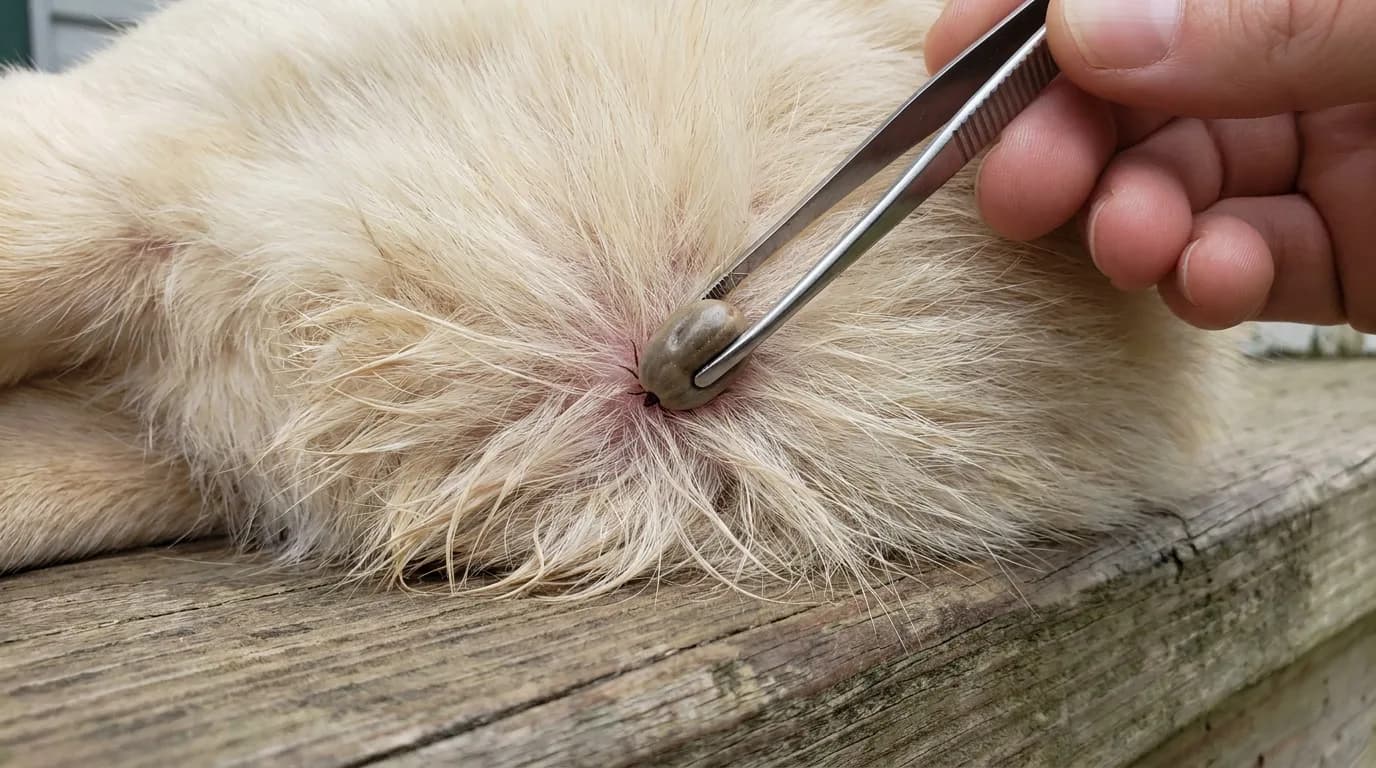
Diatomaceous Earth for Fleas: Does It Actually Work?
Diatomaceous earth kills adult fleas by drying them out, but it cannot touch eggs or pupae. A vet explains food-grade vs. filter-grade, safe application around pets, and where the powder falls short.

BVMS, MRCVS
Petful is reader supported. As an affiliate of platforms like Amazon and Chewy, we may earn a commission when you buy through links on this page. There is no extra cost to you.
Diatomaceous earth for fleas is one of the few home remedies with a real mechanism behind it. The powder does kill adult fleas that walk through it, and it kills them physically rather than chemically, so fleas cannot develop resistance to it the way they can to some insecticides. What it will not do is end an infestation on its own. Used correctly, it is a useful supporting tool on hard floors and around pet bedding. Bought in the wrong grade, it becomes a genuine lung hazard that solves nothing. This guide covers what the powder actually does, which grade is safe around animals, how to apply it, and exactly where it falls short of veterinary flea control.
- 1Only food grade diatomaceous earth belongs in a home with pets. Filter grade and pool grade contain high levels of crystalline silica and are not safe to dust around animals or people
- 2The powder kills adult fleas and many larvae by drying them out, but it does not kill flea eggs and it cannot reach pupae sealed inside their cocoons
- 3Treat it as a supplement to vet-recommended flea prevention on your pet, never as a replacement for it

Sign up for expert-backed reviews and safety alerts all in one place.
Does Diatomaceous Earth Actually Kill Fleas?
Yes, with important limits. Diatomaceous earth is the fossilised remains of diatoms, a type of hard-shelled algae, ground into a fine off-white powder. Under a microscope the particles are jagged and highly porous. When an insect walks across them, the powder scratches the waxy outer layer of the exoskeleton and absorbs the lipids that keep moisture inside the body. The insect then loses water it cannot replace and dies of dehydration.
So does diatomaceous earth work for fleas in practice? On dry, undisturbed surfaces, yes, against the fleas that physically contact it. In a home, that means adult fleas moving across treated floorboards and larvae wriggling down into treated carpet fiber. It is not a fumigant, it does not repel anything, and it has no effect at all on a flea that never touches the dust.
- Does diatomaceous earth kill fleas on contact? Not instantly. Contact starts the process, but desiccation takes hours to days depending on how heavily the flea was coated and how dry the room is.
- Does diatomaceous earth kill flea eggs? No. Flea eggs have a smooth, largely impermeable shell and very little surface wax for the powder to strip, so they hatch on schedule regardless of the treatment.
- What about pupae? Pupae sit inside a sticky silk cocoon that shields them from dust, sprays, and most premise products.
- Is diatomaceous earth good for fleas control overall? As one layer of a home treatment plan, yes. As the whole plan, no.
- The powder works on the floor, not on the animal, so fleas keep boarding your pet and laying more eggs. A single oral flea tablet clears the adult fleas already on the pet in about 30 minutes, but it stops working within 24 hours, so treat it as a one day reset rather than protection.
- Powder only helps where it can sit undisturbed and stay dry, which rules out sofas, curtains, and upholstery seams. A labeled indoor flea spray covers those soft surfaces, and it does not stop working the moment the humidity climbs.
Moisture is the other constraint. The powder only works while it is dry, so a damp basement, a humid summer room, or carpet that has just been steam cleaned will blunt it badly. That is why the reliable protocol is simple: food grade product only, a light application on dry surfaces, a fixed dwell time, then vacuum thoroughly and repeat. Everything else in this guide is detail on those four steps.
Petful may earn a commission when you click through to Chewy, at no extra cost to you.
- Only about 5 percent of a flea population is on your pet at any moment. The rest is in carpet, cracks, and bedding as eggs, larvae, and pupae, which is why treating the home matters and why a single powder pass rarely finishes the job.

 Sponsored
Need flea, tick, or parasite care for your pet?
A licensed vet at Dutch can recommend the right preventive and prescribe it when it's appropriate. Annual members get 20% off their first flea and tick order.
Use code Pets60
Plans start at $12/month · covers up to 5 pets
- Licensed vets in most states
- Rx for 150+ conditions
- 4.7 on Trustpilot
Food-Grade vs. Filter-Grade Diatomaceous Earth
This is the single most important safety decision on the page, and almost no ranking article explains why. Diatomaceous earth is sold in two very different forms, and they are not interchangeable.
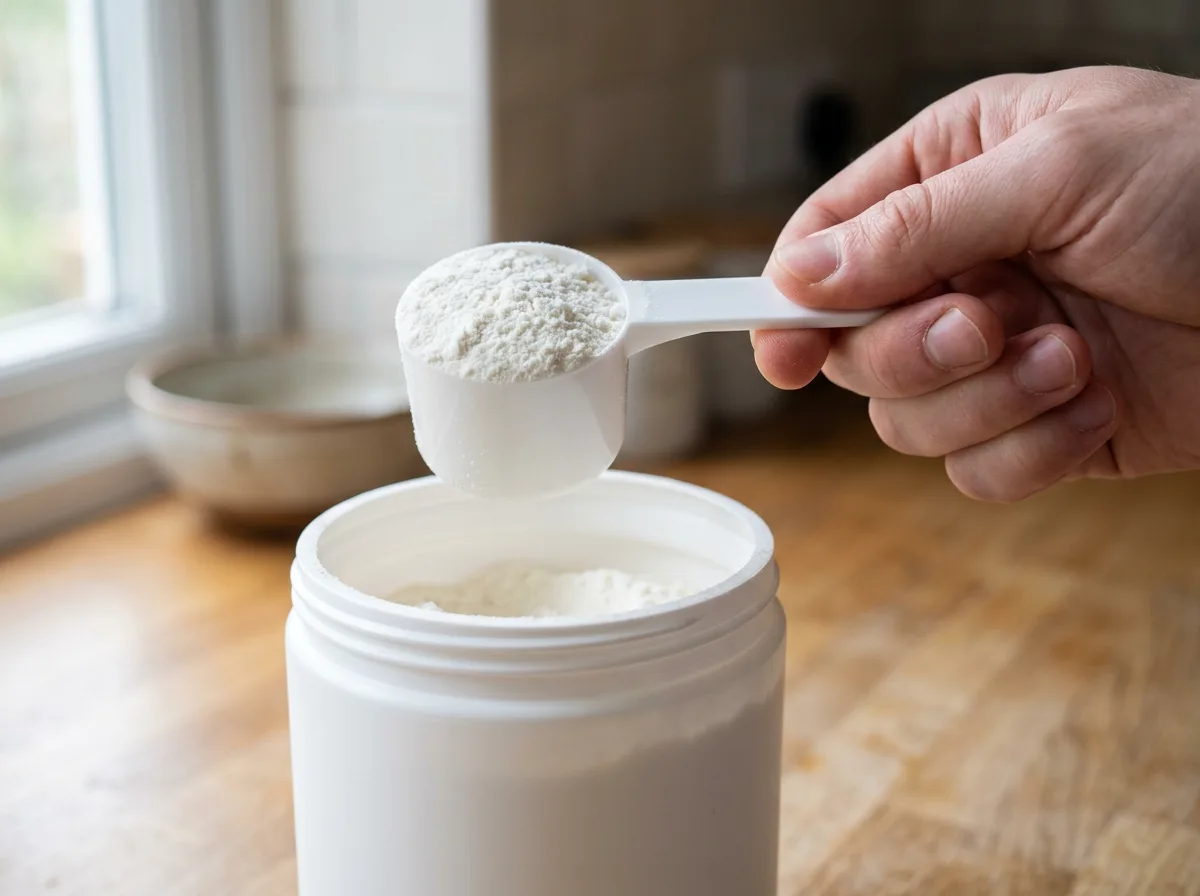
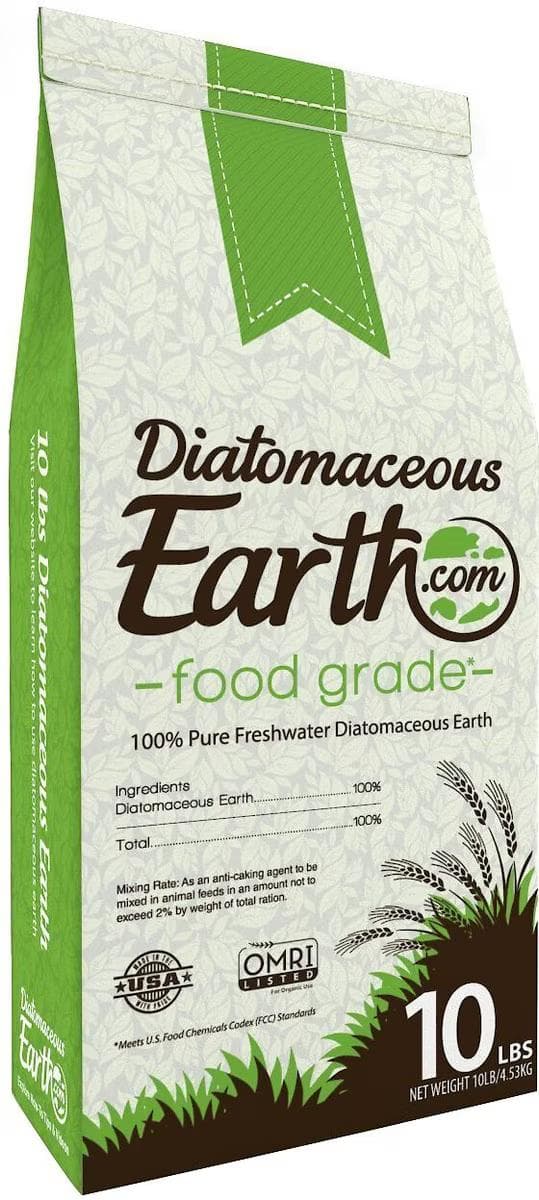
Food grade diatomaceous earth is mined, milled, and left uncalcined. Its silica stays in the amorphous form, and the crystalline silica content is held to roughly 1 percent or less. It is the version cleared for use as an anti-caking agent in animal feed, and it is the only version that belongs anywhere near a pet.
Filter grade is a different product entirely. It is calcined, meaning heat-treated at high temperature to make it a better swimming pool and industrial filtration medium. That heat converts much of the amorphous silica into crystalline silica, and calcined product can run 60 percent crystalline or higher. Respirable crystalline silica is a recognized occupational lung hazard linked to silicosis and classified as a human carcinogen. It is not a "slightly stronger" version of the garden powder. It has no business being dusted along a skirting board where a cat sleeps.
- If a bag is sold for swimming pool filters, is described as calcined, or carries an industrial filtration use, do not open it in your home. The crystalline silica content makes inhaled dust a serious respiratory hazard for you and for your pets, and it offers no advantage against fleas.
Retail listings blur the line constantly. The same bag may be sold as food grade diatomaceous earth for fleas on one site and simply as diatomaceous earth food grade for fleas on another, while an unlabelled bag two rows down is pool filter media. Here is how to confirm what you actually bought before you use it.
- Check the front of the bag for the words "food grade." If those exact words are missing, treat the product as unsuitable for indoor pet use.
- Look for a stated crystalline silica figure. Reputable food grade suppliers publish a number, usually 1 percent or less, in the specification or safety data sheet.
- Reject anything described as calcined, flux-calcined, or pool grade. Those terms all mean heat-treated filtration media.
- Watch the aisle it came from. Pool supply and industrial filtration shelves are the wrong shelf, even if the price is better.
- If the bag does not say food grade, do not use it. Bag it back up, keep it out of the house, and dispose of it according to the label rather than "using it up outside where the pets go."
Being food grade does not make a powder harmless, either. Food grade means it is safe to swallow in small quantities, not that it is safe to breathe. Any very fine dust causes respiratory irritation when it is stirred into the air, which is why the handling precautions further down this guide apply to every grade.
It is worth understanding what calcination actually changes, because that is the difference the label wording stands in for. Silica exists either in a disordered amorphous arrangement or an ordered crystalline one. Heating diatomite to filtration temperatures rearranges much of the amorphous silica into crystalline forms such as cristobalite. Amorphous silica behaves as a nuisance dust. Respirable crystalline silica is the fraction linked to silicosis and classified as carcinogenic to humans, and no amount of careful application makes filter grade acceptable indoors.
- Ask for the safety data sheet rather than the marketing page. Section 3 lists composition, and that is where a crystalline silica percentage appears if the supplier publishes one.
- Food grade product is uncalcined and typically states crystalline silica at roughly 1 percent or less. Calcined filtration media runs many times higher.
- Cristobalite and tridymite named on a data sheet are crystalline forms of silica. Seeing either is reason enough to put the bag back on the shelf.
- Anything sold for swimming pool filtration is calcined by design, because calcining is what makes it work as a filter aid. There is no pool-grade product that is also food grade.
- If you cannot verify the grade at all, do not use it indoors, and do not scatter it outside where pets walk either.
Buying online removes the check that works best, which is reading the front of the bag, so verify the product on arrival rather than at checkout. Open the box, find the words food grade printed on the bag itself and not only in the listing title, then match the brand to a published safety data sheet before using it around pets. If the bag says nothing and the seller cannot produce a sheet, send it back. A refund is cheaper than working out later that you bought filter or pool grade material and spread it across your floor. Readers who want one simple way to stay clear of the wrong bag can use this: buy from a feed, garden or hardware supplier, and treat the pool chemical aisle as off limits.
- Photograph the front of the bag before you open it. If it does not say food grade, that photo is your return evidence.
- Section 3 of the safety data sheet lists composition, which is where a crystalline silica percentage appears.
- Cristobalite or tridymite named anywhere on the sheet means crystalline silica. Send it back.
- There is no product that is both pool grade and food grade, because calcining is what makes a filter aid work.
- If you cannot verify the grade at all, do not use it indoors and do not scatter it outside either.
How to Apply Diatomaceous Earth for Fleas, Step by Step
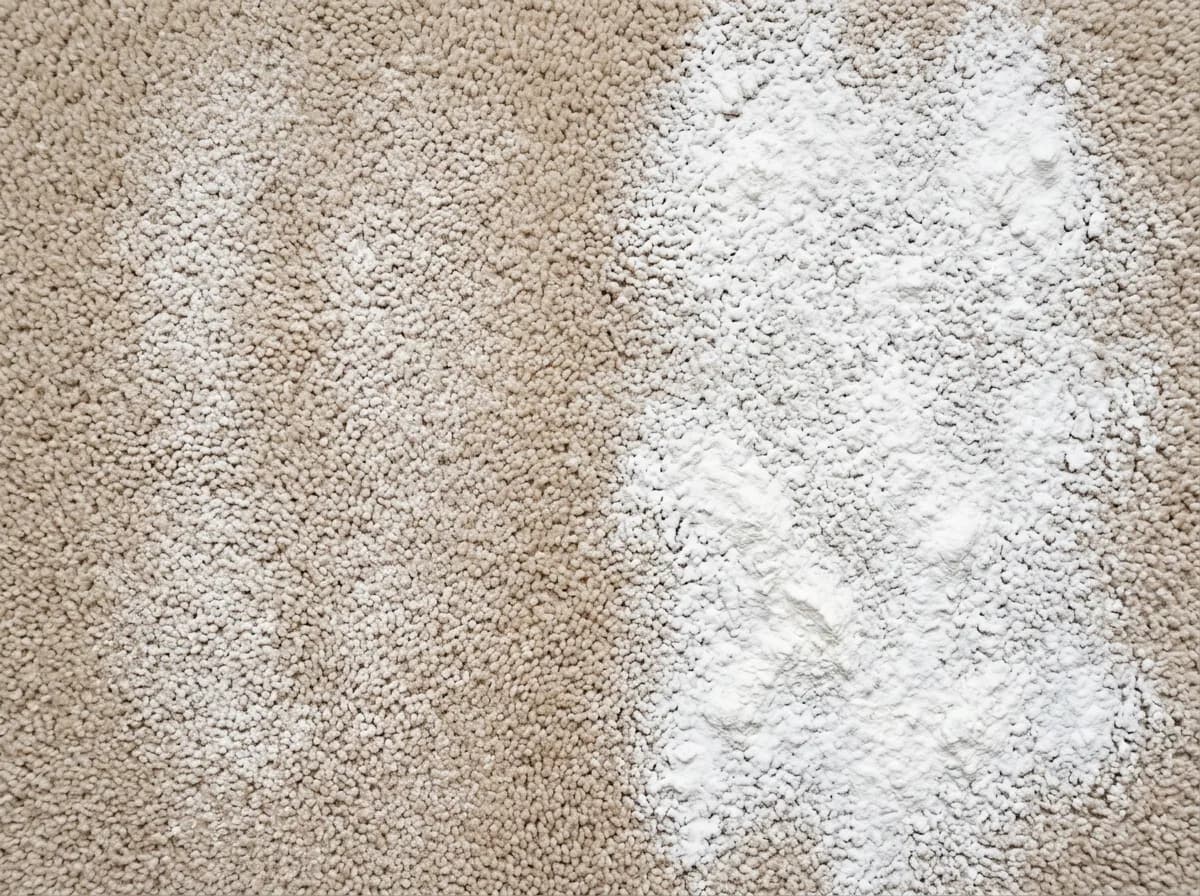
Most failures come down to using far too much. People expect a visible white blanket to work better, and the opposite is true: fleas walk around a thick drift and stroll straight through a light dusting they cannot see. Here is how to use diatomaceous earth for fleas correctly indoors.
Petful may earn a commission when you click through to Chewy, at no extra cost to you.
- Remove pets and people from the room first. Close the door and keep animals out during application and until the dust has settled.
- Vacuum before you dust. Vacuuming lifts carpet fibers, removes debris that larvae feed on, and stimulates some pupae to emerge where the powder can reach them.
- Wash all pet bedding on the hottest safe cycle and dry it fully. Bedding is the highest-density flea site in most homes.
- Wear a dust mask, gloves, and eye protection. Do this even with food grade product.
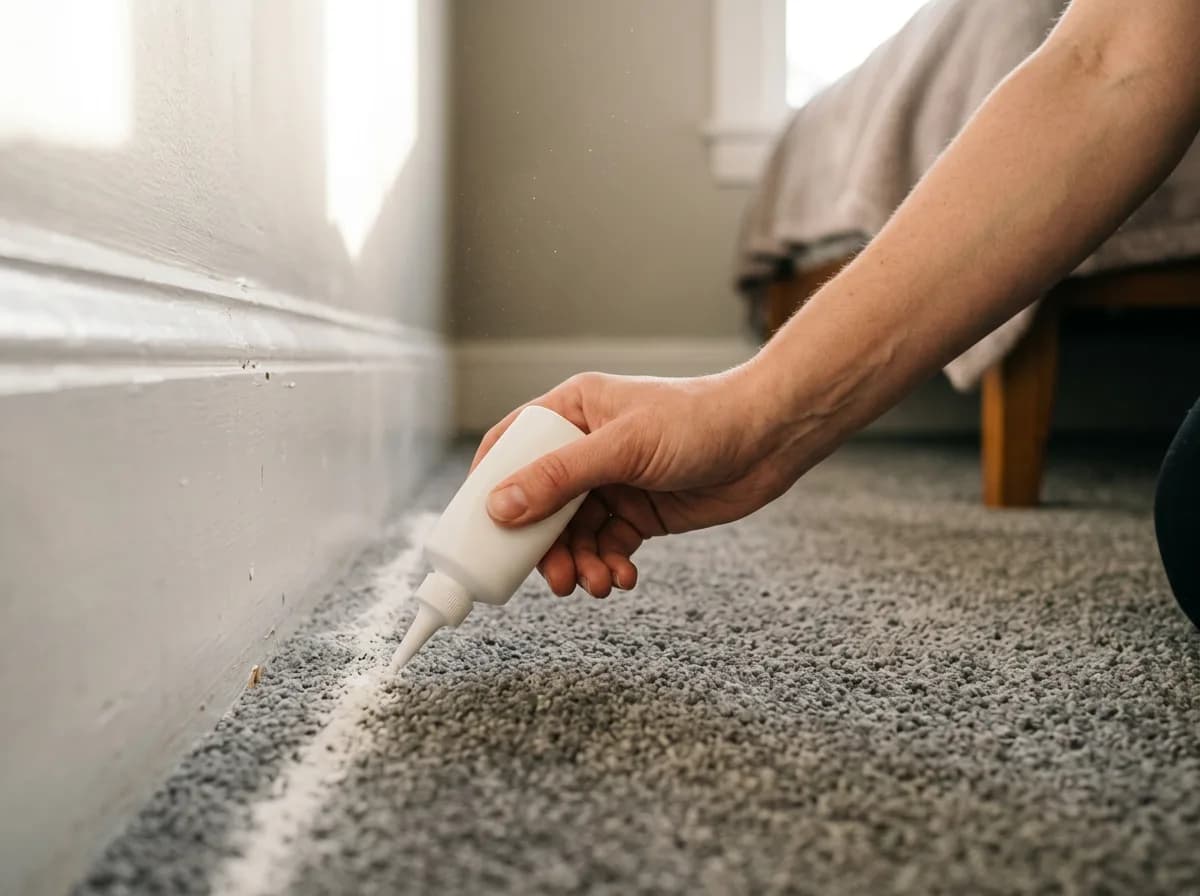
- Apply a light dusting only. Use a powder duster or a shaker bottle and aim for a haze you can barely see. Roughly a cup treats an average room, and less is genuinely better.
- Target where fleas live. Carpet edges, skirting boards, under furniture, floor cracks, the base of upholstered furniture, and the area around washed pet bedding.
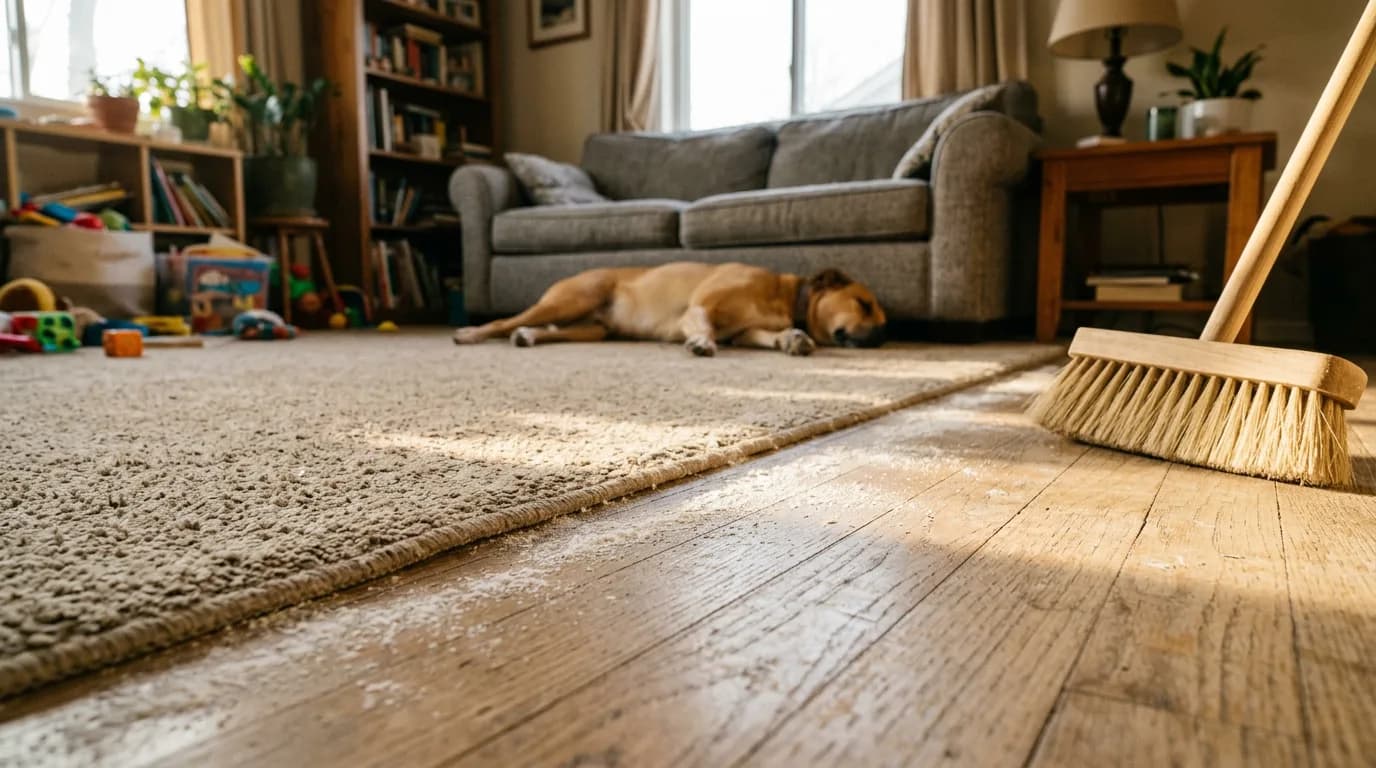
- Work it in on carpet. A stiff broom or brush pushes the powder down to the base of the pile where larvae actually sit, rather than leaving it on top.
- Leave it undisturbed for the dwell time. See the timeline in the next section.
- Vacuum thoroughly, then empty the vacuum outside. Use a bagged or HEPA vacuum where possible, since fine powder clogs filters and can foul a bagless unit.
- Repeat weekly for three to four weeks. One pass never covers a full flea life cycle.
That sequence is the whole answer to how do i use diatomaceous earth for fleas and to how to spread diatomaceous earth for fleas without creating a dust cloud. Two follow-up questions come up constantly.
- How much diatomaceous earth for fleas is enough? A barely visible film. If you can see white footprints in it, you have used several times more than you need and have made the room dustier for no extra kill.
- How often to apply diatomaceous earth for fleas? Once a week for three to four weeks, and always reapply after you vacuum, shampoo a carpet, or mop, because moisture and removal both end the treatment.
Keeping animals out for the full dwell is the step people skip, usually because the room has no door to close. A pet gate blocks an open doorway for the 24 to 48 hours the powder needs, which costs less than repeating a treatment that got walked through on hour three. Between the weekly rounds, a pack of grooming wipes lifts settled dust and flea dirt off the coat without a full bath, which matters because washing every week dries the skin further.
- Diatomaceous earth kills by absorbing moisture, so it is inert once it gets damp. Do not apply it to a freshly steam-cleaned carpet, a wet basement floor, or anywhere outdoors before rain, and reapply after any cleaning that introduces water.
The vacuuming stage deserves more attention than it usually gets, because it is both the end of the treatment and the main dust-control step. A HEPA vacuum matters here for a practical reason: diatomaceous earth is a very fine powder, and a machine without sealed HEPA filtration passes a share of it straight back into the room air you were trying to keep clean. Vacuum only once the full dwell time has elapsed, then empty the machine outside rather than over an indoor bin.
- Use a bagged machine or a sealed HEPA vacuum. Fine mineral dust clogs foam and cartridge filters quickly and blows straight through an unsealed bagless unit.
- Do not vacuum before the dwell time is up. Twelve hours is the minimum on hard floors, and 24 to 48 hours is the useful window on carpet.
- Empty the bag or canister into an outdoor bin, and do it outdoors, so the emptying itself does not put the powder back into the room.
- Expect to clean or change the vacuum filter more often across a four-week course than you normally would, and keep the dust mask on while you do it.
- Vacuum the room thoroughly before pets and children come back in, because settled powder is the exposure that remains once the treatment has done its work.
Run the protocol one room at a time rather than dusting the whole house in an afternoon. That is what keeps a safe indoor application realistic in a home people are still living in. Treat a single room, close it off, and give the powder its full dwell time while pets and children use the rest of the floor. Vacuuming that room is what ends its treatment and returns it to normal use, and only then do you move on to the next one. Each step above stays the same, including the mask and the barely visible dusting: only the scope changes. Working this way also spreads the dust exposure out, and one interrupted dwell then costs you a single room rather than the whole job.
- Start with the room the pet sleeps in. That is the highest-density flea site in most homes.
- Minimum dwell is 12 hours on hard floors, and 24 to 48 hours is the useful window on carpet.
- Do not vacuum early. Vacuuming is what ends the treatment for that room.
- Use a bagged machine or a sealed HEPA vacuum, and empty it outdoors.
- Repeat the whole rotation weekly for three to four weeks, which is what covers a full flea life cycle.
How do you use diatomaceous earth for fleas? The short answer is a light dusting on dry surfaces, left alone, then vacuumed up. Start with the laundry: strip and wash every piece of pet bedding, because bedding is where a resting animal drops the eggs that seed the rest of the room, and no powder reaches an egg buried deep in fabric. Once the bedding is clean and fully dry, dust the floor around it rather than the sleeping surface itself, keep the pet out of that room for the full dwell time, then vacuum. Repeat the same round weekly. A treatment that skips the laundry, skips the dwell, or buries the room in visible white powder is the version that fails.
- Food grade only. Filter and pool grade contain crystalline silica and are an inhalation hazard around animals and people.
- Wash pet bedding on the hottest cycle the fabric safely takes, and dry it fully before any powder goes down nearby.
- Roughly a cup of powder treats an average room. If you can see white footprints, you have used far too much.
- Give it the dwell: 12 hours minimum on hard floors, 24 to 48 hours on carpet, with the room closed off.
- Run the cycle weekly for three to four weeks, and reapply after any vacuum, mop, or carpet shampoo.
How Long Does Diatomaceous Earth Take to Kill Fleas?
Adult fleas that pick up a good coating usually die within 24 to 72 hours, with most product labels citing results inside 48 hours. There is no instant knockdown, because it takes sustained water loss to dehydrate fleas to the point of death. That is also the honest answer to how long for diatomaceous earth to kill fleas: think in days, not minutes, and think only about the individual insects that touched the dust.
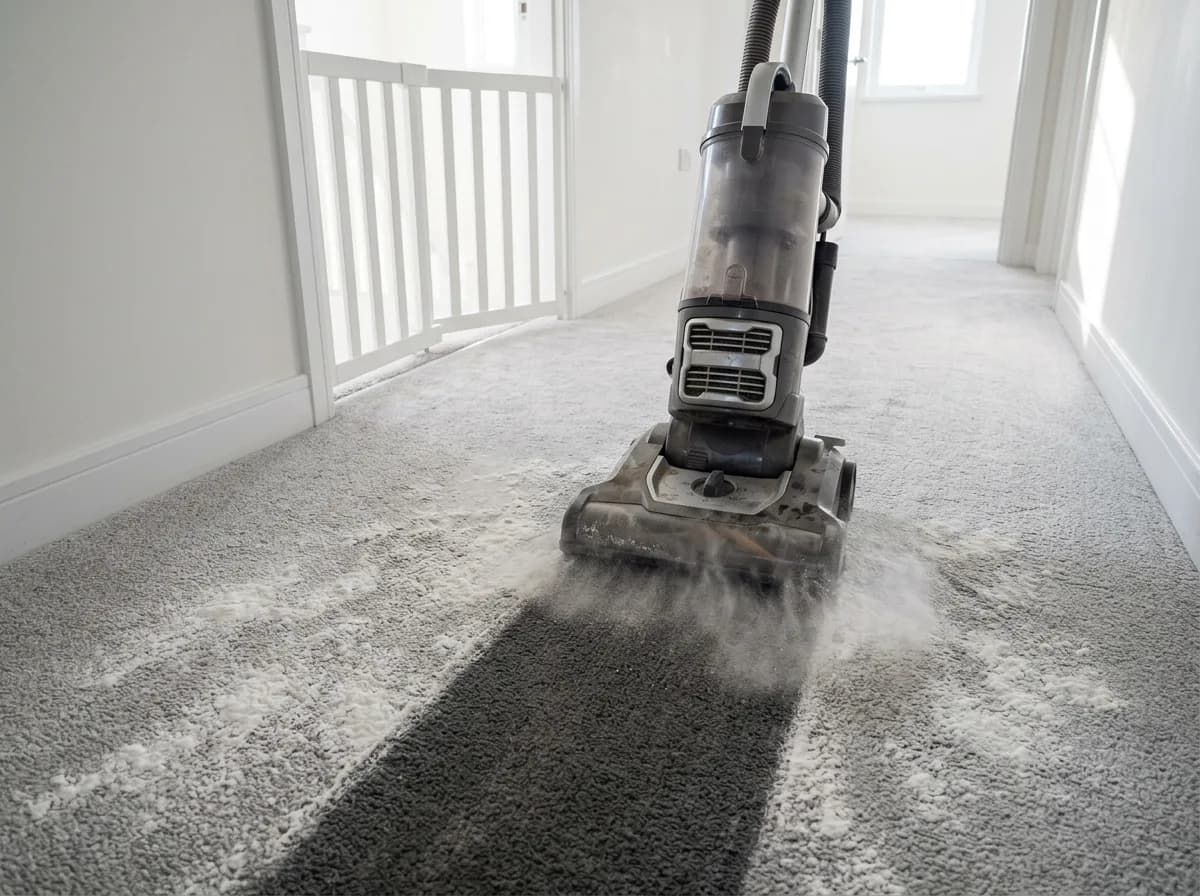
Dwell time is the part people get wrong in the other direction, vacuuming after an hour and wondering why nothing changed.
- Minimum useful dwell: 12 hours on hard floors and skirting boards.
- Better dwell: 24 to 48 hours in a room you can close off from pets and children.
- Upper end: 72 hours, after which the dust has done what it is going to do and should come up.
- How long to leave diatomaceous earth on carpet for fleas: the same 24 to 48 hour window, then vacuum thoroughly, because leaving powder in a pile indefinitely just adds airborne dust without adding kill.
- Full cycle: plan on three to four weekly rounds before you judge whether it helped.
- If the treated room is where the dog normally settles, plan for 24 to 48 hours of boredom somewhere else. A stuffable rubber chew toy frozen the night before buys 20 to 40 minutes at a time, which is usually the difference between a closed door and a scratched one.
- The powder's effect ends the moment you vacuum, so the on pet half of the plan is what carries duration. A flea and tick collar runs up to eight months per fitting; confirm with your veterinarian that it suits your pet before you change anything.
Humidity stretches every one of those numbers. In a damp room the powder may never fully dry a flea out, which is one more reason it underperforms in basements, laundry rooms, and humid climates.
Petful may earn a commission when you click through to Chewy, at no extra cost to you.
Should You Put Diatomaceous Earth Directly on Your Pet?
No, and this is where most of the online advice goes wrong. Can I put diatomaceous earth on my dog for fleas, or can I put diatomaceous earth directly on my dog for fleas, are two of the most common questions on this topic, and the veterinary answer to both is that dusting the animal itself is not the recommended route even with food grade product. The same mechanism that dries out a flea also strips oils from skin and coat, and rubbing an abrasive powder into fur puts fine dust directly into your pet's breathing zone and eyes.
The specific problems with diatomaceous earth on dogs for fleas, and with the equivalent question about cats, are consistent.
- Inhalation. Dusting a coat creates a cloud right at nose level, and fine dust causes respiratory irritation in animals with airway disease, brachycephalic anatomy, or small body size.
- Eye irritation. The particles are mechanically abrasive. They do not belong near a cornea.
- Skin and coat drying. Repeated use leaves a dull, flaky coat and can worsen any existing skin condition.
- Grooming. Both species ingest whatever is on the coat, and cats do it relentlessly.
- It underperforms anyway. A dusted coat gives no residual protection, no repellency, and no effect on the eggs already dropping into your carpet.
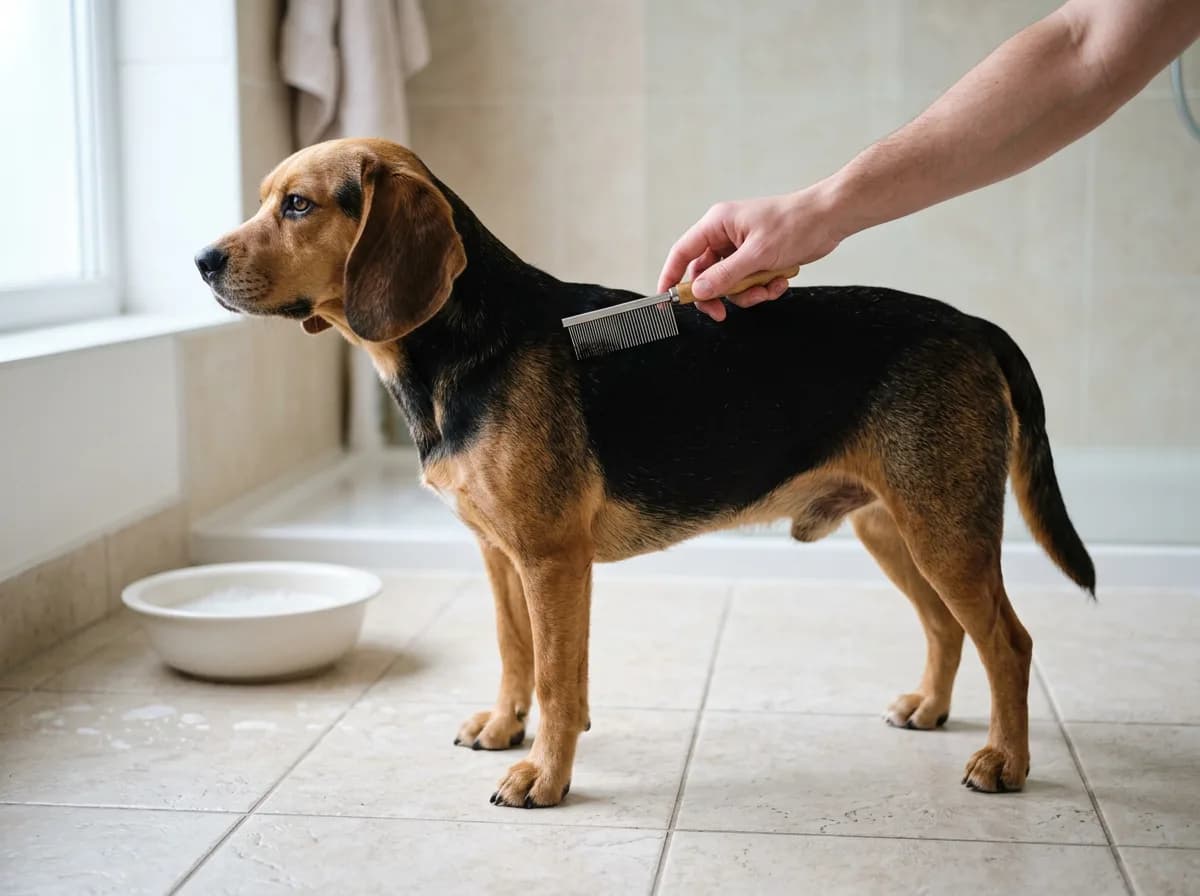
So while people search for diatomaceous earth for fleas on dogs and diatomaceous earth for fleas on cats hoping for a natural spot-on substitute, there is no version of that plan a veterinarian is going to endorse. Keep the powder on floors and out of fur. The safer on-pet mechanical option is a fine-toothed flea comb worked through the coat and dipped in soapy water between passes, which physically removes live fleas and flea dirt with no dust at all. For the medical side of on-pet control, our sister property WebVet's vet-reviewed guide to the safest vet-reviewed flea treatment covers what actually belongs on an animal.
- Treating floors while your pet carries untreated adult fleas keeps the cycle running. Every day an untreated animal seeds hundreds of new eggs into the home. Talk to your veterinarian about a licensed preventive product and use the powder only as a supporting measure around it.
Those same three exposures apply to a treated home and not just to a dusted animal, and they are worth planning for before the bag is opened. Inhalation is the one that matters most, because any fine powder irritates airways once it is airborne and a treated room stays dusty until it has settled and been vacuumed. Eye irritation usually follows from rubbing after handling. Skin exposure is the mildest of the three, since the powder pulls oils out of whatever it touches rather than doing anything worse.
- Keep pets, children, and anyone with asthma or other airway disease out of the room during application and until you have vacuumed.
- Wear a fitted dust mask or an N95 plus eye protection while applying, even with food grade product, and ventilate during and after the job.
- Never use a fan, leaf blower or compressed air to spread it. Anything that aerosolises the powder turns a manageable task into a real dust exposure.
- Wash your hands after handling and do not rub your eyes first. If powder does get into an eye, flush it with clean water rather than rubbing.
- If a pet develops coughing, wheezing, squinting or persistent drooling after a treatment, contact your veterinarian rather than assuming it will settle.
Diatomaceous Earth and Cats: Extra Precautions
Cats deserve their own section because they are the species most likely to be harmed by a well-meaning powder treatment. What happens if cats lick diatomaceous earth is usually not a poisoning event: food grade product is cleared as a feed additive, so a small amount swallowed during grooming typically causes nothing worse than mild digestive upset or, occasionally, some drooling from the dry, gritty texture. The real risks are inhalation while the dust is airborne, eye irritation, and a dried-out coat and skin from repeated grooming of dusted fur.
- Can i put diatomaceous earth on my cat? No. Cats groom almost continuously, so anything you apply goes straight into the mouth and nose.
- How to use diatomaceous earth on cats for fleas: you do not apply it to the cat at all. You treat floors and washed bedding with the cat shut out of the room, then vacuum before the cat returns.
- Is diatomaceous earth safe for cats to walk on? Once a light food grade application has settled and the room is no longer dusty, walking across it is low risk. Wet paws that pick up powder and then get groomed are the reason to vacuum before letting the cat back in rather than leaving it down around them.
- Watch for coughing, wheezing, squinting, or persistent drooling and contact your veterinarian if any of those appear after a treatment.
For a broader look at what is and is not reasonable on the feline side, WebVet's vet-reviewed rundown of natural flea remedies for cats is worth reading before you try anything else from the home-remedy list.
 Sponsored
Vet care that's always there
Unlimited video calls and messaging with licensed vets for less than a typical vet visit. One membership covers up to five pets.
Use code Pets60
Plans start at $12/month · covers up to 5 pets
- Licensed vets in most states
- Rx for 150+ conditions
- 4.7 on Trustpilot
Handling Diatomaceous Earth Safely: Skin, Lungs, and Eyes
Can I touch diatomaceous earth with my bare hands? With food grade product, yes, briefly and without drama. It is not corrosive and it is not absorbed through skin. What it does is pull oils out of whatever it touches, so repeated bare-handed scooping leaves hands dry, chapped, and sometimes itchy. Gloves are a comfort measure rather than an emergency one.
Airways and eyes are the parts that genuinely need protecting, and that is true of every grade.
Petful may earn a commission when you click through to Chewy, at no extra cost to you.
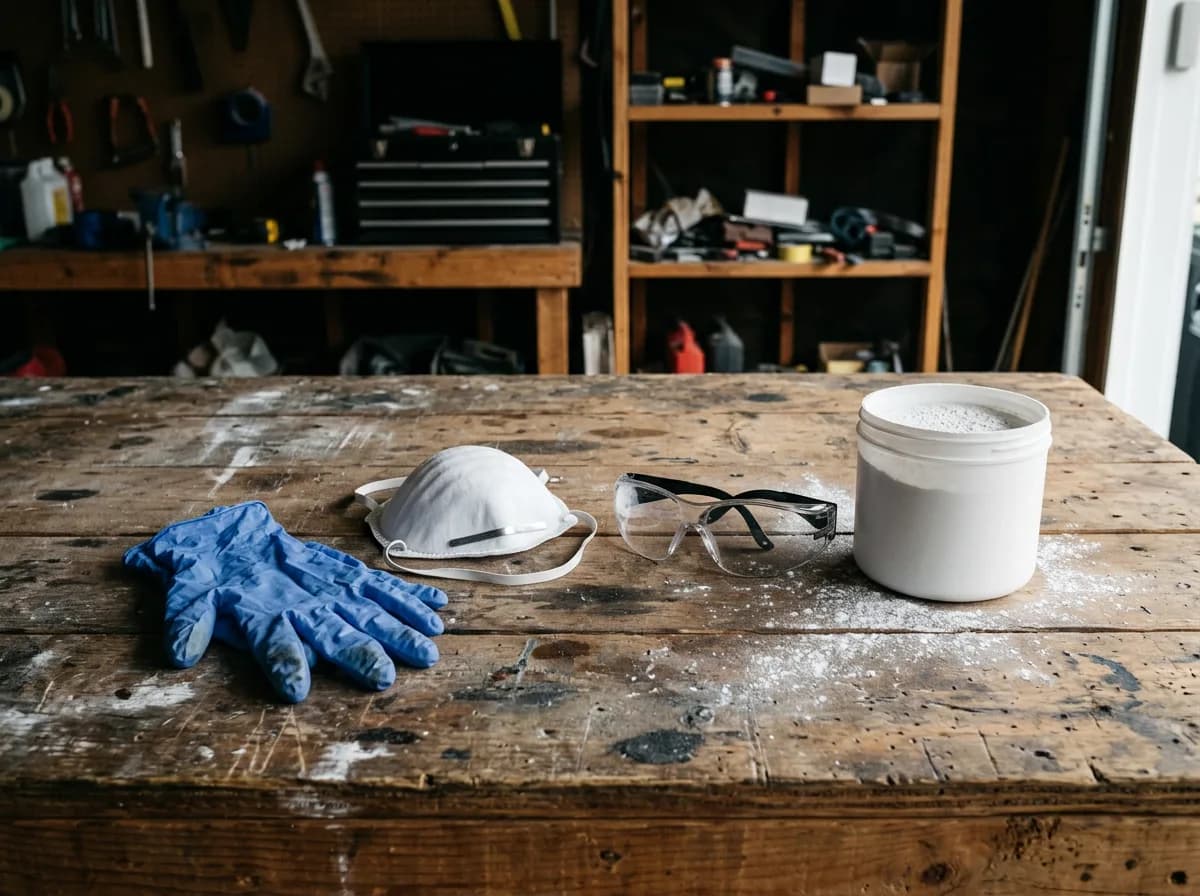
- Wear a fitted dust mask or an N95 respirator while you apply, especially in a small or poorly ventilated room.
- Use eye protection. The particles are abrasive, and rubbing an eye after handling the powder is the usual injury.
- Ventilate during and after application, then let the dust settle before anyone returns.
- Keep people with asthma or other airway disease out of the room during application and until you have vacuumed.
- Never use a leaf blower, compressed air, or a fan to spread it. Anything that aerosolises the powder turns a manageable job into a dust exposure.
- Store the bag sealed, dry, and out of reach of pets and children.
If powder gets in an eye, flush with clean water rather than rubbing. If you or a pet develop a persistent cough after a treatment, get it checked rather than assuming it will pass.
It is worth spelling out why the grade changes the handling risk, rather than repeating that food grade is the one to buy. Most advice will mention food grade in passing but never explain the difference underneath it, which is the physical form of the silica. In food grade powder that silica is amorphous, and amorphous dust behaves as a nuisance irritant. In filter grade it has been heated until much of it becomes crystalline, and respirable crystalline silica is the fraction linked to lung scarring and classified as carcinogenic to humans. That is what makes filter grade dangerous rather than simply stronger. Food grade still earns a mask, because any fine dust irritates airways, but it sits in a different order of risk.
- Wear a fitted dust mask or an N95 plus eye protection for any grade, in any size of room.
- Ventilate during and after application, and let the dust settle before anyone returns.
- Never aerosolize it. No fans, no leaf blowers, no compressed air.
- Keep anyone with asthma or another airway condition out of the room until you have vacuumed.
- Flush an affected eye with clean water rather than rubbing, and get persistent irritation checked.
Is It Safe to Sleep in a Treated Room?
It is better not to. A room where powder has just been applied is a room with airborne dust in it, and there is no benefit to breathing that overnight. The powder needs an undisturbed dwell period anyway, so the sensible pattern is to treat a room, close the door, sleep elsewhere, and vacuum thoroughly before the room goes back into normal use.
If sleeping elsewhere is not an option, treat only the edges and under-furniture areas rather than open floor, apply as lightly as possible, ventilate the room well, and vacuum before bed. Never dust a mattress, and never dust a bed a pet sleeps on. Bedding gets washed hot and dried, not powdered.
Can you sleep in a room with diatomaceous earth on the floor? You can, but the better answer is to plan so that you do not have to. Dust the bedroom in the morning, sleep elsewhere that night, vacuum the next evening, and the room comes back into normal use with the dwell time fully served. If that bedroom is the only place a pet sleeps, treat the perimeter and under the bed only, never the mattress or any bedding, and wash the bedding hot instead. Anyone with asthma, another airway condition, or a young child in the room should stay out until it has been vacuumed, and so should a cat that will groom powder off its paws.
- Best pattern: dust in the morning, sleep elsewhere, vacuum the next evening, then return the room to normal use.
- Never dust a mattress, a duvet, or a bed a pet sleeps on. Bedding gets washed hot and dried instead.
- If you must stay in the room, treat only edges and under-furniture areas, apply lightly, ventilate well, and vacuum before bed.
- Keep anyone with asthma or another airway condition out until the room has been vacuumed.
- Cats should be the last back in, because they groom settled powder off their paws.
The Real Limits of Diatomaceous Earth for Fleas
What are the downsides of diatomaceous earth? The honest list is longer than most articles admit, and it comes down to one structural problem: the powder cannot touch most of the flea population in your house.
The flea life cycle runs from egg to larva to pupa to adult, and the adults you can see are roughly 5 percent of what is present. Cat fleas (Ctenocephalides felis, the species on both dogs and cats in most homes) lay eggs on the animal that then roll off into carpet and cracks. Diatomaceous earth does nothing to those eggs, and it cannot penetrate the cocoon that protects the pupae, which can stay dormant for weeks. Meanwhile a licensed product containing an insect growth regulator such as methoprene or pyriproxyfen acts on the immature stages directly, stopping eggs hatching and preventing larvae from ever becoming biting adults. That is the capability the powder simply does not have.
- Slow. Days per flea, not minutes, with no knockdown effect.
- No effect on eggs, and none on pupae. The reservoir keeps restocking the infestation.
- Inactivated by moisture. Humidity, mopping, shampooing, and rain all end the treatment.
- Dusty and abrasive. It clogs vacuums, settles on surfaces, and irritates airways.
- Easy to over-apply, which reduces effectiveness and increases mess.
- Not a substitute for on-pet prevention. Nothing you do to the floor stops the fleas already riding your pet from laying more eggs.
Readers comparing powders usually want to know how it stacks up against the other DIY options, so here is the straight version.
- Diatomaceous earth vs borax for fleas: both are desiccant powders used on carpet, but borax (sodium tetraborate) is not approved for application to animals and carries real ingestion risk for pets and children, while food grade diatomaceous earth is the more benign of the two if swallowed. Neither kills eggs.
- Borax vs diatomaceous earth for fleas is the same question from the other side, and the answer does not change: in a home with pets, the lower-toxicity powder wins, and neither one ends an infestation alone.
- Boric acid vs diatomaceous earth for fleas: boric acid is often applied by professionals as a longer-lasting carpet treatment and can be more effective on larvae, but it is a chemical with defined toxicity and should be handled as a pesticide, not sprinkled casually where pets walk.
- Diatomaceous earth vs sevin dust for fleas: Sevin dust is an insecticide (current US consumer formulations generally use zeta-cypermethrin, a synthetic pyrethroid, though older carbaryl products still circulate). It is faster and stronger, and it also has an actual toxicity profile. It is not something to dust where a cat walks and grooms.
- Diatomaceous earth vs nematodes for fleas: beneficial nematodes such as Steinernema carpocapsae are an outdoor tool that hunt flea larvae in shaded, damp soil. They complement indoor powder rather than competing with it, and they need the moisture that ruins diatomaceous earth.
- The powder has no answer to eggs or pupae. A monthly spot-on treatment that pairs an adulticide with an insect growth regulator does, because the regulator stops the eggs a treated pet sheds from ever hatching in the first place.
- A flea and tick shampoo strips live adults off the animal in a single bath, which the floor powder can never do. Know what you are buying though: a bath leaves essentially no residual protection, so it is a day one reset and not the plan.
- Cats metabolise pyrethroids poorly, and concentrated permethrin spot-ons labeled for dogs can cause tremors, hyperthermia, seizures, and death in cats. Never apply a dog product to a cat, and check the label before using any pyrethroid product in a home where a cat lives. If exposure happens, treat it as an emergency and call your veterinarian.
| Approach | Kills adults | Kills eggs and larvae | Pet safety notes |
|---|---|---|---|
| Food grade diatomaceous earth | Yes, slowly | Some larvae, no eggs | Low toxicity, dust is the main concern |
| Borax or boric acid | Yes | Partial | Not for on-pet use, ingestion risk |
| Premise spray with an insect growth regulator | Yes | Yes | Follow label re-entry directions exactly |
| Vet-prescribed on-pet prevention | Yes | Breaks the cycle at source | Species-specific, prescribed by your veterinarian |
If your household is at the point where the powder is not keeping up, move to a plan built around vet-recommended prevention on every pet plus a labeled premise product. Our guides to vet-recommended oral flea prevention and the safest flea treatment for dogs cover the on-pet half, and if you are working through the wider DIY list, the other home remedies for fleas guide puts this powder in context alongside the rest.
One practical note on any chemical you bring in alongside the powder: with EPA-registered sprays and foggers, the product label is the legal instruction and it will state a re-entry time. In most cases that means keeping pets and people out until treated surfaces are fully dry and the room has been ventilated, commonly a couple of hours for sprays and longer for total-release foggers. Diatomaceous earth has no chemical re-entry interval, but the dust itself is reason enough to keep animals out until you have vacuumed.
Set the powder against the flea life cycle stage by stage and the clinical verdict writes itself. It acts on adults, and on some larvae that crawl through it while it is dry. It does nothing to eggs, which carry no meaningful surface wax for it to strip, and nothing to pupae, which sit sealed inside a cocoon. Those two stages are the majority of what is in your house, and a tool that cannot touch the majority is a support measure rather than a treatment.
- Egg stage: no effect. Eggs hatch on their normal schedule whether or not the floor around them was dusted.
- Larval stage: partial effect, and only where the powder has been worked down to the base of the pile and stays completely dry.
- Pupal stage: no effect. The cocoon shields the flea inside from dust, sprays and most premise products, and it can hold for weeks.
- Adult stage: a real effect, but a slow one. Death follows dehydration over roughly 24 to 72 hours rather than on contact.
- Because the untouched stages are the larger share, an insect growth regulator such as methoprene or pyriproxyfen is what closes the gap, and prevention from your veterinarian is what stops the pet refilling it.
Fleas in Carpet: Where Powder Stops Being Enough
Carpet is where an infestation actually lives, and it is the surface people ask about most. Searches for diatomaceous earth on carpet for fleas, diatomaceous earth for fleas in carpet, and diatomaceous earth for fleas on carpet all land on the same problem: the powder reaches larvae near the surface but leaves the egg and pupa reservoir deep in the pile untouched. Carpet needs its own routine of aggressive vacuuming, heat, and correctly timed repeat passes. Our full walkthrough on getting fleas out of carpet covers that protocol in detail.
Anyone who sets the powder against the flea life cycle can predict the pattern it produces in a carpeted house. Adult numbers fall over the first few days, the floor looks better, and then counts climb again around week two as eggs hatch and cocooned pupae emerge on their own schedule. That is not the dust failing. It is the dust doing its narrow job while it leaves the two largest stages running, which is precisely what an infestation needs to keep going. So do not answer a rebound with more powder, and do not read it as proof the treatment was worthless. Answer it with the tools that reach those stages: a growth regulator worked into the carpet base, and uninterrupted prevention on every pet.
- Eggs: roughly half the population, and the powder does nothing to them.
- Pupae: sealed inside a cocoon that dust cannot enter, and able to stay dormant for weeks.
- Larvae: partially reachable, but only where powder is worked to the base of the pile and stays completely dry.
- Adults: a real effect, over roughly 24 to 72 hours rather than on contact.
- A week-two rebound is the expected shape of the curve, not evidence the powder was fake.
Diatomaceous Earth in the Yard
Outdoors is the weakest use case. Diatomaceous earth in yard for fleas fails on the first rainfall or heavy dew, because moisture inactivates it, and the flea hotspots outdoors are exactly the shaded, damp areas where it stays wet. It also kills beneficial insects indiscriminately wherever it lands dry. If you are searching for diatomaceous earth for yard fleas or how to use diatomaceous earth for fleas in yard, the honest answer is to spend the effort on shade management, debris clearance, and targeted outdoor products instead. Our guide to treating the yard for fleas has the approaches that hold up outside.
Treating the Whole House
Powder alone is rarely the right whole-home answer. People searching for diatomaceous earth for fleas in house and diatomaceous earth for fleas inside house are usually past the point where a single tool works, and they need a coordinated plan across floors, upholstery, and pet bedding at the same time. For product selection across a whole home, see our guide to flea spray for the home, and for the full room-by-room protocol, our pillar on how to get rid of fleas in the house is the step-by-step to follow rather than repeating here. WebVet also publishes a vet-reviewed version covering both sides of the property in its guide to vet-reviewed house and yard flea removal.
Choosing and Buying Food-Grade Diatomaceous Earth
Once you have decided the powder has a role, the buying decision is narrow. There is no meaningful performance difference between reputable brands, because the active principle is the same mineral. What separates products is grade verification, particle consistency, and whether the bag comes with a duster that lets you achieve a light application instead of a pile.
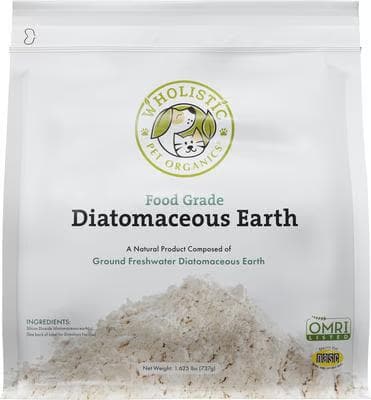
If you are searching for where to buy diatomaceous earth for fleas, garden centers, farm supply stores, hardware chains, and the major online retailers all stock it. Harris diatomaceous earth for fleas is the most widely stocked option in the United States and ships with a powder duster, which is genuinely useful for the technique described above. The practical checklist for choosing the best diatomaceous earth for fleas is short.
- Food grade stated on the front of the bag. Non-negotiable in a home with animals.
- A published crystalline silica figure, ideally 1 percent or less, in the specification or safety data sheet.
- A duster or shaker applicator included, or buy one separately, because a scoop and a hand guarantee over-application.
- A bag size that matches the job. A few pounds treats a normal home for a full four-week cycle with plenty spare.
- A resealable or easily sealed container, since the product is useless once it takes on moisture.
A month of treatment in a dry, dusty house leaves a lot of coats flaky. Alternating an oatmeal shampoo into the off weeks keeps the skin and coat from absorbing the whole cost of the treatment cycle. If cost is what pushed you toward the powder, price a store-brand spot-on against the name brand before you rule prevention out: several carry the same actives for roughly half the money. Match the weight band exactly, because that is where cheap products get misapplied. Budget a few dollars for a deshedding brush that reaches the undercoat, since a surface brush skims straight over the flea dirt sitting at skin level. It also gives you a weekly look at the coat, which is how you tell whether four weeks of effort actually moved the needle.
Any bag of diatomaceous earth powder for fleas that meets those criteria will perform the same as any other. Treat the purchase as buying a consumable mineral rather than choosing a formula, and put the extra thought into technique instead. Just keep the framing straight: a diatomaceous earth treatment for fleas is an environmental support measure, and the medical half of the plan still belongs with your veterinarian.
| Check | What to look for | Why it matters |
|---|---|---|
| Grade | "Food grade" printed on the bag | Filter and pool grade carry high crystalline silica |
| Crystalline silica content | 1 percent or less | The difference between a nuisance dust and a lung hazard |
| Applicator | Duster or shaker bottle included | Prevents heavy over-application |
| Quantity | 2 to 5 pounds for a typical home | One cup covers roughly one room |
| Storage | Resealable bag or tub | Moisture makes the product inert |
The Bottom Line
Diatomaceous earth is a legitimate, low-toxicity tool with a narrow job: killing adult fleas and some larvae on dry indoor surfaces, in support of a real flea control plan. Buy food grade only, apply a barely visible layer, leave it 24 to 48 hours, vacuum thoroughly, and repeat weekly for a month. Then be realistic about the rest. It will not touch the eggs in your carpet, it will not reach pupae, and it will not stop your pet from reseeding the house tomorrow. That part belongs to prevention prescribed by your veterinarian, and no amount of powder changes it.
Remove pets from the room, vacuum first, wash pet bedding hot, then apply a light dusting of food grade powder along carpet edges, skirting boards, floor cracks, and under furniture. Work it into carpet with a broom, leave it 24 to 48 hours, then vacuum thoroughly and repeat weekly for three to four weeks.
Adult fleas that contact a good coating usually die within 24 to 72 hours, with most labels citing 48 hours. It works by drying insects out, so there is no instant knockdown and humid conditions slow it further.
No. Flea eggs have a smooth, largely impermeable shell with little surface wax for the powder to strip, so they hatch normally. Pupae inside their cocoons are protected too, which is why a single application never clears an infestation.
It is not recommended. The powder dries skin and coat, irritates eyes, and creates inhalable dust at nose level, and it gives no lasting protection. Use a fine-toothed flea comb for mechanical removal and talk to your veterinarian about a licensed preventive instead.
Once a light food grade application has settled and the room is no longer dusty, brief contact is low risk. Because cats groom constantly, vacuum the powder up before letting a cat back into the room rather than leaving it down around them.
Better not to. Freshly applied powder puts dust in the air, and the treatment needs an undisturbed dwell period anyway. Treat the room, close the door, sleep elsewhere, and vacuum before normal use resumes.
Yes, briefly, with food grade product. It is not corrosive or absorbed through skin, but it pulls oils out of whatever it touches, so repeated handling leaves skin dry and chapped. Gloves, eye protection, and a dust mask are the sensible kit.
Here is the overview in one place, set out as a verdict rather than a pitch. Diatomaceous earth earns a place in a house with hard floors, a light flea problem, and someone willing to repeat the routine weekly for a month. It does not earn a place as the main treatment in a heavy infestation, in a damp home, or anywhere the real limits above would simply cost you four weeks. Much of what circulates about this powder online is built from retailer listings and thin blogs that never state those limits, so take the vet read instead: it is a support measure and not flea control. If four honest weeks have not moved the numbers, stop and call your veterinarian.
- Good fit: hard floors, a light problem, dry rooms, and a weekly routine you will actually keep up.
- Poor fit: heavy infestation, damp basements or laundry rooms, humid climates, and homes carpeted wall to wall.
- Never a fit: on the animal, on a mattress, or in any grade other than food grade.
- Pair it with a growth regulator indoors, since the powder cannot touch eggs or pupae.
- Four weeks with no change in flea comb counts is a conversation with your veterinarian, not a reason to buy more powder.
BVMS, MRCVS
Dr. Pippa Elliott, BVMS, MRCVS, is a veterinarian with nearly 30 years of experience in companion animal practice. Dr. Elliott earned her Bachelor of Veterinary Medicine and Surgery from the University of Glasgow. She was also designated a Member of the Royal College of Veterinary Surgeons. Married with 2 grown-up kids, Dr. Elliott has a naughty Puggle named Poggle, 3 cats and a bearded dragon.
Sign up for expert-backed reviews and safety alerts all in one place.