Best Flea Collar for Dogs: Vet-Approved Picks for 2026
A veterinarian ranks the best flea collars for dogs for 2026, with Seresto leading the pack. Compare active ingredients, protection length and sizing, get honest verdicts on natural collars, and learn when a collar is the wrong tool.

BVMS, MRCVS

Petful is reader supported. As an affiliate of platforms like Amazon and Chewy, we may earn a commission when you buy through links on this page. There is no extra cost to you.
The best flea collar for dogs in 2026 is the Seresto Flea and Tick Collar, and as a veterinarian I do not consider it a close race: its slow-release combination of flumethrin and imidacloprid delivers 8 months of continuous flea and tick protection from a single, odorless band. The Companion Animal Parasite Council recommends year-round parasite prevention for every dog, and a well-chosen collar is one of the easiest ways to actually stay consistent with that advice. Below I rank the collars worth your money, explain the active ingredient safety behind each pick, and tell you plainly when a collar is the wrong tool for the job.
- 1Seresto is our top pick: flumethrin plus imidacloprid gives 8 months of kill-and-repel protection in one collar
- 2Budget collars from Adams and Hartz work but use tetrachlorvinphos, an older organophosphate some owners prefer to avoid
- 3Natural cedarwood and peppermint collars only repel; they do not kill fleas, so treat them as a supplement, not a solution

Sign up for expert-backed reviews and safety alerts all in one place.
The Best Flea Collars for Dogs

A flea and tick collar for dogs has one job: release a steady, low dose of active ingredient across your dog's skin and coat for months at a time, so you are not relying on your memory for monthly re-dosing. After comparing protection length, active ingredients, water resistance and real-world value, these five collars earn a recommendation:
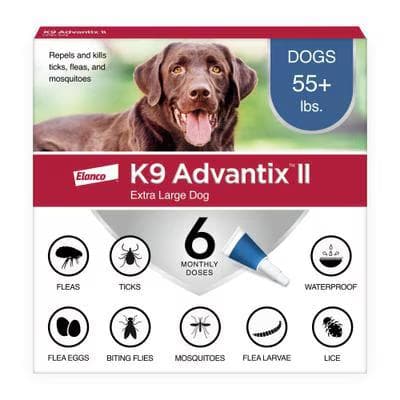
A monthly topical for dogs over 55 lbs that repels and kills ticks, fleas, and mosquitoes. Repelling ticks before they bite is a useful layer during heavy tick season.
Petful may earn a commission when you click through to Chewy, at no extra cost to you.
- Seresto Flea and Tick Collar: best overall, 8 months of kill-and-repel protection
- Adams Plus Flea and Tick Collar: best budget pick, 7 months, with an insect growth regulator
- Hartz UltraGuard Plus Flea and Tick Collar: best drugstore backup, 7 months, easiest to find on short notice
- PetArmor Plus Flea and Tick Collar: best Seresto alternative without organophosphates, 6 months
- Wondercide Flea and Tick Collar: best natural option, repellent-only, up to 4 months
| Collar | Best For | Active Ingredients | Protection Length | Kills or Repels |
|---|---|---|---|---|
| Seresto | Best overall | Flumethrin + imidacloprid | 8 months | Kills and repels fleas and ticks |
| Adams Plus | Best budget | Tetrachlorvinphos + (S)-methoprene | 7 months | Kills fleas, ticks, eggs and larvae |
| Hartz UltraGuard Plus | Best drugstore backup | Tetrachlorvinphos + (S)-methoprene | 7 months | Kills fleas, ticks, eggs and larvae |
| PetArmor Plus | Best without organophosphates | Deltamethrin + pyriproxyfen | 6 months | Kills fleas, ticks, eggs and larvae |
| Wondercide | Best natural option | Cedarwood oil + peppermint oil | Up to 4 months | Repels only, does not kill |
The short version of the table: Seresto is the best flea and tick collar for dogs overall and the collar I reach for first in practice. Adams and Hartz are honest budget workhorses with one important ingredient caveat I cover below. PetArmor Plus is the middle path for owners who want a proven insecticide without an organophosphate, and Wondercide is the only pick here I would call a repellent rather than a treatment.

 Sponsored
Need flea, tick, or parasite care for your dog?
A licensed vet at Dutch can recommend the right preventive and prescribe it when it's appropriate. Annual members get 20% off their first flea and tick order.
Use code Pets60
Plans start at $12/month · covers up to 5 pets
- Licensed vets in most states
- Rx for 150+ conditions
- 4.7 on Trustpilot
Our Top Pick: Seresto Flea and Tick Collar
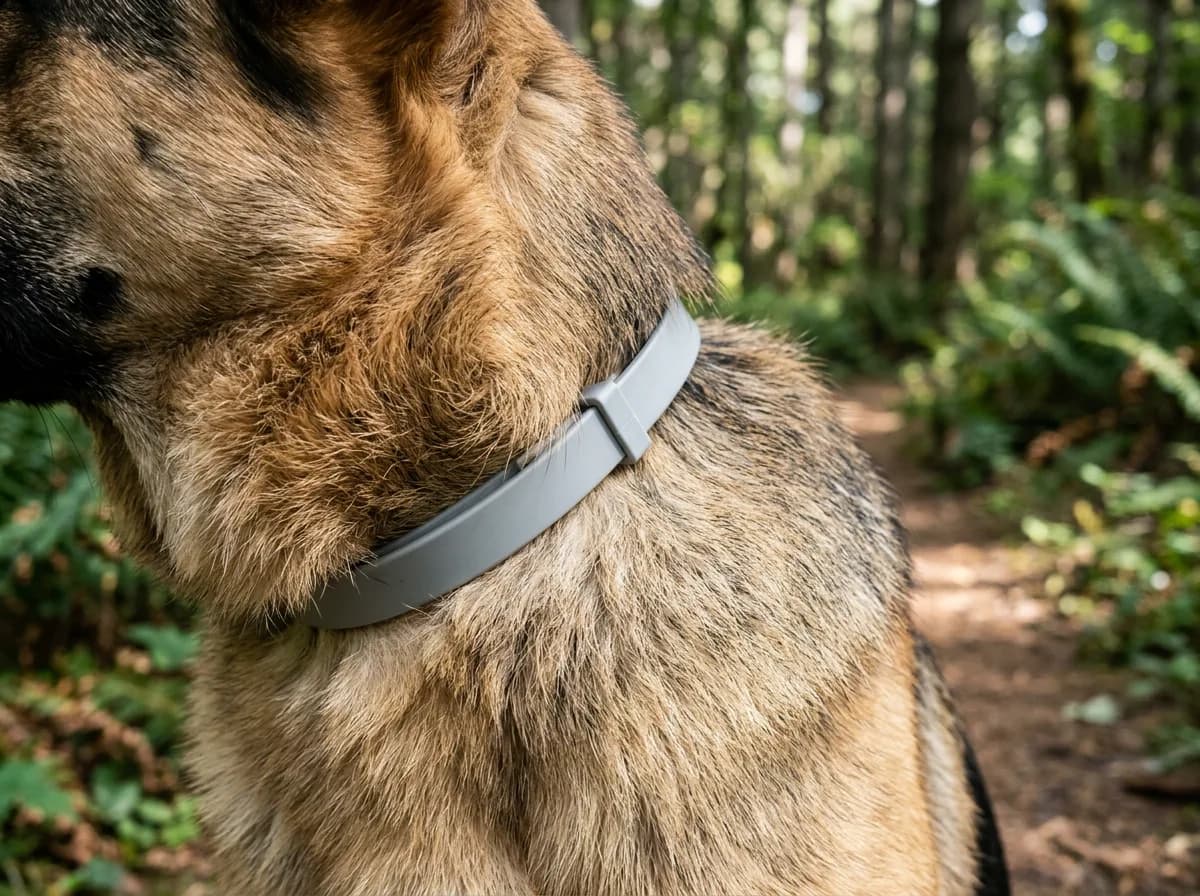
The most effective flea collar for dogs is the Seresto collar, and it is the one most often vet-recommended by a wide margin. It pairs imidacloprid, which kills adult fleas and larvae, with flumethrin, which kills and repels ticks, and releases both in controlled low doses for 8 months. That repellency matters: ticks are deterred before they bite, which is exactly what you want in Lyme disease regions. If you live in heavy tick country and are specifically shopping for the best tick and flea collar for dogs, that repel-before-the-bite action is the deciding factor.
Here is why the seresto flea collar for dogs stays at the top of my list:
- 8 months per collar: one purchase covers an entire flea season and then some
- Kill plus repel: imidacloprid handles fleas while flumethrin repels and kills ticks before they attach
- No monthly deadlines: nothing to remember, no greasy application spot, no post-application waiting period
- Water resistant: it keeps working through rain and the occasional swim, though very frequent swimming shortens its life toward 5 months
- Two SKUs: the seresto flea and tick collar for dogs comes in a small-dog size (up to 18 lbs) and a large-dog size (over 18 lbs)
The honest downsides: it costs more up front than anything else on this list, and counterfeit collars are a genuine problem on marketplace sites, so buy from a reputable retailer. Per collar-month of protection, though, the math usually favors the seresto collar over cheaper bands you replace more often.
Best Budget Pick: Adams Plus Flea and Tick Collar
If the Seresto price is the sticking point, the Adams Plus collar is the budget pick I trust most: a genuinely good flea collar for dogs at roughly a third of the price. It combines tetrachlorvinphos, an organophosphate adulticide, with (S)-methoprene, an insect growth regulator that stops flea eggs and larvae from developing. That second ingredient is what separates it from bargain-bin collars: it attacks the flea life cycle instead of only the adults you can see, and it keeps working for 7 months.
The trade-off is the active ingredient itself. Tetrachlorvinphos is an older chemistry that has drawn regulatory scrutiny over the years, and I walk through what that means in the safety section below. For a healthy adult dog in a home without small children handling the collar constantly, it remains an EPA-registered, effective option.
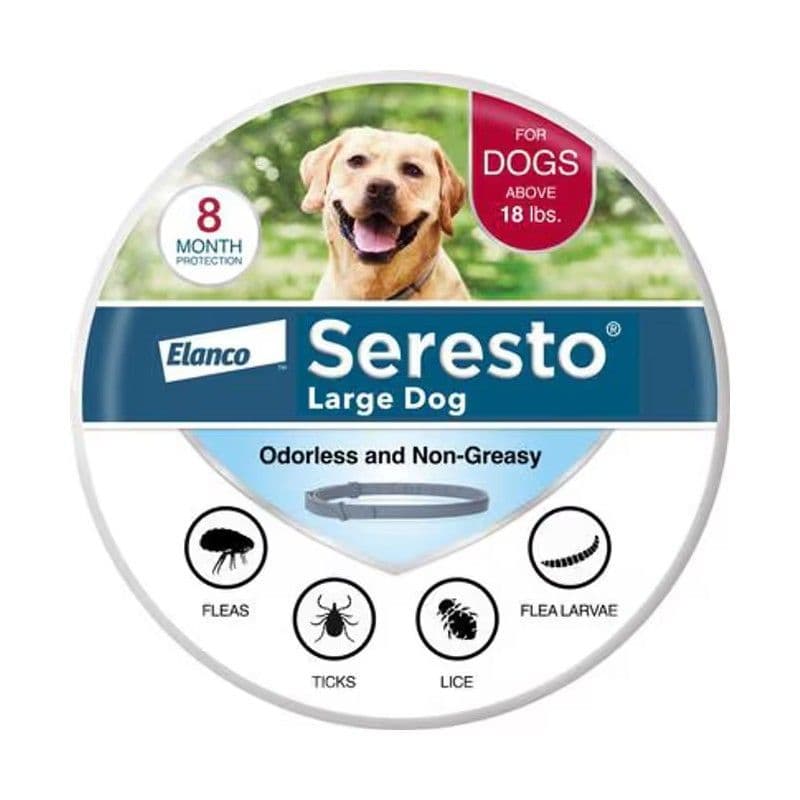
Odorless, non-greasy 8-month flea and tick collar for dogs over 18 lbs that kills and repels fleas and ticks and also kills lice and flea larvae.
Petful may earn a commission when you click through to Chewy, at no extra cost to you.
Best Drugstore Backup: Hartz UltraGuard Plus Flea and Tick Collar
The Hartz UltraGuard Plus collar uses the same working formula as the Adams Plus: tetrachlorvinphos with (S)-methoprene, killing fleas, flea eggs, larvae and ticks for 7 months. Its real advantage is availability. You can find it in nearly any big-box store or pharmacy aisle tonight, which makes it a sensible stopgap when you spot fleas on a Sunday evening and your preferred collar is two shipping days away.
It is water resistant, fits necks up to 26 inches, and is labeled for puppies 12 weeks and older. The same organophosphate caveat applies here as with Adams, so read the safety section before choosing either budget pick for a household with cats or very young children.
Best Without Organophosphates: PetArmor Plus Flea and Tick Collar
For owners who want a proven insecticidal collar but prefer to skip organophosphates entirely, the PetArmor Plus collar is the pick. It uses deltamethrin, a synthetic pyrethroid that kills fleas and ticks, paired with pyriproxyfen, an insect growth regulator that shuts down flea eggs and larvae. Deltamethrin has a long track record in veterinary parasite control and a wider safety margin in dogs than the older organophosphate class.
Protection runs 6 months per collar, it is water resistant, and the one-size design trims to fit. Two caveats: it is labeled for dogs 12 weeks and older, and like all pyrethroid products it must never be worn by cats or chewed by a feline housemate. If you share your home with a cat, position this collar snugly and supervise, or choose Seresto, whose dog collar ingredients also appear in a dedicated cat version.
Best Natural Option: Wondercide Flea and Tick Collar
The Wondercide collar is the strongest entry in the natural lane, using 4.3% cedarwood oil and 4.3% peppermint oil in a slow-release band. Be clear-eyed about what you are buying: this collar repels fleas, ticks and mosquitoes, but it does not kill any of them. Protection is rated up to 4 months against fleas and ticks and about 1 month against mosquitoes.
I recommend it in two situations: as a supplemental layer for well-protected dogs in heavy tick country, or for owners who have made an informed decision against conventional insecticides and accept meaningfully lower protection. I give the full natural-collar verdict, including what the essential-oil data does and does not show, later in this guide.
Do Flea Collars for Dogs Actually Work?
Yes, modern flea collars work, but the gap between the best and worst collars on the shelf is enormous. A quality collar embeds its active ingredients in a polymer matrix that slowly releases them into the oils of your dog's skin and coat, spreading protection over the whole body rather than just the neck. Seresto delivers 8 months of protection this way, while the budget collars above manage 6 to 7 months. Cheap collars without a slow-release design, by contrast, mostly protect the few inches around the band and fade within weeks.
So when someone asks me, do flea collars work, my answer has three parts:
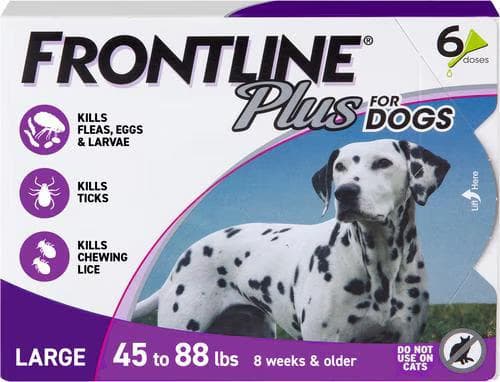
A monthly topical spot-on for large dogs 45 to 88 lbs that kills fleas, ticks, and chewing lice. A waterproof pick for dogs who do better with a topical than an oral chew.
Petful may earn a commission when you click through to Chewy, at no extra cost to you.
- Modern slow-release collars: yes, they kill and repel fleas and ticks for 6 to 8 months and are a legitimate primary preventive
- Repellent-only natural collars: partially, as a deterrent layer that should not be your only defense
- Old-style rigid pesticide strips: barely, and they are not worth buying in 2026
Set expectations for the first days, too. A new collar needs skin contact and time to distribute through the coat's natural oils, so full protection builds over the first 24 to 48 hours rather than the first minute. The simplest way to verify it is working is a weekly flea comb pass over the rump and tail base: on a protected dog you should find flea dirt disappearing within the first 2 weeks, then nothing at all.
Is a flea collar safe for dogs when used correctly? For healthy dogs meeting the label's age and weight minimums, yes: these are EPA-registered products with decades of field use, and the Merck Veterinary Manual lists collar-based imidacloprid and flumethrin among standard flea control options. Safety depends on choosing the right chemistry for your household, fitting the collar correctly, and knowing the warning signs, all covered below.
Flea Collars vs Topicals and Orals: When a Collar Is the Right Choice
Spend five minutes in any dog forum and you will find owners insisting collars are outdated and that a topical or oral preventive is the only serious choice. That skepticism is worth addressing honestly, because it is half right: it is aimed at the cheap, fast-fading collars of decades past, and it predates the slow-release designs that lead this roundup. In head-to-head field studies, a properly fitted Seresto performs on par with monthly topicals, and its biggest practical advantage is compliance. A collar cannot be forgotten in month 4 of an 8-month season, and lapsed doses are the number one reason preventives "fail" in my exam room.
| Factor | Collar | Topical | Oral |
|---|---|---|---|
| Duration | 6-8 months | 1 month | 1-3 months |
| Effort | One fitting | Monthly application | Monthly or quarterly chew |
| Prescription | No, OTC | Mostly OTC | Rx required |
| Best for | Consistency, budget over a season | Dogs that will not wear collars | Swimmers, dogs with skin issues |
A collar is NOT the right tool in a few specific cases:
- Frequent swimmers: weekly swimming or bathing shortens collar life; an oral preventive is unaffected by water
- Active infestations: a collar prevents; it is too slow to rescue a flea-covered dog (see the fast-kill section below)
- Rough multi-dog play: housemates who mouth each other's necks can ingest collar ingredients; orals remove that risk
- Dogs needing tick-borne disease coverage on vet advice: prescription oral preventive options like NexGard, Simparica and Bravecto (all isoxazolines requiring a vet prescription) may suit better in high-risk regions
For the complete collar vs topical vs oral decision, including every major product class and how to combine them safely, see our complete dog flea treatment guide.
 Sponsored
Vet care that's always there
Unlimited video calls and messaging with licensed vets for less than a typical vet visit. One membership covers up to five pets.
Use code Pets60
Plans start at $12/month · covers up to 5 pets
- Licensed vets in most states
- Rx for 150+ conditions
- 4.7 on Trustpilot
Getting the Right Fit: Collar Sizing by Dog Size
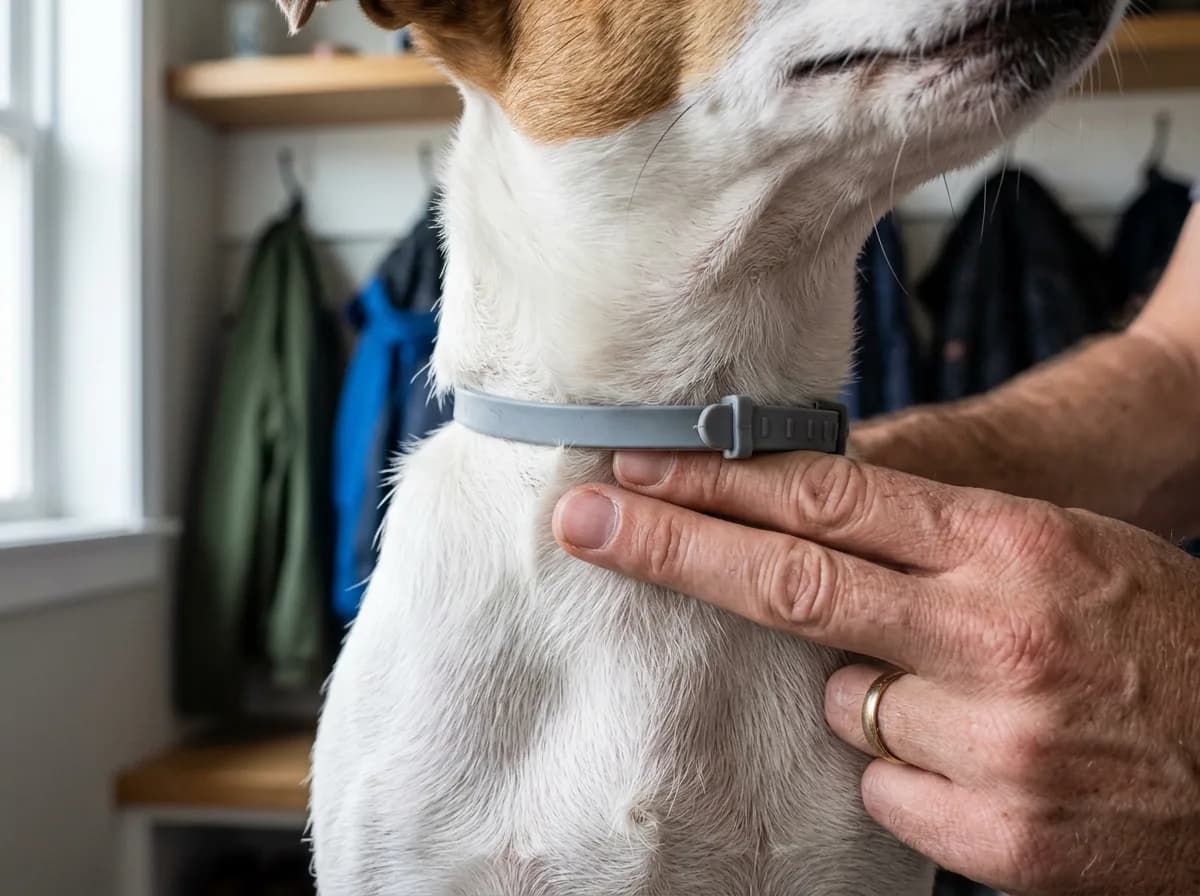
A flea collar that hangs loose is a flea collar that barely works, because the active ingredients transfer through gentle, continuous skin contact. Fit is also the main everyday safety control: a correctly fitted collar cannot slip into the mouth or catch on a fence. Use the two finger fit check every time: the collar should sit snug enough that you can slide exactly two fingers flat between the band and the neck, and no more.
Measure your dog's neck with a soft tape before ordering, then use the neck size table below to match the SKU:
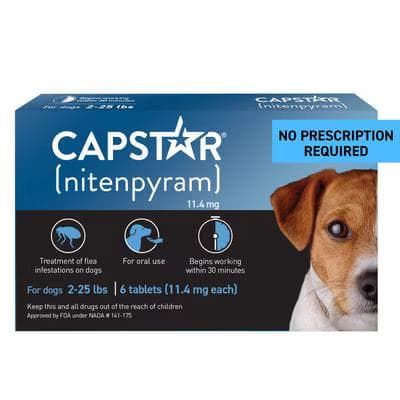
An over-the-counter nitenpyram tablet that starts killing adult fleas within 30 minutes. A fast knockdown for an active infestation, no prescription required, useful alongside a longer-term preventive.
Petful may earn a commission when you click through to Chewy, at no extra cost to you.
| Dog size | Typical neck size | What to buy |
|---|---|---|
| Small dogs and puppies under 18 lbs | 8-14 inches | Seresto small-dog SKU, or trim-to-fit budget collars |
| Medium dogs 18-50 lbs | 14-20 inches | Seresto large-dog SKU, one-size PetArmor Plus trimmed |
| Large dogs over 50 lbs | 20-26 inches | Seresto flea and tick collar for large dogs, Hartz up to 26 inches |
A few size-specific notes from practice. A flea collar for small dogs must respect the label's weight and age minimums: most picks here require the dog to be at least 12 weeks old, though the Seresto collar is labeled from 7 weeks, and small-dog SKUs are dosed for small bodies, so never loop a trimmed large-dog collar onto a toy breed to save money. At the other end, the seresto flea and tick collar for large dogs fits necks that outgrow most budget bands, so double-check the maximum length before buying for giant breeds. Trim excess collar length after fitting, leaving 2 inches of tail, so a playmate cannot grab and chew it. Puppies still growing need the collar size rechecked every couple of weeks and loosened as the neck thickens.
Replacement Schedule: The Part Everyone Forgets
Every collar on this list fails the same way: silently, months from now, when its reservoir runs out and fleas quietly return. Mark the replacement date the day you fit the collar: 8 months for Seresto, 7 for Adams and Hartz, 6 for PetArmor Plus, and 4 for Wondercide, moving each deadline up a month or two for dogs that swim or get bathed frequently. A free MyPetID profile makes this painless: log the flea collar and your other treatments once, and it tracks dosing frequency and sends automatic reminders before protection lapses.
Natural and Herbal Flea Collars: An Honest Verdict

I understand the appeal of a natural flea collar for dogs, and I would rather give you a straight verdict than a sales pitch: essential-oil collars repel, they do not kill, and no herbal flea collar for dogs has published efficacy data that approaches the conventional collars above. Cedarwood, peppermint, citronella and geraniol genuinely deter some fleas and ticks from approaching, which is why the Wondercide collar earns its slot as a supplemental layer. But a repelled flea is simply a flea that bites the next unprotected animal, and a determined tick in high season will often climb aboard anyway.
My honest guidance for the natural lane:
- Reasonable: a natural collar layered on top of a vet-recommended preventive, for extra deterrence on hikes
- Risky: a natural collar as the only protection for a dog in a region with fleas, ticks or heartworm-carrying mosquitoes
- Not recommended: homemade essential-oil collars; concentrated oils applied to fabric can irritate skin, and tea tree oil in particular is toxic to dogs at high concentrations
- Commit to weekly flea combing and year-round monitoring so a quiet failure gets caught in days instead of months. Repellent-only protection demands active supervision.
Flea Collar Safety: Poisoning Risks to Know
Collar safety comes down to knowing your active ingredient class, and this is exactly where active ingredient safety separates the picks above. Flumethrin and imidacloprid, the Seresto pair, have the cleanest modern profile of the group: the most common issues are mild skin irritation or hair loss at the collar site, which resolve after removal. Deltamethrin sits in the well-studied pyrethroid class. Tetrachlorvinphos, used in the Adams and Hartz budget collars, is an organophosphate and cholinesterase inhibitor that has faced years of regulatory review over cumulative exposure, especially for toddlers who handle a treated pet; it remains EPA-registered, but families with small children or a habit of nose-to-collar snuggling should spend up for a different chemistry.
The serious poisoning cases I see involve misuse rather than correct use. Watch for these situations:
- A chewed or swallowed collar: far more ingredient than skin contact ever delivers; call your veterinarian immediately
- Dog collars on cats: deltamethrin and other pyrethroids are dangerous to cats, which also cannot wear tetrachlorvinphos dog collars; only cat-labeled products belong on cats
- Doubling up: do not stack a collar with a topical containing the same ingredient class without veterinary guidance
- Old amitraz tick collars: amitraz toxicity in dogs causes sedation, a wobbly gait, slowed heart rate and vomiting, and these older collars still circulate online
That last category deserves its own reading: our guide to tick collar poisoning symptoms and amitraz risk covers how amitraz poisoning presents and what your veterinarian will do, so I will not duplicate the clinical detail here.
- If your dog shows drooling, tremors, vomiting or lethargy after a new collar goes on, take the collar off before you do anything else, wash the neck with mild soap and water, and call your veterinarian.
Two everyday notes round out safety. Bathing and swimming: the conventional picks are water resistant, but strip-and-rebuild oils from frequent shampooing shorten collar life, so infrequent bathing with a gentle shampoo preserves both coat and collar. And whenever you switch products, note the date, since most collar reactions appear within the first week.
Can a Dog Still Get Fleas While Wearing a Collar?
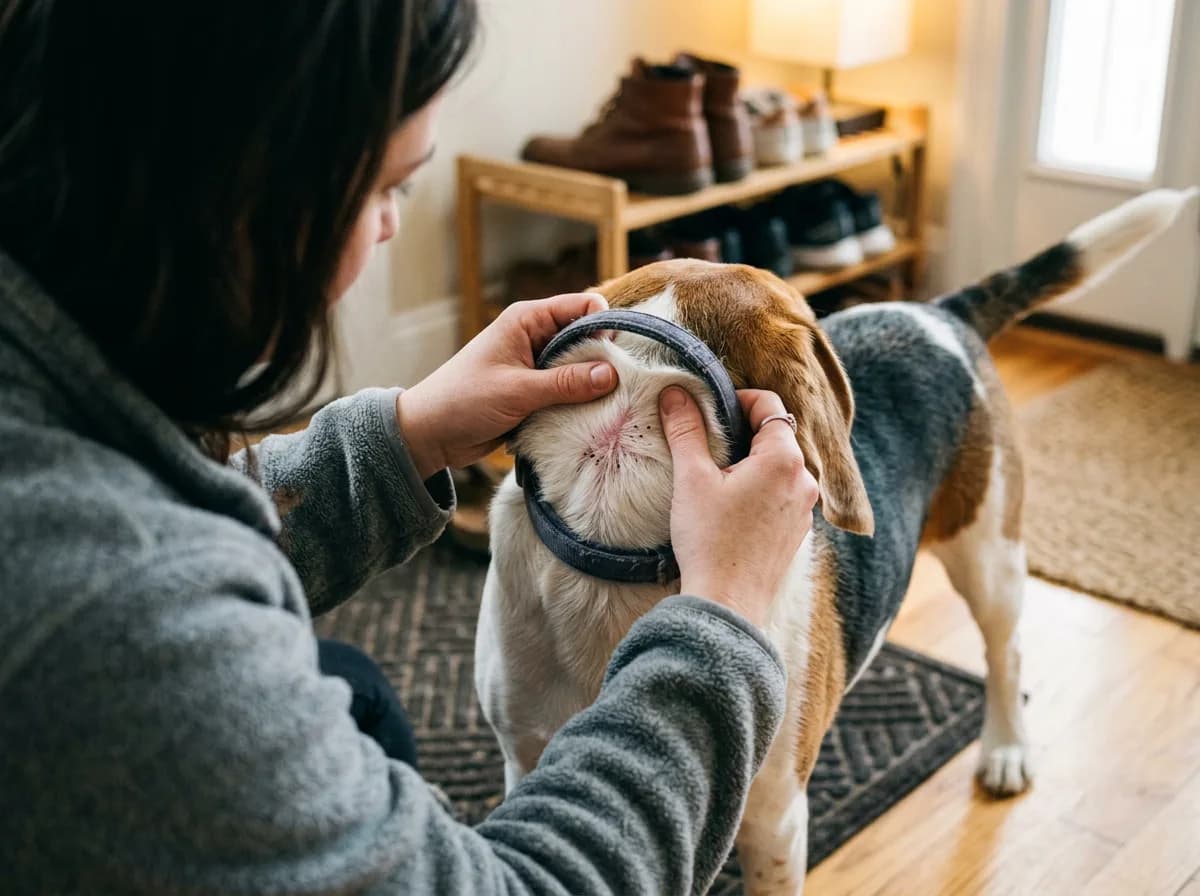
Yes, a dog can still pick up the occasional flea while wearing a collar, and seeing one flea does not mean the collar has failed. No preventive on the market is a force field: a collar kills or repels fleas as they contact the treated coat, but a flea hopping aboard at the dog park may be visible for a few hours before the ingredient does its work. The Companion Animal Parasite Council estimates that adult fleas on the pet are only about 5% of an infestation; the other 95% is eggs, larvae and pupae seeded into carpets, bedding and shaded soil (CAPC parasite guidelines).
That environmental reservoir explains almost every "my flea collar stopped working" complaint I hear. If fleas keep appearing on a collared dog, work through this checklist before blaming the collar:
- Check the fit: a loose collar transfers poorly; re-run the two-finger check
- Check the date: a 7-month collar in month 9 is a fashion accessory
- Check the home: wash bedding hot, vacuum daily for 2 weeks, and treat the environment
- Check the other pets: every dog and cat in the household needs its own species-appropriate preventive
- Check for counterfeits: marketplace-sourced "Seresto" collars with no lot number or faint printing are a known scam
Give a genuine collar plus environmental cleanup 4 to 6 weeks to break the flea life cycle. If adult fleas still ride along after that, it is time for a vet visit to reassess the plan.
Need to Kill Fleas Fast? A Collar Is Not the Tool
If your dog is scratching at a visible, crawling infestation today, do not start with a collar. Collars are steady-state preventives that build protection over the first day or two and shine at keeping a clean dog clean. For a same-day knockdown, an oral nitenpyram tablet (Capstar) starts killing adult fleas in about 30 minutes, and a veterinarian can layer that with a fast-acting monthly product while the environment is treated. Our guide to what kills fleas on dogs instantly ranks every rapid option by speed and walks through the emergency protocol. The winning combination is speed first, then a collar from this list to make sure you never need the emergency plan again.
It varies by product: Seresto lasts 8 months, Adams Plus and Hartz UltraGuard Plus last 7 months, PetArmor Plus lasts 6 months, and the natural Wondercide collar repels for up to 4 months. Frequent swimming or bathing can shorten any collar's working life by a month or more.
Yes, the conventional picks in this guide are water resistant and keep working through rain, occasional swims and monthly baths. Remove the collar for grooming appointments with degreasing shampoos, and expect heavy weekly swimming to shorten protection, roughly to 5 months for Seresto.
Often yes, but only with intent. Pairing a collar with a different ingredient class, such as an insect growth regulator spray for the home, is common practice. Never stack two products from the same class, and ask your veterinarian before combining a collar with any topical or oral preventive.
Most collars in this roundup require the puppy to be at least 12 weeks old, though the Seresto collar is labeled from 7 weeks, and small-dog SKUs exist for a reason: they are dosed for small bodies. For younger puppies, ask your veterinarian about flea combing and puppy-safe alternatives until they reach label age.
BVMS, MRCVS
Dr. Pippa Elliott, BVMS, MRCVS, is a veterinarian with nearly 30 years of experience in companion animal practice. Dr. Elliott earned her Bachelor of Veterinary Medicine and Surgery from the University of Glasgow. She was also designated a Member of the Royal College of Veterinary Surgeons. Married with 2 grown-up kids, Dr. Elliott has a naughty Puggle named Poggle, 3 cats and a bearded dragon.
Sign up for expert-backed reviews and safety alerts all in one place.