Can Dogs Eat Papaya? Vet's Safe-Serving Guide
Yes, dogs can eat ripe papaya in moderation. The flesh is packed with vitamins A, C, and the papain enzyme, but the skin and seeds must always be removed. Here is exactly how much to feed by dog size.

Petful is reader supported. As an affiliate of platforms like Amazon and Chewy, we may earn a commission when you buy through links on this page. There is no extra cost to you.
- 1Yes, ripe papaya fruit is safe for dogs in moderation. The orange flesh is rich in vitamins A, C, E, fiber, and the digestive enzyme papain.
- 2Always remove the skin (indigestible) and seeds (contain trace cyanogenic compounds and pose a choking risk).
- 3Treats, including papaya, should never exceed 10% of your dog's daily calories. Start with 1-2 small cubes and watch for digestive upset.
- 4Skip unripe (green) papaya, papaya leaves, and any pre-sweetened papaya products like dried papaya candy or papaya yogurt.
Can dogs eat papaya? Yes, in moderation. The American Kennel Club and PetMD both confirm that the orange flesh of a ripe papaya is non-toxic and nutritionally beneficial for most dogs. A single serving for a small dog is roughly 1 to 2 small cubes (about 1 tablespoon), and even large dogs should not exceed a small handful at a time. Papaya delivers vitamins A, C, E, and K, plus fiber and a digestive enzyme called papain that can help break down proteins. The skin and seeds, however, are not safe: the skin is too tough to digest and the seeds contain trace amounts of cyanogenic glycosides plus a choking risk. As with any treat, papaya should make up no more than 10% of your dog's total daily calories.

Sign up for expert-backed reviews and safety alerts all in one place.
Is Papaya Fruit Safe for Dogs?
Yes, ripe papaya fruit flesh is safe for the vast majority of healthy adult dogs when served plain and in small amounts. Veterinarians at PetMD, the American Kennel Club, and Great Pet Care all categorize papaya as a "yes" fruit, alongside blueberries, watermelon, and apples (minus the seeds).

A 3-day fenbendazole dewormer covering hookworms, roundworms, tapeworms, and whipworms for small dogs.
Petful may earn a commission when you click through to Chewy, at no extra cost to you.
The caveats are about preparation, portion, and which parts of the fruit you offer. The orange flesh is fine. The skin, seeds, leaves, and unripe green papaya are not. Pre-sweetened dried papaya, papaya yogurt, and papaya juice are also off the table because of the added sugar.
- Treats, including papaya, should never exceed 10% of your dog's total daily calories. For a 30-pound dog eating about 700 calories a day, that's roughly 70 calories of treats, or about 5 to 7 small cubes of papaya.
What Are the Health Benefits of Papaya for Dogs?
Daily dental chew that cleans teeth, freshens breath, and is accepted by the Veterinary Oral Health Council. Sized for dogs 25 to 50 lbs.
Petful may earn a commission when you click through to Chewy, at no extra cost to you.
Papaya is more than a sweet treat. The ripe flesh is genuinely nutrient-dense for the calorie cost. Here is what your dog actually gets from a few cubes:
• Vitamin C and beta-carotene (precursor to vitamin A): both are antioxidants that support immune function and eye health. Dogs synthesize their own vitamin C, but dietary sources can help during stress or illness.
• Vitamin E and vitamin K: vitamin E supports skin and coat condition; vitamin K supports blood clotting and bone health.
• Fiber: a few cubes of papaya add gentle insoluble fiber that can help with regularity. Be careful not to overdo it, as too much fiber causes loose stool.
• Papain: a digestive enzyme that helps break down proteins. Papain is the same enzyme used in commercial meat tenderizers and may ease mild digestive discomfort.
• Potassium and magnesium: trace minerals that support muscle function and electrolyte balance.
Can Dogs Eat Papaya Seeds?
No, do not give your dog papaya seeds.
Papaya seeds contain trace amounts of cyanogenic compounds (the same family as the compounds in apple seeds and stone fruit pits). A handful of seeds is unlikely to cause serious poisoning in a large dog, but small dogs can be more sensitive, and the seeds are also a choking and intestinal-blockage risk. Some "natural deworming" trends suggest papaya seeds for dogs, but veterinary evidence is thin and the risks outweigh the benefits.
- A few seeds will most likely pass without incident, but call your vet or the Pet Poison Helpline (1-855-764-7661) if your dog eats a large amount, is a small breed, or shows vomiting, drooling, or weakness.
Can Dogs Eat Papaya Skin?
No, do not give your dog papaya skin.
Papaya skin is tough, waxy, and difficult for a dog's digestive tract to break down. Eating papaya skin commonly causes vomiting, diarrhea, and in larger amounts, a gastrointestinal blockage. Always peel the fruit before serving, and discard the skin where your dog cannot reach it.
How Much Papaya Can Dogs Eat?
Portion depends on your dog's size and whether your dog has eaten papaya before. Always introduce a new food in small amounts and watch for digestive upset over the next 24 hours.
| Dog size | Weight | First-time serving | Maximum treat-size serving |
|---|---|---|---|
| Toy | Under 10 lb | 1 small cube (1 tsp) | 1 tbsp papaya per day |
| Small | 10-20 lb | 1-2 small cubes | 2 tbsp papaya per day |
| Medium | 20-50 lb | 2-3 small cubes | 3-4 tbsp papaya per day |
| Large | 50-90 lb | 3-4 small cubes | 1/4 cup papaya per day |
| Giant | Over 90 lb | 4-5 small cubes | 1/3 cup papaya per day |
How Do I Safely Prepare Papaya for My Dog?
Case of six 6.2-oz pouches at $27.98 ($0.76/oz). New Autoship orders save 35%, dropping the first delivery to $18.19.
Petful may earn a commission when you click through to Chewy, at no extra cost to you.
Preparation is the entire safety story. Follow these four steps every time:
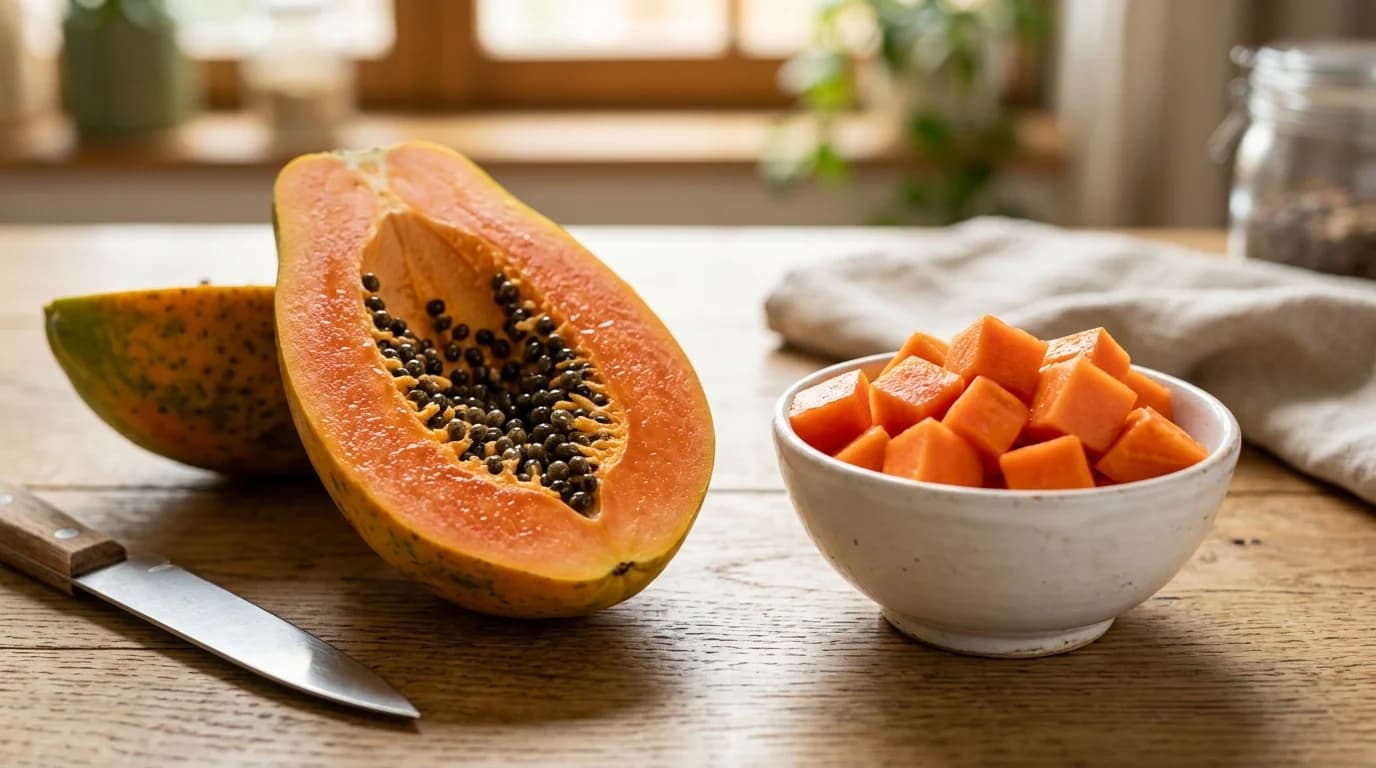
1. Pick a fully ripe papaya. A ripe papaya has yellow-orange skin and yields slightly to gentle pressure. Unripe green papaya contains higher levels of papain that can irritate a dog's mouth and stomach.
2. Wash, peel, and slice. Rinse the fruit, peel off the skin completely with a vegetable peeler or knife, and slice the flesh.
3. Scoop out every seed. Even one or two seeds left behind is a choking hazard for small dogs.
4. Cube into bite-sized pieces. Match the cube size to your dog's mouth: pea-sized for toy breeds, gum-sized for medium, walnut-sized at most for large breeds.
Can Puppies Eat Papaya?
Puppies older than 8 weeks can have a tiny taste of plain ripe papaya, but their developing digestive systems are more easily upset than an adult dog's. Start with a single pea-sized cube and watch for 24 hours before offering more. If your puppy is being weaned or has a sensitive stomach, hold off and ask your vet first.
What About Dried, Frozen, or Pureed Papaya?
Plain frozen papaya cubes are an excellent hot-day treat. Avoid commercially dried papaya because it almost always contains added sugar, sulfur dioxide, or sweeteners (sometimes including xylitol, which is highly toxic to dogs). Pureed papaya is fine as long as it is unsweetened and unflavored.

Petful may earn a commission when you click through to Chewy, at no extra cost to you.
- Freeze small papaya cubes on a tray and use them as low-calorie summer treats. Two or three frozen cubes give a small dog enrichment, hydration, and gentle digestive support all in one.
What If My Dog Ate a Lot of Papaya, Seeds, or Skin?
A single accidental snack of a few seeds or a small piece of skin is usually not an emergency. Most dogs pass it without symptoms. Watch for vomiting, diarrhea, lethargy, drooling, abdominal pain, or refusal to eat. If any of those appear, or your dog ate a large quantity, contact your veterinarian or the ASPCA Animal Poison Control Center (888-426-4435) right away.
- Call your vet or animal poison control if your dog eats a whole papaya including the rind and seeds, shows repeated vomiting, has bloody diarrhea, becomes weak or unsteady, or is a small breed under 10 lb that ate more than a teaspoon of seeds.
Healthy Fruit Alternatives to Papaya for Dogs
If your dog likes papaya, they will probably enjoy other dog-safe fruits with similar nutrition profiles. Good rotation options include blueberries, watermelon (rind and seeds removed), cantaloupe, plain pumpkin, and strawberries. Rotate fruits in small portions to give your dog variety without overloading on natural sugar.
Frequently Asked Questions About Dogs and Papaya
In small amounts, yes. A few cubes a day is fine for most healthy adult dogs as part of the 10% treat limit, but rotating fruits is healthier than feeding the same one every day.
No. Despite the natural-deworming claims floating around online, papaya seeds are not a safe or evidence-backed dewormer for dogs. They contain trace cyanogenic compounds and pose a choking risk. Talk to your vet about safe parasite prevention.
No. Unripe green papaya has higher levels of papain and latex compounds that can irritate the mouth and stomach. Only feed ripe orange-fleshed papaya.
No. Papaya leaves are not recommended for dogs. Stick to the ripe flesh only.
Usually no. Most dried papaya is sweetened with added sugar or preserved with sulfites, and some are coated in xylitol, which is highly toxic to dogs. Check the label and avoid anything with sweeteners.
Papaya contains natural sugars, so diabetic dogs should only have it under veterinary guidance. Your vet can tell you whether a small piece fits into your dog's carb budget.
Watch for vomiting, diarrhea, or signs of abdominal pain over the next 12 to 24 hours. A small amount usually passes uneventfully, but a large quantity or any persistent symptoms warrants a call to your vet.
- Rich in vitamins A, C, E, and K plus fiber and antioxidants
- Contains papain, a digestive enzyme that supports protein breakdown
- Low calorie and naturally sweet, easy to portion as a 10% treat
- Vet-approved by AKC, PetMD, and Great Pet Care when ripe and prepared correctly
- Skin is indigestible and can cause vomiting or blockage
- Seeds contain trace cyanogenic compounds and pose a choking risk
- Too much fiber causes loose stool or gas, especially in small dogs
- Pre-sweetened dried papaya often contains added sugar or xylitol, both off-limits for dogs
Within 1 to 2 hours: drooling, possible vomiting. 2 to 6 hours: diarrhea or mild abdominal pain. 6 to 12 hours: lethargy and refusal to eat in some dogs. 12 to 24 hours: most healthy dogs return to normal on a bland diet (boiled chicken and rice). If repeated vomiting, bloody stool, weakness, or persistent symptoms appear after 24 hours, call your vet immediately.
Start with 1 to 2 small cubes for a small dog (or 3 to 5 for a large dog). Watch the next 24 hours for soft stool. If well-tolerated, you can offer papaya 2 to 3 times a week as part of the 10% treat allowance. Rotate with other dog-safe fruits like blueberries and watermelon to vary the nutrition profile.
Diabetic dogs (natural sugar load), dogs on a strict elimination diet, dogs with pancreatitis histories (fiber plus a new food can flare symptoms), puppies under 12 weeks of age, and any dog with persistent loose stool. When in doubt, ask your vet before adding new fruit to the rotation.
More Dog-Food Safety Reads on Petful
Keep exploring our dog-food cluster: can dogs eat applesauce, can dogs eat radishes, can dogs eat honeydew, can dogs eat watermelon rind, and our emergency-response walkthrough on what to do if your dog ate a grape (the same triage steps apply to most accidental papaya-seed or papaya-skin ingestion scares).
Papaya is a safe, vitamin-rich treat for healthy adult dogs when you remove the skin and seeds, keep portions small, and stick to ripe orange flesh. As with any new food, introduce it slowly and watch how your dog responds.
Sign up for expert-backed reviews and safety alerts all in one place.