Shih Tzu: Temperament, Size, Care, and Breed Guide
The Shih Tzu is a sturdy little companion with a sociable temperament, a high-maintenance coat, and modest exercise needs. Learn the breed's size, care, training, health priorities, and household fit.
Petful is reader supported. As an affiliate of platforms like Amazon and Chewy, we may earn a commission when you buy through links on this page. There is no extra cost to you.
Shih Tzu dogs are small, affectionate companions developed to live close to people. They can be excellent apartment and family dogs, but their portable size does not make them low maintenance: the coat needs daily attention, the short muzzle makes heat management important, and most thrive only when they receive frequent company.
This complete guide explains Shih Tzu temperament, size, grooming, training, health, and day-to-day ownership. Use it for the broad breed decision, then follow the dedicated Petful guides for detailed puppy care, grooming, lifespan, price, colors, mixes, and food selection.

Sign up for expert-backed reviews and safety alerts all in one place.
Shih Tzu at a glance
- 1A typical adult Shih Tzu weighs 9 to 16 pounds under the official breed standard.
- 2The breed is affectionate, outgoing, and adaptable, but it expects close human companionship.
- 3A long coat requires daily brushing; a clipped coat still needs routine brushing and professional trims.
- 4Short-muzzled dogs need conservative exercise and careful heat management.
The American Kennel Club breed page places the Shih Tzu in the Toy Group, but the dog is sturdier than the word "toy" sometimes suggests. The official standard describes an adult weight of 9 to 16 pounds and an ideal height of 9 to 10.5 inches, with 8 to 11 inches acceptable. Those figures are useful for planning carriers and harnesses, yet an individual dog's body condition matters more than chasing one number on the scale.
This is fundamentally a companion breed. A Shih Tzu is more likely to follow family members from room to room than to ask for a long-distance run. Most adults do well with short walks, indoor games, training, and sniffing time. They can live happily in an apartment when barking is managed, bathroom breaks are reliable, and the dog is not left alone for most of every day.
The largest daily commitment is coat and face care. The profuse double coat mats when loose hairs, moisture, and friction are allowed to accumulate. Owners who do not want a floor-length coat usually choose a puppy cut, but clipping changes the length, not the need to comb, clean the face, trim nails, brush teeth, and schedule professional maintenance.
Petful may earn a commission when you click through to Chewy, at no extra cost to you.
Shih Tzu size and appearance
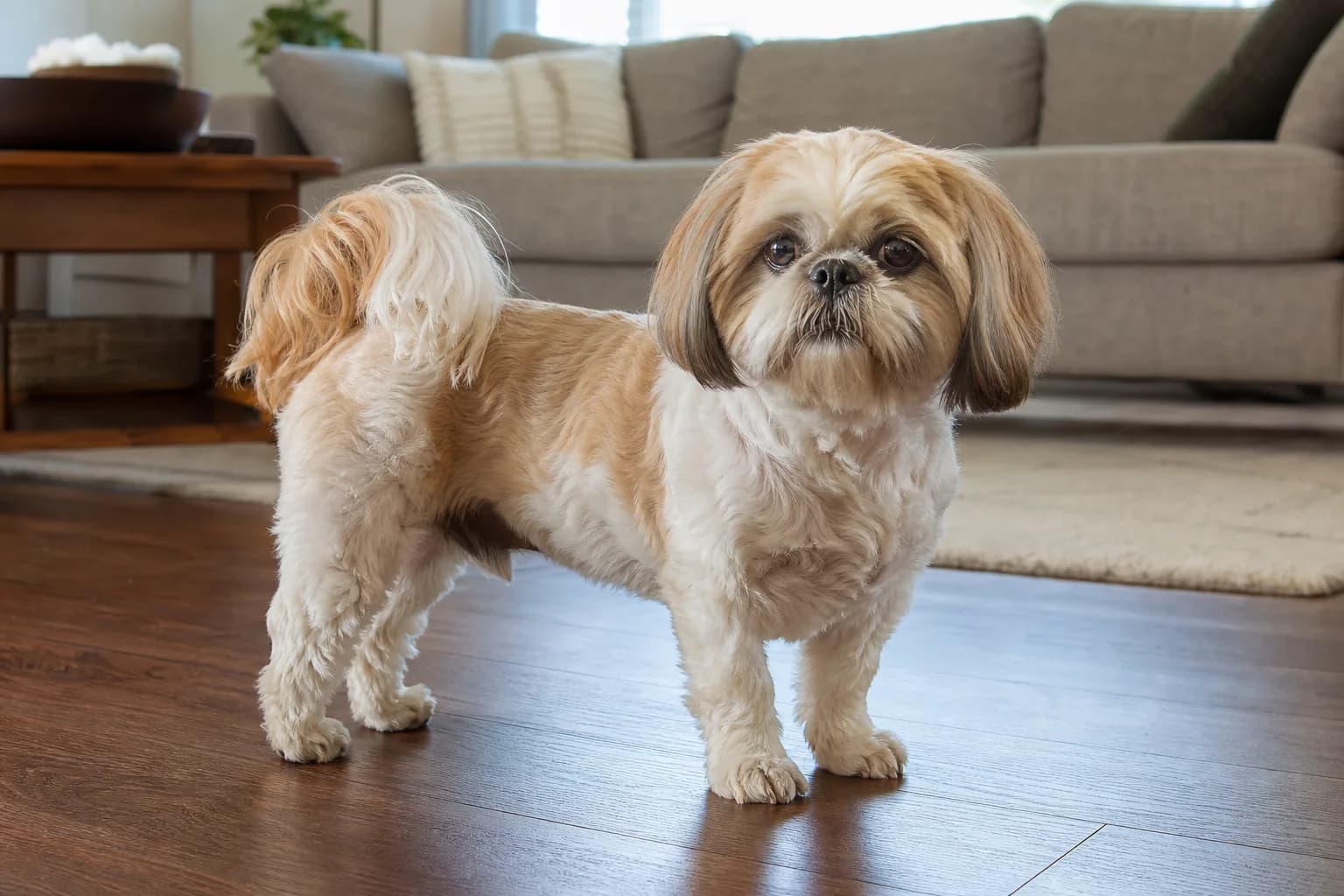
The official Shih Tzu standard calls for a compact, solid dog with good substance for its size. The head is broad and round, the eyes are large and dark, and the muzzle is short. The tail is set high and carried over the back. A well-balanced Shih Tzu should move freely rather than appearing fragile, excessively low, or unable to breathe comfortably during ordinary movement.

What 9 to 16 pounds feels like at home
An adult in this range is usually easy for one person to lift into a car or onto an examination table. It can fit in many soft-sided travel carriers, but owners should measure body length, standing height, and weight before buying. The Sherpa airline-approved carrier is one example designed for small pets; the correct choice depends on the dog's measurements and the carrier rules for a particular trip.
Small size also creates household risks. A Shih Tzu can slip through a wide railing, be injured by a jump from tall furniture, or be stepped on when sleeping underfoot. Children should sit on the floor for early interactions and learn to let the dog approach. Stairs, slick floors, and rough play with much larger dogs deserve more attention than they would with a sturdier medium-sized breed.
Shih Tzu coat colors
The breed standard permits all colors. Gold and white, black and white, solid black, liver, brindle, and other combinations occur, and many puppy coats lighten or change as the adult coat develops. Coat color does not determine character or quality. The dedicated Shih Tzu colors guide explains the difference between coat color and nose or eye-rim pigment without turning rarity labels into a buying recommendation.
The characteristic face needs function as well as expression. Eyes should not be obscured by dirty or matted hair, and nostrils should allow comfortable airflow. A very flat face, pinched nostrils, chronic noisy breathing, or inability to recover from mild activity is not a cute breed quirk. It is a reason for veterinary assessment.
Shih Tzu mixes
A Shih Tzu mix can inherit any combination of size, muzzle length, coat, shedding, energy, behavior, and health risk from both parent families. A Shih Tzu Poodle mix, for example, is not guaranteed to be nonshedding or to have one predictable temperament. Use the Shih Tzu mixes guide to compare twelve crosses by owner fit and to evaluate the individual dog rather than buying a designer name.
Shih Tzu temperament and daily life
Shih Tzu temperament is often described as affectionate, outgoing, playful, and trusting. Many enjoy visitors after a calm introduction, settle close to their people, and retain a comic, confident streak into adulthood. Breed tendencies are not guarantees, however. Early handling, socialization, health, learning history, and the household environment shape the individual dog.
Do Shih Tzus like sleeping with their owners? Many do because warmth and proximity are rewarding, but bed access is a household choice rather than a breed need. A dog can feel equally secure in a comfortable bed beside the owner. If the dog sleeps on furniture, use a low step or ramp and teach a controlled wait so repeated jumps do not become the default.
The breed can fit families, older adults, and first-time owners who want companionship and accept the grooming workload. It is less suitable for a household that needs a dog to tolerate a full workday alone, hike hard in hot weather, or stay polished without regular coat care.
Children, visitors, and other pets
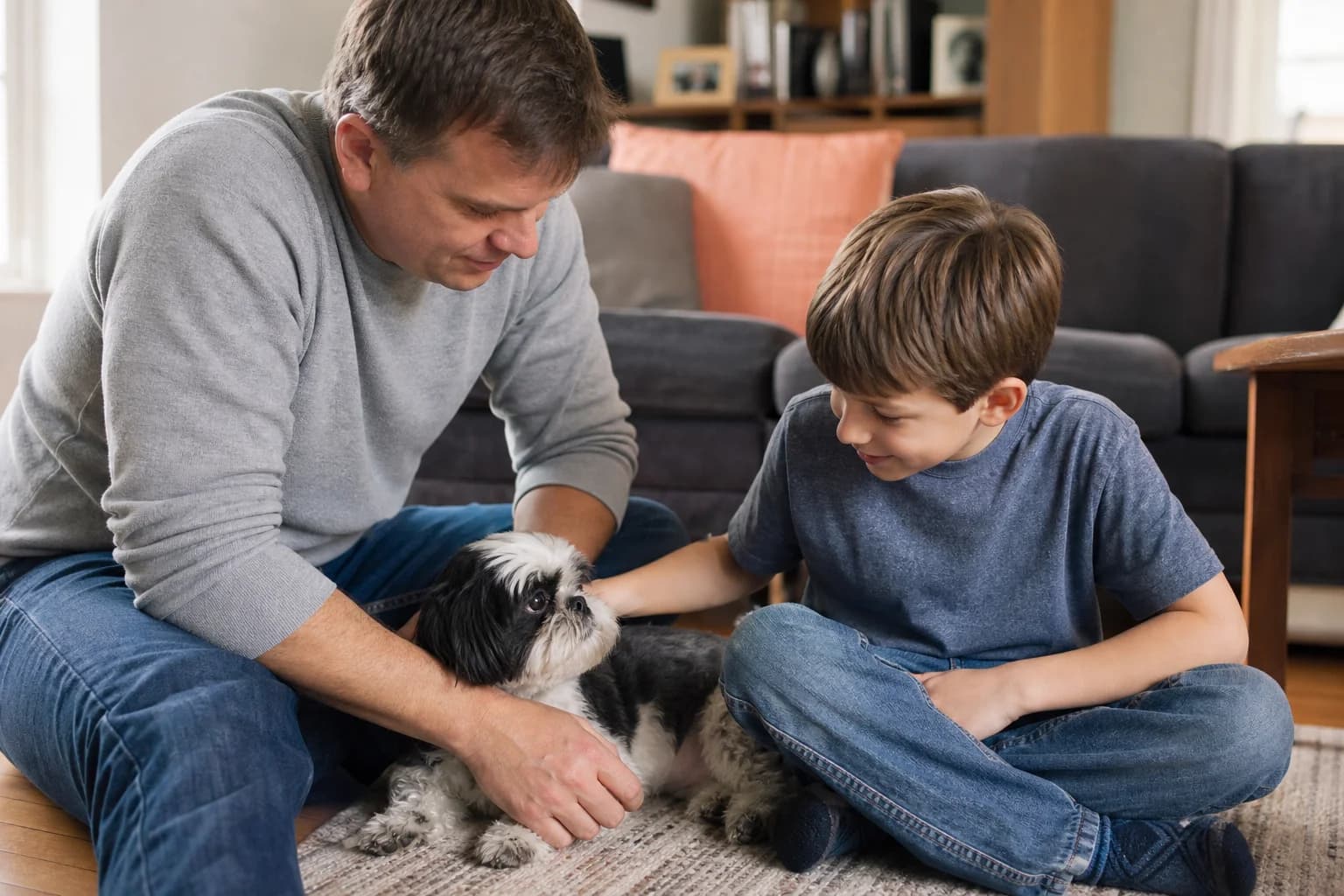
A well-socialized Shih Tzu can enjoy respectful children, but adult supervision remains essential. Teach children not to carry the dog, pull facial hair, disturb sleep, or crowd the food bowl. Give the dog a bed or pen that children never enter. A small companion should be able to leave an interaction before it becomes worried.
Many Shih Tzus live peacefully with dogs and cats. The safest introduction starts with distance, short sessions, and separate resources. A friendly puppy may overwhelm an older pet, while a large playful dog can accidentally injure a Shih Tzu. Compatibility depends more on the animals' individual behavior and the owner's management than on breed labels.
Is a Shih Tzu a good house dog?
Yes, for a household that wants a close indoor companion and can maintain a predictable routine. A Shih Tzu does not require a large yard. It does require bathroom access, daily interaction, mental activity, coat care, dental care, and an environment that stays safe in heat. A yard never replaces walks, supervised exploration, or training.
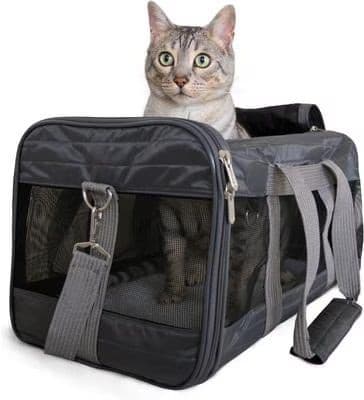
An airline-approved soft-sided carrier with mesh ventilation windows, a top-rated travel pick for cats and small dogs.
Petful may earn a commission when you click through to Chewy, at no extra cost to you.
Is a Shih Tzu right for you?
| Decision | Usually a good fit when | Think twice when |
|---|---|---|
| Apartment living | Short walks, reliable bathroom breaks, and barking training are available | The dog will be alone most of the day or noise cannot be managed |
| Family life | Children can interact gently and adults supervise | Young children are expected to carry or chase the dog |
| Grooming | Daily combing or regular professional clips fit the budget and schedule | The household wants a wash-and-wear coat |
| Exercise | You prefer several short activities and indoor games | You want a heat-tolerant running partner |
| Travel | You can acclimate the dog to a measured, ventilated carrier | The dog must fly frequently without preparation |
| Companionship | Someone is home often or can arrange gradual alone-time training | Long, unpredictable absences are routine |
The principal advantages are companionship, adaptability, modest space needs, and an engaging personality. The principal tradeoffs are intensive grooming, dental maintenance, sensitivity to heat, potential eye and airway problems, and limited tolerance for chronic isolation. Those are not small details. They determine whether daily life feels easy or constantly behind schedule.
What are the pros and cons of owning a Shih Tzu? The pros are a compact companion who often adapts well to apartment or family life, enjoys short interactive activities, and stays closely engaged with people. The cons are a high grooming workload, daily dental and face care, heat and airway sensitivity, possible eye injury, and a need for deliberate alone-time training. The right owner values companionship enough to accept those recurring responsibilities.
Before choosing the breed, price the recurring care rather than only the puppy. Add professional grooming, preventive veterinary care, dental work, food, parasite prevention, training, insurance or savings, and travel equipment. The Shih Tzu price guide separates acquisition cost from the first-year and lifetime budget.
A practical owner commitment map
- Every day: Offer companionship, bathroom breaks, short activity, face checks, and coat care appropriate to the chosen length.
- Every week: Check ears, nails, skin, teeth, eyes, harness fit, and any friction points where mats begin.
- Every month: Review body condition, replace worn equipment, and confirm that breathing and exercise recovery have not changed.
- Every year: Maintain veterinary preventive care, discuss dental needs, and reassess diet, weight, mobility, and life-stage goals.
Barking, training, and alone time
Do Shih Tzus bark a lot? Some are alert barkers, especially at hallway sounds, visitors, or windows, but persistent barking is not inevitable. The effective plan is to reduce rehearsal, identify the trigger, reward quiet behavior, and teach an alternate response such as going to a mat. Yelling often adds more noise without teaching the dog what to do.
Training works best in short, upbeat sessions. Food rewards, play, access to sniffing, and praise can all reinforce behavior. A layered puzzle and slow feeder can turn part of a measured meal into supervised enrichment, but a toy does not replace interaction or a graduated alone-time plan.
Can a Shih Tzu be left alone?
An adult who has been gradually trained may settle for several hours, but seven or eight hours is a long routine for a companion dog, especially without a bathroom break. Puppies need much more frequent care. Build duration in minutes before hours, use a safe pen or room, and arrange a walker or trusted visitor when the schedule exceeds the individual dog's comfort and physical needs.
Warning signs include pacing, drooling, nonstop vocalization, destruction near exits, inability to eat when alone, and frantic greetings. A camera can reveal what happens after the door closes. Severe distress deserves help from a veterinarian or qualified behavior professional rather than repeated "cry it out" absences.
Exercise and enrichment
Most healthy adults do well with two or three short walks plus indoor play and training. Duration should match weather, fitness, age, and breathing. Choose cooler times, carry water, and stop before the dog becomes distressed. Flat-faced dogs can overheat quickly because panting is less efficient when the airway is restricted.
Useful low-impact activities include:
- Sniff walks at the dog's pace.
- Find-it games with part of the daily food allowance.
- Cooperative grooming and handling practice.
- Simple tricks, target training, and mat settling.
- Short social outings with an easy exit.
Avoid forcing a sedentary dog into sudden intense exercise. Also avoid assuming a small dog never needs activity. Regular movement supports weight control, confidence, bowel habits, sleep, and quality of life.
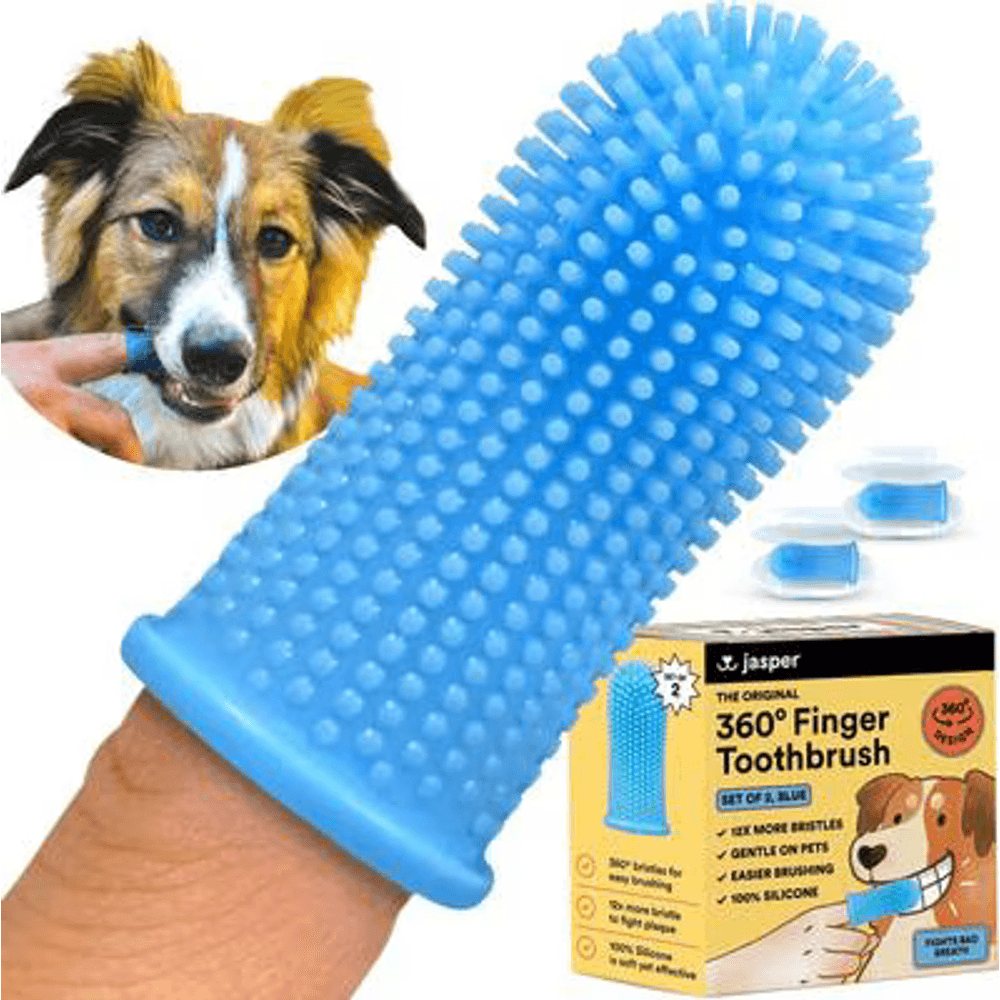
A 360-degree silicone finger toothbrush that brushes every side of a tooth at once. Gentle on gums and ideal for dogs new to brushing or owners who find a handled brush awkward.
Petful may earn a commission when you click through to Chewy, at no extra cost to you.
Grooming and coat care
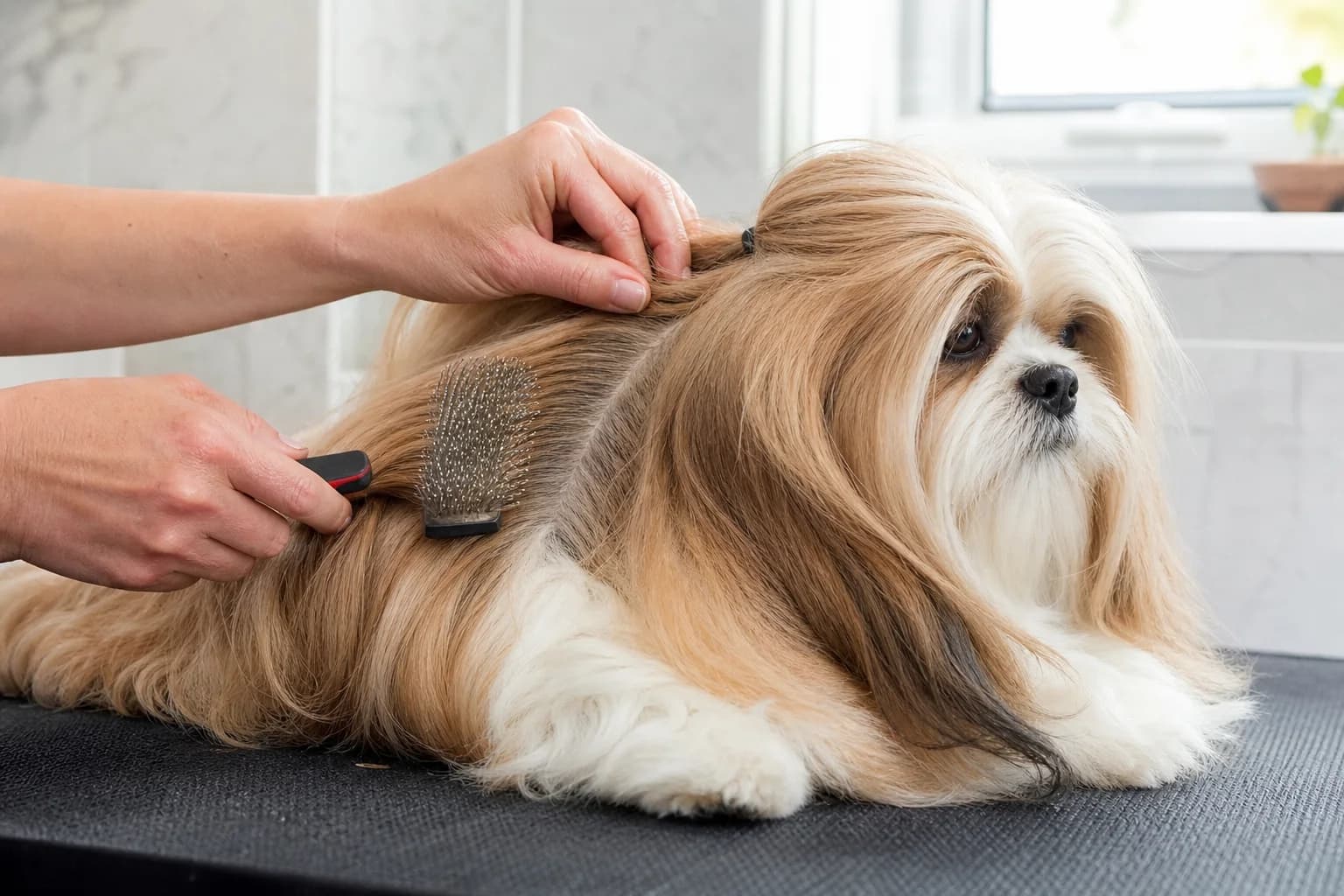
Long-coated Shih Tzus generally need daily line brushing and combing to the skin. Clipped dogs may need brushing several times per week, with more attention behind the ears, under the harness, in the armpits, around the legs, and under the tail. A self-cleaning slicker brush can lift loose hair from a clipped coat when used lightly. A metal comb is the reality check: if it cannot pass through gently, the coat is not fully detangled.
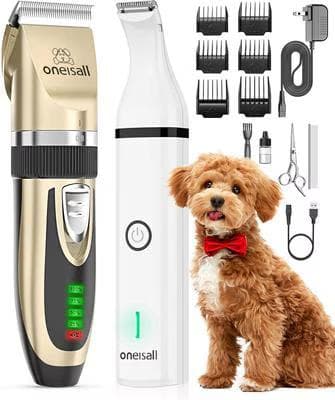
A quiet cordless grooming clipper and paw-trimmer kit can support maintenance for owners who already understand safe clipper handling. It should not be used to cut tight mats off the skin, work around a moving eye, or replace professional help when the dog is frightened or the coat is severely compacted. The full Shih Tzu grooming guide covers the schedule, puppy cut, face care, bathing, drying, nails, and stop rules.
Face, eyes, ears, nails, and teeth
Clean the face with a soft damp cloth and dry the folds and hair rather than leaving moisture trapped against the skin. Seek veterinary care for squinting, marked redness, cloudiness, a suddenly bulging eye, thick discharge, or an eye that will not open. Petful's guides to dog eye problems, tear stains, and cherry eye give background, but an acute painful eye should not wait for home treatment.
Nails should remain short enough that the toes sit naturally. Ears need regular inspection for odor, redness, pain, and debris. Teeth need special attention because small dogs commonly develop periodontal disease. A 360-degree finger toothbrush may make home brushing easier for a dog trained to accept it, but start slowly and use dog-safe toothpaste.
Shih Tzu puppy care
Shih Tzu puppies need a structured first month: veterinary intake, safe socialization, bathroom routines, sleep, handling, and positive grooming practice. Their small bodies make missed meals, falls, heat, rough play, and toxic exposures especially important to prevent. They also need frequent bathroom trips and cannot follow an adult workday schedule.
Choose a breeder or rescue that welcomes questions, provides medical records, explains the return policy, and cares where the puppy will live. Avoid sellers who will not show how dogs are housed, push a wire transfer, promise a "rare" puppy at a premium, or offer immediate parking-lot delivery. Read the complete Shih Tzu puppies guide before deciding.
Lifespan and preventive care
The best available breed-specific evidence should be described precisely. A UK VetCompass study included 11,082 Shih Tzus in the denominator and reported a median age at death of 12.7 years among the dogs with usable death-age data. That number is not a guaranteed lifespan for an individual, and it is not the same as life expectancy calculated from birth. The detailed Shih Tzu lifespan guide explains the study and its limits.
The RVC summary identified periodontal disease, anal sac impaction, and ear disorders among the common recorded conditions in this UK primary-care population. Preventive care should therefore include dental assessment, weight management, skin and ear checks, eye protection, comfortable breathing, and attention to mobility as the dog ages.
- Seek urgent veterinary help for struggling or open-mouth breathing at rest, collapse, blue or gray gums, a painful or suddenly bulging eye, severe weakness, or signs of heat illness. Move the dog to a cool area and call ahead. Do not force water, exercise, or home eye medication.
What is the common problem with Shih Tzu dogs?
There is no single condition that every Shih Tzu develops. The practical answer is that owners must stay ahead of dental disease, eye injury, skin and ear irritation, weight gain, and breathing limitations related to a short muzzle. A good breeder's health screening lowers some risks, while daily observation and prompt veterinary care reduce the chance that a manageable problem becomes an emergency.
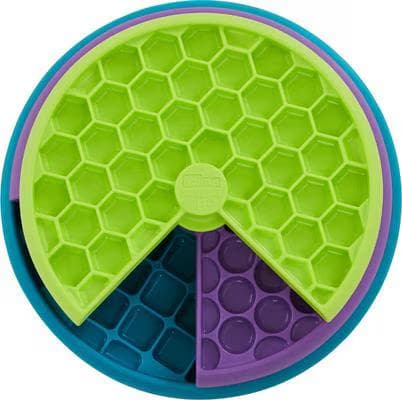
Petful may earn a commission when you click through to Chewy, at no extra cost to you.
What a Shih Tzu costs
Purchase price varies by source, region, age, demand, and health-screening investment. Adoption fees may include some initial medical care, while a responsibly bred puppy should come with transparent records and a contract. A low price can become expensive when it reflects poor health, inadequate socialization, or a scam.
Ongoing grooming is one of the breed's most predictable costs. Dental work, emergency care, and management of eyes, ears, skin, or breathing can create larger variable expenses. Some owners compare insurance while the dog is young; others maintain a dedicated savings reserve. Read the Shih Tzu price guide for planning ranges and the assumptions behind them.
Choosing food for a Shih Tzu
There is no one food that is best for every member of the breed. Choose a complete diet for the dog's life stage, then adjust portions to calorie content, body condition, activity, treats, and veterinary advice. Small kibble can be easier to handle, but package imagery and breed labels matter less than nutritional adequacy and suitability for the individual dog.
Puppies require a diet labeled for growth, not an adult maintenance formula. Dogs with diagnosed disease, recurrent digestive signs, dental pain, or weight problems need an individualized veterinary plan. The veterinarian-authored best dog food for Shih Tzu guide explains label reading, portion adjustment, food transitions, and five distinct adult options.
Living with a Shih Tzu through each life stage
A puppy needs frequent supervision, socialization, bathroom trips, and grooming practice. The adolescent period can bring selective listening, alert barking, and renewed chewing even when early training went well. Continue rewarding the behaviors you want rather than assuming the dog has outgrown structure.
An adult routine should make the important tasks automatic. Pair face cleaning with breakfast, toothbrushing with an evening cue, and coat checks with a predictable mat. Keep exercise regular enough that a small dog does not quietly gain weight. Weigh treats as part of the daily food allowance and reassess portions after a haircut, activity change, or spay or neuter because visual estimates can be misleading under a full coat.
Senior care is not simply shorter walks. Watch how the dog rises, uses stairs, finds food, settles at night, and responds to familiar cues. Changes in sleep, house training, appetite, thirst, vision, hearing, or social behavior can reflect pain or disease rather than stubbornness. Earlier assessment usually gives the family more options for comfort.
The records worth keeping
Maintain one current file with the microchip number, vaccine history, medications, laboratory results, dental procedures, diet and calories, insurance or savings details, groomer notes, and recent photographs. Add a short baseline video of normal walking and breathing. When something changes, dates and comparisons help the veterinarian understand the pattern more accurately than memory alone.
Review emergency plans before they are needed. Know the nearest after-hours clinic, keep a measured carrier accessible, and decide who can care for the dog if the primary owner is ill. These small preparations matter for a breed whose eye or breathing problems may need quick action.
What a normal weekday really requires
A realistic weekday includes a bathroom trip and short activity before breakfast, face and coat checks, another bathroom opportunity before the household leaves, midday care when the absence is long, evening movement and training, dental care, and a final bathroom trip. Grooming appointments, preventive care, food pickup, and equipment washing sit around that daily pattern.
Owners who work away from home can succeed when they build support into the budget. A walker, neighbor, family member, or day-care arrangement can break up long absences, but the dog still needs independent-settling skills. A second dog is not a guaranteed solution for separation distress.
Choosing equipment by measurements
Measure neck, chest, back length, standing height, and current weight. Recheck after a haircut and during weight change. A small padded no-pull harness is one option after measuring, but any harness should clear the throat and allow shoulder movement without gaping; a carrier should permit the dog to stand, turn, and rest. Retire chewed straps, cracked buckles, and frayed leads before they fail.
Shih Tzu owner FAQs
Often, yes. Shih Tzus have modest space requirements, but apartment success still depends on reliable bathroom breaks, short daily walks, barking training, mental activity, and enough human company. A small floor plan does not compensate for long isolation. Plan for elevator or stair logistics, hot-weather safety, and a quiet place where the dog can rest.
Most healthy adults benefit from several short activities rather than one hard workout. Combine cooler-time walks, sniffing, indoor play, and brief reward-based training. Adjust duration for age, fitness, weather, breathing, and veterinary advice. Stop activity if the dog develops noisy or labored breathing, weakness, unusual slowing, or trouble recovering comfortably.
Owners should be prepared for frequent coat and dental care and should watch the eyes, ears, skin, knees, and breathing. Risk varies by dog, and a breed tendency is not a diagnosis. Choose a responsible source, keep preventive appointments, maintain a healthy body condition, and have new pain, discharge, coughing, breathing difficulty, or behavior change assessed promptly.
Common advantages include a compact size, an affectionate companion temperament, and exercise needs that often fit city life. Tradeoffs include intensive grooming, regular dental care, heat and breathing precautions, house-training work, and a strong preference for company. The right match depends more on the household's daily capacity than on the breed's appealing appearance.
Barking varies by individual, learning history, routine, and environment. Some Shih Tzus alert readily to hallway noise, visitors, or activity outside a window. Early reward-based training, adequate activity, predictable departures, and management of visual or sound triggers can help. Sudden new vocalizing can also reflect fear, pain, sensory change, or another medical issue.
Seven hours is too long for many Shih Tzus as a routine, especially puppies, newly adopted dogs, seniors, and dogs with medical or separation-related needs. Capacity depends on bladder control, training, health, and distress level. Build alone time gradually and arrange a trusted walker, sitter, or other break when the schedule exceeds the individual dog's comfortable limit.
Neither sex is automatically more affectionate, trainable, calm, healthy, or suitable for a family. Individual temperament, early socialization, health, learning history, and household fit are more useful than sex stereotypes. Meet the dog, review records, discuss reproductive-health decisions with a veterinarian, and choose the individual whose needs and behavior match the home.
Many enjoy close contact, but the safest arrangement depends on the dog and household. A small dog can be injured by a fall or accidental rolling, and some need easier nighttime access to water or a bathroom break. A supportive bed beside the owner can provide closeness without requiring the dog to jump on and off furniture.
A realistic weekday with a Shih Tzu
Breed fit becomes easier to judge when the care promises are placed on a clock. A typical weekday includes a morning bathroom trip, a measured meal, a short sniff walk, face and eye check, several brief training moments, companionship, and another walk or play session later. Coat length determines whether brushing is a quick maintenance check or a substantial daily job.
Before choosing the breed, assign each recurring task:
- Decide who handles the first and last bathroom trips.
- Reserve time for brushing, face care, and toothbrushing.
- Plan calm alone-time practice rather than assuming a companion dog will cope.
- Identify a groomer and veterinarian before they are urgently needed.
- Set rules for children, visitors, furniture, food, and doorways.
- Arrange cool indoor exercise for hot or smoky days.
Owner-fit checkpoint
Write down which part of the routine feels hardest to sustain for the next 12 years, then test it before adopting. Practice the morning schedule, price local grooming, and arrange a realistic weekday care plan. A small dog can fit a small home, but time, cooperation, and recurring care matter more than square footage.
The schedule does not need to be rigid, but the responsibilities need an owner. A household that enjoys close interaction and routine maintenance may find the work rewarding. A household seeking an independent, wash-and-wear dog should reconsider before bringing home a Shih Tzu.
Bottom line
A Shih Tzu is a strong match for someone who wants an affectionate indoor companion and is ready to make grooming, dental care, training, and heat safety part of the routine. It is not a maintenance-free lap dog. Meet well-cared-for adults, budget for the coat and teeth, evaluate breathing honestly, and choose the individual dog for health and temperament rather than color, size marketing, or a cute photograph.

Coreen Saito is a pet writer and longtime shelter volunteer with more than a decade in animal rescue. She covers cat behavior, breed care, and the small, ordinary science of sharing a life with companion animals, with a particular focus on honest takes about the products and decisions that actually matter. At home in Arizona, she's outranked by Mac (a dog with the loudest opinion in the house), Rebel (a cat who governs by quiet authority), and Meri (an orange tabby who runs the late shift and the laundry basket). She writes about all three, plus the rescues that keep coming through her life, at LifeWithMinty.com.
Sign up for expert-backed reviews and safety alerts all in one place.