Schnoodle Haircuts: Styles, Pictures, and Grooming
Compare teddy bear, puppy, Schnauzer-inspired, and lamb trims for a Schnoodle. Learn what each style requires, how to discuss a photo with your groomer, and how to maintain comfort between visits.
Appearance alone does not establish ancestry or predict adult size.
Petful is reader supported. As an affiliate of platforms like Amazon and Chewy, we may earn a commission when you buy through links on this page. There is no extra cost to you.
The best Schnoodle haircuts suit the dog's actual coat, comfort, and the brushing time available at home. A teddy bear face, practical puppy cut, Schnauzer-inspired trim, or lamb cut can all be reasonable choices, but the same style will look different on curly, wavy, and wiry coats.
Use pictures to explain the look you like, then agree on the details with your groomer. A style name alone does not specify a body length, face shape, or maintenance routine.
Choose a trim your Schnoodle can comfortably maintain between appointments. Bring a photo, specify body and face length, and ask whether the coat can support the style without painful detangling. Short, tidy hair is preferable to a longer appearance that hides tight mats.

Sign up for expert-backed reviews and safety alerts all in one place.
Choose a Schnoodle haircut for the coat you have
A Schnoodle can inherit different combinations of Schnauzer and Poodle coat traits. Some coats form tight curls, some fall in waves, and others have a wirier texture with prominent facial hair. A haircut does not turn one texture into another, even if a photograph makes the result look similar.
Begin with the coat beneath your hand rather than the style name on a social-media image. Ask the groomer about density, tangles, how the coat dries, and how readily you can brush it at home. Also discuss whether the dog tolerates long appointments or needs shorter sessions.
| Style | Main visual feature | Maintenance tradeoff |
|---|---|---|
| Teddy bear | Rounded face with a soft outline | Face and longer body hair need regular attention |
| Puppy cut | Relatively even, practical body length | Length still needs agreement; the name is not a measurement |
| Schnauzer-inspired | Beard, eyebrows, and shorter body | Facial furnishings collect water and food |
| Lamb cut | Shorter torso with fuller legs | Leg hair needs extra checking for tangles |
The coat maintenance tradeoff is straightforward: more retained length usually means more work between appointments. A busy household may be happier with a shorter, neatly maintained style than a long coat that requires brushing time nobody has.
The Schnoodle breed guide explains the mix's broader variation. Miniature Schnoodle haircuts and giant Schnoodle haircuts use many of the same visual ideas, but the time, handling, and amount of coat differ considerably.
Decide what the picture actually shows
Look at the body, face, legs, ears, and tail separately. A photograph may show a round face with a short body, while another uses the same teddy-bear label for a much longer all-over trim. Lighting and a freshly dried coat also affect how fluffy the result appears.
Petful may earn a commission when you click through to Chewy, at no extra cost to you.
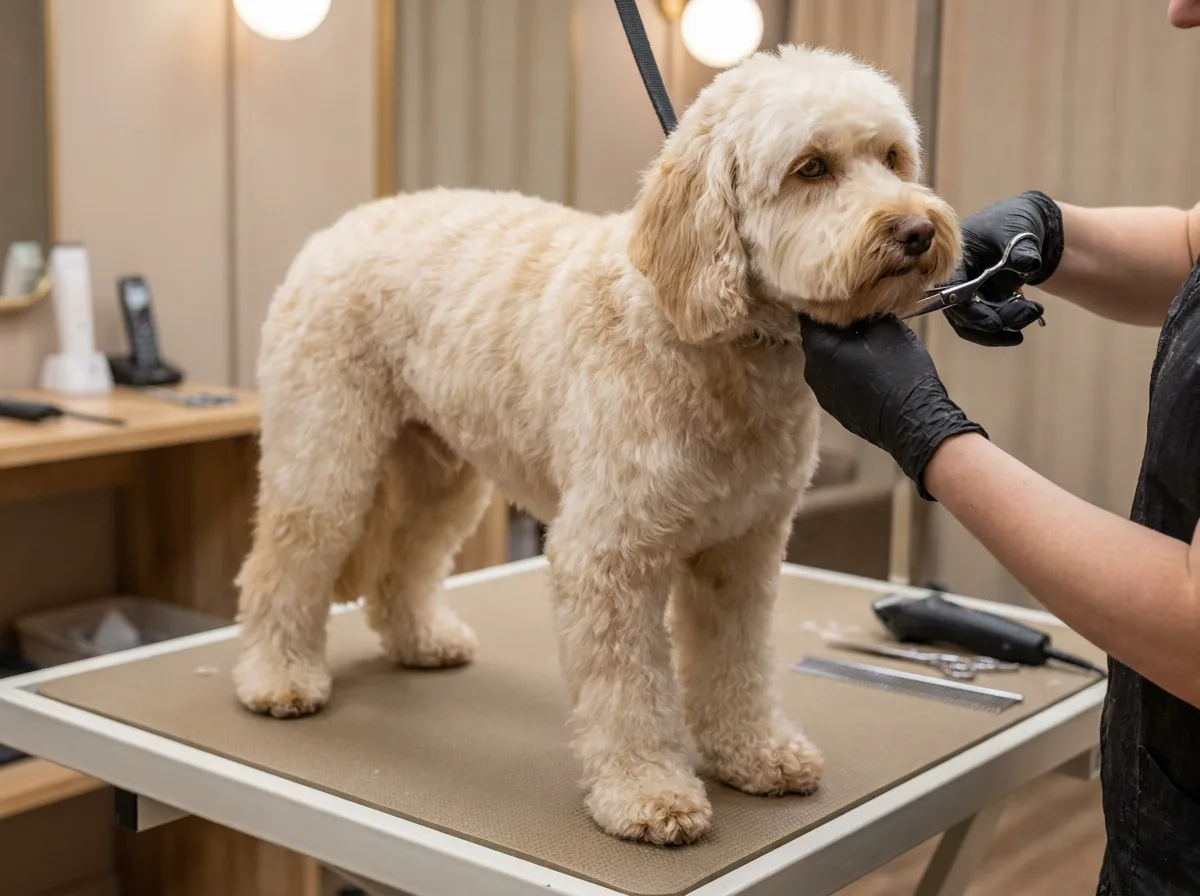
Our illustrative photographs show possible style outlines. They are not before-and-after documentation of real grooming appointments, and they cannot establish exactly how your dog's coat will behave. Use them as a conversation aid, then let coat condition and comfort determine the achievable result.
Teddy bear Schnoodle haircut
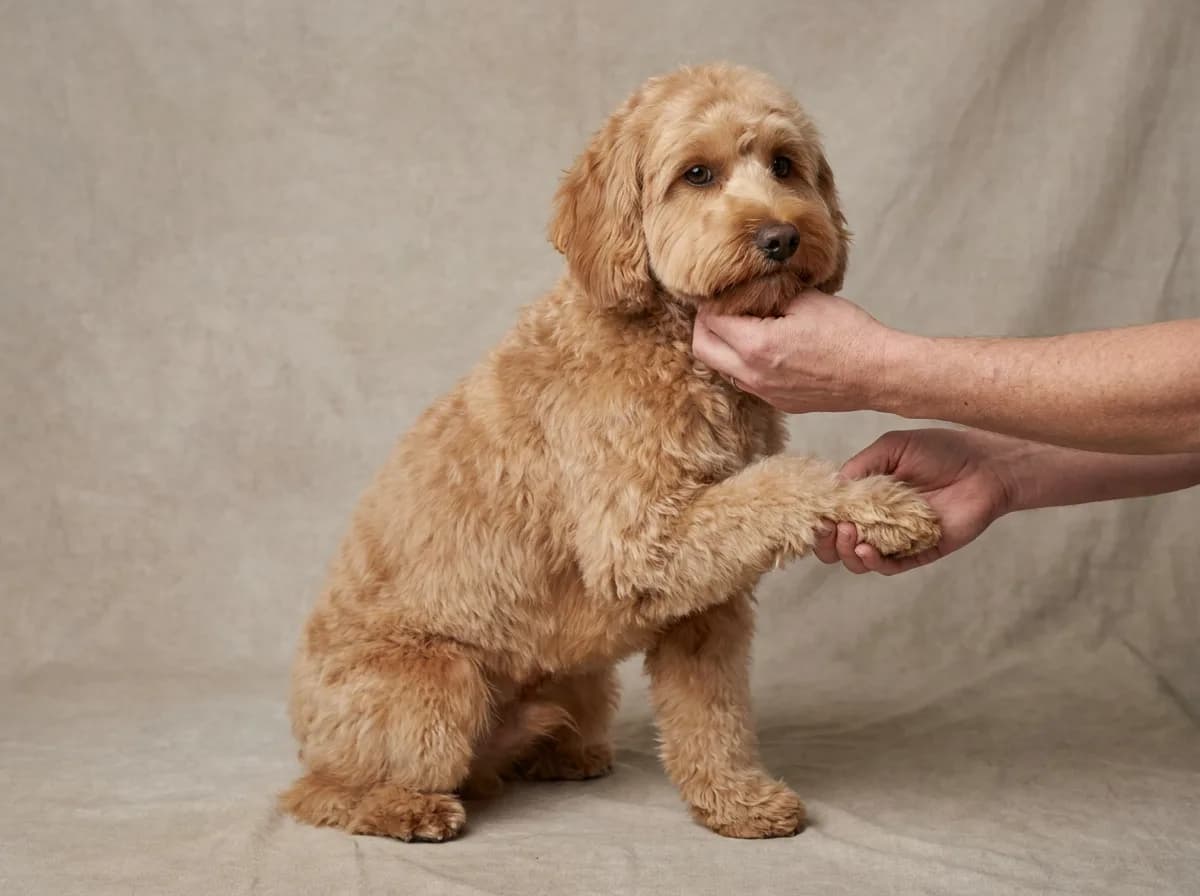
A teddy bear Schnoodle haircut usually emphasizes a rounded face, soft outline, and a fuller-looking head. The body can be relatively short or moderately fluffy, depending on the owner's preferences and what the coat can support. “Teddy bear” is a visual description rather than a standardized set of clipper lengths. Before attempting a coat trim at home, read the guide to using dog clippers.
This style can work well when you want an expressive face without a sharply defined Schnauzer beard. The details matter: hair should not obstruct the eyes, trap excessive moisture around the mouth, or require an amount of daily handling that the dog finds difficult.
What to ask for
- A rounded face while keeping the eyes comfortably clear.
- An agreed body length rather than just the word fluffy.
- Ear and beard length that you can clean and maintain.
- A plan for the legs and tail, which may not match the body length.
Show the groomer which part of the reference photograph you like. You might prefer the face but want a shorter body for walks, swimming, or easier upkeep. A useful request sounds like “this rounded face, with a shorter practical body and tidy feet,” followed by a discussion of actual length.
Keeping the face comfortable
Check the beard after meals and drinks and dry it gently when needed. Look for trapped debris and changes in smell or skin condition. Persistent redness, discomfort, discharge, or unusual odor warrants professional advice rather than repeated cosmetic cleaning.
Introduce face handling gradually and reward cooperation. Avoid pointing household scissors toward the eyes or trying to trim a moving dog's face. A photograph that looks simple can conceal precise professional work in a sensitive area.
The teddy bear style is not proof that a puppy belongs to a separate miniature breed or will stay small. A full-grown dog may have the same rounded trim at a very different size. Choose the appearance for the individual you have, not for a marketing label.
Puppy cut and practical short styles
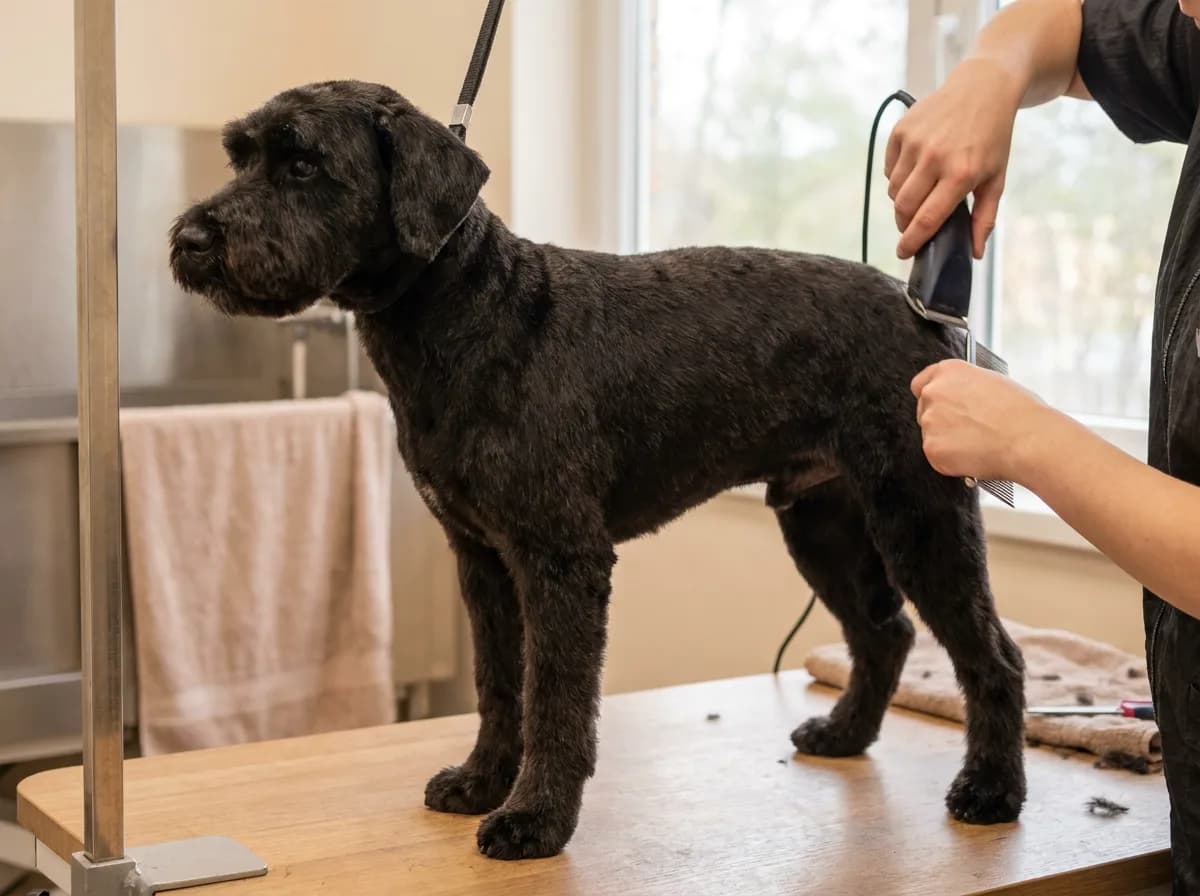
A puppy cut generally means a relatively even, manageable trim, but groomers may interpret the phrase differently. It is not reserved for puppies. Many adult Schnoodles benefit from a short practical style because it reduces the amount of retained coat that must be maintained.
Agree on how much hair will remain, how the face will be shaped, and whether legs or ears will stay fuller. Short should not automatically mean shaved to the skin. The appropriate length depends on coat condition, skin, lifestyle, and the groomer's assessment.
Petful may earn a commission when you click through to Chewy, at no extra cost to you.
When a shorter style makes sense
- The dog regularly collects debris during walks.
- Home brushing time is limited.
- The dog is learning to tolerate grooming in shorter sessions.
- A senior dog's comfort makes long appointments less suitable.
A practical trim still needs maintenance. Check friction areas, keep the face clean, and follow the groomer's advice on brushing and appointments. Leaving the coat short does not eliminate nail, dental, ear, or skin care. For another nail-care tool option, compare dog nail grinders.
Summer grooming without shortcuts
Do not assume that shaving as closely as possible is automatically the best response to warm weather. Discuss the dog's coat and skin with the groomer, and manage heat through appropriate shade, water, activity timing, and a safe environment. A haircut cannot make an overheated setting safe.
If the coat is severely matted, a close professional clip may be necessary for comfort. That is different from choosing a short style for convenience. The groomer needs to assess what can be done without prolonged painful pulling, and a veterinarian may be needed when skin is affected.
Schnauzer-inspired trim and lamb cut
A mohawk is an optional variation that leaves a narrow strip longer on top. Ask whether the coat will hold that outline and how you would maintain it between appointments.
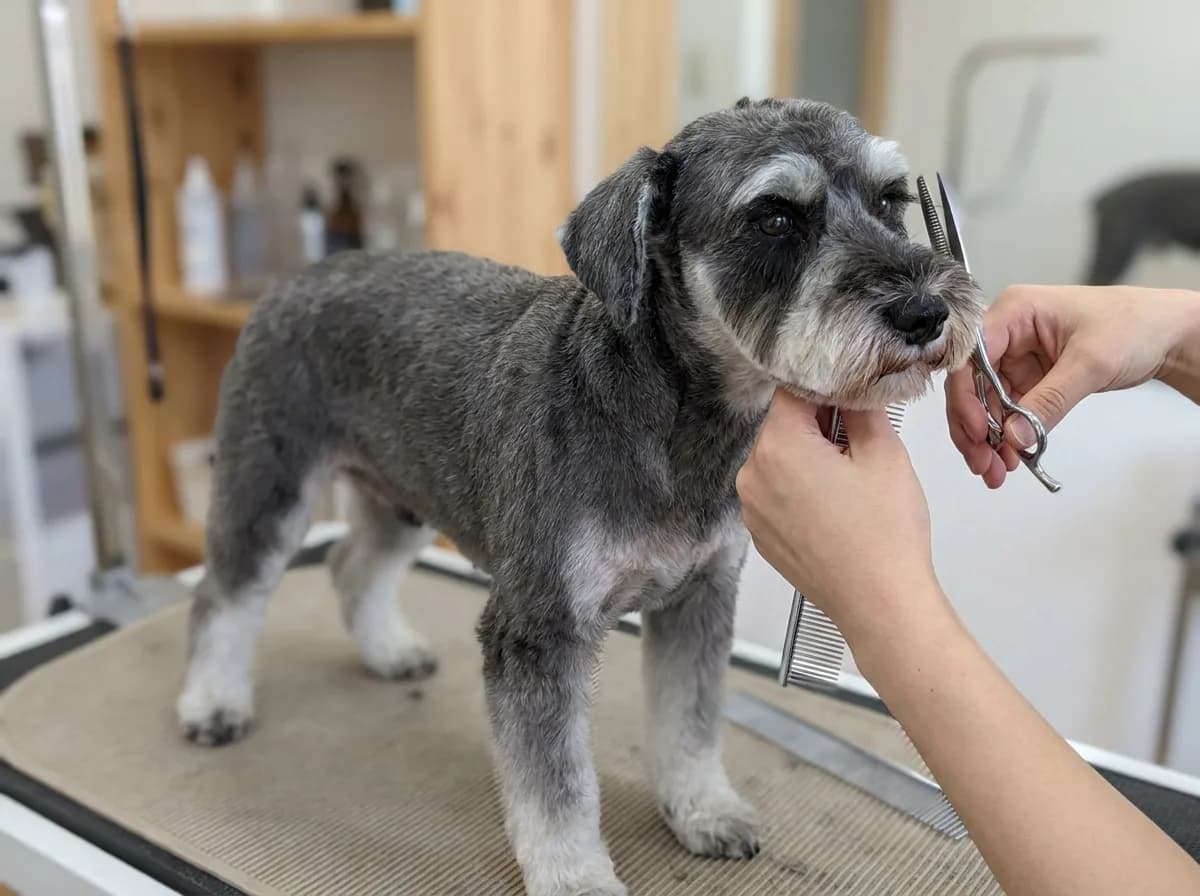
A Schnauzer-inspired Schnoodle trim emphasizes a beard and eyebrows with a shorter body. It may suit a dog whose facial furnishings make that outline achievable, but a curly or soft coat will not necessarily look like the wiry coat of a show Schnauzer. Use inspired as a description, not an expectation of an exact replica.
Discuss eye visibility and beard maintenance before committing to dramatic facial hair. Long furnishings can collect food, water, and outdoor debris. Keeping a style attractive requires comfortable routine care as well as the appointment itself.
- Specify whether you want a pronounced beard or a softened outline.
- Ask how the eyebrows will be shaped without obstructing vision.
- Discuss whether the dog's actual coat texture can hold the reference look.
- Plan the home cleaning and brushing needed for longer furnishings.
Lamb cut
A lamb cut usually pairs a shorter torso with fuller legs, creating a different silhouette from an even puppy cut. The contrast can look attractive on a curlier Schnoodle coat. The fuller leg hair is also a maintenance commitment, particularly around the feet and areas that rub or collect moisture.
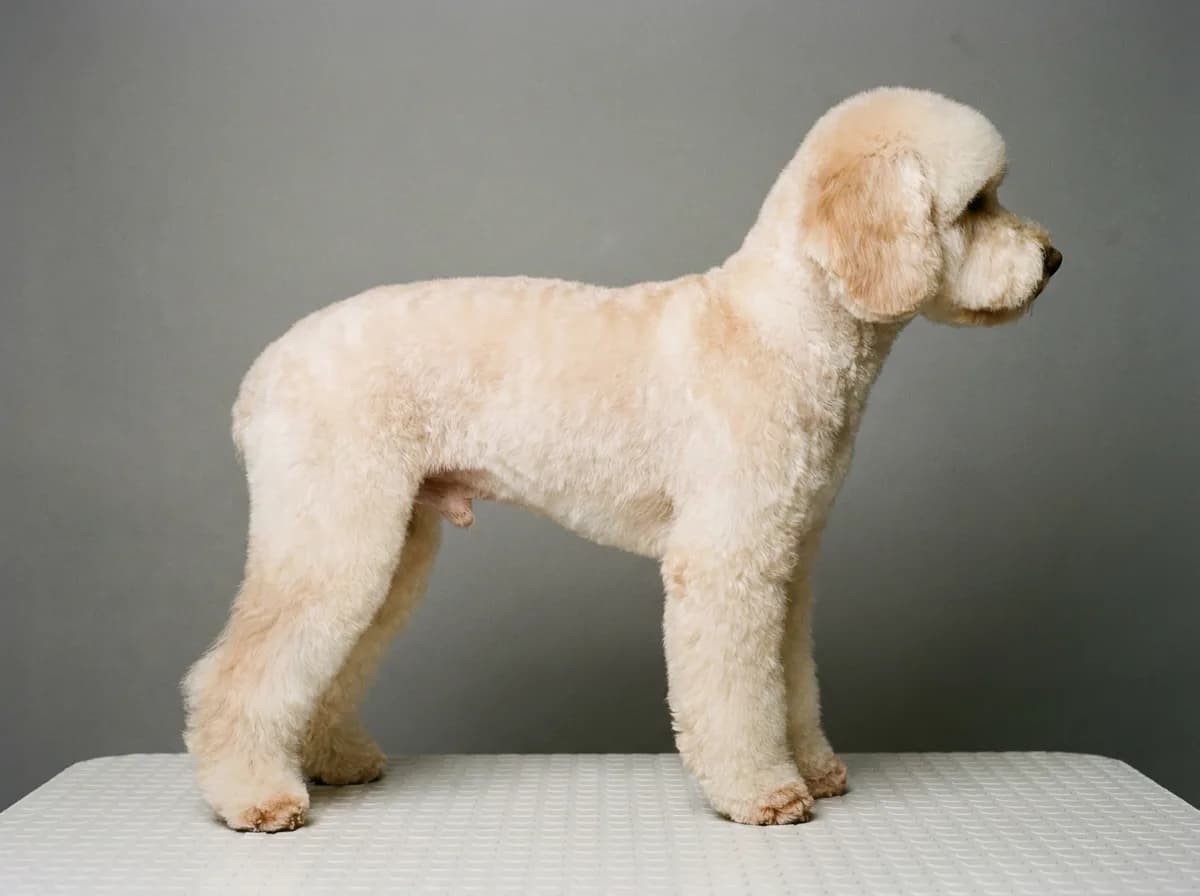
Ask the groomer to show which areas need the most attention between appointments. A dog may tolerate body brushing well but dislike having feet handled. If that is the case, choose a more practical leg length while you work on cooperative care rather than preserving fullness at the expense of comfort.
Shaggy or natural-looking styles
A shaggy Schnoodle look is still a maintained haircut. Hair that appears deliberately tousled should not conceal knots, trapped debris, or restricted movement. The longer outline can work for an owner who enjoys regular coat care and a dog that comfortably accepts it.
Do not assume the coat will take care of itself because the style looks natural. Curly and mixed-texture hair may mat beneath an apparently tidy surface. The important test is whether you can maintain comfortable, untangled hair down to the skin.
A coat-specific home grooming routine
Hair maintenance is only part of grooming. Use a Virbac dual-ended toothbrush with a pet product such as Virbac C.E.T. dog and cat toothpaste for a separate dental session, choosing the brush end that fits comfortably. Keep toothpaste away from the coat-care products to avoid mixing up their jobs.
Build the routine around the actual coat and the groomer's assessment. A curlier coat may need more frequent careful brushing than a short wirier trim. Friction behind the ears, in the armpits, inside the legs, and beneath collars or harnesses can create tangles even when the rest of the coat looks good.
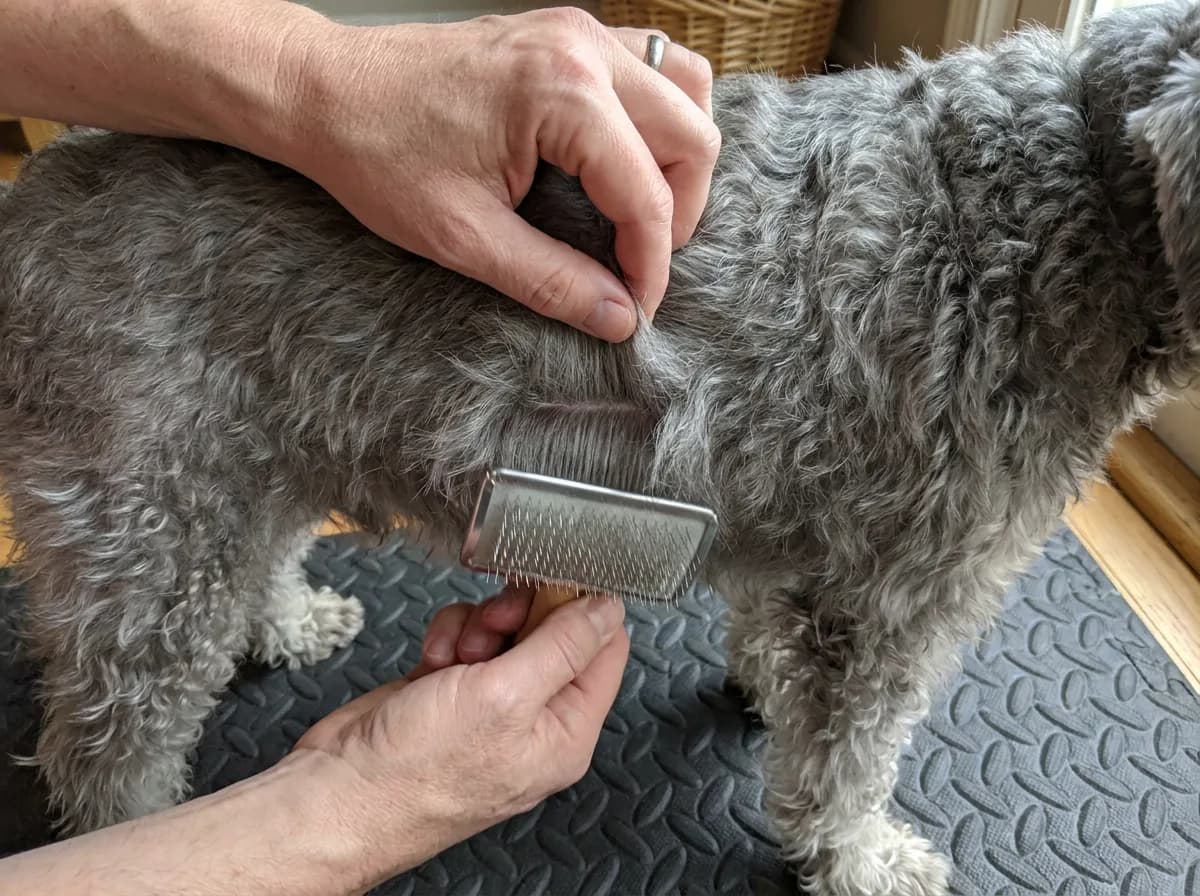
Use a nonslip surface, good lighting, and short sessions. Part the coat so you can work through one area at a time without repeatedly dragging a tool across the same skin. A suitable comb can help reveal areas the brush missed.

Petful may earn a commission when you click through to Chewy, at no extra cost to you.
Choosing tools without buying duplicates
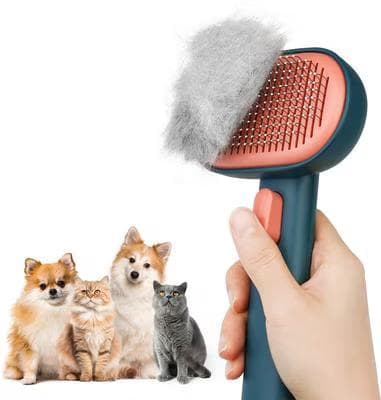
The aumuca Self Cleaning Slicker Brush is one brush option for an appropriate coat. Ask the groomer to demonstrate light pressure and explain where it is useful. A tool's convenience feature does not make it suitable for every texture or every sensitive area.
You may also need a suitable comb, but do not mistake a fine flea comb for the main tool for detangling a dense mixed coat. Select the tool for the job. Pulling harder when a tool catches is not a safe substitute for checking why it is catching.
Bathing choices
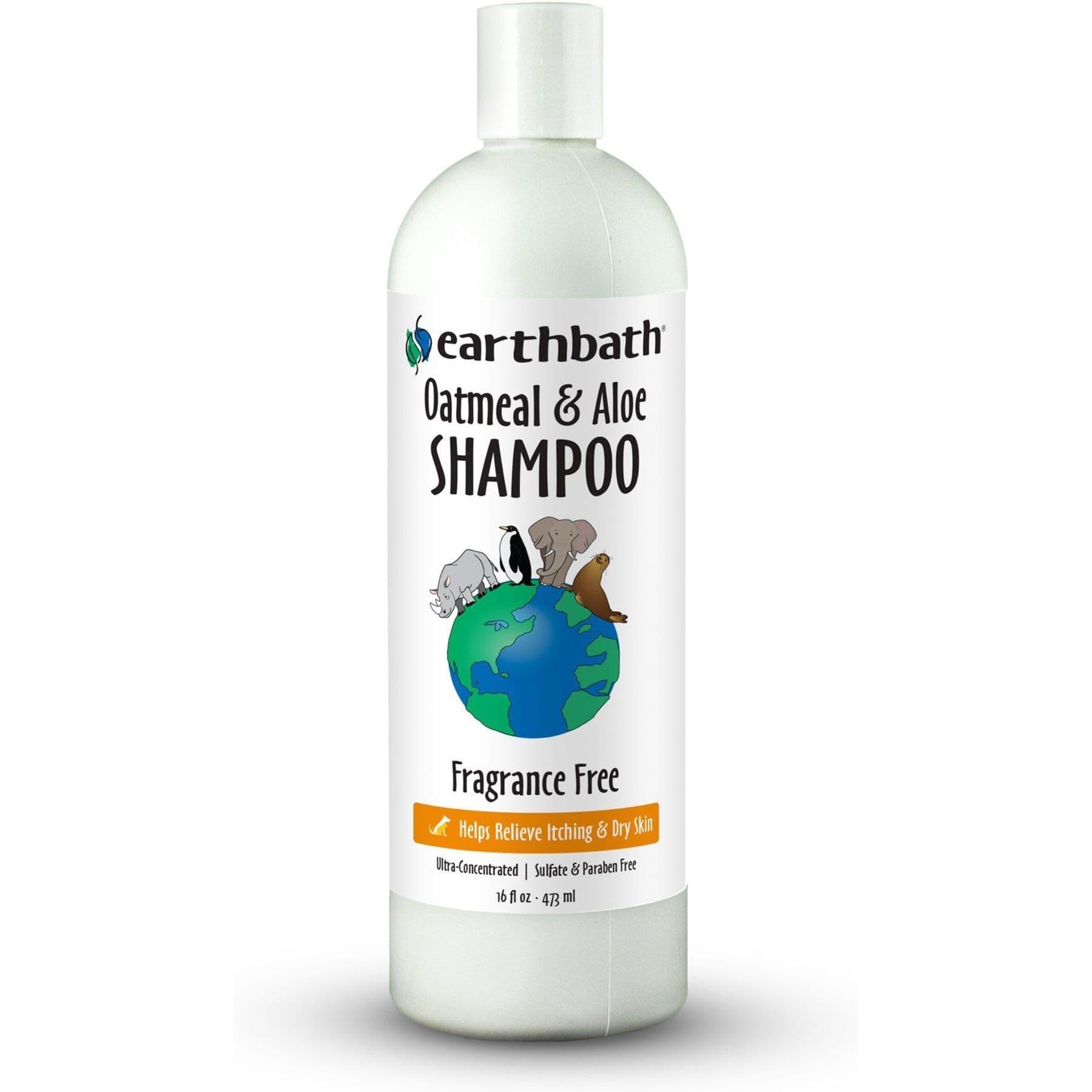
Choose a dog-appropriate wash and follow its instructions. The Burt’s Bees Oatmeal with Colloidal Oat Flour & Honey Dog Shampoo is one option for routine cleaning when appropriate for the dog. The Earthbath Oatmeal & Aloe Fragrance Free Dog & Cat Shampoo is a different option when you prefer a fragrance-free product. For a product comparison, see oatmeal shampoos for dogs.
These are alternatives, not products every owner needs to use together. A scent preference or coat appearance does not diagnose a skin condition. Persistent itching, sores, unusual odor, or hair loss should be assessed before repeatedly changing shampoos or reaching for a medicated wash.
Another bathing option is TropiClean Luxury 2-in-1 Papaya & Coconut Dog Shampoo & Conditioner. Compare the actual product instructions and your dog's tolerance rather than assuming that a two-in-one formula removes the need for thorough rinsing, drying, or brushing.
A sensible bathing sequence
- Inspect the coat and ask for help with tight mats before bathing.
- Prepare a safe nonslip bathing area and comfortable water temperature.
- Follow the wash's directions while avoiding the eyes and other sensitive areas.
- Rinse thoroughly and dry in a way the dog can tolerate safely.
- Check the coat afterward rather than assuming a fluffy surface is tangle-free.
Do not leave a dog unattended with drying equipment or use excessive heat. If the dog struggles, change the approach or seek professional assistance. A large Schnoodle may require a setup that is impractical in a small home bathroom; recognize that limitation before starting.
- Do not slide scissors beneath a tight mat when the skin boundary is hidden. Ask a professional to assess a comfortable removal plan.
What to do when you find a mat
Stop and assess whether the hair is lightly tangled or tightly packed against skin. Tight mats can hide skin and make scissors especially hazardous. Do not slide scissors beneath a mat when you cannot see the boundary between hair and skin. Arrange a professional assessment.
Preserving length is not worth prolonged painful detangling. Tell the groomer that comfort is the priority and ask what a shorter reset would involve. Then agree on a home-care plan that makes recurrence less likely.

Petful may earn a commission when you click through to Chewy, at no extra cost to you.
Shedding and allergies
Schnoodles vary in shedding, and loose hairs can remain trapped in the coat. That is one reason a dog that leaves little hair on the sofa may still need substantial brushing. Low visible shedding should not be interpreted as proof of an allergy-safe dog.
If allergies are a concern, discuss them with your own clinician and spend time with the individual dog before making a commitment. Neither a particular haircut nor a shampoo can guarantee that someone will tolerate living with the dog.
What to tell the groomer
Use a groomer request checklist instead of asking for a vague style name. Bring a clear photograph and explain which features you want to copy. Tell the groomer how much brushing you realistically do, whether the dog swims or collects outdoor debris, and which parts of handling are difficult.
Share relevant health or behavior information before the appointment. A dog that has pain, difficulty standing, a recent procedure, or a history of distress may need adjustments. Surprises are harder to manage when the dog is already on the table.
- A style name is not a length measurement. Agree on face, body, legs, and maintenance before the appointment begins.
The request checklist
- Overall style and the specific features you like in the photograph.
- Body length, discussed in measurable terms with the groomer.
- Face, ear, beard, leg, foot, and tail preferences separately.
- Coat condition and permission to prioritize comfort if mats prevent the plan.
- A maintenance schedule you can actually follow.
Ask how the finished style will change as it grows out. A haircut that looks ideal on appointment day may need attention sooner than you expect. Your coat maintenance tradeoff should include both the time between appointments and the work required at home.
Avoiding common misunderstandings
“Don't take too much off” is not a clear instruction if the coat is matted. “Make it look like this photo” is not enough if the reference dog has a different coat texture. Give the groomer the information needed to propose a realistic outcome and explain any unavoidable compromise before work begins.
Likewise, ask what is included in the service rather than assuming every task is automatic. The appropriate approach to ears, nails, and sensitive areas depends on the dog and the groomer's assessment. Clinical concerns belong with a veterinarian.
Scheduling and price
For home brushing, the AKC’s grooming guidance recommends several sessions weekly for many dogs, with daily brushing often appropriate for long coats. Use that as a starting point and adjust to your Schnoodle’s texture, retained length, tangles, and comfort. Professional haircut appointments are a separate decision: ask the groomer when to return and which changes mean an earlier visit would help. A long trim may need more frequent maintenance than a shorter style.
Obtain a current quote for the individual dog. Size, coat condition, service scope, local costs, and handling requirements affect the price. Tell the groomer about mats honestly so time and expectations can be planned. Avoid waiting until a coat is unmanageable simply to preserve a usual booking interval.
Puppy and senior grooming appointments
A puppy needs learning as well as coat care. Short, pleasant introductions to brushing, gentle restraint, equipment sounds, and standing still can make future appointments easier. Coordinate the timing of professional visits with your veterinarian and groomer rather than following a universal age rule from a social-media post.
For a dog small enough to meet its limits, a correctly measured Petsfit 19-inch soft-sided carrier may help with the journey. A washable Pet Parents Pawtect small blanket can provide a familiar resting surface where the groomer permits it; larger Schnoodles need travel arrangements suited to their size.
Let the first goals be comfort and cooperation. A perfect teddy bear face is not worth overwhelming a puppy that is still learning what handling means. Reward a brief successful touch, then stop or change activities before frustration develops.
Adjusting for senior dogs
An older Schnoodle may have difficulty standing for long periods or tolerating positions that used to be easy. Tell the groomer about mobility, hearing, vision, or comfort changes. A shorter style and shorter appointments may make care more manageable.
- Provide current information about relevant medical conditions.
- Ask about rest breaks and a stable nonslip setup.
- Choose a practical style if longer grooming has become tiring.
- Consult the veterinarian about new sensitivity or discomfort.
The Schnoodle lifespan and senior-care guide explains why new changes deserve assessment rather than being dismissed as age. Grooming can reveal a problem, but it cannot diagnose what is causing pain, a skin lesion, or a change in tolerance.
Grooming a larger Schnoodle
Giant Schnoodle grooming takes more physical space and may require more assistance. Avoid lifting or positioning a large dog in a way you cannot safely maintain. Ask a professional to demonstrate realistic home tasks and leave more demanding work to an appropriate setup.
The Giant Schnoodle guide discusses the broader handling and equipment decisions. A smaller dog needs careful handling too; the Mini Schnoodle guide covers routines suited to that end of the size range.
Review the result as a routine, not just a photograph
After the appointment, notice whether you can keep the coat comfortable as it grows. If tangles return quickly, ask whether the retained length, brushing technique, or appointment spacing should change. The best Schnoodle haircut is one that continues to work between photographs.
Keep a short note of the style, agreed length, what was easy to maintain, and what caused difficulty. Bring that note to the next visit. It gives the groomer a practical basis for adjustment and helps avoid repeating a style that looked attractive but did not fit your life.
Schnoodle grooming questions
The best Schnoodle haircut suits its coat, comfort, and your available brushing time. A teddy bear face, practical puppy cut, or Schnauzer-inspired trim may all work. Discuss the actual length and maintenance with a groomer. Choose an easier style if keeping a longer coat comfortable would require more time than you can provide.
A teddy bear cut usually creates a rounded face and soft outline on a Schnoodle, but the body length varies. Bring a reference photo and specify what you like about the face, ears, legs, and body. The style name alone does not tell the groomer an exact length or guarantee the same appearance on every coat.
Start with several gentle home brushing sessions each week; long coats often need daily brushing, consistent with AKC grooming guidance. Adjust to the actual coat and check friction areas between sessions. Ask the groomer separately about professional haircut timing, based on retained length, tangling, and the dog’s tolerance. Do not wait for tight mats or force brushing through discomfort.
For a full Schnoodle haircut, use a qualified groomer unless you have appropriate training, equipment, and a dog that cooperates safely. At home, focus on the brushing and handling tasks your groomer demonstrates. Do not cut tight mats with scissors near hidden skin or attempt precise face trimming on a moving dog.
The grooming downsides of a Schnoodle are recurring brushing work, professional appointment costs, and tangles that can develop beneath a tidy-looking surface. A long beard also collects moisture and food. Budget for ongoing appointments and choose a style you can maintain comfortably. Low visible shedding does not mean a teddy-bear coat will take care of itself.
Professional groomers choose their sequence according to the coat, service, equipment, and dog's needs. Finish trimming commonly involves a clean, appropriately dried coat, but preparation and rough work may differ. For your Schnoodle, ask the groomer about the planned process rather than attempting a home haircut based only on whether the hair feels wet or dry.
Dogs can feel better when uncomfortable hair problems are addressed, but cutting hair is not automatically a comfort treatment. A Schnoodle may be more comfortable after painful tangles, trapped debris, or impractical length are addressed appropriately. That does not mean every haircut or close shave improves comfort. Skin condition, handling, temperature, and the dog's tolerance matter. If the dog appears sore, unusually itchy, or distressed after grooming, contact the groomer and veterinarian as appropriate.

Coreen Saito is a pet writer and longtime shelter volunteer with more than a decade in animal rescue. She covers cat behavior, breed care, and the small, ordinary science of sharing a life with companion animals, with a particular focus on honest takes about the products and decisions that actually matter. At home in Arizona, she's outranked by Mac (a dog with the loudest opinion in the house), Rebel (a cat who governs by quiet authority), and Meri (an orange tabby who runs the late shift and the laundry basket). She writes about all three, plus the rescues that keep coming through her life, at LifeWithMinty.com.
Sign up for expert-backed reviews and safety alerts all in one place.