Schnoodle Lifespan and Common Health Concerns
Schnoodle lifespan estimates vary with size and individual history. Learn how to interpret the numbers, discuss inherited risks, maintain preventive care, and recognize changes during the senior years.

BVMS, MRCVS
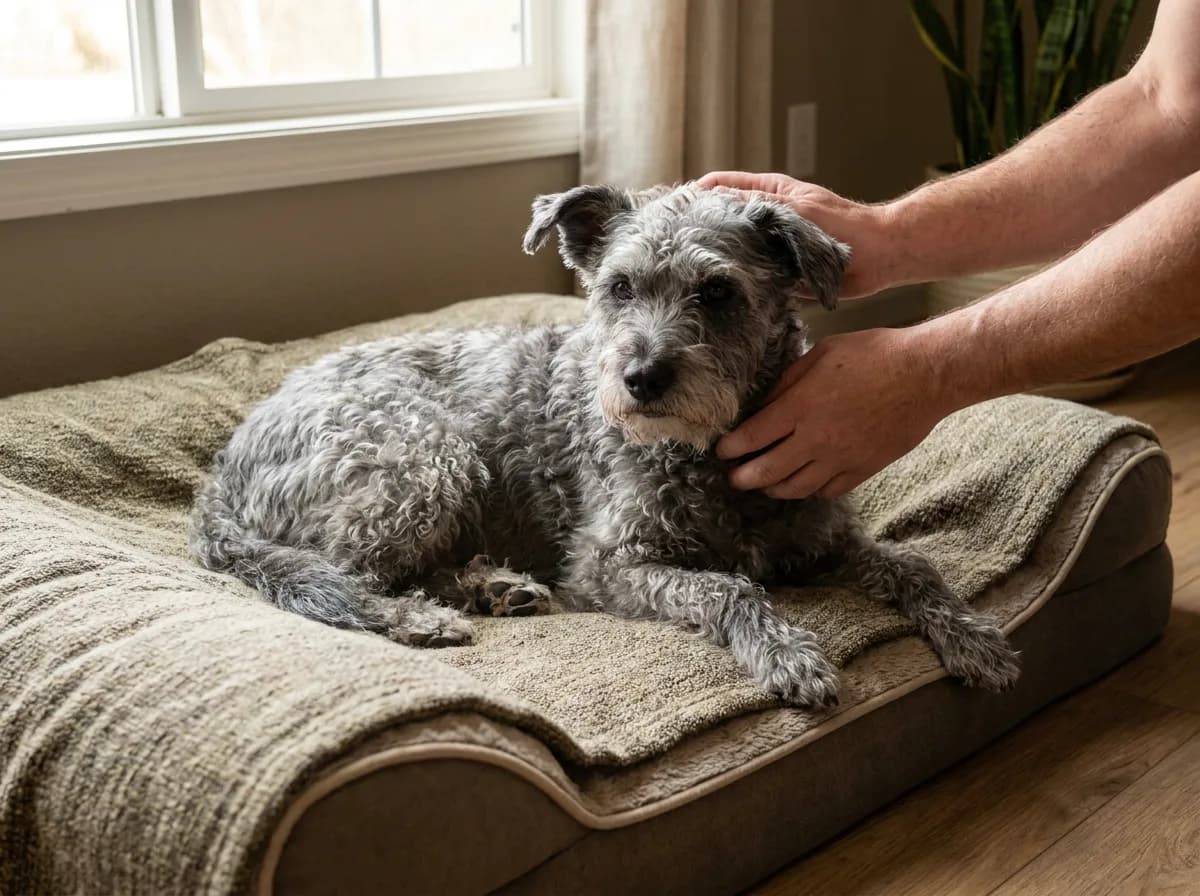
Appearance alone does not establish ancestry or predict adult size.
Petful is reader supported. As an affiliate of platforms like Amazon and Chewy, we may earn a commission when you buy through links on this page. There is no extra cost to you.
Schnoodle lifespan is broadly estimated at 10–16 years in Chewy’s breed guide. That is a planning reference, not a prediction for your dog: the mix includes small and large dogs with different ancestry, medical histories, and care needs.
The useful goal is to understand those limits, identify changes early, and work with your veterinarian on preventive and senior care. No supplement, coat color, or crossbreed label guarantees a longer life.
A Schnoodle's outlook depends on size, inherited risks, medical history, and individual health. Broad lifespan ranges are estimates, not breed-specific survival predictions. Keep a veterinary care plan and respond to changes in appetite, thirst, movement, comfort, and behavior.

Sign up for expert-backed reviews and safety alerts all in one place.
What is the typical Schnoodle lifespan?
There is no single well-established population survival figure for all Schnoodles. Published breed guides offer broad estimates: Chewy's Schnoodle profile, for example, lists 10–16 years. That range should be treated as general background, not a measured prognosis for every combination of Schnauzer and Poodle ancestry.
Petful may earn a commission when you click through to Chewy, at no extra cost to you.
The average lifespan of a Schnoodle is difficult to summarize because the name includes both small and large dogs, different generations, and varying family histories. A range copied across websites does not become more precise because many pages repeat it. Ask what a source actually measured before using a number to make medical decisions.
- A broad estimate does not tell you how long your dog has left.
- A dog can develop a serious condition well before an expected senior age.
- A dog that outlives a published range still needs individual care rather than special assumptions.
- Changes in health deserve assessment regardless of the number on the birthday card.
The Schnoodle breed guide explains the mix's overall variation. Here, lifespan is a starting point for care planning, not a reason to overlook a current symptom or to buy products marketed as anti-aging solutions.
 Sponsored
Have a health question about your dog?
Talk to a licensed vet at Dutch over video or message, including nights and weekends.
Use code Pets30
Plans start at $11/month · covers up to 5 pets
- Licensed vets in most states
- Rx for 150+ conditions
- 4.7 on Trustpilot
What a lifespan estimate cannot answer
It cannot predict whether an individual dog will develop a particular inherited condition, recover from an illness, or tolerate a proposed procedure. Those questions require the dog's history, an examination, and sometimes testing. Even a veterinarian's prognosis is specific to the information available and may change as new evidence emerges.
If a seller guarantees a long life because a puppy is a hybrid, ask for actual parent health-screening records instead. Crossbreeding does not remove every inherited risk, and responsible care cannot eliminate every unexpected disease or accident.
Why size and individual history matter
Small and large dogs do not always age on the same timetable. A Mini Schnoodle lifespan estimate should not automatically be applied to a much larger Giant Schnoodle. Expected size is one factor your veterinary team considers along with breed ancestry, body condition, medical history, and lifestyle.
The AAHA senior-patient definition relates senior status to the later portion of an estimated lifespan rather than assigning every dog a single universal birthday. This makes individual discussion more useful than declaring that all dogs are old at seven or ten.
| Factor | What it changes in the discussion |
|---|---|
| Adult size and build | Timing of life-stage planning and physical assistance needs |
| Medical history | Follow-up for conditions already diagnosed |
| Family and screening records | Which inherited concerns may merit attention |
| Body condition and daily function | Practical nutrition, activity, and comfort planning |
- There is no reliable Schnoodle-specific lifespan estimate here that separates male and female dogs. Sex alone cannot predict an individual dog’s outlook. Base care decisions on the dog’s size, health, and veterinary assessment rather than assuming one sex is guaranteed more healthy years.
Bring the relevant history
Keep records of previous illnesses, medications, operations, reactions, and health screening. If you adopted an adult with an incomplete history, tell your veterinarian what is known and what is uncertain. A baseline examination helps establish a practical plan without pretending missing records are reassuring.
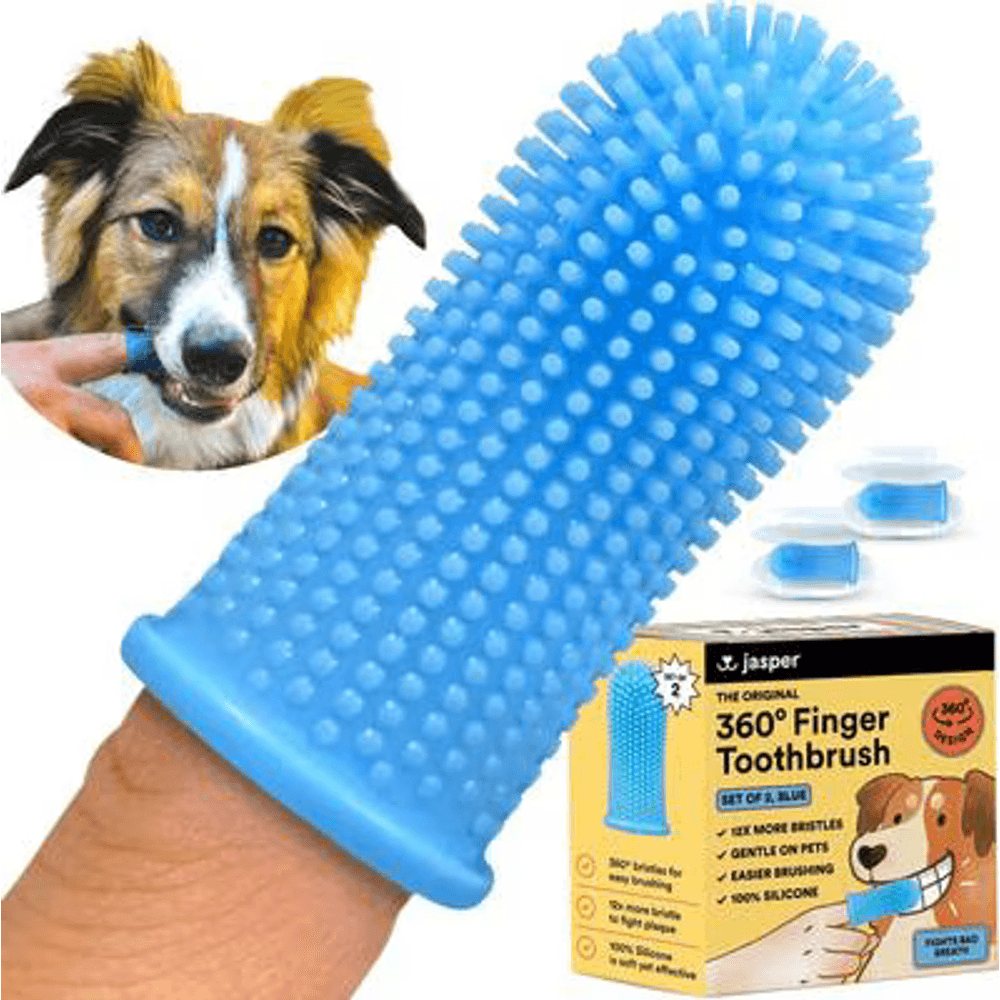
A 360-degree silicone finger toothbrush that brushes every side of a tooth at once. Gentle on gums and ideal for dogs new to brushing or owners who find a handled brush awkward.
Petful may earn a commission when you click through to Chewy, at no extra cost to you.
Your dog's current function also matters. Record whether it can rise comfortably, eat normally, enjoy familiar activities, and rest well. Those observations can support a useful discussion even when you cannot provide a detailed family pedigree.
Inherited conditions and health testing
A Schnoodle can inherit risks from either parent breed. The particular concerns depend partly on which Schnauzer breed and Poodle variety are involved. Ask your veterinarian to interpret parent health-screening documents and decide which findings are relevant to the dog you have.
The OFA disease and screening resource describes breed-based testing programs. Screening may involve orthopedic assessment, specialist eye examinations, DNA tests, or other evaluations. These are different forms of evidence; a broad commercial DNA panel is not a substitute for every recommended clinical examination.
- Confirm the identity of the dog associated with each result.
- Check the examination or test date and the actual result.
- Ask which conditions the test evaluates and which it does not.
- Discuss how findings from both parent breeds affect the care plan.
Parent size helps determine which records to request. Patellar luxation is a slipping kneecap; hip and elbow dysplasia involve poorly formed joints. The Poodle Club of America includes kneecap and progressive retinal atrophy screening for Toy and Miniature Poodles, and hip screening for Miniature and Standard Poodles. Progressive retinal atrophy is an inherited eye disease, so a DNA result and an eye examination answer different questions. For Giant Schnauzer ancestry, breed-club screening recommendations include hips, elbows, eyes and thyroid function. These parent-breed concerns do not establish how common a condition is in Schnoodles or diagnose your dog. Limping, changing vision, abnormal thirst or repeated digestive problems need veterinary assessment, even when parent screening was normal.
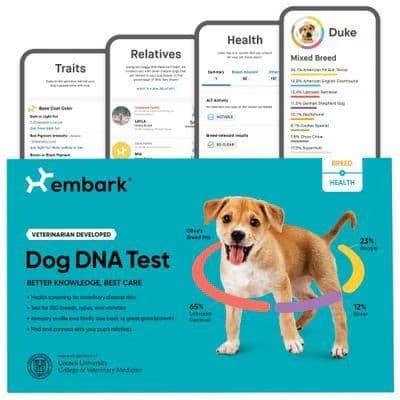
The Embark Breed & Health Dog DNA Test Kit is an existing option for owners interested in genetic information. Review its current scope and discuss significant results with your veterinarian. A negative panel cannot rule out every disease, and a detected variant does not always mean the dog currently has a clinical condition.
Separate screening from symptom investigation
Screening looks for evidence of risk or an early problem in an appropriate context. Investigating a symptom asks what is causing a change now. A dog with normal parent screening can still become ill, and a dog with an inherited risk marker may need individualized monitoring rather than treatment based on the marker alone.
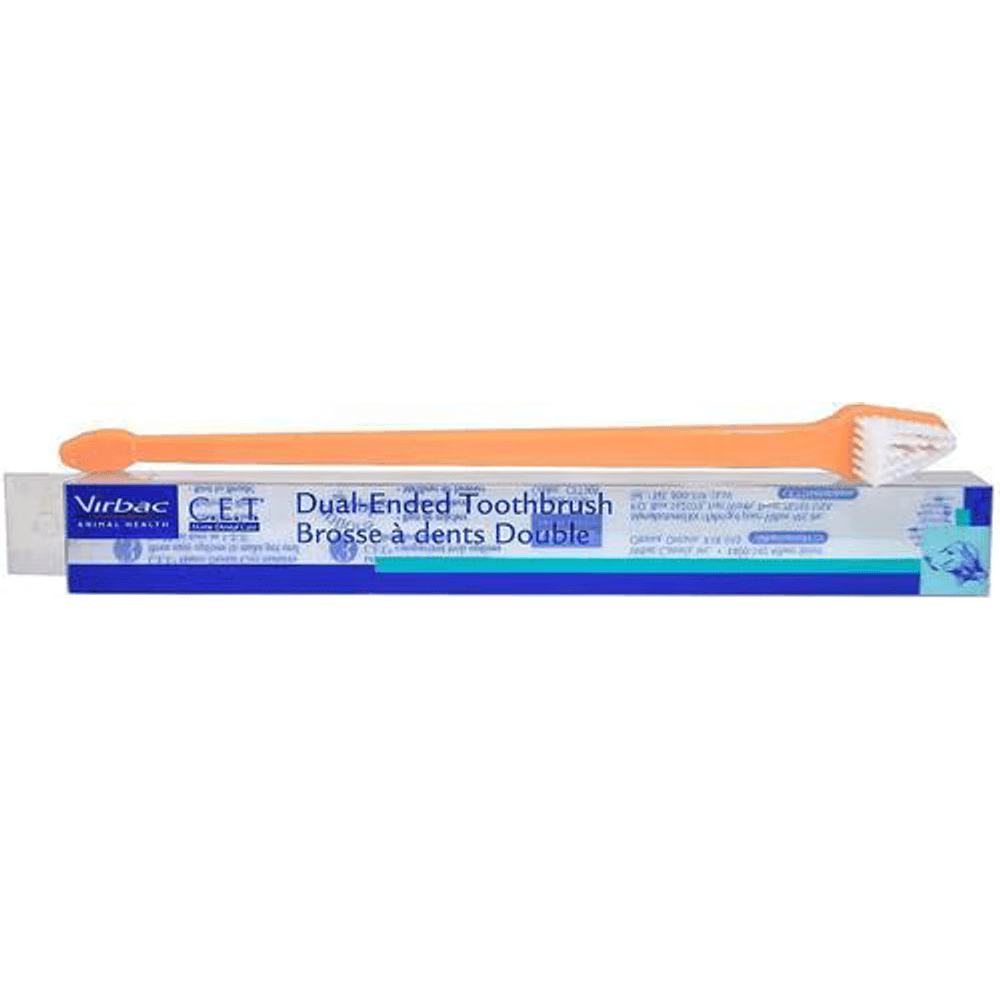
A dual-ended toothbrush with a large and a small head to fit different mouth sizes and reach the back molars where plaque hides. Soft bristles angled for the gumline.
Petful may earn a commission when you click through to Chewy, at no extra cost to you.
Do not start a prescription medicine, restrictive diet, or supplement regimen solely because the dog belongs to a particular mix. The clinical question and the individual dog's needs should determine the next step.
Everyday preventive care that matters
Preventive care is a routine built around the individual dog. Discuss vaccinations, parasite prevention, nutrition, dental care, exercise, and the timing of checkups with your veterinarian. These decisions vary with age, location, exposure, medical history, and current health. If you are comparing chews, review the guide to dog dental chews with your veterinary team.
A pet toothpaste such as Virbac C.E.T. dog and cat toothpaste supports a brushing routine, while a Frisco 1.5-cup travel bowl helps you provide water during outings. Choose practical supplies that fit the dog’s routine without attaching a longevity promise to them.
Maintain an appropriate body condition rather than feeding toward the upper end of a breed weight chart. Measure meals, account for treats, and review unexpected changes. If you are changing food because of an illness, follow the veterinary plan instead of selecting a product simply because it says senior or healthy on the package.
 Sponsored
Vet care that's always there
Unlimited video calls and messaging with licensed vets for less than a typical vet visit. One membership covers up to five pets.
Use code Pets30
Plans start at $11/month · covers up to 5 pets
- Licensed vets in most states
- Rx for 150+ conditions
- 4.7 on Trustpilot
Build comfortable care habits
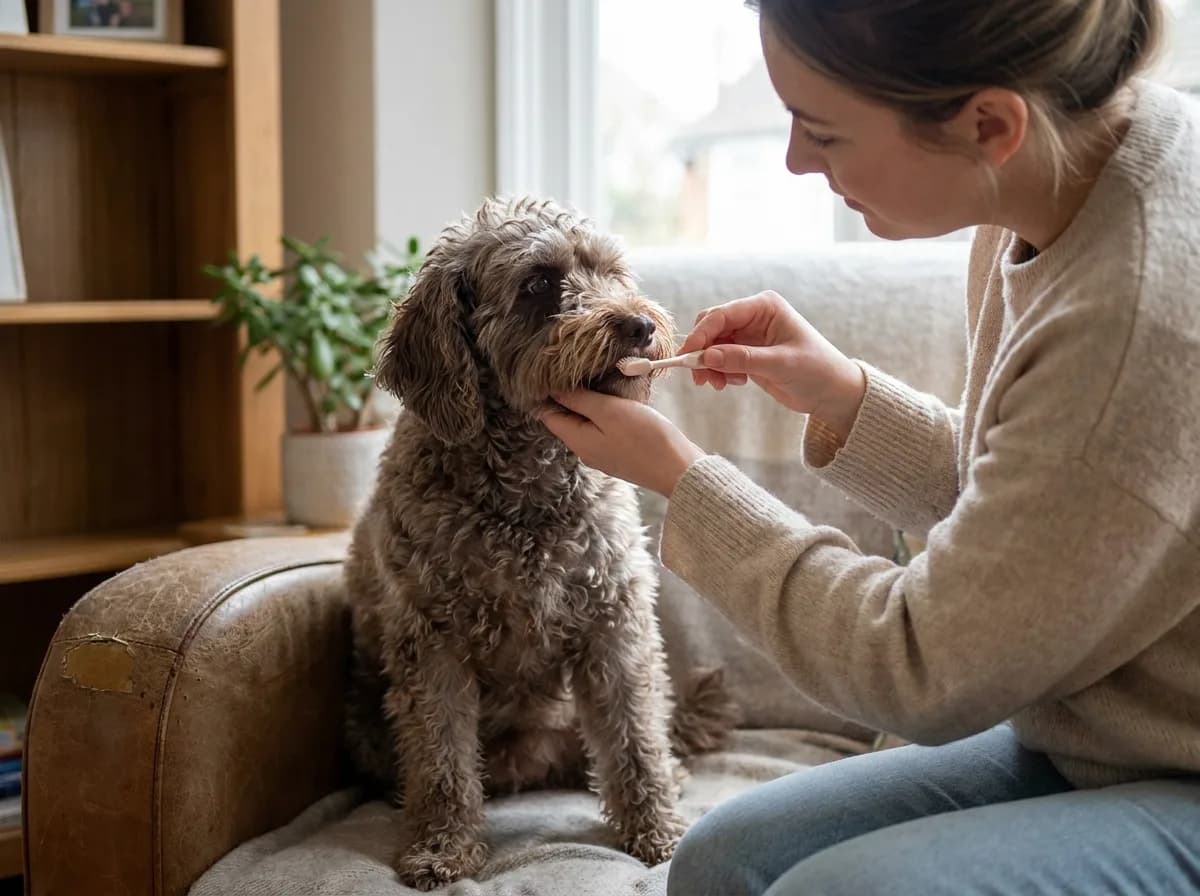
- Introduce gentle mouth, paw, and coat handling in short sessions.
- Keep appropriate activity consistent and adapt it when mobility changes.
- Check skin beneath the coat during routine grooming.
- Ask about new lumps, persistent itch, recurring ear trouble, or painful movement.
For a dental routine your veterinarian considers appropriate, the Virbac C.E.T. Dual-Ended Dog & Cat Toothbrush is one option. Use pet toothpaste and build tolerance gradually. The Jasper 360 Dog Finger Toothbrush & Storage Case offers another format for some dogs; it is an alternative, not an additional requirement. Avoid placing fingers in the mouth of a dog that may bite or has apparent oral pain.

Petful may earn a commission when you click through to Chewy, at no extra cost to you.
Home dental care does not replace a veterinary oral examination or treatment when needed. Choose a method that is both suitable and sustainable. A product cannot help if using it repeatedly creates distress or if the underlying problem requires clinical care.
Coat care supports observation
A maintained coat lets you notice skin changes and handle the dog more comfortably. The aumuca Self Cleaning Slicker Brush is an existing tool to discuss with a groomer for a suitable coat. Use a gentle technique and stop for pain, skin irritation, or tight matting rather than brushing harder.
Grooming products are not treatments for unexplained itch, hair loss, or recurring infection. Ask your veterinarian about those signs. Keeping the coat tidy may make observation easier, but it should never be marketed as a proven way to extend lifespan.
Recognizing senior changes and getting help
An older dog may need adjustments in activity, rest, access, and veterinary monitoring. Some changes develop gradually, so it helps to compare the dog with its own previous routine rather than with another dog of the same age.
Use a senior observation log to note changes in eating, drinking, toilet habits, sleep, movement, social interaction, and apparent comfort. Include when the change began and whether it is improving, worsening, or occurring in a specific situation. A short video of an intermittent movement problem may help the veterinarian understand what happens at home.
| Observation | Useful detail to record |
|---|---|
| Hesitates on stairs | Which direction, frequency, and whether other movement changed |
| Drinks more | Approximate change, timing, and changes in urination |
| Wakes at night | Restlessness, toilet need, vocalization, or other behavior |
| Eats differently | Reduced appetite, dropping food, chewing preference, or nausea signs |
Do not dismiss pain, confusion, loss of appetite, or unusual tiredness as simply old age. The AAHA senior-care guidelines emphasize individualized assessment. Some problems can be managed, and a care plan should reflect what is actually affecting quality of life.
Know when observation is not enough
Severe breathing difficulty, collapse, or a suddenly swollen abdomen with repeated unsuccessful attempts to vomit requires urgent veterinary attention. In particular, AAHA identifies GDV as an emergency. Contact an emergency veterinarian promptly rather than waiting to see whether a home intervention works.
When unsure how urgently a change needs attention, call the clinic and describe the signs, timing, and current medications. Do not delay seeking help while trying to match the symptoms to a breed-specific list.
Planning comfortable senior years
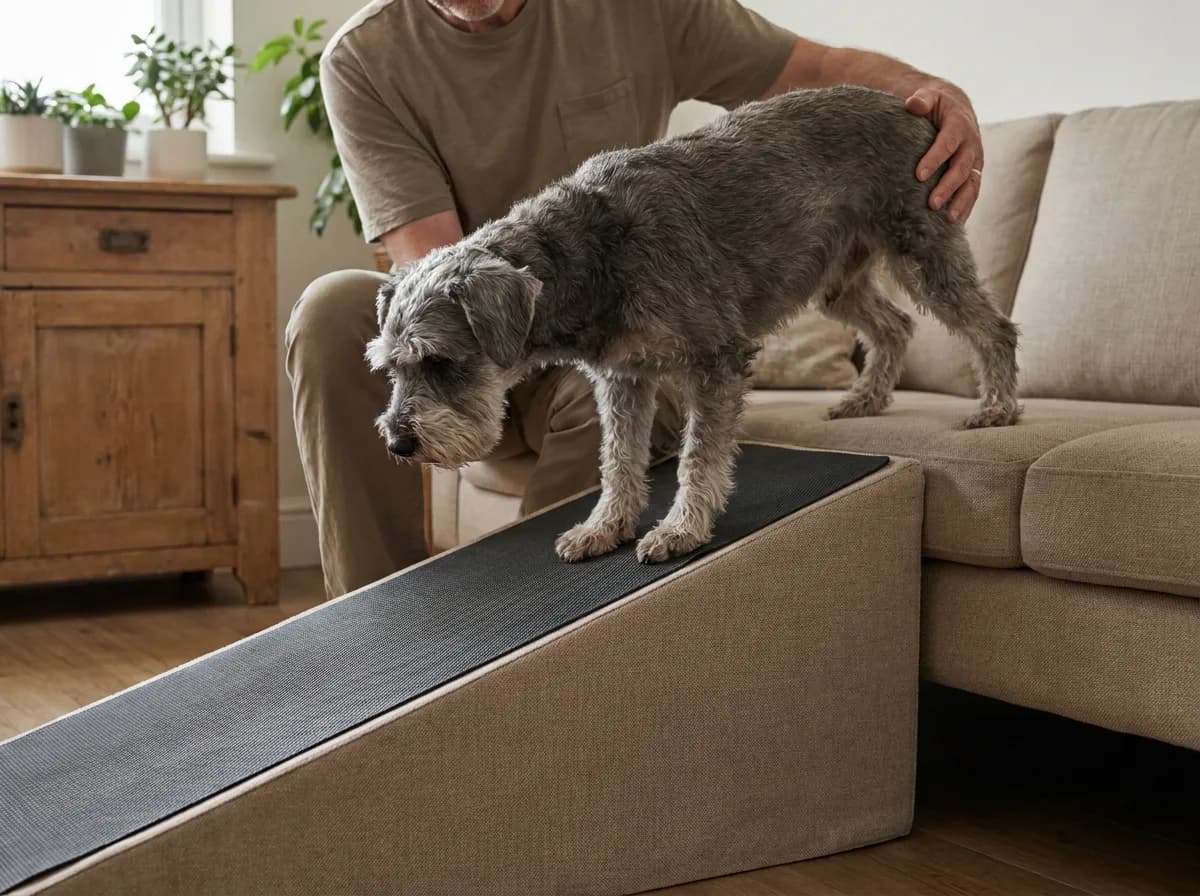
Reassess the home as the dog's needs change. Traction on slippery floors, an easy route to a resting area, and a comfortable bed may reduce everyday difficulties. Introduce equipment gradually and make sure it is stable and appropriate for the dog's size and ability.
A washable Pet Parents Pawtect small blanket makes a favorite resting area easier to maintain. A supervised Outward Hound Lick N’ Flip puzzle can be offered at an easy setting if the dog can comfortably reach and use it; adapting the task matters more than finishing it.
Maintain enjoyable activities in a form the dog can comfortably manage. A shorter exploratory walk or a gentle sniffing game may be more suitable than an old routine that has become tiring. Discuss significant changes with the veterinary team, especially where pain or an underlying condition may be involved.
Bring a veterinary visit checklist
- Current medications and supplements, including amounts actually given.
- Recent weight and the senior observation log.
- Questions about mobility, sleep, appetite, or dental comfort.
- Practical limitations involving stairs, transport, or handling.
- The goals that matter most for the dog's daily comfort and enjoyment.
The veterinary visit checklist helps connect medical decisions with everyday life. If administering a medicine or handling the dog has become difficult, say so. A plan that cannot be carried out comfortably may need an alternative approach.
Financial and practical planning can help too. Know which emergency service you would use, how you would transport the dog, and where records are kept. These preparations do not promise extra years, but they can make difficult moments less chaotic.
Schnoodle lifespan questions
Schnoodles do not all calm down at the same age. Size, temperament, training, sleep, and routine influence how easily a dog settles. Distinguish gradual behavioral maturity from a sudden drop in activity. If a previously active dog becomes unusually quiet, reluctant to move, or tired, describe the change to your veterinarian rather than waiting for it to pass.
A 10-year-old Schnoodle may be in a later life stage, but size, health, and functional changes matter more than a birthday alone. Ask your veterinarian which senior-care priorities apply. Bring observations about movement, appetite, sleep, and comfort so the discussion reflects your dog’s needs rather than a generic age category.
A Schnoodle’s potential downsides include inherited health risks and the continuing cost of veterinary care, grooming, and comfortable handling. A hybrid label does not guarantee fewer illnesses or a longer life. Review family screening records, ask your veterinarian what they establish, and plan for both routine appointments and unexpected treatment rather than budgeting only for the puppy’s arrival.
Schnoodles can learn quickly, but intelligence is not a clinical measure of health or longevity. A dog that stops responding to familiar cues may be distracted, uncomfortable, anxious, or experiencing a sensory change. If the change is new, especially in an older dog, seek an assessment rather than assuming stubbornness.
Chewy’s Schnoodle guide describes breeder puppy prices of $1,500–$4,000. Treat that as an editorial reference range, not a national survey or a current quote; obtain a written price for the dog you are considering. Compare what care is included, then budget separately for preventive appointments, grooming and unexpected treatment. A higher purchase price does not establish better health, and a lower fee does not predict smaller veterinary bills.
BVMS, MRCVS
Dr. Pippa Elliott, BVMS, MRCVS, is a veterinarian with nearly 30 years of experience in companion animal practice. Dr. Elliott earned her Bachelor of Veterinary Medicine and Surgery from the University of Glasgow. She was also designated a Member of the Royal College of Veterinary Surgeons. Married with 2 grown-up kids, Dr. Elliott has a naughty Puggle named Poggle, 3 cats and a bearded dragon.
Sign up for expert-backed reviews and safety alerts all in one place.