Maltese Dog Breed Profile: Complete Guide
The Maltese is a 4-7 pound toy companion with a silky, low-shedding white coat and a bold, affectionate personality. This breed profile covers Maltese size, temperament, grooming, health, and cost, plus how it compares to the Shih Tzu and Bichon.
Petful is reader supported. As an affiliate of platforms like Amazon and Chewy, we may earn a commission when you buy through links on this page. There is no extra cost to you.
The Maltese is a tiny, white-coated toy companion breed that has charmed royalty, artists, and apartment dwellers for more than two thousand years. If you are weighing whether this glamorous little dog belongs in your home, this profile walks through everything that matters: size, temperament, the famous silky coat and what it demands, health problems to plan for, exercise and training, cost, and how the Maltese stacks up against the breeds people most often compare it to. The goal is simple. By the end you should know exactly what daily life with a Maltese looks like and whether it fits yours.
Unlike many toy breeds that were bred down from working stock, the Maltese has been a lap dog and companion for its entire recorded history. That single fact explains most of the breed's personality, its strengths, and its quirks. This is a dog built to be with people.
- 1The Maltese is a 4-7 pound toy companion breed with a hypoallergenic, low-shedding white coat that needs daily brushing and a groomer every 4-6 weeks.
- 2Expect a bold, affectionate, people-focused dog that is highly trainable but prone to separation anxiety and small-dog dental disease.
- 3With good grooming, dental care, and 20-30 minutes of daily activity, a healthy Maltese typically lives 12-15 years.

Sign up for expert-backed reviews and safety alerts all in one place.
Maltese Breed at a Glance
Before the deep dive, here are the core numbers pet parents ask about first. These figures reflect the American Kennel Club breed standard and widely cited veterinary and breed-registry sources.
| Trait | Detail | Notes |
|---|---|---|
| Breed group | Toy group | Bred as a companion, never a worker |
| Height | 7-9 inches at the shoulder | Males and females are close in size |
| Weight | 4-7 pounds | The AKC standard prefers under 7 pounds |
| Life expectancy | 12-15 years | Among the longer-lived toy breeds |
| Coat | Single, long, silky, pure white | No undercoat, so shedding is minimal |
| Shedding | Very low | Often called hypoallergenic |
| Grooming | High | Daily brushing plus grooming every 4-6 weeks |
| Energy level | Moderate | Playful indoors, easily satisfied |
| Good with kids | Yes, with older, gentle children | Fragile around toddlers |
| Trainability | High | Smart and eager, responds to reward-based training |
The headline is that this is a small dog with a big personality and a big coat responsibility. Everything below unpacks what those quick facts mean in practice.
Where the Maltese Comes From

The Maltese is one of the oldest lap dogs in the Western world. Small white companion dogs associated with the central Mediterranean appear in Greek and Roman art and writing going back more than 2,000 years, and the breed is generally linked with the island of Malta, from which it likely takes its name. Aristotle is often credited with an early mention of a tiny Melitan dog, and Roman-era ceramics and mosaics depict small white dogs that look strikingly like the modern Maltese.

Petful may earn a commission when you click through to Chewy, at no extra cost to you.
Whatever the exact origin, one thing is consistent across the historical record. These dogs were prized as companions rather than bred to hunt, herd, or guard. Wealthy Greek, Roman, and later European households kept them as status symbols and cherished pets. By the Renaissance the Maltese had become a fixture in aristocratic portraits, and the breed later became a favorite of British and continental royalty. Mary, Queen of Scots and Queen Elizabeth I are both associated with small white lap dogs of this type.
That long pedigree as a pure companion matters for owners today. The Maltese was selected over centuries for closeness to humans, gentleness, and a compact size that fit on a lap or in a sleeve. When people say the modern Maltese is "clingy" or "needs to be with you," they are describing the exact trait the breed was built for.
- The Maltese is genetically related to the Bichon, Bolognese, and Havanese, all small white companion breeds from the Mediterranean and southern Europe. That shared ancestry is why these breeds look and act so similar, and why the Maltese and the Bichon Frise are so often confused.
Maltese Appearance and Size
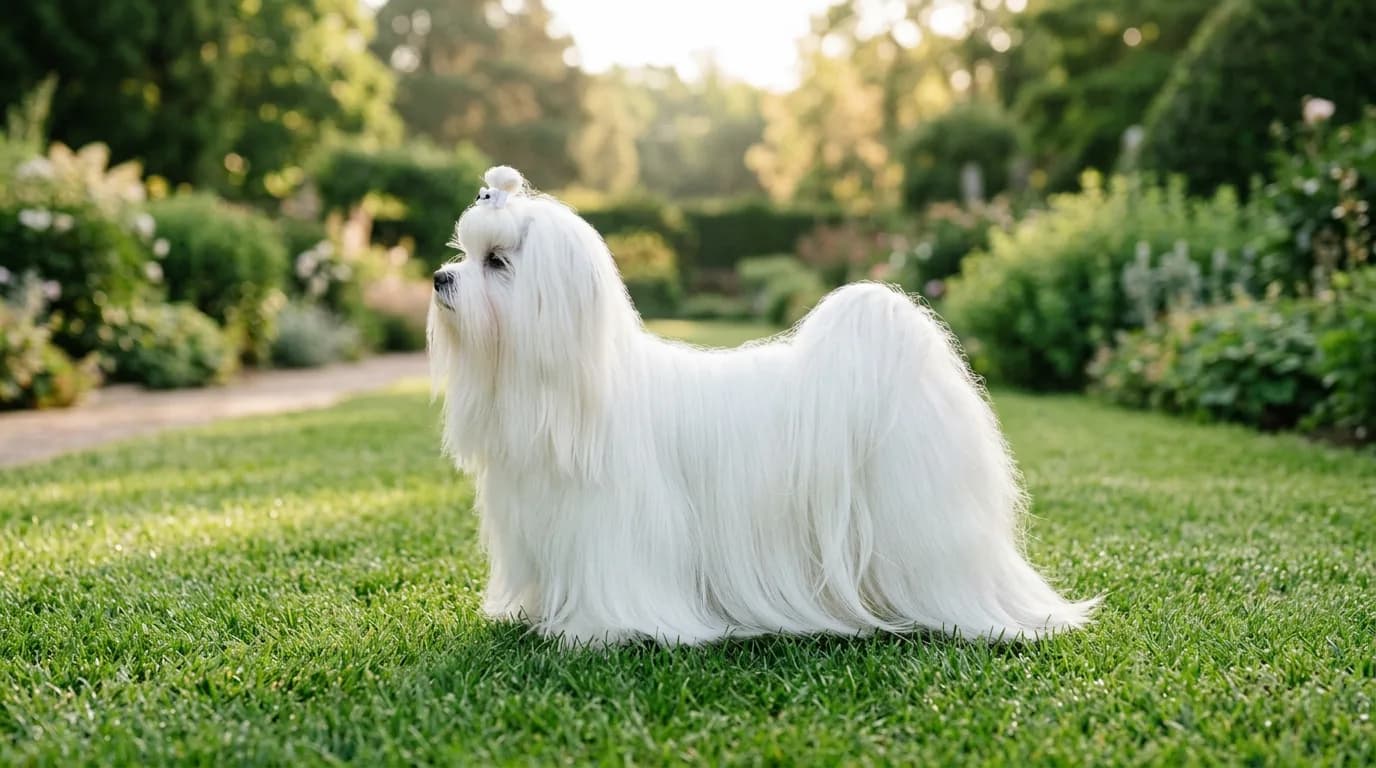
The Maltese is unmistakable: a small, square-bodied dog carried on fine-boned legs, with dark, round, alert eyes, a black nose and lips, and drop ears hidden under a curtain of white hair. Adults stand roughly 7-9 inches at the shoulder and, by the AKC standard, should weigh under 7 pounds, with 4-6 pounds considered ideal.
The signature feature is the coat. A show Maltese carries a single coat of long, straight, silky white hair that parts down the spine and hangs to the floor like a mantle. There is no woolly undercoat, which is the reason the breed sheds so little and is frequently described as hypoallergenic. Pure white is the classic and preferred color, though slight lemon or tan shadings on the ears are permitted in the standard and are not a health concern.
Most pet owners never keep the dramatic floor-length coat. It is stunning in the show ring but impractical for a dog that plays in the yard, and it requires professional wrapping and daily attention to maintain. The vast majority of companion Maltese wear a short, rounded "puppy cut" that keeps the silky texture and the breed's teddy-bear charm while cutting grooming time dramatically.
Do Maltese Shed?
Barely. Because the Maltese has hair rather than a shedding double coat, loose strands tend to stay in the coat instead of dropping onto floors and furniture, which is exactly why it lands on nearly every "best dogs for allergy sufferers" list. No dog is truly 100 percent hypoallergenic, since allergens also come from dander and saliva, but the Maltese produces far less loose hair and dander than a typical double-coated breed. That low shed rate comes with a trade-off: hair that does not fall out must be brushed out, or it mats.
Maltese Temperament and Personality
Ask ten Maltese owners to describe their dog and you will hear the same words: affectionate, bold, playful, and deeply attached. This is a lap dog that thinks it is a large dog. Maltese are lively and confident, often greeting the world with more swagger than their four pounds should allow, and they bond intensely with their people.
That bond is the breed's greatest strength and its main challenge. A well-socialized Maltese is gentle, trusting, and endlessly companionable, happy to nap in your lap and equally happy to trot around the yard chasing a toy. But the same closeness means Maltese do not like being left alone and can develop separation anxiety if they are isolated for long stretches (more on that below).
Maltese are also alert and vocal. They notice everything and will announce visitors, delivery trucks, and squirrels with surprising volume for their size. That watchfulness makes them decent little alarm dogs, but it means barking is a trait to manage from puppyhood, not a surprise to discover later.

A ventilated backpack carrier that keeps your cat secure and close, ideal for walks, vet trips, and travel.
Petful may earn a commission when you click through to Chewy, at no extra cost to you.
Are Maltese Good With Kids and Other Pets?
Maltese generally do well with respectful, older children and can be delightful family dogs. The caution is physical, not behavioral: at 4-7 pounds these are fragile dogs, and a well-meaning toddler can injure one by dropping it, stepping on it, or squeezing it. Homes with very young children need to supervise every interaction and teach kids to sit on the floor to hold the dog rather than pick it up.
With other pets, the Maltese is usually sociable. It tends to get along with other dogs and with cats it has been raised alongside. The one thing to watch is that a bold little dog can pick fights with much larger dogs it should not challenge, so supervision at the dog park is wise.
Grooming a Maltese: What the Coat Really Demands

There is no soft-pedaling this. The Maltese is a high-maintenance grooming breed, and grooming is the single biggest daily commitment of ownership. That silky, non-shedding coat is beautiful precisely because it keeps growing and keeps every loose hair, which means it tangles and mats without consistent care.
Here is what a realistic grooming routine looks like.
- Brush daily. A few minutes with a pin brush and a metal comb every day prevents the mats that form fast in a single coat, especially behind the ears, under the legs, and around the collar.
- Bathe every 1-3 weeks. White coats show dirt, and regular baths with a gentle dog shampoo keep the coat bright. Always brush out tangles before a bath, because water sets mats tight.
- Book a groomer every 4-6 weeks. Professional grooming keeps a puppy cut tidy and handles nails, sanitary trims, and the hair around the eyes and paws.
- Manage tear stains. The reddish-brown staining under the eyes is common in white dogs. Wipe the area daily with a vet-approved tear-stain cloth, keep the face hair trimmed, and ask your vet to rule out a blocked tear duct or eye irritation if staining is heavy.
- Care for the ears. Hair grows inside Maltese ears and traps moisture and wax. Check and clean ears weekly to head off infections.
| Task | How Often | Why It Matters |
|---|---|---|
| Brushing | Daily | Prevents painful mats in the single coat |
| Bathing | Every 1-3 weeks | Keeps the white coat clean and bright |
| Professional groom | Every 4-6 weeks | Maintains the cut, nails, and sanitary areas |
| Tear-stain wiping | Daily | Reduces reddish staining under the eyes |
| Ear cleaning | Weekly | Prevents moisture-related ear infections |
| Nail trim | Every 3-4 weeks | Toy breeds rarely wear nails down naturally |
If daily brushing sounds like a lot, the honest answer is that it is, and it is not optional. A neglected Maltese coat mats down to the skin, which is painful and often has to be shaved off entirely. Many owners happily keep a short puppy cut specifically to make the routine manageable, and that is a completely valid choice.

Presoaked wipes that gently clean the fur and skin around a dog's or cat's eyes, lifting away tear stains, discharge, and daily debris. A quick, no-rinse way to keep the eye area clean between baths. For routine cleaning only.
Petful may earn a commission when you click through to Chewy, at no extra cost to you.
Maltese Exercise and Energy Needs
For such a spirited dog, the Maltese has modest exercise requirements, which is a big part of why it thrives in apartments. Plan on about 20-30 minutes of activity a day, split into a couple of short walks plus indoor play. A Maltese will happily chase a ball down a hallway, learn to fetch, and burn energy in bursts, then curl up for a long nap.
Because they are so small and so people-oriented, mental stimulation matters as much as physical exercise. Short training sessions, food puzzles, and new toys keep a bright Maltese engaged and prevent the boredom that fuels nuisance barking. What you should not do is over-exercise a young or elderly Maltese in extreme heat or cold; their tiny bodies have little buffer against temperature swings, and they can overheat or get chilled quickly.
A good rule of thumb is that a Maltese should finish a play or walk session pleasantly tired, not panting hard or lagging. Because the breed hides fatigue and pushes to keep up with its owner, you are the one who has to call time. Two gentle 10-15 minute walks bracketing the day, plus scattered indoor play and a puzzle feeder, satisfy most Maltese completely and leave them content to nap between sessions.
- Maltese tolerate neither heat nor cold well. In summer, walk in the cooler morning and evening hours and watch for overheating. In winter, a sweater is genuinely useful for a dog this small and this thin-coated, and potty breaks should be quick.
Training a Maltese
The Maltese is intelligent and eager to please, which makes it very trainable when you use the right approach. Reward-based training with treats, praise, and play works beautifully. These dogs are sensitive, so harsh corrections backfire and can create fear or shutdown behavior. Keep sessions short, upbeat, and consistent.
Two training areas deserve special attention with this breed.
House-training. Small dogs are famously slower to house-train, partly because tiny bladders need frequent trips and partly because accidents are easy to miss on the way to becoming a habit. Consistency, a strict schedule, crate training, and immediate rewards for outdoor success make the difference. Many owners also teach a Maltese to use an indoor potty pad or litter setup, which is a reasonable option for an apartment dog during bad weather.
Barking. The same alertness that makes Maltese good watchdogs makes them prone to over-barking. Teach a "quiet" cue early, avoid accidentally rewarding barking with attention, and give the dog enough mental work that it does not bark out of boredom.
Maltese Health Problems
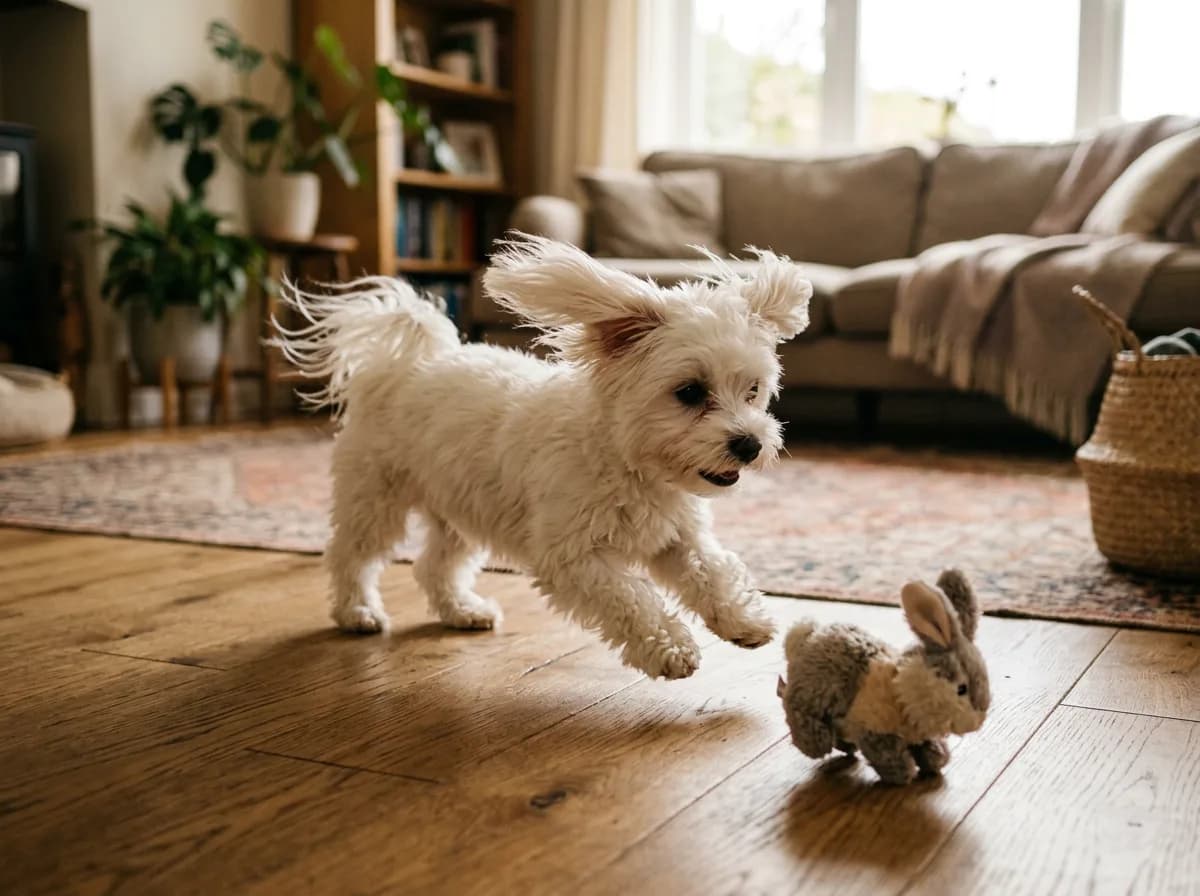
Maltese are generally healthy and long-lived, but like all purebred dogs they have breed-associated conditions worth knowing before you bring one home. Buying from a responsible breeder who screens their breeding dogs, or adopting through a reputable rescue and getting a full vet workup, is the best way to stack the odds in your favor.
The most commonly discussed Maltese health concerns include:

Petful may earn a commission when you click through to Chewy, at no extra cost to you.
- Dental disease. This is the big one. Small mouths crowd teeth, and toy breeds are highly prone to periodontal disease. Daily tooth brushing and regular professional dental cleanings are essential, not extras.
- Luxating patella. The kneecap can slip out of its groove, causing a skip in the gait or intermittent lameness. Mild cases are managed conservatively; severe cases may need surgery.
- Collapsing trachea. The windpipe can weaken and flatten, producing a distinctive honking cough. Using a harness instead of a neck collar reduces pressure on the trachea and is a simple, meaningful precaution for any Maltese.
- Portosystemic (liver) shunt. An abnormal blood vessel that bypasses the liver is seen more often in small breeds, including the Maltese, and can cause poor growth and neurological signs. It is diagnosable and often treatable.
- Patent ductus arteriosus and other heart issues. A specific congenital heart-vessel defect and general valve disease appear in the breed and are screened for by good breeders and caught on routine vet exams.
- Eye conditions, including progressive retinal atrophy and general tear-duct and eye irritation issues that also drive tear staining.
- White dog shaker syndrome (reverse sneezing and tremor conditions). Small white breeds can show episodes of full-body tremor and bouts of reverse sneezing, most of which are manageable with veterinary guidance.
- Hypoglycemia in puppies. Very young, very small Maltese can drop dangerously low in blood sugar if they miss meals, so frequent feeding of a quality puppy diet is important in the early months.
- Periodontal disease is the most common and most preventable chronic problem in toy breeds like the Maltese. Brush your dog's teeth daily with canine toothpaste, provide vet-approved dental chews, and schedule professional cleanings on your veterinarian's recommendation. Untreated dental disease is painful and is linked to heart, kidney, and liver problems. This is health information, not a substitute for your own veterinarian's advice.
None of this list should scare you off. It should make you a prepared owner. A Maltese from health-tested parents, fed well, kept lean, exercised sensibly, and given real dental care routinely lives 12-15 years, which is a long, rich life for a dog.
Are Maltese Hypoallergenic?
Effectively, yes, more than most breeds. The single, low-shedding coat releases far less loose hair and dander than a double-coated dog, which is why allergy-prone households often tolerate a Maltese well. The honest caveat is that no dog is completely allergen-free, because dander and saliva proteins still exist. If someone in your home has allergies, spend real time around an adult Maltese before committing.
Maltese Diet and Feeding
Feed a Maltese a high-quality diet formulated for small or toy breeds, which typically means smaller kibble and calorie-dense nutrition to match a fast metabolism. Because the breed is so light, portions are small and precise, and it is genuinely easy to overfeed a dog this size. Even an extra ounce a day adds up on a 5-pound frame, and excess weight strains tiny joints and a small heart.
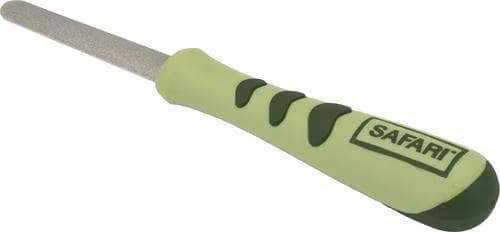
Petful may earn a commission when you click through to Chewy, at no extra cost to you.
Practical feeding guidance for the breed:
- Divide the daily ration into two or three small meals, especially for puppies at risk of low blood sugar.
- Measure every meal rather than free-feeding, and count treats toward the daily total.
- Keep your Maltese lean; you should be able to feel the ribs without a fat layer over them.
- Provide constant access to fresh water, and ask your vet before making diet changes.
- Training a smart dog means using treats, and a 5-pound dog reaches its treat limit fast. Break treats into tiny pieces, lean on the dog's own kibble as training rewards, and remember that a few too many "just one more" biscuits is how toy breeds gain weight.
Cost of Owning a Maltese
A Maltese is a real financial commitment, both up front and over its long life. Purebred Maltese puppies from responsible breeders commonly cost well into four figures, and that price reflects genuine costs the breeder carries. Adoption through a breed rescue is far less expensive and gives an adult dog a second chance.
Why the breed carries a premium is worth understanding, both to set your budget and to spot a bad deal.
| Cost | Roughly | Why |
|---|---|---|
| Purchase from a reputable breeder | High four figures common | Health testing, small litters, and careful rearing |
| Professional grooming | Every 4-6 weeks | The coat requires ongoing professional care |
| Routine veterinary care | Annual and as needed | Exams, vaccines, and preventives |
| Dental care | Ongoing | Cleanings and daily home care to prevent disease |
| Supplies and food | Ongoing but modest | Small dog, small portions, but quality matters |
The recurring costs, especially grooming and dental care, are the ones new owners underestimate. Budget for them from day one and the long lifespan becomes a joy rather than a surprise.
Maltese vs. Similar Breeds

Because so many people cross-shop the Maltese against other small white or toy breeds, here is a clear-eyed comparison of the matchups that come up most.
Maltese vs. Shih Tzu
These two toy breeds are frequently compared, and neither is "better" in the abstract; the right pick depends on your household. The Maltese is smaller (4-7 pounds versus roughly 9-16 pounds for a Shih Tzu), has a single silky coat in pure white, and tends to be more delicate and more people-clingy. The Shih Tzu is a sturdier, stockier dog with a flat face and a dense double coat that comes in many colors. Because of that flat face, Shih Tzu are brachycephalic and can have breathing and heat-tolerance issues the longer-nosed Maltese does not. If you want the smallest possible lap dog and do not mind delicacy, the Maltese fits. If you want a slightly more robust small dog and can manage a flat-faced breed's needs, the Shih Tzu is a strong choice. Both are affectionate companions that suit apartment life.
Maltese vs. Bichon Frise
The Maltese and the Bichon Frise share ancestry and a white, low-shedding coat, so they are easy to confuse. The Bichon is slightly larger and has a curly, plush double coat that is styled into a rounded, powder-puff look, while the Maltese has a straight, flat, silky single coat. Temperamentally both are cheerful and people-oriented, though many owners find the Bichon a touch more outgoing and boisterous and the Maltese a touch more devoted to one person. Both need serious grooming. If you love the powder-puff look and a bouncier vibe, choose the Bichon; if you prefer straight silky hair and a slightly more velcro companion, choose the Maltese. You can read more in our Bichon Frise breed profile.
| Feature | Maltese | Shih Tzu | Bichon Frise |
|---|---|---|---|
| Weight | 4-7 lbs | 9-16 lbs | 12-18 lbs |
| Coat | Straight, silky, single | Long, dense, double | Curly, plush, double |
| Face | Long muzzle | Flat (brachycephalic) | Medium muzzle |
| Colors | White | Many | White |
| Shedding | Very low | Low | Very low |
Is a Maltese the Right Dog for You?
A Maltese is an outstanding fit for the right home and a poor fit for the wrong one. Be honest about which you are.
A Maltese is likely a great match if you want a small, affectionate, apartment-friendly companion, you are home often or can arrange company for the dog, you enjoy or can afford regular grooming, and you are committed to dental care and gentle, reward-based training. The breed rewards attentive owners with years of devoted companionship.
A Maltese is probably not the right choice if you are away from home for long workdays with no plan for the dog, you have very young or rough children and cannot supervise closely, you want a low-maintenance coat, or you want a rugged dog for hiking and outdoor sports in tough weather. There is no shame in that; it just points you toward a different breed.
- Maltese and Maltese mixes turn up in breed-specific rescues and shelters more often than people expect, including wonderful adult dogs whose grooming needs became too much for a previous owner. A reputable rescue vets the dog's health and temperament and matches you thoughtfully. If you are set on a puppy, insist on a breeder who health-tests both parents and lets you meet them.
Related Dog Breed Profiles
If you are still comparing companions, these Petful breed profiles are a good next read. The Bichon Frise breed profile covers the Maltese's closest curly-coated cousin. For a completely different size and temperament, the Old English Sheepdog breed profile shows what a big, shaggy family dog asks of you. And if coat color is what fascinates you, our guide to Rhodesian Ridgeback colors breaks down how genetics shape a very different coat. You can also browse all of our dog care guides for training, grooming, and health articles that apply to any breed.
Frequently Asked Questions About the Maltese
Maltese Life Stages: Puppy, Adult, and Senior Care
A Maltese changes a great deal across its long life, and knowing what each stage brings helps you plan ahead. In the first year the coat is softer and shorter, gradually growing into its adult silky texture, so a young Maltese often needs less intensive grooming than it will as an adult. Watch the mouth closely during puppyhood. Like many toy breeds, Maltese frequently keep retained baby teeth after the adult teeth come in, which crowds the bite and traps food against the gums. Your vet may recommend removing those stubborn deciduous teeth, often at the spay or neuter visit.
An adult Maltese, from roughly one to eight years old, settles into a steady routine, its full-length coat, and its full grooming demands. This is the stretch where consistent dental care and careful weight control pay the biggest dividends.
Senior Maltese, generally eight years and up, need a few thoughtful adjustments. Aging small dogs commonly develop heart-valve changes, so an annual exam that listens for a murmur matters more with each year. Eyes may show a normal bluish haze (nuclear sclerosis) or true cataracts, any earlier dental neglect compounds, and a slower metabolism usually means trimming portions to keep the dog lean. Softer food, a ramp up to a favorite couch, and warm bedding all help an older Maltese stay comfortable.
Common Myths About the Maltese
A few persistent misconceptions steer people wrong on this breed.
- "A white coat means the dog is deaf." Not for the Maltese. Its whiteness does not come from the piebald or merle genes linked to congenital deafness in some other breeds, so the Maltese is not considered a deafness-prone breed.
- "A lap dog does not need training." The Maltese is bright and driven and genuinely excels at obedience, rally, and agility. Skipping training simply produces a barky, unmannered small dog, not a calmer one.
- "It never sheds, so grooming is optional." The low shed rate is the exact reason grooming is not optional. Hair that does not fall out mats instead.
- Do not let the size fool you. Well-trained Maltese compete in agility and rally and volunteer as therapy dogs in hospitals and schools. Giving that bright mind a job is one of the best ways to prevent boredom barking.
Health Screening: Questions to Ask a Maltese Breeder
Responsible Maltese breeders test their breeding dogs and share the results, so screening paperwork is one of the clearest ways to separate a serious breeder from a backyard operation. Before you commit to a puppy, ask to see documentation for the national breed club's recommended health screenings, which for the Maltese center on the knees, heart, and eyes.
- Patella evaluation for luxating patella (the slipping kneecap common in toy breeds).
- Cardiac evaluation for congenital and valve disease.
- Eye examination by a board-certified veterinary ophthalmologist.
- Bile acid testing, which many breeders add to screen for liver (portosystemic) shunt.
Ask to meet the mother, ask how long the dogs in her line typically live, and treat a breeder who offers none of this, or a suspiciously low price, as a warning sign rather than a bargain.
Related on Petful
- Small Dog Breeds: 30 Tiny Companions and How to Choose
- Schipperke: Full Breed Profile and Owner Guide
- Poodle Puppies Breed Profile: Essential Facts
- The 7 Types of Dogs: Breed Groups Explained
Yes, primarily because of grooming. The Maltese has a single, non-shedding silky coat that mats without daily brushing and needs a professional groomer every 4-6 weeks, plus daily tear-stain wiping and diligent dental care. Its exercise needs are modest, so a Maltese is not high-maintenance in terms of activity, but it is a genuinely high-maintenance breed to keep clean, tangle-free, and healthy. Owners who keep a short puppy cut make the coat far more manageable.
The pros are a small, apartment-friendly size, an affectionate and playful people-focused temperament, a low-shedding coat that suits many allergy sufferers, high trainability, and a long 12-15 year lifespan. The cons are demanding daily grooming, a tendency toward separation anxiety and barking, fragility around young children and larger dogs, breed-linked dental and orthopedic issues, and a higher purchase price. For an attentive owner who is home often, the pros usually outweigh the cons.
Neither is universally better; they suit different homes. The Maltese is smaller (4-7 pounds), has a straight silky single coat, and is more delicate and more clingy. The Shih Tzu is sturdier (9-16 pounds), has a dense double coat in many colors, and is brachycephalic, meaning its flat face can bring breathing and heat-tolerance concerns the longer-nosed Maltese avoids. Choose the Maltese for the smallest possible lap dog; choose the Shih Tzu for a more robust small companion, provided you can manage a flat-faced breed's needs.
Maltese puppies from responsible breeders command high prices because the breed is costly to produce well. Litters are small, the parents undergo health testing for heart, knee, eye, and liver conditions, and the puppies need careful early rearing and socialization. Steady demand for a famous, long-established toy breed adds to the price. Much of the lifetime cost also comes after purchase, in ongoing professional grooming and dental care. A cut-rate Maltese is often a warning sign of a puppy mill.
The main downsides are the intensive grooming the coat demands, a strong tendency toward separation anxiety when left alone too long, alert barking that must be managed early, and physical fragility that makes the breed risky around toddlers and boisterous large dogs. The breed is also prone to dental disease, luxating patella, and a collapsing trachea. None of these are dealbreakers for a prepared owner, but they are real commitments of time, money, and attention.
No. The Maltese was bred for centuries to be a constant companion and is one of the breeds most prone to separation anxiety. Left alone all day, a Maltese is likely to become stressed, bark excessively, and may develop destructive or house-soiling behaviors. If you work long hours, plan for a dog walker, doggy daycare, a pet sitter, or a companion at home. This is not a breed that copes well with routine long isolation.
Eight hours is too long for most Maltese, and it is far too long for a puppy, whose small bladder cannot wait that length of time. An adult Maltese might tolerate a shorter workday if it has been gradually and positively conditioned to alone time, has a safe space, and gets a midday break, but a routine eight-hour stretch alone risks anxiety and accidents. Building up alone-time tolerance slowly from puppyhood, plus a midday walk or daycare, is the realistic solution.
There is no single answer, because "calm" depends on the individual dog, its training, and its exercise, but several breeds are widely regarded as gentle and easygoing, including the Cavalier King Charles Spaniel, the Bichon Frise, the Greyhound, the Bernese Mountain Dog, and the Maltese itself when well-socialized and given companionship. The Maltese is affectionate and can be calm indoors, though its alertness and barking mean it needs early training to reach its calmest, best-mannered self.
The Bottom Line on the Maltese
The Maltese earns its 2,000-year run as a companion. It is affectionate, bold, portable, long-lived, and one of the most allergy-friendly breeds you can own. The trade-off is honest work: a coat that needs daily attention, teeth that need daily care, and a heart that needs company. Give a Maltese those three things and you get a devoted little shadow that will happily spend the next decade and a half at your side. For the owner who wants exactly that, few breeds do it better.

Kristine Lacoste has been researching dog and cat breeds for nearly a decade and has observed the animals up close at dog shows in both the United States and the United Kingdom. She is the author of the book One Unforgettable Journey, which was named as a finalist for a Maxwell Award from the Dog Writers Association of America, and was host of a weekly pet news segment on the National K-9 Academy Radio Show. In addition, she was the New Orleans coordinator for Dogs on Deployment, a nonprofit that helps military members and their pets, for 3 years. Kristine has researched and written about pet behaviors and care for many years. She holds a bachelor’s degree in psychology, another bachelor’s degree in English and a Master of Business Administration degree.
Sign up for expert-backed reviews and safety alerts all in one place.