Bichon Frise: Temperament, Size, Lifespan and Care
A Bichon Frise can be an affectionate, playful companion. Understand its adult size, lifespan, grooming workload, health considerations and household needs before choosing one.
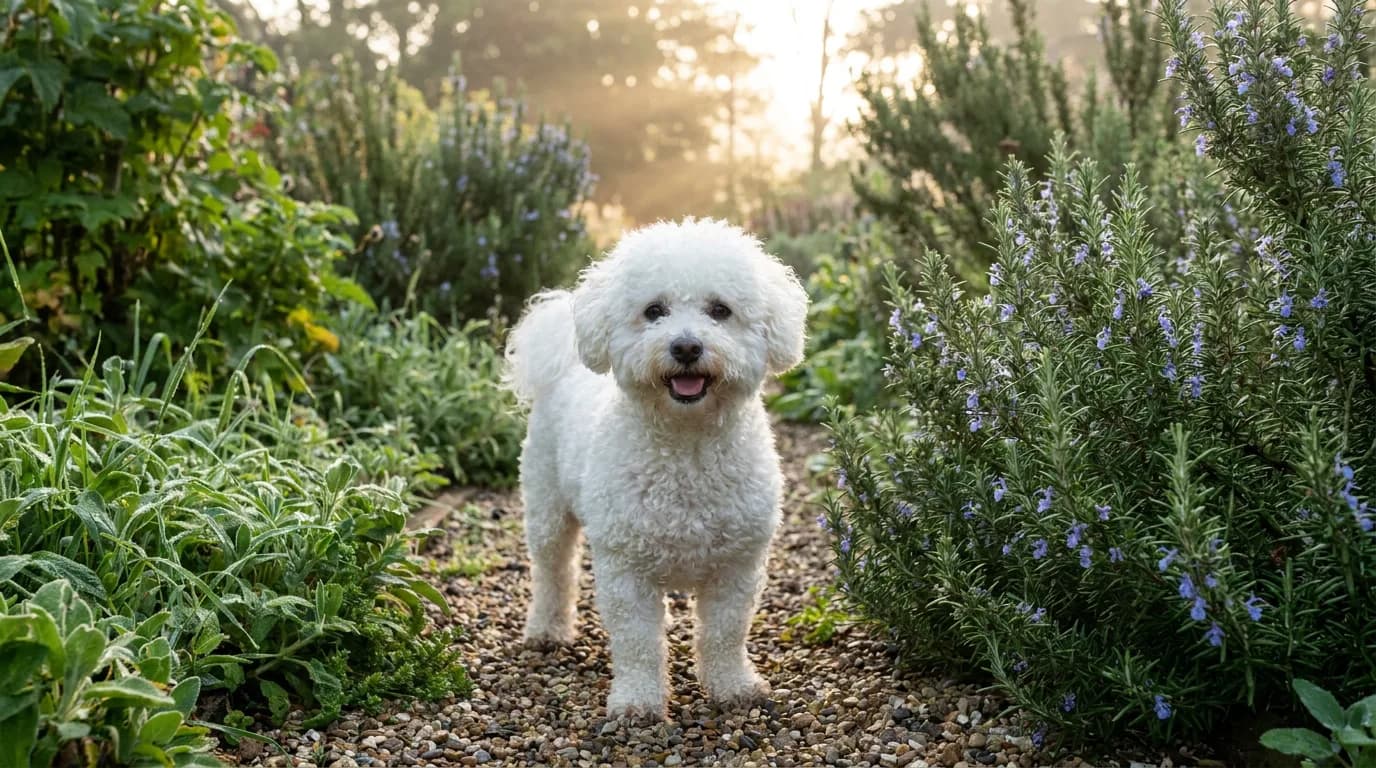
White Bichon Frise standing on a gravel garden path among green plants.
Petful is reader supported. As an affiliate of platforms like Amazon and Chewy, we may earn a commission when you buy through links on this page. There is no extra cost to you.
The Bichon Frise is a small, sociable companion with a curly white coat, a playful streak and a surprisingly substantial grooming routine. It can suit an apartment, a family or a first-time owner who has time for training and everyday care. Its small size does not make it a low-maintenance dog.
The most useful question is whether your ordinary week has room for this breed. Think beyond the puppy photograph: who will brush the coat, provide company, handle toilet breaks and pay for regular grooming when life gets busy?

Sign up for expert-backed reviews and safety alerts all in one place.
Bichon Frise breed profile at a glance
The American Kennel Club's Bichon Frise profile lists an adult height of 9.5 to 11.5 inches, weight of 12 to 18 pounds and life expectancy of 14 to 15 years. These are breed reference ranges, not a promise about a particular puppy or a target every adult must reach.
- 1Typical adult size: 12 to 18 pounds and 9.5 to 11.5 inches at the shoulder.
- 2Typical life expectancy: 14 to 15 years, with substantial individual variation.
- 3Best fit: people who enjoy a close companion and can sustain coat care, training and daily activity.
- 4Main commitments: grooming, reliable company, preventive care and consistent household rules.
The breed belongs to the AKC Non-Sporting Group. Unlike a terrier developed for independent hunting or a herding breed selected for sustained work, the Bichon's modern role centers on companionship. That history helps explain its appeal, but it does not replace an assessment of the individual dog's confidence, health and experience.
Ask an adoption counselor or breeder how the dog behaves during ordinary activities: settling while a person works, meeting unfamiliar visitors, walking on a leash and accepting gentle handling. A description of those moments is more useful than a blanket promise that every Bichon is cheerful or easy.
How to pronounce Bichon Frise
Bichon Frise is commonly pronounced BEE-shon free-ZAY in English. You may also see the French spelling, Bichon Frisé. The name refers to a small curly-coated dog; it does not identify a separate miniature variety or a special haircut.
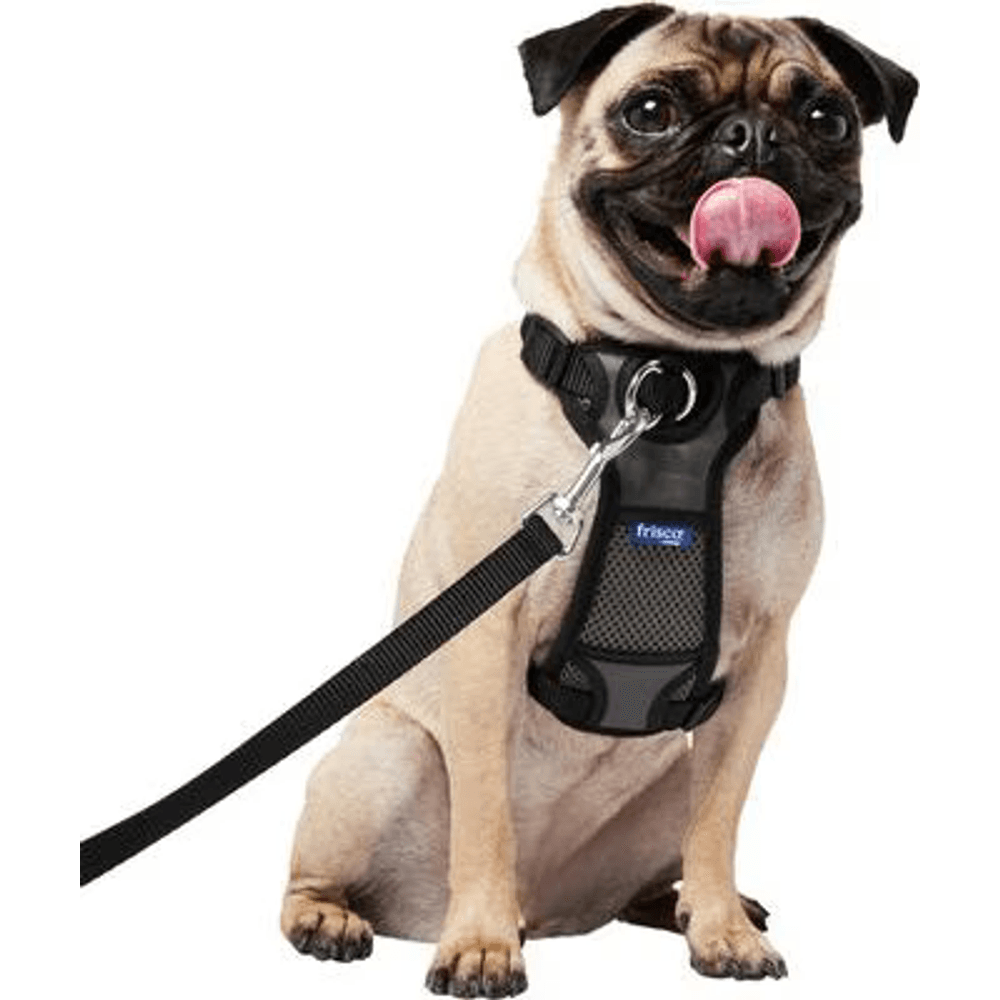
A budget-friendly padded no-pull harness that keeps leash pressure off a coughing dog's neck and windpipe by distributing it across the chest. A simple, affordable way to protect an irritated airway or a collapsing trachea on every walk.
Petful may earn a commission when you click through to Chewy, at no extra cost to you.
The Bichon Frise's history lies within a family of small companion dogs associated with the Mediterranean and later European homes and courts. Related names can be confusing when you are searching listings. Maltese, Havanese and Bolognese are distinct breeds, and a Bichon crossed with another breed is a mix, even if a seller uses a familiar Bichon nickname.
When records use different spellings, match the dog's identity, parentage and veterinary information rather than assuming an unusual label means an unusual breed. Registration can document ancestry; it is not, by itself, evidence of good health or responsible care.
Bichon Frise size and adult weight
A full-grown Bichon is small enough to carry when necessary, but it needs room to walk, stretch, play and rest undisturbed. Its rounded haircut can make its body look larger than it is. Judge harness fit and body condition beneath the coat, not from the outer silhouette.
For everyday equipment, take actual measurements:
- Measure the chest where the harness manufacturer specifies.
- Choose a bed long enough for the dog to lie on its side comfortably.
- Check that a carrier allows the dog to turn and settle normally.
- Recheck fit as a puppy grows or an adult's weight changes.
A Frisco padded no-pull harness in small is one option to compare with your dog's chest measurements. The size name alone is not a fit guarantee, and any harness still requires loose-leash training.
For a puppy, the parents' sizes provide useful context, but an exact adult weight forecast is uncertain. Terms such as mini, toy and teacup do not create separate AKC Bichon varieties. Be cautious about choosing solely for the smallest possible size, especially when that selling point distracts from health records and how the puppy was raised.
An adult outside a published weight range is not automatically unhealthy. A veterinarian should assess its build, muscle and body condition. A thick coat can hide weight gain, so use regular weigh-ins and hands-on checks rather than waiting until a photograph looks different.
Bichon Frise colors and coat appearance
The Bichon's familiar appearance comes from a white double coat: a softer undercoat beneath a coarser, curly outer coat. Grooming creates the rounded outline associated with the breed. A pet trim can look quite different from a full show coat while belonging to the same breed.
The AKC recognizes white and white with buff, cream or apricot. Light shading is different from a predominantly dark coat. Color labels in a sales advertisement should be checked against the breed standard and the dog's records, especially when a seller charges extra for a supposedly rare color.

A black or predominantly brown Bichon Frise puppy does not match those accepted colors. Light cream or apricot shading is different from an all-over dark coat. Ask what supports the breed claim and inspect the records; photographs alone cannot establish whether the puppy is a Bichon, a mix or another breed. Persistent tear staining also deserves a care discussion rather than being treated as a new coat color.
The coat should be assessed in normal light. Indoor lighting, damp hair and staining can change how white or cream looks in a photograph. A picture cannot establish parentage, rule out a mix or tell you whether a dog is healthy.
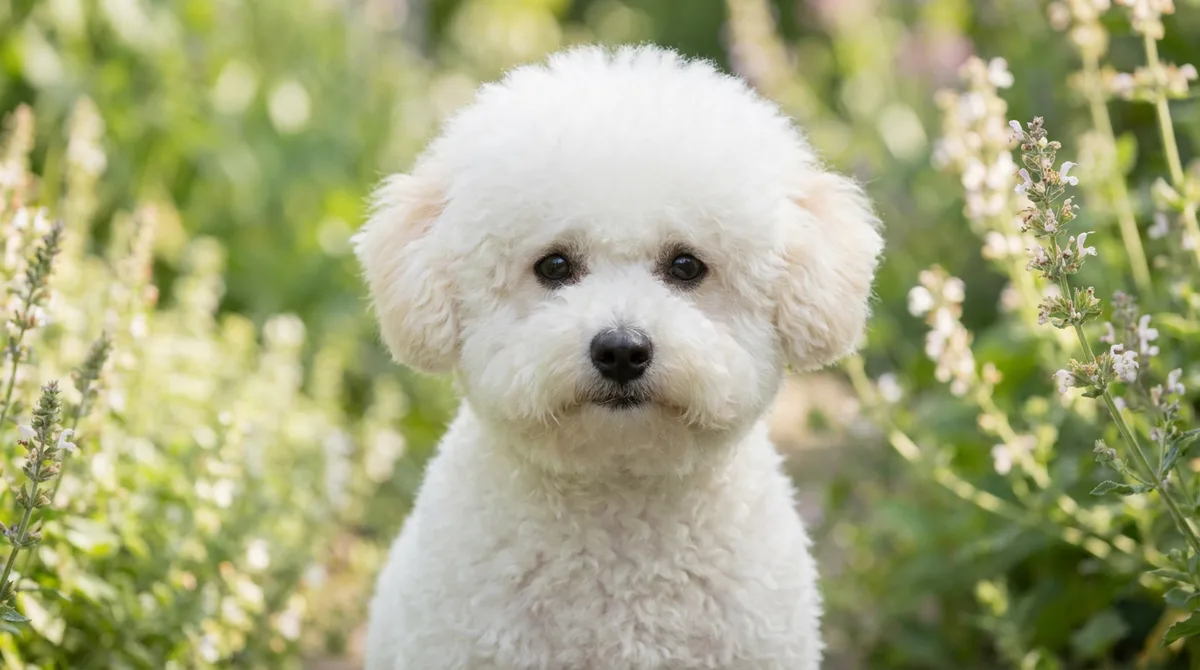
When meeting a dog, look beyond presentation:
- Ask whether the coat is maintained comfortably between appointments.
- Notice whether the dog accepts ordinary touch without flinching or avoiding it.
- Ask about persistent staining, itching or skin changes rather than assuming they are cosmetic.
- Separate the haircut you prefer from the care you can realistically maintain.
A fluffy appearance is not a reason to preserve painful mats. A shorter, comfortable coat is a better choice than a style the household cannot keep free of tangles.

Soft chicken-flavor training rewards in a larger bag for frequent practice. Break rewards into appropriate pieces for your dog.
Petful may earn a commission when you click through to Chewy, at no extra cost to you.
Bichon Frise temperament and personality
Many Bichons enjoy being involved in family life. They may follow people between rooms, solicit play and learn household routines quickly. Their sociability is a strong reason people choose them, but it also means the dog's experience of time alone deserves attention.
Playfulness is not the same as constant excitement. Help a Bichon learn that relaxing nearby is rewarding, too. A comfortable resting place and a predictable pattern of walks, meals, play and quiet time make the day easier to understand.
Useful temperament questions include:
- Does the dog recover after an unfamiliar noise?
- Can it disengage from play and settle?
- How does it respond to respectful visitors?
- Does it seek contact, avoid it or become overwhelmed?
- What support does it need when a familiar person leaves?
Breed descriptions summarize tendencies; they cannot predict every response. A shy Bichon should not be pushed into greetings because the breed is described as friendly. Let the dog approach at its own pace and provide a place to retreat. An outgoing one still needs boundaries around jumping, mouthing and demanding attention.
Do Bichons like to be cuddled?
Many Bichons seek affectionate contact, but let the individual dog choose how close and for how long. Sitting beside you, leaning against a leg and climbing into a lap are different preferences. Offer gentle contact, pause and see whether the dog seeks more. Moving away, turning its head or becoming tense is a reason to give it space, not to hold it tighter because the breed is supposed to enjoy cuddling.
Is a Bichon Frise a good family dog?
A Bichon Frise can be a good family dog when the adults supervise interactions and take responsibility for care. Small dogs can be injured by rough handling, and even a tolerant dog needs a way to leave an interaction. Teach children to invite contact rather than chase, grab or carry the dog.
| Household question | A workable plan | Reason to pause |
|---|---|---|
| Time away | Named backup care for long days | Everyone assumes someone else will return |
| Coat maintenance | Daily handling plus a grooming budget | Coat care depends on spare time appearing |
| Children | Adults supervise and protect rest areas | The dog is expected to tolerate carrying or teasing |
| Training | Everyone uses the same cues and rewards | Different rules from different family members |
| Unplanned expenses | A reserve or appropriate coverage plan | Routine costs already exceed the budget |
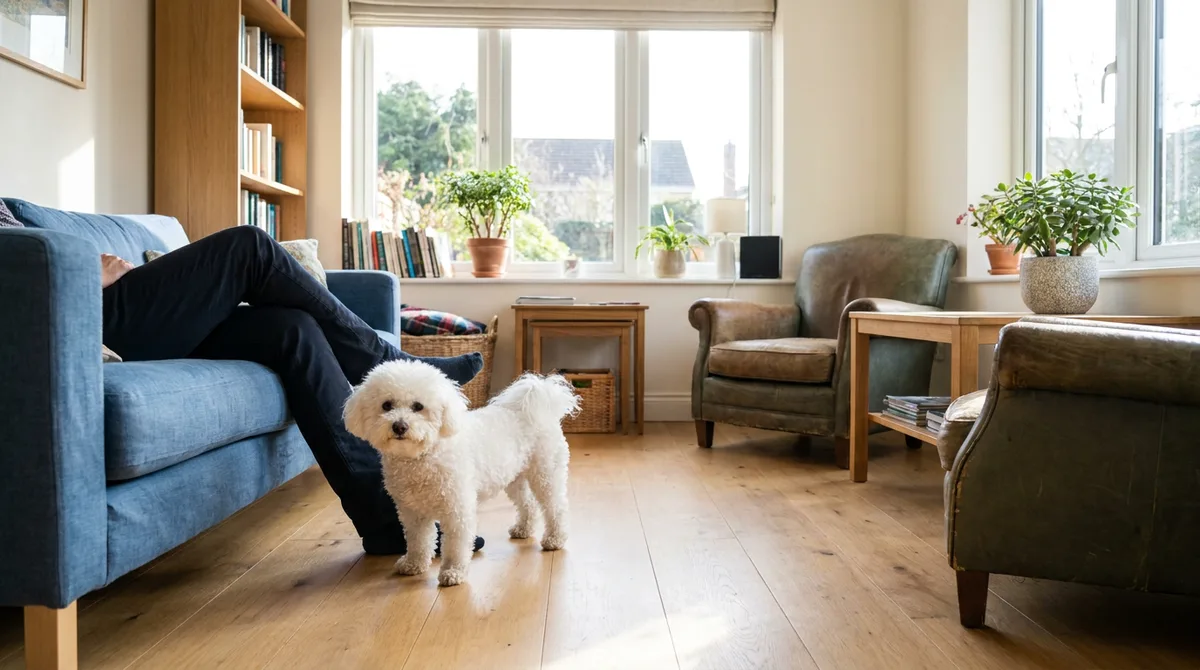
Make the arrangements concrete before the dog arrives. Put the resting area somewhere the dog can sleep without being stepped over, agree on who handles early toilet trips and choose a backup caregiver who is actually available. A busy home can work well when its activity is predictable and the dog can take breaks.
Household fit also includes the adults' preferences. Someone who wants an affectionate companion may enjoy a Bichon's involvement, while someone who values long stretches without interruption may find the same behavior demanding. Discuss those differences honestly before choosing a dog.
Weigh the Bichon Frise's pros and cons against your daily routine. Its compact size and interest in people can be appealing; the grooming budget, supervision and need for dependable company can be demanding. The household-fit table helps turn those tradeoffs into decisions about backup care, coat maintenance and children's interactions.
Bichon Frise downsides most owners underestimate
The main downsides of a Bichon Frise are the grooming budget, the time needed for coat care, possible difficulty coping with long periods alone and the consistency required for training. Low shedding can reduce the hair you see on furniture while leaving you with more hands-on maintenance of the dog itself.
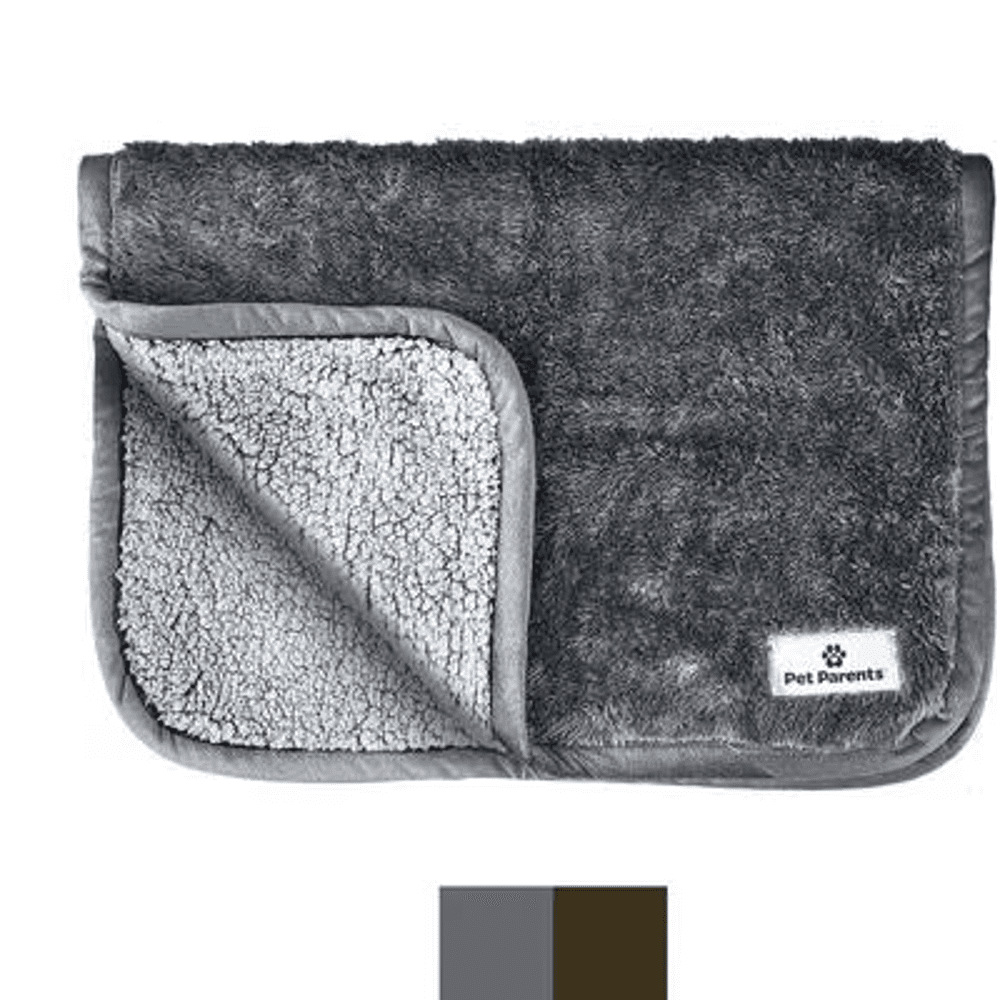
A plush, waterproof sherpa blanket that gives a cold or shivering dog a warm, cozy layer to curl into. The hidden waterproof lining protects the bed, couch, or car seat, and the whole thing is machine washable.
Petful may earn a commission when you click through to Chewy, at no extra cost to you.
Consider these tradeoffs as ongoing responsibilities:
- Coat care cannot wait indefinitely. Tangles can develop where hair rubs around the legs, harness and ears.
- Toilet training needs a plan. Small size does not excuse an inconsistent schedule or unclear supervision.
- Noise may matter in close housing. Alert barking can become a habit when the dog repeatedly practices it at windows or hallway sounds.
- Companionship has to fit the workweek. Buying toys does not replace human care or resolve distress about being left.
These are reasons to prepare, not reasons to dismiss the breed. Ask a groomer about a manageable trim, plan predictable toilet opportunities and decide how you will cover long days. If those arrangements are unrealistic now, waiting can be kinder to both the household and the dog.
Male or female Bichon Frise
Neither a male nor a female Bichon is automatically the better companion. Individual temperament, early experience, health and the match with your home are more useful selection criteria than claims that one sex is always calmer, more affectionate or easier to train.
Ask about the actual dog: how it handles visitors, grooming, other animals and time alone. For an adult, foster-home observations can give especially useful context. For a puppy, discuss the litter's individual behavior with someone who knows the puppies well. Reproductive care and the timing of any procedure belong in a veterinary discussion, not a personality prediction based on sex.
Bichon Frise lifespan and health problems
Bichons are often described as long-lived companions. The 14-to-15-year range in the AKC profile is useful for understanding the length of the commitment, but it cannot predict an individual lifespan. Genetics, existing conditions and access to care all matter. The Bichon Frise Club of America's longevity discussion also emphasizes the difference between an average and an individual dog's potential.
The breed club identifies issues owners should learn about, including allergies, bladder stones, luxating patellas and eye disease. Ask a veterinarian how those risks relate to your dog. A breed tendency does not mean every Bichon will develop the condition.
- Discuss patellar luxation, bladder stones, eye health and other relevant family history. A verbal claim that a dog is healthy is less useful than identifiable veterinary and screening records.
Before buying, request the parents' screening results and enough identifying information to verify them. The breed club's health resources are a starting point for learning what to discuss. For a rescue dog, ask for available medical records, current medication information and any unresolved concerns rather than expecting a complete pedigree history.
Daily prevention is less dramatic than rare-disease lists but matters throughout life. Build a relationship with a veterinarian, keep appropriate preventive care current and learn what is normal for the individual dog's appetite, drinking, movement and behavior. Changes are easier to describe when you have that baseline.
Dental care deserves its own routine. A dog toothbrush and Virbac C.E.T. enzymatic poultry-flavor toothpaste can support brushing when introduced gently. Use a dog-appropriate product and ask the veterinary team to demonstrate technique; brushing does not replace a needed examination or professional treatment.
Teacup labeling and lifespan
There is no separate validated lifespan for a “teacup” Bichon Frise. The label does not identify a recognized breed variety or establish a different adult size or life expectancy. For a very small puppy, ask the veterinarian about its actual growth, health and care needs rather than assuming the seller's label predicts its future.
Adapting care as the dog ages
As the dog ages, revisit household arrangements. Slippery floors, difficult steps or a bed far from family activity may become less comfortable. Small changes based on observed needs are more useful than assuming every senior dog requires the same equipment or supplement.
There is no single cause of death that should be presented as the inevitable outcome for Bichons. Ask about the individual dog's history and changes rather than interpreting a breed lifespan figure as a countdown. The breed club's guide to the aging Bichon explains why several different conditions may become relevant over time.
Keep notes on new difficulty with steps, changes in drinking or urination, eating less comfortably and altered sleep or activity. Bring those observations to the veterinary team. They are more useful than a broad statement that the dog is simply getting old, and they can help a clinician decide what needs examination.
Training, barking, and exercise needs
Some Bichons bark a lot, particularly when visitors, sounds or movement repeatedly trigger them. Others are quieter; frequent barking is not inevitable for every Bichon Frise. Identify what starts the behavior and what the dog gets from repeating it, then teach a useful alternative instead of relying on punishment.

The vet-favorite enzymatic toothpaste. Its dual-enzyme system keeps working between brushings to control plaque and freshen breath, and the poultry flavor makes daily brushing easy.
Petful may earn a commission when you click through to Chewy, at no extra cost to you.
For example, reward settling on a mat when someone enters, reduce repeated rehearsals at a busy window and practice short departures at a level the dog can handle. If barking accompanies panic, pacing or destructive attempts to escape, the issue needs a behavior plan rather than a louder correction. WebVet's guide to separation anxiety in dogs explains that distinction in more depth.
Keep training practical:
- Reward toilet trips in the intended place and supervise between opportunities.
- Practice coming when called in a safe setting.
- Introduce brushing, nail handling and toothbrushing gradually.
- Teach a resting-place cue before expecting the dog to use it during distractions.
- Use short sessions that finish before the dog becomes frustrated.
Small rewards such as Pet Botanics Training Reward chicken treats can make timing easier. Break rewards into suitable pieces and include them in the day's food allowance. A portion of the dog's regular food may also work.
Daily walks and play help meet activity needs, but match the amount to age, condition and enjoyment. Sniffing, finding scattered food and learning simple cues can add variety without making every outing longer or faster. Petful's small-dog training guide offers additional help with consistent expectations.
Feeding a Bichon Frise
Choose a complete and balanced food appropriate for the dog's life stage, then adjust portions with veterinary guidance and regular body-condition checks. There is no single cup measurement that fits every Bichon: foods differ in calorie density, and dogs differ in size and activity.
Use the label's calorie information to make the routine consistent. Measure meals, account for training rewards and coordinate with everyone who feeds the dog. If several people each provide a small extra snack, the total can become substantial for a small dog.
Useful details to bring to a nutrition appointment include:
- The exact food name and amount offered.
- Treats, chews, toppers and table food.
- Recent weight changes and appetite changes.
- Any existing medical conditions or prescribed diet.
Do not assume a breed-specific marketing label makes a food uniquely necessary. Likewise, itching does not establish a food allergy. A dog with a suspected medical problem needs an assessment before the household cycles through supplements or restrictive diets.
Bichon Frise grooming and shedding
A Bichon needs regular brushing and professional grooming even though relatively little loose hair may reach the floor. Coat upkeep is one of the breed's largest practical commitments. A comfortable pet trim can make the work easier, but it does not remove the need to check for tangles and maintain the skin, nails and teeth.
- Arrange daily brushing and a professional grooming schedule suited to your dog's coat. Ask the groomer to demonstrate safe handling and choose a length you can maintain between appointments.
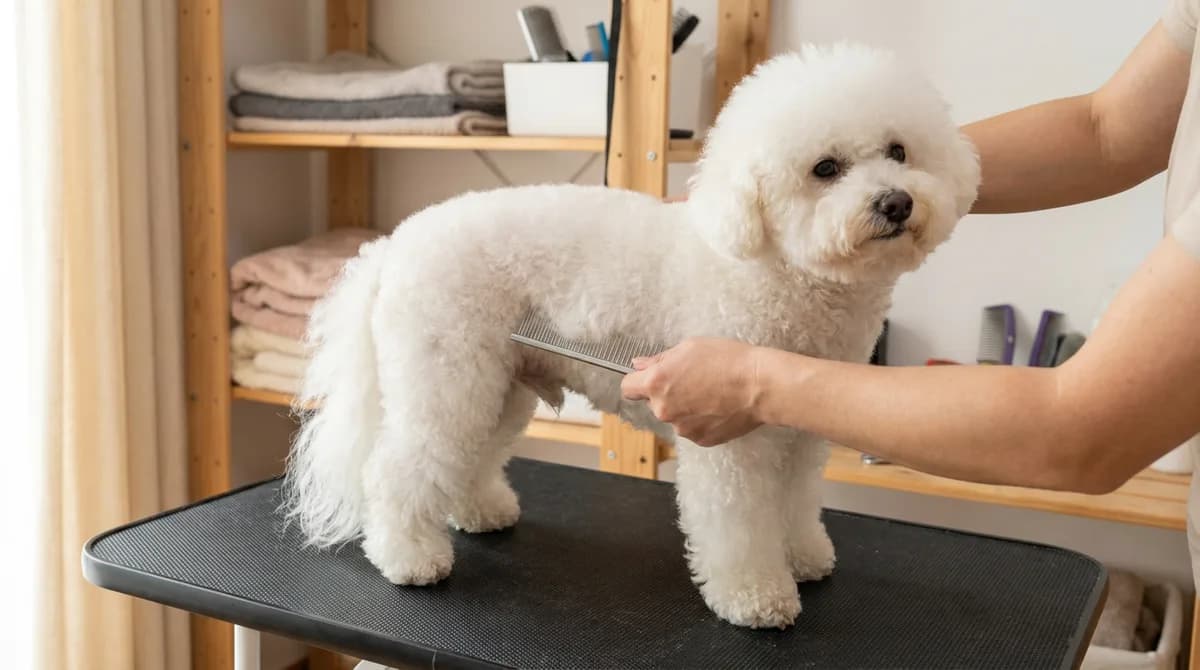
Our Bichon Frise grooming and haircut guide covers the detailed routine and style choices. General dog grooming tips help with preparation, while the shedding explainer provides broader coat context.
Keep bedding practical, too. A removable covering such as the small Pet Parents Pawtect blanket can give the dog a familiar resting surface that is easier to launder. Follow its care instructions and choose the size for the surface you intend to cover.
What a Bichon Frise costs
The purchase or adoption fee is only the first part of the budget. Include grooming, food, routine veterinary care, preventive products, training, equipment and backup care. The recurring grooming bill is particularly easy to underestimate when comparing Bichons with shorter-coated dogs.
Obtain local quotes before committing. Ask what a grooming appointment includes, how often the proposed coat length needs attention and whether matting or extra handling changes the fee. Keep emergency planning separate from predictable annual expenses. Our Bichon Frise price and ownership-cost guide works through the acquisition and ongoing budget in detail without treating one seller's quote as a national average.
Are Bichon Frises hypoallergenic?
Bichons are often called hypoallergenic because they shed little visible hair, but no dog is guaranteed allergy-free. People can react to proteins associated with dander, saliva and other material from the dog. A fluffy white coat, short haircut or low-shedding label cannot predict a particular person's response.
If allergies affect the household's decision, read the Bichon Frise allergy and shedding guide before choosing a dog. The broader hypoallergenic dog guide provides context for comparing breeds without treating the label as a guarantee.
Bringing home a Bichon Frise puppy
A puppy needs more frequent supervision, toilet opportunities and help learning household life than an established adult. Prepare the sleeping area, transport, first veterinary appointment and care coverage before pickup. Ask for clear health records and information about the puppy's food, routine and early experiences.
Do not choose purely from a photograph or a claim about a desirable size or coat. The Bichon Frise puppy guide covers preparation, early training and first-year care separately. An adult Bichon may also be worth considering when you want more information about established size, temperament and daily needs.
Bichon Frise questions owners still ask
A Bichon can be a good first dog for someone willing to learn a consistent care routine. The main challenge is sustaining ordinary work: coat maintenance, toilet training, exercise and company. Arrange help from a groomer, veterinarian and qualified trainer early. A first-time owner with reliable support may be better prepared than an experienced owner who expects the dog to need little attention.
Do not assume a Bichon can comfortably manage an uninterrupted eight-hour workday. Age, toilet needs, health and previous experience all affect what is workable. Arrange backup care or a reliable visit and build alone time gradually. If the dog shows distress rather than settling, seek a behavior assessment. A camera can describe what happens, but it does not provide care or fix the problem.
Many can share a home with a cat or other dogs, but introductions should be gradual and supervised. Give the resident cat escape routes and separate resting and feeding spaces. Match play carefully when a larger dog is involved, and interrupt interactions before either animal becomes overwhelmed. The individual animals' experience and comfort matter more than assuming the breed is universally friendly.
Yes, an apartment can work if the dog gets regular toilet trips, activity and company. Consider noise from hallways, lifts and neighboring homes, then teach settling and manage repeated barking triggers. The floor plan matters less than the routine and the dog's ability to rest. Choose a toilet route that remains practical in bad weather and during the early training period.
Adjust outings to the conditions and the individual dog. In hot weather, choose cooler hours, provide water and avoid prolonged activity on hot surfaces. In cold or wet weather, a suitable coat may help a closely trimmed dog stay comfortable. Neither its fluffy appearance nor its small size tells you exactly what it tolerates, so watch behavior and shorten an outing when needed.
A private yard is helpful but not essential when reliable leash walks and toilet trips are available. If you do have a yard, check gaps, gate latches and places a small dog could squeeze through. Supervise outdoor time rather than assuming fencing makes the space safe. A yard also does not replace walks, social experience or interaction with the household.

Kristine Lacoste has been researching dog and cat breeds for nearly a decade and has observed the animals up close at dog shows in both the United States and the United Kingdom. She is the author of the book One Unforgettable Journey, which was named as a finalist for a Maxwell Award from the Dog Writers Association of America, and was host of a weekly pet news segment on the National K-9 Academy Radio Show. In addition, she was the New Orleans coordinator for Dogs on Deployment, a nonprofit that helps military members and their pets, for 3 years. Kristine has researched and written about pet behaviors and care for many years. She holds a bachelor’s degree in psychology, another bachelor’s degree in English and a Master of Business Administration degree.
Sign up for expert-backed reviews and safety alerts all in one place.