Bichon Frise Puppies: First-Year Care and Training
Prepare for a Bichon puppy's first year with an event-based daily routine, a safe home setup, positive training, feeding guidance, and realistic plans for grooming and time alone.
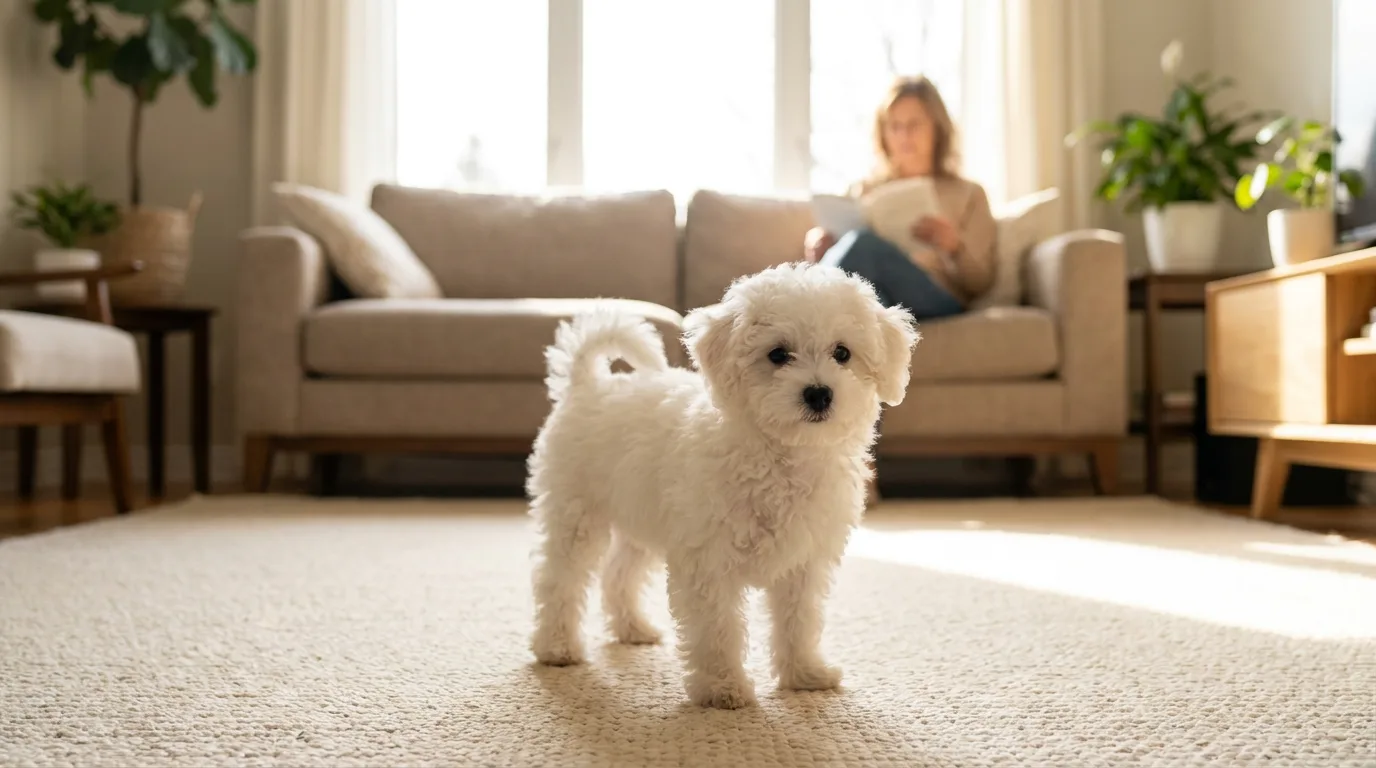
White Bichon Frise puppy on a cream carpet with an adult reading on the sofa behind it.
Petful is reader supported. As an affiliate of platforms like Amazon and Chewy, we may earn a commission when you buy through links on this page. There is no extra cost to you.
Bichon Frise puppies need a household that can provide frequent toilet outings, gentle training, companionship, and regular coat care. Before choosing a puppy, decide who will handle the ordinary parts of each day: the first trip outside, meals, supervised play, naps, and care while everyone is working.
An appealing puppy photo can tell you very little about that commitment. This first-year guide helps you prepare the home, build a flexible routine, and recognize when your plan needs to change. Your veterinarian, breeder or rescue, and a qualified reward-based trainer can help adapt it to the individual puppy.

Sign up for expert-backed reviews and safety alerts all in one place.
Before your Bichon puppy comes home
Start planning before you reserve a puppy or arrange an adoption visit. A puppy is still a baby, so teach household routines patiently instead of expecting adult habits on arrival. Raising a young Bichon is easier when the adults agree on where the puppy sleeps, which door leads to the toilet area, and how to respond to accidents. Give each job an actual person's name. A promise that everyone will help is less useful than knowing who can leave a meeting for a potty break.
- 1Arrange daytime supervision and frequent toilet outings before arrival.
- 2Choose food labeled for growth and ask your vet about safe socialization.
- 3Build grooming and brief alone-time practice into ordinary days.
Whether you are considering a Bichon puppy from a breeder or rescue, ask what the puppy already knows. Find out about its food, sleep area, toilet surface, handling experience, and comfort with everyday household sounds. A familiar routine gives you a starting point; you can change it gradually once you understand the puppy's needs.
Petful may earn a commission when you click through to Chewy, at no extra cost to you.
Create one shared note for the household with:
- The puppy's current food and meal instructions.
- Veterinary and emergency-clinic contact details.
- The overnight and workday care arrangements.
- The toilet location and reward everyone will use.
- Any instructions, records, or restrictions from the breeder, rescue, or vet.
Keep the first few days quiet enough to notice patterns. You are learning when this particular puppy becomes tired, needs a toilet break, or feels overwhelmed. That observation is more useful than expecting it to behave like a puppy in an online picture or a friend's older dog.
Is a Bichon puppy right for your home?
The Bichon is a companion breed, and the Bichon Frise Club of America's puppy guidance emphasizes the time and attention involved in bringing one home. A small dog still needs room in your schedule. Consider the working week you actually have, including commuting, errands, children's activities, and the occasional late finish.
Think about household fit before choosing by sex or appearance. Can children follow rules about leaving a sleeping puppy alone? Does your rental allow dogs? Is there a safe toilet route that an adult can use in bad weather? Our Bichon Frise breed profile covers adult size, temperament, barking, colors, and the wider breed commitment so you can make that decision separately from puppy preparation.
If your care plan depends on the puppy staying quiet and clean by itself for most of the day immediately, adjust the plan before bringing it home. An older rescue dog with a known routine may suit some households better, but its individual needs still deserve the same careful conversation.
The first night and a safe home setup
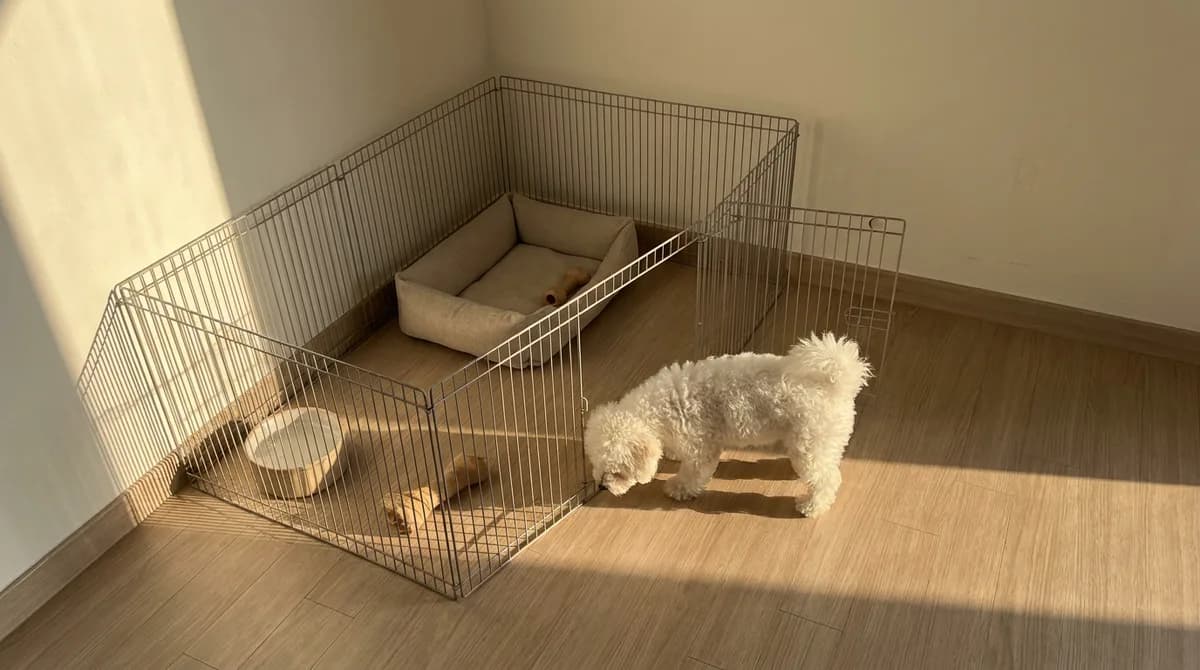
Prepare a small, easy-to-supervise area before the puppy arrives. Remove accessible cords, medicines, cleaning products, and objects it could swallow. Check gaps behind furniture and between barriers. Put the rest area somewhere the puppy can settle without being isolated from all signs of household life.
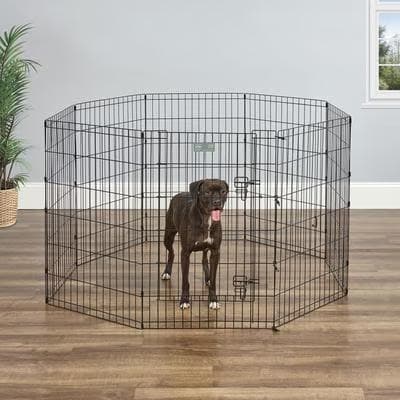
An exercise pen can help define that area. The MidWest wire exercise pen is one existing option to assess against your room and puppy's size. Check the spacing, stability, and manufacturer's instructions. A pen supports supervision; it does not replace toilet outings or make an unattended workday suitable for a new puppy.
Use washable bedding that you can inspect easily. A Pet Parents Pawtect blanket can protect a suitable resting surface, but remove any blanket the puppy chews or pulls apart. Keeping a surface dry is different from teaching the puppy where to toilet; schedule outings rather than treating bedding as an accident-management system.
For the first night, keep the route to the toilet area simple. Have shoes, a leash, and rewards ready. Respond calmly when the puppy wakes, give it an appropriate chance to toilet, and return to a quiet sleeping environment. If it cannot settle, check basic needs and comfort instead of assuming that distress is a training challenge it must endure.
Give visitors the same household rules
Explain the puppy's rest space and toilet routine before visitors arrive. Ask them to wait for a calm introduction and let you manage access through gates or doors. Children should know which items belong to the puppy and when to call an adult for help. Consistent boundaries make a busy home easier to manage, particularly when a visitor does not recognize the puppy's usual signals or know which door leads outside.
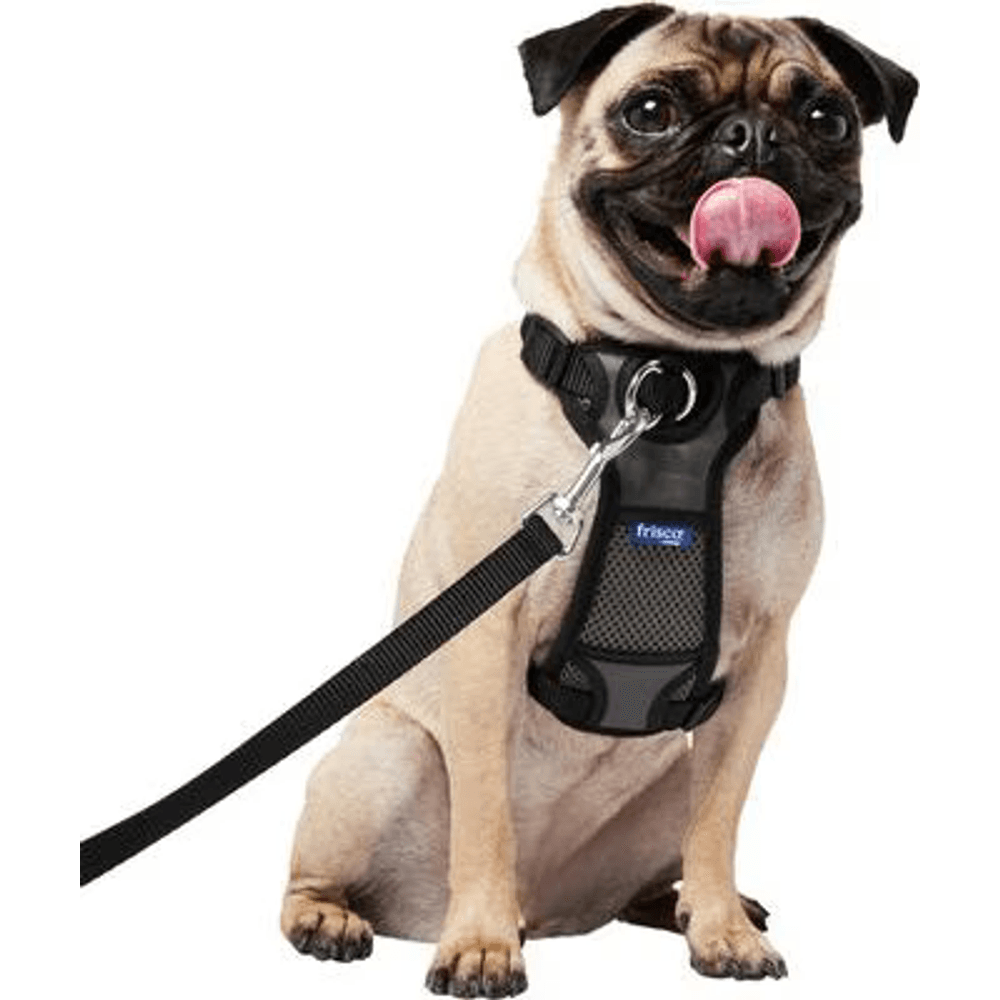
A budget-friendly padded no-pull harness that keeps leash pressure off a coughing dog's neck and windpipe by distributing it across the chest. A simple, affordable way to protect an irritated airway or a collapsing trachea on every walk.
Petful may earn a commission when you click through to Chewy, at no extra cost to you.
Choosing a breeder or rescue
Look beyond an attractive listing. Ask to see health-screening results for the puppy's parents, the records that will accompany the puppy, and the written agreement. The BFCA's questions to ask before buying a puppy explain why a reassuring statement that the parents look healthy does not replace documented testing.
Ask a breeder how puppies spend their days and what happens if you cannot keep the dog later. Ask a rescue what it has observed in foster care, what veterinary care has been completed, and which parts of the dog's history are unknown. A useful answer describes an individual animal; it does not promise that every Bichon will be effortless to train.
Before making a commitment, clarify:
- The puppy's age at handover and why that timing was chosen.
- The vaccinations, parasite care, examinations, and screening records available.
- What support is available after you go home.
- Deposit, refund, return, and ownership terms in writing.
The BFCA advises that it is better for a puppy to remain with its litter until about 10 to 12 weeks. That is breed-club guidance, not a universal legal handover age or proof of a seller's quality. Confirm the requirements where you live and ask how the puppy's development and care have informed the proposed date.
Arrange the first veterinary appointment before collecting the puppy, and ask the clinic what to do if a concern arises sooner. Also confirm what the breeder or rescue expects you to do after arrival under the written agreement. Having those details ready helps you concentrate on the puppy instead of searching for contact information during a stressful first week.
Budget before committing to a puppy
The purchase or adoption amount is only one part of a first-year budget. Include veterinary appointments, food, grooming, safe equipment, and care when you cannot be home. A puppy may also outgrow a harness or need a different home setup as it becomes more active.
Use our Bichon Frise price and ownership-cost guide for documented acquisition-price examples and a clearly labeled sample budget. Get your own local quotes before deciding what you can afford. Here, the practical question is whether both the money and the people are available to support the daily routine you are about to build.
Potty training and the daily routine
Bichon Frise puppy training begins with arranging chances to succeed. Housetraining can be demanding, but difficulty does not mean a puppy is being stubborn. It may need a more frequent outing, closer supervision, a quieter toilet area, or a clearer reward. The AKC's housetraining guidance recommends a consistent routine and frequent opportunities to go outside.
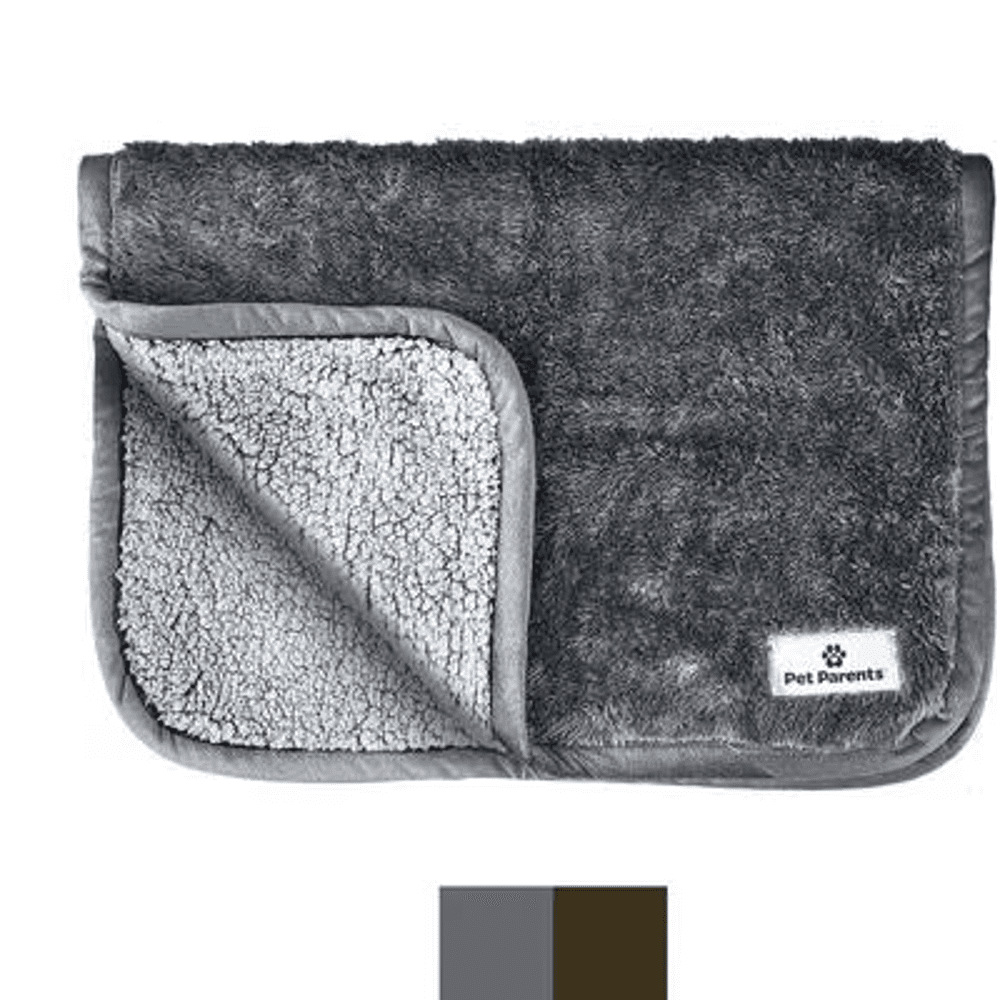
A plush, waterproof sherpa blanket that gives a cold or shivering dog a warm, cozy layer to curl into. The hidden waterproof lining protects the bed, couch, or car seat, and the whole thing is machine washable.
Petful may earn a commission when you click through to Chewy, at no extra cost to you.
Take the puppy to the chosen spot after waking and around the transitions that matter in its day, including meals and active play. Reward it promptly after it finishes in the right place. Use the same exit where practical so different household members can follow the routine without inventing a new process.
| Event | Care task | Who and what to record |
|---|---|---|
| After waking | Go to the toilet area before starting play | Name the responsible person and record whether the puppy went |
| Around meals | Offer the planned meal and another toilet opportunity | Note eating and toilet patterns |
| After active play | Pause for a toilet outing and a calmer activity | Record accidents or signs of tiredness |
| Before a nap | Offer a toilet break and a quiet rest area | Note what helped the puppy settle |
| Before bedtime | Take a calm final outing and prepare overnight supplies | Confirm who handles overnight wake-ups |
This is an event-based routine, not a promise that every puppy can wait a set number of hours. Adjust the routine using what you observe. If accidents repeatedly happen while dinner is being prepared, arrange an earlier outing and name the responsible person for that transition. If the puppy toilets indoors immediately after returning, discuss the pattern with your vet or trainer rather than simply lengthening the outdoor wait.
A comfortable harness and leash help keep outings controlled. The Frisco padded no-pull harness is an option for supervised walks and toilet trips. Measure your puppy and follow the sizing chart; the word “small” on a product is not a breed-specific fit guarantee. Check the fit again as your puppy grows and remove equipment when its instructions or the situation require it.
When an accident happens, clean the area thoroughly with an appropriate enzymatic cleaner and review the setup. Punishment after the event does not explain where to go next time. Straining, repeated attempts, blood, a sudden change in toilet habits, or other signs of illness call for veterinary advice, not a stricter training timetable.
Use a short toilet diary to find the gap
For a few ordinary days, record the event before each outing, whether the puppy toileted, and what happened afterward. Keep it simple enough that everyone will use it. “Woke from nap, went outside with Sam, urinated, settled indoors” gives the next caregiver a clearer picture than a checkbox saying “walked.”
If accidents continue, look for one repeatable gap to discuss with your trainer. Perhaps the puppy is unsupervised during a school pickup, or the evening caregiver assumes someone else has already taken it out. Adjust that part of the routine and observe the result. Changing the toilet location, reward, timing, and supervision all at once makes it harder to understand what helped.
Feeding a growing Bichon puppy
The best food for Bichon Frise puppies starts with suitability for growth, rather than a breed photograph on the bag. The FDA explains complete-and-balanced labeling, including the nutritional adequacy statement and intended life stage. Adult-maintenance food and treats are not interchangeable with a complete puppy diet.
Ask what the puppy currently eats, how much it is offered, and how meals are divided. Bring that information to the first veterinary appointment. Your vet can help you choose an appropriate food and adjust portions for the individual puppy's growth and condition. A universal cup amount for every Bichon puppy ignores differences between foods and between dogs.
Make feeding straightforward:
- Measure portions using the method recommended for that food.
- Include training rewards when discussing the day's total intake.
- Keep fresh water accessible in a suitable bowl.
- Contact your vet about poor appetite, vomiting, diarrhea, or concerns about growth.
For small rewards during training, Wellness Soft Puppy Bites are one option to review against your puppy's age, diet, and tolerance. Offer appropriately sized pieces according to the label. A soft texture can make a reward convenient, but it does not make a treat a complete meal or a treatment for a feeding problem.

Soft lamb-and-salmon puppy bites formulated for puppies under one year. Tear each bite smaller when rewarding repeated training steps.
Petful may earn a commission when you click through to Chewy, at no extra cost to you.
Socialization without overwhelming your puppy
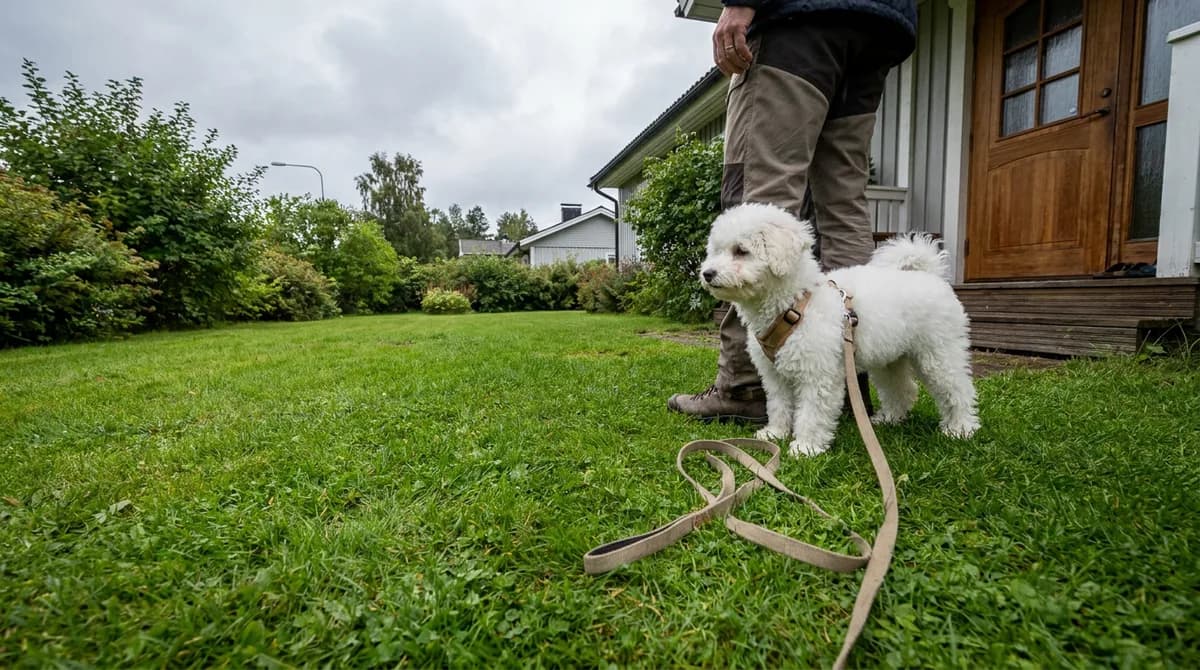
Socialization is learning that ordinary experiences can be safe. It does not require greeting every dog or being passed around by every visitor. Start with manageable experiences: a quiet person at a distance, a new household sound at low intensity, or watching the world from a secure place near you.
The American Veterinary Society of Animal Behavior's position statements (AVSAB) emphasize early positive socialization and reward-based training. Discuss suitable puppy classes and exposure plans with your veterinarian, accounting for vaccination history and local disease risk. Waiting for a blanket internet rule can miss useful learning opportunities; ignoring local health advice is not a good alternative.
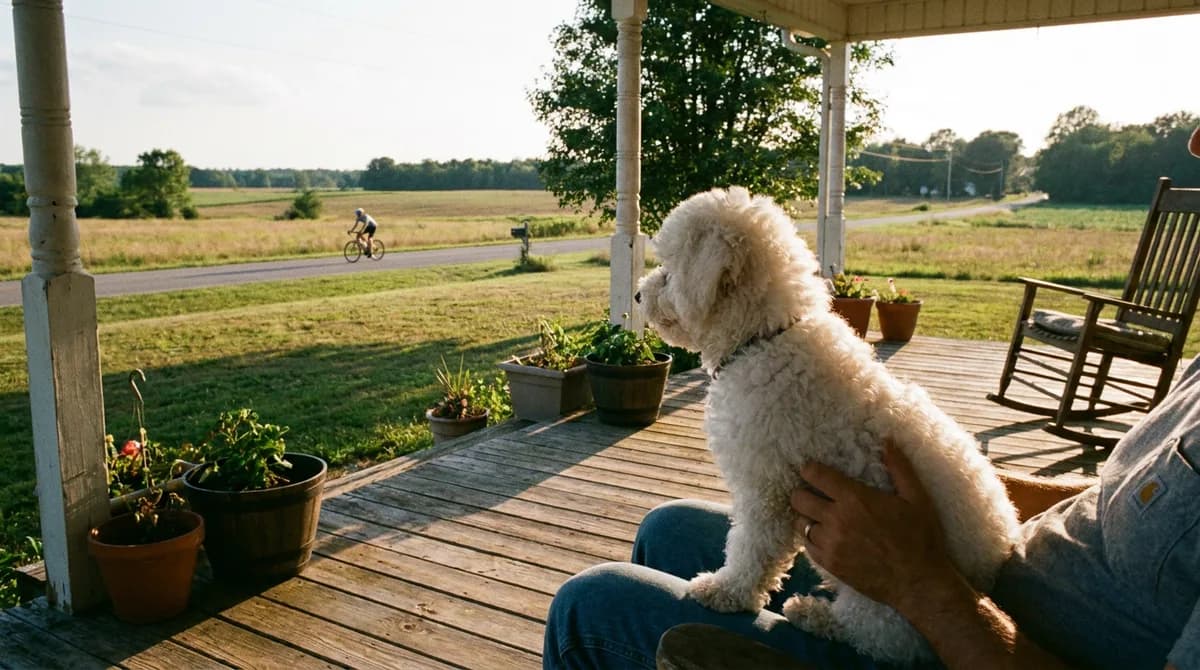
Let the puppy's response guide the next step. It should be able to observe, take a break, or move farther away. If it repeatedly hides, freezes, or tries to escape, make the experience easier and seek help when needed. Keep sessions short enough that you can finish while the puppy is comfortable. The goal is a useful experience, not completing a checklist at any cost.
Can a Bichon puppy stay home while you work?
Do not plan a three-hour absence for a newly arrived eight-week-old puppy without arranging care. Very young puppies may need toilet outings every one to two waking hours, and comfortable alone time is a separate skill to build gradually. A full workday alone is not an appropriate expectation for a new puppy. Nor should “eight hours” be treated as a standard training target for a Bichon of any age without considering toilet needs, wellbeing, and individual experience.
Arrange reliable care before arrival. That might mean staggered household schedules, appropriate help from a trusted caregiver, or time away from work during the transition. Introduce the person and setup gradually so the puppy's first experience is not an abrupt, long absence.
- A camera can help you observe your puppy, but it cannot provide a toilet break, comfort, or hands-on care. Arrange a person who can respond when the puppy needs help.
Practice very brief separations while you are available to return. Begin with an easy moment when the puppy is comfortable, and increase difficulty only as it copes. Persistent distress deserves help from your veterinarian or a qualified behavior professional. Do not keep extending an absence simply because a timetable says the puppy should have learned by now.
Prepare the person covering your workday
Show a caregiver the toilet route, safe rest area, current food instructions, and how you reward the behaviors you are teaching. Agree on the boundaries for outings and contact with unfamiliar dogs using your veterinarian's advice. Leave a clear way to contact you and the clinic if the puppy seems unwell or an arrangement falls through.
Ask the caregiver to report what actually happened: eating, toileting, settling, and any signs of distress. That information helps the household keep a consistent routine. A missed visit needs a fallback person who can provide care; it should not quietly become an experiment in how long the puppy can manage alone.
Play, biting, and the adolescent months
There is no useful universal answer to the “hardest” or “naughtiest” puppy age. Different households struggle with different tasks, and a difficult week is not a fixed personality verdict. Notice what happens before the behavior: a long play session, a missed nap, exciting visitors, or an activity the puppy has not learned to handle.
Give the puppy suitable things to chew and play with, reward calm interaction, and pause games that have become too intense. Children need an adult to manage play and provide a break before the puppy becomes overwhelmed. For a fuller response plan, WebVet's guide to stopping puppy biting explains how to redirect the behavior without turning it into a rough game.
As your dog matures, revisit the environment and training instead of assuming earlier lessons will handle every new distraction. Practice familiar skills in easier settings before asking for them around visitors or outdoors. Sudden behavior changes, signs of pain, repeated snapping, or distress that disrupts daily life are reasons to ask for professional advice. Calling those changes a “red flag” online is less helpful than describing exactly what happened and getting an individual assessment.
Review progress across the first year
Choose a regular moment to review the care plan with everyone involved. Ask which everyday task has become easier and which one still needs support. A puppy may be comfortable sleeping in its rest area yet struggle with a visitor at the door. Work on the specific situation rather than treating progress as an all-or-nothing judgment.
Check practical changes too: harness fit, access to things the dog can now reach, the condition of chews and bedding, and whether the daytime-care arrangement still works. Share relevant observations with your vet, groomer, or trainer. A routine should evolve with the dog; the purpose of a first-year plan is to make those changes easier to notice and manage.
Build comfortable grooming habits early
Introduce grooming as a series of small, pleasant experiences. Briefly touch a shoulder, show the brush, or handle a paw, then reward the puppy for comfortable participation. Stop before it feels trapped. A professional groomer can demonstrate suitable tools and help you build a plan that matches the coat and the puppy's confidence.
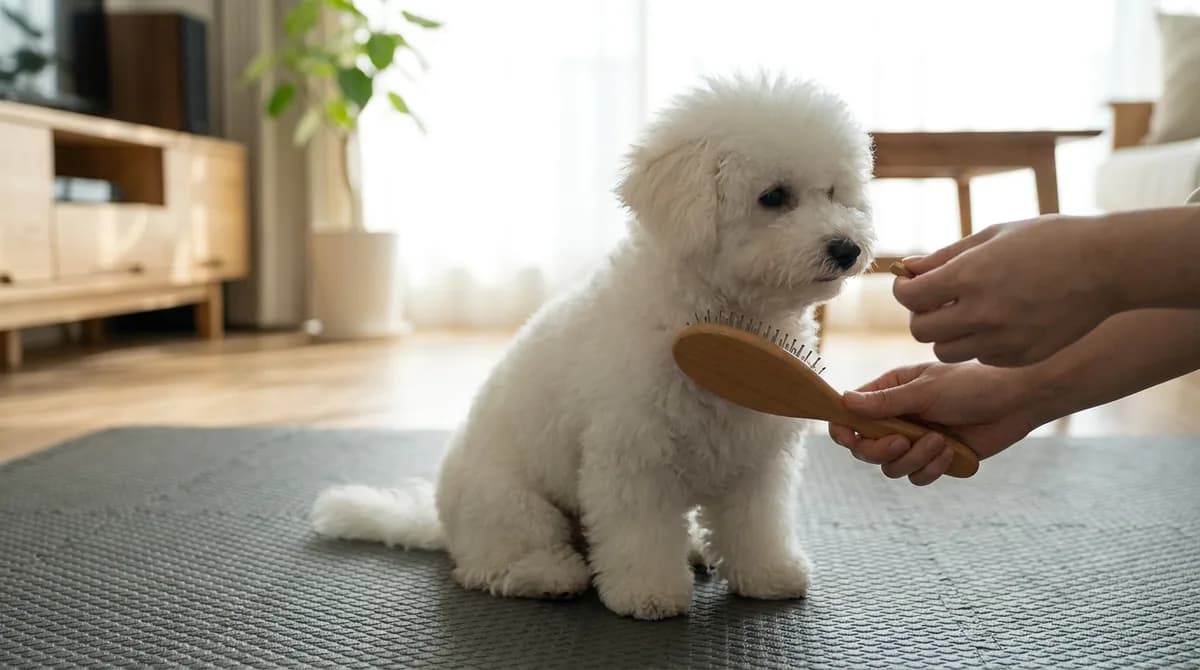
The full Bichon Frise grooming guide covers brushing, comb checks, bathing, and haircut choices. For now, the important first-year task is making routine care familiar. Tell your groomer about anything the puppy finds difficult and ask how you can practice that one step gently at home between visits.
Low shedding does not mean allergy-free
Coat maintenance and human allergy management are different questions. A fluffy white coat or a low-shedding reputation cannot tell you whether a particular person will react to a dog. Avoid treating a puppy's appearance as reassurance that the household will be comfortable together.
If allergies are part of your decision, read our Bichon Frise hypoallergenic and shedding guide before committing. It explains the distinction and the questions to discuss with a clinician. Keep that decision separate from the daily puppy-care arrangements so neither issue is overlooked.
Bichon puppy questions
Plan for individual training, separate rest spaces, and one-to-one time with each puppy. Two puppies are not a substitute for human care. Before committing, ask whether your household can consistently meet each dog's needs independently and discuss the arrangement with the breeder or rescue.
Start with a secure barrier and give the cat an escape route the puppy cannot follow. Supervise calmly and prevent chasing. Do not force close contact or leave them together unattended while you are still learning how they respond. Ask for professional help if either animal remains distressed.
In a comfortable room, decide from your puppy's condition and the environment rather than its appearance. If you use clothing, check fit and supervise for chewing, snagging, or discomfort. Ask your vet if the puppy seems unusually cold, lethargic, or otherwise unwell.
Bring vaccination records, parasite-treatment information, available health records, and details of the current food and meal routine. Include the breeder or rescue's contact information and your observations about eating, toileting, sleep, and behavior. These details help your vet tailor the first-year care plan.

Coreen Saito is a pet writer and longtime shelter volunteer with more than a decade in animal rescue. She covers cat behavior, breed care, and the small, ordinary science of sharing a life with companion animals, with a particular focus on honest takes about the products and decisions that actually matter. At home in Arizona, she's outranked by Mac (a dog with the loudest opinion in the house), Rebel (a cat who governs by quiet authority), and Meri (an orange tabby who runs the late shift and the laundry basket). She writes about all three, plus the rescues that keep coming through her life, at LifeWithMinty.com.
Sign up for expert-backed reviews and safety alerts all in one place.