Bichon Frise Hypoallergenic? Shedding and Allergy Facts
Bichon Frises shed little visible hair, but no dog is guaranteed allergy-free. Understand the evidence, household care options and questions to resolve before choosing one.
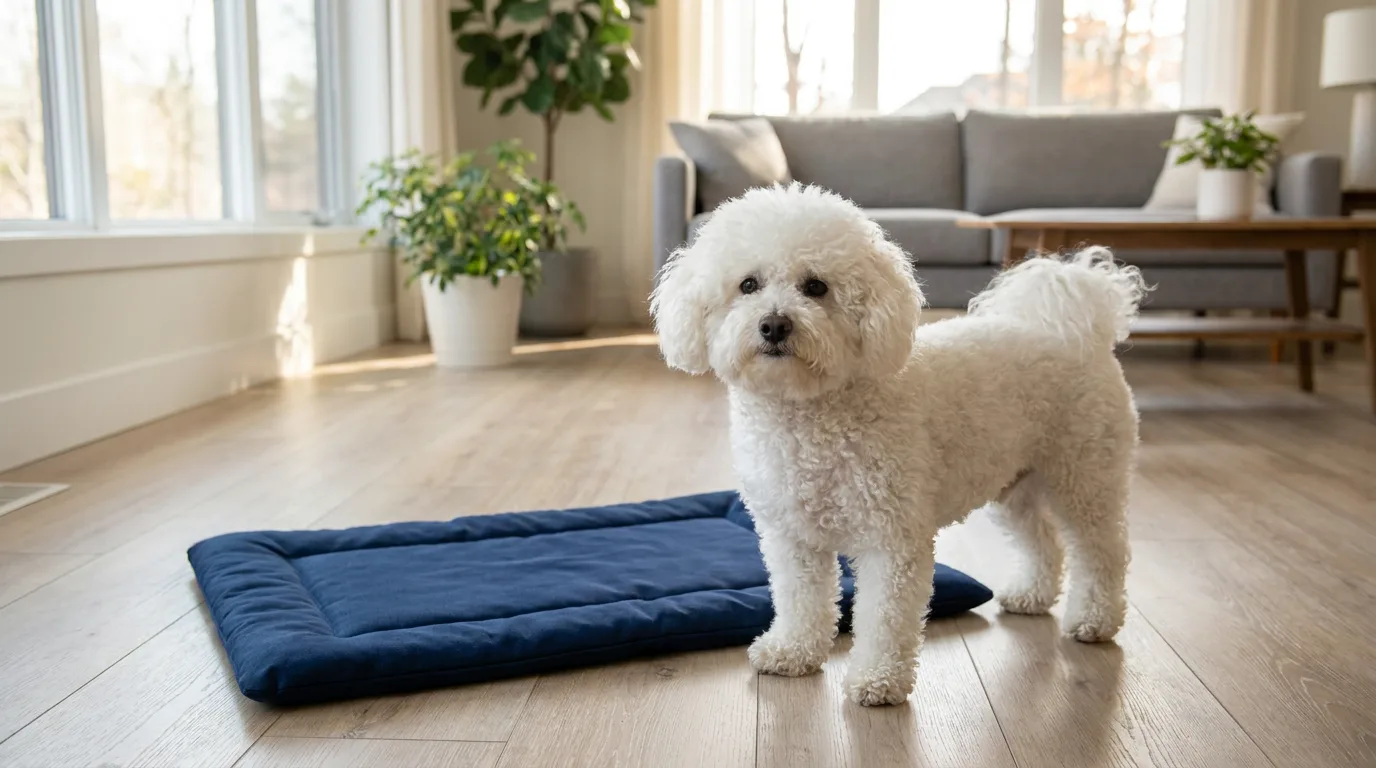
White Bichon Frise standing on a wood floor beside a blue mat.
Petful is reader supported. As an affiliate of platforms like Amazon and Chewy, we may earn a commission when you buy through links on this page. There is no extra cost to you.
The Bichon Frise hypoallergenic label describes a reputation for low shedding, not a guarantee that an allergic person can live comfortably with one. Bichons produce allergens, just as other dogs do. A household's decision needs to account for the person's reactions, the individual dog and a realistic care routine.
You can admire the breed's curly coat and still take allergy concerns seriously. The useful next step is to separate what low shedding changes from what it cannot promise, then decide which questions need an allergist and which practical arrangements your household can make.

Sign up for expert-backed reviews and safety alerts all in one place.
Are Bichon Frises hypoallergenic?
No dog breed is reliably allergy-free, including the Bichon Frise. The American Academy of Allergy, Asthma and Immunology explains that pet allergy involves proteins associated with dander, or skin flakes, saliva and urine. The hair you find on a sofa is not the whole exposure picture.
- 1Low shedding can mean less visible loose hair around the home.
- 2Bichons still produce allergens; coat type cannot guarantee a person's tolerance.
- 3Discuss known dog allergy or asthma with a human allergist before adoption.
- 4Cleaning, boundaries and coat care can support a plan but cannot certify a dog as safe.
The phrase Bichon Frise allergies can also refer to an itchy dog, a separate veterinary question discussed below.
People often use hypoallergenic as shorthand for a dog that leaves relatively little hair behind. That can be a useful description of housekeeping expectations. It becomes misleading when it is treated as a medical prediction, a promise that symptoms will disappear or a reason to disregard someone's previous reactions.
A breeder, groomer or rescue may know a dog exceptionally well, but they cannot guarantee how a particular person's immune system will respond. Ask them about observable things: coat maintenance, behavior during grooming, daily routine and whether the dog is comfortable resting away from a person. Keep questions about human symptoms and medical risk with the appropriate clinician.
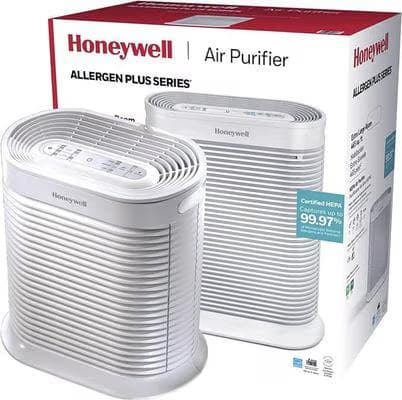
Compare this HEPA room air purifier with your room size, replacement-filter budget and operating needs. It does not establish that a Bichon will be suitable for an allergy-sensitive household.
Petful may earn a commission when you click through to Chewy, at no extra cost to you.
Do Bichon Frises shed?
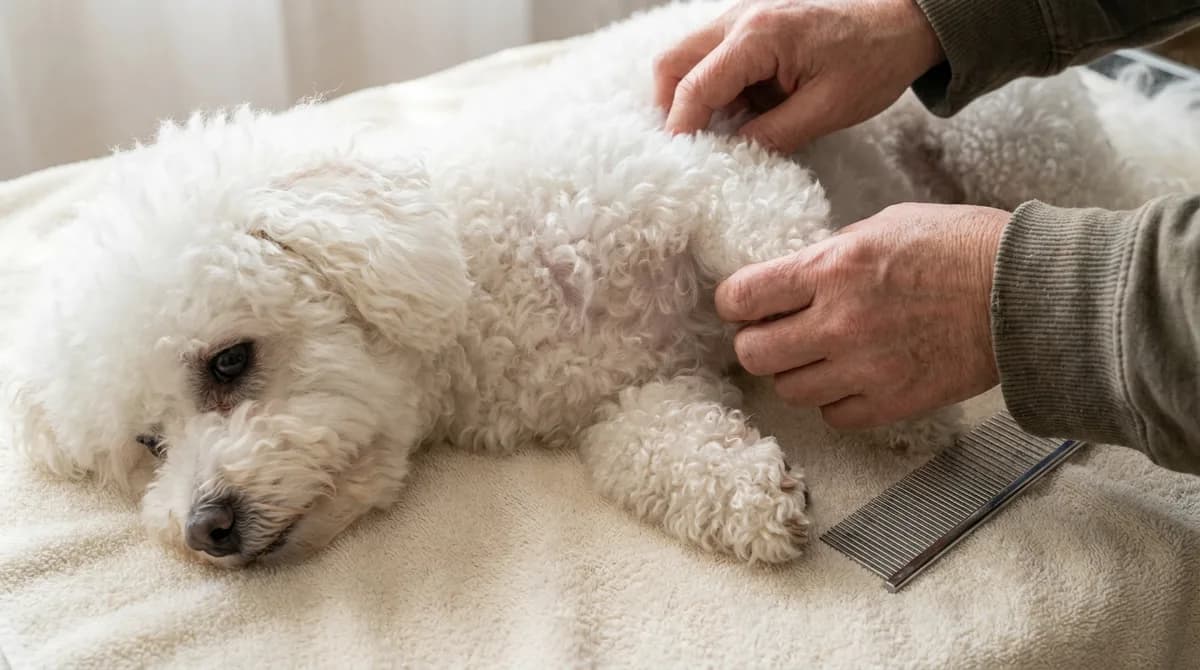
Bichons shed little visible hair compared with many dogs, and their curly coat requires regular maintenance. Loose hair can remain within the coat instead of falling immediately onto the floor. That is why a dog can appear almost non-shedding while still needing thorough brushing and professional attention.
The AKC Bichon Frise profile describes the breed's low shedding and substantial grooming needs. Neither trait gives a measurement of the allergen exposure in your home. The number of hairs on a dark sweater does not tell you how much allergen a person encountered or whether symptoms will follow.
Keep three separate questions in mind:
- How much hair is visible? This affects cleaning and how the coat looks between appointments.
- What care does the coat require? Low visible shedding does not remove the need to prevent tangles and maintain comfort.
- How does a person react? This cannot be established from coat length, texture or a photograph.
The distinction also helps when shopping. An air cleaner, washable cover or grooming tool has a particular job; none changes the dog into an allergen-free animal. Start with the job you need done instead of buying a collection of products because each uses the word allergy in its description.
For room filtration, the Honeywell HPA300 Series HEPA air purifier is an existing option to compare with the space you want to cover. Check the manufacturer's room-size guidance, replacement-filter cost and operating instructions. It is a household air-cleaning device, not evidence that a Bichon will be medically suitable for your family.
What the research does and does not show
Research has not established that dogs marketed as hypoallergenic consistently create lower dog-allergen exposure in homes. In a 2011 household-dust study, researchers compared homes using several ways of classifying dogs as hypoallergenic. None of those classifications produced a significant difference in the measured dog allergen compared with other homes.
A 2012 study of hair, coat and home samples also found large differences among individual dogs. The study did not support labeling the examined breeds hypoallergenic. Its specifically named breed groups included Poodles, Labradoodles, Spanish Waterdogs and Airedale terriers, so it should not be repackaged as a precise Bichon-specific allergy score.
These findings answer a population-level marketing question. They do not say that every person reacts identically to every dog, nor do they tell you what will happen during a particular visit. They also do not justify assigning a numerical allergy-safety rating to a Bichon based on size or curl pattern.
How to read an allergy claim
Before applying a research finding to your household, ask:
- Was the dog breed actually included in the research?
- Was the study measuring hair, dust, airborne material or symptoms?
- Is the author describing an average result or predicting an individual's response?
- Does the proposed recommendation follow from that measurement?
Those checks are especially useful when a page cites a real paper but adds precise claims the paper did not test. A study of another breed does not establish how much allergen your Bichon will release after a haircut. A photograph of a clean room cannot show what its occupants are breathing.

Petful may earn a commission when you click through to Chewy, at no extra cost to you.
Can a Bichon Frise work for an allergic household?
Some people may tolerate one dog better than another, but a Bichon is not automatically a good choice for allergy sufferers. The American College of Allergy, Asthma and Immunology notes differences between people and between dogs while cautioning that choosing a breed does not guarantee fewer symptoms. Discuss established dog allergy, especially when asthma or a child's symptoms are involved, with an allergist before adoption.
Use the decision in two stages: address medical uncertainty first, then test routine feasibility. Buying equipment before that discussion can leave you with an expensive setup that does not resolve the main question.
| Decision | What to clarify | Useful next step |
|---|---|---|
| Medical uncertainty | Whether symptoms involve dogs and what risks matter for this person | Discuss the history with an allergist |
| Routine feasibility | Who can sustain cleaning, grooming and care | Assign named responsibilities and backup help |
| Home boundaries | Whether a genuinely pet-free bedroom is practical | Agree on doors, resting areas and household rules |
| The individual dog | Its behavior, care needs and available records | Speak with its current caregiver |
| Long-term commitment | What happens if symptoms remain difficult | Discuss a realistic plan before adoption |
An observation visit can help you learn about the dog, but it is not a medical clearance test. A short symptom-free meeting may not resemble living with an animal around the clock. Conversely, symptoms during a visit can have more than one possible trigger. Report what happened accurately rather than diagnosing yourself from the setting.
Prepare a short account for the clinician:
- What symptoms occurred and when they began.
- Whether they followed handling, time in a particular room or another activity.
- How long they lasted after leaving.
- Any known allergy or asthma history and existing treatment plan.
Do not deliberately provoke symptoms to test a puppy or stop prescribed treatment to make a visit seem more informative. If someone is having difficulty breathing, follow their existing emergency plan and obtain urgent medical help. Choosing a breed can wait.
What can an allergy appointment clarify?
Bring the adoption question as well as the symptom history. An allergist can interpret the person's history, decide whether testing is appropriate and discuss management options. A test result needs that context; it is not a certificate that a particular Bichon will be comfortable to live with, and it should not be used to rank puppies by presumed safety.
Useful questions are specific to the decision you face:
- What does the history suggest, and what is still uncertain?
- Are there reasons to avoid further exposure while the situation is assessed?
- What should the household do if symptoms occur around the dog?
- How would an existing treatment plan affect the decision?
There is no need to arrive with your own diagnosis or a list of products you plan to buy. The point is to make the next decision with better information, not to obtain permission for a conclusion already reached. For a child, keep the discussion centered on that child's history rather than another relative's experience with a different dog.
Build a home routine before the dog arrives
A practical plan starts with the space where the allergic person sleeps. ACAAI's pet-allergy guidance recommends keeping the dog out of the bedroom and describes cleaning and filtration as measures that may help reduce exposure. Restricting a dog to one room does not keep all allergens confined there.
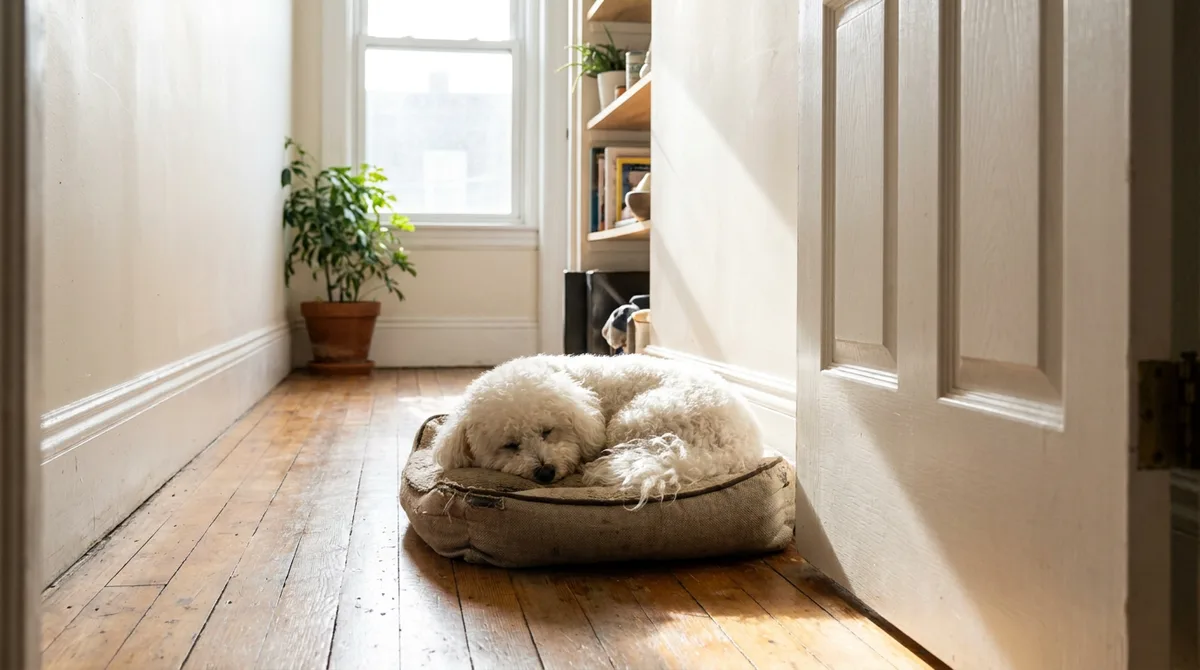
Decide the rules before the first night. If one person allows the dog onto the bed while another tries to maintain a pet-free room, the household is working against its own plan. Set up a comfortable alternative sleeping place and teach the dog to use it with patient, reward-based practice.
- Keep the bedroom boundary consistent from the start. Put the dog's comfortable resting place elsewhere and give every caregiver the same routine, including visitors and overnight sitters.
A Frisco configurable eight-panel gate and playpen can help define an appropriate dog area elsewhere in the home, depending on the opening and installation instructions. A gate is a management tool, not an allergen barrier. A closed bedroom door and consistent household habits remain separate parts of the plan.

Soft chicken-flavor training rewards in a larger bag for frequent practice. Break rewards into appropriate pieces for your dog.
Petful may earn a commission when you click through to Chewy, at no extra cost to you.
Walk through the plan as if it were an ordinary weekday:
- Identify where the dog rests during work, meals and overnight.
- Decide who handles grooming and cleanup if the allergic person should avoid those tasks.
- Put laundry supplies and spare covers where they are easy to reach.
- Agree on the same rules for the sofa, car and sleeping areas.
- Name a backup person for the days when the usual caregiver is unavailable.
The best arrangement is one people will follow consistently. A complicated list of daily jobs that nobody has time to do is less useful than a small set of dependable responsibilities. It also needs to respect the dog's welfare: isolation, prolonged confinement and lack of companionship are not a workable substitute for an allergy decision.
Choose filtration for the room you actually use
A portable air cleaner is intended to work in a room or area, not automatically throughout an entire home. The EPA's air-cleaner overview describes filtration as a supplement to reducing pollution sources and appropriate ventilation. Air cleaners cannot remove every pollutant or guarantee relief from symptoms.
Before choosing a unit, compare practical details rather than the breed pictured on its packaging:
- The room area and the manufacturer's stated operating conditions.
- The replacement filters it uses and whether they are easy to obtain.
- Noise at a setting you would actually leave running.
- Space around the unit and safe placement of its electrical cord.
The EPA's consumer guide also cautions against devices that intentionally produce ozone, which can irritate the lungs. Follow the manufacturer's maintenance schedule and keep air inlets unobstructed. A filter that is never replaced or a machine that is usually switched off cannot be expected to do its intended job.
Treat this as a household equipment decision with limits. There is no need to buy several devices simply because a breed is described as hypoallergenic. Establish which rooms matter, what you can maintain and how the choice fits the clinician's broader advice for the person affected.
Make cleaning sustainable
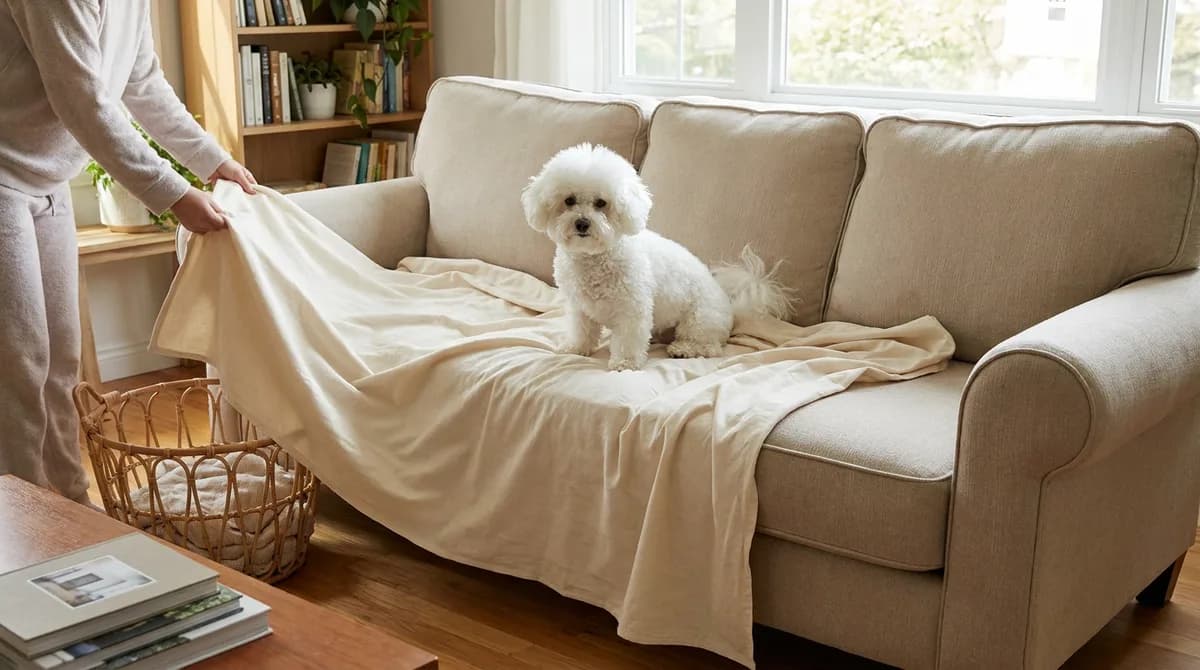
Choose resting surfaces that make ordinary cleaning straightforward. A removable, washable covering can be easier to manage than an upholstered spot that is difficult to clean. The AAAAI pet-allergy overview explains why exposure can continue after contact: allergen-containing material can remain on furnishings, clothing and in the environment.
The goal is a repeatable routine, not a claim that the house can be made allergen-free. Keep a spare cover ready so the dog's usual resting place remains available while one cover is being washed. Check the care label instead of assuming every blanket, bed insert or fabric tolerates the same wash setting.
The small Pet Parents Pawtect blanket is one option for a washable covering on an appropriate dog resting surface. Measure the area first; a small blanket will not protect an entire sofa. Its role is convenient laundering and surface protection, not treating human allergy.
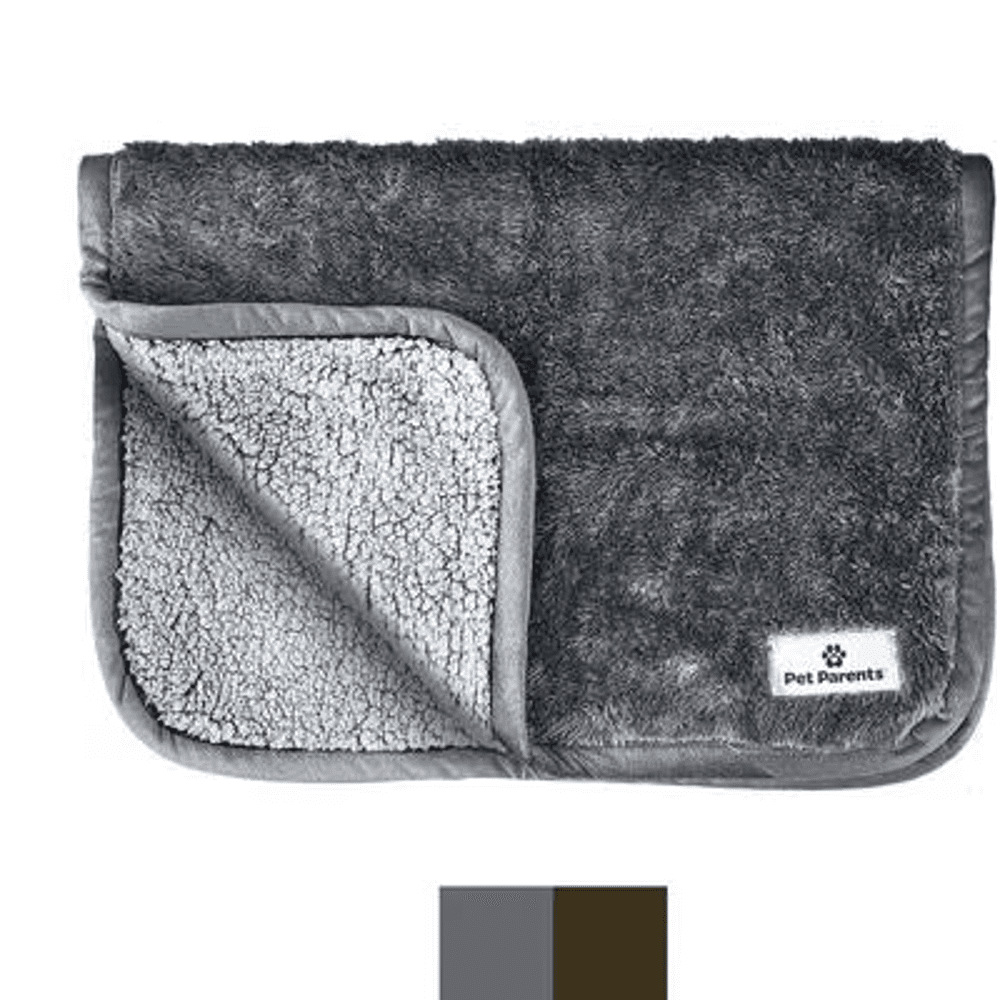
A plush, waterproof sherpa blanket that gives a cold or shivering dog a warm, cozy layer to curl into. The hidden waterproof lining protects the bed, couch, or car seat, and the whole thing is machine washable.
Petful may earn a commission when you click through to Chewy, at no extra cost to you.
Make a simple household map:
- Dog resting area: who changes the covering and where the spare lives.
- Floors and upholstery: which tools and care instructions apply to each surface.
- Car: whether a removable cover is practical for the dog's usual travel spot.
- Grooming area: who cleans up afterward and how tools are stored safely.
Avoid making scented products the measure of cleanliness. A room smelling fresh does not demonstrate lower allergen exposure, and a product intended for household surfaces should not be applied to the dog. Use each cleaner for its labeled purpose and keep the animal away as its directions require.
Review whether the routine is sustainable after the novelty of a new dog wears off. It should still work during a busy week, an illness or a trip. That practical test is often more revealing than assembling an impressive shopping list before adoption.
Give helpers a usable handoff
Write down the few details a sitter or visiting relative needs: which bedroom remains pet-free, where clean covers are stored, which surfaces can be washed and where the dog normally rests. Include feeding and toilet instructions separately so an allergy-related boundary does not become an excuse to miss ordinary care.
Keep human medication and pet-care products clearly separated and out of the dog's reach. A helper should know whom to contact if the usual arrangement is not working, rather than improvising a new product or changing the dog's access to rooms. The handoff can be brief; clarity matters more than the length of the instructions.
Grooming without promising an allergy cure
Grooming supports the Bichon's comfort and coat condition. It should not be presented as a way to guarantee that an allergic person will stop reacting. Ask a groomer and veterinarian about a suitable coat length, safe products and a bathing schedule for the individual dog rather than increasing baths indefinitely in pursuit of allergy control.
Our Bichon Frise grooming guide covers brushing, mat prevention and haircut choices. If another person can handle grooming more comfortably, make that an explicit part of the household plan. Do not assume someone will be available only after the job becomes difficult.
Useful questions for a groomer are practical:
- Which trim can this household maintain between appointments?
- What gentle handling should the dog learn at home?
- Which areas are beginning to tangle?
- What changes warrant a veterinary check rather than a different cosmetic product?
Comfortable cooperative care is a skill, not something every dog enjoys automatically. Short, positive practice can help the dog understand handling. Stop before it becomes a struggle and ask for help when the dog is frightened or painful.
Budget for the routine you can sustain
Budgeting for an allergy-aware household involves more than the puppy's price. Depending on the plan, there may be replacement air filters, washable covers, grooming, cleaning supplies and paid backup care. Keep those costs separate from the person's medical care and from routine veterinary expenses.
List the items you already own, the ones genuinely needed and the jobs that require recurring payment. A washable spare blanket may be more useful than a decorative bed that cannot be cleaned easily. A lower-priced air cleaner can still have ongoing filter costs, so compare maintenance as well as purchase price.
The Bichon Frise price guide covers acquisition and ordinary ownership expenses in detail. Use actual local quotes and the specific products you choose. There is no meaningful universal price for making a Bichon household allergy-safe, because neither the equipment nor the spending can provide that guarantee.
Choosing a puppy or adult Bichon
A puppy's appealing coat does not establish future allergy tolerance. Puppies and adults both need appropriate household care, and an adult can provide more information about established behavior, size and grooming needs. That practical information may be valuable even though it does not answer the person's medical questions.

For a puppy, our Bichon Frise first-year guide covers preparation and development. For an adult, ask the caregiver about settling in a separate resting area, experience with grooming, toilet habits and how the dog handles time apart.
Discuss expectations with the whole household before choosing. Everyone should understand who will provide care and what advice they are following. Avoid a surprise adoption intended to prove that a low-shedding dog will be fine; the person whose health is affected needs a real role in the decision.
Allergy fit is only part of choosing a Bichon
Even when the allergy question has been discussed carefully, the Bichon's companionship and maintenance needs still have to fit the home. A dog that needs support learning to settle cannot be expected to understand new room boundaries on arrival. Plan walks, play, toilet opportunities and gradual training as well as cleaning.
Use our Bichon Frise breed profile for temperament, adult size, lifespan, family fit and the commitment involved. It also covers barking, time alone and choosing between individual dogs without relying on male-versus-female stereotypes.
Reward-based practice can help the dog learn a mat or resting-place cue. Pet Botanics Training Reward chicken treats are one option for small food rewards; suitable pieces of the dog's normal food can work too. Account for rewards in daily food intake. Training supports the household routine and does not treat anyone's allergy.
Whose allergy is it?
The phrase Bichon Frise allergies can describe two very different problems: a person reacting around a dog, or a Bichon with its own itchy skin or other symptoms. Advice and products for one should not be assumed to treat the other.
Human symptoms belong with a human healthcare professional. A dog that repeatedly scratches, licks, develops irritated skin or seems uncomfortable needs veterinary assessment. Coat staining, an advertisement for sensitive-skin shampoo or a breed's reputation cannot diagnose the cause.
WebVet's guide to choosing dog shampoo for itchy skin explains the dog-care side of that decision. A shampoo aimed at the dog's skin is not evidence that the dog becomes safe for an allergic person. Keeping those two meanings separate helps avoid unnecessary purchases and delayed care.
Bichon Frise allergy questions
No. A short haircut may make the coat easier to maintain, but it does not stop the dog producing allergens. Choose a comfortable trim with the groomer based on coat condition and the routine you can sustain. Do not judge human allergy risk by how fluffy or recently clipped the dog looks.
A symptom-free meeting with a puppy does not guarantee the same experience with that dog as an adult or after longer exposure at home. Puppies still produce allergens. Discuss a history of reactions with an allergist before committing, and do not treat the puppy's age or soft coat as a medical reason to disregard symptoms.
No. A mix does not provide an allergy guarantee, even when both parent breeds are marketed as low-shedding. Its adult coat and care needs may also be less predictable than a sales label suggests. Evaluate the individual dog and the household's medical situation instead of choosing solely because a cross has a reassuring name.
No. A shampoo label concerns the product, not a guarantee about human allergy around the animal. Choose dog-care products for the dog's needs and use them as directed. If the person has symptoms, changing shampoo is not a substitute for an allergy assessment; if the dog has skin symptoms, involve a veterinarian.
Do not assume that changing the dog's food will stop a human allergy. A food marketed for the dog's skin, digestion or food sensitivity addresses a different decision. Discuss human allergy management with an allergist and the dog's nutrition with its veterinarian. Avoid restricting the dog's diet merely because a product makes an appealing allergy claim.

Coreen Saito is a pet writer and longtime shelter volunteer with more than a decade in animal rescue. She covers cat behavior, breed care, and the small, ordinary science of sharing a life with companion animals, with a particular focus on honest takes about the products and decisions that actually matter. At home in Arizona, she's outranked by Mac (a dog with the loudest opinion in the house), Rebel (a cat who governs by quiet authority), and Meri (an orange tabby who runs the late shift and the laundry basket). She writes about all three, plus the rescues that keep coming through her life, at LifeWithMinty.com.
Sign up for expert-backed reviews and safety alerts all in one place.