Schipperke: Full Breed Profile and Owner Guide
The Schipperke is a jet-black Belgian watchdog with a fox-like face and a personality far bigger than its small frame. This complete breed profile covers temperament, training, health, grooming, exercise, barking, and puppy cost.
Petful is reader supported. As an affiliate of platforms like Amazon and Chewy, we may earn a commission when you buy through links on this page. There is no extra cost to you.
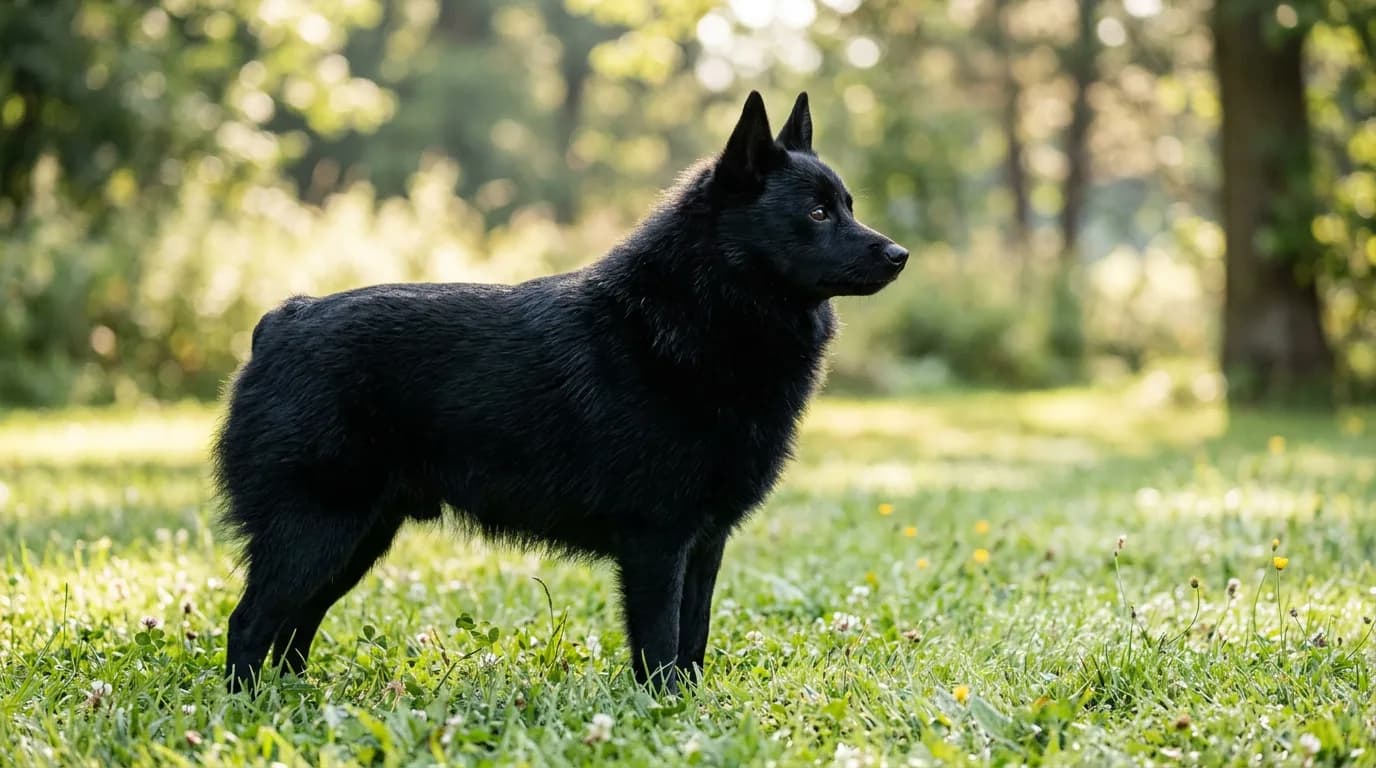
The Schipperke is a small, jet-black Belgian dog with a fox-like face, a thick ruff around the neck, and a personality far bigger than its 12- to 18-pound frame. Nicknamed the "little captain" for its history guarding barges in the Low Countries, this curious, intense, and famously mischievous breed has been winning over experienced dog owners for more than a century. If you are researching whether a Schipperke fits your home, this guide covers everything: size, temperament, health, grooming, exercise, cost, and the training realities that separate a happy Schipperke household from a frustrated one.
- 1The Schipperke is a robust, long-lived (13-16 years) small watchdog that thinks it is a large guard dog.
- 2It needs firm early training, real daily exercise, and secure fencing because it is smart, independent, and a determined escape artist.
- 3Overall a healthy breed, but responsible buyers screen for MPS IIIB, luxating patella, and eye disease before bringing a puppy home.

Sign up for expert-backed reviews and safety alerts all in one place.
Schipperke Breed at a Glance
Before the deep dive, here are the core numbers pet parents ask about most. These figures reflect the American Kennel Club breed standard and mainstream veterinary sources.
| Trait | Detail | Rating |
|---|---|---|
| Height | 10-13 inches at the shoulder | Small |
| Weight | 12-18 pounds | Small |
| Lifespan | 13-16 years | Long-lived |
| AKC group | Non-Sporting | Companion |
| Coat | Thick black double coat | Medium care |
| Energy level | High | Needs daily exercise |
| Barking | Frequent and alert | Vocal |
| Good with kids | Yes, with older children | Family-friendly |
| First-time owner | Challenging | Better for experienced owners |
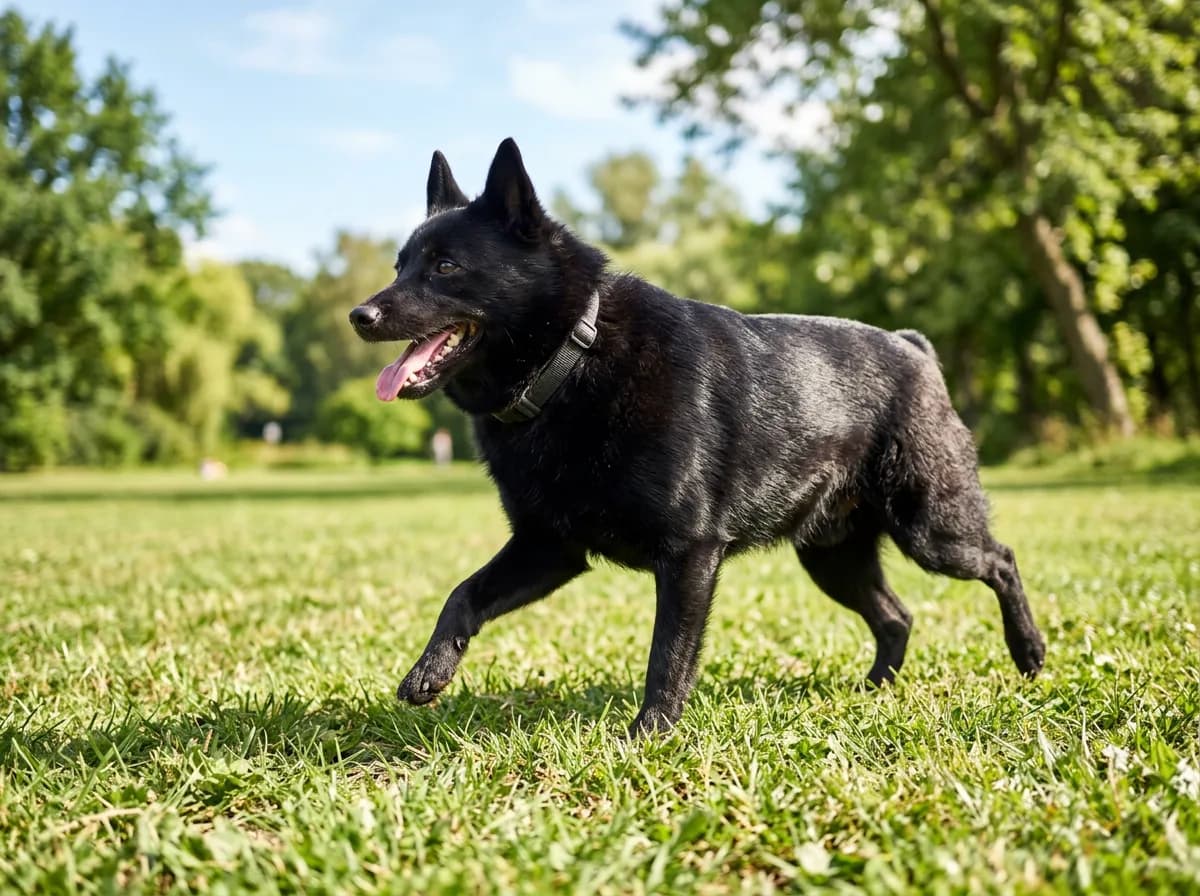
The Schipperke's silhouette is unmistakable: a compact, cobby body that slopes down from a thick neck ruff to a lower rear, small triangular ears held erect, and a sharp, foxy expression. The breed comes in solid black in the show ring, though non-standard colors appear in pet lines. Many Schipperkes are born with a naturally short or bobbed tail, and historically tails were docked, a practice now restricted or banned in much of Europe. You can read more about the ethics of that in our guide to whether tail docking is necessary or cruel.
That distinctive outline is the result of several coat features working together. The dense black double coat forms a longer ruff, or mane, around the neck and chest, a cape over the back, and feathering called culottes on the rear thighs. That silhouette, plus the pricked ears and the alert, questioning expression, is why people so often mistake the Schipperke for a small spitz or a black fox. Adults are genuinely small, roughly the size of a large cat by weight, which surprises owners who expected the confident, big-dog attitude to come in a bigger package.

Petful may earn a commission when you click through to Chewy, at no extra cost to you.
History: The Little Captain of Belgium
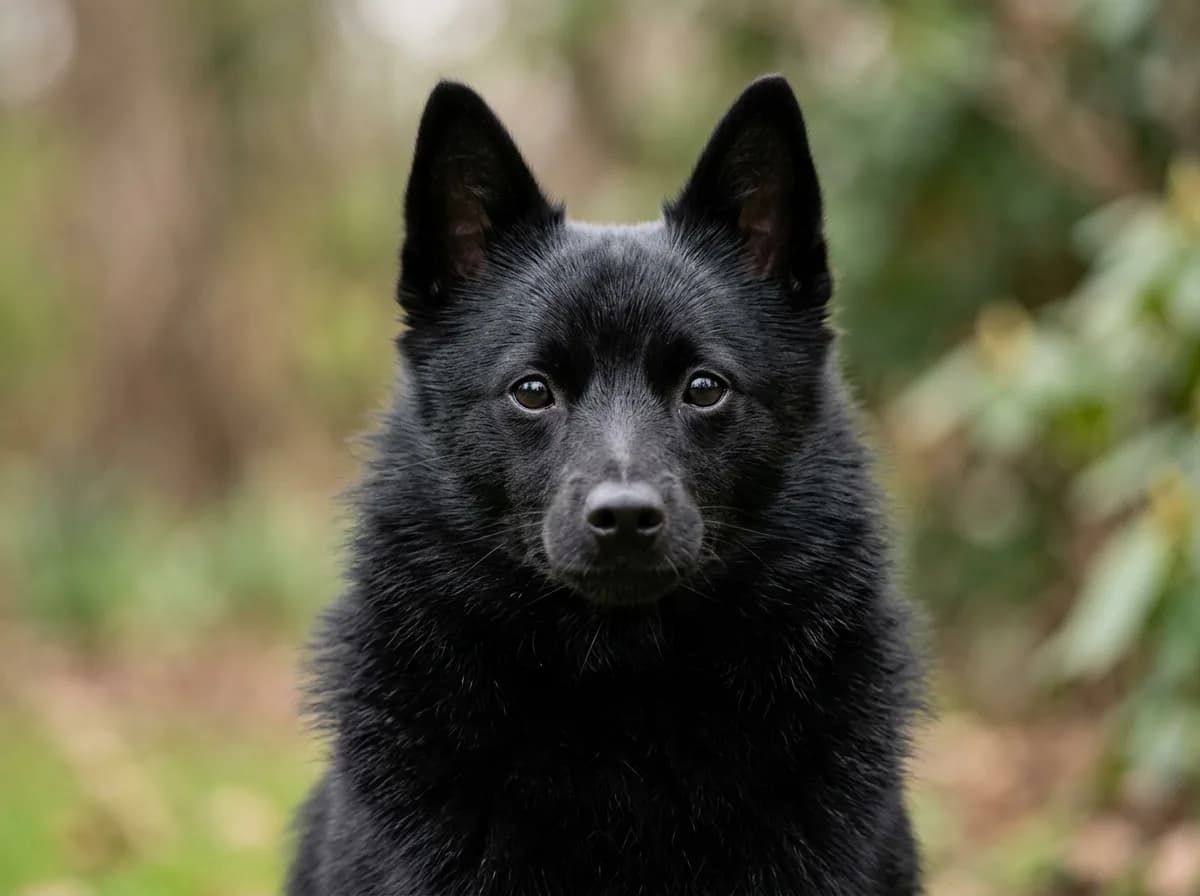
The Schipperke's roots trace to the Flemish region of Belgium, where the breed worked the canal barges and workshops of Brussels and Antwerp from at least the 17th century. Guild tailors and boatmen kept these small black dogs as ratters and watchdogs. The name is commonly translated as "little captain" or "little boatman" in Flemish, a nod to the barges (schips) it patrolled, though some historians argue it derives from a word for shepherd instead.
Contrary to a widespread myth, the Schipperke is not a miniature spitz or a shrunken sheepdog. Genetic and historical work traces it to the same regional stock as the black Belgian sheepdog known as the Leauvenaar, making it a small herding-type dog rather than a spitz. The breed gained royal attention in 1885 when Belgium's Queen Marie Henriette acquired one at a Brussels dog show, which set off a wave of popularity. The Schipperke Club of Belgium formed in 1888, and dogs reached the United States and Britain shortly after. The American Kennel Club recognized the breed in 1904.
- Schipperkes are sometimes called "little black devils" because of their intense curiosity, mischievous streak, and jet-black coat, not because of any genuine viciousness. The nickname reflects a busy, into-everything temperament, not aggression.
By the early 20th century the Schipperke had shifted from a strictly working dog into a beloved companion and show breed on both sides of the Atlantic, though it never became a mass-market breed. That relative rarity is part of its appeal today: it kept its working temperament and sound structure instead of being bred purely for looks. It also means waiting lists for well-bred puppies are common, and prospective owners often travel to find a responsible breeder. The Schipperke Club of America, founded in 1929, remains the breed's parent club in the United States and a good starting point for finding ethical breeders and rescue contacts.
Temperament and Personality
If you want a dog that is content to nap all day, this is not your breed. The Schipperke is intensely curious, confident to the point of bossiness, and wired to investigate every sound, smell, and movement in its territory. Owners often describe a "big dog in a small body," and the so-called Napoleon complex is real: a Schipperke will happily challenge a dog five times its size.
Within the family, the breed is deeply loyal and affectionate. Schipperkes bond hard with their people, follow them room to room, and make excellent, alert companions. With early socialization they are typically good with respectful older children and can live peacefully with cats they were raised alongside. Their strong prey drive, however, means small pets like hamsters, birds, and rabbits are usually a poor match, and a Schipperke off-leash near squirrels is a Schipperke that has stopped listening to you.

Petful may earn a commission when you click through to Chewy, at no extra cost to you.
Toward strangers they are watchful and reserved rather than friendly, which is exactly what made them prized watchdogs. They will announce every visitor, delivery, and passing dog. This vigilance is a feature for people who want a small alarm system and a liability for people who share thin apartment walls.
Are Schipperkes Aggressive?
Schipperkes are not an inherently aggressive breed. What people read as aggression is usually a mix of bold confidence, territorial barking, and a low tolerance for being pushed around by other dogs. Well-socialized Schipperkes are stable and sociable on their own terms. Problems arise when a smart, headstrong dog is under-exercised, under-trained, and allowed to self-appoint as the household decision-maker. Early socialization and consistent, reward-based training prevent the reactivity and resource guarding that can otherwise develop.
Training and Intelligence
The Schipperke is genuinely smart, which cuts both ways. The breed learns quickly, excels at agility, obedience, barn hunt, and rally, and thrives on having a job. It is also independent and easily bored, so it will learn how to open the treat cabinet just as fast as it learns "sit."
- Keep sessions short, upbeat, and reward-based. Harsh corrections backfire with this sensitive, willful breed. Start socialization and recall work in puppyhood, because a Schipperke that decides not to come back is very hard to catch.
Two training realities define the breed. First, recall is a lifelong project because prey drive and independence conspire against it, so most owners keep a Schipperke leashed or in a securely fenced yard for its entire life. Second, these are accomplished escape artists that climb, dig, and squeeze through gaps, so fencing needs to be tall, dug-in, and checked often. Mental enrichment through puzzle toys, scent games, and trick training is not optional; a bored Schipperke invents its own entertainment, and you will not like the reviews.
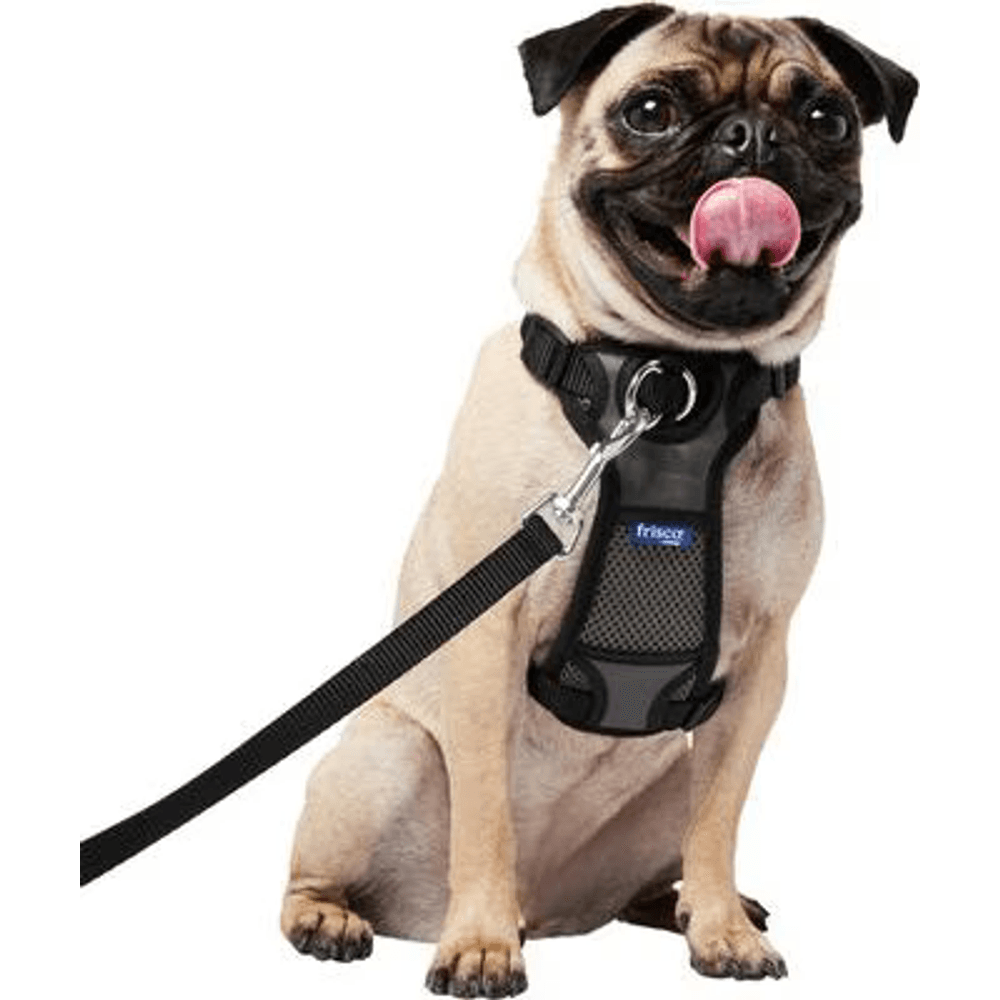
A budget-friendly padded no-pull harness that keeps leash pressure off a coughing dog's neck and windpipe by distributing it across the chest. A simple, affordable way to protect an irritated airway or a collapsing trachea on every walk.
Petful may earn a commission when you click through to Chewy, at no extra cost to you.
Exercise Needs
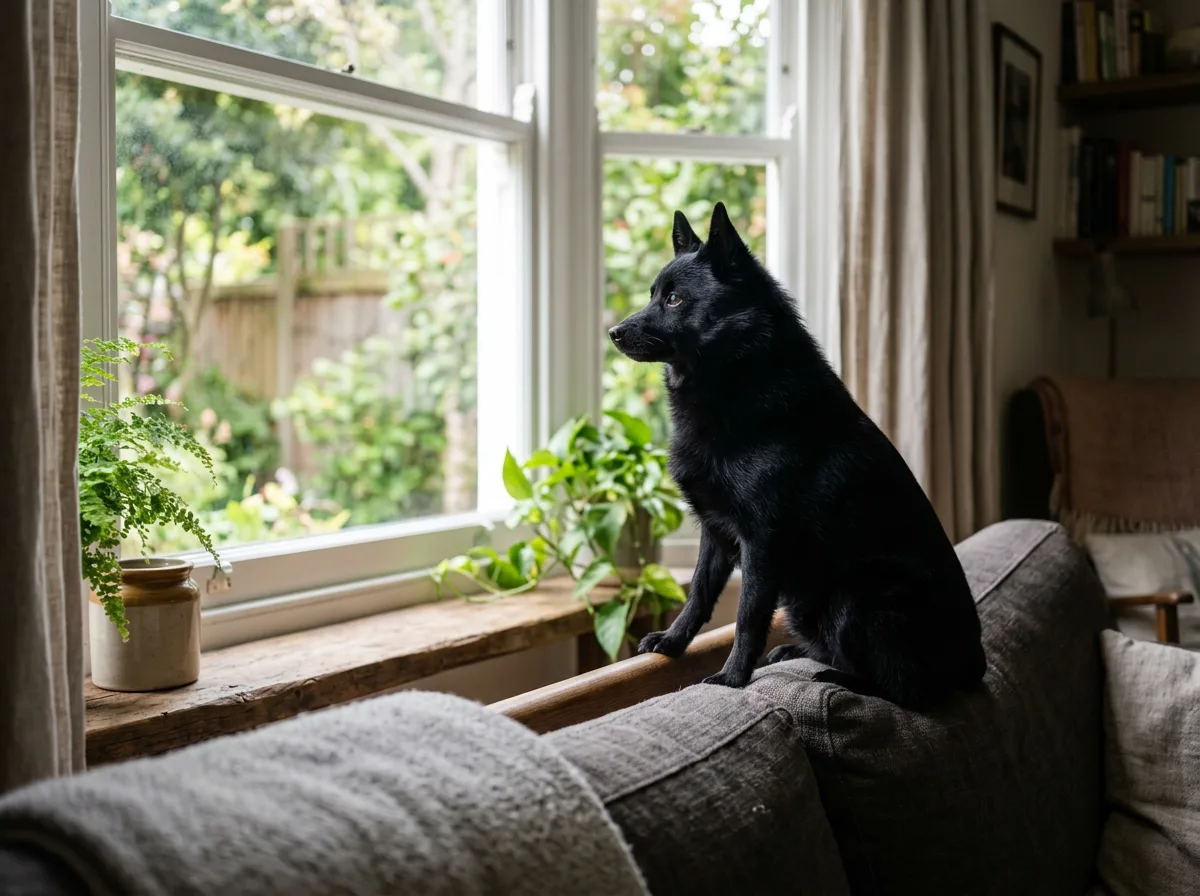
Rated high. A Schipperke needs a genuine daily outlet: two brisk walks, off-leash play in a secure space, or a structured activity like agility. Thirty minutes is a floor, not a target, and a well-exercised Schipperke can hike for miles. Because so much of the breed's mischief traces to pent-up energy, exercise is the single most effective behavior tool an owner has. Apartment living is possible for a Schipperke, but only with a committed owner who provides that daily outlet and manages the barking.
Physical exercise alone is not enough for a mind this active. Schipperkes excel at dog sports that combine body and brain: agility, rally, obedience, barn hunt, and nose work all suit the breed's speed and problem-solving drive. Even a house dog benefits from ten minutes of trick training or a food puzzle each day. Owners who lean into that mental side report far fewer nuisance behaviors than owners who only walk the dog and expect it to settle.
Living With a Schipperke Day to Day
Life with a Schipperke has a rhythm all its own. Expect a dog that appoints itself household supervisor: it will patrol the windows, escort you to the door, and audit every noise from the street. That watchfulness makes it a superb small guard dog and a poor fit for anyone sensitive to barking. Teaching a reliable "quiet" cue early, and rewarding calm, is one of the most valuable things a new owner can do.
Schipperkes are clean, low-odor dogs that groom themselves somewhat like cats, and their small size makes them practical for smaller homes as long as the exercise and enrichment needs are met. They tend to attach most closely to one or two people while remaining friendly with the wider family. Because they bond so hard, they do not do well being left alone for long workdays without preparation, which feeds directly into the separation-related behavior the breed can show. Crate training, puzzle feeders, and gradually building up alone-time from puppyhood all help.
Weather management matters too. The heavy black coat is built for a temperate Belgian climate, so Schipperkes are more comfortable in cool weather than hot. In summer, schedule walks for early morning and evening, never leave the dog in a warm car or unshaded yard, and watch for signs of overheating during play.
Schipperke Puppies and the First Year
The first year sets the trajectory for the next fifteen. Schipperke puppies are bold, fast, and into everything, and the window for socialization is short, so it should be a priority from the day the puppy comes home. Expose the puppy calmly and positively to new people, sounds, surfaces, other vaccinated dogs, and gentle handling, and start recall games immediately, because recall is the breed's lifelong weak spot.
Puppy-proofing needs to be thorough. A curious Schipperke pup will find every gap in a fence, every dropped item, and every escape route, so secure the yard and the home before the puppy arrives. Begin crate and alone-time training early to head off separation anxiety, and keep training sessions short, positive, and frequent. Puppies that learn early that good things come from paying attention to their humans grow into the trainable, delightful adults the breed is known for.
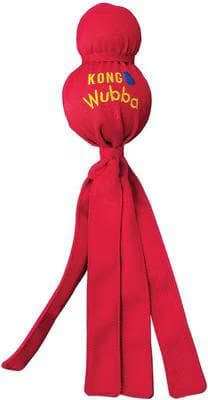
A large fabric-covered dog toy for supervised tug and fetch; choose the size for your dog and retire it if seams or material begin to fail.
Petful may earn a commission when you click through to Chewy, at no extra cost to you.
How the Schipperke Compares to Similar Breeds
People often shop the Schipperke alongside other small, alert, black or spitz-type dogs. The Schipperke is smaller and more compact than a Keeshond, less profusely coated than a Pomeranian, and generally sounder and longer-lived than many toy breeds. Compared with a Belgian sheepdog, its closest relative in temperament, it packs a similar herding-derived drive and intelligence into a fraction of the size. What sets it apart is that big-dog confidence and vigilance in a genuinely small, apartment-workable frame. If you like the idea of a bold, distinctive small breed, our breakdown of how coat color works in the Rhodesian Ridgeback shows the same standard-versus-non-standard thinking that shapes what a correct Schipperke should look like.
Grooming and Coat Care
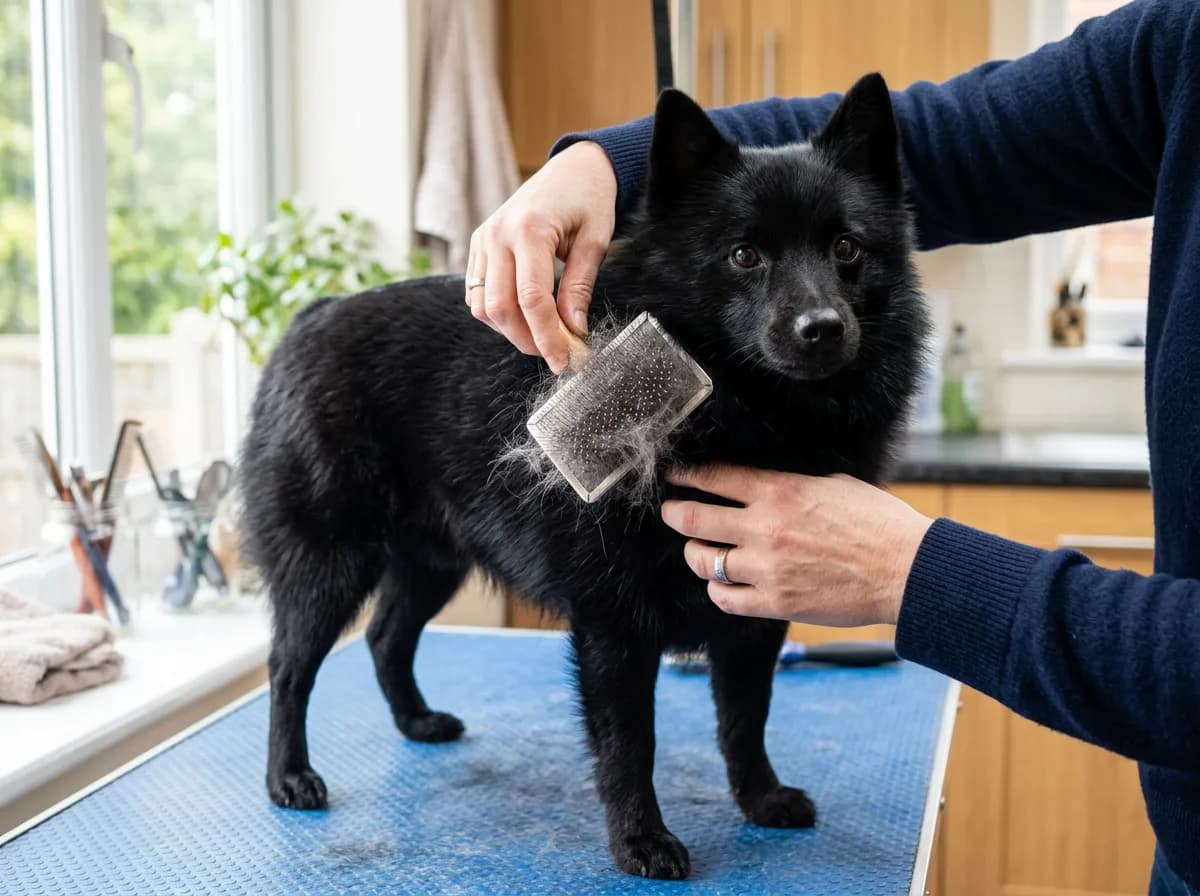
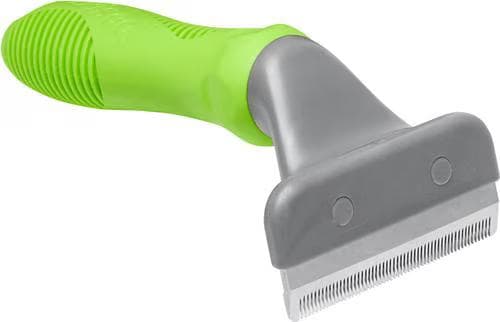
The Schipperke's black double coat looks high-maintenance but is surprisingly manageable. A weekly brushing keeps it healthy most of the year. The catch is shedding: Schipperkes "blow" their undercoat one to three times a year, and during those two- to three-week windows they shed heavily and need daily brushing to clear the loose coat. Regular grooming during a blow keeps the coat and your furniture under control.
| Task | Frequency | Notes |
|---|---|---|
| Brushing (normal) | Weekly | Slicker brush plus undercoat rake |
| Brushing (coat blow) | Daily | 1-3 times per year, 2-3 weeks each |
| Bathing | Every 6-8 weeks or as needed | Overbathing strips coat oils |
| Nail trim | Every 3-4 weeks | Keep nails short for foot health |
| Teeth | 2-3 times weekly | Small breeds are prone to dental disease |
| Ears | Weekly check | Erect ears need debris and wax monitoring |
Never shave a Schipperke's double coat. Shaving damages the coat's insulating structure, can cause it to grow back patchy, and removes the sun and temperature protection the coat provides in both heat and cold.
Schipperke Health
The Schipperke is a fundamentally sound, long-lived breed, and many live 15 years or more. Responsible ownership means knowing the handful of conditions that appear in the breed and buying only from breeders who screen for them.
Petful may earn a commission when you click through to Chewy, at no extra cost to you.
The most serious breed-specific concern is MPS IIIB (mucopolysaccharidosis type IIIB), a fatal inherited enzyme-deficiency disease. Affected dogs appear normal at birth but develop progressive neurological decline, typically becoming apparent around 2 to 4 years of age. According to the National Institutes of Health's genetics resource, MPS IIIB (also called Sanfilippo syndrome type B) is caused by a deficiency of the enzyme alpha-N-acetylglucosaminidase (NAGLU), which leads to toxic buildup in cells and progressive damage (source: MedlinePlus, National Library of Medicine). A DNA test exists, and reputable Schipperke breeders test breeding stock so no two carriers are paired.
Other conditions seen in the breed include:
- Luxating patella (slipping kneecap), a common small-breed orthopedic issue. The American College of Veterinary Surgeons describes patellar luxation as a kneecap that dislocates out of its normal groove, ranging from an occasional skip in the gait to persistent lameness that may need surgery (source: American College of Veterinary Surgeons).
- Legg-Calve-Perthes disease, a degeneration of the hip joint's femoral head that shows up in young small-breed dogs.
- Hypothyroidism, an underactive thyroid that can cause weight gain, coat changes, and lethargy, and is managed with daily medication.
- Eye disease, including progressive retinal atrophy and cataracts, which is why breeders pursue annual eye exams.
- Epilepsy and occasional heart murmurs in some lines.
- The single best protection against MPS IIIB and inherited eye and joint disease is a breeder who DNA-tests for MPS IIIB and provides OFA or equivalent clearances for patellas, hips, and eyes. Ask to see the paperwork. If a breeder cannot produce it, walk away. Rescue is another excellent route, covered below.
Is the Schipperke brachycephalic? No. Despite the foxy, compact head, the Schipperke has a normal-length muzzle and is not a flat-faced (brachycephalic) breed, so it does not carry the airway (BOAS) risks of pugs or bulldogs. Its main climate caution is heat: the dense black coat means Schipperkes overheat quickly, so exercise in the cool parts of the day in summer and always provide shade and water.
Cost of a Schipperke
A Schipperke puppy from a reputable, health-testing breeder typically runs from about $1,000 to $2,500 in the United States, with well-bred show-prospect puppies sometimes higher. Adoption through a breed rescue is far less, usually a few hundred dollars that covers spay or neuter and vaccinations. Beyond the purchase price, budget for the lifetime costs every dog carries: food, routine and emergency veterinary care, grooming supplies, training, and pet insurance. Because the breed is long-lived, that lifetime spend adds up, but Schipperkes are not among the ultra-premium breeds that command five-figure prices.
Adopting a Schipperke
Rescue is a rewarding path to Schipperke ownership. Breed-specific rescues and shelters regularly have Schipperkes and Schipperke mixes looking for homes, often adults whose temperament and health are already known, which removes much of the guesswork of raising a puppy. Start your search through our adoptable pet search, and if you do go the breeder route, learn to spot the warning signs of an irresponsible seller in our guide to what a puppy mill is. For a look at how coat genetics work in another distinctive breed, our piece on Rhodesian Ridgeback colors breaks down standard versus non-standard shades the same way responsible Schipperke breeders think about color.
Is a Schipperke Right for You?
A Schipperke rewards the right owner enormously and frustrates the wrong one. It suits an active, experienced, engaged household that wants a small dog with a big presence, does not mind vocal alertness, can commit to daily exercise and lifelong training, and has secure fencing. It is a poor match for a first-time owner who wants a low-effort lap dog, for a home with free-roaming small pets, or for anyone unable to tolerate frequent barking.
- 1Choose a Schipperke if you want a smart, loyal, long-lived watchdog and you enjoy training.
- 2Skip it if you need a quiet, hands-off, small pet, because this breed is vocal and demanding.
- 3Whichever route you take, prioritize health testing (MPS IIIB, patellas, eyes) above all else.
Frequently Asked Questions
Feeding and Nutrition for a Schipperke
A Schipperke does best on a complete and balanced diet formulated for small, active dogs and labeled to meet AAFCO nutrient profiles for its life stage. Because the breed is compact and food-motivated, portion control is the single biggest feeding issue owners face. Extra weight strains the knees and hips, worsening the luxating patella and Legg-Calve-Perthes risks the breed already carries, so measure every meal rather than free-feeding. Most adults thrive on two measured meals a day, while puppies need three to four smaller meals to steady their energy. Since Schipperkes train with food, subtract training treats from the daily ration to avoid slow, silent weight gain. Ask your veterinarian to confirm target weight and body condition at each checkup.
- You should feel a Schipperke's ribs easily under the coat and see a visible tuck at the waist. If the ruff hides a thickening middle, cut portions and add a walk before the joints pay for it.
Related on Petful
- Small Dog Breeds: 30 Tiny Companions and How to Choose
- Maltese Dog Breed Profile: Complete Guide
- The 7 Types of Dogs: Breed Groups Explained
- Weird Dog Breed Names and How to Say Them
Yes, for the right family. Schipperkes are loyal, affectionate, and protective, and with early socialization they do well with respectful older children and cats they were raised with. They are less suited to homes with toddlers or free-roaming small pets, and they need an active family willing to provide daily exercise and consistent training.
A puppy from a reputable, health-testing breeder generally costs about $1,000 to $2,500 in the United States, with show-quality puppies sometimes higher. Adopting through a breed rescue costs far less, usually a few hundred dollars. Budget separately for food, veterinary care, grooming, and insurance over a 13- to 16-year lifespan.
The Schipperke is often nicknamed the "little black devil" because of its jet-black coat and intensely curious, mischievous personality. The name describes a busy, into-everything temperament rather than any real aggression.
Schipperkes are not inherently aggressive. They are bold, confident, and territorial, so they bark at strangers and can be pushy with other dogs, but well-socialized Schipperkes are stable and friendly on their own terms. Early socialization and reward-based training prevent reactivity.
No single breed holds that title, but velcro breeds that bond intensely to one person, such as Schipperkes, Border Collies, German Shepherds, and Vizslas, are among those most prone to separation anxiety. Schipperkes attach closely to their families and can struggle when left alone for long stretches without training and enrichment.
Five-figure price tags belong to rare or heavily marketed breeds such as the Tibetan Mastiff, Samoyed, or certain lines of French Bulldog and Cavalier King Charles Spaniel, not the Schipperke. A Schipperke from a responsible breeder typically costs $1,000 to $2,500.
Yes. Schipperkes are alert, vocal watchdogs that bark to announce visitors, noises, and anything unusual in their territory. Training, adequate exercise, and teaching a reliable "quiet" cue help manage it, but prospective owners should expect a naturally talkative dog.

Tamar Love Grande, a writer, editor and animal lover, has fostered and found homes for more than 200 Dachshunds over the past few years. She lives in Los Angeles with her husband and pets.
Sign up for expert-backed reviews and safety alerts all in one place.