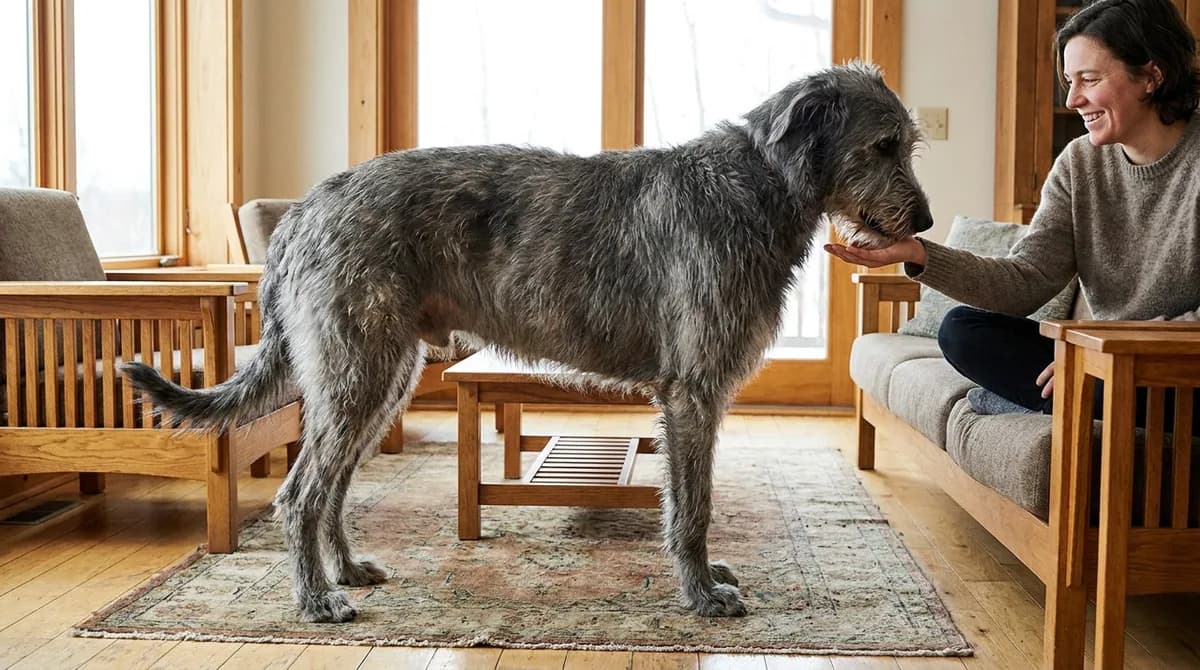
Irish Wolfhound Size: Height, Weight, and Puppy Growth
Learn how Irish Wolfhound height and weight standards differ from individual size, measure your dog correctly, track puppy growth, and check whether beds, doorways, and vehicles provide enough room.
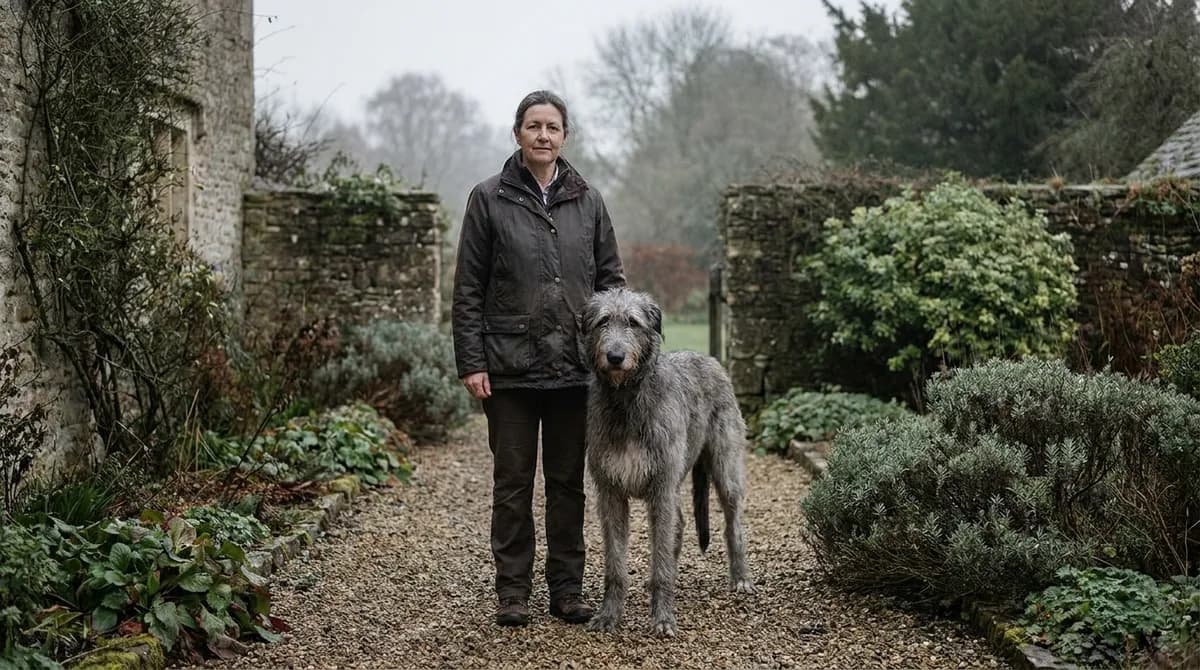
A person beside the dog gives visual context, while actual measurements guide fit decisions.
Petful is reader supported. As an affiliate of platforms like Amazon and Chewy, we may earn a commission when you buy through links on this page. There is no extra cost to you.
Irish Wolfhound size is best understood through three separate measurements: shoulder height, body length, and weight. The breed standard sets adult minimums, but those figures cannot tell you exactly how large a puppy will become or whether a particular dog will fit your car. For those decisions, measure the individual and keep the purpose of each measurement clear.

Sign up for expert-backed reviews and safety alerts all in one place.
Adult Irish Wolfhound height and weight
The Irish Wolfhound Club of America breed standard gives a male minimum height of 32 inches at the shoulder and a female minimum height of 30 inches. The minimum adult weights are 120 pounds for males and 105 pounds for females. These requirements apply to hounds over 18 months of age.
In metric units, that is 81.28 centimeters and about 54.4 kilograms for a male, or 76.2 centimeters and about 47.6 kilograms for a female. A full-grown Irish Wolfhound can exceed those minimums. The standard does not turn either figure into a maximum, and it does not establish the average size of every adult in the population.
| Measure | Male | Female |
|---|---|---|
| Minimum height at the shoulder | 32 inches / 81.28 cm | 30 inches / 76.2 cm |
| Minimum adult weight | 120 pounds / about 54.4 kg | 105 pounds / about 47.6 kg |
| Age condition | Over 18 months | Over 18 months |
| Interpretation | Standard minimum, not an average or maximum | Standard minimum, not an average or maximum |
When someone asks how much an Irish Wolfhound weighs, ask whether they mean a particular dog, the breed standard, or a typical adult description. Those answers are different. The IWCA's practical FAQ describes males around 34–35 inches and 140–180 pounds, and females around 32–34 inches and 115–140 pounds. Treat these as the club's general guidance, not a measured population average or a target your dog must reach.

A fixed-length lead for supervised walks, weighing visits and movement around a parked vehicle. It is not a vehicle restraint.
Petful may earn a commission when you click through to Chewy, at no extra cost to you.
A giant, massive-looking dog is not automatically a better example of the breed. The standard also emphasizes proportion, muscular condition, and easy movement. More body weight is not a substitute for a sound frame. A female should not be fed toward a male's weight simply because both are Irish Wolfhounds.
Keep these distinctions in mind when reading a size chart:
- An adult minimum describes a standard requirement, not the smallest possible individual.
- A typical range is guidance with variation, not a promise about a puppy.
- The tallest dog and the heaviest dog need not be the same individual.
- A record describes a documented dog at a particular time, not the size of the whole breed.
To assess a claim about the world's largest Irish Wolfhound, first ask whether “largest” means tallest or heaviest. Record verification requires an identified dog, a dated measurement, a stated measurement method, and a credible record source. A photograph or an owner's estimate cannot establish the biggest Irish Wolfhound ever recorded. Without that documentation, treat the claim as unverified rather than using it to predict a puppy's adult size.
There is no recognized miniature or mini Irish Wolfhound variety. A smaller individual, another rough-coated breed, and a mixed dog are different possibilities. If a seller advertises a miniature Wolfhound, ask exactly what ancestry and expected adult size are documented rather than assuming a recognized smaller version exists.
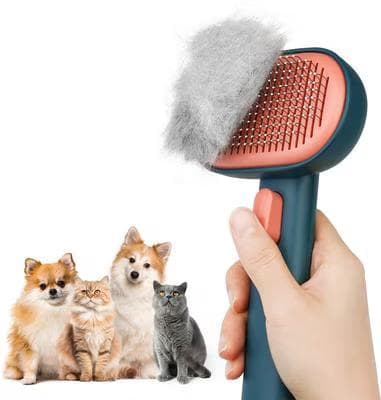
A slicker brush for suitable areas of a wiry coat. Allow comfortable grooming space and stop at painful tangles.
Petful may earn a commission when you click through to Chewy, at no extra cost to you.
Measure shoulder height, body length, and weight
Measure an Irish Wolfhound standing naturally on all four paws, on a level, nonslip surface. Shoulder height runs vertically from the ground to the withers, the upper shoulder area. It does not include the head, ears, or hair standing above the body. Keep the dog's head comfortable rather than pulling it upward to create a taller outline.
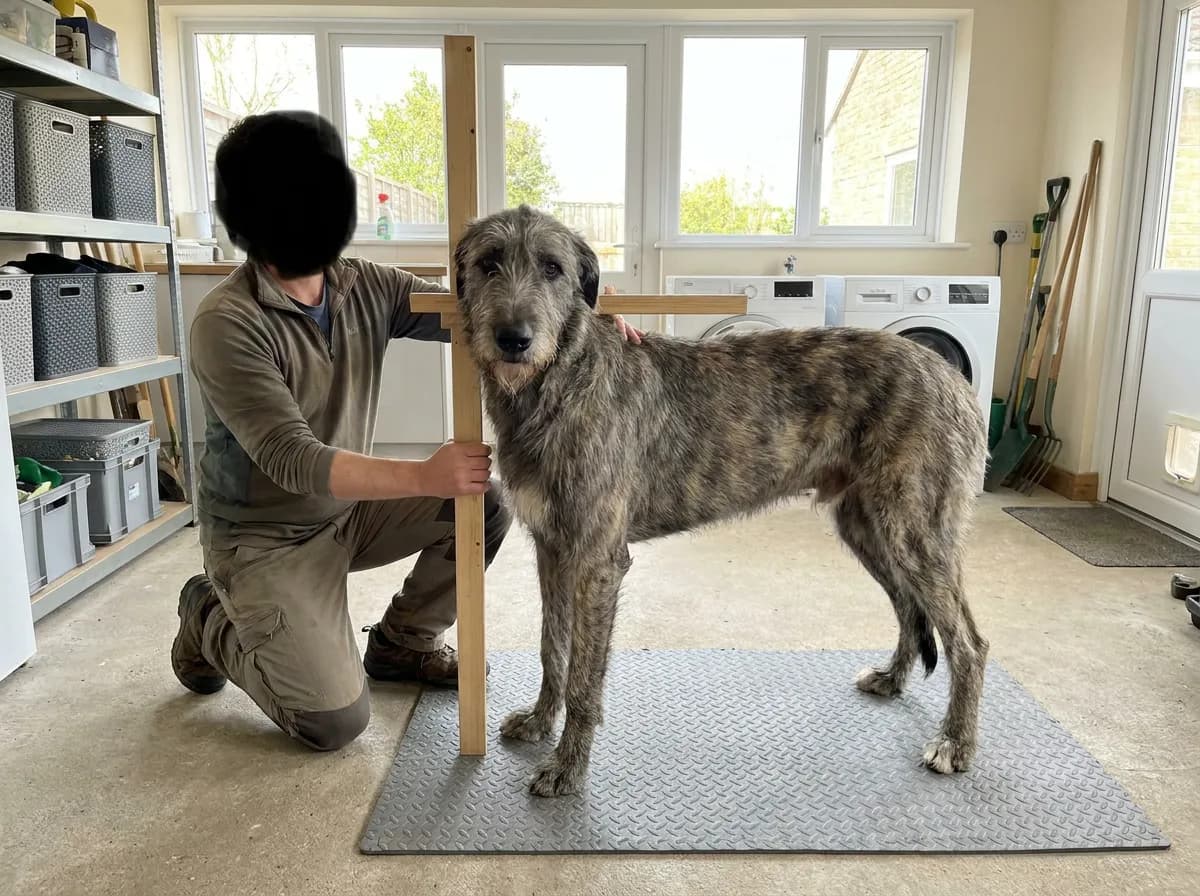
A second person can help the dog remain relaxed while you position the measuring tool. Stop if the dog moves away or becomes worried. Several calm attempts are more useful than forcing a rigid pose and recording a misleading figure. For height in feet, remember that 32 inches is 2 feet 8 inches and 30 inches is 2 feet 6 inches. These conversions still describe shoulder height.
Small differences between home measurements may reflect stance or technique rather than growth. If one reading seems surprising, check whether the dog leaned, lowered its shoulders, stood on an uneven mat, or moved while the tool was positioned. Keep the original observation and mark a repeat reading separately. That is more useful than quietly replacing a result because it does not resemble the number you expected. For an official assessment, ask an experienced professional to demonstrate the method and explain what the measurement is intended to establish.
For a repeatable home record:
- Let the dog settle on the same level surface before each measurement.
- Find the withers and keep the measuring tool vertical, with its height reference level.
- Record the result and units immediately, noting whether the dog stood comfortably.
- Repeat an unexpected result before treating it as a change in growth.
Body length needs equally clear endpoints. For a consistent body-length record, use the point of the shoulder to the point of the buttock, and record that method. An equipment manufacturer may instead request a nose-to-tail-base measurement or another dimension. Follow that item's instructions rather than substituting your growth-record measurement.
Weight requires a suitable scale. Ask your veterinary practice whether you can arrange a calm weighing visit and whether the platform accommodates the dog comfortably. Use the same scale when practical, and record pounds or kilograms explicitly. Do not attempt to lift a large dog onto a household scale simply to obtain a number.
A standing photograph is useful context, but it is not a verified measurement. Camera angle, a sloping surface, and distance from the lens can all change apparent height. Pictures of a Wolfhound upright on its hind legs measure something entirely different from the shoulder-height standard. The practical question is how the dog stands and moves normally, not how dramatic a pose looks.
Puppy growth without a one-size-fits-all chart
Irish Wolfhound puppy size changes quickly, but an online monthly weight chart can suggest more certainty than the evidence supports. The adult minimums above are not milestones to divide into smaller monthly goals. A puppy should not be pushed to reach a particular adult weight ahead of its own development.
A useful Irish Wolfhound growth chart follows one dog over time. Record age, measured weight, shoulder height when you can obtain it calmly, and your veterinarian's assessment of body condition. That combination shows more than a weight alone. Two puppies with the same weight can differ in frame, muscle, fat cover, and stage of development.
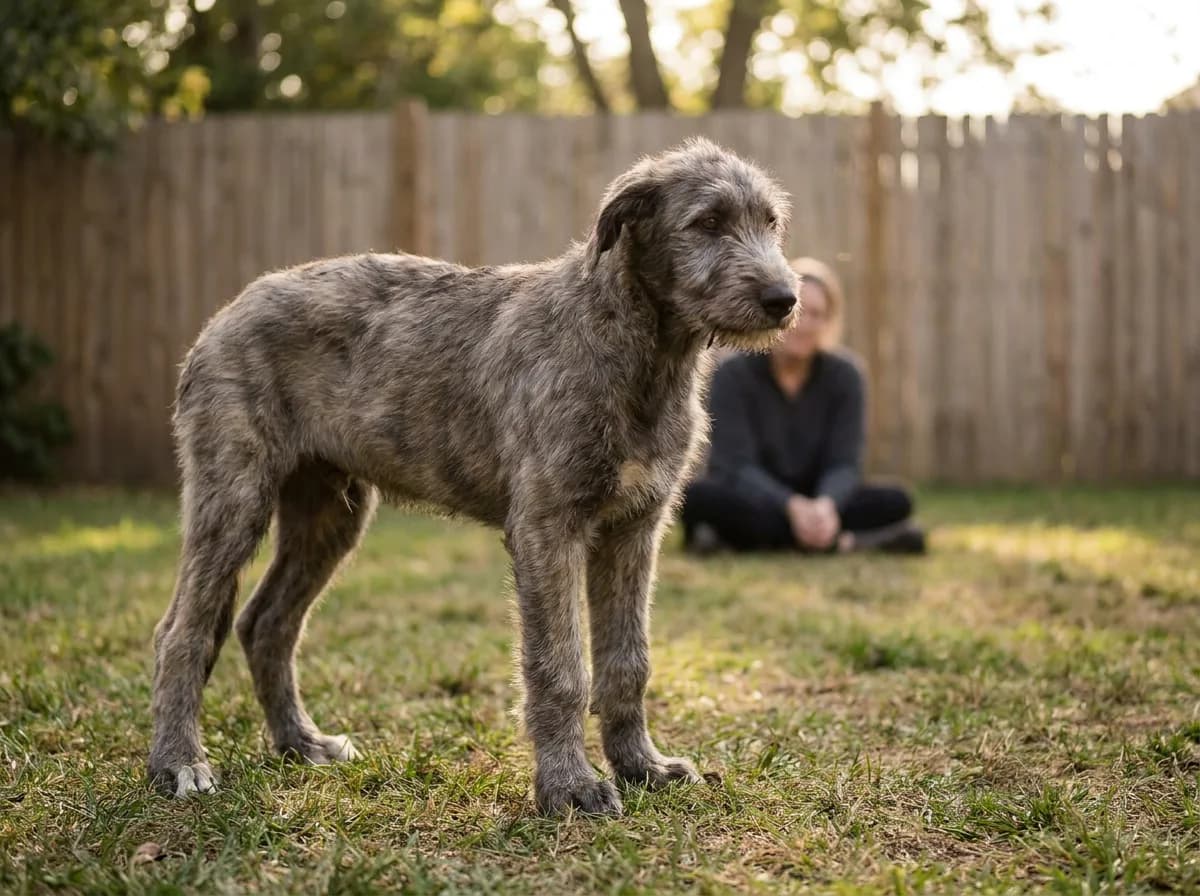
Use the blank growth record below for actual observations. Leave a field blank when it was not measured rather than estimating a reassuring number. Keep the records from veterinary appointments, too, so a change can be interpreted alongside appetite, activity, diet, and health.
| Date | Age | Measured weight and units | Shoulder height and units | Body condition and veterinary notes |
|---|---|---|---|---|
| ________ | ________ | ________ | ________ | ________ |
| ________ | ________ | ________ | ________ | ________ |
| ________ | ________ | ________ | ________ | ________ |
At six months old, a Wolfhound is still a growing puppy even if its body already looks substantial beside other dogs. Height, overall proportions, and adult bulk do not necessarily develop in step. Avoid predicting a final height from one photograph or assuming that a temporarily gangly outline means the dog needs extra food.
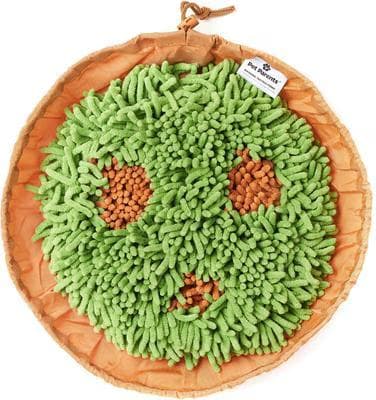
A supervised food-search mat for part of the dog's food allowance. Provide clear floor space and remove it if chewed.
Petful may earn a commission when you click through to Chewy, at no extra cost to you.
Choose a recording schedule with your veterinarian that gives useful information without making weighing or measuring stressful. Bring a short list of questions: whether the current food suits this stage, how body condition looks, and whether activity needs adjustment. A height chart can be helpful when its points are your dog's repeatable measurements. It becomes misleading when it assigns unsupported numbers to every month and encourages owners to feed toward them. Keep the purpose of the log focused on noticing changes and supporting care decisions.
Review the pattern rather than competing with another puppy's chart:
- Keep the food name and amount with the record, including significant extras.
- Note appetite, stool changes, discomfort, or a change in willingness to move.
- Ask your veterinarian to demonstrate body-condition assessment on your dog.
- Bring an unexpected weight change to the practice instead of adjusting food solely to match an internet target.
WebVet's guide to dog weight loss or gain provides additional context for changes that deserve attention. Do not dismiss a sudden change simply because this is a fast-growing breed. A growth record helps describe what happened; it does not diagnose why.
What a giant dog needs at home and in the car
A shoulder measurement cannot tell you how much room a Wolfhound occupies while asleep. Watch the dog curl up, lie on its side, stretch its legs, and get up. The resting area must accommodate those movements, not just contain a curled outline. Measure the usable sleeping surface of a bed, excluding bulky bolsters that reduce the space inside.
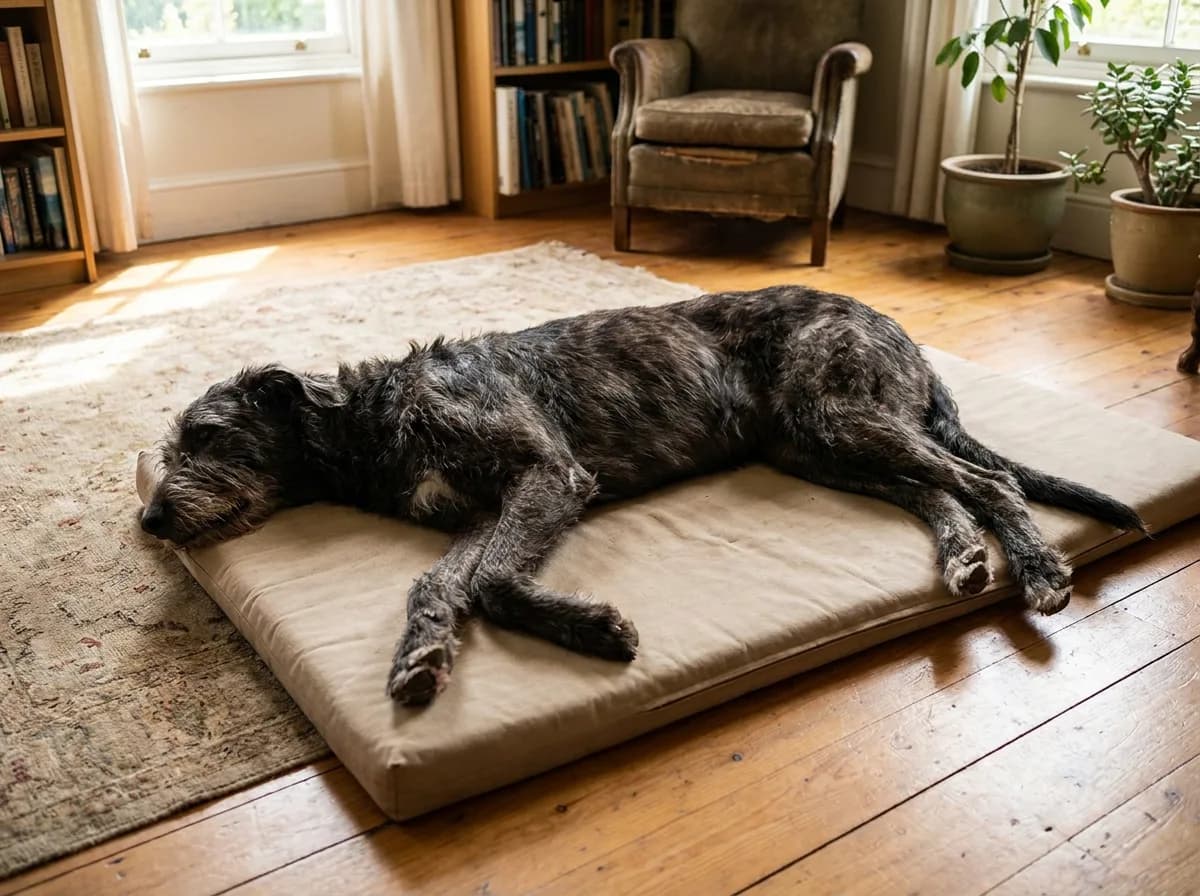
Product names such as Large, XL, and Jumbo are not standardized measurements. Compare the actual dimensions with your dog and leave room for its preferred sleeping position. WebVet's orthopedic dog bed guide can help with selection, but no size label makes a particular bed automatically suitable for an adult Wolfhound.
Consider the route to that resting area as well. A narrow turn between furniture may be more awkward than the doorway itself. Keep the dog's head, tail, and turning room in mind, and consider whether the surface is secure underfoot. Rearranging a small area can be more useful than buying a larger bed that blocks the walkway.

Compare coverage choices for your pet, then request a quote directly on Lemonade.
- Check a price for your pet
- Review available coverage choices
- See the terms before you decide
Eligibility, waiting periods, limits and exclusions apply.
Petful may earn a commission when you click through to Lemonade, at no extra cost to you.
| Measurement or observation | What to check |
|---|---|
| Shoulder and head clearance | Doorways, overhead obstacles, and the vehicle entrance |
| Body length and turning movement | Narrow passages and usable equipment dimensions |
| Full sleeping footprint | The clear resting area, not just the bed's outside dimensions |
| Actual weight | Equipment limits and a realistic assistance plan |
| Entry and exit movement | Footing, access height, and space around the parked vehicle |
Try the arrangement before assuming it works. With the dog relaxed and supervised, observe the turn into its resting area, the space it uses to rise, and whether people can pass without stepping over it. Keep water accessible without placing the bowl where it repeatedly gets kicked or traps the dog in a corner. For a puppy, recheck the setup as its dimensions change. A bed or walkway that worked at collection time may soon need adjustment, even though nothing about the room itself has changed.
Include ordinary care in the layout. You need room to move around the dog for brushing and gentle inspection without wedging it between furniture. An aumuca slicker brush may suit parts of the wiry coat, but the dog should be comfortable on secure footing. Do not assume that a grooming table designed for smaller dogs will support this breed or make lifting it sensible.
Vehicle planning starts while the car is parked. Check the entrance, available interior space, and how the dog will get in and out. An opening can appear generous yet require an awkward turn. Think ahead to a day when the dog is sore, older, or unwilling to jump; a plan that always depends on one person lifting the entire dog may not be workable.
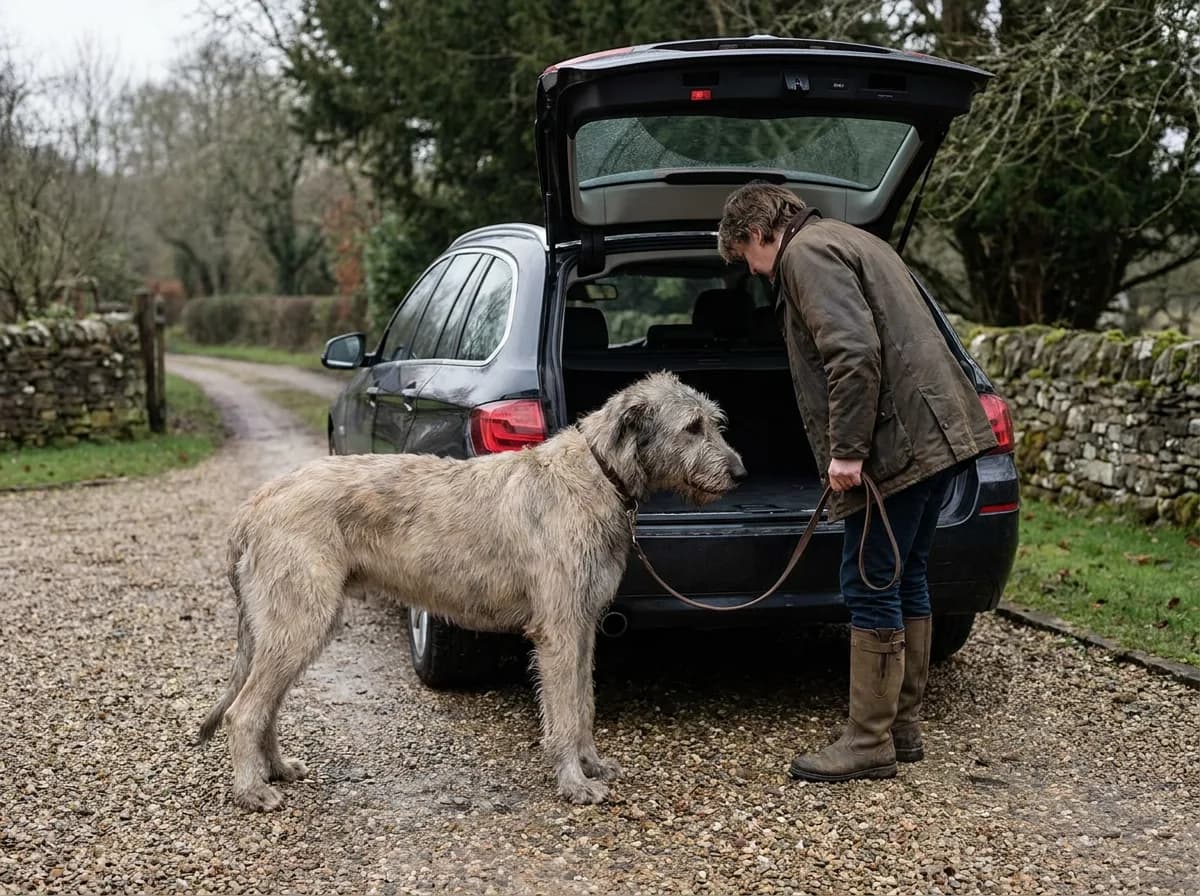
A Frisco Traffic Leash can help keep the dog close during supervised movement around a parked vehicle. It is a walking lead, not crash-protection equipment. Any travel restraint, crate, ramp, or assistance equipment needs its own appropriate fit and load-capacity assessment.
Also leave clear space for indoor activity. A supervised Pet Parents Forager snuffle mat can provide a food-search task without asking a growing dog to race through a crowded room. Use part of its usual allowance and remove the mat if it starts chewing. An enrichment activity does not replace suitable movement, outdoor access, or time with people.
Before committing to equipment, check:
- The dimensions of the actual dog and the usable space inside the item.
- The manufacturer's measurement method and stated weight limit.
- Whether the dog can enter, turn, rest, and exit comfortably.
- Whether another adult could use the same arrangement if you were unavailable.
- How the setup would work if the dog needed veterinary advice about mobility.
Healthy growth and long-term health
A larger number on the scale does not establish better health or predict Irish Wolfhound lifespan. Use growth observations alongside body condition and veterinary assessment. The Irish Wolfhound Foundation's health guidance emphasizes breed-specific monitoring, including annual cardiac screening after age two. Our Irish Wolfhound lifespan guide explains that wider care picture. For financial planning, compare a personalized Lemonade quote with the policy terms rather than assuming a giant breed or an existing condition is covered.
Irish Wolfhound size beside people and wolves
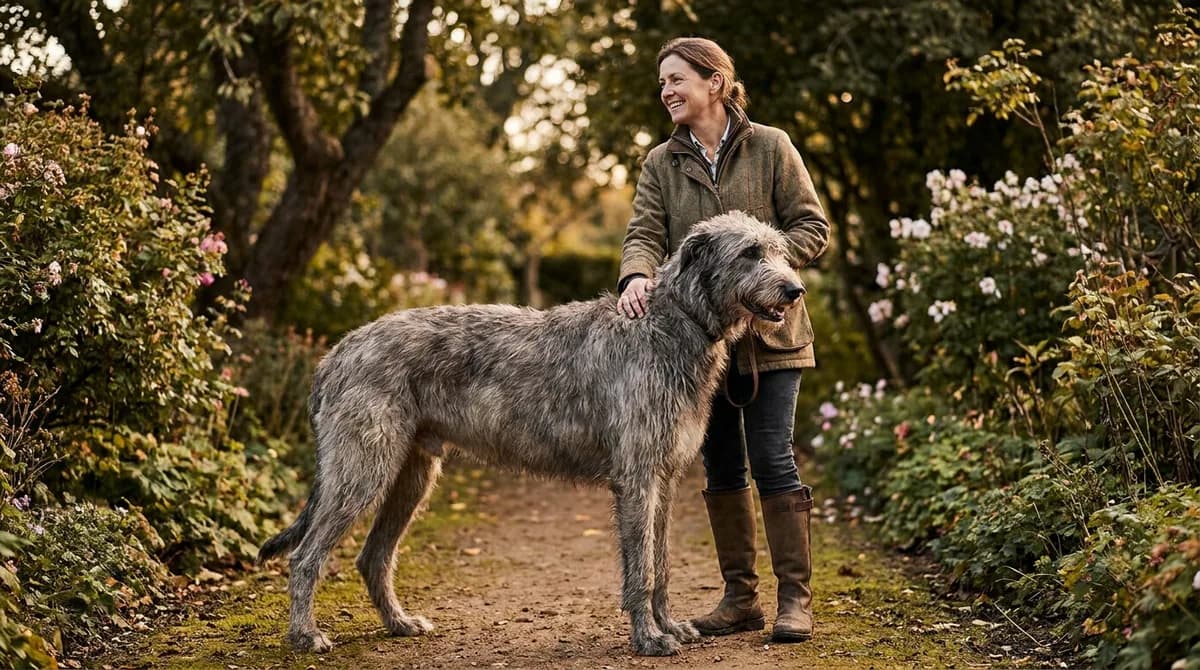
An Irish Wolfhound next to a person gives an immediate impression of scale, but the person's height and position matter. A photograph of a dog close to the camera with a person farther away can make the dog seem disproportionately huge. A useful comparison shows both on the same level ground, at a similar distance from the lens, with the dog standing naturally.
What is bigger, a wolf or an Irish Wolfhound? There is no reliable single answer without defining both the animals and the measurement. Wolves vary in size, and so do individual Wolfhounds. Taller at the shoulder does not necessarily mean heavier, longer-bodied, or more substantial overall. A picture of an Irish Wolfhound next to a wolf cannot establish those distinctions on its own.
For any human or animal size comparison, look for:
- A stated measurement, such as shoulder height or actual body weight.
- Identified individuals or clearly described populations.
- Comparable methods and units.
- A source that separates measurements from visual impressions.
The breed's history of hunting wolves does not settle a modern size comparison. It also does not justify arranging contact between a domestic dog and wildlife. For household planning, the meaningful comparison is between your dog's actual dimensions and the space and equipment it will use every day.
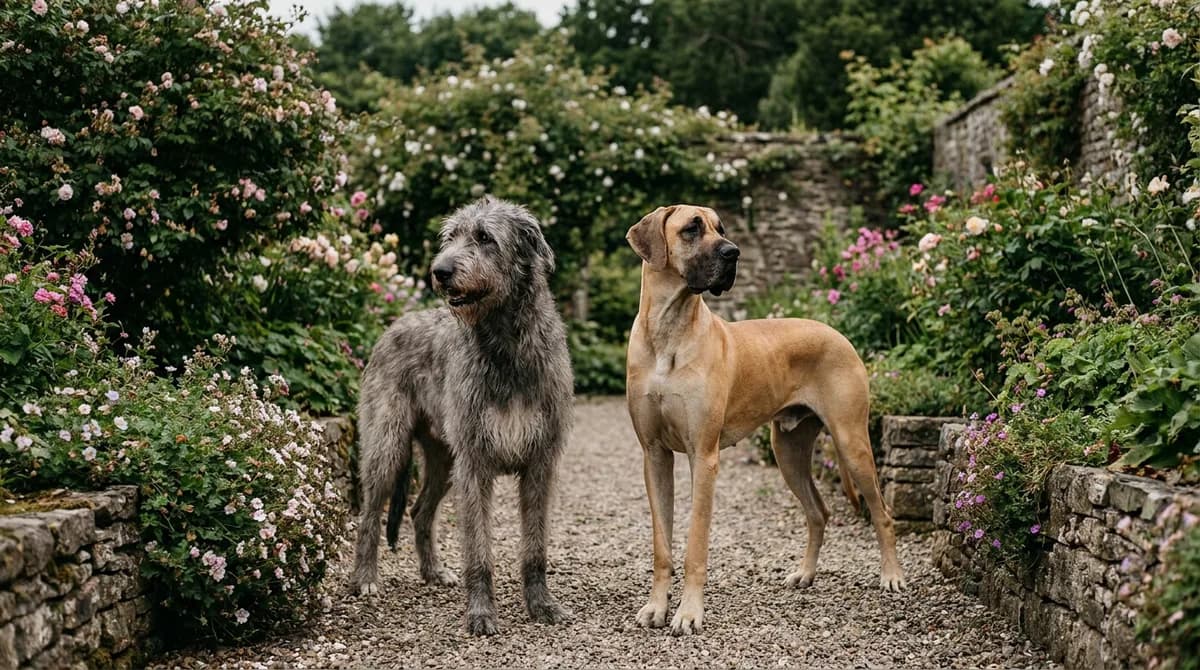
Irish Wolfhound and Great Dane size
Irish Wolfhound versus Great Dane comparisons often mix standard minimums with typical adult ranges. That can make a table appear more definitive than it is. Height and weight are separate questions, and neither breed label tells you which of two individual dogs is larger. Our Irish Wolfhound vs. Great Dane guide explains the measurements alongside coat care, handling, and the practical demands of living with either giant breed.
Breed history and smaller lookalikes
The Scottish Deerhound is a separate breed with a similar rough-coated sighthound outline. The Borzoi can also cause naming confusion because it was historically called the Russian Wolfhound. Modern Irish Wolfhounds are not described accurately by a simple recipe of other breeds. Our Irish Wolfhound breed profile explains their history, lookalikes, and household needs. Space, transport, companionship, and care demands help explain why they are less common family pets than many smaller dogs.
Training a dog this large
Physical size makes early handling habits especially useful. Irish Wolfhounds can learn, but intelligence does not guarantee loose-leash walking, calm greetings, or safe behavior around cats. Build those skills gradually with positive practice and appropriate management. Compatibility with a smaller animal requires an individual assessment, not confidence in a gentle breed reputation. Our Irish Wolfhound temperament guide covers learning, social introductions, prey drive, and daily routines.
Irish Wolfhound size questions
A credible record claim needs a verified measurement, an identified dog, a date, and a clear category such as shoulder height or weight. The breed-standard sources used here do not establish one independently verified largest-ever Wolfhound. Treat an undated viral photograph or a seller's description as insufficient evidence of a world record.
There is no single dependable height or weight for every four-month-old puppy. Individual puppy growth is better assessed through growth history, body condition, and a veterinary examination than by matching another dog's photograph. Bring the puppy's previous weights and feeding information to an appointment if you are concerned about its development.
No. Measure shoulder height with all four paws on level ground and avoid forced standing. The IWCA cautions against encouraging hind-leg poses, particularly in growing puppies, because they can strain bones and muscles. An upright photograph does not provide a comparable breed-standard height.

Coreen Saito is a pet writer and longtime shelter volunteer with more than a decade in animal rescue. She covers cat behavior, breed care, and the small, ordinary science of sharing a life with companion animals, with a particular focus on honest takes about the products and decisions that actually matter. At home in Arizona, she's outranked by Mac (a dog with the loudest opinion in the house), Rebel (a cat who governs by quiet authority), and Meri (an orange tabby who runs the late shift and the laundry basket). She writes about all three, plus the rescues that keep coming through her life, at LifeWithMinty.com.
Sign up for expert-backed reviews and safety alerts all in one place.