Irish Wolfhound Lifespan: What the Research Shows
Understand what Irish Wolfhound lifespan figures actually measure, which health concerns deserve attention, and how screening records, everyday observation, and timely veterinary care fit together.

BVMS, MRCVS
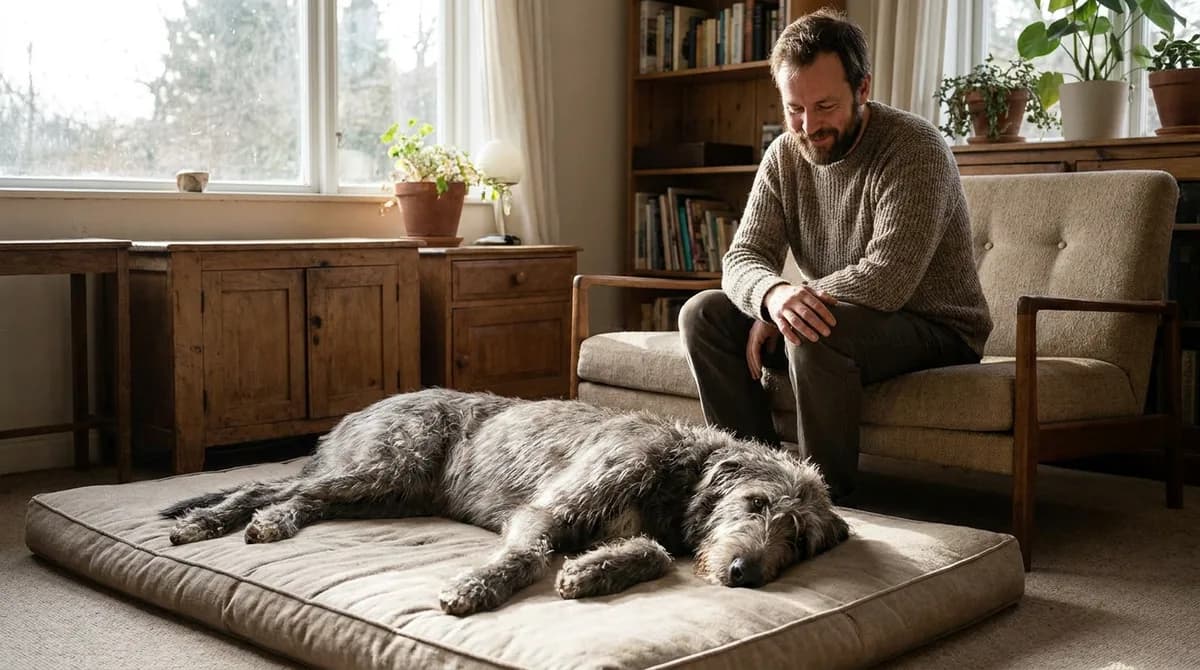
Lifespan statistics describe groups; daily care follows the needs of the individual dog.
Petful is reader supported. As an affiliate of platforms like Amazon and Chewy, we may earn a commission when you buy through links on this page. There is no extra cost to you.
Irish Wolfhound lifespan estimates are short compared with those of many smaller dogs, but they are not a deadline for an individual. Historical Irish Wolfhound Foundation research reported average lifespans of about seven and a half years in two study groups. Understanding what those figures measure helps you make better decisions about screening, everyday care, and changes that need veterinary attention.

Sign up for expert-backed reviews and safety alerts all in one place.
How long do Irish Wolfhounds live?
The Irish Wolfhound Club of America's general guidance gives a lifespan range of 6–8 years. That is a breed reference estimate, not the result of examining your dog. Age, medical history, current findings, and response to treatment matter when a veterinarian discusses an individual prognosis.
The Irish Wolfhound Foundation provides more specific historical research. Its October 2020 Life Cycle II update compares the Lifetime Cardiac Study, or LCS, covering 2000–2015, with Life Cycle II Study data from 2016 through the first six months of 2020. The reported cohort means were 89 months, or 7.41 years, and 91 months, or 7.58 years, respectively.
| Source | Period and population | Reported figure | Interpretation |
|---|---|---|---|
| IWCA breed FAQ | General breed guidance; no study cohort defined in the FAQ | 6–8 years | Reference range, not an individual prediction |
| IWF Lifetime Cardiac Study | North American study data, 2000–2015 | Mean 89 months, reported as 7.41 years | Historical cohort mean |
| IWF Life Cycle II Study | North American study data, 2016 through June 2020 | Mean 91 months, reported as 7.58 years | Historical cohort mean |
| Your dog's veterinary assessment | Current records and examination of the individual | No universal number | Individual outcome cannot be calculated from these cohort means |
A mean is an arithmetic average. A median identifies the middle of a distribution. They are not interchangeable, and a newer published median should not be placed beside an older mean as proof that the breed now lives longer. First check the country, dogs included, collection period, follow-up method, and statistic being reported. These historical cohort findings describe the study groups, not a contemporary worldwide census.

Compare coverage choices for your pet, then request a quote directly on Lemonade.
- Check a price for your pet
- Review available coverage choices
- See the terms before you decide
Eligibility, waiting periods, limits and exclusions apply.
Petful may earn a commission when you click through to Lemonade, at no extra cost to you.
The IWF update also reports combined cause-of-death information for 1,011 hounds with age and cause of death recorded. That number is not a count of dogs examined today. Nor does the small difference between the two reported means demonstrate that a particular intervention added months to every dog's life.
Use personal stories for perspective rather than statistics:
- An older Irish Wolfhound can be an encouraging individual example without establishing the breed average.
- A Reddit thread contains self-selected reports, not a representative lifespan survey.
- A breeder's family history is useful to discuss, but ask which relatives and records it includes.
- A current healthy examination and a historical lifespan estimate answer different questions.
An Irish Wolfhound's age should help organize care, not make every birthday feel like a prediction. Ask your veterinarian how the dog's current condition affects its follow-up needs. The male-versus-female and longest-lived questions below explain further limits in interpreting the available evidence.
Why a giant breed has a shorter lifespan
Irish Wolfhounds share the shorter lifespan pattern seen in giant dogs, and they face several important health burdens. The IWCA health overview identifies cancer, cardiac disease, bloat, and other serious conditions. Rapid puppy growth also creates a period when development and injury prevention deserve attention. There is no single established explanation that predicts why one Wolfhound will die earlier than another.
The IWF historical data help identify where attention belongs, but a list of causes of death does not prove why every case occurred. Genetics, disease, environment, and care interact differently in different dogs. Likewise, finding a health problem among living dogs is not the same as showing that it caused their deaths.
The practical response is to separate three tasks:
- Schedule appropriate screening and preventive care before obvious illness.
- Notice changes in the individual dog's normal behavior and physical function.
- Act immediately when emergency signs appear.
None of these guarantees extra years. They can help you recognize problems and obtain appropriate care without treating every quiet afternoon as evidence that something is wrong.
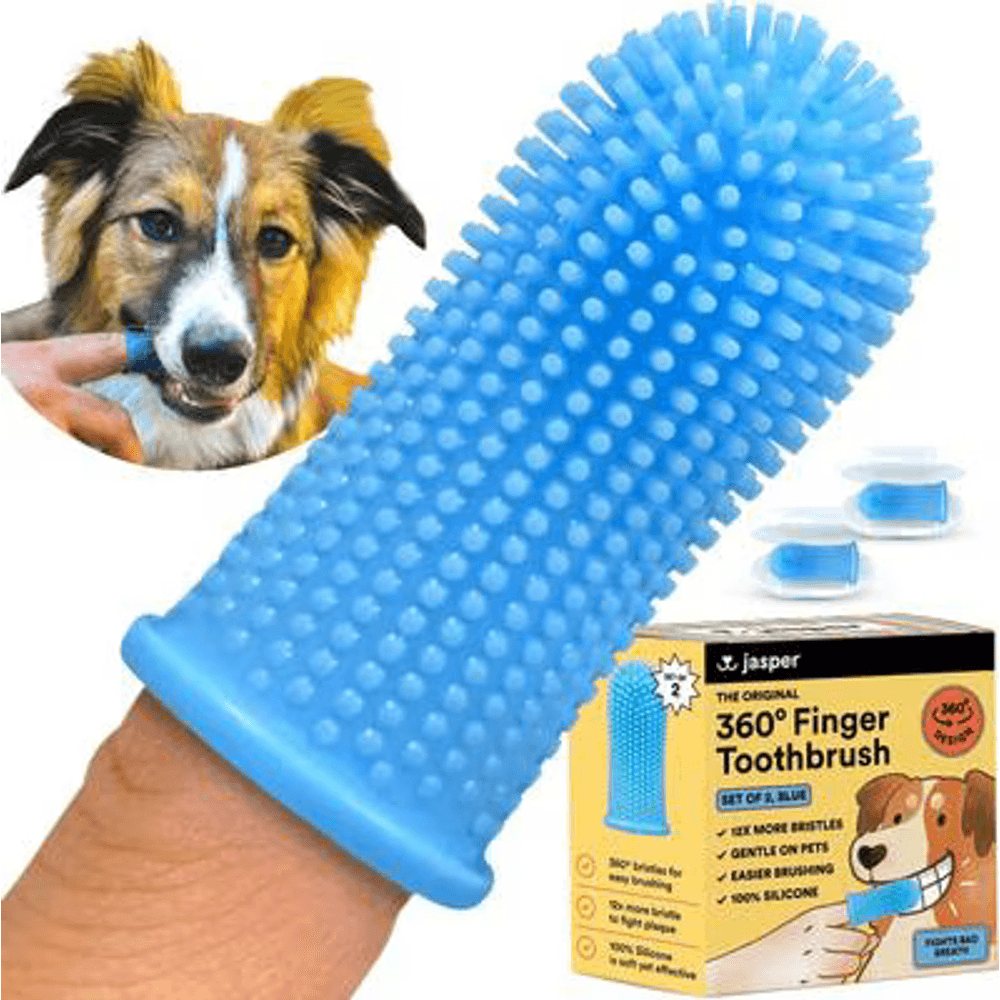
The Jasper 360 finger toothbrush is an option for safely tolerated oral care. Avoid forced handling; brushing does not replace dental assessment.
Petful may earn a commission when you click through to Chewy, at no extra cost to you.
Health problems that affect longevity
Important Irish Wolfhound health issues include osteosarcoma, heart disease such as dilated cardiomyopathy, gastric dilatation-volvulus, pneumonia, and developmental liver shunts. The IWCA's health and longevity guidance identifies these concerns for breed-aware care. Wolfhounds can also develop ordinary canine illnesses, while joint problems and later-life weakness may affect comfort and function. These possibilities call for appropriate screening and assessment of symptoms; they do not diagnose the dog beside you.
Heart disease
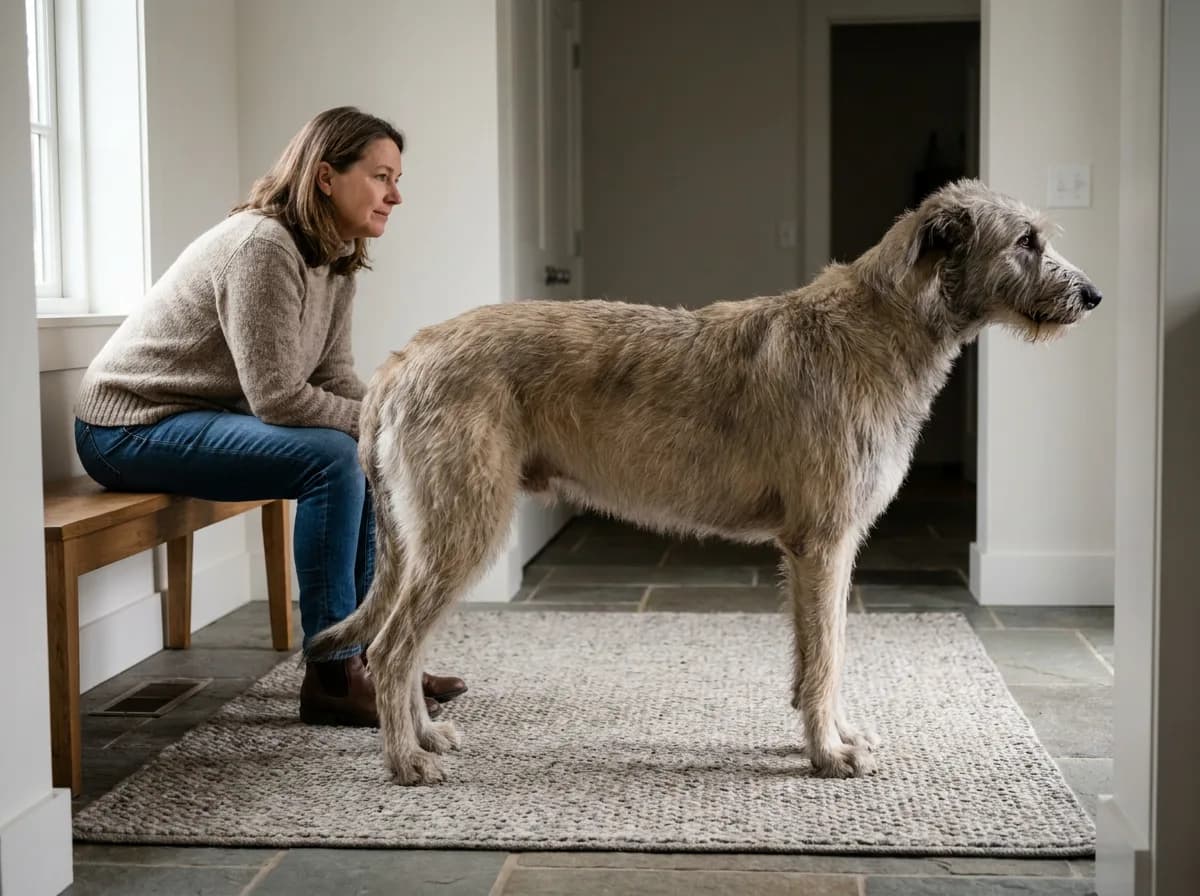
Dilated cardiomyopathy affects the heart muscle's ability to pump effectively. Other cardiac problems, including abnormal rhythms, also matter in Wolfhounds. The IWF emphasizes monitoring because heart disease may be treatable when identified and assessed appropriately. A dog appearing comfortable at home does not provide the same information as a cardiac evaluation.
If your dog has a cardiac diagnosis, ask which condition is present and what changes should trigger a call. Heart disease and congestive heart failure are not interchangeable labels. WebVet's guide to congestive heart failure in dogs explains the distinction and the importance of veterinary assessment. Never start, stop, or change heart medication on the basis of another owner's experience.
Osteosarcoma and other cancers
Osteosarcoma is a bone cancer highlighted in both the IWCA guidance and the IWF cause-of-death findings. Persistent limping, pain, or a new swelling warrants veterinary assessment. Those signs can have other causes, so they do not establish cancer at home. Conversely, assuming that a limp is simply age or a minor strain can delay useful investigation.
When a diagnosis is made, discuss comfort, treatment choices, likely benefits, and the practical demands of each option. The historical study's average age at death for a disease cannot serve as a countdown for an individual patient. Decisions should reflect the actual diagnosis and your dog's circumstances, with pain management and quality of life included from the start.
GDV and pneumonia
Gastric dilatation-volvulus, commonly called GDV or bloat with twisting, is an emergency. Repeated unsuccessful attempts to vomit, a swollen abdomen, distress, or collapse require immediate veterinary contact. Do not wait for every possible sign to appear. A feeding accessory or a particular mealtime routine cannot be relied on to rule it out.
Pneumonia is another serious concern identified by the breed organizations. Breathing difficulty or a rapidly deteriorating dog needs urgent attention. A new cough, unusual lethargy, or appetite change should be discussed promptly with the practice, which can determine the appropriate urgency. You do not need to decide whether the problem is pneumonia or heart disease before seeking help.
Developmental and mobility concerns
A portosystemic shunt, also called a liver shunt, is a developmental problem for which puppies should be screened before placement. Ask for the actual test report rather than an assurance that the litter was healthy. Hip and elbow problems, other joint conditions, and rear-end weakness later in life also deserve individual assessment rather than assumptions based on the breed name.
Keep a practical distinction between a diagnosis and an observation. “He takes longer to rise” describes something useful. “His rear is failing” may sound conclusive while leaving the cause unknown. Explain what you see, when it began, and whether it is changing so the veterinarian can investigate the problem.
Screening and records to discuss with your veterinarian
Screening looks for concerns in a dog that may not have obvious symptoms. Diagnostic testing investigates a suspected problem or abnormal finding. A routine appointment can involve both, but the purpose of each test should be clear. Ask what the test assesses, what its limitations are, and what happens if the result needs follow-up.
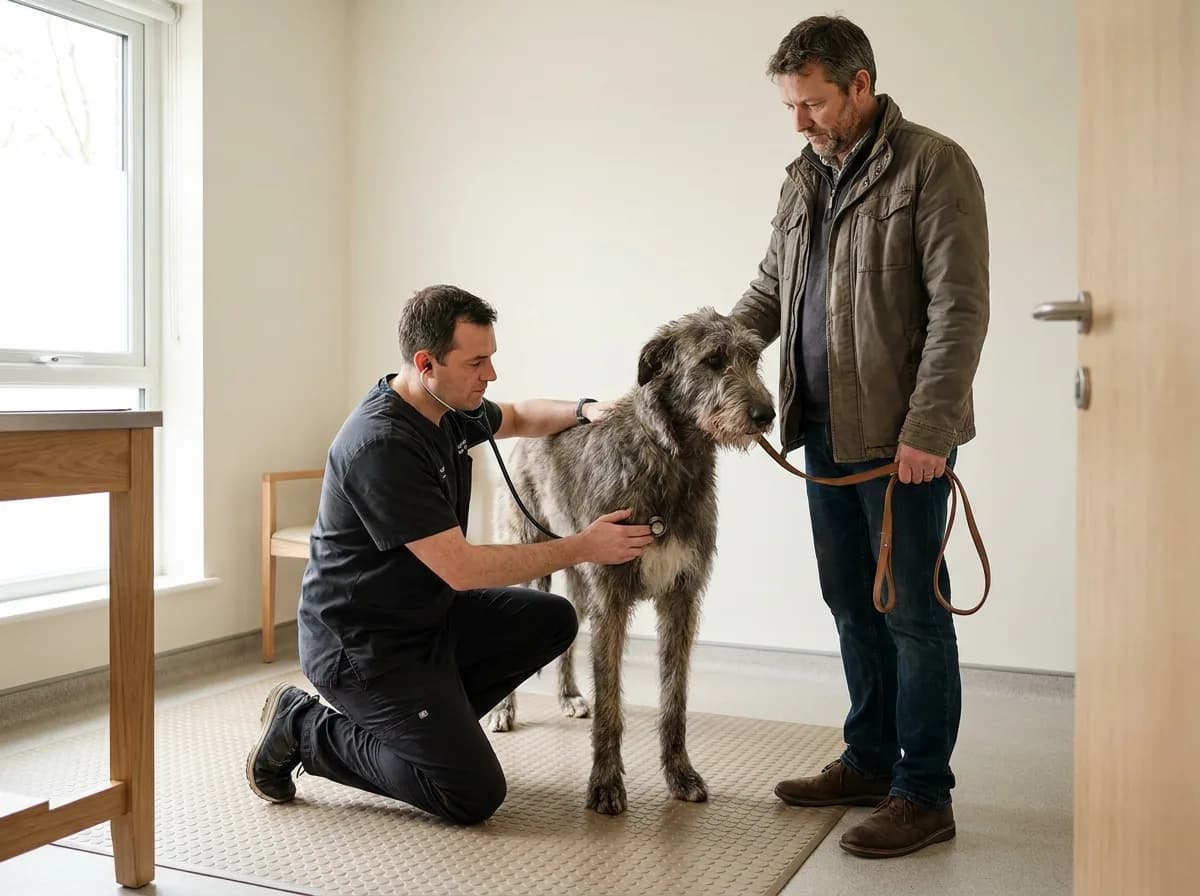
The Irish Wolfhound Foundation recommends annual heart screening after age two. Its 2020 update discusses yearly electrocardiogram, or EKG, rhythm checks in that context. Ask your veterinarian which examinations are appropriate for your dog, whether a cardiologist is needed, and how findings will be compared with previous results. Do not wait for the next annual appointment if new symptoms appear.
For a puppy, the IWCA buyer guidance recommends liver-shunt testing before going to a new home and describes testing after nine weeks as preferable. It recommends placement at 10–12 weeks. Other club health material gives a broader testing-age description; the useful action is to obtain the dated result and have your veterinarian review whether the testing and follow-up were appropriate.
| Record or screening | When it matters | What to ask |
|---|---|---|
| Puppy liver shunt result | Before placement and at the first veterinary review | Is this the individual puppy's dated report, and does anything need follow-up? |
| Cardiac screening | Annually after age two under IWF guidance, or sooner when symptoms warrant assessment | Which tests were performed, what did they show, and when should they be repeated? |
| Parent health testing | Before choosing a puppy | Can I see cardiac, hip, elbow, and eye screening documentation? |
| Family longevity history | Breeder discussion and medical history | Which relatives are included, and are ages and causes of death documented? |
| Current treatment records | Every transfer or follow-up visit | Are diagnoses, medicines, doses, and monitoring plans recorded accurately? |
When reviewing family longevity, distinguish a confirmed cause of death from a suspected one. An owner may accurately remember an age while being uncertain about the diagnosis. Record that uncertainty rather than turning it into a definite finding. The same principle applies to a relative described as healthy: ask at what age and when the information was last updated. An honest gap in the record is more useful than a reassuring label that appears complete but cannot be explained.

The Pet Parents Forager mat offers supervised food-search enrichment. Use part of the appropriate food allowance and remove it if chewed.
Petful may earn a commission when you click through to Chewy, at no extra cost to you.
A family history becomes more useful when it includes both healthy and affected relatives. Ask about parents, siblings, and other close relatives where information is available. “Our dogs live a long time” is less informative than specific ages, known diagnoses, and an honest explanation of missing records. Even a well-documented family history cannot remove every health risk.
Keep copies of reports rather than relying only on a remembered verbal summary. A report should identify the dog and the date, describe the test or examination, and include the result and recommended next step. If a breeder or previous owner supplies an unfamiliar certificate, ask your veterinary practice what it establishes. A screening program's name alone does not explain the individual result.
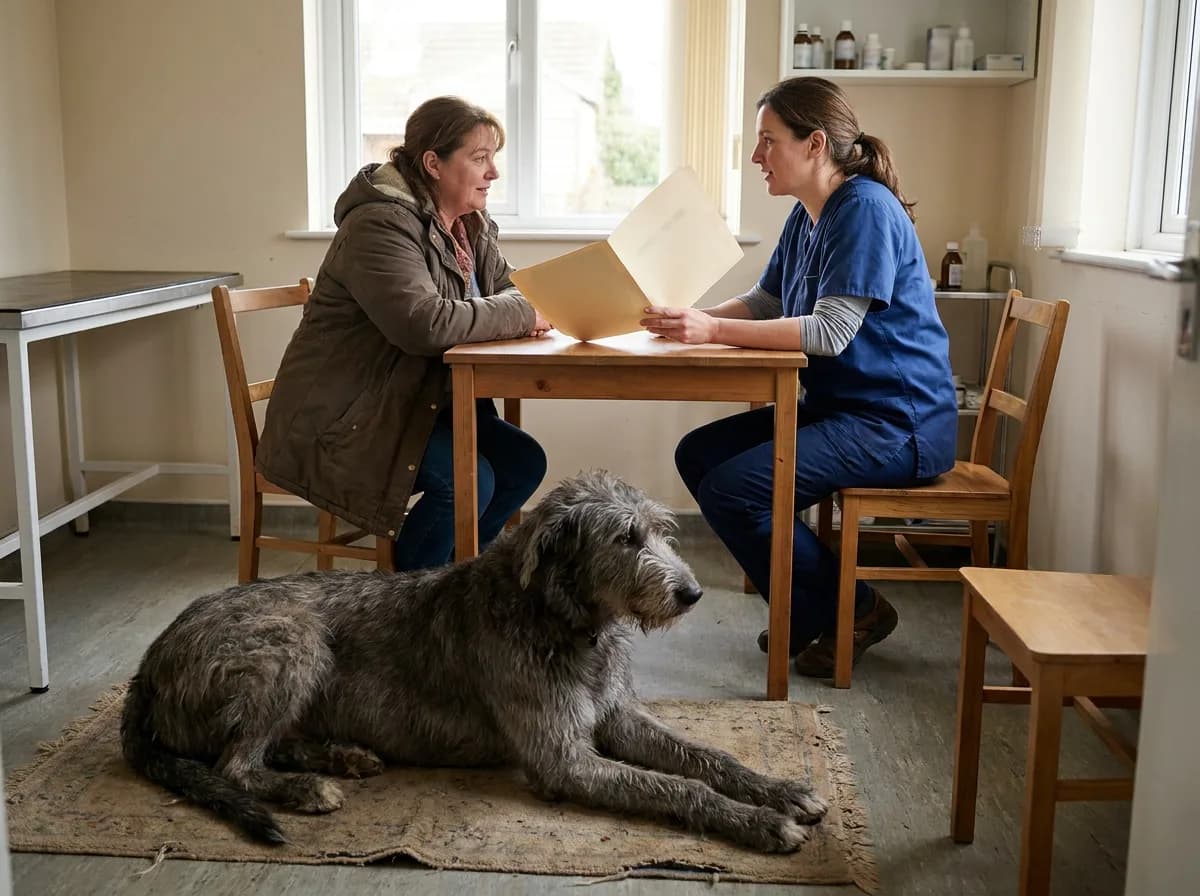
Before an appointment, collect:
- The date and findings from previous cardiac screening.
- Puppy screening and relevant breeder or rescue records.
- Current medicines and supplements, including any recent changes.
- A concise timeline of new symptoms or changes in activity.
- Questions about the next check, specialist referral, or test result.
If you have observed a change that comes and goes, a short video may help the veterinarian understand it. Record only when doing so is safe and does not delay care. A video supplements an examination; it does not establish a diagnosis. Tell the practice whether the behavior happened during rest, exercise, eating, or a transition such as getting up.
For example, a dog that seems less willing to walk may need a different discussion from a comfortable dog attending scheduled screening. Tell the team whether the change was sudden, whether it happens every time, and whether rest restores normal behavior. Avoid repeatedly exercising the dog to reproduce a worrying symptom. The veterinarian can decide which examination or investigation is appropriate, while your role is to provide a clear account and follow the resulting advice.
Before leaving, confirm:
- Which results are still pending and who will contact you.
- When the next examination or test is due.
- Which changes should trigger an earlier call.
- Whom to contact outside normal hours.
Ask for the plan in writing when that would help you follow it. Good record keeping makes follow-up easier, especially if emergency and primary-care practices are both involved.
Daily care and senior-dog adjustments
Review mobility and resting space together. A comfortable bed is useful only if the dog can reach it, turn, lie down, and rise without negotiating a slippery or obstructed route.
Daily care should support comfort and function rather than chase a promise of longer life. Begin with your dog's ordinary pattern: appetite, drinking, rest, movement, interest in people, and willingness to participate in familiar activities. Changes from that pattern are often more informative than comparison with another Wolfhound of the same age.
Keep body condition and weight under review with your veterinarian. A rough coat can hide changes, and the number on a scale does not distinguish fat from muscle or explain why weight changed. Record the food and amounts actually given, including treats and food used for enrichment. Discuss adjustments rather than increasing or restricting food simply because a generic chart suggests it.

The Frisco Traffic Leash supports supervised walks at your dog's comfortable pace. Follow veterinary activity advice; it is not a lifting aid.
Petful may earn a commission when you click through to Chewy, at no extra cost to you.
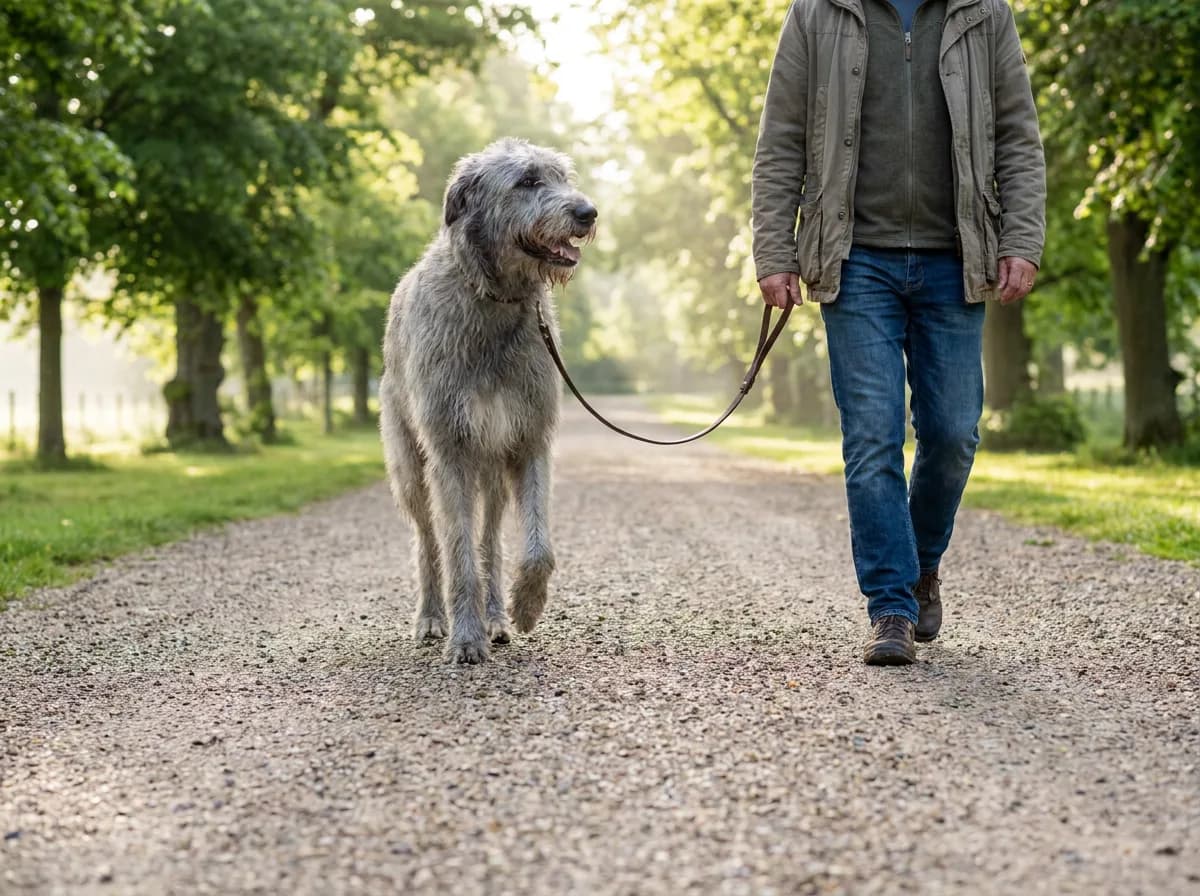
Adapt movement to the individual. Comfortable walks on level, secure footing may be easier to manage than sudden bursts of strenuous play, but a dog with pain, weakness, or cardiac disease needs its own activity advice. Notice whether the dog is willing to go out and how it manages afterward. Stop and contact the practice if activity causes concerning symptoms.
A Frisco Traffic Leash offers a fixed-length option for supervised walks. It is not a lifting aid, and a handle does not make it appropriate to haul a reluctant or unsteady dog along. If assistance is needed, ask about equipment and handling suited to the actual mobility problem and the dog's size.
Make the home routine easier where the dog is struggling:
- Keep routes between resting places, water, and the outdoors clear.
- Improve footing where the dog slips rather than expecting it to compensate.
- Check whether turning, lying down, and rising remain comfortable.
- Arrange transport help before an appointment becomes an urgent journey.
- Let the dog rest without repeated disturbance from children or other pets.
For quiet engagement, a Pet Parents Forager snuffle mat can hold part of an appropriate food allowance during a supervised search. The dog should be able to use it comfortably. Put it away if it becomes something to chew or swallow. This is an optional activity, not treatment for anxiety, mobility disease, or a way to prevent bloat.
Oral care belongs in the routine as well. A Jasper 360 finger toothbrush is one possible tool when the dog safely accepts mouth handling. Avoid forcing brushing through pain or distress, and ask the practice about a method that suits the dog. WebVet's dog dental health guide explains why home care and veterinary assessment have different roles.
Comfort and quality of life
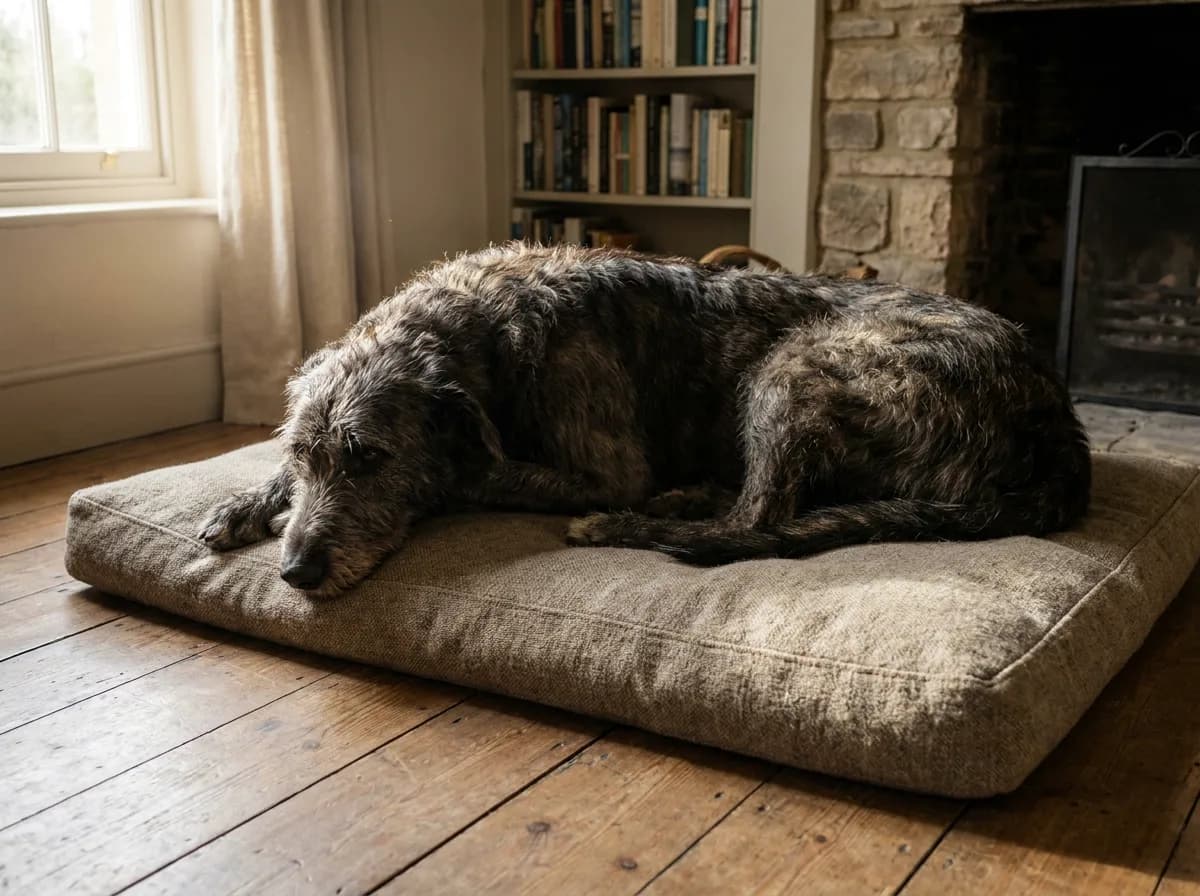
Check the resting area from the dog's perspective. It should support the full body and allow an easy approach and exit. A bed's advertised size does not tell you whether a long Wolfhound can stretch out on its usable surface. Keep the area clean and dry, and watch whether the dog avoids a previously favored position or repeatedly struggles to settle.
Do not interpret every change as unavoidable old age. Less interest in a walk, reluctance to rise, disturbed sleep, or a change in interaction may deserve assessment. At the same time, one quiet day does not identify a particular disease. A brief record of what changed and when helps you explain the concern without having to make a diagnosis yourself.
WebVet's senior dog health guide offers further monitoring ideas. Discuss comfort and quality of life during routine visits, not only during a crisis. Ask what improvement would look like after a treatment change, how soon it should be reviewed, and which difficulties should prompt an earlier call.
Useful questions for a comfort review include:
- Which everyday activities should become easier if the plan is helping?
- What should we record between appointments, and how often?
- When should a lack of improvement prompt a call rather than more waiting?
- Are any current activities, handling methods, or home arrangements making care harder?
Describe the dog's good days as well as its difficult ones. Being able to enjoy a familiar walk, settle comfortably, eat willingly, or seek company provides useful context for a discussion about function. Avoid reducing that conversation to a single lifespan figure or a comparison with another owner's dog. The aim is a realistic plan for this individual's needs, reviewed as those needs change.
If a dog has a serious ongoing condition, agree on a practical care plan that the household can carry out consistently. Include medicine administration, follow-up appointments, comfortable handling, and a way to track the dog's response. Tell the practice if the plan is becoming difficult. Adjusting care around the individual is more useful than silently missing steps or feeling obliged to copy someone else's routine.
Signs that need urgent veterinary attention
Seek emergency veterinary help for breathing difficulty, collapse, suspected bloat or GDV, major injury, or severe bleeding. Repeated unsuccessful retching with distress or a swollen abdomen is particularly concerning. The IWCA and IWF both identify suspected bloat and pneumonia as reasons for immediate veterinary care.
- 1Breathing difficulty or collapse needs urgent veterinary attention
- 2Suspected bloat or GDV is an emergency, even without every classic sign
- 3Contact the emergency practice and follow its transport instructions
- 4Do not delay for a home remedy or wait for a scheduled screening visit
Call the practice or emergency hospital while arranging care, if you can do so without delaying departure. Describe the signs you can see and when they began. Mention known diagnoses and current medication, but do not spend time searching for every record while the dog is deteriorating.
Transport planning is especially important for a giant dog. Tell the hospital if your Wolfhound cannot walk or if you need help moving it safely. Follow the team's instructions rather than improvising a lift that could injure the dog or a person. Do not give human medication or attempt home treatment for suspected GDV.
Less dramatic changes still deserve attention. New coughing, reduced appetite, persistent lameness, or unusual weakness should be discussed with your veterinary practice so it can judge urgency. If you are unsure whether a change is an emergency, describe it to the team rather than waiting for a breed-specific symptom list to settle the question.
Size and healthy growth
Irish Wolfhound size should be assessed alongside body condition and development. Adult breed-standard minimums are not monthly puppy targets, and extra weight does not demonstrate stronger bones or better health. Keep an individual growth record and discuss feeding or movement concerns with your veterinarian. Our Irish Wolfhound size guide explains the difference between standard measurements, actual growth, and practical home or transport needs.
Planning the cost of ongoing care
Irish Wolfhound price includes more than acquisition. Budget for routine appointments, screening, recommended follow-up, medicines when needed, and a plan for unexpected care. Ask practices for estimates tied to the actual service rather than relying on a national average. Our Irish Wolfhound price guide helps organize those categories. A personalized Lemonade quote is one planning input; examine the policy's exclusions and limits before assuming an existing illness is covered.
Family life and behavior
Irish Wolfhound temperament can be affectionate and companionable, but liking cuddles, tolerating children, and barking frequency vary between individuals. A gentle reputation does not remove the need for supervision or make new aggression harmless. Pain or illness can be relevant when behavior changes, so bring a sudden change to your veterinarian's attention. Our Irish Wolfhound temperament guide covers those household questions and the practical management of interactions with people and pets.
The wider ownership decision
Health planning is one part of living with an Irish Wolfhound. Their space, transport, companionship, and care needs help explain why they are less common household pets than many smaller breeds. Consider the rewards and demands together rather than judging the breed solely by its lifespan. Our Irish Wolfhound breed profile covers everyday ownership, coat care, and questions about drool and wet beards alongside the breed's history and appearance.
Irish Wolfhound lifespan questions
A reliable oldest-dog claim needs a documented age, identity, and supporting records. The sources discussed here do not establish one independently verified longest-lived Wolfhound. Even a well-documented older dog is an individual exception, not a new breed-average estimate. Avoid treating an undated photograph or an online anecdote as a longevity record.
Answering that requires sex-specific evidence from an appropriately described population. The IWF figures of 7.41 and 7.58 years compare historical study cohorts, not males with females. They cannot establish a male-versus-female difference or an individual prognosis. Ask your veterinarian to interpret your dog's actual health and family history.
No. A normal result is a screening snapshot based on the examination and tests performed at that time. It does not guarantee that disease will never develop or that every possible abnormality was excluded. Follow the recommended repeat monitoring, and seek veterinary advice about new symptoms rather than waiting for the next scheduled check.
BVMS, MRCVS
Dr. Pippa Elliott, BVMS, MRCVS, is a veterinarian with nearly 30 years of experience in companion animal practice. Dr. Elliott earned her Bachelor of Veterinary Medicine and Surgery from the University of Glasgow. She was also designated a Member of the Royal College of Veterinary Surgeons. Married with 2 grown-up kids, Dr. Elliott has a naughty Puggle named Poggle, 3 cats and a bearded dragon.
Sign up for expert-backed reviews and safety alerts all in one place.