Irish Wolfhound Temperament: Family Life and Training
Irish Wolfhounds are known for gentle companionship, but giant size and a sighthound's chase instincts still need planning. Learn practical training priorities and routines for children, other pets, and time alone.
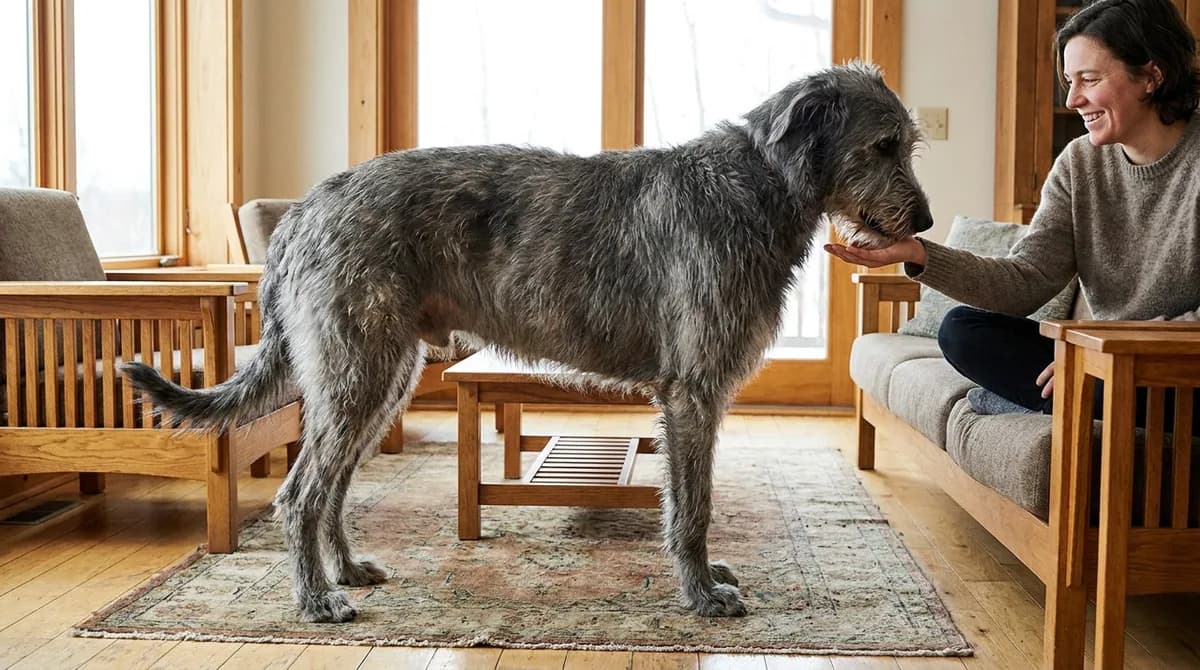
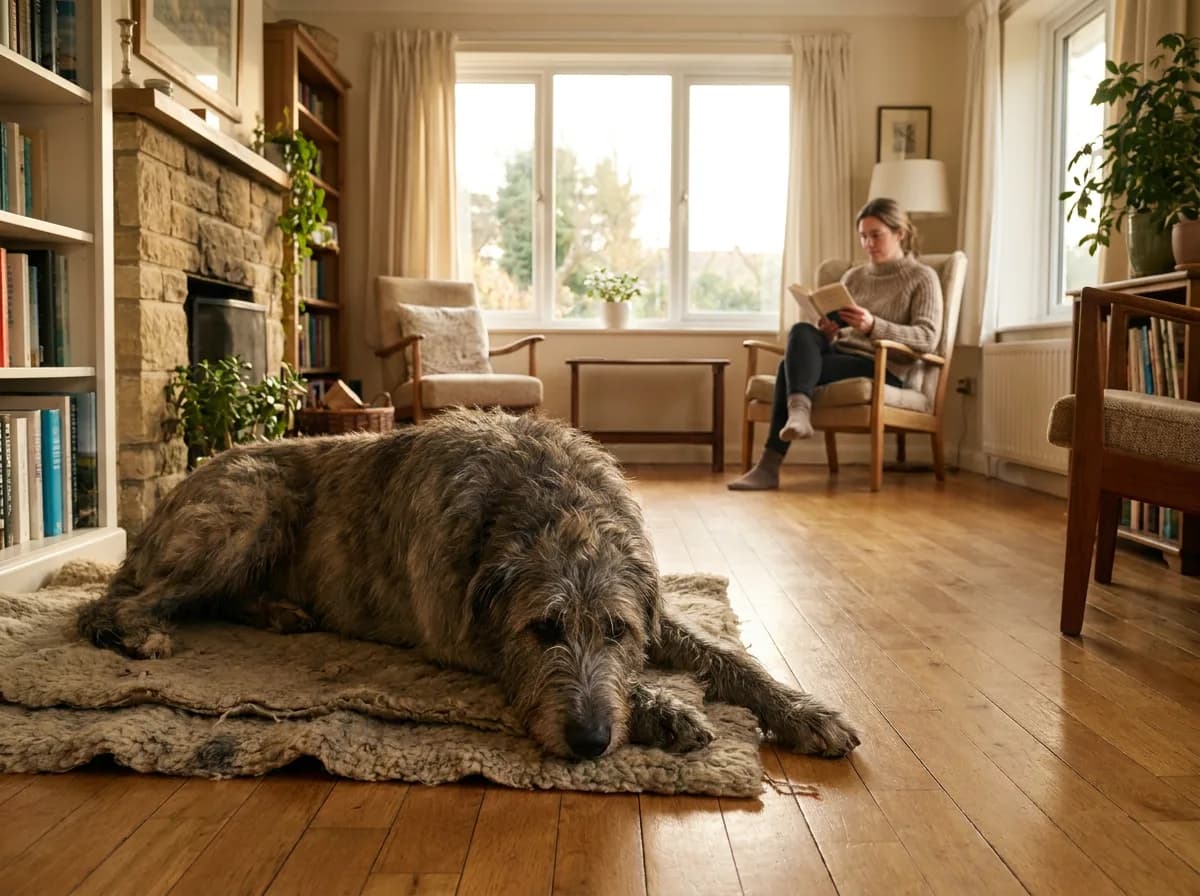
Let the individual dog choose comfortable contact.
Petful is reader supported. As an affiliate of platforms like Amazon and Chewy, we may earn a commission when you buy through links on this page. There is no extra cost to you.
Irish Wolfhound temperament is often described as gentle, affectionate, and calm in adulthood. Those tendencies help explain the breed's appeal, but they do not remove the work of raising and managing a giant sighthound. A dog can be relaxed beside its family and still react quickly to a moving animal outside.
The useful question is how to build a household in which this particular dog can learn, rest, and interact comfortably.

Sign up for expert-backed reviews and safety alerts all in one place.
What Irish Wolfhound temperament is usually like
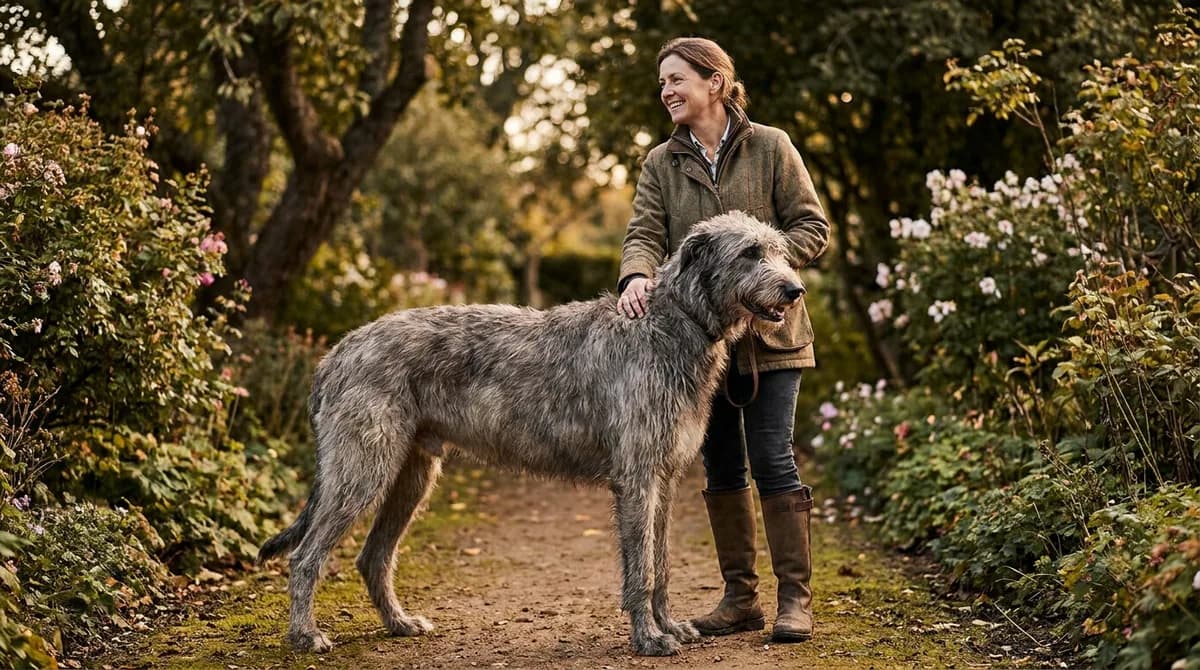
The Irish Wolfhound Club of America describes the breed as sensitive, companionable, and often calm at maturity. Human company is central to that description. A Wolfhound should be considered part of the household, with everyday opportunities for contact and activity, rather than a dog expected to live apart from people.
An individual Wolfhound personality may be outgoing, reserved, playful, or slow to become comfortable in a new setting. “Friendly” can mean enjoying familiar people without wanting every stranger to touch its head. Notice whether the dog approaches willingly, stays comfortably, or moves away, and allow those choices to inform the interaction.
| Everyday situation | What to observe | Management and next step |
|---|---|---|
| Visitors arrive | Excitement, hesitation, or difficulty settling | Provide space and reward a calm greeting instead of forcing contact |
| A child approaches a resting dog | Whether the dog can rest without interruption | Direct the child to another activity and protect the resting area |
| A small animal moves nearby | Staring, tracking, pulling, or chasing | Increase distance and maintain secure separation |
| A grooming tool appears | Willing participation or attempts to move away | Make the task easier and practice a brief comfortable step |
| The household becomes quiet | Ability to settle without constant interaction | Reinforce relaxed independence while maintaining daily company |
| Behavior changes unexpectedly | Context, timing, and any signs of discomfort | Arrange appropriate assessment rather than relying on the breed's gentle reputation |
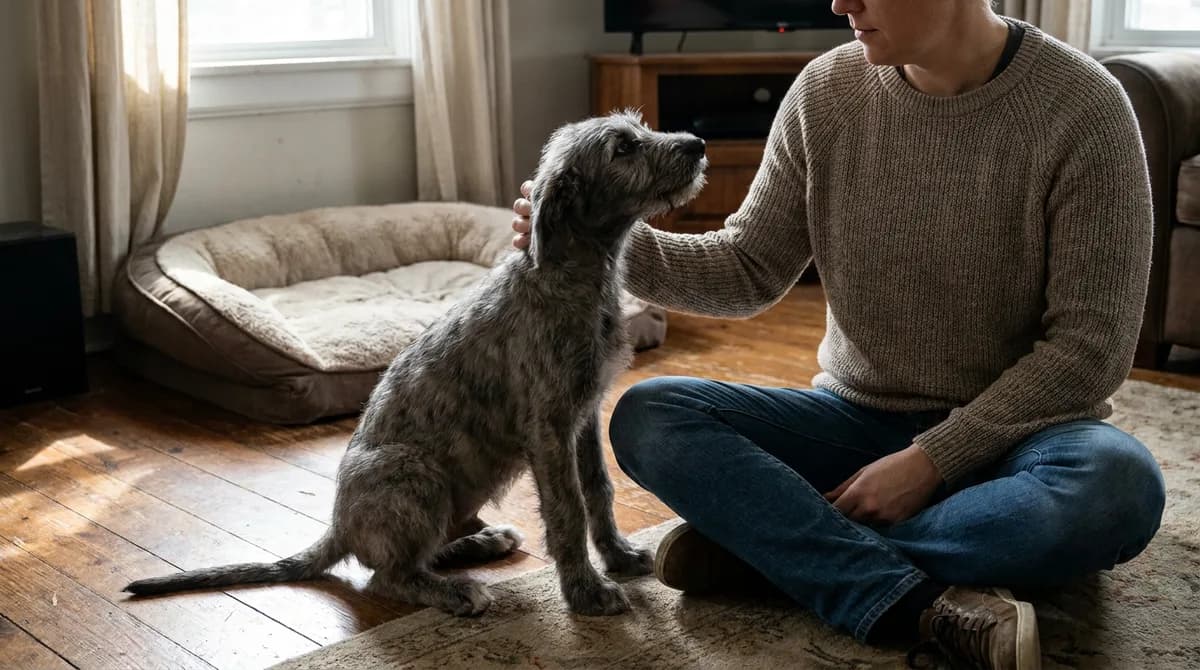
Calm adult behavior is not the same as a puppy that needs little attention. A young dog still needs house training, safe things to investigate, suitable exercise, and guidance about how to interact. Its growing size makes it especially useful to teach desirable habits before those habits become harder to manage physically.
Use the breed description as a starting point, then collect evidence about individual behavior. Ask a breeder about the parents and the puppy's responses to ordinary handling. Ask a rescue or foster caregiver about home routines, difficult situations, and successful support. Specific examples tell you more than a promise that every Wolfhound is easygoing.
Intelligence and training that works
Training should work with Irish Wolfhound temperament and the individual dog's responses. An attentive owner can reward a loose lead and voluntary check-ins before increasing distractions.

Compare this six-foot leash with dual handles for loose-leash practice and supervised introductions. Equipment does not replace training.
Petful may earn a commission when you click through to Chewy, at no extra cost to you.
Are Irish Wolfhounds intelligent dogs? The IWCA's breed FAQ describes them as fast learners that respond best to positive training. That supports using thoughtful, reward-based teaching. It does not establish an intelligence ranking or mean that every Wolfhound will find the same activity rewarding.
A dog that understands a cue in the kitchen may not respond the same way beside an exciting dog or a running squirrel. That difference is a training question, not proof that the dog is unintelligent. Reduce the distraction, make the task achievable, and reward the behavior you want before asking for more.
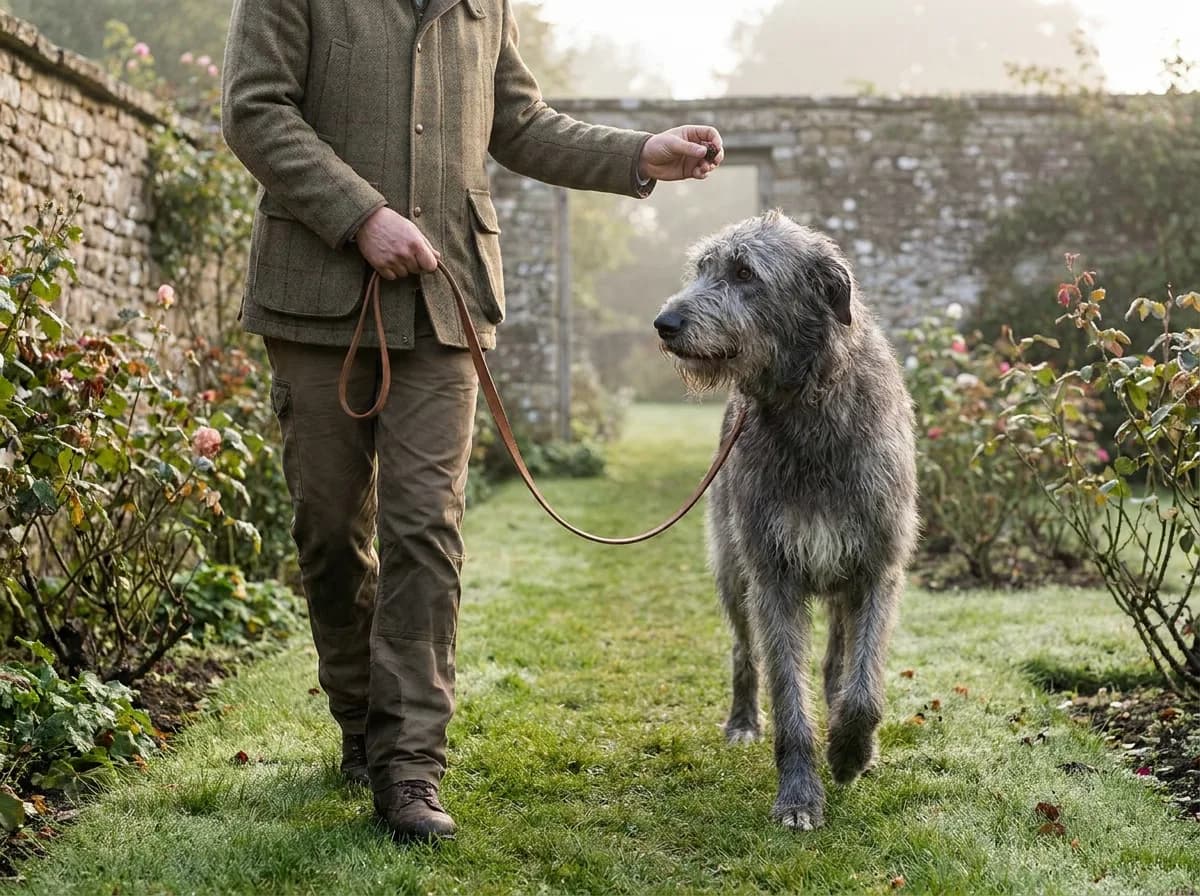
Start with short sessions that fit ordinary life. Reward a few calm steps toward the door, a pause while you open it, or a brief rest on a mat. End while the dog is still comfortable and engaged. Repeated successful practice is more useful than extending a session until both of you are frustrated.
| Skill | Small starting task | How to build it |
|---|---|---|
| Loose leash | Reward a few steps beside you in a quiet space | Add distance and distractions gradually |
| Settling | Reward calm contact with a comfortable resting mat | Practice while you perform an easy household task |
| Recall foundations | Call once from a short distance in a secure area and reward arrival | Add difficulty without using unsafe off-leash tests |
| Cooperative handling | Briefly touch an area the dog accepts, then reward | Introduce grooming and care in small comfortable steps |
| Door manners | Reward waiting while a door moves slightly | Increase the opening while maintaining safe boundaries |
Teach practical skills before strength becomes a problem
For loose-leash walking, begin where the dog can notice you without becoming overwhelmed. If the lead tightens and the dog cannot respond, give yourself more distance from the distraction. The Frisco Traffic Leash with Dual Padded Handles is one fixed-length option; neither an extra handle nor a tighter grip teaches the skill by itself.
Recall foundations belong in secure settings. Reward the dog for returning, and avoid making every recall signal the end of something enjoyable. A response around the house is not evidence of reliable recall around wildlife. Keep the environment safe while practicing rather than asking the dog to demonstrate a skill it has not developed.
For settling practice, choose a resting place with enough room and little passing traffic. Reward a relaxed pause there before expecting the dog to remain while visitors arrive or dinner is served. Begin with an easy version of the situation, and increase only one challenge at a time.

Consider this finger toothbrush for oral-care practice only when your dog comfortably accepts it. Never force the mouth open or persist through distress.
Petful may earn a commission when you click through to Chewy, at no extra cost to you.
Make everyday care part of training
Cooperative handling means helping the dog participate comfortably in necessary care. Practice a brief touch to a shoulder or paw the dog already accepts, then stop and reward. Do not begin by holding the dog through an entire unfamiliar procedure. If it repeatedly pulls away, stiffens, or appears uncomfortable, make the step easier and seek guidance.
The Jasper 360 Dog Finger Toothbrush is an optional oral-care tool for a dog that safely accepts it. First establish comfortable handling around the mouth with appropriate guidance. Never force the mouth open or put a finger near the teeth of a dog showing distress. Pain or resistance calls for assessment, not persistence.
Similarly, an aumuca Self Cleaning Slicker Brush can be considered for suitable areas of the rough coat. Introduce it briefly and gently. Pulling through tangles while the dog struggles is not a useful handling lesson; a groomer can help with coat problems and comfortable technique.
Organize practice and specialist tasks
WebVet's dog training schedule can help organize practice across the week. Its guide to dog training treats supports choosing rewards and accounting for them within the food allowance. Food is one useful reward, but the dog's comfort and engagement should determine when to pause.
Service-dog tasks require a separate assessment from basic household manners. A dog that enjoys learning or being with people has not thereby demonstrated the abilities needed for a particular person's tasks. Discuss those requirements with a qualified program before selecting a puppy for that purpose.
Puppy energy and the calmer adult
An Irish Wolfhound puppy can be lively, inquisitive, and physically clumsy. A calm adult reputation is not a promise that the young dog will quietly watch family life unfold. Puppies need opportunities to explore and play, alongside enough rest and a home arranged to prevent repeated mistakes.
The IWCA describes Wolfhounds as athletic sighthounds and advises secure, above-ground fencing. That context explains Irish Wolfhound running behavior: a relaxed dog may still move rapidly when something catches its attention. There is no reliable breed-specific top-speed measurement in the sources used here, so a precise miles-per-hour claim would be misleading.
For a young dog, do not turn speed or stamina into a goal. The IWCA FAQ cautions against forced exercise for growing puppies. Discuss activity with the breeder and veterinarian, accounting for development and health instead of setting a universal mileage target or expecting the puppy to match an adult's routine. Build a varied day around achievable activities:
- Comfortable exploration in a secure setting.
- Brief training that rewards an everyday skill.
- Supervised play matched to the dog's size and energy.
- A quiet place to rest without being repeatedly disturbed.
- Food-search activities using part of the planned allowance.
The Pet Parents Forager Snuffle Mat & Slow Feeder offers a supervised food-search activity. Remove it if the dog starts chewing the fabric, and do not leave it as an unattended chew toy. It can be one part of enrichment, but it is not a treatment for anxiety or a substitute for exercise and companionship.
An adult may become more settled, but there is no exact birthday on which every Wolfhound becomes calm. Observe how your dog responds to its current routine. More activity is not always the answer to restlessness: consider whether the dog also has a predictable opportunity to rest and whether anything has changed in its health or surroundings.
If a familiar routine suddenly becomes difficult, note the change rather than assuming the dog is being stubborn. A puppy's needs evolve as it grows, and an adult's needs can change too. The goal is a sustainable daily rhythm, not a permanently exhausted dog.
Living with children
Irish Wolfhounds can form affectionate relationships with children, but size makes active supervision essential. The IWCA specifically cautions that a playful young hound can knock over a small child. Accidental injury does not require aggressive intent: an excited turn, leap, or collision can be enough.
Set up a protected resting area before the dog comes home. Children should be able to move, play, and learn household rules without having to step over the dog. The dog should also be able to rest without a child repeatedly approaching its face, feet, or bedding.
Agree on the rules between adults so they do not change with the person supervising. Decide who manages the dog when children arrive home, friends visit, or the room becomes busy. Have a comfortable separated space ready before those transitions, rather than trying to improvise while everyone is excited. Explain the same boundaries to visitors and check that gates are closed correctly. Children can help with age-appropriate care, but the adult remains responsible for noticing when either the child or dog needs a different activity.
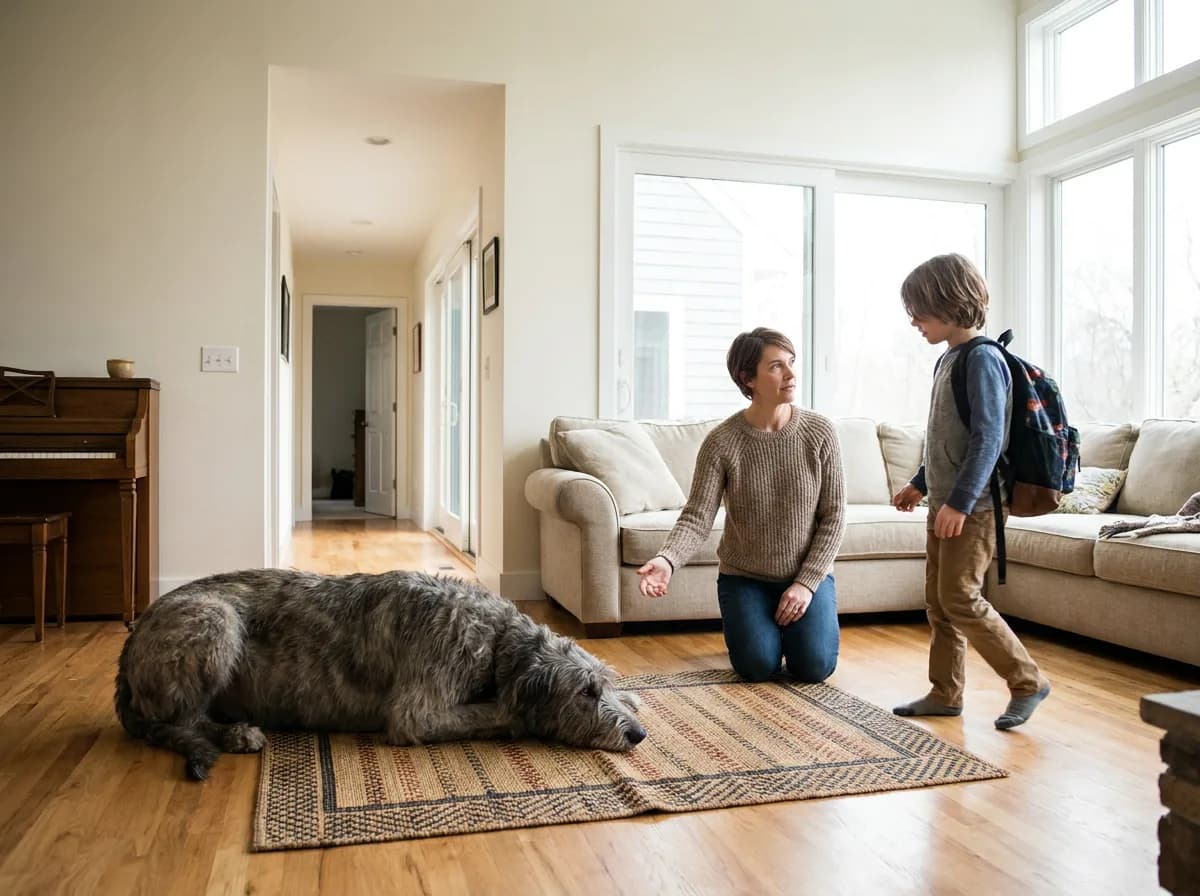
Active child supervision means an adult notices the interaction and can intervene early. Being somewhere in the house is not the same as watching. If your attention is on cooking, a call, or another child, use appropriate separation rather than assuming the dog and child will manage the situation themselves.
Teach children concrete actions:
- Invite contact and allow the dog to approach or leave.
- Keep faces away from the dog's face.
- Leave sleeping, eating, or chewing dogs undisturbed.
- Ask an adult before offering food or beginning a game.
- Never climb on, ride, or pull at the dog.
The IWCA explicitly rejects riding Wolfhounds. Their height does not make them suitable for carrying children. Avoid photographs or games that encourage a child to sit on the dog's back, even briefly, and explain the rule consistently to visiting children.
Teach the dog an alternative to crowding as well. Reward calm waiting while an adult helps a child with shoes or opens the door. Practice with enough distance and support that the dog can succeed, then build toward busier situations. An adult should handle the lead when a child could be pulled off balance.
For a prospective adoption, ask about the dog's actual experience with children of similar ages. “Has met children” may mean a brief encounter rather than living with a toddler or sharing a home with several active school-age children. Find out what supervision, boundaries, and resting arrangements made those interactions successful.
Cats, small pets, and prey drive
Irish Wolfhounds and cats require an individual assessment. The IWCA FAQ notes that some Wolfhounds live comfortably with cats, particularly when raised with them, while others do not. The breed's sighthound background means chasing small animals should be taken seriously even when the dog is gentle with people.
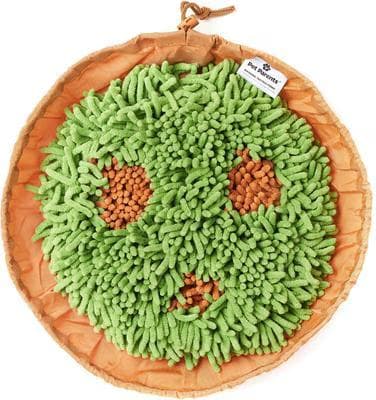
Offer supervised food-search enrichment with part of the planned food allowance. Remove this snuffle mat if your dog starts chewing the fabric.
Petful may earn a commission when you click through to Chewy, at no extra cost to you.
Prey drive is not answered by a friendly greeting. A cat lying still indoors and a cat running across a yard create different situations. Likewise, a dog that ignores one familiar household cat has not demonstrated safety with every cat, rabbit, or small pet.
- 1Give the smaller animal an escape route and a dog-free area
- 2Use secure barriers and controlled distance during introductions
- 3Keep the dog under an adult's supervision
- 4Pause if either animal cannot disengage or becomes distressed
- 5Do not test recall by allowing a chase
- 6Keep secure separation whenever safe coexistence is uncertain
Start with the environment. Provide secure barriers that the dog cannot simply push through and an escape route the cat can use without passing the dog. Place the cat's essential resources where the dog cannot block access. A setup that works only while you stand in one precise spot needs improvement before introductions progress.
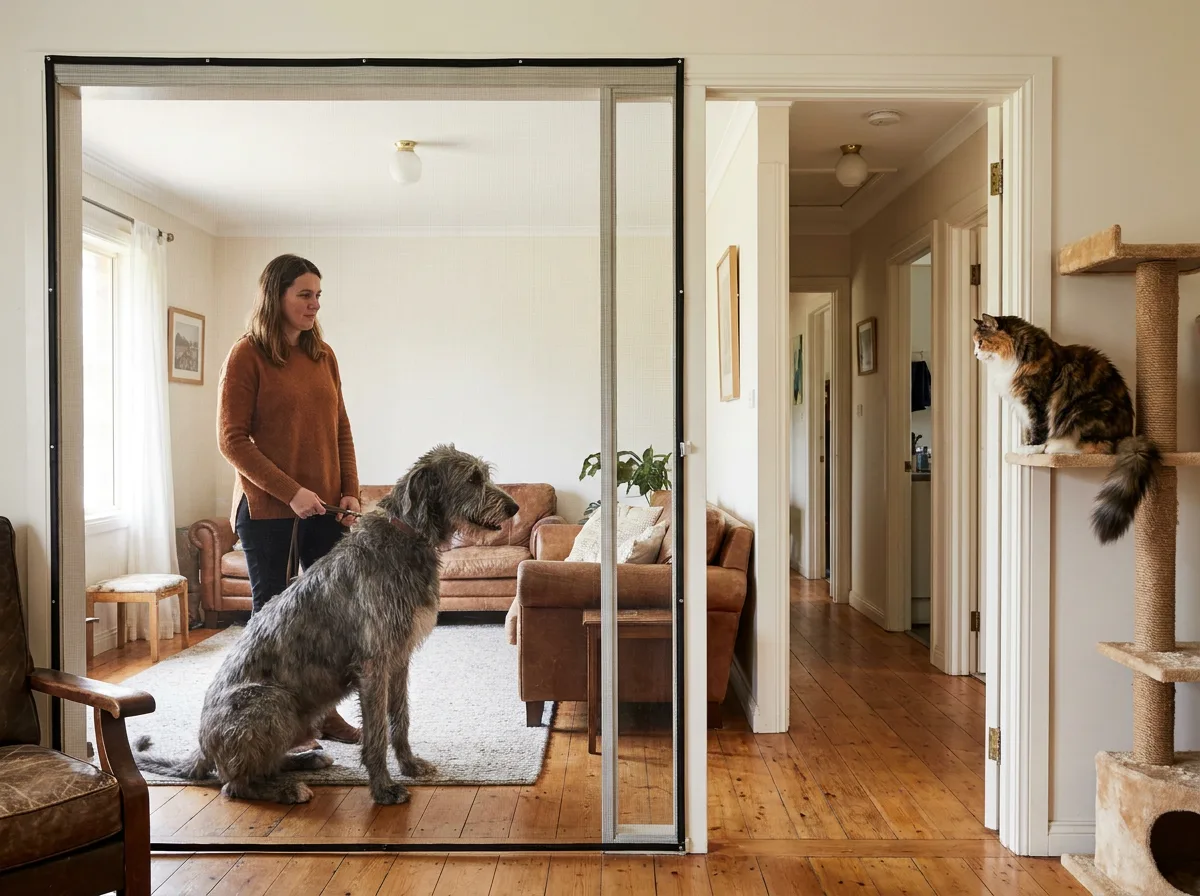
During a controlled introduction, use enough distance that the dog can notice the cat and still respond to its handler. Keep the cat free to retreat. Do not hold the cat close to the dog's face or allow the dog to crowd the barrier while the cat has nowhere to go.
Watch the whole interaction, not just whether anyone makes noise. Sustained staring, repeated attempts to rush forward, or an inability to turn away are reasons to stop and increase separation. A quiet dog is not necessarily a relaxed dog, and a still cat may not be comfortable.
Progress depends on what both animals show, not a timetable. Some households need ongoing separation, and some pairings may not be workable. Seek qualified help when the history or observed behavior raises concerns. Do not leave animals together unsupervised merely because a few controlled sessions went well. Ask a rescue or breeder for the context behind any compatibility claim. Was the dog loose with a familiar cat in a home, seeing cats through a barrier, or simply passing them on walks? Those observations are all useful, but they answer different questions. Clear records help you plan without assuming that “cat tested” guarantees safety.
Other dogs and social introductions
Irish Wolfhound temperament with other dogs depends on the individual animals, their experience, and the setting. Shared breed, similar size, or a friendly reputation does not guarantee compatibility. A dog can enjoy some companions while finding a crowded greeting or rough play difficult.
When introducing an unfamiliar dog, choose a suitable neutral setting and arrange adult handlers who can maintain space. Begin with parallel movement or quiet observation if appropriate to the dogs involved. Avoid bringing them immediately face to face in a narrow doorway or allowing leads to become tangled.
Look for compatible play rather than constant activity. Dogs should have opportunities to pause and move away. Intervene if one repeatedly pursues a dog that is trying to leave, if excitement keeps escalating, or if a size difference makes accidental injury likely. At home, plan the transition deliberately:
- Give each dog a separate resting place.
- Provide separate food resources and manage valued items carefully.
- Supervise early interactions rather than assuming the first meeting settled everything.
- Maintain predictable access to walks, rest, and individual attention.
- Use barriers when you cannot actively supervise.
WebVet's puppy socialization checklist can help organize gradual, positive experiences. Socialization does not mean greeting every dog encountered or staying in a situation until the puppy stops reacting. Aim for experiences the dog can manage, with the option to create more distance.
For a puppy, discuss safe social exposure with your veterinarian while accounting for its vaccination and health status. For an adult rescue, ask which settings it already knows and introduce new demands gradually. Keep notes about useful distances, successful activities, and situations that need professional support.

Use a suitable slicker for brief, gentle grooming practice. Pause at discomfort and ask for help with tangles rather than pulling through them.
Petful may earn a commission when you click through to Chewy, at no extra cost to you.
Think about the quieter parts of sharing a home too. Can one dog walk past the other's resting area without crowding it? Does either dog repeatedly interrupt the other's sleep or follow it when it tries to leave? Provide more space and separate access to valued resources before assuming they will work it out. Give each dog some individual time with a caregiver so all walks and training do not depend on a successful joint outing. If tension develops, describe the particular interactions to a professional rather than relying on a general claim that the dogs usually like each other.
Companionship, cuddling, and time alone
The Irish Wolfhound's companion nature makes daily company a central part of household fit. Some dogs enjoy leaning against a person or resting close by; others prefer nearby space without prolonged touch. Cuddling preferences are individual, and moving away should be respected rather than treated as rejection or disobedience.
Invite contact and pause occasionally to see whether the dog chooses more. This is especially useful when teaching children how to interact. A dog can be affectionate without accepting hugs, being held in place, or being touched while asleep.
Independence should be taught alongside companionship. Begin gradual alone-time practice with a comfortable resting place while you are still nearby. Reward quiet settling without repeatedly calling the dog back for interaction. Then practice small changes in your distance and activity, keeping the task within what the dog can comfortably manage.
Build a routine the dog can handle
Start with ordinary moments: reading in another part of the room, moving briefly to a nearby space, or carrying out a quiet household task. Return before the situation becomes too difficult when possible. Increase the challenge gradually rather than using a full working day as the first test.
Watch the response to the change you actually made. A dog relaxed while you sit across the room may find a closed door or departure cue much harder. Treat those as separate steps instead of assuming success with one proves readiness for the next.
- Arrange toileting, appropriate activity, and a chance to settle before practice.
- Use a comfortable area with suitable space and safe boundaries.
- Keep early departures manageable for the dog you have.
- Arrange a caregiver when an unavoidable absence exceeds its current ability.
- Track what happens rather than judging success only by whether the home is undamaged.
A camera can help you observe behavior during an absence, but observation is not a diagnosis. Brief movement before settling differs from persistent pacing, vocalization, escape attempts, or an inability to relax. Note when the behavior starts, how long it continues, and what changes when someone returns.
WebVet's guide to separation anxiety in dogs explains separation-related distress in more detail. Persistent distress warrants veterinary and appropriately qualified behavior support. A food toy, longer walk, or stricter correction should not be assumed to resolve it.
The IWCA cautions against routinely confining a Wolfhound for long hours with little opportunity for social contact and movement. A crate or gated area can be part of a thoughtful management plan when appropriate, but it does not replace daily care. Plan support around your real schedule before bringing the dog home.
Review the routine after changes such as a move, a new job schedule, or the loss of a familiar companion. A dog that previously managed one arrangement may need support with another. Keep departures, care visits, and opportunities for rest predictable where possible, and tell helpers which parts of the routine are still being learned. If progress stalls, bring your observations to the professional helping you. That is more useful than repeatedly extending absences to see whether the dog eventually gets used to them.
Barking, guarding, and aggression
Keep guarding expectations realistic. Sudden growling is a change to assess, not a reason to test the dog's tolerance: give space, prevent a repeat, and discuss new behavior with your veterinarian.
A breed described as quiet can still bark or howl. Consider the context: a sound outside, excitement, frustration, an unfamiliar visitor, or difficulty being alone. Keep a brief record of what happens before and after the vocalization so you can address the situation instead of relying on a breed label.
For an Irish Wolfhound that repeatedly barks at a window, consider whether constant access to passing people or animals is making settling difficult. Change the setup and reward a calmer activity away from the trigger. If howling happens mainly during absences, review the dog's alone-time behavior rather than assuming it is simply a harmless breed habit. Agree on a consistent response within the household so the dog is not encouraged to rush toward visitors by one person and expected to settle immediately by another. Practice the alternative during an easy version of the situation, such as a familiar person entering quietly, before expecting success during a busy delivery or social visit.
Set realistic protection expectations
The IWCA distinguishes deterrent size from guard-dog temperament. A very large dog may look imposing, but Wolfhounds are companion dogs and should not be selected on the promise of protection. Encouraging aggression conflicts with building safe, predictable behavior around everyday people and animals. When behavior becomes difficult, ask practical questions:
- What happened immediately before the response?
- Was the dog cornered, crowded, startled, or unable to leave?
- Did the situation involve food, a resting place, handling, or another animal?
- Is the behavior new, more intense, or appearing in unfamiliar contexts?
- Are there changes in movement, appetite, sleep, or general comfort?
New aggression and behavior change deserve attention rather than stronger correction. A veterinary assessment can help identify whether pain or another health issue contributes. Keep people and animals safely separated from situations that provoke a concerning response while arranging help, and provide the professional with specific observations.
The available sources do not establish a reliable Irish Wolfhound bite-force PSI. A numerical strength ranking would not tell you whether an individual dog is safe in a particular setting anyway. Focus on preventing risky interactions, recognizing discomfort, and obtaining help for concerning behavior rather than using an unsupported number to reassure or alarm yourself.
Our Irish Wolfhound lifespan and health guide provides breed-health background. It cannot explain a particular behavior change by itself. Record changes promptly and share them with your veterinarian instead of assuming that a gentle reputation rules out a problem.
Is an Irish Wolfhound a good first dog?
An Irish Wolfhound can be a good pet for a prepared first-time owner, but its size makes preparation especially consequential. Affectionate companionship does not eliminate the need for training, safe handling, supervision, or help when problems arise. Assess your circumstances against those responsibilities before choosing a puppy or adult.
Ask yourself whether you can provide daily company and suitable routines, not simply whether you like large dogs. Consider who will care for the dog during work, illness, travel, and unexpected disruptions. A backup plan should include someone who can physically manage a giant dog, not just someone willing to refill its bowl.
Before pickup or adoption, outline the first week's responsibilities. Identify who handles toilet trips, meals, appointments, overnight settling, and introductions to existing animals. Obtain the dog's familiar routine and feeding information, and prepare the resting area before arrival. Keep early plans manageable instead of scheduling a series of visitors and outings. Arrange a contact for questions about training and care, and make sure each caregiver knows which skills the dog has actually practiced. A shared plan helps the household respond consistently while learning what this dog needs. Use concrete household questions:
- Can responsible adults safely handle the dog on walks and during appointments?
- Is there secure space for appropriate exercise and comfortable rest?
- Can children and other animals be separated when supervision is unavailable?
- Is the vehicle suitable for the adult dog, including a plan for reduced mobility?
- Can you access reward-based training help before difficulties become established?
- Is there room in the budget for food, equipment, veterinary care, and support?
Meet adult Wolfhounds and ask their owners about an ordinary day. Discuss cleaning, transport, training challenges, and what changed as the dog matured. A breeder or rescue should welcome questions and ask about your household in return. Matching a dog's needs to the home matters more than reassuring you that the breed is universally good.
A first owner may benefit from choosing an adult whose behavior in a home is already described by a knowledgeable caregiver. That does not remove uncertainty, but it can provide useful observations about settling, other animals, and handling. A puppy offers a different opportunity and requires time for development that cannot be skipped.
If one essential requirement is missing, identify how you will meet it before bringing the dog home. That could mean arranging a trainer, changing a gate, finding a suitable caregiver, or reconsidering whether the current household can support a giant companion. Good preparation is specific enough to carry into daily life.
Breed history and lookalikes
Irish Wolfhounds were historically used for hunting by sight and chase, including wolf hunting. That background helps explain why a companion dog may still respond strongly to moving animals. Scottish Deerhounds can resemble Wolfhounds but are a separate breed, and appearance alone should not determine identity. Our Irish Wolfhound breed guide covers hunting origins, presidential-history questions, and lookalikes in the broader breed context.
Size and practical space needs
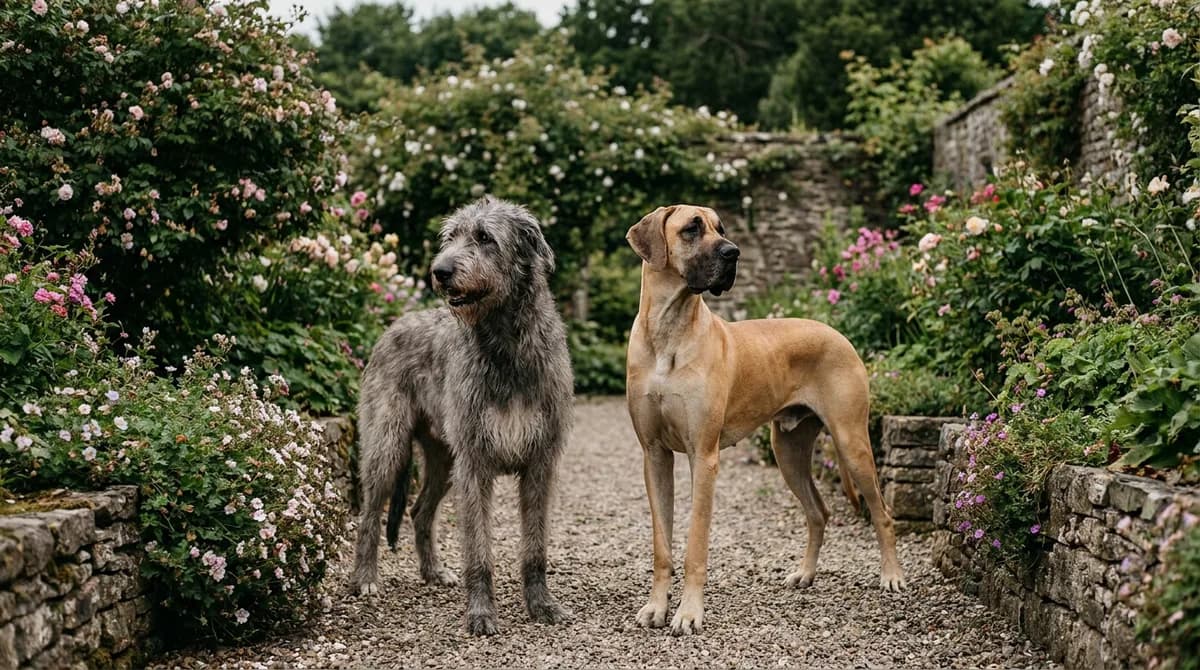
Irish Wolfhound size affects more than how impressive a dog looks beside its owner. Along with other very large breeds such as Great Danes and Mastiffs, it requires thought about transport, comfortable sleeping space, equipment fit, and safe physical handling. Our Irish Wolfhound size guide explains breed-standard measurements and practical dimensions. Use that information for planning, then fit equipment to the actual dog.
Irish Wolfhound temperament questions
There is no universal calmest breed. Individual household fit depends on the dog's age, health, history, behavior, and the support the family can provide. A mature Irish Wolfhound may be calm at home, but that does not make every Wolfhound the calmest choice for every family.
Suitability depends on individual task suitability, temperament, health, and training. Size and working longevity also affect the practical decision. Work with a qualified service-dog program to assess the actual tasks and dog rather than treating breed friendliness as evidence of readiness.
Give space and calmly end the interaction without punishing the warning or testing the dog again. Prevent a repeat of the situation and arrange a veterinary assessment, especially when the behavior is new. Seek qualified behavior help if needed after discussing possible health factors.

Coreen Saito is a pet writer and longtime shelter volunteer with more than a decade in animal rescue. She covers cat behavior, breed care, and the small, ordinary science of sharing a life with companion animals, with a particular focus on honest takes about the products and decisions that actually matter. At home in Arizona, she's outranked by Mac (a dog with the loudest opinion in the house), Rebel (a cat who governs by quiet authority), and Meri (an orange tabby who runs the late shift and the laundry basket). She writes about all three, plus the rescues that keep coming through her life, at LifeWithMinty.com.
Sign up for expert-backed reviews and safety alerts all in one place.