Irish Wolfhound Mixes: Parent Breeds, Traits, and Care
An Irish Wolfhound mix label can raise more questions than it answers. Explore named crosses, compare ancestry evidence, and assess a dog's actual size, coat, behavior, health records, and household fit.
Irish Wolfhound breed reference; a mixed dog’s traits require individual assessment.
Petful is reader supported. As an affiliate of platforms like Amazon and Chewy, we may earn a commission when you buy through links on this page. There is no extra cost to you.
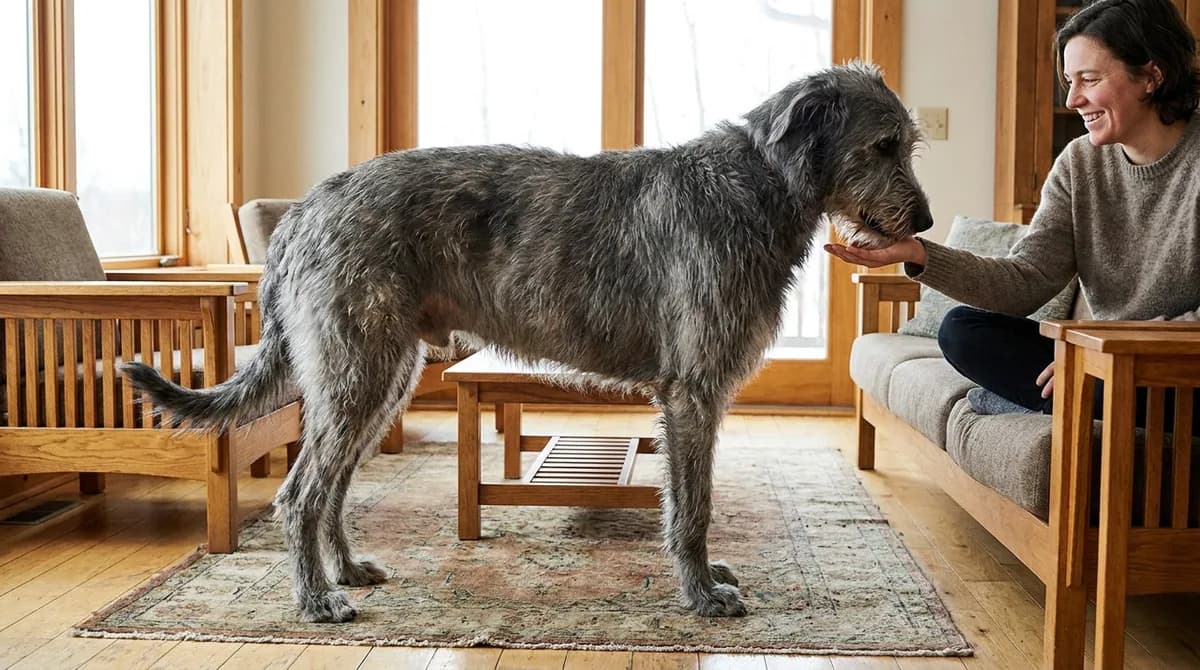
An Irish Wolfhound mix may have documented parents, an estimated family history, or a label based mainly on appearance. Those starting points matter. A shaggy face cannot tell you how large a puppy will become, how an adult behaves around cats, or whether a particular person will tolerate the dog's coat.
Use the named crosses below to guide questions, then make decisions about the individual dog you can meet.

Sign up for expert-backed reviews and safety alerts all in one place.
What an Irish Wolfhound mix label tells you
“Irish Wolfhound cross,” “Wolfhound mix,” and “Irish Wolfhound x” describe proposed ancestry. They do not identify a uniform breed standard. Even when both parents are known, puppies do not receive a predictable half-and-half package of appearance, personality, and care needs.
Begin by asking who supplied the label and what supports it. Documented parentage might come from identified parents and breeding records. Visual identification is a guess based on appearance. A DNA ancestry estimate is a different kind of evidence again, and it should be read with the provider's stated limitations.
| Information available | What it helps establish | What remains uncertain |
|---|---|---|
| Documented parentage | The recorded parents and family background | Which inherited traits an individual puppy will express |
| Visual identification | Features that resemble a breed | Whether that breed is actually in the family |
| DNA ancestry estimate | An estimate of breed ancestry | Exact parent identities and future behavior |
| Observed traits | What this dog looks like and does in a particular setting | Behavior in unfamiliar settings or future growth |
| Unknown ancestry | That family details are unavailable | The missing details should remain unknown rather than guessed |
University of Florida shelter-dog identification research illustrates the limits of identifying ancestry from appearance. That does not make every rescue description useless. It means “looks like a Wolfhound” should stay separate from “has verified Wolfhound parentage.”
A test such as Wisdom Panel Essential Breed Identification can provide a breed ancestry estimate when family information is missing. It does not turn a resemblance into a pedigree or tell you how the dog will behave with your children. Use the result alongside records and observation.
Keep three separate notes when evaluating a dog: what is documented, what you have observed, and what is still unknown. This makes an uncertain label manageable without needing to resolve every part of the family tree before providing appropriate care.

Explore a breed ancestry estimate with Wisdom Panel Essential, alongside records and observation. Results do not guarantee appearance or behavior.
Petful may earn a commission when you click through to Chewy, at no extra cost to you.
Poodle mixes and Irish Wolfadoodles
Generation terminology describes a claimed breeding relationship, not a guaranteed coat or temperament. Ask which individual parents and records support the label.
An Irish Wolfadoodle generally refers to an Irish Wolfhound and Poodle mix. You may also see “Irish Wolfhound doodle” or “Wolfhound Poodle cross.” Ask whether the Poodle parent is identified as a Standard Poodle, what documentation is available, and whether the description refers to both parents or more distant ancestry.
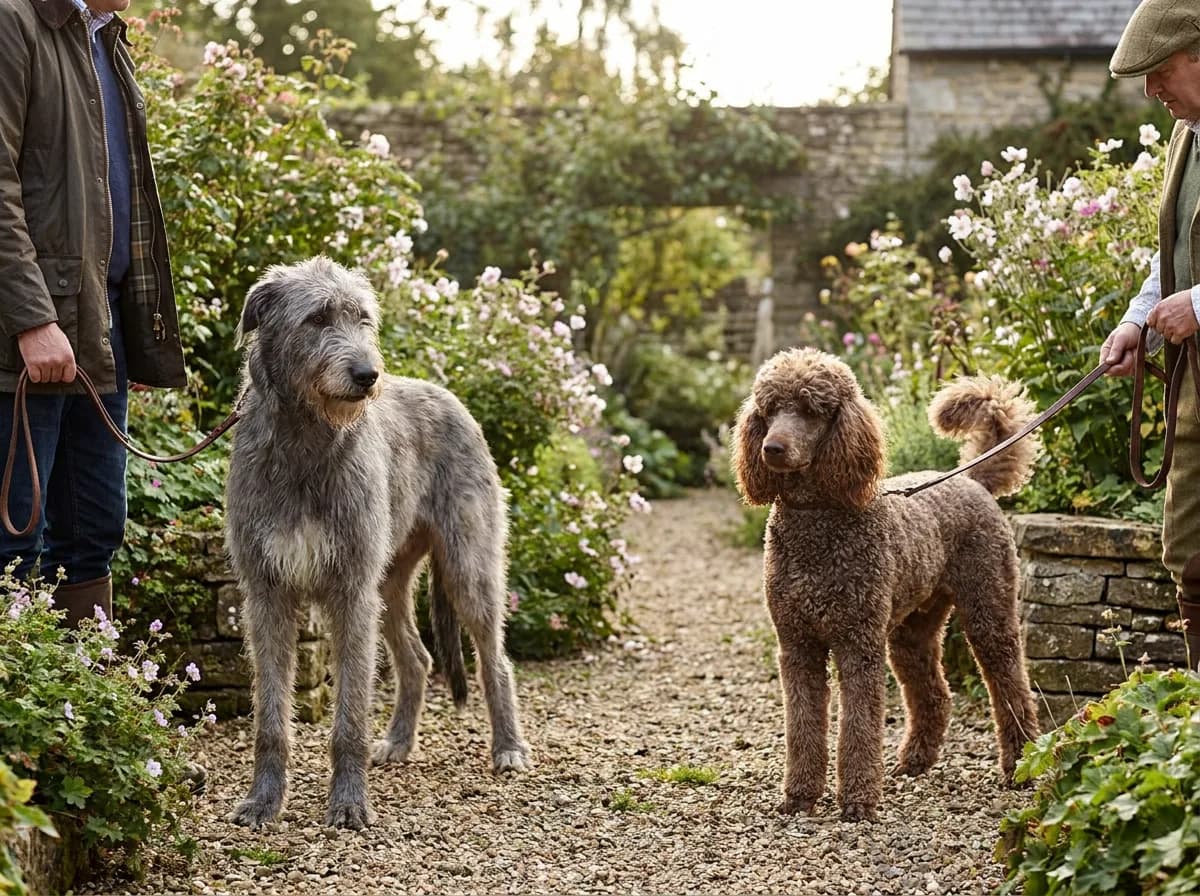
Generation labels describe a proposed breeding history, not a finished dog's traits. If a seller uses “reverse F1b,” ask them to explain the actual parents and the direction of the backcross in plain language. A family diagram supported by records is more useful than assuming everyone uses the term identically.
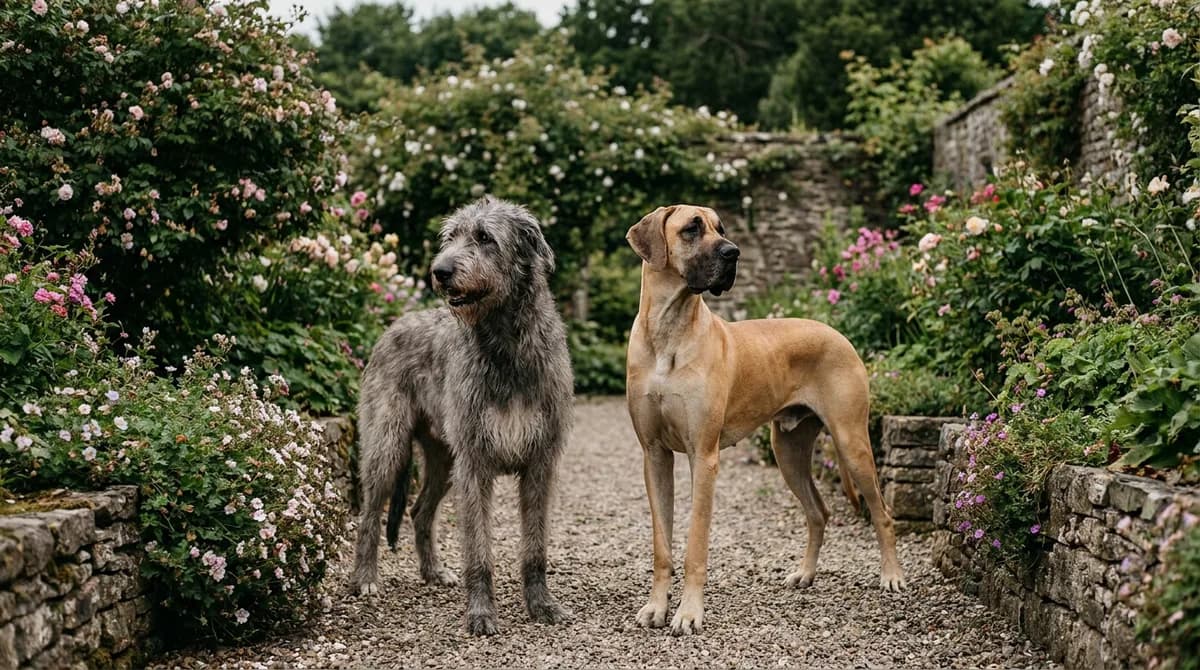
An Irish Wolfhound Labradoodle mix involves a parent already described as a mix. An Irish Wolfhound, Great Dane and Poodle combination similarly needs more than a two-breed nickname. Ask which breeds are attributed to each parent and where the information comes from; do not assume a three-breed label establishes particular percentages.
For Irish Wolfhound Poodle puppies, useful questions include:
- What are the identities, adult measurements, and health records of both parents?
- What coat care do the parents need, and what can actually be observed in this puppy?
- Has the puppy practiced calm handling of feet, ears, and coat?
- What support is available if grooming or handling becomes difficult?
Coat maintenance should be part of the decision before purchase. Ask a groomer to assess the actual coat, explain suitable tools, and demonstrate how to check for tangles without pulling. A puppy's soft appearance in a photograph is not a reliable maintenance schedule for its adult coat.
Before committing, ask a groomer what a realistic appointment and home-care plan would involve for the coat currently present. Find out whether the dog has experience standing for grooming, hearing clippers, or having its feet handled. If these are unfamiliar, plan gradual introductions and support rather than expecting one appointment to solve everything. Include the time involved as well as the fee when deciding whether the dog fits your household.

Consider this slicker brush for a suitable longer or wiry coat. Choose grooming tools for the individual dog and use gentle handling.
Petful may earn a commission when you click through to Chewy, at no extra cost to you.
Inherited traits do not arrive according to a seller's preferred combination. Someone seeking Wolfhound height, Poodle coat, and a particular personality should discuss each expectation separately. Ask what is known now and which claims concern an uncertain future outcome, especially when the puppy is too young for adult size or coat care to be clear.
Great Dane and other giant-breed crosses
The parent breeds below organize questions to ask; individual variation prevents treating these groups as standardized offspring profiles.
An Irish Wolfhound Great Dane mix label brings two large parent breeds into the conversation, but it does not supply an adult measurement. For puppies, obtain the parents' records and measurements if available. For an adult, measure the dog you are adopting and plan around its actual handling needs.
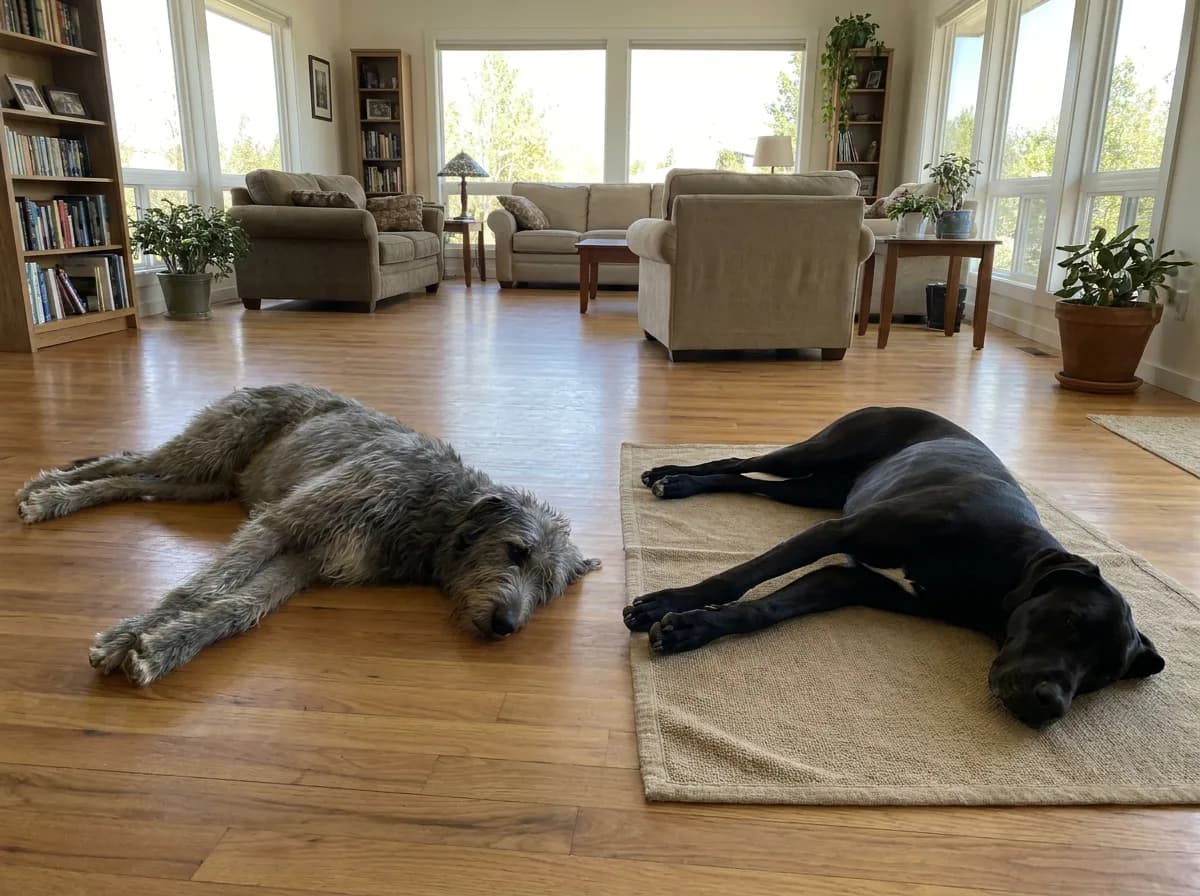
Mastiff and Pyrenees labels need more detail too. Ask whether “Mastiff” specifically means English Mastiff and whether “Pyrenees” means Great Pyrenees. Irish Wolfhound crosses described as Saint Bernard, Newfoundland, or Cane Corso mixes also require their own family evidence. A shortened name should not conceal uncertainty about a parent.
| Named parent group | Useful questions | Individual variation to assess |
|---|---|---|
| Poodle and multibreed doodle labels | Which parents and generation are documented? | Coat texture and grooming tolerance |
| Great Dane, Mastiff, Great Pyrenees, Saint Bernard, Newfoundland, Cane Corso | What size and health records are available? | Adult handling, transport, coat, and comfortable space |
| Retriever, herding, and working-dog labels | What does the caregiver observe during daily routines? | Engagement, settling, movement, and training needs |
| Terrier, Schnauzer, and Pit Bull labels | What supports the label and the behavior description? | Grooming, handling, and responses to other animals |
| Sighthound and northern-breed labels | What is known about outdoor behavior and containment? | Chase responses, exercise tolerance, and coat care |
| Small-cross or wolf-hybrid claims | Is there credible documentation? | Treat unresolved ancestry as unknown |
Work through the logistics before being persuaded by a photograph of an impressive dog. Can the dog enter your vehicle comfortably? Can you manage the lead safely if it becomes excited? Is there room to pass the resting area without stepping over the dog? These questions matter whether the family description proves accurate or changes later.
Try ordinary routines during a supervised meeting when the caregiver considers them appropriate. Watch a calm transition through a doorway, a short walk, and settling on a mat. One successful visit is a starting observation, not proof that the dog will behave identically at home.
Labrador, Golden Retriever, herding and working-dog crosses
An Irish Wolfhound Labrador mix, including one described as a black Lab cross, needs more evidence than coat color. “Black Lab” names a color within the Labrador description; it does not make a black mixed dog identifiable by sight. Ask whether a Labrador parent is actually known and how that information was obtained.
A Golden Retriever cross may be advertised as a “golden wolfhound.” That label is ambiguous: it may refer to proposed Golden Retriever ancestry or simply a color description. Clarify what the person means. The Irish Wolfhound breed guide covers the purebred coat background; color alone cannot establish a cross.
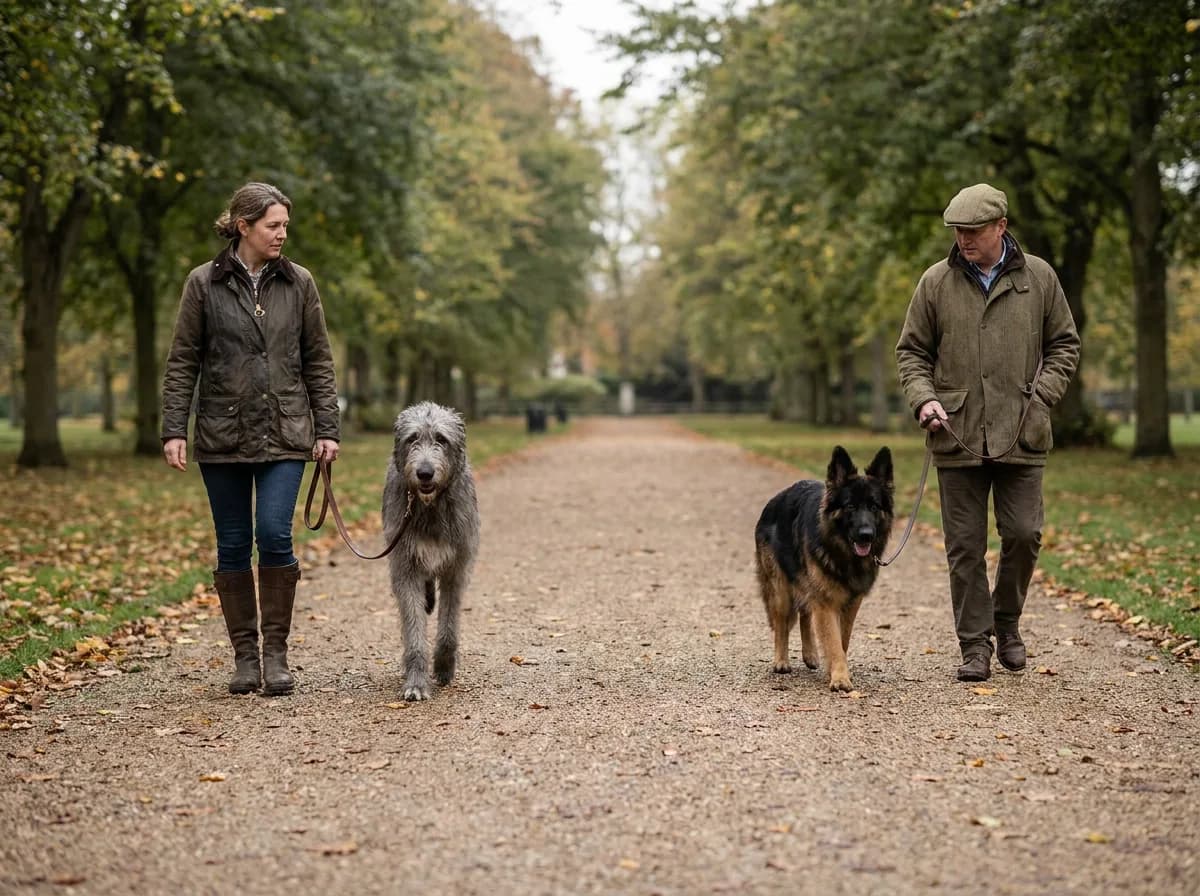
For an Irish Wolfhound German Shepherd mix, “Shepherd” deserves the same clarification. German Shepherd, Australian Shepherd, and a generic shepherd-type dog are not interchangeable descriptions. Border Collie, Old English Sheepdog, and Bouvier crosses likewise name different proposed parents rather than one uniform herding mix.
Ask for observed behavior
Ask the current caregiver to describe behavior with examples instead of adjectives:
- What does “active” look like during an ordinary day?
- Can the dog settle while people work or eat nearby?
- What happens when a bicycle, runner, or another dog passes?
- Which activities engage the dog without making it harder to settle?
- Which cues have been practiced, and in what surroundings?
- When the dog becomes excited, what helps it recover, and how much space does it need?
- Does the dog respond differently to a familiar caregiver and someone new?
- Has it lived with children or other pets, and what supervision or separation was used?
- Are there routines the caregiver avoids because they have caused difficulty?
Doberman and Boxer crosses fit this discussion as working-dog combinations, but their names still cannot specify the individual dog's role in your household. Do not interpret a working ancestry label as evidence that a dog should guard people or needs a particular job.
Bring the answers back to your routine. An owner who can provide training, companionship, and suitable activity may have a different fit from someone seeking a dog that can be left with little support. Ask about time alone and transitions between activity and rest, rather than choosing a cross solely because one parent breed sounds familiar.
A day-in-the-life account can make these answers concrete. Ask the caregiver to describe a recent ordinary day, including meals, walks, rest, visitors, and time without company. Then compare it with the routine you can offer. If the dog has only been observed in a kennel, say so in your notes and allow for the missing home information. If a foster home uses gates or separate resting areas successfully, ask how those arrangements work rather than assuming they will be unnecessary in your home. This turns a broad breed impression into practical preparation.

Compare this six-foot leash with dual handles for supervised walks and introductions while you learn the individual dog's responses.
Petful may earn a commission when you click through to Chewy, at no extra cost to you.
Terrier, Schnauzer, and Pit Bull crosses
An Irish Wolfhound terrier mix is a broad description. Airedale Terrier and Wheaten Terrier labels name more specific proposed ancestry, while an Irish Wolfhound Schnauzer mix needs clarification about the Schnauzer involved. A Giant Schnauzer name should be supported by information, not inferred from a beard and large body.
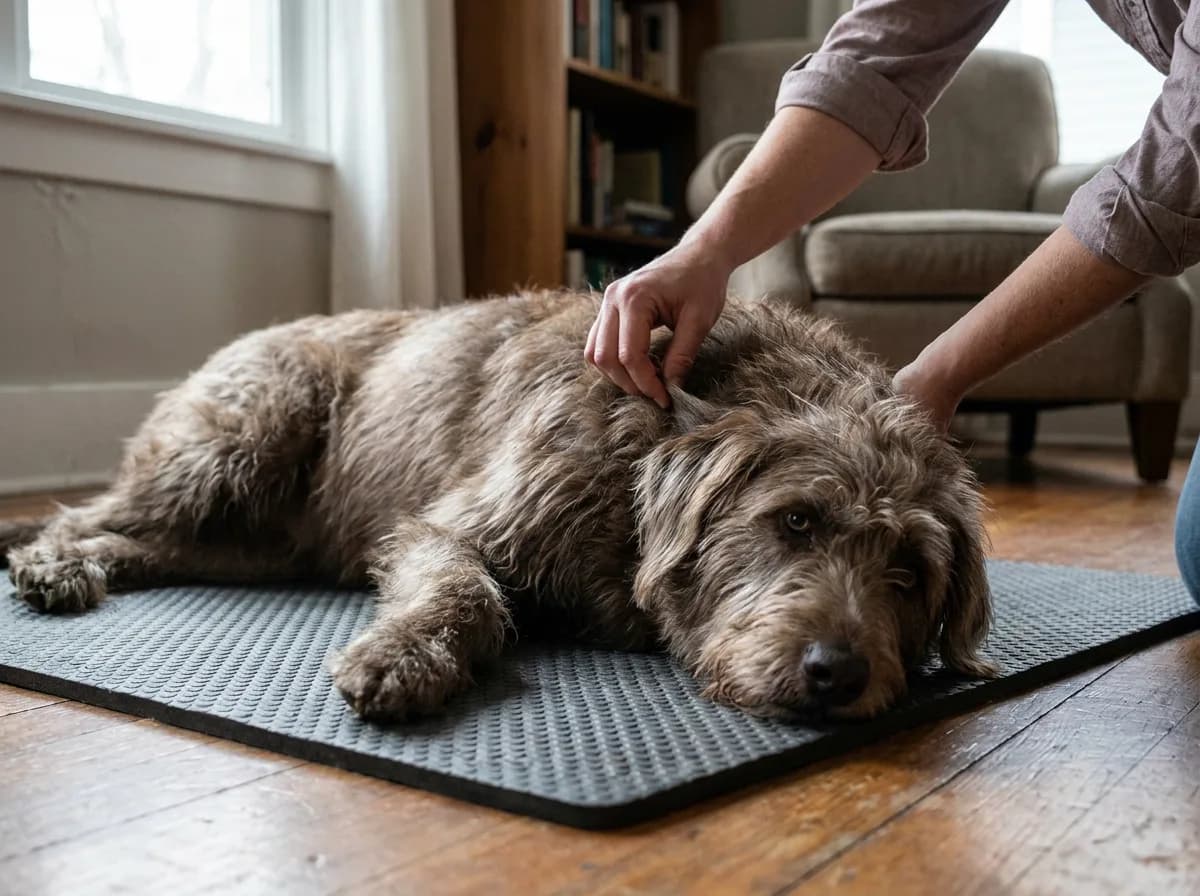
A rough coat can be practically important even when the family label is uncertain. Ask how the dog responds to brushing, whether tangles occur in particular areas, and whether previous grooming notes are available. A groomer can help choose a workable individual coat-care routine without needing a confirmed family tree.
Clarify Pit Bull labels and handling
For an Irish Wolfhound Pit Bull mix, ask what the “Pit Bull” description is based on and review the dog's actual history. Do not treat the label as a breedwide aggression prediction, either positive or negative. Specific accounts of handling, interactions, and stressful situations are more useful than a general assurance that the dog is friendly.
Arrange introductions with the caregiver's guidance. Keep enough space to observe comfortably, avoid forcing contact, and ask what signs mean the dog needs a pause. If there is a known bite or conflict history, obtain the details and discuss them with an appropriately qualified professional before making a household decision.
Sighthound and northern-breed crosses
Greyhound and Borzoi crosses are among the sighthound descriptions you may encounter. “Lurcher” describes a type of cross involving sighthound ancestry rather than a single standardized parent breed. A Wolfhound lurcher label therefore needs an explanation of what is actually known about the other parent or family background.
An Irish Wolfhound Siberian Husky mix or Alaskan Malamute cross raises a different set of practical questions about coat maintenance and outdoor routines. The name does not tell you how much the individual sheds, which exercise it can comfortably manage, or whether it will return when called around distractions.
Ask for observations from real situations:
- Has the dog reacted to cats, squirrels, or other small animals, and under what conditions?
- How does it behave on a lead around moving distractions?
- What fencing and gate arrangements has it lived with?
- Which exercise and rest routines have worked for its current caregiver?
Do not test uncertain chase behavior by releasing the dog near another animal. Begin with controlled, supported introductions and secure boundaries. A dog that ignores a distant cat on one walk has not demonstrated safe unsupervised coexistence with a household cat.
Build outdoor routines around the dog's health, age, experience, and observed responses. The value of learning the possible parent breeds is that it helps you ask better questions; it does not replace answers about the animal in front of you.
Small-cross and wolf-hybrid claims
An Irish Wolfhound Chihuahua mix, Corgi cross, or Yorkie cross may appear in a listing or social post. The wording alone does not verify that parentage. This guide does not establish documented examples of those crosses, and a photograph of a small shaggy dog cannot fill the gap.
“Small Irish Wolfhound cross” might describe the dog's current size, a puppy, or an uncertain family guess. Ask whether the dog is an adult, what its age and veterinary records show, and whether either parent is known. Do not use an unusual label to calculate a promised adult size.

Compare coverage choices for your pet, then request a quote directly on Lemonade.
- Check a price for your pet
- Review available coverage choices
- See the terms before you decide
Eligibility, waiting periods, limits and exclusions apply.
Petful may earn a commission when you click through to Lemonade, at no extra cost to you.
Separate wolf-hybrid claims
Wolf-hybrid claims are a separate matter from mixing two domestic dog breeds. The word “wolf” within Irish Wolfhound does not itself mean wolf ancestry. If someone advertises an Irish Wolfhound wolf mix, request credible documentation and specialist guidance rather than treating it as an ordinary designer-cross description.
For any extraordinary ancestry claim, ask the seller to explain the evidence and identify what remains uncertain. Avoid paying a premium simply because a story sounds unusual. Your decision still needs a clear account of the dog's identity, care requirements, history, and suitability for your household.
Assess the individual dog's size, coat, and behavior
An individual assessment starts with information you can record: age as documented or estimated, measured size, current body weight, visible coat, veterinary history, and observed behavior. Keep the setting alongside every observation. “Relaxed with one familiar dog at home” is more informative than “good with dogs.”
Agree with the caregiver on what you will observe during a meeting. Begin with a quiet setting and ordinary activities the dog knows. You do not need to provoke a reaction, remove food, or insist on handling to learn whether more support is needed. Ask about previous difficulty and let the person who knows the dog explain its signals. A withdrawn dog may need time rather than a more demanding introduction. Record what happened, what support was present, and which situations were not assessed so that a brief meeting does not become a claim about every future circumstance.
| Area | Record what is known | Keep unresolved questions visible |
|---|---|---|
| Size | Current measurements, weight, and recorded age | Adult growth if still a puppy |
| Coat | Texture, tangles, shedding, and grooming tolerance | How the coat may change |
| Behavior | Specific responses in named settings | Responses in unfamiliar situations |
| Health | Examination notes, treatment, and available screening records | Missing family history or incomplete records |
| Household fit | Handling, transport, rest space, and daily routine | Support needed during settling in |
A black Irish Wolfhound mix cannot be confirmed from its coat color. Black is also a recognized purebred Irish Wolfhound color, so it does not establish mixed ancestry either. Treat appearance as useful for describing a dog and choosing care, while leaving ancestry to the evidence available.
For individual coat care, check the areas the dog permits you to handle comfortably and let a groomer assess any concerns. The aumuca Self Cleaning Slicker Brush may suit some longer or wiry coats. Use a suitable tool gently, and stop if the dog shows discomfort rather than pulling through resistance.
Observe handling needs as well as sociability. Watch how the dog moves with its caregiver, responds to its name, and manages ordinary transitions. The Frisco Traffic Leash with Dual Padded Handles is an option for supervised walks; closer handling still needs calm practice and enough space to avoid overwhelming the dog.
Research discussed by UMass Chan Medical School challenges simple personality predictions based on breed labels. It does not mean ancestry has no relevance. It supports combining family information with observation rather than assuming a label supplies the whole personality.
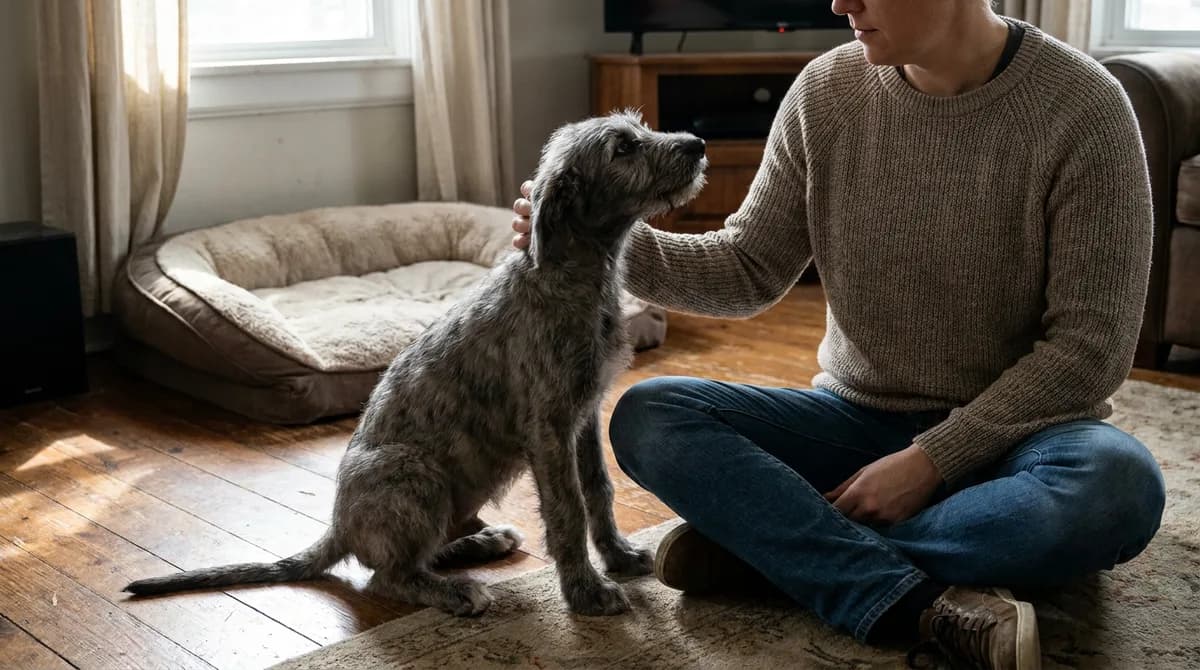
For a puppy, use WebVet's puppy socialization checklist to plan gradual, positive experiences appropriate to its stage and your veterinarian's guidance. For daily practice, the dog training schedule helps turn broad intentions into repeatable routines.
Consider the household from the dog's perspective:
- Provide a resting space where people and other animals will not repeatedly disturb it.
- Plan who manages walks, grooming, feeding, and training.
- Introduce new settings gradually instead of arranging every challenge in the first few days.
- Record situations that produce discomfort so you can seek useful help.
- Revisit equipment fit and routines as a puppy grows or an adult settles in.
For an adult dog, a foster caregiver may have observations from ordinary home life that a brief visit cannot reproduce. Ask about good days, difficult moments, and the support that made a difference. For a puppy, accept that some questions remain open and budget time and resources for adaptation.
Health records to request for a mixed-breed dog
Request mixed-breed health records for the individual and parent screening results for both known parents. A claim that a dog is healthier simply because it is mixed does not establish its health. Nor can you average the parent breeds' lifespan figures to predict how long this dog will live.
The Irish Wolfhound Foundation's general health guidance identifies screening relevant to Wolfhounds. Use known ancestry to start a discussion with your veterinarian about appropriate assessment, rather than applying every purebred recommendation without considering the individual dog.
- Obtain examination, vaccination, and treatment records.
- Ask which screening tests were performed and request the results.
- Identify ongoing medication or follow-up appointments.
- Keep unavailable family details marked as unknown.
Our Irish Wolfhound lifespan guide explains the purebred evidence and its limits. It provides background, not a lifespan estimate for a cross. Your veterinarian can interpret the available records alongside the dog's current examination and any symptoms.
When comparing a personalized Lemonade insurance quote, check eligibility, exclusions, waiting periods, deductibles, and reimbursement arrangements. Mixed ancestry does not establish coverage. Keep money available for routine care and expenses a policy may not cover.
Feeding and recognizing bloat
Choose a complete food suited to the dog's life stage, then check its calorie content and measure portions. WSAVA's food-selection guide also recommends asking about the manufacturer's nutrition expertise and quality controls. Review the feeding plan against the individual dog's weight and body condition rather than assigning every Wolfhound mix the same ration.
For a large or deep-chested dog, discuss gastric dilatation-volvulus, or GDV, with your veterinarian. This emergency involves a distended stomach that can twist. The American College of Veterinary Surgeons identifies deep-chested conformation and family history among associated risk factors; a mix label alone cannot establish this dog's risk.
Repeated attempts to vomit without bringing anything up, a swelling abdomen, drooling, distress or weakness need immediate veterinary attention. Call an emergency veterinary service and arrange immediate evaluation rather than waiting for the symptoms to settle. ACVS emphasizes that GDV can progress rapidly and early treatment matters.
Finding a rescue or breeder
When looking for Irish Wolfhound mix puppies for sale, ask the seller to identify the puppy, explain its parentage claim, and provide records before discussing a deposit. Find out whether you can meet the puppy and its mother, what veterinary care has occurred, and which details are still unconfirmed.
The IWCA's puppy-finding guidance concerns purebred Wolfhounds, but its emphasis on records, breeder questions, written agreements, and continuing support offers a useful starting point. A seller's polished description should not replace a conversation about the actual puppy.
For a rescue dog, ask how the label was assigned and what the organization has observed. Unknown ancestry is not itself a reason to reject a suitable dog. It is a reason to make the decision using the records, behavior information, and support that are available.
Confirm the placement agreement
Before committing, clarify:
- The adoption fee or total purchase price and what it includes.
- Any reservation payment, refund terms, and written agreement.
- Existing veterinary needs and the records that will transfer.
- What happens if the placement cannot continue.
- Which contact will provide help after the dog comes home.
For general Irish Wolfhound price and ownership-budget context, see our price guide. Its documented purebred quotes do not establish the price of a mixed puppy. Obtain a specific quote or adoption fee, then budget for the individual dog's equipment, food, training, transport, and veterinary needs.
The purebred Irish Wolfhound background
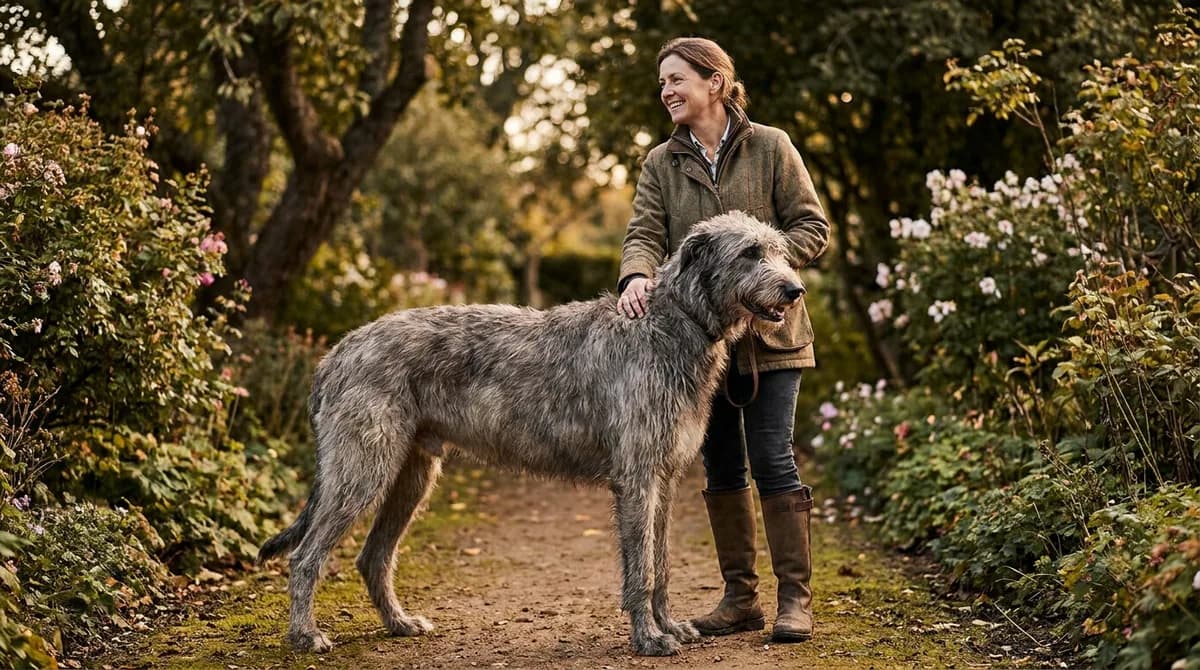
Irish Wolfhounds are kept as companions, so questions suggesting they are no longer kept as pets begin with a misleading premise. Their giant size, household demands, and breeder waiting lists can make finding a suitable match more involved. Our Irish Wolfhound breed guide explains availability and the practical downsides alongside the breed's companion background. Those purebred characteristics provide context, not a complete description of every mix.
Irish wolfhound size guide
Irish Wolfhound size references describe the purebred, with important distinctions between standard minimums and individual measurements. They are not growth targets for a mixed puppy. Questions about whether a wolf or a Wolfhound is bigger also depend on height, weight, and the animals being compared. Our Irish Wolfhound size guide explains those distinctions and practical measurement needs. Fit equipment to the actual dog.
Irish wolfhound temperament guide
The Irish Wolfhound temperament is commonly described as gentle and companionable, but no breed label guarantees cuddling or rules out aggression. Respect the individual's preference for contact and obtain specific information about fearful, defensive, or difficult behavior. Our Irish Wolfhound temperament guide explains the purebred background and training considerations. A mixed dog's history and present responses remain central to deciding what support it needs.
Irish Wolfhound mix questions
There is no universal best mix. Individual fit matters more than a cross name: assess the dog's care needs, behavior, and suitability for your household. Known parentage can guide questions, but it does not replace meeting the dog and reviewing its records.
“Scottish wolfhound” often means Scottish Deerhound, a separate purebred dog rather than an Irish Wolfhound mix. Ask the speaker or seller to clarify the name. Similar rough coats and sighthound outlines do not establish that two dogs are the same breed or a cross.
There is no guaranteed allergy response to an Irish Wolfhound mix, including one with Poodle ancestry. Individual exposure matters, and coat appearance or a seller's label cannot establish that a particular person will tolerate the dog. Discuss significant allergy concerns with an appropriate clinician before committing.

Coreen Saito is a pet writer and longtime shelter volunteer with more than a decade in animal rescue. She covers cat behavior, breed care, and the small, ordinary science of sharing a life with companion animals, with a particular focus on honest takes about the products and decisions that actually matter. At home in Arizona, she's outranked by Mac (a dog with the loudest opinion in the house), Rebel (a cat who governs by quiet authority), and Meri (an orange tabby who runs the late shift and the laundry basket). She writes about all three, plus the rescues that keep coming through her life, at LifeWithMinty.com.
Sign up for expert-backed reviews and safety alerts all in one place.