Great Dane Lifespan: How Long Do Great Danes Live?
The average Great Dane lifespan is just 7 to 10 years. A veterinarian explains why giant breeds age so fast, the health factors (bloat, heart, cancer, joints) that shape longevity, and how to extend your Dane's healthy years.

BVMS, MRCVS
Petful is reader supported. As an affiliate of platforms like Amazon and Chewy, we may earn a commission when you buy through links on this page. There is no extra cost to you.
The average Great Dane lifespan is 7 to 10 years, one of the shortest of any dog breed and brief even among giant dogs. That single number shapes almost everything about living with this gentle giant. As a veterinarian, I want to give you the honest and useful version of the story: not only how long Great Danes live, but why giant breeds age so quickly, which health problems most often cut a Dane's life short, and, most importantly, what you can actually do to earn your dog more healthy years. A Great Dane's internal clock runs fast, yet good genetics, smart feeding, and proactive veterinary care can meaningfully tilt the odds in your favor.
- 1The average Great Dane lifespan is 7 to 10 years, short even for a giant breed, though well-cared-for dogs sometimes reach 11 or 12.
- 2Giant breeds age faster than small dogs because rapid growth and a large body drive earlier heart disease, cancer, and joint failure.
- 3The biggest longevity levers are in your control: a health-tested breeder, slow-growth feeding, a lean body, bloat awareness, and routine cardiac and orthopedic checks.

Sign up for expert-backed reviews and safety alerts all in one place.
How Long Do Great Danes Live?
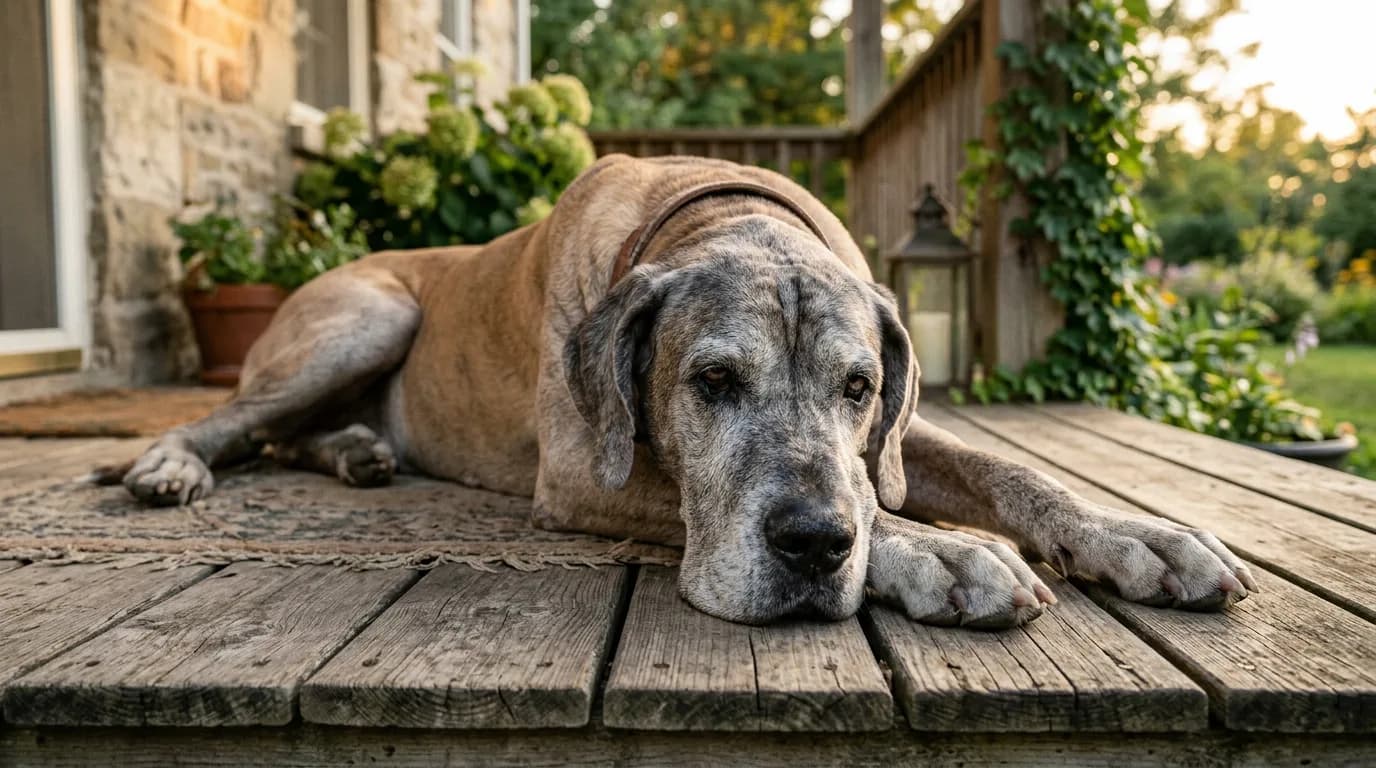
Great Danes live an average of 7 to 10 years. Most breed authorities, including the American Kennel Club (akc.org), publish that same range, and it lines up with what I see in practice: a Dane is often considered a senior by age 5 or 6, middle-aged in dog years while still looking magnificent. Some individuals with excellent breeding and attentive care do reach 11 or 12, but those dogs are the exception rather than the rule, and a Dane that lives past 12 is genuinely remarkable.
To put that in perspective, it helps to compare the breed against the rest of the canine world. Dog longevity tracks closely with body size, and it runs in the opposite direction from what people expect from other animals. In the wild, larger species usually outlive smaller ones. In dogs, the pattern flips: the smallest breeds live the longest, and the giants live the shortest.
| Size Class | Typical Adult Weight | Average Lifespan |
|---|---|---|
| Toy and small | Under 25 lb | 12 to 16 years |
| Medium | 25 to 50 lb | 11 to 14 years |
| Large | 50 to 90 lb | 10 to 12 years |
| Giant (includes Great Dane) | 100 lb and up | 7 to 10 years |
A Chihuahua can share a home for 15 or 16 years, while a Great Dane of the same household may be gone by 8 or 9. That gap is not bad luck or poor ownership. It is biology, and understanding the mechanism is the first step toward pushing your own dog toward the high end of the range. For the full picture of the breed beyond longevity, our complete Great Dane breed guide covers temperament, size, and daily care.
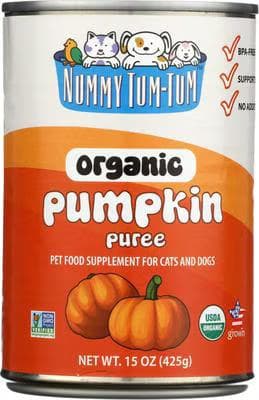
Pure USDA-organic pumpkin puree, no fillers or additives. Adds gentle soluble fiber to firm up loose stool and settle a mildly upset stomach. A simple vet-favorite topper.
Petful may earn a commission when you click through to Chewy, at no extra cost to you.
Why Do Great Danes Age So Fast?
The short answer is that everything that makes a Great Dane spectacular also wears the body out sooner. A Dane grows from a roughly one-pound newborn to a 140-pound adult in about 18 to 24 months. That is an astonishing rate of cell division, driven by high levels of growth hormone and a related signal called insulin-like growth factor 1 (IGF-1). Researchers at institutions such as Cornell University College of Veterinary Medicine and others studying canine aging have linked that same growth machinery to a faster biological clock: dogs bred for large size appear to age at an accelerated pace and show a higher lifetime risk of cancer.
There are a few overlapping reasons a giant breed simply does not get the decades a small dog does:
- Rapid growth costs longevity. Cells that divide quickly to build a huge frame in under two years also accumulate errors faster, which is one reason large breeds develop cancer earlier and more often.
- A big body is harder to run. A larger heart, longer blood vessels, and heavier joints all carry more mechanical and metabolic load, and load wears tissue down over time.
- Growth-related disease shows up early. Giant breeds are prone to bone, joint, and heart conditions that appear in middle age rather than old age, effectively compressing the timeline.
- Aging starts sooner. A Great Dane is biologically "senior" years earlier than a terrier, so age-related decline begins at 5 or 6 rather than 9 or 10.
There is also a genetic dimension worth understanding. When breeders selected dogs for ever-greater size, they concentrated the growth signals that build a giant body, and those same signals appear to trade away years of life. This is why the size-versus-lifespan pattern holds so consistently across breeds and even within a breed: the largest individuals of a given type often live the shortest. A Great Dane is essentially living at the far end of that trade, which is why its aging timeline is compressed rather than simply unlucky.
None of this is a reason to avoid the breed. It is a reason to be an informed owner. When you understand that a Dane packs a full canine life into a compressed span, the case for early screening, careful feeding, and preventive care becomes obvious rather than optional. The encouraging flip side is that biology sets the ceiling, but daily care decides how close your dog gets to it.
 Sponsored
Have a health question about your pet?
Talk to a licensed vet at Dutch over video or message, including nights and weekends.
Use code Pets60
Plans start at $12/month · covers up to 5 pets
- Licensed vets in most states
- Rx for 150+ conditions
- 4.7 on Trustpilot
The Health Factors That Shape a Great Dane's Lifespan
Four categories of health problems do the most to determine how long a Great Dane lives: bloat, heart disease, cancer, and joint or bone conditions. Knowing them is not about living in fear. It is about recognizing risk early, choosing a breeder who screens against it, and acting fast when minutes matter. Below is a working summary, followed by a closer look at each.

Pumpkin-flavored probiotic soft chews that support healthy gut flora and digestion in dogs.
Petful may earn a commission when you click through to Chewy, at no extra cost to you.
| Condition | What Happens | Why It Affects Lifespan | What Owners Can Do |
|---|---|---|---|
| Bloat (GDV) | The stomach fills with gas and can twist on itself | A leading cause of sudden death, fatal within hours | Learn the signs, consider a preventive gastropexy |
| Dilated cardiomyopathy | The heart muscle weakens and enlarges | Progressive heart failure, often striking in middle age | Yearly cardiac exams, buy from screened lines |
| Osteosarcoma | An aggressive bone cancer | Common in giant breeds and spreads quickly | Have any persistent limp checked promptly |
| Hip and elbow dysplasia | Joints form poorly and wear early | Painful arthritis limits mobility and quality of life | Choose OFA-screened parents, keep the dog lean |
| Wobbler syndrome | Compression of the spinal cord in the neck | Impairs coordination and mobility over time | Seek early diagnosis, avoid neck strain on walks |
Bloat (Gastric Dilatation-Volvulus)
If you learn one thing about Great Dane health, make it bloat. Gastric dilatation-volvulus (GDV) is a condition in which the stomach fills with gas and then rotates, sealing off its own blood supply and the exits at both ends. It progresses from a healthy dog to a life-threatening emergency in a matter of hours. Deep-chested giant breeds are the most vulnerable, and the Great Dane sits at the very top of the list. A prospective study led by Dr. Larry Glickman at Purdue University put the lifetime risk of bloat in Great Danes at roughly 37 to 42 percent, the highest of any breed studied.
Because GDV is so common and so fast, many owners and breeders choose a preventive stomach-tacking surgery called a gastropexy, often performed at the same time as spay or neuter. It does not stop the stomach from bloating, but it anchors the stomach so it cannot make the deadly twist. Talk to your veterinarian about whether a gastropexy makes sense for your dog.
- A swollen or hard belly, unproductive retching or trying to vomit with nothing coming up, heavy drooling, pacing and restlessness, and sudden collapse are the red flags. GDV is a same-hour emergency, so save your nearest 24-hour veterinary hospital in your phone today.
Heart Disease (Dilated Cardiomyopathy)
Great Danes are one of the breeds most predisposed to dilated cardiomyopathy (DCM), a disease in which the heart muscle becomes thin, weak, and enlarged until it can no longer pump efficiently. In Danes, DCM often has a hereditary component, which is why responsible breeders screen their breeding dogs with cardiac exams and why an annual heart check is worth every penny once your dog reaches middle age. Early DCM can be silent, so catching a murmur or rhythm change before symptoms appear buys valuable treatment time. Signs to watch for at home include a cough, tiring quickly, an elevated resting breathing rate, or fainting.
Cancer (Osteosarcoma and Others)
Cancer is a major reason giant breeds have shorter lives, and osteosarcoma, an aggressive bone cancer, is the one most associated with tall, heavy dogs like the Dane. It typically strikes a leg bone, causes a persistent limp or a firm swelling, and can spread before it is diagnosed. Any lameness that does not resolve in a young or middle-aged Dane deserves a prompt veterinary workup and an X-ray rather than a wait-and-see approach. Great Danes are also seen with other cancers at higher rates than small breeds, part of the broader link between rapid growth and cancer risk.
Joint and Bone Disease
Hip and elbow dysplasia, where the joints form imperfectly and wear out early, are common in giant breeds and can lead to painful arthritis that erodes quality of life long before it ends it. Wobbler syndrome, a compression of the spinal cord in the neck, is another breed-associated condition that affects gait and coordination. The single best defense starts before you own the dog: choose a breeder who screens breeding stock through the Orthopedic Foundation for Animals (ofa.org). After that, keeping your Dane lean and protecting the joints during the growth years does the most good. Our full Great Dane health guide walks through screening schedules for each of these conditions in detail.
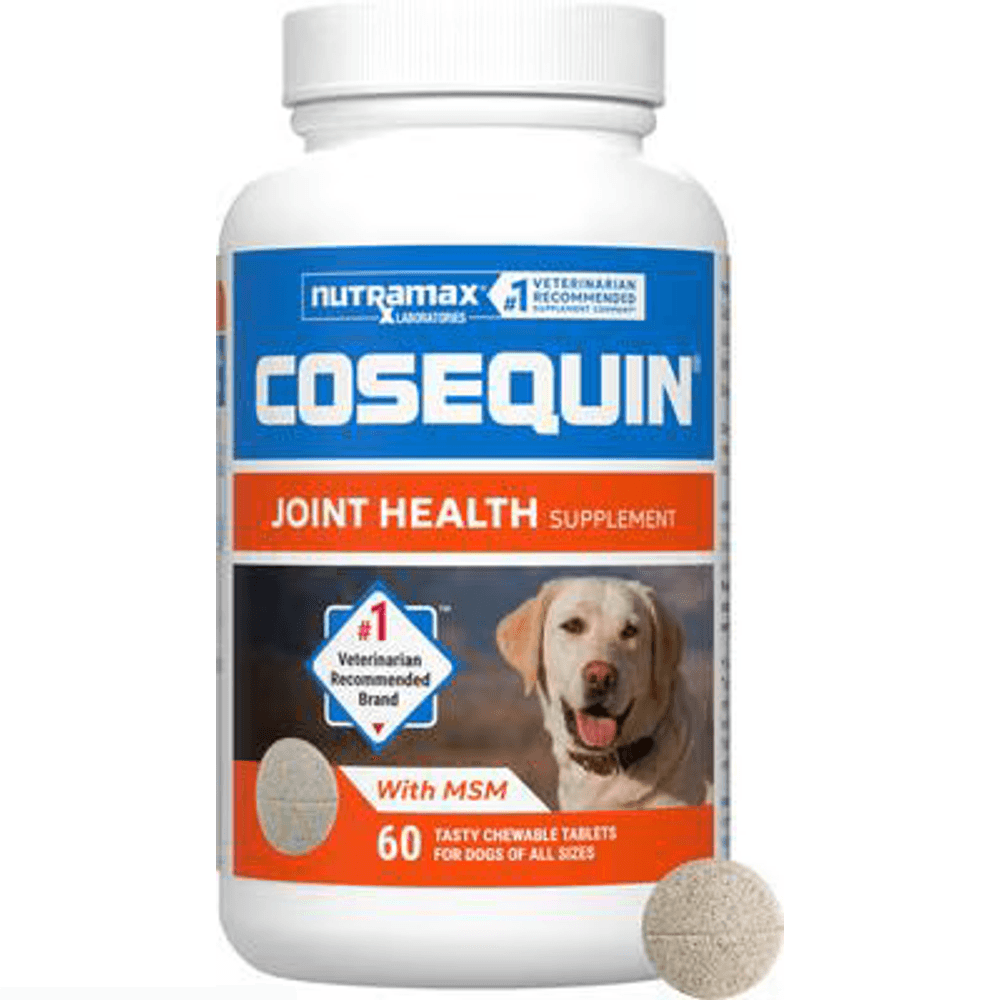
The number-one veterinarian-recommended joint supplement brand. Glucosamine, chondroitin, and MSM support cartilage and cushion the joints, easing the stiffness and hind-end weakness that can leave an older or arthritic dog trembling.
Petful may earn a commission when you click through to Chewy, at no extra cost to you.
What Is the Leading Cause of Death in Great Danes?
Bloat (GDV) is the single most cited leading cause of death in Great Danes, followed closely by heart disease and cancer. Because the breed carries the highest lifetime bloat risk of any dog and because GDV can kill within hours, it accounts for a large share of sudden, otherwise-unexpected Dane deaths. Cardiac disease, chiefly dilated cardiomyopathy, and cancers such as osteosarcoma are the other two heavyweights, and together these three categories explain the majority of Great Dane mortality.
It is worth being precise about what "leading cause" means, because it is easy to misread. It does not mean your specific dog is destined for any one of these outcomes. It means these are the risks worth screening for and watching, which is exactly why bloat awareness, a possible gastropexy, annual heart exams, and prompt attention to any limp show up again and again in longevity advice for the breed. Reducing the odds on these three fronts is the most direct way to move a Great Dane toward the upper end of its lifespan.
Why Is the Great Dane Called the Heartbreak Breed?
Great Danes are called heartbreak dogs, or the heartbreak breed, for one simple and painful reason: they give enormous love in a very short window. When a dog this affectionate, this bonded to its family, and this physically magnificent has an average lifespan of only 7 to 10 years, owners find themselves saying goodbye far sooner than they do with smaller dogs. The nickname is not about the breed being sickly or difficult. It is about the emotional math of loving a gentle giant whose time with you is measured in single-digit years.
There is a second layer to the name. The same conditions that shorten a Dane's life, especially bloat and heart disease, can take a dog suddenly and while it still seems young and healthy. That abruptness is part of the heartbreak. Danes also have a way of behaving like enormous lap dogs, leaning their full weight against you and inserting themselves into every part of family life, which only deepens the bond and the loss. Owners who go in with open eyes, knowing the timeline, tend to describe the trade as worth it many times over: fewer years, but extraordinarily full ones.
How to Extend Your Great Dane's Healthy Years
Here is the encouraging part. A meaningful portion of Great Dane lifespan is within your control, and the interventions are not exotic. They are consistent, everyday choices that stack up over a dog's life. As a vet, this is where I focus owners' energy, because it is where the biggest returns are.
Start With a Health-Tested Breeder
Longevity begins before you bring the puppy home. A responsible breeder screens breeding dogs for heart disease and hip and elbow dysplasia (through OFA, ofa.org), avoids doubling up on known problems, and can show you health clearances for both parents. A well-chosen genetic starting line does more for lifespan than anything you can buy later. If you are adopting an adult Dane instead, ask the rescue what health history is known and schedule a thorough veterinary exam early.

Multiple ridges and valleys slow eating, reduce gas and bloating, and turn mealtime into a fun puzzle. Non-skid base, dishwasher safe, 4-cup capacity.
Petful may earn a commission when you click through to Chewy, at no extra cost to you.
Feed for Slow Growth and a Lean Body
Overfeeding a Great Dane puppy to grow it bigger and faster is one of the most damaging things an owner can do. Rapid growth overloads developing joints and raises the risk of orthopedic disease. Feed a large-breed or giant-breed puppy formula designed to support steady, controlled growth, and follow your veterinarian's guidance on portions. Across the whole lifespan, keeping your Dane lean rather than heavy reduces strain on the joints and heart and is one of the best-supported longevity strategies in veterinary medicine. You should be able to feel the ribs easily under a light layer of fat. For a month-by-month view of healthy development, see our Great Dane growth chart.
Consider a Preventive Gastropexy
Given how high the bloat risk is in this breed, a prophylactic gastropexy is a conversation worth having with your veterinarian, often timed with spay or neuter. It is one of the few procedures that directly addresses a top cause of death rather than treating symptoms after the fact. Pair the surgery with sensible feeding habits: several smaller meals rather than one large one, and a calm rest period around mealtimes rather than hard exercise on a full stomach.
Stay Ahead With Veterinary Care
Because Danes age fast, the standard once-a-year checkup should shift toward twice-yearly exams as your dog enters middle age around 5 or 6. Ask your veterinarian about periodic cardiac evaluation given the breed's DCM risk, keep vaccinations and parasite prevention current, and never dismiss a persistent limp, a new cough, or a drop in energy as "just getting older." In a breed with this risk profile, early is everything.
- Age a Great Dane on a compressed timeline: treat 5 to 6 years as the start of the senior years, and add a second annual vet visit then. Catching heart, joint, and cancer changes early is where extra healthy months are won.
Time Spay or Neuter Thoughtfully
In giant breeds, the timing of spay or neuter can influence joint health, because the sex hormones play a role in how growth plates close. For a dog that will not stop growing until 18 to 24 months, altering too early may affect development in ways that matter over a long frame. This is an individualized decision, so talk it through with your veterinarian rather than defaulting to the earliest possible date, and weigh it alongside the bloat conversation, since a gastropexy is often performed at the same surgery. The goal is to protect the joints your dog will need to carry that enormous body for its whole life.
Protect the Joints and the Rest
Give your dog soft, supportive places to lie down to spare the joints, avoid forced high-impact exercise on hard surfaces during the growth years, and keep nails trimmed so they do not alter gait. Dental care matters more than most owners realize too, because chronic dental disease feeds low-grade inflammation that taxes the whole body, so brush the teeth several times a week and keep up with professional cleanings. Steady, moderate activity keeps muscle on the frame and weight off the joints without the pounding that injures a growing giant. Small habits, repeated over years, are what separate a Dane that fades at 7 from one that is still comfortable at 10 or 11.
 Sponsored
Vet care that's always there
Unlimited video calls and messaging with licensed vets for less than a typical vet visit. One membership covers up to five pets.
Use code Pets60
Plans start at $12/month · covers up to 5 pets
- Licensed vets in most states
- Rx for 150+ conditions
- 4.7 on Trustpilot
Can a Great Dane Live 10 Years or More?
Yes, a Great Dane can live 10 years, and a fortunate few live to 11 or 12. Ten years sits at the very top of the breed's 7 to 10 year average, so reaching it is a genuine achievement rather than a given. The Danes that get there almost always share a profile: strong genetics from a health-tested breeder, a lifetime of lean body condition, careful feeding during the growth years, and owners who stayed ahead of bloat, heart disease, and joint problems with proactive veterinary care.
It is best to think of double-digit years as a target you help your dog reach, not a promise the breed makes. Some Danes are taken early by GDV or cardiac disease despite excellent care, which is the hard reality behind the heartbreak-breed name. But the levers in this article genuinely move the needle, and plenty of well-supported Danes do celebrate a tenth birthday.
How Do I Tell if My Great Dane Is in the End Stages of Life?
Recognizing the end stages of a Great Dane's life is one of the hardest parts of loving the breed, and it deserves a gentle, honest answer. The signs that a dog is nearing the end tend to cluster: a lasting loss of appetite and noticeable weight loss, deep fatigue and withdrawal from family activity, difficulty rising or walking, loss of bladder or bowel control, labored or heavy breathing, and a general sense that your dog is no longer comfortable or engaged in the things it once enjoyed. In a giant breed, mobility often declines first simply because there is so much body for weakening legs to carry.
No single checklist can make this call, and the kindest, most accurate path is a conversation with your veterinarian. Ask specifically about a quality-of-life assessment, a structured way to weigh your dog's good days against the hard ones across appetite, pain, mobility, and joy. A veterinarian can also tell you when a symptom reflects treatable illness rather than true decline, and can guide you on pain relief and comfort care. You do not have to interpret these signs alone, and reaching out early gives you and your dog more good options.
Great Dane Lifespan in Context: Longevity Across Dogs
To understand why a Great Dane's years feel so precious, it helps to see where the breed sits on the full canine longevity map, which also answers some of the most common questions owners search for.
Which Dog Can Live 25 Years?
No Great Dane lives to 25, and realistically no giant breed does. Dogs that reach their mid-twenties are almost always small breeds, and the classic example is the Australian Cattle Dog. A cattle dog named Bluey holds the long-standing verified record after living 29 years and 5 months. Small, sturdy breeds such as the Chihuahua, Dachshund, and Jack Russell Terrier are the ones that most often approach or pass 20. It is the clearest illustration of the size-versus-lifespan rule: the smaller the dog, the longer the potential life.
What Percentage of Dogs Live to 16?
Only a small minority of dogs live to 16, and nearly all of them are small breeds. There is no single clean statistic, because it varies enormously by size, but with the average dog living somewhere around 10 to 13 years, reaching 16 puts a dog well into the oldest tier of its kind. For giant breeds like the Great Dane, 16 is effectively out of reach: a Dane that lives to 11 or 12 has already far outlasted its breed average, and 16 would roughly double a typical Dane's life.
How Old Was the Oldest Dog Ever?
The oldest dog ever reliably documented was Bluey, an Australian Cattle Dog from Australia who lived 29 years and 5 months and died in 1939. A Portuguese dog named Bobi was briefly certified at 31 years, but Guinness World Records suspended and then removed that title in 2024 after the evidence could not be verified, which returned the record to Bluey. Either way, the takeaway for Dane owners is the same: the record holders are small, and a Great Dane packs its whole extraordinary life into far fewer years, which is exactly why making each one count matters so much.
If a longer-lived companion is what you are weighing, our guide to the Cavapoo, a small designer crossbreed, shows how differently the longevity math works at the other end of the size scale.
Do Male and Female Great Danes Have Different Lifespans?
The difference is small. On average, female Great Danes tend to live slightly longer than males, but the gap is usually measured in months rather than years, and both sexes sit inside the breed's typical 8–10 year range. Sex is a minor factor, not a deciding one.
The likely reason is size. Males are taller and heavier, and across dog breeds a larger adult body correlates with faster aging, so a big male Dane may age marginally sooner than a smaller female. Two things you control matter far more than sex:
- Spay and neuter timing: for giant breeds, many veterinarians now suggest waiting until skeletal maturity (around 18–24 months) before desexing, because very early surgery has been linked to higher rates of certain joint problems and cancers in large dogs. Talk to your vet about the right age for your dog.
- Body condition: keeping either sex lean, muscled, and at a healthy weight protects the joints, heart, and lifespan of a Great Dane regardless of whether the dog is male or female.
Do Great Dane Mixes Live Longer Than Purebred Danes?
Sometimes, but it depends almost entirely on the other parent breed and the dog's adult size, not on being mixed by itself. Crossbreeding can lower the odds of some inherited single-gene conditions, yet any Great Dane mix that still grows to giant size carries the same size-linked risks: bloat, heart disease, and orthopedic strain.
The other parent sets the outlook:
- Great Dane crossed with a Labrador or a medium breed often finishes smaller than a purebred Dane and may average a slightly longer life.
- Great Dane crossed with a Mastiff or another giant breed stays giant, so expect a lifespan close to a purebred Dane's.
- Great Dane crossed with a German Shepherd, Doberman, or Pit Bull usually lands large but not giant, and longevity tends to fall between the two parent breeds.
Bloat risk follows the deep-chested body shape, so any large Dane cross should still eat measured meals and see a vet about a preventive gastropexy. Ask the breeder or rescue about both parents' health and ages, which predict a mix's future far better than the label mixed breed.
Great Dane Age Chart: Dog Years to Human Years
Great Danes age faster than small dogs, so the old multiply-by-seven rule badly underestimates them. A giant breed reaches middle age by roughly 4 to 5 and is considered a senior near 6, years earlier than a terrier or a toy breed.
These approximate life stages help you plan care (treat the human-year figures as estimates, since no single official Great Dane chart exists):
- Puppy (0–1 year): explosive growth; a 1-year-old Dane is roughly a mid-teen human.
- Young adult (1–3 years): physically mature; roughly late-20s to mid-30s.
- Mature adult (3–5 years): prime years; roughly the 40s.
- Senior (6–7 years): roughly late-50s to 60s.
- Geriatric (8+ years): 70s and beyond.
- Because a Great Dane is biologically senior by about age 6, ask your vet about twice-yearly checkups, baseline heart screening, and bloodwork around ages 5 to 6, well before you would for a small breed. Catching heart disease or arthritis early is one of the most practical ways to protect the years you have.
Does Coat Color or Type Affect a Great Dane's Lifespan?
A standard coat color does not shorten a Great Dane's life. Blue, black, fawn, brindle, and properly bred harlequin Danes all share the same 8–10 year outlook. What can matter is the breeding behind the color and the dog's build, not the shade itself.
- Harlequin and merle: the color is fine, but merle-to-merle pairings can produce double-merle dogs prone to deafness and eye defects. That is a consequence of irresponsible breeding, not of the color on its own.
- Blue and black: standard colors with no proven lifespan penalty, despite persistent online myths that dilute colors are less healthy.
- European versus American type: European or Euro Danes are bred heavier and more mastiff-like, and the extra body mass and exaggerated frame can add orthopedic and cardiac strain. The concern is extreme size and conformation, not the country the line comes from.
Choose a breeder who screens for heart disease, hips, and eyes and who avoids double-merle litters. Sound genetics and a moderate, athletic build protect a Great Dane's longevity far more than coat color ever will.
The average Great Dane lifespan is 7 to 10 years, one of the shortest of any breed. With strong genetics and attentive care, some Danes reach 11 or 12, but that is the exception.
Bloat (gastric dilatation-volvulus) is the most cited leading cause of death, followed by heart disease (dilated cardiomyopathy) and cancer such as osteosarcoma. Great Danes carry the highest lifetime bloat risk of any breed, which is why the condition claims so many dogs suddenly.
Yes. Ten years is the top end of the breed average, and a well-bred, lean, proactively cared-for Dane can reach it, with a lucky few living to 11 or 12. It is a target you help your dog reach, not a guarantee.
Because it gives so much love in so little time. With an average lifespan of just 7 to 10 years, and with conditions like bloat and heart disease that can strike suddenly, owners often say goodbye far sooner than they do with smaller dogs.
Common signs include lasting appetite and weight loss, deep fatigue and withdrawal, trouble rising or walking, loss of bladder or bowel control, and labored breathing. The best step is a veterinary quality-of-life assessment, which weighs comfort, pain, mobility, and joy and rules out treatable illness.
Small breeds, not giants. The Australian Cattle Dog is the classic example, with the record holder Bluey living 29 years and 5 months. Chihuahuas, Dachshunds, and small terriers most often approach or pass 20.
Only a small minority, and almost all are small breeds. With the average dog living roughly 10 to 13 years, 16 sits in the oldest tier, and it is essentially unheard of for giant breeds like the Great Dane.
Bluey, an Australian Cattle Dog, at 29 years and 5 months. A Portuguese dog named Bobi was briefly recognized at 31 years, but Guinness World Records removed that record in 2024 over unverifiable evidence, reinstating Bluey.
BVMS, MRCVS
Dr. Pippa Elliott, BVMS, MRCVS, is a veterinarian with nearly 30 years of experience in companion animal practice. Dr. Elliott earned her Bachelor of Veterinary Medicine and Surgery from the University of Glasgow. She was also designated a Member of the Royal College of Veterinary Surgeons. Married with 2 grown-up kids, Dr. Elliott has a naughty Puggle named Poggle, 3 cats and a bearded dragon.
Sign up for expert-backed reviews and safety alerts all in one place.