Golden Retriever: Personality, Size, Care and Breed Guide
Golden Retrievers are social, trainable sporting dogs. Learn about their temperament, size, exercise, grooming, care and household fit before deciding whether the breed fits your household.

Petful is reader supported. As an affiliate of platforms like Amazon and Chewy, we may earn a commission when you buy through links on this page. There is no extra cost to you.
A Golden Retriever is a social, trainable sporting dog whose daily needs extend well beyond a friendly reputation. The breed can suit an active household that has time for exercise, training, grooming, companionship, and long-term veterinary care. This guide explains the Golden Retriever personality, body, coat, routine, and household fit, then routes specialized questions to the Petful pages that cover them in depth.
Breed tendencies are a planning tool, not a promise about one dog. A pedigree can document ancestry, an official standard can describe the intended breed, and health records can clarify known screening. None of those sources predicts every behavior or outcome. Meet the individual dog, examine the available records, and build a routine that works on ordinary weekdays as well as weekends.

Sign up for expert-backed reviews and safety alerts all in one place.
Golden Retriever at a glance
- 1A practical evaluation starts with the household's real capacity for daily activity, training, grooming, companionship, and veterinary care
- 2The Golden Retriever is a medium-to-large sporting dog developed to retrieve and work cooperatively with people
- 3Friendly breed tendencies do not remove the need for early social learning, calm handling, and management
- 4Individual dogs can vary in energy, sociability, health, coat, and response to training
- 5Breed tendencies describe populations, not every individual dog. Records, direct observation and professional findings answer different questions, and the household routine determines what will be practical.
The Golden Retriever is recognized as a sporting breed with an athletic outline, a dense water-repellent double coat, and feathering on the neck, legs, underside, and tail. The American Kennel Club Golden Retriever profile provides an official breed reference for size, coat, color, and temperament language. The Golden Retriever Club of America adds parent-club context about the breed's history, work, character, and ownership demands.
A Golden Retriever dog was developed to carry game gently and work in partnership with a handler. That history helps explain common modern strengths such as retrieving interest, responsiveness to rewards, enthusiasm for carrying objects, and a desire to participate in family activity. It also explains why an underoccupied dog may invent work by stealing laundry, carrying household objects, digging, barking, or demanding attention.
Use separate categories when evaluating fit. Careful distinctions separate what an official breed reference describes from what a current owner observes in one dog. The table is a starting point, not a score that guarantees success.
| Decision | Breed reference | Household action | Evidence to verify |
|---|---|---|---|
| Daily activity | Athletic sporting dog with retrieving heritage | Plan walks, play, training, sniffing, and recovery time | Observe the individual dog's current stamina and settling ability |
| Training | Often described as willing and responsive | Use short reward-based sessions and practice around distractions | Ask what skills the dog can perform in ordinary settings |
| Coat care | Dense double coat with feathering and shedding | Schedule brushing, drying, nail care, ear checks, and cleanup | Examine skin and coat condition and handling tolerance |
| Social fit | Commonly associated with an outgoing, friendly manner | Supervise greetings and protect rest even with a sociable dog | Observe responses to adults, children, dogs, novelty, and separation |
| Health planning | Breed and family history can shape screening questions | Budget for prevention, examinations, and unexpected care | Review veterinary records and documented family or parent screening |
Quick planning profile
A suitable home does not need to be large, but it needs a reliable routine. Yard access can make bathroom breaks and play easier, yet a yard does not train, exercise, or socially support a dog by itself. Apartment living can work when the household can provide outdoor activity, protect quiet hours, manage shedding, and help the dog settle between outings.
The most useful first questions are practical:
- Who provides morning and evening activity every day?
- How long will the dog be alone, and how will alone time be built gradually?
- Where will wet coat, mud, loose hair, food, toys, and training equipment be managed?
- Can every caregiver use the same cues and household rules?
- Is there a realistic plan for veterinary care, training help, boarding, and emergencies?

Petful may earn a commission when you click through to Chewy, at no extra cost to you.
What to verify before you decide
Records and professional guidance are stronger than a label, photograph, or confident sales pitch. Appearance is not documentary proof of ancestry, health, or temperament. If breed identity matters, connect the individual dog to a pedigree or registry record. If health history matters, request the actual dated reports and veterinary record rather than accepting a statement that a dog was simply checked.
- Match the individual dog to current observations, veterinary records, and any pedigree or screening documents that are available. Use official breed references for context, but remember that appearance is not documentary proof and population tendencies do not predict one dog's behavior or future health.
For an adult dog, ask about handling, time alone, house training, leash behavior, resource guarding, responses to visitors, experience with children or animals, and current medications. For a puppy, the source, parents, early environment, veterinary care, contract, and transition plan all matter. Petful's guide to Golden Retriever puppies covers the buying and adoption decision in depth.
Observe function, not only appearance
Watch the dog move at a comfortable pace, recover after ordinary activity, accept gentle handling, and settle when nothing exciting is happening. A beautiful coat and cheerful greeting can coexist with pain, anxiety, poor impulse control, or a routine that does not fit your home. One short meeting is useful, but it is still only one sample under specific conditions.
Ask the current caregiver to describe a normal weekday rather than the dog's best day. Specific answers about meals, walks, sleep, toileting, training, grooming, medication, and triggers are more useful than broad praise. Where possible, compare those answers with the records and the behavior you can observe.
Golden Retriever personality and temperament
Golden Retriever personality is often described with words such as friendly, eager, affectionate, and biddable. Those tendencies help explain the breed's popularity, but they should not be translated into automatic gentleness or universal compatibility. A dog's temperament reflects genetics, early development, learning history, health, age, environment, and current stress as well as breed background.
Golden Retriever temperament often includes a strong interest in people and shared activity. Many enjoy carrying objects and remaining close to family members. That social orientation can support training, but it may also make isolation difficult when alone time has never been taught. A dog who follows people from room to room is not necessarily ready to remain relaxed for several hours.

Sociability still needs boundaries
A sociable dog benefits from choice and predictable rules. Do not require a Golden Retriever to accept grabbing, climbing, hugging, crowding, or repeated interruption while resting. Teach children to invite interaction, stroke gently, and leave the dog alone around food, chews, sleep, and signs of discomfort. Adults should supervise every interaction closely enough to intervene before either child or dog becomes overwhelmed.
Common signs that a greeting should slow down include turning the head away, lip licking, a closed tense mouth, leaning away, trying to leave, freezing, or hiding behind a person. These signals are not breed-specific. Respecting them protects the dog's trust and reduces the chance that subtle discomfort must escalate.
Individual variation matters
Some Goldens greet everyone enthusiastically. Others are more reserved, especially in adolescence, during illness, or after a difficult experience. Some coexist well with other animals, while others chase, guard, or become overexcited. Evaluate the known dog in the situations that matter to your household rather than treating a breed description as a behavioral warranty.
If behavior changes suddenly, consider a veterinary assessment before assuming the dog has become stubborn or aggressive. Pain, sensory change, digestive discomfort, medication effects, and other health problems can alter behavior. A qualified reward-based trainer or veterinary behavior professional can help when fear, guarding, reactivity, or separation distress is persistent or unsafe.
Exercise, training and enrichment
Golden Retriever exercise should combine physical movement, mental work, social connection, and rest. More intensity is not always better. Repetitive high-impact fetching, forced running, or long exercise in heat can create avoidable strain, particularly for puppies, unconditioned adults, senior dogs, and dogs with medical limitations. Ask a veterinarian about appropriate activity when health or development is uncertain.
Build a balanced day
A useful routine may include:
- Sniff-focused walks at a pace the dog can sustain.
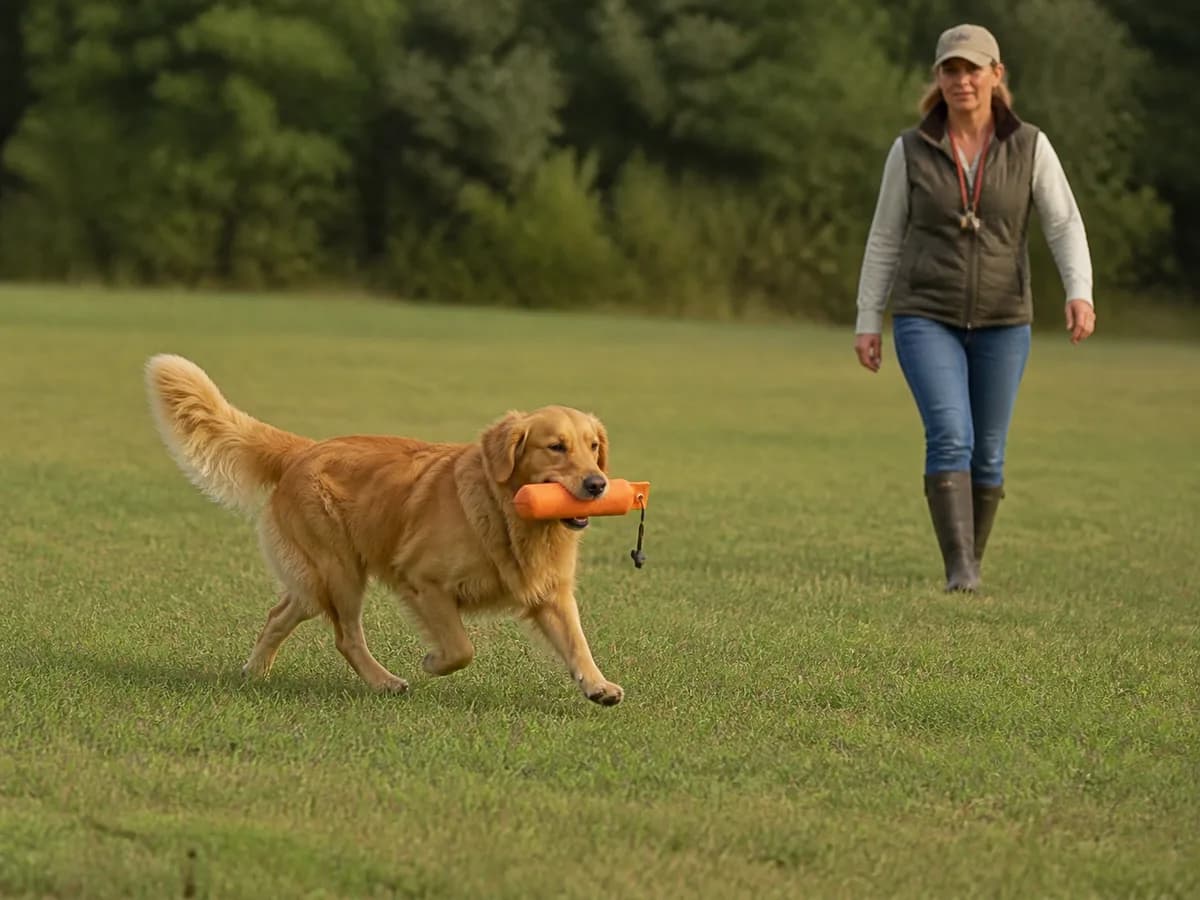
- Short retrieving games on safe footing with pauses between repetitions.
- Reward-based skill practice in sessions of a few minutes.
- Food puzzles, scatter feeding, search games, or safe chewing.
- Calm social time and protected sleep.
- Gradual exposure to places, surfaces, sounds, people, and animals.
Golden Retriever training works best when the desired behavior is easy to understand and consistently rewarded. Start in a quiet environment, then add distance, duration, and distraction one at a time. Skills such as coming when called, walking without pulling, dropping an object, waiting at doors, settling on a mat, and accepting grooming have direct safety value.
If you are comparing walking equipment for a dog who pulls, the PetSafe Easy Walk Dog Harness is one tracked option to evaluate for current fit and comfort. A harness does not teach loose-leash walking by itself. Check the sizing guide, ensure straps do not rub or restrict shoulder movement, and pair equipment with reinforcement for staying near the handler. For a separate leash comparison, the Frisco Traffic Leash with Dual Padded Handles can be evaluated by length, hardware, hand comfort, and the handler's control.
Retrieving without creating conflict
Many Goldens enjoy picking things up. Teach a trade before the dog finds something dangerous. Offer a high-value reward or approved toy, mark the release, and return safe objects when appropriate. Chasing the dog can turn possession into a game, while punishment may make the dog swallow quickly or guard more intensely. For supervised retrieval practice, the KONG Classic Dog Toy in Large is one product to compare with the dog's current size and chewing style.
For walks in distracting areas, compare the dog's control and comfort in the PetSafe Easy Walk Dog Harness with other properly fitted options. Stop using any equipment that causes rubbing, altered movement, coughing, panic, or escape risk. The handler's timing, reinforcement, and management matter more than the product name.
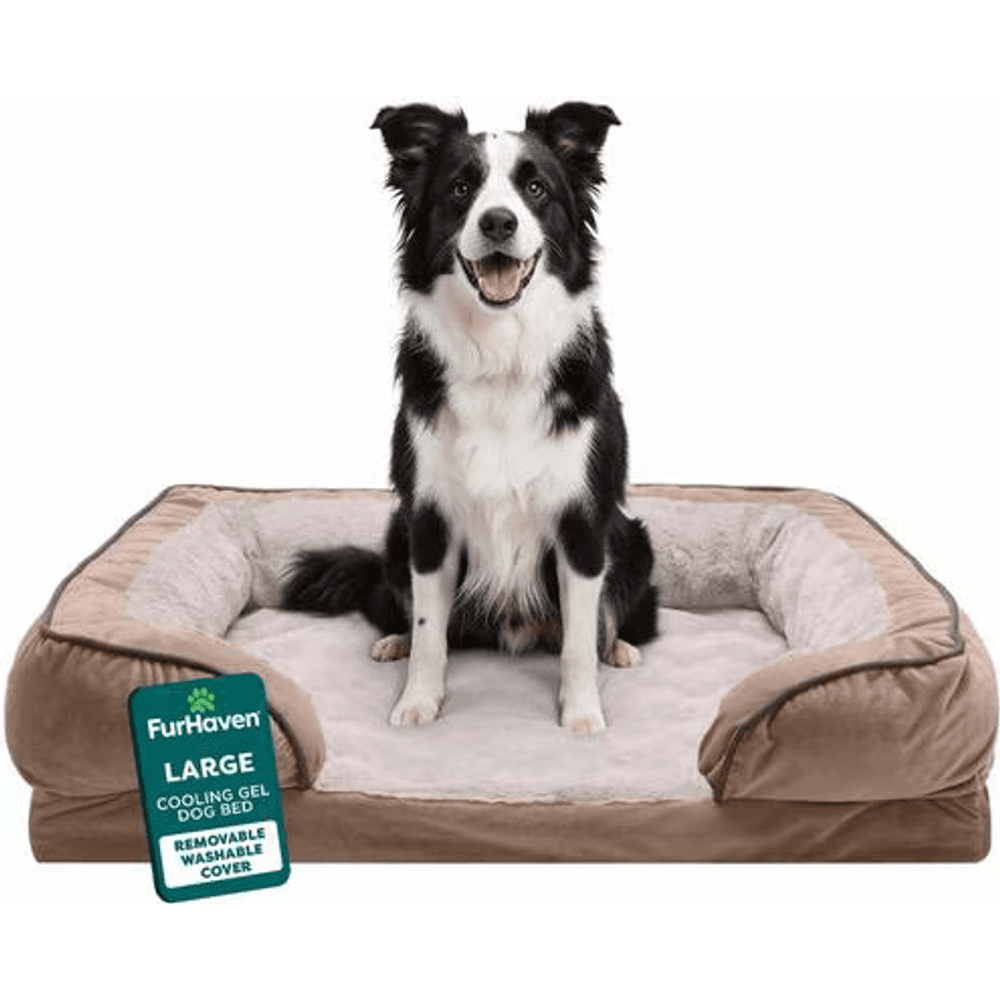
An orthopedic sofa bed with three bolstered sides for dogs who like to rest their head and joints against a cushion. The supportive foam base cradles hips and elbows, a comforting spot for an older or shaky dog to settle.
Petful may earn a commission when you click through to Chewy, at no extra cost to you.
Adolescence and settling
Adolescence often brings more strength, curiosity, distractibility, and testing of previously learned behaviors. This is not evidence that training failed. Reduce difficulty, reward success generously, prevent rehearsal of unwanted behavior, and maintain sleep. A dog who receives constant stimulation without learning to settle may become more demanding rather than calmer.
Track training in observable terms. Write down the cue, setting, distance, distraction, and outcome. "Comes when called indoors from ten feet" is more useful than "knows recall." This approach creates a decision path from breed tendency to individual evidence and helps caregivers adjust the next practice session without blaming the dog.
Golden Retriever size, body and coat
The official AKC reference describes adult males at 23 to 24 inches at the withers and 65 to 75 pounds, and adult females at 21.5 to 22.5 inches and 55 to 65 pounds. Those ranges describe the standard, not a growth prescription or proof of ideal condition. Petful's Golden Retriever size, weight and growth guide explains how to interpret measurements, puppy development, and body condition without treating a chart as a diagnosis.

A Golden should look balanced and athletic rather than extremely heavy or exaggerated. The head, neck, chest, topline, legs, feet, and tail contribute to the complete outline. A single photograph can be distorted by angle, lens, posture, coat, or body condition, so it should not be used to certify breed identity.
The double coat includes a dense undercoat and a firm outer coat, with feathering that is especially visible on the neck, underside, backs of the legs, and tail. Shade can range within the accepted golden spectrum. For distinctions among cream, light, medium, dark, and red-leaning descriptions, use Petful's dedicated guide to Golden Retriever colors rather than treating color as a separate breed or quality grade.
Grooming, feeding and daily care
Golden Retriever grooming is routine maintenance, not an occasional cosmetic task. Regular brushing removes loose coat, finds tangles before they tighten, and creates a chance to notice skin changes, parasites, lumps, tenderness, or handling discomfort. Feathering behind the ears, under the front legs, around the tail, and along the rear legs deserves particular attention.

A practical coat-care sequence
Work in short sessions on a dry, comfortable dog:
- Use your fingers to find tangles, burrs, damp areas, or sore skin.
- Brush small sections in the direction the coat grows without scraping the skin.
- Check through feathering with an appropriate comb if the dog is comfortable.
- Reward calm pauses and stop before the dog must struggle.
- Dry the coat thoroughly after swimming or bathing, including around the ears and friction areas.
The aumuca Self Cleaning Slicker Brush is one tracked brush option to compare for gentle surface coat work. Tool choice should follow the individual coat and handling tolerance. A slicker should glide without repeated pressure, pulling, or skin scraping, and it should not replace checking deeper feathering with fingers or a comb.
For a second grooming setup, compare the pin length, head size, edge finish, and hand control of the aumuca Self Cleaning Slicker Brush with the dog's coat density and body size. Stop if the dog flinches, the skin reddens, or the brush catches. A professional groomer or veterinarian can help with painful mats, inflamed skin, or a dog who cannot be handled safely.
Ears, nails, teeth, and wet coats
Check ears during grooming and after swimming, but do not insert tools or cleaners without appropriate guidance. Redness, swelling, strong odor, discharge, repeated head shaking, or pain deserves veterinary attention. Keep nails short enough for comfortable movement, and ask a professional for help if the quick is hard to see or the dog is fearful.
Toothbrushing is most useful when taught gradually and performed consistently with dog-safe products. Bleeding, broken teeth, facial swelling, difficulty eating, or mouth pain should be evaluated by a veterinarian. Routine handling should never become a wrestling match that teaches the dog to fear care.

Petful may earn a commission when you click through to Chewy, at no extra cost to you.
Feeding by calories and body condition
Golden Retriever care includes measuring food, monitoring body condition, and adjusting intake as activity, age, neuter status, health, and food calorie density change. The AVMA healthy-weight guidance explains why ribs, waist, abdominal tuck, weight trend, and veterinary assessment are more useful than comparing one dog with a breed photo.
If timed portions or remote meal confirmation would solve a real scheduling problem, the Petlibro Granary WIFI Automatic Cat & Dog Feeder with Camera and desiccant bags is one tracked feeder to compare. Verify that the kibble size is compatible, portions dispense accurately, the unit is secure from the dog, and a caregiver can feed manually during a power, network, or mechanical failure.
An automatic feeder should support a written feeding plan, not determine it. When comparing the Petlibro Granary WIFI Automatic Cat & Dog Feeder, measure actual dispensed portions and compare them with the food's calorie information and the dog's weight trend. Dogs with medical diets, food guarding, multiple-pet competition, or medication tied to meals may need a different setup planned with a veterinarian.
Rest and recovery
Active dogs also need undisturbed sleep. Place a bed away from constant foot traffic and teach family members to leave the dog alone there. The FurHaven Velvet Waves Perfect Comfort Orthopedic Sofa Bed in Large is one tracked large-bed option to compare by the dog's measured sleeping posture, mobility, temperature preference, and tendency to chew fabric.
A product label cannot confirm comfort. If considering the FurHaven Velvet Waves Perfect Comfort Orthopedic Sofa Bed, check the current dimensions, cover-care instructions, support, step-on height, and return terms against the individual dog. Persistent stiffness, reluctance to rise, limping, or a sudden change in sleep position warrants veterinary attention rather than a bed purchase alone.

Petful may earn a commission when you click through to Chewy, at no extra cost to you.
Golden Retriever colors in brief
Golden Retriever colors fall within a spectrum rather than separate Golden breeds. Lighting, wet coat, seasonal coat, camera settings, age, and feathering can change how shade appears. Color does not certify pedigree, health, temperament, working ability, or breeder quality.
The dedicated Golden Retriever colors and coat guide explains shade terms and visual differences in greater depth. Use current official standards and pedigree records when a formal registration or breed-standard question matters.
Golden Retriever puppies in brief
Golden Retriever puppies need frequent bathroom breaks, protected sleep, gentle social learning, bite-management practice, safe chewing options, veterinary care, and patient training. A friendly puppy still needs gradual experience with handling, noises, surfaces, people, animals, brief separation, grooming, and travel.
Petful's Golden Retriever puppy buying and adoption guide covers seller verification, parent records, early environment, contracts, pickup, and scam warning signs. It preserves the existing Golden puppy article's identity while expanding the evidence a buyer should review.
Golden Retriever price in brief
Acquisition cost is only one line in the budget. Food, routine veterinary care, training, grooming supplies, housing, boarding, emergency care, and replacement equipment continue throughout the dog's life. A high price does not prove health or responsible breeding, and a low fee does not make a dog poor quality.
Use Petful's Golden Retriever price and lifetime cost guide to build a first-year and ongoing budget from documented local quotes. Keep purchase, adoption, routine care, and risk reserves separate so one number does not hide the real commitment.
Health and lifespan in brief
Golden Retriever health issues should be discussed through records, family history, screening, current veterinary findings, and individual symptoms, not fear-based breed slogans. A predisposition is not a diagnosis. New lumps, breathing changes, collapse, severe pain, repeated vomiting, a swollen abdomen, inability to urinate, or rapid decline require prompt veterinary guidance.
Petful's DVM-authored guide to Golden Retriever health and lifespan covers clinical detail, including how to interpret longevity estimates and screening evidence. The pillar remains a breed-fit guide and does not turn population risk into an outcome for one dog.
Size and growth in brief
Golden Retriever size varies by sex, age, family line, development, and body condition. A puppy growth chart cannot tell you exactly how large one puppy will become or whether rapid change is healthy. Weighing on the same scale and recording body-condition observations creates a more useful trend.
The Golden Retriever size, weight and growth guide covers adult reference ranges, puppy measurements, growth records, and when to ask a veterinarian about an unexpected change.
Golden Retriever vs Labrador in brief
Both breeds are sporting retrievers with social, active reputations, but they are not interchangeable. Coat length and feathering, grooming workload, body outline, color descriptions, and individual behavior can affect household fit. Neither breed is automatically easier, calmer, safer, or healthier.
Petful's evidence-led Golden Retriever vs Labrador Retriever comparison separates breed references from individual variation and offers a side-by-side decision framework.
Is this the right dog for your household?
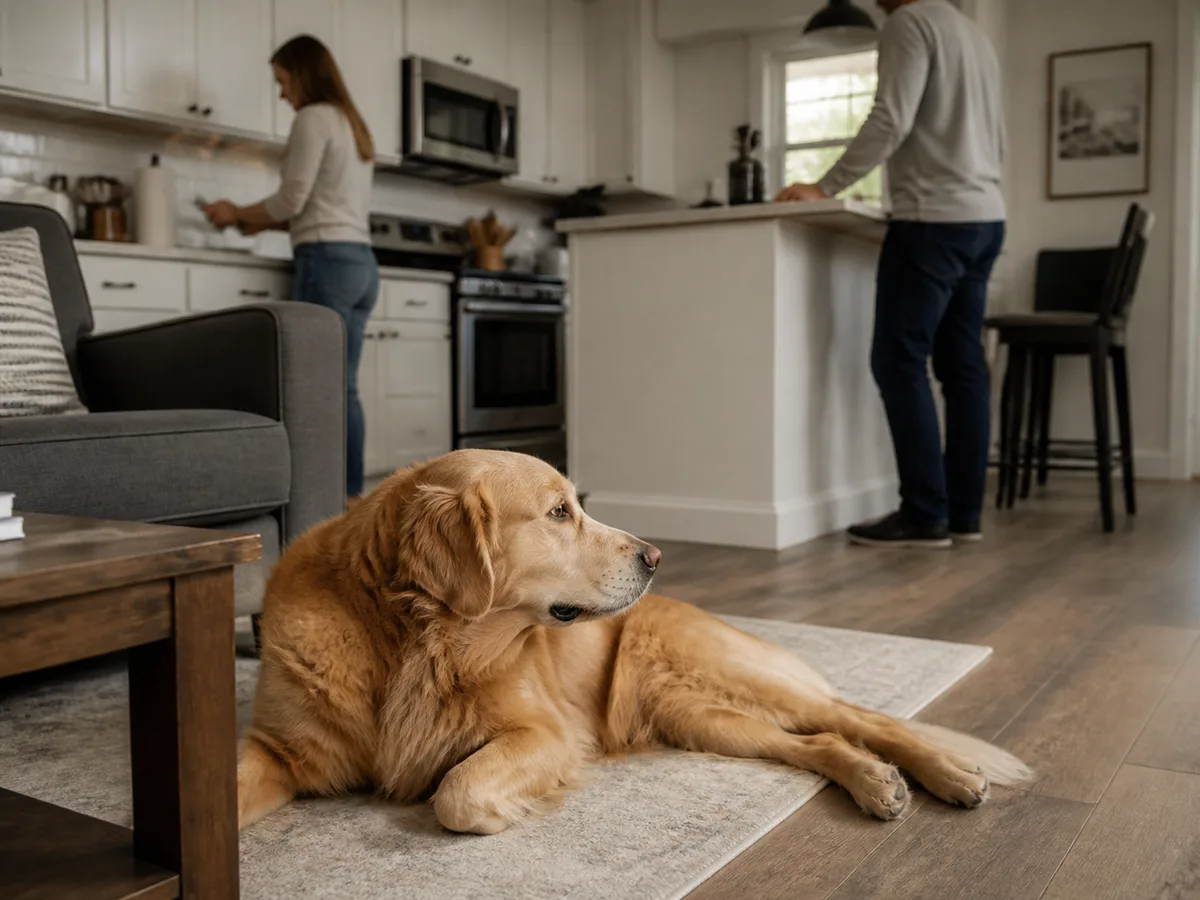
The best household fit is built around the dog's ordinary day. A Golden may be a promising match when caregivers enjoy active companionship, can train patiently, accept shedding and wet-coat cleanup, and have a realistic veterinary and care budget. The fit is weaker when the plan depends on the dog entertaining itself, tolerating long isolation without preparation, or remaining calm without training and rest.
Write the weekday plan before deciding
Map a normal workday from waking to bedtime. Include bathroom breaks, meals, travel, walks, training, play, grooming, quiet time, and the longest absence. Assign each task to a named adult. Then test the plan against rain, illness, overtime, vacations, and a period when the dog cannot exercise normally.
Household fit factors include noise tolerance, floor traction, stairs, safe storage, visitor management, children's behavior, other animals, landlord rules, insurance restrictions, and access to veterinary and training support. Individual behavior can vary, so the plan should have room to adapt rather than depend on the easiest possible Golden.
- Social, trainable sporting companion for households that enjoy shared activity
- Retrieving and reward interest can support useful training and enrichment
- A predictable grooming and care routine makes many daily needs manageable
- Multiple dedicated cluster guides help owners research puppies, price, health, growth, colors, and breed comparison
- Daily activity, training, companionship, and mental work require real time
- The double coat sheds and needs regular maintenance, drying, and household cleanup
- Adolescent strength and enthusiasm can overwhelm an unprepared home
- Health uncertainty and lifetime care require records, veterinary support, and a financial plan
A final decision test
Choose the breed only if the normal requirements fit the household without relying on exceptional temperament, unusually low energy, or constant outside help. If a specific dog is already identified, let that dog's observed behavior, health information, and care needs override the generic picture.
Responsible ownership is not proved by enthusiasm on adoption day. It is shown by the repeatable routine that follows: appropriate activity, kind training, preventive care, safe management, grooming, companionship, rest, and timely professional help.
Golden Retriever FAQs
The weakness of a Golden Retriever is not one fixed personality flaw, but the breed can demand substantial daily time and engagement. Many Golden Retrievers need daily exercise, training, grooming and companionship to thrive. A household should plan for shedding, adolescent enthusiasm and a dog that may become bored when left without enough activity or interaction.
For many owners, the hardest part is sustaining the daily routine after the puppy excitement fades. Golden Retrievers can be energetic, mouthy and easily distracted while young, and their coats require regular maintenance. The best fit is a household prepared for patient training, meaningful exercise, routine grooming and enough companionship throughout the dog's life.
Golden Retrievers are not automatically excessive barkers, but individual dogs may bark from excitement, boredom, alarm or unmet exercise needs. Look at the specific dog and its environment rather than relying on a breed label. A predictable routine, adequate activity and reward-based training can help, while sudden or escalating barking deserves closer attention.
Any dog can show aggressive behavior, including a Golden Retriever. Breed reputation does not replace evaluation of the individual dog, its health, learning history, socialization and current situation. Warning signs such as stiff posture, guarding or repeated snapping should not be dismissed. Use careful management and seek qualified veterinary or behavior support when safety is a concern.
Exercise needs vary with age, health and the individual dog, but most Golden Retrievers benefit from meaningful activity every day rather than an occasional long outing. Build a routine that combines walks, play, retrieving, training and mental enrichment. Puppies and older dogs need age-appropriate pacing, and a veterinarian can help tailor activity around health limitations.
A Golden Retriever benefits from regular brushing throughout the week, with extra attention during heavier seasonal shedding. Check ears, nails, skin and feathering as part of the same routine, and bathe when the coat is dirty rather than on an arbitrary schedule. Consistent grooming also helps owners notice mats, irritation or other changes early.
Golden Retrievers can be excellent family companions when their activity, training, grooming and supervision needs fit the household. Friendly breed tendencies are not a guarantee for every dog. Adults should supervise interactions with children, teach respectful handling and provide the dog with protected rest. The individual dog's history and behavior matter most.
Sources

Coreen Saito is a pet writer and longtime shelter volunteer with more than a decade in animal rescue. She covers cat behavior, breed care, and the small, ordinary science of sharing a life with companion animals, with a particular focus on honest takes about the products and decisions that actually matter. At home in Arizona, she's outranked by Mac (a dog with the loudest opinion in the house), Rebel (a cat who governs by quiet authority), and Meri (an orange tabby who runs the late shift and the laundry basket). She writes about all three, plus the rescues that keep coming through her life, at LifeWithMinty.com.
Sign up for expert-backed reviews and safety alerts all in one place.