Golden Retriever vs Labrador Retriever: Key Differences
Golden Retrievers and Labradors are social sporting dogs, but coat, grooming and some day-to-day routines differ. Compare the practical tradeoffs for a better-informed ownership decision.

Petful is reader supported. As an affiliate of platforms like Amazon and Chewy, we may earn a commission when you buy through links on this page. There is no extra cost to you.
The golden retriever vs labrador choice is not a contest between a good dog and a bad dog. Both are social sporting retrievers that generally need daily exercise, training, companionship, preventive care, and room in the household budget. The clearest differences are the coat, grooming workload, body outline, accepted colors, and some practical details of living with the individual dog.
Choose from evidence, not a stereotype. Official breed standards describe intended traits, while pedigree, health records, current behavior, age, and veterinary findings describe the dog in front of you. This comparison turns source-backed breed facts into household actions without promising that every Golden Retriever or Labrador Retriever will behave, grow, shed, or stay healthy in the same way.

Sign up for expert-backed reviews and safety alerts all in one place.
Golden Retriever vs Labrador Retriever at a glance
- 1A practical evaluation favors neither breed for every home
- 2Golden Retrievers usually require more feathering and tangle care, while Labradors have a shorter dense coat that still sheds
- 3Both breeds need meaningful exercise, reward-based training, companionship, and protected rest
- 4Individual dogs can vary in energy, sociability, health, handling tolerance, and ease of training
- 5Breed tendencies describe populations, not every individual dog. Records, direct observation and professional findings answer different questions, and the household routine determines what will be practical.
The American Kennel Club comparison of Golden Retrievers and Labrador Retrievers places both in the sporting group and explains their shared retrieving history as well as visible differences. The AKC Golden Retriever profile and AKC Labrador Retriever profile provide the official reference points for size, coat, color, and breed-standard temperament language. Petful’s separate guide to silver Labradors covers the dilute-gene debate and what buyers should check.
Those references help with comparison, but they cannot choose a dog for you. A family deciding between a lab vs Golden Retriever should translate every tendency into a weekday requirement, then verify how the known dog functions in the settings that matter.
Golden Retriever vs Labrador at a glance
A lab vs Golden Retriever decision should begin with the ordinary weekday: exercise, coat care, training, handling, time alone and veterinary support. The breeds overlap substantially, so the known dog and the household routine should break a close tie instead of popularity. Compare the individual dogs you can actually meet, verify their records, and decide whether the home can sustain daily activity, shedding, physical handling, veterinary care and periods of protected rest.
| Decision | Golden Retriever reference | Labrador Retriever reference | What to verify in the individual dog |
|---|---|---|---|
| Coat care | Dense water-repellent double coat with longer feathering | Short, dense, weather-resistant double coat | Current shedding, tangles, skin, ear condition, swimming routine, and handling tolerance |
| Size and outline | Medium-to-large, athletic, with a more feathered outline | Medium-to-large, athletic, commonly with a broader, more compact visual impression | Adult measurements, body condition, movement, strength, and space needs |
| Daily activity | Sporting retriever bred for cooperative work | Sporting retriever bred for cooperative work | Present stamina, recovery, settling, play style, and veterinary limits |
| Training | Breed reference emphasizes a friendly, reliable manner | Breed reference emphasizes an outgoing, tractable manner | Response to rewards, frustration, distractions, handling, and time alone |
| Household fit | Can be social and highly involved in family routines | Can be social and highly involved in family routines | Behavior around children, animals, visitors, food, toys, rest, and separation |
| Decision label | Prefer if longer-coat care fits and the known dog matches your routine | Prefer if short-coat care fits and the known dog matches your routine | Neither breed is automatically easier, safer, calmer, or healthier |
Separate categories make the overlap useful: choose the Golden when its coat care and the individual dog's needs fit better; choose the Labrador when its coat routine and the individual dog's needs fit better; pause when records or observations do not support the match. These are careful distinctions, not a personality ranking.

Petful may earn a commission when you click through to Chewy, at no extra cost to you.
Start with your ordinary weekday
Before comparing ears, tails, or shades of yellow and gold, write the schedule the dog would actually live. Include waking, bathroom trips, meals, walking, play, training, grooming, travel, quiet time, and the longest absence. Assign each task to a named adult rather than assuming the family will share it somehow.
A practical weekday comparison should answer:
- Who provides exercise before work and after work?
- How will the dog learn to remain relaxed during necessary alone time?
- Where will wet coats, loose hair, mud, food, toys, and equipment be managed?
- Can every caregiver follow the same cues, boundaries, and feeding plan?
- What happens during overtime, illness, severe weather, travel, or activity restriction?
- Is there access to routine veterinary care, emergency care, and qualified training help?
If timed meals would solve a genuine scheduling problem, the Petlibro Granary WIFI Automatic Cat & Dog Feeder with Camera and desiccant bags is one tracked feeder to compare. Verify kibble compatibility, actual dispensed portion size, security from a determined retriever, cleaning requirements, and a manual backup plan. A feeder can deliver food, but it cannot monitor appetite changes, prevent every multi-pet conflict, or replace a caregiver.
Compare support needs, not popularity
Both breeds are popular, but popularity is not proof of suitability. A friendly greeting does not show how a dog handles frustration, grooming, food, visitors, other animals, or several hours of quiet. Observe the known dog more than once when possible, and ask for a description of a normal day rather than the best day.
For a puppy, the early environment, parent information, veterinary record, source, contract, and transition plan matter. For an adult, current behavior, medical history, handling, time alone, house training, and response to common household events are more informative than a shelter label or photograph. Petful's Golden Retriever puppy guide explains the Golden buying and adoption process, while the established Labrador Retriever puppies guide provides Labrador-specific context.
Coat, shedding and grooming
Golden Retriever vs Labrador shedding is a difference in coat structure and maintenance, not a choice between shedding and no shedding. Both have double coats and can leave substantial hair in the home. A Golden's longer outer coat and feathering create more places for tangles, burrs, dampness, and debris to collect. A Labrador's shorter coat is less likely to mat, but loose short hairs can still spread through upholstery, clothing, and vehicle interiors.

The Golden coat includes feathering on the neck, underside, legs, and tail. Check behind the ears, under the front legs, through the rear feathering, and around the tail with your fingers before brushing. The Labrador coat is short, dense, and weather resistant, with no long feathering. It still benefits from regular gentle brushing, skin inspection, and thorough drying after swimming. For Golden feathering, the aumuca Self Cleaning Slicker Brush is one slicker brush to compare by pin length, coat fit, and handling comfort. For the shorter Labrador coat, the Four Paws Magic Coat Wet & Dry Dog Glove and Curry Brush is another grooming tool to compare by fit, pressure, and the dog’s tolerance.
What the grooming difference means at home
A Golden household should plan for:
- More frequent checks for tangles, burrs, damp areas, and packed debris.
- Careful drying through feathering after rain, bathing, or swimming.
- Time to teach combing and brushing in small, rewarded steps.
- More visible hair and feathering care around ears, legs, tail, and friction areas.
A Labrador household should plan for:
- Regular removal of loose short coat without scraping the skin.
- Thorough drying, especially after frequent water activity.
- Skin and ear observation even though the coat looks simpler.
- Persistent short hairs that can work into fabrics and vehicle upholstery.
Neither coat should be treated as a reason to ignore skin, ears, nails, teeth, or handling comfort. Redness, odor, discharge, repeated scratching, head shaking, painful mats, hair loss, or a sudden coat change deserves appropriate veterinary or professional guidance. Do not use force to complete routine care on a frightened or painful dog.
Coat is not identity proof
Long golden feathering strongly suggests one visual category and a short yellow coat suggests another, but appearance is not documentary proof of ancestry. Mixed-breed dogs and poorly lit photographs can resemble either breed. If pedigree or registration matters, request traceable records rather than asking a color or coat pattern to answer the question.
Color also differs in official descriptions. Golden Retrievers occur in shades of gold, while Labradors are recognized in black, yellow, and chocolate. Shade does not prove quality, health, temperament, rarity, or responsible breeding. Petful's Golden Retriever colors guide covers Golden shades and coats in detail.
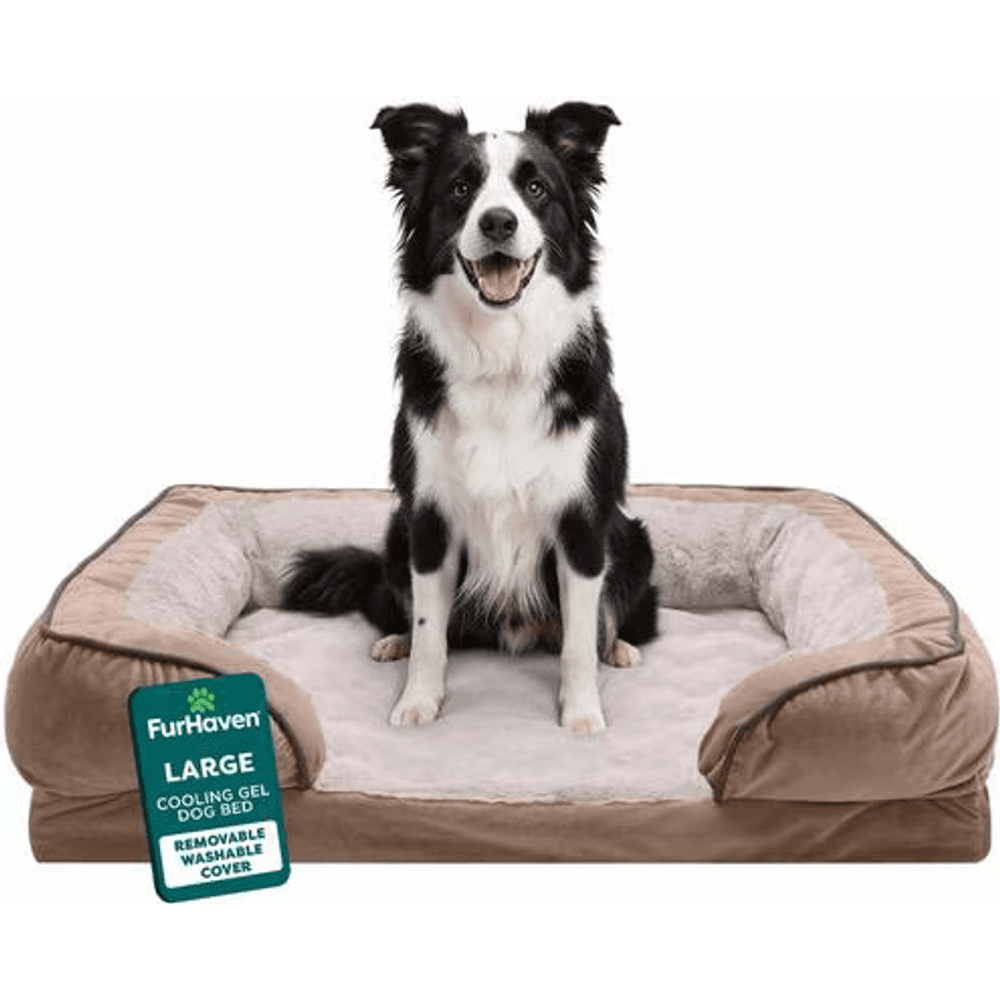
An orthopedic sofa bed with three bolstered sides for dogs who like to rest their head and joints against a cushion. The supportive foam base cradles hips and elbows, a comforting spot for an older or shaky dog to settle.
Petful may earn a commission when you click through to Chewy, at no extra cost to you.
Size and body differences
Golden Retriever vs Labrador size overlaps substantially, so neither breed should be chosen from a single photo or a vague promise about being medium-sized. According to the official AKC breed profiles, adult Golden males are generally referenced at 23 to 24 inches and 65 to 75 pounds, while adult females are 21.5 to 22.5 inches and 55 to 65 pounds. Adult Labrador males are generally referenced at 22.5 to 24.5 inches and 65 to 80 pounds, while adult females are 21.5 to 23.5 inches and 55 to 70 pounds.

These are breed-standard reference ranges, not a target that every dog must reach. Sex, age, family line, development, body condition, health, and measurement technique affect the number. A dog can fall inside a reference range and still carry excess body fat, while another can sit near an edge and be healthy for that individual.
Look past the coat outline
The Golden's feathering can soften or enlarge the visible outline. A Labrador's shorter coat makes muscle and body condition easier to see, but posture and camera angle can still mislead. Compare both dogs on level ground, from the side and above, then consider movement, comfort, strength, and handling needs.
The AVMA healthy-weight guidance explains why body condition and veterinary assessment belong beside scale weight. The practical questions are whether ribs can be assessed appropriately, a waist and abdominal tuck are present for the individual, weight is trending unexpectedly, and movement remains comfortable.
For deeper Golden measurements, puppy growth records, and body-condition context, use Petful's Golden Retriever size, weight and growth guide. A chart cannot diagnose healthy development or predict one puppy's exact adult size.
Space and strength
Both breeds can be strong enough to pull an adult off balance, knock over a small child in excited play, move lightweight barriers, and reach counters. Floor space alone does not decide fit. The household also needs safe restraint, traction, storage, visitor management, and training that works outside a quiet living room.
Measure doorways, vehicle space, crates, gates, beds, and any required travel setup against the actual dog. Do not buy from a generic breed label when dimensions affect safe fit. A growing puppy may need staged equipment rather than one setup expected to fit forever.
Temperament and family fit
Golden Retriever vs Labrador temperament is an area of large overlap. Official descriptions portray both as friendly, responsive sporting dogs, but those words do not guarantee gentleness, ease, or compatibility with every household. Genetics, early development, learning history, age, health, current stress, and management all shape behavior.
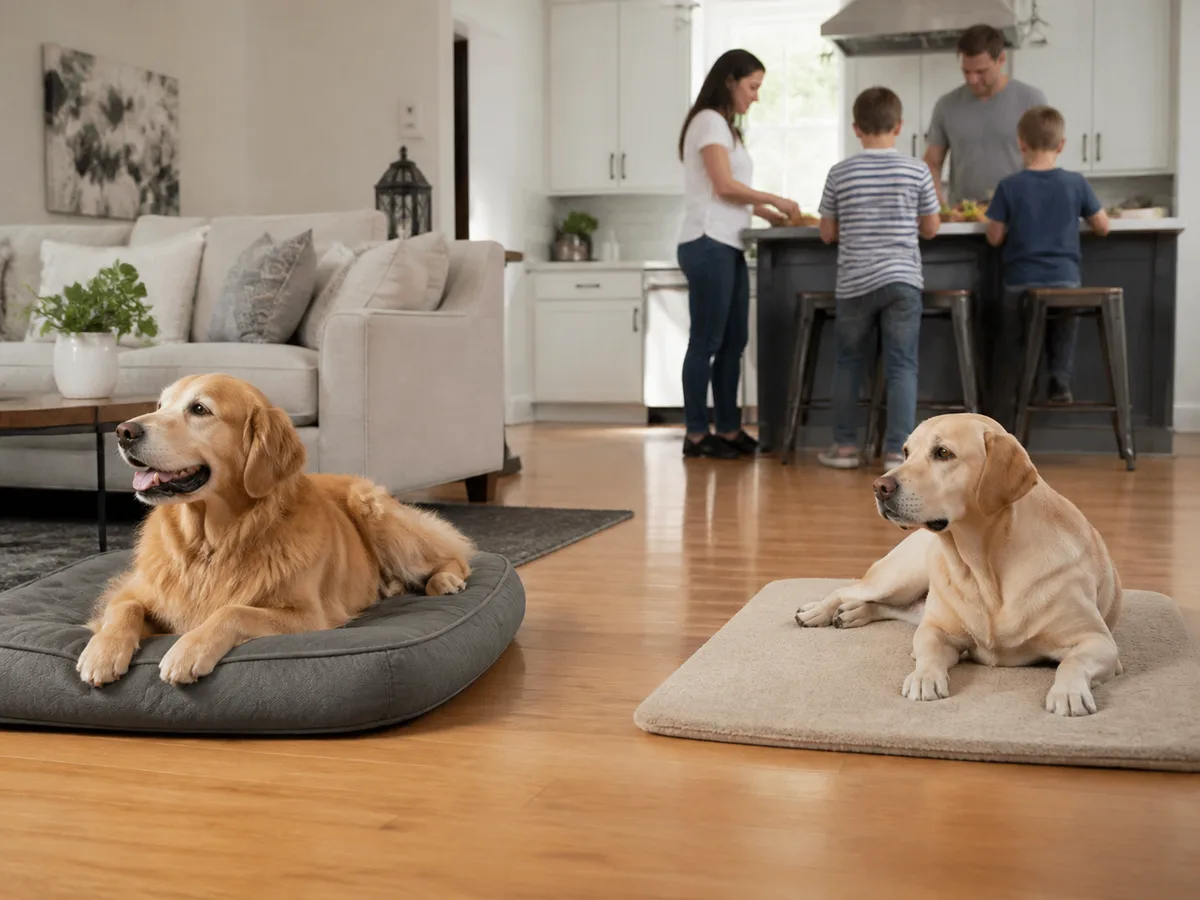
Avoid the common shortcut that one breed is always calmer and the other always more energetic. Some Goldens are intense, vocal, easily frustrated, or slow to settle. Some Labradors are measured and quiet in the home. The more useful evidence is how the known dog behaves during ordinary activity, transitions, novelty, frustration, rest, and separation.
Children, visitors, and other animals
A social reputation never replaces supervision. Adults should protect a dog's food, chews, sleep, and escape space, and teach children not to climb, hug, crowd, chase, or interrupt the dog. Watch for turning away, lip licking, stiffness, hiding, freezing, leaving, or a closed tense mouth. Slow the interaction before discomfort must escalate.
Compatibility with another dog, cat, or small animal should be evaluated individually. Retrieving heritage does not certify safe behavior around every animal. Ask about chasing, guarding, play style, recovery from excitement, and experience with the species in question. Use gates, leashes, separate rest areas, and gradual introductions where appropriate.
Companionship and alone time
Both breeds may enjoy close participation in family life. That strength can become a problem if a puppy or newly placed adult never learns that brief, safe separation is ordinary. Build alone time gradually, after needs are met, and monitor for persistent vocalizing, destruction around exits, escape attempts, drooling, elimination, refusal of food, or panic.
A supportive bed can help define a quiet resting place, but it cannot treat pain, anxiety, or separation distress. The FurHaven Velvet Waves Perfect Comfort Orthopedic Sofa Dog Bed in Large is one tracked option to compare against the dog's measured sleeping posture, mobility, temperature preference, step-on comfort, cover care, and chewing habits.
When evaluating the FurHaven Velvet Waves Perfect Comfort Orthopedic Sofa Bed, check its current dimensions and return terms rather than assuming a Large label suits every Golden or Labrador. Persistent stiffness, reluctance to rise, limping, sudden night restlessness, or a new sleeping posture warrants veterinary attention, not only a different bed.
Exercise, play and training
Golden Retriever vs Labrador energy should be planned as an individual workload within an active sporting-breed context. Both commonly need daily physical activity, learning, sniffing, social contact, and rest. More intensity is not automatically better. Repetitive jumping, forced running, or prolonged fetching can be inappropriate for puppies, unconditioned adults, seniors, and dogs with health restrictions.
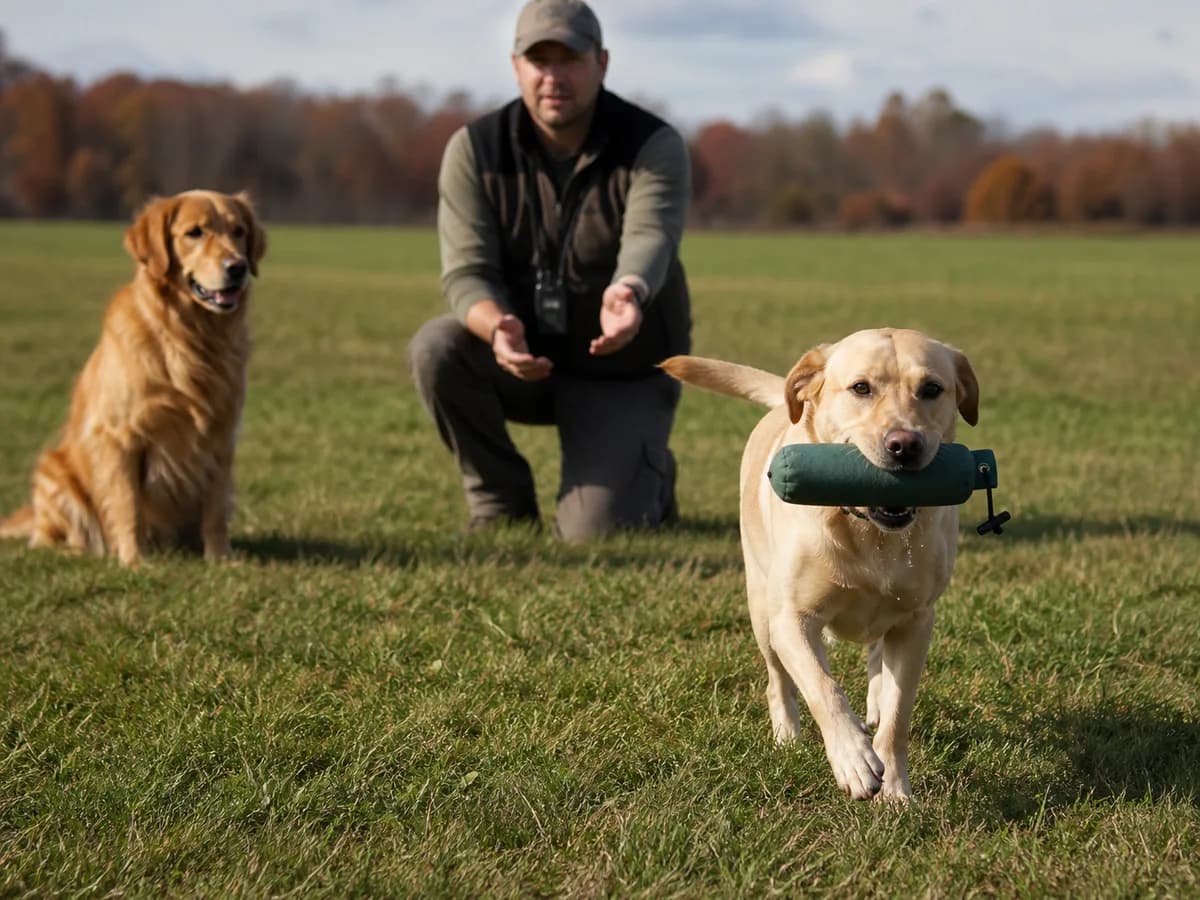
A balanced routine may include:
- Sniff-focused walks at a sustainable pace.
- Short retrieving games with pauses and safe footing.
- Reward-based practice for recall, loose-leash walking, leave it, drop, waiting, and settling.
- Search games, food puzzles, approved chewing, and object-carrying outlets.
- Calm family time and protected sleep.
- Gradual exposure to useful places, surfaces, sounds, people, and animals.
Training overlap is bigger than the stereotype
Both breeds were developed for cooperative work, which can support reward-based training. It does not mean every dog arrives focused, gentle-mouthed, or easy to control. Adolescents may be powerful, distracted, impulsive, and persistent. Make the desired behavior easy, reward it promptly, and increase distraction, duration, and distance one variable at a time.
For a dog who pulls, the PetSafe Easy Walk Dog Harness in Medium/Large is one tracked walking option to compare with current measurements and movement. A harness does not teach loose-leash walking. Check that straps do not rub, restrict the shoulders, alter gait, or allow escape, and pair equipment with reinforcement for staying near the handler.
Before a second walk, reassess the PetSafe Easy Walk Dog Harness on the moving dog, not only while standing indoors. Stop if you see coughing, chafing, panic, altered movement, or slipping straps. The correct equipment is the option that fits securely and comfortably while the household continues training.
Retrieving and object safety
Many Goldens and Labradors enjoy carrying objects. Teach a trade before the dog obtains something dangerous. Offer an approved object or reward, mark the release, and return safe items when appropriate. Chasing can turn possession into a game, while punishment can increase swallowing or guarding risk.
The KONG Classic Dog Toy in Large is one tracked toy to compare for supervised enrichment. Verify the current size guidance, inspect the material before and after use, and remove any toy that cracks, sheds pieces, or becomes small enough to swallow. No toy is indestructible or suitable for every chewing style.
If a veterinarian has approved the food and portion, the KONG Classic Dog Toy can be considered as one way to slow an activity or support a calm station. Count fillings within the daily calorie plan, supervise initial use, and clean it thoroughly. The value lies in the routine and safe match, not in using a particular brand.

Petful may earn a commission when you click through to Chewy, at no extra cost to you.
Rest is part of the exercise plan
A dog that receives constant stimulation without learning to settle may become more demanding rather than calmer. Follow active periods with water, bathroom access, and quiet recovery. Puppies in particular need substantial sleep and should not be expected to exercise until exhausted.
Track function rather than comparing step counts between dogs. Note the activity, duration, surface, weather, recovery, stiffness, and ability to settle later. Sudden exercise intolerance, collapse, breathing difficulty, weakness, severe pain, or marked gait change needs veterinary guidance.
Feeding and weight routines
Neither breed has one correct portion. Food calories, age, activity, body condition, reproductive status, treats, and health all affect intake. Measure food, include training rewards, and adjust with veterinary guidance when weight or condition changes. Avoid using a breeder's adult estimate or a bag chart as a permanent prescription.
If the first feeder comparison fits the household, evaluate the Petlibro Granary WIFI Automatic Cat & Dog Feeder against real portions before depending on it. Weigh or measure several dispenses, confirm the dog cannot raid the hopper, and keep a written manual feeding plan. Dogs with prescription diets, medication tied to meals, appetite monitoring needs, or food conflict may need a different arrangement.
Body weight is especially important because coat can hide gradual change. Use hands-on body-condition assessment, a consistent scale when available, and a trend over time. A sudden loss or gain, reduced appetite, excessive thirst, repeated vomiting, or marked energy change deserves veterinary attention rather than a product or portion adjustment made from breed assumptions.

A durable rubber dog toy that can be stuffed with treats and selected by the manufacturer's size guide; supervise use and retire it when damaged.
Petful may earn a commission when you click through to Chewy, at no extra cost to you.
Health and lifespan context
Golden retriever health issues and Labrador health risks should be discussed through documented screening, family history, current veterinary records, and individual symptoms. A breed predisposition describes a population signal, not a diagnosis or forecast for one dog. Comparing lists of conditions cannot tell you which individual will be healthier or live longer.
For Golden-specific clinical context, use Petful's DVM-authored Golden Retriever health issues and lifespan guide. That guide provides Golden-specific health detail while this comparison stays focused on the household decision. Ask a veterinarian which preventive care, screening, diet, exercise, and monitoring are appropriate for the known dog.
Records to request
When evaluating a puppy source, request the actual dated health-screening results identified for the breed, connect each result to the named parent, and review the puppy's veterinary record and contract. A statement that parents are healthy, vet checked, or genetically clear is not a substitute for the underlying documents. The Golden Retriever Club of America breed guidance offers parent-club context for Golden ownership and health research.
For an adult dog, ask for diagnoses, medications, allergies, surgeries, injuries, weight history, dental history, preventive care, activity restrictions, and the current veterinarian's contact or transferred record where permitted. Observe movement, breathing, appetite, elimination, skin, ears, eyes, and comfort without attempting to diagnose from the meeting.
Urgent signs such as collapse, difficulty breathing, a swollen abdomen with unproductive retching, severe pain, repeated vomiting, uncontrolled bleeding, inability to urinate, seizure activity, or rapid deterioration require prompt veterinary or emergency guidance. Do not delay care because a symptom seems common in one breed.
What to verify before you decide
- Use pedigree or registry documentation when ancestry matters, dated screening and veterinary records for health claims, and current behavior for household fit. Records and professional guidance are stronger than a seller label or photograph because appearance is not documentary proof of breed, health, temperament, or future outcome.
A decision-first comparison uses three evidence levels:
- Breed reference: Official standards and parent-club guidance describe intended traits and breed-level concerns.
- Individual evidence: Current behavior, measurements, body condition, movement, handling tolerance, and records describe the known dog.
- Household capacity: The written schedule, budget, environment, caregiver skill, and backup plan show whether the match is sustainable.
If one evidence level is missing, label the uncertainty rather than filling it with a stereotype. A documented pedigree does not promise behavior. A friendly meeting does not prove health. A clean health record does not predict every future problem. A large yard does not provide training or companionship.
Questions for the current caregiver or source
Ask specific, answerable questions:
- What does the dog do on a normal weekday from waking to bedtime?
- How does the dog respond to grooming, nail care, restraint, and veterinary handling?
- What happens around food, toys, other animals, children, visitors, and rest?
- How long has the dog been comfortable alone, and how was that assessed?
- Which veterinary, pedigree, registration, and screening records are available?
- What support is offered if the placement is not safe or sustainable?
Do not endorse a breeder, rescue, marketplace, or seller from a polished website, title, price, or color claim. Verify identity, location, the specific dog, records, contract, payment recipient, and transition terms. If access to the dog or documents is repeatedly refused, pause the transaction.
Is this the right dog for your household?
The Golden may fit better when the household genuinely prefers its longer feathered coat, accepts the added tangle and drying work, and finds a specific Golden whose activity, behavior, and health information fit the plan. The Labrador may fit better when the household prefers a short dense coat, accepts substantial short-hair shedding, and finds a specific Lab whose needs fit better.
Neither is a sound choice when the plan depends on a naturally perfect family dog, no shedding, effortless recall, unlimited tolerance from children, or enough yard time to replace interaction. Household fit factors include schedule, physical handling ability, noise, stairs, traction, other animals, visitors, finances, training access, veterinary access, and backup care. Individual behavior can vary enough to outweigh a general breed tendency.
- Both breeds can be rewarding companions for households that enjoy active, cooperative dogs
- Shared retrieving history creates many useful training and enrichment options
- Official references and current records support a structured comparison
- The known dog's behavior can break a close tie more honestly than a popularity ranking
- Both breeds need daily time, training, companionship, and preventive care
- Goldens add longer-coat and feathering maintenance, while Labs still shed heavily
- Adolescent strength and enthusiasm can overwhelm an unprepared household
- Health, behavior, and lifespan cannot be guaranteed from breed identity
Use a two-week reality test
For two weeks before committing, follow the schedule you propose for the dog. Wake when the first bathroom trip would happen, reserve the exercise and training time, practice the commute or care handoff, and set aside the projected care budget. Add grooming and cleanup time for the coat you are considering.
The test will not recreate dog ownership, but it can expose conflicts that a weekend visit hides. If the plan depends on motivation that disappears during rain, overtime, or fatigue, revise it before bringing a dog home. The better breed is the one whose real requirements and known individual needs the household can meet consistently.
Golden Retriever vs Labrador Retriever FAQs
Whether it is better to get a Golden Retriever or a Labrador depends on the household and the individual dog. Both are active, social retrievers, but coat care, energy, size, training history and temperament can differ. Compare the actual dogs you can meet and the household's routine, budget and grooming tolerance. A good match matters more than breed reputation.
Whether a Labrador or Golden Retriever is friendlier depends on the individual dog because sociability is not guaranteed by a breed label. Genetics, early experiences, health, training and environment all shape behavior. Meet the dog in more than one situation when possible and ask for candid history rather than using a broad comparison to predict behavior around children, visitors or other pets.
Whether a Labrador or Golden Retriever is more expensive depends on breeder, region, health, grooming, training and care choices. Golden Retrievers often require more coat maintenance, but either breed can develop costly needs. Compare verified acquisition details and build a full annual and emergency budget for the specific dog instead of choosing from one price figure.
The downside of owning a Golden Retriever can include substantial shedding, regular coat care, high social and exercise needs, enthusiastic adolescent behavior and important health risks. These are planning factors, not guarantees about every dog. The breed is a better fit when the household can sustain daily activity, training, grooming, veterinary care and companionship for the dog's full life.
Both breeds shed. A Golden Retriever has a longer feathered double coat that makes loose hair and grooming needs more visible, while a Labrador's shorter double coat can still shed heavily. The practical difference depends on the individual dog and season. Expect regular brushing and household cleaning with either breed rather than choosing one as low-shedding.
Their official adult ranges overlap substantially. Golden Retriever males are generally listed at 65 to 75 pounds and females at 55 to 65 pounds, while Labrador ranges are also large and sex-specific. Individual build varies, so compare measured dogs and use actual dimensions for beds, crates, vehicles and handling rather than assuming one breed is always bigger.
Both breeds typically need daily physical activity, mental work and consistent reward-based training. Field-bred lines and individual dogs may have especially high drive regardless of breed. Choose based on the dog's observed energy and the household's real weekday routine. Neither is a good choice if regular exercise and training will be treated as optional.
Sources

Coreen Saito is a pet writer and longtime shelter volunteer with more than a decade in animal rescue. She covers cat behavior, breed care, and the small, ordinary science of sharing a life with companion animals, with a particular focus on honest takes about the products and decisions that actually matter. At home in Arizona, she's outranked by Mac (a dog with the loudest opinion in the house), Rebel (a cat who governs by quiet authority), and Meri (an orange tabby who runs the late shift and the laundry basket). She writes about all three, plus the rescues that keep coming through her life, at LifeWithMinty.com.
Sign up for expert-backed reviews and safety alerts all in one place.