Golden Retriever Size, Weight and Growth Guide
Golden Retriever growth varies by sex, genetics and body condition. Use adult ranges and a stage-based growth guide without treating a chart as a diagnosis.

Petful is reader supported. As an affiliate of platforms like Amazon and Chewy, we may earn a commission when you buy through links on this page. There is no extra cost to you.
Golden Retriever size is best understood as an adult breed-standard range plus an individual growth record, not a target that every puppy must hit. The American Kennel Club lists adult males at 23 to 24 inches and 65 to 75 pounds, and adult females at 21.5 to 22.5 inches and 55 to 65 pounds. Those figures describe the standard, not an ideal weight for every dog.
Genetics, sex, age, nutrition, health, body condition, and measurement method all affect the number recorded today. Track a puppy or adult on the same scale when possible, measure height consistently, and pair weight with body and muscle condition. Sudden or persistent change deserves veterinary input rather than an attempt to force the dog back onto an online chart.

Sign up for expert-backed reviews and safety alerts all in one place.
Golden Retriever Size, Weight and Growth Guide at a glance
- 1A practical evaluation uses official adult ranges as references rather than prescriptions
- 2Male and female standard ranges overlap with real individual variation
- 3A puppy growth chart is useful for recording a trend but cannot diagnose health or predict exact adult size
- 4Individual dogs can vary in frame, development, body condition, muscle, coat, and mature weight
- 5Breed tendencies describe populations, not every individual dog. Records, direct observation and professional findings answer different questions, and the household routine determines what will be practical.
The AKC Golden Retriever profile provides the official U.S. breed reference for height and weight. The Golden Retriever Club of America breed guidance adds parent-club context. Neither source turns a breed range into a feeding target or verifies ancestry from appearance.
How big do Golden Retrievers get? Most adults fit a medium-to-large or large-dog household plan, with males tending to be taller and heavier within the standard than females. The practical implications include vehicle space, safe restraint, bed and crate dimensions, food storage, lifting assistance, and the strength required for calm leash handling.
Golden Retriever size at a glance
Golden Retriever size is best understood through measured height, weight, body condition and age. If you are asking how big do Golden Retrievers get, use official adult ranges for planning while tracking the individual dog rather than feeding toward one target number.
Use separate categories for official standard, current measurement, body condition, and health context. Careful distinctions keep the standard separate from an individual dog's ideal weight. The accessible framework below shows how to use each number without confusing description with diagnosis.
| Measure | Male standard reference | Female standard reference | How to use it |
|---|---|---|---|
| Height at withers | 23 to 24 inches | 21.5 to 22.5 inches | Compare a mature dog measured standing naturally on level ground |
| Weight | 65 to 75 pounds | 55 to 65 pounds | Treat as a breed-standard range, then assess the individual dog's body condition |
| Puppy weight | No single required number by age | No single required number by age | Record a trend on the same scale and review unexpected change |
| Body condition | Individual assessment | Individual assessment | Use ribs, waist, abdominal tuck, muscle, and veterinary judgment |
| Equipment fit | Measure the actual dog | Measure the actual dog | Verify current product dimensions rather than buying by breed label |
What the standard can tell you
The standard gives a common reference for mature breed type. It helps explain why a Golden usually needs more physical space and stronger equipment than a small companion dog. It can also reveal when an adult measurement is far outside the formal show standard.
What the standard cannot tell you
It cannot determine whether a dog is overweight, underweight, healthy, purebred, or fully grown. Coat can make a dog look wider, photographs can distort height, and muscle and fat can produce the same scale number with very different body condition. A dog outside the standard is not diagnosed by the number.

Petful may earn a commission when you click through to Chewy, at no extra cost to you.
What to verify before you decide
Records and professional guidance are more useful than a visual guess. Appearance is not documentary proof of ancestry, age, adult size, or healthy weight. When pedigree identity matters, review traceable registration or pedigree records. When growth or weight matters, use dated measurements and veterinary assessment.
- The breed standard describes mature height and weight, a growth record shows one dog's change over time, and body condition helps interpret whether the current weight suits that dog. No single number should replace the other two.
Ask how the measurement was taken. A home scale, veterinary platform scale, or estimate from a photo has different precision. Record the date, scale, meal timing if relevant, and whether the dog was wearing equipment. Consistency makes the trend more useful even when the device is not identical to the clinic's.
Adult weight and sex differences
Golden Retriever weight is commonly described as 65 to 75 pounds for adult males and 55 to 65 pounds for adult females in the AKC standard. Female Golden Retriever weight therefore has a lower standard reference than male weight, but sex does not identify the right weight for an individual dog.
Frame and condition change the interpretation
Two dogs at 65 pounds may have different heights, bone, muscle, and fat distribution. A taller male may be lean at that number, while a shorter female could carry excess fat. Thick feathering can also hide the waist and rib area.
Use these observations with veterinary guidance:
- Ribs should be assessed by touch as well as sight.
- A waist is generally visible from above behind the ribs.
- An abdominal tuck is generally visible from the side.
- Muscle over the shoulders, back, hips, and thighs affects outline and function.
- Age, pregnancy, illness, and coat can change appearance.
The AVMA healthy-weight guidance recommends working with a veterinarian on healthy weight. Do not reduce food sharply, add forced exercise, or compare one dog's shape with an edited breed photograph.
How often to weigh an adult
Monthly home or clinic measurements can be useful during a weight change, medication adjustment, or life-stage transition. A stable healthy adult may not need to be weighed that often unless the veterinarian recommends it. The goal is to notice meaningful change, not to chase daily fluctuation.
Write the scale number beside body-condition notes, food amount, treat changes, and activity. A weight trend becomes more informative when its context is preserved.
Golden Retriever puppy growth stages
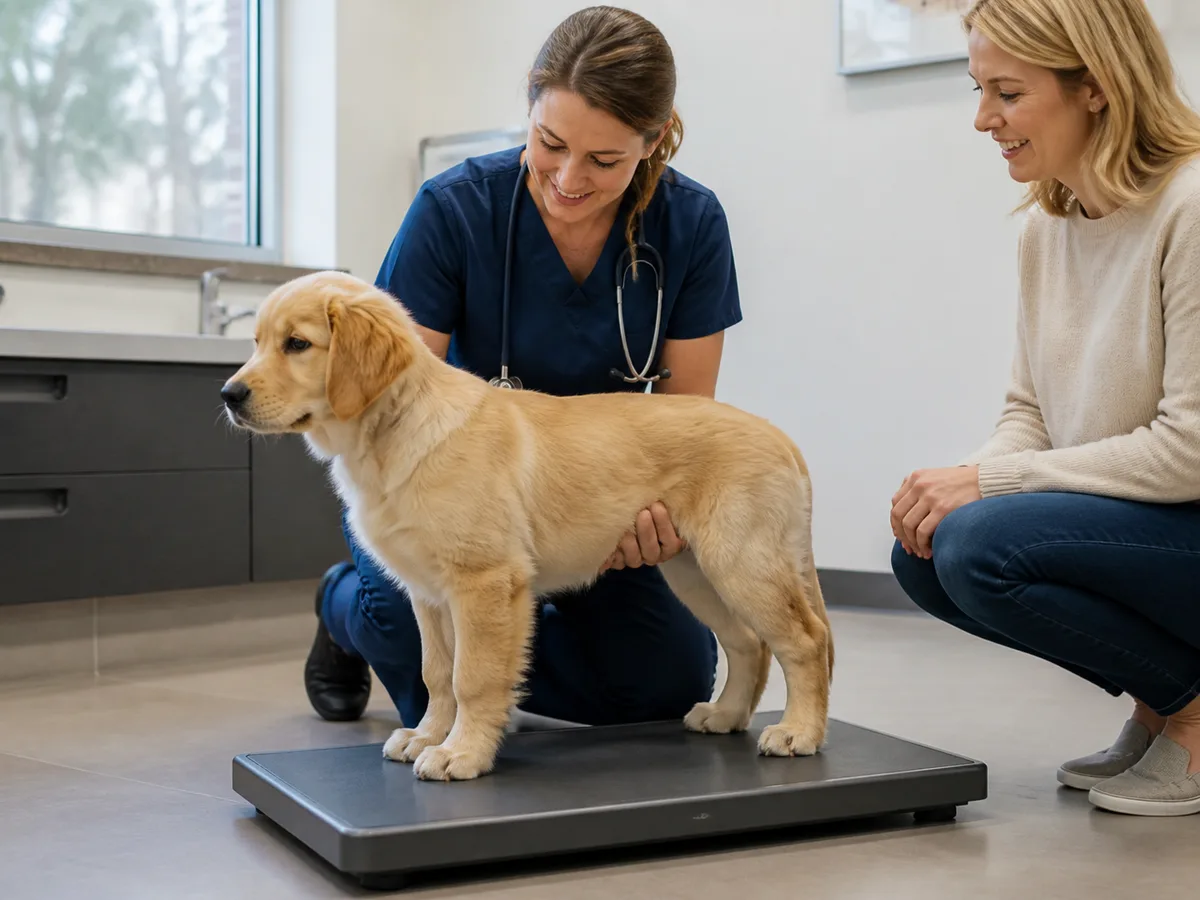
Golden Retriever puppy weight changes quickly, but puppies do not grow in a perfectly smooth line. A Golden Retriever growth chart should be a record of the individual, not a requirement to match a weekly internet average. Family line, sex, litter history, health, nutrition, and developmental timing all matter.
Use stages, not promises
Think in broad developmental stages:
- Early transition home: establish a veterinary baseline, feeding record, and body-condition observation.
- Rapid puppy growth: measure consistently and avoid chasing the largest possible number.
- Adolescence: expect changing proportions, strength, appetite, and coordination.
- Approach to maturity: growth in height slows, while muscle and body composition may continue changing.
- Adult maintenance: judge current condition and function rather than puppy-chart position.
This framework avoids assigning an exact expected weight to a specific week without evidence. If a breeder or chart predicts a precise adult number, treat it as an estimate. Parents' measured adult size can provide context, but offspring still vary.
Create a useful growth record
Record:
- Date and age.
- Weight and scale used.
- Height only when the puppy can stand calmly and measurement is useful.
- Body-condition and muscle observations.
- Food product, calories, and measured daily amount.
- Appetite, stool, activity, illness, and medication changes.
- Veterinary findings and next review date.
Plotting the points can make the trend visible, but the chart does not diagnose slow or fast growth. Bring the record to veterinary appointments so the clinician can interpret it with examination findings.
Compare the puppy with itself first
The strongest home comparison is usually the puppy's own earlier record taken under similar conditions. A single percentile borrowed from another litter, country, sex, or age calculation may not describe the same population. Even littermates can mature at different rates.
When the curve changes, check the context before drawing a conclusion. A new scale, a recent meal, a different age calculation, illness, medication, food change, or recording error can alter the apparent trend. Repeat an unexpected measurement safely, preserve both values, and ask the veterinarian whether the pattern is clinically meaningful.
Do not increase portions simply because the puppy is below an online line, and do not restrict food because the puppy is above it. Feeding changes should consider current calories, body condition, stool, appetite, growth, and veterinary findings. A measured trend supports a decision only when it is interpreted with the dog in front of you.
Feeding for steady development
Use a complete and balanced diet appropriate for the puppy's life stage, measure portions, and adjust with veterinary guidance. Treats, chews, toppers, and food used in training count toward the daily total. The goal is appropriate development and body condition, not maximum puppy weight.
If timed portions would solve a genuine caregiver schedule issue, the Petlibro Granary WIFI Automatic Cat and Dog Feeder with Camera is one tracked feeder to compare. Verify kibble compatibility, portion accuracy, cleaning, power backup, and security from chewing.
When evaluating the Petlibro Granary WIFI Automatic Feeder, measure several actual dispenses and keep a manual feeding option. A device cannot determine a puppy's calorie needs, and rapid growth, weight change, digestive signs, or a medical diet requires veterinary input.
Petful may earn a commission when you click through to Chewy, at no extra cost to you.
How to measure height and weight
Golden Retriever height is measured at the withers, the highest point of the shoulder blades, while the dog stands naturally on a level surface. Do not measure to the top of the head. A dog who crouches, leans, or stretches will produce an unreliable result.
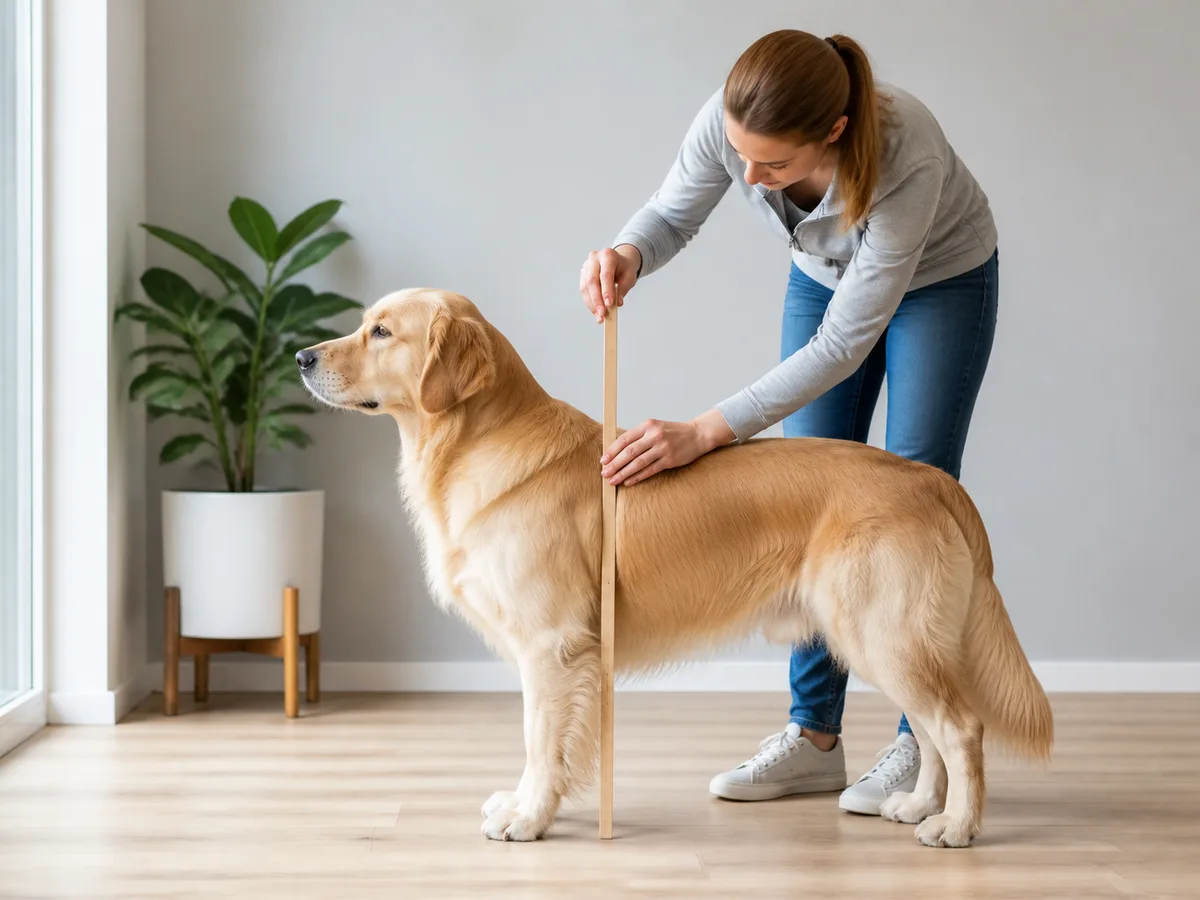
Measure height consistently
Use this method:
- Choose a firm, level, non-slip floor.
- Let the dog stand squarely with head in a natural position.
- Locate the top of the shoulder blades by touch.
- Hold a flat book or level horizontal from the withers to a wall.
- Mark and measure vertically from the floor.
- Repeat once, then record the date and method.
Do not force a frightened puppy to stand still for a nonessential home measurement. Calm handling matters more than a perfect number.
Weigh safely
Use a veterinary or pet scale for the clearest result. For a small puppy, a stable platform scale may work when used safely. Do not lift a large dog onto a household scale if either person or dog could fall. Clinics, some training facilities, and pet retailers may have accessible scales.
Weigh under similar conditions when tracking change. Different scales can vary, so note the device. If a surprising number appears, repeat it and consider a veterinary recheck rather than immediately changing food.
Healthy body condition versus a chart
Golden Retriever healthy weight is the weight that supports appropriate body and muscle condition, comfortable function, and health for that individual. It may sit within the breed-standard range, but the range alone cannot establish it.

Look from the side and above
From above, many dogs at an appropriate condition show a waist behind the ribs. From the side, an abdominal tuck is often visible. By touch, the ribs should be assessable without pressing through a thick layer. Coat length can hide these landmarks, so hands-on assessment is important.
Ask a veterinarian to demonstrate the dog's body-condition and muscle-condition scores. Take neutral standing photos from the side and above on the same surface at intervals. The images are a trend record, not a diagnostic tool.
When the scale and appearance disagree
A dog can remain at the same weight while losing muscle and gaining fat. Another can gain weight appropriately during growth while staying lean. Older dogs, athletes, pregnant dogs, and dogs recovering from illness need individual interpretation.
Do not use the word "large" as a diagnosis. A 90-pound Golden is above the AKC male standard weight range, but the reason could include frame, fat, fluid, measurement error, or another health factor. Petful's DVM-authored Golden Retriever health and lifespan guide covers clinical interpretation.
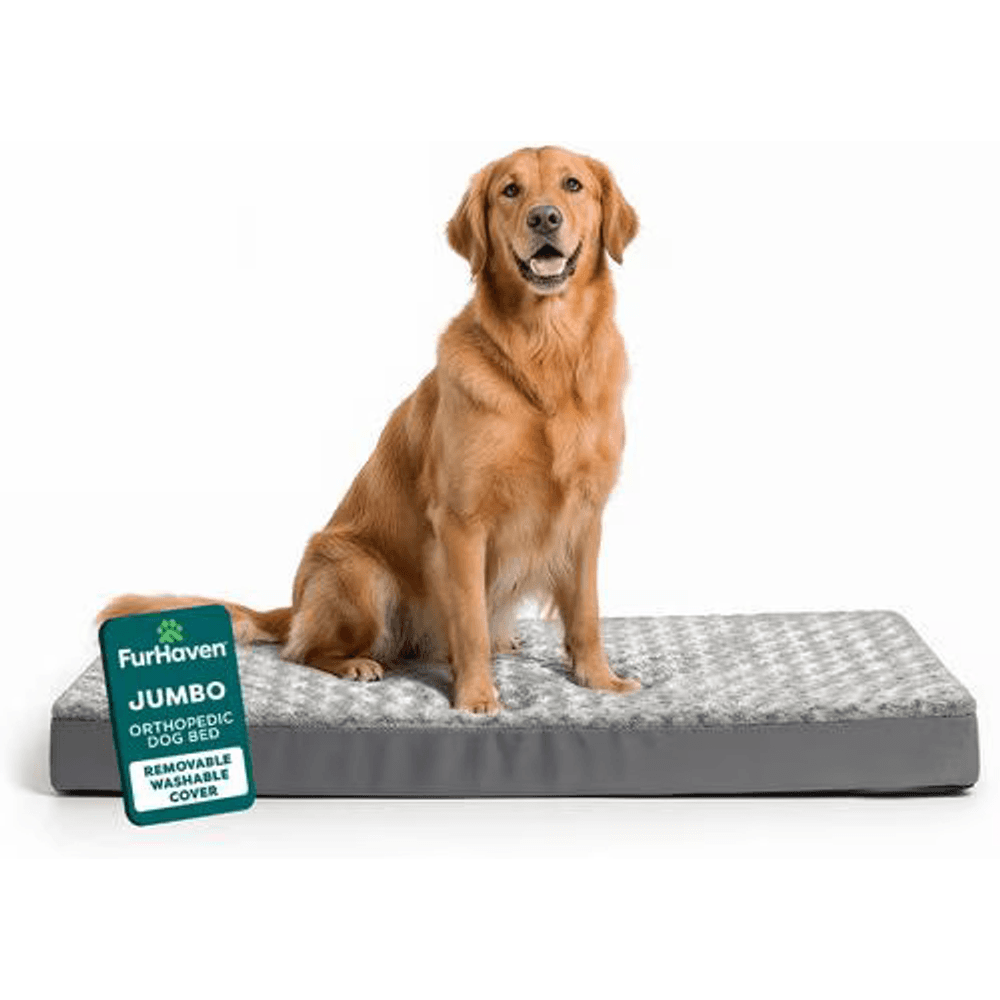
A plush orthopedic foam mattress that cushions aging joints and pressure points, giving a stiff or trembling senior dog warm, supportive rest.
Petful may earn a commission when you click through to Chewy, at no extra cost to you.
Planning equipment by adult size
Equipment should fit the current dog and intended use, not a breed label. A puppy may outgrow several sizes before maturity, so measure immediately before buying and review fit often.

Petful may earn a commission when you click through to Chewy, at no extra cost to you.
Crate dimensions
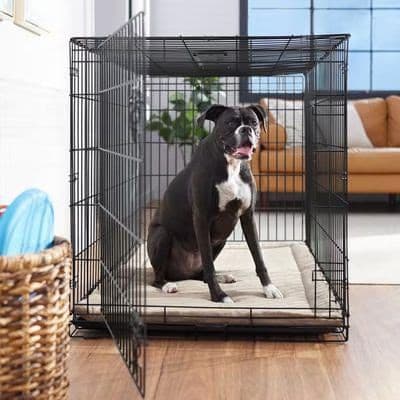
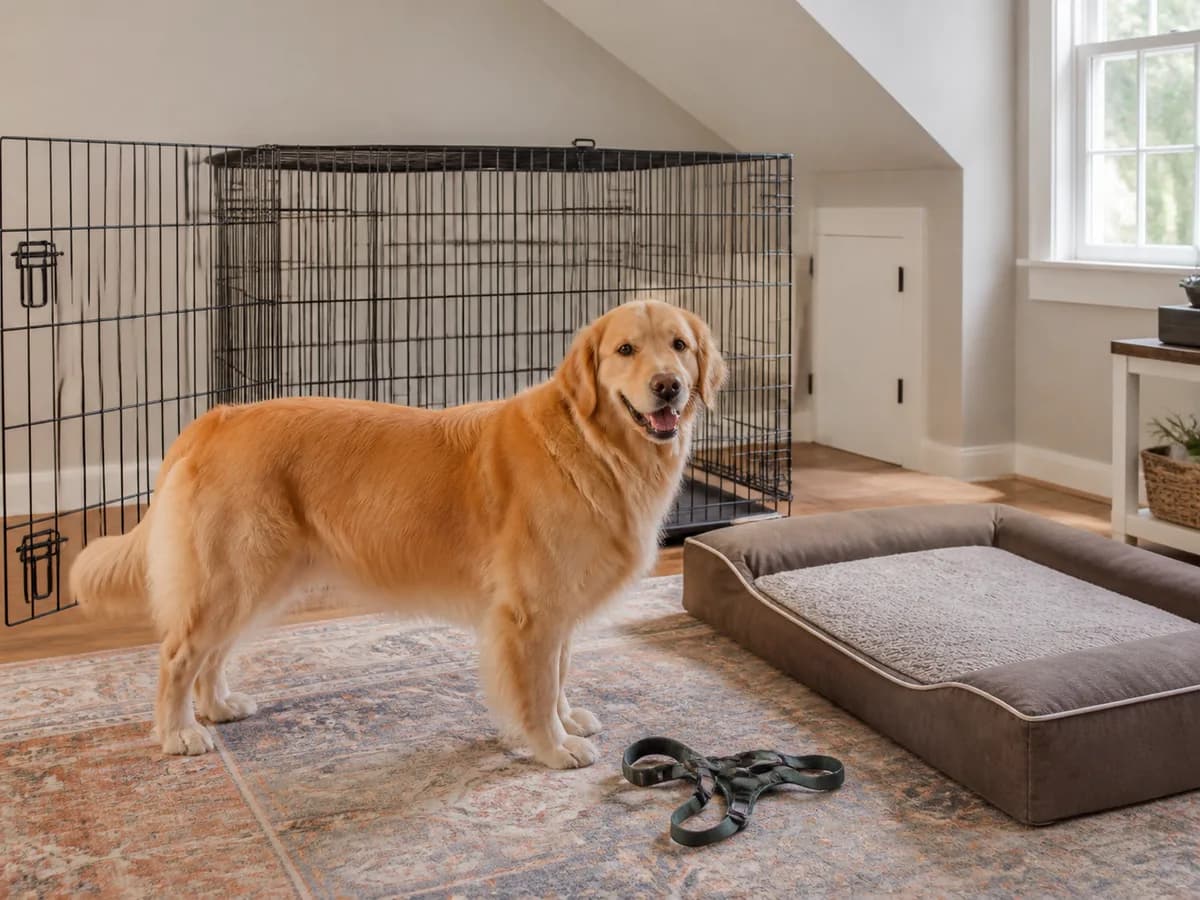
The dog should be able to stand without crouching, turn, and lie comfortably. The Frisco Heavy Duty Fold and Carry Single Door Collapsible Wire Dog Crate in X-Large is one tracked adult-size option to compare. Verify the current internal dimensions, divider, tray, latch, wire spacing, vehicle fit, and return terms.
If considering the Frisco X-Large Fold and Carry Wire Dog Crate for a puppy, use a safe divider if appropriate and ensure the puppy cannot become trapped in gaps. Remove collars or tags that could snag. A crate is for safe rest and management, not prolonged isolation.
Bed dimensions
Measure the dog in a natural sleeping position. The FurHaven NAP Ultra Plush Orthopedic Deluxe Dog Bed in Jumbo is one tracked option to compare for sleep area, support, step-on height, cover care, room fit, and chewing behavior.
The FurHaven NAP Ultra Plush Orthopedic Deluxe Bed cannot diagnose or treat pain. Persistent stiffness, limping, reluctance to rise, or sudden posture change warrants veterinary assessment. Replace damaged bedding that creates an ingestion or entrapment risk.
Harness fit
Harness sizing depends on chest girth, neck, strap placement, and current body shape. The PetSafe Easy Walk Dog Harness in Medium/Large is one tracked walking option to compare with the manufacturer's current chart and the dog's movement.
Recheck the PetSafe Easy Walk Dog Harness during puppy growth and adult weight change. Straps should not rub, restrict the shoulders, or allow escape. Equipment does not teach loose-leash walking by itself, so pair fit with reward-based training. Pair a measured harness with a leash the handler can manage; the Frisco Traffic Leash with Dual Padded Handles is one option to compare by length, hardware, and hand comfort.
When growth or weight needs veterinary input
Contact a veterinarian about persistent poor growth, rapid or unexplained weight change, repeated vomiting or diarrhea, reduced appetite, excessive thirst, a swollen abdomen, lethargy, limping, pain, weakness, breathing change, or loss of coordination. Urgent signs such as collapse, severe breathing difficulty, inability to urinate, repeated unproductive retching, or rapid decline require prompt care.
Golden Retriever health issues can influence weight and growth, but this page does not diagnose them. Use the Golden Retriever health issues and lifespan guide for veterinary-authored health context, then follow the individual dog's clinician.
Questions to bring to the appointment
Ask:
- Is the trend appropriate for this dog rather than only for the breed average?
- What body-condition and muscle-condition scores were recorded?
- Could food amount, medication, illness, pain, or activity explain the change?
- Which diagnostics or monitoring steps are appropriate now?
- What change should trigger an earlier recheck or emergency visit?
Bring the growth record, food label, measured amount, treats, medications, and any videos of movement or concerning behavior. Do not restrict food or water before the visit unless the clinic specifically instructs you.
Is this the right dog for your household?
Household fit factors include space, stairs, vehicle access, safe restraint, lifting limits, equipment cost, daily exercise, feeding management, and the strength to handle an adolescent or adult dog calmly. Individual dogs can vary, so plan for the upper end of practical size and support needs without trying to make a puppy grow toward it.
- Official adult ranges provide a clear planning reference
- Consistent measurements reveal the individual dog's trend
- Body and muscle condition add meaning that scale weight alone lacks
- Measuring before purchase improves crate, bed, harness, and vehicle fit
- Puppy charts cannot predict exact adult size or diagnose growth
- Coat and photographs can hide or distort body condition
- Equipment may need replacement through development
- Unexpected change can require veterinary assessment rather than a feeding adjustment
Read the main Golden Retriever breed guide for the full household-fit decision and the Golden Retriever puppy guide for sourcing and first-week preparation.
Golden Retriever Size, Weight and Growth Guide FAQs
Golden Retrievers are generally classified as large dogs. Adult size still varies by sex, build and the individual dog, so use an actual weight and body measurement when choosing crates, beds, harnesses or travel equipment. Breed labels are useful for broad planning, but they should not replace fitting equipment to the dog that will use it.
A 90 pound Golden Retriever is big because that weight is above the usual adult range in the American Kennel Club standard for both males and females. A large number does not reveal whether the dog is muscular, oversized or carrying excess fat. Ask a veterinarian to assess body condition and health rather than using weight alone to decide whether weight loss is needed.
How big a fully grown Golden Retriever becomes can vary, while the American Kennel Club standard lists adult males at 65 to 75 pounds and 23 to 24 inches tall, and females at 55 to 65 pounds and 21.5 to 22.5 inches tall. Use measured height, length and weight for equipment decisions, and body condition for health decisions.
Most height growth happens before full physical maturity, while the chest and overall build may continue developing afterward. The exact timeline varies by sex, genetics, nutrition and the individual puppy. Track growth across routine veterinary visits rather than forcing a puppy to match a generic chart, and discuss abrupt changes or body-condition concerns with the veterinarian.
A healthy weight is the weight at which the individual dog maintains an appropriate body condition, not simply a number from a breed chart. You should be able to assess the ribs, waist and abdominal tuck without guessing through the coat. A veterinarian can confirm body condition and help set a safe feeding or activity plan.
Sources

Coreen Saito is a pet writer and longtime shelter volunteer with more than a decade in animal rescue. She covers cat behavior, breed care, and the small, ordinary science of sharing a life with companion animals, with a particular focus on honest takes about the products and decisions that actually matter. At home in Arizona, she's outranked by Mac (a dog with the loudest opinion in the house), Rebel (a cat who governs by quiet authority), and Meri (an orange tabby who runs the late shift and the laundry basket). She writes about all three, plus the rescues that keep coming through her life, at LifeWithMinty.com.
Sign up for expert-backed reviews and safety alerts all in one place.