German Rottweiler vs American Rottweiler: Key Differences
German and American Rottweilers are one breed, not two. Learn how birthplace, registry, pedigree, standards and individual variation shape the comparison.

Petful is reader supported. As an affiliate of platforms like Amazon and Chewy, we may earn a commission when you buy through links on this page. There is no extra cost to you.
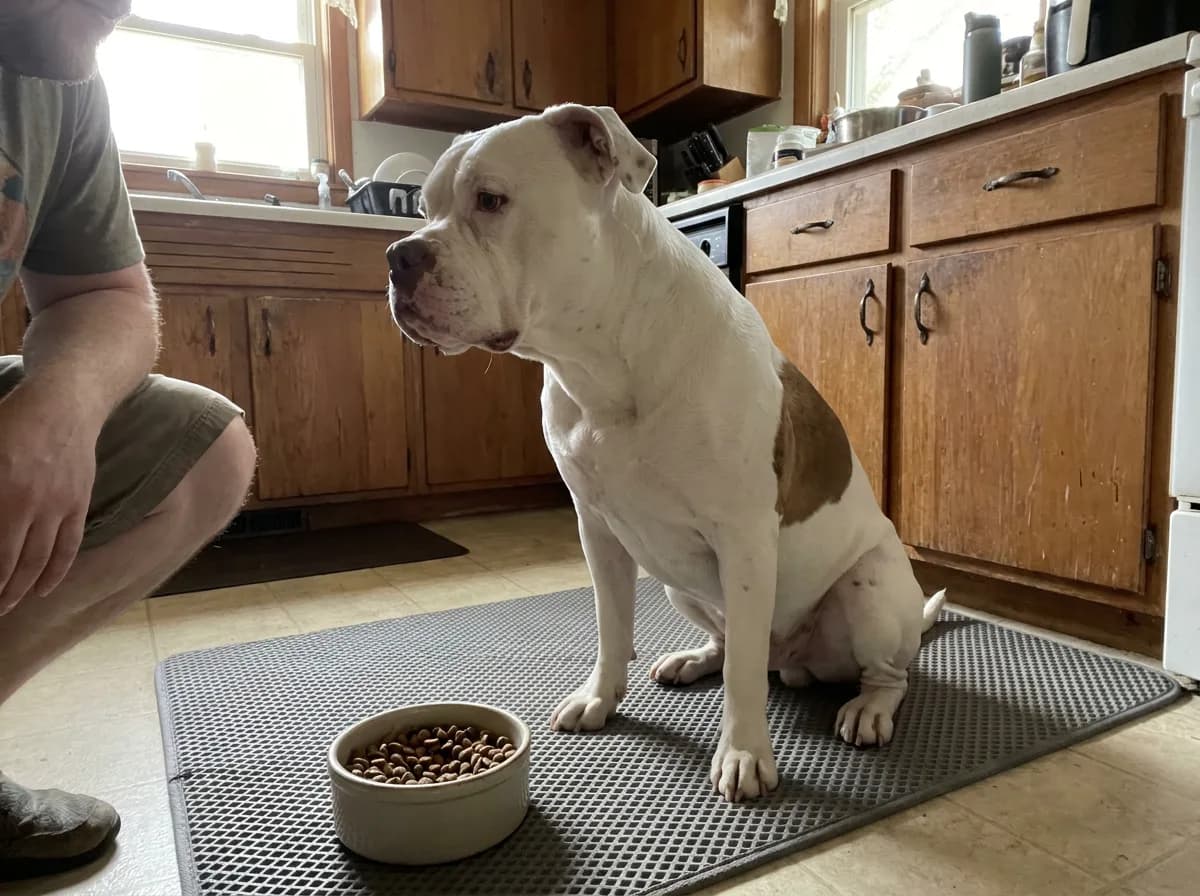
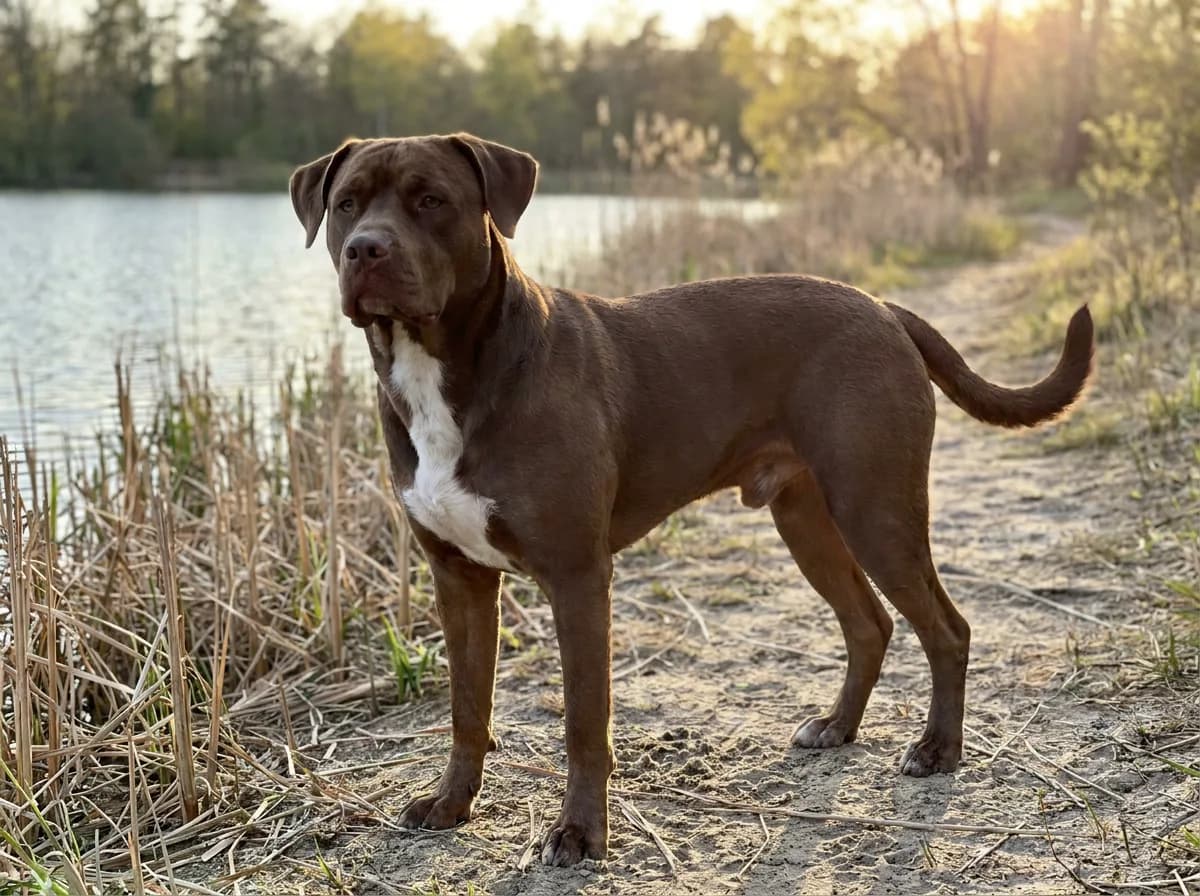
German Rottweiler vs American Rottweiler is not a comparison between two official breeds. Rottweiler is one breed. In a literal, verifiable use, German and American can describe where a dog was born, registered or bred. Online, the labels are also used loosely to market body shape, size, head type or pedigree.
The reliable way to understand the difference is to read the dog's records. Photographs can show within-breed variation, but they cannot prove birthplace, registry, pedigree, health, temperament or breeding quality.

Sign up for expert-backed reviews and safety alerts all in one place.
German vs. American Rottweiler at a glance
- 1German and American Rottweilers are not separate official breeds
- 2Location, breeder, registry and pedigree records can support a geographic label
- 3Breed standards and breeding programs may differ in administration and exact requirements, but they describe one Rottweiler breed
- 4Individual dogs vary in size, build and behavior within a population
- 5Records and direct observation are stronger evidence than appearance or seller wording.
The most useful practical comparison does not ask which national label wins. It asks which claims can be verified for the known dog and whether that individual fits the household. In a German Rottweiler vs American Rottweiler decision, start with the individual dog's birthplace, registration, pedigree and current condition. Then separate those facts from an American Rottweiler or German Rottweiler stereotype based on head shape, height or weight.
The labels also answer different questions depending on who uses them. A registry record can identify a system, an import document can support movement between countries, and a breeder can describe a family line. None of those records alone determines whether the dog is suitable for children, other animals, sport or a first-time caregiver. That conclusion requires current behavior, health information and a workable household routine.
Petful may earn a commission when you click through to Chewy, at no extra cost to you.

| Practical comparison question | German label can responsibly mean | American label can responsibly mean | Evidence to request for the individual dog |
|---|---|---|---|
| Where was the dog born? | Born in Germany | Born in the United States | Birth, import, registration and veterinary records |
| Where was the breeder located? | Breeder operated in Germany | Breeder operated in the United States | Verifiable identity, address and contract |
| Which registry or system applied? | A German or international registration pathway may apply | An American registration pathway may apply | Original registration and pedigree, not a website badge |
| What does the dog look like? | May reflect the individual family line and selection | May reflect the individual family line and selection | Measurements and neutral photographs, not a national stereotype |
| How will the dog behave? | Cannot be predicted from location alone | Cannot be predicted from location alone | Current behavior, history, health and professional assessment |
The Rottweiler is one breed
Searches for types of Rottweiler often produce German, American, Roman and other labels as if each were a separate breed. These types of Rottweiler are marketing or descriptive categories, not separate official breeds. The AKC Rottweiler profile and the American Rottweiler Club standard describe the Rottweiler.
That does not mean every dog looks identical. A breed population contains variation, and breeding choices can emphasize different traits while remaining subject to the applicable standard and registry rules. Country of birth is real evidence. A claimed national body type is an interpretation that requires more context, not proof that types of Rottweiler are separate breeds.
Petful's Rottweiler breed profile provides the broader history, care and ownership context that national labels cannot replace.
What a label cannot guarantee
Neither German Rottweiler nor American Rottweiler guarantees:
- A particular head width, bone amount, height or weight.
- A calm, protective or family-friendly temperament.
- Freedom from inherited or acquired health problems.
- Responsible breeding practices.
- Recognition by a specific registry.
- Suitability for work, sport, showing or a particular household.
A seller may use German to imply more authentic, larger or more valuable. Another may use American as shorthand for a dog born locally or for a looser body stereotype. Ask the speaker to define the term and produce the records that support it.
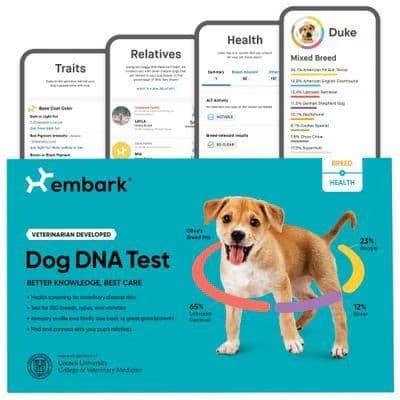
A canine DNA product can be one source of breed-ancestry information, but it does not certify birthplace, registry or pedigree. If that limited question is useful, review what the Embark Breed & Health Dog DNA Test Kit reports and does not report before buying. It cannot turn a marketing label into official documentation.
Birthplace, breeder location and registry
A location claim becomes useful when it connects to records. Start with the dog's legal identity and move backward through the transaction rather than beginning with a photograph.

Birthplace
A German Rottweiler can literally mean a Rottweiler born in Germany. An American Rottweiler can mean one born in the United States. A dog imported from Germany and living in the United States does not become a different breed. Its records should show origin, ownership changes and any import or registration history relevant to the claim.
Ask for documents whose identifiers agree with each other. Names, dates of birth, microchip or tattoo numbers, parent information and ownership details should form a coherent chain. A mismatch may have an innocent explanation, but it should be resolved before payment.
Breeder location and family line
A United States breeder may use imported German dogs or dogs with German ancestors. A German breeder may use dogs whose ancestry extends across several countries. German line and American line are informal descriptions unless the speaker defines which pedigree or program is meant.

Petful may earn a commission when you click through to Chewy, at no extra cost to you.
The clearer questions are:
- Where was this dog born?
- Where did each parent come from?
- Which registry issued the document?
- Can the registration or health result be verified independently?
- Which current standard and breeding requirements did the breeder follow?
- What support and return terms appear in the contract?
Pedigree documents can establish recorded ancestry within a system. They do not guarantee health, temperament or future performance. A photograph can support identity, but resemblance alone cannot replace the paper trail.
When breed ancestry rather than location is genuinely uncertain, compare the limitations and sample requirements of the Embark Breed & Health DNA kit with the question being asked. A consumer test is not a registry certificate, import document or substitute for the named parents' records.
Standards and breeding requirements
A Rottweiler breed standard describes intended structure, movement, coat, markings and temperament. National kennel clubs and breed organizations can administer registration, shows, breeding programs and evaluations under their own rules. Readers should consult the current official documents rather than relying on a comparison graphic copied from a seller.

Shared breed foundation, different systems
Official systems may differ in exact wording, procedures, tests, titles, eligibility and enforcement. Those administrative differences matter when a breeder makes a specific claim. They do not establish two separate biological breeds. Read the named Rottweiler breed standard in force for the claimed registration or program and verify the issuing organization. A standard describes the breed ideal for that system. It does not certify an individual dog, prove a seller followed a breeding program or predict a puppy's future health and behavior.
The American Rottweiler Club standard lists adult males at 24 to 27 inches and females at 22 to 25 inches at the withers. It describes a black coat with rust-to-mahogany markings and a calm, confident, courageous basic disposition. Petful's Rottweiler size, weight and growth guide covers measurement in detail, while the Rottweiler colors and markings guide owns coat interpretation.
Verify the exact claim
If a seller says the parents passed required testing, ask:
- Required by which named organization or program?
- Which tests were completed for each named parent?
- On what dates and at what ages?
- Where can the result be verified independently?
- Does the result concern ancestry, conformation, health, work or temperament?
- What does the result not guarantee about the puppy?
The American Rottweiler Club health guidance provides breed-specific screening context. The OFA CHIC program explains how breed-specific health screening information is organized. A CHIC number indicates that the program's required tests were completed and made public; it does not mean every result was normal or guarantee future health.
A large crate may appear in a seller's take-home package, but equipment does not establish responsible breeding. Compare the internal dimensions and construction of the Frisco X-Large Fold & Carry wire crate with the individual dog's measurements and behavior.
Why appearance can vary within the breed
German Rottweiler size is not one separate measurement range that can be read from a photograph. Sex, family line, age, nutrition, condition, health, posture and camera angle all affect appearance. Variation within the breed can be real without proving a national type. Record the dog's actual height, weight, age, sex and body condition, then compare the measurements with the applicable standard and veterinary guidance. That process describes the known dog. It does not convert a large or compact body into evidence of German or American origin.

Petful may earn a commission when you click through to Chewy, at no extra cost to you.
Head and body stereotypes
Online comparisons often say a German dog has a broader head, heavier bone or stockier body while an American dog is taller, narrower or lighter. An individual photograph may fit that description, but it does not establish a rule. Selective examples can make normal variation look like a hard national boundary.
Use measurements and records instead:
- Measure height at the withers on a level surface.
- Record weight on a named scale and interpret it with body condition.
- View the full dog from the side and front in neutral posture.
- Compare structure with the current applicable standard.
- Use pedigree and registration records for origin claims.
- Ask a veterinarian about health or condition, not a seller or photograph.
Coat and markings
Rottweilers have black coats with rust-to-mahogany markings under the American standard. A darker marking shade does not prove German origin. A lighter shade does not prove American origin. Rare-color language does not create another geographic type.
The same is true of tail appearance, ear carriage and muscularity. Each visible feature has context, but none alone establishes birthplace or pedigree. Do not reverse-engineer a dog's papers from its body.
Adult equipment should follow measurements
A seller's prediction that a German line will be huge is not a safe purchasing guide. Buy crates, beds and vehicle equipment from current or projected dimensions and expect puppy replacements. The Frisco X-Large wire crate is one reference to compare, not a guaranteed fit for any national label.
For sleep space, compare the surface area, support and cover care of the FurHaven Velvet Waves orthopedic sofa bed in Large with the known dog's measured sleeping posture. Large is a product label, not evidence of ancestry.
Temperament and working ability
German Rottweiler temperament is not a separate behavioral formula. Selection, early development, health, training and daily experience influence behavior within every country. A pedigree can document ancestry; it cannot promise that a puppy will mature into a stable guard dog or easy family pet. Compare behavior in ordinary, controlled situations and note the dog's body language, responsiveness and recovery. The same evidence standard applies to an American Rottweiler. Nationality cannot substitute for observing the individual dog or planning safe management.
For advanced reliability goals, WebVet's staged off-leash training guide shows why individual readiness matters more than a country label.
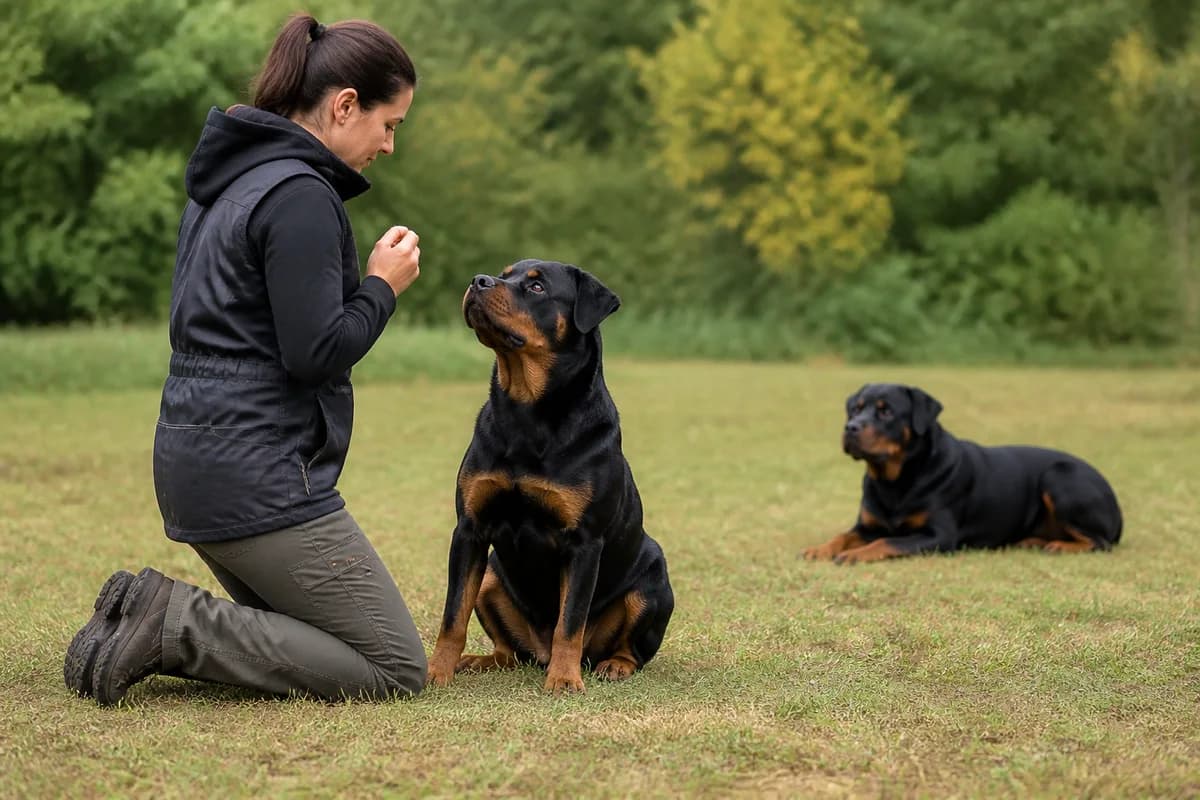
The planned photograph places two dogs in the same reward-based exercise. That equal context makes individual response visible without pretending the image proves nationality.
Observe behavior in concrete situations
Evaluate how the dog:
- Recovers after a sudden but ordinary sound.
- Responds to a familiar handler around distractions.
- Handles grooming, restraint and veterinary preparation.
- Settles after play or a walk.
- Behaves around food, toys, doors, visitors and other animals.
- Communicates discomfort and responds when given space.
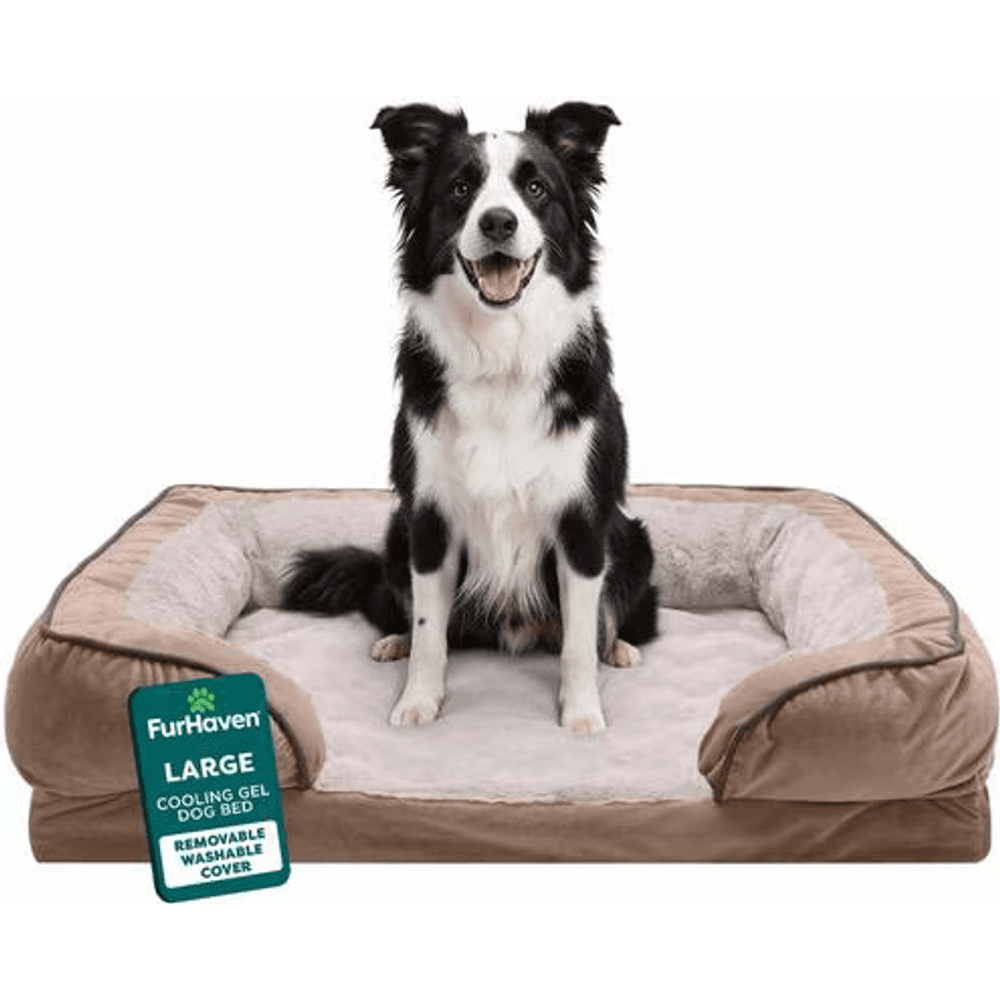
An orthopedic sofa bed with three bolstered sides for dogs who like to rest their head and joints against a cushion. The supportive foam base cradles hips and elbows, a comforting spot for an older or shaky dog to settle.
Petful may earn a commission when you click through to Chewy, at no extra cost to you.
The Rottweiler temperament and training guide explains household fit and reward-based training in depth. Do not infer aggression, courage or reliability from nationality, sex, head shape or working titles alone.
Working titles and parent behavior
A title can document performance under a defined system. It does not guarantee that every puppy inherits the same traits or that the dog will behave identically in a home. Ask what the title tested, how the parent lives day to day and what the breeder observes in each puppy.
Individual variation matters. Some dogs are more social, reserved, active, sensitive or easily frustrated than others from the same litter. Professional guidance is appropriate when behavior creates safety concerns, and sudden unexplained change deserves veterinary assessment.
A consistent feeding routine can keep rewards and meals measurable during training. Compare the Petlibro Granary WiFi automatic feeder with the actual food and portion plan. The feeder does not assess temperament or remove the need to supervise food around other animals.
How to evaluate seller claims and records
Searches for German Rottweiler puppies for sale belong to a buying decision, not a national-type debate. Petful's Rottweiler puppy guide owns breeders, adoption, records, contracts and scam-aware sourcing in depth. It also addresses broader delegated questions about the best type, sex, other dogs, sleep and protection without pretending one label answers them. The useful bridge is simple: use this page to decode the location and type language, then use the puppy guide to assess the source, records, contract, payment process and fit. A premium national label is not a substitute for any of those buying checks.
This comparison provides a short verification sequence:
- Ask the seller to define German, American or imported in one factual sentence.
- Obtain original registration, pedigree and veterinary records before paying.
- Match names, dates and identifiers across the dog, parents and documents.
- Verify health-screening results with the issuing source when possible.
- Meet the dog and source through a safe, traceable process.
- Read the contract, return terms and payment recipient carefully.
- Pause if urgency, rarity or intimidation replaces evidence.
Red flags around national labels
Treat these statements as claims requiring proof:
- Pure German because the head is huge.
- American type because the dog is lean.
- Imported quality without import or registry records.
- Superior temperament guaranteed by country of origin.
- Completely healthy because parents passed unnamed tests.
- Rare type that justifies a premium price.
No article can endorse a breeder, rescue, marketplace or seller. A polished site, social following, club logo or imported-sounding kennel name does not verify the specific transaction.
If a large adult needs a defined resting area after placement, compare the measured sleep position and household layout with the FurHaven Velvet Waves orthopedic bed. Comfort products do not resolve uncertainty about origin, health or behavior.
Health documentation stays separate
Petful's Rottweiler health and lifespan guide owns clinical detail. For a purchase decision, request results appropriate to the breed and connect each record to the named parent. Do not interpret a national label as lower risk.
An automatic feeder may be useful after the dog arrives, but it is not evidence in the transaction. If the Petlibro Granary WiFi feeder suits the care plan, test its portions and cleaning routine independently of any seller package.
What to verify before you decide
- Use documented evidence such as birthplace, registry, pedigree and health records for documentary claims. Use direct observation for body condition, handling and behavior. Use professional guidance for medical or behavior concerns. The clear next step is to connect every German or American claim to a named document instead of deciding from head shape, color or seller language.
The evidence ladder is simple:
- Seller label: A statement to test.
- Photograph: Evidence of visible appearance under limited conditions.
- Registration and pedigree: Documentary ancestry and system context.
- Health results: Screening evidence connected to the named dog or parents.
- Current observation: Evidence about the individual dog's behavior and condition now.
- Household plan: Evidence that the caregivers can meet the known dog's needs.
Each level answers a different question. A pedigree does not guarantee temperament. A DNA estimate does not establish birthplace. A friendly meeting does not establish health. Breed tendencies describe populations, not every individual dog.
Is this the right dog for your household?
- A records-first comparison turns vague national labels into answerable questions
- Official standards and health resources help verify specific claims
- Direct observation keeps the individual dog and individual behavior at the center of the decision
- One-breed framing reduces pressure to pay for a manufactured type
- Import, registry and pedigree records can be complex to verify
- A geographic label can distract from health, behavior and contract gaps
- Appearance cannot prove origin, quality or future temperament
- Adult size, training, cost and household fit remain the real long-term commitments
The better Rottweiler is not automatically German or American. It is the individual whose identity and records are credible, whose behavior and health information are understood, and whose needs the household can meet. If the decision still depends on a stereotype after reviewing the documents, the comparison is not finished.
German vs. American Rottweiler FAQs
Neither a German nor an American Rottweiler is automatically better. Rottweiler is one breed, and national wording cannot guarantee health, temperament, breeding quality or household fit. Compare verified records, current behavior, health information and care needs for the individual dog. The clear next step is to define the seller's label, connect it to birthplace, registration and pedigree documents, and judge suitability separately from the geographic claim.
You can tell whether a Rottweiler was born or registered in an American or German system through verified records, not appearance. Review birth, import, registration, pedigree and veterinary documents, then match names, dates and identifiers. Head size, weight, coat shade or body shape cannot prove national origin. The clear next step is to verify documents with the issuing source when possible and describe the origin as uncertain if the record chain is absent.
No evidence-based answer can rank every Rottweiler or German Shepherd as more aggressive. Individual behavior varies with genetics, development, health, learning, handling and context. Review verified records and directly observe the known dog's body language, responsiveness and recovery under safe conditions. The clear next step is secure management and qualified professional guidance for guarding, fear, reactivity, bite risk or sudden behavior change, regardless of breed or national label.
The most important thing to know about german rottweiler vs american rottweiler is that the labels do not name two official breeds. A practical comparison separates documented birthplace, registry and pedigree from marketing claims about head shape, size or quality. Individual dogs vary within the breed, so the individual dog must be evaluated through current health information, direct behavior observation and the household's actual care capacity.
For german rottweiler vs american rottweiler claims, verify documented evidence including birthplace, breeder identity, original registration, pedigree, import history when relevant, named health screening and veterinary records. Match identifiers across sources and seek professional guidance when medical or behavior findings need interpretation. Appearance provides limited visual context, but it cannot establish ancestry, national origin, breeding quality, health or future temperament on its own.
After learning about german rottweiler vs american rottweiler, define every type claim, organize the records and evaluate the known dog's needs. Then compare adult size, training, health, budget, management and backup care with household fit. Individual behavior matters more than a national stereotype when planning children, visitors, pets and public handling. The clear next step for buying or adoption details is the dedicated Petful puppy guide, not a search for a supposedly superior type.
Sources

Coreen Saito is a pet writer and longtime shelter volunteer with more than a decade in animal rescue. She covers cat behavior, breed care, and the small, ordinary science of sharing a life with companion animals, with a particular focus on honest takes about the products and decisions that actually matter. At home in Arizona, she's outranked by Mac (a dog with the loudest opinion in the house), Rebel (a cat who governs by quiet authority), and Meri (an orange tabby who runs the late shift and the laundry basket). She writes about all three, plus the rescues that keep coming through her life, at LifeWithMinty.com.
Sign up for expert-backed reviews and safety alerts all in one place.