Rottweiler Temperament, Training and Family Fit
Rottweiler temperament combines working-dog tendencies with wide individual variation. Learn how training, socialization, management and household fit connect.
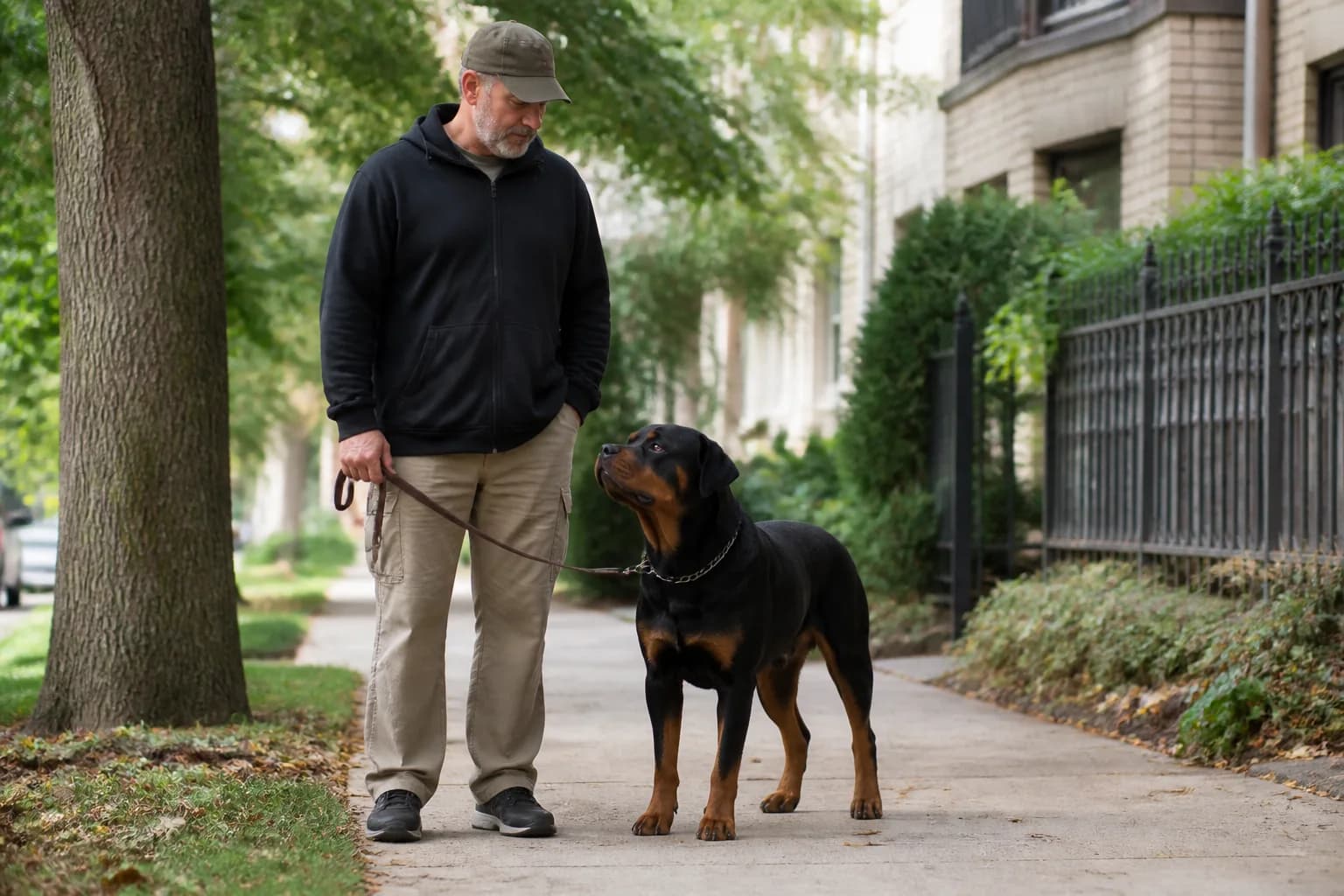
Petful is reader supported. As an affiliate of platforms like Amazon and Chewy, we may earn a commission when you buy through links on this page. There is no extra cost to you.
Rottweiler temperament is often described with big labels such as confident, protective or loyal. Those breed-level tendencies matter, but they do not tell you how one dog will respond to a child, visitor, unfamiliar dog or stressful event. Genetics, early development, learning history, health, age and management all shape the individual.
A good household match requires more than affection for the breed. Prospective owners need the time and skill for reward-based training, carefully planned socialization, secure management and safe handling of a powerful adult. Current behavior and verified records are stronger evidence than a dramatic stereotype.

Sign up for expert-backed reviews and safety alerts all in one place.
Rottweiler Temperament, Training and Family Fit at a glance
- 1Rottweilers are described as calm, confident, courageous and willing to work in the American Rottweiler Club standard
- 2Individual dogs vary, so records and direct observation matter more than a breed slogan
- 3Socialization should teach calm recovery and useful behavior rather than force contact
- 4Reward-based training and consistent management begin before adolescent strength arrives
- 5Family fit depends on the known dog, capable adult supervision, secure spaces and a realistic daily routine.
This is an honest suitability guide, not a promise that every Rottweiler will guard, love strangers, tolerate children or behave the same way. A behavior concern deserves qualified assessment, and a sudden behavior change can require veterinary evaluation.
Rottweiler temperament at a glance
Rottweiler temperament includes breed-level working tendencies and wide individual variation. The American Rottweiler Club breed standard describes a calm, confident and courageous dog with a self-assured reserve toward immediate friendships. It also emphasizes intelligence, adaptability and willingness to work. The AKC Rottweiler profile offers a broader breed overview. Rottweiler personality should still be evaluated through current behavior, recovery, handling tolerance, health and history rather than inferred from a standard alone. There is more on this in Petful’s guide to german Rottweiler vs american Rottweiler.
| Practical comparison decision | Breed tendency to consider | Evidence needed from the individual dog |
|---|---|---|
| Everyday companionship | Often close, attentive and engaged with household members | Ability to settle, recover from excitement and handle ordinary routines |
| Visitors | Reserve may be normal | Body language, response at the door and behavior behind a barrier |
| Training | Intelligence and working interest can support learning | Motivation, frustration tolerance, reinforcement history and handler skill |
| Public handling | Adult size and strength require control | Loose-leash skills, recovery around triggers and equipment fit |
| Family life | Some individuals live successfully with children and other animals | Known history, careful introductions, supervision and protected rest |
| Protective behavior | Breed heritage can influence vigilance | No assumption of reliable judgment, safety or suitability for protection work |
This practical comparison keeps a tendency from becoming a guarantee. The individual dog may be more social, cautious, energetic, sensitive, persistent or easily frustrated than a general profile suggests. Observe behavior in several ordinary situations rather than asking one greeting to represent the whole personality.

Petful may earn a commission when you click through to Chewy, at no extra cost to you.
Petful's Rottweiler breed profile provides the complete breed overview. The Rottweiler size, weight and growth guide covers the adult dimensions that make early handling skills and realistic caregiver capacity especially important.
What Rottweiler personality looks like day to day
Useful observations include how the dog responds to waking, meals, handling, walks, play, new sounds, visitors, separation and rest. A stable daily picture is more informative than a staged photograph or a seller's use of family raised, protective or gentle.
Record behaviors in concrete language:
- Walked to the mat after two cues and rested for 10 minutes.
- Stiffened over a chew when another dog approached.
- Barked at the visitor, then ate treats behind a gate and settled.
- Pulled toward another dog and could not disengage at 20 feet.
- Allowed an adult to brush the shoulder but moved away from paw handling.
These descriptions can guide training and professional conversations. Labels such as dominant, stubborn or perfect hide the conditions under which behavior occurs.
Food can be useful in training when it fits the dog's diet. A Petlibro Granary WiFi automatic feeder may help a household keep meal timing separate from measured training rewards, but it cannot assess appetite, guard food or replace caregiver observation.
Confidence, guarding and individual variation
Are Rottweilers protective? The breed's working history and standard support a tendency toward vigilance and devotion to home and family. That does not mean every dog will respond wisely to a threat, and it does not make untrained guarding safe.
Protective is not a pass-fail personality category. One dog may bark and recover behind a gate, another may avoid unfamiliar people, and another may escalate when crowded. The useful questions are whether the individual dog remains responsive, can create distance without conflict and can be managed by every capable adult. Those observations make the Rottweiler temperament discussion concrete without asking the dog to demonstrate guarding behavior.
Confidence is not confrontation
A confident dog can notice something new without rushing forward. It can remain responsive to the handler, maintain enough distance to think and recover after the event passes. Barking, lunging, freezing or frantic scanning can arise for many reasons, including fear, frustration, arousal, pain or learning history. Do not diagnose the motive from the breed name.
Owners should reward calm orientation, recall, settling, moving away and accepting management. They should not provoke suspicious behavior, encourage fence charging or stage confrontations to test loyalty. Protection training is specialized work with real safety and legal consequences, not a household experiment.
Evaluate the known dog
Ask the current caregiver for examples rather than adjectives:
- What does the dog do when a stranger enters the home?
- Can the dog disengage from another animal on a walk?
- What happens when food, toys or a resting place are approached?
- How does the dog respond to grooming, restraint and veterinary handling?
- How long does recovery take after a startling sound?
- Has the dog ever bitten, snapped, chased, escaped or damaged a barrier?
Request complete context for any incident, including who was present, what happened immediately before and after, whether injury occurred and what management is now used. A behavior history should inform safety planning, not become a reason for punishment.
Petful may earn a commission when you click through to Chewy, at no extra cost to you.
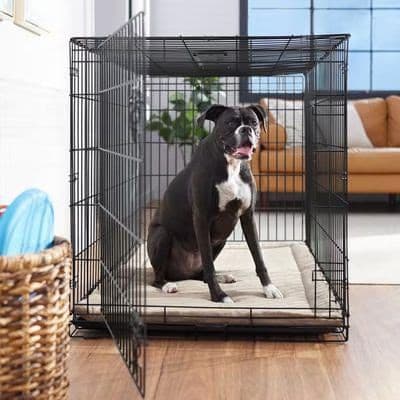
A crate can provide a protected rest station for a dog already trained to use it comfortably. Compare the internal dimensions and structure of the Frisco X-Large Fold & Carry wire crate with the individual dog's size, behavior and escape risk. A crate is not a treatment for fear or aggression.
Early socialization and exposure
Rottweiler socialization is the planned process of helping a puppy or newly placed dog learn that relevant parts of life can be handled safely. It is not a race to meet the most people or dogs, and it should not force contact when the dog is worried.
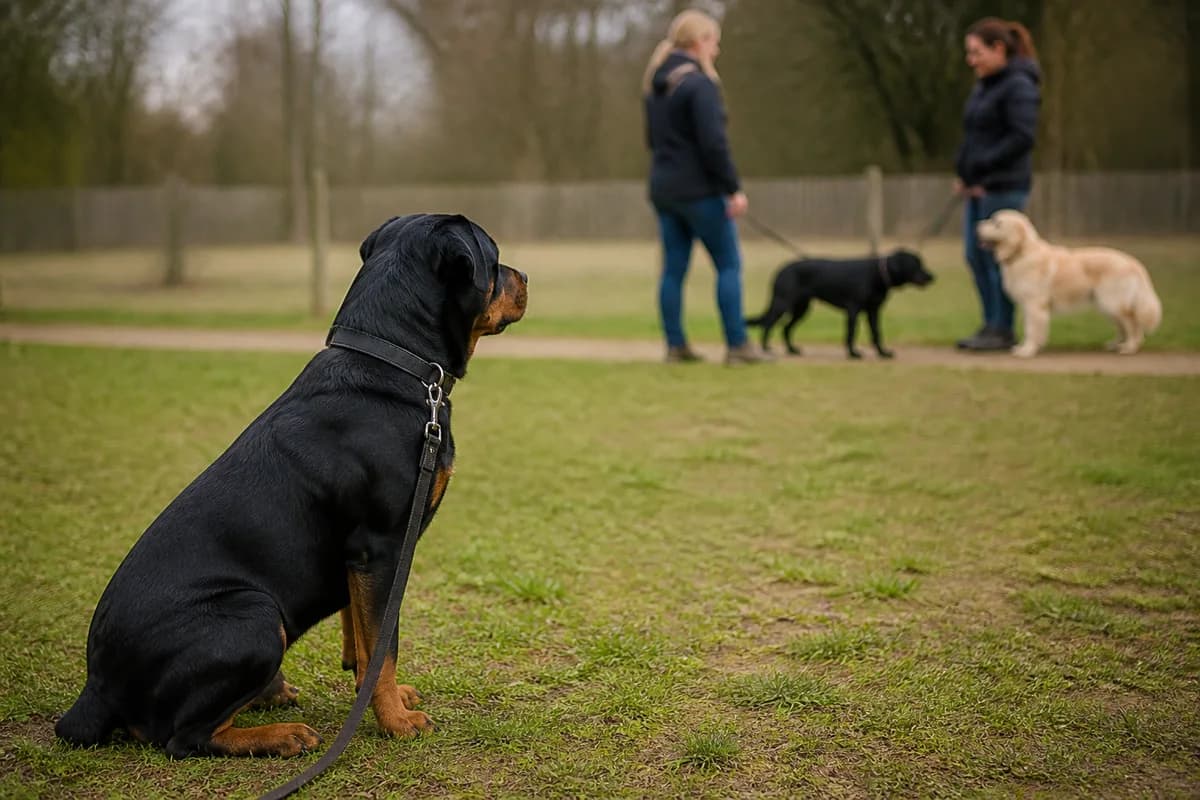
The planned image shows an adolescent observing people and dogs from a workable distance. The useful evidence is loose body language, the ability to eat or respond to the handler and recovery after noticing the environment.
A workable Rottweiler socialization plan records distance, duration, body language, response to reinforcement and recovery after each exposure. Progress may mean calmly watching a bicycle from farther away, walking past a quiet stranger or resting while a delivery occurs behind a secure barrier. It does not require greeting. If recovery becomes slower across sessions, reduce the challenge and reassess the plan instead of adding more exposure.
Build positive, controlled experiences
Prioritize places and skills that will matter in the dog's real life:
- Calm observation of varied adults, children at a safe distance and people using mobility devices.
- Neutral exposure to dogs without requiring nose-to-nose greetings.
- Comfortable travel, veterinary entry, scale use and examination preparation.
- Household sounds, doorbells, delivery activity and visitors behind management.
- Different safe surfaces, weather, grooming tools and ordinary equipment.
- Short periods of rest and separation after needs are met.
Pair exposure with food, play, distance or retreat according to the individual. Stop before the dog is overwhelmed. Repeated flooding can teach that warnings are ignored, while thoughtful distance lets the dog practice useful responses.
Read early signs of discomfort
Watch for turning away, closed mouth, lowered posture, pinned ears, lip licking, yawning, pacing, scanning, refusal of food, freezing or attempts to leave. One signal is not a diagnosis. A cluster of changes tells the handler to reduce intensity and reassess.
If the dog repeatedly cannot recover, growls, snaps, lunges or shows escalating avoidance, seek qualified help. Pain, illness and medication effects can also change behavior, so a veterinarian belongs in the plan when a change is sudden or unexplained.
Reward-based training and handling
Rottweiler dog training should begin with clear reinforcement for behaviors the household needs every day. Anyone learning how to train a Rottweiler should first define those behaviors, the current distraction level and a reward the individual dog values. The goal is a dog who can respond around normal distractions, not one who obeys only when intimidated.
When a case needs more support, WebVet explains the difference between dog trainers and behaviorists so owners can choose appropriate help.

Foundation skills
Teach in short sessions and add difficulty one variable at a time:
- Name response and voluntary check-in.
- Recall from safe, gradually harder situations.
- Loose-leash walking and turning with the handler.
- Leave it, drop and trading safe objects.
- Waiting at doors, gates, vehicle exits and food stations.
- Settling on a mat while household activity continues.
- Cooperative handling for paws, ears, mouth, grooming and veterinary care.

Petful may earn a commission when you click through to Chewy, at no extra cost to you.
Reinforce successful repetitions promptly. If the dog cannot perform a known cue, reduce distance, distraction or duration instead of escalating force. Training should make the right response clearer and safer.
Petful's family dog training guide provides a broader household framework. Owners facing fear, guarding, reactivity or bite risk should work with a qualified professional who uses humane, evidence-informed methods and can assess the dog directly.
Walking equipment supports, but does not teach
The PetSafe Easy Walk harness in Medium/Large is one tracked option to compare against the current chest measurement and manufacturer chart. Check shoulder movement, skin, strap stability and escape risk while the dog moves. The named size may not fit a mature Rottweiler.
Pair appropriate equipment with reinforcement for staying near the handler. A Frisco Traffic Leash with Dual Padded Handles may provide different hand positions during planned walks, but it does not make a handler strong enough for every trigger or teach impulse control.
Avoid punishment shortcuts
Pain, fear and startling may suppress behavior without teaching a safe alternative. Punishing a growl can remove a warning while leaving the underlying discomfort. Build distance, prevent rehearsals, reinforce desired behavior and use professional guidance for safety-critical concerns.
How to train a Rottweiler depends on the known dog and task. A food-motivated puppy, worried adolescent and adult with a bite history require different plans. No online article should diagnose the cause or promise a result.
Rottweilers with children, visitors and pets
Are Rottweilers good family dogs? Some are successful family companions, but the answer belongs to the individual dog and household. Adult size and strength increase the consequences of an excited collision or a management mistake even when there is no aggressive intent.
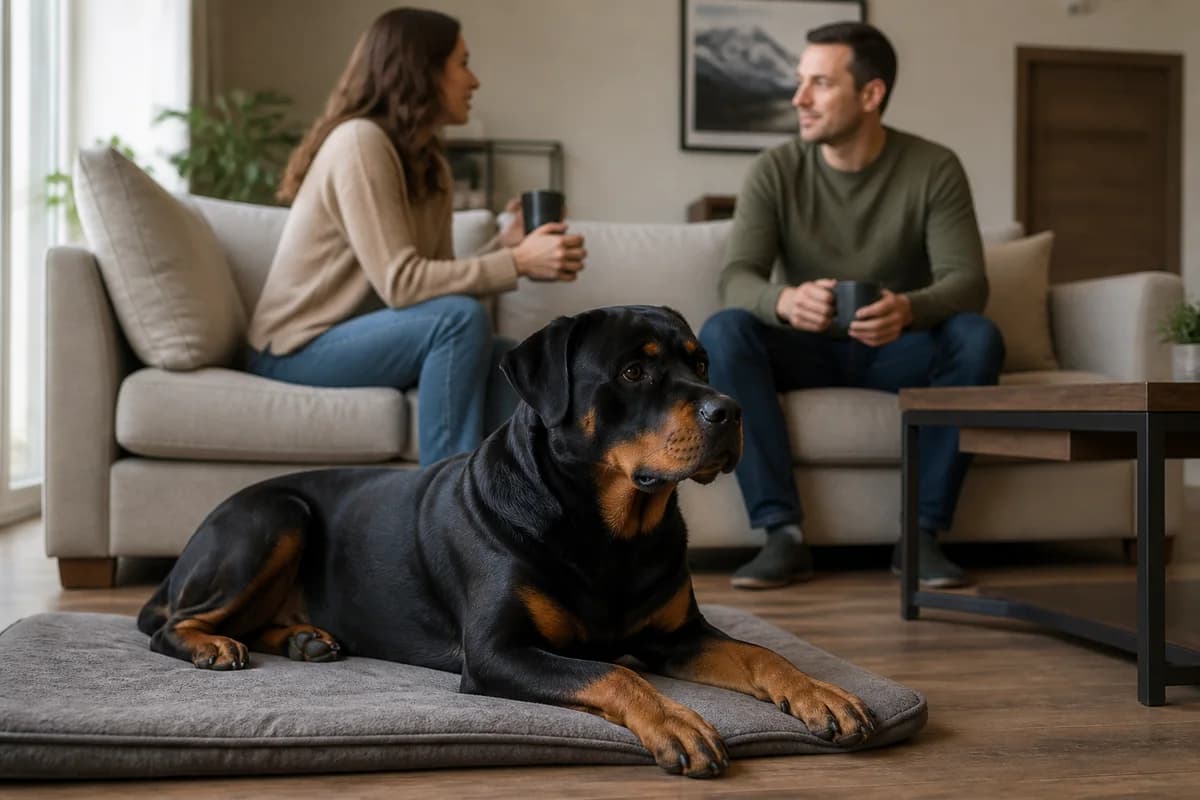
Children
Adults should supervise actively and remain close enough to intervene. Children should not climb on, hug, corner, chase, strike or wake a dog, and they should not approach food or high-value chews. Every dog needs a protected rest area that children do not enter.
End an interaction before discomfort escalates. Separate the dog and child if the supervising adult is distracted, the dog is eating or resting, play becomes chaotic, or either participant cannot follow the plan. A friendly history does not remove the need for supervision.
Visitors
Plan arrivals before the door opens. Use a secure gate, separate room, leash or comfortable crate as appropriate. Give the dog distance, reinforce calm behavior and avoid forcing greetings. Some dogs may join later, while others are safer remaining separate for the entire visit.
When the dog is already comfortable in a crate, the Frisco X-Large wire crate can be compared for a protected station. Position it away from crowding and never allow visitors to reach through the wire or disturb a resting dog.
Dogs, cats and small animals
Breed identity does not guarantee compatibility. Ask about chasing, guarding, play style and past experience with the specific species. Introductions should be gradual, controlled and easy to interrupt. Separate feeding, rest and high-value items when needed.
Do not leave animals together unsupervised until a qualified, individualized assessment supports that decision. Some combinations may require permanent management. A successful meeting on neutral ground does not prove safety around food, doorways, furniture or confined spaces.
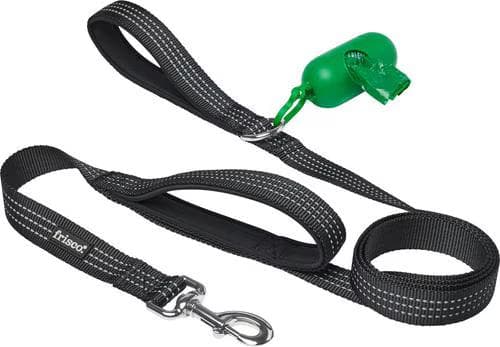
Petful may earn a commission when you click through to Chewy, at no extra cost to you.
Home setup, visitors and public handling
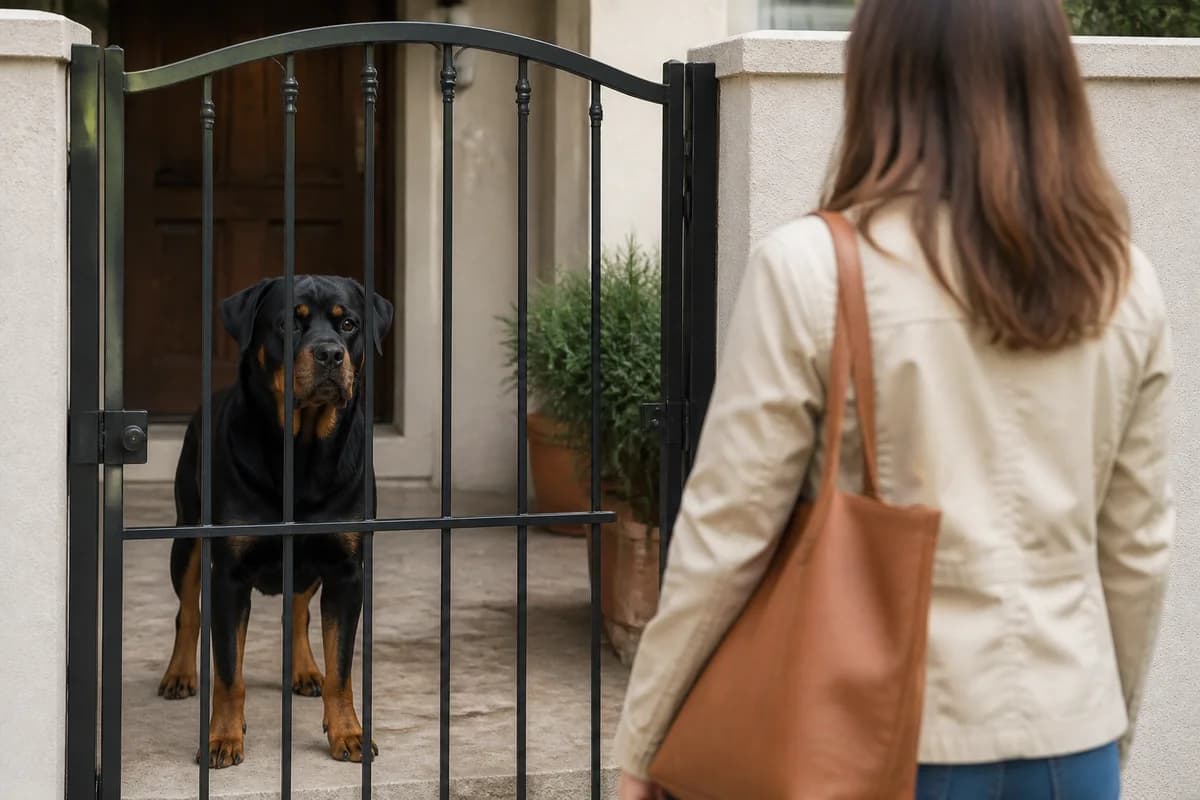
Home setup, visitors and public handling require one connected Rottweiler management system. Management is the physical and procedural structure that prevents predictable problems while skills develop. It is not an admission of failure. Gates, closed doors, leashes, schedules and clear caregiver roles protect the dog and other people. Write down who opens doors, who handles walks, where the dog rests during deliveries and what happens if the primary caregiver is unavailable. A plan that works only when one strong adult is present is not yet a complete plan.
Build layers, not one point of failure
A secure setup may include:
- A closed exterior door plus an interior gate during arrivals.
- A leash attached before moving through shared spaces.
- A rest area where no one disturbs the dog.
- Separate feeding and chewing zones in multi-pet homes.
- Posted instructions for guests, walkers and service providers.
- Current identification and a plan if the dog gets loose.
Test every barrier for height, latch security, stability and the dog's actual behavior. A dog who jumps, climbs, pushes or chews needs a different solution from a dog who waits calmly. Never depend on a lightweight decorative gate because it looks tall enough.
Public walks
Choose routes and times that provide space. Keep the dog within the handler's physical capacity and avoid greetings that cannot be ended safely. Practice turns, distance changes, settling and returning attention before using them in a crowded place.
Recheck the PetSafe Easy Walk harness on the moving dog and inspect the Frisco Traffic Leash before each outing. Replace damaged equipment and keep a backup plan. No harness or leash certifies public safety.
Meal and enrichment management
If food conflict is a concern, feed separately and remove bowls after use. A Petlibro Granary WiFi feeder can schedule portions in some homes, but it should not be placed where another animal can approach the dog or where the unit creates competition. Monitor appetite and keep manual access available.
Track sleep, exercise, training, visitors and stressful events. Behavior sometimes worsens when a dog is overtired, in pain, ill or repeatedly placed beyond its coping ability. The Rottweiler health and lifespan guide covers breed health context; a veterinarian should assess sudden or unexplained behavior change.
Choosing a puppy with temperament in mind
Rottweiler puppies are owned in depth by Petful's Rottweiler puppy guide. It covers records-first sourcing, breeders, adoption and buying safety. Questions about puppy behavior problems, sleep, diet, time alone or breed comparisons belong in that broader developmental context rather than being reduced to one adult temperament label.
For temperament, ask how the puppies and parents behave during ordinary handling, recovery, play and rest. Ask what the source has done when a puppy startles, guards an object, resists handling or needs quiet. Request complete parent health and pedigree documentation as applicable, but do not treat a title, test score or friendly photograph as a guarantee for the puppy. Rottweiler puppies change with development and experience, so the household still needs a training, socialization and management plan for the dog that arrives.
Look for a source who:
- Describes individual puppies rather than promising a perfect personality.
- Allows appropriate observation and provides current veterinary records.
- Explains early socialization without claiming the puppy has met everything.
- Discusses adult size, training and management honestly.
- Uses a written contract and has a clear return or support plan.
- Does not market aggression, extreme guarding or color as added value.
No puppy assessment predicts an adult with certainty. The household still shapes daily behavior through reinforcement, exposure, management, health care and experience.
What to verify before you decide
- Ask for veterinary, pedigree and behavior history connected to the known dog. Observe recovery, handling, food, play, rest and response to ordinary novelty. Use a qualified trainer or behavior professional for safety concerns and a veterinarian for sudden change. The clear next step is a written weekday and management plan, not a promise that the breed will naturally know what to do.
Compare three evidence levels:
- Breed context: Official sources describe common working traits and intended temperament.
- Individual evidence: Current behavior, history, health, recovery and handling tolerance describe the known dog.
- Household capacity: Caregiver skill, schedule, space, budget, rules and backup care determine practical fit.
The individual dog's evidence can outweigh a general tendency. A well-documented, manageable adult may be easier to evaluate than an unknown puppy. A large yard does not replace training, companionship or secure management.
Is this the right dog for your household?
- Rottweilers can be attentive, capable companions for prepared owners
- Working interest can make reward-based training engaging
- Clear routines and management give the household concrete ways to support success
- A known adult's current behavior can inform a careful match
- Adult strength raises the consequences of pulling, jumping or management errors
- Socialization, training and visitor plans require sustained daily effort
- Individual dogs may be reserved, reactive, guard resources or struggle with other animals
- Housing, insurance, legal rules and access to qualified care may limit fit
A strong fit exists when adults want the daily work, every caregiver can follow the same plan and the known dog's needs fit the home. A poor fit exists when the plan depends on a child handling the dog, an unfenced yard providing exercise, a crate covering long absences or affection replacing training.
Run a two-week reality test before committing. Follow the proposed wake time, reserve walk and training periods, practice visitor logistics, confirm backup care and set aside the expected budget. The exercise cannot recreate ownership, but it reveals whether the routine survives work, weather and fatigue.
Rottweiler Temperament, Training and Family Fit FAQs
The downsides of owning a Rottweiler can include adult strength, substantial training and management needs, shedding, equipment and care costs, housing or insurance restrictions, and serious consequences when handling fails. Individual dogs may also be reserved, reactive or incompatible with other animals. Use verified records and direct behavior observations rather than assuming every dog has each downside. The clear next step is to test the proposed schedule, visitor plan, handling capacity and backup care against a normal weekday before deciding.
A Rottweiler can be a good dog for a family when capable adults provide reward-based training, active supervision, secure management, exercise and protected rest. Breed identity does not guarantee tolerance of children, visitors or pets. Use verified records and current observations from the individual dog. The clear next step is to compare that evidence with a written family plan covering interactions, barriers, food, rest, public handling and backup caregivers.
Rottweilers can be friendly, reserved, fearful, reactive or aggressive in different contexts, so neither label describes every individual dog. The breed standard emphasizes calm confidence and reserve, while behavior reflects genetics, development, learning, health and environment. Use verified records and observe body language, response to handling and recovery in ordinary situations. The clear next step is professional guidance for fear, guarding, reactivity, bite risk or any sudden behavior change.
The most important thing to know about rottweiler temperament is that a breed tendency is not an individual guarantee. Use a practical comparison of current behavior, verified history, health, recovery and household capacity. The individual dog may differ substantially from a Rottweiler personality profile. Safe management remains necessary even after a history of good behavior because visitors, health, maturity and the environment can change the situation.
The evidence you should verify for rottweiler temperament includes documented evidence such as connected veterinary and behavior history, plus direct observation of handling, recovery, food, play, visitors, other animals and settling when safe. Professional guidance can interpret concerning patterns and help set management limits. Seller wording, appearance and one friendly meeting cannot prove a stable Rottweiler personality or suitability for every household, so preserve context rather than reducing behavior to a label.
What an owner should do next after learning about rottweiler temperament is write the daily training, exercise, visitor, child, pet and backup-care plan, then compare it with the known dog's individual behavior and needs. Whether Rottweilers are protective in general does not answer that household fit question. Confirm that every adult can manage the dog's size and equipment. If fear, guarding, reactivity or a bite history is present, obtain qualified help before expanding exposure or reducing management.
Sources

Coreen Saito is a pet writer and longtime shelter volunteer with more than a decade in animal rescue. She covers cat behavior, breed care, and the small, ordinary science of sharing a life with companion animals, with a particular focus on honest takes about the products and decisions that actually matter. At home in Arizona, she's outranked by Mac (a dog with the loudest opinion in the house), Rebel (a cat who governs by quiet authority), and Meri (an orange tabby who runs the late shift and the laundry basket). She writes about all three, plus the rescues that keep coming through her life, at LifeWithMinty.com.
Sign up for expert-backed reviews and safety alerts all in one place.