Rottweiler Colors and Markings: Complete Guide
Rottweilers have black coats with rust-to-mahogany markings. Learn standard placement, coat texture and why rare-color labels cannot prove ancestry or value.

Petful is reader supported. As an affiliate of platforms like Amazon and Chewy, we may earn a commission when you buy through links on this page. There is no extra cost to you.
Rottweiler colors are much narrower than online listings sometimes suggest. The American Rottweiler Club standard describes a black base coat with clearly defined markings that range from rust to mahogany. Tan, rust and mahogany describe natural variation in those markings, not three separate breeds.
Color can help a reader describe what is visible, but it cannot prove pedigree, birthplace, health or temperament. A black-and-tan appearance occurs in more than one breed and in mixed-ancestry dogs. Use registration, pedigree and health records when those questions matter.

Sign up for expert-backed reviews and safety alerts all in one place.
Rottweiler Colors and Markings at a glance
- 1The standard Rottweiler is black with rust-to-mahogany markings in defined locations
- 2Individual dogs vary in marking shade, edge and intensity
- 3The coat is straight, coarse, dense and medium in length under the American Rottweiler Club standard
- 4Red, blue, white and other rare-color labels are outside the standard and do not prove ancestry or value
- 5Records and direct observation answer different questions, so verify the individual dog rather than buying a color claim.
This guide uses realistic black-coated examples only. It does not create images of unsupported rare colors, and it does not treat one photograph as proof that a dog is purebred. The useful decision is whether the visible coat matches a standard description and whether the dog's records support every larger claim.
Rottweiler colors at a glance
The American Rottweiler Club breed standard is the clearest source for the coat and markings recognized in the United States. The AKC Rottweiler profile provides a concise public-facing breed summary.

Petful may earn a commission when you click through to Chewy, at no extra cost to you.
| Practical comparison and clear comparison labels | Source-limited values | What the individual dog still needs |
|---|---|---|
| Black base coat | Required standard foundation | Supports a visual description, not pedigree proof |
| Tan to rust markings | Natural lighter range within standard markings | Shade can vary with the individual and lighting |
| Deeper mahogany markings | Natural darker range within standard markings | A dark shade is not a separate variety or quality grade |
| Defined marking placement | Described at the face, chest, legs and under the tail | Placement can be compared with the standard but does not prove ancestry |
| Long coat | Outside the standard coat description | Length does not create a separate Rottweiler breed |
| Red, blue, white or another rare-color label | Outside the standard black-base description | A sales label cannot establish identity, health or value |
| How to use this table | Present the promised comparison, map, budget, or life-stage framework in a native accessible table with clear labels and source-limited values. | Treat visible color as a description, not proof of ancestry or health |
This Rottweiler color chart is a reference, not a grading tool for pets. Show evaluation uses a complete current standard and trained judgment. An owner deciding on a companion needs broader evidence: the dog's identity, source, records, health, behavior and household fit.
Lighting changes what the camera records
Warm evening light can make rust look redder. Shade can deepen mahogany, while bright exposure can wash it out. Phone processing, filters, wet hair and nearby colors also change appearance. Compare a dog in neutral daylight from several angles before applying a precise shade label.
Color also changes visually with age and coat condition. Puppy markings may look softer than those of a mature adult. Dust, sun exposure, shedding and damaged hair can affect brightness. These observations help describe the coat, but they still do not certify origin.
A regular meal schedule can make skin and coat observations easier because caregivers see the dog at predictable times. If automation fits the care plan, compare the Petlibro Granary WiFi automatic feeder with the dog's food, portions and cleaning routine. It is a scheduling tool, not a coat treatment.
Black coat with rust to mahogany markings
The standard base is black. The markings range from rust to mahogany and should remain clearly distinguishable from the black coat. A black and tan Rottweiler can be an ordinary description of a dog at the lighter end of that marking range, while a mahogany Rottweiler has deeper visible markings. Neither phrase defines a new breed.

The first planned reference shows a naturally lighter black-and-tan expression in neutral daylight. The entire dog is visible so the viewer can compare the face, chest and legs instead of judging one cropped patch.

The second reference shows a mid-range rust expression. Variation in pigment intensity should not be confused with poor lighting, a red base coat or a seller-created variety.

The third reference shows deeper mahogany markings. The dog remains black based. A darker marking shade does not mean German ancestry, a different temperament or a higher health value.
Use the same viewing conditions
When comparing shade over time or between documents, use neutral daylight, similar exposure and a dry coat. Include the full dog and a close detail rather than depending on a heavily edited portrait. Keep the original file if a photograph becomes part of a breeder or rescue record.
Ask these questions before accepting a color description:
- Is the base coat visibly black in neutral light?
- Do the lighter areas fall within the normal marking locations?
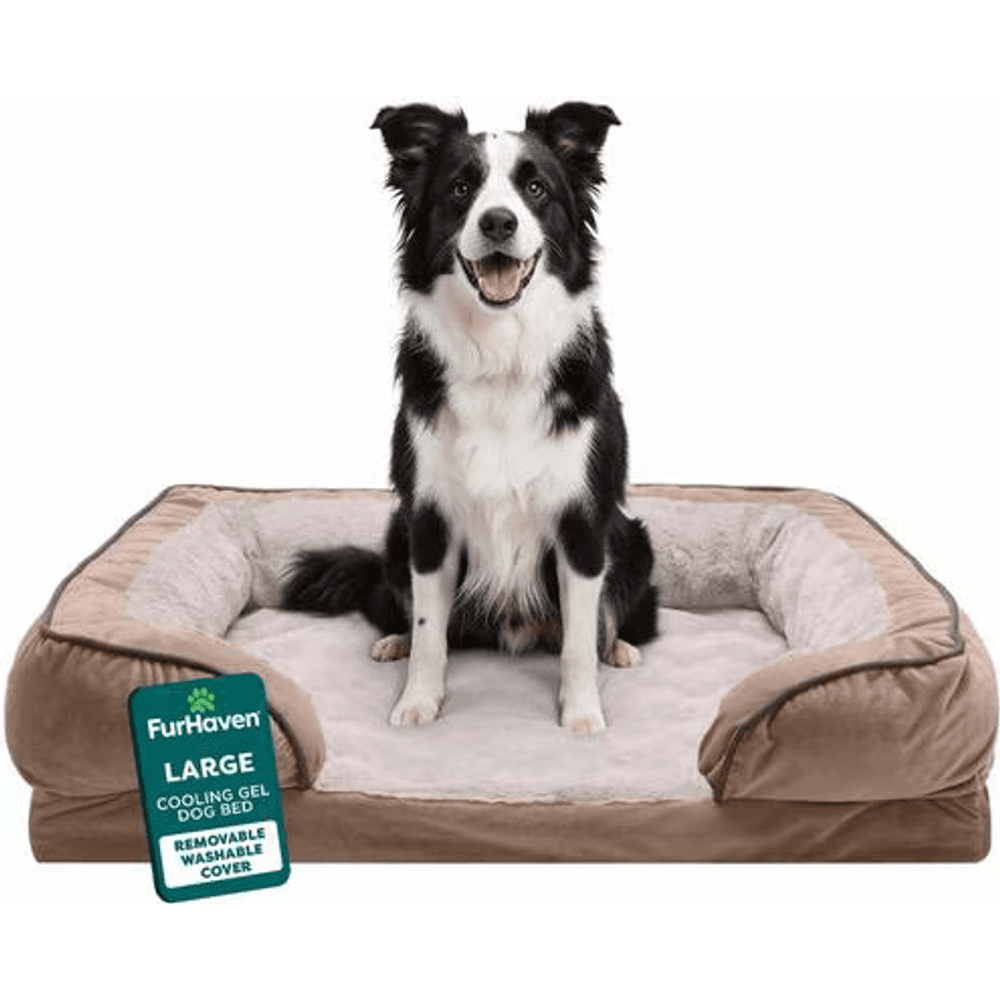
An orthopedic sofa bed with three bolstered sides for dogs who like to rest their head and joints against a cushion. The supportive foam base cradles hips and elbows, a comforting spot for an older or shaky dog to settle.
Petful may earn a commission when you click through to Chewy, at no extra cost to you.
- Is the named shade a visual description or a seller claim about lineage?
- Are unedited photographs available from more than one date and angle?
- Do registration and pedigree documents support the claimed identity independently?
- Are health-screening claims supported by named, dated results?
For a resting area that keeps dark shed hair easy to monitor, compare the cover color, dimensions and washability of the FurHaven Velvet Waves orthopedic sofa bed in Large with the individual dog's sleeping posture and chewing habits.
Where Rottweiler markings appear
Standard Rottweiler markings appear in specific areas rather than as random patches across the body. The American Rottweiler Club standard describes markings over each eye, on the cheeks, on each side of the muzzle, on the throat, on the chest, on the legs and beneath the tail.

Face and muzzle
The small spots over the eyes are one of the breed's most recognizable visual features. Color also appears on the cheeks and along each side of the muzzle. The bridge of the nose remains black. Angle and expression can make facial markings look uneven in one photograph, so inspect both sides calmly.
Chest, legs and underside
The chest carries defined markings, as do the forelegs and the inner portions of the hind legs. Color also appears under the tail. Small black pencil markings on the toes may be present. The relationship between dark and lighter areas matters more than forcing every dog into a perfectly symmetrical diagram.
Marking size, edge and intensity vary. A standard describes the ideal used in formal breed evaluation, but a cosmetic difference does not tell an owner how the dog feels or behaves. Never delay veterinary care for a new skin lesion, hair loss or color change because it resembles a normal marking.
Pigment and hair are different observations
A lighter hair marking is not the same as a red skin patch, scaling, scab, stain or loss of pigment. Part the coat gently in good light when something appears new. Photograph the area with date and scale, then contact a veterinarian if it changes, itches, smells, becomes painful or occurs with broader illness.
A soft grooming tool can make regular coat checks easier. Compare the pin spacing and handling of the aumuca Self Cleaning Slicker Brush with the dog's short, dense coat and tolerance. Use light pressure and stop if the skin reddens or the dog becomes uncomfortable.
Coat texture, length and grooming
The standard Rottweiler coat is straight, coarse, dense and medium in length, with an undercoat concentrated on the neck and thighs. Hair is shortest on the head, ears and legs and somewhat longer at the back of the thighs. Climate can affect how much undercoat is visible.
If coat quality changes rather than simply varying in color, WebVet's guide to skin issues in dogs explains common categories to discuss with a veterinarian.

What is a long-haired Rottweiler?
A long haired Rottweiler has a coat longer than the breed standard describes. That appearance does not create another official breed or prove a particular country of origin. If ancestry matters, use pedigree and registry documentation. If coat texture changes suddenly, ask a veterinarian rather than attributing it to a variety label.

Petful may earn a commission when you click through to Chewy, at no extra cost to you.
Longer hair can require more attention behind the ears, at the neck, around the thighs and where equipment rubs. Check for tangles, debris, dampness and skin irritation. Do not shave a healthy coat simply to make the dog look closer to a photograph. Discuss coat or skin problems with a veterinarian or qualified groomer.
A practical grooming routine
Most owners can build a calm coat-check routine around short sessions:
- Run clean hands over the body and note new bumps, tenderness or debris.
- Brush in the direction of hair growth using light pressure.
- Check the collar, harness, armpits, chest, thighs and tail area for friction.
- Inspect feet and nails while keeping the dog supported and comfortable.
- Record persistent redness, odor, flakes, hair loss or sensitivity.
The aumuca Self Cleaning Slicker Brush is one tracked option to compare for safe pin length, pressure and grip. A slicker is not automatically suitable for every dog or every body area.
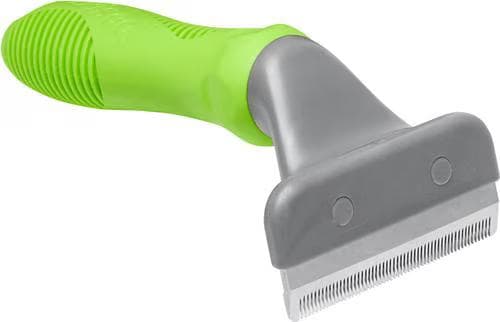
During seasonal shedding, the Frisco Deshedding Brush can be considered only after checking that its dimensions and teeth are appropriate for the coat. Use brief strokes, avoid repeated passes over one spot and stop at the first sign of irritation.
Red, blue and white marketing claims
Red Rottweiler, blue Rottweiler and white Rottweiler are popular search phrases, but they are not additional standard Rottweiler colors. The standard describes a black dog with rust-to-mahogany markings. A seller who leads with a rare-color label is making a marketing claim that requires independent evidence.
Treat rare Rottweiler colors as claims to investigate, not shopping categories to rank. First describe the visible base coat, hair and pigment under neutral light. Then separate that observation from identity, pedigree, birthplace, health screening and price. A red Rottweiler label, blue Rottweiler label or white Rottweiler label cannot establish any of those facts by itself, and this guide does not depict unsupported colors as standard examples.
Red claims
A photograph labeled red may show warm lighting, altered processing, a dog whose base is not black or a dog of uncertain ancestry. The image alone cannot determine which explanation applies. Request unedited photographs, veterinary records, pedigree information and registration details where applicable.
Blue or dilute claims
Blue usually refers to a visually diluted black appearance. That wording does not prove a purebred Rottweiler, a health outcome or greater value. Avoid diagnosing a coat or skin condition from a color label. The individual dog's examination and records determine medical questions.
White areas or white dogs
A white patch, hair that has lost pigment, scarring and a predominantly white coat are different observations. None should be diagnosed from a web photograph. A new patch, skin change or hair loss belongs in a veterinary conversation. A seller's use of rare does not make the color recognized or the dog more responsibly bred.
Rare-color marketing deserves a pause when it comes with any of these patterns:
- A premium price justified mainly by appearance.
- Refusal to provide original photographs or meet the dog.
Petful may earn a commission when you click through to Chewy, at no extra cost to you.
- Pedigree claims without connected documents.
- Health claims without dated results for the named parents or dog.
- Pressure for irreversible payment before verification.
- Promises that color guarantees temperament, size or low shedding.
Petful's Rottweiler puppy sourcing guide explains the broader records-first buying process. This page does not endorse a breeder, rescue, marketplace or seller.
Color, ancestry and health claims
Color is visual evidence, not documentary evidence. Rare Rottweiler colors are seller or search labels until connected records establish the dog's identity and other claims. A black dog with correctly placed rust markings may resemble a Rottweiler, but appearance alone cannot establish ancestry. A registered Rottweiler can also have a cosmetic feature outside the standard. The records and the visible coat answer different questions.
If the household uses the Petlibro Granary WiFi automatic feeder, inspect and clean its bowl area as part of the same repeatable care routine. The feeder can organize meal timing, but it cannot explain a coat change or replace veterinary assessment.
Records and health context
The American Rottweiler Club health guidance explains breed-level screening context. Screening results should be connected to the named parents or dog. A color label does not substitute for those results, and this article does not diagnose a condition or predict one dog's outcome.
Petful's veterinary-authored Rottweiler health and lifespan guide owns the clinical detail. Use it for breed-level health context while taking any new skin, hair or pigment change to the individual dog's veterinarian.
Use an evidence ladder
Move from the weakest evidence to the strongest relevant evidence:
- Seller wording: A claim that needs verification, not proof.
- Photographs: Useful for describing visible coat and marking placement under known conditions.
- Veterinary record: Evidence about the examined dog's documented health, not pedigree by itself.
- Registration and pedigree: Documentary ancestry context, subject to the issuing organization's rules.
- Named health screening: A result connected to the specific dog or parents and interpreted appropriately.
Breed tendencies describe populations, not every individual dog. Even complete documents cannot guarantee future health or behavior. They allow a more informed decision and make unsupported claims easier to identify.
A washable resting surface can help owners notice shedding, moisture or debris between coat checks. Review the dimensions, cover care and support of the FurHaven Velvet Waves orthopedic bed for the actual dog. A bed is a comfort product, not treatment for a skin or mobility concern.
Color versus German and American labels
A German Rottweiler and an American Rottweiler are not separate official breeds defined by color. Rottweiler is one breed. A dog may be born, registered or bred under different national systems, but marking shade cannot prove the dog's birthplace, registry or pedigree.
Petful's German vs. American Rottweiler comparison owns that deeper decision. It explains how location, standards, paperwork and breeding rules differ from internet stereotypes. General questions about supposed weaknesses, owner-directed behavior, sleep or dietary safety also require context beyond a coat guide; use that comparison and the linked breed resources rather than inferring answers from color.
For routine coat cleanup during heavier shedding, compare the Frisco Deshedding Brush with the dog's hair length, skin sensitivity and tolerance. More hair removal is not automatically better.
What to verify before you decide
- Describe the black base, marking shade, placement and coat texture under neutral light. Then verify identity through registration or pedigree records when relevant, and verify health claims through named, dated screening or veterinary records. Professional guidance is more reliable than a rare-color sales pitch, and a clear next step is to pause any transaction until documents connect to the individual dog.
A practical comparison asks three questions in order:
- What is visible? Base color, marking shade, placement, coat length and coat condition.
- What is documented? Identity, birthplace, registration, pedigree, screening and veterinary history.
- What fits the household? Behavior, health needs, grooming tolerance, size, training and ongoing care.
Do not allow a visually striking shade to erase missing evidence elsewhere. Coat color is one small feature of a whole dog. The Petful Rottweiler breed profile provides that broader context.
Is this the right dog for your household?
- The standard black coat and defined markings make the classic Rottweiler appearance easy to recognize
- Short routine grooming can support coat checks and cooperative handling
- Neutral-light photographs and records make seller claims easier to evaluate
- Shade variation offers natural individuality within one breed
- The dense coat still sheds and needs routine care
- A rare-color pitch can distract from missing pedigree, health or behavior evidence
- Individual behavior matters more to household fit than marking shade
- Adult strength, training, space and care costs matter far more than marking shade
Choose the individual dog, not the rarest advertisement. Verify records, observe behavior, confirm health and handling needs, and make sure the household can meet the dog's daily requirements. A standard-colored Rottweiler is not automatically well bred, and a cosmetic difference does not automatically determine a pet's value or character.
Rottweiler Colors and Markings FAQs
A Rottweiler can be a good dog to have in a prepared home, but coat color cannot answer the question. Use verified records, current behavior, health information and a realistic daily plan for the known dog. The clear next step is to meet that dog, evaluate handling and training needs, and confirm that every capable caregiver can safely manage a powerful adult through an ordinary weekday.
A Rottweiler can be a good family dog in some prepared homes, but a black-and-tan appearance does not guarantee behavior or safety. Use verified records and direct observation of the individual dog, supervise interactions, protect food and rest, and plan secure management and appropriate training support. The clear next step is to test that plan against children, visitors, other pets and backup caregivers before deciding.
The premise that police no longer use Rottweilers everywhere is inaccurate. Agency choices vary by task, available breeding programs, handler systems and the individual dog. Occupational use does not establish coat quality, temperament or family fit, and verified records are more useful than a generalized claim. The clear next step for an owner is to evaluate the known dog's behavior, health, training needs and household management rather than infer suitability from police popularity.
The most important thing to know about rottweiler colors is that the standard foundation is black with rust-to-mahogany markings while the individual dog may vary in shade and placement. This practical comparison describes appearance only. A photograph cannot prove pedigree, birthplace, health, temperament or value, so connect every larger claim to the appropriate records and evaluate the whole dog instead of shopping for a shade label.
The evidence you should verify for rottweiler colors includes neutral-light photographs as documented evidence of the visible coat, registration or pedigree records for ancestry claims, and named, dated screening or veterinary information for health claims. Professional guidance matters for any new skin, hair or pigment change. A Rottweiler color chart and seller wording can organize a visual description, but neither is documentary proof of identity or health.
What an owner should do next after learning about rottweiler colors is describe the known dog's black base, marking shade, placement and coat texture without exaggerating what appearance proves. Then evaluate household fit through size, health, training, care needs and individual behavior. Compare color claims with connected records. If a seller charges for rarity while withholding identity or health evidence, pause the transaction rather than letting color drive the decision.
Sources

Coreen Saito is a pet writer and longtime shelter volunteer with more than a decade in animal rescue. She covers cat behavior, breed care, and the small, ordinary science of sharing a life with companion animals, with a particular focus on honest takes about the products and decisions that actually matter. At home in Arizona, she's outranked by Mac (a dog with the loudest opinion in the house), Rebel (a cat who governs by quiet authority), and Meri (an orange tabby who runs the late shift and the laundry basket). She writes about all three, plus the rescues that keep coming through her life, at LifeWithMinty.com.
Sign up for expert-backed reviews and safety alerts all in one place.