Doberman vs Rottweiler: Size, Temperament and Care
Compare Doberman and Rottweiler size, temperament, training, coat, health planning and ownership costs, then judge fit using the individual dog's behavior, records and household routine.
Petful is reader supported. As an affiliate of platforms like Amazon and Chewy, we may earn a commission when you buy through links on this page. There is no extra cost to you.
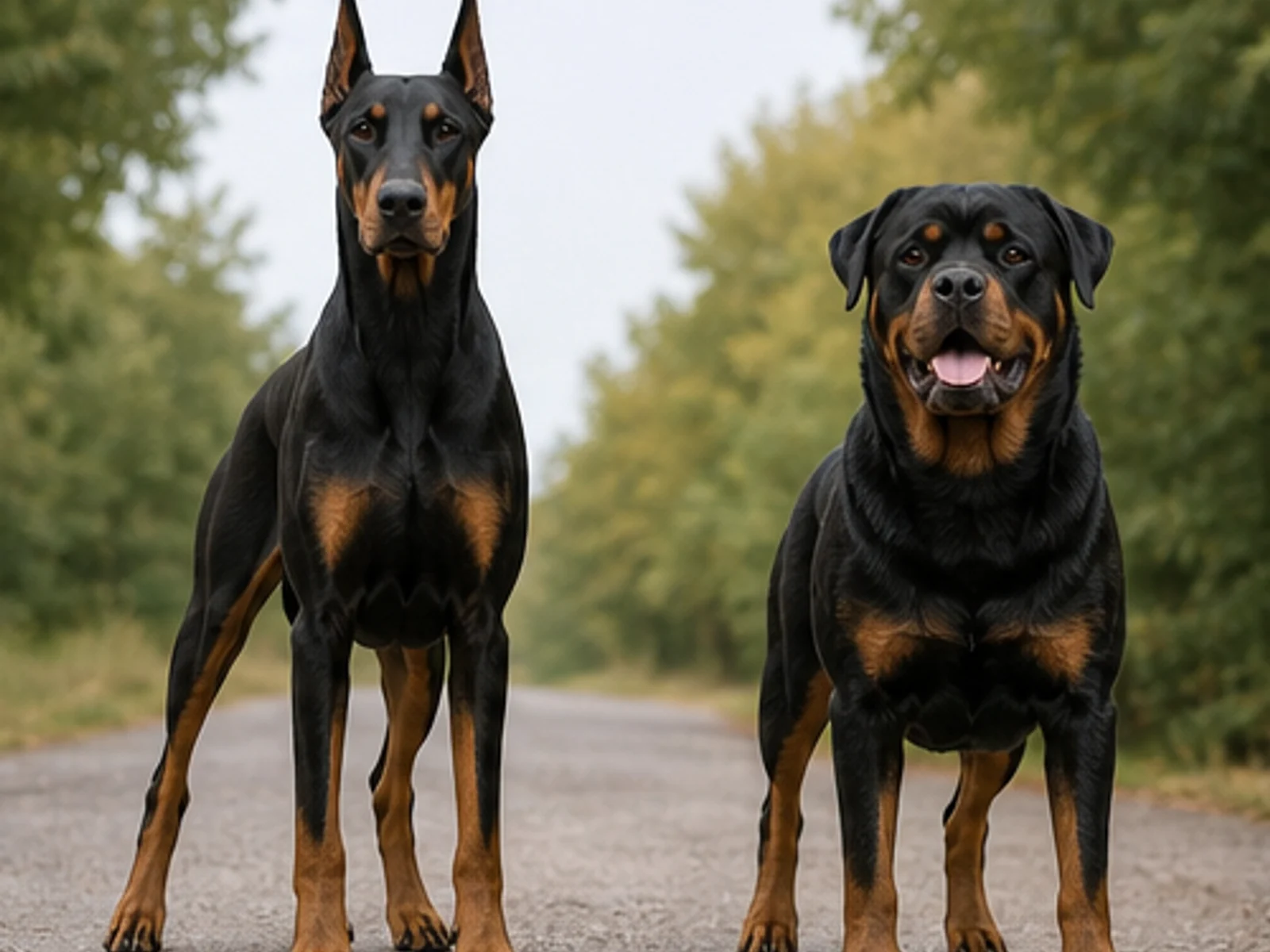
Comparing a Doberman vs Rottweiler should lead to a household decision, not a contest. Both are powerful working breeds with close bonds to their people, substantial training needs and little margin for casual handling. They differ in body, coat, movement, working history and some everyday care demands, yet individual behavior, health and history can matter more than the average difference between breeds.
This guide compares the practical questions: size, temperament, exercise, training, children, other animals, grooming, climate, health planning and cost. It does not predict which dog will be stronger, win a fight or protect a home. Those questions encourage unsafe stereotypes and do not help a family choose or care for a companion.

Sign up for expert-backed reviews and safety alerts all in one place.
Doberman vs Rottweiler at a glance
- 1Dobermans are generally taller, lighter-framed and more streamlined, while Rottweilers are shorter, heavier and more substantial through the body
- 2Both need reward-based training, thoughtful social learning, secure management and capable adult handlers
- 3Breed tendencies describe populations, not the behavior of one dog
- 4Compare the known dog's records, health, behavior and current skills with the household's ordinary weekday
- 5Neither breed is universally better for families, protection, apartments or first-time owners
| Decision | Doberman | Rottweiler | Verify for the individual dog |
|---|---|---|---|
| Build | About 24 to 28 inches and 60 to 100 pounds in the AKC profile; lean, square and athletic | About 22 to 27 inches and 80 to 135 pounds in the AKC profile; compact, powerful and substantial | Current height, weight, body condition, mobility and measured equipment fit |
| Daily style | Often highly engaged with the handler, quick-moving and sensitive to routine and isolation | Often deliberate, confident and physically forceful, with strong household presence | Recovery, settling, motivation, history and response to handling |
| Training | Short, varied reward-based work and calm impulse-control practice | Clear rewards, repetition, early leash skills and consistent boundaries | Existing skills, triggers and the adults' ability to practice |
| Coat | Very short, sleek single coat with limited weather protection | Short double coat with seasonal shedding and more undercoat | Skin, shedding, climate tolerance and grooming cooperation |
| Household fit | Needs close involvement, exercise, secure visitor plans and indoor living | Needs close involvement, strength-aware management, exercise and secure visitor plans | Children, pets, housing, insurance, local rules and backup care |
The figures above are breed-reference ranges, not targets for one dog. A dog outside an expected number is not automatically unhealthy, and a puppy cannot be guaranteed to finish at a seller's predicted size. Petful's Doberman size and growth guide explains how to use repeat measurements and body condition without turning a chart into a diagnosis.
A Doberman vs Rottweiler decision should start with the household’s real handling, training, space, insurance and backup-care limits. The Doberman is usually the taller, lighter-framed comparison; the Rottweiler is usually shorter and more substantial. Those population patterns do not identify the better individual dog. Compare verified health records, observed behavior, recovery, current skills and measured equipment needs before deciding whether either breed fits the home.
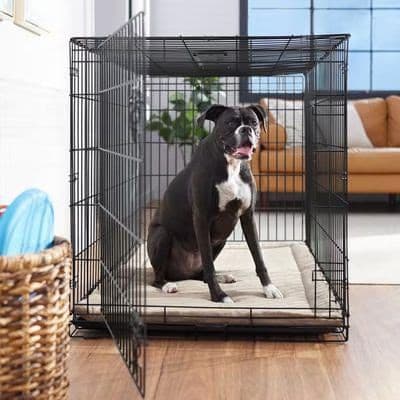
- Use the Frisco Heavy Duty Fold and Carry X-Large wire crate as a measurement exercise rather than proof that one model fits both breeds. Compare each candidate dog's standing height, length, turning room, behavior and the available vehicle or household footprint separately.
Petful may earn a commission when you click through to Chewy, at no extra cost to you.
- If the Frisco Heavy Duty Fold and Carry X-Large wire crate fits one dog, do not assume it fits the other: a taller Doberman and heavier-built Rottweiler can use space differently. Introduce the chosen crate gradually and keep a separate visitor and exterior-security plan.
Origin and working purpose
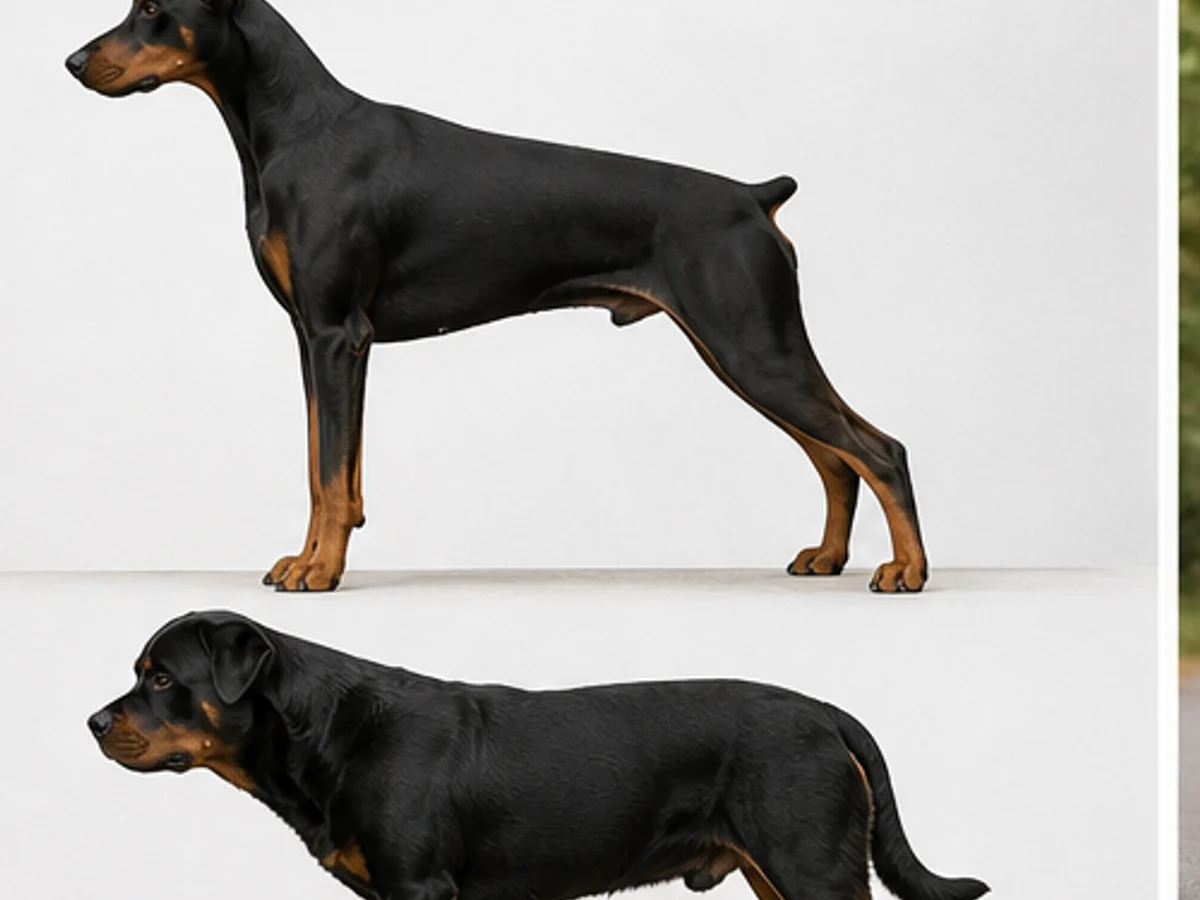
The Doberman was developed in late-19th-century Germany by Louis Dobermann, who wanted a capable personal protection dog to accompany him during his work. The exact foundation mixture is not fully documented. The modern breed standard emphasizes an energetic, watchful, determined, alert, fearless, loyal and obedient dog with a square, athletic outline.
The Rottweiler's history reaches back to cattle-driving and guarding work around the German town of Rottweil. The breed later performed draft, police, service and companion roles. Its standard describes a robust working dog with substantial strength, endurance and confidence.
What the history can and cannot predict
History helps explain why both breeds notice their surroundings, learn purposeful routines and require more than casual exercise. It does not prove that an individual is safe for protection work, compatible with children or naturally trained. The pet dog still needs to learn calm handling, leash skills, visitor routines, rest and disengagement from distractions.
Petful's preserved Doberman Pinscher breed guide owns the full Doberman overview. The Rottweiler breed profile owns Rottweiler history, care and household fit. Use those pages when a comparison raises a breed-specific question.
Translate working history into a weekday
Working heritage matters only when it is translated into observable needs. For either breed, write down what the dog will do before work, during the longest quiet period, after work and before bed. Include movement, training, toileting, feeding, companionship and uninterrupted sleep. A vague promise to provide plenty of exercise does not show whether the household can meet the need on a rainy Tuesday, during an illness or when the usual caregiver is unavailable.
The likely emphasis may differ. A Doberman that closely tracks its people may need deliberate practice settling away from constant activity and gradual preparation for time alone. A Rottweiler whose body mass and deliberate style make doorway or leash errors consequential may need especially careful rehearsal of waiting, yielding space and moving with the handler. These are planning examples, not fixed breed scripts. Observe what the known dog actually does.
Ask a foster, shelter or current caregiver for a normal-day account: wake time, toileting, meals, exercise, triggers, rest, visitors and time alone. Specific answers can be compared with the proposed household routine. Words such as loyal, protective or easy do not supply that evidence.
Size, build and handling
Doberman versus Rottweiler size and handling includes doberman vs rottweiler size, doberman vs rottweiler bite force, bite force doberman vs rottweiler, doberman bite force vs rottweiler bite force, doberman vs rottweiler who is stronger, and doberman vs rottweiler speed. These are related but distinct reader decisions, best resolved by using repeated measurements, body condition and functional fit rather than one chart or seller label. Use the measurements, records and observable conditions in this section to identify what is known, what still needs confirmation and which next action the evidence supports. Before acting, record the source, date and individual-dog evidence behind the conclusion. That prevents a broad breed tendency, seller label or isolated number from becoming a promise about one dog and keeps the decision practical, traceable and useful.
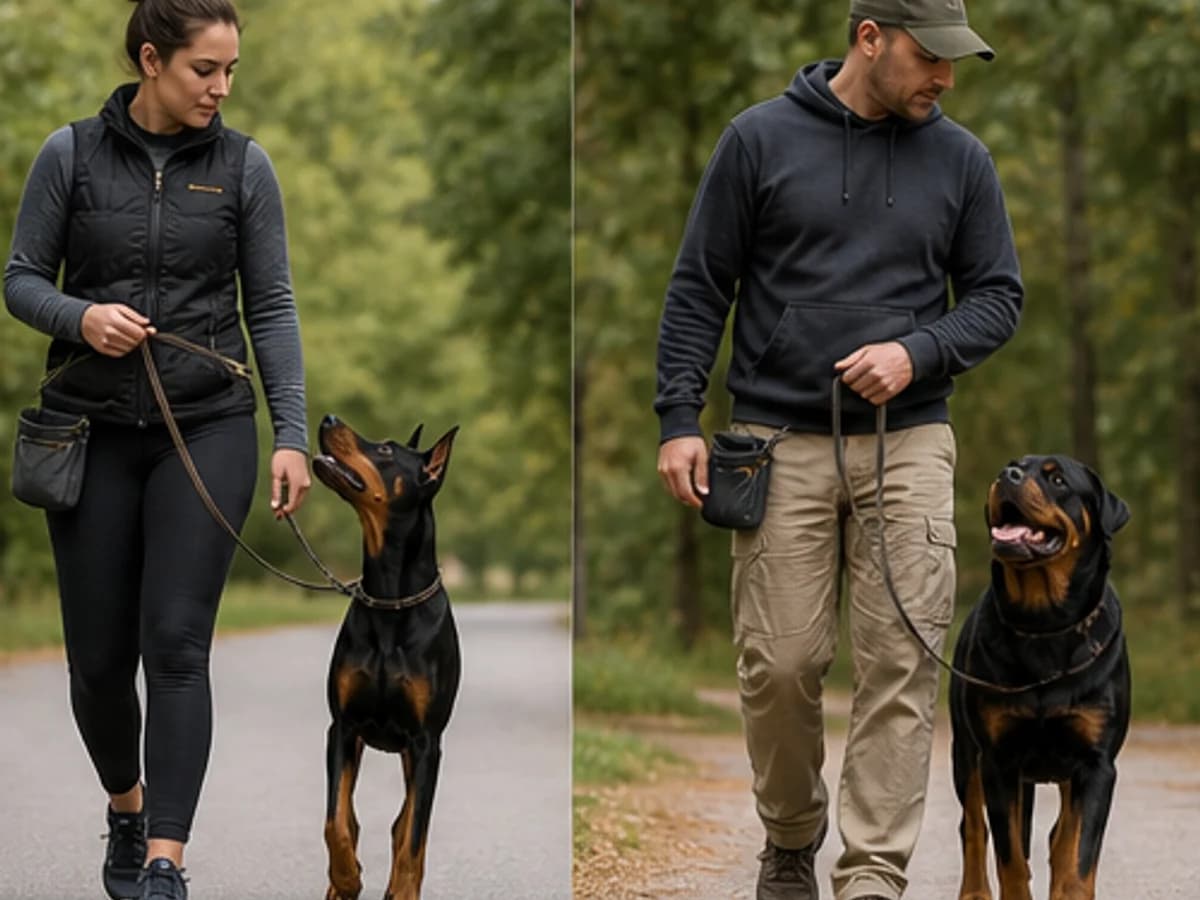
The most visible difference is not simply bigger versus smaller. Dobermans are usually taller and more streamlined, with a square outline, long legs and a lighter overall frame. Rottweilers are generally shorter at the shoulder but heavier, broader and more substantial. Either dog can overpower an unprepared handler.
Use actual measurements for equipment. The Frisco Heavy Duty Fold and Carry X-Large wire crate is one tracked option to compare for standing height, body length, turning room, wire spacing and latch security. When reviewing the Frisco X-Large wire crate, do not assume an XL label fits both dogs. Compare the usable interior with the individual dog's posture and remove snag hazards.
Compare leverage as well as dimensions
Handling is also about leverage and movement. A taller Doberman may accelerate and change direction quickly. A heavier Rottweiler can place more steady force through the leash. Neither pattern tells you which dog is easier. Existing loose-leash skill, arousal, pain, equipment fit, caregiver balance and practice environment are more useful evidence.
The PetSafe Easy Walk medium and large harness is one tracked option to compare after measuring chest and girth. Recheck the PetSafe Easy Walk harness for rubbing, restricted shoulder motion and escape risk. A harness does not teach leash behavior or make a physically unsafe match manageable.
Temperament and family fit
Doberman versus Rottweiler temperament and training includes doberman vs rottweiler temperament, doberman vs rottweiler intelligence, doberman vs rottweiler personality, and doberman vs rottweiler aggressive. These are related but distinct reader decisions, best resolved by observing the individual dog, documenting recovery and matching training to the real household. Use the measurements, records and observable conditions in this section to identify what is known, what still needs confirmation and which next action the evidence supports. Before acting, record the source, date and individual-dog evidence behind the conclusion. That prevents a broad breed tendency, seller label or isolated number from becoming a promise about one dog and keeps the decision practical, traceable and useful. Doberman temperament is often associated with alertness, close handler engagement, fast responses and a strong desire to participate in family life. Rottweiler temperament is often associated with confidence, steadiness, reserve and a substantial physical presence. Those descriptions are broad tendencies. Each breed includes social, reserved, fearful, reactive and aggressive individuals. Evaluate observable behavior:
- How does the dog recover after a sound, visitor or unfamiliar surface?
- Can the dog disengage and return attention to the handler?
- What happens around food, toys, doorways and rest?
- How does the dog respond to gentle handling and equipment?
- Can the dog settle while ordinary household activity continues?
- Which situations require distance, barriers or professional support?
Petful's Doberman temperament and training guide explains these questions in depth. For a Rottweiler, use the current behavior and history rather than borrowing an assumption from the Doberman page.
- Compare the PetSafe Easy Walk medium and large harness against each individual dog's chest shape, girth and shoulder movement. A setting that suits a lean Doberman may not suit a broader Rottweiler, so use current measurements and movement checks instead of transferring a breed-based size assumption.

Petful may earn a commission when you click through to Chewy, at no extra cost to you.
- Whichever dog wears the PetSafe Easy Walk medium and large harness, introduce it with rewards and recheck strap stability during turns. Use the result to evaluate equipment fit, not which breed is "easier," because loose-leash skill and handler capacity still require direct evidence.
Children
Neither breed label guarantees safety with children. A successful home needs adults who actively supervise, protect food and rest, prevent climbing or grabbing, and separate the dog whenever attention is divided. The dog's size makes even friendly jumping or collision consequential.
Teach children to invite rather than force contact, stop when the dog moves away and leave the dog alone around food, chews and sleep. Watch for turning away, lip licking, a closed tense mouth, freezing, leaning away or trying to leave. Do not ask a dog to tolerate escalating discomfort because the breed is described as loyal.
Visitors and other animals
Visitor management should be planned before the door opens. A station, leash, sturdy barrier or separate room can create time for observation and calm choices. Both breeds may be reserved, overexcited or concerned around strangers, but the individual pattern determines the plan.
Compatibility with dogs, cats and small animals varies. Ask for specific history, use controlled introductions and maintain separation when nobody can supervise. One successful greeting does not prove permanent compatibility. Maturity, pain, resource guarding, chase behavior and environment can change an interaction.
Compare recovery, not reputation
Recovery is more useful than asking which breed is calmer. Notice what happens after the dog sees a visitor, hears a sudden sound or loses access to something desirable. Can the dog look back to the handler, take food, move away and settle, or does tension continue to build? Record the setting and distance because behavior can change when the trigger is closer, movement is faster or the dog is tired.
Use the same observation questions for both breeds. Comparing a highly trained adult Doberman with an adolescent Rottweiler in a crowded shelter would say more about age, history and environment than about breed. When possible, compare each dog across more than one ordinary setting and ask what management was in place. A leash, gate or quiet room changes the conditions and should be recorded rather than treated as evidence that the dog needs no support.
Sudden loss of tolerance, new guarding, sleep disruption or reluctance to be touched can accompany pain or illness. A veterinary assessment belongs before a training explanation when behavior changes abruptly. For persistent fear, reactivity or bite risk, keep effective management in place while a qualified professional evaluates the individual dog.
Health and lifespan planning
Breed risk should guide questions, not diagnose the dog. Doberman planning deserves particular attention to dilated cardiomyopathy, von Willebrand disease, cervical spinal disease and bloat. Rottweiler planning often includes hip and elbow disease, selected cardiac concerns, eye disease, bloat and cancer discussions. The current parent-club guidance and the individual family record matter more than a generic list.
- If ancestry or included variants matter to the comparison, review the Embark Breed and Health Dog DNA Test Kit for the exact question and current test coverage. Keep the result attached to the sampled dog and separate it from registered identity, parent screening and the breed-specific risks a veterinarian still needs to discuss.

Petful may earn a commission when you click through to Chewy, at no extra cost to you.
- If using the Embark Breed and Health Dog DNA Test Kit, ask a veterinarian what the result does and does not change for that individual. Do not compare the breeds by the number of reported findings: an untested condition, family history or clinical sign can matter more than a consumer panel count.
Petful's veterinary-authored Doberman health and lifespan guide explains cardiac screening, bleeding risk, spinal concerns and emergency signs. Use the Rottweiler's own veterinary and family records for the other side of the comparison.
The Embark Breed and Health Dog DNA Test Kit is one tracked consumer option to compare for included variants and ancestry questions. Review the Embark Breed and Health kit with a veterinarian. It cannot confirm every disease, replace breed-specific parent screening or declare a symptomatic dog healthy.
Cost and home setup
Doberman versus Rottweiler care and working fit includes doberman puppies vs rottweiler puppies, doberman puppy vs rottweiler puppy, doberman vs rottweiler puppy, doberman vs rottweiler better guard dog, doberman vs rottweiler guard dog, and doberman vs rottweiler price. These are related but distinct reader decisions, best resolved by comparing daily handling, health, training and care capacity instead of choosing by appearance alone. Use the measurements, records and observable conditions in this section to identify what is known, what still needs confirmation and which next action the evidence supports. Before acting, record the source, date and individual-dog evidence behind the conclusion. That prevents a broad breed tendency, seller label or isolated number from becoming a promise about one dog and keeps the decision practical, traceable and useful.
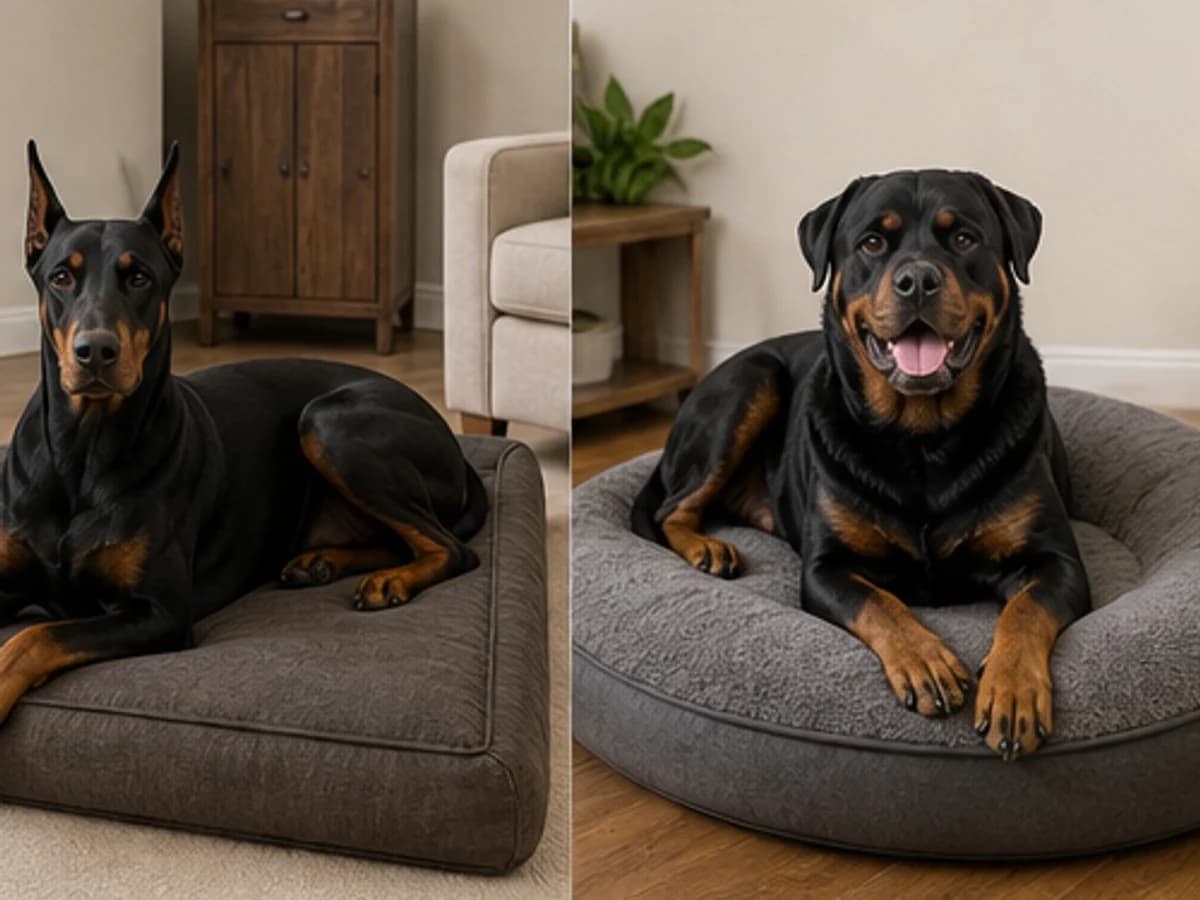
The purchase or adoption amount is a small part of either decision. Compare the same budget categories for both dogs:
- Food, veterinary care and preventive medication.
- Training and secure equipment.
- Housing, insurance and licensing.
- Travel, boarding and emergency savings.
Rottweiler food and medication costs may be higher when the individual is heavier, while Doberman cardiac monitoring can add a meaningful breed-specific line. Actual needs and local prices control the budget.
Petful's Doberman price guide shows how to separate acquisition, first-year, recurring and risk costs. Use the same worksheet for a Rottweiler so the comparison uses equivalent categories.
- Compare the FurHaven Velvet Waves large orthopedic sofa bed with each dog's measured sleeping length, preferred posture and entry comfort. The Doberman may need more length while a Rottweiler may need a different usable width; neither fit can be inferred from the word "large."
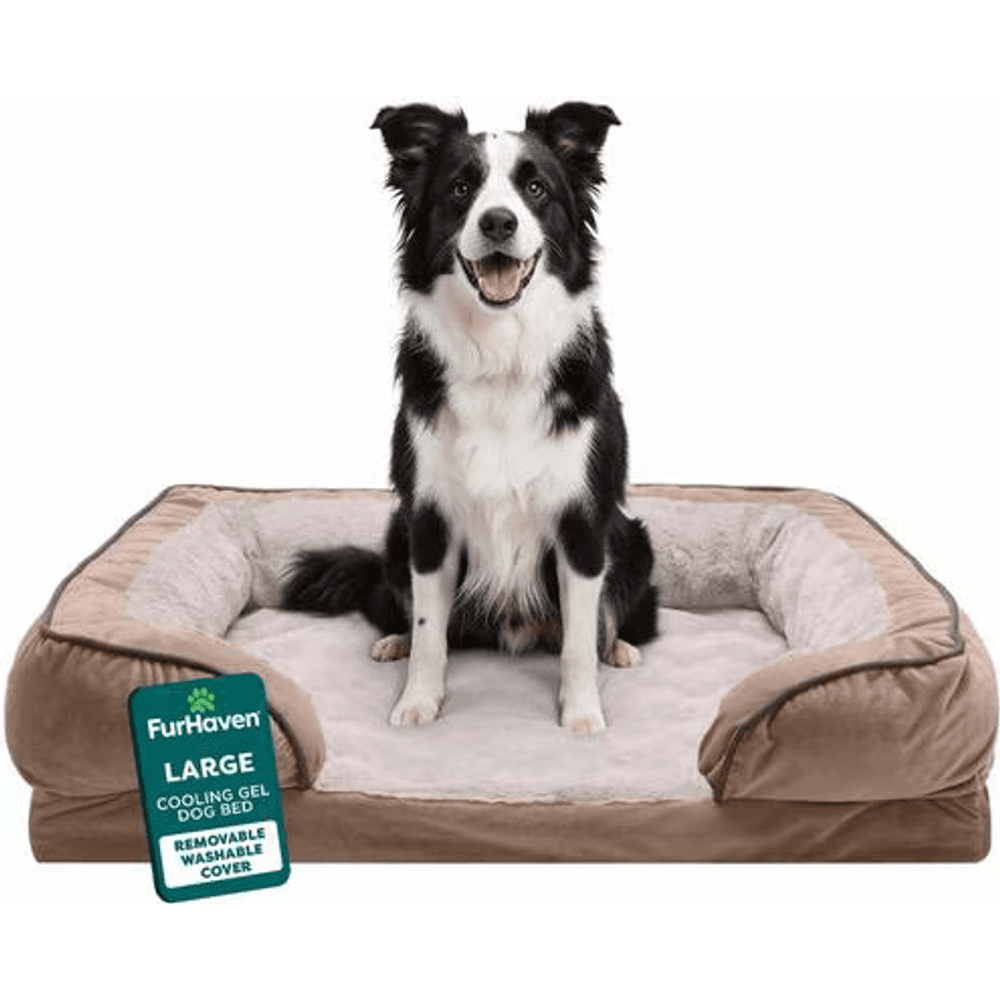
An orthopedic sofa bed with three bolstered sides for dogs who like to rest their head and joints against a cushion. The supportive foam base cradles hips and elbows, a comforting spot for an older or shaky dog to settle.
Petful may earn a commission when you click through to Chewy, at no extra cost to you.
- After testing the FurHaven Velvet Waves large orthopedic sofa bed, record whether the individual can stretch, turn and rise without slipping. That observation informs home fit and replacement planning, but any new stiffness or pain still requires veterinary assessment for the known dog.
Rest space needs measurement rather than a breed label. The FurHaven Velvet Waves large orthopedic sofa bed is one tracked option to compare for sleeping dimensions, support, cover washability and entry height. Recheck the FurHaven large orthopedic bed for sliding, chewing and whether the individual dog can change positions comfortably. A bed does not treat joint or spinal disease.
Test the home plan before choosing
- Can every responsible adult handle the dog's current strength?
- Is there a secure place for rest and visitor separation?
- Will the dog fit safely in the vehicle and veterinary transport plan?
- Do landlord, insurance and local rules allow the breed?
- Is there a plan for travel, illness and caregiver injury?
- Can the household fund routine care and a serious unexpected problem?
Training and exercise
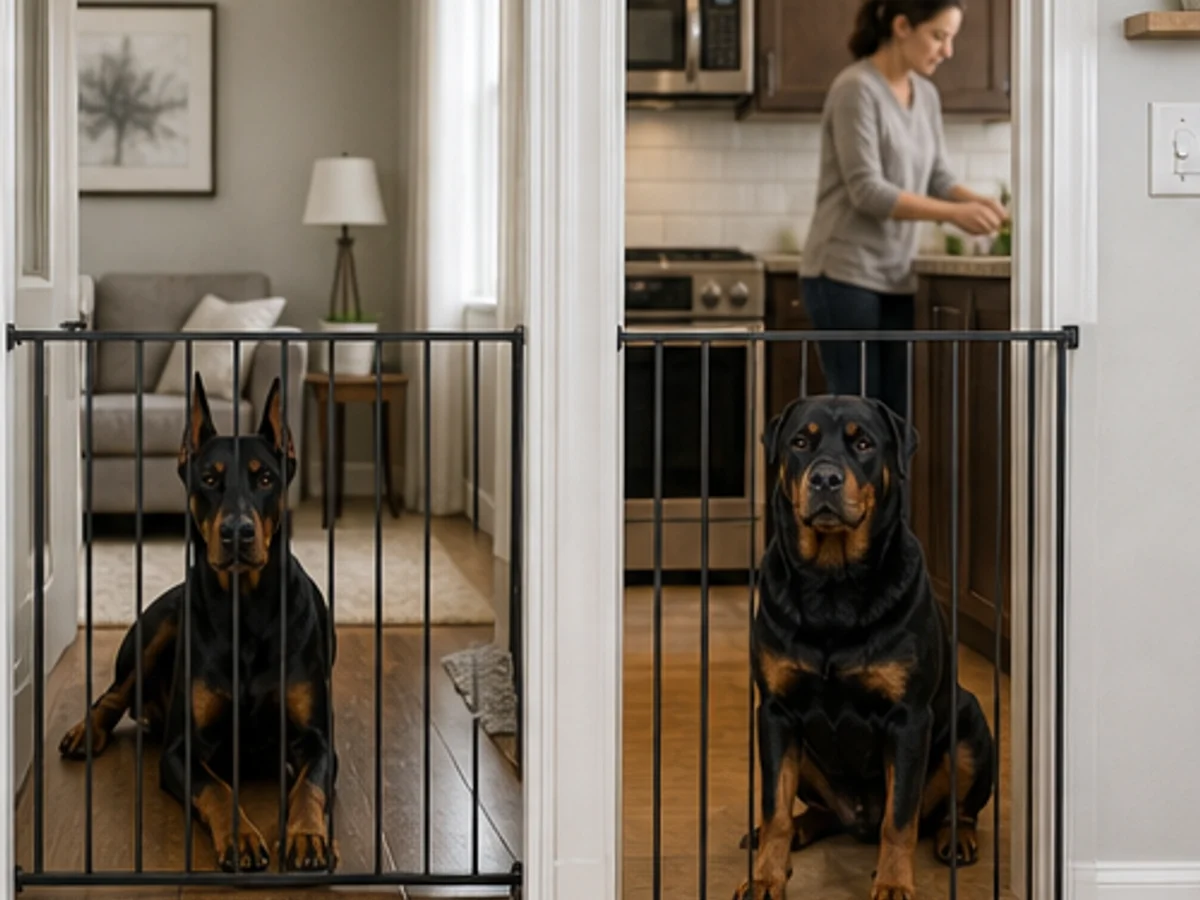
Both breeds need physical activity, mental work, social connection and rest. A useful routine may include purposeful walks, reward-based skill practice, scent games, controlled play and quiet recovery. More intensity is not always better. Growing, unconditioned, senior or medically affected dogs need age- and health-appropriate activity.
Start with skills that reduce daily risk: name response, recall foundations, waiting at doors, loose-leash walking, trading objects, going to a mat, cooperative handling and calm vehicle entry. Teach in low-distraction settings, then add duration, distance and distraction one at a time.
Dobermans may respond quickly and become frustrated by long, repetitive sessions. Rottweilers may appear more deliberate and still learn effectively when the reward and criterion are clear. These are possible styles, not rules. Observe what motivates the individual and how fatigue changes behavior.
A weekly training rhythm
WebVet's dog training schedule offers a framework for distributing practice through the week. A calendar is useful only if it includes rest and remains flexible enough for health, weather and the dog's response.
Punishment-based shortcuts can suppress warnings while leaving fear, pain or conflict unresolved. Do not use confrontation to test which breed is dominant or protective. A qualified humane trainer or behavior professional should assess fear, guarding, reactivity, separation distress or bite risk. Sudden behavior change needs veterinary assessment.
Grooming, shedding and climate
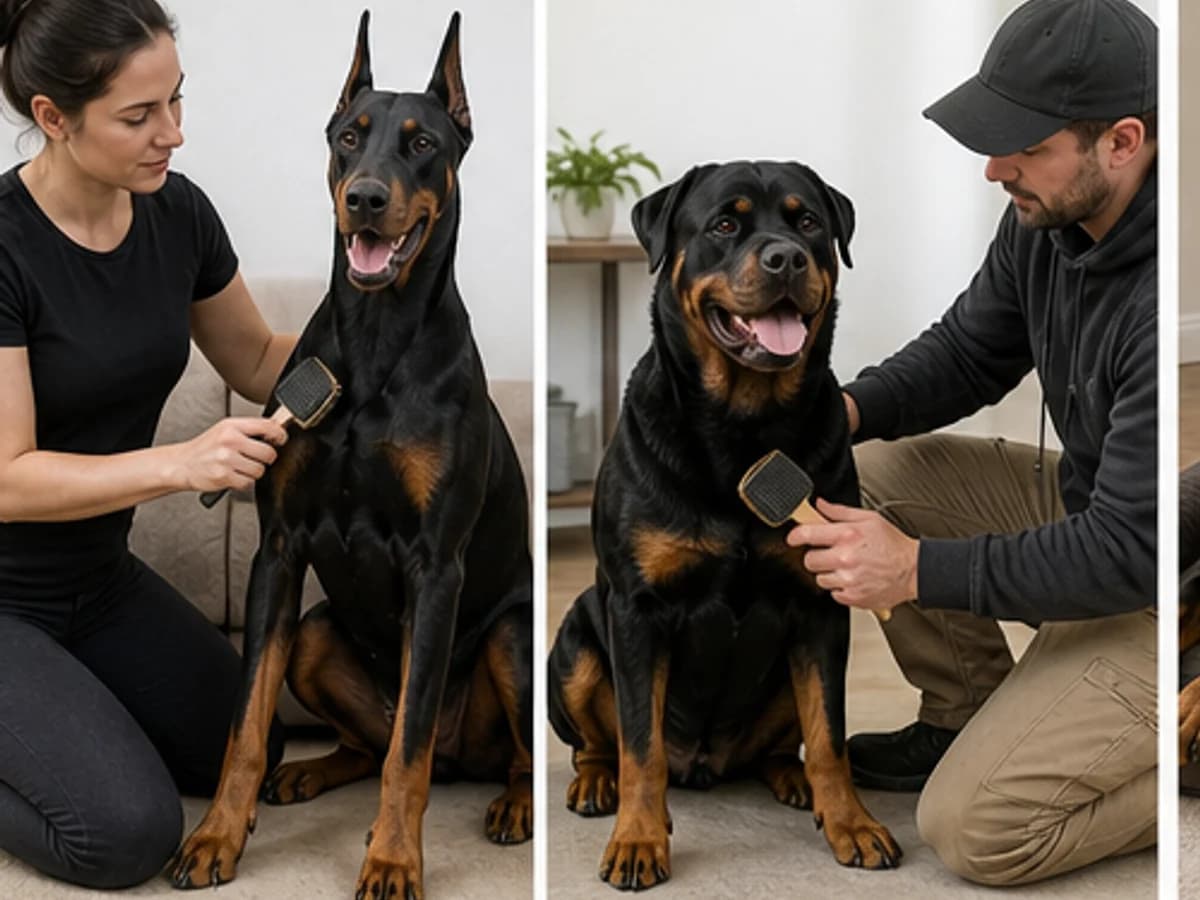
Both breeds have short coats, but the coat is not identical. A Doberman's sleek coat offers little insulation. Rottweilers carry a double coat and may shed more noticeably during seasonal changes. Individual shedding, skin health and climate still vary.
Brush regularly enough to remove loose hair and inspect the skin. Keep nails short, brush teeth, check ears and bathe when needed. Neither breed should live outside simply because of its working history. Dobermans are especially sensitive to cold, while both dogs need protection from heat, extreme weather and prolonged isolation.
Are Rottweilers stronger than Dobermans?
The short answer is that Rottweilers can be stronger than Dobermans in raw, mass-based force on average because they are generally heavier and more substantial. Dobermans are usually taller, lighter-framed and quick-moving. There is no standardized breed strength score that predicts one pet’s handling needs, and the comparison should never predict a fight. Evaluate the individual dog’s size, health, conditioning, behavior and leash skills.
Who is better, a Doberman or a Rottweiler?
The short answer is that neither breed is universally better. A better Doberman-or-Rottweiler choice compares verified records, observed behavior, recovery, current skills and the household’s actual schedule, strength, climate, space and budget. A Doberman may suit a home prepared for a highly involved streamlined athlete, while a Rottweiler may suit one prepared for more body mass, a double coat and steady physical force.
Why do police not use Dobermans anymore?
The short answer is that police do not use Dobermans as commonly anymore, but Dobermans have not disappeared from every working role. Modern programs more often use German Shepherd Dogs and Belgian Malinois because agencies select for health, nerve, trainability, environmental resilience and operational needs, and many have established sourcing systems around those breeds. A Doberman’s short coat may also be a disadvantage in severe weather.
Climate, travel and daily cleanup
Coat differences affect logistics as well as grooming. A Doberman may need a warm indoor recovery space and weather-appropriate protection during cold outings, while a Rottweiler household may spend more time managing loose undercoat. Neither dog should be pushed through heat or humidity to satisfy a generic exercise target. Watch breathing, gait, shade-seeking and recovery, and ask a veterinarian about individual limits.
Vehicle planning also differs by the actual body, not the breed name. Measure standing height and body length, test the entry step and turning space, and decide how the dog will be restrained. A taller Doberman may need more headroom; a heavier Rottweiler may require a lower entry, stronger ramp or additional adult help. The emergency plan should work when the dog is painful or unable to jump.
Include ordinary cleanup in the comparison: mud, short embedded hairs, seasonal undercoat, water around bowls, washable bedding and nail wear. These details rarely decide a breed alone, but they expose whether the household has time, space and physical ability for the real routine. A comparison is useful when it makes daily obligations visible rather than reducing two dogs to appearance.
Which breed is right for your household?
Questions involving doberman vs rottweiler pros and cons are best resolved by connecting the label to the individual dog's records, condition, behavior and daily care needs. A Doberman may fit an experienced household that wants a highly involved, athletic dog, can provide daily training and companionship, and can plan for cold sensitivity and cardiac screening. A Rottweiler may fit an experienced household prepared for greater body mass, steady strength, double-coat shedding and equally deliberate training and management. These are planning differences, not recommendations for a specific family.
- Dobermans often offer a lighter, more agile build and close handler engagement
- Rottweilers often offer a more substantial body and deliberate working style
- Both can engage deeply in reward-based training
- Both can be close companions in prepared homes
- Either breed can overwhelm a handler who lacks strength, skill or a management plan
- Housing and insurance restrictions can affect both
- Health screening and large-dog veterinary care can be costly
- Neither breed label guarantees child, visitor or animal compatibility
Meet the individual dog, review connected records and observe behavior in the settings that matter. A known adult with a documented history may be easier to evaluate than a puppy whose adult size and temperament are still developing. The better choice is the dog whose current evidence and needs match the household's durable capacity, not the breed that wins an online comparison.
More Doberman guides from Petful
Start with Petful's complete Doberman Pinscher: Temperament, Size, Health and Care, then use the dedicated guides below for the next decision.
Doberman vs Rottweiler FAQs
The short answer is that Rottweilers can be stronger than Dobermans in raw, mass-based force on average because they are generally heavier and more substantial. Dobermans are usually taller, lighter-framed and quick-moving. No standardized breed strength score predicts one pet’s handling needs, and this comparison should never predict a fight. Evaluate the individual dog’s size, health, conditioning, behavior and leash skills, then confirm every caregiver can manage that dog safely.
The short answer is that neither breed is universally better. A better Doberman-or-Rottweiler choice matches the individual dog’s records, observed behavior, recovery and skills with the household’s schedule, strength, climate, space and budget. A Doberman may suit a home prepared for a highly involved streamlined athlete; a Rottweiler may suit one prepared for more body mass and a double coat. Both need training, secure management and companionship.
The short answer is that police use of Dobermans has declined relative to German Shepherd Dogs and Belgian Malinois, but the breed has not disappeared from every working role. Agencies select dogs for health, nerve, trainability, environmental resilience and operational needs, and many use established sourcing and training pipelines for other breeds. A Doberman’s short coat may also disadvantage severe-weather work. Police popularity does not determine family suitability.
Dobermans are generally taller and more streamlined, while Rottweilers are usually heavier and more substantial through the body. Official ranges overlap, so neither breed is bigger in every dimension. Compare the individual dog's current height, weight, body condition and movement. Measure standing, turning and lying space for crates, beds and vehicles, and assess whether every responsible adult can manage that dog's leverage safely.
Both breeds need daily physical activity, training, enrichment, companionship and rest. Dobermans may favor faster, highly interactive work, while Rottweilers may appear more deliberate, but age, airway and orthopedic health, conditioning and weather determine the actual plan. Compare how each known dog recovers after activity rather than using intensity as a contest. Neither breed should receive forced endurance work or abrupt mileage increases.
Neither breed is universally easier to train; both are capable working dogs whose success depends on individual motivation, history and health. Use clear reward-based teaching, consistent cues and gradual practice around distractions. Doberman speed and Rottweiler body mass make early leash, doorway, handling and settling skills important. Pain, fear or unclear criteria can slow learning and should not be treated as willful defiance.
Neither breed label guarantees compatibility with children. A Doberman or Rottweiler may fit when the individual dog's history and behavior are known and adults supervise actively. Protect food and rest, teach children respectful interaction, and use barriers whenever attention is divided. Children should never be primary handlers for a powerful dog. Choose from observed behavior and recovery, not a breed-wide promise.
Rottweilers generally have more undercoat and may shed more heavily during seasonal coat changes. Dobermans also shed, but their very short coat offers less weather protection. Individual skin health, diet, climate and indoor conditions can change the amount for either dog. Brush regularly, inspect the skin and seek veterinary advice for bald patches, intense itching, odor or inflammation rather than assuming every change is seasonal.
Costs overlap and depend on the individual dog, local services and medical needs. Rottweiler body mass can increase food, medication and equipment costs, while Doberman cardiac monitoring may add a substantial breed-specific line. Compare current local quotes across equivalent categories: food, prevention, routine care, training, insurance, boarding and emergency savings. Neither breed has one universally higher lifetime total.
Sources

Coreen Saito is a pet writer and longtime shelter volunteer with more than a decade in animal rescue. She covers cat behavior, breed care, and the small, ordinary science of sharing a life with companion animals, with a particular focus on honest takes about the products and decisions that actually matter. At home in Arizona, she's outranked by Mac (a dog with the loudest opinion in the house), Rebel (a cat who governs by quiet authority), and Meri (an orange tabby who runs the late shift and the laundry basket). She writes about all three, plus the rescues that keep coming through her life, at LifeWithMinty.com.
Sign up for expert-backed reviews and safety alerts all in one place.