Doberman Lifespan, Health Risks, Screening and Care
A veterinary-authored guide to Doberman lifespan and health issues, including cardiac screening, bleeding risk, spinal and mobility concerns, bloat awareness, healthy weight and signs that need veterinary attention.

BVMS, MRCVS
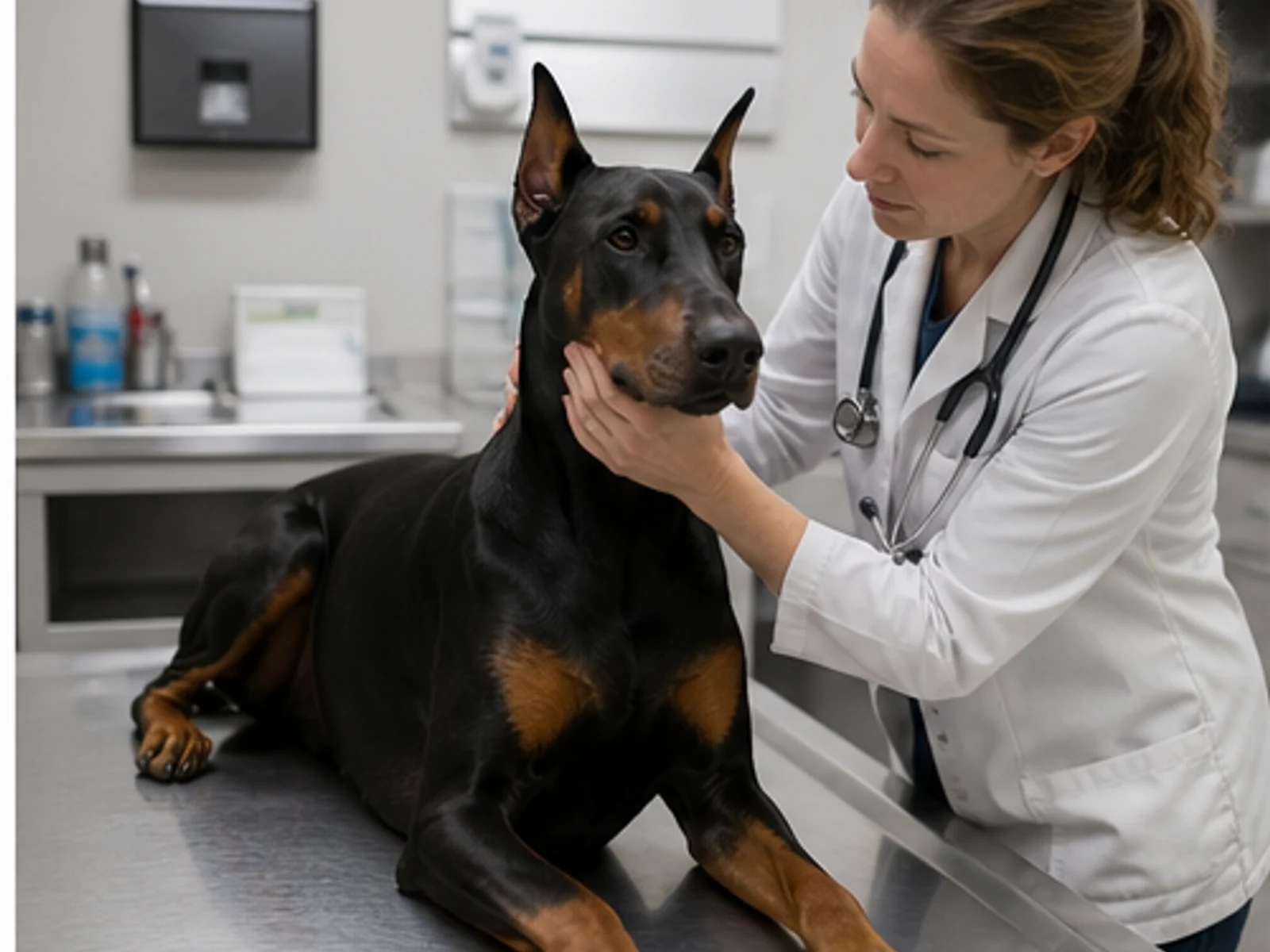
Petful is reader supported. As an affiliate of platforms like Amazon and Chewy, we may earn a commission when you buy through links on this page. There is no extra cost to you.
Doberman lifespan is often described as roughly 10 to 12 years in major breed references, but that range is not a countdown or guarantee for an individual dog. Genetics, family history, body condition, disease, injury, environment and access to timely veterinary care all contribute to the outcome.
This veterinary-authored guide explains common Doberman health issues, screening records, cardiac screening, bleeding risk, spinal and mobility concerns, bloat awareness, healthy weight and aging. It cannot diagnose a dog. If your Doberman is unwell, contact a veterinarian for case-specific advice rather than waiting for a breed-based explanation.

Sign up for expert-backed reviews and safety alerts all in one place.
Doberman Health Issues and Lifespan at a glance
- 1Doberman life expectancy describes a population, not one dog's future, because individual dogs vary
- 2Use records and direct observation together, including verified parent screening and family history when choosing a puppy and the dog's own veterinary record and examinations for ongoing care
- 3Watch trends in weight, appetite, movement, breathing, energy and comfort
- 4Seek veterinary help promptly for concerning changes and emergency care for collapse, breathing difficulty, a swollen painful abdomen, repeated unproductive retching or rapid decline
Petful's main Doberman breed guide covers the full ownership picture. This page stays focused on health and lifespan. Size, behavior or a healthy-looking coat cannot confirm that a dog is free of inherited, developmental or acquired disease.
For a sourcing decision, use Petful's Doberman puppy guide to connect screening records with source, contract and puppy identity. This health page explains what the records can and cannot establish.
Doberman lifespan at a glance
Doberman lifespan baseline includes doberman dog lifespan, doberman lifespan, doberman pinscher lifespan, doberman average lifespan, and doberman lifespan with dcm. These are related but distinct reader decisions, best resolved by using veterinary findings, connected records and the individual dog's current signs instead of treating a population range as a promise. Use the measurements, records and observable conditions in this section to identify what is known, what still needs confirmation and which next action the evidence supports. Before acting, record the source, date and individual-dog evidence behind the conclusion. That prevents a broad breed tendency, seller label or isolated number from becoming a promise about one dog and keeps the decision practical, traceable and useful. Published estimates and study populations differ, and very old individual dogs do not redefine the expected range. The most useful question is not whether a dog can beat an average. It is what evidence and care decisions are available now. A credible range should identify its population and source rather than borrowing an exceptional age from an unverified story. Doberman lifespan and Doberman life expectancy are population-level search terms, not promises for one dog. Sources may use different populations, time periods and record methods, so ranges are not perfectly interchangeable. For an owned dog, current veterinary findings and changes over time matter more than whether the dog sits above or below a published average. Track weight, appetite, breathing, movement, sleep, comfort and engagement, and bring meaningful changes to the veterinary team. For a puppy-selection decision, connect parent screening and family history to verified identities. For an adult or senior, use dated examinations and serial results. These records cannot predict an exact lifespan, but they support earlier, better-informed decisions. For more, see Petful’s guide to the longest-living dog breeds.
| Question | Best evidence | What it cannot promise | Next step |
|---|---|---|---|
| Population lifespan | Breed references and well-described longevity studies | One dog's age at death | Use as context, not a deadline |
| Inherited risk | Verified parent screening, pedigree and family history | A disease-free puppy | Match records to identities and ask a veterinarian to interpret them |
| Current health | Physical examination, history and diagnostics selected by a veterinarian | Every future condition | Keep records and report changes early |
| Daily prevention | Healthy body condition, appropriate activity, dental care and preventive plan | Control over every disease | Review the plan as age and health change |
| Quality of life | Repeated observations of comfort, mobility, appetite, sleep and engagement | A decision from one good or bad hour | Discuss trends and goals with the veterinary team |
What's the longest a Doberman has lived?
The short answer is that the longest Doberman lifespan is not established by an authoritative breed-wide record. Reports about exceptionally old dogs may be incomplete or difficult to verify, and one outlier is not a care target. Major breed references commonly place Dobermans around 10 to 12 years, with individuals living shorter or longer lives. Use the known dog’s health record, body condition, daily function and veterinary guidance.
What is the weakness of a Doberman?
The short answer is that the most important health weakness for a Doberman is not one universal diagnosis, although dilated cardiomyopathy deserves particular attention. Planning also includes von Willebrand disease, cervical spondylomyelopathy, bloat, thyroid disease and individual concerns. Screening can clarify defined risks but cannot guarantee future health. Seek veterinary care for fainting, breathing change, unusual bleeding, neck pain, weakness or a swollen painful abdomen.
Which dog can live 25 years?
The short answer is that no dog can be expected to live 25 years based on breed alone. Rare claims about individual dogs are outliers and may not be independently verified, so 25 years is not a sound planning assumption for a Doberman or any breed. Compare dogs using credible population ranges, then plan for the actual animal’s age, health, function and quality of life.
 Sponsored
Have a health question about your pet?
Talk to a licensed vet at Dutch over video or message, including nights and weekends.
Use code Pets60
Plans start at $12/month · covers up to 5 pets
- Licensed vets in most states
- Rx for 150+ conditions
- 4.7 on Trustpilot
Use a practical comparison for one dog
Separate three layers:
- Population information identifies conditions and lifespan patterns worth discussing.
- Documented evidence includes parent screening, family history and the dog's own veterinary results.
- Direct observation shows changes in movement, appetite, breathing, elimination, sleep, behavior and comfort.
Each layer answers a different question. A breed statistic cannot diagnose symptoms. A normal screening result cannot promise lifelong health. A cheerful afternoon does not erase a repeated decline. Bring the layers together with professional guidance.
- For an inherited-risk question, compare the Embark Breed and Health Dog DNA Test Kit with the exact variants included in the current product and the Doberman screening records already available. Label the sample and report to the correct dog, and keep a consumer panel separate from cardiac monitoring, examination and parent-club testing guidance.
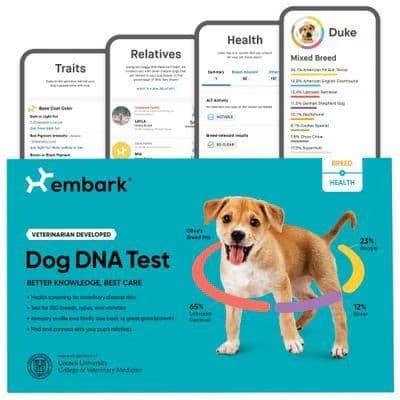
Petful may earn a commission when you click through to Chewy, at no extra cost to you.
- Save the complete Embark Breed and Health Dog DNA Test Kit report with the dog's veterinary records and ask what, if anything, changes in care. A positive or clear consumer result does not diagnose symptoms, rule out untested disease, replace heart surveillance or calculate one Doberman's lifespan.
Common Doberman health issues
Doberman health problems discussed by breed-health programs include orthopedic, cardiac, eye and inherited neurologic concerns. Cancer also receives attention in Doberman longevity research. Listing a condition does not mean every dog will develop it, and similar symptoms can have different causes.
The Doberman Pinscher Club of America breed-health guidance is a primary reference for screening and current parent-club concerns. Use it to frame questions, then ask a veterinarian what applies to the individual dog.
Signs that deserve a veterinary call
Contact the veterinary clinic when you notice a new or persistent change such as:
- Limping, stiffness, reluctance to rise or altered gait.
- Reduced stamina, fainting, weakness or unusual breathing.
- A new lump, swelling or unexplained pain.
- Appetite, weight, thirst, urination or stool changes.
- Repeated vomiting, diarrhea or abdominal discomfort.
- Eye redness, discharge, cloudiness or vision concerns.
- Seizures, wobbliness, weakness or altered awareness.
- Marked behavior, sleep or interaction changes.
These signs are not specific to one Doberman health issue. A veterinarian uses history, examination and selected tests to distinguish causes. Do not start, stop or change medication or supplements because a symptom resembles an online description.
Know the emergency route before you need it: Collapse, difficulty breathing, repeated unproductive retching, a rapidly enlarging or painful abdomen, uncontrolled bleeding, repeated seizures, inability to stand or rapid deterioration can require immediate emergency care. Call a veterinarian or emergency clinic while arranging transport.
Health screening and breeder records
Questions involving european doberman lifespan, american doberman lifespan, albino doberman lifespan, blue doberman lifespan, and red doberman lifespan are best resolved by using veterinary findings, connected records and the individual dog's current signs instead of treating a population range as a promise.
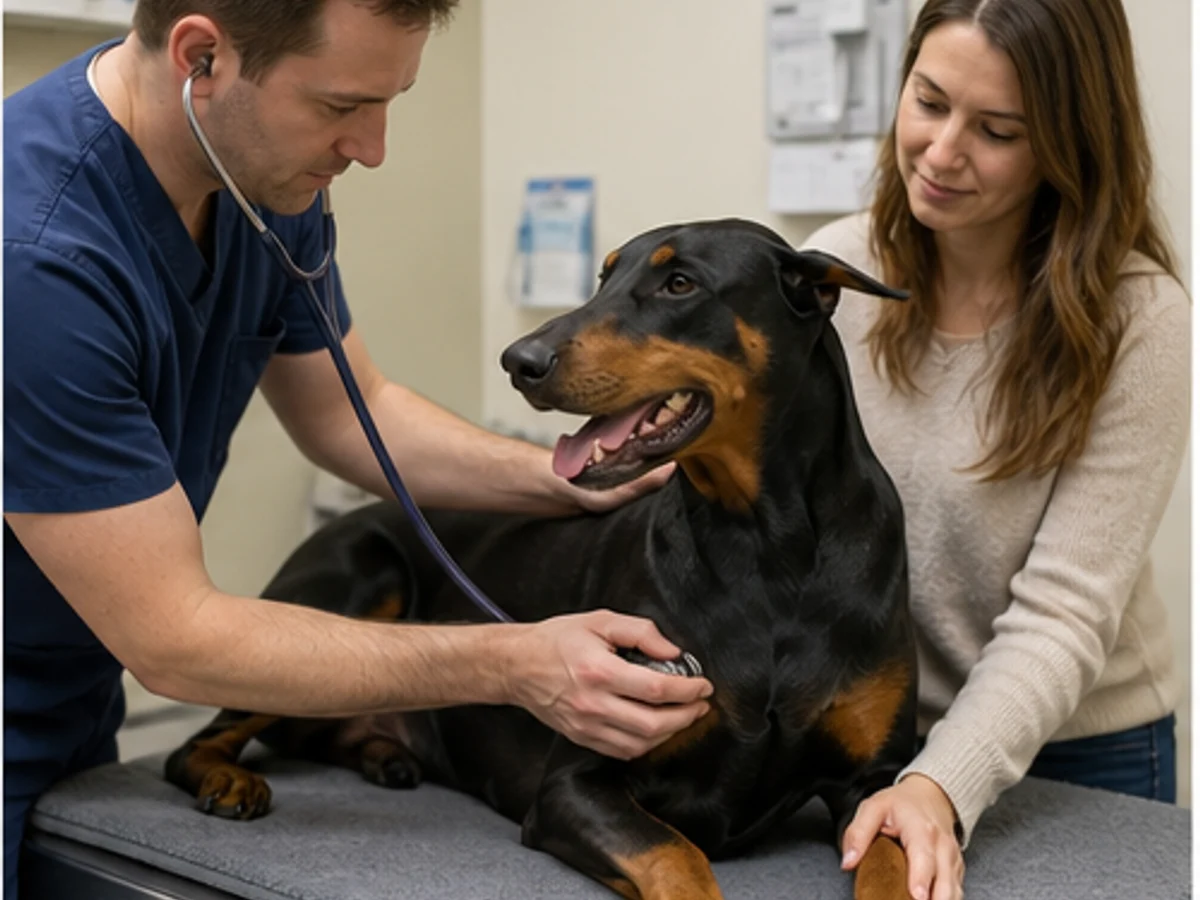
Doberman health testing should be traceable to the correct dog, examination, date, provider and result. A phrase such as fully health tested is incomplete until the reports can be reviewed and identities matched.
The Orthopedic Foundation for Animals CHIC program overview explains how breed-specific screening information is organized. A CHIC number shows that the program's required tests were completed and results made public under its rules. It does not mean every result was normal, and it cannot guarantee an offspring's health.
Verify the record chain
For each parent, record:
- Registered name and permanent identifier.
- Test or specialist examination performed.
- Date and age at testing.
- Laboratory, specialist or database.
- Exact result and any limitation or follow-up.
- Whether the entry can be confirmed independently.
Then connect the parent identities to the pedigree and the puppy to the litter, veterinary record, contract and microchip. Appearance cannot make that connection. A consumer DNA product may contribute ancestry or variant information, but its scope depends on the exact test and cannot replace orthopedic imaging, specialist examination, pedigree verification or a veterinary diagnosis.
The Embark Breed and Health Dog DNA Test Kit is one tracked consumer option to compare for included variants, sample requirements and result limitations. Before using the Embark Breed and Health kit, decide what question you are asking and how a veterinarian will interpret a result. No consumer result should be used to declare a symptomatic dog healthy or to delay care.
Screening is different from the dog's own care
Parent screening informs breeding risk. The puppy or adult needs its own examination, preventive plan and case-specific diagnostics. Maintain complete records after transfer, including:
- Weight and body-condition trend.
- Vaccines and parasite prevention.
- Medications, reactions and allergies.
- Examination and diagnostic results.
- Dental findings and home-care plan.
- Changes in movement, appetite or behavior.
Bring the record to new clinics and emergency visits. A clear timeline often helps the veterinary team distinguish an isolated event from a progressing change.
What screening cannot tell you
Screening is designed around defined conditions, methods and ages. It does not evaluate every disease, predict every injury or replace the dog's own examination. A report may also become less informative when the registered name, microchip, date, imaging view or examiner cannot be connected to the represented parent.
Use a simple verification sequence:
- Confirm the permanent identity of the tested dog.
- Confirm the exact test, date and age requirement.
- Read the result rather than relying on a seller's summary.
- Check whether the record is final, preliminary or subject to follow-up.
- Ask how the result influenced the breeding decision.
- Have a veterinarian explain unfamiliar findings and residual risk.
Do not interpret a missing public result as a diagnosis. Ask for the underlying record and decide how the absence changes your confidence. Likewise, do not treat a complete public record as a warranty. Responsible selection reduces avoidable uncertainty, while ongoing care addresses the individual dog that actually joins the household.
- For a Doberman with mobility or aging concerns, compare the FurHaven Velvet Waves large orthopedic sofa bed with measured sleeping length, entry height and the dog's safest route to the bed. Floor traction and cover washability matter because slipping or soiling can change whether the rest station is usable.

An orthopedic sofa bed with three bolstered sides for dogs who like to rest their head and joints against a cushion. The supportive foam base cradles hips and elbows, a comforting spot for an older or shaky dog to settle.
Petful may earn a commission when you click through to Chewy, at no extra cost to you.
- Use the FurHaven Velvet Waves large orthopedic sofa bed as one observation point: note changes in circling, lowering, sleep position, rising and willingness to use it. Share a dated change with the veterinarian; padding may support comfort, but it cannot identify spinal disease, arthritis or pain.
Dilated cardiomyopathy and heart monitoring
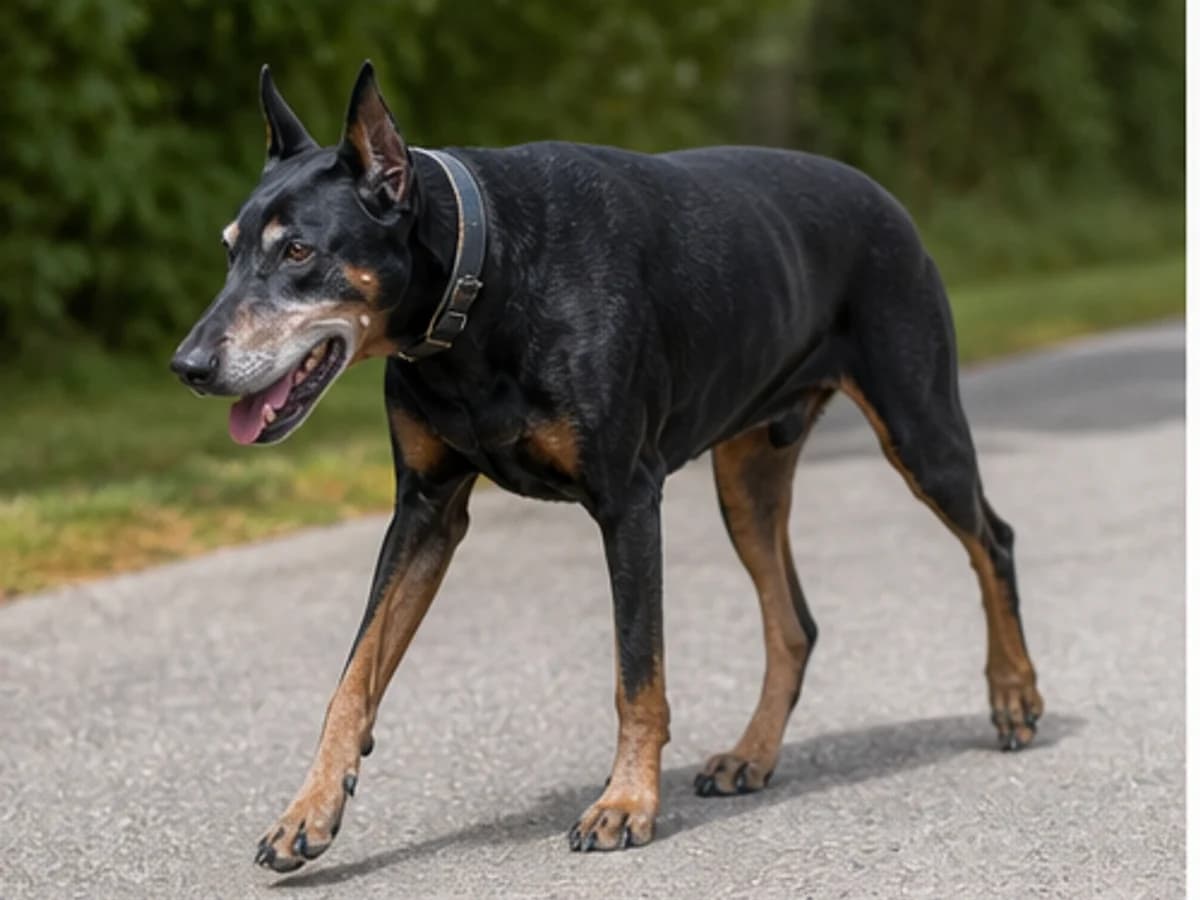
Dilated cardiomyopathy, or DCM, is a central Doberman health concern. The heart muscle becomes less effective at contracting, and some dogs first develop abnormal rhythms while appearing outwardly well. Other dogs may show reduced stamina, weakness, coughing, rapid or difficult breathing, fainting, or collapse. Those signs have many possible causes and require veterinary assessment; they should not be diagnosed from breed alone.
The Doberman Pinscher Club of America DCM overview explains why repeated cardiac screening matters in this breed. One normal examination, DNA result, echocardiogram, or rhythm recording is a snapshot rather than a lifetime clearance. A veterinarian or veterinary cardiologist should decide when auscultation, an echocardiogram, ambulatory rhythm monitoring, blood testing, or other diagnostics are appropriate for the individual dog.
- Contact a veterinarian promptly for a meaningful loss of stamina, new cough, weakness, fainting, rapid breathing at rest or an irregular heartbeat. Collapse, blue or very pale gums, severe breathing difficulty or rapid deterioration requires emergency care. Do not wait for a consumer test or routine appointment when the dog appears unstable.
Keep copies of reports, not just the statement that the heart was checked. Record the date, interpreting clinician, method and findings. For a breeding decision, connect each report to the registered identity of the parent. For an owned dog, preserve the serial record so a clinician can compare changes over time.
 Sponsored
Vet care that's always there
Unlimited video calls and messaging with licensed vets for less than a typical vet visit. One membership covers up to five pets.
Use code Pets60
Plans start at $12/month · covers up to 5 pets
- Licensed vets in most states
- Rx for 150+ conditions
- 4.7 on Trustpilot
Von Willebrand disease and bleeding risk
Von Willebrand disease, or vWD, affects blood clotting. A DNA test can help identify a relevant inherited variant, but the result does not tell an owner how much a particular dog will bleed in every situation. Clinical history, medications, laboratory findings and the planned procedure still matter.
Tell the veterinarian about known results, unusual bruising, nosebleeds, prolonged bleeding, blood in urine or stool, and previous surgical or dental experiences. Never start or stop medication because of an online breed list. Before surgery, dental work or an invasive procedure, ask what history and tests the clinical team needs.
The Embark Breed and Health Dog DNA Test Kit is one tracked consumer option to compare for included variants and sample requirements. Review the Embark Breed and Health kit with a veterinarian before treating a result as clinically meaningful. It cannot replace the dog's medical record, examination or procedure-specific planning.
Wobbler syndrome, mobility and pain

Cervical spondylomyelopathy, often called Wobbler syndrome, describes spinal cord and nerve-root compression in the neck. Possible signs include an unsteady gait, weakness, scuffed nails, difficulty rising, neck pain, or changes in how the front and rear limbs move. Those signs overlap with orthopedic, neurologic and systemic problems, so a video or breed label cannot identify the cause.
Record when the change began, whether it is progressive or intermittent, which limbs appear affected, and whether pain, appetite or toileting changed. Restrict unsafe activity while seeking veterinary advice. A veterinarian may use a neurologic examination and select imaging or other tests based on the dog. Do not manipulate a painful neck or copy another dog's exercise plan.
Support comfort without delaying diagnosis
- Before considering the Nutramax Cosequin joint-health supplement for dogs, ask the veterinarian whether the formulation, dose and ingredients fit the individual dog's diagnosis, diet and medications. Compare quality controls and define what measurable change would justify continuing it.

The number-one veterinarian-recommended joint supplement brand. Glucosamine, chondroitin, and MSM support cartilage and cushion the joints, easing the stiffness and hind-end weakness that can leave an older or arthritic dog trembling.
Petful may earn a commission when you click through to Chewy, at no extra cost to you.
- If the veterinarian agrees that the Nutramax Cosequin joint-health supplement for dogs belongs in the plan, monitor tolerance and follow the agreed evaluation period. A supplement does not replace diagnosis, weight management, rehabilitation or prescribed treatment, and unexpected signs should prompt veterinary advice.
The FurHaven Velvet Waves large orthopedic sofa bed is one tracked rest option to compare for dimensions, support, washable cover and entry height. A second review of the FurHaven large orthopedic bed should consider whether the dog can turn and change positions comfortably. Bedding may support rest, but it does not diagnose or treat spinal or joint disease.
The Nutramax Cosequin joint-health supplement for dogs is one tracked product to discuss with a veterinarian. Check ingredients, dose, medications, diet and the clinical goal before using it. The Cosequin chewable supplement does not treat DCM or Wobbler syndrome and cannot replace diagnosis, weight management or prescribed care.
Bloat and emergency planning
Gastric dilatation-volvulus, commonly called bloat or GDV, is a life-threatening emergency in which the stomach distends and may twist. Warning signs can include repeated unproductive retching, a swollen or painful abdomen, drooling, restlessness, weakness, pale gums, rapid breathing or collapse. A dog may not show every sign.
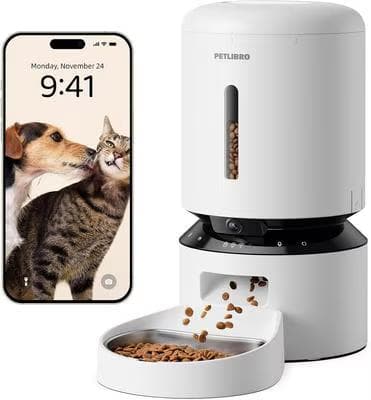
- If meal timing is part of the care plan, compare the Petlibro Granary automatic feeder with camera with prescribed portions, medication timing and the household's ability to confirm that this Doberman actually ate. Check dispensing and multi-pet access rather than treating a camera image as an appetite assessment.
Petful may earn a commission when you click through to Chewy, at no extra cost to you.
- Observe several cycles of the Petlibro Granary automatic feeder with camera and record meal completion beside appetite, stool, weight and medication notes. The device cannot prevent GDV or judge abdominal pain; any retching, distension, weakness or collapse requires immediate veterinary action rather than another scheduled portion.
Call an emergency veterinary clinic immediately when GDV is suspected. Do not wait for the abdomen to look dramatically enlarged, try to treat the dog at home, offer a meal, or transport without warning the clinic. Ask the veterinarian about individual risk and whether preventive gastropexy is appropriate; that decision belongs to the veterinarian and owner, not a generic breed article.
Prepare before an emergency by saving the clinic number and route, confirming that the vehicle and helpers can move the dog, and maintaining access to funds or payment options. Keep a concise medication and diagnosis list ready. These practical steps matter because emergency decisions are harder when nobody knows where to go.
Other health discussions to keep in context
Dobermans may also be evaluated for thyroid disease, hip dysplasia, eye disease, liver disease, dental problems, skin conditions and other illnesses. A parent-club list is a question set, not a diagnosis for every dog. The individual history, examination and veterinarian-selected tests determine what is relevant.
Sudden behavior change can be a health clue. Pain, weakness, sensory change, endocrine disease, medication effects or neurologic problems may appear first as irritability, avoidance, reduced tolerance or disrupted sleep. Contact a veterinarian rather than treating a sudden change as stubbornness or a training failure.
Healthy body condition supports mobility and makes breathing, appetite and activity trends easier to interpret. It does not prevent every inherited disease. The goal is not to make a Doberman as light or heavy as possible, but to maintain the individual condition and muscle that the veterinary team considers appropriate.
Weight, exercise and preventive care

Healthy body condition supports mobility and makes weight, breathing and appetite trends easier to interpret, but it cannot prevent every inherited disease. Ask the veterinarian to demonstrate body-condition scoring and recommend food and activity for the individual dog's age, health and medication.
Record weight on the same scale when practical. Note food, treats, appetite, stool, thirst, activity and symptoms. Unexpected loss or gain, abdominal enlargement, weakness, breathing change or reduced stamina needs clinical context rather than an online feeding adjustment.
Measured feeding and recovery checks
The Petlibro Granary automatic feeder with camera is one tracked option when measured meal timing solves a real need. Before using the Petlibro automatic feeder, check portion accuracy, kibble compatibility, cleaning, power backup and whether the dog can damage it. It cannot assess appetite or body condition.
Use exercise the dog can perform comfortably and recover from. Avoid abrupt mileage increases, repetitive high-impact work and heat stress. A dog with heart, spinal, orthopedic or systemic disease needs a veterinarian-directed plan. Maintain routine examinations, dental care, parasite prevention, vaccines and screening selected for the individual rather than treating the breed list as a checklist for self-diagnosis.
Doberman lifespan and healthy aging
Questions involving doberman lifespan female, doberman lifespan male, and female doberman lifespan are best resolved by using veterinary findings, connected records and the individual dog's current signs instead of treating a population range as a promise.
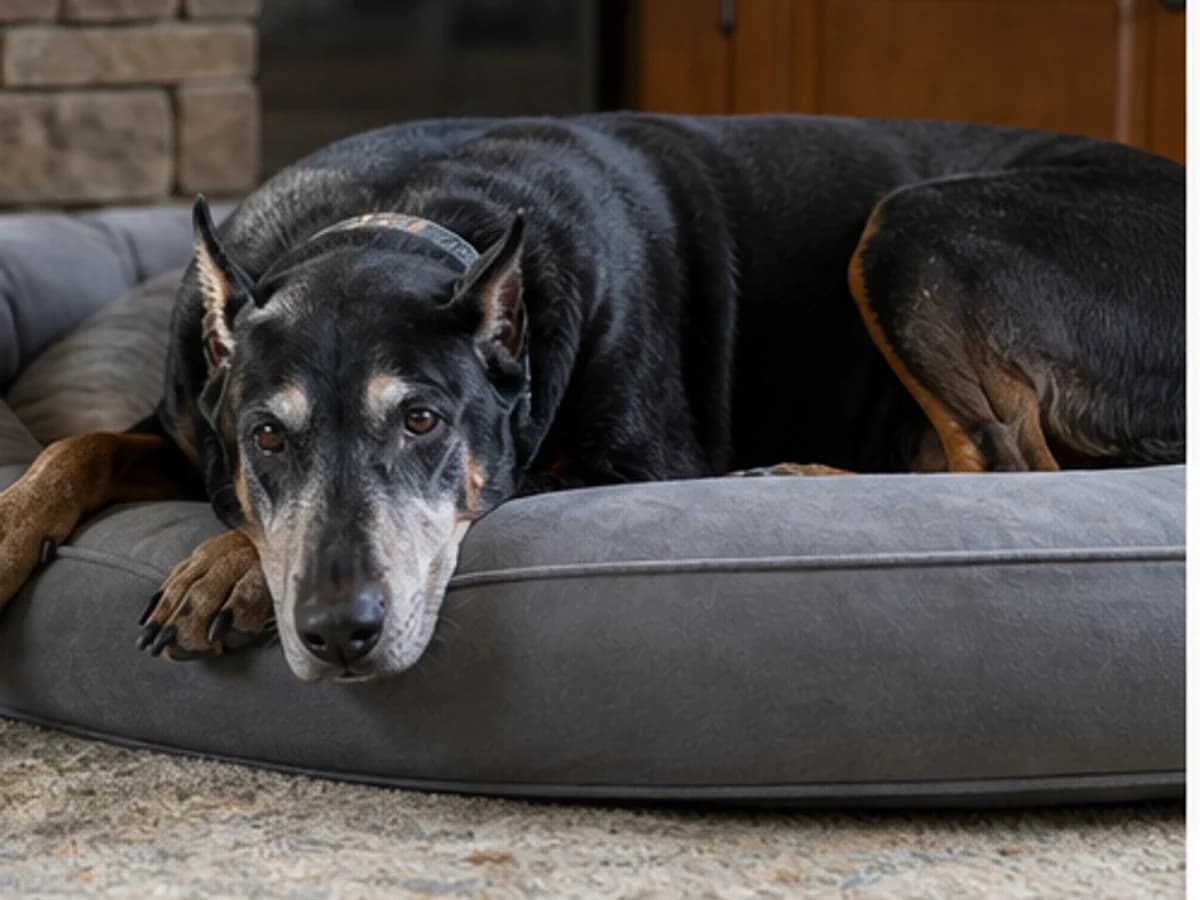
A senior label should follow the individual dog's health and function rather than a single birthday. Some dogs remain active as they age, while others need earlier support. Review the home for traction, steps, vehicle access, sleeping comfort, water access and temperature. WebVet's senior dog health guide offers a useful checklist for veterinary conversations, but the examination and care plan must remain individual.
Keep a weekly quality-of-life record that notes:
- Comfort at rest and during movement.
- Appetite, drinking and elimination.
- Sleep and ability to settle.
- Interest in family and preferred activities.
- Good days, difficult days and recovery after activity.
- Medication effects and practical caregiving burdens.
Quality of life is broader than appetite or one energetic moment. Share the trend with the veterinary team. Discuss goals, treatment burdens, pain control, home support and thresholds for reassessment before a crisis forces every decision at once.
What to verify before you decide
Use parent identity, original screening reports and family history for inherited-risk context. Use the owned dog's dated examinations, diagnostics, weight, medication and symptom timeline for current care. Screening reduces uncertainty around defined questions but never guarantees a disease-free future.
- A consumer DNA result, one normal examination or an energetic day cannot certify lifelong health. Ask a veterinarian to interpret findings and select follow-up. Seek emergency care for collapse, severe breathing difficulty, uncontrolled bleeding, repeated unproductive retching with abdominal pain or rapid deterioration.
Is this the right dog for your household?
- Verified screening and serial veterinary records improve decisions
- Healthy condition and appropriate activity are practical goals
- Home adjustments can support comfort as needs change
- Cardiac and neurologic evaluation can be costly
- Screening cannot guarantee lifelong health
- Emergency planning, transport and funding are essential
The household needs access to routine and emergency veterinary care, safe transport for a large dog and a realistic medical reserve. Discuss the individual dog's history and current findings with the veterinary team before committing.
More Doberman guides from Petful
Start with Petful's complete Doberman Pinscher: Temperament, Size, Health and Care, then use the dedicated guides below for the next decision.
Doberman Health Issues and Lifespan FAQs
The short answer about what is the longest a Doberman has lived is that no authoritative breed-wide record establishes it. Exceptionally old-dog reports may be incomplete or difficult to verify, and one outlier is not a care target. Major references commonly place Dobermans around 10 to 12 years, with individuals living shorter or longer lives. Plan from the known dog’s health record, body condition, daily function and veterinary guidance, not an anecdotal maximum.
The short answer is that no single health weakness defines every Doberman, although dilated cardiomyopathy deserves particular attention. Other planning concerns include von Willebrand disease, cervical spondylomyelopathy, bloat and thyroid disease. Screening can clarify defined risks but cannot guarantee future health. Contact a veterinarian for fainting, breathing changes, unusual bleeding, neck pain or weakness, and seek emergency care for collapse, severe breathing trouble or a swollen painful abdomen.
The short answer is that no dog can be expected to live 25 years because of breed alone. Rare longevity claims are outliers and may not be independently verified, so 25 years is not a sound planning assumption for a Doberman or another breed. Use credible population ranges as context, then base care decisions on the actual dog’s age, health, function, quality of life and veterinary findings.
Major references commonly place Dobermans around 10 to 12 years, but a population range is not a deadline for one dog. Genetics, family history, disease, injury, body condition and access to care all influence lifespan. Focus on the individual health record, repeated screening where advised, preventive care and changes in comfort, mobility, breathing, appetite or engagement rather than planning around one average.
Dilated cardiomyopathy is a major breed concern because abnormal heart rhythm or impaired function may develop before obvious signs. No single normal test provides lifetime clearance. Ask a veterinarian or veterinary cardiologist about repeated screening appropriate for the individual dog. Fainting, weakness, new breathing difficulty or collapse needs prompt assessment, with severe distress or rapid deterioration treated as an emergency.
A Doberman DCM monitoring plan may include history, examination, echocardiography and ambulatory rhythm monitoring, with timing chosen by the veterinarian for the individual dog. Preserve dated reports so changes can be compared over time. Consumer DNA testing cannot declare a symptomatic dog healthy or replace clinician-directed cardiac screening. Contact the clinic promptly for reduced stamina, fainting, coughing, weakness or breathing changes.
Use current DPCA and OFA breed guidance as the starting checklist, then verify original reports connected to each parent's registered identity. Cardiac evaluation, von Willebrand disease DNA status and other breed-relevant screening answer defined risk questions, not every possible future illness. Confirm dates, methods and final results, review family history, and ask a veterinarian to explain unfamiliar findings or residual risk.
Repeated unproductive retching, a swollen or painful abdomen, drooling, pacing, weakness, pale gums, rapid breathing or collapse can signal gastric dilatation-volvulus. A Doberman may not show every sign. Call an emergency clinic immediately while arranging transport, and do not wait for the abdomen to become dramatically enlarged or try home treatment. GDV requires urgent veterinary diagnosis and treatment.
No. Screening can clarify defined risks at a point in time, but it cannot guarantee that a Doberman will stay healthy. Match every report to the correct dog, date and method, review family history, and preserve the owned dog's examinations and symptom timeline. Continue preventive care and veterinarian-selected follow-up because a normal result does not evaluate every disease or prevent a condition from developing later.
Sources
BVMS, MRCVS
Dr. Pippa Elliott, BVMS, MRCVS, is a veterinarian with nearly 30 years of experience in companion animal practice. Dr. Elliott earned her Bachelor of Veterinary Medicine and Surgery from the University of Glasgow. She was also designated a Member of the Royal College of Veterinary Surgeons. Married with 2 grown-up kids, Dr. Elliott has a naughty Puggle named Poggle, 3 cats and a bearded dragon.
Sign up for expert-backed reviews and safety alerts all in one place.