Do Cavalier King Charles Spaniels Shed? Coat Care Guide
Cavaliers are not non-shedding dogs. A realistic coat-care routine combines regular brushing, bathing, home cleanup, mat prevention, and attention to abnormal coat loss.
Petful is reader supported. As an affiliate of platforms like Amazon and Chewy, we may earn a commission when you buy through links on this page. There is no extra cost to you.
Do Cavalier King Charles Spaniels shed? Yes. Cavaliers lose hair year-round, and some households notice heavier periods as seasons, indoor climate, health, and grooming change. The breed is not non-shedding or hypoallergenic.
- 1Cavaliers shed year-round.
- 2Brush and comb feathering regularly, especially behind ears and at friction points.
- 3No dog is guaranteed hypoallergenic.
- 4Sudden bald patches, pain, inflamed skin, or strong persistent odor need veterinary assessment.

Sign up for expert-backed reviews and safety alerts all in one place.
Do Cavalier King Charles Spaniels shed?
The coat is silky with feathering on ears, chest, legs, feet, and tail. Loose hair can remain trapped in that feathering until brushing releases it. This makes shedding look light one day and substantial during a grooming session.
Normal variation depends on age, season, bathing, coat length, indoor heating, and the individual. A puppy coat also changes as the adult coat develops. The useful baseline is your own dog's skin comfort, coat density, and rate of loss over time.
Petful may earn a commission when you click through to Chewy, at no extra cost to you.
Cavalier brushing and bathing schedule
| Task | Practical starting point | Stop and reassess when |
|---|---|---|
| Pin-brush pass | Several times weekly | The brush catches, skin pulls, or the dog shows pain |
| Metal-comb check | After brushing, through feathering and friction zones | The comb cannot reach skin without force |
| Bath and thorough dry | As lifestyle and skin need | Skin becomes irritated or ears remain damp |
| Nail trim | Often every few weeks | Quick location is uncertain or handling causes panic |
| Ear and skin check | Weekly and during grooming | Redness, discharge, swelling, pain, or strong odor appears |
| Toothbrushing | Daily target | Mouth pain, bleeding, or a loose tooth is present |
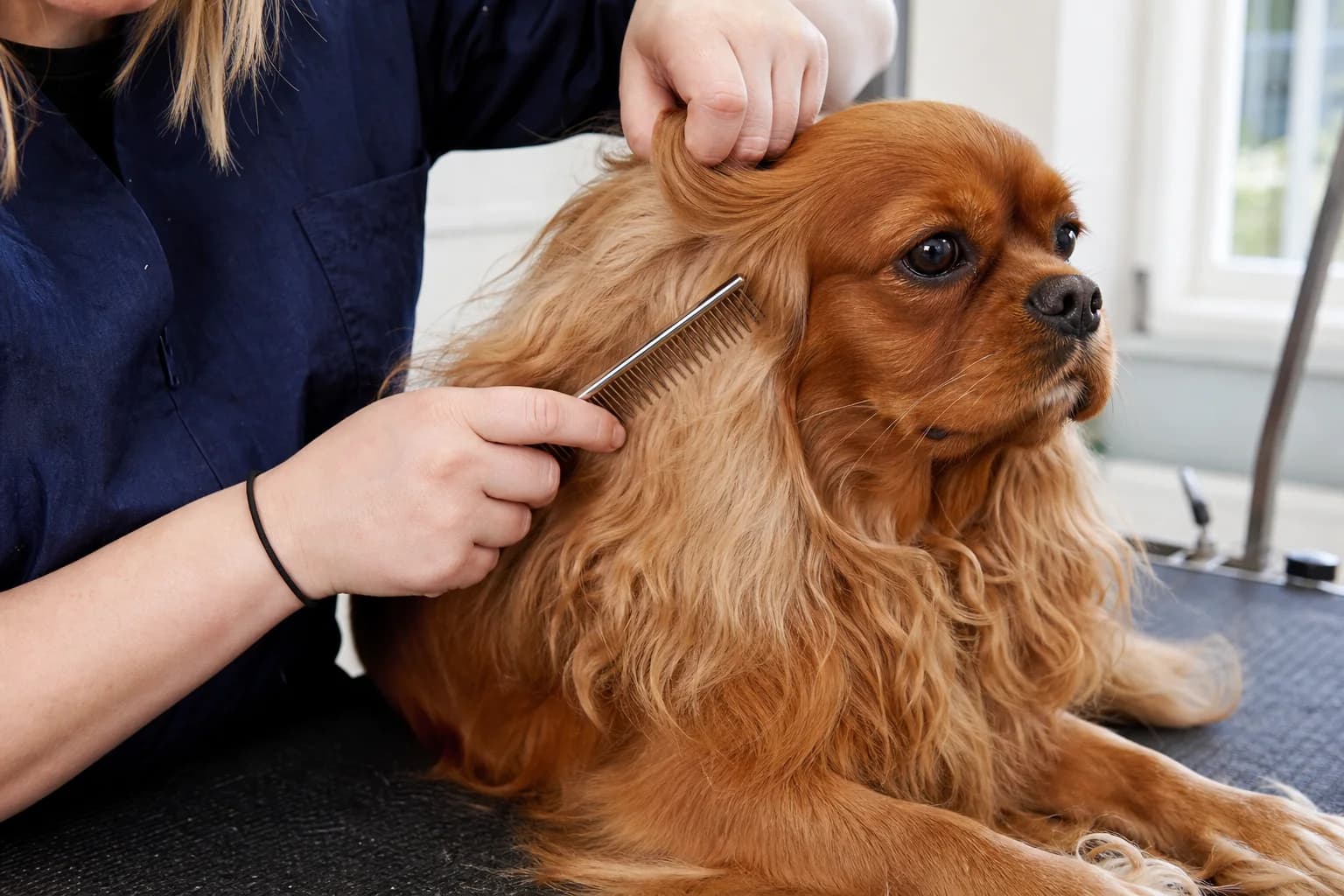
Brush in small sections, support the skin, and work from the ends toward the body. A gentle pin brush separates the coat, while a stainless-steel comb checks whether the work reached the skin. Neither tool should be dragged through a tight mat.
Petful may earn a commission when you click through to Chewy, at no extra cost to you.
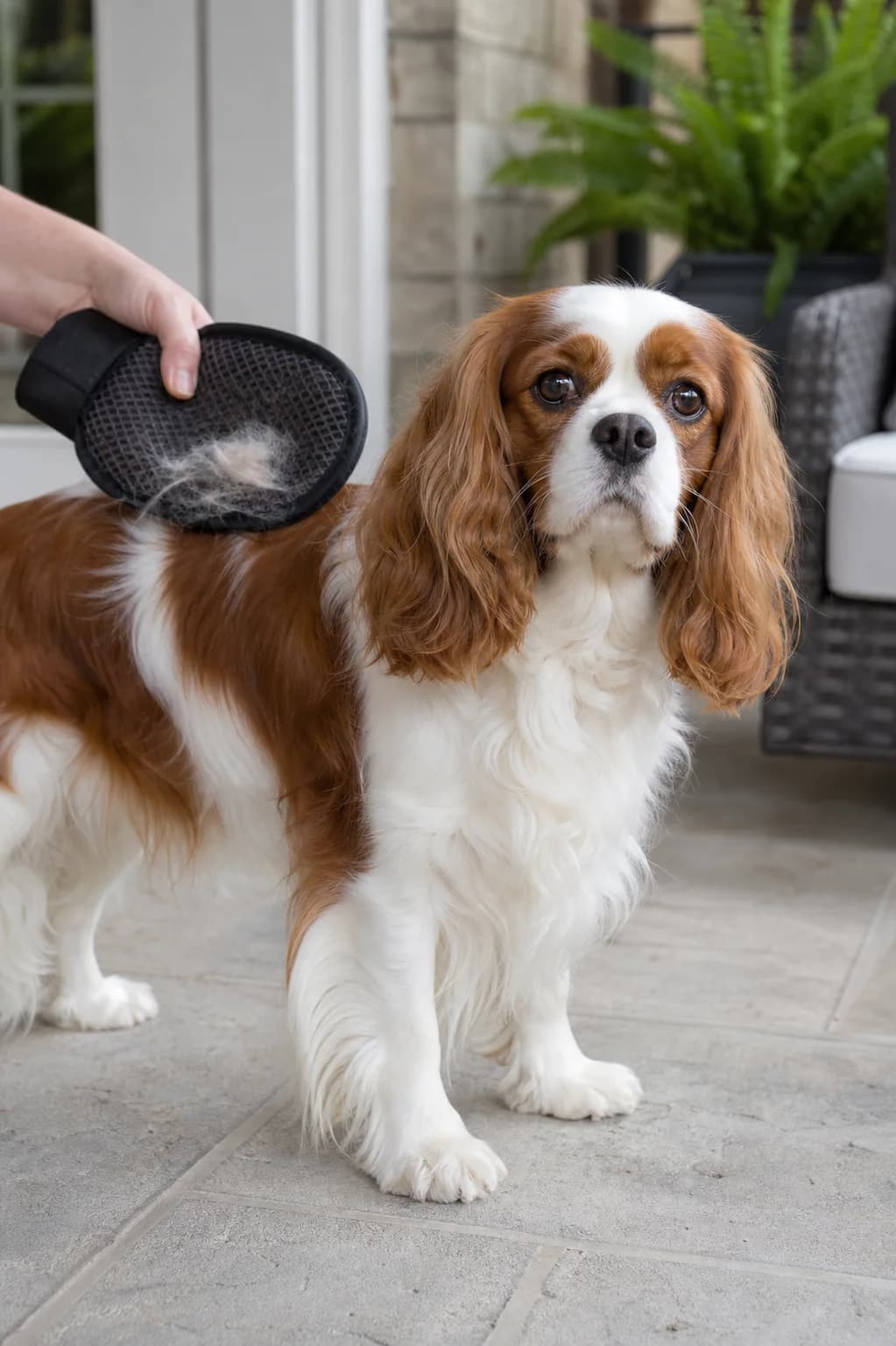
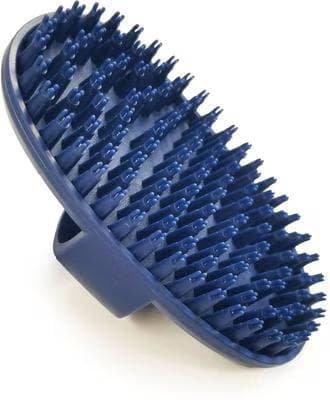
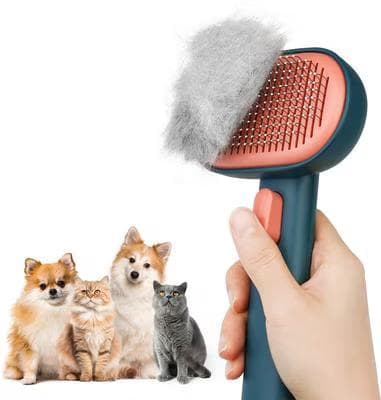
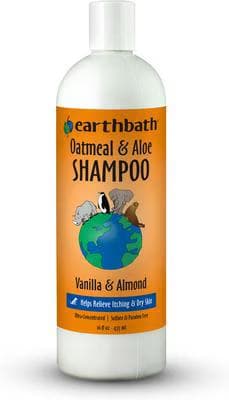
For coat maintenance, the Four Paws wet-and-dry grooming glove is one tool to compare; use light pressure, work in small sections, and stop if the skin becomes irritated. For coat maintenance, the aumuca self-cleaning slicker brush is one tool to compare; use light pressure, work in small sections, and stop if the skin becomes irritated. The Earthbath oatmeal and aloe shampoo is one bathing option to review for ingredients and individual skin tolerance, followed by thorough rinsing and complete drying.
Where mats form
Check behind the ears, under the collar or harness, in the armpits, between back legs, on the feet, and beneath the tail. Friction, moisture, and fine feathering combine in these zones.
Do not slide scissors under a mat when the skin edge is hidden. Tight, extensive, painful, or sensitive-area matting belongs with a professional groomer or veterinary team.
Petful may earn a commission when you click through to Chewy, at no extra cost to you.
Allergy expectations and home cleanup
People may react to proteins in dander, saliva, or urine, not only visible hair. A shedding breed can spread those materials, but shaving does not make the dog hypoallergenic. Someone with important allergies should consult a medical professional and spend meaningful time around the individual dog before committing.
Practical cleanup includes washable bedding, a filtered vacuum, damp dusting, closed bedroom boundaries if needed, and grooming in an easy-clean area. A washable dog-bed cover can simplify the routine.
Petful may earn a commission when you click through to Chewy, at no extra cost to you.
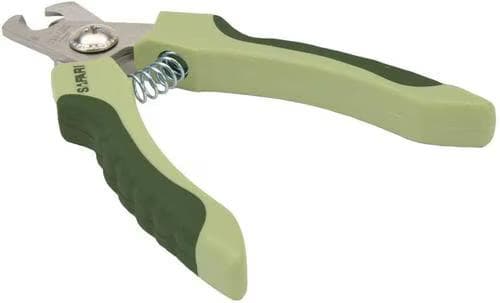
If clipping is comfortable for both dog and handler, the Safari professional nail trimmer is one tool to compare after identifying the quick and preparing styptic powder. The OneisAll cordless clipper and paw-trimmer kit can support maintenance between appointments, but noise training, cool blades, nonslip footing, and a safe stopping point are essential. Use only pet-safe toothpaste, such as Virbac C.E.T. enzymatic pet toothpaste, after veterinary guidance; human toothpaste is not an appropriate substitute.
When shedding or odor needs attention
Hair loss is not automatically normal shedding. Make an appointment for bald patches, broken hair with intense scratching, greasy or crusted skin, sores, redness, pain, parasites, sudden coat thinning, major dandruff, or a change that persists. Hormonal, allergic, infectious, nutritional, parasitic, and other problems can overlap, so appearance alone cannot diagnose the cause.
- A strong or persistent smell can come from damp ears, dental disease, infected skin, anal sacs, urine, or another problem. Repeated bathing or fragrance can irritate skin and delay the right examination.
Why a Cavalier may smell
Do King Cavaliers smell bad? A healthy, dry, routinely groomed Cavalier should not have an overpowering odor simply because of the breed. Wet feathering, ears that remain damp, dental disease, skin inflammation, and dirty bedding are more useful clues. Locate when the smell appears, check for redness or discharge without putting anything into the ear canal, and involve the veterinarian when it persists.
Coat expectations before choosing a puppy
All four recognized colors share the same basic coat-care workload. Use the color guide for visual identification and the puppy guide to evaluate sources. A seller's low-shed promise is not a substitute for meeting adult relatives and accepting individual variation.
Food and coat claims
A complete and balanced diet supports normal nutrition, but food is not a universal cure for shedding or itching. The Cavalier food guide explains how to assess a diet. New skin or coat symptoms need diagnosis before a supplement or food switch is treated as therapy.
What normal shedding looks like
Normal shedding is gradual loss of individual hairs from a coat that otherwise looks comfortable and evenly covered. The amount found on a brush, bed, or clothing can change with season, indoor climate, bathing, coat length, and how often loose hair is removed.
Track the dog's own baseline. A sudden change matters more than a comparison with another household. Note whether hair loss is even, whether skin is visible, and whether itching, odor, flakes, redness, pain, or behavior change is present.
Use a section-by-section brushing method
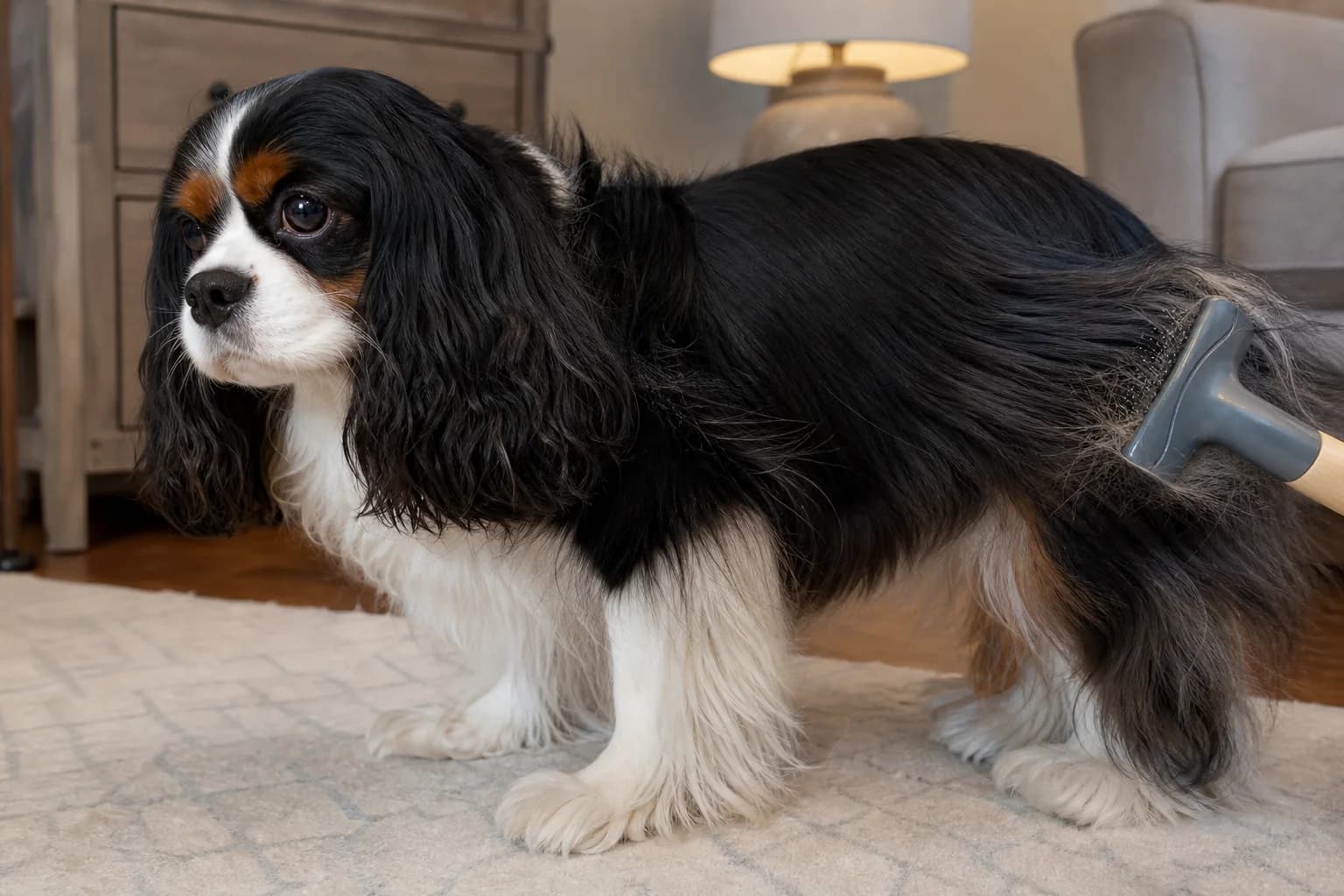
Brushing only the surface can leave tangles close to the skin. Work in small sections on a nonslip surface. Support the skin and feathering so the tool does not pull.
A practical sequence:
- Check with fingers for mats, debris, moisture, or sore areas.
- Separate a small layer of coat.
- Brush gently from the ends toward the body.
- Follow with a metal comb to confirm the section is clear.
- Stop if the skin reddens or the dog shows discomfort.
Give special attention to ears, armpits, chest, groin, tail, and behind the legs. These friction areas can tangle even when the back looks smooth.
Introduce grooming cooperatively
Let the dog see and sniff the tool, then reward calm contact. Begin with one or two strokes in an easy area. Build duration over many successful sessions instead of restraining the dog for a long correction session.
Use a pause cue or a start-button behavior, such as placing the chin on a towel. If the dog lifts away, pause. Cooperative care does not mean every session is optional, but choice and predictability reduce fear and make necessary care safer.
Persistent resistance can reflect pulling, past experience, skin disease, ear pain, joint pain, or another medical concern. Reassess rather than assuming stubbornness.
Bathing and drying affect loose hair
Bathing can release hair that was already ready to shed. Use a dog-appropriate product, rinse thoroughly, and dry the coat completely without overheating the dog. Damp feathering can tangle and hold odor.
Before bathing:
- Remove mats that will tighten when wet.
- Protect eyes and avoid forcing water into ears.
- Place a nonslip surface in the tub.
- Prepare towels and a comfortable drying plan.
After bathing, comb when the coat is safely dry enough to handle without pulling. A forceful dryer or hot setting can frighten or injure a dog, so professional guidance may be appropriate. Once the coat is safely dry, the aumuca self-cleaning slicker brush is one tool to compare for light section work before a separate comb check.
Keep hair manageable at home
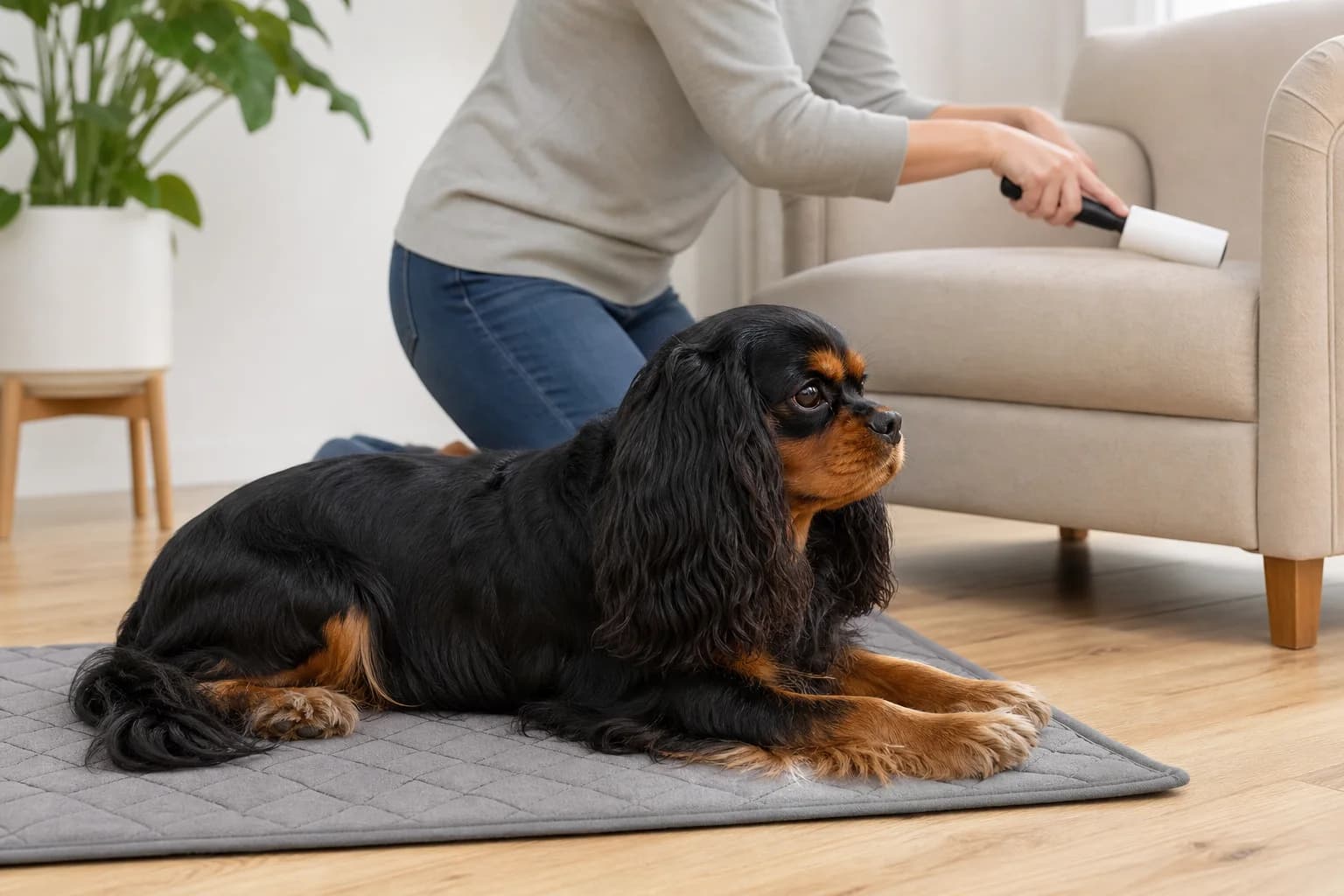
Prevent loose hair from accumulating rather than relying on one major cleaning day. Wash bedding, vacuum the dog's usual paths, and use washable covers where the dog rests. A slightly damp reusable cloth can collect hair from some hard surfaces.
Focus on:
- Entry areas after outdoor activity.
- Upholstery seams and under cushions.
- Car restraints, carriers, and blankets.
- Baseboards and corners where feathering brushes walls.
- HVAC filters according to the equipment instructions.
Cleaning reduces hair in the environment but does not change what the coat naturally releases.
Shedding and human allergy are different
People may react to proteins associated with skin flakes, saliva, or urine, not only visible hair. A dog that sheds modestly can still trigger symptoms. No Cavalier should be promised as hypoallergenic.
Before acquiring a dog, an allergy-affected household can:
- Spend repeated time with adult Cavaliers in realistic indoor settings.
- Discuss symptoms and management with a qualified health professional.
- Keep the dog out of the affected person's bedroom.
- Use washable textiles and regular cleaning.
- Avoid assuming a puppy coat predicts the adult household response.
Rehoming after symptoms escalate is difficult for everyone, so test the plan before commitment.
Food is not a quick shedding cure
A complete and balanced diet supports general skin and coat health, but changing meat sources, adding oils, or buying a coat supplement does not automatically fix hair loss. Extra calories and unbalanced supplements can create other problems.
Record the current food, treats, supplements, medications, parasite prevention, and symptom timeline before the veterinary visit. A veterinarian can decide whether nutrition, parasites, infection, allergy, hormonal disease, pain, or another cause needs investigation.
When coat change needs veterinary attention
Seek veterinary guidance for bald patches, intense itching, broken skin, widespread redness, swelling, discharge, strong new odor, crusting, pain, or a major change in coat quality. Also report appetite change, weight change, lethargy, drinking or urination changes, or behavior change.
Prompt assessment matters when:
- The dog scratches until skin is damaged.
- Hair loss appears in sharply defined or expanding areas.
- Ear discomfort, head shaking, or discharge is present.
- A product caused burning, swelling, vomiting, or breathing change.
- The dog seems painful during ordinary touch or brushing.
Do not cover a concerning area with fragrance or repeated home remedies before it can be evaluated.
Choose tools for the individual coat
A tool should separate hair without scraping skin, cutting healthy coat, or pulling. Ask a groomer to demonstrate brush pressure, section size, and comb follow-up on the actual dog. Replace damaged pins or sharp combs. For a coat that suits this tool, the Frisco medium-to-long-hair deshedding brush is one option to compare; use light pressure and stop if it catches or irritates.
Never use a dematting blade close to skin without skill. Tight mats can hide moisture, irritation, or injury, and skin may be drawn into the mat. When removal is uncomfortable or risky, a shorter professional comfort trim is kinder than preserving coat length.
Keep a seasonal coat log
Once a month, note brushing frequency, hair collected, skin comfort, tangles, bathing, products, prevention, diet, and weather. Photographs of the same body areas under similar light can show real change. The log helps separate a seasonal pattern from a sudden problem.
Adjust care after outdoor activity
After wet walks, grass, brush, or beach trips, inspect feet, ears, armpits, chest, belly, and tail. Remove debris gently, rinse when appropriate, and dry the coat completely. Damp compacted feathering can tangle and hold odor.
Check for ticks according to local veterinary guidance and keep parasite prevention current. Do not apply essential oils, concentrated fragrance, or an unapproved pesticide to solve coat odor or debris.
For the broader fit decision, see the complete Cavalier breed guide. The Cavalier health guide explains when coat or handling change belongs in a medical assessment, and the breed-name comparison separates Cavaliers from English Toy Spaniels.
Cavalier shedding FAQs
The breed should not have a strong persistent odor when healthy, dry, and routinely groomed. Wet ear feathering, ear inflammation, dental disease, skin infection, anal sacs, urine, or dirty bedding can create smell. Note where and when it appears, avoid masking it with fragrance, and ask the veterinarian to examine pain, redness, discharge, itching, or odor that returns.
Cavaliers shed throughout the year, although the amount varies by age, season, indoor climate, bathing, coat length, and the individual dog. Their silky feathering can hold loose hair until brushing releases it, making one grooming session look heavier than an ordinary day. Expect visible hair on brushes, bedding, and clothing, and judge changes against the dog’s individual baseline rather than a promise that the breed barely sheds.
No Cavalier should be promised as hypoallergenic. Human allergies can involve proteins associated with dander, saliva, or urine, not only visible hair, so a modest shedder can still trigger symptoms. Shaving does not remove that risk. Before committing, an allergy-affected household should spend repeated time with adult Cavaliers indoors, discuss important symptoms with a medical professional, and test whether realistic cleaning and bedroom boundaries are sustainable.
Several brushing sessions each week are a practical starting point, adjusted for coat length, activity, season, mats, and the individual dog. Use a gentle pin brush in small supported sections, then a metal comb to check through the feathering and friction areas to the skin. Do not drag tools through a tight mat. Short, rewarded sessions are safer than waiting until tangles require force or cause pain.
Normal shedding is gradual hair loss from a comfortable, evenly covered coat. Arrange veterinary assessment for bald patches, intense itching, broken skin, redness, swelling, discharge, crusting, pain, strong new odor, or a major persistent coat change. Also report appetite, weight, drinking, urination, activity, or behavior changes. Photos and a seasonal coat log can show timing and distribution, but appearance alone cannot identify the cause.

Coreen Saito is a pet writer and longtime shelter volunteer with more than a decade in animal rescue. She covers cat behavior, breed care, and the small, ordinary science of sharing a life with companion animals, with a particular focus on honest takes about the products and decisions that actually matter. At home in Arizona, she's outranked by Mac (a dog with the loudest opinion in the house), Rebel (a cat who governs by quiet authority), and Meri (an orange tabby who runs the late shift and the laundry basket). She writes about all three, plus the rescues that keep coming through her life, at LifeWithMinty.com.
Sign up for expert-backed reviews and safety alerts all in one place.