Cavalier vs King Charles Spaniel: Key Differences
The Cavalier and King Charles Spaniel are separate breeds. The King Charles is the English Toy Spaniel in US naming and has a smaller, flatter-faced build.
Petful is reader supported. As an affiliate of platforms like Amazon and Chewy, we may earn a commission when you buy through links on this page. There is no extra cost to you.
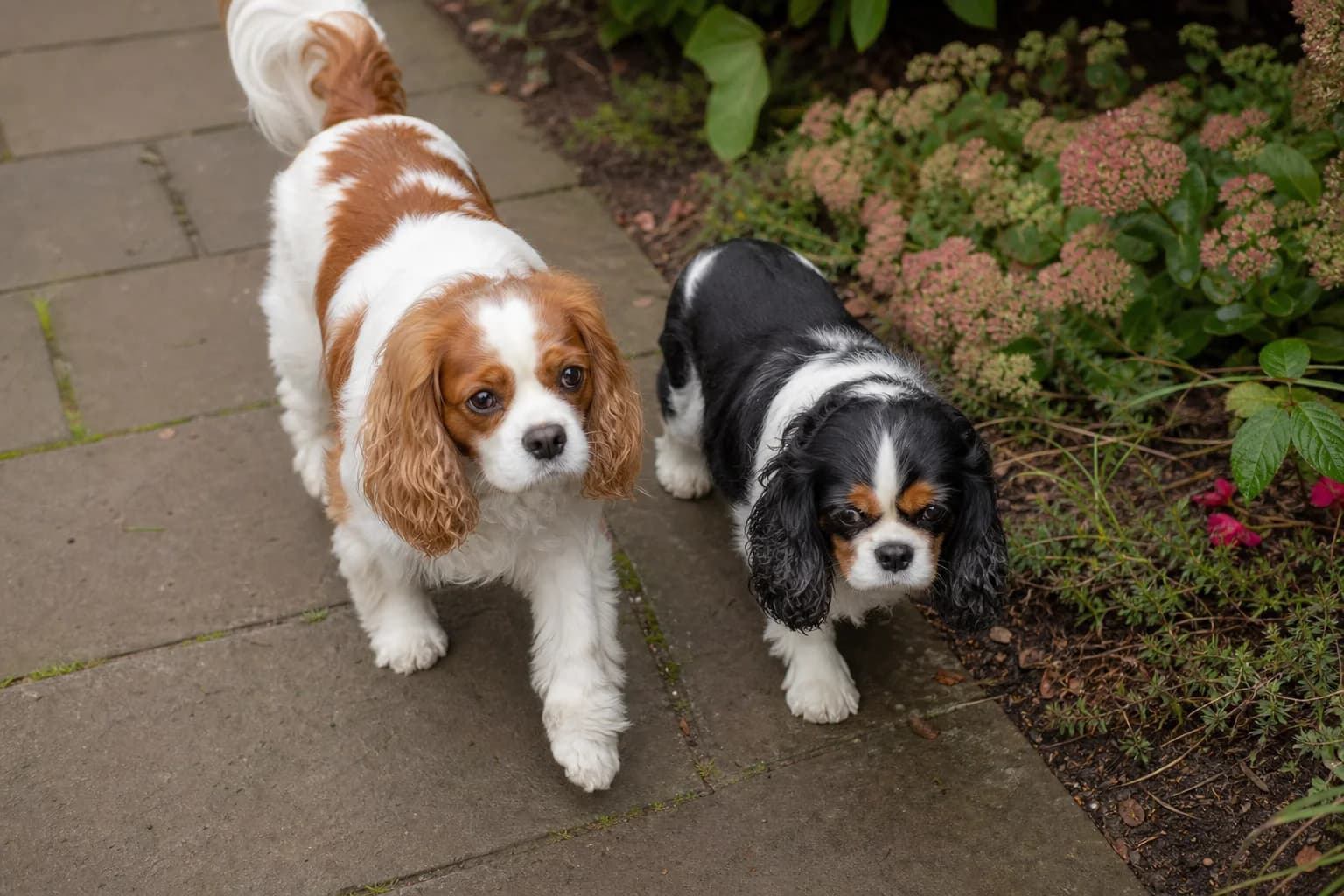
The Cavalier vs King Charles Spaniel comparison involves two separate breeds. In the United States, the King Charles Spaniel is called the English Toy Spaniel. The Cavalier is generally taller, longer-muzzled, and more sporting in outline, while the King Charles or English Toy Spaniel is smaller, more compact, flatter-faced, and domed in the head.
- 1The Cavalier King Charles Spaniel and King Charles Spaniel are separate breeds.
- 2King Charles Spaniel is the UK name for the English Toy Spaniel.
- 3Cavaliers are typically 13 to 18 pounds; the English Toy Spaniel standard prefers 8 to 14 pounds.
- 4Head shape, muzzle, body proportions, activity, health context, and availability differ.

Sign up for expert-backed reviews and safety alerts all in one place.
Cavalier vs. King Charles Spaniel: the short answer
| Trait | Cavalier King Charles Spaniel | King Charles Spaniel or English Toy Spaniel |
|---|---|---|
| US official name | Cavalier King Charles Spaniel | English Toy Spaniel |
| UK official name | Cavalier King Charles Spaniel | King Charles Spaniel |
| Standard weight | 13 to 18 pounds | Preferred 8 to 14 pounds |
| Head | Proportionate, gentle expression | Large relative to body, domed, cushioned face |
| Muzzle | Noticeably longer | Very short and upturned |
| Outline | Graceful and slightly longer than tall | Compact, cobby, essentially square |
| General activity | Companion with sporting spaniel energy | Companion with a more compact toy outline |
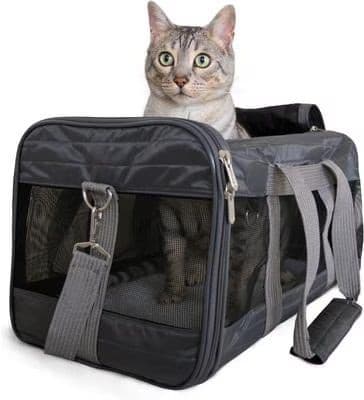
An airline-approved soft-sided carrier with mesh ventilation windows, a top-rated travel pick for cats and small dogs.
Petful may earn a commission when you click through to Chewy, at no extra cost to you.
Size, face, and body differences
The Cavalier standard describes 12 to 13 inches at the withers and 13 to 18 pounds. The English Toy Spaniel standard gives a preferred adult weight of 8 to 14 pounds and emphasizes a compact, sturdy, square body.
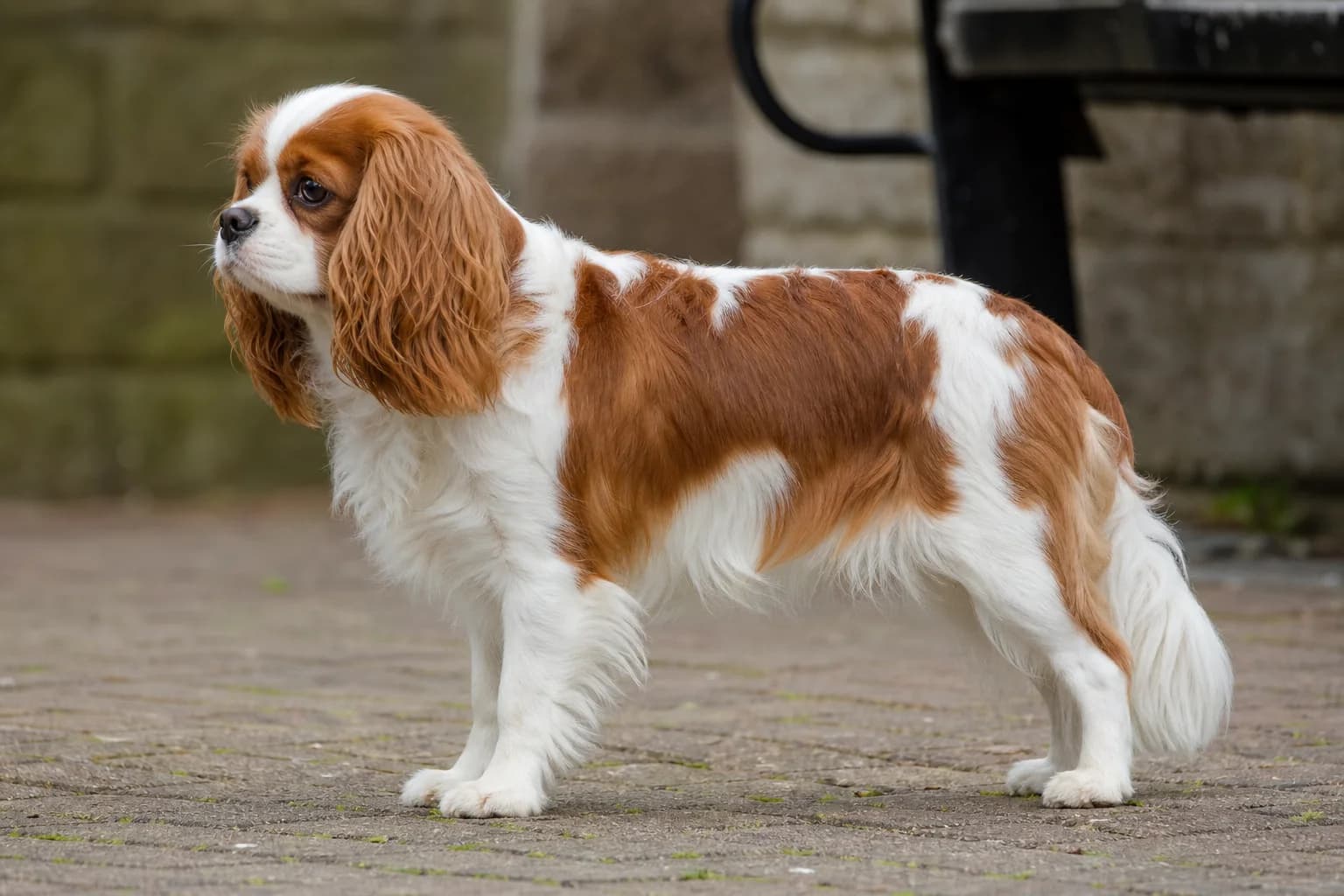
The head is the quickest clue. Cavaliers have a longer muzzle and a less domed skull. English Toy Spaniels have a short nose, domed head, large dark eyes, and a plush, cushioned face. Do not identify a puppy from one angle or seller nickname. Use a flexible dog measuring tape only to fit gear after meeting the individual.

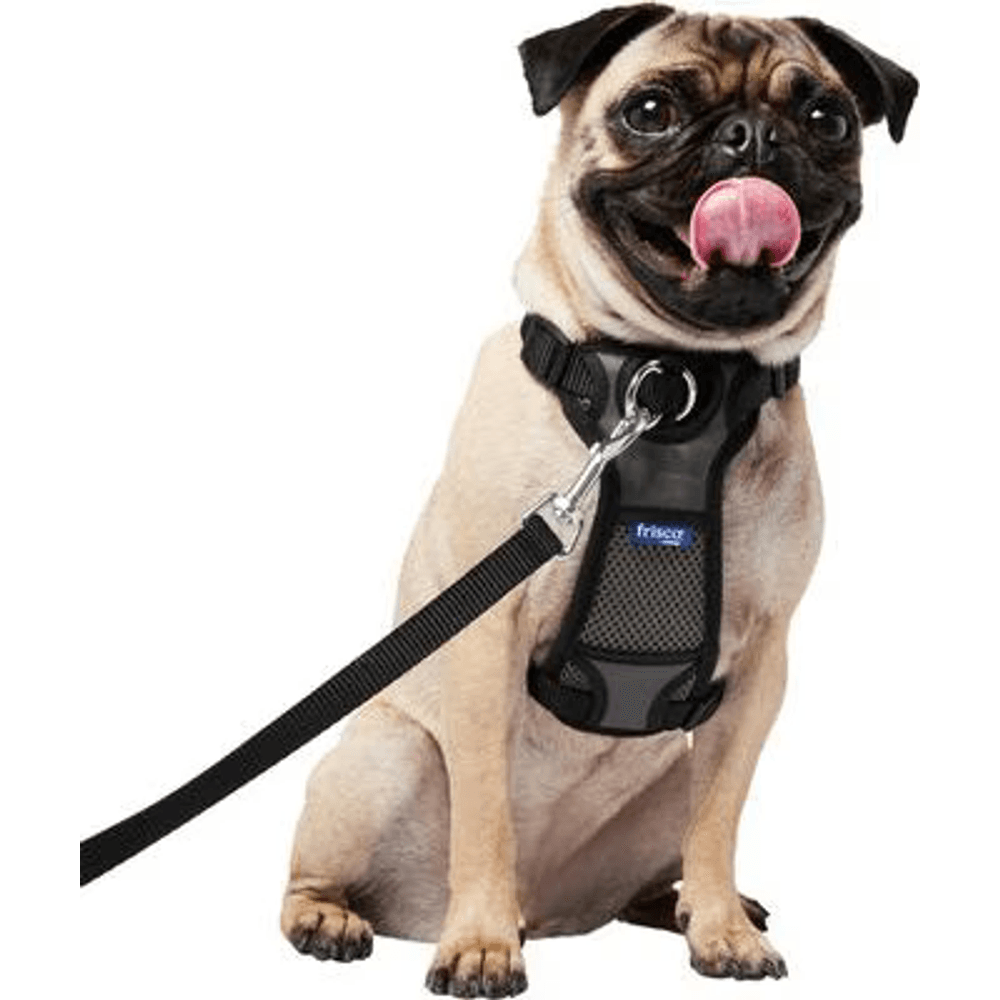
A budget-friendly padded no-pull harness that keeps leash pressure off a coughing dog's neck and windpipe by distributing it across the chest. A simple, affordable way to protect an irritated airway or a collapsing trachea on every walk.
Petful may earn a commission when you click through to Chewy, at no extra cost to you.
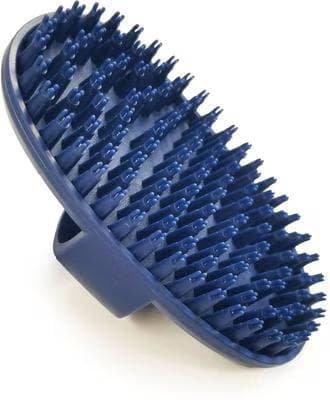
Measure standing height and body length before comparing the Sherpa soft-sided carrier, and verify the exact car or airline rules that apply to the trip. For walking equipment, measure the neck and chest before trying the Frisco padded no-pull harness, then recheck movement and strap clearance after the coat or weight changes. For coat maintenance, the Four Paws wet-and-dry grooming glove is one tool to compare; use light pressure, work in small sections, and stop if the skin becomes irritated.
Temperament and exercise compared
Both standards value affectionate companion temperament. Cavaliers often have a more visibly sporting style and may be more ready for longer walks or activities, but breed tendencies do not determine one dog.
Which is the calmest spaniel? The King Charles or English Toy Spaniel may appear quieter because of its compact companion type, yet health, age, learning, fear, and individual energy matter more than a label. Meet the dog in more than one setting and ask how it recovers after excitement.
Petful may earn a commission when you click through to Chewy, at no extra cost to you.
Coat care and health context
Both have silky feathering that needs regular brushing and a comb check. A soft pin brush for toy breeds can support routine care when used without pulling. Neither is a non-shedding breed. Facial anatomy, eyes, heart, joints, and other breed-specific concerns should be discussed with a veterinarian and verified through the appropriate parent-club health testing. For routine bathing, Buddy Wash shampoo and conditioner is one option to compare for ingredient tolerance, followed by thorough rinsing and complete drying.
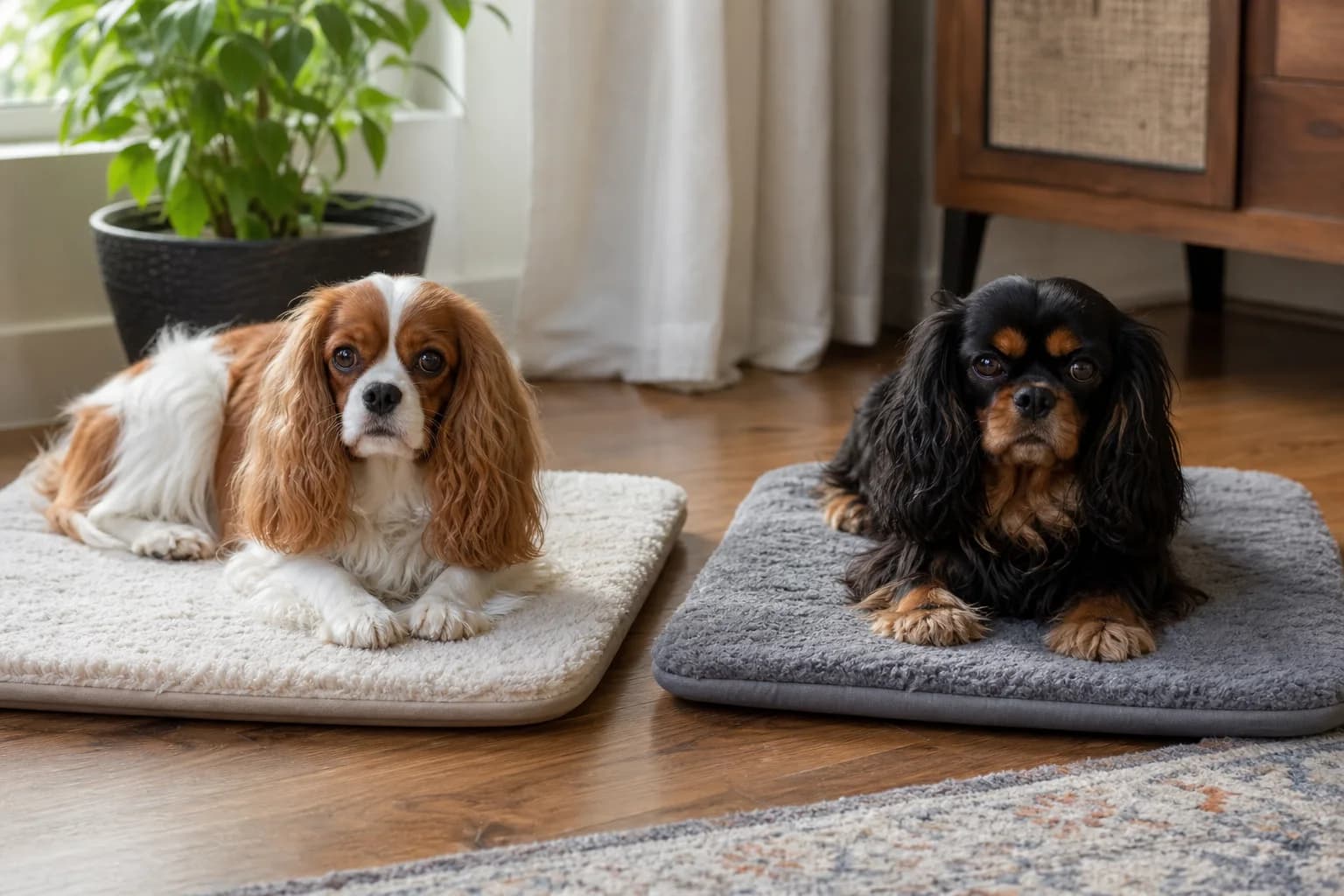
Use the Cavalier health guide for the Cavalier baseline and research the English Toy Spaniel parent club separately.
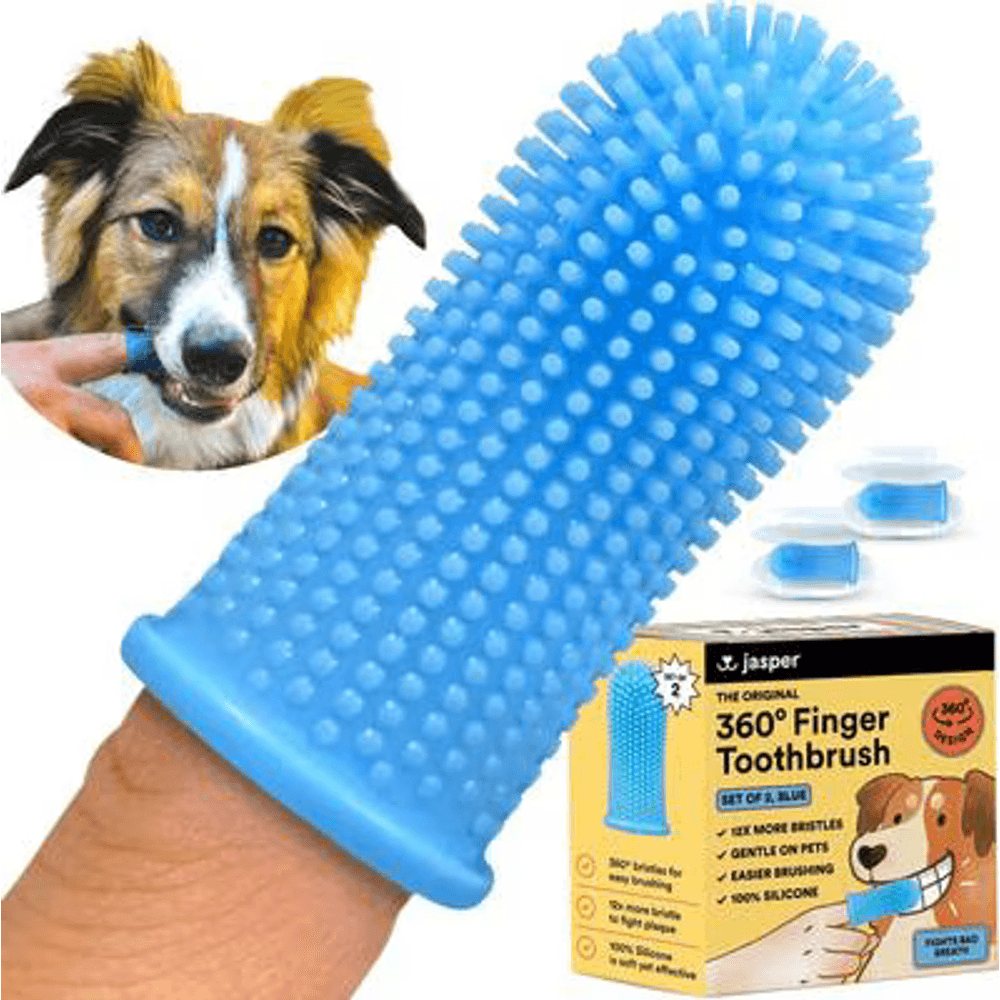
A 360-degree silicone finger toothbrush that brushes every side of a tooth at once. Gentle on gums and ideal for dogs new to brushing or owners who find a handled brush awkward.
Petful may earn a commission when you click through to Chewy, at no extra cost to you.
For gradual home dental care, the Jasper finger toothbrush is one size-conscious option to discuss with a veterinarian and introduce without forcing the mouth open. The Nina Ottosson Lickin' Layers puzzle feeder can turn part of a measured meal into supervised enrichment; start easy and remove it if frustration or chewing replaces problem-solving. Choose rest space by sleeping posture and mobility; the FurHaven orthopedic sofa bed is one washable-cover option to measure against the dog's full stretched length.
Find the correct breed responsibly
- "King Charles Cavalier," "King Charles dog," and similar phrases are often used loosely. Ask for the registered breed, parent identities, health results, veterinary record, and contract. A nickname is not proof of breed or responsible sourcing.
The Cavalier puppy guide explains source verification. For the broad Cavalier owner decision, see the complete breed guide.
Food follows the individual dog
Choose a complete and balanced food for the dog's life stage, measure calories, and monitor body condition. Breed name does not override health, chewing comfort, activity, or veterinary advice. See the Cavalier food guide.
Use names that can be verified
In the United States, English Toy Spaniel is the official breed name for the dog called the King Charles Spaniel in the United Kingdom. Cavalier King Charles Spaniel is a separate breed name in both contexts. Seller phrases such as King Charles Cavalier may blur the distinction.
Before paying, ask for:
- The exact registered breed and registered names of the parents.
- Registration documents that match the puppy and contract.
- Clear adult photographs showing full body and head profile.
- Breed-relevant health results for the actual parents.
- A veterinary record using the same identity.
A nickname is not proof of breed, and registration alone is not proof of responsible breeding.
An identification checklist
Start with the whole dog, not one facial feature. Cavaliers are generally larger and more sporting in outline. English Toy Spaniels are generally smaller, more compact and square, with a more domed head and shorter, upturned muzzle.
Compare:
- Adult weight and height in context.
- Length of muzzle and degree of skull dome.
- Body proportions and leg length.
- Eye prominence and facial cushioning.
- Movement and overall outline.
- Registered identity and parentage.
Puppies change as they mature, photographs distort scale, and mixes can combine traits. Use appearance as a clue, then verify records.
Choose between individuals, not caricatures
Breed standards describe desired type, not a guarantee that every member has one temperament or energy level. Meet the individual in more than one setting. Ask how the dog handles grooming, visitors, restraint, other animals, alone time, car travel, and recovery after activity.
The better household match is the dog whose observed needs, health evidence, grooming, activity, and support requirements fit the real schedule. Neither name makes medical monitoring optional.
Keep both health plans distinct
The breeds can share some concerns, but one checklist should not be copied blindly to the other. Use the current parent-club recommendations for the exact registered breed, verify results for the actual parents, and continue individual veterinary monitoring after placement.
Compare care access in the local area
Before choosing either breed, identify a primary clinic, emergency hospital, groomer comfortable with toy spaniels, and any likely specialty referral. Ask whether the household can transport the dog safely and meet coat, dental, eye, heart, and mobility needs.
Availability may differ by region. A rarer breed can require more travel to verify a source, meet adult dogs, or find breed-experienced support.
Cavalier comparison FAQs
No breed label guarantees calmness. A King Charles Spaniel or English Toy Spaniel may have a quieter companion style, while a Cavalier often shows more sporting energy, but age, health, genetics, learning, and environment can outweigh that tendency. Meet the individual in several situations, ask about recovery after excitement, and choose for the home's real activity level.
No. The Cavalier King Charles Spaniel and the King Charles Spaniel are separate breeds. In the United States, the latter is officially called the English Toy Spaniel; in the United Kingdom, it is called the King Charles Spaniel. Loose phrases such as “King Charles Cavalier” can blur the distinction. Confirm the registered breed, parent identities, and records instead of relying on a listing title or nickname.
In the United States, the official name is English Toy Spaniel. In the United Kingdom, the same breed is called the King Charles Spaniel. The Cavalier King Charles Spaniel keeps its distinct name in both contexts and is a separate breed. Because sellers may use “King Charles,” “King Charles Cavalier,” or similar phrases loosely, verify the registered breed and parents before comparing appearance, care, health testing, or price.
The Cavalier standard describes a dog 12 to 13 inches at the withers and 13 to 18 pounds. The English Toy Spaniel standard gives a preferred adult weight of 8 to 14 pounds and describes a more compact, square body. Individual dogs can fall outside a preferred range, so use registered identity and the whole outline, not size alone, when distinguishing the breeds or choosing a suitable dog.
Ask for the registered breed, registered names and identities of both parents, verifiable health results, the puppy’s veterinary record, and a written contract that uses the same breed name. Compare the dog’s overall size, outline, head, and muzzle with the appropriate standard, but do not rely on one photograph. A vague listing title, nickname, domed head, or short muzzle is not proof of identity or responsible sourcing.

Coreen Saito is a pet writer and longtime shelter volunteer with more than a decade in animal rescue. She covers cat behavior, breed care, and the small, ordinary science of sharing a life with companion animals, with a particular focus on honest takes about the products and decisions that actually matter. At home in Arizona, she's outranked by Mac (a dog with the loudest opinion in the house), Rebel (a cat who governs by quiet authority), and Meri (an orange tabby who runs the late shift and the laundry basket). She writes about all three, plus the rescues that keep coming through her life, at LifeWithMinty.com.
Sign up for expert-backed reviews and safety alerts all in one place.