Cavalier King Charles Spaniel Colors and Markings
Cavaliers have four recognized coat patterns. This visual guide explains each one while keeping health, structure, and temperament ahead of rarity claims.
Petful is reader supported. As an affiliate of platforms like Amazon and Chewy, we may earn a commission when you buy through links on this page. There is no extra cost to you.
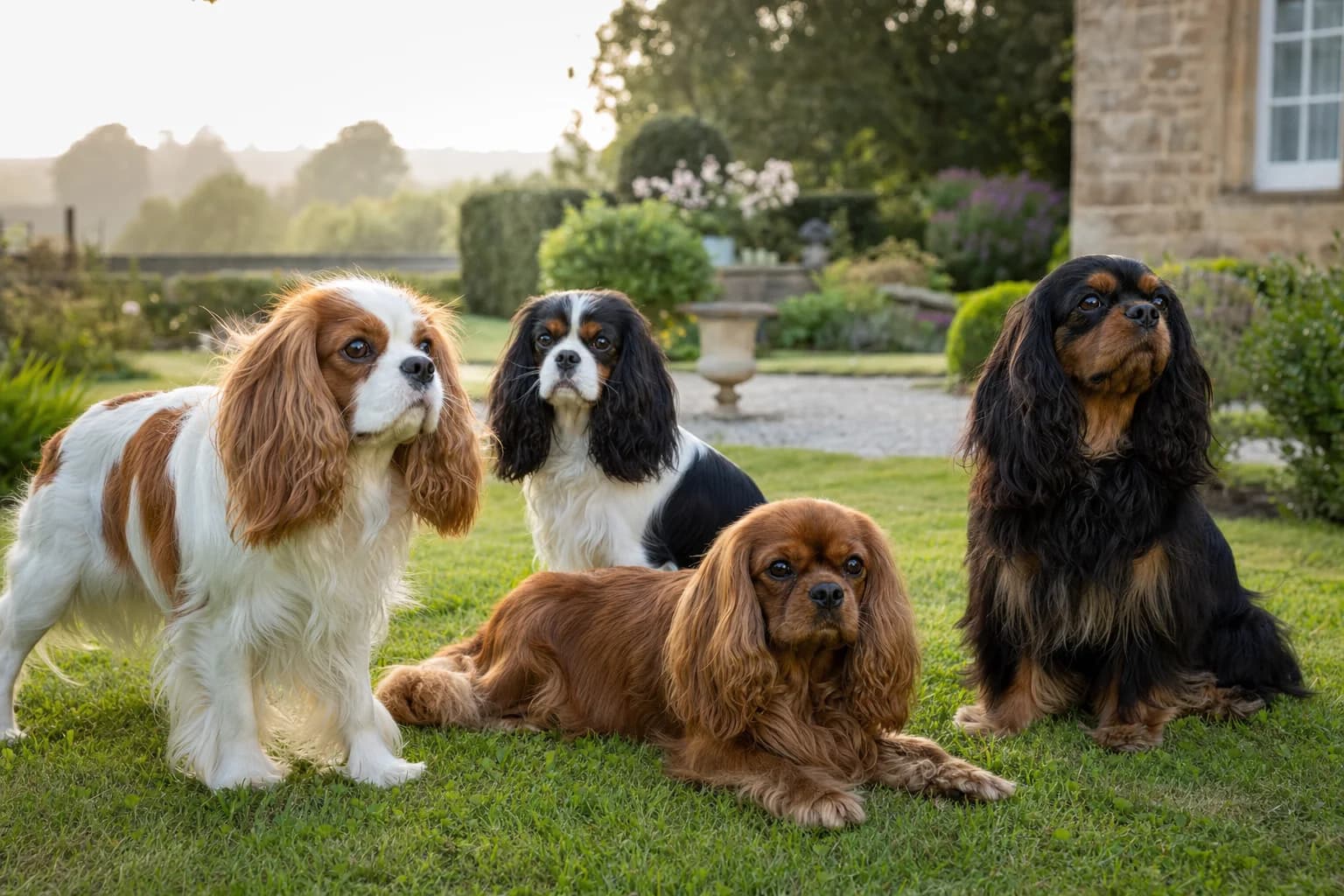
The four recognized Cavalier King Charles Spaniel colors are Blenheim, tricolor, ruby, and black and tan. All four are correct for the breed. A coat pattern should help identify a dog, not determine value, temperament, or which source deserves trust.
- 1Cavaliers have four recognized colors: Blenheim, tricolor, ruby, and black and tan.
- 2The standard gives no preference to one color.
- 3Marking symmetry and the Blenheim spot can vary.
- 4Health screening, structure, behavior, and source quality matter more than rarity.

Sign up for expert-backed reviews and safety alerts all in one place.
The four Cavalier colors
| Color | Base description | Look for |
|---|---|---|
| Blenheim | Rich chestnut markings on a white ground | Chestnut ears and patches, white blaze, optional Blenheim spot |
| Tricolor | Black markings on white with tan points | Tan over eyes, on cheeks, inside ears, and beneath tail |
| Ruby | Rich red whole color | Even red body, sometimes slightly lighter feathering |
| Black and tan | Jet black with rich tan markings | Tan above eyes, on cheeks, chest, legs, and beneath tail |
The official standard does not rank these colors. Lighting, wet coat, sun exposure, camera processing, and coat length can change how rich or dark a dog looks in a photograph.
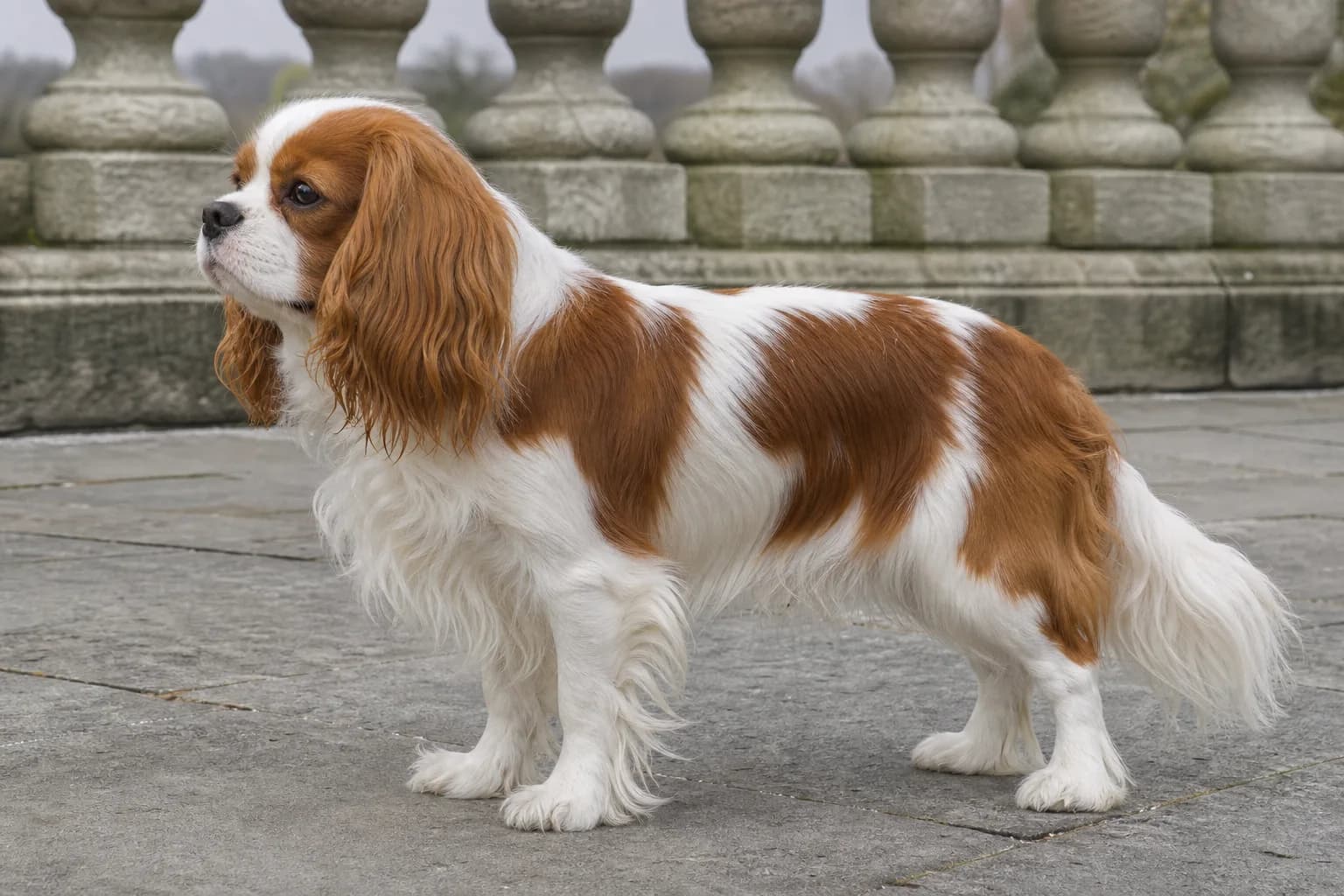
Blenheim
Blenheim is chestnut markings on a pearly white ground. The face commonly has chestnut ears and eye patches divided by a white blaze. A chestnut lozenge on top of the head is called a Blenheim spot. It is a familiar feature, not a requirement for a healthy companion.

Petful may earn a commission when you click through to Chewy, at no extra cost to you.
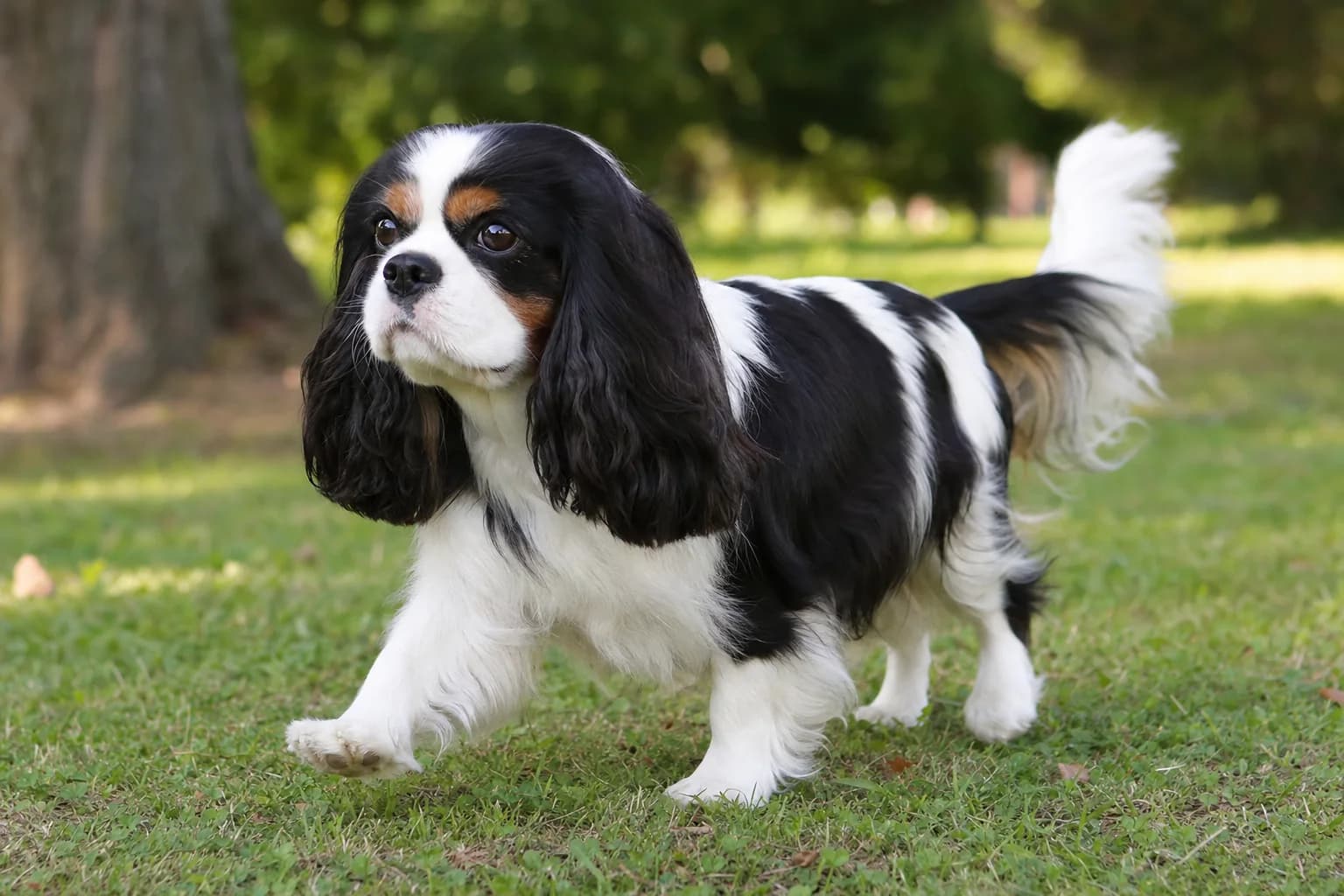
Tricolor
Tricolor combines black and white with tan points. Tan is expected over the eyes, on the cheeks, inside the ears, and in other characteristic areas. The position and amount of black and white body patterning can vary while the dog remains clearly tricolor.
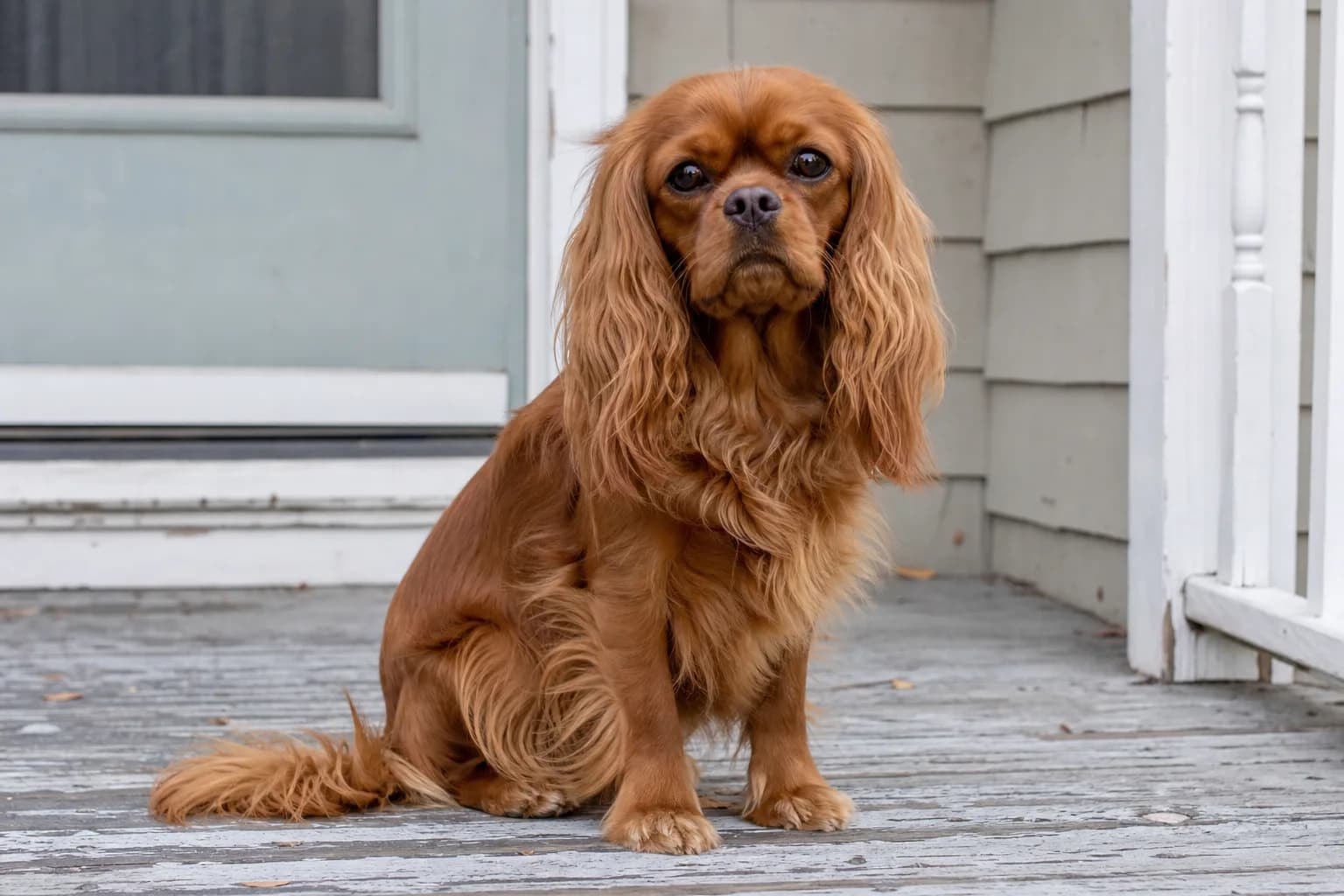
Ruby
Ruby is a rich red whole color. Longer feathering can look lighter than the body. White patches are not what defines ruby, and a marketing label such as mahogany does not create a separate recognized color.
Petful may earn a commission when you click through to Chewy, at no extra cost to you.
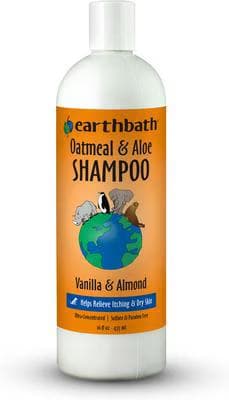
For coat maintenance, the Four Paws wet-and-dry grooming glove is one tool to compare; use light pressure, work in small sections, and stop if the skin becomes irritated. The Earthbath oatmeal and aloe shampoo is one bathing option to review for ingredients and individual skin tolerance, followed by thorough rinsing and complete drying. For coat maintenance, the aumuca self-cleaning slicker brush is one tool to compare; use light pressure, work in small sections, and stop if the skin becomes irritated.

Black and tan
Black and tan Cavaliers have a jet-black ground with rich tan markings. Brown cast from sun, camera white balance, or coat condition can change the photograph. Identify the whole pattern under neutral light rather than relying on one filtered image.
Cavalier markings and pigment
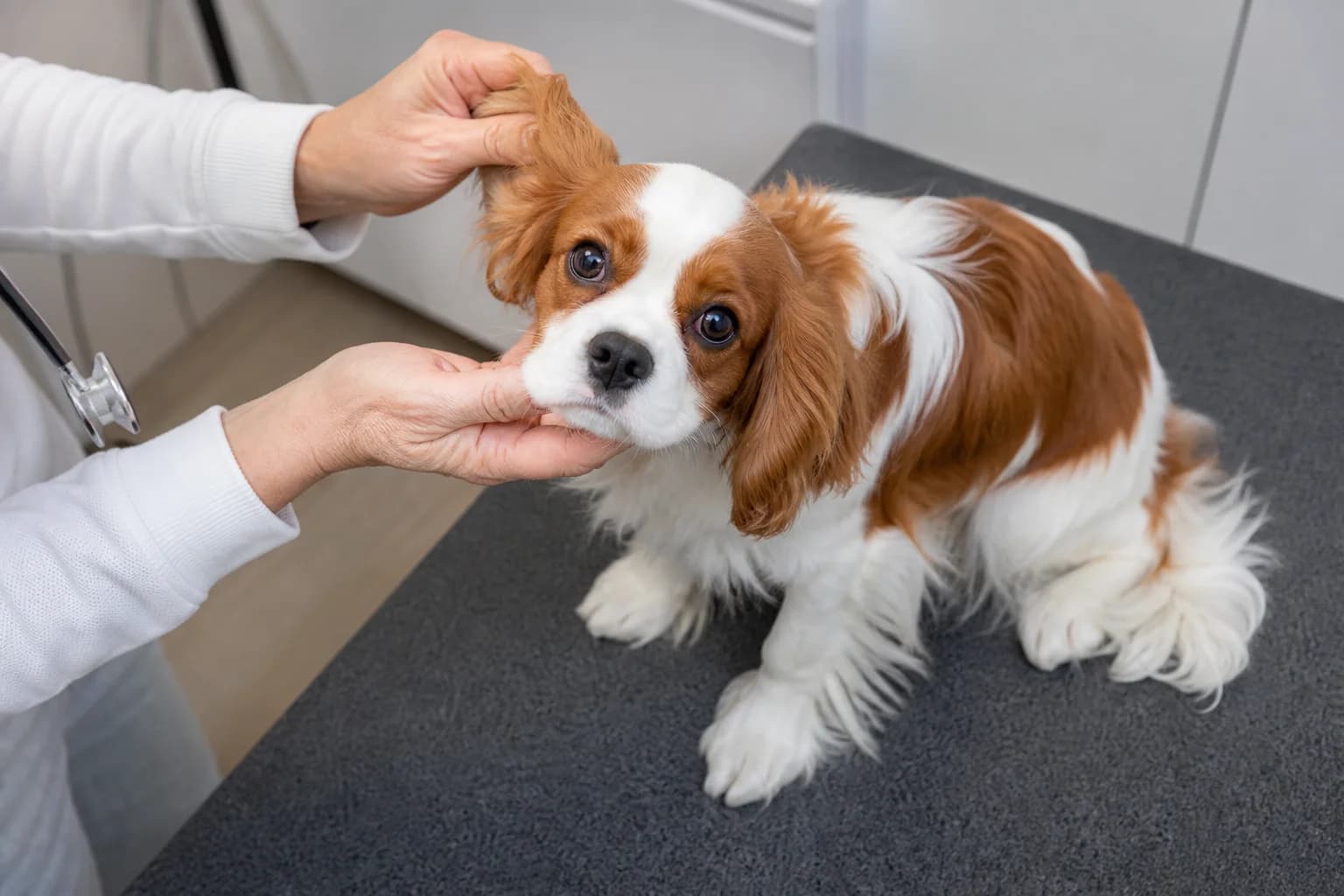
Particolor dogs can have different blaze widths, body patches, and degrees of symmetry. Those visible differences make individuals recognizable. They do not prove quality or predict personality.
Nose, lip, and eye-rim pigment is related to the dog's color genetics, but owners should not diagnose genetics from a photograph. Registration records and knowledgeable evaluation are more reliable than a seller inventing a rare-color name.

Petful may earn a commission when you click through to Chewy, at no extra cost to you.
Are any Cavalier colors rare?
Some colors may be less common in a local litter or source, but the standard does not declare a "best" color. The rarest color question is often commercial rather than biological. A seller may use scarcity to create urgency or a premium even when health evidence is weak.
A responsible decision asks:
- Are both parents correctly identified?
- Can cardiac, eye, patella, and hip records be verified?
- Are puppies raised and socialized well?
- Does the contract include return support?
- Is the dog a good individual match?
- Do not let rare, exotic, teacup, mini, or guaranteed-shade language replace health clearances, veterinary records, living-condition evidence, and a return contract. There is no color premium that makes missing welfare evidence acceptable.
Use the Cavalier puppy guide to evaluate a source and the health guide to understand why screening matters.

An airline-approved soft-sided carrier with mesh ventilation windows, a top-rated travel pick for cats and small dogs.
Petful may earn a commission when you click through to Chewy, at no extra cost to you.
Measure standing height and body length before comparing the Sherpa soft-sided carrier, and verify the exact car or airline rules that apply to the trip. Introduce the Dremel cordless nail grinder in short sessions before touching a nail, and keep the bit moving so heat does not build up. Use only pet-safe toothpaste, such as Virbac C.E.T. enzymatic pet toothpaste, after veterinary guidance; human toothpaste is not an appropriate substitute.
Does color affect value or temperament?
What is the most popular Cavalier color? Popularity varies by region, era, and who is counting. Search visibility or seller inventory is not a stable measure of breedwide demand. More importantly, popularity should not set the household decision.
Color is not a reliable predictor of friendliness, trainability, barking, health, or fit. Evaluate parents, early rearing, the individual dog, and the home. A well-matched ruby is not better or worse than a well-matched Blenheim, tricolor, or black and tan. A gentle pin brush should be selected for coat comfort, not color.
Color does not change the grooming plan
All four colors have the same basic silky, feathered coat-care needs. Regular brushing, a comb check through friction zones, bathing as needed, and routine ear, nail, dental, and skin care matter. The Cavalier shedding guide gives a practical schedule. A stainless-steel finishing comb can reveal tangles that color and pattern make hard to see. For routine surface cleanup, Angels' Eyes face, eye, and paw wipes are one option to compare; they do not diagnose or treat the cause of new tearing, redness, pain, or discharge.
Cavalier vs. King Charles Spaniel terminology
The Cavalier and King Charles Spaniel are separate breeds, even though both can use color names such as Blenheim. In the United States, the King Charles Spaniel is called the English Toy Spaniel. Use the comparison guide to resolve naming before comparing coats.
Identify color under neutral conditions
Coat color can look different in warm indoor bulbs, deep shade, direct sun, wet coat, or a heavily edited photo. Use daylight or neutral light, view the whole dog, and separate base color from white areas and tan points.
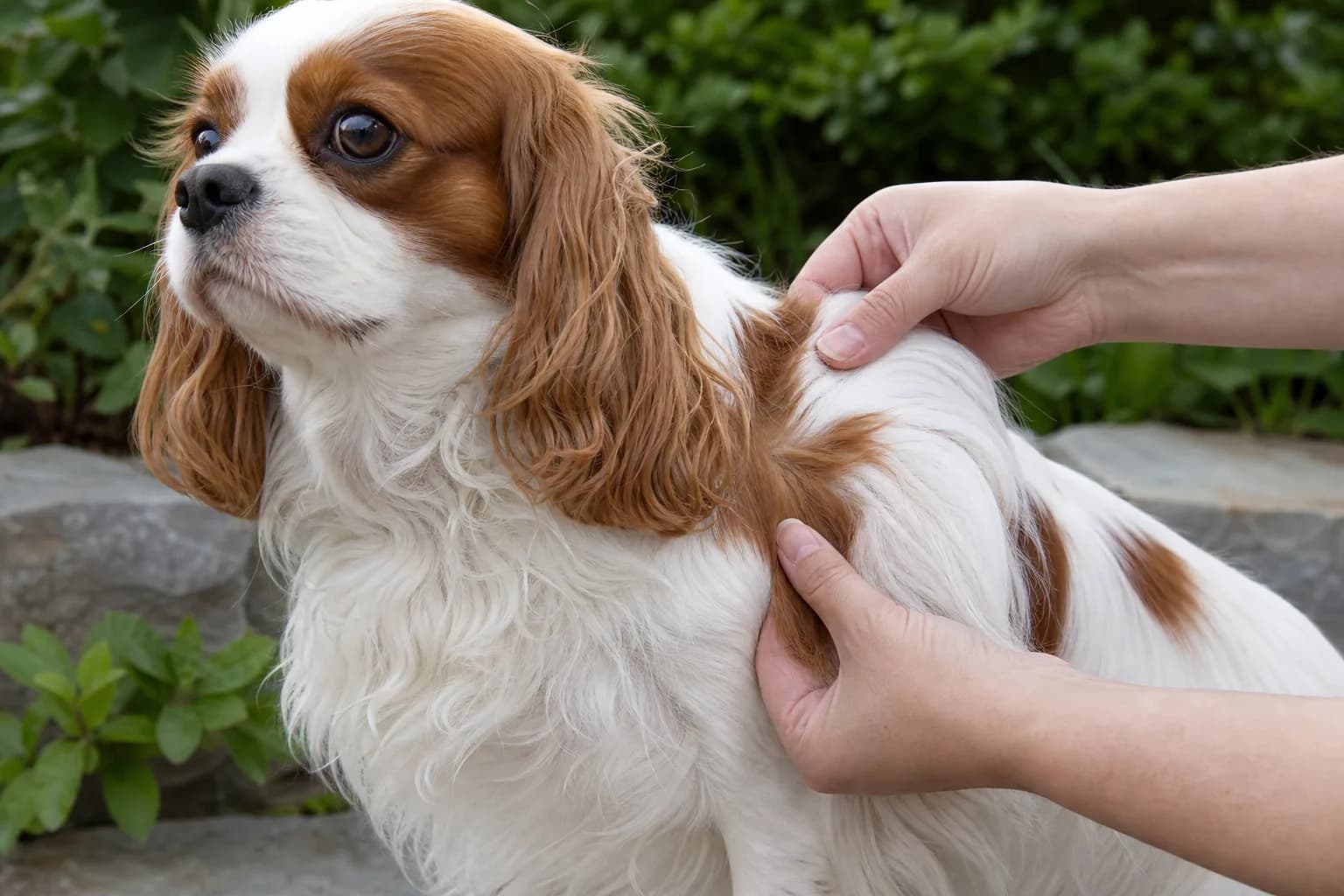
Follow an identification sequence:
- Decide whether white is a major part of the coat.
- Identify the darkest base color.
- Look for tan points in consistent locations.
- Note broad patches, ticking, freckles, blaze shape, and pigment separately.
- Compare several unfiltered photos rather than one close-up.
This method prevents facial markings or lighting from being mistaken for a separate recognized color.
Blenheim variation
Blenheim dogs have rich chestnut markings broken up on a pearly white ground. The amount, shape, and symmetry of the chestnut can vary. A wide blaze, narrow blaze, large body patches, or small spots do not create a new color name.
When comparing photos, check:
- Whether the ground is truly white rather than cream lighting.
- Whether chestnut patches are clearly distinguished from shadow.
- Ear color and facial markings.
- Body pattern viewed from both sides.
- Nose and eye-rim pigment.
The visual goal is accurate recognition, not ranking one distribution as more valuable.
Tricolor variation
Tricolor Cavaliers combine black and white with tan markings. Tan commonly appears in specific facial and body areas, while black and white form the larger pattern. A close facial photo may hide how much white is present on the body.
Do not call every black, white, and brown-looking photograph tricolor. Mud, sun fading, camera processing, and warm lighting can shift apparent color. Look at the dog clean, dry, and under neutral light.
Ruby variation
Ruby is a whole-colored rich red. Small amounts of white may be discussed differently by standards or breeders, but marketing language does not create another recognized color. Coat length and sun exposure can also change how saturated the red appears in a photograph.
For a useful comparison, view the ears, back, chest, legs, and tail together. A single dark ear or bright patch under sunlight is not enough to judge the whole coat.
Black and tan variation
Black and tan Cavaliers have a black base with tan markings. The tan placement matters more than whether a camera renders the black as deep black or slightly brown. Underexposure can erase tan detail, while strong editing can make it appear orange.
Ask for images that show the face, chest, legs, underside of the tail, and full body. Photographs should not be the only evidence used to identify a puppy or decide that a seller's description is accurate.
Markings are not extra colors
A blaze, spot, patch edge, ticking, or freckling describes pattern detail. Pigment refers to features such as nose and eye-rim color. These details can be visually important without changing the four-color framework.
Keep the terms separate:
- Color: the recognized overall coat category.
- Pattern: how colors are distributed across the body.
- Marking: a specific visible patch, blaze, spot, or point.
- Pigment: color of skin-related features such as the nose or eye rims.
- Coat condition: shine, staining, fading, clipping, or texture that can change appearance.
Clear labels help readers compare like with like.
Puppy coats can look different later
A puppy's proportions change as the dog grows, and feathering becomes more visible with maturity. Patch boundaries may look different as the body enlarges. Sun exposure, clipping, staining, and coat condition also affect photographs over time.
Do not rely on a prediction that one small puppy marking will produce a specific adult look. Ask to see the parents and older relatives for context, but remember that an individual pattern remains individual.
Color does not predict personality
Temperament develops through genetics from the whole family, early environment, learning, health, and daily experience. A color label is not evidence that a dog will be calmer, smarter, rarer in behavior, or better with children.
Evaluate the actual dog:
- Recovery after a mild surprise.
- Comfort with handling and restraint.
- Interest in people without forced contact.
- Ability to rest after activity.
- Response to other animals at a safe distance.
- Signs of pain, fear, or illness that may affect behavior.
Choose for welfare, health evidence, and household fit before appearance.
Audit color claims in an advertisement
Save the original advertisement and ask the seller to use the registered color name in the contract and veterinary record. Vague labels such as exotic, platinum, teacup color, or investment color should trigger questions, not a higher payment.
Verify:
- The puppy shown is the puppy being offered.
- Images are current and not copied from another site.
- The description is consistent across the advertisement, contract, and records.
- The seller will provide unedited views in neutral light.
- Price is explained by welfare and documented care, not a claim of color rarity.
A responsible source can discuss markings without turning them into a health or temperament guarantee.
Photograph color accurately
For records or comparison, photograph the dog standing comfortably in open shade or soft daylight. Avoid colored walls, filters, flash glare, and deep shadow. Include a full-body view from each side, a front view, and closer views of markings and pigment.

Use the same approach over time:
- Clean, dry coat.
- Similar lighting and camera settings.
- Neutral background.
- No saturation or white-balance filter.
- Date and age recorded.
Consistent photos make genuine coat changes easier to distinguish from camera changes.
Put health records ahead of color choice
Once a preferred appearance is identified, return to the placement evidence. Verify parent identities, breed-relevant health results, puppy veterinary records, living conditions, contract terms, and return support.
Color cannot reduce the importance of cardiac, eye, orthopedic, neurologic, or general health planning. It also cannot compensate for poor socialization, unsafe transport, or an unwillingness to disclose records.
Keep color in its proper place
Color can be an enjoyable preference after health, welfare, temperament, source transparency, and household fit are established. Write the decision order before viewing a litter so one visually striking puppy does not displace the evidence.
A sound order is:
- Verify the source and parent identities.
- Verify breed-relevant health evidence.
- Assess rearing, handling, and support.
- Match the individual puppy or dog to the household.
- Use color as a preference among suitable choices.
This protects the dog from being selected mainly as an appearance purchase.
Treat pigment change as a health observation
New redness, swelling, crusting, discharge, pain, hair loss, or change around the nose, eyes, lips, paws, or skin is not a new coat color. Photograph the change under neutral light and contact the veterinarian when it is sudden, uncomfortable, spreading, or accompanied by other symptoms.
Describe a dog without overclaiming
Use the recognized color, then describe visible markings in plain language. If identity is uncertain, say so. Avoid implying that a photograph proves genetics, registration, health, or parentage.
For lost-dog records, note blaze shape, patch location, tan points, scars, pigment, sex, size, and microchip number. Those details are more useful than a rare-color label.
The complete Cavalier breed guide keeps appearance in the full ownership context. The Cavalier food guide explains why coat color does not change the need for complete nutrition, measured portions, and veterinary guidance.
Cavalier color FAQs
Local frequency can vary, but the four recognized colors are all correct and the standard gives no preference. A seller's "rare" claim may describe limited local inventory or create urgency rather than prove genetic value. Verify identity, parent health testing, veterinary records, living conditions, and the return contract before considering color. Health evidence should always carry more weight.
Blenheim is highly visible in breed imagery, but popularity changes by source, region, and period, so one reliable universal ranking is difficult. Popularity also does not predict health, temperament, or household fit. Choose the individual dog and responsible source rather than using demand or coat pattern as a shortcut. Color should remain a preference, not a screening tool.
The four recognized colors are Blenheim, tricolor, ruby, and black and tan. Blenheim is chestnut on white; tricolor is black on white with tan points; ruby is a rich red whole color; and black and tan is black with defined tan markings. The standard does not rank them. Lighting, coat length, wet hair, sun exposure, and camera processing can change how rich or dark a dog looks in a photograph.
Coat color is not a reliable predictor of friendliness, barking, trainability, health, or household fit. Temperament reflects the broader family, early environment, learning, health, and the individual dog. Health decisions should rely on parent identities, verifiable breed-relevant testing, veterinary records, and ongoing care, not a color label. Evaluate the actual dog’s behavior and source whether the puppy is Blenheim, tricolor, ruby, or black and tan.
The recognized color does not normally become a different recognized color, but the puppy’s appearance can change as the body grows and feathering becomes more visible. Patch boundaries may look different on a larger dog, and sun exposure, clipping, staining, coat condition, wet hair, and photography affect the image. Parents and older relatives provide context, but no seller can guarantee the exact adult look from one small puppy marking.
A rarity premium is not evidence of better health, temperament, structure, or responsible breeding. Ask the seller to use a recognized color name and provide parent identities, health results, current puppy photos, veterinary records, living-condition evidence, a written contract, and return support. Vague labels such as exotic, platinum, teacup color, or investment color should trigger questions. Compare the whole placement and written records before paying any color-based premium.

Coreen Saito is a pet writer and longtime shelter volunteer with more than a decade in animal rescue. She covers cat behavior, breed care, and the small, ordinary science of sharing a life with companion animals, with a particular focus on honest takes about the products and decisions that actually matter. At home in Arizona, she's outranked by Mac (a dog with the loudest opinion in the house), Rebel (a cat who governs by quiet authority), and Meri (an orange tabby who runs the late shift and the laundry basket). She writes about all three, plus the rescues that keep coming through her life, at LifeWithMinty.com.
Sign up for expert-backed reviews and safety alerts all in one place.