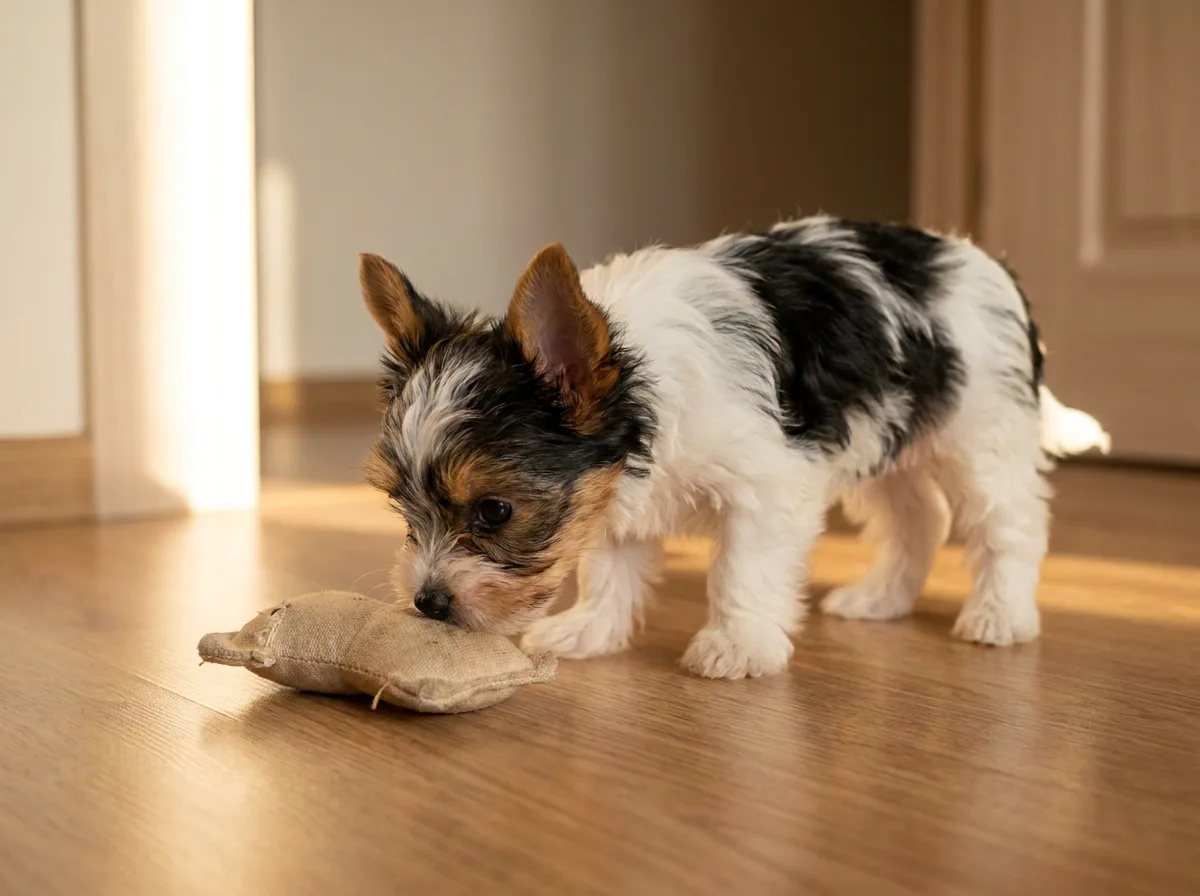
Chihuahua Puppies: Breeders, Adoption and Buying Safely
Find Chihuahua puppies through a records-first process for comparing breeders and adoption, verifying health information, spotting scams and preparing safely.

Petful is reader supported. As an affiliate of platforms like Amazon and Chewy, we may earn a commission when you buy through links on this page. There is no extra cost to you.
Searching for Chihuahua puppies can lead to responsible breeders, shelters, rescues, casual sellers and convincing scams on the same results page. A search for Chihuahua puppies for sale needs a records-first approach: decide what evidence you require before you fall for a photograph or send a deposit.
This guide does not recommend a breeder, rescue, marketplace or seller. It gives you a repeatable way to compare sources, verify health information, challenge teacup marketing, inspect a contract and prepare for the puppy or adult you actually bring home.

Sign up for expert-backed reviews and safety alerts all in one place.
Chihuahua Puppies at a glance
- 1Choose a source only after verifying identity, the specific dog, health records, living conditions and written terms
- 2Individual dogs vary, so records and direct observation matter more than sex, color or a seller's type label
- 3A listing photo, low price, rare-color claim or teacup label does not prove quality or ancestry
- 4Adoption and responsible breeding can both be valid routes when the organization is transparent
- 5Meet the dog and, for a breeder litter, the dam where the puppies are raised whenever practical
Chihuahua puppies: start here
Start by defining the placement you can support. A Chihuahua puppy needs frequent meals and toileting opportunities, gentle social exposure, veterinary care, training and protection from falls, weather and rough animals. An adult from a shelter or rescue may offer more observable behavior and body-size information, but can still need medical, training or transition support.
| Evidence | Responsible breeder path | Adoption path | Stop signal |
|---|---|---|---|
| Identity | Registered names, contact details, location and a specific litter | Organization identity, dog ID and foster or shelter record | Identity changes, copied profiles or refusal to verify live |
| Health | Parent screening plus the puppy's veterinary record | Available medical history plus current care and disclosures | Guarantees of perfect health or records withheld until payment |
| Environment | Meet the dam and observe where puppies are raised when practical | Meet the dog or receive transparent foster observations | Parking-lot handoff, no live interaction or endless excuses |
| Agreement | Written deposit, health, return and pickup terms | Written adoption, transfer, return and support terms | Pressure to pay before reading or added surprise fees |
| Practical comparison | Temperament observations and household matching | Evidence about the individual dog and transition needs | Selection based only on color, size, sex or urgency |
Breed tendencies describe populations, not every individual dog. Appearance, seller wording and documented records answer different questions. Chihuahua puppies should therefore be compared by source identity, veterinary history, living conditions and observed behavior. Compare the individual dog, available records and household routine before deciding which source or placement is credible, and keep missing evidence visible instead of treating it as reassurance.
Petful may earn a commission when you click through to Chewy, at no extra cost to you.
Build a written search brief
Before contacting anyone, record:
- Your adult household, children and other animals.
- Ordinary work hours, travel and backup care.
- Safe toileting access and protection from stairs or falls.
- Training, veterinary and emergency-care budget.
- Willingness to consider an adult or mixed-breed dog.
- Deal breakers involving health, behavior or unsupported records.
A search brief helps you compare the same evidence across sources. It also makes it easier to walk away when a seller creates artificial urgency.
How to evaluate Chihuahua breeders
A responsible Chihuahua breeder should be willing to discuss both strengths and risks, explain why a pairing was made, identify the parents, show relevant health results and ask detailed questions about your home. The goal is not to find the most polished website. It is to verify a consistent chain from breeder identity to parent dogs, litter, records, contract and ongoing responsibility.
Searches for Chihuahua breeders and Chihuahua puppies for sale can surface directories, social profiles and copied listings together. Treat a search result only as a lead. Verify the breeder's legal identity, live access to the specific litter, parent records and written responsibility before considering a payment.

Questions that produce usable evidence
Ask each breeder:
- What are the registered names and identifiers of the sire and dam?
- Which breed-relevant health tests were completed, when and by whom?
- Where can the results be verified independently?
- May I meet the dam and see the environment where the litter is raised?
- How are puppies exposed gently to people, surfaces, sounds and handling?
- What veterinary care, microchip and registration records go home?
- At what age are puppies placed, and why?
- What happens if the buyer can no longer keep the dog?
- What support is available after pickup?
The AKC Chihuahua profile establishes basic breed context, while the AKC parent-club health testing requirements point buyers toward breed-specific screening. Requirements and recommendations can change, so verify the current Chihuahua listing rather than relying on a screenshot or generic statement.
Observe the dogs, not just the sales presentation
During a visit, notice cleanliness, footing, temperature, crowding and access to water. Watch the dam's body condition and behavior without demanding that she perform for you. Puppies should be observed moving and interacting naturally. One sleepy, cautious or active moment is not a temperament test, so ask what the breeder has seen across ordinary days.
Remote buying carries additional risk. Request a live video that shows the breeder, specific puppy, dam and environment in one continuous interaction. Ask the person to perform a simple real-time action you choose. A video call reduces some risks but cannot replace records, independent verification or a written contract.
What good screening does not promise
Health screening changes the quality of evidence; it does not guarantee a disease-free puppy. The Orthopedic Foundation for Animals CHIC program explains how breed-specific results can be organized and made available. Look up results under registered identities and confirm that the records belong to the correct parents.
Do not accept phrases such as vet checked, health tested, genetically clear or champion lines without the underlying documents. A routine examination, a DNA panel and a breed-specific screening program answer different questions.
Chihuahua adoption and rescue
Chihuahua adoption can be a strong route for households open to puppies, adolescents, adults or seniors. Shelters and rescues may know the dog's handling comfort, house-training progress, behavior around animals, medical needs and ability to settle. The amount and certainty of history vary, so ask what was directly observed and what came from a prior owner.
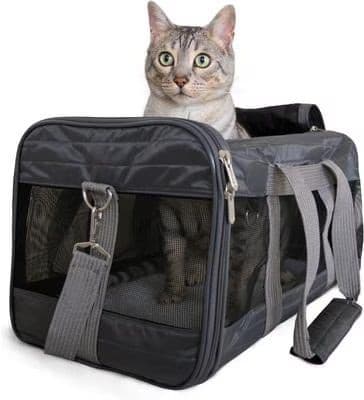
An airline-approved soft-sided carrier with mesh ventilation windows, a top-rated travel pick for cats and small dogs.
Petful may earn a commission when you click through to Chewy, at no extra cost to you.
Chihuahua rescue organizations also vary in structure and transparency, so verify the organization and individual dog instead of relying on the word rescue alone.
Evaluate the organization and the individual
Ask for:
- The dog's intake date, source and known age.
- Veterinary records, medications and pending care.
- Microchip status and transfer instructions.
- Foster or shelter observations with dates and settings.
- Behavior around food, handling, confinement, people and animals.
- The adoption agreement, return policy and support contact.
- Every fee and what it includes.
A shelter label is not documentary proof of purebred ancestry. Appearance can help describe a dog, but it should not drive a health prediction or price premium. Match the individual dog's observed needs to the household.
Adult adoption may reduce uncertainty about full size and established behavior. It does not mean the dog arrives fully trained or instantly comfortable. Plan for decompression, an independent veterinary relationship and gradual introductions.
Health screening and puppy records
The strongest Chihuahua health record identifies the specific dog, date, provider, findings and next steps. Organize records before pickup so gaps are visible while you can still ask questions.
Chihuahua health testing begins with the current parent-club recommendations for breeding dogs and remains separate from the individual puppy's examination and care record.

Parent and litter evidence
For a breeder puppy, verify the parents' registered names and current screening results through the issuing organization when possible. Ask how any result affected the pairing decision. Request the pedigree and registration terms if those are part of the transaction, but remember that registration alone is not proof of health or responsible care.
Ask whether any puppy in the litter has needed additional evaluation, medication or altered placement timing. A transparent answer about a problem is more useful than a blanket promise that nothing can go wrong.
The individual puppy's file
The puppy's record should clearly show:
- Name or litter identifier, date of birth and distinguishing details.
- Examination dates and the veterinary practice.
- Vaccines, parasite testing or treatment, and due dates.
- Medications, reactions, findings and follow-up needs.
- Microchip number and registration status.
- Food, feeding schedule and meaningful appetite history.
- Any illness, injury, surgery or developmental concern disclosed.
Schedule an independent examination within the contract window. If the puppy has trouble breathing, collapses, repeatedly vomits, cannot keep water down, seems severely painful, has a seizure or declines rapidly, seek veterinary guidance promptly rather than waiting for a routine appointment.
Equipment supports care but does not prove it
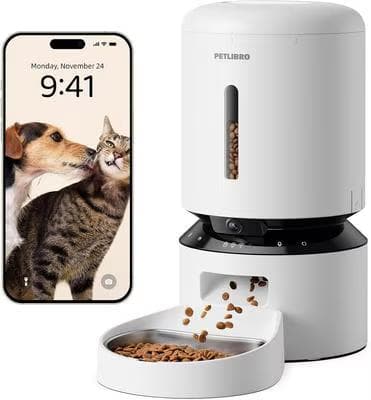
Timed feeding can be useful for a written household routine. The Petlibro Granary WIFI Automatic Cat and Dog Feeder with Camera is one tracked option to compare for kibble size, portion accuracy, cleaning, power backup and security from curious puppies. Confirm each portion manually and follow the veterinarian's feeding plan.
Before using the Petlibro Granary WIFI Automatic Feeder, make sure the puppy can eat safely from the bowl and that a caregiver can feed manually if the unit fails. Appetite changes are health information, not merely a scheduling inconvenience.
Teacup and miniature claims
Teacup Chihuahua and miniature Chihuahua are marketing phrases, not separate varieties recognized in the AKC Chihuahua breed description. The official breed already has a very small size standard. A seller's promise that a young puppy will remain under a particular weight is not certainty.
Teacup and miniature claims should trigger more verification, not a higher assumption of value. Ask for dated weights, parent information, veterinary findings and the same written protections offered for any other puppy.
Ask what the label actually means
When a seller uses teacup, micro, pocket, miniature or extreme apple head, ask for the predicted adult size in writing and the evidence behind it. Then request:

Petful may earn a commission when you click through to Chewy, at no extra cost to you.
- Actual puppy weights with dates, not a single number.
- Sire and dam adult weights and body condition.
- Veterinary findings relevant to the individual.
- The same parent screening and contract offered for every puppy.
- A clear explanation of any price premium.
Do not choose the smallest puppy simply because the label sounds exclusive. Very low weight can reflect age, genetics, illness, poor nutrition or normal variation, and only a veterinarian can evaluate the individual.
The same caution applies to sex and color. Neither male nor female is inherently better, and no coat color guarantees temperament, rarity, pedigree or health. Direct observation and records provide stronger evidence.
Contracts, deposits and scam red flags
A legitimate puppy transaction should survive careful questions and time to read. The Federal Trade Commission pet-scam guidance advises researching sellers, checking images and avoiding difficult-to-reverse payments in unverified transactions.
Contracts, deposits and scam red flags belong in one review. Do not separate the payment request from the identity, record and pickup evidence that should support it.
Verify before paying
Complete these checks before a deposit:
- Confirm the seller's legal name, current phone number and physical location.
- Search listing text and images for reuse under other names or cities.
- Conduct a live interaction with the specific puppy and source.
- Verify parent and puppy records with issuing providers when possible.
- Read the full contract, refund terms and pickup or transport plan.
- Confirm the exact payment recipient and use a traceable method.
- Save the listing, messages, records, invoice and receipt.
Stop if the seller refuses live verification, changes identity, demands gift cards or cryptocurrency, or invents escalating insurance, quarantine, permit, crate or delivery charges. Urgency does not make weak evidence stronger.
A Chihuahua puppy scam often depends on copied images, a false location and escalating transport fees, so preserve every message and stop before sending more money.
Read every contract term
The written agreement should identify the parties and specific puppy, total price, deposit, balance, records, transfer date, health disclosures, examination window, return terms and responsibilities if placement fails. Ask how disputes are handled and which promises are actually part of the contract.
Petful's separate Chihuahua price and lifetime budget guide helps compare acquisition, setup, annual and risk costs. A higher price does not prove responsible breeding, and a lower adoption fee does not eliminate future care costs.
Prepare for pickup and the first weeks
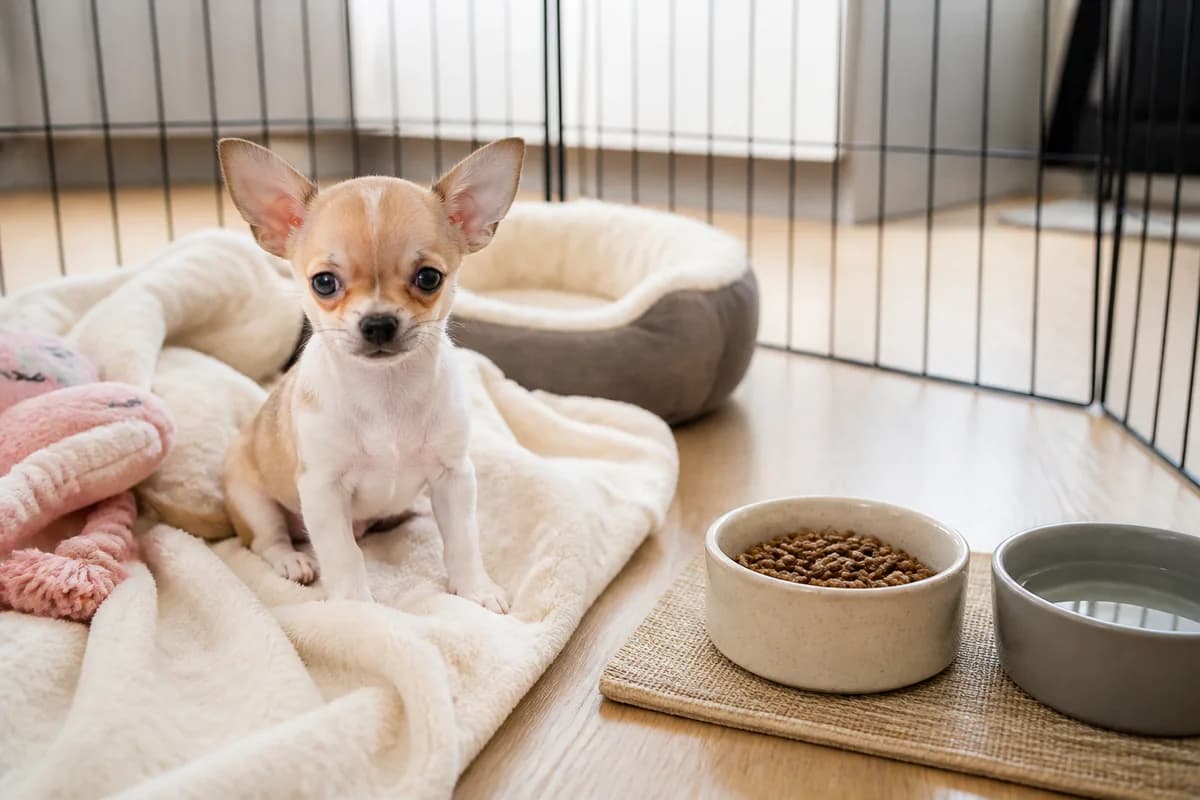
Prepare a small, quiet area before the dog arrives. The setup should support sleep, toileting, feeding, supervised exploration and gradual introductions without isolating the puppy from normal household life.
For the first veterinary planning conversation, WebVet's puppy deworming guide explains common timing, warning signs and when to call the clinic.
Chihuahua puppy care in the first weeks should prioritize predictable meals, frequent toileting, safe rest, gentle learning and prompt attention to health changes.
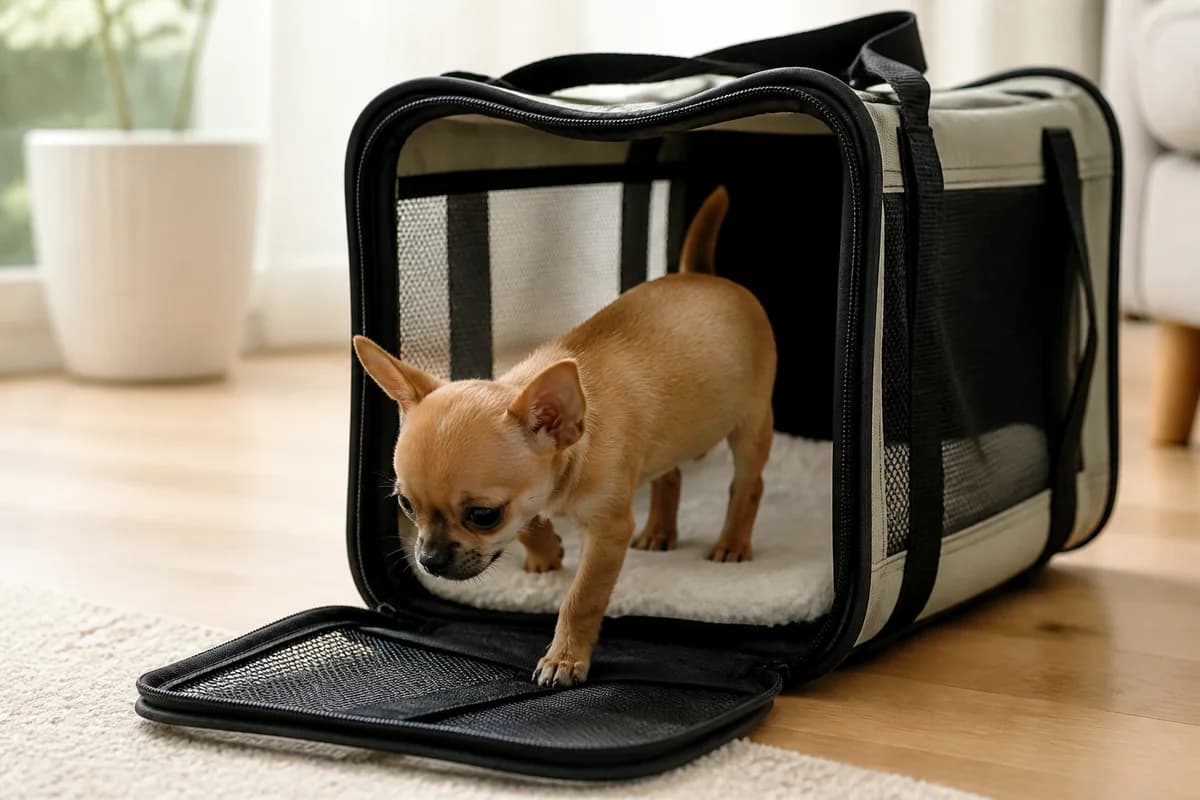
Transport safely
The Sherpa Original Deluxe Airline-Approved Dog and Cat Carrier Bag is one tracked soft carrier to compare with the puppy's measured size, ventilation needs, escape risk and the actual transport provider's rules. The phrase airline-approved is not a guarantee that a specific carrier fits every airline, fare, aircraft or route.
Introduce the Sherpa Original Deluxe Carrier with the door open and rewards inside. Secure it according to current vehicle or provider guidance. Do not carry a puppy loose in a vehicle or open the carrier in an unsecured area.

A padded, reflective no-pull harness that spreads leash pressure across the chest instead of the throat, the switch most vets recommend for a dog with a cough, a collapsing trachea, or any airway irritation so the leash never presses on
Petful may earn a commission when you click through to Chewy, at no extra cost to you.
Create a managed home base
The MidWest Wire Dog Exercise Pen with Step-Thru Door, 36-inch is one tracked containment option to compare with the Chihuahua puppy's size, climbing ability, wire spacing, floor protection and supervision. A pen is a management tool, not an all-day living space or substitute for training.
When using the MidWest 36-inch Exercise Pen, check that the puppy cannot squeeze through, climb, catch a collar or move the panels. Remove unsafe items and provide a separate toileting plan. Very small puppies can exploit gaps that seem insignificant.
Build the first-week schedule
Keep the source's familiar food at first unless a veterinarian recommends a change. Record meals, water, stool, urination, sleep, activity and medication. Provide frequent toilet trips after waking, eating, play and confinement, then reward the correct location immediately.
For supervised leash practice, compare the EliteField Padded Reflective No Pull Dog Harness in Small with current body measurements. Check that it does not rub or allow backing out. A growing puppy needs frequent fit checks.
Use the EliteField Small Padded Reflective Harness only after a calm introduction. Pair it with rewards and short sessions rather than dragging or correcting a frightened puppy.
Socialization is safe learning
Socialization means creating positive, controlled experiences, not forcing a puppy to tolerate every person or dog. Work within veterinary guidance for infection risk. Expose the puppy gradually to surfaces, household sounds, gentle handling, carriers, car rides and calm people while preserving choice and distance.
Audit the handoff before you leave
Use a written checklist at pickup or adoption rather than trusting that every item will be remembered during an emotional handoff. Match the microchip number and puppy identifier to the documents. Confirm the food, last meal, medications, next due care, emergency contact and exact return process. Ask for corrections while both parties can review the same record.
Your handoff packet should include, as applicable:
- Signed contract or adoption agreement and an itemized receipt.
- Veterinary record with provider, date and puppy identity.
- Vaccine and parasite-care dates plus what is due next.
- Microchip number, registry and transfer instructions.
- Parent screening and pedigree records for a breeder litter.
- Current food, measured meal schedule and any medication.
- Registration papers or clearly stated registration limits.
- Pickup, transport, examination and return terms.
Keep original records together and create a backup. Send the relevant medical documents to your veterinarian before the first visit so the clinic can identify missing information. Do not repeat or delay a vaccine, medication or parasite treatment based solely on memory or an online schedule.
During the contract examination window, note every finding and communicate in writing. A normal examination does not guarantee future health, but it creates an independent baseline and lets you address immediate concerns. If the written terms require notice within a specific period, follow that process without postponing needed care.
Finally, update the microchip registry and emergency contacts. A chip is useful only when the number can be read and linked to current information. Keep the source's return contact available even when the first weeks go smoothly.
Compare sources with the same scorecard
Use one scorecard for every breeder, shelter or rescue so an appealing photograph does not change the standard. Mark a row complete only when you have seen the evidence, not when someone promises to send it later.
Score these areas as verified, incomplete or stop:
- Identity: legal name, location, live contact and the specific dog.
- Records: medical file, microchip and parent screening when applicable.
- Environment: direct or continuous live observation of where the dog is kept.
- Behavior: dated examples that distinguish observation from prior-owner report.
- Terms: complete written fee, deposit, examination, return and pickup language.
- Support: a named contact and realistic process after placement.
Incomplete does not always mean deceptive. A shelter may genuinely lack prior history, and that uncertainty should be stated. A breeder may be waiting for a final puppy examination. The problem is presenting missing information as certainty or pressuring you to pay before it can be reviewed.
Compare evidence quality, not the number of documents. A current veterinary record linked to the dog is stronger than a large folder of generic care sheets. A verifiable screening result for a named parent is stronger than a screenshot with no identifier. A clear return clause is stronger than an informal promise in a disappearing message.
What to verify before you decide
- Seek documented evidence from the source, including identity, parent screening when applicable, the individual puppy's veterinary file and complete written terms. Then arrange professional guidance through an independent veterinarian, who can establish the puppy's current baseline. One evidence layer cannot substitute for the others.
Set stop rules before contacting sources. Examples include refusal to show the dog live, mismatched identities, payment to an unrelated person, no written agreement, invented transport fees, or a puppy offered too young for responsible placement. Apply the same rule even when the color, price or pickup date feels perfect.
After comparing, allow a waiting period before payment. Re-read the scorecard, contract and household brief without the seller present. Responsible sources should tolerate careful review. If someone frames reasonable verification as disloyalty, that pressure is useful evidence to pause.
Petful's Chihuahua temperament, training and family fit guide covers confidence and reward-based learning. The Chihuahua size, weight and growth guide explains how to track a trend without turning a chart into a verdict. For medical screening and warning signs, use the DVM-authored Chihuahua health and lifespan guide.
Is this the right dog for your household?
- Breeder and adoption routes can both provide transparent records and support for household fit
- An adult placement may offer more observable size and behavior information
- A written search brief reduces impulse decisions
- Small size can simplify transport when safety is planned
- Chihuahua puppies need frequent meals, toileting and supervision
- Tiny bodies increase fall, weather and rough-play risks
- Seller urgency and teacup marketing can obscure weak evidence
- A low acquisition fee or high price says little about individual behavior
Proceed only if the household can support the dog in an ordinary week, not just during a quiet pickup period. Confirm who handles early mornings, workday toileting, training, veterinary appointments, travel and emergencies. Make a backup plan before the puppy arrives.
Use Petful's main Chihuahua breed guide to check the broader daily-care fit. If the source or dog fails your evidence standard, pause. The right next step may be another source, an adult dog, a different breed or no placement yet.
Chihuahua Puppies FAQs
How much Chihuahuas usually cost depends on source, region, age, included care and records because there is no dependable national amount. Setup and lifetime expenses continue after pickup. Compare every quoted inclusion with verified records and a written first-year budget. A clear next step is to request an itemized agreement and current local veterinary estimates before paying.
No Chihuahua type, coat, color, head shape or teacup label is reliably the calmest. Temperament depends on the individual dog's genetics, learning history, health and environment. Ask for verified records and repeated behavior observations in relevant settings. The clear next step is a live meeting that evaluates recovery, handling comfort and interaction with the actual household.
Neither a male nor female Chihuahua is automatically better. Health, temperament, learning history, reproductive status and fit with the household are more useful than a sex-based promise. Review verified records for the specific dog and observe individual behavior. Make the clear next step a comparison of two suitable dogs using the same health, behavior and care criteria.
The most important point about Chihuahua puppies is that a photograph and seller description are only the beginning of a safe decision. Make a practical comparison of source identity, parent information, veterinary records, living conditions, written terms and first-week needs. Then evaluate the individual dog in a live setting instead of allowing color, urgency or a size label to lower the evidence standard.
The evidence you should verify for Chihuahua puppies includes documented evidence for the seller or organization's legal identity, the specific puppy's veterinary file and microchip, parent screening for breeder litters, complete fees, return terms and pickup plan. Confirm documents with the issuing source when possible. Arrange professional guidance through an independent veterinarian within the contract window to establish the puppy's current baseline.
After learning about Chihuahua puppies, an owner should next write a household brief, compare at least two transparent sources, arrange a live meeting and verify records before paying. Include workday toileting, safe transport, training time, veterinary care and backup help when assessing household fit. Observe individual behavior, then book an independent veterinary examination within the written contract window.
Sources

Coreen Saito is a pet writer and longtime shelter volunteer with more than a decade in animal rescue. She covers cat behavior, breed care, and the small, ordinary science of sharing a life with companion animals, with a particular focus on honest takes about the products and decisions that actually matter. At home in Arizona, she's outranked by Mac (a dog with the loudest opinion in the house), Rebel (a cat who governs by quiet authority), and Meri (an orange tabby who runs the late shift and the laundry basket). She writes about all three, plus the rescues that keep coming through her life, at LifeWithMinty.com.
Sign up for expert-backed reviews and safety alerts all in one place.